

Since June 1, 2024, the American Political Science Review, has been edited by a team composed of 16 editors. Personnel have changed over the two years for reasons that are partly personal and partly a product of the heavy workload (on top of other commitments outside the journal). Dragana Svraka continues her work as our Managing Editor. Each editor also relies on one or several Editorial Assistants.
SUBMISSIONS
The current team has worked hard to broaden the range of work published in the journal, recognizing that contributions to political science come in different formats. To do so, we have instituted several new submission tracks (two were mentioned in the previous report), culminating in five tracks that are currently in use:
-
• Regular Articles that use original work to advance understanding of important issues.
-
• Research Notes that are intended for shorter, more focused articles.
-
• Replications and Reappraisals that revisit results previously published in the APSR or in other journals.
-
• Syntheses that summarize a field of research and usually include some empirical analysis.
-
• Registered Reports that are submitted prior to any data analysis.
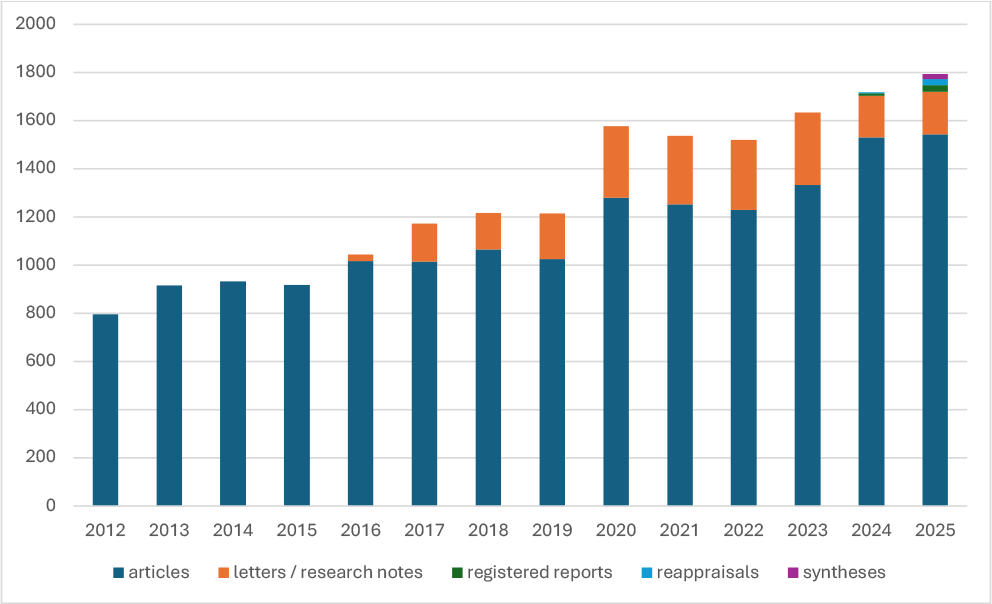
The overall trend in increased submissions to the journal which we noted after taking over the editorial work has continued. In 2025, we received 1,794 new submissions, an all-time high. The regular research articles continue to be the dominant submission type (over 86% of submissions), but we note that reintroduced research notes (previously called “letters”) include almost 10% of submissions in 2025 (and they were reintroduced only in May 2025). Other new submission tracks (registered reports, replications/reappraisals, and syntheses) are appearing among submissions for the first time (we expect the number of these submissions to increase as authors become more familiar with them).
These trends are summarized in Figure 1. For the 2025 calendar year, we have received 1,543 research articles, 178 research notes, 27 registered reports, 25 replications, and 21 syntheses. In 2026, by the end of February, we have received 330 new submissions–a pace which, if continued, would put us on track for another record-breaking year.
Submissions to the APSR over Time
Note: Data per calendar year. To maintain comparability, data extend only through the end of calendar year 2025.

Submissions to the APSR reflect diversity within the discipline of political science. Table 1 below presents information about the subfield of the submission, as identified by the corresponding author, for the last 5 editorial teams (for our editorial team, data include 21 months of our tenure, from beginning of June 2024 until end of February 2026).
Submissions by Section/Subfield and Editorial Team

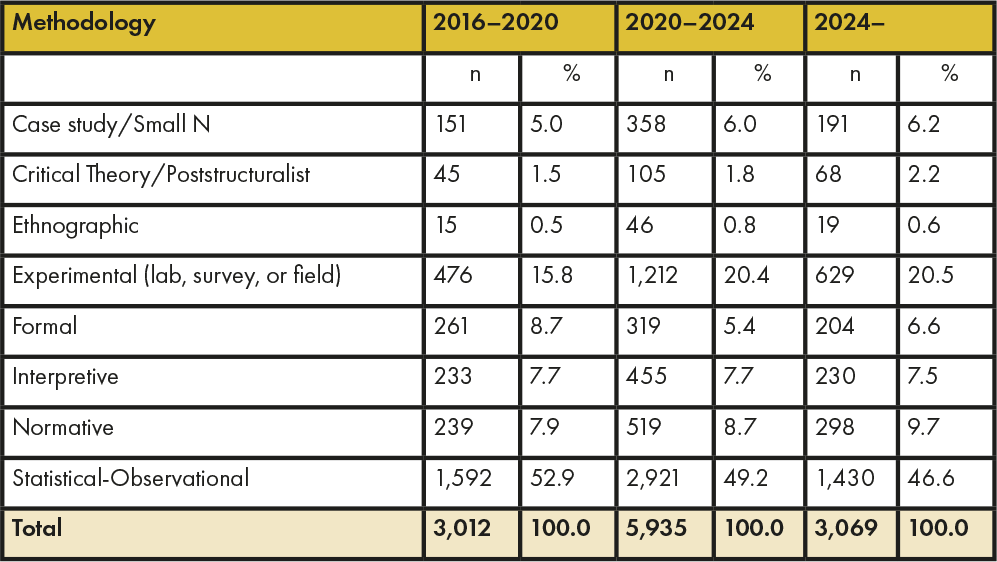
Diversity within political science is also reflected by methodology, as classified by the corresponding author. (Where multiple methodologies are employed, the author presumably selects the main or most important method.) We report results in Table 2. Again, we find little change vis-à-vis previous years.
Submissions by Methodology and Editorial Team

Note: Some submissions are missing responses to questions about the methodology used and they are excluded from the count.
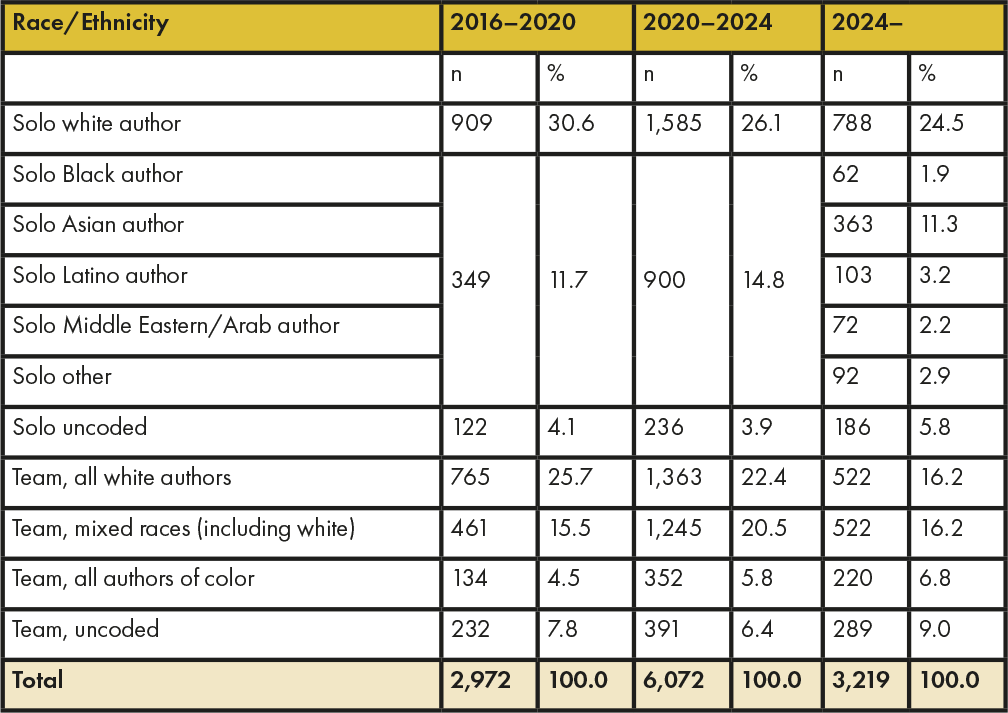
Finally, the diversity within political science is reflected in demographic information about authors who submit to the APSR. Data on gender and racial/ethnic identities of all authors (corresponding author and other co-authors) have been collected at the time of initial submission to the journal since 2018 (all the authors are asked these questions, but they have the option to decline to answer these demographic questions). We present data on gender in Table 3, and data on race and ethnicity in Table 4. The submitting authors who did not answer these questions are included among the uncoded. Again, there is little change from previous teams, except for the increasing number of authors who decline to answer these questions.
Submissions by Authors’ Gender

Note: Following the coding used by the previous editorial teams, the authors who identified as non-binary are included in uncoded totals (for the current editorial team that includes 27 out of 179 solo authors).
Submissions by Authors’ Race and Ethnicity

REVIEW PROCESS
Upon submission, papers are reviewed initially by Gerring or, if there is a conflict of interest, by Nalepa. The lead editor offers an initial recommendation and manuscript is then assigned to a handling editor (in which capacity Nalepa also serves). In making assignments we try to assure that workloads are equally distributed while keeping in mind that some editors conduct other types of work for the journal (for example, replication checks, formal model checks, handling appeals, social media, etc.).
Submissions to the journal keep increasing, as shown in Figure 1, and willing reviewers are hard to find, as shown in reports from many journals across the social sciences. Indeed, the previous team’s success rate was just over 50%, suggesting that they were not getting their first choice of reviewers much of the time.
We recognize that reviewers for the APSR are doing essential–unremunerated–service for the discipline. We are committed to respecting their time, and well aware of how difficult it is to recruit qualified reviewers who are appropriate for highly specialized, often very technical, submissions. We are also aware that external reviewers are in some respects not well-positioned to judge whether a given submission belongs in the journal as they have not seen the entire set of papers submitted over the past year–the population of interest.
With these considerations in mind, we decided to shift the burden of reviewing, making more of the initial decisions based on internal reviews by the editorial team and sparing our reviewers in cases where we judge the likelihood of eventual publication is slight. At least two members of the editorial team review each manuscript prior to the initial decision to desk reject or send out for review. This has the added benefit of speeding the process of review, allowing authors to move on to other outlets if unsuccessful at the APSR. Since our in-house reviews are often quite detailed, we try to offer suggestions for revision whenever we think our comments might be helpful. (Feedback from authors suggests that this is often appreciated.) Our desk-reject rate remains high, especially compared to the previous editorial teams, though we now use the option of “reject and resubmit” in borderline cases. Data on decisions on new submission is available in Table 5.
Decisions on New Submissions

Note: For the current editorial team, we excluded manuscripts which are currently under the first round of external review and where the first decision (rejection or R&R) is still pending.
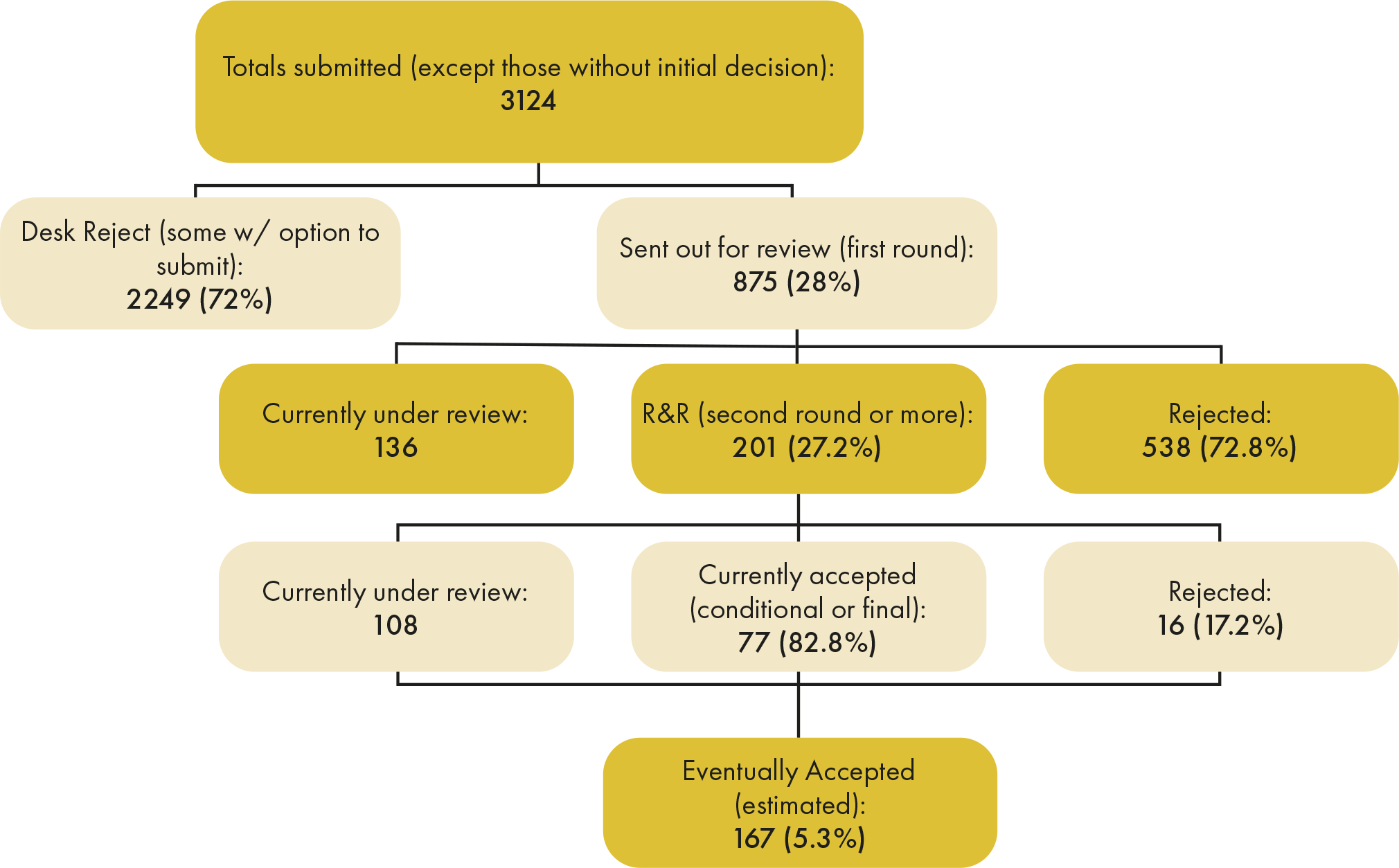
While our desk-reject rate is high, the rate of rejection after the 1st round of external review is significantly lower compared to previous editorial teams (see Table 5), which reveals that overall rejections are generally stable across editorial teams. We can also report that rejection after the second round of reviews is extremely rare for the current editorial team. During the 21 months of our tenure we have only rejected 16 manuscripts following an R&R. At this point in our tenure we don’t have many manuscripts that went through the whole review process and got accepted, so our projected acceptance rate (5.3%) is tentative. We keep monitoring our acceptances and will adjust acceptance rates accordingly. However, we note that our projected acceptance rate is comparable to the historical acceptance rates (excluding the previous editorial team as an outlier).
To further demystify the process of decision making, Figure 2 disaggregates the process to include different stages that manuscripts pass during their consideration with the APSR. Here we also include manuscripts that are still in the review process (i.e., with editors, reviewers, or authors after R&R). One can see how manuscripts move through the editorial pipeline, from the initial decision (to desk reject, reject and resubmit, or externally review), through the round of external reviews, until eventual acceptance or rejection.
Decision Tree
Note: We exclude a small number of manuscripts which have not yet reached the first decision point, i.e., desk reject or review (data from 13-March-2026; include manuscripts initially submitted between 1-Jun-2024 and 28-Feb-2026).

We are happy to report that our turnaround times remain comparable to, and in some cases faster than, previous editorial teams, as shown in Table 6.
Summary Turnaround Times for Initial Decisions

Note: Given the different timeframe required for processing submissions in the synthesis track, we have excluded them from calculations of turnaround times.
Starting in October 2024, we instituted the option “reject and resubmit,” which we use for new submissions that are considered promising but not ready to be shared with external reviewers (for example, due to ambiguities related to research design, theoretical contributions, or problematic framing). For such submissions, we send them back to the authors with detailed explanations of issues that need to be addressed before the manuscript is ready for external review, inviting them to resubmit a revised version, if they choose to do so. Effectively, instead of immediately desk rejecting such submissions due to identified problems, we help authors to address them, preparing them for external review. In Table 7 we present the initial results of this initiative after some 17 months. As you can see, most authors responded positively to this initiative (only some 5.7% authors who were offered “reject and resubmit” decided to withdraw their submission rather than revise it). Most of the manuscripts that are resubmitted following “reject and resubmit” are externally reviewed (desk reject rate in these cases is only 5.7%), and initial results are promising when it comes to ultimate success/acceptance. We are aware that many submissions that went through this process are still under consideration with the APSR, so we will keep monitoring results of this initiative.
Manuscripts with Reject and Resubmit Decision

Note: Data accessed on March 4, 2026.
Since manuscripts submitted to the journal undergo an extensive in-house review before external review, we feel comfortable with a minimum of two external reviewers. In difficult cases, or situations where received reviews are split, we often seek a third reviewer. This means that the average paper under review receives 2.4 reviews.
Relying on fewer reviewers has decreased the time to make decisions following external review. We have also shortened the default deadline for invited reviewers, which is now three weeks. The editorial team relies heavily on the input from the Editorial Board, and the data confirm that invited reviewers have been quite responsive (acceptance rate for invited reviewers is currently 74.8%, and completion rate is 64.4%, as can be seen in Table 8). Our goal, in any case, is to enlist reviews from well-qualified members of the political science community, who are generally tenured in their department and have considerable experience in the field. Our intent is to ensure that reviews are thorough and useful for the authors, no matter the outcome of the review process.
Reviewer Invitations and Completed Review of New Manuscripts

Note: For the current team, we use the information only on the new manuscripts submitted after the start of our tenure (1-Jun-2024 – 28-Feb-2026).
We also present data on decisions across subfields (as designated by the corresponding author at time of submission) for the manuscripts initially submitted under our tenure. Data in Table 9 show no large discrepancies across sections, but we warn that some sections do not receive many submissions, and many manuscripts (close to 300 within this timeframe) are still under review, without final decision being reached.
Decisions by Section/Subfield

Note: Data exclude manuscripts still under review, on 17-Mar-2026. We include manuscripts initially submitted between 1-Jun-2024 and 28-Feb-2026.
Checks for reproducibility occur after conditional acceptance. For papers with quantitative analyses, this includes assuring that documentation is complete, i.e., a ReadMe file and complete codebook, data collection instruments such as survey questionnaires and interview guides are included. We are running code to see that tables and figures included in the main paper are correctly reproduced, and verifying formal models. Authors are required to disclose the use of restricted data during submission. (In principle, editors could challenge authors’ claims that data cannot be shared; in practice, this has not happened under the current editorial team.) In these cases, we require the submission of code and documentation and check both for completeness. This continues the trend that started with the previous editorial team, which instituted the process of checking the deposited materials at the APSR Dataverse but did not conduct full reproducibility checks.
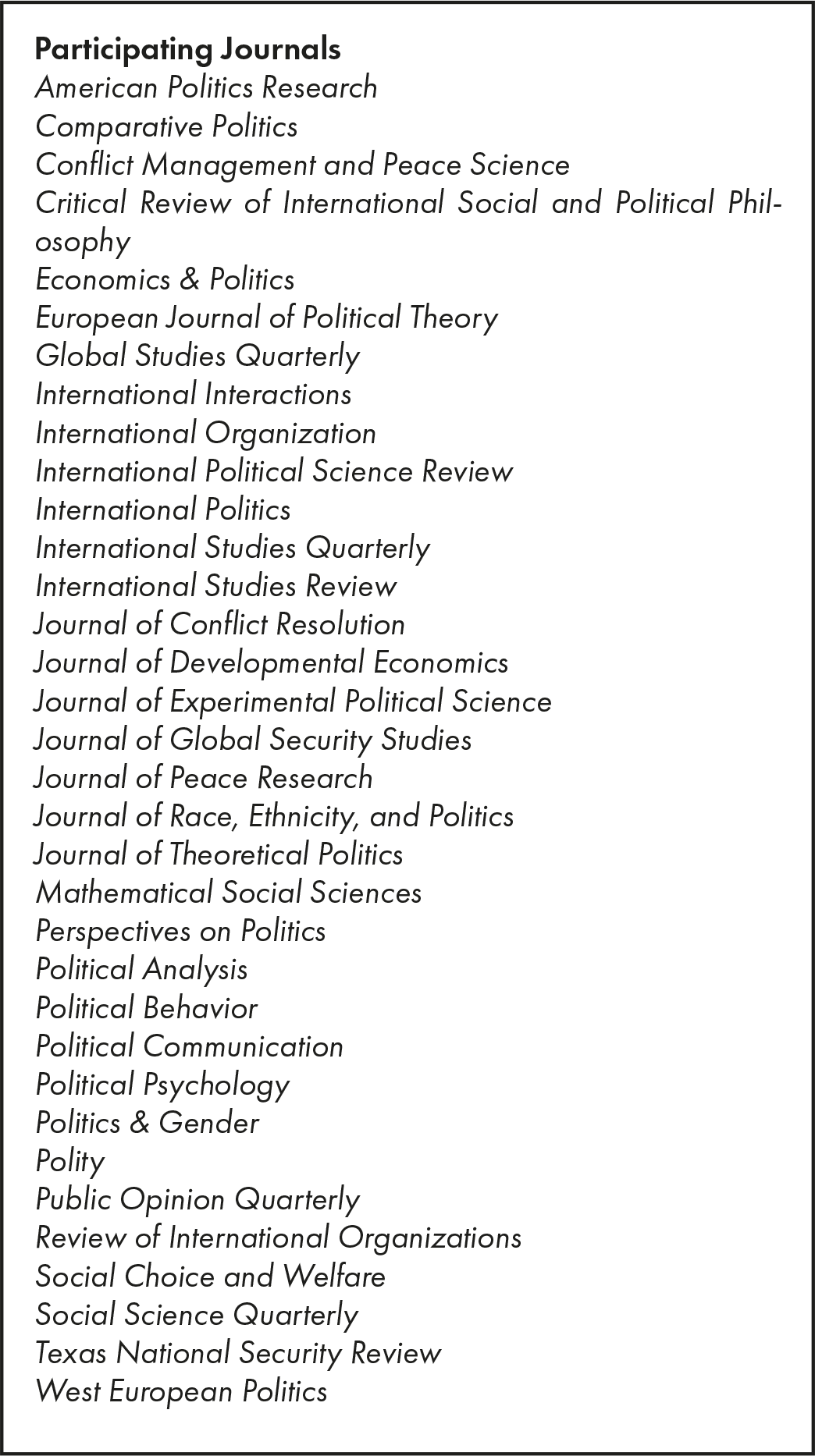
The editorial team has instituted a practice of review transfers that allows the authors, whose manuscripts were externally reviewed and rejected, to transfer reviews to another participating journal. The list of all the journals currently participating in this initiative is shown in Table 10. Review transfers increase the speed efficiency of the review process, especially in cases where authors agree with reviewers’ comments and use them to guide their subsequent revisions for submission to another journal. We also allow authors rejected by another journal participating in this initiative to transfer anonymous manuscript and reviews to the APSR.
Journals Participating in Review Transfers from/to the APSR

Note: The information was last updated on March 11, 2026.
We received the first request for review transfers to another journal in December 2024, and we have received 22 requests to transfer reviews and reviewed manuscripts to another journal (by the end of February 2026). We have also received one “transfer in” to the APSR following rejection by another journal.
We anticipate that the practice may grow in the future, as authors become more familiar with this possibility. In a recent survey of authors, Cambridge University Press found that many of them would be willing to participate in a review transfer.

PUBLISHING
The APSR publishes 4 issues per calendar year, following an established publication schedule. However, all accepted manuscripts enter the production immediately after the acceptance and get published on the APSR “First View” before the inclusion in the issue. Therefore, the first issues published since the change of the editorial team include articles that were already published on the First View at the time of editorial change.
An overview of the published content over time is presented below in Table 11. One should keep in mind that since 2023, our publisher (Cambridge University Press) primarily tracks the number of published articles rather than published pages. The number of pages per issue is still relevant for printing purposes since we aim to publish each issue in a single-bound volume (the APSR is still printed for distribution to several libraries worldwide). The number of research publications in each volume excludes corrections and Notes from the Editors (that is, it includes only citable research materials).
Pages and Publications per Volume

Note: Notes from the editors, corrigenda, and errata are excluded; data cover 4 issues published in a calendar year (therefore, they do not reflect time of publication on the APSR First View).
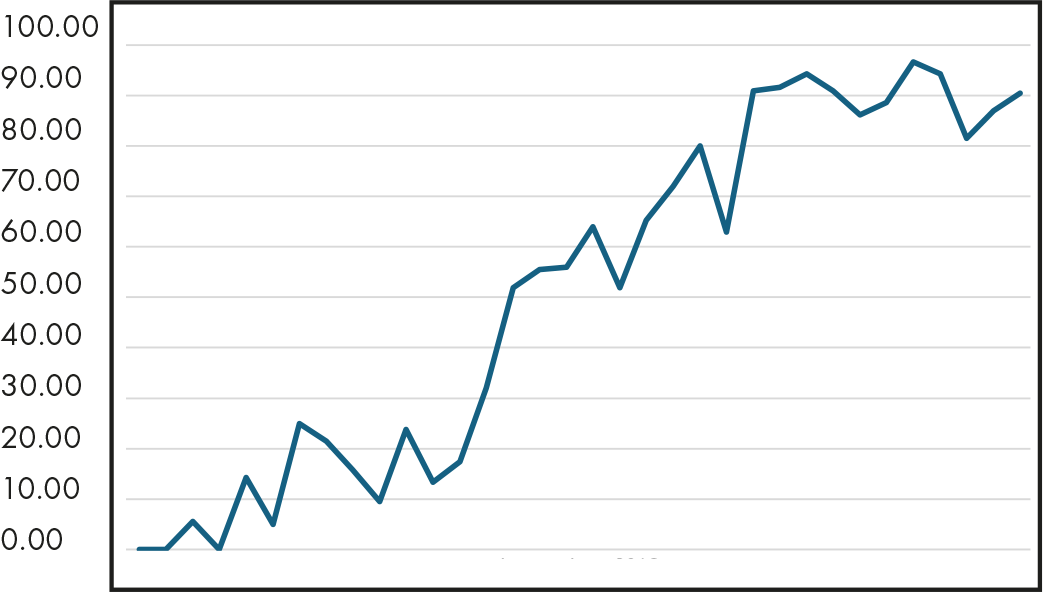
Over the years, we have greatly expanded the percentage of articles published in Open Access; you can see the overview in Figure 3. A majority of research publications are now published as Open Access, allowing readers everywhere immediate access to the published content, though we seem to have reached a ceiling at about 90%.
Open Access Research Content Over Time
Note: Starting with issue 112(1) from 2018. Data include issue 120(2), which will be published in May 2026.

In Tables 12 and 13 we present the data on published articles since the change of editorial team (focusing on subfields and methodology). One should keep in mind that some articles included in this analysis were submitted (and/or reviewed) before the change of editorial teams. However, all the manuscripts accepted after June 1, 2024, have undergone reproducibility checks.
Accepted Manuscripts by Section and Editorial Team

Note: Submission section is selected by corresponding author at time of initial submission.
Accepted Manuscripts by Methodology and Editorial Team

Note: Excludes accepted manuscripts with missing data.
We also include information about the demographics of accepted manuscripts (see Table 14 for data on gender and Table 15 for data on race and ethnicity).
Acceptances by Authors’ Gender

Acceptances by Authors’ Race and Ethnicity

Note: Data include all acceptances for submissions submitted after January 1, 2018. Previous editorial teams combined information about all solo non-white authors in a single category (“author of color”); we disaggregated this category based on the authors’ answers. Authors who selected several racial categories are included in the category “other.” ■
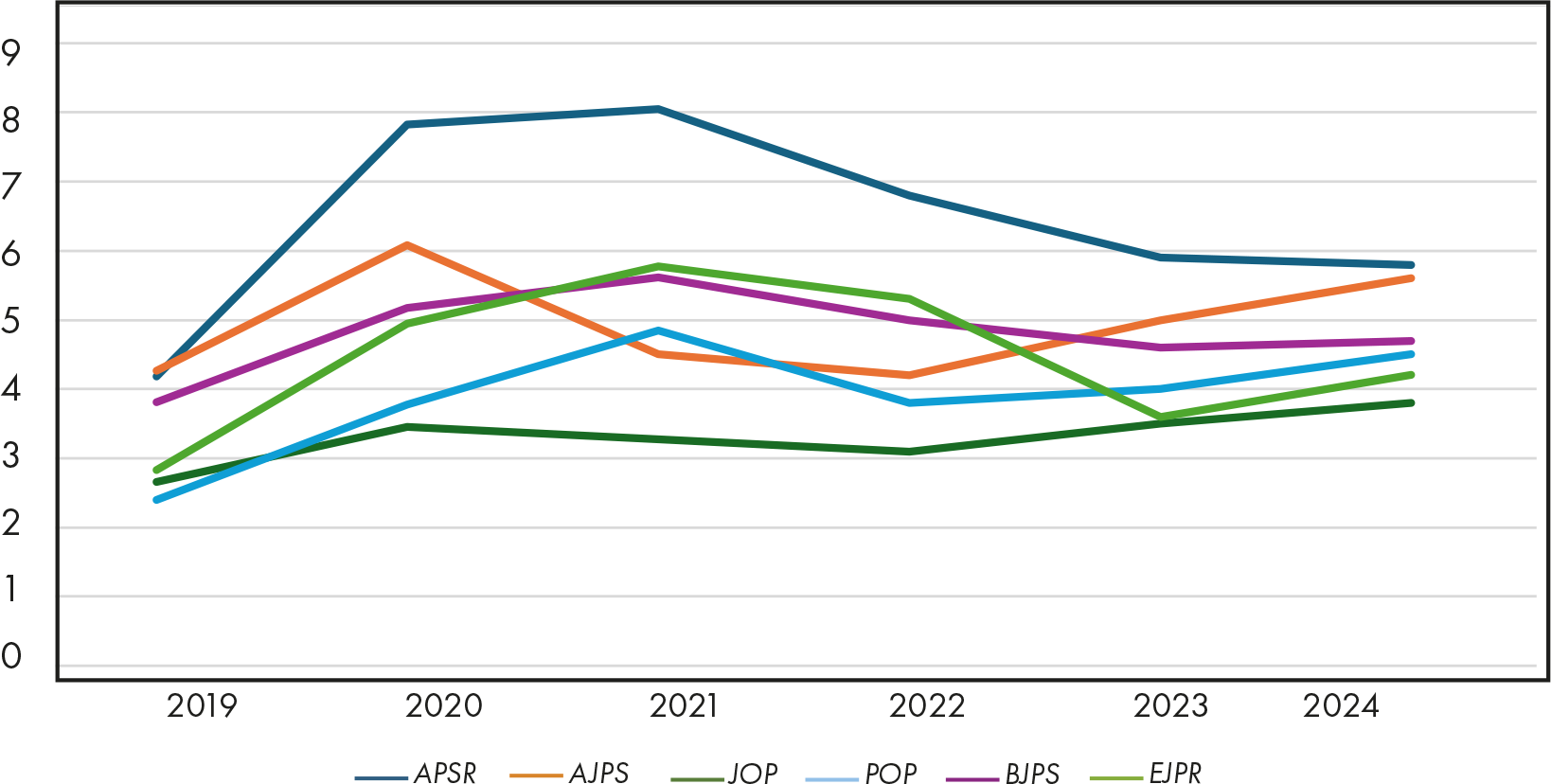
We end with the recognition that a journal’s status among its peers is reflected, albeit imperfectly, in its impact factor (JIF), which is measured as a ratio of citations to citable items (that is, published research manuscripts). Compared with the other top general journals in political science, one can see that the APSR has consistently been ranked as the top journal in political science (see Figure 4 below). We hope to maintain this position throughout our tenure.
Journal Impact Factor Over Time