Congenital heart defects (CHDs) are frequent congenital malformations affecting approximately 0.6–1.2% of newborns worldwide. Reference Lara and Lopez1 The clinical severity of CHD has a wide range from simple defects to more complex defects with co-morbidities such as pulmonary hypertension, heart failure, and immunocompromising genetic defects. Reference Warnes, Liberthson and Danielson2 Especially severe CHD that makes medical intervention necessary in the first year of life Reference Zaidi and Brueckner3 has an estimated proportion of up to 30%. Reference Leirgul, Fomina and Brodwall4,Reference Bjornard, Riehle-Colarusso, Gilboa and Correa5 Complications caused by CHD do have not only an impact on paediatric patients’ life but also on adult patients, reflected by a study showing that about 3% of adults with CHD died at a median age of 32 years in years between 1991 and 2015. Reference Naidu, Grigg and Zentner6 At the same time, the survival rate of paediatric patients with CHD is constantly rising with more than 90% of adolescent CHD patients reaching adulthood. Reference Marelli, Mackie, Ionescu-Ittu, Rahme and Pilote7,Reference Marelli, Ionescu-Ittu, Mackie, Guo, Dendukuri and Kaouache8 Optimal primary healthcare of paediatric patients with CHD is therefore essential and includes a complete immunisation status. Reference Woodward9 Due to factors like reduced immunocompetence, pulmonary hypertension, volumetric load and more frequent surgeries, children with CHD are at higher risk for infectious diseases than the general population. Reference Pongiglione, Possidoni and di Luzio Paparatti10,Reference Kovacikova, Krasnanova and Skrak11 Furthermore, CHD might result from underlying genetic syndromes that can affect the immune system Reference Radford and Thong12 complicating clinical treatment. For example, in the case of lymphocytes, abnormalities in 22q11.2 deletion syndrome which is often associated with CHD, immunisation with live vaccines should be avoided. Reference McDonald-McGinn, Hain, Emanuel, Zackai, Adam, Ardinger, Pagon, Wallace, Bean and Stephens13 In Germany, vaccination recommendations updates are regularly published by the “The Standing Committee on Immunization” (STIKO) located at the Robert Koch Institute (RKI). The last published recommendation comprises standard vaccination against 14 infectious diseases until reaching the age of 18 years. Vaccination within the recommended time frame for primary and booster vaccination is the goal, but there is also a catch-up time frame to complete the vaccination status if single or multiple shots were missed. 14 In Germany, all standard vaccinations are recommended for paediatric patients with CHD. Reference Hager15 Apart from the mentioned restrictions regarding vaccinations in cases of immunodeficiency, some recommendations exceed standard vaccinations. In regards to any kind of planned surgery, live vaccination is not recommended in the last two weeks before and after surgery. 14 And especially for children with CHD as well as children with other chronic diseases, stricter vaccination recommendations also exist. Reference Hager15 Although complete immunisation is regarded as a highly important factor, Reference Chen, Yeung, L., Smith and Farr16 data and literature about immunisation rates among children with CHD are rare. Therefore, this study aimed to determine the vaccination coverage of paediatric patients suffering from various CHD in one of the biggest paediatric cardiology departments in Europe. Next to standard vaccination recommendation, there are the mentioned additional recommendations for paediatric patients with CHD. However, in this study, we focused on the standard vaccination recommendations.
Materials and methods
Data collection
In this retrospective observational study, individuals were recruited at the outpatient clinic of the Department of Congenital Heart Defects and Pediatric Cardiology at the German Heart Center Munich between February 2016 and February 2017. Eligibility criteria were age between 23 months and 17 years at the time of admission and diagnosis of a structural CHD. Written informed consent to participate in the study and approval of the data collection and storage policy was obtained from all parents or guardians. The study was approved by the ethical board of the Technical University of Munich (Project 416/15).
If the families agreed to participate, they brought their vaccination cards, copies of which were documented. All families were interviewed by questionnaire aimed to assess the immunisation status, either by personal interrogation or by postal sent out questionnaires. Vaccination against 12 out of the 14 recommended infectious diseases in childhood and adolescence by the STIKO were queried.
We primarily focused on the complete vaccination status of the following vaccination: Tetanus, Diphtheria, Pertussis, Poliomyelitis, HIB, Hepatitis B, Measles/Mumps/Rubella, Varicella, Pneumococci and Meningococci. Immunisation against Human Papillomavirus (HPV) infection was excluded since it is not related directly to CHD. Immunisation against rotavirus was also excluded since vaccination was recommended in 2013 in Germany and did not affect all patients.
Vaccination against Measles, Mumps, and Rubella were handled as one since it is usually applied as one combination vaccine. Besides, the questionnaire included demographic variables (i.e. age, gender, place of residence). Medical variables (i.e. diagnosis, surgical treatment, genetic syndrome) were assessed from the patient’s medical charts. The Bethesda classification by Warnes et al. was used to classify the severity of the CHD. Reference Deanfield, Thaulow and Warnes17
Statistical analysis
General linear models, as well as student´s T-test, were performed for group comparison and descriptive data. Dichotomous variables were analysed using Chi-Square tests or Fisher’s exact test, respectively. Data were analysed using SPSS 25.0 (SPSS Inc., IBM Company, Chicago, Illinois). Statistical significance was determined two-sided and with a p-value <0.05.
Results
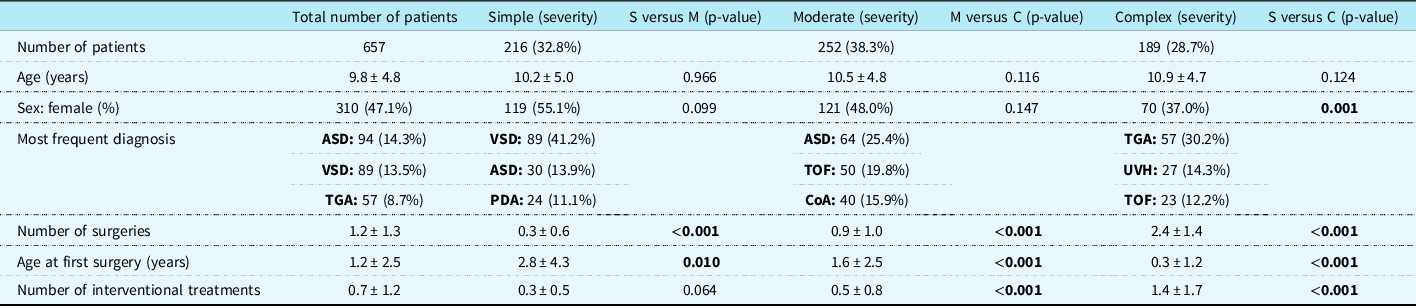
Out of all 657 patients, 216 (32.9 %) had a simple heart defect, 252 (38.3%) had a moderate, and 189 (28.8%) a complex heart defect. The most common types of CHD in our study were ventricular septal defects (VSDs) with 13.5%, followed by atrial septal defects (ASDs) and transposition of the great arteries (TGA) (9.7% and 8.7%, respectively) (Table 1).
Description of the CHD children regarding age, sex and CHD specifics.

ASD: atrial septum defect; C: complex; CHD: congenital heart defect; CoA: coarctation of the artery; M: moderate; p: level of significance with p ≤ 0.05; PDA: patent ductus arteriosus; S: simple; TGA: transposition of the great arteries; TOF: Tetralogy of Fallot; UVH: univentricular heart; VSD: ventricular septum defect
Significant values are bold
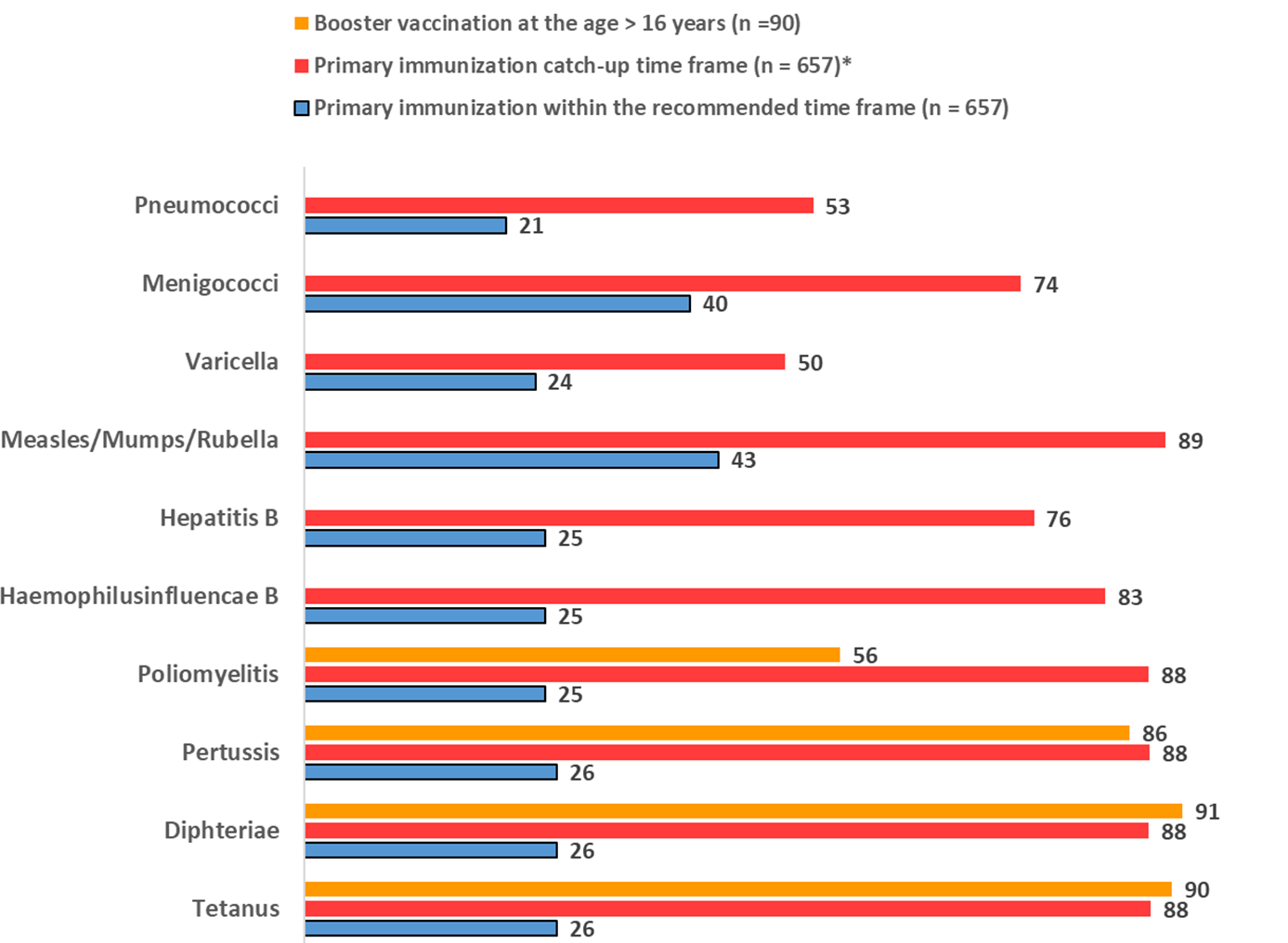
In summary, of these 657 CHD patients, 44 (6.6%) received all types of recommended vaccinations within the recommended time frame and 34 % (n = 221) of the CHD children reached all types of recommended vaccinations within the allowed catch-up time. Eight patients (1.2%) were completely unimmunised; they did not receive any single vaccination. By comparing children with complete or incomplete immunisation status, we found no significant difference in age and sex. Within the allowed catch-up time frame the single vaccination rates for primary immunisations were overall above 80%, except for Varicella (49.9%), Pneumococci (52.8%), Meningococci (74.3%) and Hepatitis B (75.7%) (Fig 1).
Percentages of single vaccination rates in children with CHD according to STIKO recommendations. *Including children with CHD who have had their immunisation within the recommended time frame.

Influence of CHD on the immunisation status
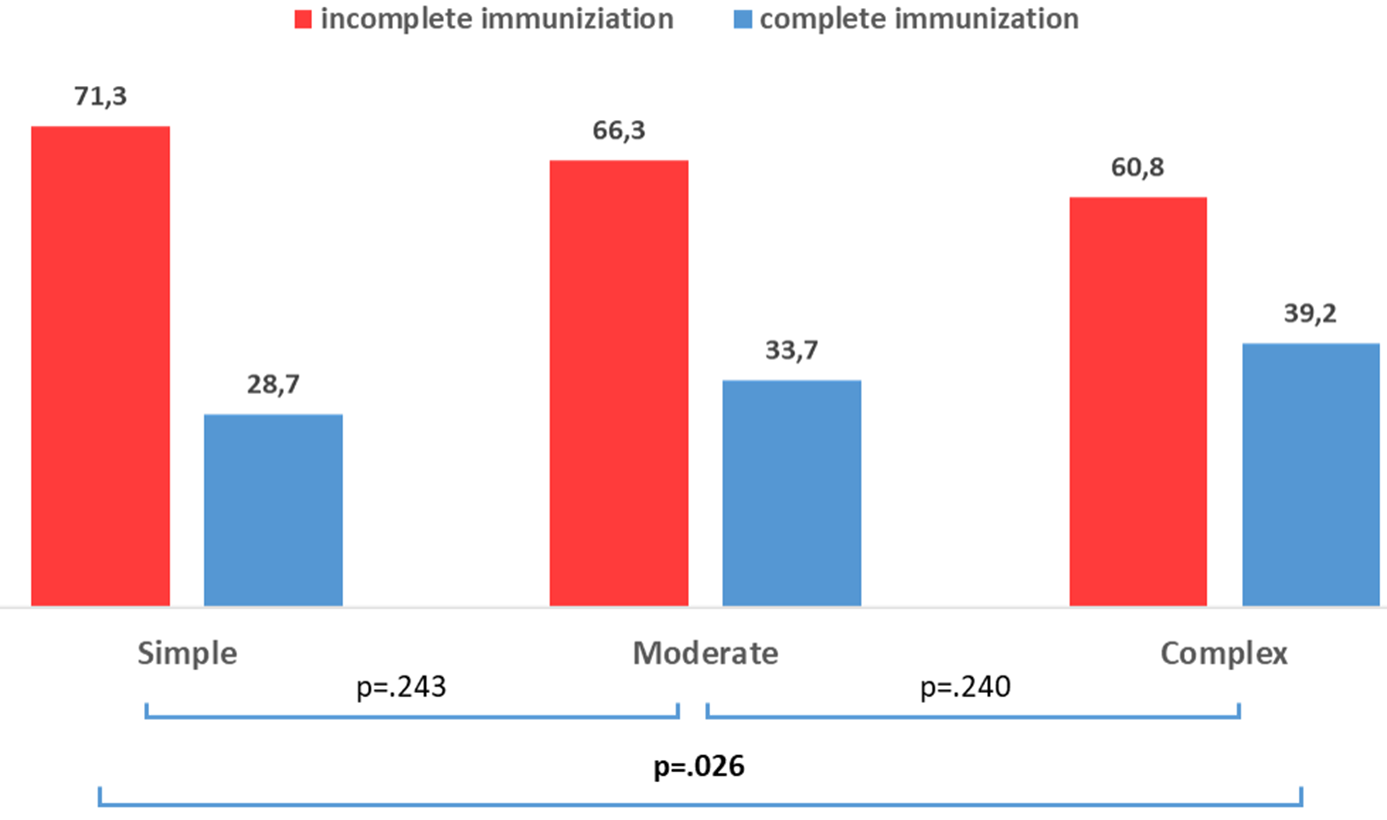
As seen in Table 1, the higher the severity class, the more surgeries and interventions the children with CHD had and the younger age at first surgery. Therefore, a Chi-Square test was used to compare the CHD severity classes (Fig 2 below, with a level of significance p < 0.05). Significantly more children with severe CHD were completely immunised compared to children with simple CHD.
Immunisation rates, shown in percentages, in a comparison between the CHD severity classification. The level of significance p < 0.05.

Influence of the genetic disease on the immunisation status
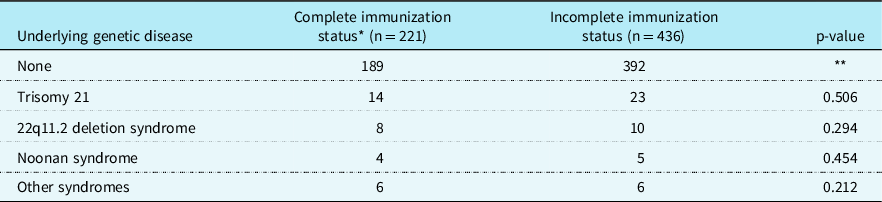
A total of 76 (11.5%) children were diagnosed with a genetic disease underlying their CHD. Trisomy 21 (37/76, 48.7%), 22q11.2 deletion syndrome (18/76, 23.7%), and Noonan syndrome (9/76, 11.8%) were the most common syndromes. The 22q11.2 deletion syndrome, a genetic disease in which there are explicit recommendations regarding vaccination, Reference McDonald-McGinn, Hain, Emanuel, Zackai, Adam, Ardinger, Pagon, Wallace, Bean and Stephens13 showed no significant differences in vaccination rates (Table 2).
Multinomial regression model of CHD children without and with underlying genetic syndrome concerning immunization status.

n: number
* Received all kinds of recommended vaccinations within the recommended time frame
** Constant term
p: level of significance with p ≤ 0.05
Vaccination rates of children with CHD compared to the general German population
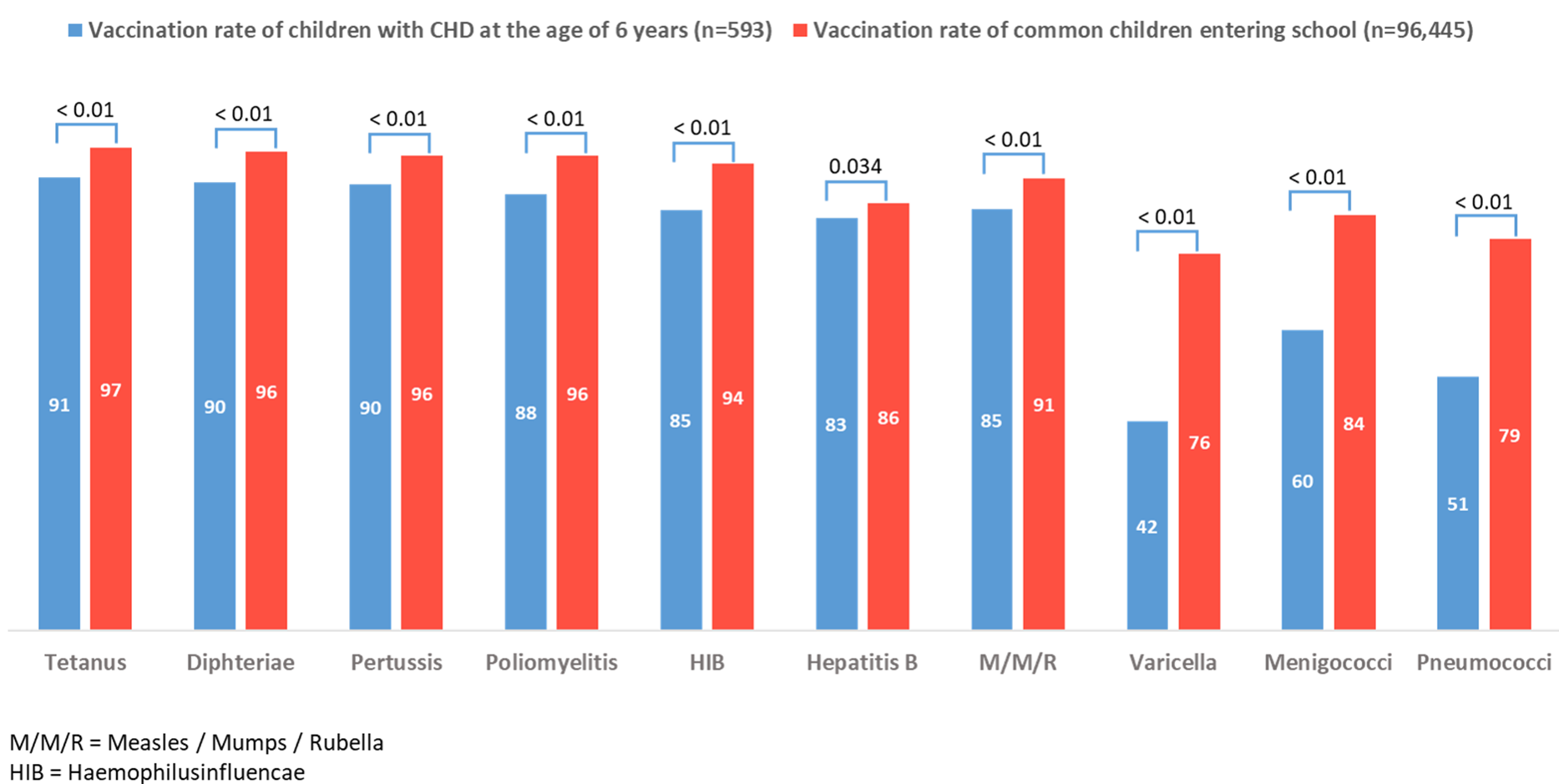
Finally, we compared CHD patients data regarding primary vaccination status at the age of 6 years with vaccination data of all children entering school in 2015 published by the RKI. 18 Patients with CHD showed significant reduced vaccination rates (Fig 3). Immunisation rates for Varicella, Meningococci, and Pneumococci, were the lowest in children with CHD compared to the general population.
Comparison of the vaccination rates, shown in percentages, of children at the age of 6 years with versus without CHD. n = number; the level of significance using Chi-Square test p < 0.05.

Discussion
Complete primary immunisation rate in children with CHD was only 34 % (n = 221) within the allowed catch-up time in our study. Among these primary immunisation rates, vaccination against Hepatitis B, Meningococci, Varicella and Pneumococci was found to have the lowest coverage. Compared to the general population consisting of children at the age of entering school, the vaccination rate was significantly lower. To the best of our knowledge, this is the first systemic study of vaccination rates in children with CHD in Germany.
There are different possible explanations for a specific low vaccination rate. The low immunisation rate against Varicella, for example, might be related to the fact that it is widely not recognised to be a severe disease by the common population. Reference Vezzosi, Santagati and Angelillo19,Reference van Lier, Tostmann, Harmsen, de Melker, Hautvast and Ruijs20 The vaccination against Pneumococci had already been recommended since 2001 for patients with cardiovascular disease, 21 while the general recommendations for vaccination of all infants against Pneumococci and Meningococci were published by the RKI in 2006. 22 These recommendations are more recent than the others and might therefore be less accepted by the common population. Of course, different individual factors influence vaccination coverage, such as perception and beliefs regarding infectious diseases and their prevention as well as vaccine effectiveness. Reference Harmsen, Ruiter, Paulussen, Mollema, Kok and de Melker23 Demographic factors like parentsʼ educational background are also contributing to the vaccination status of a child. Reference Hak, Schonbeck, De Melker, Van Essen and Sanders24
When it comes to children with CHD, the lower vaccination rate compared to the general population might be surprising since children with CHD are a vulnerable group of patients. The vaccination recommendations are the same as in the general population. Reference Hager15 It has already been discussed that a reduced vaccination rate in children with CHD might be the result of a fear of febrile complications. Reference Lantin-Hermoso, Berger and Bhatt25 Interestingly, we could show in our study that children with severe CHD are significantly better immunised than children with simple CHD. This is congruent to a former study investigating only patients with complex CHD. Reference Helm, Ortmann, Steinmann, Bauer and A.26 They found a high vaccination rate of more than 90% in the routine vaccinations and complained about a low vaccination rate for additional immunisations against influenza or pneumococcal disease. However, the study relied on self-reported data and did not check the vaccination certificates. This finding is supported by the fact that paediatric patients with severe CHD also underwent more surgical procedures at younger ages. We assume that this might be one of the drivers of the measured difference since there are vaccination recommendations regarding surgeries, 14 which might lead to a higher awareness of required vaccinations. Children with moderate and severe CHD are monitored regularly at a specialised center, this might be another reason for lower rates in children with simple CHD.
Another possible explanation was that the vaccination rate in children with a syndromic CHD in the context of a genetic disease might be lower due to an accompanying immunodeficiency. In deletion 22q11.2 syndrome, live vaccination should not be performed in patients with lymphocyte abnormalities. Reference McDonald-McGinn, Hain, Emanuel, Zackai, Adam, Ardinger, Pagon, Wallace, Bean and Stephens13 For trisomy 21, there exist no explicit vaccination recommendations in Germany that differ from the general recommendations. It is, however, known that children with trisomy might be affected by reduced immunocompetence. Reference Ram and Chinen27 The vaccination rate in patients, affected by these syndromes or any other genetic syndrome, however, was not lower compared to children with non-syndromic CHD. In contrast, vaccination rates tended to be even higher, although not significantly.
To ensure optimal primary healthcare, a complete immunisation status for children with CHD is a bearing pillar during treatment and aftercare. Reference Radford and Thong12,Reference Triedman and Newburger28 These findings imply that the awareness of required vaccinations might be higher, not only in parents and treating physicians of children with severe CHD but also in children with CHD in the context of multisystemic genetic diseases.
Conclusion
The vaccination coverage rate in children with CHD is lower than in comparable healthy school-age children, although this is a vulnerable patient group. Overall, only about 34% of children with CHD have received all recommended types of vaccinations. These findings underline the need for education and training of parents and treating physicians of children with CHD concerning vaccinations.
Limitations of the study
Demographic factors known to affect the willingness to vaccinate, like the level of education or place of residence, were not taken into account but influence vaccination rates as well.
Acknowledgements
We would like to thank the families to participate in this research project.
Financial support
The PI (A. Wacker-Gussmann) was partly funded by Pfizer Pharma GmbH. The whole project was independent of any Pfizer products.
Conflicts of interest
None.
Ethical standards
The study was approved by the ethical board of the Technical University of Munich (Project 416/15).
Contributorship statement
JR and DSW are equally contributed to the first authorship.
Study design: AW-G, RO-F.
Drafting the manuscript: JR, DSW, CU, AW-G.
Statistical analysis: JR, DSW.
Obtaining clinical data: CU, RB, AW-G, JR.
Critical reviewing the manuscript and final approval: all.