Introduction
This article sets out the contribution made by the findings of research intended to evaluate public health outcomes of the Wisbech Time Credits Project in Cambridgeshire to the theory and practice of the co-production of public services. Time Credits are a particular form of community currency based upon the reciprocal exchange of time, the principle being that after contributing one hour of voluntary work, members receive a credit that can be exchanged either for another member's time or, more commonly, an hour's use of services provided by various corporate ‘spend partners’ such as gyms, cinemas and visitor attractions. The principle of reciprocity is reflected in the ethos of co-production embedded within many of the organisations promoting time exchange and, in particular, Spice, the social enterprise delivering the Wisbech Time Credits Project.
The ethnographic research this article draws upon illustrates the gulf between the rhetoric of reciprocity and the co-production of public services and reality. The research has found evidence of considerable success in the use of Time Credits to attract ‘non-traditional volunteers’ into contributing to services provided by the public sector and civil society organisations and thus potentially realising the known health benefits from volunteering. However, the case study reveals this type of initiative has struggled to achieve the type of transformational, participative service design and reciprocal economy envisaged by advocates of this form of time exchange. Furthermore, it raises questions of the extent to which this type of initiative can or ought to contribute to the provision of services depleted by local government cuts in areas with high levels of deprivation.
The article has four main aims. The first is to locate co-production within the narrative of austerity and, to argue in the case presented here, the former cannot be understood independently of the latter. The article secondly aims to locate co-production and the ethos of Time Credits in academic debates about the reciprocal economy and reciprocity in civil society. Thirdly, it illustrates the disconnect between the rhetoric and reality of co-production, drawing on empirical evidence. Finally, the article shows that whilst volunteering through Time Credits has delivered some significant benefits to individuals and the local community, these fall short of the ‘transformative’ (Glynos and Speed, Reference Glynos and Speed2012) aspirations embedded within the somewhat fuzzy concept of co-production.
Co-production and austerity
In recent years, the concept of co-production has been adopted to refer to the organised involvement of citizens in the production of public services – a practice that has become increasingly regarded as essential for sustaining the current levels of service provision in the changing economic context (Brandsen and Pestoff, Reference Brandsen and Pestoff2006; Pestoff, Reference Pestoff2006). It can be seen as the inclusion of the recipients of professional services in their design and delivery (Needham and Carr, Reference Needham and Carr2009) mixing categories of consumer and producer (Parks et al., Reference Parks, Baker, Kiser, Oakerson, Ostrom, Ostrom, Percy, Vandivort, Whitaker and Wilson1981; Fotaki, Reference Fotaki2015) and, potentially, offering an alternative to recent public choice approaches in which the state plays the role of producer, whilst citizens are cast purely as consumers of public services (Bovaird, Reference Bovaird2007; Needham, Reference Needham2008). With academic and policy interest in the term dating back to fiscal and economic crises of the 1970s (Glynos and Speed, Reference Glynos and Speed2012) in the UK, the approach predates the current programme of fiscal austerity and can be traced back to public service reforms under the New Labour administration. The ‘excessive elasticity’ in the term's definition generates a perception that the approach offers a universal cure to the ills of public service delivery (Needham, Reference Needham2008: 224) and suggests a capacity to encompass competing logics.
Glynos and Speed (Reference Glynos and Speed2012) identify two iterations of the term co-production. In the first earlier iteration reflected in the work of Parks, Ostrom and others (Parks et al., Reference Parks, Baker, Kiser, Oakerson, Ostrom, Ostrom, Percy, Vandivort, Whitaker and Wilson1981) it is essentially additive with the emphasis on the production of services that supplement and extend professional service delivery. The second emphasises the desire amongst advocates of policy measures based on co-production to transform the provision of services (New Economics Foundation, 2008) such as public health, a desire with parallels in academic debates. Pestoff (Reference Pestoff2006), following writers such as Barber (Reference Barber1984) and Walzer (Reference Walzer and Gutmann1988), sees the co-production, specifically of welfare services, as part of a programme for the renewal of both the welfare state and democracy itself. The act of co-production can be seen as conferring both ownership and political rights (Boyle, Reference Boyle2010). Pestoff (Reference Pestoff2006) however, also connects an enthusiasm for co-production to a certain hostility towards centralised state provision of welfare services. Citing Hirst, for whom ‘underfunded and ineffective’ welfare regimes are a product of the failures of both social and liberal democracy (Reference Hirst1994: 165), self-governance and joint producers and consumers operating within a mix of regionally determined third sector welfare providers offer a check on the tendencies of centralised systems to over-produce and over-consume (ibid: 169). This antipathy towards the role of the state in welfare provision, present within the concept of co-production, is significant in interpreting its role in the current programme of fiscal austerity.
The 2010 General Election ushered in the Coalition government of Conservatives and Liberal Democrats, resulting in the adoption as government policy of the ‘Big Society’, an ill-defined concept that had formed part of Conservative economic strategy. Seen as a means of reconciling the desire to reduce the size of the state and yet maintain public welfare, the electoral impact of the concept was unclear (Smith, Reference Smith2010). The significance comes, however, in the way in which it reflects a shifting of the mechanism for welfare provision from government to the voluntarism that predated the post-war welfare state. The ensuing austerity programme saw cuts of 27 per cent to the local authority budget and 51 per cent to the communities’ budget of the Department for Communities and Local Government (DCLG). This was offset somewhat by an increase in the income for local authorities from a raise in the Council Tax producing an overall cut of 14 per cent in real terms (Lowndes and Pratchett, Reference Lowndes and Pratchett2012). The impact of public sector cuts appears particularly acute for areas with pre-existing high levels of deprivation. Contemporary studies identified Fenland District, the local authority in which the town of Wisbech is located, as considerably less resilient to a reduction in public sector funding than the more affluent districts in Cambridgeshire (BBC/Experian, 2010).
Whilst the political opponents of the Coalition Government and the approach adopted to deficit reduction criticised the Big Society as little more than a cynical attempt to clothe austerity in the language of civic renewal, it can also be analysed in terms of competing ideological strands within Conservative thinking (Lowndes and Pratchett, Reference Lowndes and Pratchett2012). On the one hand, there is the collectivist impetus reflected in ‘Localism’ (DCLG, 2011) and the devolution and empowerment of communities and local authorities. On the other, the approach is rooted in economic individualism and the notion that the expansion of the role of the state has a causal effect upon the breakdown of local communities through the ‘crowding out’ of civil society (Lowndes and Pratchett, Reference Lowndes and Pratchett2012). The Big Society, uniquely associated with David Cameron's brand of Conservatism, can be read as a component of a wider programme to restructure public services. The dominant of which is characterised by an antipathy to public provision in which budgeting and decision-making are shifted to the local level, responsibility for outcomes is shifted from the state to the individual (Gregory, Reference Gregory2014) creating an increased role for the private sector and in some cases civil society (Taylor-Gooby and Stoker, Reference Taylor-Gooby and Stoker2011). This ‘state-organised unburdening of the state’ (Offe, Reference Offe2009) provides a point of continuity between the approaches of New Labour and those of the Coalition, despite a difference in emphasis (Lowndes and Pratchett, Reference Lowndes and Pratchett2012). The concepts of co-production embedded within these attempts to reform welfare provision appear closer to the ‘additive accent’ identified within the concept in that it sees user participation in terms of delivery of services, largely shorn of the transformational aspirations of its advocates that it might develop forms of community reciprocity (Glynos and Speed, Reference Glynos and Speed2012: 411). Yet it may also be the case that austerity adds a further dimension as in the face of a reduction in services and resources co-production is increasingly required not only to supplement provision but to replace the services that have been withdrawn (Gregory, Reference Gregory2014).
The reciprocal economy (and Time Credits)
One concern, reflected less in the academic literature on co-production yet prominent in the conceptual underpinning of much of the UK's time economy, is that of the nature of the economic activity generated. For Edgar Cahn (the founder of Time Dollars and the inspiration behind two of the key organisations in the UK's time economy Spice and Timebanking UK), co-production and the reciprocal economy are facilitated by technologies such as Time Dollars, where the transactions are given equal recognition with those that take place in the money economy (2004). Such parity requires a redefinition of work to include social reproduction, childrearing, care giving and, crucially, making neighbourhoods and democracy work (ibid: 33). Reciprocity has been taken as a governing principle of the productive activities of civil society, distinct from the redistributive principles of production by the state and the economic principles governing market institutions and their transactions (Evers and Laville, Reference Evers and Laville2004:16-18), the latter posing a threat to both society and the environment, having become dis-embedded, as a consequence of ‘market fundamentalism’ (Polyani, Reference Polyani1944), from the norms and values of society and entanglement in the ‘network of associations’ and plurality of forms of ownership offered by civil society institutions such as co-operative and charities (Walzer, Reference Walzer1991: 6). Furthermore, the role of reciprocity within human economies has been of interest to social scientists since Mauss's (Reference Mauss1954) study of gift exchange. Contemporary authors distinguish between ‘open’ reciprocity that keeps no accounts, implying a relationship of permanent mutual commitment, in contrast to the ‘closed’ balancing of accounts that occurs within a money transaction (Graeber, Reference Graeber2001: 220). This notion of ‘generalised reciprocity’ as a relational exchange rather than a discrete transaction has been identified as one of the internal logics of co-production in its current form in UK policy making (Glynos and Speed, Reference Glynos and Speed2012: 409). For Cahn, the exchange of time is not conceived purely as an alternative to the money economy or a distinct, bounded realm: co-productive activity, governed by the principle of reciprocity, represents a blurring of the divide between state and market (2004: 33).
Others see the broad range of organisations operating within the overlapping realms of state, market and civil society that make up the mixed economy (Evers and Laville, Reference Evers and Laville2004) as critical. For example, social enterprises and social entrepreneurs were promoted under the New Labour government as the avant garde of the state and an opportunity to provide a testing ground for innovation in public policy (Leadbeater, Reference Leadbeater1997). With the concept of the mixed economy, private enterprise is also a player. This poses a challenge for organisations seeking to balance commercial and social objectives, and clientelism as organisations align themselves with political elites and funders at the expense of their social purpose (Evers, Reference Evers2005). It generates isomorphic tendencies with civil society organisations adopting commercial mores and practices and, at its worst, it can lead to the squeezing out of social providers or their co-option by commercial providers in seeking to secure lucrative public sector contracts (Williams, Reference Williams2012).
The concept of co-production contains a spectrum of aspirations, from the ‘transformational’ alternative forms of economic activity and democratic renewal to the more prosaic service improvement through dialogue with users. Contemporary practice on co-production reflects many of these elements yet must be set within the context of a programme of austerity and cuts to local authority funding that goes beyond deficit reduction aiming to fundamentally alter the provision of welfare and recast the relationship between the individual and the state.
In light of this, we turn now to the empirical section of the article that examines the case of the Cambridgeshire Time Credits Project in order to understand the extent to which the various strands present in the concept of co-production can be seen to shape specific practices of welfare and particularly health provision.
Wisbech
Wisbech is a historic inland port on the River Nene to the north of Cambridgeshire. The town reached the height of its prosperity following the draining of the surrounding fenland for agriculture from the seventeenth to nineteenth centuries. Wisbech has since suffered economic decline yet agriculture and food production remain central to the town's economy. Despite aspirations to transform the Wisbech into a ‘Garden Town’ (Wisbech 2020, 2016) with an additional 10,000 homes and an estimated £111 million investment in new rail infrastructure, the town suffers from physical isolation and poor transport links. Consequently, the economic and housing growth seen in other parts of what is an affluent county has largely bypassed the town. Whilst agriculture is a stable and growing sector of the local economy, the nature of the employment created is often unattractive to local people. It tends to be low-skilled, seasonal, insecure and employs a high proportion of migrant labour.
One particular consequence of the growth of the agri-food sector is that Wisbech has attracted a large influx of migrants, most recently from Eastern Europe (the A8 Accession countries that joined the EU during its 2004 enlargement). There is evidence that so far, the migrant population has been relatively transient with a high rate of ‘churn’ and early waves of migration from Hungary and Portugal giving way to migrants from rural parts of Poland and Latvia (Haffenden et al., Reference Haffenden, O'Neill and Dunling-Hall2015). Fenland District as a whole has seen the largest proportional increase in the East of England (211 per cent) in the non-UK born population between the 2001 and the 2011 census (Krausova and Vargas-Silva, Reference Krausova and Vargas-Silva2013).
This rapid influx has had an impact upon on community cohesion. It is hard to be certain of the extent of the problems this has posed as the specific issues faced by Wisbech have often been treated by the national press as emblematic of wider debates about immigration, particularly EU migration from the A8 countries. May 2013 saw anti-EU anti-migrant protests in the town. In turn, these were met with responses from groups supporting the migrant community, with the Mayor and local MP speaking out about the benefits that migration has brought as well as the difficulties.
Inward migration has generated a number of specific issues. Housing affordability is problematic across Cambridgeshire yet, even in Fenland, a relatively affordable area, prices are 4.7 times average incomes (Cambridgeshire JSNA 2014/15). The high cost of housing has been one factor in the exploitation of migrants by gangmasters and, in particular, overcrowding. Both have seen a response from multiple agencies with the recent high profile conviction of two Latvian gangmasters (Lawrence, Reference Lawrence2016) and also a more coordinated response to the problem of overcrowding and Houses of Multiple Occupation (HMOs). Politically, whilst the area is represented by UKIP Councillors on the County Council, Fenland District Council is almost completely dominated by Conservatives, with two independent councillors representing Waterlees ward in Wisbech.
In contrast with Cambridgeshire as a whole, Wisbech is at the centre of a cluster of wards with high levels of deprivation, with some seeing the highest proportion of benefits claimants in Fenland. Life expectancy is 6.8 years lower for men and 5.0 years lower for women in the most deprived ward of Cambridgeshire, Waterlees in Wisbech, than in the least deprived (Cambridgeshire JSNA 2014/15). Here skill levels are low and there is persistent worklessness amongst the local indigenous population.
Local services, including local community focused organisations, have experienced budget cuts and continuing insecurity in funding. For example, Wisbech Community House, located in the Waterlees ward, provides advice and guidance to local people often referred by the Job Centre for work preparation programmes. Staffing is provided by Fenland District Council with funding secured recently from central government. In the past, staffing levels have been higher, with up to six staff, but the project now runs with a manager and one full time community officer.
Spice
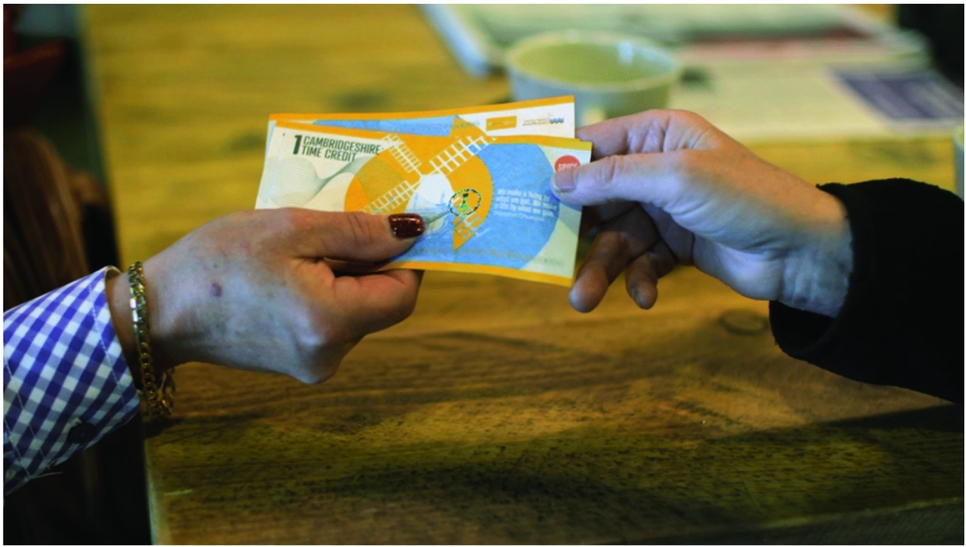
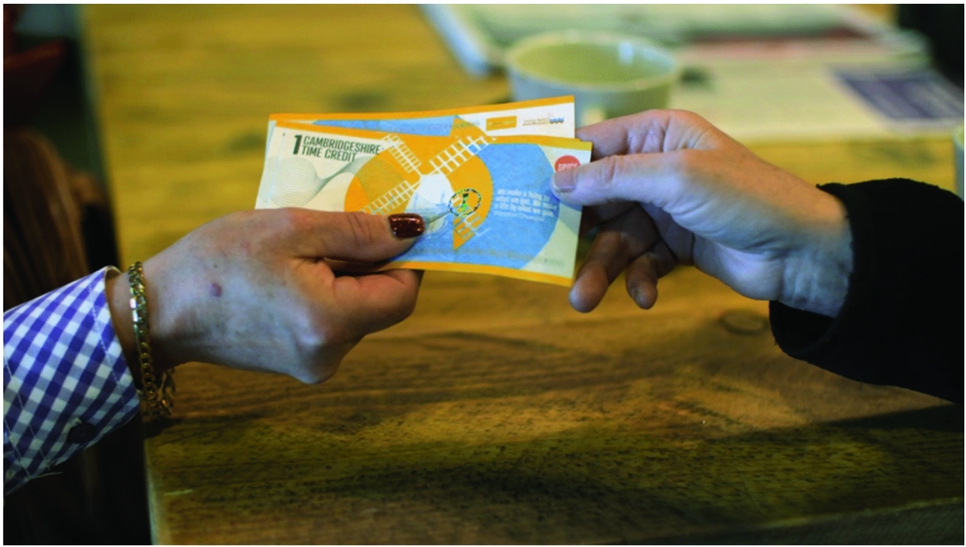
In 2009, Spice was established in South Wales as a social enterprise to develop Time Credits from the original time banking model. Spice adopted a different, more conventionally entrepreneurial, model to time banking. The organisation has experienced rapid expansion and has a range of high profile, influential supporters, such as the think-tank NESTA. It has secured funding for Time Credit projects in six regions of the UK from organisations such as the Welsh Government, the Big Lottery Fund Wales, and various county and local authorities. The Spice model examined in this article is distinct from traditional forms of time banking in a number of ways. Despite good working relationships locally between existing Cambridgeshire Time Banks and Spice this has generated tension within the wider Time Banking movement. First the nature of the exchange itself is different. In exchange for their contribution, volunteers ‘earn’ a Time Credit note (see Figure 1), one for every hour they give, these are intended to ‘incentivise’ volunteers to give time (Cabinet Office, 2011). Time Credits can be ‘spent’ on a range of leisure and other opportunities, typically donated by ‘corporate spend partners’ organisations, local businesses and corporations, to allow the community members to take advantage of their spare capacity. In particular, the spending of Time Credits is skewed towards corporate activities. Second, the Spice model appears much more of an externally provided top down programme. The organisation's entrepreneurial business model and rapid expansion has been provided with both rhetorical and financial support from Government departments and in this case it has been marketed to and purchased in by the upper tier of local Government, Cambridgeshire County Council.
The Spice Time Credit note for Cambridgeshire
Spice receives a considerable proportion of its funding from the Department of Health and has placed a strong emphasis on the potential positive health impacts of Time Credits. Furthermore, it is funded by, or works in partnership with, numerous health and social care organisations. It was described in the Giving White Paper as an approach that offers a thank you for helping in the community (Cabinet Office, 2011). The Spice website claims that ‘Time Credits have had proven results on health and wellbeing outcomes and have transformed patterns of involvement in services and communities’. There is already a body of evidence about the health benefits of volunteering (Casiday et al., Reference Casiday, Kinsman, Fisher and Bambra2008; Morrow-Howell et al., Reference Morrow-Howell, Hong and Tang2009; Jenkinson et al., Reference Jenkinson, Dickens, Jones, Thompson-Coon, Taylor, Rogers, Bambra, Lang and Richards2013) and the research on which this article is based found evidence of direct and indirect health benefits for volunteers (Burgess, Reference Burgess2016).
However, what is of most relevance to this article is the emphasis Spice places on co-production and reciprocal exchange. The Spice website describes Time Credits as ‘a proven tool for building stronger communities and co-produced services where people are active and equal participants’. Generating reciprocity is both an overt part of their aims and something their supporters and backers see as ‘holding communities together’ (Mulgan, Reference Mulgan2016).
Cambridgeshire Time Credits project
The Cambridgeshire Time Credits programme is jointly funded by Cambridgeshire County Council and Cambridge Housing Society. It was set up in collaboration with Spice in July 2014 following a successful completion of a nine-month pilot in Wisbech. Support for the development of multiple Time Credits networks across the county emerged as a response to the budget cuts that forced the County Council to identify new ways to engage local communities, to build community resilience, and to reduce and prevent the escalation of need. The County Council was particularly keen on models that could be built up and, after being supported during the initial set-up period, be able to run with less ongoing financial support from the Council.
We have a strong belief in co-production on an ideological level but also for financial reasons. In the decade 2010–2020, the County Council's budget will be reduced by some 60 per cent. Already a budget of roughly £500 million has been cut by £200 million. Effectively this has left the County Council with a choice of either cutting services or finding new ways to deliver them by involving people in producing those services (Interview with Cambridgeshire County Council Community Engagement Manager, September 2015).
There are sixteen local organisations where people can earn Time Credits. These include schools, homeless hostels, children's centres, an adventure playground and a project supporting people into employment. Activities that volunteers can do to earn Time Credits include reading with children, running after school clubs, gardening, office work, providing adult learning opportunities, working in a café and kitchen, and litter picking. Volunteers can spend Time Credits on activities such as the gym, swimming, going to the cinema, having beauty and hair treatments, attending social events and going to the theatre.
Methodology
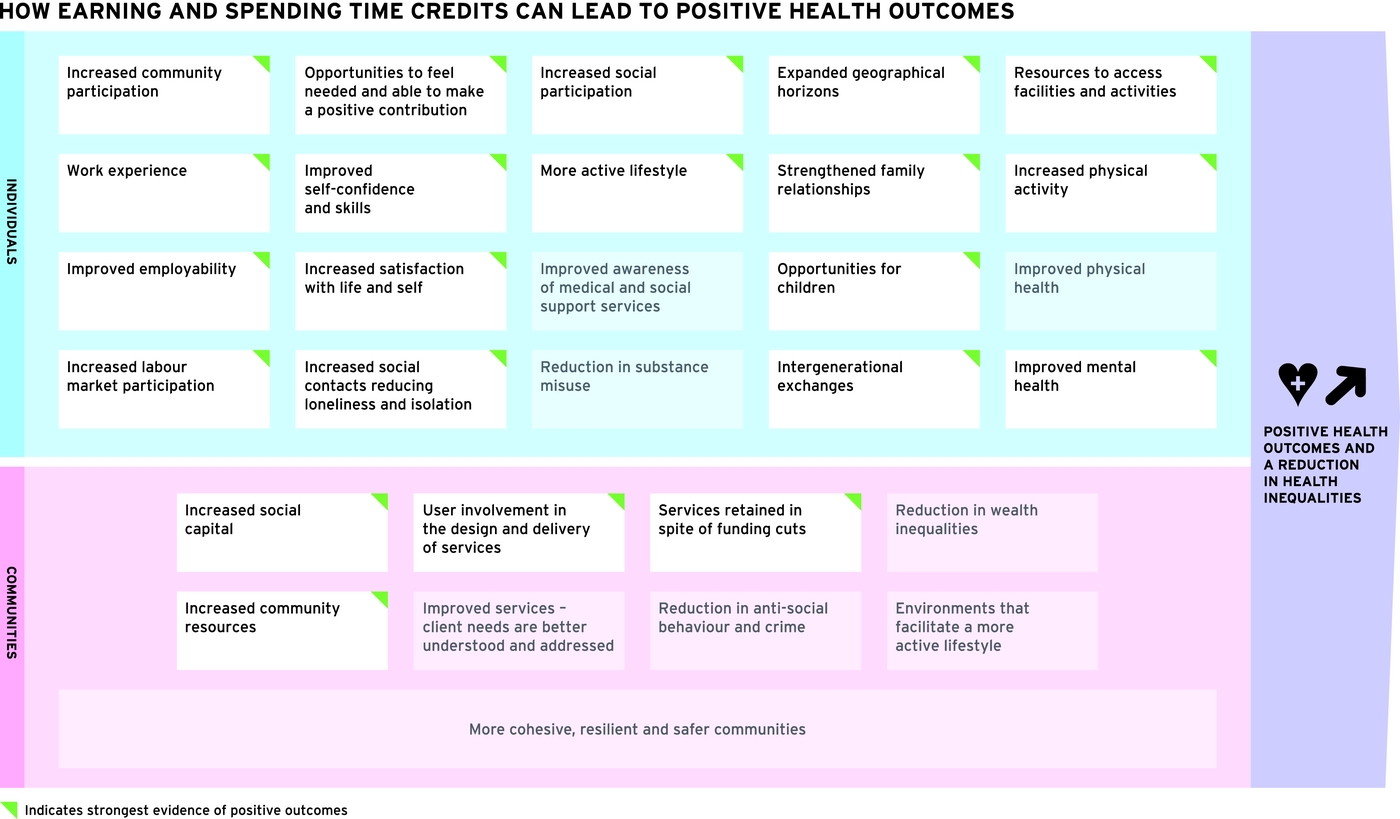
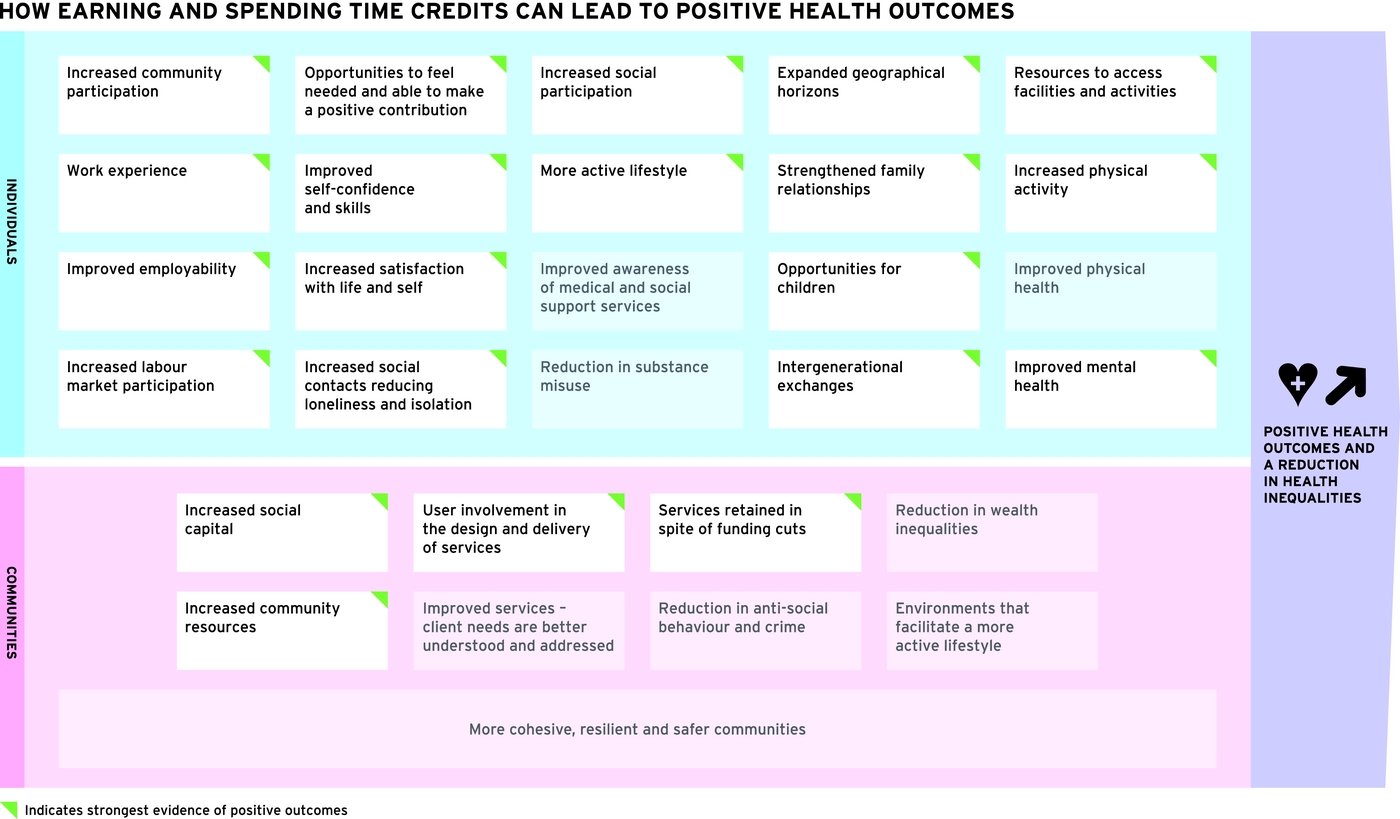
The aim of the research was to evaluate the outcomes of the Time Credits project in Wisbech, Cambridgeshire, with a focus on health. The research took a mixed methods approach using both quantitative and qualitative tools. Three researchers worked in the field with two further desk-based researchers over a period of twenty-two months. The research included interviews with key stakeholders, a literature review and a systematic review of the existing evidence of time exchange and health outcomes. Secondary data analysis and a longitudinal survey with Time Credits members was conducted, with an additional survey to existing members. In depth face to face interviews were also conducted with forty-seven individual volunteers and with twenty-two members of partner organisations, these were a mixture of semi-structured, structured and informal interviews combined with detailed observations captured in research field diaries. The research drew on ethnographic approaches to seek to understand both the individual and institutional context in which Time Credits function in order to determine the relationships they have to public health outcomes. The data were analysed and coded using Nvivo, both a deductive and inductive approach were taken, codes were explored that emerged from the literature review and also that emerged from the data directly. A conceptual model was developed to guide the research. It was amended to reflect the research findings and shows how earning and spending Time Credits can lead to positive health outcomes (see Figure 2).
Conceptual model – how earning and spending Time Credits can lead to positive health outcomes
Findings
Pathways to better health
The findings indicate that the Time Credits project has been successful in engaging one particular category of volunteers. These ‘non-traditional volunteers’ (a term used by local organisations) can be defined as having little or no history of volunteering. The term refers to people who are unemployed or on very low incomes, in receipt of state benefits, and may have long-term physical and mental health issues. They may be socially isolated and, crucially, have previously had little engagement with local community organisations. For this group, the experience of earning Time Credits was overwhelmingly positive with strong evidence of both direct and indirect health benefits. The key pathways to health for this group are associated with improved confidence, community and social participation and a reduction in loneliness:
Since I've been working here, my depression has been a lot better and I've got a lot more confidence to talk to people. . . I'm more confident and upbeat, and I get up at a reasonable time.
I was getting lonely. I thought what am I going to do with myself? . . . I come out and I feel like ‘wow’, I've got my energy back.
The evidence that earning Time Credits has contributed to the pathways associated with increased physical activity is strong. The organisation that has seen the greatest expenditure of Time Credits has been the local authority owned leisure centre where volunteers can exchange Time Credits for access to the swimming pool and gym. In addition, this has enabled families on low incomes to access these and other leisure facilities, such as the local cinema. Without Time Credits, such visits would have been unaffordable and this provides good evidence of the beneficial impact on families and children.
There is evidence that the pathways associated with employment were also features of the experience of earning Time Credits for some volunteers. There were several examples where Time Credits had acted as a springboard into paid employment. Some individuals were actively seeking employment and others were already in part-time work. However, there remained a core of ‘non-traditional volunteers’ for whom (due to a combination of factors from mental health problems to caring responsibilities) paid employment was at best a long-term aspiration. It also appeared that the transition to paid employment greatly reduced, if not ended, participation in Time Credits, suggesting that time exchange in this case is an alternative to, rather than a complementary parallel with, the monetary economy. This may also account for the relatively low participation of migrants in the scheme as it appears likely that paid employment and, specifically, the insecure, long hours that are available in Wisbech, leave little time for volunteering.
‘Reciprocal exchange’
Whilst there is strong evidence that many of the benefits to individuals identified in Figure 2 can be attributed to Time Credits (something that could be argued is on a personal level transformational), evidence of benefits to communities proved harder to identify. One of the key challenges identified by organisations in working with Time Credits has been developing spend opportunities that are internal or community based. ‘Community spend’, as it is termed by Spice, is something the organisation, through its local coordinators, has been anxious to generate. Many meetings to develop ideas and activity in this area have been set up and it is stressed in the initial agreement between Spice and an ‘earn partner’ organisation that they are expected to provide both spending and earning opportunities.
Generating such opportunities has proved challenging for ‘earn partners’ in Wisbech. Some have sought to generate ‘community spend’ opportunities through organising events, often in partnership with other local organisations. This has been the case for the network of organisations on the Waterlees estate. However, the uptake of these events has often been poor with few Time Credits actually spent. Most organisations are reliant upon volunteers spending their Time Credits on external activities, most frequently the cinema, swimming and the gym. Of the difficulties faced by organisations in developing ‘community spend’ opportunities, the most obvious are constraints on staff time and available resources. Some staff are already over-stretched and trying to offer spend opportunities outside of their working hours is too difficult. For those that try, the process is noticeably stressful and the lack of response is dispiriting. One consequence is that the sustainability of the spend network is heavily dependent on the cinema and the leisure centre.
A further challenge is that volunteers place a clear value on the time they have spent volunteering and want to see this reflected in the spend activities. ‘Community spend’ opportunities are often perceived as low value in comparison to opportunities to spend Time Credits with corporate partners.
They are always thinking about getting their value. Value is a big thing. And being able to go together. People understand value. They don't want to spend their Credits if it is not good value. Some will say ‘it is below minimum wage if I work for an hour and spend it on that’.
The research also identified the way some volunteers hoard their Time Credits rather than spend them, both missing out on the benefits at an individual level and inhibiting the circulation of Time Credits within the local economy.
I save them. I have a huge ‘wodge’ at the moment. I didn't use them at first. Now I have realised you can use them at the cinema.
This hoarding of Time Credits has been observed elsewhere; indeed, discussions with Spice revealed that this is a known feature of the model and indeed of commercial voucher schemes to which comparisons had been made. Whilst elsewhere this reluctance to accept reciprocal reward observed in time exchange has been taken as a suggestion that volunteers see themselves as volunteers in the traditional sense (Glynos and Speed, Reference Glynos and Speed2012) in the case of the ‘non-traditional volunteers’ this may not explain such behaviour. Indeed, the individual above had begun to spend theirs. Overall motivations, drawing on the typology of volunteering advanced by Keleman et al. (Reference Keleman, Mangan and Moffat2017), can be regarded as a mixture of altruistic and instrumental volunteering with volunteers from more affluent backgrounds also participating. However, although this key group of ‘non-traditional volunteers’ did also describe altruistic reasons for volunteering, the concerns raised in the quote above of the value of Time Credits to them were particularly acute.
The community benefits identified in Figure 2 have, however, not been wholly absent. The benefits to earn partners have mostly been in terms of organisational capacity and ensuring services are maintained despite spending reductions. This appears to be particularly strong where funding is insecure. It has enabled them to recruit more volunteers and, in some cases, to maintain service levels. However, offering volunteers the opportunity to earn Time Credits does have organisational costs, particularly paid staff time to oversee volunteers.
Co-production
Of most relevance to this article, the research questions whether this is actually a co-productive relationship between volunteers and organisations providing services. On the one hand, it is clear that organisations are pleased to be able to ‘give something back’ to volunteers:
When people have nothing, it's nice to be able to offer them something in return for their efforts.
However, on the other, it was apparent during the research that none of the organisations at local level used or necessarily understood the actual term ‘co-production’.
The success in engaging ‘non-traditional volunteers’ has given organisations greater capacity at a time of financial austerity. It has given volunteers the chance to develop skills, with positive impacts on their confidence and views of their own worth and abilities, and, potentially, their employability. It has also enabled the development of a degree of trust in local services in a community where there is a high level of mistrust and has given volunteers a sense of ownership of, and care towards, local community services.
The project can also be regarded as going some small way towards humanising punitive welfare regimes. There is evidence from personal testimony and observations during the research that volunteering with Time Credits is a stress free process of getting a ‘little extra’ on benefits.
We are on benefits and the money only stretches so far . . . using the Time Credits, it gives me enjoyment to take my little girl to the movies with what I have earned. If it wasn't for the Time Credits, we wouldn't be doing that many things with her.
There is some evidence of a small number of individuals being more involved in the design and delivery of services. The Staithe, an organisation providing accommodation and support for young single homeless people, appears to encourage participation in decisions about activities and, to an extent, the management of the physical space. This, however, must be set against evidence of strong leadership with a commitment to involving the young people living there in decisions and begs the question whether or not such involvement would have occurred anyway. The research found some evidence of a change in attitudes amongst service providers. Engaging with local people has challenged stereotypes and brought diverse people together in a more inclusive way within local services.
It has also changed staff attitudes. Some staff thought that ‘these people’ volunteering would be a hindrance not a help. Then they realised that they have skills. The staff started to see them in a different way. It has opened up views of some families.
Whilst it is clear that the Time Credits volunteering process has been a positive experience for both volunteers and organisations where people can earn Time Credits, the authors would question the extent to which there has truly been a shift towards the more ‘transformational’ (Glynos and Speed, Reference Glynos and Speed2012) forms of co-productive service delivery. The research suggests they can be a valuable tool for skilled community workers yet it appears too much to expect that volunteers will be imbued with similar levels of proficiency. Therefore, it is unclear whether this type of engagement can actually improve services in places where there are already limited resources. In the next section, we argue that whilst there have clearly been some successes in moving towards a more co-productive ethos, or a certain type of co-productive engagement, with local people, these changes fall short of any kind of fundamental shift in power.
Constraints on co-production
Time Credits are simple and widely understood; however, our findings indicate co-production is not a terminology used by most. In contrast, most respondents appeared to make parallels between Time Credits and cash exchanges, implying it is actually more of a ‘closed’ transactional relationship (Graeber, Reference Graeber2001) than a reciprocal one. Consequently, there is a need for greater clarity about what is really meant by co-production. The way it is used by Spice has positive connotations of participation, involvement and the transformation of systems and services. However, in Wisbech the evidence is that there is less of a ‘transformative’ involvement in service design than an ‘additive’ involvement in service delivery (Glynos and Speed, Reference Glynos and Speed2012). Time Credits were clearly valued by the organisations and individuals that used them as an additional resource in an environment where resources were scarce; however, there was little real evidence that ‘collective deliberation’ (ibid: 409) on service provision was a feature of this relationship.
There are features of the Spice model that appear to pose challenges to attempts to realise the aspirations, reflected in the organisation's own literature, to achieve this sustainable form of generalised reciprocity. There is perhaps a level at which Time Credits can become self-sustaining (as Spice claims is the case in one project in Wiltshire), or at least low cost; however, the evidence does not suggest that this has yet been reached. The research identified issues relating to trust in, and the relative value of, the currency. This includes the limited spend opportunities, excessive hoarding and perhaps a degree of residualisation of the currency: for example, where Time Credits are only used by groups with a low social status. Furthermore, the model itself is closer to that of a top down service purchased by the County Council, with any local control of the currency absent as the physical artefacts, the notes, are produced and distributed by Spice to the local ‘earn partner’ organisations who in turn will distribute them to the volunteers.
There are issues specific to the nature of the local area that might constrain the development of more co-productive relationships. Particularly in relation to the Waterlees estate, this is a tightly knit community but this comes with suspicion and a lack of trust, and also limited geographical horizons, which can perhaps limit the relationships that it has been possible to build. However, the authors also suggest that it would be unrealistic to expect an area with such place-based entrenched problems to be transformed by one community initiative. Establishing the type of reciprocal local economy envisaged by Cahn (Reference Cahn2004) appears to require more than simply franchising a social entrepreneurial model sustained by public sector contracts. One community project cannot ‘fix’ the structural issues of poverty, deprivation, unemployment, low levels of education and poor health.
Conclusion
The findings lead us to conclude that the Spice model of Time Credits, in this case, appears to deliver what is essentially an additive form of co-production failing to realise the logics of reciprocal exchange (Glynos and Speed, Reference Glynos and Speed2012) that underpin the more transformational conceptions of the term.
This does not mean that the additional resources offered through Time Credits project are not welcome; indeed, in the face of a loss of resources through a programme of austerity, they are in some cases essential. Earning Time Credits is a positive and rewarding experience for both volunteers and local organisations, and leads to a range of positive health outcomes particularly for individuals and communities with limited experience of volunteering. However, despite the rhetoric, Time Credits do not appear to fundamentally alter the relationship between service providers and recipients. Calling it co-production does not make power hierarchies disappear. Service provision is still dependent on paid and motivated professionals. Whilst having more volunteers through Time Credits can extend their capacity, the work of volunteers and the Time Credits themselves still have to be overseen by professional staff. Time Credits are a useful tool when used by a skilled professional community worker, but they cannot replace those skills or make up for their lack when service funding is reduced or withdrawn.
These findings pose a number of questions of the potential of the Spice model to engender these transformational shifts and ultimately achieve a sustainable form of generalised reciprocity in communities facing the dual burdens of deprivation and austerity. The first concerns the extent to which any single top down programme could realistically be expected to achieve such a democratic renewal of service provision. The evidence suggests that where there has been deliberation over service design it is as much due to the skills of the professionals involved. It is these resources in the form of skilled community workers that have been withdrawn under austerity. Furthermore, generating opportunities for the type of community spend that is not highly valued by volunteers imposes additional burdens on staff already working with limited resources. There are questions about the extent to which it is possible to purchase in services that can ever be anything more than additional to ongoing engagement with deprived communities. Finally, there is a question of the nature of the exchange itself and how far towards the closed exchanges of the cash economy, complementary currencies such as this one based on time exchange can move and retain the radical potential of either generating reciprocity or alternative promotion of the use value of time (Gregory, Reference Gregory2014).
The rhetoric of an entrepreneurial, contract driven model of time exchange appears to fit neatly with local government priorities to reduce welfare expenditure. Yet in this case the reality remains some distance from generating the type of reciprocal economy, operating on a par with the monetary economy, envisaged by those who seek to foster alternatives to closed monetary exchange. Furthermore, the absence of the hoped for levels of reciprocal exchange appear to generate additional risk, serving to reinforce dependence upon a handful of corporate spend partners and the perception of Time Credits as a somewhat more restrictive form of money. For the local authority, co-production and service reduction appears inseparable. However, the reality is that for some places what can be achieved in terms of a shift to a co-productive model of service delivery may be limited: at least in the absence of wider economic changes, particularly in the political economy of welfare, both away from the current programme of austerity and towards greater parity between monetary and non-monetary exchange. It may complement existing public services, supplement and possibly improve upon existing methods for attracting and maintaining levels of volunteering; indeed, in the more affluent parts of Cambridgeshire it may even prove effective. Yet, in communities such as Wisbech, there is a clear tension between a community project that is funded with the hope of achieving both positive local outcomes, cost savings to public services and the ethos of a system that is at its heart conceptualised as an alternative to the market economy.
Financial austerity has led to the need for service change amongst service providers in order to save resources. One attempt to achieve this is through a focus on co-productive models and an investment in Time Credits, but the research findings suggest that this model of time exchange does not facilitate co-production or reciprocity in a traditional or deeply rooted sense, what is delivered is a more corporate system, with a ‘light’ style of co-production, although there are still positive individual outcomes for volunteers. The key lessons for social policy is that co-production is a term that can be used by very different stakeholders with different, although not mutually exclusive, goals. In order to understand whether or not the actual practices of co-production achieve the deeper more transformational goals, they must be examined and understood in the particular social, economic and political context in which these practices are embedded.
Acknowledgements
The research was funded by the NIHR School for Public Health Research (SPHR) Public Health Practice Evaluation Scheme (PHPES) which operates in collaboration with Public Health England. The views expressed are those of the author(s) and not necessarily those of the NHS, the NIHR or the Department of Health. The evaluation is a collaboration with Spice, Cambridgeshire County Council and CHS Group, the Cambridge Centre for Housing and Planning Research (CCHPR) and the Cambridge Institute for Public Health (CIPH).