Employment is necessary to the physical health, psychological well-being, and quality of life of people with and without disabilities, including people with chronic health conditions such as diabetes mellitus (Strauser, Greco, & O’Sullivan, Reference Strauser, Greco, O’Sullivan, Capuzzi and Stauffer2018). Experts agree that participating in paid work is a critically important factor in providing avenues for economic security and access to health insurance, facilitating social participation, and improving the overall health and quality of life (Bishop & Chiu, Reference Bishop and Chiu2011). Recognizing the importance of work to psychological and physical well-being, the primary focus of vocational rehabilitation services should be to assist individuals in obtaining and maintaining employment (Chan, Shaw, McMahon, Koch, & Strauser, Reference Chan, Shaw, McMahon, Koch and Strauser1997; Strauser, Reference Strauser and Strauser2013). Despite this focus, there is a significant disparity in the access of vocational rehabilitation services, level of employment, and labor market participation for individuals with chronic health conditions and disability such as diabetes mellitus.
1. Diabetes Mellitus
Diabetes mellitus, hereafter referred to as diabetes, is the leading cause of adventitious blindness and amputations in the United States and one of the most common chronic illnesses in the world (American Diabetes Association, 2015; World Health Organization, 2015). Diabetes is a metabolic disorder in which the pancreas’ inability to regulate insulin results in high levels of unprocessed sugar in the blood, thereby causing a multitude of circulatory problems and secondary complications. With symptoms that affect multiple organ systems and its dramatically increasing incidence, diabetes has been a growing global public health concern since the 1980s (Kiefer, Silverman, Young, & Nelson, Reference Kiefer, Silverman, Young and Nelson2015). In 2012, 29.1 million Americans or 9.3% of the population had diabetes (American Diabetes Association, 2015). It has been estimated that approximately 1.25 million American children and adults have type 1 diabetes, which is characterized by the inability of the pancreas to produce any insulin on its own (Center for Disease Control, 2014). A 2017 report indicates that 1.2 million Australians equating to around 6% of the population over the age of 18 have diabetes. Continuing as a concerning trend, diabetes is increasing steadily to the point where it has nearly doubled from 2001 – going from 3.3% to its current level of 6% (Australian Institute of Health and Welfare, 2019). Globally, the prevalence of diabetes among people between the ages of 20 and 79 has been estimated at 387 million. It is projected that, by 2035, the worldwide prevalence figure will exceed 592 million (International Diabetes Federation, 2014). Lifestyle factors such as physical inactivity, poor nutrition, and obesity are strongly linked to type 2 diabetes, especially among children and the elderly (American Diabetes Association, 2015; World Health Organization, 2015). Experts have pointed out that the risk of acquiring type 2 diabetes can be dramatically reduced by maintaining a healthy diet, participating in regular physical activity, and avoiding tobacco use (Milligan et al., Reference Milligan, France, Niroshan Appuhamy, Kebreab, Simon and Yada2014).
The cause of type 1 diabetes is not known, it is unpreventable, and it is typically diagnosed during early childhood. Individuals with type 1 diabetes are dependent on exogenous insulin for the rest of their lives. People who live in poverty and who have limited access to quality health care are the most vulnerable to the negative health-related consequences of type 1 diabetes. These individuals also have much shorter life expectancies following the onset of type 1 diabetes compared to people who have the means to obtain treatment, especially insulin that must be injected into their bodies to metabolize blood sugar (International Diabetes Federation, 2014).
The inability of pancreas to produce sufficient insulin to process blood sugar brings with it a number of co-occurring disabilities and secondary complications for people with diabetes. Diabetes can cause damage to the heart, eyes, blood vessels, nerves, and kidneys (World Health Organization, 2015). Heart problems and stroke often co-occur with diabetes, and 50% of people with diabetes die of cardiovascular disease. Neuropathy often causes pain and numbness in the extremities. Decreased blood flow stemming from high blood sugar levels can cause skin ulcers, especially in the feet, that do not heal effectively. These unhealed ulcers often necessitate amputations of the toes, feet, and legs. Blindness and visual impairments are also common comorbidities due to damage to the small blood vessels in the retina (American Diabetes Association, 2015). Because of the chronic nature of diabetes and its multiple and severe medical accompaniments, people with this disease are prone to experiencing mental health and interpersonal problems such as depression, anxiety, feelings of hopelessness, family role strain, and extreme psychological stress (American Diabetes Association, 2015; Falvo & Holland, Reference Falvo and Holland2018). Individuals with diabetes may experience fears of dying as well, due to the lack of a clear and predictable disease course (Ali, Vitulano, Lee, Weiss, & Colson, Reference Ali, Vitulano, Lee, Weiss and Colson2014). Some individuals with diabetes may become suicidal if they have experiences of an overwhelming sense of powerlessness, hopelessness, isolation, or unbearable symptoms.
People with disabling conditions such as diabetes that are attributed by others to their lifestyle choices or risky behaviors may experience shame, guilt, and blame as well as ostracism from family members and friends (Smart, Reference Smart2016). Smart noted that, especially in our health-conscious society, individuals with chronic conditions that are linked to unhealthy behavior (e.g., in the case of diabetes, eating unhealthy foods, alcohol consumption, obesity, physical inactivity) are often viewed by others as weak, lazy, or irresponsible. Family members, neighbors, and coworkers often verbalize resentment toward these individuals. These individuals are often blamed by others for raising health-care premiums, usurping scarce medical and health-care resources, and increasing the costs of disability that are incurred by taxpayers. Blame from others may be internalized as self-blame that undermines their willingness to participate in activities to manage their conditions (Koch & Rumrill, Reference Koch and Rumrill2017).
Individuals with diabetes often encounter numerous barriers to employment. They can have a wide range of functional limitations that can substantially interfere with their ability to work. The symptoms of diabetes can necessitate prolonged absences from work or flexibility in scheduling, so that employees can attend doctor’s appointments or participate in other treatment regimens to manage their illness (Falvo & Holland, Reference Falvo and Holland2018; Job Accommodation Network, 2014). Symptoms associated with diabetes include chronic nerve pain, headaches, and fatigue. These symptoms can cause difficulties with performing essential job functions and can be exacerbated by on-the-job stressors. The cognitive and memory deficits associated with fatigue, poor oxygenation of the blood, and medication side effects can create additional impediments to performing essential job functions for people with diabetes (Job Accommodation Network, 2014). Co-occurring depression can lead to absenteeism, impairment in completing cognitive tasks, and presenteeism (i.e., loss of productivity due to working while sick). Other on-the-job barriers stem from impaired vision and hearing loss from damaged nerves. Workers with diabetes may also experience negative reactions and workplace discrimination on the part of coworkers and employers; mistreatment and discrimination based on other characteristics of these individuals (e.g., race, gender, age); limited access to on-the-job accommodations; and unawareness of vocational rehabilitation services to support job retention (Rubin, Roessler, & Rumrill, Reference Rubin, Roessler and Rumrill2016).
2. The Centrality of Work to Health and Well-Being for People with Diabetes
Because work is closely tied to meeting basic needs and increased physical and psychological well-being, and because competitive paid employment is an expected outcome of the vocational rehabilitation process, gaining an understanding of the factors that impact an individual’s employment development not only is important for vocational rehabilitation but also has important physical and psychological health implications. Career development describes a complex, multifaceted, lifelong process of an individual’s efforts to develop and maintain connection with productive activities such as education, paid work, and providing care to important family members and others of significance (Strauser, Reference Strauser and Strauser2013). It encompasses both structure and long-term changes in behavior (Herr & Cramer, Reference Herr and Cramer1992) and is directly applicable to individuals with diabetes (Falvo & Holland, Reference Falvo and Holland2018; Lange, Wong, Strauser, & Wagner, Reference Lange, Wong, Strauser and Wagner2014).
Specifically, career development can be viewed as an interaction of individual behavioral, affective, and cognitive processes that are influenced by contextual variables (e.g., family, socioeconomic status, gender) and consists of the following three phases: (1) awareness (making sure the environment fits with the individual’s values, skills, etc.), (2) acquisition (job seeking and placement), and (3) maintenance (what it takes to keep a job) (Peterson, Sampson, & Reardon, Reference Peterson, Sampson and Reardon1991; Sampson, Reardon, Peterson, & Lenz, Reference Sampson, Reardon, Peterson and Lenz2004; Saunders, Peterson, Sampson, & Reardon, Reference Saunders, Peterson, Sampson and Reardon2000; Lange et al., Reference Lange, Wong, Strauser and Wagner2014). Unfortunately, many vocational rehabilitation counselors view the career development process as a linear sequence of activities and experiences, which can negatively impact employment outcomes and the development and utilization of effective vocational interventions. This may be especially problematic for individuals with diabetes, as many of them would have made initial career decisions and participated in the labor market prior to diagnosis. As a result, for individuals with diabetes, career development efforts may need to initially focus on maximizing job maintenance and then turn to awareness and acquisition (more specifically reacquisition) as their health condition progresses.
Because career development is sometimes a cyclical process that is affected by a variety of individual and systemic factors, it would appear to be important to have an operational model for conceptualizing the dynamic career development process for individuals with diabetes. In this article, we present the Illinois Work and Well-Being Model (IW2M) as a conceptual framework that can be used to guide employment development services and research as they relate to individuals with diabetes. The IW2M is designed to be parsimonious in nature to facilitate broad application, yet refined enough to promote in-depth research related to each of the domains and factors making up the model. After a presentation on and discussion of the IW2M, there will be a brief discussion of the Model’s implications for services and research related to individuals with diabetes.
3. The Illinois Work and Well-Being Model
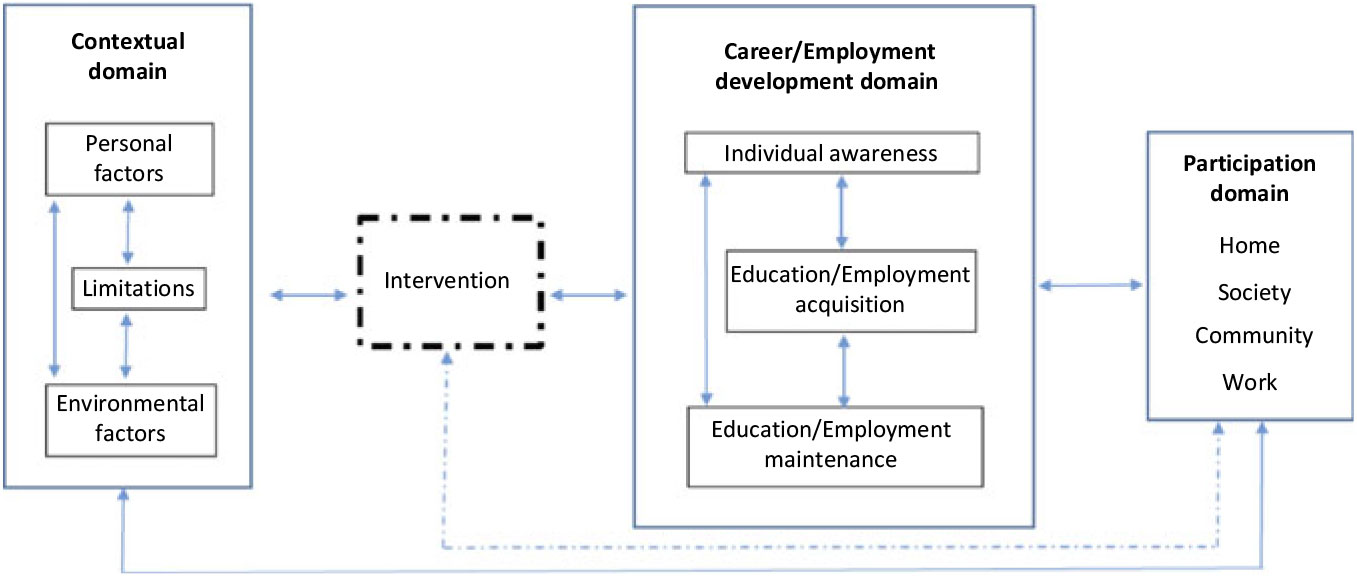
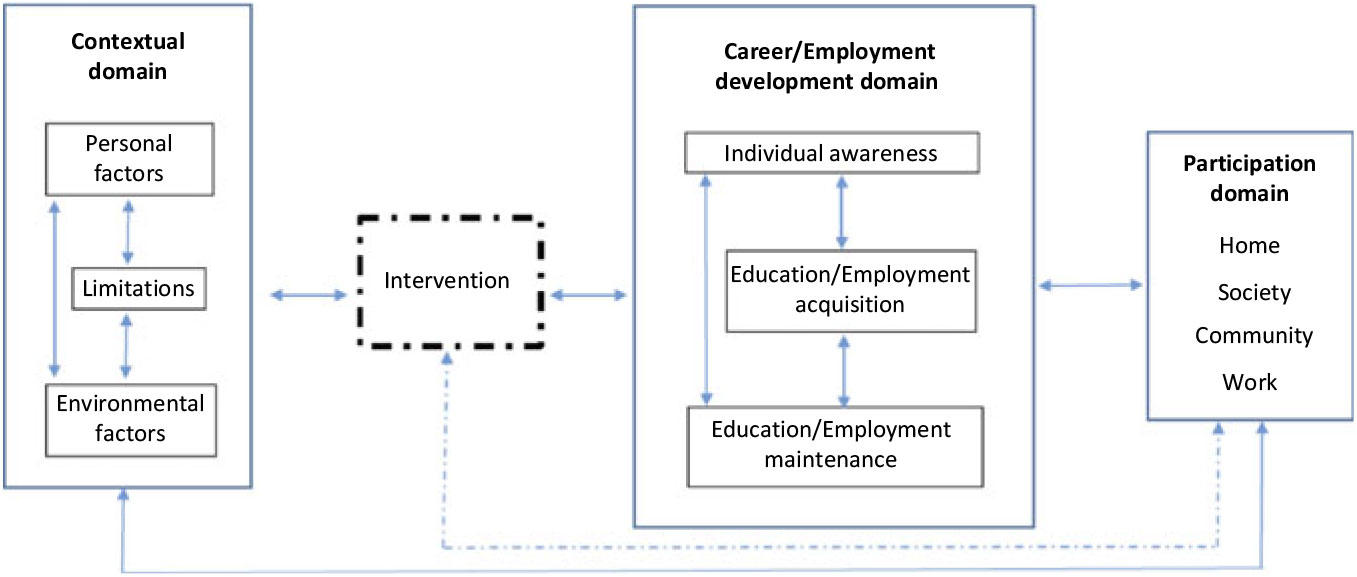
The IW2M (see Fig. 1) identifies the interaction of contextual, employment development, and participation domains as key elements in explaining how personal, environmental, disease and treatment related, and educational factors, as well as potential interventions, serve as facilitators or barriers related to the overall societal participation. The Model is grounded in the major tenets of the World Health Organization’s International Classification of Functioning, Disability and Health (ICF) Model and theory-driven research related to the employment of individuals with chronic health conditions and disability (Strauser et al., Reference Strauser, Greco, O’Sullivan, Capuzzi and Stauffer2018). The Model has three major domains with an intervention component that facilitates the interaction between the contextual and career/employment development domains, which are conceptualized as having direct and indirect effects on the participation domain. The type and focus of interventions are not specified, and no theoretical orientation is preferred. Conceptually the three domains and the intervention component of the Model provide a structure to operationalize how career development is related to the participation of individuals with disabilities and chronic health conditions. Specifically, the Model is designed to serve as a guide for researchers, practitioners, and policy makers to identify specific areas of need, conceptualize how contextual and career/employment development domains and factors interact to impact participation, and develop and evaluate the efficacy of specific employment-focused interventions.
Conceptual model for career development.
The IW2M is not designed to replace specific theories that attempt to explain or describe important employment constructs such as decision-making, motivation, interests, values, and personality development. Instead, in applying the IW2M, those constructs and theories are viewed as important process-oriented factors that are inherent and embedded in the model. In addition, like the model’s domains and factors, these process factors should be points of relevant and valuable career development research. Prior research has provided substantial support, suggesting that many of these process-oriented constructs and theories are extremely relevant and may be the operational mechanisms that provide the foundation for interventions that promote and enhance the interaction between the contextual and career/employment development domains – with the ultimate goal of increasing labor market participation.
3.1 Illinois Work and Well-Being Model domains
The IW2M consists of contextual, career/employment development, and participation domains that interact to provide a structure that can be used to understand the career and employment development of individuals with diabetes. The intervention component is purposefully situated between the contextual and career/employment development domains. As a result, the model implies that career interventions directly and indirectly influence both the contextual and career/employment development domains and have an indirect effect on the participation domain. Each domain is comprised of factors that allow for analysis at both the individual domain and factor levels. As a result, domains and factors can be conceptualized as both independent and interdependent in nature. All arrows between domains and factors are bidirectional, indicating a reciprocal effect between the model components. Relationships between domains, factors, and interventions can be positive, negative, or neutral, implying that the value of the directional impact is determined by the situationally specific activities, expressions, and reactions to both specific and broad stimuli. In the following paragraphs, each domain is briefly described with an emphasis on structure and the reciprocal interaction between major domains.
3.1.1 Contextual domain
The contextual domain applies the ICF model as a guide to operationalize how personal and environmental factors interact with chronic health- and treatment-related limitations and restrictions. Because this domain applies the ICF model, the specific domain factors of personal, environmental, and limitations should be conceptualized according to the guidelines offered by the ICF. The bidirectional arrows between the domain factors imply a reciprocal relationship, suggesting that growth or change in one factor can directly or indirectly impact the growth or change in the other factors. The solid bidirectional arrow between the contextual and career development domains indicates a direct reciprocal connection between these two major domains independent of any intervention, implying a mutual interdependent developmental process. The solid bidirectional arrow along the bottom of the model between the contextual and participation domains implies a reciprocal relationship independent of the career/employment development domain and any career interventions. Specifically, it implies that the factors that make up the contextual domain collectively or individually impact the individual’s participation in home, society, community, and work. Likewise, any of the participation domain areas can impact the contextual domain or specific factors individually or collectively. This means that, independent of any career development activities or processes, the interaction of personal, environmental, and/or chronic health- or treatment-related factors impacts participation. By default, the career/employment development domain is a cognitive, affective, and behavioral process that serves as a moderator facilitating or creating barriers between the contextual factors and the individual’s involvement in life’s major participation domain factors.
3.1.2 Career/employment development domain
The career/employment development domain is based on career and employment research related to individuals with chronic health conditions and disabilities. The domain consists of the following three factors: individual awareness, educational and employment acquisition, and educational and employment maintenance.
Individual awareness
The individual awareness factor addresses an individual’s levels of personal awareness regarding how his or her skills, abilities, interests, values, needs, personality, assets, limitations, and preferences relate to broader societal and work-related activities and participation. Specifically, awareness is developmentally mediated with the individual becoming aware of how he or she relates to the world and in which activities he or she may choose to participate. Ideally, this developmental process should be based on self-exploration that facilitates the expression of personal choice. However, as noted in the career development literature, many times individuals are not afforded the opportunity to engage in self-awareness activities and exercise personal choice (Blustein, Reference Blustein2006). Therefore, in all likelihood, the outcome of self-awareness is the individual gaining an understanding of personal identity and what education- and work-related activities would be physically, cognitively, behaviorally, and emotionally advantageous to pursue. The individual awareness factor theoretically provides the foundation for the acquisition and maintenance factors, though, as implied by the bidirectional arrows, all factors have a reciprocal impact influencing each factor’s continual development.
Education and employment acquisition
The education and employment acquisition factor addresses the process by which individuals go about acquiring access to educational- and employment-related activities. From an educational perspective, acquisition includes, but is not limited to, the process and activities associated with applying for appropriate educational activities including trade, 2-year, and 4-year training programs. Acquisition can include leveraging participation in the state/federal vocational rehabilitation program and securing appropriate financial aid. Educational-related acquisition can occur at multiple points of life transition and may occur multiple times over one’s life course. Employment-related acquisition primarily focuses on activities related to job development, placement, and job seeking. Impression management and appropriate job-seeking techniques impact employment acquisition and are grounded in the proceeding awareness factor. Like educational acquisition, employment-related acquisition in all likelihood will occur multiple times throughout the life course and, depending on the developmental stage, may have different requirements to meet the specified acquisition demands. The employment and educational acquisition factor provides the foundation for the maintenance-factor-related activities and has a reciprocal impact on individual awareness.
Educational and employment maintenance
The educational and employment maintenance factor addresses the activities and behaviors associated with maintaining engagement and participation in educational and occupationally related activities. Being able to manage educational and work-related stressors, employing functional and appropriate social skills, and being able to make appropriate adjustments to personal and environmental demands are the important components of the maintenance factor. Individuals with chronic health conditions such as diabetes will also have to manage the functional limitations associated with their diseases and related treatment. Although maintenance occurs after acquisition and is typically conceptualized as an outcome, it too has a reciprocal effect on the preceding factors. For example, unsuccessful educational or employment maintenance may have a negative impact on an individual’s level of awareness by creating doubt in one’s skills and abilities, which, in turn, could impact an individual’s motivation to pursue and participate in educational- and employment-acquisition-related activities in the future.
Participation domain
The participation domain utilizes the ICF model as a guide to identify meaningful and broad-based participation in major life areas. In this conceptual model, the life areas of home, society, community, and work have been identified, which can serve as the outcomes of interest. Although the work area may seem an obvious focal area for those seeking to improve career development and employment outcomes for individuals with diabetes, the model stresses the interconnectivity of all participation areas. What this means in practical terms is that participation in one area directly and indirectly impacts participation in the remaining three areas. The concept of participation area interconnectivity is important because it reinforces the understanding that work has a broad impact on the individual in terms of not only employment outcomes but also how individuals are able to function in their homes; participate in broader societal activities; and engage in community activities that provide social, recreational, and leisure opportunities. A fundamental tenet embedded in the model is that increased positive participation in the areas identified in the participation domain will lead to an overall increase in individual’s well-being and quality of life.
Interventions
According to the conceptual model, the intervention component is situated between the contextual and career/employment development domains. This placement suggests that the primary goal of career, educational, and employment interventions is to facilitate and maximize the direct interaction between the contextual and career/employment domains, which will, in turn, indirectly impact the participation domain. Historically, career and employment development interventions have been conceptualized as existing within the career/employment development domain, excluding or minimizing the impact of the contextual factors identified in this model. Vocational rehabilitation research has provided some exceptions to this formulation through the inclusion of contextual factors in interventions such as the individualized supported employment model. However, most vocational psychology and vocational rehabilitation research has not focused on how the interaction of the contextual factors impact career development and ultimately broader societal participation. By pulling the intervention component outside of the career/employment development domain and placing it between the contextual and career/employment development domain, the model implies that interventions should focus on the correspondence between the two respective domains. Effective interventions should focus on maximizing the personal, environmental, and diabetes-related limitations to impact the career/employment development domain and specific career/development domain factors. For example, the model implies that for an intervention addressing a deficiency in job-seeking skills (acquisition factor) to be effective, the intervention should take into account how an individual’s age, education, and gender (personal factors); labor market, culture, familial factors (environmental factors); and depreciated executive processing, fatigue, and limited mobility (diabetes-related limitations) impact the efficacy, adequacy, and acceptability of the intervention. Finally, the dashed bidirectional arrow between the intervention component and the participation domain implies that interventions can have an impact independent of the career/employment development domain.
4. Implications
A number of implications are involved in applying this model to increase the community and employment participation of people with diabetes. Our framework was developed to guide researchers in examining the domains, factors, and participation outcomes related to career development and employment of individuals with diabetes. The model presents researchers with both within- and across-domain analyses and examination at the factorial level. The model also provides an impetus for practitioners to operationalize the factors and domains that may be contributing to decreased labor market participation for individuals with diabetes. Practitioners can use the framework to gain an understanding of service delivery strengths and potential areas of need. Specific implications for service and research are briefly discussed below.
4.1 Case conceptualization and service
The IW2M has potential implications for the provision of vocational services for individuals with diabetes at both the individual and program level. At the individual level, practitioners can apply the model to conceptualize cases to identify specific needs and develop a service strategy that ensures that services are provided to address specific factors of need across and within domains. Applying the IW2M allows practitioners to conduct a multilevel analysis of the individual through the identification of primary, secondary, and tertiary relationships and effects between factors and domains. Across domains, the model allows practitioners to identify the individual’s personal, environmental, and functional contextual factors and examine whether they are acting as facilitators or barriers regarding the various factors in the career/employment development domain. Based on the multilevel analysis, specific interventions and services can be targeted to reduce the negative effect of specific contextual factors while leveraging the impact of other positive factors.
The multilevel analysis is also dynamic in nature, allowing for continual between- and within-factor analysis as the individual’s needs, facilitators, and barriers evolve and change in response to the impact of the specific services and interventions provided. For example, initial interventions and services may be directed at facilitating and helping the individual gain a better understanding of his or her emotional functioning (contextual domain) to help promote increased vocational identity and awareness (career domain). Presuming that the services and interventions provided are effective in helping the individual gain an increased understanding of his or her emotional functioning, which in turn increases vocational identity and awareness, the practitioner can build on the success to determine across-domain and within-domain impact and develop relevant clinical hypotheses and questions that will guide additional interventions, services, and supports. For example, in the career/employment domain, does the individual’s increased vocational identity and awareness allow the individual to advocate for job modifications that can facilitate job maintenance (within domain)? Does increased clarity regarding emotional functioning and increased career awareness increase an individual’s level of participation in social and community factors (across domain)? Below we provide a basic example of how the IW2M can be used in a multilevel analysis to facilitate effective service delivery to individuals with diabetes.
4.1.1 Diabetes case study
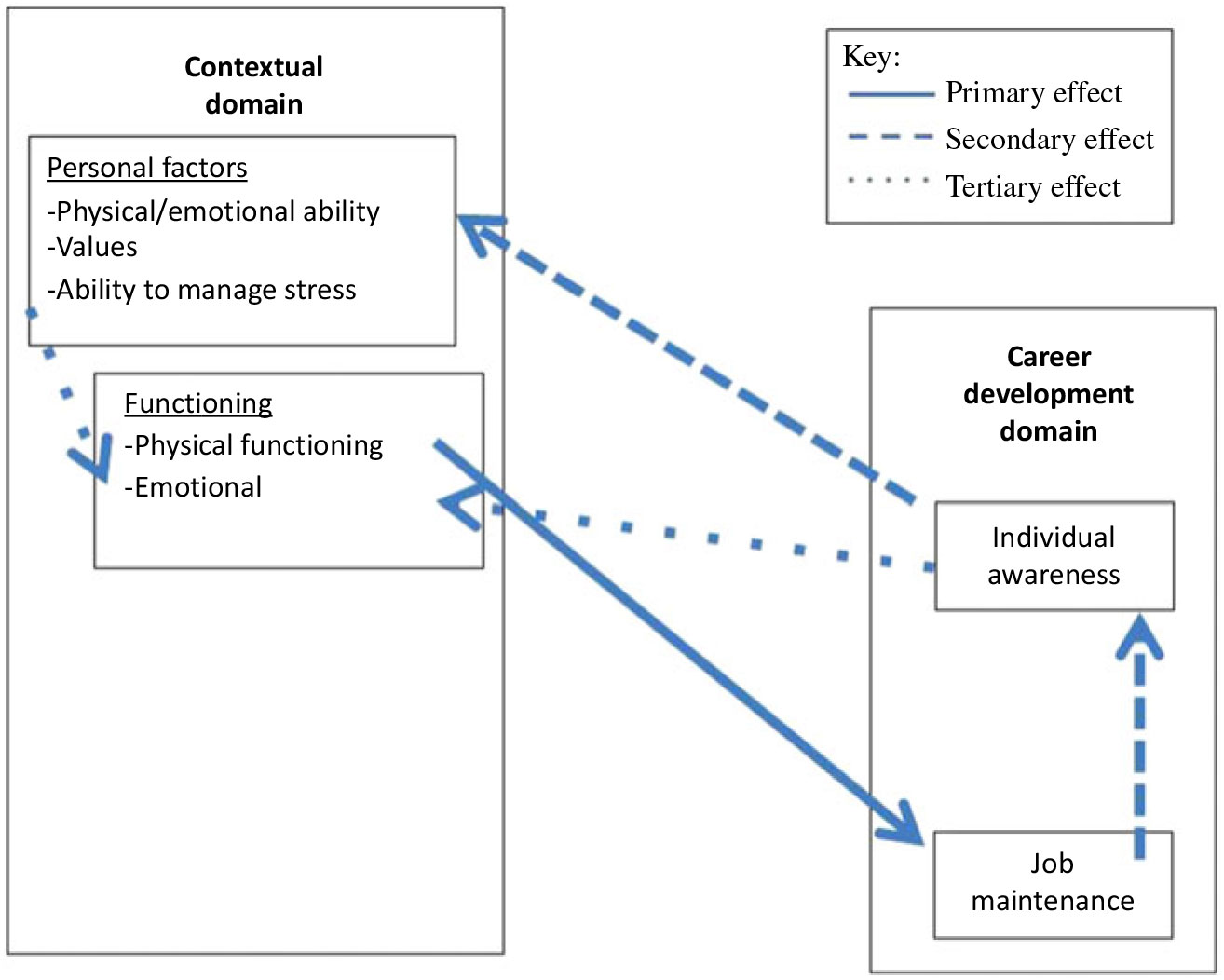
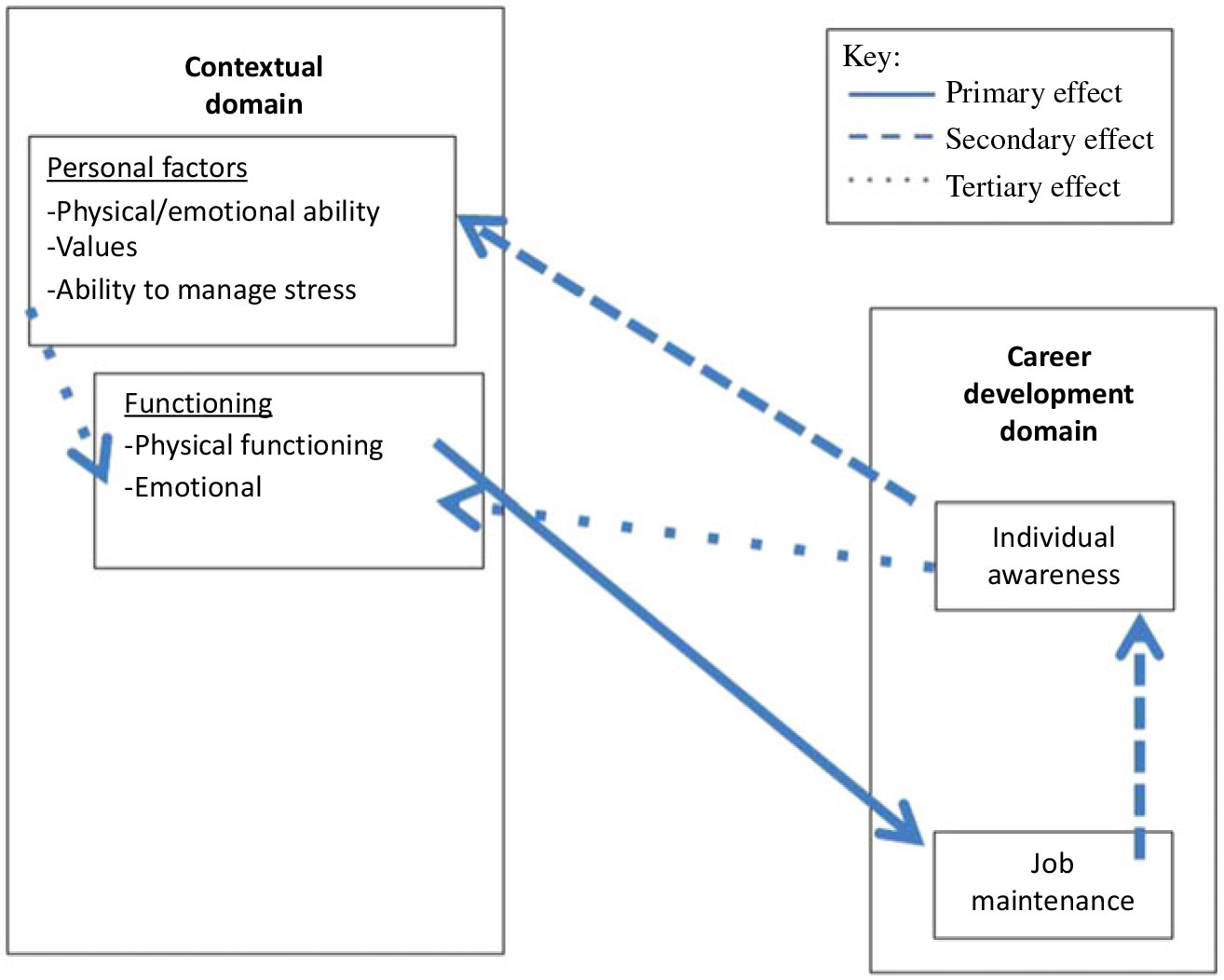
A 57-year-old male, who is working as an attorney, has type 2 diabetes. His illness makes it difficult for him to walk due to lower extremity neuropathy and he also experiences headaches and increased levels of fatigue. He is currently able to perform the necessary functions of his job but is becoming increasingly concerned and stressed about his ability to make the 45-min round-trip driving commute through metropolitan traffic that he makes every workday. This internalized concern that he may not be able to make the commute to work on a daily basis has created significant uncertainty regarding his employment future and has also created self-doubt regarding his vocational identity. He is unsure about what can be done to accommodate his decreasing physical condition and is concerned that he may be required to retire earlier than anticipated. This concern causes significant financial stress and uncertainty. His perceived need to potentially retire early due to diabetes-related medical reasons would create a significant drop in income, creating significant anxiety about how he would be able to provide adequately for his wife and two children who are aged 18 and 16. His expressed concern about his ability to drive can be conceptualized as a primary across-domain effect, with the perception of his functioning (contextual domain) potentially impacting job maintenance (career domain). The impact of his across-domain concern regarding functioning and job maintenance is contributing to a secondary within-domain effect; his concerns regarding his ability to keep his job (job maintenance) is creating doubts regarding his vocational identity (awareness). Finally, because of his decreased vocational identity, he is starting to question his personal factors such as physical and emotional abilities, individual and career values, and ability to manage stress. Therefore, his decreased level of vocational identity is contributing to decreased emotional functioning, which would be considered a tertiary across-domain effect (see Fig. 2).
Primary, secondary, and tertiary effects in the Illinois Work and Well-Being Model.
Engaging in across- and within-domain analyses allows the practitioner to conceptualize the types of direct and indirect services and interventions that can be employed to maximize career and vocational outcomes. Using the example above, to address the primary impact of the individual’s perceived functioning on job maintenance, the practitioner may choose to examine the potential job modifications with a primary emphasis on working from home multiple days a week. Indirectly, the practitioner could recommend that the individual seek out and participate in appropriate health promotion activities offered through local health-care facility that will provide benefits to both his or her physical and mental health and the overall well-being.
In addressing secondary and tertiary influences, the practitioner may choose to implement a combination of direct and indirect services. Directly, the practitioner may work with the individual to develop self-advocacy skills that allow the individual to engage his or her employer regarding his or her ability to meet the demands of the job. In addition, the practitioner may also provide direct service vocational counseling focused on helping the individual develop knowledge regarding additional job accommodation strategies that could be utilized to promote vocational identity. Indirectly, the practitioner may recommend that the individual seek personal adjustment counseling to help manage the stress and uncertainty regarding the unpredictable and progressive nature of his or her illness. The key to being successful is that practitioner’s use the model to leverage both direct and indirect services to provide a continuum of individualized support across domains and levels (primary, secondary, and tertiary), so that services become fully integrated and not fragmented.
At the organizational level, the model can be applied to guide a multilevel and between- and within-domain program evaluation to identify potential areas of program strength and need. By applying the model in the program evaluation process, an organization may find that career and employment services have been isolated to focus on one particular domain or factor, potentially limiting the services’ reach and effectiveness. Applying the model in the program evaluation process may also allow an organization to examine resource allocation and the potential need to shift or re-allocate resources to maximize program effectiveness. Program evaluation should also examine the depth and breadth of direct services offered and allows the agency to map indirect services to specific domains and factors to ensure comprehensive coverage of the individual’s potential needs. Finally, application of the conceptual model at the agency level shifts and reinforces the view that the ultimate outcome of career and employment service provision is an increase in all four participation domain factors.
5. Research
Given the unique and multifaceted career and employment needs of individuals with diabetes, there is a significant need to conduct research aimed at gaining an understanding of the factors impacting career and employment outcomes. Applying the conceptual model to research has multiple implications and can be used to develop a comprehensive research strategy to examine how an individual’s level of functioning impacts the career and employment development process. First, the model can be used to identify specific areas that are in need of research attention. With a few exceptions (e.g., supported employment), career and employment development research within the context of vocational rehabilitation has been limited in scope and has focused almost exclusively on issues related to the awareness factor, which may not be applicable to the career and employment needs of adults with diabetes. By employing this conceptual model, it becomes very clear that there are many other areas that need to be examined to gain a basic understanding of the career and employment development process as it relates to adults with diabetes. For example, to date, very little, if any research, has taken an integrated approach to examine how the factors within the career/employment development domain interact with each other from a developmental perspective. In addition, very little research has been conducted that has focused on how specific types of functional limitations (e.g., sensory vs. physical; physical vs. emotional) impact the different factors within the career/employment development domain.
Second, the conceptual model places an emphasis on broader societal participation as the overall goal of the career and employment development process, which is consistent with the ICF. The majority of the career and employment research completed within vocational rehabilitation has exclusively focused on the career development domain factors and constructs, such as career readiness or vocational identity (Strauser et al., Reference Strauser, Greco, O’Sullivan, Capuzzi and Stauffer2018), with minimal focus on the overall goal of how and why these factors and constructs relate to improving societal participation and overall well-being. Future research should focus on gaining an understanding of the interaction between the career and contextual domains that contribute to employment and participation and developing interventions that facilitate this process for individuals with diabetes. For example, research on issues and facets of job retention and modification may be particularly relevant for older adults with diabetes.
Third, by incorporating a contextual domain into the career development process, this model acknowledges and places an emphasis on addressing the chronic health factors as they relate to and impact the career development process. The acknowledgment of disability-related factors has been emphasized in vocational rehabilitation research, but to date it has had limited application to empirical career development research. Addressing the interaction between medical and career-related factors is important and should be the foundation for career and employment development research of adults with diabetes (Koch & Rumrill, Reference Koch and Rumrill2017).
Fourth, this model expands the traditional focus of career development research from the within-domain to the across-domain level. This is an important expansion because it enlarges the scope of the research focus and places an emphasis on more complex questions related to the interactions among career development, chronic health-, and treatment-related factors. For example, the development of research questions that address the interaction between residual physical factors such as fatigue, headaches, and neuropathy and the three factors of the career/employment development domain would be important to address and require advanced analysis to examine the multilevel and mediator and moderator effects between factors and domains.
Finally, this model provides an impetus for conducting research focused on developing interventions that emphasize effective interaction among multiple domains and between-domain factors and takes into account direct and indirect effects. For example, an intervention directed at job maintenance should not exclusively address factors within the career/employment development domain but should also consider factors from the contextual domain such as personal, environmental, and functional limitations. In addition, by examining direct and indirect effects, research can conceptualize and analyze the primary, secondary, and tertiary impact of interventions and conduct analyses using mediator and moderator variables to gain a full understanding of an intervention impact on the individual’s participation and overall physical and psychological well-being.
6. Conclusion
The intent of this article was to provide an overview of the IW2M and present it as a multidomain conceptual model designed to guide career development and employment research and services for individuals with diabetes. The model’s domains and associated factors were explained, and participation in the areas of work, society, community, and home were conceptualized as the outcomes of interest. Brief discussions of potential implications were presented at service and research levels. It is the hope of the authors that the model will serve as a framework for broadening the scope and analysis of career and employment development services and research related to adults with diabetes.
Acknowledgements
None.
Financial Support
This research received no specific grant from any funding agency, commercial, or not-for-profit sectors.
Conflicts of Interest
None.