

Rehabilitation counselling programs and services are mushrooming around the world. In the United States (U.S.), rehabilitation counselling traditionally follows a scientist–practitioner model (Hampton & Olney, Reference Hampton and Olney2008), while rehabilitation counselling programs are evolving in myriad ways across the globe in Australia, Japan, Taiwan, Africa and South Korea (among others) (Bentley, Bruyère, LeBlanc, & MacLachlan, Reference Bentley, Bruyère, LeBlanc and MacLachlan2016; Boeltzig-Brown, Sashida, Nagase, Kiernan, & Foley, Reference Boeltzig-Brown, Sashida, Nagase, Kiernan and Foley2013; Buys, Matthews, & Randall, Reference Buys, Matthews and Randall2015; Lewis, Graham, & Quamar, Reference Lewis, Graham and Quamar2014; Mpofu et al., Reference Mpofu, Jelsma, Maart, Levers, Montsi, Tlabiwe and Tchombe2007; Matthews et al., Reference Matthews, Buys, Randall, Marfels, Niehaus and Bauer2015; Strohmer & Chan, Reference Strohmer and Chan2015). With the international spread of rehabilitation counsellor education comes adaptations and transformation of the field of rehabilitation counselling as we know it.
The proliferation of degree granting institutions in rehabilitation counselling is increasing student and faculty mobility (Alsaman, Reference Alsaman2014; Chen, Jo, Ong, & Kotbungkair, Reference Chen, Jo, Ong and Kotbungkair2007; Hampton & Olney, Reference Hampton and Olney2008; Zhu & Degeneffe, Reference Zhu and Degeneffe2011). In turn, the rise of counsellors and scholars educated overseas is contributing toward challenges to local practices and implementation. Thus, rehabilitation counselling as a field and as a practice is varied and diverse in the services it provides to disparate populations worldwide.
Given the mismatched rehabilitation counselling programs and services globally, we use a comparative case study approach to explore the challenges and opportunities in international partnerships from the perspective of three countries: the U.S., Japan and Taiwan. A comparative case study approach involves the analysis and synthesis of the differences, similarities and patterns across two or more cases that share a common goal or focus. This scholarly approach is able to produce more generalisable knowledge as compared to traditional case study approaches which focus on in-depth examination of a single case (Goodrick, Reference Goodrick2014). Accordingly, we compare the field across three countries (e.g. U.S., Japan and Taiwan), three unique participant identities (e.g. students, faculty, administrators) and one core common axis, the field of rehabilitation counselling as a growing global discipline. Our hope is that this exploratory study provides subtle nuance to the field across actors, institutions and countries as rehabilitation counselling continues to expand and evolve.
In the following sections, we begin with a brief introduction of the varied rehabilitation counselling programs in the U.S., Japan and Taiwan. We move to review current approaches to rehabilitation counselling and the extant literature from a global lens. We present our methodology and empirical findings under emergent themes with evidence from rehabilitation counselling students, faculty and administrators. Finally, we provide strategies for reconciling the challenges experienced by international actors in the field and discuss further implications of the study.
Diversity of Rehabilitation Counselling Training and Practice
Rehabilitation Counselling in the U.S.
In the U.S., funds to train rehabilitation professionals emerged in response to the large number of veterans returning from the war front with acquired physical and psychiatric disabilities. Funding allowed for the expansion of rehabilitation facilities and services for individuals with mental illness and developmental disabilities as well as for the purpose of research on disability and chronic illness (Ditchman et al., Reference Ditchman, Wu, Chan, Fitzgerald, Lin, Tu and Strauser2014).
Rehabilitation counsellors who work in the federal/state systems are typically required to hold a Master's degree in rehabilitation counselling or a related field and work in public human service programs or in private practice settings. With over 100 accredited Master's degree programs in rehabilitation counselling in the U.S., some programs began to expand rehabilitation counsellor education programs to the doctoral level for the training of future rehabilitation counselling professors. U.S. training of counsellors involves both general counselling and specialised counselling to individuals with disabilities (Chan et al., Reference Chan, Leahy, Saunders, Tarvydas, Ferrin and Lee2003; Frain, Ferrin, Rosenthal, & Wampold, Reference Frain, Ferrin, Rosenthal and Wampold2006; Szymanski, Reference Szymanski1991). Given global interests in rehabilitation counselling and limited doctoral degree granting institutions around the world, many U.S. doctoral rehabilitation counselling programs are experiencing a proliferation of international applicants.
Rehabilitation Counselling in Japan
Rehabilitation services in Japan are provided through a network of local and regional divisions with emphasis on gainful employment for individuals with disabilities. Japan operates off of a standardised system for providing vocational counselling in which counsellors are recruited and trained much like civil servants (Yaeda, Reference Yaeda1998; Yaeda, Iwanaga, Fujikawa, Chan, & Bezyak, Reference Yaeda, Iwanaga, Fujikawa, Chan and Bezyak2015).
Rehabilitation counsellor training in Japan involves selection of approximately 25 individuals each year to undergo a year-long training program. The counsellor training program entails a two-month lecture series and nine months of practical training followed by completion of a small-scale study involving original data collection. Upon graduation, counsellors are assigned to one of the 47 vocational centres in Japan and work with clients on a rotating basis while maintaining periodic training. In recent years, there has been a push for a stronger emphasis on clinical therapy in addition to providing vocational services; however, currently, those interested in the pursuit of training beyond a Master's degree must do so overseas due to a lack of rehabilitation counselling doctoral training in Japan (Boeltzig-Brown et al., Reference Boeltzig-Brown, Sashida, Nagase, Kiernan and Foley2013).
Rehabilitation Counselling in Taiwan
Rehabilitation counselling in Taiwan functions from a community-based approach with a heavy focus on job placement services (Wang & Lin, Reference Wang and Lin2017). National legislation ensures equal access to job opportunities and regulates activities of public and private employment service agencies while encouraging career guidance/counselling for people with disabilities. The Taiwanese model of rehabilitation counselling emphasises four placement categories that support employment service programs: individual placement model, enclave model, mobile work crew and small business option; all of which enable gainful employment for those with disabilities (Kuan & Wang, Reference Kuan and Wang2009; Lin, Reference Lin2008).
Rehabilitation counsellors and job coaches in Taiwan provide supported employment service for people with disabilities through a six-step process: intake interview, consultation before interviews with employer/director of human resources, accompanying clients to be interviewed by employer/director of human resources, intensive guidance, follow-up guidance and referral. Currently, there are three degree-granting institutions in Taiwan that provide rehabilitation counsellor training at the Master's level while certification mechanisms are under development.
The U.S., Japan and Taiwan demonstrate how the field of rehabilitation counselling is emerging in vastly different ways given unique sociocultural and political circumstances. Whereas the U.S. highlights doctoral study and rehabilitation counselling research, Japan accentuates vocational counselling and Taiwan underlines a community-based job placement approach; all of which allude to how the field of rehabilitation counselling has wrestled with several complexities in its development as an international scholarly field.
Current Approaches to Rehabilitation Counselling
Despite the growth in rehabilitation counselling, formal disability or rehabilitation services remain inaccessible to a majority of people with CID around the world (Chiang, Reference Chiang2009; Kuipers, & Sabuni, Reference Kuipers, Sabuni, Shaun and Karen2016). Community-based rehabilitation (CBR) is an alternative practice to conventional rehabilitation services in communities where formal treatment of CID is not available (Evans, Zinkin, Harpham, & Chaudury, Reference Evans, Zinkin, Harpham and Chaudury2001). Initiated by the World Health Organization (WHO) in an effort to increase access to rehabilitation services in resource-constrained settings, CBR is now implemented in numerous countries around the globe. Unlike traditional clinical practices of rehabilitation counselling, CBR utilises a combined effort of people with CID, their families and communities and relevant government and non-government health, education, vocational, social and other services to work together collectively toward enhancing the quality of life of those with CID. However, while CBR is an invaluable approach to providing rehabilitation services to people with CID, whom otherwise may not be able to access CID treatment (Cleaver & Nixon, Reference Cleaver and Nixon2014; Iemmi et al., Reference Iemmi, Kuper, Blanchet, Gibson, Kumar, Rath and Weber2016), it is unclear how CBR approaches are represented in current rehabilitation counsellor education approaches around the world.
Research findings reveal that rehabilitation counsellors with a Master's degree in rehabilitation counselling or closely related fields show better outcomes for consumers with disabilities when compared to counsellors with an unrelated Bachelor's or Master's degree or less than a Bachelor's degree education (Frain et al., Reference Frain, Ferrin, Rosenthal and Wampold2006; Szymanski, Reference Szymanski1991), rehabilitation counselling training and education is not an option where a strong need for CID services are prevalent due to a lack of specialised rehabilitation counselling programs around the world (Alsaman, Reference Alsaman2014; Hu, Oertle, Bong, Reference Hu, Oertle and Bong2007; Kwok, Reference Kwok2007; Yaeda et al., Reference Yaeda, Iwanaga, Fujikawa, Chan and Bezyak2015). Thus, training of qualified rehabilitation counsellors through international collaboration is critical to addressing this global issue (WHO, 2011).
The topic of international partnerships has received nominal attention even though several discourses have been made in regard to international collaboration in the training of rehabilitation counsellors (e.g., Chen, Za Ong, & Brodwin, Reference Chen, Za Ong and Brodwin2008; Matthews et al., Reference Matthews, Buys, Randall, Marfels, Niehaus and Bauer2015; Siu, Brodwin, Huang, Brodwin, & Kier, Reference Siu, Brodwin, Huang, Brodwin and Kier2014). International partnerships in the training of rehabilitation counsellors not only has the potential to increase accessibility of rehabilitation service for people with CID around the world (WHO, 2011), but are also likely to benefit rehabilitation counsellors in addressing cross-cultural issues in the provision of rehabilitation services for an increasingly diverse consumer population (Donnell, Robertson, & Shannon, Reference Donnell, Robertson and Shannon2009; Hampton & Sax, Reference Hampton and Sax2007). Moreover, rehabilitation counsellor education in multicultural competencies with experiential learning, cultural immersion activity, as well as culturally responsive teaching are common suggestions in response to the globalisation and internationalisation of rehabilitation in diverse communities (Donnell et al., Reference Donnell, Robertson and Shannon2009).
The extant literature on international rehabilitation education is based on faculty (lecturer) surveys, and little is known about how rehabilitation counselling students and administrators perceive international partnerships. This study aimed to examine the views of rehabilitation counselling students, faculty and administrators’ views on prospects for internationalising rehabilitation counselling across the U.S., Japan and Taiwan. We further explored the field of rehabilitation counselling and global partnerships broadly. Lastly, we interviewed administrators, faculty and students from the U.S., Japan and Taiwan to contrast the experiences of the social actors involved in international partnership and rehabilitation counselling. Study findings would inform strategies for cultivating collaborative research, student exchange and institutional partnerships to improve provision of rehabilitation counselling services around the world.
Method
Research Design
This study applied a comparative case study approach (Bartlett & Vavrus, Reference Bartlett and Vavrus2016; Bartlett & Vavrus, Reference Bartlett and Vavrus2017) to examine international partnerships in rehabilitation counselling. Comparative case study is useful for this inquiry as it follows a contingent tracing of relevant factors, actors and features of a phenomenon while exploring historical and contemporary processes (Goodrick, Reference Goodrick2014). We incorporate comparison across three axes in the case of international partnerships in rehabilitation counselling: (a) vertical comparison examines influences at different levels; (b) transversal comparison explores the phenomenon of interest over time and (c) a horizontal comparison, tracing social actors across cases.
Participants and Setting
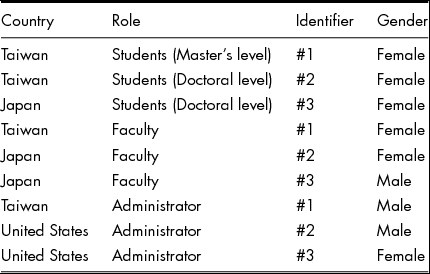
We carried our purposively sampled nine individuals to participate in the study, including students (n = 3), faculty (n = 3) and administrators (n = 3). Participants were from the U.S., Japan and Taiwan (see Table 1 for sample demographics). The criterion for participation was that the identified individuals must have significant global experience in providing rehabilitation services and training. Significant experience was defined by having at least five years of international work at a graduate or doctoral level in international environments.
Sample Demographics (n = 9)

The U.S., Japan and Taiwan were chosen as representing countries in which: (a) rehabilitation psychology and rehabilitation counselling are fully delineated professions with highly specified training, licensure and certification mechanisms and a mature service delivery systems are based on training and appropriate credentials (U.S.); (b) rehabilitation psychology and rehabilitation counselling are not recognised or delineated professions; thus no specified training or licensure and certification mechanisms exist. Service delivery systems are based on the medical model and use occupational therapists, social workers and medical professionals to provide services Jobs are not available in higher education as rehabilitation counselling nor rehabilitation psychology are recognised disciplines (Japan); and (c) rehabilitation psychology and rehabilitation counselling are developing professions in a recently developed system with transplanted training mechanisms, emerging licensure and certifications and service delivery systems are evolving. Some jobs are available in higher education as rehabilitation counselling is a developing and recognised discipline (Taiwan).
Procedure
To conduct this study the PI obtained Institutional Review Board (IRB) permissions from the University of Wisconsin — Madison. We contacted identified participants via email and explained the study goals via recruitment documents. All nine individuals that were requested to participate complied. Participation was strictly voluntary and not reimbursed. Participants were provided written informed consent and assured that all information shared would be held in confidentiality. Participants were also offered the opportunity to ask questions prior to and during the interview process. Simple steps were taken to protect the identity of participants and any individuals they refer to relevant to their experiences. Additionally, steps were taken to de-identify settings, locations or other attributes to further protect the identities of those involved and referred to. For the duration of the study, participant names were kept in a password protected computer file to which only the designated researchers had access. At the completion of the study the information was deleted.
We used semi-structured interviews to interview key informants regarding their perceptions of barriers and facilitators in establishing meaningful global partnerships and exchange and the perceived opportunities working in global rehabilitation arenas. Participants were asked about their own personal experiences in global rehabilitation counselling as administrators (n = 3), professors (n = 3) and graduate students (n = 3). Participants were asked if they had any suggestions regarding how to strengthen global capacities of programs and committed faculty. The interview questions were developed by the team of researchers based on the existing aforementioned literature and their personal experiences in global initiatives. Questions were broad in attempt to diminish leading the participant responses. Follow-up questions and prompts were provided to stimulate the discussion.
The interviews consisted of tape-recorded discussions with respondents who were specifically recruited for their expertise and roles in international rehabilitation initiatives. Interviews were conducted by all of the authors as they were designated ‘researchers’ by the internal review board. All interviewers were trained to ensure interviews are consistent with the interviews of the principal investigator.
Interviews were recorded to ensure complete and accurate transcriptions. Recordings have been kept digitally, copied and stored in a password protected laptop. The original data is being kept by the principal researcher. When the transcript was verified, and the data analysed, the original recording was deleted as per the agreement of the informed consent. Interviewer notes were also taken during and after the interview. Burkard, Knox, and Hill (Reference Burkard, Knox and Hill2011) emphasise that these types of notes can provide vital information in reviewing transcriptions for accuracy, as well as provide context to interview content.
Data Analysis
We thematically analysed the data following the procedures and validation strategies delineated by Creswell (Reference Creswell2007). The transcribed interviews were used to create a list of meaningful and unique topic areas, referred to as themes. There are two main approaches for developing themes (Hill et al., Reference Hill, Knox, Thompson, Williams, Hess and Ladany2005; Hill, Thompson, & Williams, Reference Hill, Thompson and Williams1997). The first and most common approach is that the researchers develop a starting list of proposed domains based on a review of the literature (Miles & Huberman, Reference Miles and Huberman1994) and the primary research questions. The second method for developing a domain list involves reviewing the transcripts first bracketing the extant literature and interview protocol, and seeing which domains emerge from the raw data (Thompson, Vivino, & Hill, Reference Thompson, Vivino, Hill and Hill2012). In the current study, researchers independently reviewed the data and identified proposed themes, then the team met to compare notes and consensually created a theme list that best fits the data and the focus of the study. Thus, this research study utilised the latter approach to the development of themes. Due to the broad nature of this research topic, it was thought best not to make a priori assumptions regarding themes.
The author(s) engaged in a cyclical process of reviewing, sorting and coding the data obtained through participant interviews. Data analysis began with open coding, consisting of review of interview transcriptions and audio files multiple times to create memos about information shared by each participant in conjunction with notes collected during record reviews and observations. Repeated review of audio files provided critical opportunities to memo about words, phrases and participant perspectives that ultimately became the four identified themes.
During the axial coding phase, a second reader was employed. The primary and secondary readers compared codes by discussing findings identified by each research question. As agreement was reached on codes and the themes raised by participants, codes were placed into the theme categories. Disagreements would have been resolved by consensus, although this was not necessary. In conclusion, as recommended by the literature, this research employed careful participant inclusion criteria, planned questioning with flexible moderation and utilisation of an appropriate and effective analysis procedure/model.
The authors of this study employed various validation strategies to ensure their research works are credible and rigorous (Creswell, Reference Creswell2007). Given that researchers are the main instrument for data collection and interpretation of data, Stake (Reference Stake1995) cautions against narrow thinking and suggest seeking understanding from participant's perspective.
Validity, Trustworthiness and Integrity of Data
The terms trustworthiness instead of validity (Elliott, Fischer, & Rennie, Reference Elliott, Fischer and Rennie1999) refer to the researchers’ assertion to have utilised appropriate, adequate and reliable methods to correctly report the findings. These criteria are used to address questions to the procedural rigor of qualitative research (Hoyt & Bhati, Reference Hoyt and Bhati2007). For the purposes of this study, these criteria have been further refined by Williams and Morrow (Reference Williams and Morrow2009) to include; (a) establishing integrity of the data, (b) balance of the tension between subjectivity and reflexivity, as well as (c) clearly communicating findings and their applicability to research and practice.
Integrity of the data refers to the clear description to the methods and results (Patton, Reference Patton2002). A first step of establishing integrity of the data is the provision of enough methodological detail as to allow for replication of the study's procedures. The use of theoretical saturation was also used as a method of establishing trustworthiness (Williams & Morrow, Reference Williams and Morrow2009). In this study, themes began to emerge and were replicated as interviews were conducted. As the new themes did not emerge in the final interviews theoretical saturation was reached as very limited new data emerged during the final interviews (Glaser & Strauss, Reference Glaser and Strauss2009).
Reflexivity and subjectivity
Due to the subjective nature of qualitative research, the research team was especially careful to explore and manage their biases and expectations. Reflexivity, according to (Rennie, Reference Rennie2004), is the process of exploring and managing biases and expectations through self-awareness. To manage our own biases and expectations, the research team utilised the strategy of bracketing our expectations and biases per Hill and colleagues (Reference Hill, Knox, Thompson, Williams, Hess and Ladany2005). Our study addressed the need to balance reflexivity and subjectivity by having multiple layers of consensus. The research team was continually challenged by one another through interactive and formative feedback that facilitated collaborative learning.
Finding and Discussion
Key themes from our interviews comprise: (a) systemic challenges, (b) student and faculty mobility, (c) cultural and linguistic differences and (d) sustainable international leadership. We present findings by emergent themes as supported by participants across countries with discussion.
Theme 1: Systemic Challenges
Vast differences among rehabilitation counselling around the world were noted by participants. Student participants reported the single most significant limitation to gaining a rehabilitation counselling education overseas is the limited job prospects in their country of origin. A quote from a student from Japan illustrates this reality:
‘If I want to work as an international rehabilitation counselor, there are limitations, because, in Japan, no matter how I consider vocational rehabilitation is important, they don't know about vocational rehabilitation [rehab counseling]; they are not familiar with vocational rehabilitation or rehabilitation counseling.’ (Student #3, Japan, female)
Student participants further explained that rehabilitation counselling programs among the U.S., Japan and Taiwan vary significantly. Subsequently, because the students find it difficult to return to their homeland to work, gaining more international experience in the field is important for rehabilitation counselling students if they wish to ‘build bridges’ across rehabilitation counselling programs and systems around the world.
Faculty consistently echoed the problems associated with not having rehabilitation counselling recognised as a robust profession around the world. Participants from the countries that rehabilitation is not fully developed reported difficulty with their professional identity and found it imperative that they identify and interact with rehabilitation counselling professionals. Among their concerns was the problem of simply transplanting rehabilitation counselling policies and practices, lacking cultural sensitivity. In reference to adapting to systemic differences, one Taiwanese faculty explained:
‘We must try to avoid reinventing western problems in Taiwan. We must give people the tools to teach them to develop their own, culturally relevant, testable theory.’ (Faculty #1, Taiwan, female).
Systemic differences across national boundaries are seen as a primary barrier to global partnership opportunities. At the core are variations in the development of rehabilitation counselling within countries. In some countries, the development of rehabilitation counselling is a licensable profession with specified training requirements that is nationally recognised. In countries not formally recognising the profession of rehabilitation counselling, service delivery systems are based on medical models and typically employ occupational therapists, social workers or various medical professionals. These system differences create both service incompatibilities and limit jobs in countries developing rehabilitation counselling programs (Alfawair & Lee, Reference Alfawair and Lee2015; Yaeda et al., Reference Yaeda, Iwanaga, Fujikawa, Chan and Bezyak2015).
In the case of Japan, a national system is recognised; however, with no advanced formal training mechanisms for the study of rehabilitation counselling at the doctoral level. As a result, Japanese rehabilitation scholars have limited or no access to rehabilitation counselling positions in higher education as professors and must find positions in occupational therapy, social work programs or other health service related positions. Japan is building their own programs and services by relying heavily on expertise of scholars who have studied or worked overseas. Contrastingly, in Taiwan, rehabilitation counselling is a developing profession with transplanted training mechanisms and three nationally recognised rehabilitation counselling training programs. Given the field of rehabilitation counselling is recognised, practitioner jobs and opportunities at the Master's degree level are increasing and readily emerging in Taiwan. Taken together, where there are no formal programs or training mechanisms specific to rehabilitation counselling, aspirant rehabilitation counsellors who seek advanced study must do so overseas. Those with an interest in further pursuing academic positions in higher education institutions ultimately face limited employability; which accentuate the importance of global partnerships in the field.
Theme 2: Student and Faculty Mobility
Faculty and student mobility was frequently referenced as a critical component of global programs. It was reported by an administrator that universities across the U.S. are experiencing significant increases in students studying abroad (averaging approximately 25% participation across research one institutions); however, graduate students, professors and researchers from the U.S. do not travel to other countries in sufficient numbers in contrast to scholars coming to the U.S. Professors similarly noted fewer students were going abroad from the U.S. in contrast to student mobility and exchange from Asian countries to the U.S.
For students studying abroad, international internships surfaced as a valuable experience in rehabilitation counselling training. The internship offers interaction with the host country that one is studying in, enabling students to gain practice in language and working in cross cultural spaces. Through internships, students were able to provide direct services and gain experience with multicultural rehabilitation counselling practice. A Taiwanese participant added that it was her internship experience, which led her to pursue a graduate degree in rehabilitation counselling in the first place.
However, echoing administrators and faculty, students also mention the imbalance of student mobility. A Japanese doctoral student discusses her experience as an international Japanese student studying rehabilitation counselling in the U.S.:
‘I am kind of jealous Taiwanese students’ community [here], lots of Taiwanese students here and they can speak to each other in Chinese, I am jealous because even I know there is a Japanese community here, but it is not a students’ community, which I can't affiliate with; so, I wish there could have some more Japanese students here. . . In order to establish such [RC] education system in Japan, I need to meet peers like myself [Japanese peers/colleagues]’
Moreover, student participants note that having an advisor or mentor, perhaps from their country of origin, who identifies with the international student experience could possibly mitigate feelings of isolation; which calls further attention to the need to foster increased faculty exchange.
As the pursuit of rehabilitation counselling becomes an increasingly global phenomenon, an uneven exchange of students and faculty reflects the systemic differences in the profession around the world. The interviews reveal student participants mentioned the importance of gaining extensive international experience in order to build bridges across vast rehabilitation counselling programs and systems around the world. Likewise, faculty participants discussed the significance of attending international conferences to gain access to potential research collaborations with international scholars. Administrator participants also noted the continual need for networking and building relationships in order to upkeep a globally evolving rehabilitation counselling field. However, there is unbalanced mobility for both faculty and students as fewer are going abroad from the U.S. in contrast to mobility and exchange from other countries to the U.S. In order to overcome the unbalanced distribution of international students and faculty overseas, strategic recruitment of faculty and scholars from other countries is imperative.
Ultimately, increased student and faculty exchange offer a space where ideas and identification of commonalities across current and emergent rehabilitation counselling systems and practices can serve as facilitators toward a better understanding of system compatibilities and, perhaps, the development an integrated rehabilitation counselling model. In so doing, funding opportunities for study abroad programs and to foster student exchange programs are crucial to sustain meaningful global activity. Establishing strong partnerships among institutions in rehabilitation counselling is key.
Theme 2: Cultural and Linguistic Differences
Student participants stressed the value of a foreign degree in their country, but in pursuing an education, in the U.S., for example, a lack of English fluency was considered a significant challenge. They explained that English proficiency requires a tremendous amount of individual work and self-study. Counselling, in particular, requires very specific and nuanced language; thus, excellent language skills with the ability to contextualise information within cultures are considered critical. Moreover, cultural complexities arose for those students with a strong desire to return to their home countries for work one day. As a doctoral student from Taiwan expressed:
‘Completely different sociopolitical, economic and cultural conditions make the direct transplantation of rehabilitation counseling service delivery systems difficult if not impossible.’ (Student #2, Taiwan, female)
Faculty participant expressed concerns that students who are trained overseas are often not well prepared to address the cultural differences when working back in their respective home countries. As one rehabilitation counselling scholar put it, her responsibility is to give people the tools to teach them to develop their own types of culturally sensitive training. A Taiwanese professor added ‘teaching how to provide culturally sensitive services to persons with complex problems in a didactic classroom is inadequate’ and advocated for the need to respond to with ‘active community based, clinically oriented, comprehensive education.’ As such, faculty emphasised the need for culturally relevant fieldwork, internships, clinical experience and community-based approaches to facilitate learning and understanding in ‘in vivo’ environments.
Similar to students and faculty, concerns over language and cultural competency were specifically addressed in global partnerships from the administrative perspective as well. An administrator from Taiwan discussed the advantages and disadvantages of having program components taught in English:
‘Hiring American faculty to teach in English has great benefits as it increases student's language skills, and allows us to connect with other countries more efficiently. However, despite these benefits, all-English instruction also has downside because rehabilitation counseling is a very applied profession, and what students learn must be applied in the community; as a result, how students can connect what they learned from an English context with the resources that originate from their culture can be a concern.’ (administrator #1, Taiwan, Male)
While students, faculty and administrators recognise the opportunities in international experience and training, they also face significant challenges, such as feelings of ethnic isolation and linguistic and cultural barriers. Language is a primary challenge due to the fact that very few university courses are instructed in English in Japan and Taiwan. In addition, attracting English speaking professors to teach and conduct research in other countries remains a significant challenge. While language can create challenges to teaching, learning and research; notably, the wide use of English across most research platforms can also serve as a positive facilitator to collaboration, providing a common platform. However, when rehabilitation counselling is contextualised in varied sociocultural and linguistic applied professions, significant concerns arise regarding student capacity to adequately contextualise what they learn in English and, in turn, provide culturally sensitive services in their respective countries.
In addition to linguistic barriers, cultural challenges further complicate rehabilitation counselling training and practice in a global context (Siu et al., Reference Siu, Brodwin, Huang, Brodwin and Kier2014). However, despite the negative aspects of receiving one's training or temporarily working in a vastly different sociocultural context, international field experience such as clinical internships and CBR can facilitate multicultural competencies in the rehabilitation counselling training process. Both student and faculty participants mentioned extending overseas internships from the usual one-month program to an extended two or three month's duration, despite hardships. In the case of one student participant, an overseas clinical internship, enabling direct services with diverse cultural clients, led the student to the study of an advanced degree in rehabilitation counselling. Similarly, faculty participants also mentioned the importance of culturally relevant field work, such as internships, are advantageous in providing opportunities for development and expansion of current processes, systems and theories in rehabilitation counselling by enabling direct community interaction and moving toward active community based clinically oriented comprehensive education.
Overall, international experience may feasibly better equip both rehabilitation counsellors and scholars to consider integration of cultural competency into training programs as well as encourage them to leave behind notions of simply transplanting rehabilitation counselling policies and practices across borders. Parallel with the literature on the need for cultivating globally minded rehabilitation counselling scholars and practitioners (Donnell et al., Reference Donnell, Robertson and Shannon2009), the interviews reiterate the value of field experience, student and faculty mobility, research platforms and intercultural competency in preparing rehabilitation counsell7ors to work in an international context. While there is a challenge to international scholarship, this can be succeeded by taking what one learns and revamping it to fit one's country of origin or country of practice. In doing so, understanding, respecting linguistic cultural nuances is key to developing successful global initiatives. Further modification of rehabilitation service delivery and training in concert with linguistic and cultural nuances is ethically imperative.
Theme 4: Sustainable Leadership
Building and sustaining strong networks and relationships was consistently recognised as imperative. All administrators emphasised the importance of faculty leadership; cautioning that programs are not sustainable if networks of committed personnel are not developed. Administrators reported that faculty must have significant motivation and must feel it is worthwhile to expend the energy to engage in global work. Financial supports for student and faculty mobility were also consistently noted as a crucial to sustain meaningful global activity.
Faculty expressed their concerns of the lack of scholars coming from the same background as themselves. As one professor stated:
‘I just long to be with ‘like-minded’ scholars;” “I need people that share same spirit;” “More people like me.” or as another Japanese faculty participant said “We need more chickens to produce eggs.’ (Faculty #3, Japan, Male)
Faculty further reported international differences led to barriers for human subjects’ permissions and processes. Japanese faculty emphasised the need to make connections not only with more advanced countries in the field, but also with countries that are undertaking similar establishments in rehabilitation counselling, such as Korea and/or Germany. Professors addressed the use of international conferences as important opportunities to meet with scholars from other countries, and as a starting point in seeking research collaborations across borders.
Emerging electronic capabilities enhancing synchronous and asynchronous communication and distance teaching capacities was further noted as a primary driver of global activity. Developing system compatibilities was a very specific vision delineated by one of our administrators:
‘We can develop a common, theory-driven, culturally sensitive case conceptualization model to develop and validate assessment instruments across countries and cultures based on variables from the World Health Organization's International Classification of Functioning, Disability, and Health (ICF).’ (Administrator #2, United States, Male)
Furthering this idea the administrator emphasised the potential of shared technologies:
‘This information can be shared on an open platform and all researchers world-wide can access and add to the data-base and journals. Previous research has been developed in closed systems and research is often lost or unnecessarily duplicated.’ (Administrator #2, United States, Male)
Despite advancements in the field of rehabilitation counselling, there is a global shortage of highly skilled rehabilitation practitioners (Gupta et al., Reference Gupta, Castillo-Laborde and Landry2011). Thus, increasing qualified rehabilitation counsellors globally (Lewis et al., Reference Lewis, Graham and Quamar2014) is at the apex of providing services for individuals with CID. Given the shortage of resources for training competent, culturally sensitive rehabilitation counsellors, there exists a strong need for globally responsive rehabilitation counselling curricula (Mathews, et al., Reference Matthews, Buys, Randall, Marfels, Niehaus and Bauer2015; Yaeda et al., Reference Yaeda, Iwanaga, Fujikawa, Chan and Bezyak2015).
Insufficient numbers of dedicated international leaders are a significant challenge. Building and sustaining strong networks and relationships is imperative and all participants noted that there are very few faculty ‘champions’ to develop such networks. Thus, the work is often not sustainable if networks of committed personnel are not developed. Given the challenges of resources and supports and the lack of leadership, administrators reported that faculty must have significant motivation and must feel it is worthwhile to expend the energy to engage in global work.
Echoing the voices of the interview participants, a consortium or alliance of dedicated scholars from institutions from targeted countries from across the world could energise global rehabilitation work. Various alliances and formal networks have emerged successfully (although temporarily) over the past decades, and such organisational structures could enhance our global capacity to train counsellors and serve persons with disabilities.
As the field of rehabilitation counselling continues to evolve, significant challenges remain. What we know is building international scholarship in rehabilitation counselling helps build a bridge across the cultural and linguistic divides that exist and remind us to appreciate other cultures, other languages and the systems that exist in other countries, to become effective, culturally competent providers. The exchange of rehabilitation research, curriculum and systems development across borders can lead to improved, more integrated lives for persons with disabilities around the world. Given more than one billion people live with CID in the world (WHO, 2011), the dilemma of how to mitigate the challenges people with CID a critical global issue.
Implications for International Partnerships in Rehabilitation Counselling
Interviews with students, faculty and administrators from the U.S., Japan and Taiwan highlight significant challenges experienced by rehabilitation counselling scholars and practitioners trained and/or working in international spaces. In an effort to address these challenges and, in turn, support international initiatives, the following activities were identified as priorities: purposeful alignment of institutional and program goals with a global vision including an increase in the recruitment of visiting scholars and the development of student exchange; a common, theory-driven, culturally responsive model based on the WHO's ICF framework (WHO, 2001); and an open platform for rehabilitation counselling articles and journals worldwide.
Align Institutional and Program Goals with a Global Vision
Purposeful alignment of the global mission and goals of an institution necessitates an analysis of a university's commitment and existing structures dedicated to global activity. The articulation of university's global vision/mission, commitment to actual global activities and the provision of existing resources to sustain such activities is critical to the success and sustainability of global initiatives. There will always be a tension regarding needs for universities and units to centralise activities and structure global relationships versus encouraging professors and staff to establish and nurture relationships freely, unfettered by bureaucracy. Optimally, universities can provide support structures for easily centralised activities that do not hinder the development of fluid networks and connections.
Rehabilitation counselling programs should adopt a proactive stance on cooperation and collaboration with other universities, going beyond simple MOUs (memoranda of understanding). Many universities have bilateral exchange agreements with partners as true exchange programs can reduce barriers and boundaries through mutually beneficial, agreed upon, fiscal and process policies. A number of universities have recently begun to develop short term or summer offerings as a means of trying to attract global students to their campuses.
Establish an Alliance with Funding from Respective Universities and Governments
As components of MOUs, shared support across universities should be delineated. Resources provided by universities should include finance, personnel, government grants, international shared research grants and creative linkage with other bodies. Gathering such as conferences and symposiums costs can be shared across members of an international consortia. More affluent countries or universities could pay higher licensing fees to make research costs equitable; this necessitates an analysis of existing resources and new resources needed specific to each of the partnering universities. Resources considerations should include finance, personnel, government grants, international shared research grants and creative linkage with other bodies.
Choosing who to partner with can be very challenging. Global opportunities may be fraught with ethical dilemmas due to complex politics and questionable sources of monetary support. Having a nimble and thoughtful global committee within a school/unit can greatly reduce the difficulty of such ethically challenging decisions.
Develop a Common, Theory-Driven, Culturally Responsive Model Based on the ICF Framework
It is critical that a culturally relevant and responsive model be developed, inclusive of cultural backgrounds in order to be effective. The plethora of rehabilitation research pertaining to ICF variables, however, has not been presented as a testable theoretical model nor has it been systematically viewed through a global lens. By examining the evolution of ICF research among leading scholars, we can broaden this work. Moreover, research platforms provide a space where ideas and identification of commonalities across current and emergent rehabilitation counselling systems and practices can serve as facilitators toward a better understanding of system compatibilities and, perhaps, the development a single, integrated, culturally responsive global rehabilitation counselling data base.
Limitations of the Study and Suggestions for Further Research
The purpose of this study was to examine administration, faculty and student perspectives about global opportunities and challenges in rehabilitation counselling. Methodologically, although purposeful sampling satisfied the purpose of this study, it presents a number of limitations. The main disadvantage of purposive sampling is the probability of researcher bias, as the selection of participants is based entirely on the judgment of the researcher(s), who may have their own personal biases. For this reason, we strove to make decisions based on the criteria and not on who would best support our suppositions.
Furthermore, this research relied heavily on one-time interviews to understand participants’ perspectives. While interviews are commonly used in this type of research, other methods such as discussion or observations over an extended period of time may have provided more insight on the topic. Lastly, language translation presented some challenges as several of the interviews were conducted in Mandarin Chinese and translated into English. The major challenge for these interviews was ensuring that the all aspects of the participants’ narratives were reflected accurately.
Future research should seek to replicate and extend the present findings further investigating global experiences of rehabilitation counselling scholars in international spaces. To this end, a better understanding of how scholars and administrators from around the world engage in global partnerships and how they view global opportunities and challenges is indispensable.
Conclusion
As the field of rehabilitation counselling continues to evolve and expand around the world, international constituents face increasingly complex challenges. Using a comparative case study of the U.S., Japan and Taiwan, this study identified four key themes. First, systemic challenges are at play for rehabilitation scholars and practitioners who are trained in one country but work in another. Second, unbalanced student and faculty mobility perpetuate the challenges international constituents in the field face. In addition, cultural and linguistic differences create barriers in learning, teaching, research and practice. Lastly, given the existing constraints, a lack of dedicated international leaders further challenges the expansion of global work in rehabilitation counselling.
While the challenges to international partnerships in rehabilitation counselling may seem insurmountable, the voices of students, faculty and administrator in this study also identified commensurate rewards to international scholarship and practice. In moving the field toward globally engaged partnerships and scholarship, it is critical to improve and strengthen cross-cultural discourse for effective training of international students and enhanced service delivery for persons with disabilities in international contexts. Moreover, global initiatives in rehabilitation counselling require strong efforts to actively cultivate collaborative research, foster student exchange and establish international partnerships in the field. Thus, building and sustaining networks and relationships is foundational as is the need for sustainable administrative and faculty leadership. Ultimately, global partnerships which allow for the sharing of rehabilitation research, training and emergent policy and practices across borders can lead to improved, more integrated rehabilitation services for persons with disabilities around the world.