Cognitive impairment has been acknowledged as an important symptom by individuals with Parkinson’s disease (PD) and their caregivers (Deane et al., Reference Deane, Flaherty, Daley, Pascoe, Penhale, Clarke and Storey2014). Similar to other neurodegenerative disorders, mild cognitive impairment related to PD (PD-MCI) represents an intermediate state between normal cognition and dementia, and is associated with poorer quality of life (e.g., Lawson et al., Reference Lawson, Yarnall, Duncan, Khoo, Breen, Barker and Burn2014). An increasing number of studies have shown that, although cognitively normal individuals with PD and healthy controls do not differ on cognitive and functional measures, poorer cognition is associated with functional impairment (e.g., Rosenthal et al., Reference Rosenthal, Brennan, Xie, Hurtig, Milber, Weintraub and Siderowf2010) and individuals with PD-MCI have difficulties with instrumental activities of daily living (IADLs) (e.g., Pirogovsky et al., Reference Pirogovsky, Schiehser, Obtera, Burke, Lessig, Song and Filoteo2014; Sulzer et al., Reference Sulzer, Bäumer, Hoang, Becker, Lönneker, Graessel and Liepelt-Scarfone2020). A large body of research likewise indicates that individuals with MCI not due to PD experience difficulties with IADLs (e.g., Lindbergh, Dishman, & Miller, Reference Lindbergh, Dishman and Miller2016; Teng et al., Reference Teng, Becker, Woo, Knopman, Cummings and Lu2010; Teng, Becker, Woo, Cummings, & Lu, Reference Teng, Becker, Woo, Cummings and Lu2010). Currently, an understanding of the nature and cognitive contributors to these early functional changes in PD-MCI is limited, and even less is known about the nature of functional difficulties relative to other populations with MCI. In this study, we examined IADLs in PD-MCI and MCI populations using multiple assessment measures.
Several proxy methods for assessing functional abilities exist. Self- and informant-report questionnaires are inexpensive and easy to administer, but are subjective and rely on rater level of insight (Shulman et al., Reference Shulman, Pretzer-Aboff, Anderson, Stevenson, Vaughan, Gruber-Baldini and Weiner2006). Determining whether IADL changes result from cognitive or motor decline or a combination in PD can also be challenging (Beyle et al., Reference Beyle, Glonnegger, Cerff, Gräber, Berg and Liepelt-Scarfone2018). Performance-based measures allow for an objective evaluation of functional capacity, but typically involve structured tasks focused on a single aspect of functioning administered within a highly controlled environment. Direct-observation measures have individuals perform activities in their own home or a naturalistic environment and were developed to provide a more ecologically valid assessment of everyday functioning. Many direct-observation measures code for characteristics of performance (e.g., types of errors committed), improving understanding of strategy approach in addition to task completion abilities. For example, Foster (Reference Foster2014) found that individuals with PD but without dementia took longer and were less efficient completing a series of common tasks (e.g., balancing checkbook) but did not require more assistance than controls.
Prior research indicates that differing IADL assessment methods do not evaluate entirely overlapping functional constructs and can correlate with different cognitive abilities (e.g., Schmitter-Edgecombe & Parsey, Reference Schmitter-Edgecombe and Parsey2014b). In nondemented PD groups, studies have shown discordance between self-report and informant report as well as with performance-based measurement (e.g., Christ et al., Reference Christ, Berger, Riedl, Prakash, Csoti, Molt and Liepelt-Scarfone2013; Shulman et al., Reference Shulman, Pretzer-Aboff, Anderson, Stevenson, Vaughan, Gruber-Baldini and Weiner2006), but less is known about the accuracy of appraisals of IADL abilities in PD-MCI. One study recently found a relationship between self-report and informant report in PD-MCI (Cholerton et al., Reference Cholerton, Poston, Tian, Quinn, Chung, Hiller and Zabetian2020), but another showed no significant correlations between three IADL measures, including informant report and two performance-based measures (Pirogovsky et al., Reference Pirogovsky, Schiehser, Obtera, Burke, Lessig, Song and Filoteo2014).
Studies have suggested that multiple cognitive processes, as well as motor symptoms, differentially contribute to IADL dysfunction in PD-MCI (e.g., Holden et al., Reference Holden, Medina, Hoyt, Sillau, Berman, Goldman, Weintraub and Kluger2018). Attention is important for functional abilities in PD-MCI (e.g., Becker et al., Reference Becker, Bäumer, Maetzler, Nussbaum, Timmers, Van Nueten and Streffer2020; Sulzer et al., Reference Sulzer, Bäumer, Hoang, Becker, Lönneker, Graessel and Liepelt-Scarfone2020), similar to other PD groups (e.g., Bronnick et al., Reference Bronnick, Ehrt, Emre, De Deyn, Wesnes, Tekin and Aarsland2006; Moro dos Santos et al., Reference Moro dos Santos, Bisol Balardin, Quarti Irigaray, Schröder, Rieder and Bromberg2010). Another study showed that poor processing speed and set-shifting abilities were related to errors made by individuals with PD-MCI during the completion of the Multiple Objects Test (MOT), which comprises five routine tasks (e.g., making coffee; Glonnegger et al., Reference Glonnegger, Beyle, Cerff, Graeber, Csoti, Berg and Liepelt-Scarfone2016). Other studies have, however, found no significant relationships between IADLs assessed using multiple formats and cognition and motor abilities in PD-MCI (e.g., Pirogovsky et al., Reference Pirogovsky, Schiehser, Obtera, Burke, Lessig, Song and Filoteo2014).
Comparison of functional abilities in PD has not often been made with other disease groups. Dementia subgroups differ in the qualitative aspects of functional deficits, with task errors being attributable to differing profiles of cognitive deficits (e.g., Giovannetti, Schmidt, Gallo, Sestito, & Libon, Reference Giovannetti, Schmidt, Gallo, Sestito and Libon2006). For example, Giovannetti et al. (Reference Giovannetti, Britnell, Brennan, Siderowf, Grossman, Libon and Seidel2012) found that Parkinson’s disease dementia (PDD) and Alzheimer’s disease dementia (AD) groups did not differ in overall impairment on a naturalistic task but differed in error patterns. The PDD group had a higher proportion of commission errors (i.e., errors leading to inaccurate performance of task steps), suggestive of executive control problems, while the AD group showed a higher degree of omission errors (i.e., a specific element of an action was left out), likely related to memory failures. Similarly, individuals with PDD were found to differentially respond to cueing strategies while performing naturalistic tasks compared to individuals with AD (Giovannetti, Seligman, Britnell, Brennan, & Libon, Reference Giovannetti, Seligman, Britnell, Brennan and Libon2015). Specifically, cueing had a greater benefit for individuals with AD compared to PDD by reducing task omissions, further suggesting that omission but not commission errors are attributable to episodic memory difficulties.
Fewer studies have examined qualitative error performance at the PD-MCI level. One study, which used the MOT, showed that individuals with PD-MCI committed a slightly higher degree of perplexity errors (i.e., trial and error actions; disorientation and confusion about how to accomplish task), while omission and mislocation errors (i.e., correct object usage but in inappropriate location) were more prominent in the PDD group (Glonnegger et al., Reference Glonnegger, Beyle, Cerff, Graeber, Csoti, Berg and Liepelt-Scarfone2016). More recent work by this group demonstrated that a cognitively normal PD group could be differentiated from a cognitively impaired PD group at baseline by perplexity and mislocation errors and at follow-up (median 37 months) by perplexity errors (Beyle et al., Reference Beyle, Glonnegger, Cerff, Gräber, Berg and Liepelt-Scarfone2018). Furthermore, an increase in omission errors between baseline and follow-up was associated with progression to PDD but not to PD-MCI.
Taken together, the nature of IADL errors and their cognitive correlates may differ across disease etiologies and within cognitive impairment stages in PD. A few studies have compared IADL abilities of individuals with PD-MCI with other MCI groups using questionnaires with mixed findings. For example, individuals with PD-MCI were shown to have functional difficulties similar to those of individuals with MCI in some studies (Chin et al., Reference Chin, Park, Yang, Yeom, Ahn, Baek and Kang2018; Elfmarkova, Gajdos, Rektorova, Marecek, & Rapcsak, Reference Elfmarkova, Gajdos, Rektorova, Marecek and Rapcsak2017; Ruzafa-Valiente et al., Reference Ruzafa-Valiente, Fernández-Bobadilla, García-Sánchez, Pagonabarraga, Martínez-Horta and Kulisevsky2016), but more severe functional impairment in another (Chen, Cheng, Cheng, & Shaw, Reference Chen, Cheng, Cheng and Shaw2020). To our knowledge, no study has compared PD-MCI and MCI groups using performance-based measures or multiple methods of assessment of functional abilities.
In this study, the IADL abilities of individuals with PD-MCI were compared to individuals with MCI and cognitively healthy older adults (HOAs) using direct observation, self- and informant-report questionnaires, and a laboratory performance-based measure. Associations between functional outcome measures and cognitive correlates of the functional outcome measures were also examined. We expected that individuals with PD-MCI and MCI would show greater functional difficulties compared to HOAs across all functional outcome measures due to cognitive decline. We were especially interested in whether the severity or nature of functional difficulties would differ between the PD-MCI and MCI groups. Based on prior work (e.g., Giovannetti et al., Reference Giovannetti, Britnell, Brennan, Siderowf, Grossman, Libon and Seidel2012; Glonnegger et al., Reference Glonnegger, Beyle, Cerff, Graeber, Csoti, Berg and Liepelt-Scarfone2016), we hypothesized that functional difficulties of the PD-MCI group might be more related to attention and executive functioning deficits, while those of the MCI group might be more related to memory difficulties.
METHOD
Participants
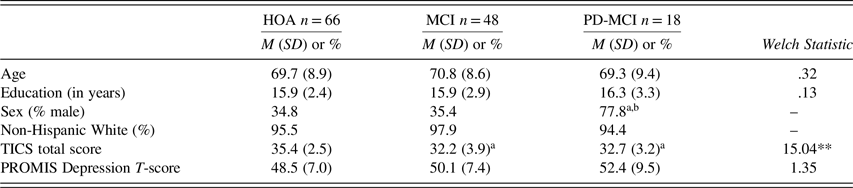
Study participants included 18 individuals with PD-MCI, 48 individuals with MCI, and 66 HOAs (see Table 1). Participants were drawn from a larger cross-sectional study (data collection 2013–2017) evaluating IADLs using a naturalistic environment and smart technologies (Cook, Schmitter-Edgecombe & Dawadi, Reference Cook, Schmitter-Edgecombe and Dawadi2015). This PD-MCI sample is the same sample described in Fellows and Schmitter-Edgecombe (Reference Fellows and Schmitter-Edgecombe2019). Participants were recruited through community advertisements, health fairs, physician referrals, local aging agencies, and by contacting former laboratory study participants. A telephone screen, which included a medical interview and the Telephone Interview of Cognitive Status (TICS; Brandt, Spencer, & Folstein, Reference Brandt, Spencer and Folstein2003), was used to exclude participants experiencing significant cognitive impairment (TICS cutoff below 21 suggesting moderately to severely impaired range). Other exclusion criteria included age less than 50, unable to provide informed consent, or non-fluent in English.
Participant characteristics

Note. TICS = Telephone Interview for Cognitive Status. The PROMIS Emotional Distress–Depression 8a (Cella et al., Reference Cella, Riley, Stone, Rothrock, Reeve, Yount and Cook2010) questionnaire was used to assess depressive symptoms. PROMIS items were summed and total raw scores were converted into normally distributed T-scores. aSignificantly different than healthy older adults. bSignificantly different than MCI.
Participants completed standardized neuropsychological tasks and activities of daily living in a campus apartment. Testing sessions were scheduled 1 week apart and lasted approximately 3 hr. Participants received a brief report and were provided with pre-paid parking passes and a voucher for travel reimbursement. The study protocol was approved by the Washington State University Institutional Review Board and was conducted in accordance with the Helsinki Declaration.
Individuals with PD were diagnosed using the United Kingdom Parkinson’s Disease Brain Bank criteria by a board-certified neurologist specializing in movement disorders (Hughes, Daniel, Kilford, & Lees, Reference Hughes, Daniel, Kilford and Lees1992). The MCI and PD-MCI diagnoses were made by two experienced neuropsychologists who reviewed neuropsychological testing performances, participant and informant interviews, and medical records when available. The study functional outcome measures were not used for clinical diagnosis.
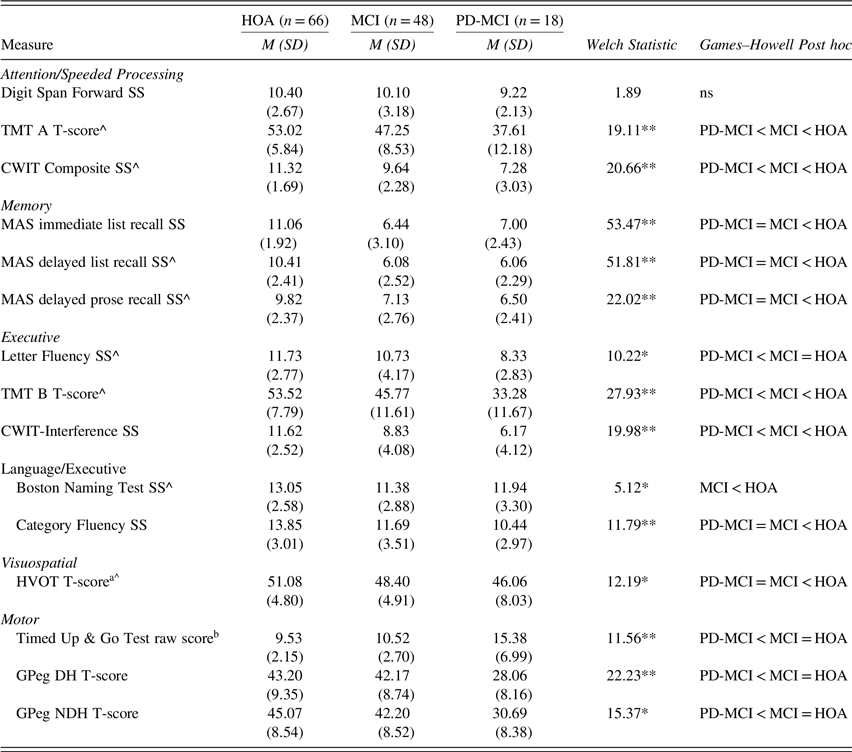
For both MCI groups, inclusion criteria included: (a) self- or informant-reported cognitive decline of at least 6 months; (b) no significant deficits in functional independence as confirmed by interview data; (c) did not meet criteria for the Diagnostic and Statistical Manual of Mental Disorders Major Neurocognitive Disorder (DSM-5; American Psychiatric Association, 2013); (d) preserved general cognitive functions as determined by TICS score within normal limits; and (e) impairment on at least two neuropsychological tests, either two tests in one cognitive domain or one test in two cognitive domains (i.e., attention, executive function, language, memory, and visuospatial; see Table 2). To determine the presence of PD-MCI, the Movement Disorder Society (MDS) level 1 criterion was used (Litvan et al., Reference Litvan, Aarsland, Adler, Goldman, Kulisevsky, Mollenhauer and Weintraub2011). For MCI, criteria were consistent with those defined by Petersen and colleagues (Petersen et al., Reference Petersen, Doody, Kurz, Mohs, Morris, Rabins and Winblad2001; Petersen & Morris, Reference Petersen and Morris2005). For this study, cognitive impairment was defined as 1.5 standard deviations below norms (T-score < 35 or scaled score < 6) or below an estimated premorbid level of functioning derived using a standardized combination of demographic and performance variables from the Wechsler Test of Adult Reading (WTAR; Wechsler, Reference Wechsler2001). At testing, individuals with PD-MCI were taking their normally prescribed anti-Parkinson’s disease dopaminergic medications and tested in the on state. The average diagnosis duration was 7.19 years (SD = 4.46), with a range of 1.28–16.08 years. Eighty-nine percent of the PD-MCI group and 42% of the MCI group met criteria for multi-domain MCI.
Neuropsychological test scores

Note. Age-adjusted norms used for all cognitive tests. HOA = healthy older adults; MCI = mild cognitive impairment; PD-MCI = Parkinson’s disease with mild cognitive impairment; ^tests used to establish criteria for PD-MCI; Digit Span Forward (Wechsler, 2008); Trail Making Test (TMT; Heaton, Miller, Taylor, & Grant, Reference Heaton, Miller, Taylor and Grant2004; Reitan, Reference Reitan1992); Color-Word Interference Test (CWIT), Letter Fluency, Category Fluency (Delis, Kaplan, & Kramer, Reference Delis, Kaplan and Kramer2001); Boston Naming Test (BNT; Kaplan, Goodglass, & Weintraub, Reference Kaplan, Goodglass and Weintraub1983); Memory Assessment Scale (MAS; Williams, Reference Williams1991; used age and education adjusted norms); Hooper Visual Organization Test (HVOT; Hooper, Reference Hooper1983). Timed Up and Go Test (TUG; Podsiadlo & Richardson, Reference Podsiadlo and Richardson1991). SS = scaled score. GPeg = Grooved Pegboard (Heaton, Miller, Taylor, & Grant, Reference Heaton, Miller, Taylor and Grant2004); DH = dominant hand; NDH = non-dominant hand. For MCI: Hooper, n = 47; For PD-MCI: TMT B and TUG, n = 17. aAnalysis completed with Kruskal–Wallis test. bAnalysis completed with transformed score. *p < .01. **p < .001.
Participants were classified as HOAs if they had no history of neurological disorder, head injury with a residual deficit, or stroke and did not meet clinical criteria for MCI or dementia. A total of 175 participants from the larger study were classified as HOAs. Of the 47 individuals with PD who took part in the larger study, 29 were excluded because they did not meet criteria for PD-MCI (24 exhibited normal cognition, 2 met criteria for dementia) or did not complete the Six Activities Task (n = 3). Of the 50 individuals with MCI who took part in the larger study, 2 were excluded because they did not complete the Six Activities Task. HOAs were also excluded (n = 8) if they were missing data for the Six Activities Task. The final sample of 66 HOAs used in this study was those that best individually matched the MCI and PD-MCI participants in age and education (see Table 1).
Measures
Neuropsychological assessment
Standardized neuropsychological tests were used to assess attention/processing speed, executive function, language, memory, and visuospatial abilities. Standard scores and normative data sources are presented in Table 2.
Functional assessment
Direct observation: Six Activities Task
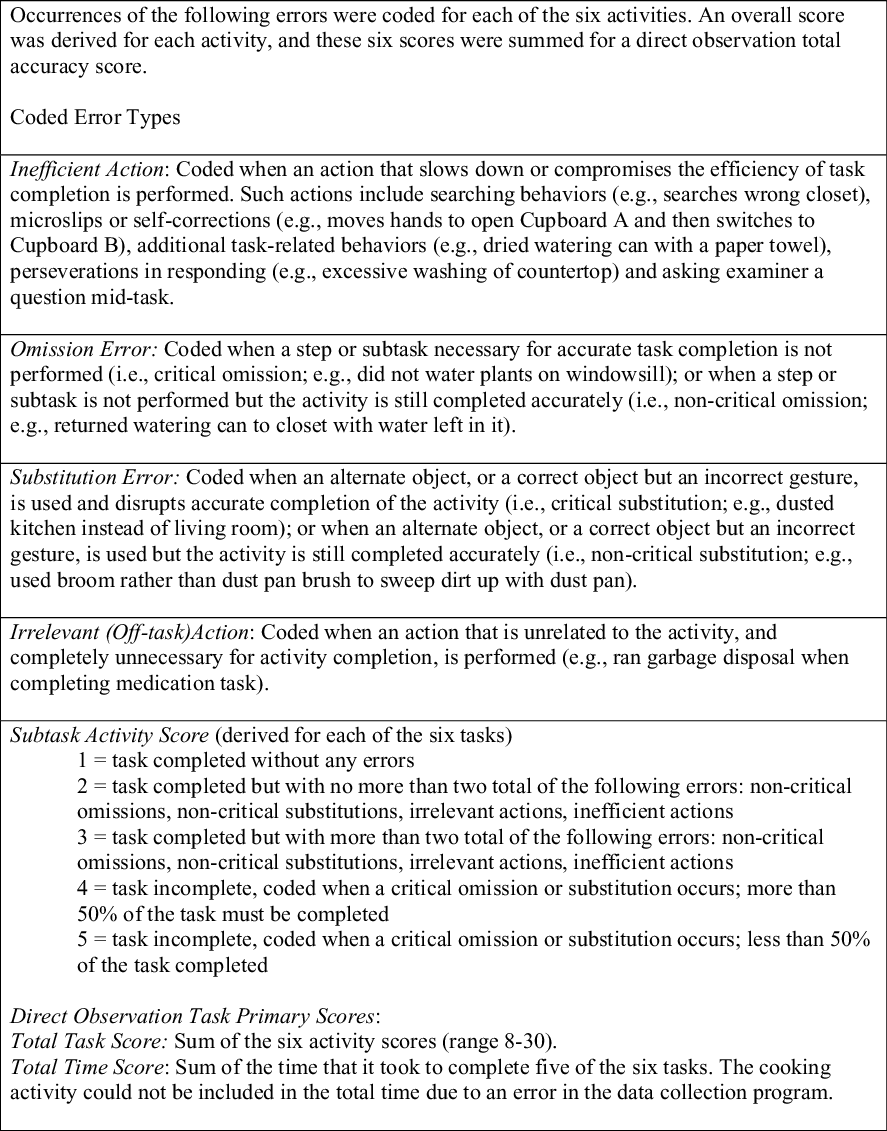
The Six Activities Task was completed in a campus apartment. It is a modified version of a series of tasks found to be sensitive to MCI and dementia (Schmitter-Edgecombe & Parsey, Reference Schmitter-Edgecombe and Parsey2014a; Reference Schmitter-Edgecombe and Parsey2014b). Prior to completing each task, participants were provided with brief verbal instructions. Participants then carried out each activity using materials provided within the campus apartment. The six tasks included: (1) sweeping and dusting; (2) washing hands; (3) filling a medication pillbox; (4) watering house plants; (5) washing kitchen countertops; and (6) preparing a cup of soup and pouring a glass of water. As participants completed each task, trained examiners used our real-time annotation system to tag the activity steps that participants completed and log errors. The following four error types were coded for each activity: inefficient action, omission, substitution, and irrelevant/off-task action (see Figure 1). Error coding was then used to compute a score for each of the six tasks, ranging from 1 (task completed without any errors) to 5 (less than 50% of task complete, see Figure 1). Scores from the six activities were summed to create a Task Total score (range 6–30). Higher scores indicate poorer performance. Time to complete each activity was recorded and summed for a Total Time score.
Coding schema for six activities total score, time, and error types.

Video recordings of participant performances were coded by two independent raters blind to cognitive status. When new errors were observed, they were added to a working document of errors for the particular activity step. Scorers discussed and resolved discrepancies in coding when necessary (see Fellows and Schmitter-Edgecombe, Reference Fellows and Schmitter-Edgecombe2019, for additional details).
Questionnaires: Instrumental Activities of Daily Living – Compensation Scale (IADL-C)
Both self- and informant-report versions of the IADL-C (Schmitter-Edgecombe, Parsey, & Lamb, Reference Schmitter-Edgecombe, Parsey and Lamb2014), a 27-item questionnaire assessing functional ability and compensatory strategy use, were obtained. Items are rated on a scale ranging from 1 (independent, as well as ever, no aid) to 8 (unable to complete activity anymore). The IADL-C includes a rating of 9, indicating that the activity is always completed by someone else and is not indicative of decline, and 10 in the informant-report version, indicating that there is no basis for judgment. The total score is the average of all items (except ratings of 9 or 10), with higher scores reflecting poorer everyday functioning. The IADL-C has shown good internal consistency, test–retest reliability, and convergent and discriminant validity (Schmitter-Edgecombe et al., Reference Schmitter-Edgecombe, Parsey and Lamb2014).
Performance-Based Task: Medication Management Abilities Assessment (MMAA)
The MMAA evaluates functional capacity to manage a novel medication routine (Patterson et al., Reference Patterson, Lacro, McKibbin, Moscona, Hughs and Jeste2002). Participants are given four prop pill bottles, with instructions printed on each of the pill labels, and told to walk the examiner through a day with the mock medication routine by handing the examiner mock pills (beans). The MMAA was scored using the standard MMAA scoring method outlined by Patterson et al. (Reference Patterson, Lacro, McKibbin, Moscona, Hughs and Jeste2002), with the total correct score (range 0–33; higher score = better) used in the analyses.
Statistical analyses
Participant characteristics and neuropsychological test scores were compared with one-way analyses of variance (ANOVAs) for continuous variables and chi-square tests for dichotomous variables. Because the assumption of homogeneity of variance was violated for most comparisons, the Welch statistic and Games–Howell post hoc tests were used. Several neuropsychological testing variables were normalized (skewness and kurtosis < 1.2) either by replacing significant outliers with a score of 2.5 standard deviations above the group mean (TMT, n = 3, CWIT, n = 5) or by applying a reciprocal square root transformation (TUG). The functional data (Six Activities Task, IADL-C, and MMAA), MAS recognition test, and HVOT were analyzed using nonparametric Kruskal–Wallis tests to compare groups. Post hoc pairwise comparisons were completed using the Dunn–Bonferroni approach. Effect sizes were calculated using z-scores from the post hoc tests (
 $$r = {Z \over {\sqrt N }})$$
.
Due to non-normally distributed outcome measures, Spearman rho correlations were used to examine for associations among the functional measures, motor ability and the cognitive domains of attention/speeded processing, memory, and executive function. Composite scores were created for the motor and cognitive domains by deriving z-scores from the raw scores for the tests that comprised each respective domain (see Table 2) and then averaging across the measures in each domain. Composites were not derived for the language and visuospatial domains given that performances on category fluency and the HVOT may have been capturing deficits in different abilities for the PD-MCI (executive functioning/visuospatial abilities) compared to the MCI group (semantic network/word-finding abilities). Correlational analyses were conducted separately for participants in the HOA, MCI, and PD-MCI groups. Because sample sizes differed across groups and functional status measures, we highlight correlations that were moderate in size (i.e., r > .30). Most correlations were significant at p < .01.
RESULTS
Group Characteristics
Demographic characteristics are presented in Table 1. The majority of participants were white (96.2%) and not Hispanic or Latino. One-way ANOVAs revealed that the groups (HOA, MCI, PD-MCI) did not differ in age, education, or depressive symptomology. There were more men in the PD-MCI group (77.8%) compared to the HOA (34.8%) and MCI (35.4%) groups, X 2 (2) = 11.72, p = .003. Given that gender was also linked with disease pathology, we decided not to control for gender in the analyses. We did, however, run group analyses controlling for gender and the pattern of the data was similar. There were no differences in global cognition (i.e., TICS score) between the MCI (M = 32.2) and PD-MCI (M = 32.7) groups, with both groups performing more poorly than HOAs (M = 35.4; see Table 1).
Neuropsychological tests used in the diagnosis of MCI for the MCI and PD-MCI groups can be found in Table 2 along with motor test performances. The data show the expected pattern of performances, with the PD-MCI and MCI groups performing more poorly than HOAs on the majority of cognitive tests. The PD-MCI group also performed more poorly than the MCI group on the majority of attention/speeded processing, executive, and motor tests.
Between-Group Comparisons on the Functional Status Measures
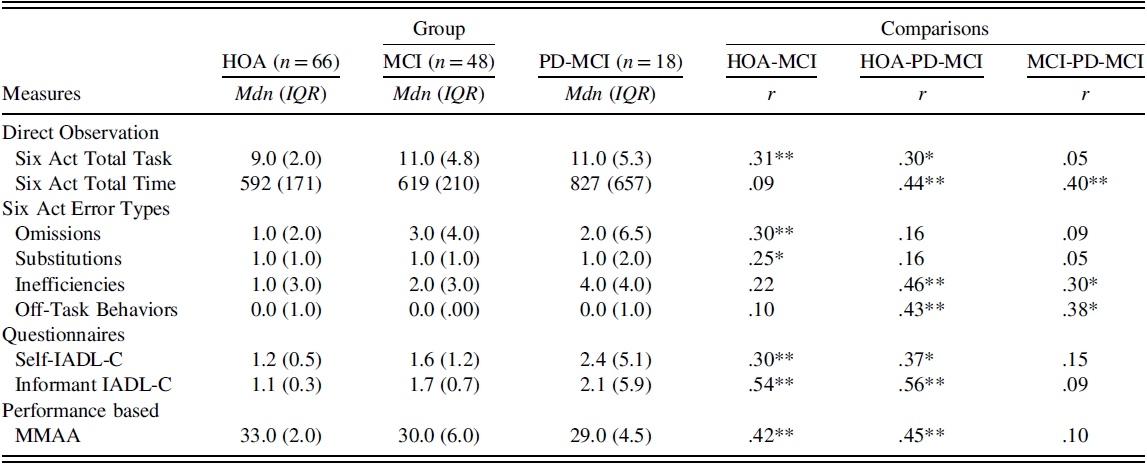
Table 3 displays medians, interquartile ranges, and effect sizes for the functional status measures.
Between-group comparisons of functional measures

Note. r = an effect size calculated using z-scores from the post hoc tests (
 $$r = {Z \over {\sqrt N }})$$
. HOA = healthy older adults; MCI = mild cognitive impairment; PD-MCI = Parkinson’s disease with mild cognitive impairment; Act = Activities; IADL-C = Instrumental Activities of Daily Living-Compensation; MMAA = Medication Management Abilities Assessment. Sample sizes for IADL-C (HOA = 55; MCI = 43; PD-MCI = 15; missing data due to unreturned questionnaires), Informant IADL-C (HOA = 50; MCI = 30; PD-MCI = 16; missing data due to unreturned questionnaires or no informant available), and MMAA (HOA = 63; MCI = 37; PD-MCI = 13; missing data due to time constraints as test late in battery). *p < .05; **p ≤ .005.
Direct observation
Six Activities. As seen in Table 3, one-way ANOVAs revealed significant differences between groups for both the Total Task score, χ2 (2, n = 132) = 14.01, p < .001, and Total Time score, χ² (2, n = 132) = 16.42, p < .001. Post hoc analyses showed that, for the Total Task score, HOAs performed significantly better than both MCI (z = −3.27, p = .003) and PD-MCI (z = −2.72, p = .02) groups. The Total Task score of the MCI and PD-MCI groups did not differ (z = −0.37, p = 1.00). In contrast, the PD-MCI group took longer to complete the six activities than both the HOA (z = −4.04, p < .001) and the MCI (z = −3.25, p = .003) groups; the latter two groups did not differ in task time (z = −.93, p = 1.00).
Kruskal–Wallis analyses were then completed to determine whether the four error types contributing to the Total Task score differed between groups. The analyses revealed significant group effects for all four error types: omissions, χ² (2, n = 132) = 10.38, p = .006, substitutions, χ² (2, n = 132) = 7.49, p = .02, inefficiencies, χ² (2, n = 132) = 18.98, p < .001, and irrelevant/off-task behaviors, χ² (2, n = 132) = 15.50, p < .001. Compared to the HOAs, the MCI group committed significantly more omission (z = −3.17, p = .005) and substitution (z = −2.64, p = .02) errors. The performance of the PD-MCI group did not differ from either the HOA (zs < 1.50) or MCI (zs < 1.00) groups for these two error types. In contrast, for inefficiencies and irrelevant/off-task behaviors, the PD-MCI group performed more poorly than the HOA (zs > 3.92, ps < .001) and MCI (zs > 2.45, ps < .05) groups. There was a trend for the MCI group to commit more inefficient (z = −2.32, p = .06), but not more off-task behaviors (z = −1.05, p = .89), than the HOAs. Of note, although the median for irrelevant/off-task behaviors was zero, 44.4% of the PD-MCI group engaged in these behaviors compared to 7.6% of the HOAs and 14.6% of the MCI group.
Questionnaires
Self-report. There was a significant group effect for self-reported ability to complete everyday activities as measured by the IADL-C, χ² (2, n = 114) = 13.45, p = .001. As seen in Table 3, the HOAs self-reported better functional abilities compared to both the MCI (z = −2.80, p = .015) and PD-MCI (z = −3.12, p = .006) groups. The MCI and PD-MCI groups did not differ significantly in self-reported IADL abilities (z = −1.14, p = .77).
Informant report. There was a significant group effect for informant report, χ² (2, n = 96) = 33.76, p < .001. The IADL abilities of HOAs were reported by informants to be better than both the MCI (z = −4.82, p < .001) and PD-MCI (z = −4.55, p < .001) groups. The MCI and PD-MCI groups did not differ significantly in IADL performances as rated by informants (z = −.63, p = 1.00).
Performance-based
MMAA. The groups differed in performance on the MMAA, χ² (2, n = 113) = 24.66, p < .001. As seen in Table 3, the HOAs performed better than both the MCI (z = −4.22, p < .001) and the PD-MCI (z = −3.60, p < .001) groups; the latter two groups did not differ in performance (z = −.69, p = 1.00).
Correlations among Functional Outcomes
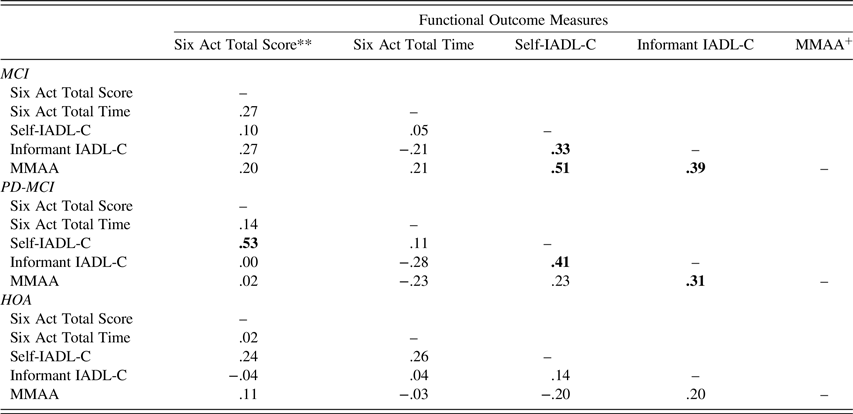
Among the five measures of functional outcome, there were few associations that fell within the moderate range (see Table 4). Suggestive of insight in the MCI populations, associations between self- and informant-report measures were moderate for the MCI (r s = .33) and PD-MCI (r s = .41) groups. For the MCI group, self-report (r s = .41) and informant-report (r s = .39) measures also exhibited moderate levels of correlation with the performance-based measure (i.e., MMAA). For the PD-MCI group, while informant report showed a moderate correlation with the performance-based measure (r s = .31), self-report was moderately associated with the direct-observation Total Task score (r s = .53). For the HOA group, no moderate level correlations emerged (r s ≤ .26).
Correlations among functional outcome measures by group

Note. +Reversed in table so positive correlation associated with better performance on both measures. HOA = healthy older adults; MCI = mild cognitive impairment; PD-MCI = Parkinson’s disease with mild cognitive impairment; Act = Activities; IADL-C = Instrumental Activities of Daily Living-Compensation; MMAA = Medication Management Abilities Assessment. Sample sizes for Six Activities (HOA = 66; MCI = 48; PD-MCI = 18), Self-IADL-C (HOA = 55; MCI = 43; PD-MCI = 15), Informant IADL-C (HOA = 50; MCI = 30; PD-MCI = 16), and MMAA (HOA = 63; MCI = 37; PD-MCI = 13).
Cognitive Correlates of Functional Outcomes
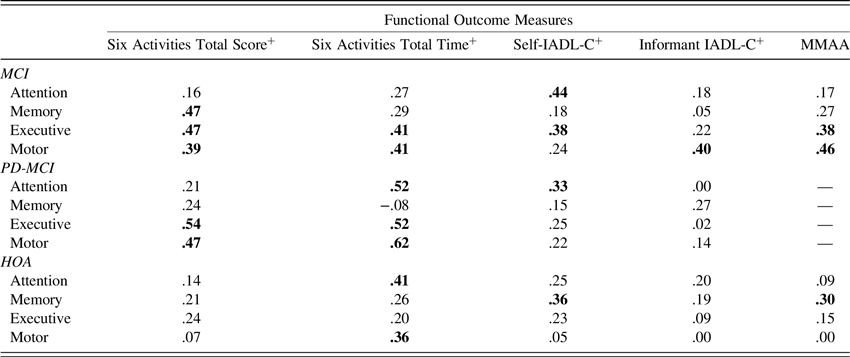
As seen in Table 5, different patterns of cognitive correlates emerged across groups and functional outcome measures. Not surprisingly, all three groups showed a moderate correlation between motor abilities and the direct-observation Total Time score (r s s ≥ .36). Interestingly, poorer motor abilities also associated with poorer functional scores on all but the self-report measure for the MCI group (r s s ≥ .39). For the direct-observation Total Score, while both the MCI and PD-MCI groups showed moderate correlations with motor skills (r s s ≥ .39) and the executive domain (r s s ≥ .47), the MCI group showed an additional moderate association with the memory domain (r s = .47). For self-report, both the MCI and PD-MCI groups showed moderate correlations with the attention domain (r s s ≥ .33), while the MCI group showed an additional moderate correlation with the executive domain (r s = .38) and the HOA group exhibited a moderate association with the memory domain (r s = .36). No associations emerged between the cognitive domains and the informant-report measure. The performance-based measure (i.e., MMAA) correlated with the cognitive domain of executive for the MCI group (r s = .38) and memory (r s = .30) for the HOAs. Given the small number of participants with PD-MCI that completed the MMAA (n = 13), correlations were not computed.
Correlations among cognitive and motor domains and functional outcome measures by group

Note. +Reversed in table so positive correlation associated with better performance on both measures. HOA = healthy older adults; MCI = mild cognitive impairment; PD-MCI = Parkinson’s disease with mild cognitive impairment; IADL-C = Instrumental Activities of Daily Living-Compensation; MMAA = Medication Management Abilities Assessment. Sample sizes for Six Activities (HOA = 66; MCI = 48; PD-MCI = 18), Self-IADL-C (HOA = 55; MCI = 43; PD-MCI = 15), Informant IADL-C (HOA = 50; MCI = 30; PD-MCI = 16), and MMAA (HOA = 63; MCI = 37; PD-MCI: correlations not computed due to low sample size, n = 13).
DISCUSSION
This study examined functional abilities and cognitive correlates in individuals with PD-MCI compared to individuals with MCI with comparable global cognitive status and to HOAs. As hypothesized, in comparison to HOAs, both the PD-MCI and MCI groups performed more poorly on all functional measures, including direct observation, self-report and informant report, and performance based. These findings are consistent with the broader MCI literature showing that individuals with MCI experience greater functional impairment compared to cognitively healthy controls (e.g., Lindbergh et al., Reference Lindbergh, Dishman and Miller2016). These findings add to a growing literature on IADL functioning in PD-MCI (e.g., Holden et al., Reference Holden, Medina, Hoyt, Sillau, Berman, Goldman, Weintraub and Kluger2018; Sulzer et al., Reference Sulzer, Bäumer, Hoang, Becker, Lönneker, Graessel and Liepelt-Scarfone2020) and expand prior research by demonstrating that IADL difficulties in PD-MCI are consistently apparent across assessment methods. With the exception of greater time to task completion on the direct-observation measure, general capability to complete IADLs was comparable across the PD-MCI and MCI groups. This is consistent with limited prior work showing that individuals with PD-MCI generally experience similar levels of functional impairment as individuals with MCI (i.e., Chin et al., Reference Chin, Park, Yang, Yeom, Ahn, Baek and Kang2018; Elfmarkova et al., Reference Elfmarkova, Gajdos, Rektorova, Marecek and Rapcsak2017; Ruzafa-Valiente et al., Reference Ruzafa-Valiente, Fernández-Bobadilla, García-Sánchez, Pagonabarraga, Martínez-Horta and Kulisevsky2016). This does not, however, imply that the same aspects of performance are leading to the functional impairment across measures or that the nature of the underlying impairment is similar across PD-MCI and MCI groups.
On the direct-observation task, different error types appeared to differentially contribute to the overall performance scores of the PD-MCI and MCI groups. Specifically, the MCI group committed more task omissions and made more substitution errors than the HOAs. In contrast, relative to both the HOA and MCI groups, the PD-MCI group engaged in a greater number of irrelevant/off-task behaviors and more inefficient actions. These findings are similar to previous studies showing that, in comparison to HOAs, individuals with PD-MCI performed a series of routine tasks less efficiently (e.g., Foster, Reference Foster2014) and with an increased number of perplexity errors (i.e., trial and error) but not omission errors, which became more common in PDD (e.g., Beyle et al, Reference Beyle, Glonnegger, Cerff, Gräber, Berg and Liepelt-Scarfone2018; Glonnegger et al., Reference Glonnegger, Beyle, Cerff, Graeber, Csoti, Berg and Liepelt-Scarfone2016). The error patterns of the PD-MCI and MCI groups are also consistent with a prior study which found that a PDD group made a higher degree of commission errors while an AD group showed a higher proportion of omission errors (Giovannetti et al., Reference Giovannetti, Britnell, Brennan, Siderowf, Grossman, Libon and Seidel2012). The current findings suggest that there may be dissociable patterns of everyday task failures in PD-MCI compared to other disease groups.
For the HOA group, no significant correlations emerged among the functional assessment measures. This is consistent with functional assessment methods not tapping completely overlapping constructs. It may also partially reflect a lack of sensitivity of functional measures when administered to HOAs, as near ceiling performance is expected on many functional measures. For both the PD-MCI and MCI groups, self- and informant-reported functional abilities were moderately correlated. Furthermore, self-reported functional abilities correlated with the direct-observation measure for the PD-MCI group and with the performance-based measure for the MCI group. These findings suggest relatively intact insight into functional difficulties in individuals experiencing PD-MCI and MCI. Prior studies investigating levels of insight about memory and functional abilities in populations with MCI have been mixed (e.g., Cholerton et al., Reference Cholerton, Poston, Tian, Quinn, Chung, Hiller and Zabetian2020; Chudoba & Schmitter-Edgecombe, Reference Chudoba and Schmitter-Edgecombe2020; Orfei et al., Reference Orfei, Assogna, Pellicano, Pontieri, Caltagirone, Pierantozzi and Spalletta2018), and future research is needed to better understand conditions under which insight into cognitive and functional abilities may be limited.
The mean time it took the PD-MCI group to complete the direct-observation tasks was significantly longer than that of the MCI and HOA groups. This is generally consistent with prior studies showing slower task completion but similar overall accuracy on performance-based measures in nondemented PD groups compared to controls (e.g., Lopez et al., Reference Lopez, Ferencz, Rohl, Trifilio, Scott, Okun and Bowers2019). This could indicate that PD-related motor disability and bradyphrenia impacted the speed of activity completion. Indeed, better motor functioning along with better performance on the attention and/or executive composite, which both included timed tasks, was associated with faster completion time on the direct-observation task for all three groups. Alternately or in addition, the slower completion time of the PD-MCI group may be a consequence of the higher proportion of inefficient and off-task/irrelevant errors, which may have lengthened completion time in comparison to omission errors, which may have reduced completion time for the MCI group. Studies have also shown that individuals with PD, presumably to compensate for slowed processing speed, approach task completion in a more sequential manner (less multitasking) thereby contributing to more time on tasks (e.g., Bialystok, Craik, & Stefurak, Reference Bialystok, Craik and Stefurak2008; Koerts, Van Beilen, Tucha, Leenders, & Brouwer, Reference Koerts, Van Beilen, Tucha, Leenders and Brouwer2011).
The pattern of cognitive correlates for the functional measures varied across groups and functional outcome measures. Our hypothesis regarding the expected pattern of correlations was only partially supported. For the HOAs, the memory composite showed moderate correlations with the self-report and performance-based measures. As hypothesized, when moderate correlations emerged between functional measures and cognitive domains for the PD-MCI group, the associations were with the cognitive domains of attention and executive functioning but not memory. For the MCI group, consistent with expectations and a link between episodic memory deficits and omission errors (e.g., Giovannetti et al., Reference Giovannetti, Britnell, Brennan, Siderowf, Grossman, Libon and Seidel2012; Schmitter-Edgecombe & Parsey, Reference Schmitter-Edgecombe and Parsey2014a), the memory domain correlated moderately with the Six Activities accuracy score. However, no other functional measure associated moderately with memory for the MCI group; instead, the executive domain consistently associated moderately with all but one functional measure (i.e., informant report).
Of interest, poorer motor domain scores were associated with poorer functional performance scores, most notably for the MCI group. The significance of this is not entirely clear, but may reflect contributions of more significant neuropathology. In PD, both episodic memory retrieval and motor dysfunction have been linked to impaired dopaminergic activity stemming from degeneration of subcortical structures (Foerde & Shohamy, Reference Foerde and Shohamy2011; MacDonald et al., Reference MacDonald, Monchi, Seergobin, Ganjavi, Tamjeedi and MacDonald2013). The current findings suggest that a complex relationship exists between cognition, motor functioning, and functional abilities even across cognitive impairment groups without apparent primary motor deficits. Relatedly, a recent study offered a model in which IADL performance in individuals with MCI is affected by not only cognitive functioning but environmental factors, education, and five physical function factors: seeing, hearing, balance, gait/mobility, and functional mobility (Bruderer-Hofstetter, Sikkes, Münzer, & Niedermann, Reference Bruderer-Hofstetter, Sikkes, Münzer and Niedermann2020). Future research may consider how physical factors contribute to functional limitations in MCI groups regardless of etiology.
This study has several notable limitations. First, study generalizability is limited as participants were highly educated and almost entirely white. The small PD-MCI sample and the limited recruitment methods further increase risk of selection bias in this sample. A larger sample size would allow for the use of more powerful statistical procedures to parse out the individual contribution of cognitive variables associated with IADL limitations in the PD-MCI and MCI groups. Second, information relevant to disease staging was not available for the PD-MCI participants, and the lack of longitudinal data precluded ability to track cognitive and functional changes over time. Future longitudinal research will be important to potentially identify whether changing error types are associated with disease staging, cognitive decline and/or etiology (including different subtypes of PD-MCI), and causal mechanisms. Participant performances on the direct-observation task may have been impacted by an unfamiliar environment or knowing that they were being observed. Participants may have performed better in their own homes where they could use typical compensatory strategies and environmental cues to support performance.
In comparison to HOAs, and similar to individuals with MCI, individuals with PD-MCI exhibited limitations in complex everyday activities as assessed by multiple IADL assessment methods. Given the low correlations among assessment methods and varying cognitive correlates, larger studies will be needed to examine the sensitivity and specificity of the diverse IADL assessment methods in the PD-MCI population. Such research may require the use of newer technologies (e.g., wearable sensors, smart homes) to capture real-world everyday functioning. Until then, clinicians may want to employ multiple methods when assessing for functional impairment in the PD-MCI population. Further, even though the general capability to complete IADLs was similar for the PD-MCI and the MCI groups, the nature of the error profiles, task completion time and cognitive correlates differed. A promising future avenue may be to develop less time-consuming measures than the Six Activities Task that would allow for evaluation of multiple quantitative (e.g., accuracy, time) and qualitative (e.g., omission, inefficiencies) aspects of IADL performance in the clinic, perhaps using tools such as virtual reality. Alternately, once the nature of errors types that impact IADL performance in the PD-MCI population is better understood, it may be possible to develop questionnaire measures that are sensitive to varying error types. Such data could lead to more targeted interventions to support IADLs in the PD-MCI population.
FINANCIAL SUPPORT
This work was supported by the NIH: National Institute of Biomedical Imaging and Bioengineering (M.S.E. grant number R01 EB009675).
CONFLICTS OF INTEREST
No conflicts of interest exist.