

Studies across the world have reported relatively high levels of occupational stress among teachers (Hajiamini et al., Reference Hajiamini, Mohamadi, Ebadi, Fathi-Ashtiani, Tavousi and Montazeri2012). Teachers are a unique group, whose professional duty is to interact with children and adolescents for the majority of their 8-hour workday, year after year (Kourmousi & Alexopoulos, Reference Kourmousi and Alexopoulos2016). The major stressors within this group include but are not limited to competitive societal environment, heavy workload, pupil behavior, time demands, work conditions, staff relationships, and family responsibilities (Doménech Betoret & Gómez Artiga, 2010; Feuerhahn, Bellingrath, & Kudielka, Reference Feuerhahn, Bellingrath and Kudielka2013; Hung, Reference Hung2011; Pierce & Molloy, Reference Pierce and Molloy1992; Ullrich, Lambert, & McCarthy, Reference Ullrich, Lambert and McCarthy2012). Stress cannot be avoided; while mild to moderate stress can enhance work performance, too much stress can be detrimental to one’s physical and mental health (Mark & Smith, Reference Mark and Smith2012). Some studies (Liurong, Reference Liurong2004; Pithers & Soden, Reference Pithers and Soden1999) have found that teachers experience greater stress than do the general population, which can lead to serious mental health issues such as job burnout (Lagutina, Sperlinger, & Esterhuyzen, Reference Lagutina, Sperlinger and Esterhuyzen2013) and facilitate feelings of anger, frustration, anxiety, depression, and nervousness (Ullrich et al., Reference Ullrich, Lambert and McCarthy2012); it can also cause teachers to engage more often in negative behaviors such as overeating or recrimination (Aazami, Shamsuddin, & Akmal, Reference Aazami, Shamsuddin and Akmal2015). When teachers inevitably experience negative emotions and become emotionally unstable during their working hours, they are less likely to model proper behaviors for coping with stress to students and other teachers.
According to coping strategies theory, attitudes towards pressure-filled situations differ according to time and the degree of impact the situation has on the individual (Raspopow, Matheson, Abizaid, & Anisman, 2013). Stress can be seen as either a challenge to confront or as a burden to carry; an individual can choose how to respond to specific situations through either by using active coping styles aimed at solving the problem or passive coping styles aimed at escaping the situation. Coping skill choice can also influence the consequences of stress (Ahmed, Hershberger, & Lemkau, Reference Ahmed, Hershberger, Lemkau, Rakel and Rakel2016). Thus, teachers need appropriate management strategies to deal with emotions and work-related stress (Hargreaves, Reference Hargreaves2000).
Several strategies have been proposed for alleviating teacher stress and burden. Specific tactics have included group therapy interventions to alleviate stress and bolster coping strategies (Antoniou, Ploumpi, & Ntalla, Reference Antoniou, Ploumpi and Ntalla2013; Austin et al., Reference Austin, Shah and Muncer2005). These group therapy interventions, however, are mainly centered on verbal communication behaviors or psychometric examinations, neither of which appear to reduce stress. Thus, it is possible that nonverbal methods might be more advantageous (Lagutina et al., Reference Lagutina, Sperlinger and Esterhuyzen2013; Schulz, Reference Schulz2018).
Sandplay therapy is one such method. It can be traced back to Dora Kalff who developed this form of therapy in Switzerland based on the theories of C.G. Jung. It utilizes Jungian psychological principles to provide a more experiential and creative environment wherein individuals can engage in symbolic therapeutic expression (Draper, Ritter, & Willingham, Reference Draper, Ritter and Willingham2003). Group sandplay allows participants to reflect on their responses to symbolic objects and/or members in the group and thereby to discover new aspects of others and themselves, explore their own blind spots and underlying assumptions, and develop more our empathy for their “relationship objects” and for themselves. Group sandplay has been shown to reduce state anxiety among college students (Wang, Nan, & Zhang, Reference Wang, Nan and Zhang2017) couples (Albert, Reference Albert2015), and medical patients (Frambati, Pluchart, Weber, & Canuto, Reference Frambati, Pluchart, Weber and Canuto2014). There is strong evidence that group sandplay can offer a promising model to give individuals more practical experiences and deepen their self-experience, as it can be used to develop a deeper understanding of one’s thoughts about stress and one’s coping responses. Thus, for the present study, we investigated the hypothesis that sandplay would improve the teachers’ stress coping strategies.
Method
Participants
Two hundred primary and secondary school teachers from Dalian, Liaoning, China, who were interested in sandplay and stress coping interventions were recruited to participate in the present study. A recruitment poster was placed on a website of the local teacher training center, and assessments were conducted in two separate school auditoriums, for the experimental and control groups respectively. Teachers were eligible to participate if they held a teaching certificate and had been employed for at least one year. Teachers who did not have direct contact with students were excluded.
Participants were randomly separated into two groups of equal size: The experiment group (EG) and control group (CG). Of the 100 teachers in the EG, 98 provided complete data, whereas 96 did so in the CG. Participants were informed that they would take part in a study conducted by a therapist from the Department of Applied Psychology, who was examining coping strategies to reduce stress. Additionally, participants were told that the training provided might enhance their stress coping abilities, which could be used to help deal with future emotional and behavioral problems.
Procedures
A therapist provided information regarding stress to both groups, separately, in two school auditoriums in Dalian. Each group attended a three-hour session on the effects of stress on job performance, effects of excessive stress on the body and emotions, and how different coping skill choices could influence stress consequences. The CG had the opportunity to visit the sandplay experience center, but they were not instructed in the guided experience using the techniques that the EG received. In addition to the instructional sessions, the EG group participated in group sandplay activities, during which they were given opportunities to analyze and solve problems regarding work-related stress scenarios while receiving social support from the other group members, an experienced therapist, and a group of 19 experienced sandplay practitioners who were recruited to serve as assistants within subgroups within the larger sessions.
Each participant completed a self-administered questionnaire assessing general characteristics and the Simplified Coping Style Questionnaire, which was adapted from the Ways of Coping Questionnaire (WCQ; van Liew, Santoro, Edwards, Kang, & Cronan, 2016). The 20-item Chinese version of the SCSQ was used (Zhao et al., Reference Zhao, Li, Huang, Jin, Ma, Wang and Zhu2013). These measures were implemented to assess teacher stress coping styles to determine ways to provide more targeted and effective psychological support. Participants were told that there were no “good” or “bad” answers and that they should simply select the item that best fit their situation. Participants were assured anonymity. The research team explained how the forms should be completed and provided contact information in case any questions arose. Finally, a collection date was agreed upon.
Measures
General Demographics Questionnaire. This measure assessed participant demographic data, which included gender, age, education level (bachelor’s degree or above and below bachelor’s degree), seniority (years of teaching experience), and marital status.
Simplified Coping Style Questionnaire (SCSQ). The SCSQ comprises 20 questions in two subscales: Active and passive coping. There are 12 questions for the active coping subscale and eight questions for the passive coping subscale.
The WCQ has been extensively used to assess coping styles in clinical and non-clinical contexts. In its original form, the WCQ was not suitable for Chinese samples, given that some content was not relevant and factor analysis results were inconsistent. Thus, using a cohort of 846 Chinese participants, Xie (Reference Xie1998) modified the WCQ, translated it into Chinese, and renamed it the SCSQ. The test–retest correlation and alpha coefficients were 0.89 and 0.90, respectively, for the full scale. The coefficient alpha for the active coping subscale was 0.89 and that for the passive coping subscale was 0.78. Crowd tests revealed that the SCSQ adequately reflected the relationship between mental health and relevant coping styles based on specific population characteristics. Higher active coping subscale scores indicate lower psychological symptoms/problems (r = .44, p < .01), which is consistent with previous research (Clark, Bormann, Cropanzano, & James, Reference Clark, Bormann, Cropanzano and James1995); the opposite is true for the passive coping subscale scores. Finally, significant correlations between coping style and mental health are present (r = .36, p < .01; Clark et al., Reference Clark, Bormann, Cropanzano and James1995; Griffith, Steptoe, & Cropley, Reference Griffith, Steptoe and Cropley1999). Each question is rated on a 4-point scale: 0 = not used at all, 1 = seldom used, 2 = used sometimes, and 3 = used often.
Return rate. Questionnaire data could be deemed invalid for two reasons: (1) 15% or more of the answers were illegible or missing or (2) some answers included mutual contradictions. Of the 200 distributed questionnaires, 194 were considered valid (EG = 98; CG = 96; return rate = 97%). After the intervention, 10 participants dropped out for personal reasons before the second survey, and another six questionnaires were considered invalid (EG = 94; CG = 90; return rate = 92%).
Teacher Training
Psychological knowledge training. Before the sandplay training, both groups were given a 3-hour tutorial on psychological pressure, stress reactions in response to work pressures, and the physical/mental symptoms resulting from psychological pressures, as well as introducing group sandplay as a new rewarding teacher–student interaction technique. During this 3-hour tutorial, the basic procedure of how the group sandplay activity commonly takes place was explained, and teachers were presented with two options for experiencing this new technique. Teachers were requested to sign up for one group or the other until 100 places in each group were full.
Experience of group sandplay training. The EG group participated in group sandplay sessions for three days following the initial knowledge training tutorial. The EG participants were divided into 19 groups, and each group had six sandplay sessions over the training period, which translates to a total of 114 individual sandplay sessions across all groups and days. Facilitators, who were presenting the training and procedures to the sample of teachers regarding the group sandplay activity step by step within subgroups provided by the research team, directed the sessions. During each session, there was a brief discussion between facilitators and each participant regarding each participant’s current level of stress and coping during sandplay.
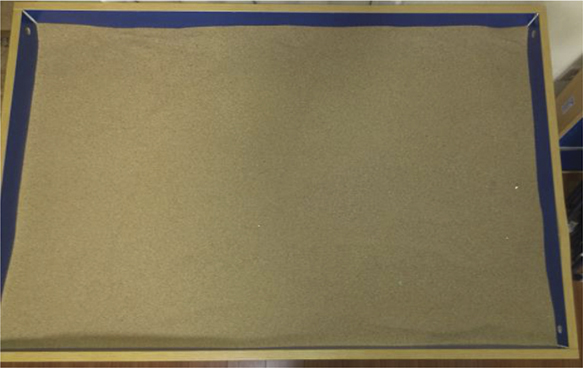
The goal of the sandplay sessions was to encourage the expression of intangible mental thoughts and processes using a tangible object (sand and miniature tools). The focus was on learning to use the body and immerse in any resultant feelings instead of thinking about the activity in too much depth. When the therapist provided instructions and group rules, each team member sat in a circle around the sandbox (Figure 1).
A Sandbox for 6–8 adults.

First, group members put their hands in the sand together, closed their eyes, and engaged with their tactile sensations and feeling states. Then, each individual group member participated in the sandplay activities. The therapist and practitioners did not provide any guidance; they just observed and made brief notes. Before each sandplay round, the team decided who would start the activity. The first player was responsible for establishing the main concept/theme for that session. The rest of the group would incorporate their respective tools based on their perception of the theme. During each round, each member had one chance to select a tool for placement in the sandbox (Figure 2). Each person could select their favorite tool but touching another member’s tool (or the marks that tool left in the sand) was not allowed. All verbal and nonverbal communication, as well as any other interaction between members, was forbidden. By the end of each round, a full scene had been created. To experience more fully what the group had created, each member was encouraged to separately admire the scene from different angles. Members were also encouraged to engage in any feeling states that were facilitated by their work. Again, no verbal communication was allowed during this process. At the end of the round, each member was freely allowed to express his/her feelings regarding the activity and the group’s interactions.
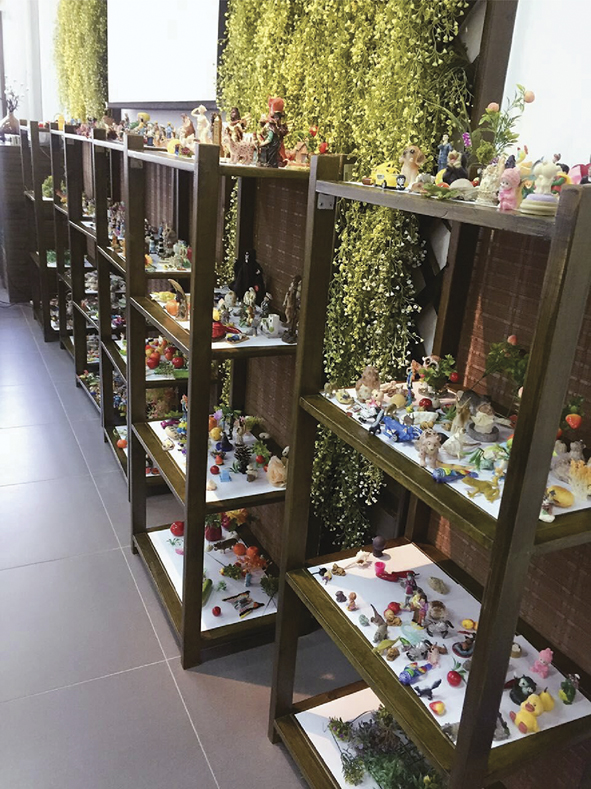
Sand Tools on Shelves.

Intervention Tools
Participants made use of more than 10,000 sand tools within 10 different categories. The role of the therapist was to help participants understand the subconscious motives for certain tool selections/behaviors to relieve stress (Brahnam & Brooks, Reference Brahnam, Brooks, Graña, Toro, Howlett and Jain2014). Hence, the intervention tools comprised sand language, body language, miniature tools with a symbolic language, and skilled therapists. Through free and creative games, a world that corresponds to the internal and subconscious state of an individual appears in three dimensions, and it creates more than simply a scene. These creations are a reflection of the participant’s imagination including pictures or sounds, and associated emotions. The therapists had received their PhDs in applied psychology and were accredited by the International Society for Sandplay Therapy. The 19 practitioners were psychological counselors who had over three years of sandplay practice and training. Both therapists and practitioners were volunteers from a sandplay non-profit organization under the Ministry of Civil Affairs of China targeting various groups.
Therapist and Practitioner Measures
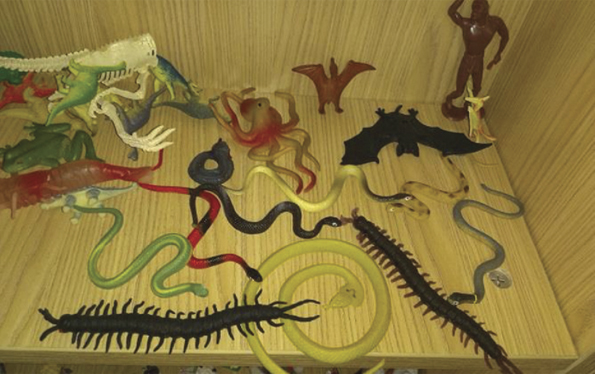
Symbolic reflections of the participants’ inner states, including intentional or unintentional physical and mental reactions during the sandplay activities, were observed. Symbolism related to illness-related suffering included expressions of loneliness, isolation, despair, helplessness, and fear. Unintentional representations were usually first noticed by the therapist or practitioners and were ignored by the participants themselves. Accounts of suffering included disappointment, anger, guilt, excitement, feeling wronged, sadness, and inferiority. For example, one participant created a scene whereby she placed a 2-year-old girl, alone, in the corner of a dark room while her mother and others were enjoying a carnival outside. On the third day, when it was time to share, the participant confessed that the scene she created was reflective of her emotional needs not being met by her busy parents. The participant remarked on how she experienced symptoms of ergasiomania, frequently ate too much, and felt insecure. These feelings pushed her to work extra hours to garner attention from her boss, her colleagues, and her students’ parents. Through this sandplay activity, the participant could tap into her “unconscious self” (an inner 2-year-old girl) to express her feelings, so that her fears would no longer be repressed-helping prevent those feelings from becoming detrimental. The therapists and practitioners attempted to foster an environment whereby group members were allowed to express their feelings without assessment, judgment, or explanation. There were various individual differences regarding beliefs, values, and rules within each group. For instance, if someone chose a negative object (these represented dangerous creatures or enemies; shown in Figures 3 and 4), which could symbolize wanting fight stress, feeling terrified, or seeking protection, this was likely reflective of that individual’s perceptions and experiences. The therapists and practitioners helped the group respect each member and his/her beliefs, values, and rules when that member’s emotions surfaced during sandplay.
Negative Object for Small Parts.

Negative Object for Small Parts among some Participants.

Privacy Considerations
Following institutional review board approval, certification number 2014 (No. 028), date 27 Feb 2014, permission to conduct the study was obtained from two head teachers. The questionnaire was then distributed to all teachers with a notice that all participants could choose whether to participate. Teachers were also assured that responses and information within the questionnaire would remain anonymous and confidential. Completion of the questionnaire was considered to indicate willingness to participate in the study. Teachers were told that they would be meeting with people from a similar occupation, with similar levels of stress, to relieve stress and aid personal growth.
Statistical Analyses
The statistical software package, SPSS for Windows (Rel.11.0.1. 2001. SPSS Inc., Chicago, IL), was used for all descriptive analyses, tests of normality, t-tests, and chi-square tests for categorical variables. Continuous data were presented as means and standard deviations (SD). Group comparisons were conducted using t-tests; p-values of less than .05 and .01 were considered significant and highly significant, respectively.
Results
Demographic Analyses
Basic demographic data are shown in Table 1. There were no significant differences in any demographic variables between the two groups.
Demographic Data for the Intervention and Control Groups

Note: M = Mean; SD = Standard Deviation; EG = Intervention Group; (CG) = Control Group. Differences in age and seniority were assessed with t-tests, whereas χ2 tests were used to assess the remaining variables. There were no differences in age, gender, education level, seniority, or marital status between groups, p >.05.
Adherence to the Intervention
Three of the 100 participants in the EG and seven of the 100 participants in the CG withdrew before the end of the study. No statistical differences were found in any of the relevant variables between the participants who withdrew and those who remained. The registered reasons were lack of time and unspecified issues; the long time commitment required for participation was the most frequent reason for withdrawal. None of the EG participants withdrew from group sandplay due to an adverse reaction. After three months, 76 participants in the EG and 12 participants in the CG had visited the sandplay experience center ten times to engage in group sandplay and explore improve coping ability in sandplay.
Types of Coping Used by Teachers
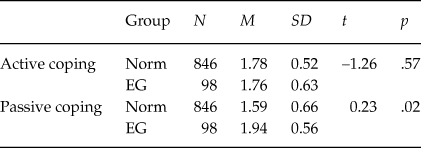
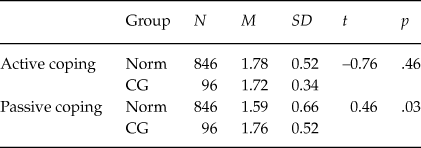
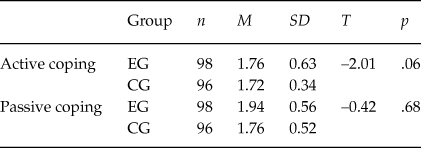
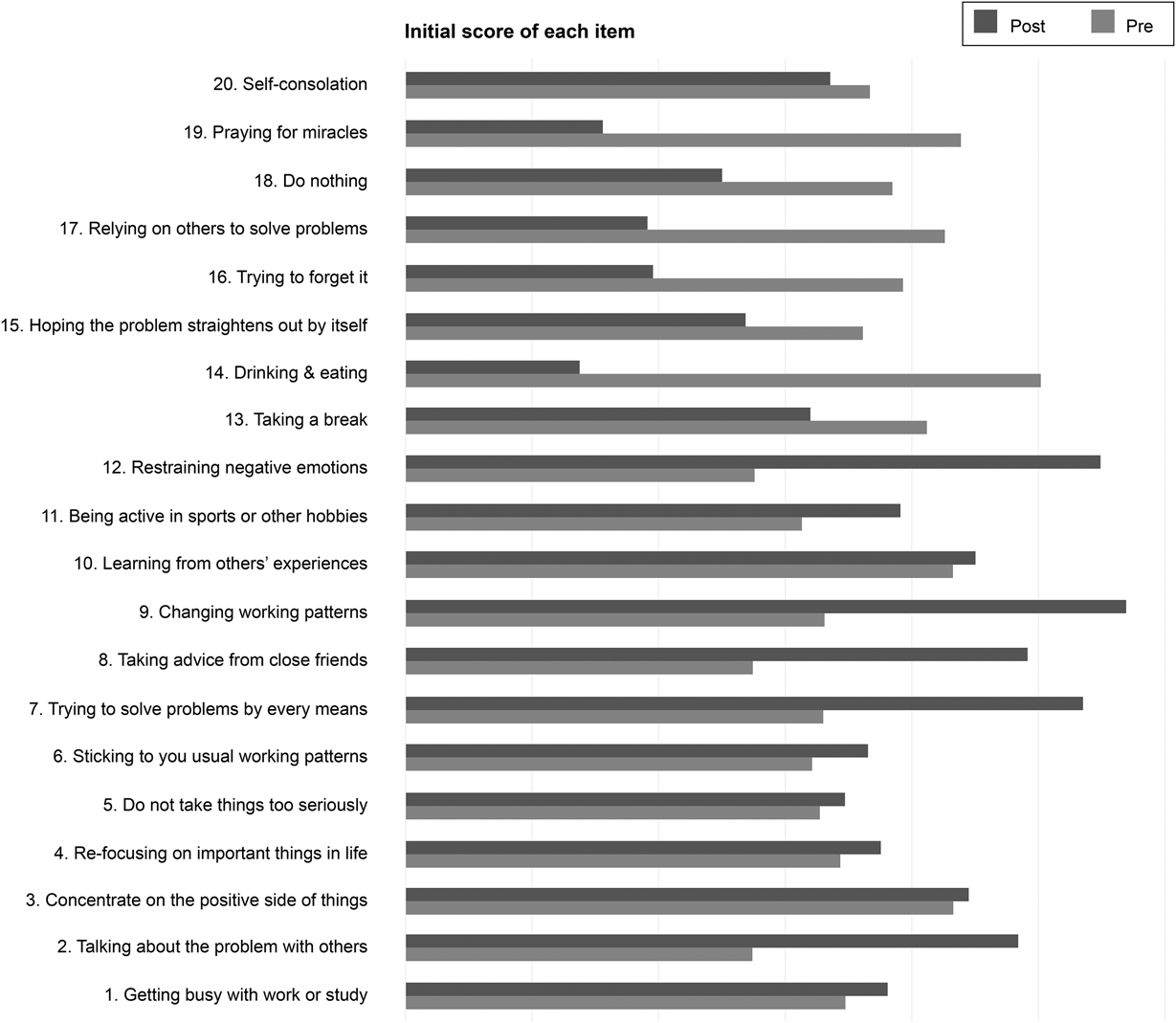
Before the intervention, the mean score of passive coping was higher, and that for active coping was lower for both groups compared with previous findings from a survey of 846 Chinese people (Xie, Reference Xie1998). Notably, passive coping was higher for both the EG and CG at pretest (p < .05) when compared with the normative score (Tables 2 and 3). However, there were no significant differences in the use of active or passive coping between the EG and CG before the intervention (Table 4). Teachers were more likely to use passive coping strategies such as escape avoidance, illusions, and forbearance by eating, drinking, or taking medication to avoid problems. These strategies were followed in frequency by fantasizing miracles to change the situation, relying on others to solve problems, trying to rest or take a break, and putting the problem aside for a while (Figure 5). Such palliative or emotionally expressive strategies allowed teachers to ignore situations or step back from problems (Austin et al., Reference Austin, Shah and Muncer2005; Gunther, Cohen, & Armelis, Reference Gunther, Cohen and Armelis1999).
Stress Coping by the Intervention Group and Normative Group before the Intervention

Note: M = Mean; SD = Standard Deviation; EG = Intervention Group; Norm = Normative Group. The data obeyed a normal distribution. One-sample t-tests were used. Compared to the normative group in Xie (Reference Xie1998), there was no significant difference in active coping for the EG (p < .05), while passive coping was higher (p < .05).
Stress Coping by the Control Group and Normative Group before the Intervention

Note: M = Mean; SD = Standard Deviation; CG = Control Group; Norm = Normative Group. The data obeyed a normal distribution. Compared to the normative group from Xie (Reference Xie1998), there was no significant difference in active coping for the CG (p < .05), while passive coping was higher (p < .05).
Stress Coping by the Intervention Group and Control Group before the Intervention

Note: EG = Intervention Group; CG = Control Group; M = Mean; SD = Standard Deviation. The data obeyed a normal distribution. Independent-samples t-tests were used. There were no significant differences in active and passive coping between the groups at pretest (p >.05).
Pre- to post-Test Changes in SCSQ Score.

Post-Intervention Comparison
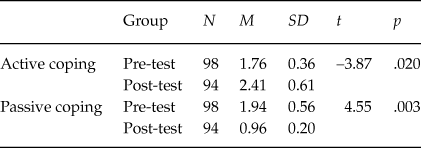
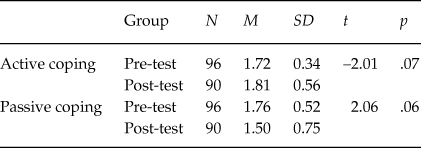
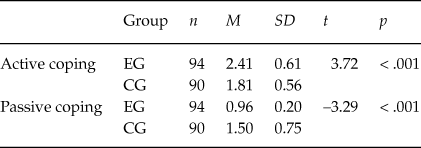
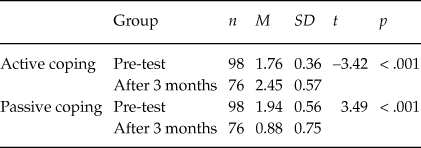
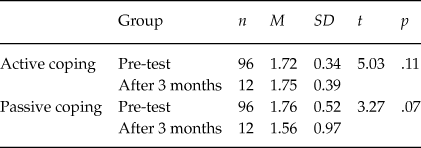
After three days of group sandplay, the EG used more active coping strategies, such as problem solving, emotional expression, and emotional support–seeking, and fewer passive coping strategies, including escape avoidance, fantasizing, and forbearance. Specifically, the EG engaged in less use of eating, drinking, or taking medication to avoid problems, less not taking responsibility for their emotions, and less relying on others to solve problems. The one exception was that the EG participants endorsed “hope to have a rest or a vacation to temporarily put aside worries or problems” more frequently than did the CG. Differences in coping styles were statistically significant, In the EG, there were significant differences in both active coping (t = –3.87, p < .05) and passive coping (t = 4.55, p < .01) compared to the pre-test scores (Table 5). In the CG, no significant effects of sandplay on coping were found for either active coping and passive coping (Table 6), There were significant differences both active and passive coping over time for EG; however, there were no significant changes observed for the CG (Table 7). After 3 months, in the EG, there were significant differences in both active coping (t = –3.42, p < .01) and passive coping (t = 3.49, p < .01) compared to the pre-test scores (Table 8), while in the CG, no significant effects were found for either active or passive coping (Table 9).
Pre-Test to Post-Test Changes in Stress Coping within the Intervention Group

Note: Mean (M); Standard Deviation (SD); The data obeyed a normal distribution. Paired-samples t-tests were used. The difference within the EG sample from pre- to post-test in active coping was significant (p < .05), as was that for passive coping (p < .01).
Pre-test to Post-test Changes in Stress Coping within the Control Group

Note: M = Mean Standard; SD = Standard Deviation. The data obeyed a normal distribution. There were no significant differences in active and passive coping from pre-test to post-test in the CG (p > .05).
Stress Coping by the Intervention Group and Control Group after the Intervention

Note: EG = Intervention Group; CG = Control Group; M = Mean; SD = Standard Deviation. The data obeyed a normal distribution. Independent-samples t-tests were used. Active and passive coping significantly differed between groups (p < .01).
Pre-Test to Delayed (3-Month) post-Test Changes in Stress Coping within the Intervention Group

Note: M = Mean; SD = Standard Deviation. The data obeyed a normal distribution. Paired-samples t-tests were used. Active and passive coping significantly differed between groups (p < .01).
Pre-Test to Delayed (3-Month) post-Test Changes in Stress Coping within the Control Group

Note: M = Mean; SD = Standard Deviation. The data obeyed a normal distribution. There were no significant differences in active and passive coping from pre-test to post-test in the CG (p > .05).
Therapists’ and Practitioners’ Observations and Records
CG were not instructed in the guided experience using the same techniques that the EG received. The following process is what the EG received during the three days of training. To make sure the procedures went smoothly and there was no conflict, one experienced sandplay practitioner was assigned to each group. The assistant’s name was given along with that of each participant on a list placed on a table for the group’s reference. This was intentionally done to help facilitate rapport among the group members. On the first day, participants were instructed not to intervene in other group members’ choices regarding sandplay tools, including what should be placed in the sandplay trays, where it should be placed, and how it should be placed. The therapist recommended that members discuss aspects of their sandplay that were eliciting feelings that were pleasant, powerful, or comfortable during the activities. Participants were assured that it was okay to not have solutions ready for every problem or a perfect understanding of the other group members’ issues. On the second day, members were allowed to discuss any uncomfortable aspects or feelings elicited by the activity, but only once during each round of their sandplay. On the third day, when group dynamics were beginning to emerge, most members came prepared and were now more willing to freely discuss the comfortable and uncomfortable feelings elicited by the activities of their sandplay. During the three months after the initial training, many participants in the EG preferred to practice the process repeatedly at the sandplay center, while participants in the CG appeared to pay more attention to creating an attractive scene as if the solution to their question or trouble or emotion could be resolved within a short period of time easily, but suggesting that the conflicts that emerged in sandplay made them uncomfortable.
Discussion
The current study addressed teachers’ coping mechanisms using sandplay; these coping mechanisms helped teachers to express their feelings without being prevented by fear of judgment and to deal more adequately with their stress, problems, feelings regarding work, and differences of opinion with others. We used sandplay to access and ameliorate teachers’ stress and provide, in the sandplay group, a mechanism for empathizing and offering support.
As in previous studies on coping among healthy Chinese adults, passive coping was higher among teachers. This might have been caused by heavy occupational stress among Chinese teachers, given that their job duties focus on aiding minors in obtaining the best possible grades, which can be life-changing for these children. People experiencing long-term chronic stress tend to avoid seeking assistance from others in their surrounding environment and engage in negative coping strategies (Jang & Kim, Reference Jang and Kim2012). Similar to some previous studies, teachers’ passive coping included both distracting behaviors (e.g., drinking and eating, relying on others to solve problems) and avoidant coping (e.g., praying for miracles). The fundamental distinction between coping strategies that involve positive engagement with the problem or associated emotions and those that lead to disengagement, avoidance, or withdrawal has been assessed (Austin et al., Reference Austin, Shah and Muncer2005). Using active coping allows individuals to face the stressful situation and take action, while passive coping involves trying to ignore or forget about the stressful situation. After group sandplay, EG teachers used significantly fewer passive coping strategies than before the intervention.
Following sandplay, EG participants also used active coping strategies more frequently (p < .05). Teachers talked more about their feelings and related stress and were more accepting of reasonable reactions to that stress, including disappointment, anger, and guilt. Even if a teacher was unaware of such feelings, other group members were more likely to detect them and promote discussion in the subgroup and protected space. All of the participants wanted to give other people good memories about themselves during group activities at the beginning of sandplay process. Due to the nature of the protected space of sandplay area created by the practitioner of sandplay, people no longer needed to care about what is seen as good or bad, so they could go in their inner selves to face their real emotions. During this process of interaction in the sandplay, these teachers no longer needed to fight against their own emotions; therefore, they had the energy to actively confront the stressful situations. Stress at work can lead to negative consequences such as decreased job satisfaction and health complaints. However, individual differences determine whether stressors will in practice pose such problems for that one person and, eventually, for the organization as a whole (Ullsperger, Danielmeier, &Jocham,2014).
Group sandplay training emphasizes the importance of cognitive judgment rather than subjective perceptions for its potential beneficial influence on how individuals cope with stress. Coping strategies that could be adopted or taught include changing one’s working patterns, restraining negative emotions, or taking advice from close friends within the protective space of sandplay group which left them no need to fight against their own emotions. During sandplay, teachers met and interacted with their respective group members, and these individuals provided unique perspectives, enjoyed different activities, and helped facilitate positive feelings in each group member. Teachers became aware of others’ strategies, decided whether they would be suitable or unsuitable for the situation, and learned from each other. In practicing stress-management skills through group sandplay, teachers learned about the effectiveness of playful problem solving and ways to seek help, became aware of their perceived coping styles, and engaged in effective stress-management process changes.
Active coping strategies are directed at solving the problem and include analyzing the situation and selecting and implementing an appropriate solution. In contrast, changing passive strategies aims to readjust one’s perception of the problem or approach to the problem differently by making positive comparisons, using active reassessment, or putting the problem into perspective. These cognitive strategies are essentially emotional reinterpretations (Donald, Atkins, Parker, Christie, &Guo,2016). If a group member does not have the personal energy to face a stressful situation, while another member of the group is saying, “you are using a passive style,” then the first group member might come to believe that he or she has become weak and powerless. If other people in the group feel, “you can face the situation; you need to slowly and gather your strength,” then the individual might have the confidence to face the situation more actively. Palliative or emotionally expressive strategies gave teachers the ability to actively face these stressful situations; however, the stress had been building for so long that some teachers felt that they were unable to engage in these more forceful tactics.
There are four main reasons why group sandplay is a useful stress training paradigm. First, sand and the different varieties of sandplay tools are media that encourage participants to engage enthusiastically and creatively in comfortable conscious and unconscious self-expression and imagination (Frambati et al., Reference Frambati, Pluchart, Weber and Canuto2014). Second, the formation of a dynamic sandplay group can reflect members’ ways of coping with stress by use of symbolic expression to develop a deeper understanding of self and others (Nan & Ho, Reference Nan and Ho2017) as well as increased empathy, and by providing a chance to effectively vent negative emotions, reducing emotional instability and the use of escape avoidance coping. Third, having a free and non-judgmental, protected space can give teachers a sense of safety that fosters expression and avoids shaming (Brahnam & Brooks, Reference Brahnam, Brooks, Graña, Toro, Howlett and Jain2014). Finally, sandplay with experienced professional therapists opens a door for participants to further explore their own stress coping strategies and inner development.
Before the sandplay training, many teachers thought sandplay was simple or juvenile; as adults they thought there was no need to learn sandplay for three days, instead viewing three hours of basic group sandplay activity as enough for them to understand and create a full scene using sand and miniature tools by themselves, without supervision by therapists. The changes and emergent differences in stress coping within the EG and CG were substantial after both three days and three months. Compared to the CG, teachers in the EG, who had experienced guided sandplay sessions, found that they encouraged the expression of intangible thoughts and mental processes using a tangible object, and fostered the focus on the body and immersing oneself in any resultant feelings instead of thinking about the activity in too much depth. The EG enjoyed practicing what they had learned in group sandplay after the three days of training over the following three months.
“Sandplay therapy” as a special form of Play Therapy that was originally developed for use with children aged 3 through 11 years. The key differences between the group sandplay in the present study and the traditional child therapies is that the focus of the group sandplay was to give the child sub-personality of an adult personality a chance to engage in sandplay, so each teacher in EG had their own pet name to express their feelings, troubles, problems, or stories. The free and protected space of the group sandplay therapy allowed the adult personality to perceive, recognize, accept, and satisfy the need of their child’s sub-personality. By doing this, a positive emotional experience will occur, and allow the adult to develop different coping abilities, the needs of the child sub-personality that were unfulfilled appear through negative emotional experience, and the participants had been likely to use passive coping to deal with these experiences.
In Dalian, China, each area of the district has one teacher-training school, which is responsible for improving teaching quality and providing training opportunities in that area. These training schools and their personnel are aware that a number of teachers want to learn stress coping skills. Our main purpose was to provide a sandplay experience aimed at reducing stress as part of a substantive teaching training course. Since the EG teachers were able to receive that experience, they could change their coping styles. In this way, these participants were able to experience the benefits of sandplay, which they may be able to draw on in the future. After nearly two years’ experience with similar training paradigms in our research group in Dalian, several schools now have their own dedicated sandplay rooms. This not only benefits the teachers but can also potentially be instituted within the schools for students to aid stress relief. Group sandplay as intervention could be used in different populations as a method of improving stress coping ability.
Before the intervention, the EG and CG samples reported using passive coping more frequently and active coping less frequently, than a normative sample. After the intervention, the EG participants engaged in more active coping, and less passive coping, as compared to CG participants. Group sandplay showed the potential to be systematically employed for improvement of people’s stress coping behaviors. Recently, our team conducted research that used sandplay to improve stress coping ability in a range of contexts, such as to reduce pressure on teachers, medical staff, students, patients from the China Anti-Epileptic Association psychological intervention assistance project, and patients who needed to reduce their anxiety before a glaucoma surgery operation. In 2016, the Dalian government-funded group sandplay to help children with behavior problems in low-income families in the community through social services provided by volunteers.
A few study limitations should be noted. First, this study was based on Jungian sandplay paradigms (Donald, Reference Donald2008) and work by Lazarus and Folkman (Reference Lazarus and Folkman1984). Both these lines of research posit that relationships between stressors and stress reactions are moderated by individual differences in cognitive judgments or subjective perceptions. Although our results support this notion, we did not explicitly investigate the assumptions inherent in this conceptualization. Second, we did not collect data assessing adverse life events among participants, which may limit our ability to infer our samples’ stress experiences prior to the study. Third, a potential selection bias may be present—for instance, it is possible that only or mostly teachers who were experiencing significant stress (or those completely free of stress) would be motivated to participate. Future work could assess variability in stress levels among participants to determine predisposing tendencies toward particular coping styles. Finally, there could be a bidirectional relationship between coping and stress (rather than assuming that stress is the sole predictor of a chosen coping strategy). Thus, the effects of enhancing active coping and minimizing passive coping for reducing stress should be carefully evaluated in future studies.