


Officers and Council Members
On February 4, 2006, after careful deliberation and consideration of the Association's Bylaws and the Council's charge as articulated by President Ira Katznelson, and after canvassing the membership for suggestions as articulated in the APSA Constitution, the 2005–2006 Nominating Committee submitted the following slate of elective Officers. In its deliberations, the Committee was mindful of giving due regard to diversity, geographical distribution, fields of professional interest, type of institution, academic/nonacademic employment status, as well as to the Council's guidance to take into account non-Ph.D.-granting institutions in the nomination of candidates, and to avoid selecting a nominee for president of the same gender for more than two consecutive years.
Serving on the 2005–2006 Nominating Committee were: Frances Hagopian (chair), University of Notre Dame; Charles R. Beitz, Princeton University; Desiree S. Pedescleaux, Spelman College; Mathew D. McCubbins, University of California, San Diego; Karen L. Remmer, Duke University; and Gary M. Segura, University of Washington.
President-Elect 2006–2007
Dianne M. Pinderhughes, University of Illinois, Urbana-Champaign
Dianne Pinderhughes currently holds a joint appointment as professor in the department of political science, and professor in the African-American Studies department at the University of Illinois, Urbana-Champaign. She also holds an appointment in the Gender and Women's Studies Program. She led the Afro-American Studies and Research Program for a number of years. Prior to coming to the University of Illinois, she taught at Dartmouth College (1975–1984), and Howard University (1979–1980). She holds a B.A. in political science from Albertus Magnus College (1969), and an M.A. and Ph.D. in political science from the University of Chicago (1973, 1977). As of fall 2006, she will join the faculty of the University of Notre Dame as full professor in the departments of political science and Africana studies.
Pinderhughes' research addresses issues of inequality with a focus on racial and ethnic political participation. She compared political participation among Europeans and African Americans in American urban politics in Chicago; explores the creation of American civil society institutions in the 20th century, and analyzes their influence on the formation of voting rights policy. Pinderhughes also examines the intersection of race and gender in American electoral representation, and brings a comparative perspective to the development of race and civil society in the Americas.

Her publications include Race and Ethnicity in Chicago Politics: A Reexamination of Pluralist Theory and numerous articles addressing race and public policy. Her current research project is The Evolution of Civil Rights Organizations in the Twentieth Century: Voting Rights and African American Politics. She has led the Social Science Methodology Workshop of the Race and Democracy in the Americas Project: Brazil and the USA, funded by the Ford Foundation. She is currently PI, with Christine Sierra, Carol Hardy-Fanta, and Pei-te Lien, of the Gender and Multicultural Leadership Project, also funded by the Ford Foundation. She has held fellowships with the Open Society Institute, the Woodrow Wilson International Center for Scholars, the Ford Foundation, the University of Illinois Center for Advanced Studies, and UCLA's Center for Afro-American Studies. Some of her awards include University Scholar (University of Illinois), the Mary Lepper Award (the Women's Caucus of the APSA), and the Fannie Lou Hamer Community Service Award (the National Conference of Black Political Scientists).
Pinderhughes was president of the National Conference of Black Political Scientists and has served on the Council of the Midwest Political Science Association. She is a member of the Board of Governors of the Joint Center for Political and Economic Studies. In the APSA she has held positions as a member of the Council, as vice president, as a member of the Task Force on Inequality and American Democracy, and was awarded the Frank J. Goodnow Distinguished Service Award. She was co-president of the Race, Ethnicity, and Politics Organized Section and served as president of the Urban Politics Organized Section.
Vice President 2006–2007
Martha Ackelsberg, Smith College
Martha Ackelsberg is professor of government and of the Study of Women and Gender at Smith College, where she served as chair of the department of government from 2000–2003. She earned her B.A. at Radcliffe College and an M.A. and Ph.D. in politics (political philosophy) at Princeton University. She joined the Smith faculty in the fall of 1972, and has held visiting appointments at the University of Massachusetts (Amherst) and at the University of Sussex. She regularly teaches courses on urban politics, social movements, the politics of inequality, democratic theory, feminist theory, and the history of political philosophy, in addition to occasional interdisciplinary courses in women's studies and Spanish anarchism.

Her book, Free Women of Spain: Anarchism and the Struggle for the Emancipation of Women (Indiana University Press, 1991) has recently been reissued by AK Press (2005), and has been translated and published in Spain and Italy. In addition, she has published numerous articles and book chapters on women's activism in the United States and Latin America, on gender and public policy, feminist and democratic theory, changing understandings of families, gender and citizenship, and Jewish feminism. Her current book project, (Re)Conceiving Politics Through the Lens of Women's Activism, is under contract with Routledge.
Ackelsberg has held a fellowship from the American Association of University Women, been a fellow at the Bunting Institute of Radcliffe College and at the Walt Whitman Center for the Culture and Politics of Democracy at Rutgers University, and has been a faculty associate of the Center for European Studies at Harvard University and a visiting scholar at the Institute for Research on Women at Columbia University. Within the Association, she served on the Committee on the Status of Lesbians, Gays and Bisexuals in the Profession (1992–1995), was a member of the APSA Council for 1996–1998, and recently completed a three-year term (2001–2004) as chair of the Committee on the Status of Women in the Profession. She has also served as president of the Women's Caucus for Political Science, and as section chair of the gender and politics section of the Western Political Science Association. She was an invited participant at the APSA-NSF co-sponsored workshop on “Advancing Women in Political Science” in March 2004, and has participated in the Women's Caucus and APSA mentoring programs. She is currently serving on the editorial boards of the APSR and of Politics and Gender.
Vice President 2006–2007
Henry E. Brady, University of California, Berkeley
Henry E. Brady is Class of 1941 Monroe Deutsch Professor of Political Science and Public Policy at the University of California, Berkeley with appointments in the department of political science and the Goldman School of Public Policy. He is also faculty director of Berkeley's Survey Research Center and the University of California Data Archive and Technical Assistance (UC DATA) program. Prior to coming to Berkeley he taught at Boston University, Harvard University, and the University of Chicago. He has a Ph.D. in economics and political science from MIT (1980) and undergraduate degrees in mathematics and physics from Harvey Mudd College (1969).

Brady's scholarly work includes publications on political methodology, political behavior, and public policy. His work is tied together by an interest in the interaction between the mass public and elites in both democratic and transitional societies. His methodological work has appeared in Psychometrika, Evaluation Review, Political Analysis, and other journals, and he is past president of the Political Methodology Society. He has undertaken surveys in Canada, Estonia, Russia, and the United States, and he has been principal investigator for large-scale field experiments on social welfare in California. He has published on American, Canadian, Estonian, and Russian public opinion, elections, and political participation, and on public policy topics including voting systems, social welfare policy, computers and the social sciences, and the demographics of education in California. He is the author or co-author of over 60 professional articles and half a dozen books including Letting the People Decide (1992) on the Canadian election of 1988 (winner of the Canadian government's Harold Adams Innis Award for best book in the social sciences), Voice and Equality (1995) on political participation in America, Expensive Children in Poor Families: The Intersection of Childhood Disability and Welfare (2000), Rethinking Social Inquiry (2004) about utilizing both qualitative and quantitative methods (winner of the Sartori Award), Capturing Campaign Effects (2006) on studying political campaigns, and the forthcoming Buried Memories: Political Mobilization and the Collapse of the Soviet Union (2007).
In 2004 Brady was elected a member of the American Academy of Arts and Sciences. His service to the profession includes membership on the Board of the American National Election Studies, the National Science Foundation's Advisory Committee on Social, Behavioral, and Economic Sciences, and on the NSF's recently formed Advisory Committee on Cyberinfrastructure. He has also worked with others to create the EITM (Empirical Implications of Theoretical Models) summer program. Brady's contributions to APSA include service as a member of the Council, as treasurer, as co-chair of the 2003 Program Committee, and as organizer of the Political Methodology section and the Public Opinion and Voting section.
Vice President 2006–2007
Helen V. Milner, Princeton University
Helen V. Milner is the B. C. Forbes Professor of Politics and International Affairs at Princeton University and the director of the Center for Globalization and Governance at Princeton's Woodrow Wilson School. She is currently also the chair of the department of politics. She taught at Columbia University from 1986 to 2004. Her B. A. in International Relations is from Stanford University, and her Ph.D. in government is from Harvard University. She is a member of the Council on Foreign Relations and a fellow of the American Academy of Arts and Sciences. In 2001–2002 she spent a year as a fellow at the Center for Advanced Studies in the Behavioral Sciences at Stanford.
She has written extensively on issues concerning international relations, including the connections between domestic politics and foreign policy, the political economy of international trade, globalization and regionalism, and the relationship between democracy and trade policy. Some of her writings include: Interests, Institutions and Information: Domestic Politics and International Relations (1997), The Political Economy of Economic Regionalism (co-edited with Edward Mansfield, 1997), Internationalization and Domestic Politics (co-edited with Robert Keohane, 1996), “Why the Move to Free Trade? Democracy and Trade Policy in the Developing Countries” (with Keiko Kubota, International Organization, 2005), “Why Democracies Cooperate More: Electoral Control and International Trade Agreements” (co-authored with Edward Mansfield and B. Peter Rosendorff, International Organization, 2002), and “The Optimal Design of International Institutions: Why Escape Clauses are Essential” (co-authored with B. Peter Rosendorff, International Organization, 2001). She is currently working on issues related to globalization and development, such as the political economy of foreign aid, the “digital divide” and the global diffusion of the Internet, and the relationship between globalization and environmental policy.

Her service to the discipline includes membership on the Executive Committee of the APSA's Section on Political Economy; program chair for the 2000 APSA Annual Meeting; vice president of the International Studies Association in 2001; membership on the APSA Council; and membership on the program committee of the European Community Studies Association convention in 2001. She has also served on the boards of several journals, including Quarterly Journal of Politics, American Journal of Political Science, Journal of Politics, World Politics, International Studies Quarterly, International Organization, European Union Politics, British Journal of Political Science, and the Review of International Organizations.
Secretary 2006–2007
Luis Ricardo Fraga, Stanford University
Luis Ricardo Fraga is associate professor in the department of political science at Stanford University. His published work includes Ethnic and Racial Minorities in Advanced Industrial Democracies (co-editor, Greenwood, 1992), Democracy at Risk: How Political Choices Undermine Citizen Participation, and What We Can Do About It (co-author, Brookings Institution Press, 2005), and the forthcoming Multi-Ethnic Moments: The Politics of Urban Education Reform (co-author, Temple University Press, 2006). He has also published in scholarly journals and edited volumes including the Journal of Politics, Urban Affairs Quarterly, Western Political Quarterly, Dubois Review, and the Harvard Journal of Hispanic Policy.
His service to the discipline includes serving as president of the Western Political Science Association in 1997–1998, on the Executive Council of the APSA in 1998–2000, as a member of the Strategic Planning Committee of the APSA in 1999–2000, on the APSA Standing Committee on Civic Engagement and Education in 2002, and currently on the APSA Committee on the Status of Latina/os in the Profession, of which he has been a past chair.
Fraga has received a number of teaching and advising awards at Stanford, including the Rhodes Prize for Excellence in Undergraduate Teaching (1993), the Dinkelspiel Award for Distinctive Contributions to Undergraduate Education (1995), the Allan V. Cox Medal for Faculty Excellence Fostering Undergraduate Research (1997), the Faculty Award from the Chicano/Latino Graduating Class (1993, 1996, 1997, 1999, 2000, 2001), the Undergraduate Faculty Advisor of the Year Award (2001), and the Associated Students of Stanford University Teaching Award (2003). He was also given the Adaljiza Sosa-Riddell Award for Exemplary Mentoring of Graduate Latina/o Students by the Committee on the Status of Latinos in the Profession of the APSA (2001) and this same award for mentoring junior faculty (2004).
In 1989–1990 he was a Fellow at the Center for Advanced Study in the Behavioral Sciences, Stanford University. In 2003–2004 he was a Fellow at the Radcliffe Institute for Advanced Study, Harvard University. Fraga is also one of six principal investigators on the Latino National Survey (LNS), the first-ever 16 state-stratified survey of Latinos in the U.S. It asks questions regarding political attitudes, behavior, and beliefs. This project has received $1.2M in support from major foundations and universities.
Council 2006–2008
Lisa Baldez, Dartmouth College
Lisa Baldez is associate professor of government and latin american, Latino, and Caribbean studies at Dartmouth College. Prior to her appointment at Dartmouth, she taught at Washington University in St. Louis, Harvard University, the University of Rochester, and the Rochester Institute of Technology. She holds a B.A. in politics from Princeton University (1986) and a Ph.D. in political science from the University of California, San Diego (1997). In 2005, Dartmouth College awarded her the Linda B. and Kendrick R. Wilson III 1969 Fellowship in recognition of her teaching and scholarship.

Her research examines the ways in which gender is relevant to politics, both in Latin America and the U.S. She has worked on legislative politics, budgetary policy, social movements, and judicial politics. She is the author of Why Women Protest: Women's Movements in Chile (Cambridge University Press, 2002). Her article, “Elected Bodies: Gender Quotas for Female Legislative Candidates in Mexico,” (Legislative Studies Quarterly, 2004) was awarded Best Article by the Comparative Democratization Section of the APSA. She has published articles in the American Journal of Political Science, Comparative Politics, Journal of Legal Studies, Tennessee Journal of Law and Politics, and Women & Politics. Her current research focuses on candidate nominations and gender quotas in Latin America.
She is one of the founding editors, with Karen Beckwith, of Politics & Gender, a new journal sponsored by the Women and Politics Research Section of the APSA and published by Cambridge University Press. She is currently on the APSA Publications Committee and was a member of the Executive Board of the Women and Politics Research Section (1998–2000). She served as president of the Midwest Women's Caucus (2002–2003), as a member of the Nominating Committee (2002–2003) for the Midwest Political Science Association, and as chair of the Gender and Politics Section for the Midwest meeting in 2000.
André Blais, Université de Montréal
André Blais is professor in the department of political science at the Université de Montréal, a research fellow with the Centre interuniversitaire de recherche en économie quantitative (CIREQ) and with the Center for Interuniversity Research Analysis on Organizations (CIRANO), and a fellow of the Royal Society of Canada. He is past president of the Canadian Political Science Association and a co-investigator of the Canadian Election Study since 1988. His research interests are elections, electoral systems, voting, turnout, public opinion, and methodology.

Blais has (co)authored and (co)edited 17 books, including: Losers' Consent (Oxford, 2005, with Christopher Anderson, Shaun Bowler, Todd Donovan, and Ola Listhaug), Establishing the Rules of the Game (University of Toronto Press, 2003, with Louis Massicotte and Antoine Yoshinaka), Anatomy of a Liberal Victory (Broadview, 2002, with Elisabeth Gidengil, Richard Nadeau, and Neil Nevitte), To Vote Or Not To Vote? (University of Pittsburgh Press, 2000), Governments, Parties and Public Sector Employees (University of Pittsburgh Press, 1997, with Donald Blake and Stéphane Dion), and Letting the People Decide (McGill-Queen's University Press, 1992, with Richard Johnston, Henry Brady, and Jean Crête).
Blais has published more than 100 articles in journals such as: American Journal of Political Science, Canadian Journal of Political Science, British Journal of Political Science, European Journal of Political Research, Revue française de science politique, Comparative Political Studies, Quality and Quantity, Electoral Studies, Public Opinion Quarterly, Political Behavior, Party Politics, Political Studies, Public Choice, Governance, and Public Finance Quarterly.
Dennis Chong, Northwestern University
Dennis Chong received his B.A. from the University of British Columbia in Vancouver, Canada, and his Ph.D. from the University of California, Berkeley. He has spent his entire professional career at Northwestern University in Evanston, Illinois where he is the John D. and Catherine T. MacArthur Professor of Political Science and a faculty fellow in the Institute for Policy Research.

He specializes in the study of American national politics and has written extensively on political ideology, social norms, rationality, political psychology, tolerance and civil liberties, and collective action, among other topics. He employs a variety of methodologies in his scholarship including large-scale surveys, mathematical models, in-depth interviews, case studies, and experimentation. His most recent publications have addressed broad racial issues and themes, including the changing status of racial expression in the United States, and the influence of economic status on the development of group identity among racial and ethnic minorities. He is currently engaged in studies of opinion formation on conservation and growth issues, the effect of information on preferences, the relationship between hate speech attitudes and behavior, and the general conditions in which the framing of communications will affect public opinion in competitive electoral campaigns.
He is the author of two books. Collective Action and the Civil Rights Movement (University of Chicago Press, 1991) is a theoretical study of the dynamics of collective action as well as an empirical analysis of the American civil rights movement and the local and national politics that surrounded it. Rational Lives: Norms and Values in Politics and Society (University of Chicago Press, 2000) is a comprehensive examination of value formation and change, group identification, and conflict over social norms and lifestyles. Collective Action and the Civil Rights Movement won the William Riker Prize given by the Political Economy Section of the APSA.
Within the APSA, he has served recently on the E. E. Schattschneider awards committee and the Heinz Eulau awards committee.
He is on the editorial board of the Journal of Politics and is the co-editor of the Cambridge University Press book series, Cambridge Studies in Public Opinion and Political Psychology.
Michael W. Doyle, Columbia University
My career as a political scientist has combined teaching, inter-disciplinary scholarship, and university and public service. I have taught at the University of Warwick (UK), Johns Hopkins University, and Princeton University, where I directed the Center of International Studies and chaired the editorial committee of World Politics. I am now at Columbia University, where I am appointed in the School of International and Public Affairs, the Law School, and the department of political science. I worked as assistant secretary-general and special adviser to Secretary-General Kofi Annan.

My scholarly interests have centered on three topics. I first examined issues of hegemony and empire in Empires, my revised dissertation. I next explored peace among liberal democracies in articles in Philosophy and Public Affairs and the APSR and investigated the sources of peace and war in the Realist balance of power and Socialist international solidarity in Ways of War and Peace. I joined with colleagues to explore the range of the field in New Thinking in International Relations Theory, which John Ikenberry and I edited. I then focused on peacekeeping. Drawing on field work, I examined the lessons that should be drawn from the peace operations in Cambodia, El Salvador, Eastern Slavonia (Croatia), and Brcko (northern Bosnia), each of which I visited between 1993 and 2000. These studies were reflected in UN Peacekeeping in Cambodia and a book co-edited with Ian Johnstone and Robert Orr, Keeping the Peace. In 2000 I co-authored with Nicholas Sambanis an analysis of all civil wars since 1944, which appeared in the APSR. Nicholas and I will be publishing Making War and Building Peace, a book that combines cases and data analysis, this summer. My current research focuses on the law, ethics, and politics of preventive self-defense.
While on a public service leaves, I was the vice-president of the International Peace Academy. I joined advisory committees of the UN High Commissioner for Refugees and the Department of Peace-Keeping Operations. In 2001–2003, Secretary-General Kofi Annan appointed me assistant secretary-general and special adviser in his Executive Office. My responsibilities included strategic planning (the “Millennium Development Goals”), outreach to the international corporate sector (the “Global Compact'), and relations with Washington. I continue a connection to the UN community as chair of the Academic Council of the United Nations System, organizer of the Global Colloquium of University Presidents, and member of the Advisory Board of UNDEF (the recently established UN Democracy Fund).
Kerry L. Haynie, Duke University
Kerry L. Haynie is associate professor and associate chair of political science at Duke University. He also serves as co-director of Duke's Center for the Study of Race, Ethnicity, and Gender in the Social Sciences. Prior to his appointment at Duke in 2003, he held faculty appointments at the University of Pennsylvania (1994–1996) and Rutgers University-New Brunswick (1996–2003). He has also been a visiting lecturer at the University of Natal-Pietermaritzburg, South Africa. He earned a B.A. in political science and peace, war, and defense from the University of North Carolina at Chapel Hill (1985), a Masters of Public and International Affairs from the University of Pittsburgh (1988), and a Ph.D. in political science from UNC-CH (1994).

Haynie's primary research areas are African American politics, race, gender, and political representation, and politics and political institutions in the American states. Along with articles in the Journal of Politics, the International Journal of Africana Studies, Legislative Studies Quarterly, and the Journal of Women Politics and Politics, he is the author of African American Legislators in the American States (Columbia University Press, 2001) and co-author of Stepping Stones or Stumbling Blocks? Campaign Finance Reform and Minority Group Representation (with Kathleen A. Bratton, Stanford, forthcoming, 2007). In addition, he is co-editor of The Encyclopedia of Minorities in American Politics, Vols. I & II (with Jeffery D. Schultz, Andrew Aoki, and Anne McCulluch, Oryx Press, 2000) and New Race Politics: Understanding Minority and Immigrant Voting (with Jane Junn, Cambridge, forthcoming, 2006).
Haynie is an active participant in the profession. He is currently a member of APSA's Committee on the Status of Blacks in the Profession, the Executive Council of APSA's Organized Section on State Politics and Policy, and a member of the Ralph Bunche Summer Institute selection committee. He has served on the Southern Political Science Association's Executive Council, chaired the V. O. Key Book Award Committee, been a member of the Ted Robinson Award Committee, and served as section chair for panels at the SPSA annual meeting. Haynie is on the editorial boards of the Journal of Politics, Politics and Policy, and State Politics and Policy Quarterly.
Arthur Lupia, University of Michigan
Arthur Lupia is professor in the department of political science and research professor of the Institute for Social Research at the University of Michigan. Earlier, he taught at the University of California, San Diego (1990–2001). He holds a B.A. in economics from the University of Rochester (1986) and a Ph.D. in social science from the California Institute of Technology (1991).

His research covers topics such as voting behavior, elections, persuasion, civic education, coalition governance, and legislative-bureaucratic relationships. He often approaches these problems from an interdisciplinary perspective. His books include The Democratic Dilemma: Can Citizens Learn What They Need to Know? and Elements of Reason: Cognition, Choice, and the Bounds of Rationality. His articles have appeared in many places, including leading academic journals and major newspapers.
His work has received many honors, including some from broad scholarly organizations. In 1998, he became the first political scientist to win the National Academy of Science's annual Initiative in Research Award. In 2003, he was named a fellow of the American Association for the Advancement of Science.
Since 2005, he has served as a Principal Investigator of the American National Election Studies. Prior to that he served as a member of its Board of Overseers (1999–2005). Since 2001, he has served as co-Principal Investigator of TESS (Time-Shared Experiments for the Social Sciences), a program which he created with Diana C. Mutz that allows students and faculty from many academic fields to run innovative studies on nationally-representative subject pools.
He serves on the editorial boards of the American Political Science Review, the American Journal of Political Science, and Political Behavior. He has also served on the editorial boards of the Journal of Politics and Political Analysis. Since 2003, he has served on the Council of the Midwest Political Science Association. He has also worked with or advised a range of non-partisan organizations including the World Bank, the Department of Justice, the Department of State, and the Elections Assistance Commission.
Within APSA, he is president-elect of the Organized Section on Political Psychology, chair of the E. E. Schattschneider Award Committee, a member of the APSA Working Group on Collaborative Research, and APSA's official liaison to the AAAS. He has been a section head for the Annual Meeting and has served in various other capacities for APSA and its organized sections.
Anna Sampaio, University of Colorado at Denver
Anna Sampaio is associate professor of political science at the University of Colorado at Denver and Health Sciences Center, where she teaches and researches in the areas of Latina/o politics, gender politics, immigration, post-colonialism, and transnationalism. She received her B.S. in political science with a minor in ethnic studies from Santa Clara University and her M.A. and Ph.D. in political science from the University of California at Riverside. Prior to coming to Denver in 1998 she taught at CSU Hayward, at Santa Clara University, and at the University of California, Santa Cruz.

Sampaio currently serves as the president of the APSA Latino/a Caucus and the WPSA Women's Caucus. She is active in both the WPSA and APSA where she has served as a member of the APSA Committee on the Status of Latinos and Latinas in the Profession, as section chair for the 2006, 2004, and 2003 WPSA Annual Meetings, as an Executive Council member of the APSA section on Race, Ethnicity and Diversity, in addition to other committee appointments. She is currently a member of the editorial board of PS: Political Science and Politics and Latin American Perspectives
Sampaio's research is driven largely by questions of intersectionality; namely, work that brings together analyses of race, gender, class, as well as work that transgresses traditional geographic, political, and disciplinary boundaries. In this vein, she has recently published “Theorizing Women of Color in a New Global Matrix” (2004) in the International Journal of Feminist Politics highlighting the transnational political organizing taking place between Latinas in the U.S. and Mexico and “Crossing Disciplinary Borders: Re-examining Latino/a Studies and Latin American Studies in the 1990s” (2003) in the Journal of Latino-Latin American Studies. Similarly, her co-edited book, Transnational Latino/a Communities: Politics, Processes and Cultures (2002) from Rowman and Littlefield, examines the formation of bi-national and transnational Latino/a communities and their political expressions. Sampaio's current research centers on the impact of post 9-11 immigration policies on Latino/a immigrants.
Sampaio was twice recognized by the APSA Pi Sigma Alpha National Honor Society for excellence in teaching. In addition, she has received awards for teaching, research, and service from the University of California, the University of Colorado, and from community organizations in Colorado. Outside the university, Sampaio has worked as a political consultant on candidate races and statewide initiatives and serves on the board of non-profit organizations supporting the political empowerment of women and ethnic minority populations locally and nationally.
Melissa S. Williams, University of Toronto
Melissa Williams is professor of political science and founding director of the new Centre for Ethics at the University of Toronto. She is author of Voice, Trust, and Memory: Marginalized Groups and the Failings of Liberal Representation (Princeton, 1998), and co-editor (with Patrick Hanafin) of Identity, Rights, and Constitutional Transformation (Ashgate, 1999). She serves as editor of NOMOS, the Yearbook of the American Society for Political and Legal Philosophy, and recently co-edited Political Exclusion and Domination: NOMOS 46 (New York University Press, 2005) (with Stephen Macedo) and Humanitarian Intervention: NOMOS 47 (with Terry Nardin), and Toleration and Its Limits (co-edited with Jeremy Waldron). Williams is author of articles on issues in contemporary democratic theory and the history of political thought, ranging across the themes of citizenship, deliberative democracy, toleration, education, Aboriginal rights, feminist theory, representation, and affirmative action. Currently, she is working on two book projects, Equality and Reconstructing Impartiality.

Williams received her M.A. and Ph.D. from Harvard University and her B.A. from Bryn Mawr College. She has also held appointments as a visiting professor or visiting scholar at Harvard University, Princeton University, and the University of Amsterdam.
Continuing Officers and Council
Pei-te Lien Appointed to Vacancy on APSA Council; Aili Tripp Named APSA Vice President
Pei-te Lien has joined the APSA Council, and Aili Tripp has moved on the Council to vice president in moves resulting from the resignation of Katherine Tate, University of California, Irvine. Tate has stepped down from vice president of the Association for personal reasons. The Council has accepted Tate's resignation with regret, and President Ira Katznelson has expressed to her the appreciation the Association has for her service.
Aili Tripp has been elected by the APSA Council to move from her current Council seat to serve as vice president and has been asked by President Katznelson to sit on the Administrative Committee. Tripp has served on the Council since 2004. She is associate dean of international studies at the University of Wisconsin-Madison, director of the Women's Studies Research Center, and professor of political science and women's studies.
Pei-te Lien has been elected to fill the resulting vacancy on the Council. Lien is associate professor of political science and ethnic studies at the University of Utah. She was a candidate for the Council earlier this year as a nominee of the Nominating Committee.
The APSA Council is authorized by the Constitution to fill interim vacancies in its elective membership until the end of the next Annual Meeting. None of the positions affected by these appointments extend beyond the 2006 Meeting.
President 2006–2007
Robert Axelrod, University of Michigan
Robert Axelrod is the Arthur W. Bromage Distinguished University Professor of Political Science and Public Policy at the University of Michigan. He has appointments in the department of political science and the Gerald R. Ford School of Public Policy. Prior to coming to Michigan he taught at the University of California, Berkeley (1968–1974). He holds a B.A. in mathematics from the University of Chicago (1964), and a Ph.D. in political science from Yale (1969).

He is best known for his interdisciplinary work on the evolution of cooperation that has been cited in over 3,000 articles. His current research interests include complexity theory (especially agent-based modeling) and international security. Axelrod has been elected to the National Academy of Sciences, the American Academy of Arts and Sciences, and the Council on Foreign Relations. Among his honors are a five-year MacArthur Prize Fellowship, the Newcomb Cleveland Prize of the American Association for the Advancement of Sciences for an outstanding contribution to science, and the National Academy of Sciences Award for Behavioral Research Relevant to the Prevention of Nuclear War.
Recently, Axelrod has consulted and lectured on promoting cooperation and harnessing complexity for the United Nations, the World Bank, the U.S. Department of Defense, and various organizations serving health care professionals, business leaders, and K–12 educators.
Axelrod's contributions to APSA include service as a member of the Council, as secretary, and as vice president.
Treasurer 2005–2007
Tony Affigne, Providence College
Tony Affigne is professor and chair of political science, and faculty associate in Black studies, at Providence College. He holds a Ph.D. from Brown University and an M.P.A. from the University of Rhode Island. Affigne was co-founder of the APSA Section on Race, Ethnicity and Politics, co-founder of the Latino Political Science Caucus, and member of APSA's Committee on the Status of Latinas y Latinos. He currently serves on the APSA Council, chairs the APSA Latino Fund selection committee, and is a member of the Ralph J. Bunche Award Committee. He has twice served on APSA's Program Committee, for the Section on Ecological and Transformational Politics and the Section on Race, Ethnicity and Politics. He has been active in the National Conference of Black Political Scientists and the Western, Midwest, and Northeastern Political Science Associations.

Affigne works at a small college where undergraduate education is paramount, and he teaches courses in American and comparative politics, Black studies, Latino studies, and environmental studies. His research is in the same areas. For the lead article in Amerasia Journal's special edition on Asians in the Americas (2002), Affigne and co-author Pei-te Lien showed how racial regimes across the hemisphere manifest similar systems of social and economic marginalization. In September 2000 he organized a 21-author Symposium on Latino Politics in the United States, published in PS: Political Science and Politics, profiling work on Latino participation, social movements, immigration, public policy, gender, and identity. For Race and Politics (Jennings, ed., Verso, 1997), Affigne's turnout analysis for Atlanta's 1990s electorate showed profound linkage failure, disconnecting Black elites from much of the Black electorate, and from other communities of color. Affigne's current research compares racial regimes in postcolonial societies, asking how similar racial orders can persist in otherwise dissimilar cultures, and exploring intersections of patriarchy and racialism. His previous work on the impacts of ecological crisis, tracing Chernobyl's political reverberations, was published in Green Politics One (Rüdig, ed., Edinburgh, 1990). He later served as associate editor for the International Encyclopedia of Environmental Politics (Frankland and Barry, eds., Routledge, 2002).
Active in Providence's local community and political life, in 1986 Affigne was the first-ever Latino candidate for governor of Rhode Island, has been board member for statewide Latino political organizations, served on public commissions for housing, special education, desegregation, and community development, and helped found the state and national Green Parties in 1992 (Rhode Island) and 2001 (United States).
Council 2005–2007
Catherine Boone, University of Texas at Austin
Catherine Boone is associate professor of government at University of Texas at Austin, where she has taught since 1987. She received her B.A. in political science with a minor in economics at University of California, San Diego, and her Ph.D in Political Science from MIT. She has held visiting appointments as Fulbright professor at Beijing Foreign Studies University, visiting professor at the Centro de Investigacion y Docencia Economicas (CIDE) in Mexico City, Fulbright researcher at the Centre Ivoirien de Recherche Economique et Sociale in Côte d'Ivoire, and researcher at the Ecole Supérieure de Gestion des Entreprises (ESCE) in Dakar, Senegal. She was a fellow of the Harvard Academy of International and Area Studies from 1990–1992.

Boone's research lies in the areas of Comparative Politics and Political Economy, and focuses on questions of state formation and economic change in the late-developing world. Her work on Africa has dealt with the substantive problems of regime consolidation, economic liberalization, struggles over land tenure regimes, and the politics of the HIV/AIDS crisis. She is author of Merchant Capital and the Roots of State Power in Senegal (Cambridge, 1992), which was a finalist for the African Studies Association's Herskovitz book award, and Political Topographies of the African State: Territorial Authority and Institutional Choice (Cambridge, 2003), which was a finalist for APSA's Gregory Leubbert Award and for the Herskovitz Award. Her articles have appeared in Comparative Politics, Comparative Political Studies, Journal of Commonwealth and Comparative Politics, World Development, Journal of Development Studies, African Studies Review, and other comparative politics venues.
She has served on the Executive Committee of the Comparative Politics Section and the board of the African Politics Conference Group, an APSA related group. She is a board member of the West Africa Research Association, member of the SSRC's Africa Regional Advisory Panel, and member of the national program committee (2004) for the African Studies Association.
Boone is committed to promoting research agendas that integrate studies of developing countries with studies of the West, and that remain open to critical social-science perspectives on questions of democracy, capitalism, and globalization. She believes that continuing internationalization of the discipline—and of APSA itself—promotes these ends. If elected, Boone hopes to reinforce the Association's role in promoting work that crosses boundaries between the subfields of political science, and in sustaining the vibrancy of methodological and political pluralism within the discipline.
Janet Box-Steffensmeier, Ohio State University
Janet M. Box-Steffensmeier is the Vernal Riffe Professor of Political Science, director of the program in statistics and methodology, and courtesy faculty of sociology at the Ohio State University. She holds a B.A. in mathematics and political science from Coe College (1988) and a Ph.D. in political science from the University of Texas at Austin (1993).

Box-Steffensmeier's primary focus is American politics, though her work in methodology has moved her into international relations and public policy as well. She is the coauthor of Event History Modeling: A Guide for Social Scientists (Cambridge University Press, 2004). In progress is a coedited volume with Henry Brady and David Collier, Oxford Handbook of Political Methodology, which offers commentary not just on where the field has been in the realms of quantitative and qualitative methodology, but positive suggestions about where it ought to be heading by being inclusive of alternative methodologies.
She is an executive committee member of the APSA organized section on Legislative Studies, past executive committee member of the Elections, Public Opinion, and Voting Behavior Section and president-elect of the Political Methodology Section, as well as past office holder for this section. She is a council member and past program co-chair of the Midwest Political Science Association. Previous APSA responsibilities include serving on the Annual Meeting Committee and Technology Ad-hoc Committee. In 2004, she became the coeditor of the Legislatures and Parliaments Series for Ohio State University (with David Canon). She has recently served on the editorial boards of the American Political Science Review, American Journal of Political Science, Journal of Politics, Electoral Studies, Legislative Studies Quarterly, Political Analysis, and Women and Politics. She will be serving as an associate editor for the American Journal of Political Science starting in 2006.
Her awards include the Emerging Scholar Award given by the Elections, Public Opinion, and Voting Behavior Section of the APSA (2001) and the Gosnell Award for best work in political methodology on two occasions (1994, 2002). She has received the Excellence in Mentorship Award from the Women's Caucus in Political Science, Mortar Board Recognition for Outstanding Teaching, and Honorable Mention for the Rowman & Littlefield Award for Innovative Teaching in Political Science (with John Freeman).
Donald P. Green, Yale University
Donald Green is the A. Whitney Griswold Professor of Political Science at Yale University, where he has taught since 1989. He is also director of the Institution for Social and Policy Studies at Yale. He holds a B.A. in political science and history from the University of California, Los Angeles (1983) and a Ph.D. in political science from the University of California, Berkeley (1988).
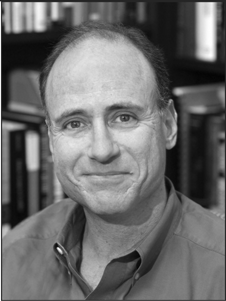
His scholarship covers a broad array of topics, such as campaign finance, party identification, rational action, voter turnout, and prejudice. His three books are Pathologies of Rational Choice Theory: A Critique of Applications in Political Science (Yale University Press, 1994) co-authored with Ian Shapiro, Partisan Hearts and Minds: Political Parties and the Social Identities of Voters (Yale University Press, 2002) co-authored with Bradley Palmquist and Eric Schickler, and Get Out The Vote! How to Increase Voter Turnout (Brookings Institution Press, 2004) co-authored with Alan Gerber. Outside of political science, he is known for his psychological research on the measurement of mood and his sociological research on the causes of racially-motivated crime. Green has been elected fellow of the American Academy of Arts and Sciences.
He currently serves on the editorial board of two political science journals and has served on the committee charged with selecting the first editor of Perspectives on Politics. For the past four summers, he has taught workshops for students and faculty interested in the design and analysis of field experiments.
Bryan D. Jones, University of Washington
Bryan D. Jones is the Donald R. Matthews Distinguished Professor of American Politics and director of the Center for American Politics and Public Policy at the University of Washington. He received his Ph.D. from the University of Texas in 1970, and has taught at the University of Houston, Wayne State University (department chair 1981–1985), and Texas A&M University (department head 1985–1992). He joined the faculty at the University of Washington in 1996.

Jones' scholarly interests focus on American public policy processes. His research concentrates on macro-level agenda-setting processes in American national political institutions and their connections to individual level micro-foundations. Organizations, including governments, are information-processing entities. Human cognitive factors bear on individual level decision-making. These cognitive boundaries must be reflected in formal organizations, which are, after all, creations of the human mind. So any theory involving organizations must involve some attention to the “raw material.”
Associated with this substantive interest has been a continuing dedication to better measurement of policy processes. This began in the 1970s with the assessment of urban service distribution and continues today with the Policy Agendas Project. The latter project is an ambitious attempt to assess various aspects of policy change promulgated by the U.S. government since World War II; Jones supervises this project in association with Frank Baumgartner and John Wilkerson. See www.policyagendas.org for the results.
Jones' more recent books include Politics and the Architecture of Choice (Chicago University Press, 2001), winner of the APSA Political Psychology Section Robert Lane Award, Reconceiving Decision-Making in Democratic Politics (Chicago University Press, 1994), winner of the Lane Award and Governance's Charles Levine Award, The Politics of Attention (co-authored with Frank Baumgartner; Chicago University Press, 2005) and Agendas and Instability in American Politics (co-authored with Frank Baumgartner; Chicago University Press, 1993). The latter book won the 2001 Aaron Wildavsky Award, awarded by APSA's Public Policy Section.
Jones has received National Science Foundation Grants totaling more than $1,750,000 from several different directorates, and has published articles in the American Political Science Review, Journal of Politics, American Journal of Political Science, and many other professional journals. He has served on the editorial boards of the American Journal of Political Science, Journal of Politics, Economic Development Quarterly, Governance, Political Psychology, and State and Local Government Review. He has served as vice president of the Midwest Political Science Association and president of the APSA's Organized Section on Urban Politics.
Michael Jones-Correa, Cornell University
Michael Jones-Correa is associate professor of government at Cornell University. Before arriving at Cornell, he taught at Harvard University as an assistant and associate professor of government. Along the way he has been a visiting fellow at the Woodrow Wilson Center for International Scholars and a visiting scholar at the Russell Sage Foundation. He received his B.A. in political science from Rice University, and his Ph.D. in politics from Princeton University.

Jones-Correa's research and teaching interests include, among other things, immigrant political incorporation, minority politics and inter-ethnic relations in the United States, and urban and suburban politics. He is the author of Between Two Nations: The Political Predicament of Latinos in New York City (Cornell, 1998), which received an award for best book on ethnic politics from the Race and Ethnic Politics section of the APSA in 1998, and the editor of Governing American Cities: Inter-Ethnic Coalitions, Competition and Conflict (Russell Sage Foundation, 2001). Jones-Correa has also written more than two dozen articles and book chapters on, among other things, the diffusion of racial restrictive covenants, religion and political participation, Latino identity and politics, the role of gender in shaping immigrant politics, dual nationality, immigrant naturalization and voting, and Hispanics as a foreign policy lobby.
In addition to his research and teaching, Jones-Correa has been active in the profession. He has served as program chair for sections at the APSA and MPSA meetings, as co-chair of the APSA's Committee on the Status of Latinos in the Profession, and as a member of the James Madison Award Committee, the Executive Council for the Urban Politics section, and the Executive Committee of the Race and Ethnicity section. Jones-Correa has served as well on the editorial advisory board of Urban Affairs Review, and on the Committee on the Redesign of the U.S. Naturalization Test, National Research Council, National Academies of Science.
Jack Levy, Rutgers University
Jack S. Levy is Board of Governors' Professor of Political Science at Rutgers University. He received a Ph.D. from the University of Wisconsin, held regular positions at the University of Texas-Austin and the University of Minnesota, and visiting/adjunct positions at Tulane, Stanford, Harvard, Yale, Columbia, and NYU.

Levy's research interests focus on the causes of war, foreign policy decision-making, and methodology. Much of his work has analyzed the impact on the outbreak of war on the balance of power, power transitions, preventive logic, polarity, alliances, economic rivalries, diversionary motivations, domestic political oppositions, organizational routines, historical learning, crisis mismanagement, and misperceptions. He has applied prospect theory to foreign policy, and written about qualitative methods, philosophy of science, and philosophy of history.
He is author of War in the Modern Great Power System, 1495–1975, and coeditor (with David Wetzel and Robert Jervis) of Systems, Stability, and Statecraft: Essays on the International History of Modern Europe by Paul W. Schroeder. Levy's articles have appeared in the American Journal of Political Science, British Journal of Political Science, International Historical Review, International Interactions, International Organization, International Security, International Studies Quarterly, International Studies Review, Journal of Conflict Resolution, Journal of Interdisciplinary History, Journal of Peace Research, Political Psychology, Security Studies, Synthese, World Politics, and other journals. He is currently working on coauthored book projects on causal explanation, the evolution of war, the causes of interstate and intrastate war, and the balance of power, and on article-length studies of preventive war; appeasement, politically-motivated opposition to war, prospect theory, and time horizons and discounting.
Levy received APSA's Helen Dwight Reid Award for the best dissertation in International Relations, and the Distinguished Scholar Award from the Foreign Policy Analysis Section of the International Studies Association (2000). He has served APSA as program chair for the Conflict Processes section, chair of that section's Lifetime Achievement Award committee, program chair and then president of the International History and Politics section, and (currently) member of the Task Force on Political Violence. He was vice president of the International Studies Association and chair of the ISA section on the Scientific Study of International Processes. He served on the councils of the International Society for Political Psychology and the Peace Science Society, and on the editorial boards of the American Political Science Review, International History Review, International Studies Quarterly, International Studies Review Journal of Politics, Mershon International Studies Review, Political Psychology, and World Politics.
Pei-te Lien, University of Utah
Pei-te Lien is associate professor of political science and ethnic studies at the University of Utah. A native of Taiwan, she received a B.A. degree in English from the National Taiwan University, and holds an M.A. in mass communications and journalism and a Ph.D. in political science from the University of Florida. She has been teaching at Utah since her graduation. Lien's research addresses empirical questions regarding the intersectionality of race, gender, ethnicity, and class by comparing the political experiences of Asian Americans to other major American racial and ethnic groups.

Lien is the author of The Making of Asian America Through Political Participation (Temple University Press, 2001), which received the 2002 best book award on political participation, voting, elections, and political behavior from APSA's Division on Race, Ethnicity, and Politics. Her latest book, The Politics of Asian Americas: Diversity and Community (Routledge, 2004), is based on her U.S. National Science Foundation-sponsored Pilot National Asian American Political Survey (SES-9973435). Coauthored with M. Margaret Conway and Janelle Wong, this book is “perhaps the most significant contribution to date on the topic of Asian American politics in the United States” and “destined to become the most widely-cited work on the subject.” The dataset is now archived by the ICPSR as Study No. 3832.
Lien has also published nearly 40 scholarly articles and essays and is the recipient of several major research grants and prestigious awards. One of her current projects is a cross-campus and multiracial collaborative research project, funded by the Ford Foundation, that studies the trajectories and leadership roles of the nation's male and female nonwhite elected officials. She is on the editorial boards of the Journal of Asian American Studies, Asian American Policy Review, and the Journal of Women, Politics & Policy. She also serves on the national advisory boards of several major survey research projects.
Lien is the founding co-chair and is on the Executive Committee of the APSA Asian Pacific American Caucus. She is a founding member of the APSA Committee on the Status of Asian Americans. In addition, she has participated actively, often as an organizer, in other professional and community-based organizations that address the problems of racial and ethnic inequality in the American context. At APSA, she co-chaired the 2002 conference program for the Division of Race, Ethnicity, and Politics and has been on several award committees at both the national and regional levels.
Andrea Y. Simpson, University of Richmond
Andrea Y. Simpson is a native of Memphis, Tennessee and graduated from Rhodes College in 1976. Upon graduation, she pursued a career in advertising, marketing, and public relations. In 1989, after completing a Master's in Public Administration at the University of Virginia, she began the doctoral program in political science at Emory University. In 1993, she began her academic career as a professor at the University of Washington in Seattle. During her tenure there, she completed two postdoctoral fellowships—The Chancellor's Postdoctoral Fellowship at the University of California, Berkeley and a Rockefeller Foundation Fellowship at the Center for Research on Women, (the CROW Center), at the University of Memphis. At UC-Berkeley, she completed her first book, The Tie that Binds (New York University Press, 1998), named the “Best Book of 1998 on Racial Identity” by the Race, Ethnicity, and Politics section of the APSA. Simpson received tenure at the University of Washington in December 2000. After 11 years of service at the University of Washington, Simpson is now an associate professor at the University of Richmond in Virginia. She is currently completing a project that examines the effects of gender, race, and class on political mobilization within the environmental justice movement. A book manuscript is forthcoming from Oxford University Press.

A member of APSA for over 12 years, Simpson has served as president of the Race, Ethnicity, and Politics Section and as a member of the Publications Committee. She also served on the Executive Council of the Western Political Science Association. Simpson considers her mentorship of young scholars of color and women a significant part of her contribution to the profession. She supports the expansion of the discipline to embrace critical analyses and research on the interaction of race, ethnicity, sex, and gender in fostering political agency, participation, and activism. Toward that end, she served for two years running as the Gender and Politics section chair for the National Conference of Black Political Scientists as well as the 2004 co-program chair. If elected to the Executive Council, Simpson hopes to continue to foster the inclusion of what some consider marginal areas of inquiry in the discipline as well as help to expand and develop programs that yield intellectual and professional benefits for all graduate students and junior scholars.


