This article reports on the Sharing Place Learning Together project, a cross-cultural partnership that developed between the University of Melbourne (UoM) and a remote Indigenous community school situated in Western Arnhem Land. The UoM team comprised non-Indigenous academics from the Australian Venom Research Unit (AVRU), situated within the Department of Pharmacology and Therapeutics, and the Melbourne Graduate School of Education (MGSE), and Indigenous and non-Indigenous community and staff members from Maningrida College. The purpose of this article is to share our experiences with other academics and educators who are seeking to develop sustainable cross-cultural partnerships with remote Indigenous communities. The UoM team is, however, conscious of the fact that none of the team members were Indigenous and acknowledges that the writing of our experiences is structurally located within the subject position of ‘Whiteness’. Moreton-Robinson (Reference Moreton-Robinson2000) argues this position often ‘remains invisible, natural, normal and unmarked’ (p. 183) and as such needs to be interrogated as a specific form of privilege (p. 186).
In developing an overarching partnership dimension, the team members drew upon their sustained collaboration and partnership experiences in cross-cultural settings to inform team discourse about how the visits and knowledge exchange should be approached. These included: a project to elicit transgenerational, bicultural science knowledge and bicultural presentation formats in Indigenous Australian settings (Kngwarraye Riley, Perrule Dobson, & Woolley, Reference Kngwarraye Riley, Perrule Dobson and Woolley1998); another project in Vietnam where marginalised ethnic minorities groups sought a window into the dominant national language curriculum (Molyneux & Woolley, Reference Molyneux, Woolley, Mitchell, Klinck and Burger2004); research into Indigenous ranger management of visitor expectations and responses to cultural sites within a National Park space in Victoria (Webb, Reference Webb2009); and the documentation of a scientific knowledge exchange of local venom injuries and first aid treatments in Papua New Guinea (Williams, Jensen, Nimorakiotakis, & Winkel, Reference Williams, Jensen, Nimorakiotakis and Winkel2005). The team also sought advice from key Indigenous professors at the UoM Murrup Barak Institute for Indigenous Development.
Yet we were, with regard to Martin's (Reference Martin2008) theorising of relatedness, outsiders — ‘strangers’ who were unknown to the local community. As such, we would need to engage in the processes of ‘coming amongst’ and ‘coming alongside’ this community — by ‘fulfilling conditions of honesty, co-operation and respect’ (p. 9). Moreton-Robinson (Reference Moreton-Robinson2000) uses the term ‘relationality’, meaning that ‘one experiences the self as part of others and that others are part of the self’ (p. 16). She asserts that relationality is learnt through ‘reciprocity, obligation, shared experiences, coexistence, cooperation and social memory’ (p. 16) — processes that require sustained engagement with the community over time.
The Sharing Place Learning Together agreement was with the College leadership and key non-Indigenous staff members who had been instrumental in establishing a partnership for a Learning on Country program with the Djelk rangers. This Learning on Country partnership had been heralded as being innovative and successful by an Aboriginal and Torres Strait Islander Social Justice Commissioner for the Australian Human Rights Commissioner (Calma, Reference Calma2009). Langton (Reference Langton1994, p. 25), referencing the Key Issue paper no. 1, ‘Understanding Country’, states that ‘the concept of “country” embraces all the values places, resources, stories and cultural obligations associated with the geographic area’. To strengthen their knowledge of specific, place-based collaborative processes in Arnhem Land, the UoM team members analysed models of successful, sustained collaboration and outcomes in projects involving Indigenous ecological knowledge, writing and resource development (see e.g., Altman et al., Reference Altman, Kerins, Hunt, Ens, Katherine, Russell and Fogarty2011; Ens et al., Reference Ens, Cooke, Nadjamerrek, Namundja, Garlngarr and Yibarbuk2010; Ens & Towler, Reference Ens and Towler2011; Jackson, Finn, Woodward, & Featherston, Reference Jackson, Finn, Woodward and Featherston2011; May & Ens, Reference May and Ens2011).
The UoM team sought to augment and promote the College's Learning on Country program through active support on field trips and camps by using the experiences and Indigenous knowledge generated as a basis for classroom resource production. The team sought permission for and approval of this Indigenous content with the community reference group, made up of Traditional Owners, to address possible ‘blinkered and distorted perceptions of indigenous cultures’ (Langton, Reference Langton1994, p. 24) that Langton cautions may arise in relation to the concept of ‘natural’ landscape and understanding the cultural lives of Indigenous Australians.
No amount of background reading, mining of information from internet sources, and talking with those who have worked in remote communities could adequately prepare the team for their first experience of the local context in August, 2011. While some team members had a longstanding history of involvement with remote communities, for others this local immersion marked the beginning of their learning about the complexities of remote education and ‘working in an intercultural, multi-linguistic space across many epistemes and ontologies’ (Bat & Guenther, Reference Bat and Guenther2013, p. 131). The Sharing Place Learning Together team arrived with visions of laying foundations for a partnership between Maningrida College and the UoM by engaging with a two-way approach to teaching and learning (Purdie, Millgate, & Bell, Reference Purdie, Milgate and Bell2011), and by attempting to contribute to a Learning on Country program. There was, however, limited awareness of the community's perception of the UoM team as FIFOs (fly-in-fly-out) with an institutional agenda, and a somewhat limited understanding of the complexity of what forming and sustaining a partnership in a remote community school entailed.
Maningrida is one of the largest and most diverse towns in the Northern Territory (NT). The community is located 550 km east of Darwin, the NT capital city, and therefore its college is classified as ‘very remote’ (My School, ACARA, n.d.; Wilson, Reference Wilson2014). Langton (Reference Langton1994) defines ‘remote’ Australia as ‘where most of the tradition-oriented Indigenous cultures are located’ (1994, p. 4). However, Bat and Guenther (Reference Bat and Guenther2013) contextualise this by showing that such a community is considered ‘only remote from the system that controls much of it. Each community is not remote, for people are home where they are’ (p. 124). The Maningrida community is indeed home to more than 10 Aboriginal cultural groups. Seven main languages are spoken in the area, predominantly Ndjebbana, Burrara, Nakara, Kunwin’ku, Gurrgoni, Rembarrnga and Jinang, with English being spoken to various degrees of proficiency. The school has a history of valuing the diversity of its community languages, which is reflected in bilingual publications from the Maningrida Literacy Production Centre. However, consistent with current NT policy directives, all lessons are taught in English.
The My School website (ACARA, n.d.) reveals that for 2013, Maningrida College had an official enrolment of 554 students — 97% being Indigenous, with a language background other than English. The school's Index of Community Socio-Educational Advantage (ICSE) is 514 (1,000 being the average), and the attendance rating is 51%. The website data, including The National Assessment Program — Literacy and Numeracy (NAPLAN) testing results, provide a policy-initiated school profile. Yet this is a very limited measurement and does not value or reveal the scope of student learning in real terms (Wigglesworth, Simpson, & Loakes, Reference Wigglesworth, Simpson and Loakes2011). Osborne and Guenther (Reference Osborne and Guenther2013) caution that this externally derived data and its associated ‘deficit’ discourse appear ‘to be choking the space for imagination, creativity, [and] long-term adaptive approaches’ (Osborne & Guenther, Reference Osborne and Guenther2013, p. 95) required for responding to the challenges of remote education.
The UoM connection with Maningrida College was made in late 2010 when Mason Scholes, a senior teacher, contacted AVRU and suggested a partnership to broaden the venomous biodiversity theme within the school's Learning on Country program. This collaboration aimed to build on the Western classification of at least 45 new spider species (Godinho, Woolley, Webb, & Winkel, Reference Godinho, Woolley, Webb and Winkel2014; Rowland, Crough, & Hixon, Reference Rowland, Crough and Hixon2012; Webb, Godinho, Woolley, & Winkel, Reference Webb, Godinho, Woolley and Winkel2013). The partnership biodiversity theme involved the cross-cultural exchange of risks posed by venomous land and marine animals in the surrounding area, and Indigenous and Western first-aid treatments for their bites and stings.
Mason had developed an integrated fieldwork program for senior students with Traditional Owners and senior Indigenous Djelk rangers. This program later evolved into a government-funded Learning on Country program — one of four piloted in Arnhem Land — designed for Indigenous students to learn ‘on country’ through day trips and bush camps within the large Djelk Indigenous Protected Area surrounding the Maningrida township. The Learning on Country program aims to provide a pathway to future employment by developing students’ skills and confidence (Fogarty & Schwab, Reference Fogarty and Schwab2012a, Reference Fordham and Schwab2012b).
The Sharing Place, Learning Together team sought to support the sustainability of the College's Learning on Country Program and to deepen students’ understanding of Australia's biodiversity and natural resource management, building capacities in Western and Indigenous scientific knowledge and the reproduction of Indigenous ecological knowledge, as recommended by the Australian National University's Centre for Aboriginal Economic Policy Research (Altman et al., Reference Altman, Kerins, Hunt, Ens, Katherine, Russell and Fogarty2011). The intent was also to focus on the development of students’ literacy skills, in accordance with the identification of this as a key action in ‘closing the gap’ between the educational outcomes of Indigenous and non-Indigenous students by the College's Operational Plan (Maningrida College, 2013a) and the Aboriginal and Torres Strait Islander Education Action Plan (2010–2014) (NT Government of Australia, 2014).
After regular visits over two years, the Sharing Place Learning Together team in early 2013 received interdisciplinary seed grant funding from the Melbourne Social Equity Institute (MSEI) that provided the opportunity to review the partnership formation and engage in further capacity-building by:
• documenting insights into working with communities and educators;
• promoting and raising Aboriginal students’ aspirations for engagement in further education; and
• enriching, in the long term, the taught curriculum at both Maningrida College and the Science and Education Faculties at the UoM so that they reflect more appropriately Indigenous perspectives and pedagogy.
In funding the project, two deliverables were defined: a participatory workshop at the UoM to be led by students and staff from the Maningrida School; and a qualitative study to investigate the community's perceptions of the enabling and constraining factors in Indigenous partnership formation and capacity building. These deliverables form the basis of discussion within this article.
Partnerships
The literature pertaining to school partnerships with government agencies, private agents, parents and local communities raises challenges and considerations that resonate with the Maningrida College and UoM partnership. For Cardini (Reference Cardini2006), the term partnership suggests collaboration, flexibility and trust, while Lowe (Reference Lowe, Purdie, Milgate and Bell2011) describes it as the efforts made by members to work collaboratively to solve common issues. Likewise, Huxham (Reference Huxham2000) argues that there must be mutual advantage whereby individuals and/or organisations work collaboratively towards a defined outcome with benefits for all stakeholders. The Sharing Place Learning Together team's commitment to collaborative endeavours around the school's operational plan, and the focus on cross-cultural knowledge exchanges, sought benefits that would be potentially mutual.
Lowe (Reference Lowe, Purdie, Milgate and Bell2011) categorises the formation of cross-cultural partnership challenges within Indigenous communities under three broad themes: resources and aims; language and culture; and power and trust. He attributes the numerous failed attempts to establish genuine educational partnerships with Aboriginal communities to a disjuncture of meaning and purpose. Further, Lowe suggests that the key to establishing robust partnerships lies in defining a genuine shared vision, referring to Tedmanson's (2005) notion of ‘capacity-sharing’. This term implies a jointly constructed process, as opposed to capacity-building, which he describes as reflective of ‘the whiteness of managerial and self-determination discourses’ (Lowe, p. 23). Indeed, in the context of enhancing Indigenous health, the Australian National Health and Medical Research Council have made explicit the critical importance of Aboriginal and Torres Strait Islander participation in partnerships focused on the notion of ‘capacity exchange’ (Anderson, Reference Anderson2010). This message is reinforced by Martin, who argues for ‘Aboriginal knowledges to be recognized as a valid body of knowledge and not treated as an “add on” to western scientific knowledge’ (2008, p. 56).
Research outcomes on sustainable school and community partnerships presented in the ‘What Works’ project report (Commonwealth of Australia, 2013) identify pre-conditions that have specific relevance for Sharing Place Learning Together's endeavours: a clear and agreed strategic purpose; clear statements pertaining to roles and responsibilities; two-way dialogue and conversations; and positive relationships with the school leadership team, community members, teachers and students. It further notes that partnership sustainability is dependent upon parties continually nurturing their relationships, strong leadership, capacity-building, accountability, induction and succession planning. Above all, sustaining a remote community partnership is contingent on fostering mutual cultural understandings that evolve through engaging in intercultural dialogue and participation in enriching cultural experiences (Langton, Reference Langton1994).
A Two-Way Learning Approach
According to Devlin (Reference Devlin2004), the key imperative underpinning two-way learning within an Indigenous community is the concept of equality and mutual respect. He refers to it as a model of bilingual or bicultural education where power is shared, the curriculum is balanced, and competing knowledge systems are acknowledged. Two-way learning embodies an acceptance of learning about another culture and knowledge system, while simultaneously sharing one's own knowledge. This concept acknowledges that student engagement is encouraged when Aboriginal knowledge and communicative capacities are embedded within school policies, curriculum and pedagogy. A two-way learning approach resonates with the Sharing Place Learning Together team's aim to build capacity in both basic Western and Indigenous scientific knowledge and in the reproduction of Indigenous ecological knowledge (Altman et al., Reference Altman, Kerins, Hunt, Ens, Katherine, Russell and Fogarty2011).
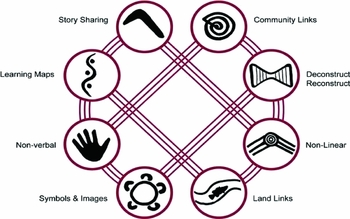
The notion of two-way teaching and learning (Purdie et al., Reference Purdie, Milgate and Bell2011) is grounded in place-based pedagogy, where learning and communication are structured around what is most meaningful to the students — their places, their culture, their experiences (Apple, Reference Apple2013; Gruenewald, Reference Gruenewald2003; Comber & Kamler, Reference Comber and Kamler2004). The 8 Ways of Aboriginal Learning pedagogical framework (Yunkaporta, Reference Yunkaporta2009; Yunkaporta & Kirby, Reference Yunkaporta, Kirby, Purdie, Milgate and Bell2011) provided guidance for planning activities for resource and program development around local knowledge systems of place. This framework, which privileges Aboriginal ways of learning, was developed by the Community and Elders of Western NSW, the NSW Department of Education and Training, the Western NSW Regional Aboriginal Education Team, and Tyson Yunkaporta (Reference Yunkaporta2009; Yunkaporta & Kirby, Reference Yunkaporta, Kirby, Purdie, Milgate and Bell2011). Its eight interactive teaching and learning pedagogies include: narrative-based learning; visual learning processes; hands-on/reflective techniques; use of symbols/metaphors; land-based learning; indirect/synergistic logic; and the modelling of scaffolded genre mastery and connectedness to community.
8 Aboriginal ways of learning (Yunkaporta, Reference Yunkaporta2009; Yunkaporta & Kirby, Reference Yunkaporta, Kirby, Purdie, Milgate and Bell2011).

Despite the best intention to engage with Aboriginal ways of learning, along with the consideration of pedagogies and literacy practices that would include issues of social justice and inclusion (Blitner et al., Reference Blitner, Dobson, Gibson, Martin, Oldfield, Oliver and Riley2000; Lingard & Mills Reference Lingard and Mills2007), the UoM team's cultural and linguistic knowledge was limited and its teaching practices were mostly informed by Western epistemologies. Care was required to ensure that we did not assume that something which works in the mainstream will work in a remote community (Osborne & Guenther, Reference Osborne and Guenther2013).
Resource Development and Relationship-Building
In defining the Sharing Place Learning Together Partnership parameters, the UoM team was aware of the critical literature that continues to raise issues and concerns about the role of non-Indigenous researchers in Indigenous communities. Luke (Reference Luke2009), acknowledging Spring (Reference Spring2003), argues that ‘At the heart of the problem, according to Indigenous Elders, educators and researchers is a fundamental historical disregard for Indigenous traditions, cultures and languages’ (p. 2). Further, Tuhiwai Smith (Reference Tuhiwai Smith2012) asserts that there are some fundamental differences between the ways that Indigenous and non-Indigenous people make decisions, and it requires a more critical understanding of the underlying assumptions, motivations and values that inform research practices. Moreover, Battiste (Reference Battiste2002) raises issues about understanding and researching Indigenous knowledge when using it as the basis for classroom activities. An extensive review of the literature on culturally responsive schooling for Indigenous youth across North, South and Central America and Canada was conducted by Castagno and Brayboy (Reference Castagno and Brayboy2008). They cite, for example, McCarty and Watahomigie's (Reference McCarty, Watahomigie and Pérez2004) work and several exemplary case studies in proposing the need for reclaiming Indigenous knowledges and epistemologies, culturally appropriate pedagogy and culturally relevant curriculum content and literacy materials that are connected to students’ lives.
The primary focus of the Sharing Place Learning Together team's first visits to the school was to nurture relationship-building among stakeholders (Commonwealth of Australia, 2013; Masters, Reference Masters2010; Zbar, Kimber, & Marshall, Reference Zbar, Kimber and Marshall2010) and support the school's operational plan through multimodal resource development. A bush trip with students, elders and teachers to Mangrove Country in August 2011, along with follow-up activities whereby students illustrated, painted, spoke and wrote about their local ecological knowledge, led to the development of an Open Explorer website for the school. This website, featuring individual student profiles and group presentations, was a visible celebration of student knowledge of country and their awareness of multimodal presentation formats. The students’ on country learning experiences were also enriched by engagement with Western first-aid treatments and injury prevention through their use of The Venom Patrol website (University of Melbourne, 2011).
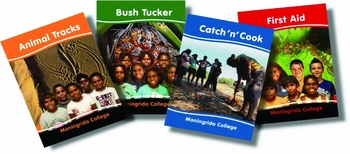
The students’ capacity to produce their own creative literacies (Kral, Reference Kral2009), drawn out through the website experience, informed and assisted the production of a Pocket Book series: First Aid, Animal Tracks, Bush Tucker, and Catch ‘n’ Cook (Figure 2). These books were intended to provide capacity-sharing opportunities for students to record and express cultural knowledge for a wider audience. The topics resonate with Langton's identification that the nutritional, culinary and medicinal value of ‘bush tucker’ has been overlooked (1994), particularly in relation to research agendas. By valuing the local ‘Ways of knowing’, ‘Ways of being’ and ‘Ways of doing’ (Martin, Reference Martin2008) the intent was to promote a positive sense of cultural identity and affirm respect for Indigenous culture (Dockery, Reference Dockery2013). In the spirit of two-way teaching and learning (Purdie et al., Reference Purdie, Milgate and Bell2011), students informed and shaped the book content, while the Sharing Place Learning Together team provided the literacy support for the students’ writing, led the publication process, and sought permissions from the local reference group. Smith (Reference Smith2002) describes these team roles as the ‘experienced guides, co-learners, and brokers of community resources and learning possibilities’ (p. 593).
Pocket Book covers.

Consistent with the initial request by the College for support with the Learning on Country program, the Sharing Place Learning Together team contributed to the Learning on Country program day trips and camps. Here, Elders and Traditional Owners immersed students in Indigenous knowledge systems, transmitting cultural knowledge (Anderson, Reference Anderson and Kincheloe2005) of practices and traditions associated with specific ecosystems and sites. Examples included:
• Traditional Owners demonstrating traditional rope making techniques at Ndjudda Point, on a Learning on Country day trip;
• Traditional Owners giving lessons on rock art at the Kolorbidahdah campsite;
• Elders locating water-bearing trees and demonstrating how to extract their water, then giving a lesson on making medicinal green ant tea at the Mankorlod Learning on Country camp site; and
• Elders demonstrating the gathering of pandanus leaves, their preparation and dyeing, and rug and basket weaving techniques at the Kolorbidahdah Learning on Country camp site.
‘On country’ intercultural exchanges informed follow-up learning experiences in the classroom that were supported by UoM team members. This transferral of on country learning to classroom practice reveals how the Learning on Country program facilitates the potential for students to live in two worlds (Guenther, Osborne, & Bat, Reference Guenther, Osborne and Bat2013). The involvement of Djelk rangers, NT government scientists, Traditional Owners and Elders in planning the Learning on Country teaching was a ‘whole-of-community’ (Emerson, Fear, Fox, & Sanders, Reference Emerson, Fear, Fox and Sanders2012) approach, embodying ‘a pedagogy of responsibility’ (Martusewicz & Edmundson, Reference Martusewicz, Edmundson and Butin2005) that challenges typical definitions of who might be considered teachers.
‘Learning on City’ visits to Melbourne evolved as an extension of the Learning on Country program and were supported by the UoM team. These visits are deemed a reward for increased attendance in Years 11 and 12 and an incentive for middle school students to continue at school and attend frequently. They provided opportunities, as Martin (Reference Martin2008) suggests, ‘to come alongside each other based on new relationships to knowledge, to research and to self’ (p. 10). A National Australia Bank (2013) Impact award and some supplementary support from MSEI funded the 2013 visit. Activities included a visit to the interactive First People's Exhibition at the Museum of Victoria, participation in special science workshops at the Melbourne Zoo, and a visit to science laboratories at the UoM where the climate was controlled to measure the impact on animal behaviours. Maningrida students also visited Bundoora Secondary College and Nossal High School, providing opportunities for cultural knowledge exchanges. They also participated in a tailor-made workshop on traditional Chinese brushstroke techniques at the National Gallery of Victoria.
The Participatory Workshop Deliverable
The half-day participatory workshop MSEI deliverable, co-hosted by MSEI and the Sharing Place Learning Together team, was part of the broader 2013 ‘Learning on City’ program for the Maningrida visitors. Its broad aims were to: facilitate access to Indigenous knowledge and knowledge systems around education, art, culture and biodiversity; improve equity and diversity of cultural perspectives; and to extend opportunities for intercultural knowledge partnerships.
The visitors comprised 10 students and accompanying staff and Elders involved in the school's Learning on Country and arts programs. Participating staff members included: Traditional Owner and cultural advisor Joseph Diddo, assistant teacher Heleana Gulwa, teachers Mason Scholes and Jaya Regan, and Learning on Country co-ordinator Shane Bailey. Approximately 50 people were invited by the Sharing Place Learning Together team to attend the workshop. The attendees were an interdisciplinary and intercultural group of university members and external partners known to the Sharing Place Learning Together project, ranging from those involved in senior management, research and teaching to current students. While the workshop was a ‘first’ for many of the visiting students and staff, it was likewise a first of its kind for UoM participants.
An interactive classroom at the MGSE was chosen for the workshop to provide students a space of their own within the (unfamiliar) higher education institution. The intent was to encourage a safe and comfortable place to share their experiences, knowledge and culture. Here, the students curated their exhibition of artworks, cultural materials and classroom assessment items brought from Maningrida. This experience sought to promote and raise the students’ aspirations for engagement in further education. Over the lunch period, the attendees viewed the exhibits, with the students taking on the role of gallery guides, explaining the significance of the selected works and the artwork techniques. Some measure of the success of this approach is evidenced in email communication after their Melbourne visit that stated the workshop ‘created a conducive environment for our students to talk and, most importantly, build confidence’.
The participatory workshop.

The exhibition and presentations made by Indigenous and non-Indigenous teachers and a community elder offered opportunities to augment Indigenous perspectives within the UoM. The following comment emailed to the team underscores the rich cultural knowledge representing various groups within the school community that was shared with attendees:
Mason and Diddo [made] a heart-felt and thoughtful representation on the history of the LoC [Learning on Country] program, the meaning of Lurr’a [the school's LoC program story and logo] and the important role of respect in working together with Indigenous people. Heleana spoke with pride and experience about the importance of cultural education and what it is to understand and walk in ‘both worlds’ of the Balanda and Aboriginal.. . . The ‘students themselves acted as hosts, working the crowd, answering questions and giving people a direct understanding of their country and community . . . [they were] spreading the message of the LoC program and the great outcomes being delivered by our School’. (Maningrida College, 2013b)
An ANU colleague affirmed the notion that the students were being given the opportunity to participate in new challenging experiences beyond their local community:
. . . the ability of the LoC approach to provide connections and growth beyond the immediate confines of Maningrida, or the local community. This is an important point in combating some suggestions that localised approaches might produce low expectations and lack of understanding of the broader world.
As a means of extending the workshop's potential to augment Indigenous perspectives within the University, a video recording of it was produced to inform future teaching, research, partnership development and engagement. It was hoped that bringing diverse Indigenous perspectives into the University emphasised cultural knowledge exchange and valued place-based knowledge, pedagogy, and the relationships between people and places. This addressed some of the issues noted in the Bradley review of higher education (Bradley, Noonan, Nugent, & Scales, Reference Bradley, Noonan, Nugent and Scales2008) and recommendations of a national science expert group (Department of Innovation, Industry, Science and Research, 2013).
The Research Deliverable
After two years of regular visits to the Community and participation in the ‘Learning on City’ program, the MSEI grant provided the scope for an investigation into the partnership formation and capacity building between the UoM team and Maningrida College. Six months prior to the second Learning on City visit, a small case study was undertaken (Cohen, Manion, & Morrison, Reference Cohen, Manion and Morrison2011; Yin, Reference Yin2009). Through a semi-structured interview process involving a diversity of partnership stakeholders, the researchers specifically sought to gain perspectives on the partnership formation and to identify opportunities afforded to merge Indigenous and Western knowledge and practices. Martin's (Reference Martin2008) stance of ‘knock before you enter’ reminded us as researchers to be respectful of place and culture and cognisant of the power relations inherent in research. To ensure that the voices of Indigenous participants were privileged within the research process (Rigney, Reference Rigney2001), we sought to appreciate how stories that are told can lead to reflection on our actions and reactions (Archibald, Reference Archibald2001; Martin, Reference Martin2008). The research project was approved by the UoM's Human Research and Ethics Committee and the NT Department of Education and Children's Services.
Fourteen College and Community members accepted an invitation to participate in the study. They included: Traditional Owners, members of the College leadership team, the Language and Cultural Coordinator; classroom teachers involved in the Learning on Country program, an Indigenous teacher assistant, a teacher from the Family as First Teachers program, and a UoM Master of Teaching graduate who was employed by the school.
Semi-structured interviews of approximately one hour's duration were conducted on the school site. Open-ended questions were framed to encourage participants to voice openly their personal experiences of the SPLT partnership (Kvale & Brinkmann, Reference Kvale and Brinkman2009). The interviews were audiotaped, transcribed verbatim and made available to each participant for member checking during the follow-up visit. The qualitative analysis of data involved coding to identify themes (Gibbs, Reference Gibbs2007; Miles & Huberman, Reference Miles and Huberman1994; Richards, Reference Richards2005) in relation to partnership formation and capacity building. Three emergent themes inform the following discussion of the study's findings.
Partnership Enablers
The development of educational resources with students emerged in the data as critical events towards growing the partnership. The Pocket Books, in particular, were identified by participants as ‘a real winner’ and the book production process was considered an opportunity for relationship-building within the community. Participants alluded to the book production process as reinforcing and building student identity, which is cited as a critical element for a successful education (Masters, Reference Masters and Hughes2013). Moreover, research has shown that stronger cultural identity promotes greater participation and achievement in education and training (Dockery, Reference Dockery2013). Several interviewees referred to the way the Pocket Books were celebrated in the wider Maningrida Community, noting this assisted with the partnership capacity-building and how they encouraged Elders to seek to have their knowledge recorded in book formats.
Another key factor that was attributed to enabling the partnership was the regular visits to the community by the team. As one teacher indicated: ‘if the UoM want to be part of the school, they have to have a continued presence’, adding that: ‘It's the fact that it is you guys — the same people each time — that is a really good idea and if someone else was going to start coming up, I’d advise them to come with you guys first.’
This was reiterated by a school leader advising the team to ‘bring new people and start a relationship while you are still here to keep that mentorship of them so we are not mentoring another group of faces and so you are there bridging that gap between the known and the unknown’.
Of the interviewees involved with the Learning on Country program, all identified the team's engagement with the program — in particular, the presence of Sharing Place Learning Together team members on camps and day trips — as pivotal to establishing the trust, credibility and mutual respect required of partnership relationships (Commonwealth of Australia, 2013; Rigney, Reference Rigney2001).
Interviewees articulated that day trips and camps afforded the time essential for relationship-building across different stakeholders. Traditional owners referred to the beginnings of the partnership being day trips when they were able to tell the team about country and share their knowledge, such as:
The Moiety tree out near the airport. I [also] showed you the bush carrot. And then Alistair told you about the dye — the red one. And when we went to Ndjudda Point we talked about bush medicine from the Pandanus and the nut.
These experiences were remembered as ones that contributed to the emergent relationship with traditional owners. The relevance of this developing relationship with traditional owners to the partnership capacity-sharing and Learning on Country program is reflected upon in a participant's comment that:
[y]ou guys are on the learning journey with them as well because there is an awful lot of knowledge and they [TOs] are very much wanting to share their knowledge and pass that knowledge on. They know the value of education on a broader scale. Without this kind of relationship, I suppose, they struggle to get that knowledge and that educational stuff out.
This participant alludes to Learning on Country opportunities for Sharing Place Learning Together team members to observe and listen to these knowledge holders define their culture and heritage and their connectedness to, and responsibility for, the management of country. There is some acknowledgment here of ‘coming amongst’ and moving towards the relatedness of the Outsider who is known (Martin, Reference Martin2008). As Osborne (Reference Osborne2013, p. 174) opines, the only way to understand remote communities is to spend time ‘listening, observing and learning’, and to time and frame questions appropriately to facilitate the sharing of information. It also allowed for the cultural interface deemed necessary for fruitful dialogue (Langton, Reference Langton1994; Martin, Reference Martin2008) and to share epistemologies, cultural meanings and some first language words and phrases (Nakata Reference Nakata2007; Nakata, Nakata, Keech, & Bolt, Reference Nakata, Nakata, Keech and Bolt2012).
Several teachers referred to the camp experiences being pivotal to enabling the UoM team's relationship development with the students and, importantly, with themselves. One teacher, having spent time with Sharing Place Learning Together team members at Kolorbidahdah camp, related her coming back ‘very excited and charged with lots of energy, new ideas and new possibilities’. She mentioned UoM team members’ ‘engagement with the students and with what I was doing with the rock art and around the plants and the work with Anna (Elder). You supported what I was thinking and feeling.’
The Learning on City program was perceived by all interviewees as being instrumental to partnership capacity-building. Essentially, it embodied the notion of capacity-sharing (Tedmanson, Reference Tedmanson2005), enabling students to experience the Sharing Place Learning Together team's local context. As one school leader attested:
the students were speaking quite highly of their time in Melbourne [2012] and working with you people. And it is those stories that we can't control that are really what will make or break programs and your relationships. So, the fact that there were positive stories floating through the community and parents were talking to me about what kids had said etc. They are invaluable for keeping the partnership alive.
Opportunities for students to see Western scientists at work in their laboratories or engaged in fieldwork enabled students to ask questions, compare and exchange their own cultural knowledge of, and systems for, animal classification; and environmental management and first-aid treatments were identified as concrete enactments of two-way learning:
To see a world that has got all the things in it that you talk about with Science and Maths and people actually engaged in research — people whose whole lives are about venom, animals and museums. They haven't seen that before. So, when they come back and they showed it [video] at the assembly, kids were going ‘What's that?’ It's a big science lab and the kids had something in their hands, you know it was fantastic.. . . These kids were watching the kids down in Melbourne do things.
One of the scientists involved in the Sharing Place Learning Together project was identified by several teachers as ‘having a natural gift for communication with ESL and just kids from a remote community’. His ‘contagious passion’ at first confused the students as they tried ‘to figure out what he was so excited about [and] that just really engaged them’. His interactions as students collected, examined and identified water insects at Cumberland River (near Geelong in the state of Victoria) was identified as providing opportunities for capacity building in Western science techniques and engaging with different cultural interfaces (Langton, Reference Langton1994; Martin, Reference Martin2008; Nakata, Reference Nakata2007).
As the interviewee comments reveal, the students’ experiences raised their consciousness of others’ places and the relationships between places (Gruenewald, Reference Gruenewald2008; Kalantzis & Cope, Reference Kalantzis and Cope2008). Martin advocates that learning respect for self and relatedness between and among other entities are pivotal to sustaining and ultimately expanding one's relatedness and ways of being (Martin, Reference Martin2008, p. 77). A school leader noted that the ‘sharing of local knowledge and then the scientific world knowledge’ has meant ‘the Science vocabulary that you have been able to give to the students mean it's not such a loss to them when we use some words . . . they can [now] link it to something they have seen’. He identified a very positive spin-off regarding the partnership evolvement as the potential for scientific ‘cross-cultural dialogue in the classroom’ (Armstrong & Shillinglaw, Reference Armstrong, Shillinglaw, Pudie, Milgate and Bell2011, p. 238) that would ultimately enhance the science program and students’ learning capacity.
Factors Constraining Capacity-Building
Although interviewees were unequivocal in naming the Learning on City as a critical event in the partnership capacity-building, several teachers raised reservations about the experience being ‘quite daunting’ and overwhelming with regard to ‘the newness and how unfamiliar it was’. These teachers suggested having the itinerary organised well in advance so they could provide some prior learning experiences and assist students in making connections. Another factor that was identified as constraining capacity-building during the Melbourne visit was that the delivery of some presentations to students was not pitched appropriately:
[S]ome presenters were not really aware of who their audience was and the nature of communicating with them. I feel there were quite a few missed opportunities when they were talking over the kids’ heads.
In part, this can be attributed to the Western scientists’ disciplinary lens and ways of inquiring, communicating and theorising their knowledge bases. As Verran (Reference Verran2005) asserts, there are times when Indigenous and Western knowledges are ‘irreconcilable’, but these missed opportunities can also be ascribed to the presenting scientists not always being familiar with the classroom pedagogies or ignoring Indigenous epistemologies. As Moreton-Robinson (Reference Moreton-Robinson2000) asserts: ‘Our resistance can be visible and invisible, conscious and unconscious, explicit and covert, partial and incomplete and intentional and unintentional’ (p. xxiii). It is a reminder of the constant need to interrogate our subject position of ‘Whiteness’ as a specific form of dominance and the exercising of power.
In other ways, too, communication was identified as a constraining factor with regard to partnership capacity-building. In their communication, the UoM Sharing Place Learning Together team were not sufficiently proactive in providing advance documentation of who was coming and why they were coming, or promptly sending follow-up reports on visits for discussion and clarification of issues. At the school level, teachers noted that information was not always circulated among the teacher stakeholders, with several teachers expressing they were unaware of what the partnership was trying to achieve. As one teacher stated, ‘It took me a while to get my head around what your goals were and how they fitted with what our goals were’, albeit acknowledging that ‘this is a part of the school's [lack of] communication’. This underscores the need for clarifying goals and participants’ roles and responsibilities as preconditions for sustainable partnerships (Commonwealth of Australia, 2013). Further, several participants claimed they were not aware of the explicit roles and backgrounds of the Sharing Place Learning Together team members, signalling the need for a formal partnership documentation that defined these roles and backgrounds.
Some interviewees articulated an insider/outsider mindset among staff with regard to whether they were invited, or not, to work with the UoM team. Moreover, resentment was openly expressed about the use of staff resources by the team during visits, which was counterproductive to the initial partnership formation:
We actually had a staff raucous about that. They could see that people were getting spoilt coming to Maningrida, getting them out in troupies, getting them organised to do trips, using up school resources while a lot of our own staff have never been offered that opportunity to do anything because they don't have a vehicle. They were seeing us wrapping around these visitors — all this support when they don't get it.
This privileging of the Sharing Place Learning Together team, in part, was a communication issue as the team was unaware of the impact of the team's size on the initial visits. With two exceptions, all participants initially had misgivings and uncertainty about the team's presence in the community. A comment by a school leader captured the interviewees’ cynicism about the team's intent:
Maningrida is so heavily hit by government visitors and researchers, any people that think they want an Aboriginal experience. They choose Maningrida because it is on a quick flight from Darwin. [W]e get overloaded big time with researchers, medical people, other people from other places who just think just they can just come here and fix the problems experienced and go away and write some fantastic paper about the wonders of the world in Maningrida. But at the end of the day leaving us to do the actual groundwork of what it is really about.
The interview data highlighted that sustained time in the community is what builds currency. However, as revealed earlier, the team's engagement in resource development indicated the intent of a sustained relationship. Yet the tyranny of distance is inevitably a factor that has impacted the partnership, with one teacher implying the team members were ‘itinerant’ visitors.
You build solid relationships with those kids but you are here for a relatively very short period of time. And then you have gone and come back eleven weeks later and then you are gone and you are back. And everything about Indigenous education is about time in the community and building relationships.
As this teacher emphasised, each visit required the regenerating of dialogue with staff and students. Further, the challenge of responding to the transient nature of teaching staff in remote schools communities was raised by several interviewees. One teacher admitted to signing 83 farewell cards and farewelling two principals since arriving at the College 5 years ago. Staff turnover rate is a challenge for remote schools and a factor impacting the growing and sustaining of partnerships (Commonwealth of Australia, 2013; Wilson, Reference Wilson2014).
Reflections on the Team's Capacity-Building Process
Engaging with local Indigenous knowledge systems and traditional skills during the early visits that focused on teaching resource development was pivotal to gaining acceptance by the community. As Bat and Guenther claim (Reference Bat and Guenther2013), local context is the beginning of learning, not the endpoint. Respectful listening and a willingness to engage with cultural knowledge are critical for relationship-building and establishing trust and mutual respect, which must precede any other agenda. In addition there needs to be detailed knowledge of the particular educational and political circumstances that can foster or constrain partnership formation. Insights into the history of educational policy and program changes in the NT and the measures or legislation associated with the Intervention, and their impact on community trust of outsider initiatives, is necessary for visitors to remote communities. Such knowledge leads to better understanding of the dissonance between government emphasis on English-only instruction and literacy attainment and many Indigenous families seeing their culture, language, kinship relations and responsibilities as fundamental to educational participation and engagement. The Indigenous Elders in this study placed a high priority on first language maintenance, especially in light of the delicate relationship between loss and generational change and difference (Cristancho & Vining, Reference Cristancho and Vining2009; Department of Innovation, Industry, Science and Research, 2013). They recognised that, in a fast-changing world, the maintenance of language and cultural values is more important than ever before.
Within the UoM team there were staff changes that included new scientists or educators added without sufficient team dialogue or cultural inductions. This leads to confusing messages being communicated or instances of ignorance of local contexts and protocols. Taylor (Reference Taylor2003) draws on Nakata (Reference Nakata2002) to support his stance that most evaluators/researchers, while familiar with the dominant cultural influences, can remain uninformed about many aspects of the prevailing Indigenous cultural context in which they may be operating (p. 47). As well, succession planning is essential, particularly for those taking a leadership role in the partnership, given the transience of staff and the suddenness with which they sometimes leave the community, affording no time for handovers. These can lead to a period of uncertainty and instability as newcomers grapple with what the partnership entails, their role within it, and as new relationships are established.
The research study's findings highlighted the importance of opportunities for regular conversations and dialogue with the school leadership to keep abreast and informed, from the school's perspective, of local complexities and constraints. This is particularly significant with the constant changes in Commonwealth and NT Government policy reviews and directives that impact on school structures and practices and future project involvement with secondary students in remote communities. For example, the recent NT Government review of Indigenous education in the NT (Wilson, Reference Wilson2014) states that ‘if young people in very remote communities are to gain the benefits of a full secondary education, it is recommended that they will need to attend urban schools from at least Year 9’ (p. 146), and proposes that Darwin is to be one of these trial settings ‘with students accommodated in residential facilities’ (p. 22).
Furthermore, ongoing dialogue, consultation and collaboration with community knowledge-holders are essential to ensure local Aboriginal cultural content and concepts are ‘built in — not bolted on’ (Riley & Genner, Reference Riley, Genner, Purdie, Milgate and Bell2011) to the partnership framework, and ensuring that the voices of Aboriginal people in this community are foregrounded (Guenther, Osborne, & Bat, Reference Guenther, Osborne and Bat2013; Rigney, Reference Rigney2001) in the partnership document and any research processes. Partnerships, therefore, need inbuilt features of reflexivity through self- and team reflection, and the provision for participants to continually voice their perspectives and offer feedback to maintain better equity between all involved in any project. In turn, they require ongoing reflection about the most appropriate research framework and methodology. The Sharing Place Learning Together project may have considered international studies (Cahill, Reference Cahill2007; Torre & Fine, Reference Torre, Fine and Sherrod2006) and Tuck (Reference Tuck2009) into critical race issues and adopted a Participatory Action Research framework similar to that which worked successfully in the UoM participatory workshop. Building on research that demonstrates that Participatory Action Research is a most suitable methodology in Australian Indigenous or cross-cultural contexts (Frazer, Gehan, Mills, & Smart, Reference Frazer, Gehan, Mills and Smart2003; Tsey et al., Reference Tsey, Patterson, Whiteside, Baird, Baird and Tsey2004), this approach would allow a safe context and space for community and school participants to speak out and share achievements and frustrations in private and public forums.
Participatory Action Research represents a commitment to having equity of voice in shaping the questions and framing the interpretations of research (Torre & Fine, Reference Torre, Fine and Sherrod2006), that can, in the process, inform and change the way the academy views its role. This means the research methodology is open for dialogue across the stakeholders, which involves longer, sustained timeframes for visits to allow more participation in the development of the key questions about the partnership, thus altering the research focus and the breadth of perspectives of this study. Such considerations can avoid the situation whereby the perceptions of the participants are reduced to fit a predetermined conceptual schema, while the subjective cultural, ontological and epistemological interests of the observer/researcher are concealed from view (Bradley, Reference Bradley2015; Bradley & Yanyuwa families, Reference Bradley2010). The duration of research grants and timelines of data collection and deliverables often work against this and impact on partnership sustainability. A Participatory Action Research project framework would have allowed new members of staff or additional community members to become stakeholders and collaboratively trace changes in the partnership dynamics. The time lag between data collection and project publications meant that some felt excluded and this served to work against ongoing mutual trust in relationships and dialogue.
Conclusion
The Sharing Place Learning Together team is committed to pursuing ways to improve student learning outcomes through a mutual sharing of expertise, knowledge, resources and skills, and the co-construction of pedagogies deeply connected to the reality of people's lives and their individual needs (Apple, Reference Apple2013). The sharing of place and learning discussed in this article reveals the partnership's potential to increase equity of student participation in schooling. As research has indicated (Dockery, Reference Dockery2013), it is through an emphasis on student engagement with cultural activities and the development of a strong cultural identity that students’ participation in formal education is strengthened (see e.g., Dockery, Reference Dockery2013; Howard, Perry, & Butcher, Reference Howard, Perry and Butcher2006; Lowe, Reference Lowe, Purdie, Milgate and Bell2011). This involves more culturally competent and safer places for cross-cultural dialogue and knowledge exchange in higher education, as recommended by the Bradley Review (Bradley et al., Reference Bradley, Noonan, Nugent and Scales2008) and the Expert Working Group on Indigenous Engagement with Science (Department of Innovation, Industry, Science and Research, 2013). Members of the Sharing Place Learning Together team within the Science Faculty have collaborated with colleagues to implement more inclusive and supportive programs for Indigenous students and to make use of Indigenous-generated resources for all students in the programs. Nakata et al. (Reference Nakata, Nakata, Keech and Bolt2012) urge university faculties to resist involving staff and students in the oversimplification of the Western/Indigenous knowledge binary so that they can begin to understand the limitations of their own thinking and the disparate nature and essence of the knowledge contest (Christie, Reference Christie2006; Martin, Reference Martin2008). This is essential for the development of more culturally informed citizens participating in building and restructuring their institutions so that that the diversity of Indigenous cultures will not be forgotten or devalued (Gandin & Apple, Reference Gandin and Apple2004; Langton, Reference Langton1994; Martin, Reference Martin2008).
At this significant juncture in the Sharing Place Learning Together project, the team needs to engage in further cross-cultural and cross-institutional dialogue and in doing so demonstrate ‘humility and an equal commitment to listen carefully to criticism’ (Apple, Reference Apple2013, p. 21). Over time, the UoM team members have become increasingly aware of the social, cultural and political considerations that impact the partnership, and recognise that alongside the productive phases that have been experienced there are periods of uncertainty and fragility when activity appears to come to ‘a grinding halt’ (Osborne & Guenther, Reference Osborne and Guenther2013, p. 96) in remote communities. Resilience, flexibility and a self-reflexive dialogic stance (Martin, Reference Martin2008) are paramount during these periods that may be the outcome of a lack of role clarity, perceived exclusion from participation in the partnership or research processes, miscommunication, changes to partnership personnel, leadership changes within the school, the introduction of new policies or NT departmental directives, or situations that arise within the community. Evolving a sustainable partnership in a remote community means recognising that relationship-building is an ongoing, evolving process requiring interrogation of ways of knowing, being and doing so that subject positions within the team are unsettled and openly acknowledged.
Acknowledgments
We give thanks to the Maningrida College staff and students for facilitating the Sharing Place Learning Together project and to Phil Taylor for his contributions to the graphic design and production of the pocket books. The Melbourne Social Equity Institute provided Interdisciplinary Seed Grant funding for the Sharing Place Learning Together project: Sharing Place, Learning Together: Supporting sustainable educational. The Sharing Place Learning Together project is primarily funded from an anonymous donation to the University of Melbourne, through the Sutherland Trust to support Australian Venom Research Unit (AVRU) based Indigenous health and education endeavours, with additional support to AVRU staff through a grant from the National Health and Medical Research Council.
About the Authors
Sally Godinho is a Senior Honorary Fellow of the Graduate School of Education at the University of Melbourne. Her research and publications have been in the field of Middle Years literacy, curriculum design and pedagogy.
Marilyn Woolley is an Honorary Fellow of the Graduate School of Education at the University of Melbourne. She has authored an extensive range of literacy resources with an emphasis on Indigenous and ethnic minority education.
Jessie Webb is a PhD student in the School of Culture and Communication at the University of Melbourne. Her research explores Aboriginality, history and belonging in Australian place.
Kenneth Winkel is Director of the Australian Venom Research Unit, Department of Pharmacology and Therapeutics at the University of Melbourne. His research focus is first aid treatment for venomous animals’ bites and stings in Australia and Papua New Guinea.