


Introduction to challenging behaviours
In the UK the most recent NICE (2018) guidelines for the treatment of non-cognitive symptoms (the NICE term used for challenging behaviour) state it is important to: explore possible reasons for people’s distress; check for and address clinical or environmental causes (e.g. pain, delirium or inappropriate care); and offer personalised activities to promote engagement, pleasure and interest. While these suggestions are useful, they fail to give any specific guidance about what to do in this important clinical area. Other reviews present lists of potential treatments, often noting a poor and inconsistent evidence base, but also failing to make clear recommendations about treatment approaches (Rapaport et al., Reference Rapaport, Livingston, Murray, Mulla and Cooper2017). It is in this context of overly generic and unspecific recommendations that we produce the following article. It provides theory-led recommendations for the management of challenging behaviours (CBs).
Behaviours
Cohen-Mansfield (Reference Cohen-Mansfield2000) distinguishes between CBs in terms of agitated, non-agitated and inactive (depressed/apathy based) presentations. Our paper is concerned with behaviours that are disruptive to others and therefore excludes conditions described as apathy and depression. We do this to side-step the controversy to do with whether low mood and apathy are linked directly to the type of cognitive impairments commonly found in dementia (Cerejeira et al., Reference Cerejeira, Lagarto and Mukaetova-Ladinska2012) which is outside the scope of this paper. Non-agitated behaviours (excessive walking, refusing to get out of bed, repetitive questioning, refusal of essential care/medication) may ultimately require intervention to maintain the wellbeing of the person or others, and thus can lead to confrontation. Therefore on occasions when staff have to intervene with a non-agitated CB, or it is left unmanaged, this can turn into an agitated behavioural type. Agitated CBs (shouting, throwing items, kicking doors, pulling hair) often result in confrontation, requiring caregivers to de-escalate the situation.
There are numerous causes for the behaviours: physical, environmental, social, psychological and drug-induced. Establishing and dealing with the cause of the behaviours may reduce or stop the CB from occurring in the present or future. In all circumstances, however, when a problematic behaviour arises, the caregivers need to intervene and communicate in a way that reduces distress and the emotionality of the situation, while also supporting the person with dementia (McCallion et al., Reference McCallion, Toseland, Lacey and Banks1999). Indeed, even when the cause of the CB is physical in origin (acute pain, delirium), the caregiver’s response to the person’s distress will either increase or decrease the likelihood of an escalation of any problematic behaviour.
Causes
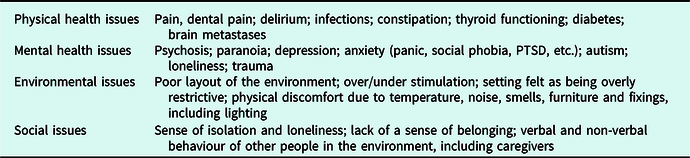
Identifying the cause of a CB is important in relation to devising a care plan (treatment plan or behavioural support plan). Frequently, there are multiple factors directly and indirectly influencing the actions of the person with dementia (PwD), rather than a single cause. Cunningham et al. (Reference Cunningham, Macfarlane and Brodaty2019) suggest each CB has at least four contributing factors, the two most common being pain and negative caregiver interactions. People’s physical health, mental health and cognitive status interact and determine how they navigate their way around their environment. The environment (noise, lighting, layout, etc.) will either help or hinder their wellbeing and coping skills in that setting. Some of the common causes associated with CBs across the relevant domains are listed below (Table 1).
Common causes of CB

It is important to remember that some of the above causes are routinely treated with psychotropic medication. However, this can also produce unwanted side-effects: e.g. increasing levels of confusion, tiredness, agitation, constipation and, in the case of some medications for Parkinson’s disease, hyper-sexuality (Banerjee, Reference Banerjee2009). Owing to the severity of the side-effects for many people with dementia, there has been a national programme to reduce the prescribing rates of anti-pychotics, which has achieved partial success (HSJ, 2020).
Philosophies used in the management of CB
We suggest that there are universal notions or philosophies that apply to the management of CB; we will examine these features prior to introducing new concepts from outside of the traditional dementia literature. All CBs should be understood and managed using these notions. Our three key philosophies are: (i) the use of the ‘unmet needs perspective’; (ii) the relevance of good communication skills in delivering effective care; and (iii) the use of enhanced care-planning to deal with risky or persistent CB via the use of formulations.
The ‘unmet needs perspective’ has been described well by Algase et al. (Reference Algase, Beck, Kolanowski, Whall, Berebt and Richards1996) and Cohen-Mansfield (Reference Cohen-Mansfield2000). They proposed that CBs are an expression of distress that arises from physical or psychological unmet needs. For example, Cohen-Mansfield (Reference Cohen-Mansfield2000) suggests that behaviours often reflect an attempt by a person to signal a need that is currently not being met (e.g. to indicate hunger, to gain relief from pain or boredom, etc.), an effort by an individual to get his needs met directly (e.g. leave a building when he believes he must either go to work or collect children from school) or a sign of frustration (e.g. feeling angry at being told he is not allowed to exit a building). In all of these situations, the actions are attempts by the individual to enhance and maintain his/her sense of well-being or to ease distress. Therefore identifying and resolving the unmet needs should be the focus of treatment. Despite the widespread use of the concept of ‘need’ in the field of dementia care, it suffers from not having a clear consensus about its meaning. In an attempt to achieve some clarity, James and Jackman (Reference James and Jackman2017) produced an 8-item needs framework made up of the following eight needs: physical comfort, perception of safety, positive touch, love and belonging, self-esteem, control over environment and possessions, fun, and occupation and exploration. The needs framework has been useful when using a checklist to mark off which needs may be going unmet within a setting where a PwD is displaying agitation (James and Reichelt, Reference James and Reichelt2019).
The second philosophy concerns the importance of caregivers being able to communicate and interact effectively with PwD. In the field of dementia the agent of change is usually the caregiver rather than the person with dementia, hence effective carer communications skills are essential. Good communication will reduce levels of stress and distress, while poor communication may increase illbeing, thereby leading people to feel unsafe, overly controlled or disrespected. It is interesting to note that, while caregivers are able to identify good examples of communication skills, they are poorer at articulating what constitutes good communication. Empirical evidence (Rapaport et al., Reference Rapaport, Livingston, Murray, Mulla and Cooper2017) and clinical observations suggest that such self-awareness is crucial, because it informs caregivers why something ‘went well’, or ‘why it didn’t’. In recent years the authors have developed a training programme in this area called CAIT (Communication And Interaction Training; James and Gibbons, Reference James and Gibbons2019). This programme incorporates the Newcastle model, and helps caregivers to identify their strengths and weaknesses in relation to current communication skills.
The final philosophy concerns the use of formulations. Formulations have received a great deal of attention in recent years For example, Holle et al. (Reference Holle, Halek, Holle and Pinkert2016) undertook an extensive review of different types of formulations used in the management of CB; they identified 14 biopsychosocial models which they examined in detail. Moniz-Cook et al. (Reference Moniz-Cook, Roberts-Stride and James2012) reviewed treatments used in CB from a functional analytic perspective for Cochrane. In complex presentations the use of formulations is highly recommended (James and Moniz-Cook, Reference James and Moniz-Cook2018), and they should be tailored to the individual’s needs, providing relevant information to develop a comprehensive care plan. It is important to note, however, that because CBs are so frequent, occurring hourly or more, across a range of care settings, it is impractical to suggest formulations are used with all CBs (James and Gibbons, Reference James and Gibbons2019; James and Reichelt, Reference James and Reichelt2019). Brechin et al. (Reference Brechin, Murphy, James and Codner2013) have produced a stepped-care treatment algorithm, starting from ‘watchful waiting’ to ‘the use of formulations’ at the top of the hierarchy. One of the current difficulties in relation to the use of formulations is that not all clinical teams or organisations have the confidence, knowledge or skills to use them. This is because many of the caregivers who could potentially be involved in formulating (e.g. care home staff from privately run homes) do not have a background or training in mental health; so the term ‘formulation’ itself is ‘… off-putting’ to some caregivers (James and Reichelt, Reference James and Reichelt2019). A further issue is the fact that to date insufficient attention has been paid to how the products of the formulations and care plans are being implemented. Indeed, the value of the formulation is undermined if the resulting recommendations are poorly implemented due to a lack of understanding, insufficient training or poor skills of the caregivers. This article attempts to address some of these issues by presenting helpful models and clearer practical guidance.
Understanding the structural phases of CBs
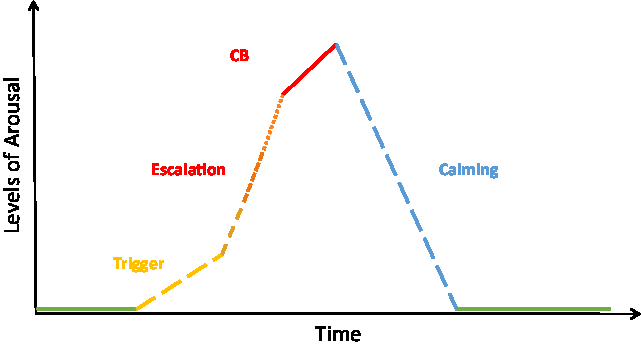
In the dementia literature CBs have tended to be treated as singular events, and the idea they are composed of discrete phases is novel. However, following a brief reflection one can accept they must be composed of discrete phases and there is an advantage in treating them as such. A review of the literature suggests that the phases are best described in terms of the ‘Arousal Cycle Graph’. This graph describes five phases: wellbeing, trigger, escalation, CB and recovery (see Fig. 1, adapted from Kaplan and Wheeler, Reference Kaplan and Wheeler1983; Hallet, Reference Hallet2018). Identifying the phase the person is ‘in’ will guide one’s interventions. During the wellbeing phase the person is neither stressed nor distressed. The active phases of the graph begin with a trigger that initiates the person’s agitation. During the trigger phase, it is still possible for others to calm the person, or for the person to calm themselves. In the escalation phase, the person’s agitation grows and their agitation increases. As the individual’s arousal increases, this affects their ability to think as hypothesised in compassionate focused therapy theory (Gilbert, Reference Gilbert2014). People with dementia are in double jeopardy at this stage because their thinking is being negatively influenced by both the cognitive deficits associated with the dementia and their frontal lobes being overwhelmed due to the stressful situation. The CB phase occurs when the person’s arousal levels continue to rise. During this phase, it will be increasingly difficult for the person to respond to standard social interactions, accept different perspectives or be reasoned with. They will be less likely to respond to simple distraction techniques, and caregivers may sometimes have to adopt a physical response, for example escape, self-defence or restraint of the individual. In this phase, the main aim of those attending to the situation is to ensure the safety of the individual, themselves and others involved. It is also imperative that the caregivers remain calm, display an open body language and contain strong emotions. As the person’s agitation subsides, they enter the calming recovery phase, and gradually return to their baseline mood. Although the immediate episode may have passed, the person’s anger can easily be re-triggered, particularly early on. Figure 1 clarifies that a CB is a sequence of events, and by intervening at different points of this sequence, escalation may be averted.
Adapted version of the Arousal Cycle Graph.

The Traffic Light analogy is a clinically useful analogy based on the same concepts as the Arousal Cycle Graph. It has been used for a number of years in Positive Behavioural Support programmes for the treatment of CBs in people with learning disabilities (Hallet, Reference Hallet2018). Its use has been adapted for working with people with dementia by Sells and Shirley (Reference Sells and Shirley2010) in a helpful illustrative article. The analogy uses the three colour sequences of a traffic light (green, amber, red), plus a blue phase; this is described briefly below, and its clinical utility is outlined more comprehensively later in the article.
Primary prevention ‘green’ strategies aim to support the person with dementia to be content and calm, and is associated with the wellbeing phase of the arousal cycle. Such approaches should be designed to meet a person’s needs and foster safe and stimulating environments. Secondary prevention ‘amber’ strategies guide responses to the early warning signs, to help caregivers intervene timely and appropriately when the first signs of stress are observed. Amber is linked with the ‘trigger’ and early escalation phases of the graph, and here we see numerous examples of de-escalation strategies. Reactive ‘red’ strategies aim to manage behaviours safely and quickly once the CB has been triggered. A mixture of de-escalation and physical techniques may be required here, with restraining methods being the approach of last resort. Calming ‘blue’ strategies (post-incident support) aim to prevent re-triggering of the CB, and learning relevant lessons from the episode. In the remainder of the article, we discuss management and treatment strategies based on the ideas and models discussed above.
Management and treatments
In this section the above theories and models are used to discuss ‘what to do’ with respect to the management of CB. The first set of strategies is linked to the traffic light model, and corresponds closely to the phases of the arousal cycle. Secondly, we review the clinical implications of the models.
Management approaches linked to the phases and traffic light analogy
Many of the previous guidelines of the treatment of CB have been rather vague, and this includes the recent NICE (2018) guidelines. The traffic light conceptualisation and associated phases provides clearer guidance on what methods and actions to employ with CB.
Primary prevention (green zone)
Primary prevention aims to prevent CBs from occurring in the first place, maintaining people in a state of wellbeing. Table 1 describes some of the common triggers of challenging behaviours; by addressing these we may be able to avoid a CB being triggered in the first place. Also, using our unmet needs perspective, we can aim to identify people’s fundamental needs and ensure they are being met. Such needs include: being free from discomfort and pain; feeling respected; appropriately occupied, etc. It should be acknowledged, however, that because individuals have different priorities and preferences, a degree of flexibility and tailoring will be required. Hence individualised care planning is vital in the delivery of a needs-led intervention, as well as considering how to adapt valued roles or activities to the person’s current abilities (Box 1).
Examples of primary prevention
John – this fiercely independent 85-year-old man valued his freedom, and he loved doing projects around the house. When he went into a care home he found the rules and structure very restricting. ‘Meeting his needs’ involved giving him the opportunity to do art/craft projects, and work in the care home’s large garden.
Mary – a sociable 78-year-old loved the company of others. Owing to her mobility problems she needed help to visit friends and attend church. Her needs were best met by giving her access to chats and social gatherings, and the ability to stream live church services on a computer.
Primary prevention requires bespoke care planning. PwD should be involved in care planning where possible, and family members and carers may also provide information on potential triggers as well as patterns of behaviour (NHS Protect, 2017).
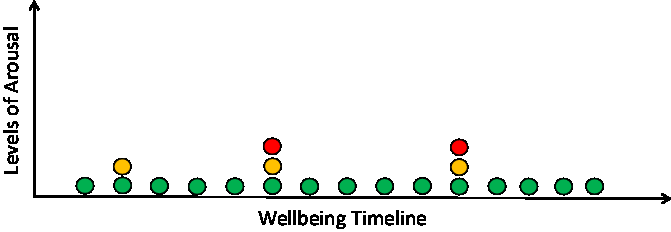
Figure 2 shows that most of the time PwD are not actively ‘challenging’. The aim of good primary prevention is to ensure that both the number and the frequency of ‘red lights’ are low, and time spent between ‘red signals’ is long. Therefore, we recommend the use of good person-centred approaches as described in projects like WHELD (Ballard et al., Reference Ballard, Orrell, YongZhong, Moniz-Cook, Stafford, Whittaker, Woods, Corbett, Garrod, Khan, Woodward-Carlton, Wenborn and Fossey2016). We think it is essential that we promote programmes that have clearly articulated the mechanisms by which person-centred care is achieved (Dementia Care Mapping, VIPS; Brooker and Latham, Reference Brooker and Latham2015).
Traffic light analogy timeline.

Dementia Care Mapping (DCM; Kitwood, Reference Kitwood1997) was designed to empower staff teams to improve the quality of care for PwD. It was primarily developed as part of a quality improvement process to enhance the quality of person-centred care over time, and thus is an excellent example for primary prevention. Through a process of observation and feedback, staff are encouraged to consider care from the point of view of the person living with dementia. On the basis of these observations, changes are made to care plans and to clinical practice.
The ‘VIPS’ framework (Brooker and Latham, Reference Brooker and Latham2015) sums up the elements in Kitwood’s philosophy of person centred care for persons with dementia as: values, individualised approach, the perspective of the person living with dementia and the social environment. In this evidence-based approach there are six indicators for each VIP element. The framework provides helpful practical guidance on whether person-centred care is being delivered and how it can be enhanced.
The other types of treatment strategies to be used in primary prevention are the non-pharmacological approaches, such as CST (cognitive stimulation therapy) which has a robust evidence base. In contrast, the evidence for other methods (aromatherapy, music therapy, psychomotor) is relatively poor and efficacy rather inconsistent (Livingston et al., Reference Livingston, Kelly, Lewis-Holmes, Baio, Morris, Patel, Omar, Katona and Cooper2014). We feel there are a number of reasons for this, including (i) a lack of agreement about what constitutes a particular therapy; and (ii) difficulties with measuring appropriate change. For example, ‘music therapy’ in one setting is often different from a similarly labelled therapy in another setting. This is the case in most of the non-pharmacological approaches, apart from CST. The clear format provided in the CST manual allows one to examine adherence and dosage of therapy. Apart from CST, the studies in this area are often unclear or unrealistic about what the change mechanisms are in relation to the therapy, and thus are often measuring inappropriate signs and symptoms of efficacy. A clearer understanding of how each therapy impacts mood, wellbeing, behavioural change, etc. is required (Rapaport et al., Reference Rapaport, Livingston, Murray, Mulla and Cooper2017; Bunn and Handley, Reference Bunn and Handley2019). James and colleagues (James and Jackman, Reference James and Jackman2017; James and Reichelt, Reference James and Reichelt2019) have been working on this issue for some time, and reconceptualised many of the non-pharmacological approaches as ‘vehicles’ for meeting people’s needs; with the hypothesis that the more needs being met within the intervention the more effective the intervention. In support of this reframing the authors developed the Needs Checklist to assess whether people’s needs are being met during an intervention. Using this perspective the specific type of therapy (CST, music) is less important, rather caregivers should be asking themselves whether they are meeting people’s needs, and also can the intervention be improved by targeting more needs.
Secondary prevention (amber zone)
Unfortunately, caregivers are not always able to meet people’s needs, and many of the causes of CB relate to this inability. If healthcare staff are aware of potential triggers in their clinical area, they might be able to intervene before triggers become an issue. However, where this is not possible, being aware of triggers can enable caregivers to respond empathetically. Thus it is often useful to get staff to think about two different types of triggers to CBs: predictable and unpredictable. Predictable triggers may include ‘intimate care interventions’, particular ‘people’ or ‘times of the day’ that are probably going to distress an individual (e.g. noisy environment, a personal care intervention). Staff are usually good at specifying these situations and may already have developed strategies for dealing with them. In terms of unpredictable triggers, staff are not currently aware that there are triggers to the behaviours and therefore may be ill prepared to deal with the consequences. Drawing on Positive Behaviour Support theory, many unpredictable triggers reflect what are known as ‘slow’ triggers in this field. Slow triggers are factors that may have a delayed impact on a person’s behaviour, which can include boredom, over/under-stimulation, physical discomfort, tiredness or hunger.
To assist with the less predictable CBs we encourage staff to look for patterns and try to identify more subtle triggering factors, so that staff can be better prepared and feel more in control of the situation. To improve the predictability the use of ABC charts are important, and also the development of formulation frameworks. One of the advantages of using monitoring charts and formulations is that the caregivers become more observant of the people with dementia, and are better able to recognise changes in their presentations (signs of wellbeing and distress) owing to the greater level of general observations.
Once the CB has been triggered the caregiver often needs to take action to deal with it before it escalates to a crisis point. Hence, an awareness and confidence in the use of de-escalation strategies is essential. In such circumstances we would advocate techniques to reduce the energy in the situation and then seek ways to meet the person’s needs. Several de-escalation approaches have been outlined by James and Gibbons (Reference James and Gibbons2019), including BANGs (Macaulay, Reference Macaulay2015), environmental manipulation and therapeutic lying (James, Reference James2015). A comprehensive review of the common de-escalation strategies in the UK has been produced recently by James, Medea and Reichelt (Reference James, Medea and Reicheltin press).
Reactive strategies (red zone)
These correspond to the ‘CB phase’ of the arousal cycle. While all the previous techniques are relevant at this stage (i.e. de-escalation, environmental manipulation, therapeutic lying, etc.), this is the only stage where physical interventions are used. Physical interventions are only employed as a final resort (Howarth et al., Reference Howarth, Crooks, Sells, James and Jackman2017). Such approaches involve physical interventions including: manual restraint, which is a ‘skilled, hands-on method of physical restraint used to prevent service users from harming themselves, endangering others or compromising the therapeutic environment’. Physical interventions should only be undertaken by people who have received appropriate training (Howarth et al., Reference Howarth, Crooks, Sells, James and Jackman2017) due to the risks involved with incorrect application of physical interventions, which include mental trauma and physical injury (NHS Protect, 2017). Important work in the area of dementia regarding this topic has been undertaken by members of the Northumberland Behavioural Support Service (Howarth and Sells, Reference Howarth and Sells2014) who have produced a formulation-led physical restraint framework. In addition to the use of restrictive practices in the red zone, it is important for the staff supporting the person to model calmness and emotional containment. This is especially true when supporting people with dementia who may become more confused or distressed if lots of staff are talking to them. By staff raising their voices this could lead to perceptions of threat or misunderstanding thus escalating the situation.
Calming strategies (blue zone)
After an episode of CB both the person and caregiver are likely to maintain a heightened level of arousal. Any knowledge about what actually triggered the behaviour is useful, which may then require a move to a different setting to allow the person to calm down. It is often best not to place any unwarranted extra demands on the person during this time, and so normal rules about use of dining room, usual bedtime, etc., may need to be temporarily relaxed. As previously mentioned, the person may easily be re-triggered into another distressed episode and it is important that staff offer support in these post-event periods.
Accurate reporting of all incidents can be used to identify risks and to develop prevention strategies (Stout, Reference Stout2008). To understand and learn from such incidents, it is useful to record the incident using some form of time-series monitoring chart, such as an ABC chart. Following a serious incident there should be a post-incident review. This should take place as soon after the incident as possible, while accounting for any trauma, both physical and mental, that those involved may have experienced (NHS Counter Fraud and Security Management Service, 2003). The NHS Counter Fraud and Security Management Service (2003) identified several questions that should be asked during the review, including: What can be learned? What can be done to avoid repeating mistakes? How can what is and is not working be assessed? What are the implications of what happened? Are policy and system revisions required?
Implications of the arousal cycle and traffic light analogies
The traffic light system assists in the organising of training and the determining of the clinical pathway for CBs. For example, it helped in the development of the training programme CAIT (James and Gibbons, Reference James and Gibbons2019), which emphasises the importance of caregiver communication skills. This was developed to reduce levels of emotional and behavioural stress and distress in people with dementia. Such agitation can occur because of poor communication and often results in the prescribing of tranquilising and sedating medications (James and Jackman, Reference James and Jackman2017). Our clinical work shows that the strategies we recommend in this training have a double impact: (i) they reduce the likely occurrence of distress and problematic behaviours, and (ii) they help de-escalate situations in which the PwD has become distressed or agitated. CAIT has been used in a three-year pilot project with 30 care homes in Sunderland, UK. A more controlled assessment of its impact is currently underway (James and Gibbons, Reference James and Gibbons2019).
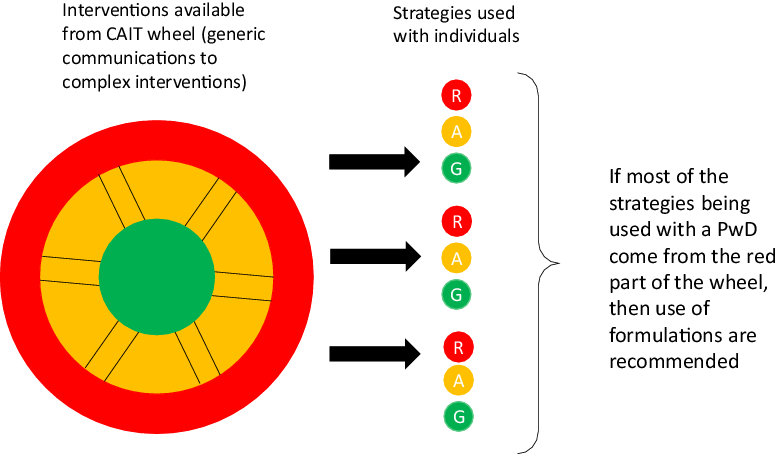
CAIT is built on basic communication principles and is represented visually in the form of a wheel, with the hubs, spokes and rim (James, Reference James2015; James et al., Reference James, Marshall and Thwaites2017). Aspects of the ‘wheel of communication’ are discussed in four training modules, which are reviewed below (Fig. 3).
Core general communication – inner hub of wheel/module 1
The training in this module is built around the central skill of good, basic, respectful communication. Such skills are similar to those taught to retail staff and law enforcement officers around customer care. We believe that ensuring caregivers are using empathic, considerate communication enhances levels of wellbeing and reduces the need for some of the more advanced strategies.
Dementia-specific communication – outer hub of wheel/module 2
This module examines the adaptations required to communicate with people with dementia, taking account of memory and sensory changes. The nature of diagnosis is discussed, together with the skills needed in day-to-day interactions, such as: body language, appropriate pacing, use of personal space, types of questions to use/avoid, persuasion and negotiation skills.
Activities of daily living (ADL) – wheel spokes/module 3
Caregivers are often supporting people to undertake personal tasks, including hygiene activities. Owing to the intimate nature and potential invasiveness surrounding ADLs, these activities are often triggers to agitation; as such these activities may be viewed as ‘predictable’ triggers. To minimise distress and agitation, we coach the hands-on carer skills required to manage intimate care tasks in a sensitive, dignified and empathic manner. In this section de-escalations skills are taught (e.g. distraction, re-direction, therapeutic lies), because the close interactions during the ADLs are frequently triggers to CBs.
Complex and formulation-led approaches – wheel rim/module 4
Advanced skills are taught in this module with the aim of managing highly problematic emotions and behaviours. This may involve the use of specialist assessment and management techniques used in keeping everyone safe. In this section the enhanced care plans, the role of hand holds and other restraining techniques are demonstrated and discussed.
In relation to the traffic light model, the first two modules of the CAIT wheel (inner and outer hub) address ‘green’ techniques because they are promoting levels of wellbeing. Module 3 (ADLs) focuses on many of the amber strategies. Module 4 provides ‘red’ techniques, developing skills in obtaining a comprehensive understanding and keeping people safe (see Fig. 3). It is relevant to note that module 4 attempts to incorporate all the various features of the previous modules in an integrated manner. This is the reason that module 4 is associated with training and supervision of formulation skills.
CAIT wheel guidance for the use of formulations and care planning.

Example of a traffic-light informed care plan

In an earlier section we spoke about the importance of formulations and their relevance to the management of CB. However, our experience suggests that formulations are not routinely used in many settings because of a lack of both a perceived need and also the resources available within the settings (including limited time and skills in producing them). As such, the use of formulations usually needs to be rationalised and mainly used in those cases where it is felt to be a priority. It is believed that the CAIT wheel can provide a useful clinical template to guide the prioritisation of the use of formulations (Fig. 3). This template would suggest that they should be used in those circumstances where clinicians are routinely working using skills taught in the red or amber modules with respect to a person with dementia (i.e. if a clinician is frequently using red and amber strategies during someone’s care).
The resulting care plans are also usefully structured around the traffic light framework (Table 2), with the care plans providing details of: how to maintain someone’s wellbeing (green); likely triggers and de-escalation strategies (amber); and how to work with the individual when they are extremely distressed (red).
We perceive the addition of the arousal cycle and the traffic light analogy to be helpful additions to the toolkit for the management of CB. It is important to note, however, that for the sake of simplicity we have presented the movement between the phases in a rather linear progressive manner. In reality, the movement between phases within the cycle are likely to be complex and dynamic. Hence tracking where the person with dementia is situated in the cycle at any point in time will require careful monitoring and empathic understanding on the part of the caregiver.
This article has provided a broad sweep of models and frameworks from within and outside of the field of dementia. Some of the positive behavioural elements are already being used by dementia teams across the UK (Surrey and Borders Partnership NHS Foundation Trust, and Cumbria, Northumberland, Tyne and Wear NHS Foundation Trust; Sells and Shirley, Reference Sells and Shirley2010). However, up to this point there has not been an attempt to integrate the models with the practical protocols we have mentioned in this article. Hence, owing to the novelty of our work, its value and efficacy should be questioned, debated and road-tested. In addition, the costs and benefits associated with these approaches need to be assessed.
Conclusion
NICE (2018) suggests the use of non-pharmacological treatments as first-line approaches, but does not provide any specific guidance on what approaches to use for CB. The present paper provides some models that will be unfamiliar to many people working in dementia care and that link directly to management strategies. The novel approaches have been integrated with more familiar frameworks such as the ‘unmet needs’ and formulation-led methodologies. We believe the fusion of the old and new provides us with practical treatment protocols that can be readily incorporated into training programmes. We are currently unable to support the suggestions made in the article with an evidence base and therefore must be cautious in recommending them. Nevertheless, there is tentative support for some of our perspectives from the training programme CAIT, as well as from longstanding effective use of some of these concepts in clinical settings within two NHS Trusts (Sells and Shirley, Reference Sells and Shirley2010).
This paper is part of a programme of work which is attempting to clarify the mechanisms of change regarding the treatment of CB. In the ideal case scenario, we would want caregivers who are supporting people with dementia to be able to fully articulate the approaches they are using to meet people’s needs and de-escalate difficult situations. We believe such articulation will empower caregivers, and allow them to pass on their skills to junior members of their clinical team. It is suggested that the very practical nature of this paper, employing useful paradigms from other fields, is a helpful step in clarifying ‘who should do what, when and how’.
Acknowledgements
The authors would like to thank Dr Joanna Marshall, Dr Paula Maisey and Barbara Medea for the intellectual contributions to this article.
Financial support
The research received no grant from any funding agency, commercial or not-for-profit organisations.
Conflicts of interest
The authors have no conflicts of interest with respect to this publication.
Ethical statement
No ethical approval was required for the preparation of this article as it is a practice article and no participants were used.
Key practice points
(1) A structural analysis of disruptive behaviours allows for better targeted interventions, which can be successfully care planned using a traffic light analogy.
(2) Challenging behaviours are dealt with across a number of specialities; a greater sharing of knowledge and skills across the specialities would be helpful. In this article we have demonstrated the way in which Positive Behavioural Support concepts have been useful in producing guidelines in dementia care.
(3) Care plans can be improved by conceptualising the structural elements of the CB in addition to the biopsychosocial features of the person with dementia.
(4) Effective communication is the bedrock of all successful CB interventions. Poor communication can lead to disruptions because people’s ‘needs’ for security, respect control may be undermined and go ‘unmet’. There are a number of communication programmes (e.g. CAIT) designed to help improve caregivers’ interactions.
(5) The practical nature of the paper provides caregivers with insights into some of the strategies they are using intuitively. Such insights will help them to be able to articulate their skills, which they can then pass on to colleagues and enhance the level of care provided to people with dementia.




Comments
No Comments have been published for this article.