Introduction
Most HIV/AIDS prevention programs in Africa have largely failed because the research behind them focused primarily on risk groups, behavioral change models, and flawed understandings of cultural practices and economic conditions.
(Kalipeni et al., Reference Kalipeni, Oppong and Zerai2007, p. 1015)Since it was first detected in the United States in the early 1980s, AIDS, a lethal disease with no cure or vaccine in sight, has claimed several millions of lives worldwide each year. Today, its spread has stabilized in many countries and declined in others, but AIDS is still responsible for millions of deaths each year, with millions more acquiring the HIV virus, and is ravaging the social and economic fabric of societies, particularly in sub-Saharan Africa. The HIV virus is a retrovirus that infects cells of the immune system and destroys or impairs their function. Infection by HIV results in the progressive depletion of the immune system, leading to ‘immune deficiency’, which means the immune system can no longer fulfil its role of fighting off infection and cancers (Kimaryo et al. Reference Kimaryo, Okpaku, Githunk-Shongwe and Feeney2004, p. 1). This leaves the body open to attack from what are known as ‘opportunistic infections’, because they take advantage of a weakened immune system. This is true for all people infected with HIV, irrespective of their age, sex, social class or race. However, since HIV infection basically compromises the natural immune system, the time span between initial exposure to HIV and the immune system's manifestation of failure to play its role of fighting off infections varies from person to person, primarily depending on whether or not the infected person was ‘healthy’ before exposure to HIV, their nutritional level, risk of exposure to bacterial and parasitic infections and the level of health infrastructure development.
Admittedly, healthy immune systems do not protect people from becoming infected if they come into contact with a pathogen, but the fact of the matter is that even though the average latency is ten years or more, the time it will take between initial exposure to HIV and the onset of AIDS will be much shorter in people with weakened immune systems than in individuals whose immune systems are still strong.
(Phatlane, Reference Phatlane2003, p. 76)There is evidence that people in the developing world are: (i) at greater risk of HIV infection due to vulnerability risks associated with poverty, gender inequality, malnutrition, parasitosis and lack of access to health care and health information; and (ii) progress faster into full-blown AIDS after exposure to HIV due to weaker immune systems caused by chronic malnutrition, high prevalence of STDs and lack of access to health infrastructure (Hunter, Reference Hunter2003; Farmer, Reference Farmer2005; Stillwaggon, Reference Stillwaggon2006: Masanjala, Reference Masanjala2007). For instance, the presence of an untreated STD can enhance both the acquisition and transmission of HIV by a factor of up to ten (Poku, Reference Poku2002, p. 535) and there are also striking differences in average time of survival following diagnosis of AIDS (Farmer & Kleinman, Reference Farmer, Kleinman, Podolefsky and Brown1994, p. 266).
The social, economic and psychological impact of HIV/AIDS is enormous. In 2005 AIDS claimed 3.1 million lives, despite improved access to antiretroviral treatment (ART) and care in many countries of the world (UNAIDS/WHO, 2005, p. 2). Even with the massive ART intervention in 2008, AIDS claimed 2 million lives, 2.7 million new infections were registered and the total number of people living with HIV/AIDS globally reached 33.4 million (UNAIDS/WHO, 2008). Although there are signs that the AIDS epidemic is declining, 1.8 million deaths, 2.6 million new infections and 33.3 million people living with HIV/AIDS (30.8 adults and 2.5 million children) were registered in 2009 alone (UNAIDS, 2010, p. 21).
Sub-Saharan Africa, with just over 10% of the world's population, had 22.5 million people living with HIV/AIDS (68% of the global burden) in 2009 (UNAIDS, 2010, p. 25); this is 8% and 1% higher than in 2005 and 2008, respectively. The region registered 1.8 million new infections (69.2% of the global total) and 1.3 million AIDS-related deaths (72.2% of the global total) in 2009. Prevalence varies considerably across the region, with the lowest of 0.2% in Madagascar and the highest of 26% in Swaziland. Compared with previous years, the region's HIV/AIDS burden was declining in 2009, but its share of the global burden in terms percentage was increasing, e.g. from 67% to 68% for people living with HIV and 71% to 72.2% for AIDS-related deaths in 2008 and 2009, respectively.
In Ethiopia, AIDS case reporting started in 1986 with a report of two cases, and HIV was first detected in stored sera collected in 1984 (Lester et al., Reference Lester, Ayehunie and Zewdie1988; Negassa et al., Reference Negassa, Khodakevich and Kefenie1990). According to the Federal Ministry of Health (FMoH) and National HIV/AIDS Prevention and Control Office (HAPCO), in 2005 a total of 1,320,000 (52% urban and 48% rural) people were HIV positive, with 129,000 (53.5% female and 46.5% male) new infections (FMoH/HAPCO, 2006, p. 6). The number of HIV-positive children (aged 0–14) was 135,000, with 30,000 new HIV infections and 22,000 new AIDS cases. National HIV prevalence in the same year was 3.5% (4% for females; 3% for males). Gender disparity is pronounced in urban areas, with 11.9% adult HIV prevalence for females and 9.1% for males. Though narrower compared with urban areas, it displays a similar pattern in rural areas (2.2% for females; 1.7% for males). The latest data available on HIV prevalence in Ethiopia show an adult (15–49 years old) prevalence of 2.1% (7.7% for urban and 0.9% for rural) (FHAPCO, 2008, p. 9). Gender disparity in national adult prevalence is observable, with 2.6% for females and 1.7% for males (FMoH/HAPCO, 2006, p. 6).
Notwithstanding this, however, the information on HIV/AIDS in Ethiopia is scanty, focusing only on prevalence, incidence and demographic impact. Moreover, most of the data are estimates rather than empirical findings, and little attempt has been made to assess level of infection among the different categories of the population in terms of economic and employment status, gender, level of education and access to health services (Tolera, unpublished). This paper, based on the research conducted to fill the information gap mainly on the relationship between the risky environment and vulnerability to HIV infection in Addis Ababa, examines the link between poverty as capability deprivation (Sen, 1999), sexual experience and vulnerability to HIV infection in Addis Ababa with data from Bole and Aqaqi-Qaliti sub-cities.
Theoretical framework
Following the advent of HIV/AIDS in the early 1980s, social scientists have engaged in research on the subject that has passed through different phases over the last three decades. During the first decade of the epidemic, most work focused on the behavioural correlates of HIV infection among individuals and failed to examine broader social and cultural factors driving the spread and limiting the effectiveness of intervention strategies (Parker, Reference Parker2001). However, towards the end of the decade pioneering works by anthropologists began to raise the importance of cultural systems in shaping sexual practices relevant to HIV transmission and prevention. Since the start of the 1990s, this emphasis on cultural analysis took shape alongside a growing anthropological research with focus on structural factors shaping vulnerability to HIV infection (Parker, Reference Parker2001). What has been especially important is the work on social inequality and the political economy of HIV/AIDS (Farmer, Reference Farmer1992, Reference Farmer and Kleinman1997; Farmer et al., Reference Farmer, Connors and Simmons1996).
This approach emerged and gained greater attention over the mid- to late 1990s within anthropology as a focused and effective response to the HIV/AIDS pandemic (Farmer, Reference Farmer1992; Schoepf, Reference Schoepf and Dyson1992; Farmer et al., Reference Farmer, Connors and Simmons1996; Treichler, Reference Treichler1999). This approach focuses on the impact of a wider range of structural factors in ‘shaping vulnerability to HIV infection as well as conditioning the possibilities for sexual risk reduction in specific social contexts,’ (Parker, Reference Parker2001, p. 165). The approach argues that ‘not just cultural, but also structural, political, and economic factors shape sexual experience … to a far greater extent than had previously been understood,’ (Parker, Reference Parker2001, p. 168; see also Singer et al., Reference Singer, Flores, Davidson, Burke and Castillo1990; Farmer, Reference Farmer1992; Schoepf, Reference Schoepf1991).
Research on structural factors emerged in a number of different social settings, ranging from deeply impoverished rural areas in developing countries to marginalized inner cities in the United States, but all ‘consistently focused on what can be described as forms of “structural violence”, which determine the social vulnerability of both groups and individuals,’ (Parker, Reference Parker2001, p. 168). This research considers the interactive and synergistic effects of social factors such as poverty and economic exploitation, gender power, sexual oppression, racism and social exclusion (Singer, Reference Singer1998; Farmer, Reference Farmer2004; Farmer et al., Reference Farmer, Connors and Simmons1996; Parker et al., Reference Parker, Easton and Klein2000).
Paul Farmer, adopting from liberation theologians and scholars such as Johan Galtung, uses the term ‘structural violence’ as ‘a broad rubric that includes a host of offensives against human dignity: extreme and relative poverty, social inequalities, ranging from racism to gender inequality, and the more spectacular forms of violence that are uncontestedly human rights abuses, some of them punishment from efforts to escape structural violence,’ (Farmer, Reference Farmer2005, p. 8). Farmer's work has contributed to redefining the concept of risk in epidemiology by redirecting attention from individual risky behaviours to structural factors that constrain or determine behaviour. Farmer and colleagues argued against ‘immodest claims of causality’ and for a focus on, and mitigation of, the structural violence that produces ill-being on a massive scale among the poor (Root-Bernstein, Reference Root-Bernstein1993; Farmer, Reference Farmer1999, Reference Farmer2003; Farmer et al., Reference Farmer, Léandre, Mukherjee, Claude and Nevil2001; Murphy, Reference Murphy2004). Critiquing the AIDS discourse that focuses on the behavioural approach and strengthening the structural violence approach, Stillwaggon writes, ‘By accepting the wrong paradigm, the AIDS discourse has failed to ask the right questions, and we have lost well over a decade in understanding the complexity of AIDS, especially among the poor, malnourished people,’ (Stillwagon, Reference Stillwaggon2006, p. 157).
The social origins of infection with HIV are often bound up with or linked to a number of other threats to health and well-being, and in turn, the co-existence of two or more diseases may synergistically interact to produce a higher degree of pathogenesis (an example would be HIV and TB co-infection; Farmer, Reference Farmer2005; Stillwaggon, Reference Stillwaggon2006). Scholars agree that poverty is a ‘… significant factor in the spread of HIV/AIDS. International evidence suggests that there is a close correlation between poverty and HIV/AIDS, with the majority of people living with HIV/AIDS being from developing countries,’ (Rodrigo & Rajapakse, Reference Rodrigo and Rajapakse2010, p. 10) and the poor constituting the absolute majority of those living with HIV/AIDS (Van Donk, Reference Van Donk2002, p. 3), which Louis Pasteur summarizes as ‘the microbe is nothing, the terrain everything,’ (Jakab, Reference Jakab2000, cited in Poku, Reference Poku2002, p. 533). In light of this, the ‘structural violence’ theoretical framework was used in the current study to guide the research and data analysis, focusing on the dynamics between poverty, sexual experience and other vulnerability risks for HIV infection.
Methods
Study areas
The study was conducted in Bole and Aqaqi-Qaliti sub-cities in Addis Ababa, Ethiopia. Each was represented by a qabale (the smallest local administration unit), to explore the link between socioeconomic factors and the risk of contracting the HIV virus. Bole, which is generally regarded as a wealthy neighbourhood where most of the economically better-off people live, was represented by Qabale 19 because, according to the sub-city administration officials, its residents are wealthier than their counterparts in other qabales. Aqaqi-Qaliti, on the other hand, is the industrial sub-urban area where low-income industrial workers and petty traders live. Petty traders are typically engaged in selling food and drinks (mostly home-made liquor and beer) and low-cost industrial products. Qabale 6 in Aqaqi-Qaliti, where the poorest of the poor live, was selected based on a discussion with sub-city officials and the Eco-City project finding. In short, the qabales that best represent their respective communities, the most affluent in Bole and the poorest in Aqaqi-Qaliti, were selected.
Data
Both secondary and primary data were used. A survey questionnaire on socioeconomic and demographic characteristics, history of STDs, sexual behaviour and knowledge and practices related to HIV and AIDS was administered. Focus group discussions and in-depth interviews, designed to assess respondents' understanding of what constitutes risky environment as well as vulnerability to HIV infection, were held with adults and youths of both sexes. Selected cases based on in-depth interviews with AIDS patients and observation data were included to illustrate some of the arguments raised within the ‘structural violence’ approach. All cases and other informants were given pseudonyms to ensure anonymity. A total of 300 households, i.e. 190 from Qabale 6 and 110 from Qabale 19 (13% of the households were registered in each Qabale registry), were systematically selected.
Analysis
The collected survey data were analysed and presented using the automated statistical software SPSS Version 12.0. The data obtained through the qualitative methods (focus group discussions and in-depth interviews) were organized thematically and used for analysis and interpretation in conjunction with data from the survey and other secondary sources.
Results and Discussion
Age at first marriage
Premature sexual encounter involves various risks ranging from exposure to easily treatable STDs to contraction of the deadly HIV/AIDS virus. In Ethiopia, women are often married at very young ages (Central Statistical Authority, 1993, cited in Tilson & Larsen, Reference Tilson and Larsen2000, p. 358), often with negative consequences including increased risk of divorce, physical damage to the girl's reproductive organs, the risk of STDs and HIV infections, and increased difficulty in child birth. Respondents were asked whether they had been married below or above the age of 15, and of the 284 respondents (n=300) who answered the question, 269 (94.7%) reported marrying at 15 or above and the remaining fifteen (5.3%) below 15 years of age.
All the fifteen respondents who reported age at first marriage below the age of 15 were from Aqaqi-Qaliti, that is 9% (n=172) of the respondents who have ever been married in the sub-city. There is a significant relationship between sub-city and marriage below the age of 15. Although no further inquiries were made as to how they got married before their 15th birthday, one can assume that it can hardly be with the girls' consent, though not necessarily marriage by abduction. For instance, Iftu (see Case I below), an AIDS patient at the time of the study, was abducted by a man 15 years older than her at the age of 15 before she migrated to Aqaqi-Qaliti. This kind of marriage is a reflection of a much deeper gender inequality, human rights violation and lack of access to education and income for women and girls. Marriage at such a young age deprives young girls of the ability to make reasonable choices about their sexual lives and make rational decisions about their futures. The data were disaggregated to understand the educational level of the respondents who got married before their 15th birthday. Accordingly, the significant majority (60%) of respondents who reported first marriage under 15 years were illiterate, followed by 33.3% with primary education. On the other hand, nearly 50% of respondents who reported age at first marriage above 15 years of age had secondary level education. Significant differences were found among the educational categories in the frequency of age at first marriage below 15 (χ2 df=4; p<0.001).
It was also observed that 87% (13 out of 15) of the respondents who reported first marriage below the age of 15 had a monthly income of ≤250 Birr (currently US$1=17 Birr). Only two respondents reported 251–500 Birr. Of respondents who reported age at first marriage above 15 years 44.6% (n=120) had a monthly income of ≤250 Birr, and 34.6% a monthly income of 501 Birr and above, while none who reported marriage below the age of 15 reported a monthly income of above 500 Birr.
Seven out of the twelve respondents who married below the age of 15 years were either daily labourers (25%) or unemployed (33.3%) at the time of the survey. This suggests that early marriage negatively impacts on the life of girls far beyond their younger life. Moreover, one may also argue that lack of education and low household income expose young girls to early sexual debut, including non-consensual marriage, with increased risk of divorce and eventual graduation into sex work. In other words, because their parents are poor and uneducated, the girls are forced into marriage, which most often ends in divorce, and women with such a traumatic experience in married life run away from their family and end up in towns, seeking better opportunities. However, their dreams hardly come true since they neither have the knowledge and skills to get decent gainful employment, nor the financial capital to start businesses and the social capital for smooth integration into their new environment. As a result, and unfortunately certainly, they end up in commercial sex work (CSW). The case below powerfully demonstrates how this works in real life.
Case I
Iftu, 28, illiterate, and a former waitress in an araqe (home-made liquor) house for 6 years (1993–1998) in Aqaqi-Qaliti, was an AIDS patient at the time of the survey (2005). She was abducted into marriage at the age of 15 by a 30-year-old man who has been involved in serial monogamous marriages before. She was forced to live with the man for 8 months. Fleeing her abductor, she returned to her parents, but they insisted that she had to return to her abductor and live with him. Since she did not want to live with him, and in the absence of other choices, she left the area and moved to a small town called Ginči, where she lived for 2 months with a woman who sold home-made bread for a living. In Ginči she heard from other people that if she went to bigger towns she might find a job as a maid and could improve her life through education by attending evening classes. As a result she migrated to Aqaqi-Qaliti. In Aqaqi-Qaliti, she could not find a job as a maid, but people told her that she could work as an ashashač (waitress) in small drinking places that sell araqe and t'ella (home-made beer), which she started immediately. The rule in the business is that the owners do not pay the waitresses for their services, as the latter are expected to market themselves as sex workers, which Iftu only realized later. As a young immigrant with no education and harsh experience of social disarticulation, she had no choice but to follow suit with fellow women engaged in a similar business. Although she did not like the job, she did not anticipate a life-threatening risk, except struggling to win her daily bread. In her own words:
The owners do not give us anything for our subsistence. We have to feed ourselves from what we get by sleeping with men. For a night it was 10–13 Birr. As a beginner, I hardly get clients regularly. There were times when I had to go for up to 24 hours without something to bite. Life was difficult for the first few years. Since our business also impacts on the income of the owners of the araqe or t'ella house, because they have beds for rent if we get clients, owners' attitude towards us is shaped by the number of times we slept in their bed with our clients. If they are not happy with us, we had to move to a different house. In six years, I worked in four different houses until I got seriously ill five years ago, first diagnosed with TB (twice), now I have AIDS. I do not know who infected me with AIDS [HIV]. Whoever comes with money sleeps with me. I use condom occasionally, especially with new clients, not with the regulars.
That is how poverty creates the context of compounded vulnerability in which poor uneducated young women end up in an occupation that involves a very high risk of HIV infection because they have ‘limited power and resources to prevent HIV infection,’ (Van Donk, Reference Van Donk2002, p. 4). That is why scholars convincingly argue that ‘poverty prevents female children from being educated and therefore limits their ability to find employment in future,’ (Rodrigo & Rajapakse, Reference Rodrigo and Rajapakse2010, p. 12), of course with dire consequences for themselves, their family and their community. In another study, a rural migrant sex worker in Addis Ababa said ‘I am prepared to accept a sacrifice even greater than HIV, a sacrifice that might even result in my immediate death’ (Tekola, Reference Tekola2005, p. 113) to describe the level of poverty that her family of origin in rural areas face, which forced her into sex work.
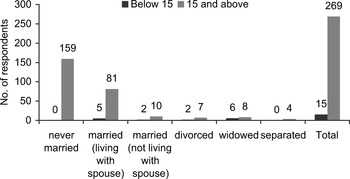
Respondents were also asked to indicate their marital status at the time of the survey (Fig. 1). Forty per cent of those who reported first marriage below the age of 15 were widowed, 13.3% were divorced while the same proportion were married but not living with their spouses. This means that 53.3% had experienced marriage difficulties. A significant relationship was found between age at first marriage and respondents' current marital status (χ2 df=5; p<0.001).
Current marital status by age group at first marriage.

Age at first sexual intercourse
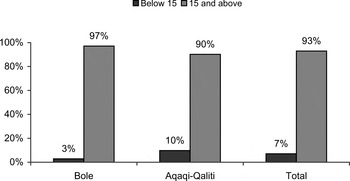
The average age at first sexual intercourse for Aqaqi-Qaliti sub-city was 17.32, less than that of Bole sub-city (18.33). Of the respondents who had their first sexual intercourse below or at the age of 15, 84.2% were from Aqaqi-Qaliti, while only 15.8% were from Bole. There is a significant relationship between sub-city and age at first sexual intercourse. Figure 2 shows the distribution of respondents by age at first sexual intercourse by sub-city.
Age group at first sexual intercourse by sub-city.

Girls from low-income neighbourhoods such as Aqaqi-Qaliti (including rural migrants) are more vulnerable to early sexual debut than girls from Bole. Low-income neighbourhoods are characterized by high rates of school dropouts, involvement in informal sector activities such as selling napkins, qolo (roasted barely) and chewing gum on the streets and in the drinks houses with increased risk of early sexual initiation. A significant relationships was found between age at first sexual intercourse at the age of 15 or below and sub-city (χ2 df=1; p=0.031).
The respondents who had had sexual intercourse below the age of 15 were not further asked if their first sexual intercourse was with their full consent. However, some studies have shown that sexual initiation for girls younger than 15 years of age can hardly be consensual, and most likely involves sexual abuse and violence. Put differently, even in a situation where explicit verbal consent is given, it cannot be considered to be consensual because, according to the Ethiopian law, girl under the age of 15 are below the age of consent, and also because it takes place within the context of unequal gender power relations (MacKinnon, Reference MacKinnon1989). Sexual encounters of this nature involve a high risk of HIV infection. For instance, the 2007 Epidemiological Synthesis study found that in Ethiopia young populations, especially never-married sexually active females, carry the greatest risk of HIV infection in the country. The study further indicated that young girls are more vulnerable to HIV than boys because of early age at sexual debut, early marriage, sexual abuse and violence such as rape and abduction (FHAPCO, 2008, p. 12).
Regular and non-regular sexual partners
Regular sexual partners. HIV is mainly transmitted through sexual relationships, and as argued above, sexual relationships are influenced by a number of socioeconomic, cultural and political factors. Sexual relationships that expose one to the risk of HIV infection relate to cultures that subordinate women to men, political factors such as civil wars and intergroup conflicts that expose women to abuse and violence, and poverty, which forces women to engage in transactional sex (whether open sex work as is the case in commercial sex work, or clandestine sexual relationships, often dubbed as ‘survival sex’ or ‘unprofessional encounters’). Studies show that women's limited economic options and relative powerlessness may force them into ‘survival sex’ in order to raise supplementary household income, or to support their families entirely (Phatlane, Reference Phatlane2003, p. 84; Farmer, Reference Farmer2005; Stillwaggon, Reference Stillwaggon2006; Masanjala, Reference Masanjala2007; Rodrigo & Rajapakse, Reference Rodrigo and Rajapakse2010). Whiteside (Reference Whiteside1992, p. 9, cited in Phatlane, Reference Phatlane2003, p. 86) summarizes: ‘Sexual behavior does not happen in a vacuum, but it is determined by the culture and socio-economic environment of a society. This includes access to health care, the status of women, the distribution of wealth and the levels of education.’ In view of this, respondents were asked whether or not they have regular sexual partners apart from their spouses. In this study, a ‘regular partner’ is understood to be with whom the respondent has had a non-spousal sexual relationship that has lasted over 12 months, often referred to as wushima in Amharic. A ‘non-regular partner’ refers to a relationship that has lasted less than 12 months.
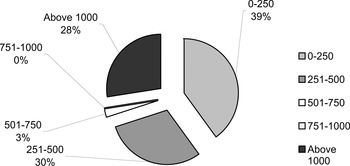
Figure 3 shows the percentage distribution of respondents by income. Respondents with low income are likely to have regular partners apart from their spouses. For instance, 70% of the respondents who reported having regular partners apart from their spouses were those with monthly incomes ≤500 Birr. A significant relationship was found between level of income and the tendency to have a regular partner (χ2 df=4; p=0.036). This means women from low-income households are likely to ‘form steady, sometimes clandestine, relationships with relatively wealthy men in the hope that it will bring them some material benefit … school fees for their children, or favorable deals for a few cabbages… [Sex is] practically the only currency they have,’ (Epstein, Reference Epstein2002, p. 48, cited in Hunter Reference Hunter2003, p. 28).
Regular sexual partners apart from spouse by income group.

The lowest income (0–250 Birr) respondents have an average of 1.08 regular partners. In this study it was not asked why the respondents have regular partners, but as argued above, low-income people, mostly females, may keep regular partners, apart from their spouses, in order to supplement their family income. One female charcoal trader focus group participant from Qabale 6 in Aqaqi-Qaliti said that she often sees married women in stable relationship going out with men other than their spouses to supplement their family income. She added, ‘It is truly dehumanizing and a very risky business, but people do it because they have no choice.’ As studies from other countries also indicate, ‘in the absence of alternative opportunities to earn a livelihood for themselves and their households, millions of people sell sex,’ (Drimie, 2002, p. 9). This is particularly true for women in developing countries and often comes with enormous cost as ‘women often prioritize the well-being of other family members at the expense of their own health and well-being,’ (van Donk, Reference Van Donk2002, p. 5). It means, ‘where immediate survival needs are more pressing than long term threat of ill health and death caused by an invisible virus, there is little incentive to practise safe sex,’ (Van Donk, Reference Van Donk2002, p. 3).
Not an insignificant proportion (27.5%) of the respondents who reported having regular partners earn a monthly income of above 1000 Birr, of which 63.4% (n=11) were male, which could be wealthy men engaging in extramarital relationships with low-income women (married or otherwise), relationships that limit the latter's ‘ability to choose responsible sexual behavior and decide on the appropriate risk prevention method,’ (van Donk, Reference Van Donk2002, p. 4; see also Phatlane, Reference Phatlane2003). The source data on which this paper is based show that 98% of respondents with over 1000 Birr monthly income were from Bole, with the monthly average of 3,296.29 Birr, as opposed to Aqaqi-Qaliti, which had an average income of 272.98 Birr. The consequence of poor women engaging in what is often termed as ‘occasional sex work’ or ‘unprofessional encounters’ (Franklin, Reference Franklin2004) ‘is much higher infection rates among young women who are increasingly unable to sustain themselves by other work either the formal or informal sectors,’ (Cohen, Reference Cohen2001, p. 2). Writing of Haitian young women who fled to the capital, Port-au-Prince, to escape from poverty, Farmer (Reference Farmer2005, p. 39) states:
[T]heir stories move with a deadly monotony: young women – or teenage girls – fled to Port-au-Prince in an attempt to escape from the harshest poverty… The women I interviewed were straightforward about the non-voluntary aspect of their sexual activity; poverty had forced them into unfavourable unions. Under such conditions, one wonders what to make of the notion ‘consensual sex’.
Comparing the two sub-cities for the average number of regular partners shows Aqaqi-Qaliti (with 1.05 partners) leading Bole (with 1.0 partners) by a margin of 0.05. Although, the difference may not be strong enough to lead to any conclusion, it is still indicative of the fact that respondents from the low-income neighbourhood of Aqaqi-Qaliti have more regular partners apart from their spouses than respondents from the wealthy neighbourhood of Bole. This finding concurs with studies from other parts of the world, even the USA, the leading economy in the world, as anthropologist Martha Ward points out:
The collection of statistics by ethnicity rather than by socioeconomic status obscures the fact that the majority of women with AIDS in the United States are poor. Women are at risk for HIV not because they are African-American or speak Spanish; women are at risk because poverty is the primary and determining condition of their lives.
(Ward, Reference Ward1993, cited in Farmer, Reference Farmer and Kleinman1997, p. 275)Ward further argues that ‘HIV/AIDS for poor women is not a new disease; it is only another life-threatening condition which parallels serious health problems already experienced by these populations,’ (Ward, Reference Ward1993, p. 413). In the Republic of South Africa ‘HIV flourishes most in areas that are burdened by unemployment, homelessness, welfare dependency, prostitution, crime, a high school drop-out rate, and social unrest,’ (Lindegger & Wood, Reference Lindegger and Wood1995, p. 8), and this created an overall sense that HIV infection became ‘yet another nail in the coffin, adding one more burden to the weight of their daily struggle,’ (Leclerc-Madlala, Reference Leclerc-Madlala1997, p. 376).
Respondents were asked if they had used a condom in the last sexual intercourse and a total of 152 responded to the question, of which only 23 (15.13%) answered ‘yes’. The responses were checked against the educational level of the respondents and it was observed that the proportion of respondents who answered ‘yes’ increases with rising level of education. This means that awareness about safe sex rises with a rise in level of education, showing that ‘those with higher levels of education are more able to prevent risk of HIV transmission,’ (Van Donk, Reference Van Donk2002, p. 3).
Two-thirds of the respondents who reported not using a condom (n=130) during last sexual intercourse were from Aqaqi-Qaliti. Comparison of the number of respondents who reported using a condom during the last sexual intercourse by sub-city shows that more people (27.27%) in Bole (with 88.6% of tertiary education level respondents) used a condom against 12.6% in Aqaqi-Qaliti (with 97.5% of illiterate respondents). Put differently, Bole respondents are more predisposed to using condoms than their counterparts in Aqaqi-Qaliti.
Non-regular sexual partners or CSWs
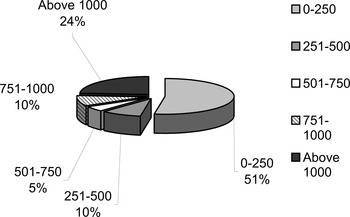
Usafe sex with someone apart from one's faithful partner involves a very high risk of HIV infection. However, heterosexual intercourse with non-regular partners or CSWs is common in developing countries where both individual and community poverty creates a context of multiple stressors (Franklin, Reference Franklin2004) that drive the practice of unsafe sex. This is true particularly for CSWs and married women from low-income households, who have a high risk of exposure to the HIV virus. Against this background, respondents were asked whether they had had sex with a non-regular partner or CSW in the past 12 months of the survey, to which 21 (10.9%, n=193) answered ‘yes’. Of respondents who had sex with a non-regular partner or CSW, 52.4% (11) were from Aqaqi-Qaliti sub-city. A significant difference was found between the two sub-cities in propensity to have sex with a non-regular partner or CSW (χ2 df=1; p=0.049) (Fig. 4).
Sex with non-regular partner/CSW by income group.

Figure 4 shows the distribution of respondents reporting ‘yes’ to having sex with a non-regular partner or CSW by income group. Fifty-one per cent (n=21) of the respondents were from the lowest (0–250 Birr) income group, of which 63.6% were female. If the next higher income bracket (251–500 Birr) is included in the analysis, the proportion rises to 61%. The other extreme is composed of respondents who earn more than 1000 Birr, which accounts for 23.8%, of which four out of five (80%) were males from Bole. Based on this observation, and as discussed above, some kind of transactional sex exists.
The ‘yes’ responses were also checked against the occupational background of the respondents, and cross-tabulation of the data shows that respondents were distributed across different occupational backgrounds, with merchants (i.e. petty traders who make and sell araqe, t'ella, t'ej [honey-wine], etc.) accounting for 22.2%, followed by civil servants, sex workers and the unemployed each accounting for 16.7%. With 11.1% each, students and daily labourers ranked third, indicating a difference among the different occupations in having had sex with a non-regular partner or CSWs. It is striking, though not surprising, to observe civil servants and ‘merchants’ among those who engage in sex with a non-regular partner or CSWs, as well as the unemployed who are the most likely group to engage in such a relationship (see also FHAPCO, 2008, p. 11, on various types of ‘hidden sex networks’ believed to exist in the country, mainly in big cities). Significant differences were found among the different occupational groups in the frequency of sex with a non-regular partner or CSW (χ2 df=6; p=0.002). The questions of safe sexual encounters hardly occur in these contexts because ‘assumptions about mutual consent and equal power relations are … untenable in the … contexts where sexual activity is a survival strategy in exchange for money, goods or protection,’ (UNDP, 2002, p. 4).
Respondents who reported having had sex with a non-regular partner or CSW were further asked if they had received or given money in exchange for the last sexual intercourse, to which 47% answered ‘yes’. Compared with the total number of people included in the survey, the proportion of those who reported having had sex with a non-regular partner or CSW is very small (6%, n=300), but the very fact that nearly half of those who reported having engaged in this type of relationship had received or given money in exchange for sex indicates the existence of transactional sex. Further disaggregating the data by sub-city shows that three-quarters of those who reported receiving or giving money were from Aqaqi-Qaliti sub-city, and given the economic statuses of the respondents in the two sub-cities, it is highly likely that respondents from Aqaqi-Qaliti were on the receiving end as opposed to their economically better-off counterparts in Bole sub-city. Only one of the 60 respondents who reported an income above Birr 1000 was from Aqaqi-Qaliti.
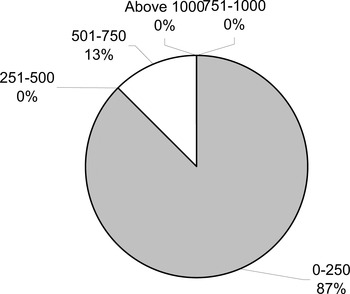
Figure 5 shows that 87% (n=8) of the respondents who reported receiving or giving money in exchange for sex were in the lowest (0–250 Birr) income group. The remaining proportion (13%) were earning between 501 and 750 Birr. Although a third (7 out of 21) of the respondents who reported having had sex with a non-regular partner or CSW had an income over 751 Birr, none reported involvement in exchanging sex for money/gifts. In designing the questionnaire, the question was set as ‘For that last sexual intercourse [with someone other than your spouse/regular partner] did you give or receive money in exchange for sex?’, to minimize the risk that respondents may evade the question lest they be singled out as someone who either receives or gives money in exchange for sex, with the hope that such an approach will generate data on the general practices of financial transaction/gift exchange involved in sexual relationships. The gender mix of those who reported receiving/giving money in exchange for sex shows that six out of eight were female, of which five were from Aqaqi-Qaliti, strengthening the argument set out above that low-income women are exposed to sexual encounters that increase their vulnerability to HIV infection.
Money received or given in exchange for the last sexual intercourse by income group.

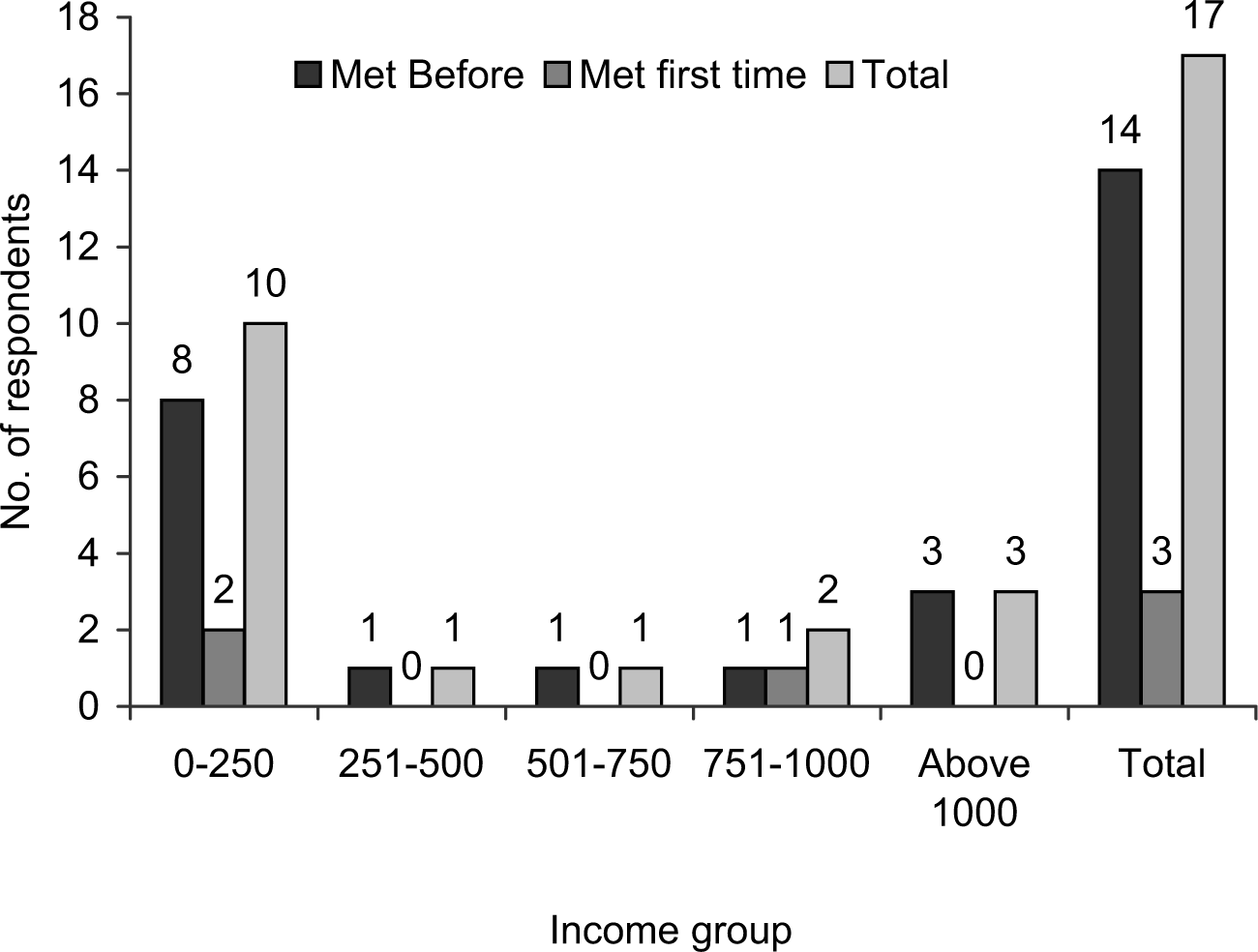
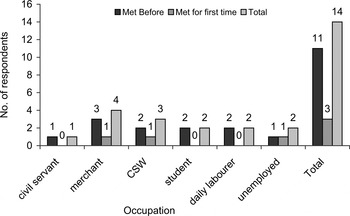
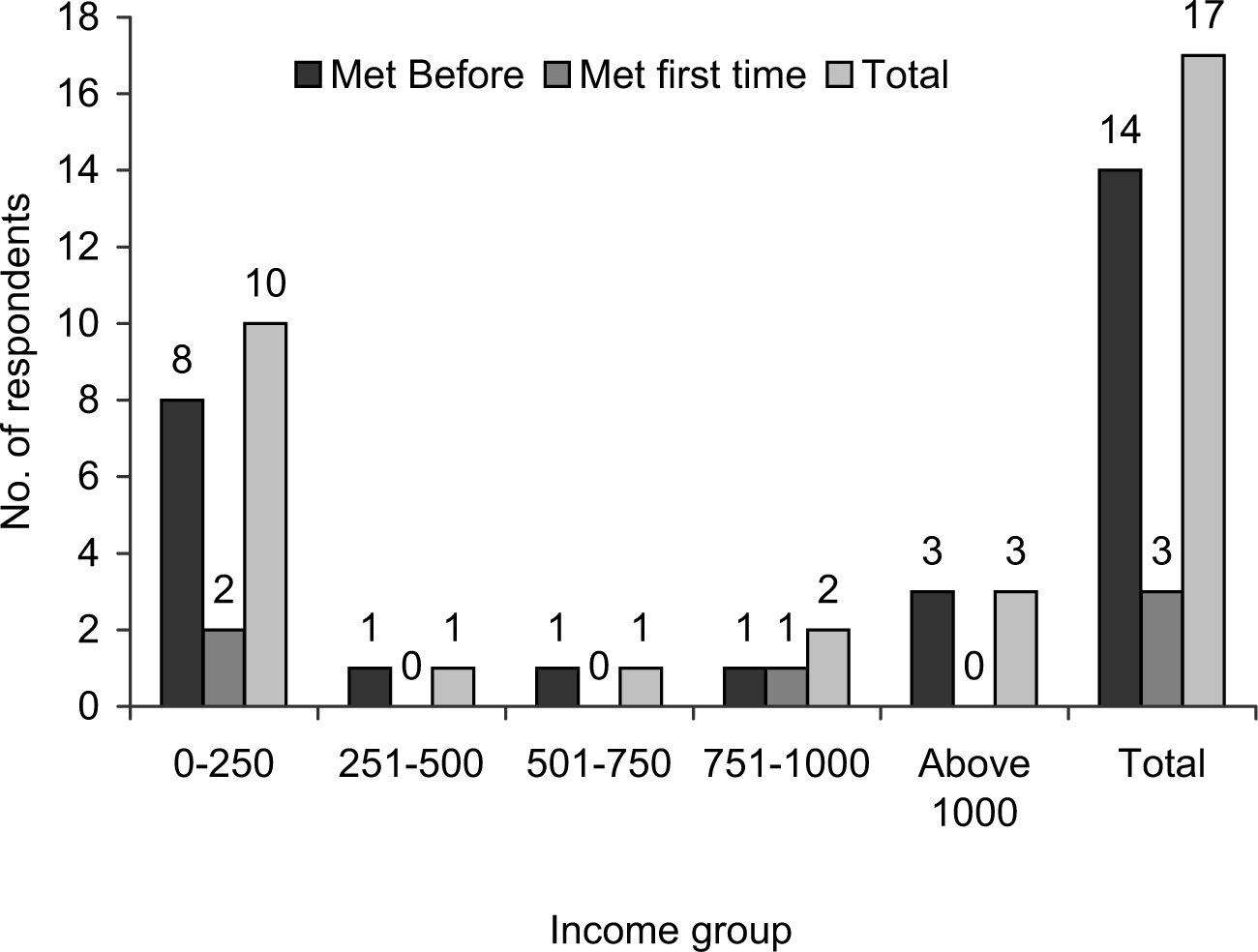
Respondents who reported ‘receiving or giving money in exchange for sex’ were further asked ‘Was the person someone you had met before or someone you met for the first time?’(see Fig. 6). Out of seventeen respondents who answered the question, fourteen (82.35%) said ‘someone they had met before’. Only three (17.64%) reported ‘someone they met for the first time’. The significant majority (57.14%) of those who reported exchanging sex for money with someone they met before belong to the lowest (0–250 Birr) income group, i.e. sex workers or low-income women (petty traders, factory workers, housewives) who may go out with non-regular partners to supplement their family income or support their families. When further disaggregated by occupation, merchants (usually petty traders and local drinks house operators) account for 27.3%, followed by CSWs, students and daily labourers with 18.2% each (Fig. 7). Moreover, a civil servant and the unemployed reported transacting sex for money with persons they met before. The only respondents (three in total) who reported receiving or giving money in exchange for sex with a person they met for the first time were merchants, CSWs and the unemployed (Fig. 7).
Sex with person met before/first time by income group.
Sex with person met before/first time by occupation.

It is clear that the use of condoms prevents unintended pregnancies and infection with STDs, including HIV. The discourse on HIV prevention efforts, especially the ABC approach (A, abstinence; B, be faithful; C, condom use) tends to be based on the assumption that sexual behaviour is a matter of individual choice and is fundamentally about exerting individual responsibility. However, this is not always the case (e.g. with rape, abduction) since external factors such as social and moral norms (Allen, Reference Allen2005, p. 17) and one's socioeconomic position in society influence freedom of choice regarding sexual behaviour. In light of the foregoing, respondents who reported ‘receiving or giving money in exchange for sex’ were asked if a condom was used during the last sexual intercourse. Seventeen responded to the question, of which only one reported not using a condom. This means sixteen (nine in Aqaqi-Qaliti and seven in Bole) reported using a condom during the last sexual intercourse. Therefore, there is little difference between the two sub-cities in condom use in sexual encounters that involved ‘receiving or giving money in exchange for sex’.
Rape
Throughout the world, women are confronted with sexism, an ideology that situates them as inferior to men. In 1974, when a group of feminist anthropologists surveyed the status of women living in disparate settings, they could agree that, in every society studied, men dominated political, legal and economic institutions to varying degrees; in no culture was the status of women genuinely equal, much less superior, to that of men (Rosaldo & Lamphere, Reference Rosaldo and Lamphere1974, cited in Farmer, Reference Farmer2005, p. 43). This power differential has meant that women's rights are violated in innumerable ways, among which domestic violence and rape are the most common. In light of this, respondents were asked if they had ever been raped. A total of fourteen respondents replied to the question, equally divided between the two sub-cities. Of these, only three respondents, all from Aqaqi-Qaliti, answered ‘yes’, and these were all extramarital rapes.
It is not surprising that only three respondents reported ‘ever been raped’ since, as elsewhere in the world, ‘crimes of domestic violence and rape are not even discussed and are thus invisible,’ (Farmer, Reference Farmer2005, p. 44). Violence against women, including rape, is one of the common features of poor neighbourhoods, although the reporting rate is very low. According to a study commissioned by the Addis Ababa Women's Affairs Office (AAWAO), rape ranked first (66.75%, n=1543) among the harmful practices believed to have been observed in Addis Ababa, but only 3.8% (n=2489) of the respondents answered ‘yes’ to the question ‘have you ever been raped?’ (Worku, unpublished). The information obtained from the Addis Ababa Police Commission for five consecutive Ethiopian fiscal years, i.e. 1992–1996 (2000–2004), shows a slight rise in the number of reported rapes (from 162 in 2000 to 259 in 2004; Worku, unpublished), but this is still very low. Another work published in 2002 documents ‘… the prevalence of rape among female street adolescents in Addis Ababa was shown to be 15.6% in the past three months of the survey. In the same study only 16% of rape cases were reported to the police,’ (Molla et al., Reference Molla, Ismail, Kumie and Kebede2002, cited in Gessessew & Mesfin, Reference Gessessew and Mesfin2004, p. 140). The under-reporting of rape is a worldwide problem since, for instance, only 34% of stranger rapes and 13% of acquaintance rapes are reported in the United States of America (Congressional Caucus for Women's Issues, 1992) and 2.8% in the Republic of South Africa (Pokroy, Reference Pokroy1999).
The AAWAO study examined the relationship between experience of rape and current marital status and found that nearly half (48.94%) were never married, followed by those married and living with spouse (23.4%), divorced (15.96%) and separated 2.13% (Worku, unpublished). This means, leaving aside the married (living and not living with spouse) and the widowed, 67% of rape victims had marriage difficulties. When sub-cities were compared, Aqaqi-Qaliti ranked fourth with 15% of rape victims during the AAWAO study, and Addis Ketema ranked first with 40%. As regards the occupation and experience of rape victims, commercial sex workers constituted 26%, the highest in the group, followed by housewives (18.5%) and daily labourers and unemployed (12% each). Students also constituted a not insignificant proportion and were the fourth major victims with 8.7%. The fact that over 50% of rape victims currently engaged in commercial sex work, or are daily labourers or unemployed, suggests the level of vulnerability and the risk of HIV infection to which they are exposed.
During the AAWAO study survey, a frustrating experience was observed by one of the data collectors in Qabale 14 of Kolfe Qaraniyo sub-city:
One of the interviewees told the data collector female university student about a certain girl of 12 year old who lives in the neighbourhood. A mother of this 12 year old girl died six months ago and not a long time after the death of her mother, she was raped by her stepfather. The mother of this girl … died of HIV/AIDS and it is known that the survivor husband lives with HIV virus.
(Worku, unpublished)Although there was a suspicion that the man had infected the girl with HIV, no measure was taken to bring the perpetrator to justice and take the little girl to an appropriate health facility for medical attention, including an HIV test. This story indicates that rape, though under-reported, is widely practised in Addis Ababa, with enormous social, economic and health consequences, including HIV infection, for the victims.
Other vulnerability risk factors for HIV
Numerous other social and economic factors create vulnerability risks for HIV infection. Poor families cannot afford to raise their children properly, and provide adequate health care and education and inculcate a sense of worth in life. Underdevelopment imposes constraints on a community's ability to provide proper and adequate health, education, employment and social protection for its members. In this context, people grow up in an environment that offers very little opportunity, forcing them to fish around for anything that comes their way, including migration, marriage, low paid jobs (domestic work, daily labour, joining the army, etc.), commercial sex work, begging and street life. In many poor societies marriage is seen as a quick fix to a family's economic problems, as the following quote from Peru shows: ‘Young women were urged by their families to become an instrument of survival by establishing a formal bond with a man who will ensure a future for them,’ (Salazar et al., Reference Salazar2005, p. 380). Marriage could be initiated by the family or by the individual concerned, and often ‘marrying up’ is the norm for many women.
In contexts such as Aqaqi-Qaliti where most of the people are poor and illiterate, and where only a few employment opportunities are available and thousands of factory workers lost their jobs following the implementation of SAP (structural adjustment programme) in the 1990s, a marriage proposal from a man can hardly be turned down by a woman, irrespective of its consequences a few years down the road. Such a marriage is likely to end in desertion, separation or divorce. There are other risks as well, namely engaging in multiple sexual partnerships, either because the marriage is not based on love and long-term commitment to family life in the first place, or in the form of transactional sex to supplement family income, with its attendant health problems including the risk of HIV infection. The following case illustrates how poverty breeds marriage difficulties, which in turn results in a very high risk of exposure to HIV.
Case II
Merima, 45, was born in Arsi to a family of five children. The family had been forced to leave Arsi due to poverty and migrated to Aqaqi-Qaliti where they started life as poor rural migrants. The father was selling wood and the mother injera (Ethiopian pancake-like staple bread) to support themselves and their five daughters (one deceased, one married and living in Addis Ababa, the other two living in Aqaqi-Qaliti, both very poor). She suspects the death of her sister and the latter's husband (within a few months of each other in 2003) was because of AIDS. Merima, who had never been to school, had only attended an adult literacy programme for a few weeks, worked for the Saris Food Processing Company, first in the food processing section, and later as a laundry woman. She started work as a daily labourer with a 55 Birr monthly wage. When she stopped work due to illness (in 2005) her gross monthly wage was 400 Birr. She narrates:
I was a Muslim, but converted to Christianity and married to a Christian man, 1985–1991. The marriage ended in divorce. October 1999, married to another man for few months, got pregnant. Six months later, separated with the second husband, and started living with my mother and had a baby boy. When my son was about a year old, I got married to my late husband, a third husband who was a Muslim. I had a baby boy by him, who died at the age of 2 years and 2 months, five years ago. My husband died in November 2002 [two years after the death of their son]. He had diarrhoea for a few weeks, and one day, when I came home from work, he had died in his bed. I was shocked. Although, I suspected he was hiding something from me about his health, I did not expect the worst would come soon. I was okay until then, although I had sweating and weakness occasionally. Until the death of my husband and the gradual deterioration of my health, I did not suspect that our son could have also died of AIDS. My son from the second husband also died at the age of 2 and half years, but I do not think he also died because of AIDS, probably because of other diseases, mainly due to lack of proper care and attention.
As mentioned above, migration is one way of, theoretically at least, getting out of poverty or at best a means to success in life. Although their dreams of an improved life for themselves and their children did not come true for Merima's parents, they migrated from Arsi and settled in Aqaqi-Qaliti where Merima got married at a very young age hoping it would bring her success in life. Often young people migrate on their own initiative or based on family decisions. Aqaqi-Qaliti, an industrial suburb, attracts thousands of young men and women seeking better opportunities every year. However, as the Qabale 6 chairman explains, what they face is contrary to their dreams and expectations:
Local drinks business and CSW are expanding because of high unemployment and population growth. Most of the women who serve in the local drinks houses are migrants and trafficked from rural areas and small towns. Most of the inhabitants of the town are factory workers, and quite a large number of people flock here looking for job every year, but contrary to their expectations and aspirations, there is very little employment opportunity. Consequently, the male become daily labourers and the female CSWs. The youth have no jobs, nor are there recreational centres where they can kill their idle time. They spend their time in clandestine video houses and entertain themselves with khat and araqe. In this context the chances of engaging in sex and playing it unsafe is very high. Except for lack of data, HIV prevalence reaches as high as 30–40% in our qabale.
Brothels are illegal in Ethiopia, but commercial sex work/prostitution is not. Sex work is widely practised, although most of the women in the business do not identify themselves as sex workers, because of the pejorative meaning associated with the business and its Amhraic name shirmut'ina (prostitution). Recently, the term setegna adari (sex worker) was coined, although many still do not want to associate themselves with it. That is why they prefer to be identified as ashashač (waitresses). Waitresses who work in hotels, bars and local drinks houses are of two types: (i) those that are paid wages by the owners for their service as waitresses; and (ii) those who work just as waitresses but not paid wages by the owners, but sell sex for a living. The sex work widely practised in Aqaqi-Qaliti is the latter type, where several women work in one local drinks house, mostly in dilapidated areas in the centre of town, competing with each other for clients.
Case III
This case shows the challenges a young rural migrant faces in a town or a city. Kefyalew Dera, 49, migrated from north Shewa as a young boy, having lived in two other towns (Alaba Qulito and Adama), finally settling in Aqaqi-Qaliti. He was illiterate when he migrated, but attended evening classes and completed grade 10. Married twice, he has four children, two by each wife. He worked in a number of factories and organizations, namely a food factory, textile factory, the Electric Corporation, army, political party, qabale administration, the Red Terror Investigation Committee and another food factory until he stopped work due to illness in January 2004. After 25 years of service in different capacities, the highest he managed to go in monthly wage was 386 Birr. He was in bed when interviewed for this study in the summer of 2004. He complained he had blurred vision and could not see properly, which he says was caused by his illness. After a background discussion, he was asked to give his view of how he got HIV:
I was in marriage for 26 years, married twice. 1979–1984, first marriage, had two daughters. We divorced as we could not agree on a lot of issues; mainly she did not trust me on how I spent my wage. Second wife 1993 – the present [2004], we have a son and a daughter. In 2000, I was deposed from political office through gimgema (performance evaluation) and was extremely hurt by the decision and got sick. Since I did not have money to use for medication, I had to go to the qabale to get a certificate for free medication at the government health centre or hospital. I went to the health centre where I was injected 19 days with unsterilized needle. I suspect that could be the source of the problem. A few months later, my wife got pregnant, she wanted to terminate the pregnancy, we did not agree, but somehow, I gave up and the abortion was carried out, and I think the things they used to administer the abortion could be another source of risk. Other possibilities are the following: (a) in 1992, I went to Sebeta for cadre course and slept with a woman I knew several years ago; (b) in 1999, I slept with a woman in Aqaqi who was temporarily separated with her husband. I do not know if that could also be another risk. But, I do not think the latter was the risk, since the woman I slept with is perfectly healthy and leading excellent life with her husband to date.
The above description gives us brief information about his marriage life, including lack of trust in the first marriage and divorce, demotion from political office and the frustration and anger that followed, sickness and medication at the health centre where injection needles might not have been properly sterilized, the pregnancy and abortion experience of his second wife, cadre training, his extramarital affairs and uncertainty surrounding what constituted the risk of HIV infection. With the gradual deterioration of his health, reluctantly though, he accepted the doctor's advice to test for HIV because the latter told him it was difficult to treat him before his HIV status was known. He continues:
In 1996 I got sick and a doctor from Black Lion Hospital, a part-time physician in the company where I work, suspected I had HIV, and referred me to Zewditu Memorial Hospital (ZMH) twice to test for HIV, but I refused to go. The reason for his suspicion was I had TB, and my health was terribly bad. In 2003 another doctor (a female) from Menelik II Hospital, also a part-timer, looked into my health situation seriously and convinced me that I should test for HIV. She said ‘unless we know your HIV status, it is very difficult for us to prescribe any medication for your health problems’. She was certain I was HIV positive even before I was tested. Then, I discussed with my wife, who actually did not have any serious health complaints at the time. My wife also agreed that we should test, since my health was deteriorating very much. We both tested at Bethzatha Clinic, and the result showed we were both HIV positive. Since we had already suspected, the result did not surprise us much, but worried us very much. My health deteriorated, although my wife was hurt more by anger and moral failure.
The story was much longer than presented here. In short, it shows the challenges Kefyalew faced as a young uneducated rural migrant with no career, and a low wage, even after having served for a quarter of a century, marriage difficulties, no savings, no pension, unable to tell how he contracted HIV, fear of testing for the virus, four young children and finally an AIDS patient.
Conclusion
One of the things a scientific community acquires with a paradigm is a criterion for choosing problems that, while the paradigm is taken for granted, can be assumed to have solutions. To a great extent these are the only problems that the community will admit as scientific or encourage its members to undertake.
(Kuhn, 1970, cited in Stillwaggon, Reference Stillwaggon2006, p. 157)Africa accounts for 34 of the world's 49 poorest nations (in 2010 it was 34 out of 50), and it is, therefore, not surprising that it is the epicentre of the AIDS pandemic (Pretoria News, 13th November 2001, cited in Phatlane, Reference Phatlane2003, p. 77). Challenging those who depict ‘African promiscuity’ as a principal driving factor for the spread of HIV/AIDS in sub-Saharan Africa, Professor Aina in The Myth of African Promiscuity refers to the ‘new poor’: ‘the massive pool of young women living in the most deprived conditions in shanty towns and slums across Africa, who are available for the promise of a meal, new clothes, or a few pounds,’ (Aina, Reference Aina and Sabatier1988, p. 78). From the literature and the data presented in this article, it is clear that the determinants of the HIV/AIDS epidemic ‘go far beyond individual volition and some dimensions of being poor can increase risk and vulnerability to transmission,’ (Kalipeni et al., Reference Kalipeni, Oppong and Zerai2007, p. 1017). The fact that poverty is recognized internationally as a major cause of ill health explains why individuals and countries with the least resources carry the burden of ill health and mortality (Phatlane, Reference Phatlane2003, p. 76). The 1995 World Health Report recognized ‘the world's ruthless killer and the greatest cause of suffering on the earth was given the code Z59.5, it stands for extreme poverty,’ (WHO, p. 1).
The following excerpts from an interview with the Aqaqi-Qaliti sub-city Youth Association Secretary explicate the link between poverty and the risk of HIV infection, at least in his town:
Awareness is not a problem. The spread of HIV will not decrease until people get out of poverty quagmire [ya dihinat aranqu'a]. Preliminary assessment shows as many as sixteen women work in one araqe house, sex work being their sole means of subsistence. When we tell them what they do for living involves enormous risks, sex workers say to us ‘you did not give us an alternative by which we earn our livelihood in a dignified way’. HIV prevalence in Aqaqi is estimated at 20–25%. Look at the youth, they do not have jobs, there are no recreation centres where they can go to for pass time; driven to alcohol and khat, and unlicensed video houses that often show pornographic films. Finally, sex, unsafe sex for that. That is how poverty and underdevelopment breed HIV/AIDS.
Focus group discussant female petty traders from Qabale 6, in Aqaqi-Qaliti, also emphasized that the proliferation of t'ella and araqe houses is associated with the absence of gainful employment opportunities, which in turn creates an environment that lures young women and girls into the risky business of sex work ‘where the sexual rights of women are violated and exposure to high risk sexual act, unprotected intercourse, sexually transmitted diseases (STDs) and rape is high,’ (Rodrigo & Rajapakse, Reference Rodrigo and Rajapakse2010, p. 12). One focus group discussant said:
I am in this business not because I chose it, but as a poor rural migrant it was the only means of survival I had at the time. In this situation, I do not have the power to negotiate for safe sex, because if I do not agree to my client's terms, he will look for another woman who is desperately looking for one. Clients often offer higher price [a margin of 3–5 Birr] for sex without condom, which a woman in my situation finds it irresistible.
Commercial sex worker focus group discussants were unanimous (though sarcastically) that sex with a condom is likened to ‘fasting food’ (food without meat and dairy products eaten during Lent and other fasting weeks and days by Ethiopian Orthodox Christians), which costs less than non-fasting food. In the AAWAO study, a sex worker from Arat Kilo reported that she is often given bread by clients instead of money for her sexual services (Worku, unpublished). Though rarely reported, this is a daily reality for some, if not many. As Masanjala (Reference Masanjala2007, p. 1038) observes ‘… economic marginalization of women may increase their exposure risk because in an environment characterized by unequal social relations a poor or destitute sex worker can more easily be forced, by threat of competition, into unprotected sex. In this context the long-term and invisible threat of disease and death may be of less concern,’ (Phatlane, 2002, p. 9).
The forgoing paragraphs show that poor women in otherwise stable relationships engage in regular or non-regular sexual relationships. This confirms not the Eurocentric ‘African promiscuity’ discourse, but rather strengthens the ‘structural violence’ argument since ‘any extramarital sexual relation or transactional sex primarily emanate from economic marginalization, hardship and the need to survive rather than vanity or pure lust,’ (Masanjala, Reference Masanjala2007, p. 1040). Farmer observes that ‘the distribution of AIDS is strikingly localized and non-random; so is that of human rights abuses. Both HIV transmission and human rights abuses are social processes and are embedded, most often, in the inegalitarian social structures I have called structural violence,’ (Framer, 2005, p. 230).
Iftu (Case I, discussed above) was immediately kicked out of the drinking house where she worked following the disclosure of her HIV status to the owner lest she infect them with HIV by picking her teeth and spitting blood in the sauce they eat injera with (tirsuan gorgura wot' wust' titefalech). Iftu left the house and stayed in a hotel nearby for about a week paying 4 Birr/night. The same woman, who kicked Iftu out of her house told the owner of the hotel where Iftu was staying about her HIV status and warned him saying ‘she will infect you by putting her blood in the water you drink’. The owner of the hotel instructed his workers not to let Iftu stay in their hotel any longer, forcing her to sleep on the street under the fence of the Aqaqi Branch Commercial Bank of Ethiopia for over 6 months until she secured a 40 Birr monthly support from a local NGO with which she rented a plastic shelter at the back of a small house. This is an expression of what Schepper-Hughes (Reference Schepper-Hughes1996, p. 895) describes as ‘a moral panic about contamination from contact with the “bad blood” of a social marginal’ and a graphic example of what Farmer calls ‘structural violence’.
As one female in-depth interview informant from Bole succinctly put it: ‘Where there is poverty, AIDS enjoys free ride.’ Effective HIV/AIDS prevention is unthinkable without an effective poverty reduction strategy because the poverty-induced ‘transactional’ sexual encounter among poor women, and most CSWs, is seen not ‘… as an act of transaction in which someone does something in the hope of getting something in return. In fact, it is an act in which a sacrifice of the most serious kind is consciously accepted for the redemption of others,’ (Reference TekolaTekola, 2005, p. 114). This concurs with evidence from other parts of the world that ‘HIV transmission can only be stemmed when issues of vulnerability are addressed in meaningful ways at both local and global levels,’ (Kalipeni et al., Reference Kalipeni, Oppong and Zerai2007, p. 1016). History teaches us that:
The relationship between poverty and ill health is well established. The nefarious effects of poverty on health, as historically demonstrated by the McKeown thesis – which showed that improvements in health were due to decreases in poverty in England and had little to do with improved medical care – have been widely confirmed and reviewed (Subramanian et al., Reference Subramanian2002; Wagstaff, Reference Wagstaff2002), validating the common view that poverty is the only robust social determinant of health.
(Nguyen & Peschard, Reference Nguyen and Peschard2003, p. 449)This simply means ‘we need to solve the social, economic, health education and medical care problems that create the conditions that permit AIDS to develop in the first place,’ (Root-Bernstein, Reference Root-Bernstein1993, cited in Murphy, Reference Murphy2004, p. 15). Therefore, development programmes that aim at addressing poverty and gender inequality through investment in education, economic development, health infrastructure (integrating care and education), food security and environmental protection (to produce enough food and curb migration to already overcrowded and under-resourced cities – which exacerbate the vulnerability risks) are critical responses to the problems of structural violence and to ensure sustainable development in the developing world.
Acknowledgments
The author would like to thank the Christen Michelsen Institute of Norway for funding the research from which this article developed, the anonymous reviewers for their critical but constructive comments and Mrs Aynalem Megersa for assistance with processing the statistical data using SPSS.