INTRODUCTION
The effect of fishing on marine ecosystems has received significant attention in recent years. One of the most visible direct impacts is the capture of non-target species. Following Kelleher (Reference Kelleher2008), bycatch is defined as all capture of non-target species and discard is defined as portion of organic of animal which is thrown away, or dumped at sea for whatever reason. Worldwide, it is difficult to determine bycatch and discards by species or groups of species and the composition thereof is often inadequately recorded. Most studies focus on the bycatch and discards of commercial species or species in danger; many species which are not commercially relevant are not analysed (Kelleher, Reference Kelleher2008; Bovcon et al., Reference Bovcon, Góngora, Marinao and González-Zevallos2013).
Chondrichthyans are usually caught incidentally in fisheries for species of high commercial value and then discarded on board or landed as by-products (Van der Molen et al., Reference Van der Molen, Caille and González1998; Stobutzki et al., Reference Stobutzki, Miller, Heales and Brewer2002; Carbonell et al., Reference Carbonell, Alemany, Merella, Quetglas and Román2003; Massa & Hozbor, Reference Massa and Hozbor2003). Fishery exploitation is the human activity which causes the greatest impact on chondrichthyan populations (Camhi et al., Reference Camhi, Fowler, Musick, Bräutigam and Fordham1998). There is evidence that chondrichthyans have suffered major declines in population abundance due to directed fisheries or multispecies fisheries (Compagno, Reference Camhi, Fowler, Musick, Bräutigam and Fordham1990; Camhi et al., Reference Camhi, Fowler, Musick, Bräutigam and Fordham1998; Dulvy et al., Reference Dulvy, Metcalfe, Glanville, Pawson and Reynolds2000; Dulvy & Reynolds, Reference Dulvy and Reynolds2002; Baum et al., Reference Baum, Myers, Kehler, Worm, Harley and Doherty2003).
Chondrichthyans are characterized by low fertility, low fecundity, slow growth, late attainment of sexual maturity, and high longevity; all of which make this group extremely vulnerable to human impact (Holden, Reference Holden and Harden1974; Hoenig & Gruber, Reference Hoenig, Gruber, Pratt, Gruber and Taniuchi1990; Camhi et al., Reference Camhi, Fowler, Musick, Bräutigam and Fordham1998; Stevens et al., Reference Stevens, Bonfil, Dulvyn and Walkerp2000). These types of characteristics in life histories generate a low reproductive potential and a low population growth rate (Hoenig & Gruber, Reference Hoenig, Gruber, Pratt, Gruber and Taniuchi1990), which limit the ability of populations to sustain exploitation or recover from human impact (Holden, Reference Holden and Harden1974).
Two important industrial trawl fisheries are developed in Chubut province: the shrimp fishery (Pleoticus muelleri), of high economic value; and the hake fishery (Merluccius hubbsi), of high occupational value (Góngora et al., Reference Góngora, González-Zevallos, Pettovello and Mendia2012). Three different types of fleet are involved in these fisheries: (1) a double-rigged otter trawler fleet composed of between 80 and 90 freezer vessels with a length between 24 and 54 m. This fleet is responsible for more than 70% of shrimp landings in Argentina and its operation area is the San Jorge Gulf and adjacent waters (Góngora, Reference Góngora2011; Góngora et al., Reference Góngora, González-Zevallos, Pettovello and Mendia2012); (2) a high-seas ice trawler fleet composed of between 10 and 20 vessels with a length more than 21 m. The main target species of this fleet is the common hake but occasionally it headed for shrimp in the San Jorge Gulf (Góngora et al., Reference Góngora, González-Zevallos, Pettovello and Mendia2012); and (3) a coastal fleet which is studied in this work. This latter fleet is a historical coastal trawl fishery in the Chubut province and it operates within the Patagonian continental shelf. This region has been recognized as an important area for biodiversity and conservation of species (Favero et al., Reference Favero, Blanco, García, Copello, Seco Pon, Frere, Quintana, Yorio, Rabuffetti, Can and Gandini2010; Marinao & Yorio, Reference Marinao and Yorio2011; Boersma et al., Reference Boersma, Rebstock and García Borboroglu2015). According to Fondacaro & Ruiz (Reference Fondacaro and Ruiz1996), from the 1970s until 1985, the landings of Puerto Rawson's coastal fleet corresponded mainly to common hake but from 1985 to 1992 the number of fishing trips to catch hake was influenced by the interest in targeting shrimp. Since 2000, the vessels that compose the fleet have incorporated outriggers to direct their efforts to shrimp, as this species generates more revenue than those obtained from hake.
Since 2005, these fisheries has been monitored by the On-board Observers Programme belonging to Chubut province (POBCh) to obtain information not only about the target species but also about all the species caught in trawl nets by provincial fisheries. In the early years of the programme, the work focused on the identification of fish species and the first set of information about the species caught in fisheries was obtained. It was thus possible to learn about the composition of the fish fauna in the areas of provincial jurisdiction (Bovcon & Cochia, Reference Bovcon and Cochia2007; Góngora et al., Reference Góngora, Bovcon and Cochia2009; Bovcon et al., Reference Bovcon, Cochia, Góngora and Gosztonyi2011). Since 2011, the focus on chondrichthyan species has been approached more thoroughly by the POBCh; with the aim of obtaining biological information on these specimens in various stages of their ontogeny (neonates, juveniles and adults). Nevertheless, it is necessary to continue moving forward with a more detailed description of the chondrichthyan species incidentally caught by this fleet. This will make it possible to design conservation and group management measures, including the identification of areas that may require special protection.
From the information collected by the programme, we were able to record and describe the chondrichthyan species that are distributed in the area and are vulnerable to fishing gear from the coastal fleet operating from Puerto Rawson. It was also possible to analyse the frequencies of occurrence and abundance, the efficient use of the different species captured, and the spatial distribution of the catches.
MATERIALS AND METHODS
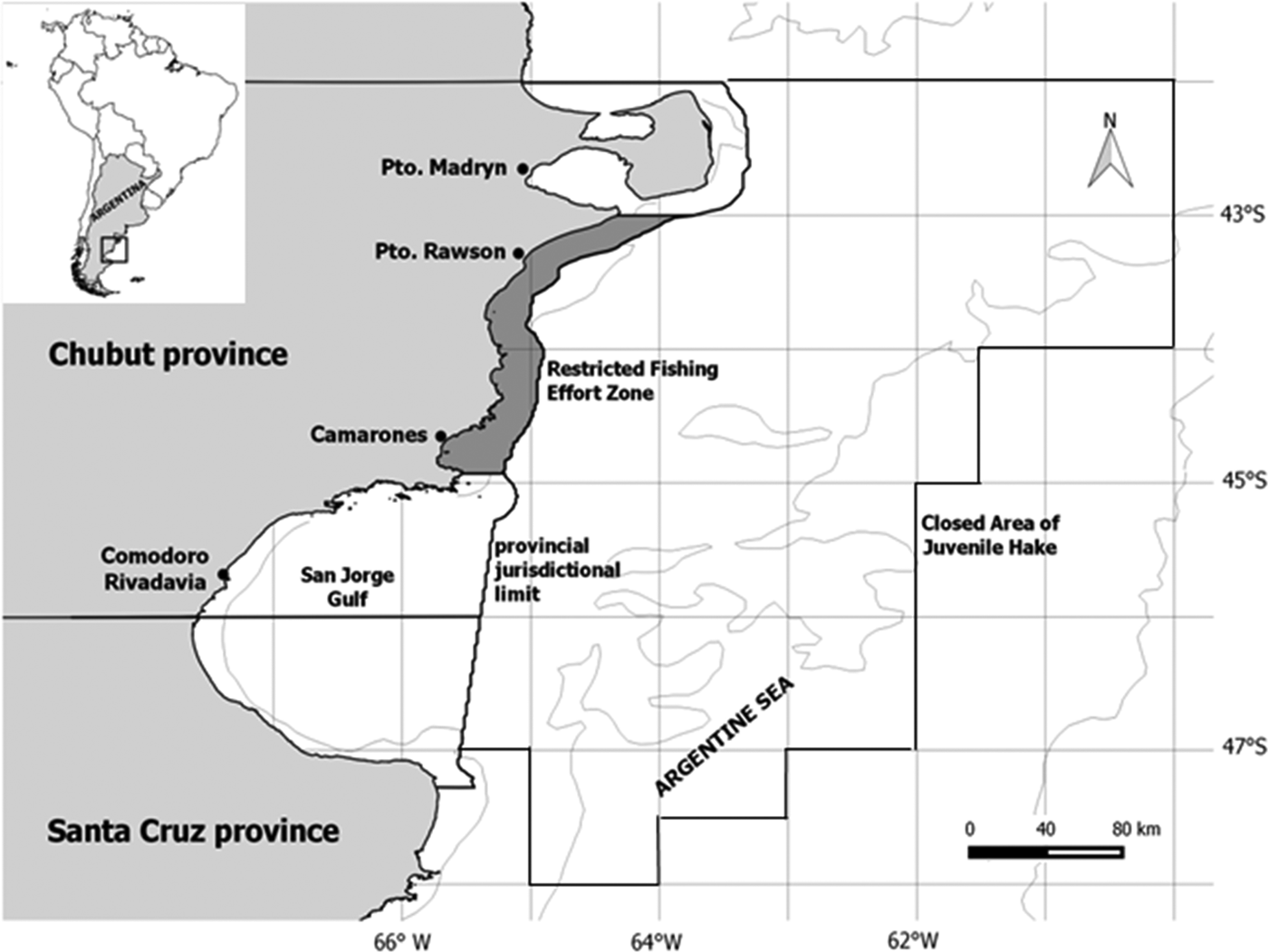
The study area is bounded by the Puerto Rawson's coastal fleet operation zone. It includes the Restricted Fishing Effort Zone in provincial jurisdictional waters (from 43°00′S to 44°56′S and from the coast up to 12 miles) and adjacent waters under national jurisdiction (Figure 1). The fleet of study is composed of about 39 vessels, this being the maximum amount that the Chubut province can authorize for vessels with a length up to 21 m. They have an average engine power of 288 HP ± 137 HP (range: 103–544 HP); an average length of 18 m ± 4 m (range: 13.1–20.2 m); and an average storage capacity of 39 m3 ± 35 m3 (range: 11–80 m3). The fishing season extends from September to April of the following year, with the highest peaks of catches between November and January. The fleet choice of the main target species depends on the abundance of shrimp (Fondacaro & Ruiz, Reference Fondacaro and Ruiz1996) and on market demand, but since 2010 the fleet has been operating mainly to shrimp. The shrimp landings have increased in the last 5 years; between 2010 and 2014 the average landing was 20,052 t (±8124 t) with a historical peak in 2014 of 33,456 t. In the same period, the average landing of hake was 1921 t (±1600 t) with a historical peak in 1997 of 18,000 t. Among the chondrichthyan species landed, the elephantfish Callorhinchus callorynchus was the third species in order of importance; but these landings are fluctuating and they have never reported more than 300 t per year during the period 2010–2014.
Study area. Include the Restricted Fishing Effort Zone and adjacent waters (Closed Area of Juvenile Hake).

Characterization of the catch composition
Analysis hauls collected from 2005 to 2014 by POBCh were examined when the fleet operated on shrimp, and those from the periods 2007 to 2009 and 2011 to 2013 when the fleet headed for hake. Only four seasons were considered when this fleet operated on hake because of the low number of hauls recorded in the remaining seasons between 2005 and 2014. Each season extends from September to April of the following year.
In each fishing haul, on board observers recorded the chondrichthyan species captured together with the target species. Each species was assigned a four category abundance defined by the percentage of representation in the number of individuals in the catch, and its fate was classified. The categories used for the estimation of abundance were: dominant (Do: the species represents more than 50% of the catch in number); abundant (Ab: between 25 and 50%); common (Co: between 5 and 25%); and rare (Ra: less than 5%). The fate of the species was classified as: totally retained (Re: all individuals of a species retained); partially retained (PRe: some individuals of a species retained and the rest discarded at sea); or completely discarded overboard (Di: all individuals of a species discarded at sea).
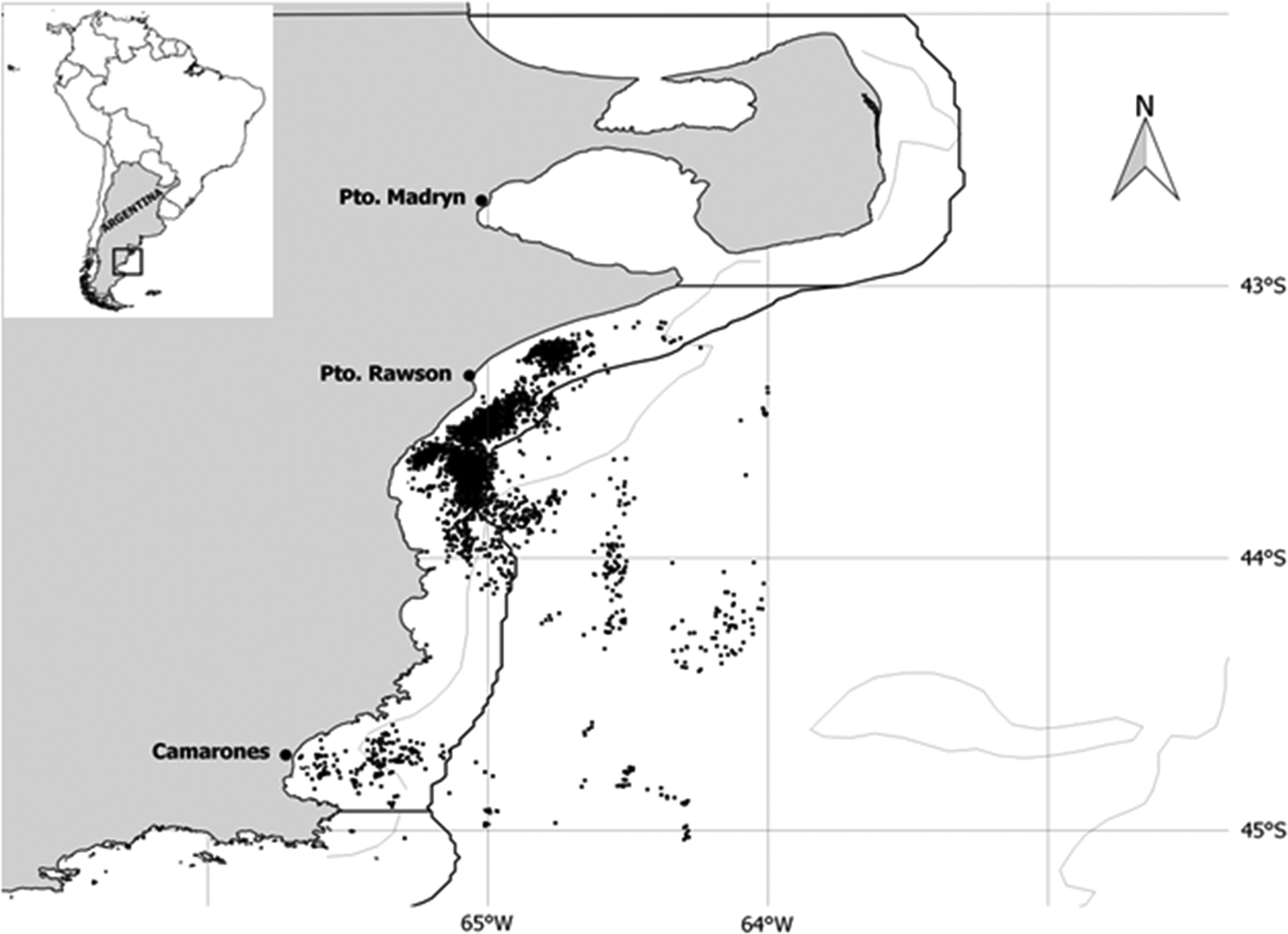
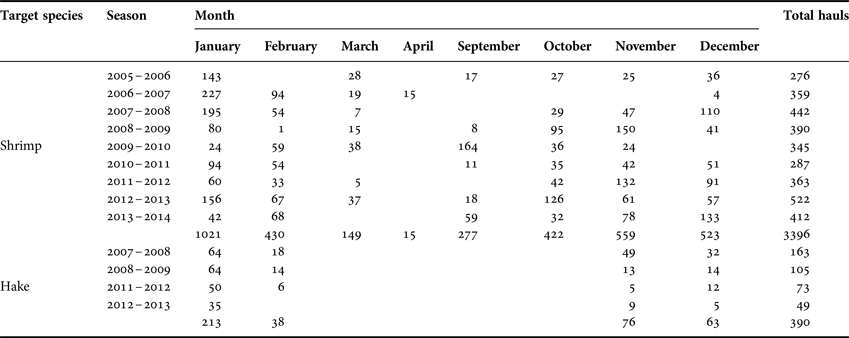
The number of hauls analysed was 3786, in water depths ranging from 20 to 92 m (Table 1; Figure 2). Specific guides and keys were used to identify the species to the lowest taxonomic level possible (Cousseau et al., Reference Cousseau, Figueroa and Díaz De Astarloa2000, Reference Cousseau, Figueroa, Díaz De Astarloa, Mabragaña and Lucifora2007; Bovcon & Cochia, Reference Bovcon and Cochia2007; Figueroa et al., Reference Figueroa, Wohler, Cedrola and Cousseau2011).
Distribution of hauls analysed during the period 2005–2014 corresponding to Puerto Rawson's coastal fleet. Each black dot corresponds to a fishing haul observed.

Number of hauls examined by month, season and target species from the On-board Observer Programme of Puerto Rawson's coastal fleet. Each season extends from September to April the following year.

The frequency of occurrence (FO) per species for the whole period analysed was calculated according to the target species, as a criterion to characterize the bycatch (Hall, Reference Hall1996; Hall et al., Reference Hall, Alverson and Metuzals2000):
 $${\rm FO\%} = \displaystyle{{n_i} \over N}{\rm \;} 100$$
where n i is the number of hauls where the species i were identified, and N is the total number of hauls. Confidence intervals (0.05–0.95) were constructed for the FO per species using bootstrap. For each species, the presence/absence data per haul was resampled with replacement, repeating the operation 10,000 times; the FO for each new set of presence/absence data and the confidence intervals with the values between 0.05 and 0.95 were calculated (Crawley, Reference Crawley2007).
The percentage frequency at which the species was observed as rare, common, abundant or dominant was calculated as the number of hauls in which the species was categorized (Ra, Co, Ab and Do) divided by the number of hauls in which the species was identified. In hauls in which the species was identified, the percentage of totally retained (Re), partially retained (PRe) or completely discarded (Di) was calculated in the same way.
Each species conservation status follows the IUCN Red List (IUCN 2012, 2014). The IUCN Red List has certain limitations, particularly for those widely distributed species when the conservation status reported therein does not reflect the regional or local situation. Regardless, the worldwide status serves as a framework and alert about the need to address the conservation of a given species.
Assemblage analysis
To analyse chondrichthyan associations and their spatial distribution in relation to the target species, the presence/absence data for each species per haul from the On-Board Observer Programme of Chubut province was used. The data for each species per haul from all the seasons between 2005 and 2014 were grouped into rectangles of 3′ latitude by 3′ longitude (5.5 × 5.5 km). The inter-annual variations are difficult to assess because the Puerto Rawson's coastal fleet belongs to a poor fishery data. The first description made about this coastal fleet attempts to find a spatial pattern.
From absolute frequencies matrices obtained by rectangles, a relative frequency matrix was calculated by dividing the count of hauls a species was captured in by the total number of hauls made in each rectangle (site). The rectangles containing less than two hauls were eliminated from the analyses. Only the species observed in at least 10 records were included, assuming that a low frequency occurrence of species would be a matter of chance rather than an indicator of ecological conditions (Gauch, Reference Gauch1989; Legendre & Legendre, Reference Legendre and Legendre1998).
From relative frequency matrices, overall similarity matrices were built for the whole study area using the Bray–Curtis similarity coefficient (Legendre & Legendre, Reference Legendre and Legendre1998). Based on these similarity matrices, an agglomerative hierarchical cluster was used as a grouping method. The ‘group average’ method was used to group sites (Flores Monsalves, Reference Flores Monsalves2010). As a complementary analysis to this method, Non-Metric Multidimensional Scaling (NMDS) was used to visualize the distribution of assemblies previously defined by cluster analysis. NMDS allowed graphical ordering of the relation of the similarity of species present per site showing groups among them and keeping the ranges of similarity between the composition of species and sites (Clarke, Reference Clarke1993). As a measure of goodness of fit for NMDS analysis the Stress coefficient (Kruskal, Reference Kruskal1964) was used. This coefficient determined if differences between dissimilarities and distances observed among composition of species and sites are high or low; and it allows predicting how the data are adjusted to the model. According to Kruskal (Reference Kruskal1964), the different Stress values are classified as: Stress = 0 a perfect fit; 0 < Stress ≤ 0.025 an excellent fit; 0.025 < Stress ≤ 0.1 a good fit; 0.1 < Stress < 0.2 an acceptable fit; and Stress ≥ 0.2 a poor fit. Non-metric and linear squared correlation coefficients (R 2) were also used as measures to report the proportion of data variability that is explained by the model.
To evaluate whether there are statistically significant differences between the explored groups, the one-way non-parametric permutation method ANOSIM was applied (Clarke, Reference Clarke1993). A SIMPER analysis of similarity percentages was performed to determine the typical species of each assemblage and the species with a major contribution to dissimilarity between the groups (Clarke &Warwick, Reference Clarke and Warwick2001).
R v3.0.2 (R Development Core Team, 2013) and PRIMER v6.1.6 (Clarke & Gorley, Reference Clarke and Gorley2006) programs were used to perform the analyses.
RESULTS
The chondrichthyan bycatch of Puerto Rawson's coastal fleet consisted of 23 species, corresponding to nine families (Box 1). The families with the highest number of species were: Rajidae (13), represented by six genera; Triakidae (2) with two genera; and Squalidae (2), with only one genus. Out of the 23 species recorded, five were species of warm temperate waters, whose information of distribution up to central Patagonia waters was extended southwards by Góngora et al. (Reference Góngora, Bovcon and Cochia2009) and Bovcon et al. (Reference Bovcon, Cochia, Góngora and Gosztonyi2011): spotback skate Atlantoraja castelnaui Miranda Ribeiro 1907, eyespot skate Atlantoraja cyclophora Regan 1903, blotched sandskate Psammobatis bergi Marini 1932, zipper sandskate Psammobatis extenta Garman 1913 and bignose fanskate Sympterygia acuta Garman 1878.
Taxonomic list of cartilaginous fish species caught as bycatch by Puerto Rawson's coastal fleet.
Elasmobranchii
Hexanchiformes
Hexanchidae
Notorynchus cepedianus (Perón, 1807) (cn: broadnose sevengill shark)
Carcharhiniformes
Scyliorhinidae
Schroederichthys bivius Müller y Henle, 1841 (cn: narrowmouth catshark)
Triakidae
Mustelus schmitti Springer, 1939 (cn: narrownose smooth-hound)
Galeorhinus galeus Linné, 1758 (cn: tope shark)
Squaliformes
Squalidae
Squalus acanthias Linné, 1758 (cn: piked dogfish)
Squalus mitsukurii Jordan y Snyder, 1903 (cn: shortspine spurdog)
Squatiniformes
Squatinidae
Squatina guggenheim (Marini, 1930) (cn: angular angel shark)
Torpediniformes
Narcinidae
Discopyge tschudii Heckel, 1846 (cn: apron ray)
Rajiformes
Rajidae
Atlantoraja castelnaui Miranda Ribeiro, 1907 (cn: spotback skate)
Atlantoraja cyclophora Regan, 1903 (cn: eyespot skate)
Dipturus trachyderma (Krefft y Stehmann, 1975) (cn: roughskin skate)
Bathyraja brachyurops (Fowler, 1910) (cn: broadnose skate)
Bathyraja macloviana (Norman, 1913) (cn: Patagonian Skate)
Psammobatis normani McEachran, 1983 (cn: shortfin sandskate)
Psammobatis bergi Marini, 1932 (cn: blotched sandskate)
Psammobatis lentiginosa McEachran, 1983 (cn: freckled sandskate)
Psammobatis extenta Garman, 1913 (cn: zipper sandskate)
Psammobatis rudis Gunther, 1870 (cn: smallthorn sandskate)
Sympterygia bonapartii Muller y Henle, 1841 (cn: smallnose fanskate)
Sympterygia acuta Garman, 1878 (cn: bignose fanskate)
Zearaja chilensis (Guichenot, 1848) (cn: yellownose skate)
Myliobatiformes
Myliobatidae
Myliobatis goodei Garman, 1885 (cn: eagle ray)
Holocephali
Chimaeriformes
Callorhynchidae
Callorhinchus callorynchus Linné, 1758 (cn: elephantfish)
cn, common name.
Shrimp target species
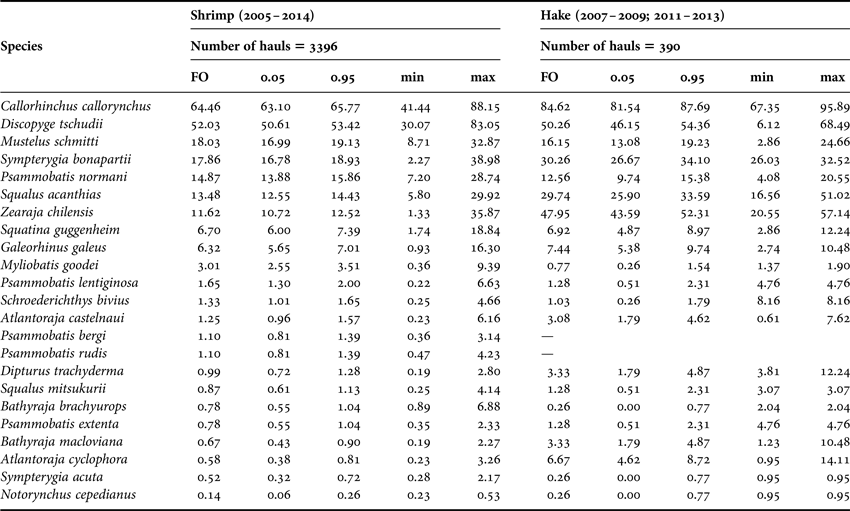
In bycatch by the coastal fleet when aimed at shrimp, 23 species were recorded during the seasons from 2005 to 2014. Seven of them had a frequency of occurrence (FO) higher than 10%: elephantfish Callorhinchus callorynchus Linné 1758 (64.46%); apron ray Discopyge tschudii Heckel 1846 (52.03%); narrownose smooth-hound Mustelus schmitti Springer 1939 (18.03%); smallnose fanskate Sympterygia bonapartii Muller & Henle 1841 (17.86%); shortfin sandskate Psammobatis normani McEachran 1983 (14.87%); piked dogfish Squalus acanthias Linné 1758 (13.48%); and yellownose skate Zearaja chilensis (Guichenot 1848) (11.62%). Of the remaining 16 species, eight were observed with a FO between 10 and 1% while eight had a FO lower than 1% (Table 2).
Frequency of occurrence (FO) of chondrichthyan species caught as bycatch by coastal fleet according to the target species; 0.05 and 0.95 are the confidence intervals; min and max are the minimum and maximum frequencies that were observed throughout the analysed seasons.

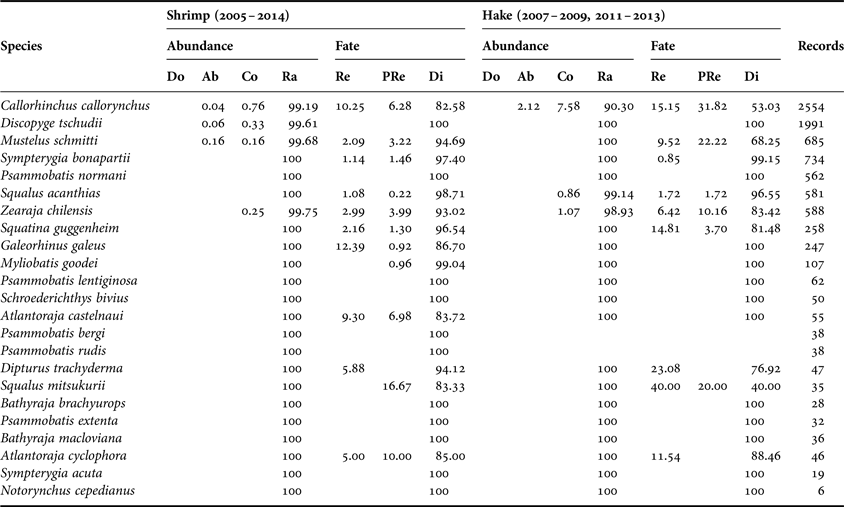
None of the species were dominant; C. callorynchus, D. tschudii and M. schmitti were recorded as abundant but only in 1% of the hauls whereas only four species were recorded as common (represented less than 1% of the hauls). The remaining species were recorded as rare in hauls (Table 3). Regarding the fate of catches, C. callorynchus was retained in 16.53% of the hauls in which it was captured, followed by tope shark Galeorhinus galeus Linné 1758 (13.30%), both species being the most retained. Shortspine spurdog Squalus mitsukurii Jordan & Snyder 1903, A. castelnaui and A. cyclophora were retained in 15–16% but they were species with a very low FO in catches (Table 3). The remaining species were completely discarded or retained in a lower percentage. In 83% of the hauls the chondrichthyan species are discarded when the fleet headed for shrimp; there is no study about the survival of these species in the fishery. The species retained are landed as entire individuals and finning activity is not carried out.
Frequency of occurrence (FO) of chondrichthyan species captured by coastal fleet by category of abundance and fate according to the target species.

Do, dominant; Ab, abundant; Co, common; Ra, rare; Re, totally retained; PRe, partially retained; Di, discarded at sea.
Hake target species
When the fleet headed for hake 21 species were recorded: seven with a FO higher than 10% (the same species as when the fleet headed for shrimp); 10 species were observed with a FO between 10 and 1%; and only four with a FO less than 1% (Table 2).
Only C. callorynchus was recorded as abundant (2.12% of the hauls) whereas only three species were recorded as common. The remaining species were recorded as rare (Table 3). Nine species were retained, with C. callorynchus (46.97% of the hauls) and Z. chilensis (16.58%) being the most important ones. Five species were retained with a FO higher than 10% but they were rare species with a very low FO (Table 3). The remaining species were completely discarded. As pointed out previously for shrimp target species, there is no study about the survival of the chondrichthyan species discarded when the fleet headed for hake; and each individual retained is landed whole.
Level and type of impact
Of the seven species of sharks, N. cepedianus, S. bivius and S. mitsukurii presented a low frequency of occurrence and there is not enough information to establish their global conservation status according to IUCN (2014). These species are characterized as ‘data deficient’ (DD); M. schmitti was the most frequent among sharks (18% FO) following by S. acanthias (13%). For Argentina and Uruguay, M. schmitti is categorized as ‘endangered’ by IUCN (2014) (EN); G. galeus is globally categorized as ‘vulnerable’ (VU) but ‘endangered’ (EN) to the South-west Atlantic, and S. guggenheim is categorized as ‘endangered’ (EN); the latter two species with a frequency around 6%. There is no stock assessment for the region to determine the abundance of these species. Of all species of sharks described, M. schmitti, G. galeus and S. guggenheim are the main species of commercial interest in Argentina (Sánchez et al., Reference Sánchez, Navarro, Calvo, del Castillo, Wohler, Cedrola and Cousseau2011). Although the largest number of individuals of these shark species is not landed in Puerto Rawson, the few individuals landed in this port are not reported.
Of the 13 species which integrate the Rajiformes order, Z. chilensis was identified with a FO around 11% while S. acuta, A. cyclophora, B. brachyurops, P. bergi, P. extenta and A. castelnaui were the species that occurred in fewer hauls (FO less or equal to 1%). According to IUCN (2014), A. castelnaui is an ‘endangered’ (EN) species while A. cyclophora, Z. chilensis and S. acuta are categorized as ‘vulnerable’ species (VU); in addition, B. brachyurops, P. bergi and P. extenta were classified as ‘least concern’ (LC). IUCN (2014) considers there is limited information (DD) to categorize P. normani, P. lentiginosa, P. rudis and S. bonapartii; of all species of Rajiformes order, A. castelnaui, S. bonapartii and Z. chilensis are the species most commonly landed in the main ports of Argentina (Consejo Federal Pesquero, 2009).
Callorhinchus callorynchus was the species with the highest frequency (64%). According to IUCN (2014), little is known about the population size and structure and the dynamics of this species. As pointed out previously, this is the third species of importance in landings of Puerto Rawson's coastal fleet and these landings fluctuate throughout the year.
Species association analysis
When the fleet headed for shrimp, the relative frequency matrix to analyse the association of species was 196 sites (rectangles) by 22 species (variables). The matrix ‘site × species’ obtained was 4312 rectangles, 3148 of which (73%) resulted with zero values, i.e. the species was not recorded in that site.
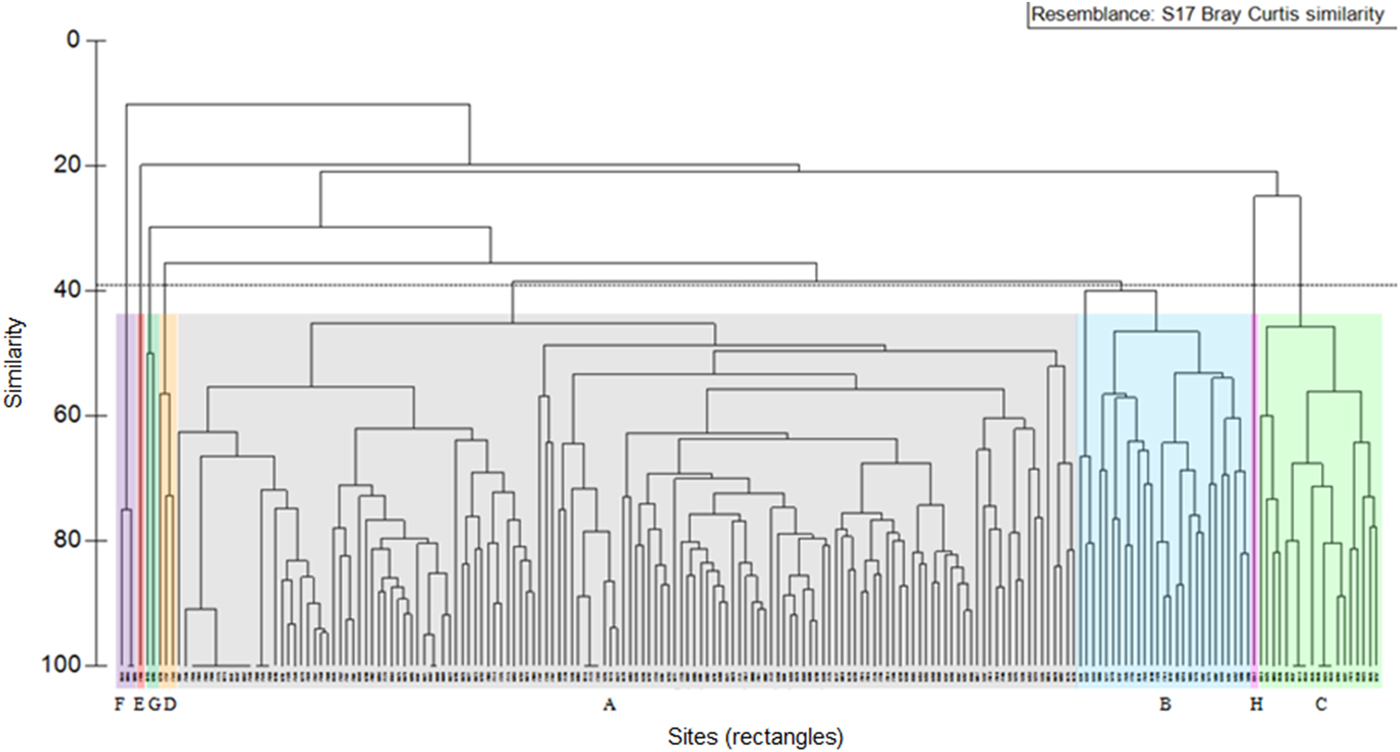
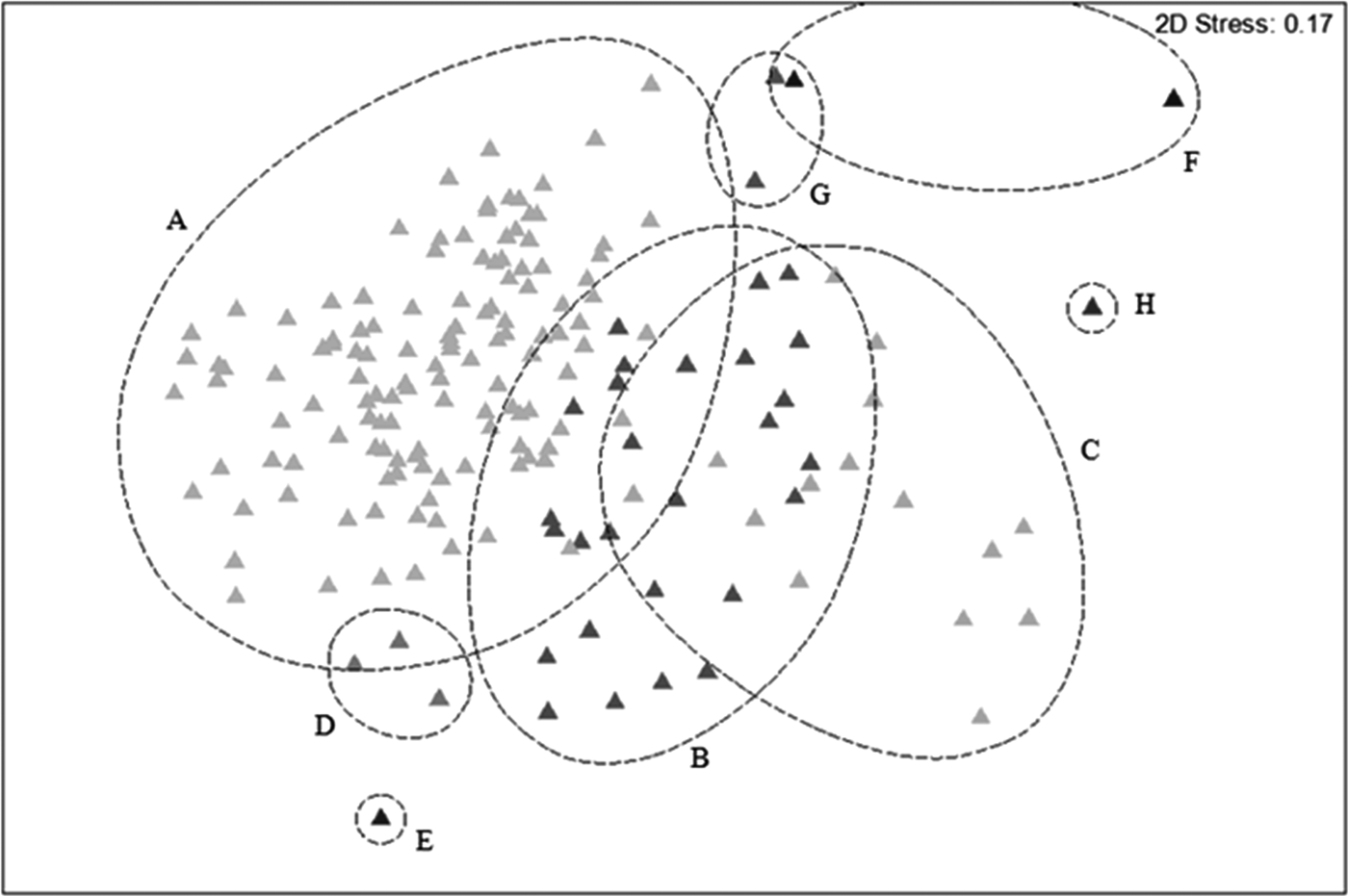
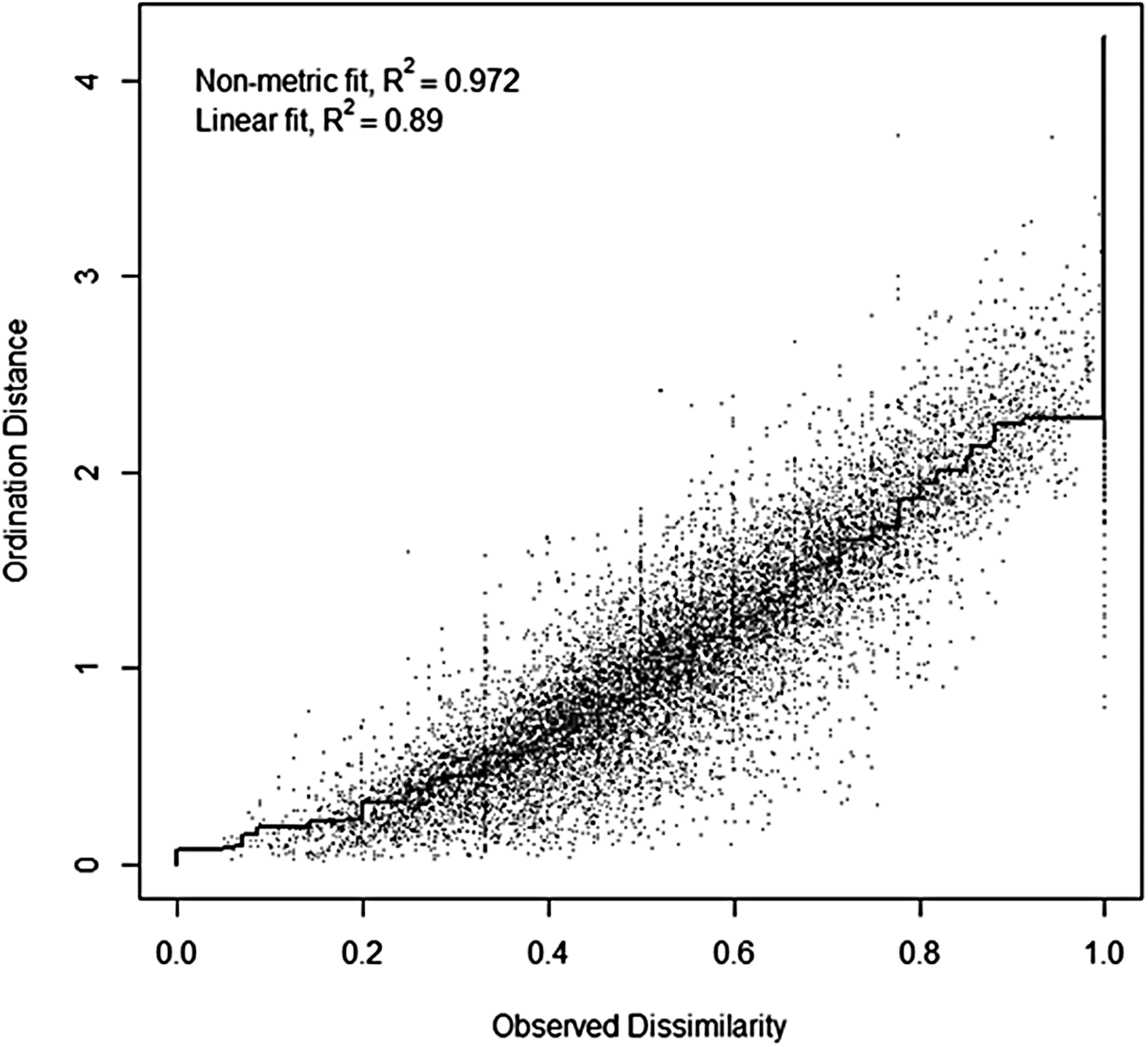
The cluster analysis between sites produced eight groups with a 39% similarity level (Figure 3). The NMDS analysis, which showed the eight groups with the same similarity level, presented a Stress coefficient of 0.17 (Figure 4). The Stress value obtained according to the criteria established by Kruskal (Reference Kruskal1964) is acceptable. Quadratic correlations obtained between dissimilarities and distances derived by the model were close to 1 (non-metric fit, R 2 = 0.97; linear fit, R 2 = 0.89), both indicating a good fit for the model (Figure 5). Two out of eight groups (E and H; Figure 4) were not considered as such in ANOSIM and SIMPER analyses because they comprised only one site.
Global analysis of grouping for all sites identified in the study area, using the group average agglomerative hierarchical clustering method. The horizontal dashed line indicates a 39% similarity level among the groups formed.

Non-Metric Multidimensional Scaling (NMDS) graph where the sites are grouped according to degree of similarity between groups formed. Each triangle corresponds to a site. The dotted line indicates a 39% similarity level between groups.

Shepard diagram of ordination distances in the NMDS graph vs dissimilarities observed in the Bray–Curtis matrix. The red line is the non-parametric fitted regression (R 2 = 0.89); Stress (0.17) is a measure of dispersion around the line (R 2 = 0.97).

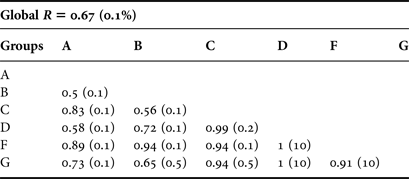
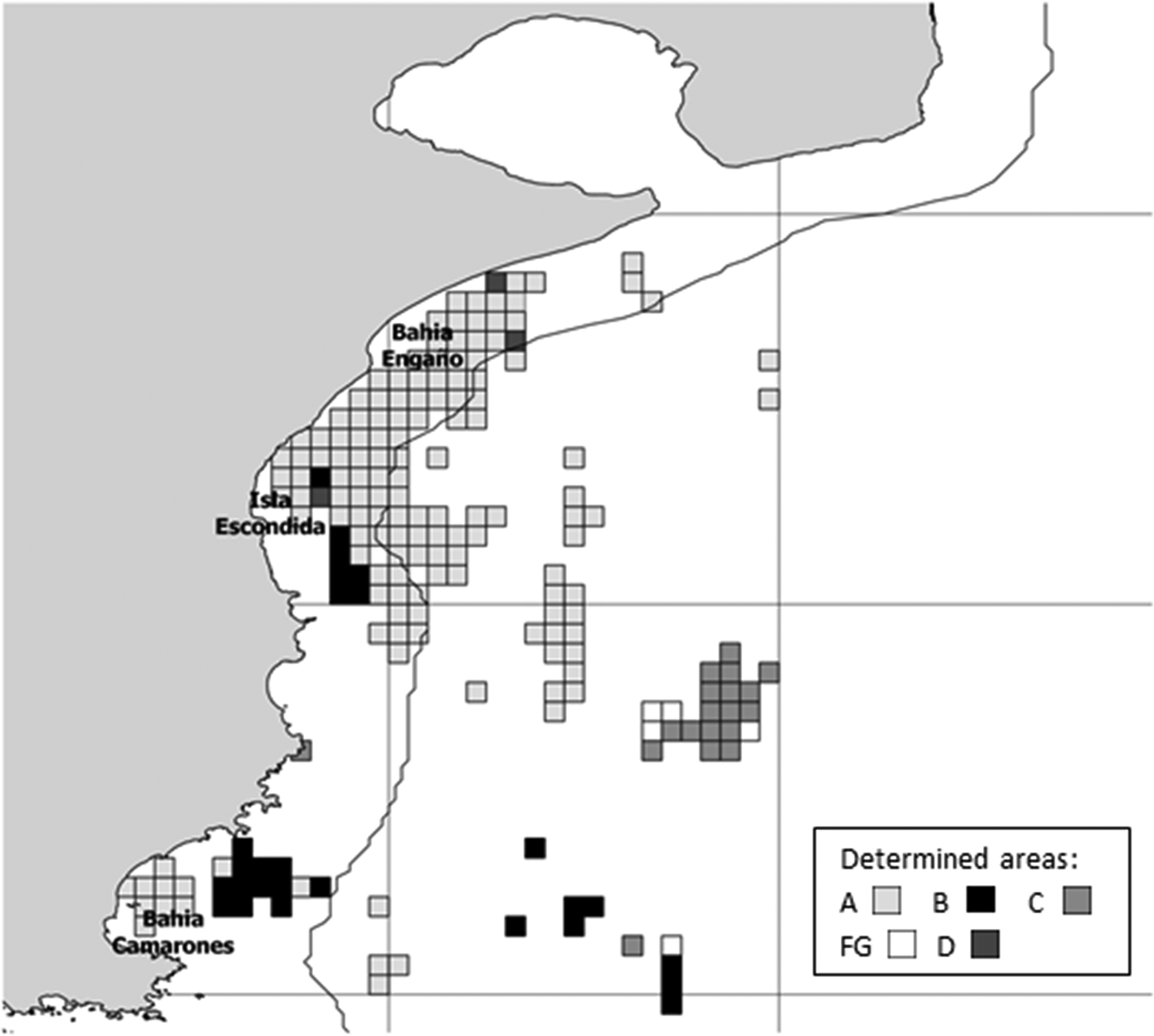
The ANOSIM analysis indicated significant differences (global R = 0.67; P < 0.05) between the six groups. However, in paired tests no differences among three groups were found: D, F and G (Table 4). Groups F and G are close to each other in the NMDS graph and occupy the same geographic area (south areas of national jurisdiction waters), thus they were considered as the same group (FG) (Figure 7). The group D comprised only three sites far from each other. This area was considered a rare group.
One-way analysis of similarities (ANOSIM) for comparison between groups. The R value and the level of significance in parentheses (%) are indicated. A percentage of 5% was considered as significance level. The E and H groups were not considered in the analysis.

Group A comprised the biggest area, which included Bahia Engaño, Isla Escondida, Bahia Camarones, and some sites in national waters close to the provincial jurisdictional limit. Group B comprised Restricted Fishing Effort Zone sites (on parallel 44° and Bahia Camarones waters) and national waters (close to parallel 45°) (Figure 6). Finally, group C was located south of parallel 44° and close to meridian 64, geographically close to group FG.
Location of the areas determined by the cluster, NMDS and ANOSIM analysis.

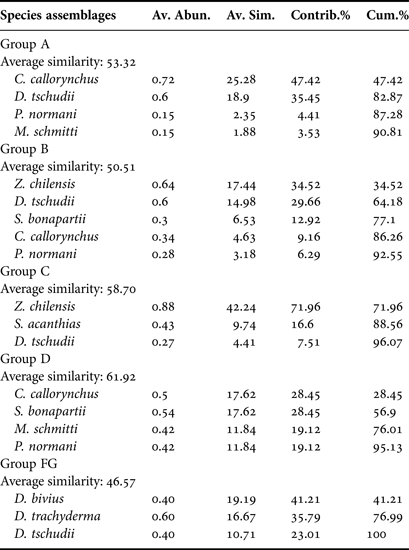
The SIMPER analysis between areas indicated that the number of species associated with assemblies was nine out of a total of 22 species (Table VII). In the biggest area A, C. callorynchus and D. tschudii are the main species that contribute to the group similarity; C. callorynchus with a contribution of 47.42% to the total similarity and D. tschudii with a contribution of 35.45%. The average similarity within area B was 50.51, where more than a half of this similarity was contributed by only three species (Z. chilensis, D. tschudii and S. bonapartii), the first two of which are in very consistent levels within the group.
In area C, Z. chilensis and S. acanthias were the species which mostly contributed to group similarity; Z. chilensis contributed about 71.96% to total similarity and S. acanthias about 16.60%; S. acanthias was present only in this area (Table 5). In area FG, S. bivius with a contribution percentage of 41.21% followed by D. trachyderma with 35.79%. These were the only species present in this area in regard to the others.
Species assemblage of each group generated from SIMPER analysis. Groups E, G and H were not considered in the analysis.

Av. Abun., mean abundance; Av. Sim., average similarity of each species which contributes to the group; Contrib.%, percentage of contribution to overall similarity of each species for assemblage; Cum.%, percentage accumulated.
The species that were not clearly related to the described assemblages were: S. mitsukurii, B. brachyurops, B. macloviana, M. goodei, S. acuta, A. castelnaui, A. cyclophora, S. guggenheim, G. galeus, P. extenta, P. lentiginosa, P. bergi and P. rudis.
When the coastal fleet headed for hake, no assemblage of species was determined possibly because of the low number of hauls analysed. The cluster analysis produced two groups with a similarity percentage between them higher than 50%, so they were not considered different groups.
DISCUSSION
This work allowed the development of an inventory of chondrichthyan species that comprise bycatch of Puerto Rawson's coastal fleet. This list includes 23 species corresponding to nine families: seven species of sharks, 15 species of batoids and a single species of chimera.
When the fleet headed for shrimp, 23 chondrichthyan species were identified; while when the fleet headed to hake, 21 species were identified. These numbers were lower than those recorded by Perier et al. (Reference Perier, Estalles, Coller, Suarez, Mora and Di Giácomo2011) in the bottom trawl fishery of San Matías Gulf where a total of 33 cartilaginous species were registered.
Van der Molen et al. (Reference Van der Molen, Caille and González1998) described sharks bycatch in Patagonia coastal fisheries identifying a total of seven species in catches. Six of them were recorded in this work, except the basking shark Cetorhinus maximus (Gunnerus 1765) which was recorded by these authors and its presence in Patagonian waters was mentioned by Lucifora et al. (Reference Lucifora, Barbini, Di Giácomo, Waessle and Figueroa2015). Furthermore, Cedrola et al. (Reference Cedrola, González, Chiaramonte and Pettovello2012) recorded six shark species caught in double-rigged bottom otter trawlers operating in San Jorge Gulf, all of them described for Puerto Rawson's coastal fleet. Broadnose sevengill shark Notorynchus cepedianus (Perón 1807) was recorded in this fleet but not by Cedrola et al. (Reference Cedrola, González, Chiaramonte and Pettovello2012). Regarding the presence of the Rajidae family, 13 species of rays were recorded in this study; all of them identified by Góngora (Reference Góngora2011) in double-rigged trawlers operating in San Jorge Gulf.
Of the 23 chondrichthyan species that comprise the coastal fleet bycatch, seven have a frequency higher than 10% regardless of the target species: Calorhinchus callorynchus, Discopyge tschudii, Mustelus schmitti, Sympterygia bonapartii, Psammobatis normani, Squalus acanthias and Zearaja chilensis. Five of these species were the same as the ones also reported with a frequency higher than 10% for San Jorge Gulf area (Góngora, Reference Góngora2011). Among them, C. callorynchus, M. schmitti, S. acanthias, Z. chilensis and S. bonapartii have been identified as priority species by the National Action Plan for Chondrichthyan Conservation and Management in Argentina because of their commercial importance (Consejo Federal Pesquero, 2009).
In the analysis of qualitative abundance, five species were occasionally recorded as abundant or common in catches where C. callorynchus was the species which most contributed to the number of individuals in the total catch. Although these categories are fairly frequent, this could have consequences for the populations in a long-term (Hall et al., Reference Hall, Alverson and Metuzals2000). Seventy-eight per cent of species were classified as rare in hauls when the fleet headed for shrimp as well as for hake. Bycatch of less common species may reflect their natural condition within the ecosystem or the inefficiency of fishing equipment to catch them. The ecological significance of less common species and the impact of catches on them are generally difficult to assess due to limited existing awareness of them. In addition, less common species catches tend to be unpredictable; therefore it is difficult to design management strategies to protect them (Hall, Reference Hall1996; Hall et al., Reference Hall, Alverson and Metuzals2000).
In Puerto Rawson's coastal fleet, the 50% of the species caught are retained but the FO is low for the most of them. Each individual retained is landed whole and there is no finning activity in the fishery. Regarding those chondrichthyan species which are discarded at sea there is no study about their survival.
Out of the 23 species that comprised chondrichthyan bycatch during the study period of Puerto Rawson's coastal fleet, four species are listed by the IUCN (2014) as ‘endangered’, five as ‘vulnerable’, two as ‘near threatened’, four as ‘least concern’ and eight species as ‘data deficient’. Even so, there is no quantitative estimation in the region about population size and trends; thus, it is difficult to assess the kind of impact that this fleet bycatch exerts on these species populations. It is important to progress the understanding of the quantitative level of the bycatch of these species and the population assessment. In the northern region of the Argentinian Sea, between 34–41°S, there are case studies of abundance estimations of demersal cartilaginous fishes of high commercial value. In these studies, the estimated abundance values of M. schmitti, Squatina guggenheim, Atlantoraja castelnaui, Atlantoraja cyclophora and Sympterygia acuta showed a decrease tendency, and S. bonapartii was the only species that showed a stable level (Massa & Hozbor, Reference Massa, Hozbor, Wohler, Cedrola and Cousseau2011).
In the analyses performed during the seasons from 2005 to 2014, the chondrichthyan species that characterized the operation area of the fleet were C. callorynchus, D. tschudii, P. normani, M. schmitti, Z. chilensis, S. bonapartii, S. acanthias, Dipturus trachyderma and Schroederichthys bivius. Five areas of species assemblages were identified, two of which are not relevant because of the low number of grouped sites. Areas that were presumed as different assemblages were grouped, such as Bahia Engaño and Bahia Camarones. However, the Bahia Camarones area has two assemblages: one inside the bay and the other in provincial coastal waters. The latter assemblage was grouped with sites of jurisdiction waters near the provincial limit and Isla Escondida rectangles, sites geographically near the biggest area. The areas were not grouped according to what was expected: differences between both north and south Restricted Fishing Effort Zones could not be determined; but the south areas of national jurisdiction waters were differentiated. It is important to point out that the spatial distribution of this fleet is restricted to the time of the year. In national jurisdiction waters the fleet operates in the winter season whereas in the Restricted Fishing Effort Zone the fleet operates in the summer season.
This work contributes to understanding of the biodiversity of chondrichthyans that are distributed in the region and are vulnerable to fishing gear used by the coastal fleet operating from Puerto Rawson. Moreover, in a similar way, it contributes to achieve the goals set by the National Action Plan for Chondrichthyan Conservation and Management which has been ongoing in Argentina since 2009.
ACKNOWLEDGEMENTS
This study was made possible thanks to the On-board Observers Programme coordinated by the Subsecretaría de Pesca of Chubut province. We acknowledge the work of on-board observers who gathered the information analysed in this paper.