





Introduction
The Open Science (OS) movement represents a significant paradigm shift in research culture aimed at enhancing transparency, openness, and trustworthiness throughout the research process (Humphreys, Lewis, Sender, & Won, Reference Humphreys, Lewis, Sender and Won2021; Marsden, Reference Marsden, McKinley and Rose2020; Nosek et al., Reference Nosek, Alter, Banks, Borsboom, Bowman, Breckler and Yarkoni2015; Vicente-Saez & Martinez-Fuentes, Reference Vicente-Saez and Martinez-Fuentes2018). Tracing its philosophical underpinnings to broader scientific self-correction processes (Kuhn, Reference Kuhn1970) and emerging largely in response to replication crises (Christensen & Miguel, Reference Christensen and Miguel2018; Nelson, Simmons, & Simonsohn, Reference Nelson, Simmons and Simonsohn2018), the movement has championed innovations such as preregistration, open data sharing, and registered reports (Ahn, Johnson, Krcmar, & Reinecke, Reference Ahn, Johnson, Krcmar and Reinecke2021; Bowman & Spence, Reference Bowman and Spence2020; Center for Open Science, n.d.; Nosek & Lakens, Reference Nosek and Lakens2014; van Atteveldt, Strycharz, Trilling, & Welbers, Reference van Atteveldt, Strycharz, Trilling and Welbers2019). The overarching goal of Open Science is to improve research credibility, reproducibility, and overall scientific quality (Dienlin et al., Reference Dienlin, Johannes, Bowman, Masur, Engesser, Kümpel and de Vreese2021; Klein et al., Reference Klein, Hardwicke, Aust, Breuer, Danielsson, Mohr and Frank2018; Plonsky, Reference Plonsky and Plonsky2024; Verfaellie & McGwin, Reference Verfaellie and McGwin2011), yet its implementation has revealed significant disciplinary challenges.
However, despite its good intentions, the OS movement tends to be heavily quantitatively oriented, with its frameworks and practices predominantly shaped by quantitative paradigms that prioritize objectivity, reproducibility, and generalizability (Eve, Reference Eve2017; Knöchelmann, Reference Knöchelmann2019; McLaughlin, Reference McLaughlin2017). At the same time, it often overlooks or marginalizes the subjectivity, contextual depth, and interpretative paradigms that are central to qualitative research traditions (Sidler, Reference Sidler, Bartling and Friesike2014). This mismatch in epistemological assumptions has sparked robust scholarly debates and given rise to calls for more inclusive terminology such as “open scholarship” or “open research culture” (Bowman, Rinke, Lee, Nabi, & de Vreese, Reference Bowman, Rinke, Lee, Nabi and de Vreese2022; Liu et al., Reference Liu, Chong, Marsden, McManus, Morgan-Short, Al-Hoorie and Hui2023; Liu & Marsden, Reference Liu, Marsden, Fuentes, Rico García and Burns2024; Montgomery et al., Reference Montgomery, Hartley, Neylon, Gillies, Gray, Herrmann-Pillath and Wilson2018; UNESCO, 2021) to better accommodate the spectrum of methodological and epistemological traditions across academic disciplines.
The predominantly quantitative orientation in OS has created particular challenges for qualitative research, which is fundamentally defined by its aim to understand human experiences through rich, contextualized data, emphasizing the subjective, intersubjective, and constructed nature of knowledge (Lincoln, Lynham, & Guba, Reference Lincoln, Lynham, Guba, Denzin and Lincoln2018; Patton, Reference Patton2015). While qualitative research’s inductive nature, methodological flexibility, and the recognition of researcher and participants’ subjectivity represent core strengths that enable deep exploration of complex phenomena (Levitt, Reference Levitt2020; Rezvani, Reference Rezvani, Chapelle and Riazi2026; Rezvani & Riazi, Reference Rezvani, Riazi, Chapelle and Kremmel2026; Saldana, Reference Saldana2009), these same characteristics can lead to procedural opacity in reporting that potentially undermines methodological trustworthiness and opens the approach to criticism regarding its quality and rigor (Lewis, Reference Lewis2009; Riazi, Rezvani, & Ghanbar, Reference Riazi, Rezvani and Ghanbar2023b; Richards, Reference Richards2009; Silverman, Reference Silverman2014). This challenge highlights why transparency has become increasingly crucial for qualitative work (Auerbach & Silverstein, Reference Auerbach and Silverstein2003; Staller, Reference Staller and Frey2022; Tuval-Mashiach, Reference Tuval-Mashiach2017). At the same time, qualitative researchers express legitimate concerns about ethical risks of participant re-identification, practical space limitations in journal publications, and the perceived irrelevance of quant-centric OS practices (Al-Hoorie & Hiver, Reference Al-Hoorie and Hiver2023; Bennett, Reference Bennett2021; Cooper, Reference Cooper2020; Elman et al., Reference Elman, Kapiszewski and Vinuela2010; Liu & De Cat, Reference Liu, De Cat and Plonsky2024; Tuval-Mashiach, Reference Tuval-Mashiach2017).
Within applied linguistics specifically, OS discussions are undoubtedly growing and gaining momentum (Liu et al., Reference Liu, Chong, Marsden, McManus, Morgan-Short, Al-Hoorie and Hui2023; Plonsky, Reference Plonsky and Plonsky2024), yet a critical gap persists: despite the discourse evolving from foundational inquiries about the need for transparency to practical strategies for implementation (Kapiszewski & Karcher, Reference Kapiszewski and Karcher2021; Marsden, Reference Marsden, McKinley and Rose2020), the actual extent and nature of methodological transparency in qualitative L2 research have not been systematically evaluated or documented. In applied linguistics, Marsden (Reference Marsden, McKinley and Rose2020) has called for greater methodological transparency across the field, noting both the potential and the limitations of OS mechanisms for different research traditions, a challenge this study takes up specifically in relation to qualitative research. Thus, this study addresses this significant gap by providing a comprehensive systematic investigation of how transparency is conceptualized, operationalized, and contextualized in qualitative research reporting within high-impact L2 journals, with particular attention to the analytical process in which interpretive decisions are most consequential.
The paper is organized into five sections. After the introductory part, the study’s background will be discussed, followed by a detailed discussion of the current study’s methods and corpus construction in Section 3. In Section 4, the findings of the review will be presented and discussed. The paper will be concluded in Section 5, in which some implications will also be discussed.
Background to the study
The evolving discourse of open science in applied linguistics
Open Science Practices (OSPs) represent a broader movement designed to make both the process and outputs of scholarship transparent and widely accessible (Dienlin et al., Reference Dienlin, Johannes, Bowman, Masur, Engesser, Kümpel and de Vreese2021; Lewis, Reference Lewis2019). Central to this movement is the commitment to procedural transparency and social inclusion in scholarship (Rinke & Wuttke, Reference Rinke and Wuttke2021). The OS movement has also been propelled by digital advancements that facilitate data sharing and collaboration, alongside multiple perceived benefits, including increased citation rates and research impact (McKiernan et al., Reference McKiernan, Bourne, Brown, Buck, Kenall, Lin and Yarkoni2016). However, a cohesive global understanding of its implementation and challenges remains elusive across disciplines (UNESCO, 2020). Within applied linguistics, concrete initiatives are indicative of growing but cautious engagement with open science principles (Liu et al., Reference Liu, Chong, Marsden, McManus, Morgan-Short, Al-Hoorie and Hui2023). These initiatives include forming new research networks, dedicated publications, and special issues (Plonsky, Reference Plonsky and Plonsky2024). On the other hand, researcher-driven initiatives like the Postprint Pledge encourage sharing accepted manuscripts (Al-Hoorie & Hiver, Reference Al-Hoorie and Hiver2023). However, recent surveys confirm that qualitative researchers in applied linguistics continue to perceive OS as predominantly quantitative in orientation and potentially exclusionary (Liu & De Cat, Reference Liu, De Cat and Plonsky2024), reinforcing the need for critical adaptation rather than uncritical adoption of transparency practices developed for other research paradigms (Campbell et al., Reference Campbell, Javorka, Engleton, Fishwick, Gregory and Goodman-Williams2023).
The historical context of this movement reveals its origins in addressing reproducibility, a primary concern in quantitative research (Christensen & Miguel, Reference Christensen and Miguel2018; Nelson et al., Reference Nelson, Simmons and Simonsohn2018). To address the reproducibility concern, practices such as preregistration and data sharing have been developed specifically for experimental and correlational research designs (Ahn et al., Reference Ahn, Johnson, Krcmar and Reinecke2021; Center for Open Science, n.d.; Nosek & Lakens, Reference Nosek and Lakens2014). This quantitative heritage has created significant challenges for qualitative researchers, who must navigate ethical considerations around participant confidentiality (Bennett, Reference Bennett2021; Elman et al., Reference Elman, Kapiszewski and Vinuela2010), epistemological concerns about the nature of qualitative data (Bennett, Reference Bennett2021), and practical constraints of qualitative research reporting (Cooper, Reference Cooper2020; Tuval-Mashiach, Reference Tuval-Mashiach2017). Despite these challenges, the movement continues to evolve, with UNESCO advocating for more inclusive approaches that recognize diverse epistemological frameworks (UNESCO, 2021).
Conceptualizing transparency in qualitative research
Openness and transparency have long been recognized as foundational principles of the scientific ethos (Merton, Reference Merton1973). At its core, open science also emphasizes the importance of transparency, urging scholars to elucidate their research processes to facilitate understanding and trustworthiness among diverse audiences (Field, van Ravenzwaaij, Pittelkow, Hoek, & Derksen, Reference Field, van Ravenzwaaij, Pittelkow, Hoek and Derksen2021). As noted by Plonsky (Reference Plonsky and Plonsky2024), transparency is undoubtedly the aspect of open science that has the most direct and immediate connection to this movement. While much of the transparency discussion has traditionally centered on quantitative research, advocates for open science assert that the principle of transparency is applicable to all research methodologies, including qualitative research. This perspective underscores following the same procedures for sharing qualitative data, coding, and analytical processes as those used in quantitative research (Field et al., Reference Field, van Ravenzwaaij, Pittelkow, Hoek and Derksen2021).
From the standpoint of open scholarship, steps toward transparency allow readers to “look under the hood” (Isbell, Reference Isbell and Plonsky2024) or examine the “nuts and bolts” of research studies (Bowman et al., Reference Bowman, Rinke, Lee, Nabi and de Vreese2022). That is, interested readers may derive greater benefit from seeing what has gone on “behind closed doors” than from learning the study’s results (Tuval-Mashiach, 2016). The benefits of transparency in qualitative work are multifaceted and significant. It demystifies research processes often described as “mysterious and elusive” for newcomers to the field (Miles et al., Reference Miles, Huberman and Saldana2014, p. xvii), facilitates more effective research training and pedagogical practices (Poulin, Reference Poulin2007; Tracy, Reference Tracy2010), enhances methodological rigor, credibility, and practical applicability of findings (Bartling & Friesike, Reference Bartling and Friesike2014), and fosters richer scholarly collaboration and cumulative knowledge building. This transparency is achieved through foundational qualitative principles such as “owning one’s perspective” (Elliott, Fischer, & Rennie, Reference Elliott, Fischer and Rennie1999) and engaging in a “knowing practice” (Braun & Clarke, Reference Braun and Clarke2023), where researchers reflexively articulate and justify their methodological and epistemological choices. In the context of OS, this level of principled transparency is the bedrock of methodological accountability and trustworthiness.
However, implementing transparency in qualitative research requires unfolding complex methodological considerations. As Hiles and Cermak (Reference Hiles and Cermak2007) argue, transparency in qualitative research has often been taken for granted rather than deliberately defined and communicated. The inherent flexibility of qualitative approaches (Levitt, Reference Levitt2020; Saldana, Reference Saldana2009) means that researchers must balance comprehensive reporting with the need to maintain narrative coherence and interpretive depth (Alvesson & Kärreman, Reference Alvesson and Kärreman2011; Chenail, Reference Chenail2009). This challenge is particularly acute in L2 research, where qualitative studies often involve multiple data sources and complex analytical processes (Riazi et al., Reference Riazi, Rezvani and Ghanbar2023b). Moreover, as Tsai et al. (Reference Tsai, Kohrt, Matthews, Betancourt, Lee, Papachristos and Dworkin2016) note, the expectation that transparency will lead to identical interpretations across different researchers misunderstands the fundamental nature of qualitative research, where context and researcher positionality necessarily shape analytical outcomes.
Before we proceed, it is important to clarify how we use two key terms. Following Chenail (Reference Chenail2009) and Riazi (Reference Riazi2016), we distinguish between methodology, the overarching theoretical and epistemological framework that guides a study (e.g., grounded theory (GT) and phenomenology), and method, the specific techniques and procedures used to collect and analyze data (e.g., thematic analysis, content analysis). As Braun and Clarke (Reference Braun and Clarke2021) note, thematic analysis (TA) is a method rather than a methodology. Similarly, Nicmanis (Reference Nicmanis2024, p. 1) argues that content analysis (CA) should be treated as “a method for data analysis, not a methodology.” Throughout this paper, we use “methodology” and “method” in this sense.
The transparency-trustworthiness nexus in qualitative analysis
Transparency, understood as the extent to which researchers describe and disclose their procedures, decisions, and judgment calls throughout a study (Aguinis, Ramani, & Alabduljader, Reference Aguinis, Ramani and Alabduljader2018), is closely tied to trustworthiness in qualitative research. It is a prerequisite for readers to evaluate the credibility and rigor of qualitative studies (Denzin & Lincoln, Reference Denzin and Lincoln1994; Lincoln & Guba, Reference Lincoln and Guba1985). This link has long been recognized as a core expectation for qualitative writing and reporting (Hiles, Reference Hiles and Given2008) and is consistent with Merton’s (Reference Merton1973) norm of “communalism,” which holds that scientific claims should be openly available for scrutiny by the broader community.
The use of quality-related terminology in applied linguistics has not always been consistent (Riazi et al., Reference Riazi, Rezvani and Ghanbar2023b). For the purposes of this study, we follow Lincoln and Guba (Reference Lincoln and Guba1985) in understanding trustworthiness as the overarching quality criterion in qualitative inquiry, encompassing credibility (confidence in the truth of findings), transferability (applicability to other contexts), dependability (consistency over time), and confirmability (the degree to which findings reflect participants’ voices rather than researcher bias). Transparency is a prerequisite for each of these dimensions as readers cannot assess these dimensions without a clear account of how the research was conducted.
Concerns about quality and transparency in qualitative research are not new to applied linguistics. Scholars have long called for greater methodological rigor and clearer reporting practices (Richards, Reference Richards2009). As Smagorinsky (Reference Smagorinsky2008) argued, method sections in qualitative research often lack sufficient detail to make the resulting findings trustworthy, noting that “if I don’t know pretty clearly how the researcher is conducting the study, then it doesn’t matter much to me what the results are because I have no idea of how they were produced” (p. 393). This concern has been extended in recent work. Friedman (Reference Friedman2025) provides practical guidance for conducting and reporting qualitative classroom research, emphasizing that transparency allows readers to evaluate research design and rigor while strengthening the credibility of interpretations. Mirhosseini and Pearson (Reference Mirhosseini and Pearson2025) examine how language education researchers attend to quality in qualitative studies. Seibert (Reference Seibert2022) addresses transparency specifically in transcription practices, analyzing reporting practices in TESOL Quarterly and calling for greater transparency in transcription processes. Our study builds on these discussions by providing empirical evidence of current reporting practices, focusing specifically on transparency in data analysis.
The complex, iterative, and multifaceted nature of qualitative data analysis (Gibbs, Reference Gibbs2013; Miles & Huberman, Reference Miles and Huberman1994; Saldana, Reference Saldana2009; Strauss, Reference Strauss1987), characterized by some scholars as necessarily messy and elusive due to its engagement with human complexity (Alvesson & Kärreman, Reference Alvesson and Kärreman2011; Aspers & Corte, Reference Aspers and Corte2019), demands particular attention to transparent reporting practices. Qualitative analysis requires researchers to converge multiple and diverse data sources (Ary, Jacobs, Irvine, & Walker, Reference Ary, Jacobs, Irvine and Walker2018), engaging in what has been described as both transforming and transcending raw data through interpretive processes (Charmaz, Reference Charmaz2006; Wolcott, Reference Wolcott1994). This complexity is especially pronounced in inductive approaches common to qualitative design (Pratt, Reference Pratt2009), making the careful articulation of analytical processes with sufficient precision and detail essential for establishing methodological trustworthiness (Aguinis, Cascio, & Ramani, Reference Aguinis, Cascio and Ramani2017; Aguinis, Ramani, & Alabduljader, Reference Aguinis, Ramani and Alabduljader2018; Nowell, Norris, White, & Moules, Reference Nowell, Norris, White and Moules2017).
Recent methodological debates highlight that transparency in qualitative research is an evolving concept. As Kapiszewski and Karcher (Reference Kapiszewski and Karcher2021) observe, the focus has shifted from whether researchers should be transparent to how they can enact meaningful transparency in practice. This shift reflects what Marsden (Reference Marsden, McKinley and Rose2020) describes as a growing recognition that transparency serves not only accountability but also pedagogical and collaborative functions within the research community. Furthermore, as Byrnes (Reference Byrnes2013) convincingly argues, applied linguistics has now reached a level of disciplinary maturity that requires more rigorous professional examination of methodological practices, particularly in how research processes are documented and communicated.
The current landscape reveals ongoing efforts to develop qualitative-specific transparency frameworks. Scholars have proposed various approaches to adapting open science principles for qualitative research (Arthur & Hearn, Reference Arthur and Hearn2021; Class, de Bruyne, Wuillemin, Donzé, & Claivaz, Reference Class, de Bruyne, Wuillemin, Donzé and Claivaz2021; Steltenpohl et al., Reference Steltenpohl, Lustick, Meyer, Lee, Stegenga, Standiford Reyes and Renbarger2023), with Chenail’s (Reference Chenail2009) triadic framework emerging as particularly relevant for understanding how transparency can be achieved through conceptual, operational, and referential reporting. These developments reflect a growing consensus that qualitative transparency requires specialized approaches that respect the epistemological foundations of interpretive research while still enabling appropriate levels of methodological accountability and scrutiny. As described in the next section, we have used Chenail’s triadic framework to analyze transparency in published qualitative research in top-tier journals of applied linguistics.
The current study
This investigation is guided by Chenail’s (Reference Chenail2009) triadic framework for communicating qualitative research, which proposes that transparency is achieved when researchers present methodological procedures at three levels: conceptually (in theory), operationally (in practice), and referentially (in context). Based on this framework, the study addresses the following research questions:
-
1. How do researchers conceptually represent their data analysis methodologies (e.g., GT, TA) in published L2 qualitative research?
-
2. How do researchers operationally describe their data analysis practices (e.g., coding procedures, use of software, role of analysts) in these reports?
-
3. How do researchers referentially or contextually anchor their data analysis methods in the relevant methodological literature?
The overarching aim is to offer a fine-grained account of how transparency is envisioned and enacted in L2 qualitative research. In doing so, the study seeks to foster greater systematicity and trustworthiness in future studies to bring qualitative research practices in line with the core principles of the Open Science movement.
Methods and corpus construction
To address the three research questions, we conducted a qualitative content analysis of recent articles published in leading L2 journals. To ensure that our corpus reflected practices in high-quality and influential L2 research, we identified top journals in the field using a dual-index strategy. Journals were included only if they were listed in both SCImago Journal Rank (SJR), based on Elsevier’s Scopus database, and Clarivate’s Journal Citation Reports (JCR) from Web of Science. Using these two sources privileged cross-validation and served as a proxy for journal quality and impact. Journals that did not appear in both indexing systems were excluded.
We began by identifying 20 candidate journals from each index: the “Linguistics and Language” category in SJR and the “Linguistics” category in JCR. We then excluded journals that were not primarily focused on L2 (and foreign languages) learning, teaching, and research (for example, Transactions of the Association for Computational Linguistics and Artificial Intelligence Review). For the remaining journals, we calculated an aggregated rank by summing their SJR and JCR positions, which resulted in several ties. Based on these combined rankings, we initially selected 11 high-ranked L2 journals.
During the article sampling stage, however, we faced a practical limitation: three journals—Studies in Second Language Acquisition, Language Learning, and Language Teaching—had published very few purely qualitative studies within our 5-year time frame, making it impossible to select five articles per journal. These three journals were therefore excluded from the final corpus and replaced by the next highest-ranked journals meeting our inclusion criteria. The final corpus thus consisted of the ten journals listed in Table 1.
Corpus of sampled qualitative articles

Table 1. Long description
The table consists of six columns: Index, Journal name, S J R ranking, J C R ranking, Aggregated ranking, and Number of articles sampled. All journals have 5 articles sampled. The data rows are as follows:
* 1. CALL: S J R 1, J C R 1, Aggregated 2.
* 2. RELC J dot: S J R 4, J C R 2, Aggregated 6.
* 3. A W: S J R 2, J C R 5, Aggregated 7.
* 4. System: S J R 8, J C R 4, Aggregated 12.
* 5. ReCALL: S J R 11, J C R 3, Aggregated 14.
* 6. S S L L T: S J R 12, J C R 6, Aggregated 18.
* 7. J S L W: S J R 10, J C R 10, Aggregated 20.
* 8. M L J: S J R 6, J C R 15, Aggregated 21.
* 9. L T R: S J R 9, J C R 17, Aggregated 26.
* 10. I L L T: S J R 17, J C R 9, Aggregated 26.
Note: Full journal titles are as follows: Computer Assisted Language Learning (CALL); RELC Journal (RELC J.); Assessing Writing (AW); System (System); ReCALL (ReCALL); Studies in Second Language Learning and Teaching (SSLLT); Journal of Second Language Writing (JSLW); Modern Language Journal (MLJ); Language Teaching Research (LTR); Innovation in Language Learning and Teaching (ILLT).
To identify qualitative articles from these ten journals, we first retrieved the table of contents for each issue published between 2021 and 2025. We then screened the title and abstract of every empirical article. Articles were marked as potentially qualitative if the abstract indicated non-numerical data (e.g., interviews, observations, and reflective journals) and an interpretive analytic approach. When the abstract was not clearly indicative of the research method, we read the full methods section before making a final determination. We did not use keyword searching because our goal was to capture the full population of qualitative articles in these journals, rather than a keyword-defined subset. By purely qualitative, we mean studies using non-numerical data with analytic approaches aimed at identifying themes or patterns and using, at most, descriptive statistics rather than inferential analysis in analyzing data and reporting results.
From the identified qualitative articles in each journal, we randomly selected five English-language articles using a stratified random sampling procedure. For each journal, we compiled a chronological list of all qualitative articles meeting our criteria, assigned each article a sequential number, and used a random number generator to select five numbers. If a selected article, upon full-text review, did not meet our qualitative criteria, we replaced it with the next randomly selected article from that journal’s list.
This procedure yielded a total sample of 50 qualitative research articles. The 5-year window was chosen to capture the most recent trends in how qualitative data analysis is reported in high-impact L2 journals. Although a sample of five articles per journal cannot represent the full historical range of practices in each outlet, our goal was specifically to investigate current reporting practices. This focus enables us to identify the most common contemporary practices reflected in recent publications.
It is important to clarify that our sample is not intended to represent the entire field of L2 qualitative research. Rather, the findings should be read as a snapshot of transparency practices in this particular set of journals, not as a definitive statement about the field as a whole. By the same token, the absence of a journal from these bibliometric databases—and thus from our corpus—should not be interpreted as evidence of lower quality; it simply indicates that the journal did not meet our dual-index inclusion criterion for this specific sampling strategy. Despite these limitations, our findings offer empirical substantiation for concerns about qualitative transparency that have largely been raised through impressionistic critique and methodological commentary (e.g., Chenail, Reference Chenail2009; Richards, Reference Richards2009; Smagorinsky, Reference Smagorinsky2008). In this sense, the study serves as an initial, systematically gathered probe—a foundation upon which larger-scale investigations can build—rather than a definitive census of the entire field.
Analytical framework and procedure
This study is informed by Chenail’s (Reference Chenail2009) triadic framework of research reporting. Chenail drew on his extensive work as the editor of The Qualitative Report and identified five key strategies for effectively communicating qualitative research. The most critical of these strategies, and the one that guides our review, is to “make transparency goal one” (p. 105). Chenail argues that in qualitative research, no quality control practice is more essential than ensuring transparent reporting of the steps taken throughout the research process. To achieve this, he recommends employing a triadic framework of reporting that presents methodological procedures in three dimensions:
-
1) Conceptually (in theory): For example, “In GT, the first step is open coding.”
-
2) Operationally (in practice): For example, “The first author open coded the data by reviewing each line of the transcripts…”
-
3) Referentially (in context): For example, “…according to Corbin and Strauss’s (Reference Corbin and Strauss2008) account.” (Chenail, Reference Chenail2009, p. 107)
This framework provides the precise analytical lens for our study. To operationalize this triadic framework for our CA, we expanded it into a detailed codebook that defined specific, observable indicators for each dimension. The codebook guided the systematic identification of key elements of transparency. For conceptual representation, we identified the explicit naming of a methodology, the provision of a definition or rationale for its use, and its linkage to an epistemological or theoretical tradition. For operational description, we coded for the presence of a clear, step-by-step account of the analytical process; mentions of specific tools; a description of who performed the analysis, with special attention to role division in multi-author teams; the temporal sequence of analysis; and the provision of data exemplification. For referential contextualization, we assessed the citation of methodological literature, coding whether citations were used substantively to justify choices or merely ritualistically. In our coding, we treated conceptual specification (naming a methodology or method) and operational description (providing step-by-step procedures) as separate dimensions. An article that named a methodology but provided no procedural detail was coded as having a specified methodology in Table 2 but as lacking operational transparency in Table 4. We did not assume that naming a methodology automatically implies procedural clarity; each dimension was coded independently.
Summary of conceptual representation in the corpus (N = 50)

Table 2. Long description
The table consists of five columns and eleven data rows.
Column headers from left to right are: Journal, Articles with a specified methodological approach, Articles with an unclear or unspecified methodological approach, Articles providing a definition or rationale for the choice of the methodology, and Methodology grounded in epistemology.
Data rows by journal:
* C A L L: 4 specified, 1 unclear, 1 definition, 1 grounded.
* R E L C J dot: 2 specified, 3 unclear, 2 definition, 1 grounded.
* A W: 1 specified, 4 unclear, 0 definition, 0 grounded.
* System: 2 specified, 3 unclear, 2 definition, 0 grounded.
* Re C A L L: 4 specified, 1 unclear, 1 definition, 0 grounded.
* S S L L T: 3 specified, 2 unclear, 0 definition, 0 grounded.
* J S L W: 2 specified, 3 unclear, 0 definition, 1 grounded.
* M L J: 3 specified, 2 unclear, 1 definition, 0 grounded.
* L T R: 3 specified, 2 unclear, 2 definition, 0 grounded.
* I L L T: 4 specified, 1 unclear, 2 definition, 2 grounded.
The final row provides totals:
* Total specified: 28 (56 percent).
* Total unclear: 22 (44 percent).
* Total providing definition: 11 (22 percent).
* Total grounded in epistemology: 5 (10 percent).
To conduct the coding and analysis, we employed a qualitative content analysis approach, focusing exclusively on the manifest content of the sampled articles (Mayring, Reference Mayring2019; Riazi, Ghanbar, & Rezvani, Reference Riazi, Ghanbar and Rezvani2023a; Schreier, Reference Schreier and Flick2014). We approached this study from an interpretive/constructivist stance, treating the published methods sections as texts constructed within the constraints of journal conventions, disciplinary norms, and the rhetorical demands of academic publishing. Our goal was to interpret how authors chose to represent their analytical processes, not to judge whether those processes were “correct” or to uncover what might have happened beyond what was reported. In other words, we analyze published accounts as representations of research processes, not as windows into what actually occurred but went unreported. This epistemological orientation informed our use of qualitative CA: we systematically identified and interpreted authors’ explicit statements, rather than inferring latent meanings (Graneheim & Lundman, Reference Graneheim and Lundman2004). We focused on manifest content for two reasons: first, to capture authors’ own methodological accounts; and second, to avoid speculative inferences and an evaluative stance that a latent analysis would necessitate.
The coding process was iterative. We developed the preliminary coding scheme based on Chenail’s (Reference Chenail2009) triadic framework, which was then refined through the close reading of a subset of articles. To establish consistency, both authors independently coded an initial sample using the codebook. At this stage, we noted some discrepancies in our coding and difficulties in using the initial scheme. Noting these, and through our reflection on the procedures and the coding we had done, both authors collaboratively refined the scheme through discussion. One recurring discrepancy involved the coding of “who performed the analysis.” For example, one article (one of the best in terms of transparent reporting) described its analytical process using either passive structures or “we” throughout, as in “we conducted two cycles of …,” “we conducted reflexive analysis,” but did not specify which author performed which tasks or how collaboration was managed (article 50 in the corpus). The first author coded this as “clear role division” because the consistent use of “we” implied collaborative work. The second author coded it as “unclear” because the article provided no information about whether tasks were divided, how disagreements were resolved, or which author took primary responsibility for coding. Through discussion, we agreed that genuine operational transparency required more than collective pronouns; authors needed to specify who did what, how tasks were distributed, and how interpretive consensus was reached. We refined the codebook to reflect this distinction, coding such instances as “unclear role division” unless explicit details were provided.
Several analytical decisions shaped this refinement. We initially considered evaluating whether authors’ operational steps aligned with their stated conceptual methodology, for example, whether a study claiming to use GT actually followed GT procedures. However, such assessment would have required inferential judgments about methodological fidelity beyond the manifest content we had committed to analyzing. We also considered assigning an overarching transparency rating to each article, combining conceptual, operational, and referential dimensions into a single score. We thought that such a rating would be inherently subjective and would mask the nuanced patterns we sought to capture. We considered evaluating whether studies provided access to raw data or coding schemes as part of Open Science transparency, but given that such access was rarely provided in our corpus, we set aside this dimension. Finally, we decided to include verbatim excerpts from the analyzed articles directly in our codebook, anchoring our coding decisions in the original text and creating an audit trail for our interpretations. These decisions reflect our goal of analyzing manifest content consistently while acknowledging the limitations of what a transparency audit can achieve. Having finalized the scheme, the first author then coded the entire corpus. All coding, both the initial sample and the full corpus, was done manually.
It is critical to state that the aim of this analysis was not to evaluate whether the researchers’ analytical choices were “correct” or whether their findings were “valid”; such judgments lie outside the scope of a transparency audit and are often incompatible with the interpretive nature of qualitative inquiry. Instead, our objective was strictly to assess the clarity, comprehensiveness, and coherence of the methodological reporting, evaluating whether they provided readers with a sufficiently transparent account to understand and evaluate the research process on its own terms. We acknowledge that a study might name a methodology (e.g., grounded theory) but describe procedures that are inconsistent with that methodology. Evaluating such fidelity would require inferential judgments beyond our manifest-content approach. However, we recognize that mislabeling a methodology is itself a transparency issue, as it may mislead readers about the epistemological grounding of the analysis (see “The peril of unexplained methodological eclecticism” for examples of unexplained methodological “mash-ups”).
Findings and discussion
Analysis of conceptual representation in L2 qualitative research
The data from Table 2 reveal a field that has established a baseline practice of naming methodological approaches, with a majority of studies (n = 28, 56%) specifying either a methodology (e.g., grounded theory, IPA) or a method (e.g., thematic analysis, content analysis) by name. However, this surface-level consensus often masks a relative lack of depth in conceptual justification, creating a transparency gap that limits readers’ ability to assess the trustworthiness of qualitative inquiry in L2 research. As the following subsections demonstrate, this gap represents a departure from the transparency advocated by the Open Science movement. In what follows, TA = Thematic Analysis, CA = Content Analysis, GT = Grounded Theory, DA = Discourse Analysis, and IPA = Interpretative Phenomenological Analysis.
Surface-level agreement masks conceptual vagueness
Looking at Table 2, the most immediate finding is a fundamental split in the sampled journals. While a majority of articles (n = 28, 56%) specified a methodological approach, a substantial number (n = 22, 44%) did not. It is encouraging that the majority followed the basic practice of clearly identifying their analytical approach. In our analysis, we cumulatively reported articles with unclear, unspecified, or generic descriptions. It should be noted that we do not assume generic approaches are inherently problematic; rather, these descriptions often lacked the procedural transparency needed to understand how the analysis was conducted. Like Chenail (Reference Chenail2009), we recognize that generic approaches are legitimate when clearly described. What matters most is not the label itself but whether authors provide a transparent account of their procedures—whether they name a methodology or take a generic approach. As Chenail (Reference Chenail2009) observed, a lack of conceptual clarity directly undermines the trustworthiness of qualitative findings.
Given that journals’ word count constraints often limit how much detail authors can provide in typically lengthier qualitative reports, we argue that specifying and labeling a data-analytic approach is advantageous for readers’ understanding of the data analysis, though it may only go halfway toward transparency. For instance, one article [11] described its analysis only as “the interview data was transcribed, analyzed and interpreted” without ever naming a specific method such as thematic analysis, content analysis, or grounded theory. Such absence of any methodological label does not say much more than that the study is qualitative, something likely already clear to readers, and offers little insight into the actual analytical steps taken.
In our data, articles published in journals such as CALL, ReCALL, and ILLT stood out, with four out of five articles clearly specifying their approach. For instance, one study [44] explicitly named IPA (Interpretative Phenomenological Analysis) as its methodological framework, citing Smith, Flowers, and Larkin (Reference Smith, Flowers and Larkin2009), and explained that this approach was chosen because it “facilitated sensitivity to participants’ experiences.” Here, the authors not only name the methodology but also cite its foundational source and briefly explain why it was appropriate for their research focus.
Table 3 presents the distribution of the specified methodological (e.g., grounded theory or interpretive phenomenological approach) and analytical approaches (e.g., thematic analysis or content analysis). As can be seen, analytical approaches of TA (n = 15) and CA (n = 11) were predominant. These two collectively account for the vast majority (26 out of 31) of specified analytical approaches, a concentration that, while evident in our sampled journals, may not reflect the full diversity of methodological and analytical practices across all subfields of L2 research.
Distribution of specified methodological and analytical approaches across journals

Table 3. Long description
The table consists of 8 columns and 12 rows. The columns are labeled: Journal, T A, C A, G T, D A, I P A, Other, and Total specified.
* C A L L: T A 3, C A 1, G T 0, D A 0, I P A 0, Other 0, Total 4.
* R E L C J dot: T A 0, C A 2, G T 0, D A 0, I P A 0, Other 0, Total 2.
* A W: T A 0, C A 0, G T 0, D A 1, I P A 0, Other 0, Total 1.
* System: T A 1, C A 1, G T 0, D A 0, I P A 0, Other 0, Total 2.
* Re C A L L: T A 2, C A 2, G T 0, D A 0, I P A 0, Other 0, Total 4.
* S S L L T: T A 3, C A 0, G T 0, D A 0, I P A 0, Other 0, Total 3.
* J S L W: T A 1, C A 1, G T 0, D A 0, I P A 0, Other 0, Total 2.
* M L J: T A 1, C A 2, G T 0, D A 0, I P A 0, Other 0, Total 3.
* L T R: T A 2, C A 0, G T 0, D A 0, I P A 1, Other 0, Total 3.
* I L L T: T A 2, C A 2, G T 2, D A 0, I P A 0, Other 1, Total 7.
* Total: T A 15, C A 11, G T 2, D A 1, I P A 1, Other 1, Total 31.
Note: The “Other” category for ILLT includes one unspecified additional method.
* The total number of specified methodological applications (31) is greater than the number of articles with a specified methodology in Table 2, as some articles employed multiple named methods.
TA as the most frequently named method, but often underspecified
Among studies that specified a method in our sample, TA emerged as the most frequently named qualitative method. This finding is consistent with the prevalence of its appearance in the referential analysis presented below. Its status as the most frequently specified method (n = 15, nearly half of all specified methods) confirms its central position. However, its dominance is coupled with a lack of specificity in many cases, as it is frequently deployed as a generic synonym for “qualitative coding” rather than being properly conceptualized and procedurally explained. This widespread use is documented across disciplines (see, e.g., Boyatzis, Reference Boyatzis1998; Thomas & Harden, Reference Thomas and Harden2008). Rezvani and Riazi (Reference Rezvani and Riaziin press) justify this prevalence based on TA’s core characteristics of relative simplicity, accessibility, and theoretical neutrality, which they contrast with methodologies with inherent “theoretical directives” (e.g., GT) or “paradigmatic commitments” (e.g., meta-ethnography; Booth et al., Reference Booth, Noyes, Flemming, Gerhardus, Wahlster, van der Wilt and Rehfuess2016). They position TA as a method capable of bridging interdisciplinary strands of research, as is often the case in a field like L2 research.
The common practice observed in this study’s corpus suggests that TA’s celebrated flexibility is often invoked without the accompanying rigorous explanation. This superficial application fails to implement the very structured safeguards and procedural clarity (Braun & Clarke, Reference Braun and Clarke2006, Reference Braun and Clarke2022) that prevent superficiality and ensure the method’s effectiveness. Consequently, this practice allows TA to function as a catch-all label that ultimately obscures more than it reveals about the analytical procedure, preventing readers from being able to “look under the hood” (Isbell, Reference Isbell and Plonsky2024) and assess the credibility of the findings. This pattern is illustrated across the corpus. At one end, a study [47] mentioned only that it used “thematic analysis with multiple rounds” and referred to data saturation, but provided no coding phases, analytical tools, or verification procedures. In contrast, a study [2] demonstrated greater procedural clarity by following the six-phase approach outlined by Braun and Clarke (Reference Braun and Clarke2006), documenting each phase from familiarization to reporting, specifying the use of MAXQDA 20, describing a recursive process, and implementing verification procedures including member checking, peer debriefing, and inter-coder agreement.
The rare linkage between methodology and epistemology
The most critical finding for conceptual transparency is the near-total absence of epistemological linking, even among the articles that successfully named their method. Only a small minority of articles (n = 5, 10%) connected their chosen method to an epistemological tradition (e.g., phenomenology, constructivism). This creates a “black box” wherein the reader cannot discern the philosophical assumptions guiding the analysis, which departs from the transparency required for readers to evaluate a study’s trustworthiness (Lincoln & Guba, Reference Lincoln and Guba1985). This silence represents a fundamental failure to “own one’s perspective” (Elliott et al., Reference Elliott, Fischer and Rennie1999). This is particularly problematic for a method like TA, which is often described as theoretically neutral (Rezvani & Riazi, Reference Rezvani and Riaziin press). As such, we argue that declaring an explicit epistemological stance, whether the analysis is realist (treating themes as diamonds in the sand to be discovered) or constructionist (viewing themes as interpretations actively shaped by the researcher) (Braun & Clarke, Reference Braun and Clarke2021), is fundamental for readers to clearly follow the research process and trust the findings. This epistemological vagueness violates the Open Science principle of procedural transparency, as it obscures the logical foundation for the analytical choices made, and it prevents the research from meeting Merton’s (Reference Merton1973) norm of communalism, as the basis for claims remains private. Ultimately, a method without an epistemological foundation is a tool without a defined goal for data analysis, severing the vital link between analytical technique and the nature of the reality it seeks to investigate.
The scarcity of rationale and the path forward
A deeper examination of the data shows that conceptual justification is uncommon. Only a few articles (n = 11, 22%) provided a definition or rationale for their chosen method. For example, one study [40] cited Caine, Clandinin, and Lessard (Reference Caine, Clandinin and Lessard2022) and Creswell and Poth (Reference Creswell and Poth2024) to describe its analysis as “iterative, emergent, and interpretative” while following a “data analysis spiral” framework. It offers only a brief alignment statement without elaborating on what the framework entails or why it was specifically chosen, leading to conceptually underspecified justification. It does, however, go on to explain its analytical steps and procedures. Such limited justification does little to help readers understand the conceptual underpinnings of the analysis. In contrast, another study explicitly named IPA, cited its foundational source, and explained that this approach was chosen “because it facilitated a sensitivity to student teachers’ experiences” [44], demonstrating how a clearer rationale can enhance conceptual transparency.
Nevertheless, promising exceptions within the corpus highlight a path toward greater transparency. One such study employed qualitative CA and constructivist GT, outlining a three-phase analytical process that included unitization, pattern recognition, and boundary case analysis, with specific coding cycles and verification procedures [50]. Journals like ILLT demonstrate that higher conceptual clarity is achievable, with four out of five articles in this journal specifying their methods and two out of five clarifying the epistemological link. The use of precise labels like “reflexive TA” in some articles, for example [49], is a helpful step, as it immediately signals a specific conceptual orientation. Unlike the generic “TA” label, which can mask divergent approaches, “reflexive TA” explicitly positions the researcher as an active interpreter and signals adherence to the constructivist principles articulated by Braun and Clarke (Reference Braun and Clarke2022). Such practices of methodological specification and epistemological linking not only enhance the trustworthiness of the studies’ findings but also allow the reader to understand the why behind the what.
Analysis of operational transparency in data analysis
This section presents findings regarding operational transparency, the “in practice” description of data analysis procedures according to Chenail’s (Reference Chenail2009) triadic framework. Table 4 summarizes the outcome of our analysis and shows that the sample studies have established strengths in basic procedural reporting, while there are some deficiencies in detailing collaborative, evidential, and logistical aspects of analysis.
Summary of operational transparency in data analysis procedures

Table 4. Long description
The table consists of three columns: Characteristic, Subcategory, and Frequency and percentage.
* Description of analytical procedures: Specific and sequential is 35 (70 percent); Unclear or Brief is 15 (30 percent).
* Role of analyst(s): Clear roles is 12 (24 percent); Unclear or unspecified roles (multi-author) is 25 (50 percent); Single-authored is 13 (26 percent).
* Data analysis exemplification: Provided example is 8 (16 percent).
* Analytical software: Used and specified is 12 (24 percent); Not used or not mentioned is 38 (76 percent).
* Temporal sequence: Iterative or concurrent is 5 (10 percent); Post hoc (implied) is 35 (70 percent); Not specified is 10 (20 percent).
Procedural detail and the collaboration black box
While 70% of studies provided specific and sequential descriptions of analytical procedures, a substantial minority (30%) relied on unclear or brief accounts that failed the basic test of operational transparency. Such unclear descriptions—for example, stating only that the data were analyzed thematically—fall short of Chenail’s (Reference Chenail2009) requirement for an explicit “in practice” account. A significant finding of our analysis concerns the reporting of analytical roles in multi-author studies. A total of 50% of the analyzed articles failed to specify how analytical labor was divided or how interpretive consensus was achieved, creating what we term the “collaboration black box” in qualitative research reporting. This constitutes a notable gap in operational transparency, as it obscures the social process of knowledge construction that is fundamental to establishing trustworthiness in qualitative inquiry.
This opacity persisted even when a collaborative process was explicitly mentioned. In one study [8], the authors stated that the second and third authors “helped with analysis and interpretation” but did not specify which author performed which coding tasks, how the work was divided, or how disagreements were resolved. In another case [9], the method description oscillates between singular references (“the researcher”, “she”) and the first-person plural (“us”) while there are two authors in the article. For instance, the authors wrote that “the researcher” read and coded the data and conducted member checking, yet later stated that participants “gave us more details.” The article does not specify which of the two authors performed which analytical tasks, who the second coder was for the reported inter-rater reliability, or how disagreements were resolved. In yet another study [6], the authors noted only that “we coded the interview data via repetitive rounds of qualitative content analysis” without specifying which of the three authors performed the coding, whether they worked independently, or how disagreements were resolved. In all these cases, the declaration of teamwork was not supported by a clear account of its procedural mechanisms.
The transparency paradox in methodologically sophisticated studies
Paradoxically, even methodologically sophisticated studies demonstrated significant operational opacity. One study [50], for instance, provided exceptionally detailed analytical procedures, including a three-phase coding process (unitization, pattern recognition, and boundary case analysis), inter-coder reliability confirmed via Cohen’s κ, an NVivo-maintained audit trail documenting coding decisions, and triangulation cross-validating interview-claimed strategies with observed drafting patterns. Yet the article consistently employed passive constructions (e.g., “Two cycles of NVivo 12 coding were conducted”) and impersonal language (e.g., “the study utilized”), systematically stripping the account of authorial presence and rendering the human agents of analysis invisible (Rezvani & Mansouri, Reference Rezvani and Mansouri2013). This case illustrates a crucial distinction: methodological complexity does not automatically translate to operational transparency. The persistent use of passive voice and impersonal constructions, even in otherwise exemplary studies, maintains the “collaboration black box” by obscuring who performed specific analytical tasks and how interpretive differences were resolved. This constitutes “stripped authorship,” where the researchers, despite their clear methodological agency, choose linguistic markers that project a faceless, impersonal identity (Rezvani & Mansouri, Reference Rezvani and Mansouri2013). This practice stands at odds with Chenail’s (Reference Chenail2009, p. 107) clear recommendation for transparent reporting, which advises authors to “use active voice to make it clear who did what to whom, how and when throughout the presentation of the methodological procedures.” This article, despite all its methodological rigor that answers the “what” and “how,” remains obscure about “who,” thereby failing to provide a fully transparent account of the research process as defined by Chenail’s framework.
Missing evidence and tools
The scarcity of data analysis exemplification in the sampled articles (16%) represents another significant area where transparency could be enhanced. By failing to show concrete examples of the analytical process, such as how raw data are transformed into codes or themes, the majority of studies forced readers to trust rather than verify the interpretive claims. Exemplification allows readers to “see” the analytical leap from raw data to a coded unit or theme, and its absence weakens the credibility of the findings.
Similarly, the non-reporting of analytical software in 76% of articles, whether reflecting manual analysis or simply omission, obscures a fundamental aspect of the analytical “workbench.” When researchers opt not to specify their basic tools, they prevent readers from understanding the practical mechanisms of analysis and create barriers to Open Science practices like sharing coding frameworks.
Iteration: celebrated in principle, absent in reporting
The temporal dimension of analysis revealed perhaps the clearest contrast between methodological principle and reported practice. Despite the celebrated iterative nature of qualitative inquiry (Levitt, Reference Levitt2020; Saldana, Reference Saldana2009), only 10% explicitly described concurrent data collection and analysis. A rare exemplar [20] in our corpus explicitly grounded its approach in methodological literature and explained that its analysis began concurrently with data collection, consistent with the iterative nature of collaborative autoethnography.
The substantial majority (70%), however, presented analysis as a distinct post-hoc phase. This pattern may be partly influenced by the IMRD (Introduction, Method, Results, Discussion) structure common in empirical articles, which is shaped by quantitative norms and encourages linear reporting. Nevertheless, if qualitative research is fundamentally iterative by nature (as scholars like Levitt, Reference Levitt2020, and Saldana, Reference Saldana2009, among others, argue), then the finding that 70% of articles report analysis as a linear, post-hoc phase suggests one of two things: either the research conducted was not iterative (which would be at odds with the emergent, responsive character of qualitative inquiry), or it was iterative but not reported as such (which raises questions about transparency and, by extension, undermines the trustworthiness of the findings). Either way, the absence of reported iteration in the majority of articles is concerning. Given the centrality of iteration to qualitative methodology, we expected to see more studies explicitly documenting this aspect of their process.
Analysis of referential contextualization of data analysis methods
The third level of analysis included an analysis of the referential contextualization of data analysis methods. That is, the practice of citing established methodological literature when discussing methodological approaches. Of the 50 articles analyzed, the vast majority (88%) provided citations to methodological literature, while a small minority (12%) did not cite any specific methodological sources in their conceptual framing. Our analysis revealed a landscape defined by a strong central norm with notable variations in depth and sophistication. While the field demonstrates, as far as the sampled studies indicate, a clear consensus on a foundational methodological canon, the depth, specificity, and consistency of engagement with these citations vary, pointing to a lack of standardized practice in epistemologically grounding qualitative analysis. The practice of citing methodological literature was prevalent but not universal across the corpus, as discussed in more detail in the following subsections.
The dominance of a core methodological canon
A closer analysis of the articles that provided citations reveals a clear and overwhelming trend: the persistent dominance of a core methodological literature. The landscape of citations is dominated by a concise list of seminal sources that constitute a foundational canon for qualitative analysis in this field. This is quantitatively underscored by the data presented in Table 5, which shows a heavy concentration of citations among a small group of authoritative works.
Most frequently cited methodological resources in the corpus

Table 5. Long description
The table consists of four columns and seven data rows.
* Row 1: Braun and Clarke. Years: 2006, 2012, 2013, 2022. Primary methodological association: T A. Frequency: 13 (26 percent).
* Row 2: Saldana. Years: 2013, 2016, 2021. Primary methodological association: Coding or qualitative analysis. Frequency: 5 (10 percent).
* Row 3: Strauss and Corbin (Corbin and Strauss). Years: 1998, 2008. Primary methodological association: G T. Frequency: 5 (10 percent).
* Row 4: Creswell (and Poth). Years: 1998, 2016, 2024. Primary methodological association: General Qualitative Research Design. Frequency: 3 (6 percent).
* Row 5: Miles and Huberman (Saldana). Year: 1994. Primary methodological association: Qualitative Data Analysis Framework. Frequency: 3 (6 percent).
* Row 6: Hsieh and Shannon. Year: 2005. Primary methodological association: Qualitative C A. Frequency: 3 (6 percent).
* Row 7: Procedural Exemplars (e.g., Rose and Montakantiwong 2018; Lowe and Kiczkowiak 2016). Primary methodological association: Empirical methodological models. Frequency: 2 (4 percent).
As detailed in Table 5, the most frequently cited works (26%) are led by Braun and Clarke’s (Reference Braun and Clarke2006) seminal article on TA, which serves as the undisputed cornerstone for qualitative data analysis in this sample of L2 research. The citation of their later works (e.g., 2012, 2022) also indicates some engagement with the evolution of their approach. Their influence spans nearly all the sampled journals.
Closely following in prevalence is Saldana’s The Coding Manual for Qualitative Researchers (2013, 2016, 2021), whose successive editions are the primary source for the practical, operational aspects of coding. By contrast, the practice of citing empirical “sister studies” as procedural exemplars is strikingly rare, further highlighting the dominance of this canon. A close reading of the corpus reveals that only two articles (4% of the sample) explicitly grounded their procedural logic in prior empirical models. This near-universal reliance on canonical texts suggests a strategic and pragmatic choice: researchers appear to favor the methodological clarity and credibility associated with textbooks and seminal works over the potential ambiguity of empirical accounts. Consequently, L2 qualitative researchers tend to anchor their work in a well-established, interdisciplinary methodological tradition, and the consistency of these citations points to a shared sense of what constitutes a legitimate methodological foundation. However, we did identify minor lapses in procedural rigor; in two instances, methodological works cited in the text were missing from the reference list.
The peril of unexplained methodological eclecticism
Our review of the citation practices in the articles also showed unexplained methodological eclecticism. That is, authors combine citations to epistemologically distinct methodological approaches without reconciling them. This practice aligns with what Braun and Clarke have critically termed an unjustified or incompatible “mash-up” (Braun & Clarke, Reference Braun and Clarke2021), which creates a veneer of rigor while potentially obscuring the actual analytical process. For example, in one of the articles [44], the authors stated that texts were analyzed manually using NVivo to create nodes, while they also drew on Smith et al. (Reference Smith, Flowers and Larkin2009) to say that participants’ experiences were analyzed using a “thematic IPA analysis.” Smith et al. (Reference Smith, Flowers and Larkin2009) position IPA as a distinct methodology with firm roots in phenomenology and hermeneutics, prioritizing the detailed examination of individual lived experience. While researchers can and do adapt methodologies, the creation of a hybrid approach like “thematic IPA” constitutes a “mash-up” if it is not justified. This prompted us to review Smith et al.’s (Reference Smith, Flowers and Larkin2009) core text, as was also cited in this work and confirms that the specific term or concept “thematic IPA” is not used, suggesting this represents an authorial adaptation that is presented without the necessary rationale.
The critical issue, however, is not the adaptation or integration itself, but the lack of accompanying explanation and referential guidance for the readership on how it was done. A description like using NVivo to analyze the data and creating nodes is a generic account of qualitative coding that does not delineate the specific, iterative steps that are characteristic of IPA (e.g., the commitment to idiographic analysis, the hermeneutic circle, the focus on personal meaning). Without a narrative that guides the reader through how thematic analysis was integrated with IPAs philosophical principles, or why this synthesis was necessary to achieve the study’s aims, the citation risks functioning as a label of legitimacy rather than a window into the analytical process. This leaves the readership to speculate on the actual procedures undertaken, ultimately obscuring the path from data to findings, eventually compromising the transparency necessary for evaluating the study’s trustworthiness.
The “how-to” citation vs. The “why” citation
The example discussed in the previous subsection highlights a broader pattern in the corpus: the prevalence of the “how-to” citation over the “why” citation. Many authors simply point to a source or manual to describe their decision for the action (e.g., “coding was done following Saldana, 2016”), which fulfills a basic procedural requirement. In contrast, some engage with the methodological literature to justify their choice by discussing the approach’s strengths, limitations, and epistemological suitability for their research question. A robust “why” citation would, for instance, explain why a constructivist GT (Charmaz, Reference Charmaz2014) was chosen over a classic GT (Glaser, Reference Glaser1992) version, or why TA was deemed more appropriate than IPA for the study’s aims.
An insight regarding referential transparency is to consider the critical distinction between invoking a methodological “brand name” as a ritualistic gesture versus providing a substantive procedural justification. True transparency requires authors not only to cite a seminal source but also to specify their particular adaptation and to justify its suitability for the study. An exemplar of this more robust practice is found in an article in which the authors first justify their methodological alignment, citing Yin (Reference Yin2018) for their case study approach and Braun and Clarke (Reference Braun, Clarke, Cooper, Camic, Long, Panter, Rindskopf and Sher2012) for reflexive thematic analysis—and explain their rationale for combining deductive and inductive coding. They then move to the procedural specifics, providing detailed coding steps while citing Saldana (2016) for structural and process coding. This sequence—moving from conceptual justification to operational execution, with citations anchoring both—exemplifies the depth of engagement that distinguishes substantive justification from mere name-dropping.
These findings speak directly to the referential component of Chenail’s (Reference Chenail2009) triadic framework for transparency. Accordingly, referential transparency does not merely allude to listing references; it contextualizes the chosen method within a scholarly conversation, helping the reader understand the philosophical and procedural heritage of the analysis. Our data analysis outcomes suggest that while most researchers meet the basic criterion of citation, some fall short of fully exploiting its potential to enhance trustworthiness. The sampled studies have successfully established a norm of citing a central canon, yet the practices of unexplained eclecticism and reliance on “how-to” citations reveal a gap between the nominal acknowledgment of methodological sources and the substantive use of those sources to rigorously situate operational choices within a defined conceptual and epistemological tradition. As we also see in the preceding sections, this referential ambiguity often underpins a wider gap between the citation of a method and its lucid conceptual representation and operational description.
Conclusions and implications
This review study set out to systematically investigate the current state of transparency in qualitative data analysis reporting within high-impact L2 research journals. Guided by Chenail’s (Reference Chenail2009) triadic framework, we analyzed 50 qualitative articles published in top-tier journals. Our analysis revealed that within the sampled high-impact journals, L2 research has successfully adopted the rhetoric of methodological transparency but often falls short of substantive practice, with researchers not consistently owning their perspectives (Elliott et al., Reference Elliott, Fischer and Rennie1999). This gap endangers the trustworthiness of qualitative research and hinders its integration into the broader open research culture. It is worth emphasizing, however, that transparency in qualitative research serves a different purpose than that in quantitative research. We are not arguing for reproducibility in the sense of exact replication, nor for identical interpretations across different researchers, as such expectations would misunderstand the interpretive nature of qualitative inquiry. Rather, transparency aims to provide readers with a clear enough account of the research process to understand how the researchers arrived at their interpretations and to assess the trustworthiness of those interpretations on their own terms.
Our findings show a consistent gap between stated and substantive transparency across all three dimensions. In other words, researchers often claim to be transparent but do not fully engage with the basic reflexive questions that underpin methodological clarity: “what I did, how I did it, and why I did it” (Tuval-Mashiach, Reference Tuval-Mashiach2017, p. 5). Conceptually, while a majority of studies labeled their methodological approach (the what), this surface-level agreement concealed a substantial lack of depth. The pervasive conceptual unclearness, the near-total absence of epistemological linking, and the limited use of methodological rationale leave readers uncertain about the underlying logic (the why) of the analysis.
Operationally, the “collaboration black box” emerged as a key concern: 50% of multi-author studies did not explain how analytical tasks were divided among team members (who did what and how), a lack of clarity often reinforced through passive constructions and “stripped authorship” (Rezvani & Mansouri, Reference Rezvani and Mansouri2013). Furthermore, the frequent omission of data analysis exemplification and the limited description of analysis as iterative distort readers’ understanding of the qualitative process (the how). More broadly, operational transparency in the sampled L2 qualitative research is characterized by what might be termed a “checklist” approach: studies name procedural steps but omit crucial details about who performed the analysis, how it was done, and with what tools. This collective opacity poses a challenge to the trustworthiness of qualitative findings (Lincoln & Guba, Reference Lincoln and Guba1985; Riazi et al., Reference Riazi, Rezvani and Ghanbar2023b). As Hiles and Cermak (Reference Hiles and Cermak2007) warned, transparency in qualitative research is too often taken for granted rather than deliberately defined and communicated.
Furthermore, the widespread omission of the iterative nature of analysis—only 10% explicitly described concurrent data collection and analysis—presents a potentially distorted picture of qualitative inquiry, one that may underrepresent its core identity. As Merriam and Tisdell (Reference Merriam and Tisdell2016) argue, the integration of collection and analysis as a simultaneous process distinguishes qualitative from quantitative designs. By consistently reporting linear, post hoc analysis, most articles in our corpus did not document this distinguishing feature, creating what Alvesson and Kärreman (Reference Alvesson and Kärreman2011, p. 1) call “mystery as method.” This opacity poses a barrier to aligning L2 qualitative research with Open Science principles of procedural transparency.
Referentially, while there is broad agreement on a shared methodological canon, this often results in ritualistic “how-to” citations and unexplained methodological “mash-ups” (Braun & Clarke, Reference Braun and Clarke2021) that project an appearance of rigor while obscuring the philosophical coherence (the why). Overall, L2 qualitative reporting frequently adopts a “checklist” approach: it names steps and cites authorities but omits key details—who was involved, how the work was done, why particular choices were made, and with which tools—details that are essential for evaluating trustworthiness and understanding the research process.
In an era increasingly defined by the Open Science movement’s emphasis on procedural transparency and communalism, L2 qualitative research cannot afford to remain a “mystery as method” (Alvesson & Kärreman, Reference Alvesson and Kärreman2011). The credibility of our findings, and, indeed, the trustworthiness of the qualitative enterprise within applied linguistics, depends on our collective willingness to “open the hood” and illuminate the intricate process of data analysis. This review study has mapped the current landscape, identifying both the paths taken and the critical transparency gaps that remain. Much like Braun and Clarke’s (Reference Braun and Clarke2021, p. 2) aim to critique “what is” in published research to promote “what could be,” our analysis serves as a foundation for improving both the understanding and enactment of transparent L2 qualitative research. By fostering a culture that values and rewards not just the outcomes of qualitative research but the clear, accountable, and thorough reporting of its processes, the L2 research community can strengthen the rigor of its work, enhance its trustworthiness, and fully assume its place within a transparent and collaborative research ecosystem.
The implications of these findings are threefold, addressing the responsibilities of writers, instructors, and the field as a whole. First, for qualitative researchers and authors, this review study serves as a call to move beyond procedural name-dropping to a culture of comprehensive methodological accountability. Researchers are reminded that transparency is not merely a stylistic preference but a foundational component of research trustworthiness achieved through owning one’s method (Elliott et al., Reference Elliott, Fischer and Rennie1999). Achieving transparency requires a multifaceted shift in practice by (a) explicitly articulating and justifying methodological choices (the why) in relation to specific research questions, (b) declaring an epistemological stance by providing granular, active-voice accounts of the analytical process that can demystify the how, (c) clearly delineating the roles of all analysts in multi-author teams (the who), and (d) embracing the iterative nature of data collection and analysis.
It is important to stress that our call for greater transparency is not an endorsement of “methodolatry” (Chamberlain, Reference Chamberlain2000) or rigid “proceduralism” (King & Brooks, Reference King, Brooks, Cassell, Cunliffe and Grandy2018). We are not arguing for strict, mechanical adherence to prescribed steps, but for a clear account of the interpretive path the researcher actually followed. We also recognize the genuine tension between transparency and limited journal space (Cooper, Reference Cooper2020). To manage this, authors can present focused examples and key details in the main text, while using supplementary materials and online repositories for more extensive documentation (e.g., coding schemes, analytical memos). In this way, they can offer a fuller picture of the research process without overloading the print version of the article.
Second, for instructors and mentors in applied linguistics and L2 writing courses, our findings point to a crucial pedagogical responsibility. Current opaque reporting practices are likely both a cause and a consequence of weak methodological training, creating a cycle that can only be disrupted through deliberate educational intervention. Instructors have an important consciousness-raising role in helping students move from a superficial to a substantive understanding of qualitative inquiry. This includes explicitly teaching and applying Chenail’s (Reference Chenail2009) triadic framework as a practical model for structuring method sections so that students learn to address the conceptual, operational, and referential dimensions together. Pedagogy must move beyond teaching methodological labels as mere terminology and instead cultivate a deep, critical understanding of the epistemological commitments and practical execution of different qualitative approaches. Students also need to develop the rhetorical and linguistic resources, such as confident use of first-person pronouns and active voice, to project a credible authorial identity, take ownership of their analytical choices, and avoid the “stripped authorship” that undermines transparency.
Third, for the field of L2 research and its gatekeepers (editors and reviewers), our study points to a systemic issue that demands a coordinated, community-wide response. Persistent transparency gaps cannot be fixed by individual researchers alone; they require changes to the norms and incentives of the publishing ecosystem. Journals and editorial boards can act as key drivers of change by offering authors explicit, detailed guidelines for reporting qualitative methods that stress the importance of conceptual, operational, and referential transparency.
To address space constraints, journals should actively encourage, or require, the use of supplementary materials (e.g., coding schemes, anonymized raw data excerpts where ethically appropriate, detailed analytical memos) so that richer reporting can extend beyond the limits of the print format. We also note a structural constraint that affects qualitative transparency: many journals apply the same word limits to quantitative and qualitative studies, even though qualitative research often requires more space for methodological justification and evidential exemplification (e.g., interview excerpts, observational data). As this article itself demonstrates, providing comprehensive conceptual, operational, and referential accounts (Chenail, Reference Chenail2009) alongside illustrative data requires substantial space. Journal gatekeepers might therefore consider whether uniform word limits inadvertently penalize qualitative research and whether supplementary materials should be encouraged as a standard, not exceptional, practice.
Most importantly, peer review must be leveraged as a key mechanism for quality control. Editors should instruct reviewers to evaluate the transparency of the analytical procedure as a non-negotiable criterion for publication, moving beyond “what was done?” to also ask “can I see, understand, and evaluate how and why it was done?” Such a systemic shift would signal a strong, field-level commitment to rigor and trustworthiness.
Limitations and future research
While this study offers a systematic analysis of transparency in a substantial corpus of high-impact L2 research, several limitations should be acknowledged. First, our sampling strategy, which focused on ten high-impact journals indexed in both Scopus and JCR to capture influential practices, necessarily excluded qualitative studies published in other reputable venues (for example, Applied Linguistics and TESOL Quarterly). Second, the sample of five articles per journal, while sufficient to identify dominant trends and allow close, careful reading of each methods section, provides only a snapshot of recent practices rather than a full historical overview. Our findings should therefore be read as indicative of trends in this particular set of journals rather than definitive statements about the entire field. Our analysis was also deliberately restricted to the manifest content of the method sections, focusing on what was explicitly reported. Future research could use interviews or surveys with qualitative authors to uncover the reasoning behind their reporting choices, exploring whether omissions arise from page limits, lack of training, or a conscious rhetorical strategy. Finally, this study focused exclusively on the data analysis phase. Future investigations could extend this transparency audit to other key stages of the research process, such as research design, data collection, transcription practices, and researcher reflexivity, to provide a more comprehensive view of openness in L2 qualitative inquiry.
Competing interests
The authors declare no conflict of interest.
AI use
We declare that we have used ChatGPT version 3.5 for editing and polishing the language of this manuscript.
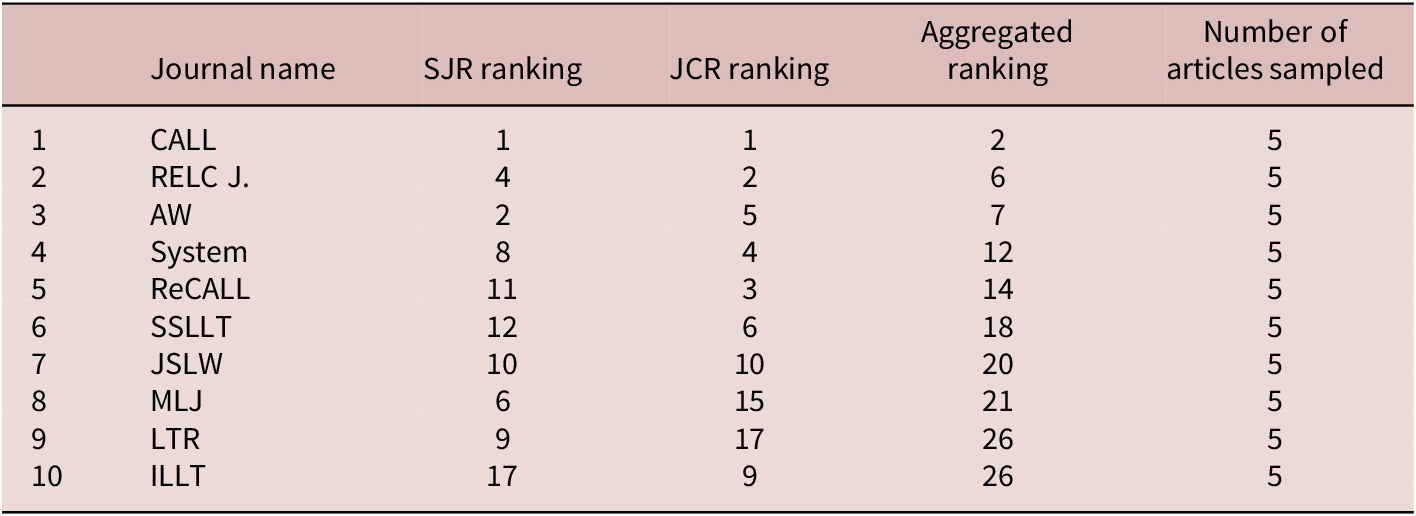

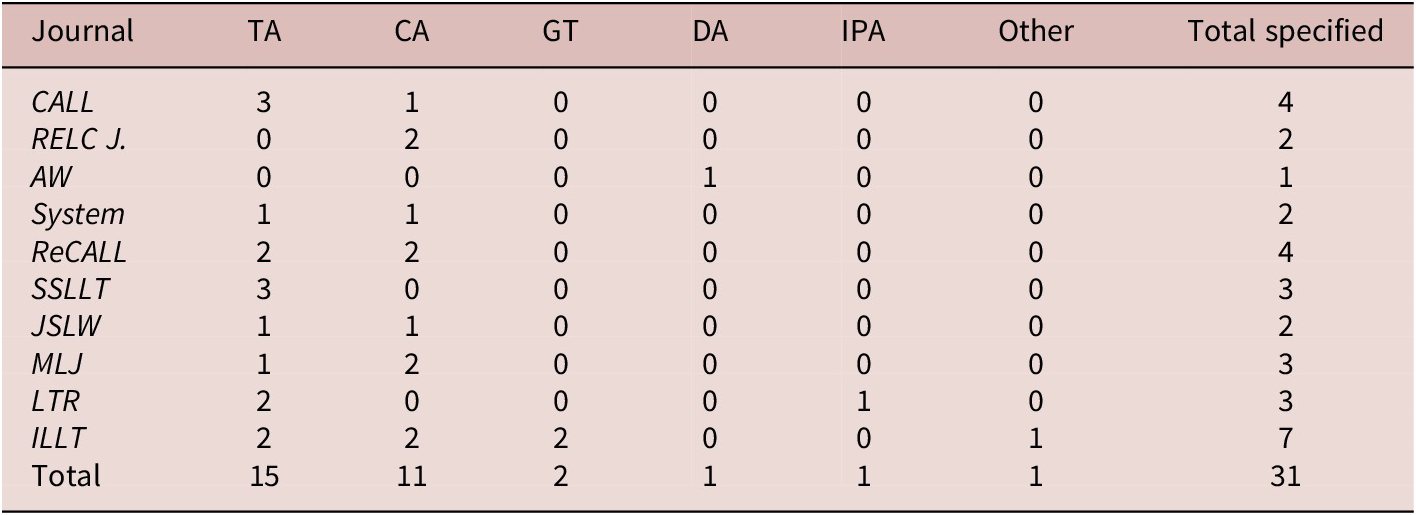


 Open access

