Assistance seeking during disasters in communities and vulnerable groups is vital to crisis management and enhancing social security. This concept is recognized as a preventive strategy against physical, psychological, and social harm and is considered a fundamental pillar in the structure of society.Reference Canton1, Reference Carlfjord, Öhrn and Gunnarsson2 The importance of assistance-seeking during disasters in vulnerable groups is multifaceted and challenging. On the one hand, it can help reduce emergency response time and save many lives. On the other hand, it can mitigate physical and psychological harm and reduce health care costs. Furthermore, assistance-seeking during disasters is recognized as a factor for promoting security and social stability, as increasing awareness and preparedness in society against various risks strengthens social cohesion and enhances solidarity among individuals and groups.Reference Canton1, Reference Lindell and Perry3, Reference Wang, Pan and Wan4
Given the widespread nature of disasters in today’s world, the significance of assistance-seeking never diminishes; rather, it becomes more important with the advancement of technology and the expansion of social media. Therefore, enhancing preparedness and responsiveness in vulnerable groups is highly important and requires the attention and cooperation of all members of society and relevant organizations.Reference Wisner, Gaillard and Kelman5 Vulnerable groups include individuals who, due to various physical, psychological, social, or economic conditions, are at a higher risk than other members of society. These groups include children, the elderly, blind people, and people who are deaf or hard of hearing, each with unique and specific needs. Addressing these vulnerable groups is one of the fundamental issues in the structure of society and the promotion of social cohesion, requiring special planning and measures to preserve and support them.6–8 Children and women, as vulnerable groups, require special care and support. Due to their physiological and psychological conditions, they are susceptible to external dangers. The elderly, some of whom may face greater risks due to illnesses, physical weakness, or the loss of social support networks, also need special care and support.Reference Andresen9, Reference Hutton10 Additionally, the disabled, blind, and deaf individuals, who face sensory limitations, require specific information and access to services and public resources.Reference Choi, Adams and Crimmins11, Reference VanNasdale, Jones-Jordan and Hurley12 Given the increasing elderly population, the needs of these vulnerable groups will become even more critical in the future. Therefore, promoting education and awareness and creating a culture of care and support for these groups is paramount and requires collaboration and coordination between various institutions and organizations.Reference Cox and Pardasani13 The significance of focusing on vulnerable groups is recognized as a fundamental principle in human rights and humanity. Supporting and caring for these groups reflects a society’s social and cultural progress. Planning and implementing support and empowerment programs for these groups demonstrates human and social values in society and helps create social cohesion and balance.Reference Freeman14 Also, while crisis has long been an important area of organizational research, the changes in the use of digital technology to manage crisis are rapid and dramatic.Reference Pearson and Clair15 Collective efforts to tame the crisis seem to be inextricably linked to many digital configurations involving different platforms, multiple servers, numerous networks, countless algorithms, and large amounts of data, and depend on the openness, distributability, recombinability, reprogrammability, and accessibility of digital technologies.Reference Barrett and Orlikowski16, Reference Gkeredakis, Lifshitz-Assaf and Barrett17 In essence, digital technologies and human agents (individuals, groups, organizational, and institutional actors) are becoming deeply intertwined “as co-evolving forces in emergency response.”Reference Nan and Lu18
Given the importance of studying new methods of communication in disasters for vulnerable groups and the need for more comprehensive studies in this field, this study aims to systematically review innovative methods of seeking assistance during disasters in vulnerable groups (children, women, disabled people, elderly, blind, deaf).
Methods
This study is a systematic review, designed and conducted in 2024, following the systematic review approach outlined in the book “Systematic Reviews to Support Evidence-Based Medicine”Reference Khan, Kunz, Kleijnen and Antes19 and the Preferred Reporting Items for Systematic Reviews and Meta-Analyses (PRISMA) guidelines.Reference Moher, Shamseer and Clarke20
Search Strategy
The required information was collected from PubMed, Scopus, Web of Knowledge, Embase, ProQuest databases, and the Google Scholar search engine without time limitations and in both English and Persian languages. The reference lists of the final articles included in the study were manually reviewed. The World Health Organization’s website was also specifically examined (Appendix 1, Sample Search Strategy).
Inclusion Criteria
-
• All studies investigating global evidence and experiences regarding innovative methods of assistance-seeking and information dissemination in disasters for vulnerable groups.
Exclusion Criteria
-
• Studies and reports related to disasters for non-vulnerable groups.
-
• Studies for which access to the full text was not possible despite emailing the corresponding author.
-
• Studies published in languages other than English and Persian.
-
• Review studies and bibliographic studies.
Study Selection/Screening
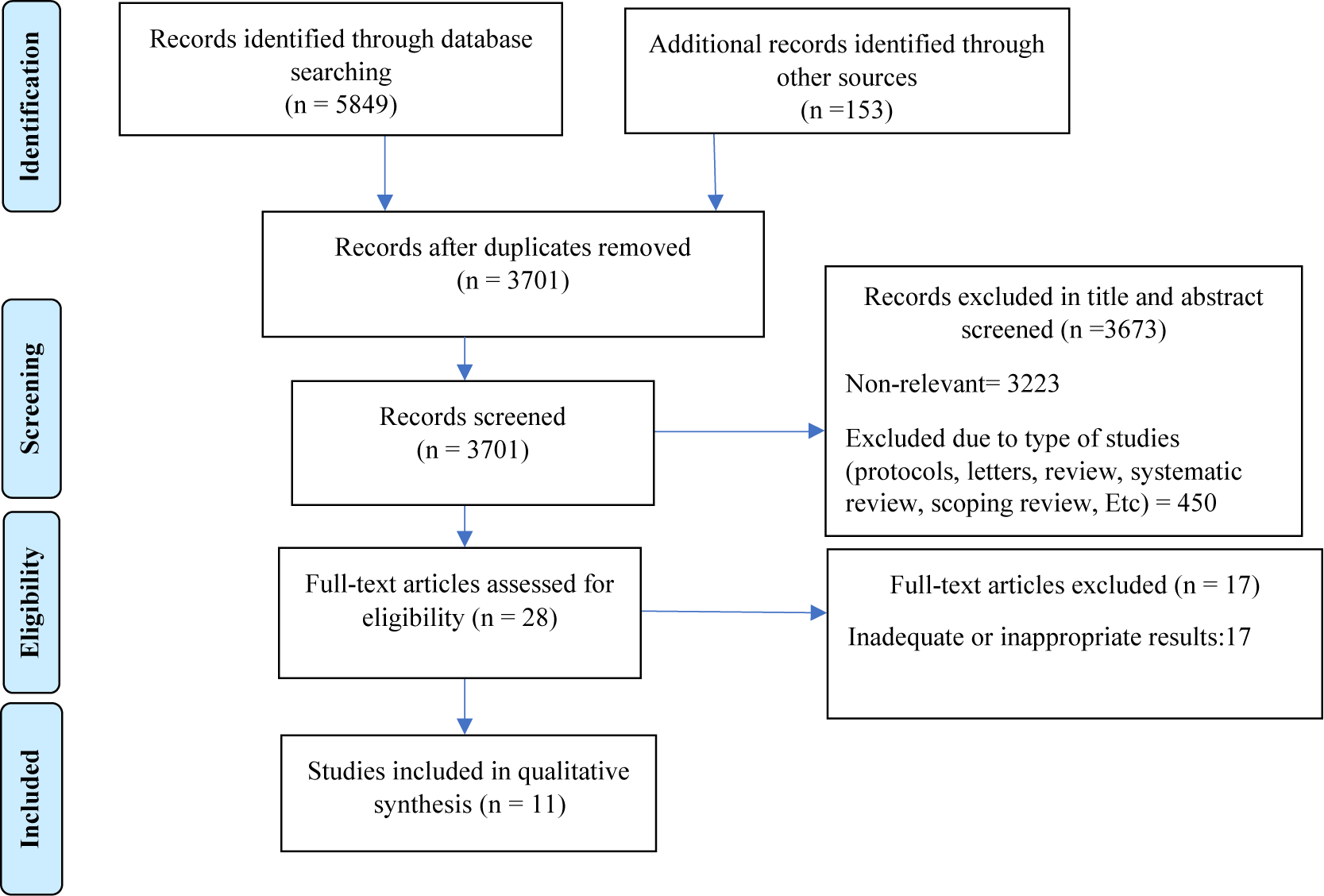
All stages of the selection and screening of articles were conducted independently by 2 research team members. Disagreements in the initial stage were resolved through discussion. If needed, disagreements were referred to a third member who had more knowledge and experience. Initially, the titles of all reviewed articles were examined, and articles that were not aligned with the study’s objectives were excluded. In the subsequent stages, the abstracts and full texts of the articles were reviewed, and studies that met the exclusion criteria or had weak relevance to the study’s objectives were identified and excluded. Endnote X8 reference management software was used to organize, review titles and abstracts, and identify duplicates. A PRISMA flowchartReference Moher, Liberati and Tetzlaff21 was used to report the selection and screening process results.
Quality Assessment
The quality assessment of the articles was carried out independently by 2 assessors using the relevant JBI checklists.Reference Lockwood, Munn and Porritt22, Reference Moola, Munn and Tufanaru23 The JBI critical appraisal tools were designed to evaluate the methodological quality of a study and determine the extent to which a study has addressed potential bias in its design, execution, and analysis. These tools included options such as Yes, No, Unclear, and Not Applicable. The final score for each article’s evaluation was given through agreement between the 2 assessors (number of “Yes” responses). Disagreements between the assessors were referred to a third evaluator. Three studies designed as mixed, review, or longitudinal studies were not assessed.24–26
Data Extraction
For data extraction, based on the study’s objectives, data from 5 articles were initially extracted as a pilot, and the deficiencies and issues in the initial form were addressed. Two research team members carried out data extraction from the articles independently. The extracted information included the author and year, country, study objective, country of study, innovative disaster assistance methods, target group, challenges and barriers, and recommendations. The data extraction form was designed in Word (2022).
Data Analysis
In this study, the extracted information was manually analyzed, summarized, and reported using content analysis. Content analysis is a method for identifying, analyzing, and reporting patterns (themes) within the text, and it is widely used in qualitative data analysis.27–29 Two researchers independently coded the data.
Findings
Of the 6002 articles found from databases and other sources, 2301 were removed due to duplication between different sources. During the title and abstract review, 3673 articles were excluded. Additionally, 17 articles were excluded during the full-text review, and finally, 11 articles were included in the study24–26, 30–37 (Appendix 2, Figure 1).
Searches and inclusion process.

Study Types Overview
The review of study types reveals that qualitative studies account for approximately 36% (4 studies), case studies also make up 36% (4 studies), and the remaining studies include 1 review study, 1 longitudinal study, and 1 mixed-method study. The information obtained from the articles was analyzed and reported based on the author and year, country, study objective, country of study, innovative disaster assistance methods, target group, challenges and barriers, and the recommendations proposed.
Country Breakdown
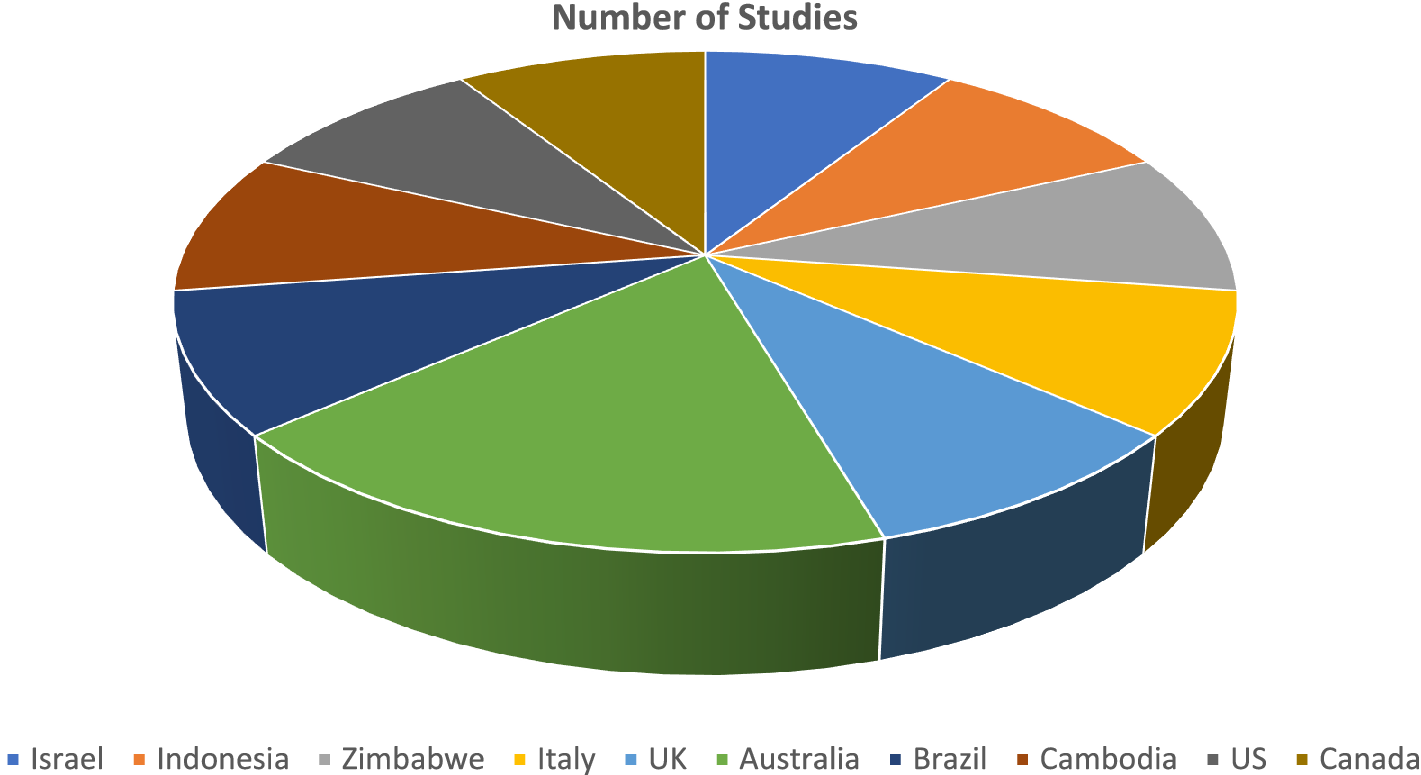
Figure 2 shows the classification of countries that conducted studies on assistance-seeking methods for vulnerable groups. Most of the studies were from Australia, and the most frequently examined vulnerable groups were individuals with disabilities and people who are deaf or hard of hearing.
Categorization of the number of studies by countries of study location.

Table 1 presents the findings of studies in the field of innovative assistance-seeking methods, broken down by vulnerable groups and the challenges specific to each target group.
New disaster relief methods and their challenges by vulnerable groups

The methods and tools used in assistance-seeking and disaster management were based on community disaster risk reduction programs. These programs utilized information systems, educational frameworks, communication platforms, and media tools to achieve their goals, considering specific environmental and cultural conditions.
Results of Evaluation of Article Bias
Most of the articles were qualitative and case studies. The mean score of the assessment of bias assessment of qualitative articles was estimated to be 8.25 of 10. The most important defects of the articles in this section are the insufficient number of samples, problems in generalizing the results, and not reporting the research approval authority or the study ethics code. The mean score of the reporting quality of the case papers was estimated to be 5.5 of 8. One of the most important defects of the articles in this section was related to the lack of attention to the identification of confounding factors and the lack of considering the strategies to deal with the confounding factors (Appendix 3: Results of the evaluation of the quality of reporting of articles).
Discussion
In this study, of the 6002 articles retrieved from databases, only 11 articles were included for data extraction. Most of the studies were from Australia, and the most frequently examined vulnerable groups were disabled people and people who are deaf or hard of hearing. The basis for the methods and tools used in seeking assistance and managing disasters was the disaster risk reduction programs in communities, which utilized information systems, educational frameworks, communication platforms, and media tools to achieve the goals, considering specific environmental and cultural conditions.
In emergencies, access to information is crucial, as receiving information from authorities and media is a key factor in saving lives. Therefore, if the information is transmitted through written formats such as subtitles on TV or internet news programs, even if deaf individuals watch it, they may not fully comprehend the information, some of which could be vital for their immediate survival. As a result, alternative communication channels should be explored and established to ensure that deaf individuals can receive critical information during emergencies.
Despite the challenges, such as mistrust due to negative past experiences and the mismatch of technology with the heterogeneous deaf community, technological advancements have the potential to improve communication for deaf individuals significantly.Reference Aldridge6, Reference Tannenbaum-Baruchi, Feder-Bubis and Adini-Weisel34, Reference Harkins, Tucker and Williams38 It is recommended that these technologies be accessible to the entire deaf community. Examples of such technologies include video calls via computers and mobile devices, mobile alerts (vibration), and instant messaging apps that allow communication with multiple recipients simultaneously. Video conferencing also provides deaf individuals the opportunity to receive information in sign languageReference Tannenbaum-Baruchi, Feder-Bubis and Adini-Weisel34 and in Germany, a learning system based on video calls exists for people who are deaf or hard of hearing.Reference Muir and Richardson39 Hemmerdinger et al. emphasize that ways to help these people in times of crisis require creativity, leadership, and commitment from policymakers, and are accessible and feasible.Reference Hamerdinger, Schafer and Haupt40
Some studies showed that developing user-friendly online tools for disability groups to disseminate critical safety information post-earthquake or during emergencies could bridge information gaps. However, international guidelines in designing online communications must be considered, especially for deaf individuals who use sign language. Emergency coordinators, rescuers, and disaster managers must be trained to provide swift emergency information and ensure these tools are designed to meet the needs of the deaf community.Reference Rotondi, Zuddas and Marsella33
The Sendai Framework for Disaster Risk Reduction (2015-2030) is the first international disaster management framework that incorporates the needs of people with disabilities. The Sendai Framework emphasizes the active participation of individuals with disabilities and their organizations in disaster planning and the development of disaster risk reduction policies.Reference Aitsi-Selmi, Egawa and Sasaki41 By fostering disability organizations’ representation, communication between governments and individuals with disabilities becomes more effective, ensuring that their needs are addressed at the community level.Reference Gartrell, Calgaro and Goddard30, Reference Quaill, Barker and West32, Reference Surwanti and Purwaningsih36
According to some studies, individuals with disabilities have rights that must be considered, including the right to participate in all stages of the disaster process (management, emergency response, and post-disaster recovery), the right to access priority services and facilities based on their needs, and access to readily available information regarding disasters and disaster risk reduction.Reference Gartrell, Calgaro and Goddard30, Reference Surwanti and Purwaningsih36
Government and regional organizations responsible for disaster management must integrate the following into their plans and duties related to individuals with disabilities:
-
• Training and simulation of emergency rescue for individuals with disabilities.
-
• Developing operational policies and standard procedures for evacuations and rescues that offer exceptional protection for individuals with disabilities.
-
• Ensuring accessibility and meeting specific needs in evacuation sites and temporary shelters.
-
• Conducting rehabilitation and reconstruction for individuals with disabilities.Reference Surwanti and Purwaningsih36
Given their physical and psychological conditions in disaster situations, older adults must be integrated into core disaster management programs, including response and recovery efforts and acute and long-term support. Pre-disaster training for responders and volunteers is crucial to sensitizing them to the needs of the elderly. This program should include biophysical aspects, psychosocial care, ethical and legal issues, logistics, and resources. One key element of pre-disaster training is developing cultural sensitivity. Understanding trauma for individuals, specific issues for the elderly, their values, and cultural concerns, and respecting them is essential.Reference Kar26
Several tools and strategies can help prepare professionals to protect and assist the elderly during a disaster. These include employing experts from various fields to train and work in coalitions, ensuring the participation of elderly advocates in community-level emergency preparedness, and clarifying the roles of governments, NGOs, relief agencies, and local partners in disaster response, relief operations, and post-disaster support.Reference Bogdan, Krueger and Wright24, Reference Kar26
Due to losing some of their communication networks and experiencing isolation, older adults require special attention in disaster planning. Activities such as sessions or workshops should be organized to establish support systems where they can rely on help from their peers in times of crisis.Reference Bogdan, Krueger and Wright24
For visually impaired individuals, a good verbal description is crucial for effectively using warning information and acting accordingly. This description should enable the blind person to determine whether they are at risk of an impending disaster.Reference Sassaki42 A 2023 study by Trik et al. also found that smart canes are a useful technology being researched and developed to increase walking accuracy for people with low vision through intelligent obstacle detection. In addition, these devices use artificial intelligence to provide users with a sense of sight and greater independence. However, these devices are expensive and often do not provide the desired functionality in a compact device.Reference Tarik, Hassan and Naqvi43
The South African Disability Rights Movement’s slogan, “Nothing About Us Without Us,” can serve as the foundation for planning and policy making concerning vulnerable groups. No policy affecting them should be decided without their full participation, regardless of how well-intentioned others might be.Reference Sassaki42 Therefore, it is necessary to secure governments’ commitments to support the programs and policies developed, ensuring that these education programs are integrated into national curricula and that organizational, cultural, and social barriers are identified and removed by allocating sustainable resources.Reference Muzenda-Mudavanhu, Manyena and Collins31
Limitations
Although this study aimed to be comprehensive, several limitations were present. One of the main limitations was the restricted number of articles reviewed due to access limitations and strict inclusion and exclusion criteria, which may have reduced the comprehensiveness of some findings. For example, the searches conducted in this study were limited to English and Persian, so experiences published in national or local languages may have been excluded. Another limitation is the limited generalizability of the study’s findings, meaning that countries need to adapt the factors and results to their specific context when applying the study’s conclusions.
Conclusion
Given the emergency conditions of disasters, governments must commit to ensuring that resources are allocated specifically and that vulnerable individuals are actively involved in the process. This will allow for continuous, scientific steps to identify their unique needs. Developing planning and policies for a comprehensive and systemic approach is essential to manage the consequences of disasters through better preparedness effectively.
To ensure the generalizability of the results, it is recommended that studies be designed to examine the effectiveness of the new methods introduced over longer periods of time and in different social and cultural contexts. In addition, each country should localize the new methods, taking into account its specific conditions, and test them in pilot exercises before implementing them at the community level and in critical situations.
Supplementary material
The supplementary material for this article can be found at http://doi.org/10.1017/dmp.2025.10146.
Data availability statement
All data generated or analyzed during this study are included in this published article and its supplementary information files.
Acknowledgments
A systematic review, code of ethics IR.IUMS.REC.1402.840 and the plan code (Grant Number) 28286, which by the Health Management and Economics Research Center, Health Management Research Institute, Iran University of Medical Sciences is financially supported.
Author contribution
NJ conceptualized and designed the study. AT actively participated in the data extraction process. NL and MS performed the data analysis. NJ and AT took the lead in writing the initial draft of the manuscript. NL contributed significantly by revising the initial manuscript.
Competing interests
All authors declare no competing interests.