


Since October 2023, students, faculty, and staffFootnote 1 across the United Kingdom have organized demonstrations, teach-ins, encampments, and public expressions of solidarity with Palestinians in Gaza and against Israel’s military actions. These mobilizations, inspired in part by campus movements in the United States and replicated globally, reflect a tradition of student engagement with anticolonial, antiwar, and global justice struggles (Altbach Reference Altbach1970; Reference Altbach1984; Reference Altbach1997). In response, UK universities have enacted a wide array of repressive measures—including the removal of protest materials, bans on speaker events, disciplinary investigations, and even legal action to remove encampments. These responses are frequently justified through the language of safety, neutrality, or policy compliance. Yet these seemingly apolitical and managerial rationales reshape the conditions under which solidarity, dissent, and public grief can appear on campus as legitimate.
This article argues that university repression of Palestine solidarity is best understood as a mode of aesthetic ordering: a set of institutional practices that regulate what can be seen, said, and felt in university space and, in doing so, determine which claims can become legible as politics. Repression, on this account, does not simply deter protest. It produces a normative order in which anticolonial critique is governed as risk, disruption, or threat. Crucially, this aesthetic ordering aligns campus governance with broader logics that structure contemporary higher education in the West—neoliberal managerialism, racialized securitization, and imperial geopolitical alignment—revealing universities not as insulated “ivory towers” but as institutions embedded in and reproducing wider regimes of power.
This pattern of repression poses an empirical and theoretical puzzle. First, a great deal of this repression is occurring in ostensibly liberal democracies, where rights to freedom of expression and assembly are supposed to be guaranteed (European Civic Forum 2024; Khan Reference Khan2024; Palestine Legal 2025) and where universities are publicly constituted as sites of free inquiry. Second, this repression is occurring amid mass atrocity crimes and humanitarian catastrophe. At the time of writing, Israeli military forces have killed more than 70,000 Palestinians in the Gaza Strip (UNRWA 2025), but the estimated death toll could be much higher according to some studies (e.g., Jamaluddine et al. Reference Jamaluddine, Abukmail, Aly, Oona and Checchi2025) and it continues to rise, despite a so-called ceasefire agreement reached in October 2025 (Amnesty International 2025). As a result of Israel’s assault on the Gaza Strip, almost the entire population of 2.2 million has been displaced, often multiple times, and the overwhelming majority are living in makeshift tents (AJLabs 2025). Israel continues to block the entrance of considerable amounts of essential aid and there remain high levels of food insecurity, malnutrition, and disease (UNRWA 2025), while only half of hospitals and less than half of primary healthcare centers are partially functional and face shortages of essential medical equipment and supplies (UNRWA 2025). Israeli officials are charged with war crimes and crimes against humanity, the world’s highest court warned of “plausible genocide” (International Court of Justice 2024), and human rights organizations and other experts have assessed that Israel is committing genocide (see, among others, Amnesty International 2024; Asem Reference Asem2025; B’Tselem 2025; COI OPTEJI 2025; Mann et al. Reference Mann, Aburass, Leibowitz and Shalev2025; Palestine Medical Relief Society 2023). That universities in the UK and elsewhere have moved to suppress activism calling for an end to such violence therefore demands explanation—not only in terms of institutional decision making but also in terms of the political effects these repressive actions produce and the broader orders they help to sustain.
This paper investigates the repression of Palestine solidarity activism in UK higher education through an original dataset of 114 documented incidents between October 2023 and March 2025, compiled from published sources including media reports, institutional statements, and communications by student and staff/faculty groups. Rather than treating repression as a straightforward instrument of deterrence, the paper asks two questions: (1) What political effects does repression produce beyond immediate protest containment—that is, how does it reshape the intelligibility and legitimacy of dissent on campus? And (2) what do university responses reveal about how political legitimacy, dissent, and responsibility are structured within contemporary higher education, particularly under conditions of neoliberal governance, securitized logics, and imperial entanglement?
This contribution is both empirical and conceptual. Empirically, the paper provides one of the first systematic mappings of post–October 2023 repression in UK higher education. Conceptually, it advances aesthetic ordering as a framework for analyzing repression as a political-aesthetic governance of visibility and legitimacy. In doing so, it extends repression scholarship by foregrounding repression’s productive effects—its role in sustaining a normative order that renders particular solidarities, claims, and political subjects illegible or dangerous. It also extends scholarship on the imperial university by demonstrating how diverse modalities of repression work together to maintain imperial alignments not only through material ties and epistemic hierarchies but also through the everyday governance of political appearance. These dynamics matter not only for academic freedom and campus politics, but also for how institutions contribute to the epistemic and affective conditions through which colonial violence—including genocidal violence—becomes governable and politically tolerable.
The article proceeds as follows. The next section situates the UK case within scholarship on repression, student activism, and Palestine solidarity, including work on the imperial and neoliberal university and the ways in which Palestine operates as an exemplary site through which Western universities police challenges to settler colonialism and geopolitical alignment (e.g., Alqaisiya and Perugini Reference Alqaisiya and Perugini2024; Chatterjee and Maira Reference Chatterjee and Maira2014). The following section develops the concept of aesthetic ordering as a framework for analyzing repression as the governance of political appearance. A subsequent section outlines the dataset, sample, and coding strategy. Next, drawing on 114 incidents of repression documented across 70 UK universities between October 2023 and March 2025, we develop a typology of five modes of repression—coercive, procedural, punitive, symbolic, and delegitimizing rhetoric—and show how they operate in layered and mutually reinforcing ways to structure the visibility and legitimacy of Palestine solidarity on campus. The final substantive section extends this analysis to the international and colonial stakes of campus governance by theorizing university repression as a form of genocidal complicity: a contribution to the epistemic and affective infrastructures through which Palestinian elimination is rendered politically tolerable. The conclusion returns to the article’s broader theoretical contributions, reflecting on what conceptualizing repression as aesthetic ordering reveals about the governance of dissent, the reproduction of the neoliberal-imperial university, and the role of higher education institutions in managing geopolitical conflict and anticolonial critique.
Repression of Palestine Solidarity on University Campuses: Histories and Explanations
Universities are often idealized as spaces of free inquiry and critical thought, yet this image obscures the historical and ongoing role of universities in the repression of student activism (e.g., Abu-Hasaballah Reference Abu-Hasaballah2025; Woodman Reference Woodman2017). Far from functioning as neutral arenas for contestation, universities have repeatedly acted to constrain collective action that challenges dominant political, economic, or geopolitical interests. The repression of Palestine solidarity activism is emblematic of these dynamics, revealing how universities police the boundaries of legitimate political expression.
A substantial body of scholarship documents the long history of repression and censorship targeting pro-Palestine speech and organizing on university campuses, particularly in the US (Deeb and Winegar Reference Deeb and Winegar2024; Salaita Reference Salaita2024). Scholars have documented how university administrators, often under pressure from donors, trustees, and pro-Israel advocacy groups, have restricted or punished campus organizing as well as academic expressions considered to be in support of Palestinian rights (Deeb and Winegar Reference Deeb and Winegar2024; Fúnez-Flores Reference Fúnez-Flores2024; Palestine Legal 2025; Salaita Reference Salaita2024). Since October 2023, these dynamics have reached an unprecedented level in the US, with criticisms of Israel increasingly framed as antisemitic and universities subjected to political pressure to “restore order” on campuses (Deeb and Winegar Reference Deeb and Winegar2024; Palestine Legal 2025). Documented tactics include disciplinary sanctions, surveillance, law enforcement intervention, and the deployment of legal and administrative instruments that conflate anti-Zionist critique with hate speech (AAUP and MESA 2025; Palestine Legal 2025). As Steve Salaita (Reference Salaita2024) argues, free speech itself has become a rhetorical weapon, invoked to suppress rather than to protect dissenting views.
While much of the existing research focuses on the US, similar patterns of repression have extended to the UK and other liberal democracies (Della Porta and Doğan Reference della Porta and Doğan2026; ELSC 2021; 2026; ELSC, Forensic Architecture, and Forensis 2026). In the UK context, repression has been shaped in particular by the extension of the Prevent duty to higher education in 2015 and by the adoption of the working definition of antisemitism produced by the International Holocaust Remembrance Alliance (IHRA). The Prevent duty—part of the UK government’s counterterrorism strategy (Secretary of State for the Home Department 2011)—has embedded a securitized logic of preemptive risk management, encouraging administrators to treat Palestine solidarity as a potential form of “non-violent extremism” (Amnesty International 2023; Malak Reference Malak2019; Nabulsi Reference Nabulsi2017). The IHRA’s working definition of antisemitism, adopted by many universities after 2016 under government threat of funding cuts, includes examples that many legal scholars argue conflate antisemitism with lawful political critique of Israel (see, among others, Bowring et al. Reference Bowring, Hendy, Hooper, Mansfield, Sedley, Tomlinson, Webber and Bindman2021; Stern Reference Stern2019). Although legally nonbinding, it has been used by universities and public bodies to investigate, discipline, or silence students, faculty, and staff engaged in Palestine advocacy (BRISMES and ELSC 2023; Gordon Reference Gordon2024). Together, these frameworks have created a structural environment in which university administrators feel both empowered and obligated to surveil, restrict, or discipline political activity related to Palestine.
Beyond documenting repression, existing scholarship offers two broad explanatory approaches. The first situates repression within the structural conditions of the imperial and neoliberal university. Work on the “imperial university” highlights how Global North universities have historically contributed to empire building through epistemic hierarchies, knowledge production, and material entanglements with military and security infrastructures (Ajonye Reference Ajonye2024; Chatterjee and Maira Reference Chatterjee and Maira2014; Gopal Reference Gopal2021; Lockman Reference Lockman2009; Stavrianakis Reference Stavrianakis2006; Stein Reference Stein2022). Within this literature, Palestine is identified as exemplary rather than exceptional: Western academia systematically polices challenges to imperialism and settler colonialism, while solidarity with Palestinians and knowledge of their history and rights are subject to discursive erasure that legitimizes Israel’s colonial project (Alqaisiya and Perugini Reference Alqaisiya and Perugini2024; Fúnez-Flores Reference Fúnez-Flores2024; Gould Reference Gould2024).
This structural analysis intersects with scholarship on the neoliberal restructuring of higher education. Marketization has encouraged universities to adopt managerial logics that depoliticize campus spaces, recast students as consumers rather than political actors, and prioritize reputation, risk management, and operational continuity over democratic contestation (Brown Reference Brown2015; Brulé Reference Brulé2016; Dolhinow Reference Dolhinow2017). Within this framework, dissent is translated into liability and managed through space-use policies and surveillance systems rather than political engagement (Brulé Reference Brulé2016). As studies of Palestine solidarity activism demonstrate, neoliberal governance often works in tandem with colonial and imperial logics, rendering certain political claims intolerable while framing repression as neutral administration.
A second body of scholarship, emerging from repression and social movement studies, focuses on the mechanisms and modalities of protest control. This scholarship expands definitions of repression to encompass nonstate actors (Boykoff Reference Boykoff2007) and indirect forms of regulation such as “channeling,” referring to the use of institutional incentives and penalties to shape the boundaries of permissible dissent (Earl Reference Earl2011). More recent work on student activism has further disaggregated repression in university contexts, identifying forms such as lawfare, the selective enforcement or invention of institutional policies to obstruct political expression; delegitimizing rhetoric deployed by administrators, faculty, media, or politicians to construct activism as dangerous or naive; and relational repression that targets activists through social ties or institutional dependencies (Kapit, Ríos-Jara, and Bratberg Reference Kapit, Ríos-Jara and Bratberg2025). These approaches are valuable for disaggregating how repression operates within specific institutional contexts, including universities.
However, repression studies have tended to conceptualize these practices primarily in instrumental terms—as means of deterring activism or restoring order. What remains undertheorized is how repression operates as a political and sensory regime that reconfigures the conditions under which political demands become intelligible, legitimate, or recognizable as politics at all, and how these effects relate to the imperial, neoliberal, and racialized structures within which universities are embedded.
This article addresses this gap by conceptualizing repression of Palestine solidarity as aesthetic ordering. Rather than treating repression as a set of discrete tactics, we analyze it as a regime that regulates what can be seen, said, and felt on campus, thereby shaping political visibility, legitimacy, and subjectivity. We argue that repression is both enabled by and productive of neoliberal managerialism, racialized securitization, and imperial entanglements in higher education. Empirically, we contribute an original dataset of incidents of repression across UK universities and develop a typology of five modes—coercive enforcement, procedural suppression, punitive repression, symbolic repression, and delegitimizing rhetoric—through which aesthetic ordering operates. In doing so, we show how the repression of Palestine solidarity not only constrains activism but also reproduces broader logics of governance with implications for academic freedom, racialized hierarchies, and the political role of the university.
Repression as “Aesthetic Ordering”: Perception, Power, and Politics
This paper conceptualizes repression not solely as a deterrent or disciplinary instrument, but also as a multilayered operation that shapes political possibility by organizing perception. To capture these dynamics, this paper advances the concept of aesthetic ordering: a regime of governance that regulates what can be seen, said, and felt, and thereby stabilizes the boundaries of legitimate political appearance. While the term has been used in cultural anthropology to describe how sensory and affective practices sustain social order (Nading Reference Nading2012; Winegar Reference Winegar2016), we develop it here in dialogue with Jacques Rancière’s theory of aesthetics and politics specifically to analyze repression as a political-aesthetic practice.
Rancière’s (Reference Rancière2004; Reference Rancière2010) central insight is that political order is sustained not only through institutions and laws, but also through what he calls the distribution of the sensible: the perceptual arrangement that determines whose voices count as speech, what forms of visibility are permitted, and which claims can register as politics. Politics, in this account, emerges as dissensus—a rupture in this distribution, when those who “have no part” appear as equals and contest the sensory boundaries of the political (Chambers Reference Chambers2013; Panagia Reference Panagia2018). Dissensus is therefore not simply disagreement but a dispute over the very conditions of recognizability, voice, and belonging.
Rancière contrasts dissensus with what he terms the police order. The police order is not simply a coercive apparatus or the activities of the state police; rather, it refers to the broader social and perceptual arrangement that allocates places, roles, and capacities, determining who may legitimately speak, act, and appear within a given order (Rancière Reference Rancière2004; Reference Rancière2010). It operates by presenting these arrangements as natural, necessary, or self-evident, thereby foreclosing alternative forms of political subjectivity and collective life. The distribution of the sensible is one mechanism through which the police order is maintained, structuring what can be seen, heard, and recognized as political. Politics emerges when dissensus interrupts this order; repression seeks to restore it.
Where Rancière theorizes the logic of political disruption and its suppression, aesthetic ordering specifies the institutional practices through which the police order is reproduced through the management of sensation, affect, and visibility. Aesthetic ordering regulates where politics may appear, how it may be expressed, and which solidarities can be recognized as legitimate. For example, universities enforce visual and spatial control by removing posters, restricting flags, and dismantling physical encampments. This regulates not only space but also the field of visibility, determining which political claims can appear in the physical and symbolic landscape of the university. When university communications discursively frame Palestine solidarity activism as “unsafe” or “disruptive,” this does not simply deter participation; it delegitimizes solidarity activism as beyond the bounds of the acceptable, rendering it unintelligible as a legitimate political claim. Meanwhile, risk management frameworks, event approval processes, and codes of conduct function as technologies of depoliticization and procedural containment. By embedding political conflict within the neutralizing language of administrative procedure, universities convert dissent into a bureaucratic object, stripping it of its disruptive and relational political force. Taken together, such measures do not simply constrain mobilization; they work to render Palestine solidarity unintelligible as legitimate politics—what Rancière would describe as the relegation of dissensus to “noise.”
This framework also clarifies why Palestine solidarity has become a particularly intense site of repression since October 2023. The heightened visibility and affective force of Palestine solidarity activism threaten dominant arrangements of recognizability, legitimacy, and belonging within higher education. Universities respond through conjunctural intensifications of aesthetic ordering that aim to restore perceptual order by disqualifying anticolonial critique and solidarity as improper, risky, or dangerous. Crucially, this ordering is not politically neutral. It is both enabled by and productive of the broader rationalities of contemporary higher education—neoliberal managerialism and risk governance, racialized securitization, and the imperial university’s geopolitical and epistemic alignments. By policing visibility and legitimacy on campus, universities reproduce these governing logics in everyday institutional life, with implications that extend beyond Palestine solidarity to the governance of dissent, academic freedom, and racialized hierarchies of legitimacy and threat.
Finally, aesthetic ordering is not confined to the campus. Since October 2023, government actors, pro-Israel organizations, and media outlets have rapidly securitized Palestine solidarity and normalized framings that conflate criticism of Israel with antisemitism, extremism, or terrorism (Browne, Weizman, and Matchain Reference Browne, Weizman and Matchain2025; Della Porta and Doğan Reference della Porta and Doğan2026; Keegan and Halfon Reference Keegan and Halfon2023). Universities translate and intensify these broader discourses into institution-specific techniques of governance—making aesthetic ordering a relational practice that links broader societal-political dynamics to everyday institutional control. This theoretical lens informs our methodology by directing attention not only to discrete acts of repression, but also to their patterned and differentiated perceptual effects across campus political life.
Methodology and Data Collection
This study maps the scope, modalities, and political-aesthetic effects of the repression of Palestine solidarity within UK higher education. It is based on an original dataset of 114 incidents of repression and censorship in UK universities from October 7, 2023, until March 2025, which is reproduced in online appendix A. Consistent with our conceptualization of repression as aesthetic ordering, we define incidents of repression and censorship to include all acts seeking to suppress, censor, contain, regulate, monitor, delegitimize, or punish actions or expressions in support of Palestinian rights, including both overt coercion and more diffuse procedural and symbolic forms of control.
In most cases, an “incident” refers to a discrete, temporally bounded intervention (e.g., police or security dispersal of a protest; cancellation of an event; or removal of banners, flags, or memorials). In other cases, an incident refers to an ongoing process, such as a disciplinary proceeding, internal investigation, surveillance or monitoring, or the sharing of information with police or external bodies. We treated such processes as single incidents where they constituted a continuous attempt to regulate or discipline Palestine solidarity activism. Where multiple disciplinary actions or investigations occurred within one institution, we recorded these as a single incident to reflect our focus on institutional repertoires and practices rather than the number of individuals affected, and to avoid inflating counts where multiple cases may have stemmed from the same protest episode.
The study includes 70 out of 130 publicly funded institutions in the UK. We combined purposive selection with efforts to ensure diversity across institutional types and geographical regions. The sample includes all 24 Russell Group universities (the UK’s most elite and research-intensive institutions), alongside post-1992 universities,Footnote 2 specialist institutions (e.g., arts, medical, business), city-based universities, and campus universities, with coverage across England, Scotland, Wales, and Northern Ireland (table 1). The inclusion of all 24 Russell Group universities reflects their disproportionate influence within UK higher education, where elite institutions are more likely to set sector-wide norms and to face heightened scrutiny and political pressures around campus activism.
Universities Examined and Number of Incidents

Table 1 Long description
The table is divided into two main sections.
Section 1: Russell Group universities. All 24 institutions showed evidence of activism. Notable incident counts include University of Oxford with 10, U C L with 9, Imperial College London with 7, and University of Sheffield with 7. Other counts range from 0 (Durham, Exeter, Southampton) to 6 (Cambridge). The total incidents for this group is 87.
Section 2: All other universities. Out of 46 institutions, 33 showed evidence of activism. The highest incident count in this group is S O A S with 8, followed by Lancaster University with 4 and University of Essex with 3. Many institutions in this category, such as Abertay, Bath Spa, and Plymouth Marjon, reported 0 incidents. The total incidents for this group is 27.
The final row provides a grand total: 57 out of 70 universities showed evidence of activism, with a total of 114 incidents of repression recorded.
Source: Authors’ dataset of incidents of repression of Palestine solidarity activism in UK universities (online appendix A).
Data were drawn from the following publicly available sources: (1) university statements and policy communications; (2) national, local, and student newspapers; (3) independent and alternative media; (4) social media posts by student or campus groups and campaign organizations; and (5) reports by human rights organizations. Student media were particularly important for documenting indirect or low-visibility repression—such as room denials, event delays or cancellations, poster removals, or changes to protest guidance—that often do not reach national coverage. We included incidents only where sources provided sufficient specificity to identify the institution, the form of activity targeted, and at least one identifiable repressive action.
Each incident was coded along three dimensions: (1) activity targeted, (2) mode of repression, and (3) institutional justification.
-
1. Activity targeted: Our data capture a broad spectrum of Palestine solidarity activism targeted for repression. These include protest actions, such as rallies and marches, disruption of events, encampments, and occupations of university buildings; symbolic and embodied political expression in solidarity with Palestinian rights, such as displays of posters, placards, banners, and Palestinian flags, graffiti, and keffiyeh wearing; vigils or memorials in memory of Palestinian loss of life; academic and student-society events, such as visiting-speaker events, panel discussions, teach-ins, and social events (e.g., society picnics framed as solidarity gatherings); and faculty and student speech, such as public statements, social media posts, and/or protest remarks.
-
2. Mode of repression: Drawing on repression studies scholarship that highlights the diversity of repressive practices beyond overt coercion while also recognizing the continued importance of direct coercive interventions (e.g., Boykoff Reference Boykoff2007; Earl Reference Earl2011; Kapit, Ríos-Jara, and Bratberg Reference Kapit, Ríos-Jara and Bratberg2025), we coded direct coercive interventions (police/security interventions; legal action), indirect or anticipatory practices (surveillance and intelligence practices; disciplinary processes and investigations; restrictive policy changes or selective enforcement of policies and procedures), and forms of censorship (cancellations and restrictions of events; the removal or prohibition of symbolic expressions, including banners, posters, memorials, graffiti, and political clothing). These categories were designed to support the subsequent typology of repression developed in the findings section.
-
3. Institutional justification: For each recorded incident, where possible, we documented the rationales articulated by university authorities in publicly available statements or policy communications. These justifications most commonly invoked concerns relating to health and safety, disruption to university activities, institutional neutrality, and/or antisemitism. Rather than treating such rationales as neutral explanations for institutional decision making, we conceptualize them as forms of delegitimizing rhetoric that actively shape how Palestine solidarity activism is rendered intelligible within the university. Analytically separating “justification” from “mode” enabled us to distinguish between (1) repressive practices and (2) the discursive frames through which those practices are normalized.
Visibility Bias
As with all datasets derived primarily from published and publicly accessible sources, the coverage of incidents in this study is shaped by uneven regimes of visibility. In particular, universities with active student newspapers are more likely to appear in the dataset. Student journalists often play a crucial role in documenting and circulating accounts of repression that might otherwise remain confined to internal communications or informal knowledge among activists. Where such infrastructures of reporting are weak or absent, comparable incidents may occur without leaving a public trace. As a result, the dataset is better understood as mapping patterns and modes of repression that become visible, rather than as providing a comprehensive census of repressive practices across the UK university sector.
At the same time, some forms of repression are systematically less likely to be documented, regardless of institutional media capacity. Low-level, informal, or interpersonal practices—such as intimidation, racialized harassment, or hostile managerial behavior—often unfold through private interactions, internal emails, or discretionary decisions, and therefore resist capture through published sources. One reported case, drawn from an open letter by university staff (including faculty) (University of Edinburgh Students and Staff 2024), described intimidation and racialized harassment directed at staff and PhD students following the display of Palestine solidarity materials. This incident was excluded from the dataset because the reported actions were diffuse and insufficiently specified to allow consistent coding by mode of repression, justification offered, or form of activity targeted. Its exclusion reflects a methodological limitation rather than an assessment of significance, and points to the likelihood that the dataset underrepresents everyday, racialized, and informal forms of repression that operate through workplace relations rather than formal institutional or security mechanisms (e.g., Pervez Reference Pervez2025). Notably, such practices may be particularly effective forms of aesthetic ordering precisely because they operate below the threshold of formal intervention, disciplining political expression through fear, uncertainty, and unequal exposure to risk rather than overt prohibition or punishment.
In addition, the dataset likely underrepresents incidents of disciplinary actions, as individuals subjected to them may be reluctant to publicize their experiences due to concerns about reputational harm, employment prospects, or visa status. Evidence from a freedom-of-information request conducted by investigative journalists at Liberty Investigates suggests that such processes are more widespread than public reporting indicates: their findings revealed that 28 universities had launched disciplinary investigations into at least 113 staff (including faculty) and students (Walawalkar et al. Reference Walawalkar, Clugston, Barker-Singh, Lousseff and Cruz2025). Where these incidents could be reliably linked to institutions within our sample, they were included in the dataset; however, they almost certainly represent only a fraction of the disciplinary activity taking place.
Because the primary aim of this study is typological and interpretive—to identify the modalities of repression and analyze their political and aesthetic effects—rather than to measure the overall scale of repression or establish causal relationships, these visibility biases do not undermine the core analytical claims. Instead, they underscore one of the study’s central arguments: that repression in the contemporary university often operates through uneven visibility, differential exposure, and the selective recognition of dissent.
Analytical Strategy
Alongside incident mapping and typological coding, we employed a qualitative analytical strategy to interpret repression as a form of aesthetic ordering—an institutional regulation of political visibility, legitimacy, and affect. To operationalize this framework, we read incidents and justificatory texts through three intersecting bodies of scholarship applied across the analysis. First, scholarship on the neoliberal university illuminates how repression is mediated by managerial rationalities of risk, reputation, and operational continuity, clarifying the proceduralization of dissent and the use of property, liability, and “business-as-usual” logics to govern campus space and speech (e.g., Brown Reference Brown2015; Brulé Reference Brulé2016). Second, work on the imperial university situates campus governance within longer histories of colonial power and geopolitical alignment, clarifying why Palestine solidarity is treated as a uniquely contentious object of regulation and how universities police challenges to settler colonialism through both epistemic and material practices (e.g., Alqaisiya and Perugini Reference Alqaisiya and Perugini2024; Chatterjee and Maira Reference Chatterjee and Maira2014). Third, critical scholarship on race and securitization (e.g., Abu-Bakare Reference Abu-Bakare2020; Ali Reference Ali2020; Finden Reference Finden2025; Razack Reference Razack2008)—including analyses of Prevent—conceptualize “safety” as a racialized and anticipatory governance technology that produces hierarchies of threat and differential exposure to surveillance and discipline. Together, these lenses allow us to analyze repression not only as protest control but also as a reproductive apparatus through which universities enact and reproduce neoliberal, imperial, and racialized security logics in everyday campus governance.
An incident at Bangor University illustrates how these logics converge. During a graduation ceremony, a student (of Arab background) was pulled off stage by security officers and arrested after appearing to unfurl a Palestinian flag or banner (Powell Reference Powell2024). This intervention combined coercive enforcement with the rapid suppression of symbolic political expression and came against a wider backdrop of institutional delegitimizing rhetoric targeting Palestine solidarity. Previously, the vice-chancellor suggested that the student encampment was causing “distress” to some of the university community (Powell Reference Powell2024). The case shows how Palestine solidarity is interpreted institutionally through managerial risk logics and racialized constructions of threat to reassert the boundaries of legitimate belonging and political appearance on campus.
Patterns of Repression
Of the 70 universities investigated,
-
• 57 universities showed evidence of Palestine solidarity activism,
-
• 33 universities experienced at least one incident of repression, and
-
• 21 of these 33 universities were members of the elite Russell Group.Footnote 3
We identified 114 instances of repression, of which 87 incidents occurred at one of the Russell Group universities. We found the greatest number of incidents at the University of Oxford (ten), followed by University College London (UCL) (nine), SOAS (eight instances, of which one was a disciplinary action by the student union against elected officers and one was a court injunction undertaken on behalf of SOAS by its overarching institution, the University of London), Imperial College London (seven instances, of which one was an investigation by the student union into affiliated student societies), and the University of Sheffield (seven instances). SOAS was an outlier as a non–Russell Group university with a high number of incidents of repression.Footnote 4 Almost all repression was initiated by university management, with eight cases involving student unions (Duncan Reference Duncan2023; Sigsworth Reference Sigsworth2025; SOAS Justice for Workers n.d.; Ullah Reference Ullah2023).
As table 2 shows, the most frequently documented modes of repression were disciplinary action (actual or threatened), recorded in 28 incidents, followed by legal action (21 incidents), which primarily involved court orders to evacuate encampments or prevent their return. Coercive interventions were also common: police were involved in 14 incidents—typically to remove protesters, resulting in arrests in nine cases—while campus security intervened in a further 14 incidents to contain protests, disperse activists, or remove protest materials. While these frequencies provide an initial sense of the dominant repertoires mobilized by institutions, they do not in themselves capture the differentiated political and aesthetic effects produced by distinct practices of repression. For this reason, the analysis moves beyond descriptive counting to develop an interpretive typology (table 3) that groups incidents according to five modes of aesthetic ordering—coercive enforcement, procedural suppression, punitive repression, symbolic repression, and delegitimizing rhetoric. Each structures political visibility and legitimacy on campus in a distinct way, while also operating in layered and mutually reinforcing combinations.
Modes and Incidents of Repression

Table 2 Long description
The table consists of two columns: Mode of repression and Number of incidents. The data is listed as follows:
* Disciplinary action (actual or threatened): 28
* Legal action (actual or threatened): 21
* Police intervention: 14
* Security intervention: 14
* Surveillance and intelligence sharing: 8
* Removal of displays (banners, posters, flags, memorials, graffiti, etc.): 8
* New restrictive policies targeting protest, events, speech: 8
* Investigation: 7
* Event cancellation or restriction: 5
* Banning clothing: 1
* Total number of incidents: 114
Source: Authors’ dataset of incidents of repression of Palestine solidarity activism in UK universities (online appendix A).
Typology of Repression of Palestine Solidarity Activism on University Campuses

Table 3 Long description
The table consists of three columns: Mode of Repression, Examples, and Effect on the sensible. It contains five rows of data:
* Coercive enforcement: Examples include police interventions, court injunctions, and evictions. The effect is that it physically removes dissent and erases it from view.
* Procedural suppression: Examples include room denials, event cancellations or restrictions, and risk assessments. The effect is that it filters political visibility through administrative means.
* Punitive repression: Examples include disciplinary cases, investigations, suspensions, and threats to degrees. The effect is that it renders dissent risky and deters political subjectivity.
* Symbolic repression: Examples include poster or vigil removal and censorship of flags or clothing. The effect is that it erases the symbolic presence of dissent.
* Delegitimizing rhetoric: Examples include framing activism as antisemitic, unsafe, or disruptive. The effect is that it casts activism as noise or threat, not legitimate speech.
Typology of University Repression
Our findings demonstrate that repression of Palestine solidarity activism in UK universities cannot be adequately understood as a linear escalation from tolerance to coercion, nor as a series of discrete administrative responses to isolated events. Instead, repression operates across multiple registers—coercive, procedural, punitive, symbolic, and discursive—that act on different dimensions of political life. Based on the findings of our mapping exercise and our theoretical conceptualization of repression as aesthetic ordering, we develop a typology of five modes of repression that captures how universities govern dissent by structuring the political visibility and legitimacy of Palestine solidarity activism on university campuses, rather than solely by prohibiting action.
The significance of this typology lies in its capacity to reveal how repression functions not only by restricting solidarity actions, but also by shaping the distribution of the sensible within the university—that is, how solidarity actions are perceived, interpreted, and felt within the university. Each mode of repression targets a distinct aspect of political appearance: coercive enforcement removes dissent from space; procedural suppression filters it through administrative norms; punitive repression attaches costs to political participation; symbolic repression erases its visual and affective presence; and delegitimizing rhetoric recasts political claims as threat, noise, or criminal. While analytically distinct, these modes frequently operate in layered and mutually reinforcing ways. For example, a vigil may initially be rendered illegible through procedural suppression when permission to use space is denied or delayed. If the vigil proceeds nonetheless, it may be subjected to symbolic repression through the removal of candles, banners, or memorial displays, erasing its visual and affective presence. Only subsequently is the vigil often discursively delegitimized—framed as “unauthorized,” “unsafe,” or “distressing” to the community—retrospectively justifying earlier interventions and reclassifying political mourning as risk or disorder. Together, they repartition the sensible, determining which political expressions can appear as intelligible speech, which are rendered illegible, and which are recognized only to be declared illegitimate.Footnote 5 Understanding repression as a sensory and political ordering—not simply as a set of actions—allows us to grasp the wider political and ideological stakes of university actions. As the sections below show, each mode of repression produces distinctive aesthetic effects, while also expressing broader logics of the neoliberal and imperial university in which campus governance is oriented toward risk management, reputational control, and racialized security. The sections that follow examine each mode in turn, illustrating how aesthetic ordering operates through concrete institutional practices.
Coercive Enforcement
We found that legal injunctions, court orders, and interventions by police and campus security forces constituted a large proportion of the incidents of repression against Palestine solidarity activism on UK university campuses. While the scale of repression has not reached the levels documented in the US, it nonetheless certainly constitutes a qualitative shift in UK higher education since October 2023. The increasing normalization—and professionalization—of coercive responses was captured by the head of the professional body representing university security officers, who attended a conference in the US on how encampments were handled and subsequently wrote on the LinkedIn social network that he “looked forward to implementing the Americans’ ‘innovative strategies’ at home” (cited in Boffey, Walawalkar, and Clugston Reference Boffey, Walawalkar and Clugston2025).
Coercive enforcement involves direct interventions by institutions or the state to curtail activism through force, threat, or the mobilization of the law. It includes the deployment of police or campus security officers to disperse protesters and remove occupations or encampments, sometimes involving arrests and prosecutions as well as legal action, such as possession orders and injunctions restricting protest activity. These measures are often justified through the language of “unauthorized” activity and “trespass,” which recodes protest not as political expression but as a violation of property and order. In this framing, dissent is not contested; it is rendered out of place—a form of intrusion that must be removed so that the university can resume “normal” operations.
In the summer of 2024, the universities of Birmingham, Bristol, and Nottingham, the London School of Economics and Political Science (LSE), Queen Mary University of London (QMUL), SOAS, and UCL, among others, took out or threatened to take out court orders to evict student encampments (Asokan and Pilgrim Reference Asokan and Pilgrim2024; Clarke Reference Clarke2024; Connolly and Pilgrim Reference Connolly and Pilgrim2024; Grew and PA Media 2024; Middle East Monitor 2024; Scheer Reference Scheer2024; Ullah Reference Ullah2024a; University and College Workers for Palestine 2024). At UCL, written arguments submitted by Katharine Holland KC stated that the aim was to “protect the claimant’s right to possession of its own land and enable it to carry on the activities of the university and prevent disruption to other members of the university’s community” (Grew and PA Media 2024). Such statements are revealing because they explicitly position protest as an infringement on institutional possession and the “life of the university,” while framing protesters as an external disruption to the campus community. The legal framing of encampments as trespass, disruption, and interference with institutional possession is inseparable from neoliberal university governance: campus space is treated as an asset to be protected rather than as a site of collective political life, and political appearance is recoded as operational risk. These legal actions also impose severe financial burdens on activists. At the University of Birmingham, Mariyah Ali—the only named defendant—was ordered to pay £40,000–£50,000 in legal costs (Clarke Reference Clarke2024), demonstrating how law functions not only to remove dissent but also to attach costs to political appearance. Elsewhere, universities pursued injunctions and court orders to preempt future protest (PA Media 2024, UCU Cambridge et al. 2025).Footnote 6
In other incidents, coercive enforcement was enacted through physical interventions. Police were deployed against student protesters at Newcastle University, Queen’s University Belfast, the University of Leicester, the University of Manchester, and the University of Oxford (Barker-Singh and Santa Cruz Reference Barker-Singh and Cruz2025; CAGE International 2024; The Canary 2024; Davenport Reference Davenport2024; Everquill Reference Everquill2024; Lynch Reference Lynch2024; Mirza Reference Mirza2024; Williams Reference Williams2024). At the University of Leicester, 11 students involved in an occupation were forcibly removed by police officers, arrested, and charged on “suspicion of aggravated trespass” (Everquill Reference Everquill2024). At Newcastle University, reporting suggests that police used considerable force, including beating and dragging protesters, while dispersing a rally and removing occupiers from a university building (Barker-Singh and Santa Cruz Reference Barker-Singh and Cruz2025; CAGE International 2024). Newcastle University justified the incident by claiming the occupation went “beyond the bounds of lawful protest” (Barker-Singh and Santa Cruz Reference Barker-Singh and Cruz2025), exemplifying how coercive enforcement relies on the construction of categories that demarcate the boundary between legitimate and illegitimate dissent.
Coercive enforcement is also supported by less visible infrastructures of monitoring. Surveillance by universities and intelligence sharing with police was revealed through freedom-of-information requests submitted by the investigative journalism unit Liberty Investigates (Barker-Singh and Cruz Reference Barker-Singh and Cruz2025; Clark Reference Clark2025; Ouaguira Reference Ouaguira2025; Walawalkar, Clugston, and Milton Reference Walawalkar, Clugston and Milton2024). While surveillance may appear as a distinct mode of repression, it also functions as an enabling infrastructure by anticipating protest activity, rendering it knowable to governance, and helping to preemptively classify protest as suspicious or risky. Surveillance can therefore feed directly into coercive enforcement (through police/security mobilization), or punitive suppression (as foundational to disciplinary investigations), generating a wider chilling effect.
Importantly, coercive repression is not only material but also aesthetic in its effects. Police on campus, security cordons, court orders, and injunction notices all operate as visible signs that reconfigure the campus as a securitized space and recode Palestine solidarity as a scene of danger, disorder, and criminality. The vocabulary of “unauthorized,” “trespass,” and “possession” is central here: it renders protest illegible as politics by translating it into property violation and risk, and simultaneously renders activists illegitimate by positioning them outside the university community—intruders who threaten the conditions under which the institution can function. Crucially, risks associated with coercive enforcement are unequally distributed. Students on visas are particularly vulnerable, as illustrated by the case of a dual Canadian-Jordanian student of Palestinian heritage at the University of Manchester whose visa was revoked by the Home Office on “national security grounds” after she spoke at a Palestine solidarity rally (Ullah Reference Ullah2024b).Footnote 7 More broadly, coercive enforcement intersects with racialized and securitized constructions of threat that position Palestine solidarity—especially when articulated by racialized students—as a danger to the university community rather than as part of it. Through these practices, coercive enforcement works as an explicit repartitioning of the sensible, policing not only what can be done but also who can appear as a legitimate political subject on campus.
Procedural Suppression
Procedural suppression functions through institutional procedures that present themselves as politically neutral but in practice operate to delimit dissent by administratively filtering what may appear on campus. Our dataset includes examples of room booking refusals, the selective mobilization of health-and-safety requirements, and the revision or enforcement of policies governing protest and speech in ways that render Palestine solidarity difficult to stage (see also BRISMES 2024). Such mechanisms cloak political exclusions in procedural language: actions are not prohibited as such; rather, they are “unauthorized” or “noncompliant” for failing to meet conditions of risk management and duty of care. In this way, the university transforms contestation into a matter of paperwork, approval, and compliance—shifting the terrain from politics to administration.
A clear illustration is provided by the University of Sheffield’s cancellation of a Gaza teach-in led by faculty, which was explained as the result of the organizers’ failure “to follow the event safety guidance” by not undertaking a risk assessment. A spokesperson presented this requirement as a neutral and universal measure, describing it as “part of the University’s duty of care to ensure the health and safety of guests, visitors, and participants at events” (Burton Reference Burton2024; see also Skwawkbox 2024). Such language exemplifies how procedural suppression works: it recasts academic expression as a governance problem and a form of institutional liability. Similar dynamics appear in room booking refusals, delays, or additional conditions placed on Palestine-related events that are not applied consistently across other political topics, effectively producing a regime of selective authorization (e.g., Jack Reference Jack2024). The effect is not only to obstruct particular events, but also to set conditions under which Palestine solidarity becomes administratively precarious—always potentially in breach, always subject to exceptional scrutiny.
This dynamic reflects neoliberal administrative rationalities that depoliticize dissent by translating it into compliance, liability, and procedural risk, as well as racialized and imperial dynamics through which anticolonial political claims are preemptively governed as suspect, contentious, or potentially harmful (Finden Reference Finden2025). The fact that Palestine solidarity is so readily treated as high risk draws in part on the UK’s Prevent duty. Within Prevent guidance, Palestine solidarity is presented as a potential indicator of “extremism” (Nabulsi Reference Nabulsi2017). Amnesty International (2025) has documented how university events and protests related to Palestine are monitored, delayed, or cancelled under the rubric of “safeguarding.” Prevent institutionalizes preemptive oversight of speakers and events, providing a ready procedural infrastructure through which Palestine-related activism can be subjected to heightened scrutiny, delay, and cancellation. While presented as a duty of care, the language of safety operates within an affective economy that recasts Palestine solidarity as dangerous noise rather than legitimate speech.
Procedural suppression is also evident in the introduction of new protest regulations that preemptively limit spontaneous political dissent. Imperial College London, SOAS, and the University of Oxford all introduced new guidelines requiring organizers to inform their respective institutions of any protest in advance (Majlisi Reference Majlisi2025; Mullins Reference Mullins2024; Newby Reference Newby2024). These bureaucratic measures transform protest into an event that must be registered, managed, and authorized. Ironically, such restrictions have often been justified as part of institutional compliance with the Higher Education (Freedom of Speech) Act 2023, which requires institutions to maintain “robust codes of practice” to promote and protect freedom of speech. Here, freedom of speech becomes operationalized through forms of procedural governance that, in practice, narrow the conditions under which political expression may safely appear.
Procedural suppression therefore shapes what is allowed to appear. It structures political visibility through administrative time, authorized spaces, and compliance-based criteria. This technocratic approach enables institutions to depoliticize dissent, casting it as a failure to meet administrative norms rather than as a legitimate political claim requiring engagement. Bureaucratic repression is particularly powerful because it works through the appearance of fairness and universality—rendering political antagonism as a bureaucratic irregularity to be corrected rather than addressed. In doing so, it reproduces the police order by regulating political appearance through the ostensibly neutral language of procedure and compliance.
Crucially, procedural suppression often sets the stage for other forms of control. Protest policies frame students who persist in protesting as policy violators, thereby legitimizing subsequent coercive or punitive measures. Through mundane administrative acts, the university quietly reconfigures itself as a space in which Palestine solidarity is increasingly impracticable and political activism more broadly is made contingent on institutional permission.
Punitive Repression
Punitive repression involves post hoc disciplinary action, often targeting individuals for their participation in Palestine solidarity activism. Kapit, Ríos-Jara, and Bratberg (Reference Kapit, Ríos-Jara and Bratberg2025) classify such measures as “university lawfare,” alongside procedural mechanisms. However, we disaggregate the concept of university lawfare into two analytically distinct categories: procedural suppression (discussed above) and punitive repression (discussed here). While both forms aim to deter mobilization, they operate through different aesthetic logics. Unlike procedural suppression, which forecloses action in advance, punitive measures are reactive: they discipline those who have already transgressed the boundaries of “acceptable” expression. They include investigations and disciplinary proceedings, which may result in suspensions or even exclusions and restrictions on campus access, often stretching over prolonged periods. The freedom-of-information-based investigative research cited previously revealed that up to 113 individuals at 28 universities were subjected to disciplinary proceedings related to Palestine solidarity activism. It also indicated that this is most likely not the full picture, as many universities refused to respond to freedom-of-information requests or to provide specific information on disciplinary proceedings (Walawalkar et al. Reference Walawalkar, Clugston, Barker-Singh, Lousseff and Cruz2025).
What distinguishes punitive repression is not only its institutional form but also its aesthetic effects: it individualizes collective dissent, stretches repression across time, and converts political claims into questions of behavior, compliance, and affective harm. Even where disciplinary cases do not result in sanctions, the investigative process itself operates punitively by producing prolonged uncertainty and fear. After being subjected to an extended disciplinary process, one University of Leeds student expressed that “he has been left feeling uncertain about his ability to attend future pro-Palestine activities as he fears it may lead to further disciplinary action by the university” (Carter Reference Carter2025). This kind of uncertainty is central to punitive repression: by extending disciplinary processes over time and maintaining ambiguity around the grounds for sanction, the university renders activism persistently risky. Governance thus operates through the anticipation of possible punishment, encouraging individual withdrawal and self-censorship even in the absence of formal penalties.
Punitive repression works by transforming collective political action into individualized administrative objects—investigations, allegations, hearings—and by reclassifying dissent through depoliticized registers of conduct. Across our dataset, students at Cardiff University, Lancaster University, the LSE, SOAS, UCL, the University of Birmingham, the University of Leeds, and the University of Manchester were investigated, suspended, and/or issued with formal warnings for participating in occupations or protests (Adam Reference Adam2024; Barker-Singh and Santa Cruz Reference Barker-Singh and Cruz2025; Barnes Reference Barnes2024; Boffey Reference Boffey2024; Carter Reference Carter2025; Jaay Reference Jaay2025; Macpherson Reference Macpherson2024; UCL UNISON 2024; Walawalkar et al. Reference Walawalkar, Clugston, Barker-Singh, Lousseff and Cruz2025). In some cases, students were prevented from accessing the campus or prevented from graduating (Cheese Grater 2024; Macpherson Reference Macpherson2024). Disciplinary processes also extended beyond protest actions as such to include investigations into online political expression by students and staff, including faculty (e.g., Essex Students and Staff 2024; Ullah Reference Ullah2025b), showing that punitive repression targets not only campus protest but also political speech.
Punitive repression is also intensified by securitizing processes linked to the UK’s Prevent duty, which enables political expression to be recoded as a safeguarding risk and channeled into investigatory scrutiny. In the University of Essex case, students reported being referred to Prevent (Essex Students and Staff 2024). At the University of Cambridge, a freedom-of-information request by the Varsity newspaper reported that in the academic year 2023–24, eight cases were considered by the university’s Committee on Prevent and Freedom of Speech—equal to the total number of investigations carried out across the previous four academic years combined (Armstrong Reference Armstrong2025). As discussed in the previous section, Prevent provides a ready infrastructure of preemptive risk management and event oversight. With regard to punitive repression, that same securitized apparatus is activated through referrals and investigatory scrutiny that individualize and deter political participation through stigma and uncertainty. As in the case of coercive enforcement, the risks of punitive repression are not equally shared, with racialized populations being particularly vulnerable to targeting by Prevent (Ali Reference Ali2020).
The rationales mobilized in disciplinary cases illuminate a recurring translation mechanism through which punitive repression operates, in that political claims are stripped of content and reclassified as behavioral risk, procedural violation, or misconduct. At Lancaster University, a student was disciplined following the overnight occupation of the vice-chancellor’s office on charges including antisocial behavior, threats to health and safety, unauthorized use of university property, disruption of academic activities, and bringing the university into disrepute. The university described the action as involving an “apparent break-in at night to staff offices in University House and repeated sightings of intruders on the roof which were reported to the police” (Macpherson Reference Macpherson2024). This language is instructive: by framing student activists as “intruders,” the university recasts Palestine solidarity as an illegitimate incursion into institutional space rather than a political claim made from within the university community. A similar logic appears at the University of Birmingham, where a student was investigated for “threatening behavior” and “offensive language” in relation to a protest outside an Investment Committee meeting calling for divestment from companies complicit in Israel’s genocide. The student was informed that the allegation related to clapping, stomping, and chanting “Stop killing babies!” and the lead investigator stated that some staff had found the protest “very distressing” (Jaay Reference Jaay2025). Here political speech is separated from its meaning and governed instead as harmful conduct. Likewise, at the University of Leeds, after months of investigation involving multiple allegations, the university concluded there was “no case to answer” except “failing to comply with health and safety requests by staff” while attending an “unauthorized” protest (Carter Reference Carter2025). In cases such as these, punitive repression operates by translating political participation into governable categories—such as intrusion, distress, and compliance breaches—thereby rendering activism routinely liable to investigation and sanction.
While procedural suppression determines what is allowed to appear, punitive repression, by contrast, assigns costs to political appearance, rendering dissident subjectivities risky or dangerous. Punitive measures extend the temporality of repression, marking students as deviant and deterring future activism. It transforms collective political visibility into isolated cases of misconduct. By individualizing collective political action into disciplinary offences, punitive repression narrows the horizon of what students and staff/faculty perceive as possible. Those witnessing the suspension or investigation of peers may withdraw from activism, revealing a chilling effect that exceeds the individual cases themselves. Through this individualization, temporal extension, and behavioral recoding of dissent, punitive repression functions as a key mechanism of aesthetic ordering—reshaping not only what activists can do, but also how activism is perceived, narrated, and lived within the university.
Symbolic Repression
Symbolic repression regulates the field of appearance itself—what can be seen, heard, and felt as legitimate political expression. It operates less through punishment or procedure than through sensory and symbolic management, by curating the visual environment, disciplining affect, and erasing traces of political presence. In our dataset, symbolic repression took the form of removing posters, flags, and banners; dismantling memorials; and restricting embodied signs of solidarity such as clothing and badges. These interventions rarely present themselves as censorship; rather, they are often framed in terms of community safety, institutional neutrality, or even (paradoxically) freedom of speech. Yet their effect is to govern what is publicly perceptible as politics.
Several incidents illustrate how symbolic repression works through the removal or prohibition of visible solidarities and the reclassification of political symbols as threatening. The Leeds School of Medicine advised students to avoid wearing clothing depicting the Palestinian flag or map, framing such visibility as potentially “hostile” or “intimidating” (Kendall Reference Kendall2025). At QMUL, university management authorized the removal of Palestine solidarity posters from a University and College Union campus office, justifying the intervention by reclassifying the slogan “From the river to the sea” as antisemitic and invoking free-speech policy to legitimize the censorship (QMVoices Guest Writer 2024). Although enacted through a coercive intrusion into union space, the intervention primarily targeted symbolic materials and aimed at erasing political visibility. It also illustrates the discursive transformation of anticolonial political expression into danger: solidarity is not merely removed from view but reclassified as a threat to community safety. Such dynamics point to racialized hierarchies of recognition and belonging on campus, especially when contrasted with the widespread institutional endorsement of solidarity displays following Russia’s full-scale invasion of Ukraine in 2022.
Elsewhere, students reported the removal of protest posters and banners from encampments and other campus spaces at the University of Sheffield (Albarella and Hobbs Reference Albarella and Hobbs2024) and Imperial College London (John Reference John2024a; Reference John2024b; Reference John2024c), as well as the dismantling of vigils at the University of Edinburgh (University of Edinburgh Students and Staff 2024) and UCL (Delaney and Narang Reference Delaney and Narang2024) commemorating Palestinian lives lost in Gaza. After UCL refused to acknowledge the death of Palestinian author and teacher Refaat Alareer—an alumnus of the institution, who was killed by Israeli military strikes on his home on December 6, 2023—students and staff (including faculty) undertook actions that included tying ribbons to trees and renaming the student center. The ribbons were removed and management declared the student center “a no-protest zone” (Delaney and Narang Reference Delaney and Narang2024). The removals of memorials illustrate how symbolic repression operates at the intersection of neoliberal governance and racialized hierarchies of grievability: Palestinian grief is not simply excluded from institutional acknowledgment, but its public memorialization is also treated as an inappropriate politicization of campus space.
Symbolic repression is also frequently articulated through property and spatial boundary making. At the University of Bristol, students unveiled banners reading “Free Palestine,” “UoB profits from genocide,” and “Decolonization is not a metaphor” from the balcony of Senate House. Security immediately removed the banners on the grounds that the university building is “private property” and they should take their actions outside (Wigg Reference Wigg2023). By mobilizing the language of private property to regulate visibility, the university treats campus space less as a site of democratic contestation than as an asset whose appearance must be curated and controlled. This response illustrates how symbolic repression resonates with neoliberal governance: dissent is not addressed as politics but managed as an inappropriate use of institutional space.
Symbolic repression is an explicit policing of the sensible. It renders Palestine solidarity illegible as political expression by erasing its material signs and regulating the sensory conditions under which it can be perceived. Whereas procedural suppression filters political appearance in advance, symbolic repression acts directly on the surface of the campus—on what is visible, nameable, and affectively present. This mode of repression is especially powerful in the neoliberal university, where branding and reputational management rely upon the production of orderly atmospheres and the avoidance of political “contamination.” Through symbolic repression, institutions erase dissent not by forbidding it outright, but by making it appear out of place, unintelligible, or improper, thereby disqualifying it from recognition as legitimate speech or grief. By erasing the visible and affective traces of solidarity, symbolic repression transforms the campus into a space where Palestine solidarity activism is absent from collective perception. Its work is as much about what is not seen and felt as about what is prohibited, narrowing the possibility of dissensus by managing the conditions of appearance itself.
Delegitimizing Rhetoric
Following Kapit, Ríos-Jara, and Bratberg (Reference Kapit, Ríos-Jara and Bratberg2025), we define delegitimizing rhetoric as the strategic use of language by university actors—administrators, faculty, or communications offices—to discredit student activism. Delegitimizing rhetoric functions as a discursive infrastructure of university repression: it frames Palestine solidarity activism as unsafe, disruptive, antisemitic, or extremist, thereby narrowing the boundaries of legitimate political appearance on campus. While this mode does not always prohibit protest directly, it frequently precedes, accompanies, or retrospectively legitimizes other modes of repression, including procedural suppression, punitive measures, and coercive enforcement. Delegitimizing rhetoric operates as aesthetic ordering by redrawing the boundary between speech and noise, politics and disorder, legitimate grief and improper affect—shaping the conditions under which coercion, discipline, and censorship become publicly thinkable as reasonable and necessary.
Across the dataset, university statements and media briefings repeatedly mobilized two justificatory frames: preventing “disruption” and/or maintaining “safety and well-being.” Both of these discursive framings are underpinned by and further reinforce neoliberal and securitized logics that undermine the university as a democratic space (Brown Reference Brown2015). UCL justified seeking a court order to evict the encampment on its grounds, arguing that it required full possession of its land “to ensure activities that are so important to the life of the university can go ahead” (Grew and PA Media 2024), while the University of Liverpool threatened legal proceedings against its encampment, claiming that the “wider community must not be subjected to unreasonable or unlawful disruption” (Black Reference Black2024). The University of Oxford justified the clearing of a student encampment and the removal of an associated memorial garden as “proactive measures to protect the lawn” (Cherwell News 2024). Such formulations treat dissent not as political participation but as operational threat, and they align with neoliberal governance in which institutional continuity, risk, and reputation displace democratic contestation as organizing principles of campus life (Brown Reference Brown2015).
Student protest—particularly when it disrupts “business as usual”—is frequently reframed as a problem of risk to health and safety rather than an expression of political agency. This was starkly evident during the wave of student encampments in 2024. QMUL pursued a court order to evict its encampment, with Vice-Chancellor Colin Bailey warning that tents, flags, and banners posed “significant health and safety risks,” including fire and falling-object hazards that could endanger the public (Ullah Reference Ullah2024a). Similarly, Lancaster University and the LSE cited “health and safety” concerns to justify evictions (Lancaster University 2024; Ullah Reference Ullah2024c). The University of Bristol served a possession order against students occupying one of its buildings on the grounds that participation in the month-long occupation could be having a negative impact on “these students’ education, learning, and overall health and wellbeing” (The Tab 2024). In these examples, the political content of the protest—opposition to the mass killing of Palestinians and perceived university complicity in Israeli military actions—is displaced by a managerial, precautionary logic of safety. The university engages not with the claims being made, but with the imagined liability they represent.
Notably, “health and safety” is often stretched beyond physical harm to also include protection from feelings of distress and discomfort, with distinctly racialized effects. For example, the vice-chancellor of Bangor University framed the student encampment as “disturbing for some of our community” (Powell Reference Powell2024). Similarly, the University of Birmingham claimed that bringing legal action against the student encampment was “not a decision taken lightly, but was necessary to look after the interests of the whole University community,” and would ensure that “all of our diverse community can go about their business and use the entirety of the University’s campus without feeling that there are parts of campus where they cannot go” (Clarke Reference Clarke2024). Such rhetoric constructs hierarchies of vulnerability and belonging in that certain expressions of solidarity are treated as harmful, and certain groups—often implicitly Jewish students and staff/faculty—are positioned as in need of protection from political speech. At the same time, harms directed at Palestine solidarity activists—including harassment, intimidation, and physical assault by supporters of Israel—are frequently rendered institutionally illegible as “safety” issues and are not met with comparable protective interventions (e.g., QMUL Student 2024; Roberts Reference Roberts2024; Skelhorn and Kesoglu Reference Skelhorn and Kesoglu2024).
The characterization of anti-Israel criticisms as creating “unsafety” for some is rooted in the idea that criticisms of Israel and Zionism are a form of “new antisemitism” (Gordon Reference Gordon2024; Lerman Reference Lerman2022)—a notion that is codified in the so-called IHRA working definition of antisemitism. This discourse also reinforces the racializing logics of Prevent, which recodes Palestine solidarity as a potential indicator of extremism (Nabulsi Reference Nabulsi2017). Together, the IHRA definition and Prevent-associated safeguarding logics provide ready-made interpretive repertoires through which university managers interpret criticism of Israel as threatening, thereby justifying institutional escalation.
In some cases, university leaders have gone as far to suggest that expressions of opposition to Israel’s war on the Gaza Strip may amount to harassment, thereby weaponizing equalities legislation that outlaws unwanted conduct related to a protected characteristic that violates someone’s dignity or creates an intimidating, hostile, degrading, humiliating, or offensive environment (Equalities Act 2010, Section 26). At a House of Commons seminar on February 27, 2024, organized by the Higher Education Policy Institute (a think tank) and Advance HE (a charity) to discuss the question of managing “difficult-and-lawful speech,” the deputy vice-chancellor of Northumbria University, Professor Tom Lawson, stated that there was insufficient attention paid to the tension between university obligations to actively promote freedom of speech and their obligation to protect members of the community from harm, before going on to compare the harms caused to certain students because of the discussions of events in Gaza with the harms caused to trans students who find gender-critical views threatening. He then argued that “institutions should be able to take a view that there is a point when they say ‘No, we are not able to continually talk about this, week after week, because we know it does harm.’ It is reasonable for institutions to make such a judgement though it might fall foul of current obligations on freedom of speech” (Lawson Reference Lawson2024). In this way, Palestine solidarity is cast not as contestation within the university but as a threat to the university community.
Neoliberalism, securitization, and coloniality work together to construct demands for Palestinian rights as dangerous, risky, controversial, and even antisemitic. These discursive maneuvers complete the aesthetic cycle of repression: by narrating activism as illegitimate and threatening, it forecloses its political intelligibility. In Rancièrean terms, delegitimizing rhetoric is not simply an interpretive gesture but a symbolic ordering of the sensible: it draws a boundary between what counts as reasonable dissent and what is cast as disorder or hate. It functions to deauthorize the political subjectivity of activists, casting their speech as noise rather than speech, grief as threat, and solidarity as disruption. This ensures that Palestine solidarity cannot appear as politics but only as disorder, extremism, or risk. In this way, it prepares the ground for coercive, procedural, and punitive measures by rendering them proportionate in the public imagination. Here we see how language itself becomes an instrument of repression, shaping the conditions under which other forms of control can operate. As such, it constitutes both a mode of repression in its own right and a discursive infrastructure that sustains the broader regime of campus repression.
A Multidimensional Regime of Repression
Through coercive, procedural, punitive, symbolic, and rhetorical practices, UK universities enact a multidimensional regime of repression. The typology above illustrates that university repression of Palestine solidarity is not only coercive or punitive but also profoundly aesthetic: it regulates what can be seen, said, and felt on campus. Through disciplinary hearings, protest policies, public delegitimization, and the erasure of Palestinian symbols from the university space, these practices enact what Rancière terms the police order. This ordering aligns university space with managerial, securitized, and racialized imperatives of governability. It both produces Palestine solidarity as illegitimate and dangerous and depends upon such framings to stabilize a governable campus by keeping anticolonial dissent outside the bounds of legitimate political appearance.
This repression has differential effects according to the positionality of those involved in activism. Students and staff/faculty on visas as well as racialized groups are particularly vulnerable to repressive measures, which may threaten their visa status or risk singling them out for further surveillance through the Prevent program. Hence university repression works in tandem with immigration regimes, counterterrorism policing, and managerial governance to pathologize, hypervisibilize, and securitize particular groups of students and staff/faculty, which, in turn, further facilitates their repression.
Importantly, these modes do more than constrain activist practice: each extends and reproduces neoliberal, securitized, and racialized logics of campus governance, albeit through distinct aesthetic mechanisms. Coercive enforcement securitizes campus space and naturalizes property and possession as the basis of institutional authority; procedural suppression extends neoliberal logics by translating dissent into compliance, liability, and risk; punitive repression individualizes collective struggle into investigations and sanctions, producing deterrence through uncertainty and vulnerability; symbolic repression curates the perceptual environment of the campus in line with reputational discipline and racialized hierarchies of grievability; and delegitimizing rhetoric supplies the justificatory frame that codes solidarity as disruption, danger, or hate. Taken together, these modes should not be considered as merely discrete interventions but rather as an integrated political-aesthetic regime that serves to uphold the police order. In the next section, we trace how these local practices of repression are inseparable from the global political economy and colonial entanglements of the neoliberal university, showing how the suppression of dissent functions as both a mechanism of depoliticization and a mode of complicity in colonial violence.
University Repression as Genocidal Complicity
As the preceding typology shows, university repression operates through aesthetic ordering: it regulates what can be seen, said, and felt on campus, and thereby determines which political claims can appear as legitimate. In relation to Palestine solidarity, this ordering works by recoding anticolonial critique and expressions of solidarity as uniquely suspect—framing them as unsafe, extremist, antisemitic, or disruptive. Through this discursive and procedural recoding, Palestine solidarity is rendered simultaneously illegible as politics and risky as participation, positioning both Palestinian life and its advocates as threats to the university community rather than as legitimate political subjects.
In this way, the repression of Palestine solidarity on UK campuses does more than suppress dissent: it contributes to normalizing the erasure of Palestinian life as a political claim. When student activists are framed as causing harm or danger or even of being extremist or antisemitic for demanding an end to the bombardment of Gaza, universities participate in an epistemic and affective infrastructure of dehumanization. Epistemically, they narrow the horizon of legitimate knowledge by recoding anticolonial critique as threatening and treating Palestine solidarity as uniquely suspect. Affectively, they seek to manage feeling on campus by erasing symbols of Palestinian life and restricting grief, producing hierarchies of grievable suffering (Butler Reference Butler2009). Politically, these interventions attempt to weaken campus-based organizing and reduce pressures on universities to divest, boycott, or perform other actions that might otherwise interrupt complicity in colonial violence. Complementing these dynamics, institutional silences concerning Palestine with the refusal to respond to genocide produces psychological, professional, and epistemic harms, particularly for racialized and minoritized members of the university (Pervez Reference Pervez2025). Silence and repression, therefore, form part of a broader institutional repertoire through which Palestinian suffering is managed, disqualified, or rendered politically illegible within higher education.
The production of Palestine solidarity as threat has consequences that extend beyond campus governance. Repression helps to sustain the conditions under which Israel’s assault on Gaza and the wider settler-colonial project can proceed with reduced political cost. By policing solidarity, containing critique, and suppressing political mourning, universities help to sustain the epistemic and affective conditions in which that violence becomes publicly tolerable and institutionally manageable. In this respect, Basma Hajir and Mezna Qato (Reference Hajir and Qato2025) argue that the suppression of solidarity reveals the “scholasticidal tendencies” of universities in the UK, Europe, and the US, in that these institutions uphold the structures that destroy Palestinian education. The term “scholasticide” (coined by Karma Nabulsi, cited in Ahmad and Vulliamy Reference Ahmad and Vulliamy2009) refers to Israel’s systematic dismantling of Palestinian educational institutions, through physical destruction, restrictions on academic exchange and access to resources, and the arrest and killing of academics and students. Scholastide should be understood as part of what Patrick Wolfe (Reference Wolfe2006) terms the eliminatory logics of settler colonial projects. The process of scholasticide has greatly intensified as part of Israel’s assault on the Gaza Strip, in which all universities and most schools, as well as libraries and archives, have been either damaged or destroyed, and more than a hundred university professors and administrators have been killed (Al-Mqadma, Dittli, and Belotti Reference Al-Mqadma, Dittli and Belotti2024; Dajani et al. Reference Dajani, El-Musa, El-Ghobashy, Lowi and Tucker2026; Giroux Reference Giroux2025; Hamamra, Mahamid, and Mayaleh Reference Hamamra, Mahamid and Mayaleh2025; University of Cambridge, Centre for Lebanese Studies, and UNRWA 2024). In the context of Gaza, scholasticide can be considered a distinct mechanism of genocide (Domínguez Reference Domínguez2024; Giroux Reference Giroux2025).
If scholasticide constitutes a mechanism of colonial erasure and genocide, then UK university repression of Palestine solidarity activism enacts a transnational extension of this logic, participating in the same structure of elimination by policing the conditions under which Palestinian knowledge, grief, and political claims can be publicly recognized. In this way, UK universities help to sustain the global conditions under which Palestinian elimination is normalized and settler colonialism is maintained (Shoman et al. Reference Shoman, Ajour, Ababneh, Jabiri, Pratt, Repo and Aldossari2025). This positions UK universities (alongside universities in the US and the rest of Europe) not as neutral educational institutions but as nodal sites in the transnational circuitry of elimination, where knowledge, capital, and security practices converge to sustain Israel’s settler-colonial project.
Conclusion
This article has argued that repression of Palestine solidarity activism in UK universities is best understood as a mode of aesthetic ordering: a set of institutional practices that regulate what can be seen, said, and felt on campus, and thereby determine which political claims can appear as legitimate. Across coercive, procedural, punitive, symbolic, and discursive interventions, universities repeatedly reframe Palestine solidarity as dangerous, disruptive, risky, unsafe, or extremist. In doing so, they do not merely restrict protest: they reproduce a normative order in which anticolonial critique is rendered illegible as politics and in which solidarity is governed as threat. Aesthetic ordering thus functions as a mechanism of alignment, bringing campus governance into conformity with geopolitical imperatives and racialized regimes of legitimacy and threat—an account that helps to explain convergent forms of repression across Western higher education systems with similar alignments.
Conceptualizing repression in this way extends existing repression scholarship by shifting the analytic focus from repression as deterrence or discipline to repression as productive: it generates the perceptual and normative conditions under which dissent is recognized, disqualified, or rendered governable in the first place. It also extends scholarship on the imperial university by showing how imperial alignments are maintained not only through material entanglements and epistemic hierarchies but also through the everyday governance of political appearance. Rather than being a UK-specific anomaly, the repression of Palestine solidarity is indicative of a broader mode of governance in contemporary Western universities—shaped by neoliberal managerialism and racialized securitization—that polices dissensus by translating it into risk, liability, and disorder.
Crucially, these dynamics have consequences that extend beyond the university. By rendering Palestinian lives “ungrievable” (Butler Reference Butler2009), restricting the public legibility of Palestinian rights claims, and reframing solidarity as extremism, antisemitism, or threat, university repression participates in the epistemic and affective infrastructures through which genocidal violence becomes politically tolerable. Put differently, repression does not merely silence protest; it helps to sustain the conditions under which Palestinian elimination can proceed with reduced political cost, by weakening solidaristic organizing and narrowing the space for institutional accountability—for example, through boycott and divestment campaigns and public condemnation. The governance of “safety” and “community” on campus is therefore inseparable from the wider racialized and imperial ordering through which Palestinian life is rendered less recognizable, less grievable, and more expendable.
The implications extend beyond the question of Palestine. When universities treat anticolonial speech as a security risk, and when institutional protections of “free speech” are mobilized to justify the erasure of political expression, the boundary of legitimate academic life shifts. The result is not only the contraction of political possibility on campus—particularly for racialized and migrant students and staff/faculty—but also the further consolidation of the neoliberal-imperial university as a node in transnational regimes of violence, knowledge control, and securitized governance.
Although grounded in the UK case, the argument travels because it identifies repression as a reproducible mechanism of governance rather than a locally contingent overreaction. The UK illustrates how the contemporary university manages geopolitical dissensus through portable repertoires—procedural controls, security rationalities, and reputational risk management—that convert solidarity and anticolonial critique into risk, misconduct, or threat, and thereby stabilize the conditions of institutional governability. In the current conjuncture—marked by intensifying right-wing populism, racism, antimigrant politics, and escalating geopolitical conflict—universities are likely to continue to be sites of heightened political contestation, with administrators increasingly relying on routinized repertoires of procedural, punitive, and securitized repression. Future research should therefore trace how these repertoires circulate internationally—through security professions, policy networks, legal instruments, and reputational metrics—and how activists develop counterpractices that contest not only particular restrictions but also the institutional police order that makes such violence administratively normal and politically tolerable.
Supplementary material
To view supplementary material for this article, please visit http://doi.org/10.1017/S153759272610499X.
Acknowledgments
We thank the Department of Politics and International Studies at the University of Warwick for funding Mr. Wozencroft’s research through the Undergraduate Research Assistant Scheme.
Earlier versions of this article were presented at several conferences, including the 2025 “Challenges of Conflict Transformation in the Occupied Palestinian Territories” Conference at the University of Liverpool, the 2025 Department of Politics and International Studies Research Conference at the University of Warwick, the 2025 European International Studies Association Pan-European Conference, and the 2025 “Is a Better World Possible? Solidarity as a Conversation across Temporalities” Conference at the University of Warwick. We are grateful to participants at these events for their valuable feedback and engagement.
We are especially grateful to the three anonymous reviewers and the guest editor, Nicholas Tampio, for their thoughtful and engaged comments, which significantly strengthened the manuscript. Thanks also to Lyn Flight for her careful copyediting and helpful suggestions. Any errors remain our responsibility.
Finally, we pay tribute to the memory of all those killed in the Gaza genocide, and we express our solidarity with those who have taken action to prevent further loss of life.
Author Contribution
Nicola Pratt was responsible for conceptualization, methodology, supervision, formal analysis, and writing (original draft, review, and editing). Joss Wozencroft was responsible for investigation and data curation. Both authors contributed to visualization.

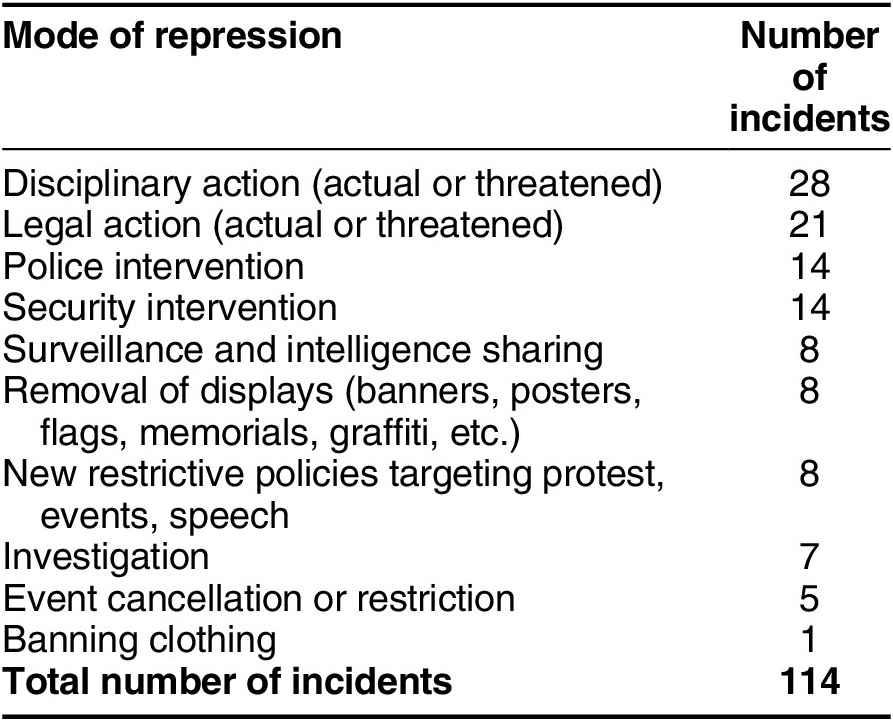
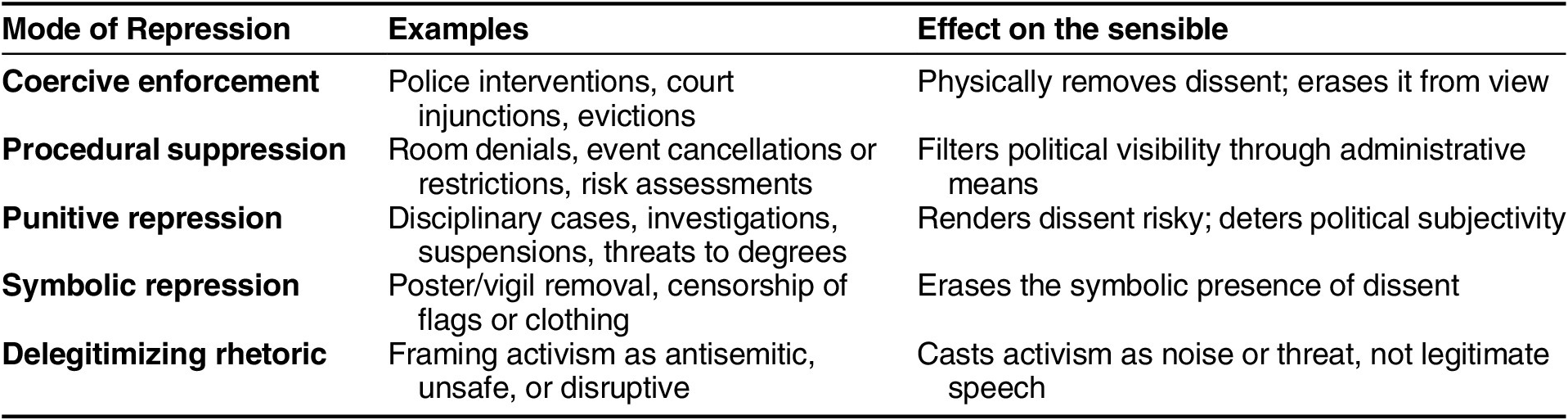


 Open access

