




No CrossRef data available.
Article contents
Thoracic sequels after thoracotomies in children with congenital cardiac disease
Published online by Cambridge University Press: 24 May 2005
Abstract
The standard surgical approach for closed heart procedures in small infants and children is to use a posterolateral thoracotomy incision, which results in the division of the latissimus dorsi and serratus anterior muscles. The aim of our study was to determine the frequency and type of musculoskeletal deformities in children undergoing surgery with this approach for congenital cardiac disease.
We included 49 children, 28 boys and 21 girls, in the study. Their mean age was 10.2 ± 4.8 years, the mean age at the time of surgery was 3.8 ± 4.0 years, and they were evaluated at an average of 6 years after the thoracotomy. Of the patients, 94% had various musculoskeletal deformities. Scoliosis was observed in 15 patients (31%) but only in two patients did the curves exceed 25 degrees. Of these patients, three-fifths had aortic coarctation. Elevation of the shoulder was seen in 61%, winged scapula in 77%; while 14% had asymmetry of the thoracic wall due to the atrophy of the serratus anterior muscle. Deformity of the thoracic cage was observed in 18%; and 63% had asymmetry of the nipples.
Thus, we found that musculoskeletal deformities are frequent after thoracotomies in children with congenital cardiac disease. Patients who have undergone such procedures for cardiac or noncardiac surgery should be followed until their skeletal maturation is complete. Techniques sparing the serratus anterior and latissimus dorsi muscles should be preferred. These adverse effects of thoracotomy may be another reason for using interventional procedures in these cases.
Information
- Type
- Original Article
- Information
- Copyright
- © 2003 Cambridge University Press
A posterolateral thoracotomy incision is a relatively common surgical approach for closed procedures in infants and children with congenital cardiac malformations. This approach results in division of the latissimus dorsi and serratus anterior muscles. Division of these muscles can result in significant postoperative pain, diminished pulmonary function, and marked impairment of motion.
The thoracotomy incision may also result in long-term physical impairment and deformity. Scoliosis has been reported to develop with an incidence of 22% several years after left posterolateral thoracotomy for correction of aortic coarctation in infancy and childhood.1 The long-term musculoskeletal consequences of thoracotomy for surgical treatment of congenital cardiac disease, however, have seldom been evaluated.2–6 With this in mind, we sought to determine whether a posterolateral thoracotomy performed in children with congenital cardiac disease influences the postoperative anatomy and function of the musculoskeletal system.
Materials and methods
We evaluated 49 children, 28 boys and 21 girls, undergoing surgery through a posterolateral thoracotomy in the forth-intercostal space for treatment of congenital cardiac disease at Hacettepe University Hospital. An additional median sternotomy was needed in 9 (18%) of the patients.
By means of a general clinical examination and radiological studies, we evaluated thoracic symmetry, deformities of the shoulders, scoliosis, lordosis and kyphosis of the axial skeleton, and mammary maldevelopment. Radiographs of the chest and the complete spine of all patients were analyzed. Scoliosis was diagnosed when a curve of 10° or more was observed following Cobb's technique of measurement.7 All children were evaluated by physicians from the department of Physical Medicine and Rehabilitation. Patients with congenital or other abnormalities that might have caused spinal or pectoral deformities were excluded from the study.
The mean age of the patients was 10.2 ± 4.8 years, with a range from one and a half to 22 years. The mean age at the time of surgery was 3.8 ± 4.0 years, with a range from one month to 17 years, and the evaluation was performed at an average of 6 years after thoracotomy, with a range from one to 12 years. Various types of cardiac malformations has been present in our patients, who underwent different cardiac surgical procedures (Table 1). Some of these patients had more than one cardiac lesion. In 15, there was aortic coarctation, while 13 had complex cyanotic disease, 11 had patency of the arterial duct, 7 had ventricular septal defects and pulmonary hypertension, and 3 patients had discordant ventriculo-arterial connections.
Table 1. Operative procedures performed using a posterolateral thoracotomy incision.

Results
Various musculoskeletal deformities were found in 46 (94%) of the patients (Table 2). Scoliosis of 10 degrees or more was observed in 15 patients (30.6%), eight being male and seven female, giving a frequency of 28.6% in the female and 33.3% in the male patients. Scoliosis was mild or moderate in 13 (26.5%). Only two had curves in excess of 25 degrees (Fig. 1). The scoliosis was thoracolumbar in 5, lumbar in 4, thoracic in 3 and cervicothoracic in 3 cases. Of these patients, three-fifths had aortic coarctation.
Table 2. Musculoskeletal deformities seen in the study.


Figure 1. One of the patients who had a curve exceeding 25 degrees as measured by the method of Cobb.
Asymmetry of the shoulders was seen in 61% of the patients. In 47%, there was prominent elevation of the left shoulder, while in the other 14% it was the right shoulder that was elevated. A winged scapula was found in 77%, left-sided in 61%, right-sided in 8%, and bilateral in 8%. In another 14%, there was marked asymmetry of the thoracic wall due to the atrophy of the serratus anterior muscle. Deformity of the thoracic cage was observed in 18% of patients. Finally, 63% had asymmetry of the nipples, with the mean difference between the levels of the two nipples being 0.7 ± 0.6 cm.
Discussion
The prevalence of scoliosis in patients who have congenital cardiac disease, whether corrected operatively through a thoracotomy or not treated surgically is described as ranging between 1 and 19 %,1–3, 6, 8, 9 while the incidence of adolescent idiopathic scoliosis has been reported to be 2–3%.10 This relatively wide range in the incidence of scoliosis associated with congenital cardiac disease is thought to be due to differences in the types of such diseases and the effects of cardiac surgery. White et al.5 reported that two-thirds of the patients with cyanotic congenital heart disease had scoliosis, while one-quarter of the acyanotic patients had scoliosis. They found that scoliosis was more common in female than in male patients.5 Overall, scoliosis was found in two-fifths of the total group examined, with one-fifth having measurable curvatures of more than 10 degrees.5 The average age of onset of scoliosis was 11 years, so that any study examining all ages would report a lower incidence.
Reckles et al.6 studied the effects of cardiac surgery on patients with congenital cardiac disease, and on the subsequent development of scoliosis, and found no correlation between scoliosis and cardiac surgery. On the other hand, Van Biezen et al.1 performed a follow-up study of 160 patients with aortic coarctation. They noted that scoliosis developed in one-fifth of the patients after thoracotomy, with none of the patients having had a scoliosis before the operation. Kawakami et al.11 evaluated chest roentgenograms of 680 patients who underwent cardiac operations because of congenital malformations and found that one-tenth had scoliosis of more than 10 degrees, although most of them had mild curves. In our study, the patients were evaluated a mean of 6 years after the operation, in contrast to the study of Kawakami et al.11 who evaluated the X-rays at the time of the operation.
The etiology of scoliosis associated with congenital cardiac disease is still unknown. According to some authors, the disease itself is the main cause of the higher prevalence of scoliosis, suggesting that the increased size of the heart increased the risk of scoliosis.2, 3, 6, 9 Other theories have also been proposed to explain the etiology. Roth et al.8 reported a higher prevalence of scoliosis in cyanotic patients compared with acyanotic ones, and suggested that impaired oxygenation and deficient blood supply to the vertebral bodies or supporting tissues might be causative factors in the development of scoliosis. The study of Kawakami et al.11 in contrast, did not show any correlation between cyanosis and scoliosis. They reported that all patients who had scoliosis and patency of the arterial duct demonstrated scoliosis after a left thoracotomy. In our study, 15 patients (31%) had scoliosis of more than 10 degrees after a left thoracotomy, and three-fifths of them had aortic coarctation. Furthermore, Durning et al.12 reported that a spinal curve of 10 degrees or more was found in half of eighteen patients who were followed for more than ten years after a thoracotomy performed for repair of tracheoesophageal fistula or esophageal atresia, or both. Our results, and those reported in the literature, show that scoliosis and congenital cardiac disease have multifactorial relations.
We also observed various musculoskeletal sequels after thoracotomies performed for cardiac surgical procedures. A deformity of the chest, with elevation of one shoulder, has previously been described, and is a consequence of division of branches of the nerves supplying the latissimus dorsi and serratus anterior muscles.7, 13, 14 Alley15 has warned surgeons about the dangers of section and denervation of the serratus anterior muscle, this being responsible for functional impairment of the muscles of the shoulder girdle. Almost four-fifths of our patients had a winged scapula, which has been reported to be produced by injury of the long thoracic nerve and consequent paralysis of the serratus anterior muscle.16–18 Our results also suggest that atrophy of the serratus anterior muscle caused the marked asymmetry of the thoracic wall seen in one-sixth of our patients.
Asymmetry of the nipples was found in almost two-thirds of the patients. Among the 10 girls who have now had development of the breasts, 6 showed some kind of undesirable cosmetic sequel. Asymmetry and maldevelopment most probably results from an adherent and prolonged transverse thoracotomy scar. The psychological impact is considerable, and constitutes the primary complaint of these young girls. Mammary maldevelopment due to the thoracotomy scar has been reported in 3 out of 11 girls after repair of tracheoesophageal fistula.7 It is also reported that respiratory dysfunction and phrenic palsy have occurred subsequent to a thoracotomy,7, 19 but these complications were not evaluated in our patients. The lack of longitudinal follow-up of our patients is one of the limitations regarding our study. In future, it will be interesting to compare our findings with patients who have undergone thoracotomies for pulmonary or pleural disorders. Our results suggest that multicentre studies are now needed to determine the differences in the frequency of musculoskeletal deformities subsequent to thoracotomies.
In conclusion, our study suggests that skeletal deformities can appear at any time after a thoracotomy, from early childhood to skeletal maturity. Patients undergoing a thoracotomy, therefore, should be evaluated periodically for the development of musculoskeletal deformities. These results have shown that the thoracotomy incision is not an innocent procedure. All efforts should be undertaken to prevent denervation of both the latissimus dorsi and serratus anterior muscles. These adverse effects of thoracotomy may be another reason for considering interventional procedures in these patients.
References
Van Biezen FC, Bakx PA, De Villeneuve VH, Hop WC. Scoliosis in children after thoracotomy for aortic coarctation. Bone Joint Surg Am 1993; 75: 514–518.Google Scholar
Jordan CE, White RI Jr, Fischer KC, Neill C, Dorst JP. The scoliosis of congenital heart disease. Am Heart J 1972; 84: 463–469.Google Scholar
Luke MJ, McDonnell EJ. Congenital heart disease and scoliosis. J Pediatr 1968; 73: 725–733.Google Scholar
Shelton JE, Julian R, Walburgh E, Schneider E. Functional scoliosis as a long–term complication of surgical ligation for patent ductus arteriosus in premature infants. J Pediatr Surg 1986; 21: 855–857.Google Scholar
White RI Jr, Jordan CE, Fischer KC, Lampton L, Neil CA, Dorst JP. Skeletal changes associated with adolescent congenital heart disease. Am J Roentgenol Radium Ther Nucl Med 1972; 116: 531–538.Google Scholar
Reckles LN, Peterson HA, Weidman WH, Bianco AJ Jr. The association of scoliosis and congenital heart defects. J Bone Joint Surg Am 1975; 57: 449–455.Google Scholar
Jaureguizar E, Vazquez J, Murcia J, Diez Pardo JA. Morbid musculoskeletal sequelae of thoracotomy for tracheoesophageal fistula. J Pediatr Surg 1985; 20: 511–514.Google Scholar
Roth A, Rosenthal A, Hall JE, Mizel M. Scoliosis and congenital heart disease. Clin Orthop 1973; 93: 95–102.Google Scholar
Wright WD, Niebauer JJ. Congenital heart disease and scoliosis. J Bone Joint Surg Am 1956; 38: 1131–1136.Google Scholar
Weinstein SL. Adolescent idiopathic scoliosis – prevalence and natural history. In: Weinstein SL (ed.). The Pediatric Spine-Principles and Practice. Raven Press, New York, 1994, pp 463–478.
Kawakami N, Mimatsu K, Deguchi M, Kato F, Maki S. Scoliosis and congenital heart disease. Spine 1995; 20: 1252–1256.Google Scholar
Durning RP, Scoles PV, Fox OD. Scoliosis after thoracotomy in tracheoesophageal fistula patients. A follow-up study. J Bone Joint Surg Am 1980; 62: 1156–1159.Google Scholar
El Shafie M, Rickham PP. Long-term results after primary repair of esophageal atresia and tracheoesophageal fistula. Z Kinderchir 1971; 9: 309–316.Google Scholar
Freeman NV, Walkden J. Previously unreported shoulder deformity following right lateral thoracotomy for esophageal atresia. J Pediatr Surg 1969; 4: 627–636.Google Scholar
Alley RD. Thoracic surgical incisions and postoperative drainage. In: Cooper P (ed.). The Craft of Surgery, Vol I. Churchill Livingstone, London, 1964, pp 415–417.
Martin JT. Postoperative isolated dysfunction of the long thoracic nerve: a rare entity of uncertain etiology. Anesth Analg 1989; 69: 614–619.Google Scholar
Duralde XA. Evaluation and treatment of the winged scapula. J South Orthop Assoc 1995; 4: 38–52.Google Scholar
Seghaye M-C, Grabitz RG, Alzen G, et al. Thoracic sequelea after surgical closure of the patent ductus arteriosus in premature infants. Acta Paediatr 1997; 86: 213–216.Google Scholar
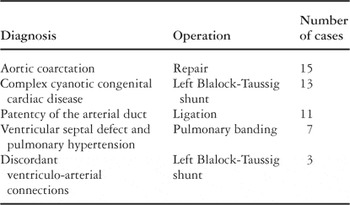
Table 1.
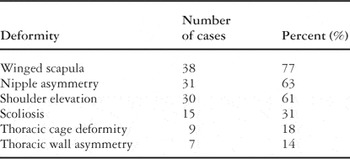
Table 2.

One of the patients who had a curve exceeding 25 degrees as measured by the method of Cobb.
 You have
Access
- 78
- Cited by