Resilience is defined as successful emotional, behavioral, or social adaptation or adjustment despite experience of significant adversity, stress, or trauma (Luthar, Cicchetti, & Becker, Reference Luthar, Cicchetti and Becker2000; Rutter, Reference Rutter2006). In children, researchers have operationally defined this adaptation in a myriad of ways such as mastering normative developmental tasks (Luthar, Crossman, & Small, Reference Luthar, Crossman, Small, Lerner and Lamb2015), absence of psychopathological outcomes (Martinez-Torteya, Anne Bogat, Von Eye, & Levendosky, Reference Martinez-Torteya, Anne Bogat, Von Eye and Levendosky2009), or functioning that is “better than expected” given a level of exposure to risk (Kim-Cohen, Moffitt, Caspi, & Taylor, Reference Kim-Cohen, Moffitt, Caspi and Taylor2004). Some children show resilience across multiple domains of functioning. More commonly, however, at-risk children show resilience in one domain of functioning but not in others or they may be resilient at one time period but not another (Masten, Reference Masten and Zelazo2013). Thus, resilience as a construct may be better defined as a dynamic process (not a trait or characteristic) that depends on the balance of risk and protective factors available to an individual at a given point in time (Jaffee & Gallop, Reference Jaffee and Gallop2007; Rutter, Reference Rutter2006, Reference Rutter2012). Understanding the mechanisms that promote resilient functioning in addition to the processes that confer risk for psychopathology, and the dynamic balance between them, is essential to understanding how normative and maladaptive developmental trajectories form.
Researchers have long posited the importance of adverse life events during early critical periods in understanding risk and resilience. The prenatal period, specifically, is one in which the fetus is especially vulnerable to a wide range of environmental exposures that have the potential to confer risk for emotional, cognitive, and behavioral problems in childhood (Braithwaite, Murphy, & Ramchandani, Reference Braithwaite, Murphy and Ramchandani2014; Rice, Jones, & Thapar, Reference Rice, Jones and Thapar2007). A large number of studies have shown that exposure to prenatal maternal psychopathology such as depression and anxiety is associated with both internalizing and externalizing behavioral outcomes in children such as depression, anxiety, attention-deficit/hyperactivity disorder symptoms, and conduct problems (e.g., Barker, Jaffee, Uher, & Maughan, Reference Barker, Jaffee, Uher and Maughan2011; O'Connor, Heron, Golding, Bereridge, & Glover, Reference O'Connor, Heron, Golding, Beveridge and Glover2002; O'Donnell, Glover, Barker, & O'Connor, Reference O'Donnell, Glover, Barker and O'Connor2014; Robinson et al., Reference Robinson, Mattes, Oddy, Pennell, van Eekelen, McLean and Newnham2011; Van den Berg & Marcoen, Reference Van den Bergh and Marcoen2004). Prenatal exposure to maternal stressful life events, such as death of a close relative or friend, divorce, marital problems, and job loss, has also been linked to attention-deficit/hyperactivity disorder, behavioral problems, and internalizing symptoms (Laucht et al., Reference Laucht, Esser, Baving, Gerhold, Hoesch, Ihle and Schmidt2000; Pawlby, Hay, Sharp, Waters, & O'Keane, Reference Pawlby, Hay, Sharp, Waters and O'Keane2009; Ronald, Pennell, & Whitehouse, Reference Ronald, Pennell and Whitehouse2011).
It is clear that a range of stressors during the prenatal period increase risk for child psychopathology. However, not all children exposed to environmental stressors in utero go on to develop psychopathology, and some children seem to be less vulnerable than others. There are several hypotheses that can potentially account for this differential vulnerability. One possibility is that a supportive postnatal environment can attenuate or reverse the effects of prenatal stress. For example, researchers have found that sensitive caregiving moderates the effect of prenatal maternal stress on infant fearfulness (Bergman, Sarkar, Glover, & O'Connor, Reference Bergman, Sarkar, Glover and O'Connor2008) and cognitive outcomes (Bergman, Sarkar, Glover, & O'Connor, Reference Bergman, Sarkar, Glover and O'Connor2010).
A second possibility is that individual differences in genotype confer protection against prenatal stressors. For example, researchers have found that variation in the glucocorticoid receptor gene, nuclear receptor subfamily 3, group C, member 1 (NR3C1), a gene integral to the functioning of the hypothalamus–pituitary–adrenal axis, which is involved in stress reactivity, moderated the effect of prenatal maternal psychological symptoms on later emotional and behavior problems, such that children whose mothers were depressed or anxious when they were pregnant with the child had an increased risk of emotional and behavioral problems at age 3 if they possessed the minor allele C (CC or CG), but not if they were homozygous for the major allele (GG; Velders et al., Reference Velders, Dieleman, Cents, Bakermans-Kranenburg, Jaddoe, Hofman and Tiemeier2012). Using data from 1,513 children in the Generation R cohort, Pluess et al. (Reference Pluess, Velders, Belsky, van IJzendoorn, Bakermans-Kranenburg, Jaddoe and Tiemeier2011) found that infants whose mothers were more anxious during pregnancy had higher scores on a measure of negative emotional temperament than infants whose mothers were not anxious and this effect was significantly stronger for infants who carried the short form of the serotonin transporter linked polymorphic region gene (5-HTTLPR) compared with infants who carried two copies of the long form of the gene. In addition, Oberlander et al. (Reference Oberlander, Papsdorf, Brain, Misri, Ross and Grunau2010) found that prenatal exposure to maternal anxiety predicted internalizing symptoms in children with two copies of the 5-HTTLPR short allele (but not in children who carried the long allele). In contrast, a mother's anxiety during pregnancy predicted her child's externalizing problems only if her child had two copies of the long allele and not if the child carried at least one short allele (Oberlander et al., Reference Oberlander, Papsdorf, Brain, Misri, Ross and Grunau2010).
In addition to identifying structural variants in the genome that buffer against the effects of prenatal stress, new research in the field of behavioral epigenetics has started to elucidate the underlying biological mechanisms of the relationship between stress exposure and later developmental outcomes, including emotional and behavioral problems. Epigenetic research sits at the intersection of social and biological explanations for developmental psychopathology and has enormous potential for describing how stressful life events “get under the skin” and have lasting effects on mental and physical health. The epigenome describes the chemical switches that sit on top of genes and modulate gene expression. Stress-induced epigenetic modifications are typically measured by examining DNA methylation, where methyl groups are added to cytosine–phosphate–guanine (CpG) sites on the regulatory or promoter regions of genes to silence transcription factors or block access to recognition elements of a gene (Bick et al., Reference Bick, Naumova, Hunter, Barbot, Lee, Luthar and Grigorenko2012). DNA methylation is typically related to lower gene expression in promoter regions. However, DNA methylation in other genomic regions can have the opposite effects on expression (e.g., gene body), and there is little known about the functional role of DNA methylation in other locations such as the intergenic region (Jones, Reference Jones2012). Studies have shown that DNA methylation patterns are under significant genetic control, as evidence by the discovery of a large number of methylation quantitative trait loci (mQTL; Gaunt et al., Reference Gaunt, Shihab, Hemani, Min, Woodward, Lyttleton and Relton2016; Jones, Fejes, & Kobor, Reference Jones, Fejes and Kobor2013), but are also sensitive to environmental influences (McGowan & Roth, Reference McGowan and Roth2015). Although the environment modifies the epigenome throughout the life span, there is some evidence that the in utero environment has the largest effect (Billack, Serio, Silva, & Kinsley, Reference Billack, Serio, Silva and Kinsley2012). These prenatal effects have been largely interpreted in terms of the fetal programming hypothesis in which the fetus adapts its phenotype, such as stress reactivity or metabolism, to what it anticipates its postnatal environment to be on the basis of the biological cues from the mother's environment (Gluckman, Hanson, Cooper, & Thornburg, Reference Gluckman, Hanson, Cooper and Thornburg2008).
The majority of studies investigating the association between prenatal exposure to maternal stress and methylation have focused on NR3C1. Prenatal stressors such as maternal depression (Condradt, Lester, Appleton, Armstrong, & Marsit, Reference Conradt, Lester, Appleton, Armstrong and Marsit2013; Hompes et al., Reference Hompes, Izzi, Gellens, Morreels, Fieuws, Pexsters and Claes2013), exposure to intimate partner violence (Radtke et al., Reference Radtke, Ruf, Gunter, Dohrmann, Schauer, Meyer and Elbert2011), and exposure to war (Mulligan, D'Errico, Stees, & Hughes, Reference Mulligan, D'Errico, Stees and Hughes2014; Perroud et al., Reference Perroud, Rutembesa, Paoloni-Giacobino, Mutabaruka, Mutesa, Stenz and Karege2014) have been associated with increased methylation of NR3C1 at birth. There is, however, variability in these methylation profiles, even among newborns whose mothers reported high levels of stress, and this variability may be predictive of children's risk for emotional or behavioral health problems versus their resilience. To date, few biologically informed prospective studies have explored gene-specific methylation patterns in the context of resilience. We focus on methylation of the oxytocin receptor gene (OXTR).
Oxytocin is an essential neuropeptide and hormone in the regulation of social and affiliative behavior such as empathy, attachment, bonding, emotion recognition, and processing of social stimuli (Jack, Connelly, & Morris, Reference Jack, Connelly and Morris2012). Oxytocin has also been shown to have anxiolytic effects by dampening physiological, hormonal, and brain-level responses to stressful or aversive signals (Heinrichs, von Dawans, & Domes, Reference Heinrichs, von Dawans and Domes2009). Thus, stress-related epigenetic changes in the oxytocin system may confer risk for the development of psychopathology by shaping socioemotional, sociocognitive, and stress response systems that underlie temperament and children's relationships with peers and adults.
It is biologically plausible to predict that prenatal (or postnatal) stressors would be associated with increased DNA methylation and in turn increased emotional and behavioral problems. That is, if DNA methylation acts as a gene silencer, increased methylation in the promoter region of the gene would result in lower messenger RNA (mRNA) levels, blocking of transcription factors, and in turn decreased gene expression and decreased circulating oxytocin in the blood. A number of studies have found evidence for these relationships. For example, increased OXTR methylation leads to decreased OXTR mRNA expression in hepatoblastoma human cells (Kusui et al., Reference Kusui, Kimura, Ogita, Nakamura, Matsumura, Koyama and Murata2001) and in murine cells (Mamrut et al., Reference Mamrut, Harony, Sood, Shahar-Gold, Gainer, Shi and Wagner2013) in the promoter region of the gene. Gregory et al. (Reference Gregory, Connelly, Towers, Johnson, Biscocho, Markunas and Pericak-Vance2009) found increased promoter region OXTR methylation in peripheral blood as well as in temporal cortex tissue in individuals with autism compared with controls. Increased methylation resulted in a 20% reduction in mRNA expression.
Consistent with the possibility that OXTR methylation may be a mechanism by which prenatal exposures increase risk for psychopathology, Dadds et al. (Reference Dadds, Moul, Cauchi, Dobson-Stone, Hawes, Brennan and Ebstein2014) found that elevated methylation in OXTR in a sample of 4- to 16-year-olds was associated with lower levels of circulating oxytocin and higher levels of callous–unemotional traits. Similarly, in a sample of youth with early emerging and persistent conduct problems, Cecil et al. (Reference Cecil, Lysenko, Jaffee, Pingault, Smith, Relton and Barker2014) found that higher methylation at birth at the OXTR locus was associated with higher levels of callous–unemotional traits at age 13, although the effect was only observed in youth with low levels of internalizing problems. Moreover, mothers’ reports of behaviors that might have caused stress to themselves or the fetus (e.g., their own criminal behavior, their partner's criminal behavior, or their own psychopathology and substance use) were associated with elevations in OXTR methylation at birth.
Despite the plausibility of a pathway by which prenatal stressors lead to increased OXTR methylation, a number of studies have found the inverse relationship between OXTR methylation and prenatal stress as well as psychological outcomes. For example, one study focusing on prenatal stress found that the more life-changing stressful events a mother experienced when she was pregnant, such as being a victim or witness of assault or experiencing the severe illness or death of a loved one, the lower the OXTR methylation levels in cord blood at birth (Unternaehrer et al., Reference Unternaehrer, Meyer, Burkhardt, Dempster, Staehli, Theill and Meinlschmidt2015). Reiner et al. (Reference Reiner, van IJzendoorn, Bakermans-Kranenburg, Bleich, Beutel and Frieling2015) found that depressed women had lower OXTR exon 1 DNA methylation levels compared to nondepressed women. Moreover, Ziegler et al. (Reference Ziegler, Dannlowski, Bräuer, Stevens, Laeger, Wittmann and Domschke2015) found in a sample of adults that decreased OXTR methylation was associated with a diagnosis as well as symptoms of social anxiety disorder, increased cortisol responses to a stress test, and increased amygdala responsiveness during social anxiety word processing. In addition, in a brain imaging study, researchers found that higher OXTR methylation was related to increased brain activity in areas associated with social perception such as the temporoparietal junction and the dorsal anterior cingulate cortex (Jack et al., Reference Jack, Connelly and Morris2012). Thus, the evidence is mixed as to whether prenatal stressors are associated with increased or decreased OXTR methylation and whether individual differences in OXTR methylation are associated with positive or negative child (or adult) outcomes. Direction of effects could be highly dependent on the location of the probes examined.
The present study is the first to make use of a longitudinal design to examine if OXTR methylation at birth can differentiate resilient and nonresilient youth as measured by hyperactivity, conduct problems, and emotional problem outcomes in middle childhood. In addition, a strength of the study is that only children with pre- and postnatal adversity were included, which ensures that resilience is not driven by differences in the quality of the postnatal environment. Given mixed findings in the literature about the direction of the relationship between stress in pregnancy and methylation levels at birth as well as the relationship between methylation levels and later behavior, we do not propose a directional hypothesis. Understanding plasticity at this critical period in development can help us examine how early stress can get under the skin and alter developmental trajectories. We hypothesize that this variability will be predictive of which newborns grow up to have low levels of psychopathology, despite their exposure to prenatal risk factors.
Method
Participants
The Avon Longitudinal Study of Parents and Children (ALSPAC) is an ongoing epidemiological study of children born from 14,541 pregnant women residing in Avon, United Kingdom, with an expected delivery date between April 1, 1991, and December 31, 1992, which is 85% of the eligible population (Fraser et al., Reference Fraser, Macdonald-Wallis, Tilling, Boyd, Golding, Smith and Lawlor2013). Ethical approval for the study was obtained from the ALSPAC Law and Ethics Committee and the Local Research Ethics Committees. The sample is representative of the general population (Boyd et al., Reference Boyd, Golding, Macleod, Lawlor, Fraser, Henderson and Davey Smith2013). The study website contains details of all the data that is available through a fully searchable data dictionary (http://www.bris.ac.uk/alspac/researchers/data-access/data-dictionary/).
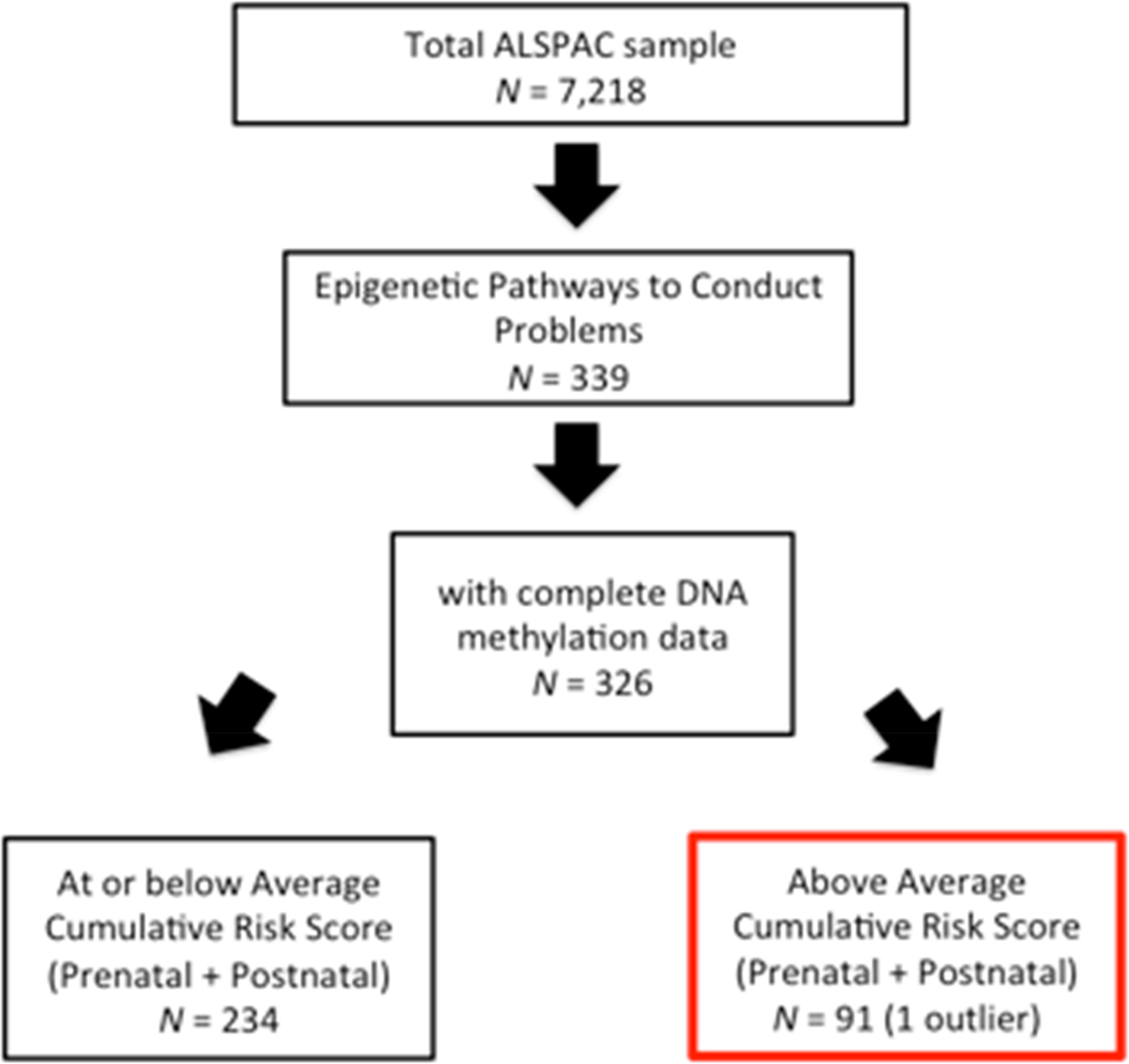
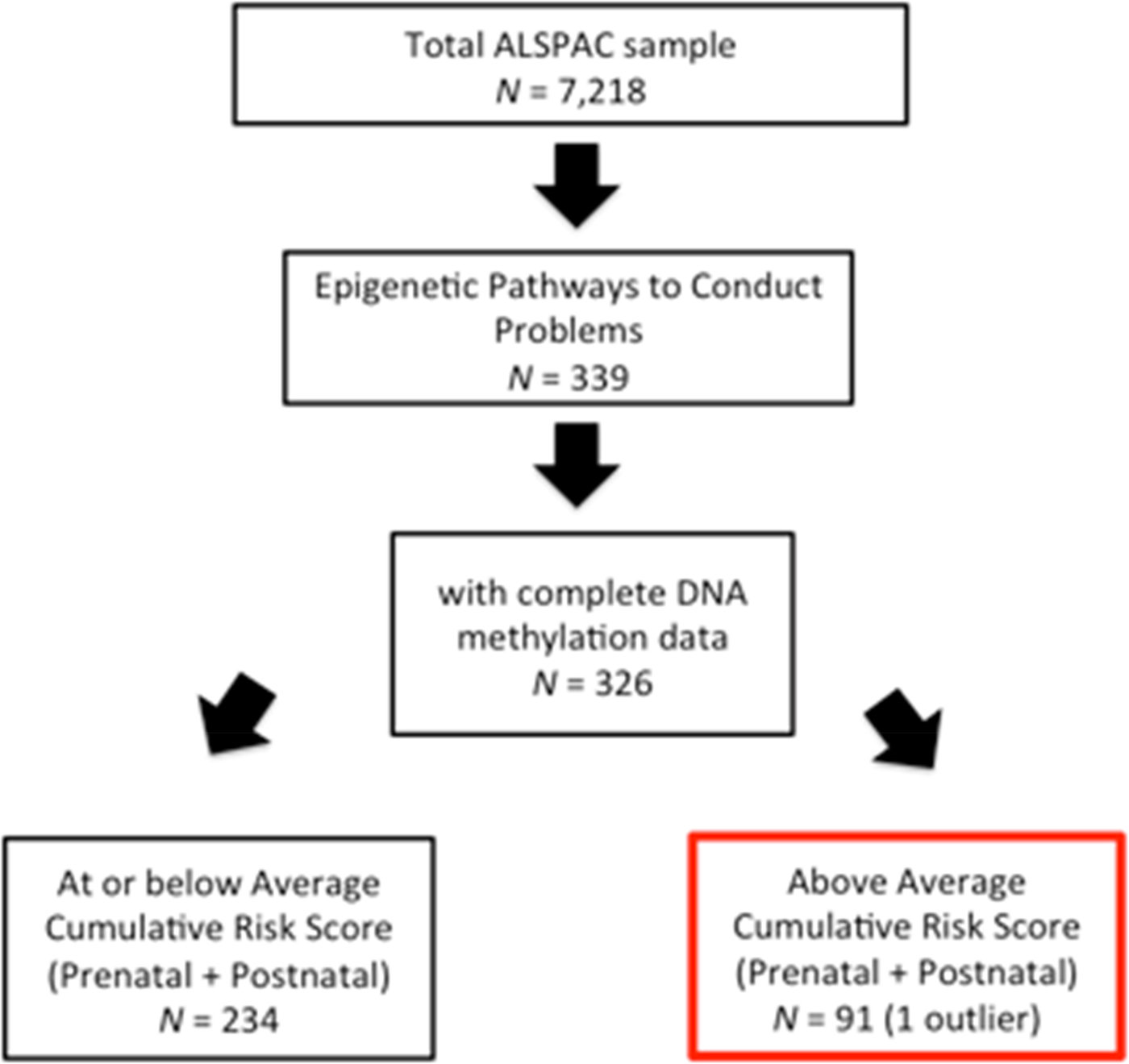
The Epigenetic Pathways to Conduct Problems Study consists of a subsample of youth (n = 339, 50% female) nested within a larger study of DNA methylation in ALSPAC (http://www.ariesepigenomics.org; Relton et al., Reference Relton, Gaunt, McArdle, Ho, Duggirala, Shihab and Smith2015), who follow previously established trajectories of conduct problems (4–13 years; Barker & Maughan, Reference Barker and Maughan2009) and have epigenetic data at birth and/or childhood. This subsample is comparable to the full trajectory sample (n = 7,218) in terms psychiatric comorbidity (Barker, Oliver, & Maughan, Reference Barker, Oliver and Maughan2010). DNA methylation measures were available for 326 youth at birth. Children with missing ethnicity information were removed, leaving a total sample of 321. Except for factor analyses, in which we used data from all youth, the present study only included youth who scored above the sample average on our measure of prenatal and postnatal (birth to age 7) environmental risk exposure. Although exposure to prenatal risk was the focus of our study, we wanted to ensure that differences in the postnatal environment did not account for any observed associations between methylation profiles at birth and resilience in middle childhood. These measures of prenatal and postnatal risk are described below in the Environmental Risk section. The final analytic sample was n = 91, all of whom had complete data including DNA methylation at birth, had been exposed to pre- and postnatal adversity, and for whom information on emotional and behavioral outcomes was collected. See Figure 1 for a flowchart representing which youth were included in the analysis sample.
(Color online) Flowchart of sample selection.
Measures
DNA methylation data at birth
Five hundred nanograms of genomic DNA from cord blood (birth) was bisulfite-converted using the EZ-DNA methylation kit (Zymo Research, Orange, CA). The protocol followed manufacturer instructions using the recommended alternative incubation conditions for use with Illumina Infinium arrays. Illumina HumanMethylation450 BeadChips (Illumina) were run following the manufacturer's protocol with no modifications, and arrays were scanned using an Illumina iScan (software version 3.3.28). Initial quality control of data generated was conducted using GenomeStudio (version 2011.1) to determine the status of staining, extension, hybridization, target removal, bisulfite conversion, specificity, nonpolymorphic, and negative controls. DNA methylation data was only available on samples that passed this stage. Samples were quantile normalized using the dasen function within the wateRmelon package (wateRmelon_1.0.3; 19) in R and batch corrected using the ComBat package (Johnson, Li, & Rabinovic, Reference Johnson, Li and Rabinovic2007). Probes were removed if they were cross-reactive, used for sample identification on the array or had a single nucleotide polymorphism (SNP) at the single base extension, leaving a total of 413,510 probes (Chen et al., Reference Chen, Lemire, Choufani, Butcher, Grafodatskaya, Zanke and Weksberg2013).
We extracted data for probes located within the OXTR CpG island (n = 12), as this area has been previously investigated and shown to play a key role in modulating the transcriptional activity of OXTR (Kusui et al., Reference Kusui, Kimura, Ogita, Nakamura, Matsumura, Koyama and Murata2001). For each probe, methylation levels were indexed by beta values (corresponding to the ratio of methylated signal divided by the sum of the methylated and unmethylated signal). Factor analysis was used to reduce the 12 OXTR probes into a smaller set of factors, which accounted for shared variance between them. A three-factor solution showed the best fit to the data as well as good temporal stability. Full details of the factor analysis procedure and results can be found in Cecil et al. (Reference Cecil, Lysenko, Jaffee, Pingault, Smith, Relton and Barker2014). We present findings relating specifically to Factor 1, three probes located in the 5′ untranslated region, Probe 1 (cg00078085), Probe 5 (cg03987506), and Probe 10 (cg12695586), because Factor 2 and 3 scores were not significantly associated with any type of resilience.
Environmental risk
The prenatal risk score comprised items that were reported by mothers and summed to create four conceptually distinct but related domains: life events (e.g., death in family, accident, and illness), contextual risks (e.g., poor housing conditions and financial problems), parental risks (e.g., maternal psychopathology, criminal involvement, and substance use), and interpersonal risks (e.g., intimate partner violence and family conflict). Measures of postnatal environmental risk were created for the early childhood (birth–age 7) and middle childhood (age 8–9) periods. These included all domains represented in the prenatal risk composite as well as a measure of direct victimization (e.g., child bullied by peers or physically hurt; available only postnatally).
Risk domains were positively and significantly correlated, both within and between developmental periods, with the majority of correlations ranging from r = .20 to .40. For the prenatal and postnatal periods, we used confirmatory factor analyses to assess the internal reliability of the risk domains and to extract one global cumulative risk score for each developmental period, showing good model fit. Higher scores indicate greater environmental risk exposure. See online supplement in Cecil et al. (Reference Cecil, Lysenko, Jaffee, Pingault, Smith, Relton and Barker2014) for full item descriptions, details of intercorrelations between risk domains, and factor analysis fit indices. To ensure that youth who were defined as resilient or nonresilient had been exposed to at least some moderate level of environmental risk, the sample was restricted to youth who scored above the mean on the measures of prenatal and postnatal cumulative environmental risk, as described in the Participants section.
Internalizing and externalizing problems
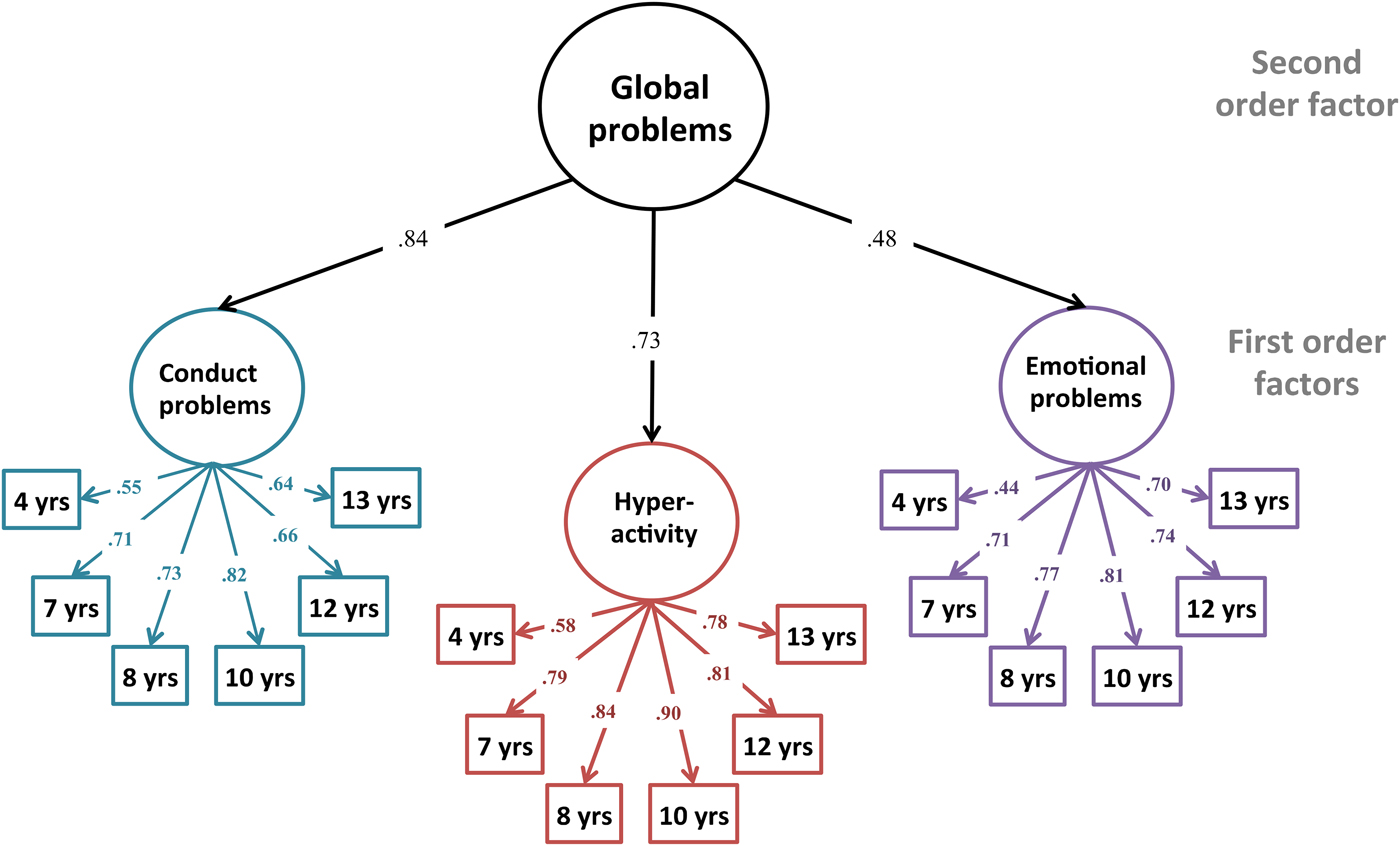
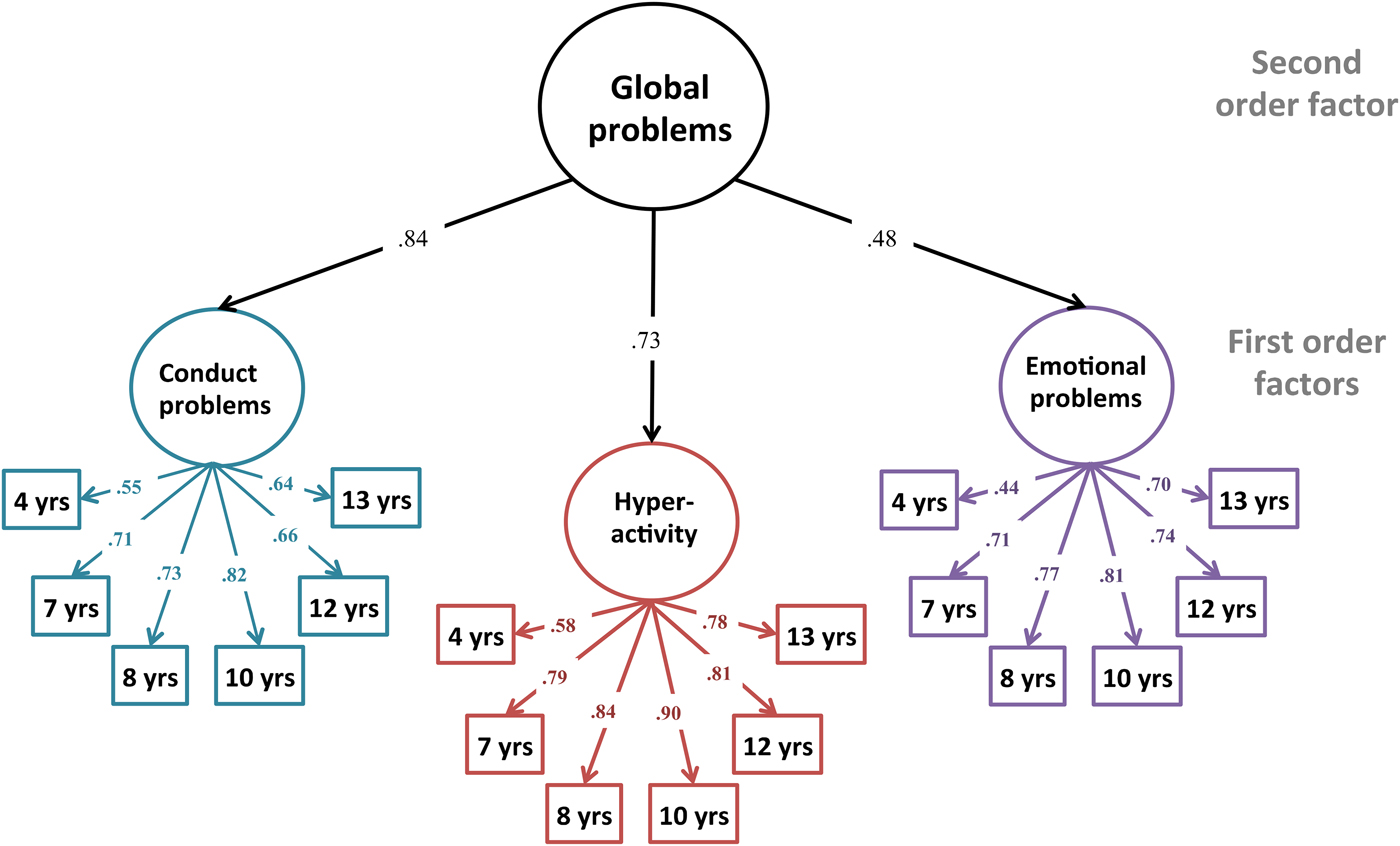
Repeated assessments of conduct problems, hyperactivity, and emotional problems were made at ages 4, 7, 8, 10, 12, and 13 via maternal reports on the Strengths and Difficulties Questionnaire (SDQ; Goodman, Reference Goodman1997). The SDQ is a widely used screening instrument with reliability and validity demonstrated in a large national sample (Goodman, Reference Goodman2001). The SDQ comprises five subscales, each consisting of five items rated by mothers as certainly true, somewhat true, or not at all true. In the current study, we utilized the conduct problems subscale (e.g., “often fights with other children or bullies them” and “often lies or cheats”), the hyperactivity/inattention subscale (e.g., “restless, overactive, cannot stay still for long” and “constantly fidgeting or squirming”), and the emotional problems subscale (e.g., “often unhappy, down-hearted or tearful” and “many worries, often seems worried”). In order to obtain more robust and reliable estimates of symptomatology, we performed a confirmatory factor analysis for each of the three subscales that included data from age 4 to 13, so as to generate a single factor score for each subscale that accounted for shared variance across time points. We also created a “global symptomatology” factor score combining all three SDQ subscales as a measure of more general overall functioning. See Figure 2 for summary statistics as well as full details of the confirmatory factor analysis.
(Color online) Confirmatory factor analysis of Strengths and Weaknesses Questionnaire subscales of conduct problems, hyperactivity, and emotional problems and global problems. Model fit: χ2 (132) = 462.16; p < .001; comparative fit index = 0.88, Tucker–Lewis index = 0.86, root mean square error of approximation = 0.08, 90% confidence interval [0.08, 0.09].
Psychosocial functioning
We used factor scores from the peer problems (e.g., “rather solitary and tends to play alone” and “generally liked by other children”) and prosocial behavior (e.g., “considerate of other people's feelings” and “kind to younger children”) subscales from the SDQ. We also utilized a 6-item callous–unemotional traits questionnaire completed by mothers when the child was 13 (e.g., “makes a good impression at first but people tend to see through him/her after they get to know him/her” and “shallow or fast changing emotions”; Moran, Ford, Butler, & Goodman, Reference Moran, Ford, Butler and Goodman2008). Items were rated on a 3-point scale ranging from not true to certainly true. Social cognition was assessed using the 12-item Social Communication Disorder Checklist (Skuse, Mandy, & Scourfield, Reference Skuse, Mandy and Scourfield2005) completed by mothers when the child was 7 years old. Items included, for example, “not aware of other people's feelings” and “does not notice the effect of his/her behavior on other members of the family.” Higher scores indicate lower social cognition.
Classification of resilience
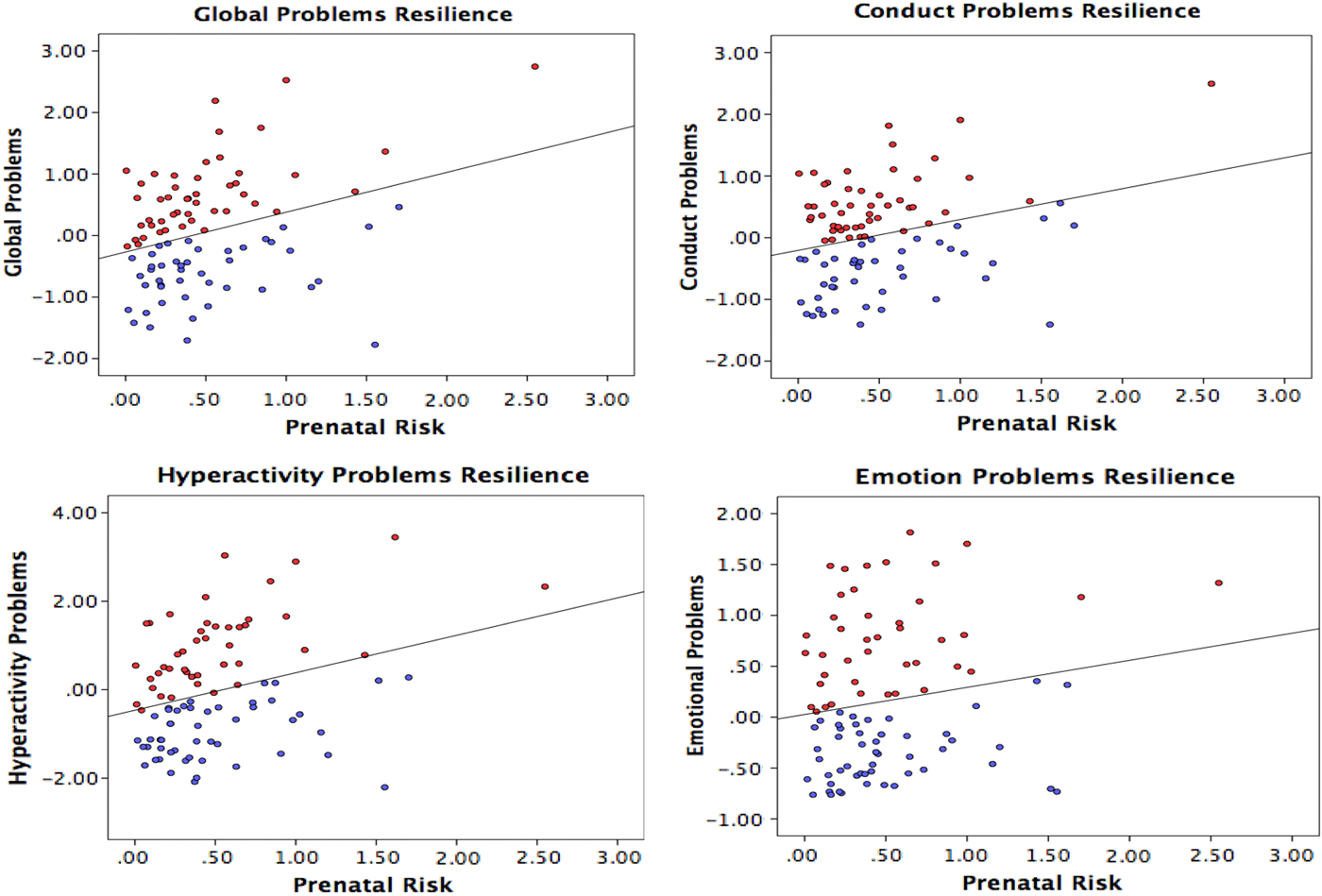
Resilience to prenatal risk was first defined in terms of conduct problems, then comorbid problems of hyperactivity and emotional problems as well as a measure of global symptomatology across all domains. In order to classify the sample into resilient (1) and nonresilient (0) groups, we conducted four ordinary least squares regressions to predict global, conduct problems, hyperactivity, and emotional problems, respectively, from the prenatal cumulative risk factor score. We utilized residuals from these regressions to classify youth into resilient and nonresilient groups in each domain. Specifically, youth with negative residual scores were classified as resilient (indicating that they had lower than predicted levels of psychopathology, given their exposure to prenatal risk) and youth with nonnegative residual scores were classified as nonresilient (indicating that they had predicted or higher than predicted levels of psychopathology, given their exposure to prenatal risk). One subject with conduct, hyperactivity, and global symptomatology residual scores >3 SD from the mean was removed from all the analyses. Retention of the outlier results in a nonnormal distribution of resilience residuals although findings remain unchanged with the subject's inclusion. For all domains, the distributions of the residuals were normal. See Figure 3 for resilience classification.
(Color online) Linear regression models used to classify resilient and nonresilient groups to global, conduct, hyperactivity, and emotional problems. The dots in the top half (red online) represent the nonresilient group, and the dots in the bottom half (blue online) represent the resilient group.
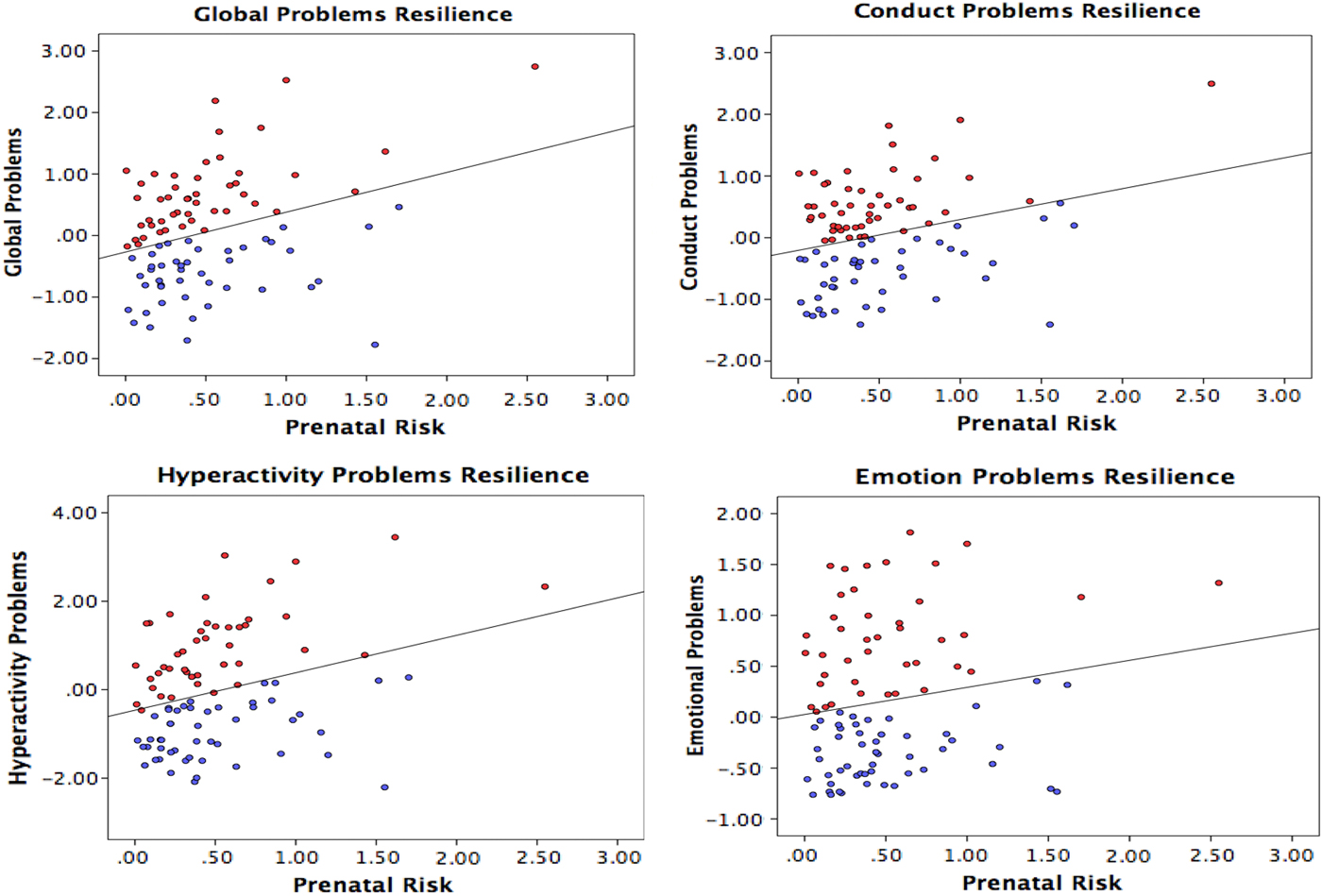
For resilience as defined by global problems, n = 44 (48%) youths were classified as resilient and n = 47 (52%) were not resilient. For resilience as defined by conduct problem scores, n = 44 (48%) youth were classified as resilient and n = 47 (52%) were not resilient. For resilience as defined by hyperactivity scores, n = 50 (55%) youth were classified as resilient and n = 41 (45%) were not resilient. Finally, for resilience as defined by emotional problem scores, n = 50 (55%) youth were classified as resilient and n = 41 (45%) were not resilient.
Data analysis
Factor analyses were conducted in Mplus version 6.1.128 and all other analyses in SPSS 21. Regression analyses were conducted to test whether resilience (defined globally and in terms of specific domains) was associated with the Factor 1 methylation score. Post hoc analyses were conducted to test whether resilience was associated with the individual probes (Probes 1, 5, and 10) that make up Factor 1. Covariates in all models included sex and cell-type composition, estimated using the approach described in Houseman et al. (Reference Houseman, Accomando, Koestler, Christensen, Marsit, Nelson and Kelsey2012). Analyses were bootstrapped 10,000 times. Bootstrapping is advantageous with small samples as it derives an approximation of the sampling distribution via repeated resampling of the available data to yield bias corrected 95% confidence intervals. Significant associations were only presented if they survived bootstrapped confidence intervals. Then, further analysis on any resilient domains that had significant methylation results was conducted. Resilient and nonresilient groups in that domain were compared on additional psychosocial functioning factors.
Results
As shown in Table 1, children who had lower conduct problem scores than predicted given their exposure (to prenatal environmental risk; i.e., resilient group) had a higher OXTR methylation Factor 1 score than nonresilient children. In contrast, when resilience was defined globally or in terms of hyperactivity or emotional problems, resilience scores were not associated with OXTR methylation.
Multiple linear regression predicting Factor 1 methylation and individual probes at birth by types of resilience

Note: β, beta weights; CI, bootstrapped confidence intervals. Analyses were controlled for sex and cell type.
*p < .05. **p < .01. ***p < .001.
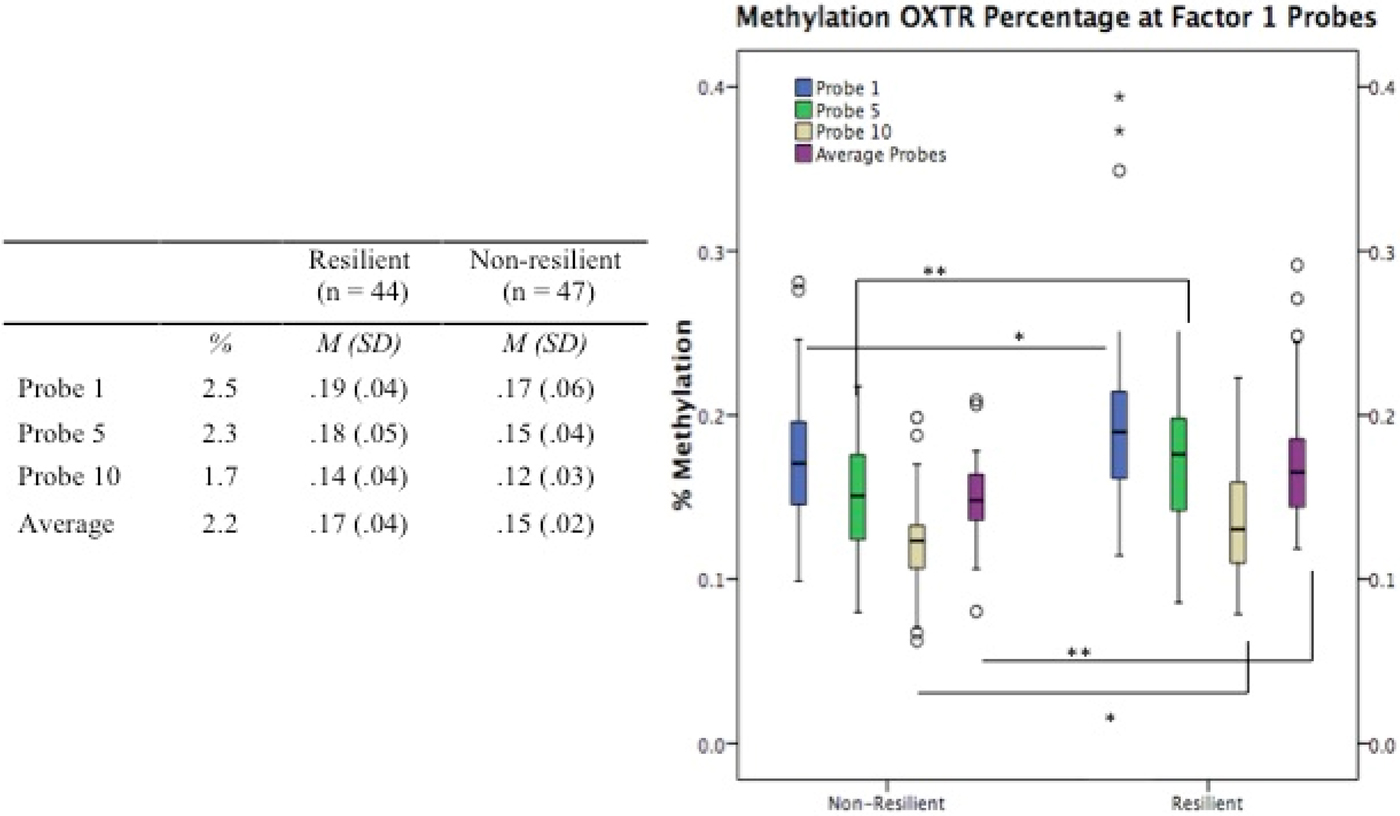
When examining the individual probes that make up the OXTR methylation factor (Probes 1, 5, and 10), we found that youth who were resilient in terms of conduct problems had significantly higher methylation levels across all three probes compared to the nonresilient group. Resilience as defined in terms of global problems and hyperactivity problems predicted increased methylation only within one probe (Probe 5). Figure 4 highlights percent methylation differences across groups who were resilient versus nonresilient in terms of conduct problems.
(Color online) This figure shows mean methylation percentages at each individual probe that makes up Factor 1 controlling for sex and estimated cell-type composition. *p < .05, **p < .01, ***p < .001.
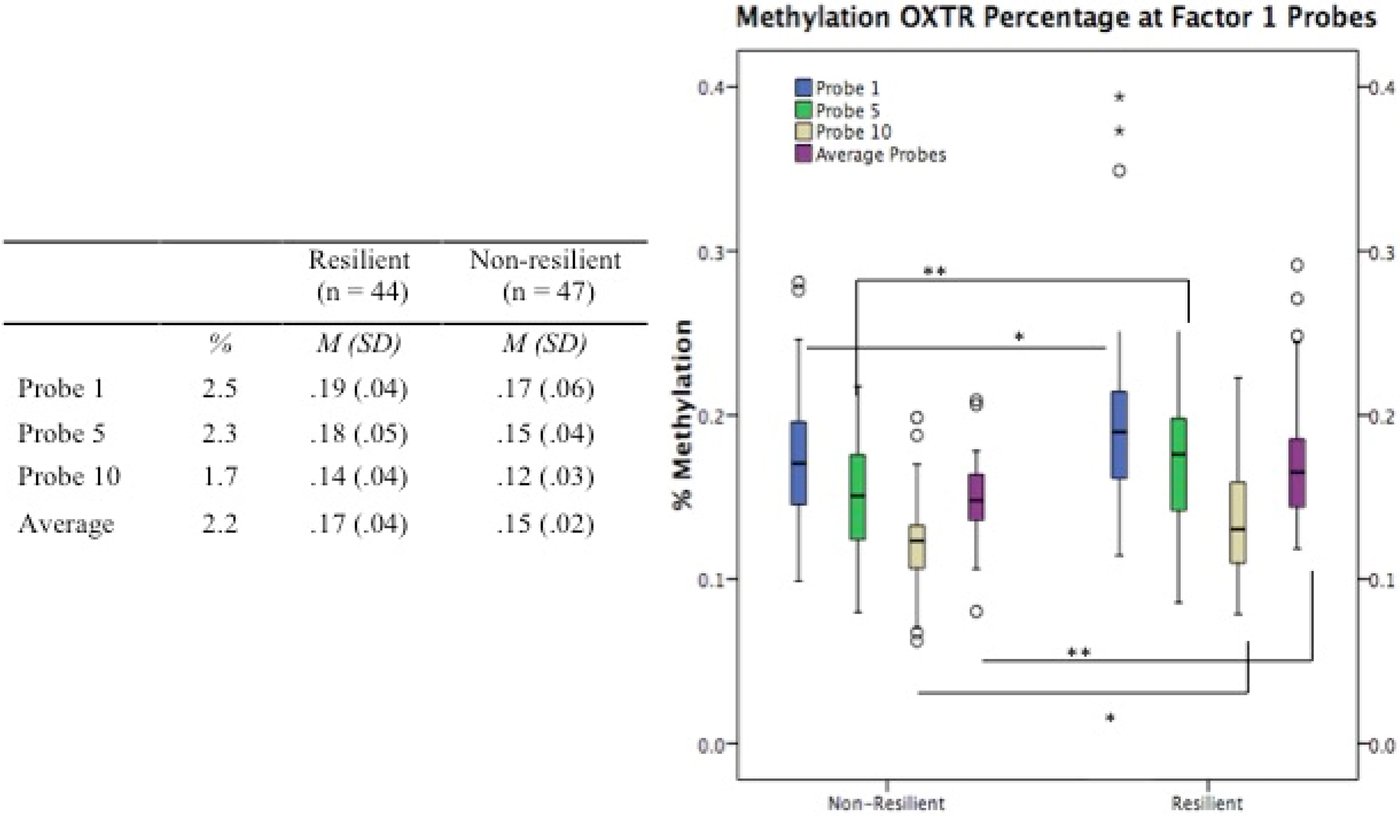
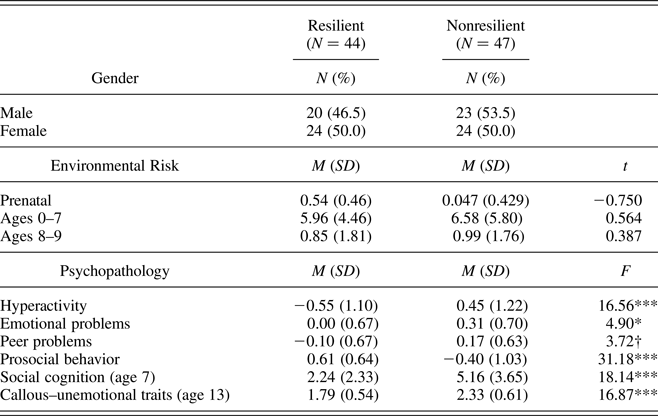
Table 2 provides descriptive information regarding the groups who were resilient and nonresilient in terms of conduct problems. The groups did not differ in terms of gender or in environmental risk at any developmental period (prenatal–age 9). Furthermore, in an analysis off covariance controlling for sex, we found that youth who were resilient in terms of conduct problems also had lower hyperactivity, emotional problems, and callous–unemotional traits; higher prosocial behavior; and better social cognition as compared to youth who were nonresilient in terms of conduct problems. Thus, youth who were resilient to prenatal risk in terms of having relatively low levels of conduct problems were functioning well across multiple domains that are typically compromised when youth have conduct problems.
Descriptive statistics of resilient and nonresilient groups in conduct problems
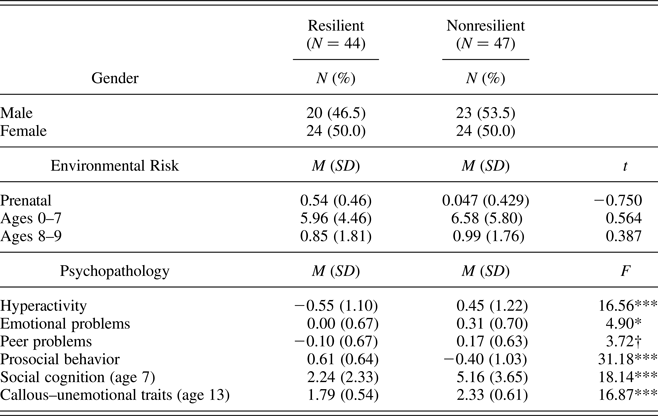
Note: All psychopathology outcomes controlled for sex.
*p < .05. **p < .01. ***p < .001.
Post hoc analysis: Exploring potential genetic influences
We explored potential genetic factors that may influence the DNA methylation sites associated with resilience to conduct problems. Because our sample was underpowered to directly examine genetic polymorphisms (SNPs) affecting DNA methylation, we used the mQTLdb resource (http://www.mqtldb.org/) to search for known mQTLs associated with our methylation sites of interest. The mQTLdb database contains the results of a large-scale study based on the ARIES sample in ALSPAC (from which our subsample is derived), characterizing genome-wide significant cis effects (i.e., SNP within ±1,000 base pairs of the DNA methylation site) and trans effects (i.e., ±1 million base pairs) on DNA methylation levels across Illumina 450k probes at five different life stages, including cord blood DNA methylation at birth (Gaunt et al., Reference Gaunt, Shihab, Hemani, Min, Woodward, Lyttleton and Relton2016). Here, we searched for mQTLs based on results from the conditional Genome-wide Complex Trait Analysis, which was used to identify mQTLs with the most representative, independent effect on each DNA methylation site in order to account for linkage disequilibrium (Gaunt et al., Reference Gaunt, Shihab, Hemani, Min, Woodward, Lyttleton and Relton2016). Based on mQTLdb search, we found that two out of three of Factor 1 probes (Probe 1 and Probe 10) were associated with known cis SNPs, suggesting that DNA methylation levels across these sites are likely to be under considerable genetic control. Probe 1 and Probe 10 are specific to conduct problems, while Probe 5 was significant in both hyperactivity and global problems. This suggests that these probes are likely to be influenced by genetic factors as well as environmental adversity and may suggest a specific Gene × Environment (G × E) effect for conduct problems. See Table 3 for more details on SNP influences on Probes 1 and 10.
OXTR SNP effects on Probe 1 and Probe 10

Note: OXTR SNP, oxytocin receptor gene single nucleotide polymorphism; Chr, chromosome; Pos, position.
Discussion
Our goal in this study was to examine whether variability in OXTR DNA methylation profiles at birth predicted resilience as defined by psychopathological outcomes that were better than expected based on prenatal risks. Consistent with our hypothesis, Factor 1 methylation, as well as methylation of the individual probes (1, 5, 10) that make up the factor, was predictive of resilience to conduct problems in middle childhood. In contrast, OXTR DNA methylation profiles did not predict resilience in domains of emotional, hyperactivity, and global symptomatology, suggesting a potential role for OXTR in the development of conduct problems in particular. This is consistent with the fact that many social–cognitive processes such as empathy, attachment, bonding, and emotion recognition are disturbed in children with conduct problems. In addition, problems in social cognition associated with conduct-disordered behavior are typically marked by deficits in oxytocin levels.
Children who were resilient in the conduct problems domain in middle childhood also had significantly fewer hyperactivity, emotional, and peer problems; higher levels of prosocial behavior; better social cognition; and lower scores on a measure of callous–unemotional traits compared with nonresilient youth. Thus, the group that was resilient to conduct problems was broadly resilient across multiple domains. However, this was probably not due to OXTR methylation profiles, which were not predictive of resilience as defined by emotional or hyperactivity problems. One possibility is that children who have fewer than expected conduct problems get along better with their peers, are both innately more prosocial and observe higher levels of prosocial behavior in their interactions with peers, and are thus buffered against the emergence of other forms of psychopathology relative to children with higher levels of conduct problems (Oland & Shaw, Reference Oland and Shaw2005; Patterson, DeBaryshe, & Ramsey, Reference Patterson, DeBaryshe and Ramsey1989). The role of OXTR DNA methylation in resilience beyond the conduct problems domain remains unclear.
It is important to note that there were no significant differences between resilient and nonresilient youths in levels of environmental risk in any of the developmental periods from prenatal to age 9. This rules out the possibility that resilient youth exhibited fewer conduct problems than nonresilient youth because they were exposed to less environmental risk after they were born. If epigenetic modifications in OXTR are consequences of exposure to stress, why would youth with similar levels of exposure to prenatal adversity vary in terms of OXTR methylation profiles? Researchers have recently recognized that DNA methylation patterns may be allele specific, and the relationship between exposure to stress and DNA methylation may be moderated by gene variants. For example, one study found that adolescents who were homozygous for the long allele of 5-HTTLPR and experienced more stressful life events had higher levels of 5-HTTLPR methylation. Stressful life events were not associated with methylation for short allele carriers (Van der Knapp et al., Reference Van der Knaap, Riese, Hudziak, Verbiest, Verhulst, Oldehinkel and van Oort2015). Another study found that decreased DNA methylation in the FK506 binding protein 5 (FKBP5) gene depended on early childhood abuse and the rs1360780 risk allele (Klengel et al., Reference Klengel, Mehta, Anacker, Rex-Haffner, Pruessner, Pariante and Binder2013). Although we could not examine direct SNP effects because of small sample size, our post hoc analyses using the mQTLdb demonstrated that methylation of Probes 1 and 10 is significantly influenced by SNPs rs62243375 and rs237900, respectively. Our results showed that Probes 1 and 10 were only related to conduct problems, while Probe 5 was related to global problems and hyperactivity. This provides indirect evidence for OXTR genotype moderating the relationship between adversity and DNA methylation in conduct problems. However, studies examining allele-specific DNA methylation effects earlier in child development, especially in the prenatal/neonatal period, are lacking. More research is needed to examine the integrative effects of OXTR genotype and DNA methylation on the oxytocin pathway, especially during the critical prenatal period.
Increased methylation of OXTR is associated with decreased gene transcription and protein expression, which theoretically represents the molecular building blocks for behavioral phenotypes (Kumsta, Hummel, Chen, & Heinrichs, Reference Kumsta, Hummel, Chen and Heinrichs2013; Kusui et al., Reference Kusui, Kimura, Ogita, Nakamura, Matsumura, Koyama and Murata2001; Mamrut et al., Reference Mamrut, Harony, Sood, Shahar-Gold, Gainer, Shi and Wagner2013). Our results showed that higher levels of DNA methylation of OXTR at birth predicted resilience to conduct problems in middle childhood. This pattern was unexpected in light of results showing that elevations in OXTR methylation are also associated with relatively high levels of callous–unemotional traits (Cecil et al., Reference Cecil, Lysenko, Jaffee, Pingault, Smith, Relton and Barker2014; Dadds et al., Reference Dadds, Moul, Cauchi, Dobson-Stone, Hawes, Brennan and Ebstein2014). However, this traditional view has been recently challenged, with more and more studies finding an inverse relationship, highlighting the complexities in predicting behavioral phenotypes from DNA methylation (Jack et al., Reference Jack, Connelly and Morris2012; Reiner et al., Reference Reiner, van IJzendoorn, Bakermans-Kranenburg, Bleich, Beutel and Frieling2015; Ziegler et al., Reference Ziegler, Dannlowski, Bräuer, Stevens, Laeger, Wittmann and Domschke2015). In a human cohort, researchers found that only a minority of individual CpG sites had significant negative correlations with mRNA signaling across individuals, and in a number of genes, higher DNA methylation was associated with higher gene expression (Lam et al., Reference Lam, Emberly, Fraser, Neumann, Chen, Miller and Kobor2012). This can also be because the relationship between methylation, transcription, and expression can vary depending on the location of the CpG site. Of note, the three probes in our study mapped onto the 5′ untranslated region of the gene, where an inverse correlation between DNA methylation and mRNA expression has previously been reported (Eckhardt et al., Reference Eckhardt, Lewin, Cortese, Rakyan, Attwood, Burger and Beck2006). Thus, although we might theoretically predict that higher methylation would be associated with a lack of resilience to conduct problems, the mechanics of methylation are likely to be more complex than this.
It is interesting that our findings conflict with Cecil et al.’s (Reference Cecil, Lysenko, Jaffee, Pingault, Smith, Relton and Barker2014) work that also uses data from the ALSPAC sample in which they found that higher OXTR methylation at birth was associated with higher callous–unemotional traits at age 13. Of note, Cecil et al. (Reference Cecil, Lysenko, Jaffee, Pingault, Smith, Relton and Barker2014) found this relationship in OXTR probes that make up Factor 2, while Factor 1 probes were not associated with callous–unemotional traits in their study. Furthermore, the sample (N = 39) was highly selected to include only youth who had early onset and persistent conduct problems and the relationship between higher OXTR methylation at birth and callous–unemotional traits was only observed in the subgroup with low levels of internalizing profiles. Thus, although our analysis sample and Cecil et al.’s ostensibly come from the same cohort, they reflect very different groups of children.
The present findings should be interpreted in light of a number of limitations. In most behavioral epigenetic studies of human OXTR DNA methylation, including this one, researchers have used peripheral blood as a tissue source. It is unknown to what extent methylation profiles from peripheral tissue are correlated with DNA methylation in the brain, where most behaviorally relevant epigenetic changes are thought to take place. Although there is growing evidence that peripheral methylation patterns can correlate with patterns in the brain, tissue- and gene-specific variations do exist (Bakulski, Halladay, Hu, Mill, & Fallin, Reference Bakulski, Halladay, Hu, Mill and Fallin2016; Byun et al., Reference Byun, Siegmund, Pan, Weisenberger, Kanel, Laird and Yang2009; Davies et al., Reference Davies, Volta, Pidsley, Lunnon, Dixit, Lovestone and Mill2012; Masliah, Dumaop, Galako, & Desplats, Reference Masliah, Dumaop, Galasko and Desplats2013; Walton et al., Reference Walton, Hass, Liu, Roffman, Bernardoni, Roessner and Ehrlich2016).
This study also focused specifically on DNA methylation of annotated probes located within the CpG island of OXTR, and it is likely that differences across groups may be found in other genes (i.e., glucocorticoid or serotonergic pathways). Future studies may employ an epigenome-wide approach that would enable researchers to examine group differences in DNA methylation across the genome. In addition, we did not examine RNA expression and cannot explore the functional relevance of the probes with regard to gene expression and downstream biological mechanisms. However, we did select a region of OXTR that has previously demonstrated to be functional in utero. Although we provided indirect evidence for a potential G × E effect on DNA methylation via the mQTL base data, we could not directly test it due to sample size. In general, the findings are based on a relatively small sample of youth, which limits statistical power to detect effects.
In summary, this is the first longitudinal study to examine the role of OXTR methylation in resilience across multiple domains. Our findings show that OXTR methylation at birth is exclusively related to resilience in the conduct problems domain in middle childhood. This may be potentially reflective of a G × E effect where genotype moderates the relationship between environmental stressors and DNA methylation. These findings highlight the importance of the prenatal period for the development of childhood psychopathology and suggest a potential mechanism by which early experiences may be biologically embedded. Because of the important role of oxytocin in social impairment, understanding individual variations in OXTR methylation patterns might increase insight into risk and resilience factors that can bridge translational efforts in treatment and intervention approaches.