When Ethan Anderson tried to vote in 1916, he was twenty-eight years old, had been a resident of Lake County since his birth, could read and write, and had never been declared insane, accused of an “infamous crime,” or convicted of embezzling public money. Under the letter of California law, he was eligible to vote.Footnote 1 Still, he was an Indian, and county clerk Shafter Mathews, sure that Indians could not vote, denied Anderson's registration. Anderson believed he had proven his citizenship by working for his white neighbors, owning property, farming it, and paying taxes. So, as befitting a citizen, Anderson took Mathews to court. He hired two local lawyers and asked the California Supreme Court for a writ of mandate instructing the clerk to register him. The court obliged, and in March 1917 the justices ruled that Anderson had no “tribal relations,” was a citizen, and did indeed have the right to vote. Yet when the court took up Anderson's case, more was at stake for Indian communities in California than one supposedly detribalized man's voting rights.Footnote 2
Local authorities, federal officials, Indian rights advocates, and Indians themselves expected the court to resolve long-standing confusion surrounding Indians’ political status. “The Indian,” pled Anderson's lawyers, has “long been tossed back and forth between the federal and state government.” All parties agreed that the justices had a chance to clarify the status of “hundreds” of other California Indians “in a like position.”Footnote 3 California had both the fifth highest population of Indians under the jurisdiction of the federal Office of Indian Affairs (OIA) and the highest population, by far, of Indians under local jurisdiction—identified by the census and government officials as “not in tribal relations,” “civilized,” “taxed,” or, occasionally, “citizen” Indians.Footnote 4 “Indians, not taxed,” so named in the Constitution, were members of “domestic dependent nations” with a direct relationship with the federal government and were not subject to state and local governments.Footnote 5 California's “taxed” Indians seemed to belong to a separate political category.
In the minds of federal policy makers, citizenship awaited Indians who severed their “tribal relations” and attained a sufficient level of civilization. To encourage that transformation by “breaking up the tribal mass,” Congress passed the General Allotment (or Dawes) Act in 1887, and it served as the general Indian policy framework into the 1930s. Under the act and its subsequent amendments, the government would assign parcels of reservation land to individuals, and Indian families would shed their political affiliation with sovereign tribal communities, enter the market with just enough property to reproduce their labor power, and surrender “surplus” tribal property to white citizens and corporations. Congress reserved the power to make Indians citizens, and the Dawes Act expressly granted it through allotment, thereby ending federal supervision of Indians who had advanced through private property ownership to civilization and could presumably fend for themselves in local legal and political systems the same as any taxpayer.Footnote 6 But even if federal officials guarded Indians’ entry to citizenship, Indians did not need to hold an allotment to be considered “taxed.”
By 1900, more than half of the Indians enumerated nationwide by the United States census were in the “taxed” column, and no state had more “taxed” Indians than California.Footnote 7 It was a meaningful but vague category. In his 1870 report on the census, Superintendent of the Census and future Commissioner of Indian Affairs Francis Amasa Walker explained that it was not necessary that an Indian actually pay a tax to be counted as a “taxed Indian,” “only that he should be found in a position, so far as the authorities or agents of the census can know, to be taxed were he in possession of property.”Footnote 8 California Indians’ taxed status developed from their relations of production as laborers on non-Indian-owned land, rather than from a single policy. That space offered them little protection in the 1850s and 1860s, as work on California Indian genocide and bondage has proven.Footnote 9 But by the turn of the century, California Indians expected to profit from their own labor, make contracts, testify in court, and buy land. As the collective owners of nearly one hundred acres of land, members of Anderson's community were literally taxpayers.Footnote 10 Congress had not made Ethan Anderson a citizen of the United States, but he argued that he lived like one nonetheless. In fact, when Anderson tried to register, two Indians were already registered to vote in Lake County—they were Democrats like most voters in the county.Footnote 11 When Mathews denied Anderson's right to vote, arguing that taxed Indians were not citizens at all, he was denying local precedent and reopening a question that seemed to have been settled when California became a state.
The controversy that framed the case originated in California Indians’ dispossession but gained new urgency just a decade before Anderson tried to vote. In 1906, a coalition of Indian policy reformers persuaded Congress to buy and take into trust over eighty new tracts of land for the “landless,” or reservation-less, Indians of California—Anderson's community was one of the beneficiaries. The reformers called it payment for an outstanding “debt” owed California Indians by the national government, which did not ratify any treaties with California tribes when California became a state.Footnote 12 They did not believe that the new tracts relieved white Californians of their jurisdiction over taxed California Indians nor changed Indians’ status as laborers. But county officials who had once praised laboring Indians as self-sufficient citizens had begun to worry about the claims of those citizens on the public treasury. Importantly, at the beginning of the year in which Anderson tried to vote, Lake County explicitly denied Indians access to county relief on the grounds that indigent Indians were the responsibility of the federal government—proven by the new tracts of trust-protected land that it had bought for Indian communities.Footnote 13
Anderson's case, then, was a product of a longer contest between federal agents, white authorities, and Indians about the political status of their communities. In fact, Anderson never denied, and neither opposing counsels denied, that he was a member of an Indian community. His actions were not those of a defector, but part of a longer history of native community members working within a liberal order toward collective access to the resources that would enable their security.Footnote 14 Joshua Piker has made the case that historians should pay attention to Indian communities (not only tribes or confederacies) in order to better understand the map of the colonial world.Footnote 15 By paying closer attention to Indigenous communities in the Progressive Era, we better understand the local connections between Indian politics and policy that redrew the map of federally administered Indian Country—understood by federal officials in the early twentieth century to be the place where the federal government exercised political and legal authority over Indians and their land. If the Progressive Era is no longer as hazy as it once was to Indian historians, historians’ view of the period is still dominated by visions of a powerful federal government and national policies.Footnote 16 In his seminal text on Indians in the Progressive Era, Frederick Hoxie argued that the Anderson decision was not significant for its recognition of one Indian man's citizenship (that was unsurprising after three decades of the assimilation policy), but its confirmation that an entire class of tribal Indians remained unfit for citizenship and subject to perpetual federal guardianship.Footnote 17 The relatively few studies of the era that deal with Indian politics as well as policies, focus on boarding school and college-trained Indian intellectuals and national leaders who used the rights and discourses of citizenship to petition and criticize the national government's Indian bureaucracy.Footnote 18 But Anderson's case reveals how less visible (to federal officials and to historians) and less formally educated Indian men and women acted politically in their home communities and not only in response to Washington, but in multiparty engagements with local authorities, private reformers, and federal officials. It also shows that supposed barriers between taxed and not-taxed Indians were never as impermeable or permanent as policy makers tried to make them. When Anderson and another man, George Vicente, enlisted the help of white Indian rights advocates to prove their voting rights and citizenship, they sought to open a wider set of claims on local governments, most importantly for relief for aged and disabled community members. But Anderson and others also pressed federal agents to make good on their own promise of citizenship for Indians, which, Indians argued, included legal protection for Indians and material support on their federal land. Engaging the state where it was conflicted, Anderson and other Indians endeavored to gain resources and improve their position within the local economy.
Citizenship, then, was not simply a status that national elites imposed on or denied to Indians. Indians engaged with several kinds of political authorities, and each relationship imparted its own meaning to the term “citizen.” William Novak writes that the historiography of citizenship brings together “bottom-up” social history and “top-down” political history, to show where people interacted with and made claims on agencies of the state. American citizenship emerged out of older ideas of political status enmeshed in “an intricate web of civil, social, economic and political relations and activities,” and its history embraced the lives of the least enfranchised as well as the powerful.Footnote 19 Including Indians in story of citizenship shows the extent to which Progressive Era citizenship remained a contingent set of relationships, not absolute rights, and that policies and judicial opinions at the federal level were not necessarily prescriptive on the ground. Indians’ encounters with state power were quotidian, localized, and unpredictable—as the majority of Indians enrolled in the 1900 census as “taxed” could attest. For them, the transition to a uniform and “flat” constitutional rights regime was especially slow to arrive—if ever it did. Instead, the authorities that Ethan Anderson confronted offered him confusing and occasionally contradictory ways to make claims on the state. But he and other Indians struggled to turn them into something useful.Footnote 20
I Have Inquired Among My White Friends
Ethan Anderson was born at Kabemato'lil (Scattered Rocks Village) in September 1888.Footnote 21 It was the largest Pomo community then existing (one report called it the “largest rancheria in California”), with a population of nearly three hundred people in 1880, and it stood on land owned by Indians.Footnote 22 Nine years before Anderson's birth, fourteen representative men paid the hop grower J. B. McClure twenty-two hundred dollars entrusted to them by their community and took title to eighty-nine acres on its behalf.Footnote 23 Kabemato'lil's villagers made their argument for their land's legitimacy through their title deed, but they used it for the collective security of constituent family groups. The land was in the homeland of the tribelet Danoxa and at an ancient crossroads between Clear Lake and Russian River Pomos, and the purchasers were descendants of several independent national communities.Footnote 24 In 1893, the residents of Kabemato'lil wrote that they had “no tribal name” and instead identified themselves by the names of constituent kinship groups.Footnote 25 Ethan Anderson's father, Ed Anderson, was probably from a community to the south of the Lake, as was Ethan's wife, Clara Smith. Anderson's mother, Susie Boggs, was from a community on the southeastern shore of the lake; her kinship connection to Kabemato'lil made it Anderson's birthplace. As it had for generations before, kinship sustained new village formation and invested members with rights to use a portion of a carefully bounded resource-producing landscape. In 1912, an OIA agent attributed the relative prosperity of the Upper Lake Indians to their “community property.” They worked for wages in the farms and hop fields of Lake and Mendocino County, but they also used their thirty-five acres of agricultural land “somewhat in common.” They “grouped” their houses “in a sort of village,” and the little destitution among them “was confined to the old who are unable to work, and they are helped by the younger people.” In response to his superior's queries about the community's prospects, he reported, “with their land holdings, they will probably occupy these homes indefinitely.”Footnote 26
It was an impressive accomplishment given the recent history of Lake County, and it seemed to indicate the community had passed beyond federal authority for good.Footnote 27 Beginning with Mexican ranchers in the early 1800s, colonists made most Pomo villagers tenants at the sufferance of non-Indian landowners. After statehood, the United States negotiated but did not ratify treaties with Clear Lake Indians (or any California Indians), leaving them with no protections other than those the new landowners deigned to extend to their Indian laborers.Footnote 28 When the treaties failed, Congress and the president improvised a California reservation system, but most Indians continued to live and work on land owned by non-Indian citizens.Footnote 29 Census reports from California in 1860, 1870, and 1880 showed that the supposed line between federal and state authority over Indians was dim even to those who were sure it must exist. The census bureau reassigned nearly ten thousand people from the category of “civilized Indians” to “uncivilized Indians” (from 1860 to 1870), but then it moved as many back into the civilized, or “taxed,” column in 1880.Footnote 30 In reality, Indians remained where they were all along, working for white citizens and living under their supervision. Lake County Indians were technically under the authority of the agent at the Round Valley Reservation, eighty miles away, but only once in the early 1870s did the government contemplate Clear Lake Pomos' actual removal to the reservation. At that point, “the most influential and respected portion of the [white] community” blocked the removal by invoking a harmony of interests between white employers and Indian laborers.Footnote 31 Lake County's district attorney offered his candid observation that the Indians “are of great service to our farmers—giving cheap labor for much of the work required.” Their removal “would be an injury alike to the Indian and the farmer.”Footnote 32 Four years later, Anderson's people took a mortgage loan from McClure to buy Kabemato'lil, and he invited them to pay it back with their wages in successive hop seasons.Footnote 33 Other local individuals and institutions helped confer legitimacy on Pomo landholding. The Methodist minister John L. Burchard, a former Round Valley agent, helped Kabamato'lil's purchasers and other non-reservation Pomos record the titles for the land they bought and, in some cases, establish court-designated trusts for the land. In exchange, Kabemato'lil deeded an acre to the Methodist Episcopal Church (Anderson later served as a trustee of the church).Footnote 34 In 1899, the superintendent of Round Valley concluded that Indians who lived, worked, and owned land of their own off the reservation were “citizens and not Indians.”
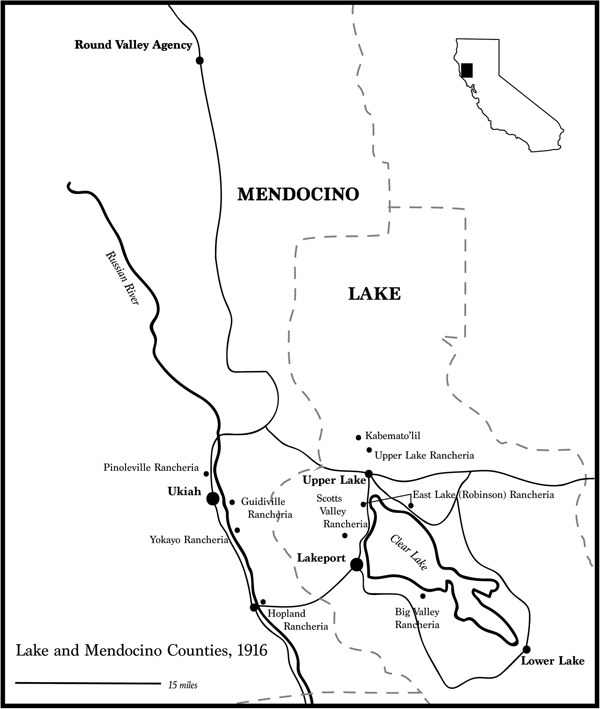
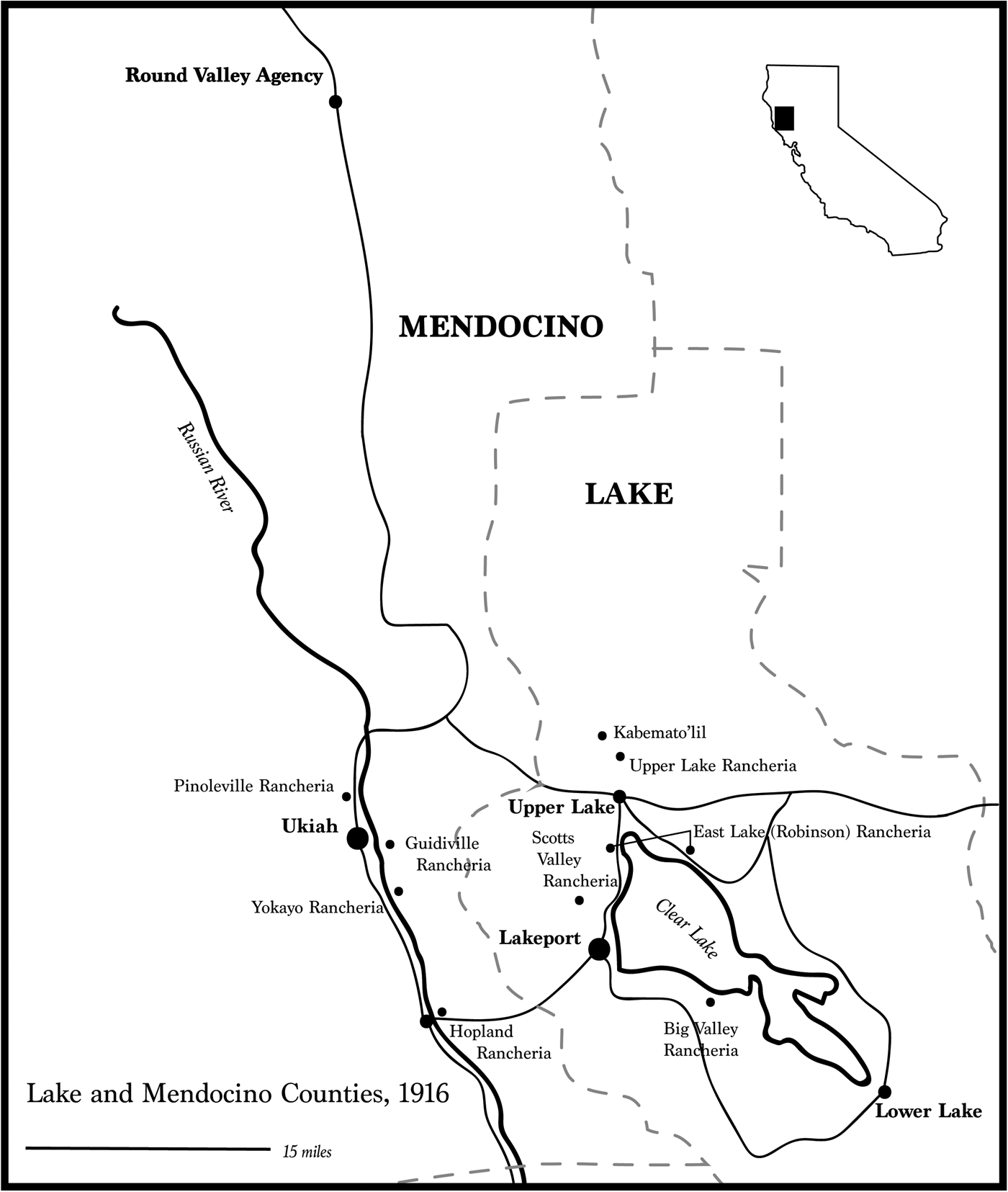
The end of the nineteenth century might have brought the end of federal involvement in the lives of California Indians, but by the beginning of the twentieth century, California's Indians had attracted the attention of a coalition of policy reformers who shared a common interest in the problem of Indian “landlessness,” and they successfully made it a federal concern.Footnote 35 These reformers were alarmed by the haste of allotment and the effects of Indian dispossession more broadly, though they were no less committed to incorporating Indians into American society as industrious citizens.Footnote 36 For the Northern California Indian Association (NCIA), material security and “fixity of tenure” was a precondition of Indian citizenship. The NCIA first used its own funds to buy forty acres for a community of Central Pomos threatened with eviction. The NCIA reported that with the “ever present fear of eviction” lifted, the already “self-supporting” Indians became even more “industrious and thrifty.” The NCIA then petitioned Congress to purchase land for Indian communities statewide and had its secretary, the San Jose lawyer Charles Kelsey, appointed the special agent in charge of locating and purchasing it. He bought the first forty-five of eight-eight new tracts, including one at Upper Lake for Ethan Anderson's community (fig. 1).Footnote 37
Lake & Mendocino Counties, 1916. Map by author.
Although the NCIA denied that it aimed to create new reservations and identified the beneficiaries as landless Indians instead of tribes, the government bought each parcel for existing multifamily communities where they already lived and worked.Footnote 38 The tracts that Kelsey selected on Clear Lake were promising because of their proximity to the bean fields and hop yards that employed large groups of Indians every year and the credit that employers regularly extended to laborers.Footnote 39 The reformers and government meant to secure Indian communities in specific parts of the landscape where Indian labor would be healthiest for Indians and most helpful to white farmers. But members of those communities shaped the policy to their specific needs. In one case, a community convinced the agent to buy a larger and better tract next to land to which they held an option to buy from an employer. Kelsey noted that the community sought the means of diminishing the power of their employer who sold them land only “as a way to control their labor.” Another community overcame Kelsey's objections that a certain piece of land was too heavily wooded to be of use to them, “selected and made arrangements for the purchase of the fifty acres” themselves, and then used it as a commercial woodlot. Eighty-two Upper Lake, East Lake, and Scotts Valley people of Lake County wrote to Kelsey to request “a larger tract of land so that it can keep us our horses and what ever stock that we want to raise.”Footnote 40 Kelsey selected another tract on Clear Lake specifically because Indians told him they always “secured … a considerable portion of their living from the fisheries in the lake.” Kelsey noted that speculation on lakefront land had driven prices to “ridiculous levels,” and the government purchase seemed especially well timed to the Indians.Footnote 41
The government's purchases seemed to continue the work Indians had begun themselves. In 1909 Kelsey bought land immediately adjacent to Kabemato'lil—and so seemed to buy land for “landless” Indians who already owned land.Footnote 42 He tried to explain: there were 180 Indians living there, but only sixty or so had “an interest” in the private land. He was not buying land for them, but for the 120 “who have none.”Footnote 43 But his own records refuted him. Of twenty-eight assignees at the new Upper Lake Rancheria, eighteen were people Kelsey himself had identified as “land owning” at Kabemato'lil. Two of them were original deedholders there.Footnote 44 This only contributed to Indian expectations that the new land was supposed to supplement their existing holdings and support their kinship-based communities. Ethan Anderson's father took an assignment at Upper Lake, but Ethan received an assignment at the new Robinson Rancheria, near his uncle, Charles Gunter, who was the acknowledged head man of a neighboring and interrelated Pomo community.Footnote 45 By the time he tried to vote, Anderson was farming two other peoples’ assignments at Upper Lake.
Indian communities around the state interpreted their new land as an additional resource and a means of security against generally precarious economic relations. Tanis Thorne has noted that in Southern California, Indian communities welcomed new federal lands, but they resented—and violently resisted in one instance—renewed federal interference with community matters, including communities’ election of their own leaders.Footnote 46 In Northern California, communities occasionally protested federal authority, but also appealed to it, and they commonly expressed impatience with what they took to be federal delays and half measures. Indians expected the federal government to deliver on what they believed was its promise: new resources to place them on better footing in white society. “I have inquired quite a lot among my white friends,” Anderson told the Round Valley superintendent, “and they told me to get busy … renting a piece of land or raising stock in places where I have chances to make good.”Footnote 47 The government's purchases proceeded from and depended upon the faith that friendship with local white citizens would lead Indians to greater inclusion and economic opportunities in the local order. That faith was misplaced.
I Have Been Feeling Very Uneasy
With new land, Indians noted the greater federal presence in their lives—in the persons of new matrons, teachers, and inspectors and a new (short-lived) Upper Lake-Ukiah Agency—and expected that the federal government would intervene with white citizens on their behalf. But they found the federal government only grudgingly committed to economic assistance and local county authorities increasingly skeptical of their rights as citizens. Facing economic hardship, Indians collaborated with white citizen-led Indian rights organizations to pressure local and federal authorities for assistance. Indians, Indian Service employees, and local authorities entered into multiparty negotiations over Indian communities’ political status and what citizenship meant.
By 1915, crop prices began to decline in the industries on which Indians and the government's program of land purchases depended.Footnote 48 Ethan Anderson's working year was organized toward meeting, as he put it, “winters desperate attacks,” and pursuing the “long job[s]” that would sustain “myself and the family.”Footnote 49 Those jobs were in shorter supply by the second decade of the twentieth century. Indians found the longest harvest season and, therefore, the best pay in the hops industry. California hop production peaked at the exact moment Kelsey began to buy land for Pomo communities (the first tract at Hopland, naturally).Footnote 50 But after spiking at a heady forty-five cents a pound in 1911, at which point Ukiah growers put more land into hop production, prices and production entered a free fall.Footnote 51 In 1915, an Indian Service teacher wrote that growers were not giving advances because of price uncertainty, and since that “helps them through the winter,” the Indians expected the winter to be especially difficult.Footnote 52 Over the next decade, nervous growers plowed up their hops and put in grapes and orchards, crops that offered shorter picking seasons and fewer jobs.Footnote 53 Anderson wrote that he “worked hard all through the spring and summer at the clear lake cannery … but my earnings was spent for the old folks, grandma had been sick over a year and I done all I could to get her better in health. … I have been feeling very uneasy.”Footnote 54
To preserve their security in a slipping economy, Indians appealed to local and federal authorities and endeavored to make their land productive. In 1915 two Guidiville Rancheria residents sued their employer for his failure to pay them $267 for their work in his hops. His crop failed that year, and he blamed the Indians for bad pruning; the Indians blamed a blight on the plants. The case ended twice in a hung jury.Footnote 55 If Indians hoped that the federal government might assist them in such cases, they were disappointed. An Indian Service teacher advised Pomo men not to quit working for another grower who also refused to pay his workers. He advised the Indians to “save their money as the Japanese,” leaving it to the Indians to determine how to save wages that were never paid. Then, predictably, the teacher invoked a venerable policy solution for Indian poverty: they “would live better in every respect if trained how to farm,” he insisted.Footnote 56
Indians also wanted to “live better” on their land, and they asked the federal government for the tools to help make their new parcels productive. Round Valley superintendent E. A. Hutchinson (who continued to have jurisdiction over the rancherias of Lake and Mendocino County) grumbled that Lake and Mendocino County Indians “are making demands, not requests but demands, for teams, wagons, farming implements, seed, and particularly rations.”Footnote 57 Upper Lake and Robinson residents explained, “many of us have built our house [on the government tracts] with some assistance from you and we are trying to become good people and to support ourselves and our families.”Footnote 58 Indian petitioners had some success. Congress made a new appropriation for the purchase of a few small tracts adjacent to the existing ones and gave rancheria residents, including Anderson, access to the bureau's revolving credit plan (referred to by agents and Indians as the “reimbursable fund”) for seed and farm equipment.Footnote 59 Taking heed of the government's encouragement to improve the new land, and taking note of the matrons, teachers, and field agents charged with executing the government's policy of moral instruction and preparation for citizenship, Indians expected the federal government to be a useful, if rarely generous, ally in white society.
The ongoing interest of white reformers in California's non-reservation Indians gave them another avenue for redress and, they hoped, leverage to use against federal officials. The NCIA continued its Indian work, and successor organizations engaged Indians in activist efforts to improve rancheria conditions. In 1914, Anderson's uncle Charles Gunter invited the Santa Cruz County-based and NCIA-affiliated Mt. Hermon Christian Association to preach at the church on the Robinson Rancheria, believing he was welcoming a useful ally onto his land.Footnote 60 The OIA was wary of Mt. Hermon's influence with the Indians, especially because it seemed to embolden them to confront federal tightfistedness in less than polite terms. Henry Knight of Middletown told field matron Emma Alexander, “that all Indians must be supported … because of having been ‘robbed’ of their land by the white people.” A resident at the Big Valley Rancheria, Ned Posh, insisted that “the government had lots of money and would give them all clothes, shoes, and grub,” if Indians, with the help of their friends, demanded them. Posh also asked Alexander for legal assistance for Indian defendants on trial in the county.Footnote 61 Alexander did not help her reputation among the Indians when she told Posh, that “they were all under the laws of the state and they should see to it themselves that they keep out of criminal trouble.” Posh told her that this kind of response to their requests was why the Indians did not like her, and he added, “if an Indian is in trouble and needs a few dollars [Alexander] should give it to him” herself.Footnote 62 Posh joined fourteen other men in a petition to the Indian Office to have the matron replaced—suggesting that their objection was not that they had an agent, but that she was ineffective.Footnote 63
As Posh's encounter with Alexender suggested, federal officers accepted local criminal and civil jurisdiction over Indians. But Alexander had misrepresented the willingness of the federal government to intervene with local authorities. In fact, as Posh knew, federal agents had tried to create “criminal trouble” for Indians when they tried to enlist county authorities as allies in the policing of Indian communities. They were largely unsuccessful, but their efforts revealed incompatability between local and federal conceptions of Indian citizenship and ironically confirmed for Posh and others that the federal government retained an interest in their affairs. For example, federal, California, and county law made selling liquor to Indians a crime (a misdemeanor and felony at different times), but federal agents could not convince local sheriffs and prosecutors to devote resources to suppressing liquor sales; in 1911 one agent complained that there had been “little effort” on the part of county officials “to enforce state law.”Footnote 64 Neither could federal agents convince local authorities to match their enthusiasm for policing Indian nuptial practices.Footnote 65 When special Indian Agent Thomas Down asked Mendocino District Attorney Robert Duncan to arrest any cohabiting reservation Indians seeking “refuge” in the county and prosecute them for adultery, Duncan informed him that if neither party was married, the proper charge was vagrancy. But California Indians were explicitly exempt from the state's vagrancy law.Footnote 66 Sure enough, the Mendocino County justice of the peace refused to press vagrancy charges against Indian defendants, saying vagrancy did not apply “in such case[s]” and the charge would only “run the county to a considerable expense for no purpose.”Footnote 67 Federal agents policed Indian behavior, or tried to, because they saw it as a necessary part of preparing Indians for civilized citizenship. But if Indian citizenship meant an evasion of federal authority, then “citizenship confers [no] benefit on the Indians in this community,” wrote superintendent Thomas Wilson, and had to be considered a “failure.”Footnote 68
In some cases, federal agents’ ideas of Indian citizenship did align with Indians’ idea that the federal government should protect Indians from local authorities and improve their access to local resources. When Indians and reformers tried to enroll Indian children in public schools, the OIA endorsed the effort.Footnote 69 California's school law permitted districts to establish separate schools for Indian and Asian children, but Lake County had no such schools. The county school board's main justification (if not the reason) for its opposition to enrollment in Lake County was the erroneous opinion that the Indians did not support the schools with taxes. The board suggested, however, that the federal government might pay tuition to the county for Indian students. Frederick G. Collett, a veteran of the NCIA campaign and now the director of his own Indian policy reform organization, the Indian Board of Co-Operation, endorsed and lobbied for the plan. Federal agents balked—insisting that federal tuition payments for the children of Indians who were in fact tax-paying citizens would be illegal—but nevertheless began to pay tuition for Indian students in the interest, as one superintendent put it, of asserting “human right and law in the place of race prejudice.”Footnote 70 But by winning tuition payments, Lake County had forced a concession from the federal government that Lake County Indians were “not taxed.” When local citizens came to regard Indian claims of citizenship skeptically, they could offer the federal presence as a reason to deny them.
The county threw up new barriers to Indians claiming citizenship rights, specifically when it came to poor relief. Indian communities had garnered praise for using their own means to support their aged and disabled members who could not work, but the claims of poor Indians to public funds were bound to be received skeptically by government officials in a poor county (one of the state's six poorest) founded on racial domination.Footnote 71 In 1915, Ned Posh warned of the “very bad” conditions at the Big Valley Rancheria, where “25 old Indians” Indians were “suffering for want of food and clothing.” He met with the Lake County Board of Supervisors, but they told him that the federal government was “responsible for our condition.” He then wrote the editors of the Lake County Bee in order to put pressure on the federal government. The “government has promise us so much,” he closed, “and has given us so little … radical change must take place if my race is to make any headway.”Footnote 72 Sure enough, in February 1916, the editors of the Bee asked readers, “Do you know right here in Lake County there are poor human beings crippled from age and disease, suffering the pangs of starvation?” Cribbing from Posh's letter, the Bee indicted “the government which promised them so much and did for them so little” and federal employees who denied that they were “responsible for their condition.”Footnote 73 Accordingly, Lake County citizens demanded that the field matrons provide a monthly allowance to indigent rancheria Indians. Emma Alexander noted that “a respectable and influential citizen” told her that “the government ought to provide every Indian family in California with 100 acres of ground, farm stock and farm machinery.”Footnote 74 The OIA insisted that any reading of the state's political code would find that Indians were citizens and entitled to local relief; what the federal government provided “is simply a matter of charity and not an obligation.” Field agents had instructions, then, not to provide emergency relief to any Indians who enrolled for county relief or who lived near relatives capable of working.Footnote 75
Despite OIA denials of responsibility, Indians urged federal agents to intervene on their behalf, especially when local authorities proved indifferent or hostile. In turn, local authorities objected that the federal government was not only shifting a financial burden to care for Indians on to them, but was simultaneously taking too large a role in matters which should have been left to local authorities. The tension reached a crisis point when two young men from the Robinson Rancheria shot and killed the Lake County sheriff. No one doubted the local court's jurisdiction, but the federal agent at Upper Lake, Charles Coggeshall, represented the youths at trial and then campaigned for clemency on their behalf. In the process, he irritated citizens and elected officials who wanted to see the young men executed. Coggeshall was also “hounded to death by the relatives” of the defendants who wanted assurances that he could protect the young men, and he saw an opportunity to bolster federal credibility with the Indians. When, due to Coggeshall's and a local priest's lobbying, the governor commuted the death sentence of one defendant (the only one so sentenced) to life in prison, the Bee called it a “perversion of justice,” and the district attorney decried a federal agent's effective nullification of the decisions of “twelve tried and true tax payers. … [and] a judge of the superior court.”Footnote 76 But Coggeshall was pleased that his action had helped the Indians get a “square deal.” He had used the phrase “square deal” before, when he chided two Mendocino County citizens that “these Indians are citizens of the State of California,” could vote, paid taxes, performed “two thirds of the manual labor” on local farms, and were “fellow men and women entitled to a square deal and equal rights under the law of God and man.”Footnote 77 His affinity for the phrase might have been an artifact of Theodore Roosevelt's influence on his party and the officers who staffed the federal bureaucracies, but it also reflected federal officials’ understanding of their role as intercessors in the local order on behalf of Indian citizens—but not as the sole authorities over them. In 1915, the Commissioner of Indian Affairs issued the directive that it was “proper to consider tracts of land in California … purchased for Indians to be Indian Country.” A year later, the U.S. attorney lent support to the reservation superintendent's argument that federal law should give him jurisdiction over off-reservation households composed of white men and Indian women: “I see no particular reason why the courts should not hold this to be ‘Indian country.’” In a letter to California's governor during the clemency campaign, Coggeshall introduced a telling nuance to the definition of Indian Country, pleading with him that Lake County was “largely ‘Indian Country’ and the anti-Indian feeling and prejudice are strongly indicated.” The agent understood Indian Country to be a zone of conflict between “prejudiced” white citizens and Indians that required intervention by disinterested federal authorities.
From buying land for landless Indians, to enrolling Indians in school, to offering legal counsel, federal agents still hoped they were fitting Indians for a kind of citizenship that had local support. Agents continued to insist that the federal presence did not “relieve the county from doing its duty to the Indians” and the “county ought to appreciate the fact that the government is helping it to take care of the Indians.”Footnote 78 Lake County, however, interpreted the use of federal power as an affront to local authorities and good order. In 1916, the Lake County district attorney informed the Indian Service that the Lake County Board of Supervisors had removed Indians from the relief rolls. Federal intervention in the legal system, the district attorney told one Indian Service teacher, constituted an acknowledgment that the Indians were wards of the government and that it, and not the county, should take responsibility for Indians “when committing crimes amongst themselves and otherwise.”Footnote 79 The Round Valley superintendent was “surprised” that officials of “an enlightened county” could disclaim responsibility for “the welfare of its citizens because of local prejudice.”Footnote 80 The idea that the government and white citizens were equally committed to, or had the same definition of, Indian citizenship died hard. When California's Attorney General and a U.S. Attorney agreed that Indians “not living within the tribal relation on an Indian reservation,” were entitled to relief, the superintendent wrote triumphantly that this meant Lake County must “take care of the indigent Indians.” The county only reiterated its position that the rancherias were effectively reservations, made so by their federal trust status and by the meddling Indian Service employees who administered them.Footnote 81
With federal and local officials no longer in sympathy on the question, Indians and those interested in their legal status sought a clear declaration from the courts regarding Indian citizenship. The two men who would launch the test case, Ethan Anderson and George Vicente, typified the dilemma of California's Indian citizens in the ways their working and political lives drew them into shifting positions with regard to the state. Anderson and Vicente were members of the Kabemato'lil community and trustees of the Methodist church there. Vicente had received an assignment on the government-purchased Upper Lake Rancheria, but continued to live at Kabemato'lil while he rented his assignment to Ethan Anderson. Anderson also rented the adjacent assignment of Vicente's father. Anderson himself took an assignment at his uncle's Robinson Rancheria, farmed the two lots on the government-owned Upper Lake Rancheria, and continued to work seasonally for white growers and the cannery. Both men were attendees of the Mt. Hermon Association's Zayante Indian Conference and were “auxiliaries,” Indian members, of the Indian Board of Co-Operation. As an auxiliary, Anderson had petitioned the federal government for more land in 1915.Footnote 82 In September 1916, he and Vicente tried to register to vote and the clerk, Shafter Mathews, denied their application. In Anderson's name, the Indian Board petitioned for a writ of mandate, and as the case proceeded to the state Supreme Court, Anderson sent word to other auxiliaries that his case would help them “get a square deal in Lake County.”Footnote 83
To Work My Way for Something Better
County and federal officials looked to the Anderson petition as a test case not only for Indian suffrage and citizenship rights, but the question of state authority over Indians. The Commissioner of Indian Affairs thanked Collett for the “interest you have taken in the matter” and offered his concurrence that the “large number of homeless or non-reservation Indians” who “for years have been residing among the whites and separate and apart from any Indian tribe clearly are not wards of the federal government.”Footnote 84 Authorities in neighboring Mendocino County, which had an even larger population of non-reservation Indians, also took note, and Mendocino County's district attorney Robert Duncan joined Mathew's defense team. Local jurists were not of one mind, however. Anderson was represented by two Mendocino County private attorneys, both of whom had a history of representing Indian clients in civil and criminal cases. To Anderson's lawyers, the Indian's right to vote was an extension of the county's already-proven jurisdiction over Indian citizens, and their case would rest on framing Anderson as a self-supporting and contributing member of the “rural community.”Footnote 85
The opposing sides agreed to a long stipulation of facts that described the history of Indian communities in Lake County, rather than simply focus on Anderson's circumstances. Both sides agreed that Anderson lived in a “group” of Indians, but it had no tribal “laws or regulations.” The Indians had a respected “captain,” but his decisions were not binding. Federal agents saw to them in “cases of extreme emergency,” but also looked after their “ordinary wants.” Indians acknowledged local jurisdiction and were in “mutually neighborly” relations with white citizens, but associated almost exclusively with other Indians. They fished and gathered acorns, but otherwise ate “ordinary plain food.” Anderson held government land, but was a stakeholder in private Indian land and made much of his living working for white citizens. His community paid taxes on its land, but otherwise “never have been taxed.” There was enough evidence in the self-contradicting stipulation to make either side's case, but neither denied Anderson lived among and in a community of Indians.Footnote 86
In denying Anderson's right to vote, the defense argued that Indians could not unilaterally quit their tribal relations. Just because Indians were “greatly depleted in numbers” and had adopted the “habits of civilized life,” they did not automatically become citizens. Their ongoing dependency on the federal government, the lawyers added, was rooted in Indians’ innate incompetence for citizenship; the United States “still maintains toward these remnants of the race the same attitude it always maintained.” The defense, then, emphasized elements of Indian behavior that suggested race-based disabilities for citizenship: they held land in common, they frequently did not marry by license, they ate dried fish and acorns, and lived in Indian communities on collectively held land. “They still live in communities by themselves,” argued the lawyers, and their “manner of living and their diet indicate they follow in large measure the habits of their ancestors.” Moreover, the federal government, in adding to their communal holdings, had ratified their tribal nature. Mathews’ lawyers pointed out, correctly, that Anderson had never received a patent in fee for land on the government rancheria. Their final argument, then, was that if the members of Anderson's Indian community held no individual rights to the land, the tract was indistinguishable from an unallotted reservation under federal supervision, and such tenure was itself dispositive of Anderson's tribal relations and status as an “Indian, not taxed.”Footnote 87
Anderson's brief downplayed the supposed racial traits of Lake County's Indians and focused on ways Indians accepted local political authority. Anderson's Indian community was not a tribe of “time immemorial,” but a more recent creation that Indians rebuilt with materials lent by the local legal order. Kabemato'lil comprised “members of a little group of Indians, sometimes a remnant of some old tribe, sometimes relatives and friends and families connected by marriage from different tribes.” Anderson's lawyers likened Anderson's community to the Yokayo Rancheria, which the Supreme Court had ruled a decade earlier was a private tribal trust, as an equally laudable effort “made by [the Indians] themselves to ‘solve the Indian problem,” instead of waiting for the government's assistance. Downplaying the federal purchases, the lawyers argued that it was commendable that these “little groups” had first appealed to white neighbors and employers for assistance in purchasing land. Since then, they had been “respected, self-sustaining, useful, and welcome members of the rural communities.” The rancheria served a vital function in modern Lake County, the village forming “a little reservoir” of laborers “in emergencies and in harvest season.” As private property owners, they paid taxes and accepted local jurisdiction over their lives. Contrary to the defense's claims, Anderson and his wife, Clara, had a county marriage license. The federal government, on the other hand, had not “done much for the Indians.” And although the community recognized a respected elder in the role of captain, “absolutely no tribal government exists,” and they “cannot possibly be subject to the jurisdiction of what has no existence.”Footnote 88
In March 1917, the Supreme Court agreed. Anderson was an individual with no tribal relations, was subject to state law, and was therefore entitled to its protections and the right to vote. His tribe had no treaties with the United States that would lend federal acknowledgment to Indians’ distinct government. The federal government bought them land, and the Round Valley agent “attends to their ordinary wants,” but the court confessed it did not know what was meant by this phrase in the stipulation, and it was clear that they lived under local jurisdiction in any case. Anderson and his community had “lost the power of self-government.” It was an ironic and revealing way to phrase the rights of democratic citizenship, and it placed less emphasis on Indians’ abilities to elect to become citizens than on the power of local governments to assert their authority over all of the people who lived in their jurisdiction—power that Lake County had claimed until very recently.Footnote 89
The case did not resolve the contradictions inherent in Indian communities’ status, but instead preserved and perpetuated them. The court invited the county and the federal government to imagine, as the opposite of Anderson's self-sufficient amenability to local jurisdiction, a “dependent” government Indian who lived full time on federal trust land and relied on the government for support. Legal scholar and Indian rights advocate Chauncey Goodrich pointed out that such a person did not exist; the “typical” California Indian, he wrote in 1926, was a “non-tribal, non-reservation Indian,” who had to work for white property owners and thus “enters into the general economic life” and became a “citizen of the state.” Goodrich agreed that the “insecure economic status of the California Indian complicates his legal status,” but for Goodrich the idea of California Indians were wards because they occupied federal trust land had a “flavor of unreality.” County officials made it real as they continued to deny Indian citizenship claims.Footnote 90 Two months after the decision, a group of Indians succeeded in getting a state appeals court to issue a writ of mandate against the Lake County Board of Supervisors requiring them to restore Indians to the county's relief rolls. The mandate recalled to the board's attention the recent decision in Anderson v. Mathews and the county's obligation under state law to support “indigent persons.” But the supervisors ignored the petition. Shafter Mathews explained, in a letter to Superintendent Walter McConihe, “it has never been their policy to grant aid to persons who have relatives who are able to support them,” a hint that Mathews still believed Indians lived in tribal relations and were federal responsibilities.Footnote 91 Throughout the rest of 1917, the OIA was just as quick to deny rancheria residents anything that resembled a relief claim—the Assistant Commissioner of Indian Affairs writing, “while it is regretted that the county does not properly care for its indigent citizens, this fact does not thereby lay the burden upon this office.”Footnote 92 But because the federal government held the rancherias in trust and because county authorities had permission from the Anderson ruling to disregard “tribal” communities, the government gradually acceded to the idea that the rancherias, at least, were sites of federal responsibility. And so, years later, when trying to determine the status of a young man who divided his time between different relatives on and off federal trust land, the OIA ruled that the “matter of … wardship,” and an Indian's ability to claim resources from the federal government, “depends entirely upon where he resides.”Footnote 93
The federal presence in Pomo lives had taken shape in relief—in the absence, neglect, or disavowal by local authorities and in response to inadequacies of the marketplace to provide Indians the security they sought. In spite of their limited intentions for the trust land, federal officials continued to receive petitions from rancheria residents who sought to improve their position in the local economy, pushing at the edges of the boundaries the federal government tried to draw around its commitment there. In 1920, Malcolm McDowell of the Board of Indian Commissioners surveyed Pomo rancherias in Mendocino and Lake County at the invitation of all-Indian reform group, the Society of Northern California Indians. Former Indian Board of Co-Operation auxiliary members formed the group, a “going association” in McDowell's estimation, with a vision of a comprehensive program to “promote the advancement of and to secure a peaceful and prosperous existence for these Indians.” In their conference with McDowell, fourteen Pomo communities emphasized their desire to make their land productive: Hopland Rancheria needed $1,500 to complete its “water system”; Pinoleville needed two hundred acres of farm land and implements; Sherwood wanted to trade its hilly land for land closer to the railroad; Upper Lake already farmed “every foot” of its 200 acres, but needed 150 more acres, water pipes, and farm implements.Footnote 94 Each proposal showed how the new parcels bounded Indian claims and, at the same time, how Indians tried to use them as the means of economic independence.
Even as Anderson was pursuing his rights as an independent citizen, he was negotiating with the Round Valley superintendent for federal credit under the federal reimbursable fund. He wanted to buy horses from his employer at the Upper Lake bean cannery, begin his own hauling venture, and put the profits back into his land. Anderson won over the superintendent with relentless inquiries, diligence in tracking the price of horses in his neighborhood, and strategic deployment of the bromides of citizenship dear to Indian Service employees—“Year after year of laboring in lake county,” he wrote the superintendent, “has led me by experience to work my way for something better when I have found out that there is opportunity for us Indians.” Two months after Anderson won the right to vote, the Indian Office approved his government loan of three hundred dollars to improve his government land.Footnote 95
Conclusion
Ethan Anderson's case compels us to shift the focus of our investigations into Indian politics away from a gatekeeping federal government and national policy reform campaigns and toward the struggles that Indians and their communities engaged in with the local authorities who bordered and encompassed their land. “Taxed” and “not taxed” status were modes of engagement with the state and white society that Indians had little choice but to pursue simultaneously. Debates over Indian citizenship framed Indians’ responses to economic insecurity, but California Indians’ use of them also reproduced the rancherias as the homes of Indian communities and even “Indians, not taxed” with federally acknowledged “tribal relations.” In 1936, the Big Valley Rancheria voted for an Indian Reorganization Act constitution, the first time the United States recognized a Pomo tribe by name. Upper Lake ratified one in 1941.Footnote 96 When federal statutes redefined Indian Country in 1948 to include all “dependent Indian communities,” the Lake County rancherias were firmly within its borders, and California had effectively more reservations than any other state.Footnote 97 In later life, Ethan Anderson testified before Congress on behalf of Indian plaintiffs in their case for lands they lost when their treaties failed ratification in 1852. When the chair of the Senate Indian Affairs Committee asked him if he belonged to a tribe, he replied, “Yes, sir … Pomo tribe.”Footnote 98