




No CrossRef data available.
Article contents
MVA ROP2 vaccinia virus recombinant as a vaccine candidate for toxoplasmosis
Published online by Cambridge University Press: 16 April 2004
Abstract
Toxoplasma gondii is the aetiological agent of toxoplasmosis and is the most frequent and best known of the parasitic diseases. In the United States, a serological survey from the Third National Health and Nutrition Examination Survey found that an estimated 23% of adolescents and adults have laboratory evidence of infection with T. gondii. Although toxoplasmosis is asymptomatic or shows self-limited symptoms in adults, in pregnant women infections can cause severe health problems to the fetus if the parasites are transmitted. Also, in immunodeficient patients, chronic infection with T. gondii can reactivate and produce encephalitis, which is frequently lethal. In addition, in veterinary medicine, T. gondii infection is of economic importance due to abortion and neonatal loss in sheep and goats. Recently, the development of vaccines against toxoplasmosis has progressed considerably. The live attenuated S48 strain of Toxoplasma has been broadly used for veterinary purposes. DNA vaccines containing the full-length of SAG1/P30, ROP2 or ROP 1 genes have proved to be a promising candidate to induce protection against toxoplasmosis. Viral vectors have proved to be the best candidates for vaccination in different diseases. A recombinant Herpes virus carrying the ROP2 gene is able to induce protective immunity in cats. In the present work we describe the potential of the MVA ROP2 recombinant vaccinia virus as a vaccine against toxoplasmosis. MVA ROP2 induces antibodies against the ROP2 protein in similar amount and types as the thermo-sensible strain ts-4 of T. gondii, which is able to fully protect mice against challenge with the virulent RH strain of T. gondii. Also, the life-span of mice is increased in MVA ROP2 vaccinated animals. We conclude that MVA ROP2 vaccine can possibly generate an immune response, which could be useful in protection against toxoplasmosis.
Keywords
Information
- Type
- Research Article
- Information
- Copyright
- © 2004 Cambridge University Press
INTRODUCTION
Toxoplasmosis, caused by the intracellular protozoan parasite Toxoplasma gondii is widespread throughout the world (Bhopale, 2003), and it has been estimated that one-third of the human population is infected (Saavedra et al. 1996). Toxoplasmosis transmission occurs from animals to humans mainly by ingestion of oocysts excreted in the faeces of infected cats or ingestion of viable cysts present in contaminated food (Jackson & Hutchison, 1989). After ingesting the oocysts, tachyzoites are released and invade and multiply in the intestinal epithelial cells. From the gastrointestinal tract, tachyzoites are disseminated to other organs of the body, and then produce an acute infection which turns chronic with encysted bradyzoites.
Clinical manifestations after infection are fever, fatigue, malaise, muscle pains, sore throat, and headache (Jackson & Hutchison, 1989). Although toxoplasmosis infection can cause mild symptoms in humans, it may provoke severe problems in immunodeficient individuals such as AIDS patients. In this type of patient, T. gondii infection produces encephalitis, pneumonia and disseminated infection (Thomas, 2001). In pregnant women, toxoplasmosis infection is a very severe problem because if the parasite is acquired during pregnancy, transplacental transmission can occur and neonatal malformations, neurological damage, blindness or fetal death may occur. However, if immunocompetent mothers are infected before pregnancy the parasite does not pass into the uterus, even if there is re-exposure to the parasite during the first 3 months of pregnancy (Fatoohi et al. 2002). It has been well-characterized that T. gondii induces a potent cell-mediated immune response capable of stimulating macrophages to produce interleukin-12 (IL-12) and tumour necrosis factor-α (TNF-α). IL-12 then activates natural killer cells and T cells to produce IFN-γ, which is essential for resistance. Together, IFN-γ and TNF-α act synergistically to mediate the killing of tachyzoites by macrophages. It is also well known that CD8+ T cells are the major effector cells responsible for protection against T. gondii. The CD8+ T cells from infected mice and humans secrete IFN-γ and inhibit in vitro cytotoxicity against infected cells (Montoya et al. 1996; Subauste, Koniaris & Remington, 1991). Based on this information, recent efforts have been made in order to design a suitable vaccine to prevent toxoplasmosis in animals and humans. For sheep, T. gondii mutants S48, Ts-4 and T-203 have been used as vaccine candidates. In special cases the S48 is used as the commercial vaccine for ovine toxoplasmosis. For human purposes, progress has been focused on the surface antigens of tachyzoites such as SAG1, SAG2 and SAG3 which are the major surface antigens of tachyzoites (Couvreur et al. 1988). DNA and herpes virus vaccines carrying the ROP2 gene of T. gondii have also been demonstrated to be suitable candidates for toxoplasma vaccination (Leyva, Herion & Saavedra, 2001; Mishima et al. 2002).
In the present work we describe the potential use of the MVA ROP2 recombinant virus as a vaccine candidate for toxoplasmosis. MVA ROP2 virus induces IgG1 and IgG2 antibodies similar to those generated when the attenuated Ts-34 strain of T. gondii is used as immunogen. Also, animals immunized with MVA ROP2 showed an increased life-span compared with the control MVA-vaccinated animals after challenge with the virulent strain RH of T. gondii. However, animals vaccinated with MVA ROP2 or MVA showed a similar amount of parasites after challenge with the avirulent cyst-forming Me49 strain of T. gondii. These results encouraged us to use the MVA ROP2 vaccinia virus recombinant together with other recombinant vaccinia carrying T. gondii genes in order to increase the protection of vaccinated animals.
MATERIALS AND METHODS
Cells and viruses
Chicken embryo fibroblasts (CEF), and Vero cells were grown in Dulbecco's modified Eagle medium (DMEM) (Gibco BRL, Gaithesburg, MD) supplemented with 10% fetal bovine serum (FBS) (Gibco BRL, Gaithesburg, MD). Cells were maintained in a humidified air-5% CO2 atmosphere at 37 °C. Vaccinia virus strain MVA and MVA ROP2 recombinant viruses were routinely propagated and titrated by end-point dilution in CEF cells to obtain a 50% tissue-culture infection dose (TCID50).
Parasites
Strain Wiktor (Francoise et al. 1963) or RH (Sabin, 1941) tachyzoites, were grown in Vero cells, and ts-4 strain-tachyzoites (Pfefferkorn & Pfefferkorn, 1976) were grown in human foreskin fibroblasts and incubated at 33 °C. The Me49 strain (Lunde & Jacobs, 1983) was propagated by introducing a mouse brain homogenate containing 20 cysts into mice by gastric lavage.
Plasmid construction
A CDNA copy of the ROP2 gene was obtained by cutting the plasmid pBKS-ROP2 with HindIII enzyme followed by filling ends with Klenow enzyme. The gene was cloned into the unique SMAI site of the pIIIgpt dsP plasmid, which carries 2 copies of the strong synthetic vaccinia virus early/late promoter (Sutter & Moss, 1992). The resulting plasmid (pIIIgpt dsp ROP2) was purified by caesium chloride gradients and used to construct the MVA ROP2 recombinant virus.
Construction of recombinant vaccinia virus
Generation of vaccinia recombinant was performed as described before (Valadez et al. 2000). Briefly, confluent CEF cells were infected with 0·05 tissue-culture infectious dose of MVA, followed by transfection of the pIIIgpt dsP ROP2 plasmid. This plasmid is a cassette in which the ROP2 gene is flanked by 2 MVA DNA flanking sequences located in the HindIII A fragment of the MVA genome. Inside cells an homologous recombination between the flanking sequences of the pIII gpt dsp ROP2 plasmid with the MVA genome occurs. This recombination generates recombinant viruses. Subsequently, the recombinant MVA viruses expressing the ROP2 protein were selected by 6 consecutive rounds of plaque purification on CEF cells in the presence of mycophenolic acid 825 μg/ml (Fenner et al. 1988). The isolated recombinant viruses were used to prepare viral stocks in CEF cells.
Detection of the recombinant ROP2 protein
Detection of ROP2 protein expressed by the MVA ROP2 vaccinia virus recombinant was performed as described before (Valadez et al. 2000). Briefly, CEF cells were infected with MVA ROP2 virus at a multiplicity of 25 pfu. At 6–12 h after infection cells were collected and cytoplasmic extracts prepared. Extracts were run on 10% polyacrylamide gels and proteins were electrotransferred onto a nitrocellulose membrane. The membrane was blocked with buffer TNT (0·15 M NaCl, 10 mM Tris–HCl, pH 8, 0·05% Tween 20, 2% dried skimmed milk) for 2 h at room temperature, then incubated with a monoclonal anti-ROP2 antibody for 2 h. The membrane was washed again with TNT and incubated with a 1[ratio ]10000 dilution of phosphatase conjugated-goat anti-mouse antibody for 1 h. After several washes with TNT buffer phosphatase activity was visualized using the chromogen substrate nitroblue-tetrazolium, 5-bromo-4-chloro-3-indolyl-phosphate. The reaction was stopped by adding EDTA.
Animals and immunization protocol
Female mice (Swiss) aged 8 weeks were purchased from Taconic laboratory (Germantown, New York, NY) and kept under ‘sterile conditions’ in isolated cages.
Groups of 10 mice were injected intramuscularly into the hindquarters with 106, 107 and 108 pfu of MVA or MVA ROP2 viruses in 100 μl of PBS buffer. Three weeks later mice were boosted with the same dose of viruses. As controls, one group of mice was injected with PBS, and another group was immunized with 2×10⁴ tachyzoites of the ts-4 strain of T. gondii in 100 μl of PBS. Control groups were boosted 3 weeks later also.
Three weeks after the last immunization, mice were challenged as follows: for lethal studies, animals were challenged intraperitoneally with 300 of tachyzoites-strain RH/200 μl PBS. Survival was recorded every day. For chronic studies, mice were orally challenged with 20 cysts of T. gondii strain Me49/100 μl of PBS. Six weeks later, mice were sacrificed and the brain was isolated, homogenated and stored in liquid nitrogen, for determination of T. gondii DNA.
Determination of T. gondii DNA by quantitative competitive-PCR analyses
Total DNA from mice brain was extracted with DNAzol reagent following the manufacturer's specifications (InVitrogen, Carlsbad, California, USA). The T. gondii B1gene was amplified with primers, Rd-1(5′-AAGGGCTGACTCGAACCAGATGT-3′) and Rd-2(5′-GGGCGGACCTCTCTTGTCTCG-3′) (Pelloux et al. 1996) in the presence of an internal primer (a fragment of 301 base pairs derived from lambda phage flanked by complementary sequences of Rd-1 and Rd-2 primers. This fragment contained 50·8% of G/C content similar to the 51·5 G/C content present in the B1 template. Also there is an Msp1 restriction site which is absent in the B1 template) as competitor. PCR products were phenol/chloroform extracted, precipitated with ethanol and digested with MspI enzyme. PCR products were analysed on 2% agarose gels.
DNA quantitation was performed by analysing the images of DNA from gels with the Kodak Digital ID Image Analysis Software. Mathematic analyses and graphics were performed with the Prism 2.01 software (Graph Pad, San Diego, CA).
Humoral response generated by MVA ROP2 recombinant virus
Humoral immune responses to the T. gondii ROP2 protein were assessed by enzyme-linked immunosorbent assay (ELISA), as previously described (Leyva et al. 2001). Briefly, Immulon plates (Costar, Cambridge, Mass) were coated with 5 μg/μl of ROP2 protein solution (ROP2 protein was expressed in E. coli and purified by exclusion chromatography). The plates were blocked with 2% dried skimmed milk in PBS. Dilutions of mice sera were put on plates and incubated at 4 °C, overnight. The plates were then washed 3 times with PBS and incubated with a 1/2000 dilution of peroxidase-conjugated rabbit anti-mouse IgG. For antibody isotype determination, biotin-labelled-rabbit-anti-mouse IgG1 and IgG2a were used at 1[ratio ]20000 and 1[ratio ]10000 dilutions respectively. Titres were defined as log10 of the dilution that resulted in an absorbance of 0·5, obtained by graphic interpolation.
Also, the presence of ROP2 antibodies from immunized mice was assessed by Western blot analysis. Briefly, a T. gondii lysate was resolved on a 10% polyacrylamide gel SDS, and processed as described above.
Immunostaining
Titration of MVA ROP2 virus expressing the ROP2 protein was performed by immunostaining. CEF cells were infected in duplicate with dilutions of MVA ROP2 virus for 40 h. After infection, cells were fixed with methanol[ratio ]acetone (1[ratio ]2 proportion), washed 4 times with PBS and then incubated with a rabbit anti-vaccinia antibody or a monoclonal anti-ROP2 antibody, at 4 °C overnight. Cells were washed again with PBS and incubated with a 1/2000 dilution of a peroxidase-conjugated goat anti-(rabbit IgG) (Promega, Madison, Wis) or 1/10000 peroxidase-conjugated goat anti-mouse for 2 h at room temperature. Following 4 washes with PBS, plates were incubated with the peroxidase substrate O-dianisidine (Sigma, St Louis, MO) at room temperature until colour developed.
Survival analysis
Survival data were analysed by the standard Kaplan–Meier survival curves, using the computer program GraphPad Prism (Kuznetsov et al. 1994).
RESULTS
Construction and characterization of the MVA ROP2 recombinant virus expressing the T. gondii ROP2 protein
Because it was identified that the ROP2 protein is involved in protective immunity against T. gondii (Saavedra et al. 1996) and viral vectors such as the herpes virus and DNA vaccines carrying the ROP2 gene have been shown to induce a humoral immune response capable of increasing the life-span in mice and to inhibit the invasion of tachyzoites (Mishima et al. 2002) in in vitro experiments we decided to construct a recombinant vaccinia virus that would express the ROP2 protein in infected cells. The MVA ROP2 virus was propagated and produced in CEF cells, as described in the Materials and Methods section. After successive plaque purifications, the virus stocks were analysed to verify the purity of the recombinant MVA ROP2 virus. By performing immunostaining on CEF cells infected with MVA ROP2 virus and using an anti-ROP2 antibody or anti-MVA antibody, we demonstrated that the MVA ROP2 recombinant virus represents 96% of the total virions in the preparations, and only 4% of the MVA virus was present. Recombinant MVA ROP2 virus was propagated and the expression of the ROP2 gene verified by Western blot analysis using monoclonal antibodies against the ROP2 protein. The antibodies reacted specifically with the 68 kDa protein, which corresponds in size to the ROP2 gene product (lane 3, Fig. 1). Control of the tachyzoite lysate showed that the ROP2 protein is slightly smaller in size compared with ROP2 protein synthesized by the MVA ROP2 virus (lane 4, Fig. 1). This is because the T. gondii tachyzoites process the ROP2 protein from a 66 kDa to a mature 55 kDa protein in vivo (Sadak et al. 1988). This result showed that a complete ROP2 protein was being produced inside MVA ROP2-infected cells.

Fig. 1. Expression of the ROP2 protein from MVA ROP2. Western blot analysis of cytoplasmic extracts from CEF-infected cells with MVA or MVA ROP2. At 6 h after infection cell lysates were prepared and resolved by SDS–PAGE, transferred to a nitrocellulose membrane, and probed with a ROP2 monoclonal antibody. CEF-non-infected (lane 1), CEF-MVA infected (lane 2), CEF-MVA ROP2 infected (lane 3), Toxoplasma gondii tachyzoite lysate (lane 4). The band representing the ROP2 protein (68 kDa) expressed by MVA ROP2 is marked by an arrowhead.
MVA ROP2 vaccine increases the life-expectancy of immunized mice
In order to test the efficacy and potency of the MVA ROP2 vaccine, groups of 10 mice were injected twice with different doses of MVA, or MVA ROP2 viruses during a period of 3 weeks. After the second immunization, mice were challenged with the virulent strain RH of T. gondii. Animal survival was recorded every day during a period of 30 days. Animals immunized with 106 or 107 pfu of MVA started dying on day 6, in contrast, mice vaccinated with MVA ROP2 at the same doses started dying on day 7. With 108 MVA or MVA ROP2, animals started dying on day 8. On day 9, all animals immunized with MVA had died. However, mice immunized with 108 pfu of MVA ROP2 increased their life-expectancy until day 10, and at day 11 all animals were dead (Fig. 2). All animals injected with PBS and used as controls died on the same day (day 8) as the MVA vaccinated animals. In contrast all animals injected with the control ts-4 strain of T. gondii survived after challenge (Fig. 2). These results show that MVA ROP2 is capable of increasing the life-expectancy in mice (2 days). Also the difference in survival between animals immunized with 108 MVA ROP2 and the control MVA is statistically significant (P=0·04).

Fig. 2. MVA ROP2 increased the survival of Toxoplasma gondii RH-infected mice. Swiss mice were vaccinated with different doses of MVA ROP2 recombinant virus, ts-4 tachyzoites or MVA virus. Three weeks later mice were boosted with the same dose of viruses. Three weeks after the last immunization mice were challenged with T. gondii tachyzoites-strain RH. The number of living animals in each group was determined every day during 14 days. Inoculation with MVA ROP2 (open squares and closed circles) prolonged the survival of mice compared with MVA (closed squares). ts-4 tachyzoites of T. gondii fully protects animals against lethal challenge (closed triangles). This experiment was done with groups of 10 animals, and performed in duplicate.
MVA ROP2 vaccine did not reduce the number of T. gondii parasites in the brain
We tested the protection of the MVA ROP2 vaccine against chronic toxoplasmosis infection. Series of mice injected, as described above, with different amounts of MVA or MVA ROP2 viruses were challenged with the moderate virulent strain Me49 of T. gondii. In these experiments all animals survived after challenge. Forty days after challenge, brains of the animals were isolated and the presence of the B1 gene of T. gondii was determined by PCR analysis (see Materials and Methods section). Animals injected either with MVA, MVA ROP2 or PBS showed the same amount of the B1 gene copy numbers. These results showed that MVA ROP2 vaccine did not induce a protective capacity to stop the multiplication of cysts in the brain when the infection was performed orally (Fig. 3). In contrast, animals immunized with the ts-4 strain of T. gondii showed a reduction in cyst multiplication at least 10 times lower compared with the MVA ROP2 virus (Fig. 3).

Fig. 3. MVA ROP2 vaccine does not reduce the number of Toxoplasma gondii parasites in the brain. Swiss mice were vaccinated with different doses of MVA or MVA ROP2 recombinant virus, ts-4 tachyzoites, and PBS. After immunization animals were challenged with the virulent strain of T. gondii Me49. Total DNA was extracted from brains and the B1 gene of T. gondii was amplified by PCR to determine the relative amount of T. gondii DNA. This experiment was done with groups of 10 animals, and performed in duplicate.
Immune response generated by recombinant vaccinia virus
Since the results with the MVA ROP2 treatment showed partial protection against T. gondii infection, and knowing that vaccinia virus is an excellent vehicle for antigen presentation to the immune system and a potent stimulator of immune responses against antigens that are normally not well recognized by the immune system (Binns & Smith, 1993; Cann, 1997; Levine, 1994) we were very interested in elucidating the presence of different types of antibodies generated in immunized animals. Mice treated with MVA or MVA ROP2 exhibited an antibody response to vaccinia virus proteins (data not shown). However, this response was probably not responsible for the increase in life-expectancy of the immunized mice. Antibodies generated against ROP2 protein during immunization and after challenge were evaluated by ELISA. Antibody titre against the ROP2 protein in animals vaccinated with MVA ROP2 increased from the first to the second immunization (Fig. 4A and B). In contrast, mice injected with MVA or PBS did not show the presence of antibodies against ROP2 (Fig. 4) Surprisingly, mice vaccinated with the ts-4 strain of T. gondii induced the formation of antibodies against ROP2 but in the same amount as the MVA ROP2 virus (Fig. 4). This result indicated that the MVA ROP2 virus was capable of stimulating the immune system to recognize the ROP2 protein. However, there was no correlation between T. gondii protection and the amount of anti-ROP2 antibodies present in sera from MVA ROP2-vaccinated animals.

Fig. 4. Mice vaccinated with MVA ROP2 produce specific IgG antibodies against the ROP2 protein. Sera from mice vaccinated with MVA ROP2 or MVA were obtained 3 weeks after each immunization. The presence of specific anti-ROP2 antibodies was assayed by ELISA. (A and B) Sera from mice after the first and second immunizations respectively. Mice inoculated with the ts-4 strain of Toxoplasma gondii or PBS are also shown.
MVA ROP2 virus induced the formation of IgG1 and IgG2a antibody isotypes
In an effort to determine the mechanism of the increased survival in animals vaccinated with MVA ROP2, we investigated whether a TH1 and/or TH2 response against the ROP2 was generated after immunization. In the first immunization, the presence of IgG1 antibodies was detected in mice injected with 108 pfu of MVA ROP2 (Fig. 5A). In the second immunizations, IgG1 antibodies were present in animals injected with all different concentrations of 106, 107 and 108 pfu of MVA ROP2 virus (Fig. 5B). IgG2a antibodies were also detected in the first immunization using 107 and 108 pfu of MVA ROP2 (Fig. 5C). In the second immunization, IgG2a antibodies were detected in animals injected with 106, 107, and 108 pfu of MVA ROP2 (Fig. 5D). Titres of either IgG1 or IgG2a antibodies increased after the second immunization. Also, titres of IgG2a antibodies were higher than IgG1 antibodies (Fig. 5).

Fig. 5. MVA ROP2 vaccinia virus recombinant induces IgG1 and IgG2a antibody isotypes against ROP2. Sera from mice vaccinated with MVA ROP2 or MVA were obtained 3 weeks after each immunization. The presence of specific IgG1 and IgG2a anti-ROP2 antibodies was assayed by ELISA. IgG1 (A) and IgG2a (C) from first and IgG1 (B) and IgG2a (D) from second immunizations are shown. Mice inoculated with the ts-4 strain of Toxoplasma gondii or PBS are also shown.
Surprisingly, titres of IgG1 or IgG2a antibodies against ROP2 protein in animals immunized with the ts-4 strain of T. gondii were much lower than those generated by the MVA ROP2 recombinant virus (Fig. 5). IgG1 and IgG2a antibodies were not detected in control animals injected with PBS. These results indicated that IgG1 or IgG2a antibodies against the ROP2 protein are participating to some extent in the prevention of T. gondii multiplication.
DISCUSSION
A new recombinant virus carrying the ROP2 gene (MVA ROP2) was constructed and its potential as a vaccine against toxoplasmosis was evaluated. The MVA ROP2 virus was highly purified up to a 95%. All animals vaccinated with MVA ROP2 showed an increase in life-expectancy (2 days) after challenge with the virulent strain RH of T. gondii compared with the control MVA-immunized-animals that died earlier than vaccinated animals. The low level of protection observed could be due to the high virulence of the RH strain of T. gondii used in these experiments. In addition recent experiments demonstrated that mice immunized with a DNA (SAG1) vaccine could be protected against a challenge with an avirulent strain but not against the RH strain (Angus et al. 2000). Also, if the increase in life-expectancy in mice is extrapolated to humans, a much longer time delay in T. gondii infection could be predicted since symptoms are much lower in humans than in mice.
These results suggest that MVA ROP2 generated an immune response capable of delaying the T. gondii infection in animals. Related experiments using mice as a model have tested the immunogenicity of the DNA ROP2 vaccine in protection experiments as candidates for toxoplasmosis vaccines (Leyva et al. 2001). The DNA ROP2 vaccine was capable of inducing an immune response, which increased the survival in vaccinated animals (Leyva et al. 2001). These reports showed that DNA-ROP2, as well as the MVA ROP2 virus, could induce some protection against a lethal challenge with the virulent strain RH of T. gondii.
The use of DNA or vaccinia virus vaccines has been tested before, with other genes, against several viral diseases using different animal models. Although the immune responses are sometimes different for the two types of vaccines it has been observed that either vaccine is capable of inducing protection in vaccinated animals, suggesting that these vaccine vectors are the best approach for use as vaccine candidates (Amara et al. 2002).
We also tested protective immunity in mice with the MVA ROP2 virus by challenging the animals with the virulent strain Me49 of T. gondii. In this experiment we did not observe a reduction in parasite load compared with the control MVA-immunized animals or with animals injected with PBS. This result revealed that the MVA ROP2 virus can increase animal survival but can not stop T. gondii multiplication, as seen by the equal number of parasites in vaccinated and control animals. In similar experiments, a recombinant herpes virus expressing the ROP2 gene of T. gondii was able to accelerate the IgG response after T. gondii infection and to reduce brain parasite load in cats (Mishima et al. 2002). These results suggest that the T. gondii model is important to evaluate the potential of a candidate of T. gondii vaccine. Efforts are now in progress to elucidate if the MVA ROP2 vaccine can induce strong protection in mammals such as cats.
The strong humoral immune response generated with the MVA ROP2 virus detected by the presence of specific antibodies against the ROP2 protein suggests that these antibodies are, at least in part, responsible for the increase in animal survival. Also, the induction of both types of IgG1 and IgG2a antibodies indicates that the MVA ROP2 virus is capable of stimulating very efficiently both the TH1 and TH2 immune responses. In contrast, the ts-4 T. gondii strain generates mainly a TH1 immune response. These results indicate that MVA ROP2 virus has the capacity to induce different immune responses, which together can probably have a very efficient effect in protection. Related work, using a DNA ROP2 vaccine have also induced the production of IgG1 and IgG2a antibodies in protection experiments (Leyva et al. 2001). These results support the idea that viral and DNA vaccine vectors are efficient in stimulating the immune system.
Recent work has been focused on the use of several T. gondii proteins as candidates for vaccines against toxoplasmosis. The proteins located on the surface of T. gondii, such as SAG1, SAG2 and SAG3, have been cloned into the DNA plasmids and shown to protect against T. gondii infection (Angus et al. 2000; Haumont et al. 2000; Couper et al. 2003). In addition, the HSP30 and HSP70 proteins present in bradyzoites and tachyzoites and cloned into plasmid vectors have shown some protective immunity. Cellular immune responses have also proved to play an important role in protective immunity against T. gondii. The ts-4 strain of T. gondii is able to stimulate CD4+ specific T lymphocytes against T. gondii. Also these CD4+ cells were able to act as helpers in inducing both CD8+ cytokine production and protective immunity (Gazzinelli et al. 1992). Furthermore, the use of an expression library made on a plasmid DNA which expresses approximately 70% of the T. gondii genetic material was able to induce a long-term protective immunity, showing that CD4+ and CD8+ splenocytes are responsive to stimulation with T. gondii antigens 24 weeks after the last immunization, demonstrating that CD4+ and CD8+ T-cell subsets are involved in genomic library-elicited protective immunity (Fachado et al. 2003). However, it has been shown that in humans the cellular immune responses to different toxoplasma antigens is very variable and the protection generated may also depend on the antigen and the route of immunization. These observations have to be considered in the development of better vaccines against toxoplasmosis. Knowing that the vaccinia virus is an excellent vector for antigen presentation and potent stimulator of the immune system (Binns & Smith, 1993; Cann, 1997) it would be worth trying to introduce into the vaccinia virus genome more than one antigen-gene of T. gondii in order to obtain the maximum efficiency for protection against toxoplasmosis.
Taken together, these results indicate that, most probably, the best approach to generate an efficient vaccine against toxoplasmosis will be the introduction of several antigens cloned into either DNA or a viral vector or combinations of both (Fachado et al. 2003).
The authors thank Dr Rafael Saavedra for providing the plasmid pBKS-ROP2. We also thank Horacio León and Tania Navarro for technical support. This work was supported in part by grant ES 208197 (form DGAPA-UNAM, México City, Mexico).
References
REFERENCES
AMARA, R.,
VILLINGER, F.,
STAPRANS, S. I.,
ALTMAN, J. D.,
MONTEFIORI, D. C.,
KOZYR, N. L.,
XU, Y.,
WYATT, L. S.,
EARL, P. L.,
HERNDON, J. G.,
McCLURE, H. M.,
MOSS, B. &
ROBINSON, H. L.
(2002).
Different patterns of immune responses but similar control of a simian-human immunodeficiency virus 89.9P mucosal challenge by modified vaccinia virus ankara (MVA) and DNA/MVA vaccines.
Journal of Virology
76, 7625–7631.Google Scholar
ANGUS, C. W.,
KLIVINGTON-EVANS, D.,
DUBEY, J. P. &
KOVACS, J. A.
(2000).
Immunization with a DNA plasmid encoding the SAG1 (P30) protein of Toxoplasma gondii is immunogenic and protective in rodents.
Journal of Infectious Diseases
181, 317–324.CrossRefGoogle Scholar
BHOPALE, G. M.
(2003).
Development of a vaccine for toxoplasmosis. Current status.
Microbes and Infection
5, 457–462.CrossRefGoogle Scholar
BINNS, M. M. &
SMITH, G. L.
(1993).
Recombinant Poxvirus.
ACR Press,
Boca Raton, Florida.
CANN, A. J.
(1997).
Principles of Molecular Virology.
Academic Press,
San Diego.
COUPER, K. N.,
NIELSEN, H. V.,
ESKILD, P.,
ROBERTS, F.,
ROBERTS, C. W. &
ALEXANDER, J.
(2003).
DNA vaccination with the immunodominant tachyzoite surface antigen (SAG-1) protects against adult acquired Toxoplasma gondii infection but does not prevent maternofoetal transmission.
Vaccine
21, 2813–2820.CrossRefGoogle Scholar
COUVREUR, G.,
SADAK, A.,
FORTIER, B. &
DUBREMETZ, J. F.
(1988).
Surface antigens of Toxoplasma gondii.
Parasitology
97, 1–10.CrossRefGoogle Scholar
FACHADO, A.,
RODRIGUEZ, A.,
MOLINA, J.,
SILVÉRIO, J.,
MARINO, A.,
PINTO, L.,
ANGEL, S.,
INFANTE, J.,
TRAUB-CSEKO, Y.,
AMENDOEIRA, R. &
LANNES-VIEIRA, J.
(2003).
Long-term protective immune response elicited by vaccination with an expression genomic library of Toxoplasma gondii.
Infection and Immunity
71, 5407–5411.CrossRefGoogle Scholar
FATOOHI, A. F.,
COZON, G. J. N.,
GREENLAND, T.,
FERRANDIZ, J.,
BIENVENUE, J.,
PICOT, S. &
PEYRON, F.
(2002).
Cellular immune responses to recombinant antigens in pregnant women chronically infected with Toxoplasma gondii.
Clinical and Diagnostic Laboratory Immunology
9, 704–707.CrossRefGoogle Scholar
FENNER, F.,
HENDERSON, D. A.,
ARITA, I.,
JEZEK, Z. &
LADNYI, I. D.
(1988).
Smallpox and its Erradication.
WHO: Geneva.
FRANCOISE, J.,
JADIN, J.,
WERY, M. &
VAN DE CASTEELE, J.
(1963).
Etude expérimentale du traitement de la toxoplasmose.
Bulletin Academic Research Medical
7, 459–485.Google Scholar
GAZZINELLI, R.,
XU, Y.,
HIENY, S.,
CHEEVER, A. &
SHER, A.
(1992).
Simultaneous depletion of CD4+ and CD8+ T lymphocytes is required to reactivate chronic infection with Toxoplasma gondii.
Journal of Immunology
149, 175–180.Google Scholar
HAUMONT, M.,
DELHAYE, L.,
GARCIA, L.,
JURADO, M.,
MAZZA, P.,
DAMINET, V.,
VERLANT, V.,
BOLLEN, A.,
BIEMANS, R. &
JACQUET, A.
(2000).
Protective immunity against congenital toxoplasmosis with recombinant SAG1 protein in a guinea pig model.
Infection and Immunity
68, 4948–4953.CrossRefGoogle Scholar
JACKSON, M. H. &
HUTCHISON, W. M.
(1989).
The prevalence and source of Toxoplasma infection in the environment.
Advances in Parasitology 28, 55–105.CrossRefGoogle Scholar
KUZNETSOV, V. A.,
MAKALKIN, I. A.,
TAYLOR, M. A. &
PERELSON, A. S.
(1994).
Non-linear dymamics of immunogenic tumors: parameter estimation and global bifurcation analysis.
Bulletin of Mathematical Biology 56, 295–321.CrossRefGoogle Scholar
LEVINE, A. J.
(1994).
The origins of the small DNA tumor viruses.
Advances in Cancer Research
55, 150–158.CrossRefGoogle Scholar
LEYVA, R.,
HERION, P. &
SAAVEDRA, R.
(2001).
Genetic immunization with plasmid DNA coding for the ROP2 protein of Toxoplasma gondii.
Parasitology Research
87, 70–79.CrossRefGoogle Scholar
LUNDE, M. N. &
JACOBS, L.
(1983).
Antigenic differences between endozoites and cystozoites of Toxoplasma gondii.
Journal of Parasitology
69, 806–808.CrossRefGoogle Scholar
MISHIMA, M.,
XUAN, X.,
YOKOYAMA, N.,
IGARASHI, I.,
FUJISAKI, K.,
NAGASAWA, I. &
MIKAMI, T.
(2002).
Recombinant feline herpesvirus type 1 expressing Toxoplasma gondii ROP2 antigen inducible protective immunity in cats.
Parasitology Research
88, 144–149.CrossRefGoogle Scholar
MONTOYA, J. G.,
LOWE, K. E.,
CLAYBERGER, C.,
MOODY, D.,
DO, D.,
REMINGTON, S.,
TALIB, S. &
SUBAUSTE, C. S.
(1996).
Human CD4+ and CD8+ T lymphocytes are both cytotoxic to Toxoplasma gondii infected cells.
Infection Immunology
64, 176–181.Google Scholar
PELLOUX, H.,
WEISS, J.,
SIMON, J.,
MUET, F.,
FRICKER-HIDALGO, H.,
GOULLIER-FLEURET, A. &
AMBROISE-THOMAS, P.
(1996).
A new set of primers for the detection of Toxoplasma gondii in amniotic fluid using polymerase chain reaction.
FEMS Microbiology Letters
138, 11–15.CrossRefGoogle Scholar
PFEFFERKORN, E. R. &
PFEFFERKORN, L. C.
(1976).
Toxoplasma gondii isolation and preliminary characterization of temperature-sensitive mutants.
Experimental Parasitology
39, 365–376.CrossRefGoogle Scholar
SAAVEDRA, R.,
BECERRIL, M.,
DUBEAUX, C.,
LIPPENS, R.,
DE VOS, M.-J.,
HERION, P. &
BOLLEN, A.
(1996).
Epitopes recognized by human T lymphocytes in the ROP2 protein antigen of Toxoplasma gondii.
Infection and Immunity
64, 3858–3862.Google Scholar
SABIN, A. B.
(1941).
Toxoplasmic encephalitis in children.
Journal of the American Medical Association
116, 801.CrossRefGoogle Scholar
SADAK, A.,
TAGHY, Z.,
FORTIER, B. &
DUBREMETZ, J.-F.
(1988).
Characterization of a family of rhoptry proteins of Toxoplasma gondii.
Molecular and Biochemical Parasitology
29, 203–211.CrossRefGoogle Scholar
SUBAUSTE, C. S.,
KONIARIS, A. H. &
REMINGTON, J. S.
(1991).
Murine CD8+ cytotoxic T lymphocytes lyse Toxoplasma gondii infected cells.
Journal of Immunology
147, 3955–3959.Google Scholar
SUTTER, G. &
MOSS, B.
(1992).
Non replicating vaccinia vector efficiently expresses recombinant genes.
Proceedings of the National Academy of Sciences, USA
89, 10847–10851.CrossRefGoogle Scholar
THOMAS, P. A.
(2001).
Parasitic diseases and immunodeficiencies.
Parasitology 122,
S65–S71.Google Scholar
VALADEZ, G.,
SUTTER, G.,
JOSE, M.,
GARCÍA-CARRANCA, A.,
ERFLE, V.,
MORENO, M.,
MERCHANT, H. &
ROSALES, R.
(2000).
Human tumor growth is inhibited by vaccinia virus carrying the E2 gene of bovine papillomavirus.
Cancer
88, 1650.Google Scholar
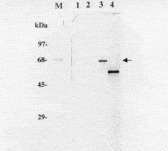
Fig. 1. Expression of the ROP2 protein from MVA ROP2. Western blot analysis of cytoplasmic extracts from CEF-infected cells with MVA or MVA ROP2. At 6 h after infection cell lysates were prepared and resolved by SDS–PAGE, transferred to a nitrocellulose membrane, and probed with a ROP2 monoclonal antibody. CEF-non-infected (lane 1), CEF-MVA infected (lane 2), CEF-MVA ROP2 infected (lane 3), Toxoplasma gondii tachyzoite lysate (lane 4). The band representing the ROP2 protein (68 kDa) expressed by MVA ROP2 is marked by an arrowhead.

Fig. 2. MVA ROP2 increased the survival of Toxoplasma gondii RH-infected mice. Swiss mice were vaccinated with different doses of MVA ROP2 recombinant virus, ts-4 tachyzoites or MVA virus. Three weeks later mice were boosted with the same dose of viruses. Three weeks after the last immunization mice were challenged with T. gondii tachyzoites-strain RH. The number of living animals in each group was determined every day during 14 days. Inoculation with MVA ROP2 (open squares and closed circles) prolonged the survival of mice compared with MVA (closed squares). ts-4 tachyzoites of T. gondii fully protects animals against lethal challenge (closed triangles). This experiment was done with groups of 10 animals, and performed in duplicate.

Fig. 3. MVA ROP2 vaccine does not reduce the number of Toxoplasma gondii parasites in the brain. Swiss mice were vaccinated with different doses of MVA or MVA ROP2 recombinant virus, ts-4 tachyzoites, and PBS. After immunization animals were challenged with the virulent strain of T. gondii Me49. Total DNA was extracted from brains and the B1 gene of T. gondii was amplified by PCR to determine the relative amount of T. gondii DNA. This experiment was done with groups of 10 animals, and performed in duplicate.

Fig. 4. Mice vaccinated with MVA ROP2 produce specific IgG antibodies against the ROP2 protein. Sera from mice vaccinated with MVA ROP2 or MVA were obtained 3 weeks after each immunization. The presence of specific anti-ROP2 antibodies was assayed by ELISA. (A and B) Sera from mice after the first and second immunizations respectively. Mice inoculated with the ts-4 strain of Toxoplasma gondii or PBS are also shown.
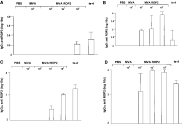
Fig. 5. MVA ROP2 vaccinia virus recombinant induces IgG1 and IgG2a antibody isotypes against ROP2. Sera from mice vaccinated with MVA ROP2 or MVA were obtained 3 weeks after each immunization. The presence of specific IgG1 and IgG2a anti-ROP2 antibodies was assayed by ELISA. IgG1 (A) and IgG2a (C) from first and IgG1 (B) and IgG2a (D) from second immunizations are shown. Mice inoculated with the ts-4 strain of Toxoplasma gondii or PBS are also shown.
 You have
Access
- 29
- Cited by