Introduction
On December 17, 1903, Orville Wright was the first human being to fly a self-made heavier-than-air motorized plane. He bridged a distance of just 36 metres. The same day several other attempts were made, and his brother Wilbur made a flight of 256 metres. This was the start of a competition to fly longer distances. Louis Blériot crossed the English Channel in July 1909 and Jules Védrines flew from Paris to Madrid in May 1911. In September 1913 Roland Garros was the first to cross the Mediterranean. Eventually the Atlantic Ocean was considered the ultimate challenge.
In 1913 the Daily Mail announced a prize of £ 10,000 (currently around £ 1,446,000) for the first aviator to cross the Atlantic Ocean from any point in the USA, Canada or Newfoundland to any point in Britain or Ireland in not more than 72 hours. After an interruption by the First World War (1914–1918), in the spring of 1919 seven teams prepared to take part in this competition. Two participants (Wood and Wyllie, Hawker and Grieve) ditched in the sea after engine and navigation problems, another (Sunstedt) crashed during a test flight. Raynham and Morgan crashed immediately after take-off. Kerr decided not to take part, but shortly afterwards he too was involved in a serious crash landing. Three U.S. NC-4 flying boats tried to cross the Atlantic following a different pathway with stopovers in the Azores. Two of them were also involved in various accidents and dropped out. Just one flying boat reached Europe after 11 days. The flying-boat aviators were the first to cross the Atlantic. They did not meet the 72-hour criterion and were therefore not eligible for the Daily Mail prize.
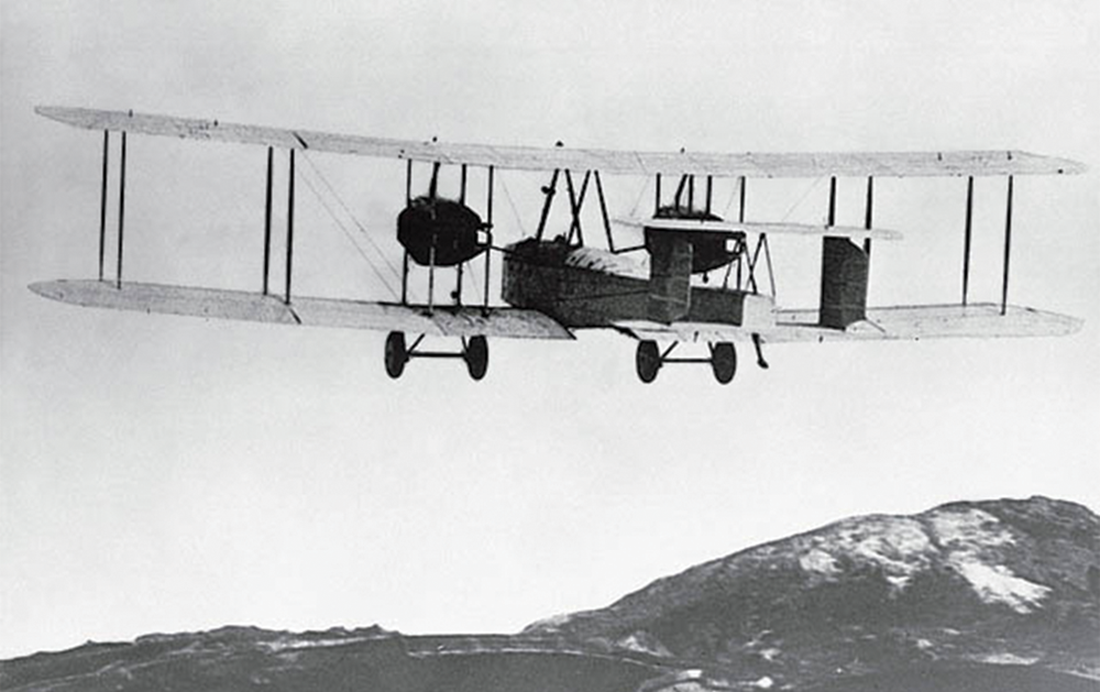
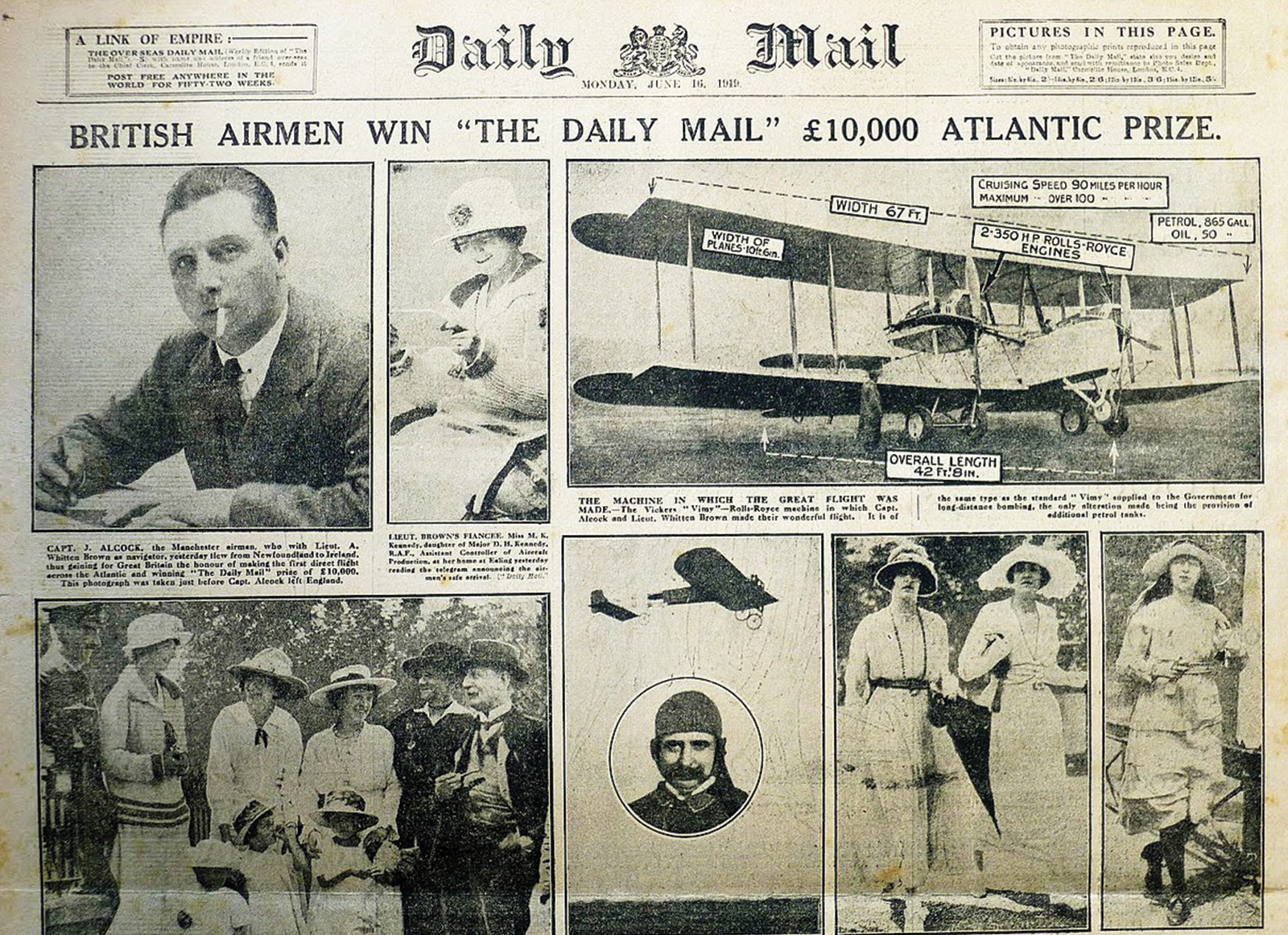
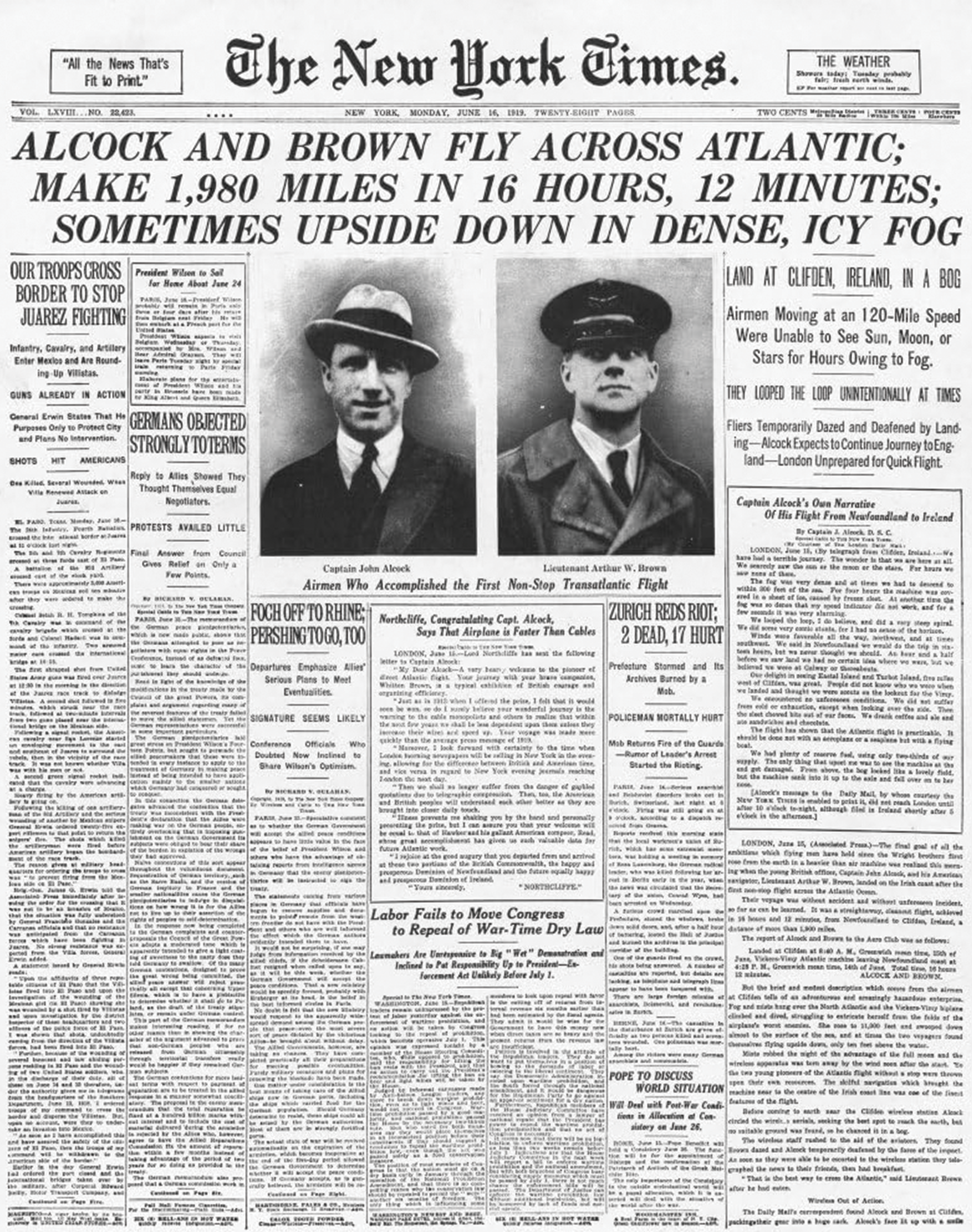
Two British veterans, Captain John Alcock (pilot) and Lieutenant Arthur Whitten Brown (navigator), succeeded on June 14–15 (Figure 1). They flew from Newfoundland to Ireland in 16 hours and 28 minutes in a converted two-engine Vickers Vimy bomber (Figure 2). This epic event has been extensively described in newspapers, journals and books (Figures 3, 4).
Alcock and Brown experienced a disorienting event during their flight, possibly in combination with vertigo. At a given moment, as the aircraft was tossed around by turbulence, Alcock lost all sense of orientation and had no idea of the attitude of the plane. The forward motion stalled, and the plane started falling in a steep spiral dive. At just fifty feet above the ocean, they levelled out and were able to continue the flight. Other pilots must have experienced similar situations, though with less favourable outcomes.
Arthur Whitten Brown and John Alcock in 1919.20

Vickers Vimy ExCC.21

Daily Mail front cover, June 16 1919.Reference Mail22

New York Times front cover, June 16, 1919.Reference Alcock23

Disorientation and vertigo of the pilots occurred in another transatlantic flight. The crew of the U.S. NC-flying boat had a life-threatening experience similar to that of Alcock and Brown. In zero-visibility conditions, suddenly a wing dropped, and the plane went into a spin. The pilot on duty, Elmer Fowler Stone, got the plane under control, an extremely courageous and outstanding performance. In the early days of aviation, unsuccessful spin recovery due to spatial disorientation killed many pilots and is therefore known as the ‘graveyard spin’.
In 1926–1927 there were five competitors for the Orteig Prize for the first non-stop flight across the Atlantic between New York and Paris. Three had fatal accidents and one (Charles Nungesser) disappeared, presumably having crashed in the ocean. Charles Lindbergh won the prize.
The problems encountered during these flights illustrate the state of aviation at the beginning of the twentieth century, when many pioneers risked their lives. Their failed attempts and accidents usually have been linked to bad weather, unreliable engines or navigation problems. However, the role of human physiology has hardly been addressed. The aim of this paper is, considering current otoneurologic insights, to make an inventory of physiologic problems that pilots possibly encountered which may have contributed to the occurrence of accidents and failures.
Fatigue
The shortest distance between North America and Europe is 3000 km and the air speed of the planes in those days was around 150 km/h. Therefore, a transatlantic flight would have taken about 20 hours. During such long flights, exhaustion and lack of sleep would surely have led to reduced attentiveness. An indication for this can be found in Charles Lindbergh’s biography describing his transatlantic flight in 1927, which took him 33 hours.Reference Lindbergh1 He wrote, “My mind clicks on and off […]. I try letting one eyelid close at a time while I prop the other open with my will. My whole body argues dully that nothing, nothing life can attain, is quite so desirable as sleep. My mind is losing resolution and control.”
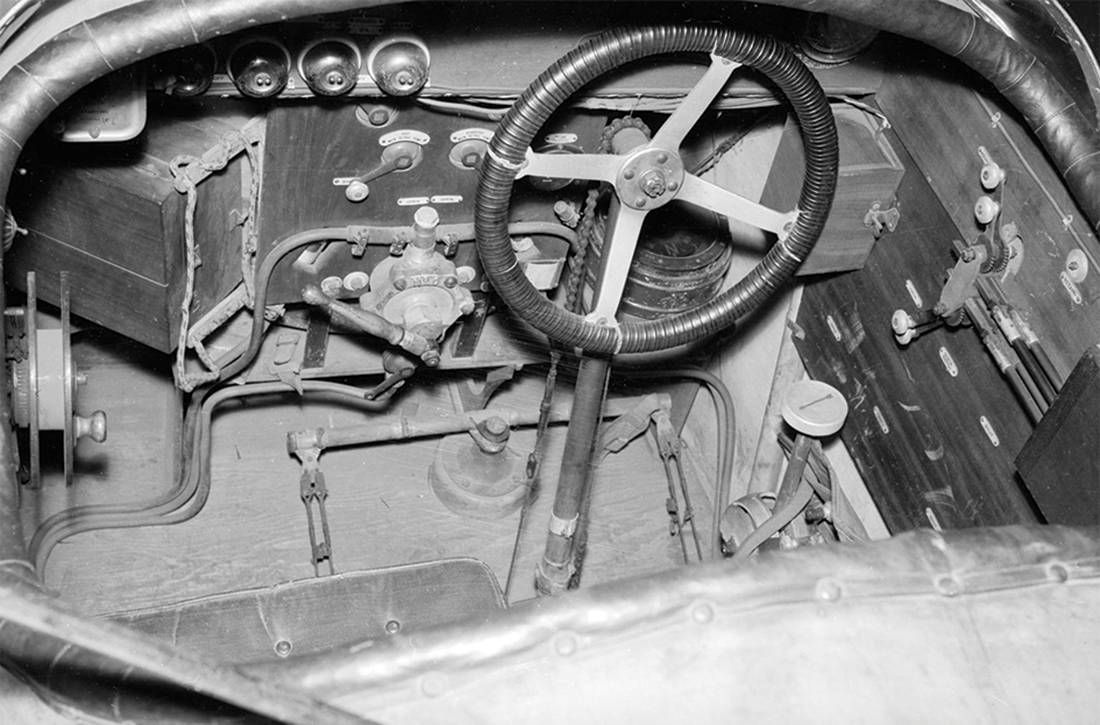
At the beginning of the twentieth century, airplanes were equipped with iron cables directly connecting the control column and the rudder bar in the cockpit with the control surfaces (i.e. ailerons, elevators and rudder). In this construction, the leverage capacity was minimal and there was no trimming equipment, so the pilot had to apply constant force to control the plane with both hands and feet. Furthermore, aircraft were generally single-seater types with only one pilot handling the instruments (Figure 5). This meant that flying required uninterrupted and rather strenuous physical effort as well as continuous focused attention. In 1919, Alcock had to eat and drink in snatches with one hand while handling the control wheel with the other. One can imagine that these continuous efforts were fatiguing. Fatigue could have been enhanced by environmental conditions such as cold, improper clothing, vibrations, noise and emotional stress.Reference Armstrong and Armstrong2
Single-pilot cockpit of the Vickers Vimy flown by Alcock and Brown.Reference Murphy-Bates24

Effects of altitude
In order to navigate by the stars or the sun, pilots sometimes had to climb above the clouds to levels exceeding 10,000 feet. At that altitude, lack of oxygen may induce hypoxia and hyperventilation. Research has shown that hypoxia impairs a pilot’s situation awareness.Reference Steinman, Groen and Frings-Dresen3 And hyperventilation is known to induce hypocapnia, which may provoke vestibular hyperreactivity and a distorted vestibulo-ocular reflex, although the exact mechanism is not known.Reference Theunissen, Huygen and Folgering4 The afferent pathway of the vestibulo-ocular reflex leads from the semicircular canals along the vestibular nerve to the oculomotor nuclei in the brainstem, both directly and via the vestibular nuclei. The efferent pathway then evokes compensating eye movement during rotatory head movements. Vestibulo-ocular reflex dysfunction results in oscillopsia during head movements, which may affect instrument scanning in pilots. Another consequence of hyperventilation is fear, which may have occurred during early transatlantic flights. Altogether, the necessity to climb above the clouds without oxygen supply may have created physiological and cognitive challenges for the early transatlantic pilots.
Airsickness
At the time of the flight of Alcock and Brown, airsickness had been quite thoroughly investigated.Reference Quix, Vernet, Ledoux, Sourdille and Aloin5 Its prevalence was documented more extensively during the Second World War (1940–1945), because it often prevented air crews from achieving their mission. According to a recent review, the incidence of airsickness among military aviators is 10–70 per cent.Reference Samuel and Tal6 Airsickness is a subcategory of motion sickness, which occurs when information from our orientation senses (e.g., the visual and vestibular system) does not match our expectations about our self-motion or orientation.Reference Bles, Bos, de Graaf, Groen and Wertheim7 In an aircraft, such mismatch may be induced by unanticipated motion, such as turbulence, especially when visual references are scarce. It is well known that motion sickness can cause physiological discomfort, including headache, nausea and vomiting. But it may also lead to psychological symptoms such as drowsiness and apathy. These symptoms are known as the ‘sopite syndrome’, which may affect psychomotor and cognitive tasks. Considering this knowledge, it may be assumed that airsickness played a role in failures during long-distance flights in the early days of aviation.
Disorientation
Another problem that aviation pioneers faced during their efforts to cross the Atlantic is the need to fly in the dark and in clouds. As already recognized by researchers in the field of aviation medicine in that era, attitude awareness is compromised in the absence of valid visual input.Reference van Wulfften Palthe8 Lacking outside visual references, pilots in those days had to control the plane purely with a combination of proprioceptive and vestibular information. On the ground, these sensory systems provide reliable information about our self-movement and our orientation relative to the earth. In flight, however, vestibular feedback on aircraft motion and attitude may be unreliable, which results in spatial disorientation.Reference Collar9–Reference Stott11 On the one hand, vestibular feedback may be missing when the aircraft motion remains under the perception threshold. On the other hand, above-threshold aircraft motion may produce noticeable but misleading vestibular feedback. For example, the semicircular canals in the inner ear only respond to changes in angular motion, not to constant rotation. Therefore, without valid visual references, a pilot may feel the entry of a turn, but during the turn itself he may have the sensation of flying straight. Stopping the turn may produce another response in the semicircular canals, which gives the sensation of entering a new turn in the opposite direction, while actually flying straight again. This is schematically depicted in Figure 6.
Schematic visualization of the response of the semicircular canals (middle row) to roll motion, as shown by the time history at the bottom, in which the solid gray line depicts the roll angle of the aircraft, and the dashed black line depicts the perceived roll motion based on activation of the semicircular canals. During straight and level flight (A) the cupula (black valve-like symbol inside the canal) is in its neutral position, and the pilot does not perceive any roll motion. During the entry of a turn (B), the inertia of the endolymph fluid causes it to lag the roll motion of the head (solid arrow), which causes the cupula to deflect (dashed arrow), triggering a neural discharge in the vestibular nerve. This gives the pilot the sensation of roll motion. Once a steady-state roll angle is reached (C), the endolymph fluid and the cupula assume their neutral condition again, so that the pilot no longer perceives any roll motion, while the aircraft is in fact still turning. Upon exiting the turn (D), the roll motion that brings the aircraft back to straight-and-level causes the cupula to deflect again, but now in a direction opposite to the original turn. This causes a sensation of rolling in opposite direction, which can persist when the aircraft is already straight-and-level. This aftersensation is known as the post-roll illusion, which ultimately subsides when the aircraft keeps flying straight-and-level (E).

We should note that the airplanes used in the transatlantic race in 1919 were not equipped with a gyroscopic artificial horizon. Thus, to avoid spatial disorientation, the pilots had to rely on rather ineffective and vulnerable instruments such as a compass, an air speed indicator and a spirit level of some sort. Pilots also had the so-called Abney’s spirit level, but that instrument was intended for navigational purposes (i.e., to identify the horizontal plane when using a sextant). This hand-held instrument was useless as and inclinometer or attitude indicator, since the function of spirit levels depends on the false perception of gravity. Despite the advent of gyroscopic attitude indicators and other technical improvements, flying in the dark has remained a hazardous and challenging task, as evinced in the famous book Vol de Nuit (Night Flight) by pilot and author Antoine de Saint-Exupéry, which was published in 1931.Reference Saint-Exupéry A12 Even in contemporary aviation, spatial disorientation remains a serious safety risk, contributing to more than 20 per cent of all fatal aircraft accidents.Reference Newman and Rupert13
Noise-induced vertigo
In 1929, 10 years after the transatlantic competition, Italian biologist Pietro Tullio from Bologna described experiments demonstrating that noise above a certain level may produce unsteadiness and vertigo.Reference Tullio14 Afterwards, this was referred to as the Tullio phenomenon or Tullio’s sign. It may be an epiphenomenon of a variety of otologic and non-otologic conditions such as Ménière’s disease, endolymphatic hydrops, cholesteatoma, Lyme borreliosis, syphilis, status after ear surgery and head trauma. However, Tullio phenomenon may occur in normal, otologically sound people when they are exposed to noise levels exceeding 100–110 dB. Perilymph leakage or a (silent) labyrinthine fistula is presumed to be the pathogenetic mechanism. All pilots at the beginning of the twentieth century were sitting in the open air (Figure 7), and the seats of Alcock and Brown were very close to the two engines that produced a deafening level of noise. This is illustrated by the fact that they had to communicate mainly by written messages during the flight. After landing in Ireland, they suffered from profound deafness and tinnitus.
Vickers Vimy Rolls Royce biplane, complete with two Rolls Royce engines and propellers.25

In 1998, Lloyd B. Minor et al. described the superior canal dehiscence syndrome:Reference Minor, Solomon, Zinreich and Zee15 a defect in the bony covering of the superior semicircular canal, leaving just a soft-tissue separation between the labyrinth and the middle-cranial fossa, a so-called ‘third window’. This third window can be responsible for noise-induced vertigo and oscillopsia. The prevalence of superior canal dehiscence in the normal population is not yet known. Computed tomography examinations of the temporal bones of patients with non-otologic symptoms indicate a prevalence varying from 1.2 per cent to 9.6 per cent.Reference Erdogan, Songu, Akay, Mete, Uluc and Onal16–Reference Berning, Arani and Branstetter19 It is not excluded that some form of (silent) third window might have caused vestibular symptoms in aviators at the beginning of the twentieth century.
• The competition to make the first transatlantic flight has been extensively documented. Numerous books and publications attribute the failures and accidents mainly to technical problems, bad weather and navigation error.
• Reports on the success and failures hardly mention the physical limitations of the air-crew, however.
• This paper addresses the functioning of pilots at the beginning of the 20th century using current physiologic and otoneurologic insights.
• In that light, a variety of impairments can be identified. In retrospect, the physical limitations of the aviators must also have played a role in the failures.
Conclusion
While there is no doubt that bad weather, engine failure and navigational problems were responsible for many failures and accidents in the early days of aviation, we assume that human physiologic and otoneurologic factors must have played roles as well. With our current knowledge of vestibular functioning, it is possible to elucidate in retrospect the major challenges faced by pilots in the first decades of aviation. The combination and interaction of extreme fatigue, lack of sleep, hyperventilation, airsickness, spatial disorientation and noise-induced vertigo must have affected pilot performance and may have contributed to failed attempts to cross the Atlantic. That was the price that had to be paid for the first successful transatlantic flight.
Financial Support
This research received no specific grant from any funding agency, commercial or not-for-profit sectors.
Competing interests
None declared