


Introduction
The use of psychoactive plants in pre-Columbian South America has a long tradition, traceable through both iconographic and archaeological records (Brown Reference Brown2014; VanPool Reference VanPool2019). The development of new techniques in modern forensic studies has also allowed for the identification of different substances in archaeological human tissues. Toxicological analysis of human remains can provide valuable insights into plant use in the Inca Empire (late thirteenth century–1572 CE), particularly concerning religious practices and their use as an indirect means of social control through state-mediated rituals.
The preserved bodies of sacrificed children provide a unique opportunity to examine the use of psychoactive substances in one of the most sacred rituals performed in the Inca Empire: capacocha. The Incas sacrificed children of both sexes and young women as an act of veneration for the most important deities (Reinhard & Ceruti Reference Reinhard and Ceruti2010). In the provinces, these deities were often identified with mountain summits. The capacocha was often conducted in response to events that could disturb the cosmic order (such as drought, famine or political instability) (Cobo Reference Cobo and Hamilton1990). Children were selected from throughout the Empire and, after sanctification ceremonies, were sacrificed in the capital, Cusco, or sent to provincial oracles and temples (Hernández Príncipe Reference Hernández Príncipe1923 [1621]). The role of the children was to act as messengers between the living community and the world of gods and ancestors (Reinhard & Ceruti Reference Reinhard and Ceruti2010).
Most chemical substances introduced into the human body (xenobiotics) become embedded in the keratin structures of the hair and nails. This means that the consumption of different alkaloids and metabolites can be tracked in ancient samples. Previous studies have used such analyses to look for evidence of coca consumption among children from the Llullaillaco, Aconcagua, El Plomo, Cerro Esmeralda, Sara Sara and Chuscha mountains in the South American Andes (Besom Reference Besom2000; Schobinger Reference Schobinger2004; Wilson et al. Reference Wilson2007, Reference Wilson2013; Castro et al. Reference Castro2021).
The aim of this study is to determine which psychoactive plants were given to children during the capacocha ritual. The presence of alkaloids and metabolites, including cocaine, benzoylecgonine, cocaethylene, atropine, scopolamine, mescaline, harmine, harmaline, bufotenine and dimethyltryptamine (N,N-DMT), were investigated using liquid chromatography-tandem mass spectrometry (LC-MS/MS). These compounds are produced by the psychoactive plants that grow in and near the Andes, whose consumption has been confirmed during the pre-Hispanic period (before 1532) (Brown Reference Brown2014; Miller et al. Reference Miller2019; Biwer et al. Reference Biwer2022; Socha et al. Reference Socha2022a). Recent advances in toxicology now allow for the identification of low concentrations of such substances, justifying the reanalysis of previously tested samples that yielded negative or inconclusive results.
Preliminary research on two individuals sacrificed on Ampato mountain revealed the presence of cocaine, benzoylecgonine, harmine and harmaline (Socha et al. Reference Socha2022b). This study focuses on the children and young women sacrificed at the Ampato, Chuscha, Llullaillaco, Quehuar and Sara Sara volcanoes (Figure 1). The results help establish whether the primary purpose of the consumed substances was for their healing or psychoactive properties. In light of these findings, the article advances the hypothesis that the use of various substances was associated with the veneration of deities and reflected differences in the cult of the Apus (powerful deities). According to some chroniclers of the sixteenth and seventeenth centuries, the cult of the capacocha was associated with divination practices (Hernández Reference Hernández Príncipe1923 [1621]); the consumption of hallucinogenic plants was therefore likely perceived to enhance the prophetic abilities of the children. In addition, the medicinal attributes of some plants may have also helped the children endure the arduous journey to the high mountain peaks.
Map of the Inca Empire with marked locations of known capacocha sacrifices (from Beorchia 1985: 416, map).

Capacocha ritual
The word capacocha comes from the Quechua language and is a combination of two words: capac, meaning ‘royal’, and cocha, which can be translated as ‘lake’, ‘water’ or ‘body’ (Holguín Reference Holguín1952 [1608]). This combination may signify the source of fertility provided through royal offerings (Reinhard & Ceruti Reference Reinhard and Ceruti2010). Nevertheless, the term capacocha, as noted by Duviols (Reference Duviols1976), encompasses a broad range of meanings beyond the sacrificial act alone.
The ritual was performed for both religious and political reasons. From a religious perspective, the Incas offered the most prestigious form of sacrifice to the gods: children and young women (Cobo Reference Cobo and Hamilton1990). After death, they became revered ancestors, serving as intermediaries between the people and the divine. This role ensured longer-lasting veneration for the mummified remains than for ordinary descendants, thereby securing wellbeing in the afterlife (Hernández Príncipe Reference Hernández Príncipe1923 [1621]). The families of the children received great honour, and some relatives served as priests in the cult of the capacocha mummies, delivering oracles in their name.
Politically, the capacocha ritual allowed the Incas to establish a hierarchy among provincial deities. In Andean cosmology, gods played a central role in communal life. By regulating the size of offerings and providing state support (such as servants and herds), the Incas managed to assert control over local communities (de Cieza de León Reference de Cieza de León2005 [1550]). Capacocha was also used as a reward for oracles gathered annually in Cusco who gave accurate prophecies, often regarding the Inca military campaigns.
The origins of the sacrificial children varied, according to ethnohistorical sources (Hernández Príncipe Reference Hernández Príncipe1923 [1621]; Cobo Reference Cobo and Hamilton1990 [1653]; de Cieza de León Reference de Cieza de León2005 [1550]). Some were volunteered by their families, others were hostages raised in Cusco or tributes from conquered regions. The young women came from the acllas, virgins designated for the cult of the Sun (de Acosta Reference de Acosta1962 [1589]).
Sacrifices for the mountain gods
Eight individuals sacrificed as part of the capacocha ritual were subject to toxicological analysis in the present study. The mummy from Chuscha (Figure 2A) was discovered by grave robbers in the 1920s and subsequently sold to private collections (Reinhard & Ceruti Reference Reinhard and Ceruti2010) before becoming part of the collection at the Museum of High Mountain Archaeology in Salta, Argentina (Schobinger Reference Schobinger2004). The body belonged to a female around eight years of age.
The individuals examined in this study: A) Chuscha; B) Ampato #1; C) Ampato #4; and D) Sara Sara (figure by J. Reinhard & D. Socha).

The mummies from the Ampato, Llullaillaco, Quehuar and Sara Sara volcanoes were discovered during expeditions in the 1990s (Reinhard & Ceruti Reference Reinhard and Ceruti2010). Johan Reinhard and Miguel Zarate discovered the mummy of a 14-year-old girl on the slope of Ampato in 1995. Designated Ampato #1, the mummy would later be called the ‘Ampato Maiden’ (Figure 2B). An artificial platform located near the summit (6300m above sea level (asl)) had partially collapsed, causing the mummy bundle and part of the grave goods to fall out. During a subsequent expedition to the mountain later in the same year, Johan Reinhard and Antonio Chávez discovered an Inca ceremonial area at a plateau 5800m asl. Two burials—of a female (Ampato #2) and a male (Ampato #3) about eight and six years old, respectively (Reinhard Reference Reinhard2006)—were discovered inside stone-walled tombs at this ceremonial area in 1997. Another burial, this time of a female (Ampato #4) around 10 years old (Figure 2C), was found in the vicinity, however, it was not distinguished by any surface structures like the others. Computed tomography (CT) scans of the mummy bundle suggest that it was a secondary burial (Socha et al. Reference Socha2026).
The Sara Sara mummy was discovered by Reinhard and Chávez during an expedition in 1996 (Figure 2D). On the summit, the Incas constructed artificial terraced platforms, and the burial was found on a small platform on the eastern side (Reinhard & Ceruti Reference Reinhard and Ceruti2010). The mummy belonged to a female around 14 years old.
The site at Quehuar was initially discovered by grave robbers who damaged the structure with explosives. During an expedition in 1999, Reinhard, Chávez and Constanza Ceruti directed the excavation of the burial on the summit. Unfortunately, part of the mummy’s head was destroyed by the explosion (Figure 3A). The body belonged to a female around the age of 10 years (Killian Galván et al. Reference Killian Galván2024).
The individuals examined in this study: A) Quehuar; B) Llullaillaco Doncella; C) Llullaillaco Younger Girl; and D) Llullaillaco Boy (figure by J. Reinhard).

The capacocha on Llullaillaco was discovered by Reinhard and Ceruti in 1999, at an elevation of 6715m asl, making it currently the highest archaeological site in the world (Reinhard & Ceruti Reference Reinhard and Ceruti2010). Three mummies were found: two females, aged around 14 (Figure 3B) and six years old (Figure 3C), and a seven-year-old male (Figure 3D).
Previous toxicological analyses confirmed that the children sacrificed on Llullaillaco had consumed coca leaves and chicha beer (Wilson et al. Reference Wilson2007, Reference Wilson2013). Residues of chicha were also detected in the vessels buried with the children (Ogalde et al. Reference Ogalde2024). Benzoylecgonine was detected in hair samples taken from the younger girl found on Cerro Esmeralda and a boy from El Plomo (Besom Reference Besom2000; Castro et al. Reference Castro2021). In contrast, tests on mummies from Aconcagua, Chuscha and Sara Sara yielded negative results for cocaine and its metabolite, benzoylecgonine (Schobinger Reference Schobinger2001, Reference Schobinger2004; Wilson et al. Reference Wilson2007).
Coca leaves were often donated in chuspa bags with the capacocha sacrifices. Coca quids (balls of the dried leaves) were discovered inside the mouths of the Llullaillaco Maiden and an older girl from Cerro Esmeralda (Besom Reference Besom2000; Wilson et al. Reference Wilson2013). Coca use is also represented in Inca iconography (Reinhard & Ceruti Reference Reinhard and Ceruti2010); male figurines found on the Ampato, Pichu Pichu, Misti and Llullaillaco mountains had bulges on their cheeks, suggesting they were chewing coca quids (Figure 4).
Male figurines from Llullaillaco and Ampato with coca pulp inside cheeks (© J. Reinhard).

Psychoactive substances in the Inca Empire
Ethnohistorical sources
Chicha beer is often noted as one of the offerings presented to the gods, including most of the mountain deities. Ulloa Mogollón (Reference Ulloa Mogollón and Espada1965 [1568]) notes that the principal mountain summits received libations of maize beer along with rich sacrifices, including humans. During the feasts, oracles drank large quantities of chicha in front of idols and the mummies of ancestors. According to chronicles, the Incas provided the capacocha children with chicha so they could approach Viracocha (the Inca creator deity) joyfully. The alcohol was intended to dull their senses and calm them during the final stage of the ritual (Ramos Reference Ramos1976 [1621]; Cobo Reference Cobo and Hamilton1990 [1653]).
Spanish chroniclers frequently mentioned coca leaves (Erythroxylum sp.) and their role in the Inca Empire (Ulloa Mogollón Reference Ulloa Mogollón and Espada1965 [1586]; Cobo Reference Cobo and Hamilton1990 [1653]; de Cieza de León Reference de Cieza de León2005 [1550]). The leaves were recognised as a medicine that helped with altitude sickness and treated digestive ailments and mouth ulcers (de Cieza de León Reference de Cieza de León2005 [1550]). Coca leaves were also used to suppress hunger and enhance work ability. Moreover, they played an important role in religious beliefs as offerings to the gods that were made during rituals of passage (Ulloa Mogollón Reference Ulloa Mogollón and Espada1965 [1586]; Cobo Reference Cobo and Hamilton1990 [1653]). The leaves were often offered as a sacrifice to mountain gods. According to Ramos (Reference Ramos1976 [1621]), the ritual killing of capacocha victims was preceded by the placing of crushed coca leaves in their mouths.
The cult of the capacocha was closely tied to divination practices. Beneath the burial site of Tanta Carhua, a sanctuary of her cult was established where pilgrims could seek prophecies (Hernández Príncipe Reference Hernández Príncipe1923 [1621]). These divinatory rituals often involved inducing altered states of consciousness through various forms of deprivation and the use of hallucinogenic substances (VanPool Reference VanPool2009). The chronicles mention different beverages used by the Incas for divination purposes. Unfortunately, most remain unidentified or were often mistaken for alcohol intoxication. Priests added the herb willka to chicha for its hallucinogenic effects and to improve health (Polo de Ondegardo Reference Polo de Ondegardo1916 [1571]; Santacruz Pachacuti Reference Santacruz Pachacuti and Urtega1927 [1613]). During the Taqui Onqoy rebellion (‘sickness of the chant’) that began in the Parincochas basin (near the Sara Sara volcano) between 1564 and 1572, priests took a hallucinogen called maka to communicate with deities (Mumford Reference Mumford1998). This decoction was believed to extend life, improve health and strength, and prepare the body for battle. Cobo (1890 [1653]: 432–33; 451–52) mentions two other brews: one made from the juice of the Achuma plant (probably the San Pedro cactus), used for divination, and another, chamico, which, when consumed in large quantities, caused a “loss of senses”. Considering the sacred role of the children as messengers to the deities, it is possible that they also consumed shamanic potions or substances in preparation for their sacrifice.
Psychoactive plants
Two species of Erythroxylum are cultivated in the Andean region: Erythroxylum novogranatense (varieties truxillense and novogranatense); and Erythroxylum coca (varieties coca and ipadu) (Plowman Reference Plowman1979). These plants contain various alkaloids and metabolites, primarily cocaine along with benzoylecgonine (Jenkins et al. Reference Jenkins1996). The metabolite cocaethylene is produced by the liver when ethanol and cocaine are both present in the human circulatory system (Landry Reference Landry1992).
Alcohol consumption has already been confirmed for the Llullaillaco mummies (Wilson et al. Reference Wilson2013), so samples were analysed for possible admixtures known from archaeological sources, such as tryptamines (N,N-DMT and bufotenine) from Anadenanthera colubrina (varieties colubrina and cebil) and Virola sp., as well as tropane alkaloids (scopolamine and atropine) from Brugmansia and Datura (McKenna et al. Reference McKenna1998; Biwer et al. Reference Biwer2022). Mescaline, likely derived from San Pedro cacti, was detected in the hair of a child sacrifice from the Nazca culture (Socha et al. Reference Socha2022a), and its use is also documented in colonial sources under the name achuma (Cobo Reference Cobo and Hamilton1990 [1653]).
Following previous findings of harmine and harmaline (Socha et al. Reference Socha2022b), likely originating from ayahuasca, individuals were also tested for the presence of these substances. Ayahuasca refers both to Banisteriopsis caapi lianas and the psychoactive beverages made from them (Brown Reference Brown2014). The decoction is also made interchangeably with other Banisteriopsis species or harmine-containing plants from the Malpighiaceae family. A second ingredient, Psychotria viridis (a source of N,N-DMT), is often combined with admixtures such as Diplopterys cabrerana, Brugmansia sp., Anadenanthera colubrina seeds and coca leaves (Morales-García et al. Reference Morales-García2017).
All these plants work as hallucinogenic psychedelics (Anadenanthera colubrina, Virola sp., Psychotria viridis, Diplopterys cabrerana, San Pedro cactus) or poisonous deliriants (Brugmansia and Datura). The exceptions to this are plants that contain harmine, which acts as a monoamine oxidase inhibitor (MAOI), blocking the metabolism of serotonin, dopamine and psychedelic substances (Osório et al. Reference Osório2015). This has led to its modern application as an antidepressant and means it can act to prolong the hallucinogenic effects obtained from consuming other plants (such as Psychotria viridis and Diplopterys cabrerana). A detailed description of plant use and properties is provided in the online supplementary material (OSM).
Material and methods
Two nail samples from the Ampato #1 and Quehuar individuals and six hair samples from the Ampato #4, Chuscha, Sara Sara and Llullaillaco individuals, were analysed. Where hair samples were more than 25mm in length, only the proximal segment (0–10mm), corresponding to growth in approximately the last month of life, was analysed. Shorter hair samples (Ampato #4 and Sara Sara) were analysed in their entirety, partly in an effort to circumvent the previous lack of findings from the Sara Sara mummy (Wilson et al. Reference Wilson2007). This approach was chosen to enhance the detection of small concentrations of alkaloids and metabolites. The hair of the Chuscha mummy was divided into six 10mm sections, each representing approximately one month from the final six months of the individual’s life. Due to the absence of detectable new substances in the hair of the mummy from Llullaillaco, and the limited sample length of Ampato #4 (25mm), sectional analysis was not conducted for these individuals.
As xenobiotics can be introduced into nail keratin via both the nail matrix and the nail bed through blood flow (Palmeri et al. Reference Palmeri2000), it is not possible to determine a precise timeline for their incorporation. Nail samples were therefore analysed without sectioning.
Sample preparation
The hair and nail samples were prepared according to a previously published and validated method (OSM; Socha et al. Reference Socha2022a & Reference Sochab). Samples were first decontaminated by gentle shaking in an ultrasonic bath with 5ml of water for one minute, followed by three washes with 5ml portions of dichloromethane, each lasting one minute. The dichloromethane solution was collected after the third wash, evaporated to dryness at room temperature using a nitrogen stream and the residues dissolved in 100μl of methanol to check for potential external contaminants. The decontaminated hair/nail samples were dried on filter paper and then cut into small pieces (1–2mm) before being pulverised. Then 20mg of the milled sample were weighed into a 1.5ml Eppendorf vial and mixed with 50μl of an internal standard solution (10μg/ml diazepam-D5). To this, 0.5ml of a mixture of methanol/acetonitrile/2mM ammonium formate (25:25:50 v/v/v) was added and the sample incubated for 18 hours with shaking at 37°C. After incubation, the samples were centrifuged for 10 minutes at 13 000rpm. The liquid phase was evaporated to dryness at a temperature of 20–25°C using a nitrogen stream. The evaporation residues were dissolved in 250μl of methanol and transferred to inserts for autosampler vials for injection into the LC-MS/MS system for identification and quantification.
Measurement by LC-MS/MS
Samples were analysed using an Agilent Technologies 1200 series liquid chromatograph connected to a 6460 triple quadrupole mass spectrometer (Agilent Technologies, Waldbronn, Germany) equipped with an electrospray interface (ESI). Chromatographic separation of analytes was performed with the use of a Zorbax Eclipse XDB-C18 column (150 × 4.6mm; 5µm; Agilent Technologies). The injection volume was 10µL. The mobile phase was 0.1% formic acid in water (solvent A) and 0.1% formic acid in acetonitrile (solvent B). The gradient elution was 10% B (0 min), 100% B (6 min), 10% B (7 min), 10% B (14 min). The mobile phase was delivered at a flow rate of 0.5mL/min. Diazepam-d5 was used as the internal standard. The following mass spectrometer parameters were used: flow rate of nitrogen 10L/min, temperature of the drying gas (nitrogen) 300°C and nebulizer pressure 40psi. The method was operated in Multiple Reaction Monitoring mode with the parameters described in Table S2. The MassHunter Optimizer tool by Agilent was used for the automatic optimisation of LC-MS/MS methods. This process involves using software that selects the best parameters such as precursor ions, collision energies and product ions. LC-MS/MS data acquisition and integration were performed using MassHunter software by Agilent Technologies (version B.04.01).
Validation
The method was validated according to SWGTOX (2013) and Matuszewski et al. (Reference Matuszewski2003). For method validation, drug-free hair and nail samples were collected from individuals with no history of drug use. Linearity, limits of detection and quantification, matrix effect, extraction recovery, BIAS and intra- and inter-day precision were evaluated. Linearity and limit of detection for analysed compounds are presented in Table S3. Validated parameters are presented in the OSM.
Results
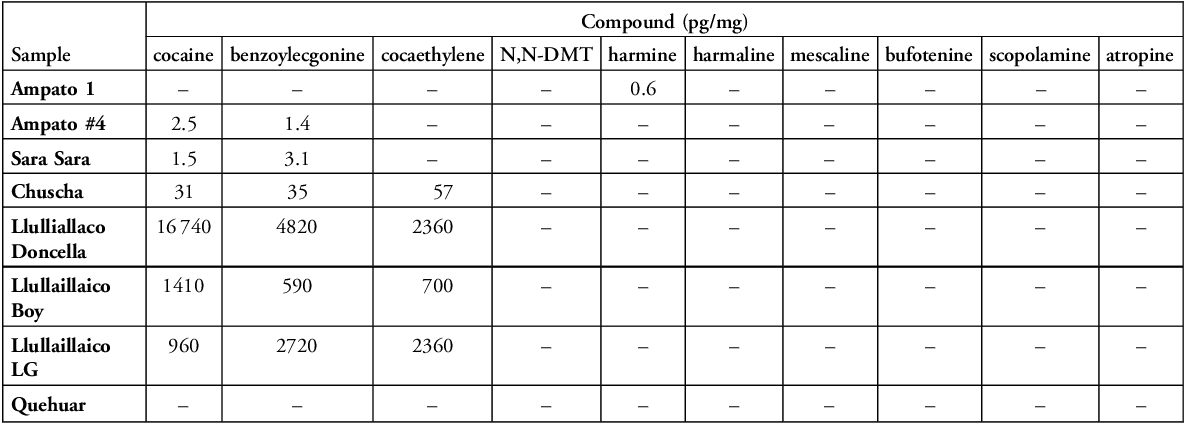
Cocaine and its primary metabolite, benzoylecgonine, were identified in all the hair samples analysed. Additionally, cocaethylene was detected in the hair samples from Argentina, indicating alcohol consumption alongside coca-leaf chewing. The presence of psychoactive substances was confirmed in the Chuscha (cocaine, benzoylecgonine and cocaethylene) and the Sara Sara (cocaine and benzoylecgonine) mummies, in contrast to previously reported negative results. No traces of other psychoactive substances—mescaline, bufotenine, N,N-DMT, scopolamine, atropine, harmine or harmaline—were found in any of the hair samples (Table 1).
Summary of results from LC-MS/MS analyses of archaeological samples.

Table 1 Long description
A table comparing compound concentrations in various samples. The table has 8 rows and 10 columns. The columns are labeled with different compounds: cocaine, benzoylecgonine, cocaethylene, N,N-DMT, harmine, harmaline, mescaline, bufotenine, scopolamine, and atropine, all measured in pg/mg. The rows are labeled with different sample names: Ampato 1, Ampato #4, Sara Sara, Chuscha, Llullallaco Doncella, Llullaico Boy, Llullaillaco LG, and Quehuar. Each cell contains the concentration value of the respective compound in the sample. Notable trends include the presence of cocaine and benzoylecgonine in all samples except Ampato 1 and Quehuar. Cocaethylene is detected in samples from Argentina, indicating alcohol consumption alongside coca-leaf chewing. No traces of other psychoactive substances like mescaline, bufotenine, N,N-DMT, scopolamine, atropine, harmine, or harmaline are found in any of the hair samples.
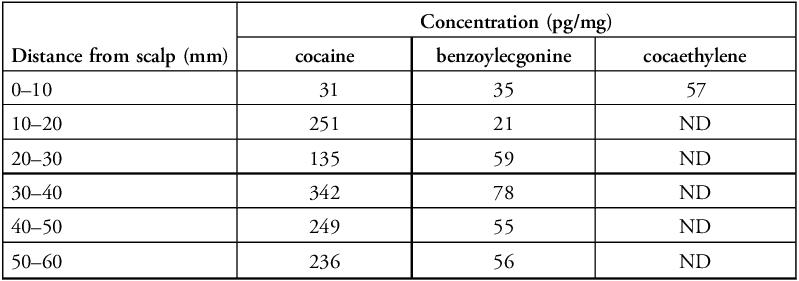
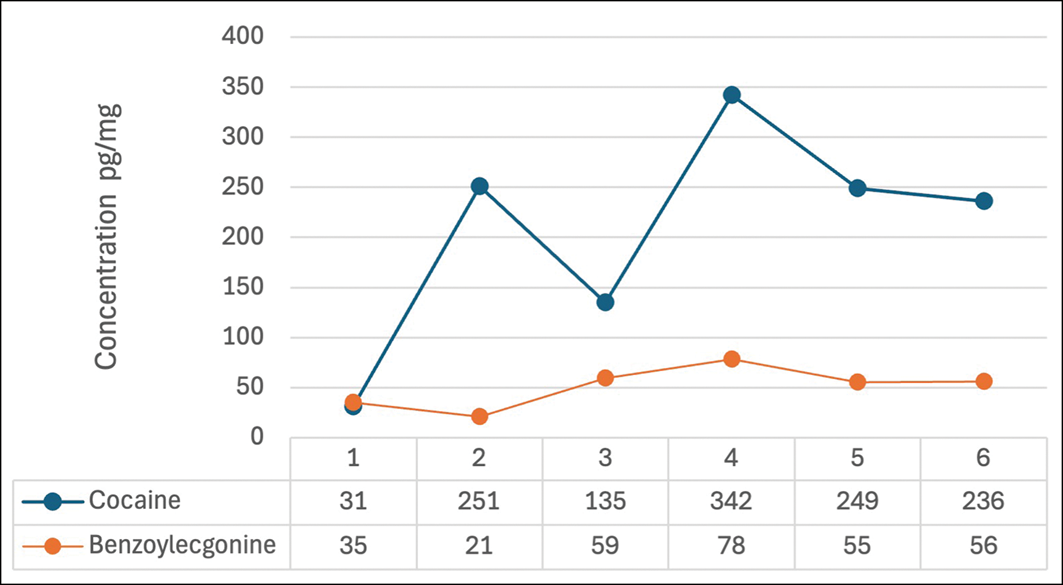
The segmental analysis of the Chuscha mummy’s hair reveals a non-linear pattern of coca-leaf consumption (Table 2). The concentration of cocaine fluctuated over time, showing a noticeable decline during the last month prior to death (Figure 5). Cocaethylene was detected only in the hair segment corresponding to that final month (Figure S4).
Compound concentrations in the segmental analysis of the Chuscha hair sample.

Table 2 Long description
A table comparing compound concentrations in the segmental analysis of the Chuscha hair sample. The table has 6 rows and 4 columns. The columns are labeled ‘Distance from scalp (mm)’, ‘cocaine’, ‘benzoylecgonine’, and ‘cocaethylene’. The rows are labeled with distance ranges from 0-10 mm to 50-60 mm. Each cell contains concentration values in pg/mg. Notable trends include varying concentrations of cocaine and benzoylecgonine across different segments, with cocaethylene detected only in the 0-10 mm segment.
ND: none detected.
Section analysis of hair from the Chuscha mummy (LC-MS/MS) (figure by M. Sykutera & D.Socha).

The analysis of nail samples presented significant challenges. Contamination, likely from environmental pollutants, made the interpretation of results difficult, as shown in Table 1. The sample from Ampato #1 showed the presence of small quantities of harmine, possibly indicating the differential incorporation of xenobiotics in nails compared to hair. Further analysis of hair samples is needed for these two individuals.
The LC-MS/MS chromatograms of the MRM transitions for hair and nail samples are included in the OSM (Figures S1–S7).
Discussion
The preservation and stability of drug compounds within archaeological hair and nail samples are substantially impacted by conditions within the burial environment (Cobo-Golpe et al. Reference Cobo Golpe2025). Previous studies have demonstrated that taphonomic processes can lead to a substantial reduction in the detectable levels of drug compounds, often resulting in a lower measured concentration compared to what might have been consumed by individuals during their lifetimes.
Since most of the investigated individuals were female (seven out of eight), it is difficult to determine whether boys and girls fulfilled different roles in the capacocha sacrifice based solely on toxicological analysis. Nevertheless, this and previous studies (Castro et al. Reference Castro2021; Socha et al. Reference Socha2022b) demonstrate that the consumption of psychoactive compounds was not determined by the sex of the individual. All individuals originally buried on the Ampato and Llullaillaco mountains received the same substances, suggesting that their use was associated with the prerogatives of the deity rather than the individual characteristics of the children.
Analysis of the hair samples shows that the individuals had chewed coca leaves, yielding positive results for the Sara Sara and Chuscha mummies, for whom toxicological analysis had previously been negative. This study therefore highlights the necessity of redoing such analyses, as the ability to detect substances in archaeological samples has improved in recent years.
Cocaethylene is detected only in the mummies from Chuscha and Llullaillaco, even though other individuals (such as Ampato #2 and #4) were buried with miniature wooden libation cups (keros) (Reinhard & Ceruti Reference Reinhard and Ceruti2010). It is possible that these cups had a symbolic role or could have been used to drink a ritual beverage other than chicha, yet the incorporation of cocaethylene into hair is also highly dependent on the quantity and frequency of consumption. A single drinking event is unlikely to leave a detectable trace in the keratin.
The segmental analysis of the hair sample from the Chuscha mummy shows variation in coca consumption over time (Table 2). This could be an artefact of both the sample’s preservation and the metabolic conversion of cocaine into benzoylecgonine. A similar outcome was observed in the case of the younger individual from Cerro Esmeralda, where benzoylecgonine was detected in only two out of 10 segments (Besom Reference Besom2000). Cocaethylene was found only in the proximal hair segment, in contrast with previous findings from the Llullaillaco children (Wilson et al. Reference Wilson2013). The results suggest that during the last month before death, the consumption of psychoactive substances shifted, probably reflecting entry into the final stage of the ritual. The estimated mean ratio of cocaethylene to cocaine in the blood of the Chuscha individual was approximately 166%, suggesting a significantly high intake of alcohol during coca-leaf consumption (Pragst & Yegles Reference Pragst, Yegles and Kintz2007). The contrast between the Llullaillaco children, where the presence of cocaethylene was observed over a longer period (Wilson et al. Reference Wilson2013), and the Chuscha mummy underscores the varied trajectories of the capacocha ritual.
The presence of cocaine and cocaethylene corresponds to previous studies and ethnohistorical information, where coca leaves and chicha beer are described as among the most frequent offerings to the deities. However, while coca leaves appear to be a coherent and recurrent element of the capacocha ritual, the alcohol necessary to produce cocaethylene is not consistently identified in all cases. This may suggest variability in ritual practices, including the possible substitution with other psychoactive substances such as ayahuasca.
Harmine was detected in the nail sample from the Ampato #1 individual, but the sample yielded negative results for tryptamines (N,N-DMT and bufotenine). Similar results were observed in a previous analysis of Ampato #2 and #3 (Socha et al. Reference Socha2022b). The absence of harmine and harmaline in the hair of Ampato #4 could suggest that this individual received different treatment or that she was buried during a separate ceremony. Both possibilities are consistent with the identification of Ampato #4 as a secondary burial (Socha et al. Reference Socha2026).
Small concentrations of harmine and harmaline are found in some Passiflora species and in tobacco (Nicotiana tabacum) (Abourashed et al. Reference Abourashed2008; de Almeida Santos & Ledru Reference de Almeida Santos and Ledru2021). Harmine has low oral bioavailability (3.1%) and is rapidly metabolised, making Passiflora species an unlikely source of detected peaks (Guan et al. Reference Guan2001). Other β-carbolines (harman and nonharman) occur in well-cooked meat, plant-derived beverages and foodstuffs (Guan et al. Reference Guan2001; Crotti et al. Reference Crotti2010). In rats, harmane sometimes converts to harmine, but only in approximately 13% of the 19% of harmane that is bioavailable, and no comparable human data. This study found no harmine in samples from chicha drinkers, confirming that the metabolite originates from a different source.
The most probable sources of harmine and harmaline are species of the Banisteriopsis genus or other varieties of the Malpighiaceae family, which all contain high concentrations of these alkaloids. As these plants grow only in the Amazon rainforest, they were likely traded over long distances. Given the absence of tryptamines in the samples, it is challenging to reconstruct the exact composition of the possible ayahuasca beverage; although the consumption of tryptamines must remain a possibility, as these compounds are known to incorporate poorly into keratin structures. Divinatory activities involving hallucinogens may not have been intrinsic to the capacocha ritual itself but rather confined to the later cults of sacred sites. It is also possible that Banisteriopsis sp. was consumed alone for medicinal purposes (Ogalde et al. Reference Ogalde2009; Socha et al. Reference Socha2022b). Modern studies have demonstrated the antidepressant properties of Banisteriopsis caapi, with effects that can last several weeks (Osório et al. Reference Osório2015). The absence of other hallucinogenic substances supports the hypothesis that Banisteriopsis was consumed for its medicinal values. The antidepressant properties of harmine could have been used to calm the children and maintain a positive mood.
Conclusion
Toxicological analysis of eight frozen mummies reveals variety in the performance of a capacocha ritual. Each of the rituals should be considered separately as the results indicate there was no clear pattern. The observed differences may derive from distinct prerogatives of mountain deities and local variation in the course of the rituals. As most of these deities were associated with climate control and the cult of water, each had a unique set of characteristics that included gender distinctions and attitudes towards humanity. These features would have influenced the performance of the capacocha ritual and the preparation of children for their roles in the afterlife. Differences in the psychoactive substances consumed during their final months likely reflect this variation in the preparation of the children.
This study seems to confirm that capacocha children received only concoctions of sacred plants that would enhance their wellbeing and mood (coca, alcohol and harmine). It is thought that the hallucinogenic properties and accompanying side effects could be potentially lethal for children during a long pilgrimage over difficult terrain. It is also possible that divinatory practices took place in the sanctuaries after the sacrifices, as part of the veneration of the capacocha children. Yet, the limitations of toxicological analysis hinder the detection of isolated consumption events and, as certain compounds are not incorporated into keratin, it remains possible that other psychoactive substances may have been consumed on the journey or as part of a final ritual act. As the field of toxicology continues to evolve, we anticipate that future studies will reveal the nuanced use of plants and their derivatives in the religious practices of the Inca Empire.
Acknowledgements
The authors acknowledge the Universidad Católica de Santa María in Arequipa and the Museo de Arqueología de Alta Montaña in Salta for their support during the research. Additionally, the authors thank José Antonio Chávez, co-director of the expeditions that recovered the Ampato, Quehuar and Sara Sara mummies.
Ethical declaration
All research was conducted in accordance with the Codes of Ethics and Practice of the British Association for Bioarchaeology and Osteoarchaeology (BABAO) and the Code of Ethics of the American Association of Biological Anthropologists (AABA). Prior to sampling, all necessary permissions were obtained from the Peruvian Ministry of Culture.
Funding statement
The project is funded by the National Science Center, Poland (grant 2023/49/B/HS3/01529), and Catholic University of Santa Maria in Arequipa.
Online supplementary material (OSM)
To view supplementary material for this article, please visit https://doi.org/10.15184/aqy.2026.10439 and select the supplementary materials tab.
Author contributions: CRediT categories
Dagmara Socha: Conceptualization-Lead, Data curation-Equal, Formal analysis-Equal, Funding acquisition-Equal, Investigation-Equal, Project administration-Lead, Resources-Equal, Supervision-Equal, Validation-Equal, Visualization-Equal, Writing - original draft-Lead. Marzena Sykutera: Conceptualization-Equal, Data curation-Supporting, Formal analysis-Equal, Funding acquisition-Supporting, Investigation-Equal, Methodology-Lead, Software-Equal, Supervision-Equal, Validation-Equal, Visualization-Equal, Writing - original draft-Equal. Winnie Martinez Sulca: Data curation-Equal, Funding acquisition-Supporting, Resources-Equal, Writing - review & editing-Equal. Gabriela Recagno: Data curation-Equal, Funding acquisition-Supporting, Resources-Equal, Writing - review & editing-Equal. Johan Reinhard: Resources-Equal, Supervision-Equal, Visualization-Lead, Writing - review & editing-Equal. Fernanda Zigaran: Data curation-Equal, Funding acquisition-Supporting, Resources-Equal, Writing - review & editing-Equal. Mario Bernaski: Data curation-Equal, Funding acquisition-Supporting, Resources-Equal, Writing - review & editing-Equal. Franz Grupp: Data curation-Equal, Funding acquisition-Supporting, Resources-Equal, Writing - review & editing-Equal.




 Open access

