


Clichés are the trams of the intellectual transport network. Many travel on it. Whole peoples, above all, travel on it.
—Ortega y Gasset, La rebelión de las masas Footnote 1
The Need for a Radical Pedagogy and to Educate the Masses
In a lecture at the Escuela Superior del Magisterio in Madrid in 1917 José Ortega y Gasset (1883-1955), arguably Spain’s greatest modern philosopher and one of its professors, urged future teacher educators and school inspectors to embrace “la pedagogía de la contaminación” (the pedagogy of contamination).Footnote 2 By this he meant an approach to teaching that recognizes that much of what is important in education is caught, not taught, and that the teacher’s main role is not to transmit what is settled but to “contaminate” students with the habit of searching, questioning, challenging, and unsettling established beliefs. The lecture ended on a personal note in which he insisted—too modestly, but not inappropriately given the extraordinary diversity of Ortega’s intellectual interests—that he was not really a philosopher, just someone who makes people reexamine their assumptions, as if he were throwing little stones into a pond to unsettle the reflection in it of the clouds floating across the skies above. This article explores the development of this distinctively Socratic and frequently radical educational thought and its sources within Ortega’s wider philosophy.
José Ortega y Gasset in Aspen, Colorado, 1948. Public domain image. Source: Wikimedia Commons.
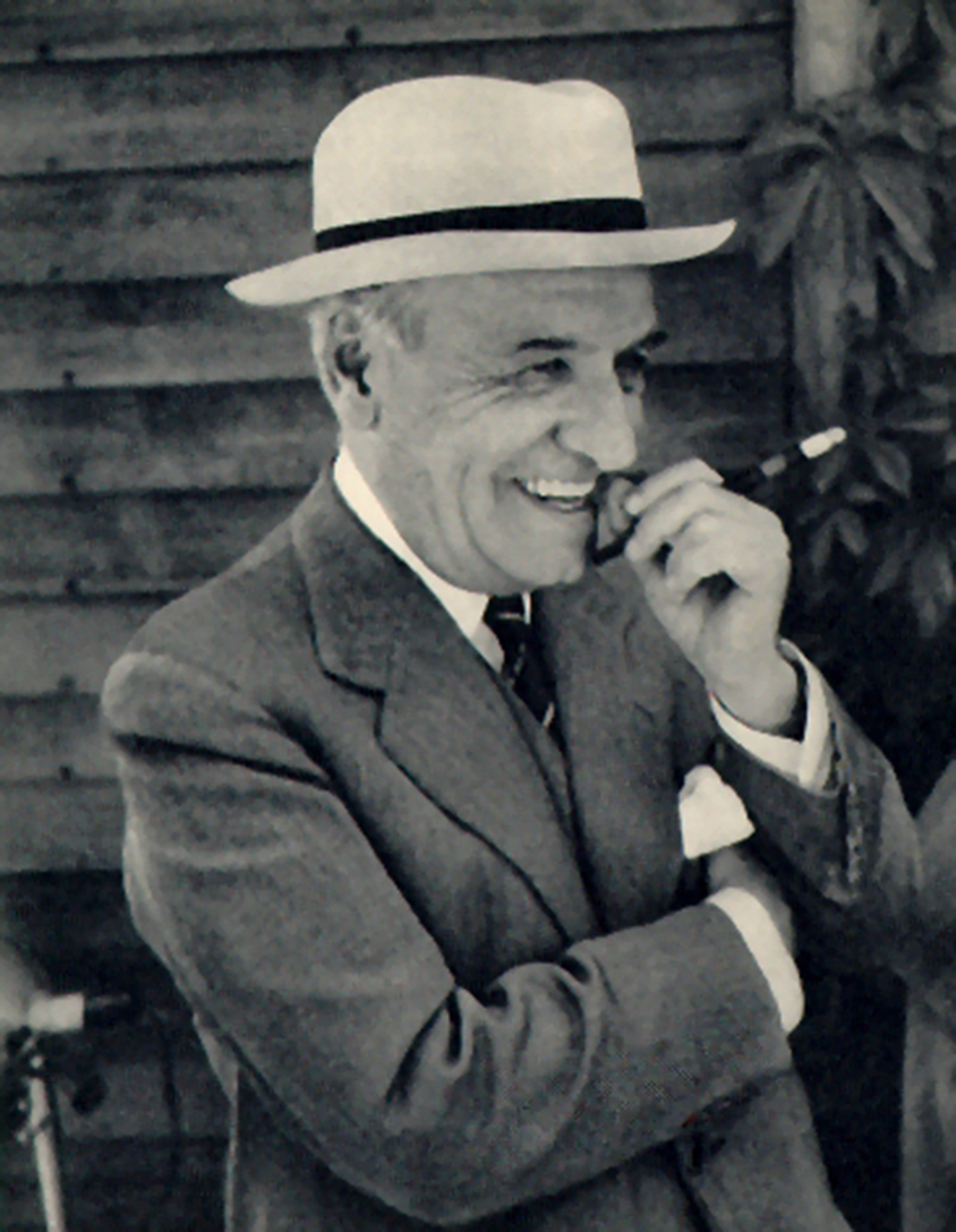
Outside Spain and Hispanic America, Ortega y Gasset is known largely as the author of La rebelión de las masas (The revolt of the masses), published in 1929, a widely translated work analogous in both its themes and impact with Tocqueville’s Democracy in America (1835), which Ortega greatly admired and whose hopes and fears for democracy he shared.Footnote 3 The Revolt of the Masses is a book that charts the emergence in Europe after the First World War of a mass society; analyzes the hombre de masa (mass man) who typifies this society; and explores the social, cultural, and political consequences of these developments for the liberal democracy that Ortega favored but that during the interwar years was under threat from communism and fascism. The book’s themes have major consequences for the education both of the masses and of the elites that Ortega felt were needed to guide them.
Ortega’s Philosophy
Ortega’s philosophical anthropology—a term he applied to his own writings—is frequently intertwined with his views on educational issues. His philosophical education as a young man involved spells at German universities, where as an enthusiastic neo-Kantian he came to look at the world through the prism of transcendental idealism, focusing on those parts of human culture that looked as if they might allow for universal rational judgments based on objective validity. In this phase he speculated about the possibility of an educational science applicable to all contexts, seeing the key role of educators as transmitting that which can be objectively established and embedding in the minds of their students transcendental ideals drawn from the Platonic triad of truth, goodness, and beauty.Footnote 4 This neo-Kantian phase was largely over by the time Ortega was in his late twenties. Much of his later thought was a reaction against what he came to see as the dogmatism, utopianism, adherence to abstract principles and detachment from daily realities of transcendental idealism. Writers on Ortega’s philosophy have categorized his post-Kantian thought into stages of many different kinds, not always helpfully given the strong elements of continuity that permeate the whole of this forty-year period.Footnote 5 Although Ortega’s main educational principles are closely linked to his philosophical anthropology, the continuity in the themes running through his educational writings, at least in his post-Kantian phase, is even more striking than in his philosophy.
The shift from neo-Kantianism began even before Ortega returned from Germany in 1911. His time there had introduced him to Husserl’s phenomenological approach to philosophy, which pushed Ortega away from idealism toward a greater focus on the empirical and psychological—what he called “hombres y cosas” (men and things)—and especially on the distinctive individuality of human beings. From the publication of his first major work, Meditaciones sobre Quijote (Meditations on Quixote), his vision of the world also became an increasingly perspectivist one, aware of the ways that so much of what we see, know, and understand reflect the angle or experience from which we perceive it. In due course this widened to what was to become the core of Ortega’s philosophy, which he summed up in the phrase “Yo soy yo y mi circunstancia” (I am I and my circumstance), a way of looking at social reality and at oneself that starts with an attempt to understand one’s environment and location in the historical process, and how the beliefs one absorbs and the generation to which one belongs shape one’s being.Footnote 6 Ortega’s later writings Historia como sistema (History as a system), Ideas y creencias (Ideas and beliefs), and El hombre y la gente (Man and people)are the fullest expression of this core idea of “Yo soy yo y mi circunstancia” showing how the duality of the idea, while anchoring one to one’s place and historical time, also points to the creative capacity of human beings to change their perspective and react in fresh ways to their circumstances.Footnote 7 This challenging but essentially positive vision of human beings facing a never-ending task of self-knowing and self-making—endlessly stepping back from the world to reflect on it and then stepping back into it to shape it—provides a pervasive philosophical grounding to Ortega’s educational thought.Footnote 8
Although a highly prolific author, Ortega never found the time among his numerous intellectual, educational, and journalistic commitments and initiatives to bring all of his philosophy together into an overall system. His works are scattered across books, essays, lectures, and magazine and newspaper articles. This article is based on an examination of the full corpus of Ortega’s specifically educational writings and discourses, together with many others whose educational implications are implicit. It looks at how he conceived the purposes of education, both for whole societies and for young people, and focuses in particular on the kind of education required for the educated elites, on whom, in his opinion, an effective liberal democracy would inevitably depend. The article then examines the specific implications of these purposes for universities, in which Ortega worked. It concludes with some thoughts on the coherence and substance of his educational thought and on its contemporary relevance.
Educating a Whole Society
Like many Spanish intellectuals of his generation, Ortega had no confidence that current political parties would be able to rescue Spain from its state of decadence. Urgent reform was needed—to turn people into active citizens, challenge what he saw as the deadening influence of the Catholic Church, and transform a geographical entity into a nation. Although Ortega wanted Spain to have closer links with the rest of Europe and ultimately become part of a European nation-state, the aim in the meantime was to mold a new Spanish national identity. This would require a major exercise in pedagogía social (social pedagogy), a term taken from the title of a book by one of Ortega’s German professors, the neo-Kantian and socialist Paul Natorp, though the idea had its roots in Pestalozzi and, more distantly, in Plato’s view that the fundamental purpose of education was to prepare citizens for life in the polis. In a speech on “La pedagogía social como programa político” in 1910, Ortega, himself a neo-Kantian and liberal socialist at this point, argued for the abolition of church and private schools, an education system wholly in the hands of the state, and parallel initiatives focused on educating adults in the home and public square.Footnote 9
Three years later, with a view to implementing a program of social pedagogy, Ortega launched La Liga de Educación Politica Española (The Spanish League for Political Education), the inspiration for which seems to have come—unusually for Ortega, whose main influences were from Germany or France—from England’s recently established Fabian Society.Footnote 10 The plan was for a civic education exercise aimed at the political education of the masses and led by the educated minority. Since 1910, Ortega had largely abandoned both socialism and neo-Kantianism; hence, the aim, consonant with his move toward a more perspectivist philosophy, was now not so much to lead people toward a future that had been decided for them but to enable them under guidance to shape it themselves.Footnote 11
Apart from enabling himself and a few others to clarify their views about how they hoped their country might develop, the Liga achieved little and was wound up in 1916. Ortega’s speeches and writings during this short period, which have been much studied, throw light on his political views at this stage of his career. On how a whole society might be educated, they have little to say. How is education for and through work to take place? How are “circulos de mutua educación” (circles of mutual education) to be created and what would they do? We are not told. In contrast to other twentieth-century exponents of social pedagogy like Antonio Gramsci and Paulo Freire, Ortega’s contribution to this aspect of educational thought lacks substance. Given that the Liga led to so little practical activity, Ortega also lacked the praxis these others could draw on when developing their ideas.
In the decades that followed, Ortega’s view of education as a potential nation-molding and democracy-enabling project remained strong, as did his personal commitment to promoting this project through a lifetime of teaching, intellectual production, and communication.Footnote 12 What changed was his attitude toward socialization. In 1910 it had been the name for an optimistic project to create a new Spain. By 1930 it had become a synonym for de-individualization and a source of pessimism about the dominance of majority opinion in mass societies.Footnote 13
Educating Children
Ortega’s work on the Liga had encouraged him to look beyond the higher educational establishments in which he worked to think about the role of elementary school teachers, seeing them as potential apostles of a better Spain in ways reminiscent of the role envisaged by Jules Ferry in the early years of the French Third Republic.Footnote 14 Elementary education was also the theme of one of his most thorough discussions of school-level pedagogy when in 1920 he intervened in a national debate about a royal decree requiring the study of Spain’s literary classic Don Quijote in all the country’s elementary schools. Critics argued that this would not prepare children for life in the modern world and that instead they should learn about useful things such as railways and factories. Characteristically willing to unsettle both sides in the argument, Ortega opposed both the initiative and its critics, the latter because they were advocates of the kind of utilitarian pedagogy caricatured by Dickens in Hard Times, and the former because Don Quijote (1605) was too nuanced and modern and would not stimulate the imagination of children in the way stories of adventures and myths were likely to do.Footnote 15
Ortega was influenced by the writings of the Baltic German biologist Jakob von Uexküll, a proponent of a post-Darwinian biology that emphasized the extent to which humans had freedom to shape their environment.Footnote 16 Education that focused exclusively on the absorption of techniques and on the transmission of the main features of an existing civilization or culture, including its knowledge, ways of thinking, and morality, risked missing what was essential in molding a population with the basic psychological qualities needed to pursue the good and to create great things. These qualities included positivity, vitalidad (vitality), determination, self-confidence, curiosity, intellectual agility, and courage. Without such qualities, Ortega argued, there is no worthwhile cultural, scientific, or political creativity and achievement.Footnote 17 It was for this reason that he objected to demands that elementary education be adapted to the needs of its time and that later stages of education be heavily specialized. The aim of education instead should be to enable the young to inject as much intensity into their lives as possible. Morals, wisdom, technical skills, and citizenship were important, too, but these could come later.Footnote 18
Ortega’s Place within the Tradition of Progressive Education
Ortega used the debate over Don Quijote to compare where he stood in relation to previous educational thinkers. He agreed that the writings of Rousseau and Pestalozzi had helped to make elementary education less oppressive, but criticized Rousseau for wanting, he claimed, to return to a more primitive existence, whereas Ortega’s concern for the early development of a primitive vitality was solely so that more advanced civilizations might be enriched. Pestalozzi had sown the seeds of something interesting but failed to develop it into a coherent theory, and had a mechanical attitude toward teaching that was at odds with Ortega’s distaste for anything that smacked of didacticism. Ortega criticized Froebel from a different angle, for seeing lo deportivo (playfulness)—a quality that in all its practical, physical, and intellectual aspects pervades Ortega’s view of human beings—not as something that was good in itself but simply as a means to the end of developing the man in the child.Footnote 19
These differences, particularly with Rousseau, are less fundamental than they appear. Ortega agreed with Rousseau that the most important truths are best not taught: one needs to arrive at them on one’s own instead of having them imposed by authority. How many young people leave schools, he asked, with the idea that they can become something new? How many have had their energies paralyzed by being taught how they must live?Footnote 20 He called the approach he was recommending “la pedagogía de la alusión” (the pedagogy of allusion): finding indirect ways of getting children to take the initiative in their learning rather than giving them bodies of knowledge to learn.Footnote 21 To help teachers do this, it was essential that teacher education included a grounding in philosophy. Without the critical faculties this would give them, teachers would be easy prey to prevailing dogmas, including educational ones.Footnote 22
Ortega was also opposed to tying education down to narrow utilitarian needs that would be quickly made redundant. Educational ideas, he argued, often reflected the philosophy and circumstances of the previous generation and, because they also took decades to be implemented, children at any point were likely to end up receiving an education based on ideas current fifty years earlier.Footnote 23
Triumphant Plebeianism
A major theme of Ortega’s writings from the later years of the First World War onwards was the “plebeyanismo triunfante” (triumphant plebeianism) he saw developing in association with democracy.Footnote 24 He never questioned the superiority of democracy over the fascist and communist ideologies that were spreading throughout Europe, describing liberal democracy as the best form of public life yet seen, but feared the way that areas of life in which everything was not equal—manners, morals, taste, matters of the intellect—were also being democratized and that freedom was under threat from a collectivist push toward uniformity and closer state regulation of people’s lives.Footnote 25 The Revolt of the Masses (1929) was his fullest analysis of this phenomenon. The origins of triumphant plebeianism, Ortega argued, were demographic—both in increased numbers and the growth of large population centers where the masses visibly dominated and set the tone. Along with this change came a greater intolerance of minority views, putting at risk freedoms that Ortega, echoing his fellow liberal de Tocqueville’s fears of the tyranny of the majority, always put first.Footnote 26
Ortega was keen to stress that the focus of this critique was el hombre medio (the average man), a type of human being found across all social classes. Average men, he claimed, looked to the state to care for them and lacked a sense of duty and wider allegiance.Footnote 27 They had many opinions—indeed were opinionated—but no ideas, reacted unreflectively to situations, and lacked any sense of belonging to a collective project. Their ability to participate in a democracy was thus limited, and they were easy prey for demagogues.Footnote 28
Why Triumphant Plebeianism Proved Impervious to Education
Why had education failed to prevent the spread of this barbarismo (barbarism)? Instead of educating, Ortega argued, teachers had been merely equipping people for the technical aspects of modern life.Footnote 29 They had clearly failed to pass on to their students the habits of questioning and challenging, which might have saved them from succumbing to the dominant clichés of their times. They had also failed to induct them into the substructure of traditional norms, customs, and duties that—even if needing to be challenged in some areas —had in the past kept civilization alive and were essential for coexistence within a democracy.Footnote 30 They had been deprived of the knowledge and understanding of the historical context of their lives that would have enabled them to tackle more effectively the problems a complex new world was throwing at them.Footnote 31 Given the scale of the challenges arising from the alleged pathologies within plebeianism, it is striking that Ortega—the earlier champion of social pedagogy—made no specific proposals about how mass education might tackle these, putting all his energies instead into thinking about the formation of an intellectual elite that would save the masses from themselves.
The Need for an Elite
Ortega saw societies as inevitably run by elites, and the better the elite, the better the society.Footnote 32 This minority of talented people existed within all classes, though it was those from the socioeconomic elite who were his prime concern.Footnote 33 A key element within the elite would be a small group of intellectuals more reflective, more historically aware, more critical of established pieties, more far-seeing, and more detached from personal interests than either the masses or the rest of the elite, and whose role would be that of helping to ensure the transmission, development, and, if necessary, transformation of a cultural or national heritage, not by participating in government but through developing their understanding of the world and challenging existing certainties.Footnote 34 In one essay, Ortega claimed that superior razas (races)—using this word, as was common at the time, also in reference to broad national groupings—were those that had within them a significant number of outstanding individuals, a category which he had no doubt included himself. The wider elite would need to be sufficiently educated in order to be able to understand and be influenced by these people.
In effect, Ortega was talking about a clerisy not dissimilar to that proposed in the early nineteenth century by Coleridge and taken up by later English writers in that century, such as Carlyle, J. S. Mill, and Matthew Arnold, and in the twentieth century in his educational writings, by T. S. Eliot and, in France, by Julien Benda.Footnote 35 Ortega’s clerisy had a special place for members of the liberal—by which he meant largely intellectual—professions. Writers, philosophers, and artists, he argued, by virtue of not being part of the state or any corporation, had the potential to act as free individuals.Footnote 36
Alongside the beneficial influence of such people, Ortega was also conscious of the existence of pseudo-intellectuals: people who, like real intellectuals, live in a world of ideas, but ideas which they do not question and have turned into dogmas.Footnote 37 Weak elites, Ortega argued, led to intellectual degradation and caused the masses (rightly) to rebel against those they had ceased to respect. It was this absence of an elite backbone that had rendered Spain in need of radical regeneration, as he had argued in his 1921 work España invertebrada (Invertebrate Spain).Footnote 38 The problem, he thought, was a particularly twentieth-century one, pointing to the intelligentsia’s turning in on itself through its reaction against Cartesian rationalism in philosophy, and its abandonment of traditional forms in the arts in favor of an avant-garde that failed to engage with ordinary people. Contemporary intellectuals, he argued, had made the big error of creating a culture for themselves and not for the rest of mankind. The great intellectuals of the past—Bacon, Galileo, Cervantes, Shakespeare, Descartes—had spoken to a wider audience.Footnote 39
Many of Ortega’s views about the role of elites were shared by the contemporary group of early twentieth-century political scientists and sociologists whom the political theorist James Burnham called “the Machiavellians”: Gaetano Mosca, Georges Sorel, Robert Michels, and Vilfredo Pareto.Footnote 40 Ortega’s strikingly similar view of elites seems to have been developed independently of this group, with the possible exception of the German-Italian Michels, who had greatly impressed him during his stay in Germany in 1906-1907.Footnote 41
Educating the Elite
Ortega’s vision for the higher-stage education needed by the kind of elite he felt was essential within a liberal democracy was fundamentally an extension of the one to which he alludes elsewhere in his educational writings when discussing the education of whole societies and of children in schools. It is a vision firmly based on his belief that human beings have the freedom to make themselves within the context of the environment in which they find themselves. Understanding one’s environment in its broadest sense and the opportunities and limitations it imposes on an individual life, with a view to acting on this understanding, was a key part of education—what he called la pedagogía del paisaje (the pedagogy of landscape).Footnote 42 Ortega’s analyses of the complexities of the emerging twentieth-century world, and in particular of self-perpetuating technological change—and its consequences in terms of enhanced leisure—gave an added sense of urgency to the need for an education that made this possible.Footnote 43
In order to shape their environment to the ends that they have chosen rather than simply being shaped by it, human beings, Ortega insists, will need courage, energy, imagination, vitality, and the capacidad de mandar (the ability to lead). It is these qualities, rather than the transmission of knowledge, techniques, or moral codes, that educators should see as their main priority. Students should be placed in situations where they want to learn, and where they identify the problems that they feel the need to solve. Above all, they need a dose of the fifteenth-century Nicholas of Cusa’s docta ignorantia (learned ignorance), that Socratic sense of how little one understands and the impetus this gives to trying to fill the gulf that ignorance reveals. It was for this reason that Ortega had told his education students that nothing worth learning could be taught. In another talk to students many years later he admitted that, despite this assertion, a lot of things simply had to be learned in order to keep the world going. This, he said, was the inbuilt tragedy of education as currently practiced.Footnote 44
Ortega pointed to examples of the human qualities needed by elites in his often brilliant studies of key figures from both past and present: the painters El Greco, Velázquez, Goya, and Zuloaga; the writers Cervantes and Baroja; the French revolutionary leader Mirabeau; the Renaissance humanist Juan Vives; Goethe, on whom Ortega wrote extensively; and not just great names but also the hunters and toreros (bullfighters) whose extraordinary skills and alertness to their environments illustrated the capacity of some people to make themselves into something special.Footnote 45
The Role of the University
Ortega’s most developed discussion of what the higher education of the elite should look like can be found in his Misión de la universidad (Mission of the University).Footnote 46 Although focused on Spain, this is one of the most influential European visions of a university during the second half of the nineteenth century and the first half of the twentieth, alongside Cardinal Newman’s The Idea of a University (1852) and Karl Jaspers’s The Idea of the University (1959). Ortega shares with both of these—and with Michael Oakeshott, writing toward the end of Ortega’s life—a sense of the centrality of a broad liberal education to any institution calling itself a university. However, unlike Newman and Oakeshott but like Jaspers, and in accordance with continental European tradition, Ortega wished to retain a key place within the university for preparing students for the main liberal professions.Footnote 47 The weakness of the Spanish university system, he felt, was the absence of a coherent rationale. Current universities had three poorly related elements: education for the intellectual professions, a course of general culture, and academic research. The result was the production of professionals who knew little about the world outside their specialisms, were ignorant of the past, and unable to understand and rise to the needs of their times. The hombre medio (average man)—doctor, lawyer, schoolteacher, economist—who emerged from this education was inculto (uncultured), a nuevo bárbaro (new barbarian), or, as a result of over-specialization, a sabio ignorante (ignorant sage) incapable of providing the leadership desperately needed by a highly demanding mass population. Even the most talented specialists, he said from experience, lacked the qualities needed by well-rounded human beings and could end up coming across as infantile or stupid. Universities were thus responsible for the inadequacy of modern elites and consequently for the poor state of the country that those elites ruled and guided.Footnote 48
Ortega’s solution was therefore to turn the university’s average man into a cultured man, and to do this by placing cultura general (general culture) at the heart of the university’s teaching. Whatever professional course one was following, one would be introduced to the great cultural disciplines necessary for one’s understanding of oneself, one’s past, and one’s environment: the sciences, history, sociology, and philosophy. Ortega’s biographer, Jordi Gracia García, has dismissed this as some kind of cultural Google Maps or Reader’s Digest course, most unfairly given that, in accordance with all his educational principles, Ortega was clear cultura general would be structured so that key principles and methods of the disciplines would be prioritized over specific pieces of knowledge.Footnote 49 This approach, he hoped, could help universities produce an elite that would be in a position to exert influence and shape debates about the future of the society. This was particularly crucial at a time of triumphant plebeianism, when there was growing hostility toward the intellect and a crisis within an intelligentsia that seemed to have temporarily turned its back on Reason.Footnote 50
Ortega’s high hopes for a more cultured elite as the product of a reformed university were tempered by a sharp realism about what could be achieved given the time and human material available. He had not forgotten the lessons he learned from his early disillusionment with neo-Kantian utopianism. Courses had to be planned around what students needed to know to become a cultured person, not the interests of specialists; professors had to be selected for their talent for synthesis and gift for teaching, not their research; programs had to focus sharply on fundamental elements and principles; student workload had to be kept within strict limits but inflexibly enforced. Ortega called these imperatives his principio de la economía en la enseñanza (principle of economy in education). For a writer who expressed himself with such passion about the heights and depths of the human condition, they are strikingly down-to-earth.Footnote 51
What Ortega did not claim for his proposals, unlike both Newman (with whom he otherwise would have agreed) and today’s university leaders, was that the broad liberal education he wished all university students to experience would be useful to them and provide them with transferable skills.Footnote 52 His purposes were more profound: to produce educated human beings aware of themselves, their societies, the past world from which they came, and the era in which they lived and whose vision for the future they must help shape. A recent study of elitism in education has drawn attention to the different functions of contemporary universities as “ivory towers” (conservers of an inherited culture) on the one hand, and agents of social transformation on the other. Ortega’s vision of the university combines the two, the transformation in his case to be brought about by a well-educated and responsible elite.Footnote 53
Ortega’s plans for the university included original academic research. Provision for research had been one of the characteristics of German universities that had most impressed him as a young man.Footnote 54 Research to him was ultimately the most important of the university’s functions, as it was the tiny minority of genuine researchers whose insights would eventually determine the direction in which society developed. But academic research, and especially scientific investigation, needed to be kept separate within the same institution, and there should be no pretense that the kind of science being taught to generalists was helping them to become scientists.Footnote 55
Misión de la universidad attracted and continues to attract considerable debate, though its recommendations go against the dominant trend of present-day university development in the Western world with its emphasis on specialization and student choice. Small US liberal arts colleges come closest to providing the general culture Ortega felt was essential for elite formation, but are under pressure to dilute their course offerings and vulnerable to financial problems arising from their size. The closest parallels to his approach may be found in broad pre-university school courses such as the International Baccalaureate Diploma.
“Facing the Future Lacking a Past Tense”
The key importance of learning about the past and, in literature and philosophy, studying “the classics” (by which Ortega meant not just Greece and Rome but the whole European artistic and philosophical canon), and the desuetude of such learning during his own times, were strong motifs in Ortega’s writing. The loss of a sense of a past was one of the themes of the penultimate manuscript of his Complete Works: a lecture on Las profesiones liberales (The liberal professions), drafted in 1954 and due to be given in Germany but never delivered as a result of his illness and death the following year. “Man,” he wrote, “finds himself facing the future lacking a past tense.”Footnote 56
The past and the classics associated with it, however, do not in his view impose duties on future generations and are not to be seen as models to be followed. They constitute a cultural inheritance to be interrogated and integrated with the fresh impulses coming from each new generation, enabling us to understand who we are through learning about what has happened before us.Footnote 57 The young are the inheritors of the lives of many people from the past, and by learning about figures such as Homer, Socrates, Alexander, Newton, Kant, Napoleon (and even Don Juan, with whom at times Ortega, critical of the sexual morality of the Catholic Church, seems to have been obsessed), they are open to the potentialities, for good or ill, of these personalities for themselves and their own times. History also tells them about clashes between prevailing norms and those who periodically challenge these norms, and through studying these conflicts, learners are better able to make judgments about matters that affect them directly. We must learn how to use the classics, he argued, by making them contemporary and injecting them with new life from our own passions and our own problems.Footnote 58
Trying to Put a New Higher Education into Practice
Late in life, Ortega was faced with an opportunity to work through in detail what some of his educational ideas would look like when put into practice. He had gone into exile during the Spanish Civil War (1936-1939) and only returned to Spain after 1945, frequently leaving it during the final years of his life to give lectures in democratic countries where he could speak more freely. Although reluctant to have any official connection with the Franco regime or to take up a position again in any educational institution of the Spanish state as it then was, he managed in 1948 to establish a small independent Instituto de Humanidades in Madrid that offered evening lectures and colloquiums. In keeping with his ideas about the most effective forms of education, the stress would not be on teaching but on exploring together new lines of inquiry and seeing firsthand what thinking in action looked like. The institute proved very popular but difficult to run in the atmosphere of Franco’s Spain, and did not last beyond its second year of courses.Footnote 59
More appealing to Ortega around the same time was an invitation to draft an outline plan for a postgraduate Institute of Humanistic Studies in Aspen, Colorado. This still exists today, with a wider focus, as the Aspen Institute.Footnote 60 He was much taken with Aspen’s location in the Rocky Mountains and, in the light of his “pedagogy of landscape”—the idea that we must be attentive to learning from our environment, including the natural world—found it a suitable place for the education of people who would form the US’s future ruling elite. The plan he sent to the institute’s founder was self-consciously both Attic in its commitment to a rigorous study of the major academic disciplines and, following Plato’s The Republic, Spartan in its emphasis on effort, endurance, self-discipline, and sobriety, to the point even of discomfort.Footnote 61 Citing the example of German students who at the time were rebuilding their own bombed university in Hamburg, Ortega expected the future US elite to commit to forced labor in the form of building roads and houses. The institute would induct students into a culture and el arte de vivir (the art of living), not just a set of studies and activities. In accordance with Ortega’s principle of economy in education, the library would have very few books, but priority would be given to how a book should be read, including principles of concentration, condensation, and synthesis. The institute would make full use of the surroundings, including the proposed social center in which—echoing Newman’s idea that the art of the university should be the art of social life—one could eat, drink, and socialize. Students would take their holidays in the winter and attend the institute throughout the summer, when courses and conferences would attract outsiders, including distinguished speakers with varying points of view with the aim of modeling for students how differences of opinion could be explored frankly and courteously. This Aspen summer season, not surprisingly for a public intellectual noted for his fondness for the company of elegant aristocratic women, would also provide students (assumed without question to be male) with the opportunity to mix with and be influenced by mujeres distinguidas (distinguished women). It was to be a rounded education with character, resilience, and savoir faire, as well as intellect, at its center. Viewed from an early twenty-first century perspective, these proposals, not surprisingly given the extent to which Ortega’s thinking was sui generis, are both remarkably radical and deeply reactionary.
What Is Education For?
At the heart of Ortega’s educational thought is the idea that education is about the formation of a particular kind of human being. What it is not about is giving people useful skills, or indeed pursuing any of the utilitarian objectives frequently cited in his own day and that dominate current official discourse about the purposes of education. Above all, it is not about educating useful citizens to serve the ends of a particular state. This is both because states and their needs and the demands of citizenship change over time, but more fundamentally because there is much more to human beings than their roles as citizens.Footnote 62
Not just in his educational writings but also in his philosophy and in his studies of outstanding individuals, Ortega sketches a vision of human beings who work hard at understanding themselves and their circumstances, digging deep behind all the beliefs and clichés into which they have been inducted through their surroundings, who accept the limitations of their situation while making best use of the freedoms it gives them, and who develop their own punto de vista (point of view) on the world, becoming novelistas (novelists) of themselves able to identify a project or vocation for their own lives.Footnote 63 It is a vision with high expectations—for authenticity, tolerance, self-discipline, awareness of one’s own ignorance, wisdom in one’s personal relations, and an ability to show one is able to learn from others different from oneself (as Sancho Panza and Don Quixote, Ortega reminds us, did from each other) and to make fine judgments about people and things.Footnote 64
Ortega can be impatient with those who fail to reach his high standards, whether nuevos bárbaros (the new barbarians of the mass age), sabios ignorantes (ignorant academics who cannot see beyond their specialisms), niños mimados (spoiled adults in mass societies keen on their rights but recognizing no duties), or those guilty of Nietzsche’s ressentiment who, sensing their own inferiority, envy and despise the more successful while doing nothing to improve themselves.Footnote 65 One has to be robust to survive and thrive in the world for which Ortega’s students are being educated, a world that oscillates, he tells us, between a vale of tears and a sports stadium. The thought of death is always with us, utopias are the dreams of fools, and life, though sometimes one of enthusiasm and delight, is also full of uncertainty and danger, experienced as a state of impending naufrago (shipwreck). To survive there is a need to stay alert—in other words, to keep on making oneself and acquiring through self-education the resources to build something out of the flux of one’s life. There can be few writers on education whose starting point is one of such existential intensity.Footnote 66
Ortega: Radical and Conservative
Ortega has a similarly clear and forceful answer to the question, “How should people be taught?” This is, ideally, to encourage them into wanting to learn for its own sake, because this is what will enable them to decide what they want to be. This is why he said that he sometimes felt that nothing worth learning could be taught. It explains his stress on developing character through studies and activities that stimulate vital impulses, his stress on active learning, his focus on the learner more than on the content to be taught, and his emphasis on ensimismarse (absorption in one’s own thoughts), by which he meant stepping back into oneself so that in solitude and calm one can reflect radically about the world before going back into it to try and change it.Footnote 67 Having rejected post-Kantian philosophical idealism and criticized the narrow vision of human beings inherent in Cartesian rationalism, dominant in Europe since the seventeenth century, Ortega could no longer agree with Plato and Aristotle that the life of the mind was the superior one. It was still crucial that education promoted the use of reason, but it had to be rational thinking as practiced by individuals in reflection and then applied in the actual world in all its messiness.Footnote 68
All this puts Ortega broadly in the same tradition as other progressive, child-centered educational theorists stretching back to Rousseau, Pestalozzi, Froebel, Montessori, and Dewey and thus is consonant with the pedagogies currently dominant in much of the Anglosphere and continental Europe. Although Ortega makes no mention in any of his collected works to John Dewey, one of the few other contemporary philosophers who made a significant contribution to educational thought, there are affinities between the two men worthy of further exploration, not least a common belief that the cultural products of human history need to be actively interrogated as part of what Dewey called a “continuous reconstruction of (current) experience.”Footnote 69
Ortega differs, however, from some contemporary progressive educators keen to promote the social causes of the day, in believing, along with his fellow liberal Hannah Arendt, that the purpose of education is to help children to learn who they are so they can choose who they want to be, instead of molding them into what we think they ought to be.Footnote 70 In this way, his otherwise radical pedagogy was also distinctively conservative, like Hannah Arendt’s, in keeping with the view of the role of the state, and by implication its educational functions, which he later came to adopt and which had shifted radically from his early embrace of the state as teleocracy (one driven by visions of the future) to his later preference, as exemplified in his Del Imperio Romano, for nomocracy (one based on pragmatic adaptations to existing reality).Footnote 71
Ortega also placed considerable emphasis on introducing students to the main ways in which human beings had come to understand the world: philosophical, ethical, scientific, historical, and artistic. At the university level, he saw liberal arts as central to the development of all students, alongside their professional studies, and as an essential basis for the emergence of an elite capable of governing and helping to shape a country’s future. It was particularly important, he felt, for members of the elite to have the experience of getting to grips with philosophical issues, to know historically where one has come from and—a matter to which Ortega kept on returning—some understanding of modern physics, without which he felt the contemporary world would be incomprehensible to them.
Although keen that students at all levels should, as much as possible, take the lead in their own learning rather than being taught didactically, he was also realistic enough to know that a lot of things just had to be learned. While wanting young children to be as free as possible to learn from their environment, he also believed in teachers adjusting that environment to make sure that the desired learning outcomes would be achieved rather than leaving it to chance. At the university level, he supported the continuation of some traditional university teaching methods such as formal lectures, while seeing the advantages of more participative approaches.Footnote 72
So that it might endure, culture, though endlessly changing, also required an element of conscious transmission—and Ortega, at least early in his career, saw formal education as having a major duty to help such transmission take place, not just for the sake of individuals but also for that of civilization—a quintessentially conservative view echoed a hundred years later by the English philosopher Roger Scruton, who urged teachers to ensure the transmission of what was worth valuing in a culture “by lodging it in brains that will last longer than their own.”Footnote 73 It was perfectly possible to live a happy life without reading Plato, Ortega wrote, but it was not possible for the benefits of past civilizations to be passed on unless at least a few thousands within one’s country had done so.Footnote 74
Ortega’s Unexamined Beliefs
Politically, though a democrat, liberal, and believer in free speech, Ortega had a pervasively aristocratic (in the broad sense of the word) view of the relationship between masses and elites that failed to take into account how even the most well-educated and well-meaning of the elite are quite capable of using their political power and influence to entrench themselves and act against the interests of the masses, while convincing themselves they are doing the exact opposite. The extensive literature on Western liberal and progressive elites, beginning in 1959 with Michael Young’s The Rise of the Meritocracy and intensifying over the last thirty years—from Lasch and Sowell in the 1990s to Goodhart, Deneen, Goodwin and Kotkin post-2017—has thrown up questions about how the education of such elites might be modified to limit the damage they do through their patrician disdain for the masses and intolerance of those criticizing their ideologies and causes.Footnote 75 These are questions that Ortega, himself no stranger to patrician disdain, did not even begin to address, despite a lifetime of urging readers—in ways not wholly distant from those of Antonio Gramsci or Pierre Bourdieu—to untangle the web of structures and clichés cloaking their view of social realities.
As a writer who wrote at length about beliefs that shape us without our knowledge, it is likely that Ortega would not have been surprised if someone had told him that a later age would be immediately struck by his very male-dominated view of the world. Although he lived through a period in which there was a substantial increase in the number of women attending Spanish universities, including his own daughter Soledad Ortega Spottorno, when he came to drafting plans for a postgraduate institute in the US in the late 1940s, he could still only envisage it being filled with men whose education would be enhanced by the attendance of distinguished women at summer season events. Ortega had an elevated idea of the important role women had in bringing up future generations and setting the general tone of a society, but did not see them as forming part of a ruling elite. Even toward the end of his life, in El hombre y la gente (Man and people), he argued vigorously for an essentialist—and predominantly negative—view of women as weak, confused, and having a more intense sensibility than men. Women were “a form of humanity inferior to that of the male” he asserted, whose destiny was to be “in the gaze of men.”Footnote 76 Ortega’s views about women’s unsuitability for political leadership and related educational opportunities arising from these assumptions go hand in hand with similarly essentialist and negative, if less stunningly offensive, generalizations about the masses. One could argue that the inbuilt relativism of Ortega’s historicist philosophy allows for the future possibility of major shifts in the roles of the two sexes, but this does not explain away his striking failure to follow his own advice in interrogating more deeply his own historically determined beliefs in this area.Footnote 77
Ortega’s Legacy
Apart from his eminently sensible principle of economy—which would benefit from being drawn to the attention of politicians and social crusaders keen to use the school curriculum to solve the world’s problems—Ortega mostly does not provide detailed proposals. These are notably absent in the case of programs to tackle the educational challenges of a mass society. He asks the questions and identifies the challenges and—perhaps rightly, given his argument that circumstances change as each new generation appears—leaves the solutions to his readers. The exceptions are in higher education where, though his ideas still have much to offer liberal arts programs, there is little chance of their wider adoption within today’s vastly expanded universities, which are full of highly specialized courses and lack a common core. It is nonetheless interesting to see that these ideas are still relevant today—for example, in a US context, in Deneen’s plea for the rescue of liberal education from utility and relevance and, in a British context, in Maskell and Robinson’s The New Idea of a University, which, drawing on Newman and F. R. Leavis, reasserts for the contemporary world the principles of a liberal education and insists that the formation of an elite must be seen as a natural and desirable end of education. It is easy to imagine that this latter polemic against contemporary universities, full of vitalidad in its assault on current groupthink, is one that Ortega would have enjoyed.Footnote 78
Some of Ortega’s insights, while penetrating, are highly general in nature, graced with grand and often memorable and stimulating phrases but that would sometimes benefit from being tested against the harsh discipline of educational circumstances. One also feels, when talking about “Man” and his educational needs, that he is often talking about himself. His high expectations are those he has set himself. Although aware of the need to plan for el hombre medio (the average man), it is those who can reach the higher intellectual levels, and the men at those levels, who usually interest Ortega most. It is unclear how he squares his desire for education to be permeated with the spirit of the philosopher’s refusal to take anything for granted (calling to mind his invitation to throw little stones into ponds), belief in freedom of expression, and lifelong distaste for an education based on submission and indoctrination with his acknowledgment that societies need a body of habits and beliefs that people must accept without questioning in order to cohere. Is this critical stance just for the elite, or is it an objective also for a mass education system?Footnote 79 Similarly, how does he integrate his early social pedagogy, with its Platonic assumption that the good life for all citizens should be active involvement in the polis, with his growing preoccupation with educating an effective elite? He does not tell us. It is not always easy or possible therefore to tease out the implications of Ortega’s thought for the specific educational issues facing educational systems today, though some have tried and come up with a small number of interesting insights, alongside some highly speculative ones. It is difficult to see, for example, how Ortega’s educational ideas relate to the promotion of social justice or help one in tackling educational issues in disadvantaged areas.Footnote 80
Ortega’s most important educational legacy lies not in linking him closely with twenty-first-century preoccupations, which he would not have shared, but in an inspiring vision of the purposes of education and of what it is to be an educated person (accessible to many if maybe not to all); in his creative synthesis of radical and conservative educational emphases; in his sense of the necessity of an elite and the importance of how it is educated; and in his encouragement to both educators and students to continue questioning, challenging, upsetting, and “contaminating” all those things about themselves, their education, their societies that are stale, inauthentic and in need of the scrutiny of a well-formed mind.
Nicholas Tate is an independent scholar and author with a doctorate in history who writes on international education and the history of educational thought. His books What Is Education For? (2015) and The Conservative Case for Education (2017) explore the contemporary relevance of educational thinkers from Plato onwards. He was chief adviser on curriculum and assessment to England’s secretary of state for education, 1994-2000, and director-general of The International School of Geneva, 2003-11.
Disclosure Statement
The author has reported no competing interests.



