Introduction
On 6 December 1617 the Apothecaries formally separated from the Grocers’ Company, having been granted a royal charter by James I. The word ‘apothecary’ meaning by derivation ‘warehouseman’ or ‘storekeeper’, apothecaries were originally aligned with pepperers and spicers in terms of products, but over time their specialized skills in buying, preparing and retailing drugs set them apart.Footnote 1 Subject to the authority of two disparate groups, the Grocers and the College of Physicians, the apothecaries had little power to regulate themselves and protect the integrity of their trade. Although the Grocers’ regranted 1606 charter recognized the apothecaries as a distinct group, their subservience remained.Footnote 2 Demands for self-governance started soon after, with the timing and content of the charter shaped by the political and economic tensions of James I's court, capital and country. The society was one of several livery companies formed at a time when the monarch's financial exigencies encouraged incorporation. The support of Gideon de Laune and Theodore Turquet de Mayerne, respectively apothecary and physician to Anne of Denmark, queen consort, combined with that of the College of Physicians, were also significant factors in their success.Footnote 3 Whether monarchical or medical, the importance of patronage and influence in the wider communities of knowledge and practice in London was key to bringing the ‘Society of the Art and Mistery of Apothecaries’ into existence.Footnote 4 On 16 December 1617 the society's governing body, the Court of Assistants, assembled for the first time at Gray's Inn to be sworn in before the Attorney General.Footnote 5 The charter named a court of twenty-four members, led by a master and two wardens, with its composition reflecting the strong links with the royal court and College of Physicians which lay behind the society's formation.
Despite these connections, the fledgling company faced numerous challenges. Initially without premises, it was only in 1632 that sufficient funds were available to purchase its own hall, Cobham House, formerly the site of the Black Friars Priory in Water Lane.Footnote 6 The society was also involved in expensive proceedings in the Court of Star Chamber with both the Grocers and the Physicians and engaged in disputes with the Distillers.Footnote 7 The society's development was undeniably shaped by a need to assert and defend its position in territorial battles in the marketplaces of London medicine, particularly in relation to the College of Physicians, which sought to increase its control over the apothecaries, initially through the publication of the Pharmacopoeia Londinensis in 1618.Footnote 8 However, a focus on such conflicts has shifted attention away from the role the society and its members played in London's medical, scientific and commercial milieu and how chemical and pharmaceutical knowledge was ultimately utilized to create a wholesale drug manufacturing business, which supplied medicines throughout the British Empire.
London's history in this period saw the rise of a learned and technical culture played out in a range of metropolitan organizations including guilds, trading companies, colleges and corporations and strongly influenced by a commercial setting.Footnote 9 The society is one of these many organizations but it makes a particularly interesting case study for this special issue as its activities spanned regulation, production, trade and education and it interacted with a range of institutions, notably the College of Physicians, but also offices of state, the Royal Society and the East India Company. The society and its members’ early history up to c.1670 have been the subject of in-depth analysis by Patrick Wallis, whilst Harold Cook has explored the shifting institutional dynamics between the College of Physicians and the Apothecaries.Footnote 10 With a focus on its trading activities, this paper aims to build on existing scholarship on the society, to show how the institution and its members drew on London's learned and technical culture to fulfil ambitions of collaborative production. Concentrating on the late seventeenth and the eighteenth centuries, it will take the opening of a laboratory for manufacturing chemical medicines beneath the society's Great Hall in Blackfriars in 1672 as a starting point.
In his critique of the historiography of guild decline, Michael Berlin has emphasized how many of the newly incorporated seventeenth-century guilds’ trades ‘embraced essentially new products, technologies and skills’.Footnote 11 The society was one of a number of guilds founded at the high point of new incorporations that broke away from an established livery company and brought together a group of specialist practitioners engaged in the production of a novel and potentially lucrative product.Footnote 12 Chemical medicines had been introduced into England in the late sixteenth century and were amongst the drugs placed under the society's jurisdiction in its founding charter. These Paracelsian and Helmontian therapies and the accompanying ideas were at the heart of contentious debates about their effect on the established practice of physic.Footnote 13 Yet, as Peter Elmer has demonstrated, in the second half of the seventeenth century chemical medicine not only was flourishing at court and in aristocratic and military circles, but also was popular amongst the broader population.Footnote 14
Eric H. Ash has defined the early modern notion of expertise as ‘the possession and control over a body of specialized productive knowledge’.Footnote 15 Constructing a laboratory for manufacturing chemical medicines was central to the society's attempts to gain such control, attempts which were politically necessary due to public criticism of the society for ‘ignorance in the Spagyrick [chemical] part of Pharmacie’.Footnote 16 The society was one of only a few guilds that developed activities to involve collaborative production and created joint-stock companies to administer commercial interests. Elsewhere in Europe, communal manufacturing by apothecaries was undertaken, but none matched the society's operation in terms of size or longevity.Footnote 17 Over the course of the eighteenth century, the society's stock companies grew in prosperity, as demand from state and institutional customers for the drugs produced at Apothecaries’ Hall affirmed and financially supported its trading role. Yet, as apothecaries became increasingly engaged in the practice of medicine rather than the preparation and sale of drugs, the society struggled to balance its members’ changing priorities.Footnote 18
This paper will be divided into three sections. The first, building on my previous work on the laboratory at Apothecaries’ Hall, provides an overview of developments in the activities of the Society of Apothecaries in the late seventeenth and the eighteenth centuries, analysing the transition from inspection to production to profit.Footnote 19 The second section will discuss how apothecaries engaged with the society's trading activities, exploring their contributions of knowledge and skills and investigating how collaborative production fitted with individual goals. The third will consider the society and its members’ interactions with other metropolitan organizations and examine how members’ individual trades, knowledge and networks fed into the guild's drug production role. Whilst the development of its trade has been covered in all of the society's institutional histories, the contributions of the individuals involved often remain hidden from view. Such an omission skews the perspective that such histories give on the society and its members’ contributions to ‘natural knowledge and artificial practice’ in London. As Jim Bennett and Rebekah Higgitt highlight in their introductory essay, to capture the full range of knowledge and activity in London relevant to science history, it is important to understand what relevant practitioners in the city were doing, how their knowledge and practice were organized, and what relationships and institutions they formed and maintained. This approach is particularly helpful when considering the Society of Apothecaries as it moves the discussion beyond a polemic of ‘pulp-pated pill gilders’ and debates on the apothecary's status to explore what the society and its members did and why this matters.Footnote 20 As Patrick Wallis has shown, this was a period when there was massive growth in the volume of drugs imported into England and major expansion in the consumption of medicines.Footnote 21 Apothecaries were one of the key groups of practitioners involved in the processing and supply of medical drugs and studying their activities enables us to explore how trade and knowledge interacted through the networks of the metropolitan locale.
From inspection to production to profit
Under the terms of its charter, regular searches of apothecary shops in the City of London (and within a seven-mile radius) were carried out by society office holders, with poor-quality medicines destroyed and those responsible fined. Adding a productive element to the institution's activities was considered shortly after foundation. In 1623 a dispensary to produce ‘epidemical medicines’ was proposed, which probably included preparing antidotes to poisons and the plague.Footnote 22 Individual apothecaries were recorded as trading with Russia, Poland and Turkey in the 1630s, with Edward Cooke noted as supplying the Russian court under the auspices of the society from 1627.Footnote 23 Following disputes with the College of Physicians over the manufacture of a relatively new drug, lac sulphuris (precipitated sulphur), Cooke offered five hundred pounds to the society in 1641 so that it could establish a laboratory on nearby waste ground by the waterside. The likely objective was to establish accurate chemical production methods but this project was again unfulfilled.Footnote 24 Political pressures remained significant, as the society needed to respond to the critiques of galenical medicine put forward by the Society of Chemical Physicians as it attempted to build a new medical society on iatrochemical lines in the mid-1660s and planned to construct a laboratory to supply the Apothecaries with chemical medicines.Footnote 25 With the College of Physicians’ laboratory destroyed in the Great Fire of London, the society rebuilding its own premises after 1666, and a lull in activity from the Society of Chemical Physicians after their numbers decreased during the plague, the early 1670s was an opportune time politically for the society to move into drug production. Building on society members’ existing mercantile interests, the potential for financial gain must have been recognized. The laboratory also supported individual trade by providing a supply of medicines produced under corporate oversight for members to sell in their shops.Footnote 26
The vault under the society's Great Hall was enclosed to house the new laboratory, with a chemical operator given responsibility for manufacturing chemical medicines. Elected by the Court of Assistants and subject to its authority, the chemical operator was a member of the society ‘known to be skillfull and experienced in this act of Pharmacy’, although there were later exceptions to the rule that the incumbent must be a freeman.Footnote 27 Initially there was little separation between productive, domestic and institutional spaces. In 1677 complaints were made about fumes from sulphur being burnt in the kitchen so the process was moved to the garret.Footnote 28 Such incremental expansion into available spaces characterized the development of the society's trading premises, with a counting house adjoining the laboratory under the hall, a warehouse over the parlour and laboratory stills in the backyard.Footnote 29 However, Apothecaries’ Hall was a place of purchase as well as production. A designated retail space for chemical medicines was part of the establishment from the start, with an apothecary placed in charge of the shop and a price catalogue produced. Terms for purchasing chemical medicines were clarified when separate catalogues were issued with higher prices for ‘strangers’ and ‘chance customers’ than for ‘members of this Society, drugsters and others using preparations in quantity’.Footnote 30
As for all guilds, overseeing the training of apprentices indentured to its members was a key responsibility for the society. Although much of their role was menial, apprentices were taught to recognize, prepare and dispense medicines and assist their master with his duties.Footnote 31 Botanical instruction, through expeditions (later known as herbarizings) to locations such as Hampstead Heath to collect and study plants, had started for members and apprentices in June 1620.Footnote 32 Although a detailed study of the society's contributions to botanical knowledge and practice lies outside the scope of this paper, given the overlap in objectives and timing, it is worth noting how both the laboratory and the physic garden (founded in 1672 and 1673 respectively) had educational and productive goals. Subscribers to the laboratory and apprentices were allowed access to ‘informe themselves by what they shall there see in the knowledge of the Chimicall part of Pharmacye’.Footnote 33 Although primarily a site of botanical study, the physic garden established at Chelsea was also initially considered a source of medicinal plants for the laboratory.Footnote 34 A decade later the master and wardens were directed to ‘contrive a place for a library for putting in of books for ye use of ye Elaboratory and garden and for getting such library’.Footnote 35 Libraries evolved at the hall and the garden, augmented by donations from members and employees, with books moving between the two sites. Further research is required on how important the facilities provided by the society were to the training of apprentices at this time. They did, however, play a significant role in the education of some individuals, notably the physician and collector Hans Sloane. Whilst lodging in 1679 with the chemical operator of the hall laboratory, Nicholas Staphorst, Sloane was instructed in the preparation and use of chemical medicines and at Chelsea he learnt to recognize different plant species.Footnote 36 Later a small and select group of apothecaries would serve their apprenticeship in the hall laboratory prior to being employed as the chemical operator.Footnote 37
The laboratory also provided a focus for the codification and preservation of knowledge. Catalogues of the chemical medicines manufactured not only served a practical purpose of encouraging sales but also promoted intellectual authority. The initial catalogue referenced the sources consulted for production, with a delegation presenting a copy to the College of Physicians soon after the laboratory's foundation.Footnote 38 In 1683 the society was keen to publicize its productive role to counteract the activities of ‘quack chemists’ who printed ‘sham catalogues’.Footnote 39 The result was Officina Chymica Londinensis, published at his own expense by Nicholas Staphorst in 1685.Footnote 40 Translated as London's Chemical Workshop, the title chosen perhaps suggests the position within London's productive culture to which Staphorst aspired. Dedicated to the master and wardens who initiated the project, the book consisted of brief preparation methods for some 360 chemical medicines produced in the hall laboratory. At this date recording correct working practices and consolidating claims to expertise in chemical production took priority over protecting commercial secrets.
As the laboratory, garden and library projects demonstrate, the last few decades of the seventeenth century saw the society's productive and educational activities grow. These developments were set against a backdrop of continued conflict with the College of Physicians. However, the political weaknesses and intellectual threats faced by the college led to the society growing in self-confidence.Footnote 41 When the college proposed a subscription scheme for a dispensary to supply medicines to the sick poor in 1695 there was both internal and external opposition, with at least thirteen fellows refusing to support the project.Footnote 42 The society considered the creation of ‘a publik shop … for making and vending all sorts of medicines and compositions’ a direct attack on its members’ trade, complaining that physicians sent their patients to the dispensary rather than to its members’ shops.Footnote 43 The dispensary's existence also threatened to undermine the society's attempts to supply the navy. In 1693, Richard Gibson, a Navy Office clerk, had drawn up a proposal stating that drugs should be obtained at government expense directly from the laboratory at Apothecaries’ Hall.Footnote 44 When the question of naval drug supply arose again following the start of the War of Spanish Succession in 1702, the president of the College of Physicians, Sir Thomas Millington, proposed that the dispensary should supply the army and fleet destined for the West Indies. Assisted by James St Amand, a former royal apothecary, and Charles Bernard, master of the Barber-Surgeons, the society's master, Thomas Gardiner, protested to the Secretary of State, Lord Nottingham. St Amand and Bernard also pressed the society's case personally to Queen Anne.Footnote 45 On 1 July 1703 Gardiner told the Court of Assistants that he had attended the Prince's Council, where it had been agreed ‘That the Company of Apothecarys do at their Comon Hall out of their Comon Stock provide the best medicines they can gett for the use of the fleet.’Footnote 46
A committee of twenty-four was appointed to purchase the drugs required by the navy and oversee the preparation and compounding of the medicines. On 13 July, the terms for managing a new stock company, known as the Navy Stock, were approved, with formal articles signed in August 1703.Footnote 47 Some 112 members chose to invest, raising a total capital of £5,470.Footnote 48 Chemical medicines were to be procured from the existing laboratory, which had 145 subscribers.Footnote 49 Ten years later the laboratory's trading structure was formalized along similar lines, with the creation of the Laboratory Stock.Footnote 50 At this key point in its development, the society was fortunate to benefit from the legal skills and connections of John Meres, its clerk from 1691 to 1726. Trained as a lawyer and elected FRS in 1724, Meres's responsibilities encompassed all aspects of the society's affairs, including drawing up articles for both the Navy and Laboratory Stocks.Footnote 51 The society was not the only guild to create joint-stock companies. The Stationers’ Company had set up the English Stock in 1603 to trade in mainly English texts, with a capital of nine thousand pounds and 105 subscribers.Footnote 52 For both the Stationers and the Apothecaries, the stocks oversaw the production of a politically sensitive product that was relatively new to the marketplace and had considerable potential for financial gain. Only members of the livery company could purchase shares and these proprietors received dividends on each share held. Laboratory Stock proprietors also received substantial discounts on any chemical medicines purchased.
Securing the naval monopoly marked a further shift in the political dynamic between the College of Physicians and the society, with the former excluded from examining medicines supplied by the latter to the navy.Footnote 53 Instead, physicians from the Sick and Wounded Board and governors of the Company of Surgeons inspected the naval surgeons’ chests filled at public dispensations at Apothecaries’ Hall. That the drugs produced by the society were open to outside inspection when the chests were filled was a key aspect of demonstrating the quality of the supplies. However, naval surgeons resented being forced to purchase Apothecaries’ Hall drugs, whilst the initial mechanism established was impractical due to the inconvenience and cost of transporting chests to Apothecaries’ Hall. From 1713 drugs were examined by a dockyard surgeon and a surgeon employed by the Sick and Wounded Board at the ports, and later the society would employ agents and keep sufficient quantities of drugs in warehouses at Plymouth and Portsmouth to re-stock medical chests.Footnote 54 Such developments were a response to broader objectives to simplify and centralize the supply of good-quality drugs for an expanding navy without the complications of corporate niceties.Footnote 55
The naval monopoly also provided the society with affirmation and legitimation by the state for its production role, further supporting its claims to expertise in production and encouraging other institutional custom.Footnote 56 Drugs were supplied to all hospital ships and the naval hospitals at Gosport and Jamaica, whilst medicine chests from Apothecaries’ Hall were on board the First Fleet of ships transporting convicts to Australia.Footnote 57 Medicines worth five hundred pounds were first supplied to the East India Company in 1703, with a monopoly later awarded in 1766.Footnote 58 During the War of the Spanish Succession, regimental surgeons’ chests were fitted out once a year at Apothecaries’ Hall. However, the supply of medicines to the army was arranged by the Apothecary General, and although the incumbent was a member of the society, this appointment lay outside its jurisdiction.Footnote 59 Even though it was generally acknowledged that the society's prices were higher than other suppliers’, customers such as the East India Company purchased from Apothecaries’ Hall as ‘there was a certainty of being supplied by them with the best medicines and drugs’.Footnote 60 Such a reputation was established by a combination of supervision by senior members of the society and the opening up of practice, through publication and inspection, to outside scrutiny. Public display of the society's approbation was a further element. In 1721 the Court of Assistants agreed that the society's seal could be affixed to certain medicines produced under the supervision of the master and wardens and their deputies. Five hundred pounds of Venice treacle was made in this way, dispensed publicly into pots and sealed, with members of the society who subscribed financially receiving a quantity of the product to sell.Footnote 61
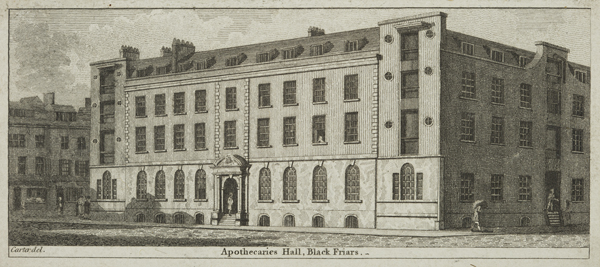
However, the society's naval drug supply and its reputation for quality did not go unchallenged. For example, Greenwich Hospital stopped purchasing drugs in 1717 following criticism of high profit levels, whilst there were incursions into the society's naval monopoly and complaints from naval surgeons about delays and damage to medicines.Footnote 62 Nevertheless, its long-term ability to meet state demand for large quantities of quality drugs produced under corporate oversight placed the Society of Apothecaries in an enviable position. Although in its first decades the Navy Stock's profitability fluctuated, from the mid-eighteenth century the returns generated grew due to ‘the large supplies of Medicines required by the service of the Navy’; ‘the great quantities exported to India, by order of the East India Company’; and the ‘large sums’ received from medicines supplied to public institutions.Footnote 63 In 1748, a ten-pound dividend, equivalent to a third of one share's value, was paid out to Navy Stock proprietors.Footnote 64 By comparison, the peak dividend drawn on the Stationers’ English Stock stood at 17.5 per cent.Footnote 65 Navy Stock profits increased further when demand peaked during times of conflict, generating substantial financial rewards for the members who invested. In 1790 Navy Stock dividends stood at 20 per cent, but peaked at 44 per cent in 1797, during the War of the First Coalition.Footnote 66 Such demand drove the expansion of the trading premises at Apothecaries’ Hall in the late eighteenth century and provided a major stimulus for growth in the development of wholesale pharmaceutical manufacturing in London.Footnote 67 New laboratories, warehouses and employee housing were constructed, with a broader restoration and rebuilding programme, transforming the front of the society's premises into a uniform block with a distinct industrial appearance (Figure 1).Footnote 68
South-west view of Apothecaries’ Hall in the 1780s, showing the newly rebuilt front of the premises. Engraving by John Carter. Image from main print collection, London Metropolitan Archives (City of London). Reproduced under licence from Collage, The London Picture Archive.

Knowledge in practice: the engagement of apothecaries with the society's trading activities
As evidenced by the Apothecaries’ role inspecting drugs in shops and overseeing manufacture, and highlighted in Jasmine Kilburn-Toppin's discussion of assayers in this special issue, the endorsement by groups of skilled office holders of individual practice was a key element in determining expertise in production.Footnote 69 In founding a laboratory for producing chemical medicines in 1672, the society provided an institutional framework and physical site within which such endorsement could take place and where production could be open to outside scrutiny.Footnote 70 Later, the formation of the Navy Stock in 1703 gave further impetus for apothecaries to pool their knowledge and skills for the possibility of larger financial gain, given the engagement with state drug supply.
Individual members contributed to the society's trading activities by participation in various committees. This committee structure was one of the main ways in which shared knowledge was managed and developed at the society. Although the society employed a chemical operator to carry out the day-to-day operation of the laboratory, members played a key role in advising on chemical and pharmaceutical practice. Under the terms of its foundation, in addition to guidance from the master and wardens, the laboratory was managed by a committee of eighteen apothecaries of all ranks of membership, elected by the subscribers and approved by the Court of Assistants. Past masters supervised the committee's activities and a treasurer was appointed to oversee all financial transactions.Footnote 71 The committee met monthly, monitored the finances, set employee salaries and decided on matters of governance. A committee member was required to attend the laboratory daily to monitor production, being paid one shilling for attendance but fined if absent.Footnote 72 There were buying and pricing subcommittees which met weekly to carry out the day-to-day business of the laboratory such as purchasing raw materials, setting prices and bringing in debts.Footnote 73 Committee and subcommittee members also shared knowledge with the society's employees. They instructed the chemical operator on manufacturing medicines in the new Pharmacopoeia, decided which medicines produced in the laboratory were obsolete, and advised on the quantity of chemicals required in production.Footnote 74 The Navy Stock committees operated in a similar way, but dealt in the complexities of large-scale institutional drug supply and had a practical focus on the production of galenical medicines. There was an additional post of deputy treasurer and three separate subcommittees for buying, inspection and pricing, the members of which had a further responsibility to attend by rotation the dispensation of medicines, thereby monitoring the quality of drugs sold.Footnote 75 For both stocks the role of treasurer was key and came with significant responsibilities. Financial acumen and mercantile connections were prerequisites as the appointment involved managing the stocks’ finances and representing the society in matters relating to its trade. Over the course of the eighteenth century, a distinguished line of apothecaries held this post, often for extended periods, with the reward primarily the honour of representing the society and the opportunity to shape its trading activities.
Attendance by committee members at meetings varied sharply. For the year to 1 December 1712, eight members attended at least three-quarters of laboratory committee meetings, but some only attended a handful.Footnote 76 At this date the most regular attendees tended to be a core of those with particular mercantile and productive interests who were already engaged in the society's affairs. At a time when apothecaries’ activities were part of a much wider history of colonial exchange and international trade, the example of Joseph Cruttenden illustrates how subscription to the hall laboratory dovetailed with commercial interests.Footnote 77 Cruttenden, an apothecary from Newgate Street, was involved in a substantial transatlantic trade in the early eighteenth century, especially to Barbados and New England, purchasing mercurials to export from ‘our hall where I can depend on the goodnesse of them’.Footnote 78 He was an active member of the laboratory management committee, attending ten of the twelve meetings in the year to 1 December 1712, and involved in the arrangements for producing medicines under the society's seal.Footnote 79
Individual commercial interests typically influenced the extent of members’ engagement with the society's trade. Prior to the formation of the Navy Stock in 1703, tensions between the trading priorities of some members began to emerge. In 1692 a group of members (Jonathan Lee, Robert Gower, Edward Harle and James Anderson) who independently supplied drugs to the forces in Ireland sought to expand this to naval supply. This prompted complaints from other members of the society, already engaged in the ‘sea trade’, such as William Rose. In response, the Court of Assistants appointed a committee, whose members included the royal apothecary, James Chase; the prominent trading apothecary, Peter Gelsthorp; and William Rawlins, apothecary to the Charterhouse, to ‘stir therein’ and thereafter take a more proactive approach to cultivate business directly for its laboratory.Footnote 80 In 1699 Lee, Harle and Gower again faced criticism as they were in debt to the laboratory to the sum of a hundred pounds, presumably for medicines purchased for military supply, and had delayed payment for over three years.Footnote 81 Yet it appears that acquiring the naval monopoly and the potential for profit shifted the balance of dynamics between pursuing individual trading interests and working together for mutual gain. In 1705 Lee is recorded as treasurer to the laboratory, a role which involved ensuring any bad debts were paid, and in 1706 Gower was one of the apothecaries who represented the society when inspecting East India Company medicine chests.Footnote 82 Gower's experience of military drug supply (the group, along with Apothecary General Isaac Teale, had supplied medicines to the army and hospitals in Flanders in 1696) was a valuable asset to the society's trade.Footnote 83 In 1709 he highlighted that insufficient quantities of oil of amber and spirit of salt were being produced and in 1719, the same year he became master, he took on the role of Navy Stock treasurer, a post he held with distinction until 1733.Footnote 84
Gower was one of a number of society members whose involvement with the trade grew as they progressed in seniority through the ranks of membership. This trend meant that the activities of the stocks were generally aligned with the priorities of the society's elite: wealthy, established practitioners who were well connected in mercantile and medical circles. However, this group was not representative of the society's whole membership. Despite the prospect of financial reward and the discounts on drugs available, the majority of members chose not to acquire shares in the society's stock companies. Sufficient records survive from 1712 to 1713 to quantify the importance of investment to members. Membership of the Society of Apothecaries stood at 426 in 1713, with thirty-two members of the Court of Assistants, sixty-three livery and 331 yeomanry.Footnote 85 In December 1712, there were 131 subscribers to the laboratory, 31 per cent of its total membership.Footnote 86 At this date there were no restrictions (beyond the financial) as to who could subscribe. Of the lowest rank of members, the yeomanry, just 22 per cent subscribed to the laboratory. However, for senior members of the society, 71 per cent of the court and 54 per cent of the livery subscribed. Such senior members were more likely to have the funds to invest and to support the society's corporate goals. Out of the yeoman members who invested in the laboratory, purchasing chemical medicines for use in their businesses appears to have been a primary motivation. In 1713, 95 per cent of yeoman subscribers purchased their quota of drugs for the year (compared to 74 per cent of the livery and 70 per cent of the court), granting eligibility for a discount.
Shifts in practice also affected the engagement of society members with its trading activities. Apothecaries’ right to practise medicine had been legally sanctioned when the House of Lords overturned the decision against the apothecary William Rose in 1704.Footnote 87 Attending patients and providing treatment and advice became the major activity for many of the society's members, whilst involvement in retail and wholesaling decreased as the importance grew of the chemist and druggist in the marketplace for drugs.Footnote 88 As members’ priorities diverged, tensions arose in how the production and sale of drugs by the society were positioned within its other responsibilities. Was the priority practically assisting members’ activities, providing a high-quality supply of drugs for all or generating a financial return? Faced with such questions, in 1741 the Court of Assistants decided to enable ‘all Physycians, Surgeons, Apothecaries and Chymists’ to purchase galenical medicines from the hall, when previously they had been restricted to chemical medicines.Footnote 89 This policy was reversed just four years later following complaints from some members that their private trade had been adversely affected.Footnote 90 However, the appeal of purchasing ‘genuine medicines on easy terms’, combined with the savings in time and labour for members, led to a repeat of the request for open trade from livery and yeomanry Navy Stock Proprietors in 1748.Footnote 91 Despite this pressure, the court was fearful that if freemen could purchase all drugs required then practical knowledge would be lost and apprentices would lose valuable training.Footnote 92 The request was rejected, paralleling senior goldsmiths’ fears about assay expertise discussed in Kilburn-Toppin's article in this issue.
Educational activities proved similarly contentious. Despite the growing lecturing culture in the metropolis, an initial proposal for materia medica lectures made in 1749 took until 1803 to come to fruition, whilst a suggestion regarding chemistry lectures was dismissed in 1753 as ‘the sd Lectures would interfere with the Business of Laboratory’.Footnote 93 These shifts in priorities were also reflected in how the public demonstration of quality weighed against the protection of commercially sensitive information. There had already been a halt in the publication of practices and over time access to the society's laboratories became more restricted. When the German apothecary Johann Göttling published an account of the hall laboratories in the 1780s, he commented that it was ‘very difficult to gain entry here without a special recommendation’.Footnote 94
Changes in practice were also reflected in the gradual drop in the society's membership from 417 in 1731 to 358 in 1750 and 304 in 1790.Footnote 95 Faced with concerns over a decline in apprentices and revenues, and seeking to strengthen the terms of its charter, a bill was drafted in 1747 which would have brought all chemists and druggists in the capital under the society's control.Footnote 96 The society was not alone in facing declining membership and trying to re-establish control of its trade in the eighteenth century: from 1750 to 1777, twenty-two companies secured acts of Common Council requiring those practising their trade within the jurisdiction of the City to become members.Footnote 97 However, the society's efforts faced widespread opposition and when the College of Physicians introduced its own bill as a delaying tactic, the society's bill lapsed and no further attempts were made.Footnote 98 Increasingly the institution's ambitions were aligned with those of its senior members who were engaged in the practice of medicine rather than the manufacture and supply of drugs. When new Navy Stock articles were drawn up in 1766, the lowest rank of the society's membership, the yeomanry, were excluded from share ownership and the largest financial benefits of the society's trade. Open trade in both chemical and galenical medicines was also finally allowed.Footnote 99 This shift in institutional identity was confirmed in 1774 when entrance to the livery was restricted to those practising medicine.Footnote 100 Yet set against these shifts, the society's corporate engagement in drug production was flourishing. In the 1790s, the profits that stockholding members received from the society's drug trade had never been higher.
Institutional interactions: the Society of Apothecaries, its members and knowledge and practice in London
Given the circumstances of its foundation and subsequent development, the early history of the society is considered particularly alongside that of the College of Physicians. However, such a comparative pairing risks overlooking how the society and its members’ activities were situated within a broader metropolitan picture. The society's position in London life was shaped by interactions with various institutions and reinforced by the commercial, pragmatic and political skills of its members. Links to the Crown had long been important. The appointment of the royal apothecary dated back to the reign of King John and monarchical support had been significant in the livery company's creation. Later the society hoped to capitalize on Charles II's enthusiasm for chemistry when it prepared for a royal visit to its new laboratory in 1678.Footnote 101 It was in the society's interest for those honoured with the royal appointment to be active in its affairs. During the political turbulence of the 1680s, the society was fortunate that through the appointment of royal apothecaries, senior members of the society had direct access to the monarch, with the connections of James St Amand and James Chase particularly significant.Footnote 102 Both were Tory MPs, St Amand had served James II and was an alderman, whilst James Chase, chosen as second apothecary to James II, was apothecary to William and Mary, Anne and George I. St Amand was master in 1687–1688 and Chase in 1688–1689 and both served on the laboratory committee. Their influence was such that the two men continued to represent the institution after their terms had ended, notably in relation to naval drug supply.Footnote 103 As late as 1834, the royal apothecary, John Nussey, made representations on the society's behalf to the Admiralty which enabled naval drug supply to be regained.Footnote 104
In his study of the Royal Society and the Apothecaries, W.H.G. Armytage offers various examples of engagement between the two institutions, arguing that the ‘association undoubtedly energized their [the Apothecaries’] activities’.Footnote 105 However, the relationship was reciprocal and particularly enhanced by the botanical connections of apothecaries with Hans Sloane and his gift of the Chelsea physic garden (of which he had recently acquired the freehold) to the Apothecaries in 1722.Footnote 106 As Anna Winterbottom demonstrates in her study of the experimental community of the East India Company in this issue, similar botanical networks also linked the East India Company and the Society of Apothecaries.Footnote 107 Whilst at this date such contact tended to operate at an informal level through social networks, in the case of the Apothecaries and the East India Company once the supply of drugs was formalized the relationship strengthened between the two organizations. For example, from the 1810s impurities found in the key commodity imported by the East India Company, saltpetre, were analysed at Apothecaries’ Hall by the newly appointed superintending chemical operator, William Brande.Footnote 108
The earliest interactions between the society and the East India Company were based around an adjudicatory role. In 1623, the society's master and wardens were amongst those asked to judge the quality of drugs in East India Company Surgeons’ chests, a role which continued in the eighteenth century.Footnote 109 Alongside the censors of the College of Physicians (officials with responsibility for examining, correcting and governing all practitioners of medicine), the wardens of the society assessed the quality of drugs sold in apothecary shops, and later also those of chemists and druggists, until the mid-nineteenth century.Footnote 110 There were generally up to three visitations a year, focusing on a particular vicinity and assessing by sensory inspection the same selection of drugs in each shop before concluding with an adjudication on the establishment.Footnote 111 With more cordial relations established between the two institutions, from the mid-eighteenth century, the College of Physicians considered the society an appropriate source of expertise on matters of production.Footnote 112 Prior to the publication of the 1788 Pharmacopoeia, the society's chemical operator prepared different processes on the college's behalf in the hall laboratory, under the supervision of a committee of apothecaries.Footnote 113 The society was happy to oblige, having earlier underlined ‘their readiness to comply with any request tending to Discoverys for the Public Good’.Footnote 114 Such an approach underlined the trust now placed in the society by other institutions and offices of state. The Lords Commissioners of the Treasury requested the society's opinion on the accuracy of bills submitted to supply the army with medicines.Footnote 115 In line with an increasing appreciation of the commercial value of chemical knowledge, through Samuel More of the Society of Arts, Josiah Wedgwood sought testing and recommendation of his new ceramic mortars from Apothecaries’ Hall.Footnote 116 Later ‘gentlemen’ from the hall attended the Lords of the Committee of the Privy Council for Trade to assess the medicinal quality of cream of tartar manufactured by Mr Bracken of Manchester.Footnote 117
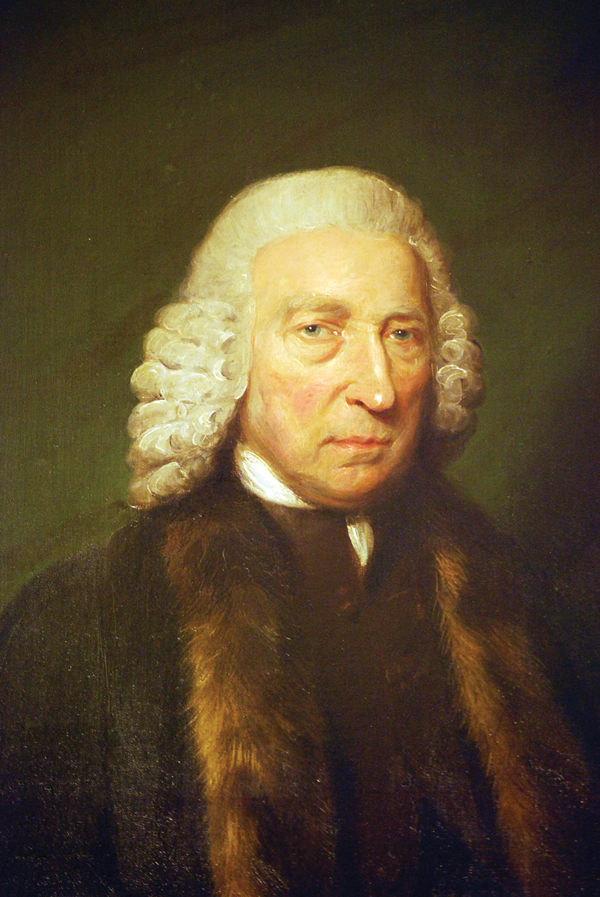
Juanita Burnby's study of the English apothecary from 1660 to 1760 remains the classic text on the activities and position in the community held by individual apothecaries.Footnote 118 However, the interconnectedness of the society and its members’ activities and networks lies outside the scope of Burnby's publication and is often missing from standard biographical sources. Furthermore, even the society's institutional histories tend to overlook members’ individual contributions to its trade and how such activity fitted into the civic life of the metropolis. The contributions of Thomas Gardiner and Peter Gelsthorp Sr, masters of the society in the years 1701–1704 and the Navy Stock's first treasurers, having both previously held the role with the laboratory, were particularly significant. Gardiner and Gelsthorp possessed the political and commercial contacts to promote the society's trading and corporate interests. Gardiner was a member of the Court of Common Council, the City of London's primary decision-making body, who, as discussed earlier, helped press the society's case for corporately undertaking naval supply. Described by Munk's Roll as a ‘respectable apothecary’, Gelsthorp was wealthy man with substantial property holdings in Hatton Garden (Figure 2). His physician son, also Peter, refused to subscribe to the 1695 dispensary scheme of the College of Physicians, which directly threatened apothecaries’ trades, a familial connection likely to have helped cement support for the society amongst the dissenting members of the college.Footnote 119
Portrait of Peter Gelsthorp Sr (c.1636–1719) by an unknown artist. Presented to the society in 1717 by Francis Dandridge. Image used by kind permission of the Worshipful Society of Apothecaries.

As master, Gelsthorp was the public face of the society in dealings with institutional customers in the Navy Stock's first year, attending the East India Company Court of Managers at Skinners Hall in 1704 to request payment for drugs supplied a year earlier.Footnote 120 He succeeded Gardiner as Navy Stock treasurer in 1710, a post he held until his death in 1719. Gelsthorp's financial acumen benefited both the society and its members. His donation of a twenty-pound bond owed from the laboratory's profits was the origin of the society's widows’ fund, whilst the society and Navy Stock subscribers profited from the dividends received when he sold South Sea stock on their behalf in 1712 and 1713.Footnote 121 There is also evidence that the stocks drew on the financial resources of those involved with the society. Francis Dandridge, apothecary to the physician John Radcliffe, and John Meres, the society's clerk, who also ran the joint-stock company exploiting Thomas Newcomen's steam engine patent, both loaned funds to the Navy Stock.Footnote 122 A number of apothecaries, including Gelsthorp, Dandridge and Gower, were customers of Hoare's Bank on Fleet Street, and financial transactions based around networks linked to the society can be identified in its customer ledgers.Footnote 123 Another Hoare's customer was Sir Benjamin Rawling, elected to serve as lay sheriff of London in 1736, who guided the laboratory's financial activities for many years, serving as Laboratory Stock treasurer from around 1740 until his death in 1775.Footnote 124 Such evidence suggests that further study of apothecaries’ financial networks could prove rewarding.
The absence in biographical sources of the interconnectedness of the society and its members’ activities and networks is apparent in the case of John Chandler, who is described by Burnby as ‘quite obscure’, yet who is included in the Oxford Dictionary of National Biography, but without reference to the Society of Apothecaries.Footnote 125 Chandler's activities exemplify the contributions of apothecaries to natural knowledge and artificial practice in London. Chandler, a partner in the firm of Smith and Newsom of Cheapside, was elected a fellow of the Royal Society in February 1735, proposed by a distinguished list of sponsors. Described as ‘a gentleman well skilled in Botany, Anatomy and other parts of knowledge’, he was drawn into the Royal Society's affairs after publishing on smallpox.Footnote 126 He later published on the common cold and was also active in the physic garden's affairs, being especially critical of the gardener Philip Miller.Footnote 127 He became particularly involved in the society's trading activities after his election as master in 1767, serving as deputy treasurer of the Navy Stock from 1768 to 1778 and then treasurer until his death in December 1780.Footnote 128 As part of his responsibilities he liaised with the Navy Board, corresponding on matters such as drug dispatch to surgeons stationed in Martinique and Antigua.Footnote 129 He also chaired the joint Navy and Laboratory Stock committee appointed in 1777 for ‘considering what steps it may be proper to take to enlarge the premises used in conjunction with the said stock’.Footnote 130 William Prowting (Figure 3), who succeeded Chandler as treasurer and held the post for fourteen years, and John Field, who was deputy treasurer from June 1778 until 1793, also played significant roles overseeing the developments which expanded both production and warehouse space. Prowting helped found St Luke's Hospital for Poor Lunatics and served as its treasurer from 1773 to 1794. Field, meanwhile, started the London Annuity Society for the Benefit of Widows in 1765 and operated a drug mill at Lambeth.Footnote 131 All three men possessed the combination of financial acumen and trading expertise to help guide the transformation of the society's premises at Blackfriars into the largest pharmaceutical manufacturing laboratories in London. Cooperation between such senior members was additionally fostered by the Society of Apothecaries’ social dining club, the Friendly Medical Society, founded in 1725 ‘to preserve a good understanding and friendship amongst members of the Company of Apothecaries’.Footnote 132 That the term ‘medical’ was chosen indicates how the focus of expertise amongst the society's elite had already shifted.
Portrait of William Prowting (1708–1794) by Lemuel Abbott. Image used by kind permission of the Worshipful Society of Apothecaries.

The knowledge networks of which the society's members were part are further illustrated in the activities of Josiah Colebrooke and Timothy Lane. Colebrooke, an apothecary from Budge Row, had been elected FRS in 1755, with his election reflecting as much his social status as his scientific achievements.Footnote 133 Colebrooke was a member of the Navy and Laboratory Stock management committees and the committees enquiring into establishing lectures on materia medica, later serving as master in 1774–1775. He was an antiquarian and naturalist, serving as treasurer of the Society of Antiquaries and the Royal Society's Philosopher's Club.Footnote 134 Both Lane and Colebrooke were in the circle of the physician and natural philosopher Sir William Watson.Footnote 135 Watson had practised as an apothecary in Aldersgate Street for the first half of his career. He served on the Laboratory Stock management committee in the 1740s, helping to simplify the existing complex pricing structure for chemical medicines, and, along with Prowting and Field, was amongst the Navy Stock proprietors who unsuccessfully argued the advantages of open trade to the Court of Assistants in 1748.Footnote 136 Lane, elected FRS in 1770, with Henry Cavendish and Benjamin Franklin amongst those who proposed him, was Watson's apprentice and subsequently took over his apothecary's practice and shared his electrical interests. He was a member of the Laboratory and Navy Stock management committees and master in 1801–1802, gave the first materia medica lecture in 1803, invented the minim (the smallest unit of fluid measurement), and was one of four apothecaries appointed in 1806 to meet with a College of Physicians subcommittee regarding altering the Pharmacopoeia.Footnote 137
Conclusion
The individuals discussed in detail above do not form a representative sample of the society's entire membership in the eighteenth century, but their activities are characteristic of the apothecaries who held office within the society and whose expertise and contacts shaped the development of the institution and its relationships with metropolitan organizations.Footnote 138 Despite a range of other commitments and interests, these members chose to devote significant time and effort to the society's activities, notably those of its trade. Such a high level of engagement indicates that, although the society faced declining membership and challenges to its regulatory role, its productive framework had evolved to meet the needs of an elite of medically practising members who wanted to purchase all of their drug requirements from Apothecaries’ Hall and benefit financially from investment in its wholesale business. This was why the society mattered to them; the institution provided corporate oversight of collective production through which ongoing state approbation for institutional supply was gained, whilst its administrative structure and physical site enabled manufacture on the necessary scale to be undertaken.
When a laboratory for manufacturing chemical medicines was founded in 1672, the Society of Apothecaries created a framework for production which would in time serve its members both practically and financially, whilst crucially responding to political pressures faced by the institution and filling a perceived gap in its members’ skills. As demand for drugs produced under a societal guarantee of quality from state and institutional customers grew, members pooled their knowledge and skills to administer an undertaking which eventually supplied drugs throughout the British Empire and brought significant financial rewards to a select proportion of the society's membership. This development was set against the backdrop of London as a centre of commerce, manufacture and global trade and the mutually reinforcing networks which connected the society and its members to various communities of natural knowledge and artificial practice in the metropolis.
However, in a shifting landscape of medical and pharmaceutical practice, as the eighteenth century progressed the institution struggled to reconcile the changing priorities of those it represented, membership declined and its regulatory control of the drug trade weakened. Gaining new responsibilities in medical licensing in the Apothecaries’ Act of 1815, powers which survive to this day, complicated its position further, with the pursuit of profit by a medical licensing corporation considered by some untenable.Footnote 139 Having visited London in 1817, the French pharmacist Charles Louis Cadet wrote to his colleague Pierre Joseph Pelletier about pharmacy in England. Although broadly critical of a lack of chemical knowledge amongst practitioners, he praised the scale and competency of the Society of Apothecaries’ trading operation. Yet Cadet's description of the society encapsulates the uneasy position the institution found itself in at the beginning of the nineteenth century. Whilst the society possessed ‘two magnificent laboratories’ it was ‘both medical and commercial’.Footnote 140 These were functions which, over the course of the nineteenth century, it would find increasingly difficultly to balance.