Introduction
Bursaphelenchus xylophilus (Steiner and Buhrer) (Nematoda: Aphelenchida: Parasitaphelenchidae) (pinewood nematode) is the agent responsible for pine wilt disease (Akbulut and Stamps Reference Akbulut and Stamps2012) and vectored by wood-boring beetles in the genus Monochamus Dejean (Coleoptera: Cerambycidae). Six Monochamus species in Canada are recognised as vectors of B. xylophilus – M. carolinensis (Olivier), M. clamator (LeConte), M. mutator LeConte, M. notatus (Drury), M. scutellatus (Say), and M. titillator (Fabricius) (Wingfield and Blanchette Reference Wingfield and Blanchette1983), and three of these have been identified in Christmas tree (Pinaceae) plantations in Nova Scotia, Canada – M. marmorator Kirby, M. notatus, and M. scutellatus (Blatt et al. Reference Blatt, Bishop and Sweeney2017). Christmas tree production is an important industry in Canada, generating approximately CAD$ 55 million of farm cash receipts (Husband Reference Husband2014). Nova Scotia is second in the country for export (CAD$ 6.3 million), after Québec (CAD$ 15.3 million). Approximately 450 000 balsam fir (Abies balsamea (Linnaeus) Miller; Pinaceae) Christmas trees from Nova Scotia are exported to the United States of America, Panama, and Cuba annually (Husband Reference Husband2014). Access to the European market would greatly benefit Canadian producers; however, Europe does not allow the importation of Christmas trees from Canada because of the risk that they harbour B. xylophilus (Dwinell Reference Dwinell1997). Phytosanitary treatments (heating at 56 °C for 30 minutes) can be applied to wood chips and lumber, but this treatment would negatively affect Christmas tree quality, and other treatment methods for pinewood nematode are not available. Most Christmas trees for export from Canada are balsam fir (Abies balsamea), and B. xylophilus has been extracted from mature balsam fir (Bowers et al. Reference Bowers, Hudayk and Raske1992) rather than young healthy trees typically used for the Christmas tree market.
Bursaphelenchus xylophilus is a fungal and plant cell feeder that has adapted to the Monochamus life cycle for dispersal purposes. It reproduces within the vascular system of trees with adults laying eggs within the phloem. Juveniles hatch and undergo four moults. In the juvenile form, it will disperse throughout the tree, eventually causing decline and death of the tree. Once the environment has deteriorated such that food is limited or the host is overpopulated, second-stage juveniles are triggered to become dispersal forms. It is during the third-stage and fourth-stage dispersal stages that the nematode enter the newly enclosed pupae of Monochamus species (Futai Reference Futai2013). When callow Monochamus adults emerge from the dead tree seeking fresh foliage for maturation feeding, they carry B. xylophilus within their respiratory systems. It is during oviposition or maturation feeding by Monochamus that the nematodes move from the beetle into the tree (Wingfield and Blanchette Reference Wingfield and Blanchette1983; Katsuyama et al. Reference Katsuyama, Sakurai, Tabata and Takeda1989). Christmas trees would be suitable for maturation feeding by Monochamus adults but not oviposition because Monochamus females use dying, weakened, stressed, or recently cut logs as brood hosts (Rose Reference Rose1957; Mamiya and Enda Reference Mamiya and Enda1972; Dyer and Seabrook Reference Dyer and Seabrook1978; Linit Reference Linit1988). Knowledge of the incidence of B. xylophilus within Monochamus populations and incidence in balsam fir Christmas trees is necessary to fully estimate the risk of B. xylophilus from exported balsam fir Christmas trees to native pine species in Europe.
Early molecular methods were able to identify Bursaphelenchus Fuchs species with random amplification of polymorphic DNA polymerase chain reaction (Braasch et al. Reference Braasch, Burgermeister and Pastrik1995) and internal transcribed spacer restriction fragment length polymorphism methods (Burgermeister et al. Reference Burgermeister, Metge, Braasch and Buchbach2005); however, methods using species-specific primers were required to distinguish the quarantined B. xylophilus from its morphologically and genetically similar, less pathogenic, “sister species” B. mucronatus (Mamiya and Enda Reference Mamiya and Enda1979). Conventional and real-time polymerase chain reaction methods with species-specific primers designed from the internal transcribed spacers (ITS1 and ITS2) region of ribosomal DNA have been widely reported (Matsunaga and Togashi Reference Matsunaga and Togashi2004; Takeuchi et al. Reference Takeuchi, Kanzaki and Futai2005; Takeuchi and Futai Reference Takeuchi and Futai2009; Wang et al. Reference Wang, Zhu, Kong and Mota2011; Ye and Giblin-Davis Reference Ye and Giblin-Davis2013; Filipiak and Hasiow-Jaroszewska Reference Filipiak and Hasiow-Jaroszewska2016). Alternatively, a robust polymerase chain reaction method using the heat shock protein gene, Hsp70, has been used for conventional polymerase chain reaction (Leal et al. Reference Leal, Green, Allen, Humble and Rott2005), q-polymerase chain reaction (qPCR), and reverse-transcriptase (RT) polymerase chain reaction assays (Leal et al. Reference Leal, Green, Allen, Humble and Rott2007, Reference Leal, Foord, Allen, Campion, Rott and Green2013).
Polymerase chain reaction product results can be confirmed for species identification using polymerase chain reaction sequencing methods with universal and species-specific primers (Ye et al. Reference Ye, Giblin-Davis, Braasch, Morris and Thomas2007). Sequence data are analysed by comparing sequence alignment with other Bursaphelenchus sequence accessions using the basic alignment search tool (BLAST) at the National Center for Biotechnology Information (www.ncbi.nlm.nih.gov). Recently a complete description of accepted molecular methods to identify B. xylophilus has been published (International Plant Protection Convention 2016). This protocol describes various criteria for interpreting the conventional polymerase chain reaction and sequencing results, including the appropriate use of positive and negative controls, and comparing sequence divergence values of unknown samples with B. xylophilus accessions (HQ646254 and KC460340) found on GenBank (www.ncbi.nlm.nih.gov/genbank).
Our objectives were to use known methods to: (1) determine which Monochamus species present in Nova Scotia Christmas tree plantations harbour B. xylophilus DNA; (2) evaluate the incidence of B. xylophilus throughout Nova Scotia using two conventional polymerase chain reaction methods; (3) determine if B. xylophilus DNA is present in wood samples from balsam fir Christmas trees; and (4) compare the polymerase chain reaction sequences of B. xylophilus DNA from a subsample of Monochamus specimens with known accessions to provide an indication of the origin of the isolates found in Nova Scotia.
Materials and methods
Study sites
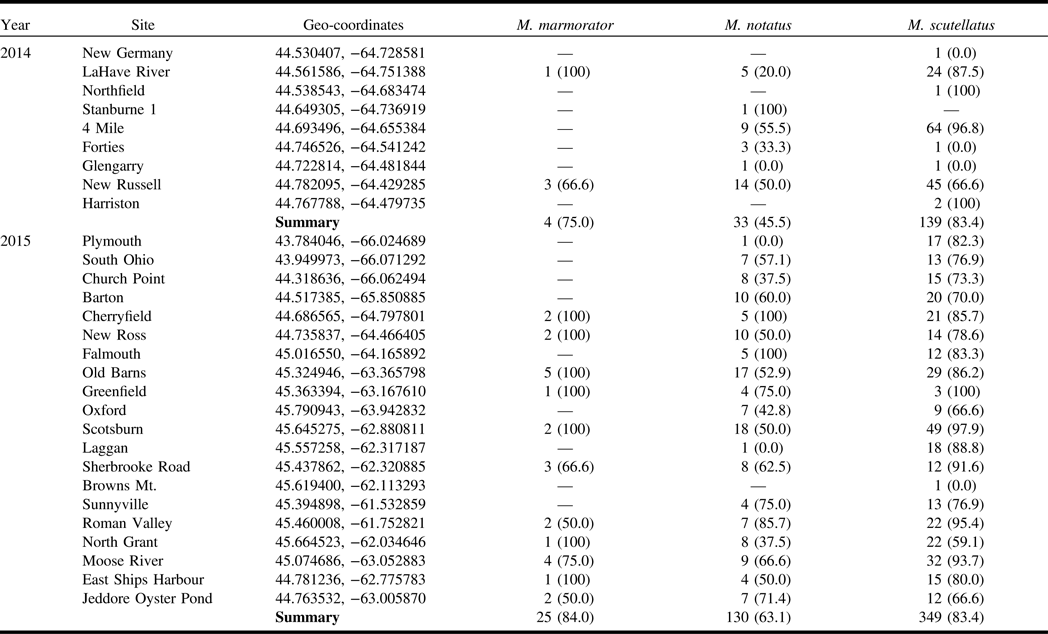
Monochamus beetles were trapped from nine sites in 2014 and 20 sites in 2015 located in southwestern, central, and northeastern Nova Scotia (Table 1). All sites were well-established commercial Christmas tree plantations, ranging in size from 5–100 ha and surrounded by mature forest. Plantations were composed of naturally regenerated balsam fir, up to 10 years of age, thinned as required to provide at least 2 m between trees, and trees ranged up to 2.5 m in height. Forests surrounding most plantations contained mixed species, consisting mainly of mature conifers (Picea rubens Sargent, Pinus strobus Linnaeus (Pinaceae), and A. balsamea) intermixed with Acer rubrum Linnaeus (Sapindaceae), Populus tremuloides Michaux (Salicaceae), and Betula papyrifera Marshall (Betulaceae). Trees varied in age, ranging from new seedlings to 30–40-year-old trees, and measured from < 1 m to approximately 15 m in height.
Site, geo-coordinates, and number of individuals in 2014, or number of batches in 2015, of Monochamus species captured and analysed for Bursaphelenchus xylophilus in 2014 and 2015 (percentage testing positive for B. xylophilus in parentheses).

Sites are organised west to east to show geographic range of positive captures.
Field trapping
Panel traps (Alpha Scents, West Linn, Oregon, United States of America) were made from corrugated plastic coated in Fluon to decrease friction and increase captures (Allison et al. Reference Allison, Borden, McIntosh, de Groot and Gries2001; Graham et al. Reference Graham, Mitchell, Reagel, Barbour, Millar and Hanks2010). Traps were hung approximately 2 m above the ground between two trees using rope and metal hangers and placed between 2–3 m from the nearest tree. Traps were baited with Monochamus Lite Combo Lures (Synergy Semiochemicals, Burnaby, British Columbia, Canada) suspended in the opening between panels. Collection cups were filled with a 2% sodium dodecyl sulphate and 100 mM EDTA solution (Pokluda et al. Reference Pokluda, Čížek, Stříbná, Drag, Lukeš and Novotný2014) and traps checked biweekly. Beetles were identified to species and sexed by comparison with voucher specimens obtained from the Natural Resources Canada. In 2014, 177 individual Monochamus beetles (representing M. marmorator, M. notatus, and M. scutellatus) – and in 2015, 510 composite beetle samples, representing 2282 individuals – were captured and stored at −80 °C until DNA isolation. Composite beetle samples consisted of two to six beetles of the same species and sex collected from the same site on the same date. Voucher specimens were deposited at the Kentville Research and Development Centre insect collection (Nova Scotia, Canada).
Wood samples
In September 2014, a total of 60 branch samples were collected. Forty branch samples (20 from the plantations and 20 from the surrounding forest) were collected in September and an additional 22 branch samples (plantation only) were collected in November. In 2015, 26 branches were collected from five plantations (four to five branches from each site) across the province (South Ohio, 4 Mile, New Ross, Moose River, East Ships’ Harbour). Branches were cut from the main stem, approximately 40–50 cm in length with side branches, from trees showing evidence of Monochamus feeding, and a 30-cm section, centred around the feeding damage, was cut for assessment. Branches were placed in paper bags and stored at 25 °C for two weeks to encourage nematode reproduction (Forge and Sutherland Reference Forge and Sutherland1996). Branch sections were processed to yield wood pellets by first cutting them into small pieces and weighing them before placing them on filter paper in a glass funnel. Wood material was covered with distilled water and left for 4–5 days. Nematodes were extracted by draining 20 mL of water into a 25-mL centrifuge tube and placing these at 4 °C for 24–48 hours. A 2-mL aliquot was removed from the bottom of the centrifuge tube and centrifuged to obtain a pellet (Leal et al. Reference Leal, Green, Allen, Humble and Rott2005). The supernatant was removed and 95% ethanol used to cover the pellet. Pellets were stored at −80 °C prior to DNA isolation and analysis.
DNA isolation
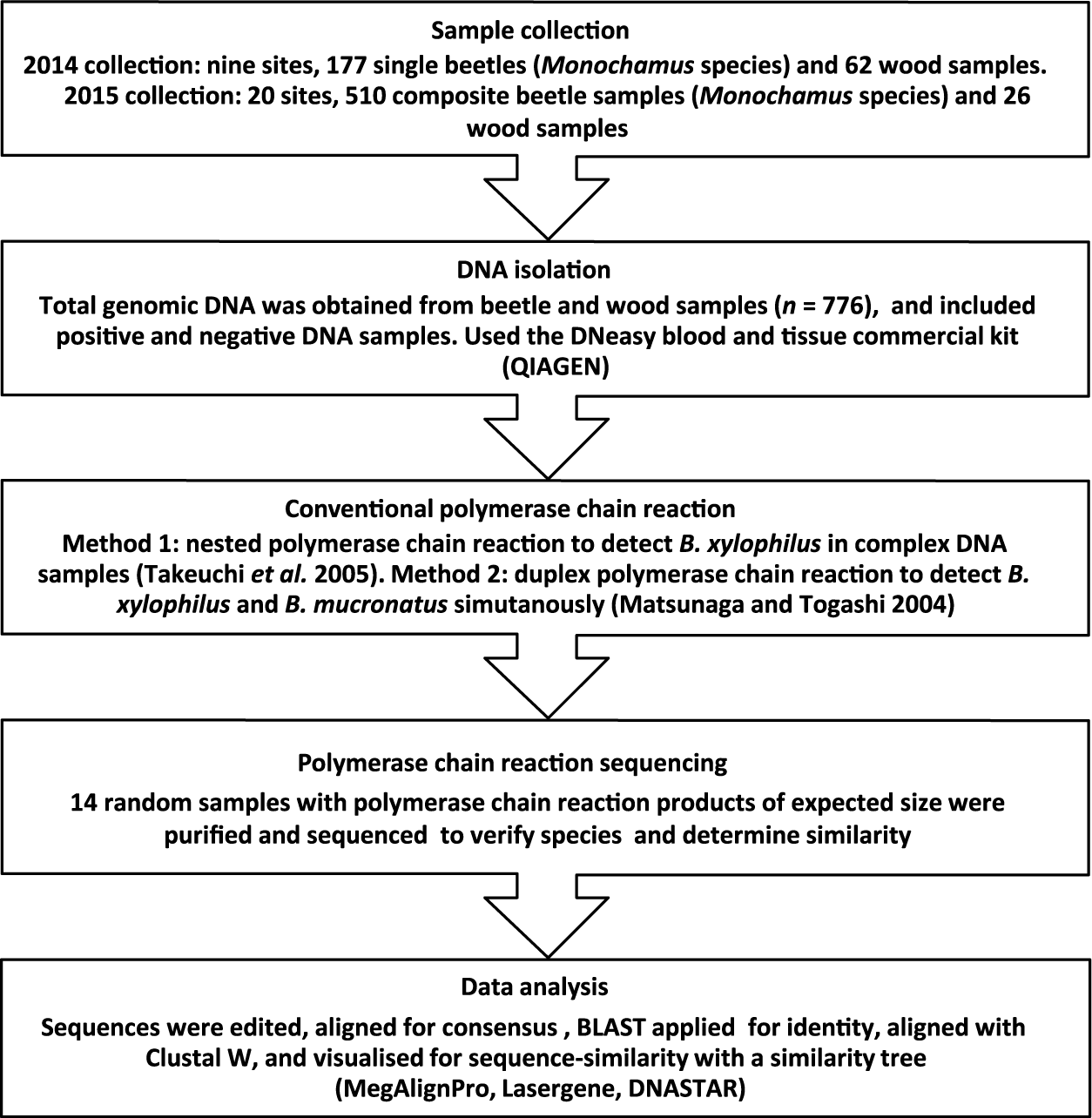
A simplified flowchart (Fig. 1) demonstrates the steps of sample preparation, DNA isolation, and conventional polymerase chain reaction along with sequencing and data analysis. Total genomic DNA isolation from beetle and wood pellet samples was achieved with the DNeasy Blood and Tissue commercial kit (Qiagen, Toronto, Ontario, Canada) following the manufacturer’s recommended protocol with additional steps to maximise DNA yields. Briefly, for the wood pellet samples, the entire pellet was included with the sample and 180 µL of ATL solution was added along with one ball bearing. The samples were then homogenised with TissueLyser LT (QIAGEN) for 45 seconds at 30 Hz before proceeding with the kit protocol.
Flowchart of materials and methods used to detect Bursaphelenchus xylophillus DNA from Monochamus specimens collected in Nova Scotia balsam fir Christmas tree plantations in 2014 and 2015.

The beetle samples (single and composite) were ground in liquid N2 and approximately 100 mg of ground tissue was used per sample. Liquid N2 improved the yield and quality of DNA over using TissueLyser (unpublished data). The addition of an RNase step, that is, 1 μL of 100 mg/mL RNase A (Invitrogen, Thermo Fisher Scientific, Whitby, Ontario, Canada), prior to the wash step also improved the quality of DNA samples. DNA samples from bumble bees (Bombus Latreille; Hymenoptera: Apidae), which had been processed in the same laboratory on similar days as the beetles and expected to contain no B. xylophilus DNA, were included as negative extraction and experimental controls to rule out false-positives. These were used because Monochamus beetles confirmed negative for B. xylophilus were not available.
In 2014, 178 single beetles and 62 wood samples were processed; and in 2015, 510 composite beetle samples and 26 wood samples were processed for a total of 776 DNA samples. Each DNA sample was eluted in 50 µL of the final elution buffer and tested for quality and quantity using Nanodrop ND-1000 (Thermo Fisher Scientific, Waltham, Massachusetts, United States of America) to measure the concentration (ng/µL), total yield (µg), and purity (260/280 and 260/230 ratios). All DNA samples were visualised with electrophoresis on 0.8% agarose gels with 1X TAE buffer stained with SYBR Safe dye (Invitrogen, Thermo Fisher Scientific).
Conventional polymerase chain reaction and polymerase chain reaction sequencing
For this study, to determine the incidence of B. xylophilus within Monochamus species, we chose two conventional internal transcribed spacer polymerase chain reaction methods with primers designed from ribosomal DNA genes ITS1 (small subunit 5.8S) and ITS2 (large subunit 28S). A sensitive and highly specific nested polymerase chain reaction method (Takeuchi et al. Reference Takeuchi, Kanzaki and Futai2005) used two sets of ribosomal ITSN primers designed from pinewood nematode (Bursaphelenchus xylophilus (Steiner and Buhrer) Nickle; Nematoda: Parasitaphelenchidae) sequence data partially covering the ITS1–ITS2 regions. Set ITSN-1 contained primers FirstF: 5′-TACGTGCTGTTGTTGAGTTGG-3′ and FirstR: 5′-GCACGGACAAACAGTGCGTAG-3′. Set ITSN-2 contained primers NestedF: 5′-CGTGCTGTTGTTGAGTTGGCG-3′ and NestedR: 5′-AGACGACTGTCACAACGTGC3-′. This method is sensitive to detecting small amounts (picograms to femtograms) of target DNA in complex samples because the ITSN-1 primers amplify a polymerase chain reaction product of 466 base pairs in the initial polymerase chain reaction. The ITSN-2 primers are “nested” within the sequence of this product, thus using a dilution of the first polymerase chain reaction product as the template; the ITSN-2 polymerase chain reaction will produce a 377 base-pair polymerase chain reaction product that can be visualised on an agarose gel. However, these primers are specific for B. xylophilus and cannot detect the genetically similar “sister species” B. mucronatus; therefore, the duplex polymerase chain reaction method of Matsunaga and Togashi (Reference Matsunaga and Togashi2004) was used as our second method to determine the presence of B. xylophilus and/or B. mucronatus simultaneously in one polymerase chain reaction with two species-specific primer sets. Each primer set resulted in a different-sized (base pair) polymerase chain reaction product that was then visualised on agarose gels. The primers XF: 5′-ACGATGATGCGATTGGTGAC-3′ and XR: 5′-TATTGGTCGCGGAACAAACC-3′ have an expected 557 base-pair product for B. xylophilus, and primers MF: 5′-TCCGGCCATATCTCTACGAC-3′ and MR: 5′-GTTTCAACCAATTCCGAACC-3′ have an expected 210 base-pair product for B. mucronatus DNA.
Eight samples of Bursaphelenchus DNA from pure cultures were used as polymerase chain reaction positive controls. These consisted of seven named samples of B. xylophilus (US-DE2 from the United States of America; BC and FIDS from British Columbia, Canada; Q-52A and Q14-26 from Québec, Canada; Saint William from Ontario, Canada; and Saint John from New Brunswick, Canada) and one named sample of B. mucronatus (CHIBA from Japan). These samples had been previously used as positive controls and are part of an international collection (Leal et al. Reference Leal, Green, Allen, Humble and Rott2005, Reference Leal, Green, Allen, Humble and Rott2007). To test the polymerase chain reaction methods with beetle DNA, protocols from the Canadian Centre for DNA Barcoding (http://ccdb.ca) were followed using the Barcode of Life Data (BOLD) universal primers (LCO1490 and HCO2198) for the cytochrome-oxidase-gene subunit I (COI), which will amplify a product of approximately 700 base pairs. The COI primers were used as a control to test for polymerase chain reaction failure due to inhibitors present in beetle or wood pellet DNA samples. The COI polymerase chain reactions contained 18.0 µL of Platinum Blue polymerase chain reaction mix (Invitrogen, Thermo Fisher Scientific), 0.5 µL of 25 pmol primers LC01490 (forward) and HC02198 (reverse) (3.3 μM), and 1 µL of template DNA (5–40 ng) for a 20-µL reaction. All 740 DNA samples (from beetle and wood pellets), the negative extraction control DNA, and pinewood nematode positive controls (seven B. xylophilus and one B. mucronatus) were tested with both the nested and duplex polymerase chain reaction protocols. The nested ITSN-1 and ITSN-2 20-µL polymerase chain reactions contained 18.7 µL of Platinum Blue polymerase chain reaction mix (Invitrogen), 0.16 µL of 25 pmol primers (forward and reverse; 1.50 μM), and 1 µL of template DNA. For ITSN-1, 1 µL of DNA (10–40 ng) was used per sample; for the ITSN-2 primers, the DNA template was 1 µL of the 1/200 diluted ITSN-1 polymerase chain reaction product/sample. The negative amplification control sample for each polymerase chain reaction experiment contained the polymerase chain reaction master mix, primers, and nuclease-free water instead of template DNA.
The duplex polymerase chain reaction protocol was similar except the two species-specific primer pairs (XF/XR and MF/MR) were included in the same reaction at 1.50 μM for each primer, and 1 µL of DNA (10–40 ng) was used per sample. The same positive and negative controls were used in the duplex protocol. Samples that showed polymerase chain reaction products on the agarose gels of the expected size for B. xylophilus and/or B. mucronatus were confirmed with simplex polymerase chain reaction in separate reaction tubes. The Biometra T-gradient thermal cycler (Montreal Biotech, Montréal, Québec, Canada) was used for all conventional polymerase chain reactions and followed the polymerase chain reaction conditions for the nested ITSN-1 and ITSN-2 and duplex internal transcribed spacers as outlined in Takeuchi et al. (Reference Takeuchi, Kanzaki and Futai2005) and Matsunaga and Togashi (Reference Matsunaga and Togashi2004), respectively. All polymerase chain reaction results were visualised on 1.4% agarose gels stained with SYBR Safe DNA dye (Invitrogen, Thermo Fisher Scientific). The gels were scored for expected polymerase chain reaction amplicon presence and size using a GelDoc XR+ system and Image laboratory software (Bio-Rad, Mississauga, Ontario, Canada).
DNA samples with polymerase chain reaction products of expected size from the nested and/or duplex primer sets were randomly chosen for polymerase chain reaction sequencing to verify the polymerase chain reaction gel results. The polymerase chain reaction samples were purified with ExoSap-IT polymerase chain reaction product clean-up reagent (Applied Biosystems, Thermo Fisher Scientific) prior to dilution in nuclease-free water (Qiagen) and shipped overnight to a commercial sequencing laboratory (Eurofins Genomics DNA Sequencing Services, Toronto, Ontario, Canada). Sequence analysis, including editing and consensus alignment, was completed using DNAStar software version 14 (DNAStar, Madison, Wisconsin, United States of America). Consensus sequences were obtained with BLAST and compared with other confirmed B. xylophilus and B. mucronatus accessions from GenBank, including the DP10 recommended B. xylophilus accession sequence HQ646254 (Abelleira et al. Reference Abelleira, Picoaga, Mansilla and Aguin2011). All sequences were aligned with ClustalW (MegaAlign; DNAStar) and visualised with a similarity tree branching to correspond to pairwise sequence divergence (SEQDIV). SEQDIV is calculated as a ratio of the distance of two sequence branches per total distance of all the sequence branches times 100. Bootstrap analysis was applied to the similarity tree to generate confidence values for sequence branching.
Analysis
Percentages of B. xylophilus-infested Monochamus captured in 2014 and 2015 were transformed using sin−1(sqrt) and analysed using analysis of variance methods to compare trap location (forest versus plantation, 2014 only), sex, and species (Zar Reference Zar1999). Models analysed were per cent positive = species + sex + location (in 2014), and per cent positive = species and sex (in 2015). All analyses were done using R software (R Core Team 2015).
Results
Monochamus beetles and wood-harbouring Bursaphelenchus xylophilus
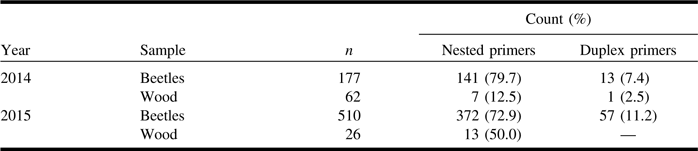
A total of 2661 Monochamus specimens representing three species (M. marmorator 1.7%, M. notatus 21.3%, and M. scutellatus 77.0%) were captured in 2014 and 2015 (Table 2). These species have previously been reported in Nova Scotia (Webster et al. Reference Webster, McCorquodale and Majka2009) but only recently from Christmas tree plantations (Blatt et al. Reference Blatt, Bishop and Sweeney2017). Captures in 2014 showed significant differences between trap location (F 1,26 = 8.56; P = 0.007) but not between species (F 2,26 = 1.48; P = 0.24) or between males and females (F 1,26 = 0.45; P = 0.51; Table 2). A higher percentage of beetles captured in the forest tested positive for B. xylophilus than those captured in the plantation. It must be noted that a smaller number of beetles were captured in the forest compared with the plantation. In 2015, the percentage of batches testing positive for B. xylophilus was significantly different between species (F 2,88 = 10.45; P < 0.0001), but not between sexes (F 1,88 = 0.02; P = 0.90; Table 2). With both sexes combined, M. notatus had significantly fewer batches testing positive for B. xylophilus than either M. marmorator (P = 0.0001) and M. scutellatus (P = 0.004) with no significant difference between M. marmorator and M. scutellatus (P = 0.21). The wood samples collected in August 2014 from the forest and plantation had 15% and 10%, respectively, testing positive for B. xylophilus (Table 3). Samples collected in December (plantations only) had 9.1% testing positive. In 2015, the samples collected from the plantations had 50% testing positive for B. xylophilus. By site, the percentage of samples testing positive ranged from 0% to 100%.
Mean percentage (± standard error (SE)) of beetles (2014) and batches of beetles (2015) captured in Nova Scotia Christmas tree plantations (forest versus plantation in 2014, plantation only in 2015) testing positive for Bursaphelenchus xylophilus DNA.

Number (percentage) of beetle and wood samples with Bursaphelenchus xylophilus determined using two conventional polymerase chain reaction methods: nested polymerase chain reaction (Takeuchi et al. Reference Takeuchi, Kanzaki and Futai2005) and duplex (Matsunaga and Togashi Reference Matsunaga and Togashi2004).

Polymerase chain reaction product size 377 (base pairs) and 557 (base pairs) for B. xylophilus present in all positive samples.
Conventional polymerase chain reaction and Bursaphelenchus xylophilus detection in Monochamus and wood pellet DNA samples
The Qiagen DNeasy blood and tissue isolation kit resulted in acceptable DNA yields and quality from beetle samples (single and composite) and wood pellets. Other studies have reported success with Qiagen DNA isolation protocols for the detection of Bursaphelenchus species directly from beetles (Cardoso et al. Reference Cardoso, Fonseca and Abrantes2012) and from cultured nematodes (Leal et al. Reference Leal, Foord, Allen, Campion, Rott and Green2013; Filipiak and Hasiow-Jaroszewska Reference Filipiak and Hasiow-Jaroszewska2016). The quality and quantity of the DNA was measured with the 260/280 and 260/230 ratios. Both beetle sample types (individual and composite) and the wood pellet samples had sufficient DNA yields (4.52, 1.38, and 1.61, respectively) and quality for conventional polymerase chain reaction and polymerase chain reaction sequencing analyses.
Conventional polymerase chain reaction with COI primers amplified products of the expected size (approximately 700 base pairs) for the samples from Monochamus, wood pellet, and Bombus DNA (negative extraction control), indicating the absence of any polymerase chain reaction inhibitors. To determine the specificity of the nested polymerase chain reaction, the first primer set (FirstF-FirstR) was tested with seven pinewood nematode positive control DNA samples and the Bombus DNA. All positive control samples had a bright, similar-sized polymerase chain reaction product of the expected size (466 base pairs), indicating that they all were B. xylophilus DNA. The same control DNA samples were tested with the duplex species-specific internal transcribed spacer primer sets, and bright polymerase chain reaction products of the expected size (557 base pairs) were found for all seven samples, confirming the presence of B. xylophilus DNA. For both polymerase chain reaction methods, the negative extraction control and the negative amplification control did not produce a polymerase chain reaction product.
Overall, both polymerase chain reaction protocols were able to identify the presence of B. xylophilus in complex DNA samples from Monochamus species (Table 3). The nested polymerase chain reaction was more robust because 79.7% (n = 141) and 72.9% (n = 372) Monochamus samples collected in 2014 and 2015, respectively, were identified to contain B. xylophilus DNA. In contrast, the duplex polymerase chain reaction method identified B. xylophilus in only 7.4% (n = 13) and 11.2% (n = 57) beetle DNA samples from the same collections. Polymerase chain reaction results with the duplex species-specific primers confirmed that the positive control DNA sample for B. mucronatus (CHIBA) had a polymerase chain reaction product of 210 base pairs. In total 22.7% (n = 20) of wood pellet samples tested positive for pinewood nematode with the nested polymerase chain reaction, indicating B. xylophilus; however, the duplex polymerase chain reaction only found one (2.5%) of the 88 wood samples positive for B. xylophilus (Table 3).
Polymerase chain reaction sequencing of Monochamus DNA with Bursaphelenchus xylophilus and Bursaphelenchus mucronatus species-specific internal transcribed spacer primers
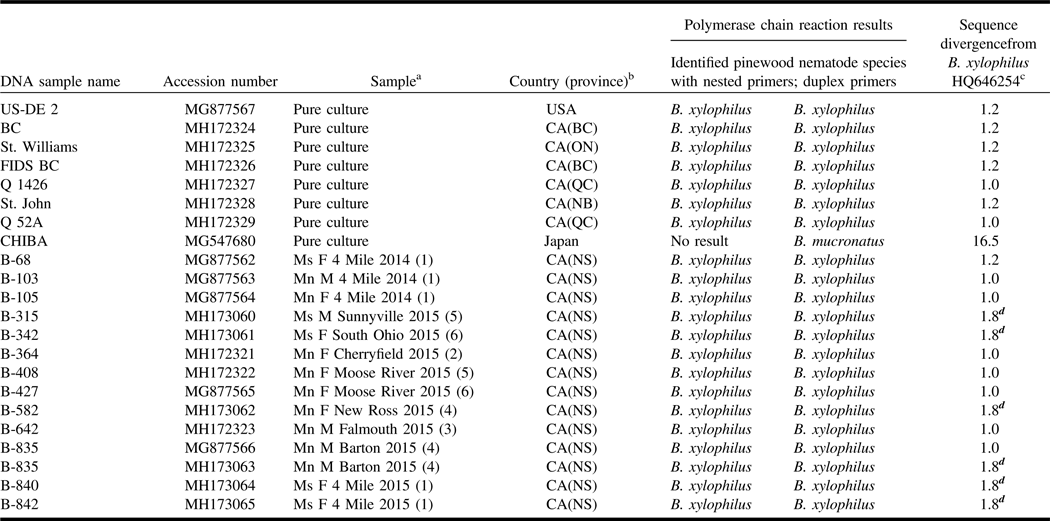
Fourteen beetle DNA samples and eight positive control samples were chosen for polymerase chain reaction sequencing with the internal transcribed spacer nested primers FirstF-FirstR, or simplex polymerase chain reaction sequencing with primers XF-XR, and one sample, B-835, was chosen for both primer sets to confirm the results with the same sample (Table 4). The forward and reverse sequences from each sample were edited for consensus using SeqmanPro (Lasergene; DNAStar) and searched with BLAST on GenBank to determine the closest species identity. All the sequences, including the B. xylophilus recommended reference accession HQ646254 from DP10, were aligned with the Lasergene programme MegaAlign to determine the sequence divergence values (SEQDIV) among the samples. All sample sequences had SEQDIV values < 2.0 for B. xylophilus accession HQ646254, confirming the presence of B. xylophilus (Table 4). In contrast, the DNA sample “CHIBA” had a SEQDIV value of 16.5. All sequences derived from the 14 beetle DNA and 8 control DNA samples for primers FirstF-FirstR, XF-XR, and MF-MR were deposited to GenBank, and accession numbers can be found in Table 4.
Polymerase chain reaction sequencing results from eight Bursaphelenchus xylophilus pure DNA samples (positive controls) and 14 beetle (Monochamus) DNA samples.

Samples were tested with species-specific internal transcribed spacer primers: nested (Takeuchi et al. Reference Takeuchi, Kanzaki and Futai2005) and duplex (Matsunaga and Togashi Reference Matsunaga and Togashi2004). Resulting sequences were confirmed for species identity using the duplex results with BLAST on GenBank. An alignment and sequence divergence value was achieved using Lasergene MegaAlign software (DNAStar).
a Pure culture = B. xylophilus cultures obtained from Pacific Forestry Centre; Ms, M. scutellatus; Mn, M. notatus; F, female; M, male; 2014 or 2015, year of collection; number in parentheses denotes number of beetles in the batch.
b CA, Canada; USA, United States of America; BC, British Columbia; ON, Ontario; QC, Québec; NB, New Brunswick; NS, Nova Scotia.
c Accession HQ646254 from DP10 protocol; sample origin Spain.
d Sequence divergence calculated with sequences from nested primers only.
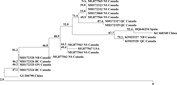
The similarity tree (Fig. 2) shows the sequence divergence of the XF-XR primer sequence data for seven B. xylophilus positive control samples and eight Monochamus samples compared with reference accession HQ646254 and four B. xylophilus accessions identified as most similar using the BLAST search tool on GenBank. Overall, the sequences had high similarity with less than two nucleotide substitutions per 100 residues. Five of the eight Nova Scotia samples (MG877565, MH172323, MH172322, MH173060, and MG877566) were grouped with the positive controls from Québec (MH172327 and MH172329, with a bootstrap confidence value of 71.4). Another branch (confidence value of 32) associates this group with GenBank accessions KF025327 and KF025382 (from New Brunswick and Québec, respectively; Ye et al. Reference Ye, Giblin-Davis, Braasch, Morris and Thomas2007). This group clusters with a branch (confidence value of 87.7) containing the reference sample HQ646254 and sample KC460340 from China. A third small group contained B. xylophilus from Monochamus sequences MG877563, MG877564, and MG877562 (all from the same plantation) and the control sample from the United States of America (accession MG877567). All branches had confidence values < 50.0. A fourth group contained four other positive control samples (MH172328, MH172326, MH172325, and MH172324) collected from New Brunswick, British Columbia, Ontario, and British Columbia, respectively. This group branched from all other groups with a confidence value of 81.2. Finally, accession GU206790 from China branched from other 19 sequences at 2.0 nucleotide substitutions per 100 residues and had the largest SEQDIV value (1.4) with reference accession HQ646254.
Similarity tree of internal transcribed spacer sequences (covering ITS1, 5.8s, and ITS2) of Bursaphelenchus xylophilus DNA from Monochamus species with XF-XR B. xylophilus primer set. Sequences include eight beetle samples from Nova Scotia (NS), accessions MG877565, MH172323, MH172322, MH173060, MG877566, MG877563, MG877564, and MG877562, and seven B. xylophilus positive control samples collected across Canada, including British Columbia (BC) accessions MH172324 and MH172326, Ontario (ON) MH172325, Québec (QC) MH172327 and MH172329, New Brunswick (NB) MG877567, and the United States of America (USA) MH172328. Sample sequences were aligned (MegaAlign, Lasergene; DNAStar) with four B. xylophilus accessions from GenBank (KF025327, KF025328, KC460340, GU206790) and reference B. xylophilus accession HQ646254. Divergence values were < 1.2 for HQ646254 and all sample sequences. Nucleotide substitution per 100 residues; bootstrap trials = 1000; seed = 111.

Discussion
This work confirms that B. xylophilus can be found in Monochamus species throughout Nova Scotia. Previous studies confirmed the presence of Monochamus species in Nova Scotia (Webster et al. Reference Webster, McCorquodale and Majka2009) and the presence of B. xylophilus in mature balsam fir (Bowers et al. Reference Bowers, Hudayk and Raske1992). This is the first report to positively extract B. xylophilus DNA from Monochamus captured in Christmas tree plantations. A higher percentage of M. scutellatus captured in plantations harboured B. xylophilus DNA compared with M. notatus and M. marmorator in 2014. A similar result was obtained in 2015 when beetles were grouped into batches and processed. As we grouped beetles from a collection site within a collection date, for positive batches, there was no way to determine if one beetle or all beetles were infested, thus the incidence of B. xylophilus may be slightly overestimated or underestimated in composite samples. However, we showed the positive presence of B. xylophilus in an individual or pooled sample of beetles.
This study showed that Monochamus can transfer B. xylophilus to healthy Abies balsamea trees. Branches of balsam fir Christmas trees that showed signs of Monochamus feeding found in the plantations tested positive for B. xylophilus in both 2014 and 2015. Bowers et al. (Reference Bowers, Hudayk and Raske1992) extracted B. xylophilus from mature balsam fir as part of a nationwide survey. This is the first record of B. xylophilus extracted from young healthy balsam fir trees. While Monochamus will feed on young balsam fir during their maturation phase and prior to oviposition, it has been deemed unlikely that B. xylophilus would transfer to these young healthy trees (Blatt et al. Reference Blatt, Bishop and Sweeney2017). As B. xylophilus depends upon Monochamus for distribution between hosts and enters Monochamus during the pupation stage, the transfer of B. xylophilus into nonoviposition sites would seem a poor host choice. Numerous studies have found B. xylophilus in a wide range of Pinus Linnaeus species, healthy as well as stressed or dying (Futai Reference Futai2013 and references therein).
Molecular techniques designed to detect Bursaphelenchus species routinely use genomic DNA isolated directly from samples such as infected wood or pure subcultured nematode isolates collected from wood or beetles. Other studies have had success with detecting pinewood nematode DNA from individual Monochamus beetles (Wang et al. Reference Wang, Zhu, Kong and Mota2011; Cardoso et al. Reference Cardoso, Fonseca and Abrantes2012), where live nematodes were added to the samples prior to total DNA isolation. For this study the beetles were captured with traps containing a preservative solution; and although the beetles were killed with this method, the DNA of any remaining pinewood nematode in the mouth parts or the trachea of infected beetles would also be preserved. Although we did not observe live nematodes from captured beetles or wood samples (after funnel extraction), a direct detection of pinewood nematode with polymerase chain reaction does not require live B. xylophilus because the methods can detect DNA from preserved cells. The two conventional internal transcribed spacer polymerase chain reaction methods used in this study showed variation in their ability to positively detect B. xylophilus in the three DNA sample types. Overall, the nested polymerase chain reaction method was superior to the duplex polymerase chain reaction, with a lower limit of detection than the duplex method. In complex DNA samples, the ratio of nematode to beetle DNA can be extremely low (femtograms to picograms) per nematode; however, the authors of this method (Takeuchi et al. Reference Takeuchi, Kanzaki and Futai2005) report that one nematode in 80 mg of wood can be detected. It must be noted that, in their study, the nematode DNA was added to the wood tissue and not co-isolated at the same time. The mass of wood starting material (whole branch) was 100 g, and after processing using funnel extraction, the final concentrated pellet was approximately 100 mg. Beetles were ground down to a mass of 100 mg of fine powder. This is a similar mass used in a study by Cardoso et al. (Reference Cardoso, Fonseca and Abrantes2012) where B. xylophilus DNA was positively identified using pinewood nematode satellite DNA primers from as few as 10 nematodes added to bark (Pinus pinaster Aiton) or the vector beetle (Monochamus galloprovincialis (Olivier)) prior to tissue grinding.
The duplex polymerase chain reaction method has the advantage of targeting two species in one polymerase chain reaction, thus conserving time and reagent. However, this method is not as sensitive as the nested method. Others have reported reduced results when following the published duplex polymerase chain reaction method, especially with DNA from wood samples, possibly due to the many polymerase chain reaction inhibitors found in wood that can precipitate with DNA (Leal et al. Reference Leal, Green, Allen, Humble and Rott2005). Polymerase chain reaction sequencing and alignment verified that both methods were successful as the Nova Scotia sample sequences scored low sequence divergence values with the B. xylophilus reference accession HQ646254 and three closely matched accessions found on GenBank with the BLAST tool. Nematodes extracted from Monochamus in Nova Scotia were closely related to accessions located in GenBank – isolates from New Brunswick and Québec, the United States of America, and as far away as China and Spain. It was anticipated that nematodes from Nova Scotia would be more closely related to nematodes in New Brunswick as wood products are often transported between these two provinces. Further, adult Monochamus are strong fliers such that movement of nematodes and genetic mixing between these populations near the border is highly possible. As B. xylophilus extracted from Nova Scotia Monochamus beetles are similar to nematodes from China and Spain, it is likely that B. xylophilus entered Nova Scotia possibly through the transport of wood products. Overall sequence divergence was low; however, it can be noted that five of the eight Nova Scotia accessions (MG877565, MH172323, MH172322, MH173060, and MG877566) clustered with isolates from Québec and New Brunswick (MH172327, MH172329, KF025328, and KF025327, respectively). These sequences also had near branching with accessions reported as new detections of pinewood nematode, including HQ646254 (reference accession recommended by DP10 – detected in northwestern Spain in 2011; Abelleira et al. Reference Abelleira, Picoaga, Mansilla and Aguin2011) and accession KC460340 (first reported in inland China by Wu et al. Reference Wu, Tan and Jiang2013). The accession that appears to have the most divergence from our sequence samples is GU206790, an isolate reported in GenBank to be the less pathogenic mucronate form of B. xylophilus. Future molecular studies for the presence of pinewood nematode should use more recent and sensitive species-specific methods that are rapid, can accurately identify and quantify Bursaphelenchus species, and determine living pinewood nematode in complex DNA samples such as the RT polymerase chain reaction and real-time RT polymerase chain reaction with the method suggested by Leal et al. (Reference Leal, Green, Allen, Humble and Rott2007, Reference Leal, Foord, Allen, Campion, Rott and Green2013) using the Hsp70 primer.
Based on the findings of this study, B. xylophilus is confirmed throughout the main Christmas tree-growing regions of Nova Scotia, and it appears that the nematode can be transferred to young balsam fir. As there have been no Christmas tree mortalities attributed to pine wilt disease in Nova Scotia or New Brunswick, further work is required to determine if B. xylophilus is surviving in these young healthy trees and thus poses a risk to native European pine species.
Acknowledgements
The authors would like to thank the Christmas Tree Council of Nova Scotia and the Nova Scotia Department of Agriculture for funding this project through the Growing Forward 2 Innovation Theme Research Acceleration Program (RA14-0003). Grateful thanks to Jon Sweeney, Natural Resources Canada, for his guidance and loan of traps. Thank you to Dr. Isabel Leal and Brett Foord of the Natural Resources Canada (Canadian Forest Service, British Columbia, Canada) for providing the DNA from isolates of B. xylophilus and B. mucronatus. Special thanks to Mark Billard, Justine Blatt-Janmaat, Jacqueline Bradbury, Jeff Franklin, Kim Hiltz, Cory Hughes, Maggie MacDonald, Seth Newell, Garret Pearson, Lori Phinney, Jake Reicker, Natalie Silver, Brendan Ward, and Alex Young for support in the field, beetle sorting in the laboratory, and sample preparation. A very appreciative thank you is extended to Matthew O’Hara for technical assistance with DNA isolation and polymerase chain reaction work.