Having an incarcerated parent is a significant public health problem in the United States. More than 5 million US children have experienced a coresident parent leaving for jail or prison (Murphey & Cooper, Reference Murphey and Cooper2015). The majority of affected children have incarcerated fathers; even though the number of incarcerated mothers has increased dramatically over the past several decades, it is still a relatively small proportion (Glaze & Maruschak, Reference Glaze and Maruschak2008). A growing body of research suggests that, on average, paternal incarceration harms children. Children with incarcerated fathers are more likely to exhibit externalizing behavior problems, academic difficulties, and health concerns than their peers, even controlling for other risk factors (Wakefield & Wildeman, Reference Wakefield and Wildeman2014; Wildeman, Reference Wildeman2009). However, few outreach efforts or interventions for children with incarcerated parents and their caregivers are available and even fewer are empirically evaluated (Wildeman, Haskins, & Poehlmann-Tynan, Reference Wildeman, Haskins and Poehlmann-Tynan2017). In this study, we examine the efficacy of developmentally appropriate educational outreach materials designed by Sesame Street to support young children's adaptation in the context of paternal incarceration.
Educational Outreach Materials
Sesame Street recently developed educational materials for young children with incarcerated parents including videos, a children's storybook, a caregiver guide, and a 1-page tip sheet for incarcerated parents (“Little Children, Big Challenges: Incarceration,” 2013; https://sesamestreetcommunities.org/topics/incerceration). The educational materials have three aims: to support children by reducing anxiety, sadness, and confusion in young children (ages 3–8) during the incarceration of a parent while building resilience; to provide at-home caregivers with strategies and age-appropriate language they can use to communicate with their children about parental incarceration and facilitate children's relationships with incarcerated parents; and to help incarcerated parents understand that they can parent from anywhere, including providing them with simple parenting tips highlighting the importance of positive communication.
As part of this initiative, Sesame Workshop developed a new Muppet character for the project. Alex the Muppet, who has an incarcerated father, discusses his feelings and experiences about his father's incarceration in the videos. In the videos, a caring adult and other Muppets support Alex as he expresses his feelings, and they discuss letter writing as a way to stay in touch with Alex's incarcerated father. The video also includes an animated depiction of a child's visit to a correctional facility. The caregiver guide suggests strategies for families to stay in touch with children's incarcerated parents, such as sending cards or making phone calls between visits, in addition to covering topics such as how to talk to very young children about parental incarceration and how to handle common emotional reactions that children have when their parents are incarcerated. Because these materials are free (on Sesame Street's website and as a free mobile app), families, professionals, correctional staff, and community organizations can use them widely. In 2014, Sesame Workshop chose 10 pilot states for broad dissemination of the materials, which included the locations where this study took place. Although the number of kits distributed is unknown, about hundreds of organizations (including state prisons) in the two states involved in this study requested materials for dissemination.
Children With Parents Incarcerated in Jail
In this study, we provided the educational outreach to children whose fathers were incarcerated in jail, just prior to a visit with their fathers. The vast majority of US incarceration occurs at the jail level, with jails defined as locally operated facilities that typically house detained individuals and those held before conviction and sentencing, as well as individuals sentenced for misdemeanor crimes, typically for 1 year or less. In 2017, there were 10.6 million admissions to jails across the United States, with men experiencing jail incarceration at 5.7 times the rate of women (Zeng, Reference Zeng2018). There are no national estimates of the number of parents in jails. However, national surveys estimate that 51.2% of men in state prison and 63.4% of men in federal prison are fathers (Glaze & Maruschak, Reference Glaze and Maruschak2008), although some scholars claim that these national statistics are likely underestimates (Shlafer, Duwe, & Hindt, Reference Shlafer, Duwe and Hindt2019). Of the parents held in our nation's prisons, 92% were fathers (Glaze & Maruschak, Reference Glaze and Maruschak2008), although comparable statistics are not available for jails. Because jails are locally operated and located closer to incarcerated individuals’ communities, children and families are common visitors to jails (Arditti, Reference Arditti2003; Arditti, Lambert-Shute, & Joest, Reference Arditti, Lambert-Shute and Joest2003; Poehlmann, Dallaire, Loper, & Shear, Reference Poehlmann, Dallaire, Loper and Shear2010). Jails in the United States are highly likely to offer noncontact (vs. contact) visits (Shlafer, Loper, & Schillmoeller, Reference Shlafer, Loper, Schillmoeller and Poehlmann2015), including barrier visits, where visitors sit behind a Plexiglas window and speak to the incarcerated individual through telephones, and video visits, where visitors communicate through a video monitor.
During visits with incarcerated parents, young children exhibit a range of emotions, and older children report experiencing mixed feelings (see Poehlmann-Tynan & Eddy, Reference Poehlmann-Tynan, Eddy, Poehlmann-Tynan and Eddy2019, for a review). In a recent observational study of children's visits with their jailed parents, we found that nearly all children (95%) talked with their incarcerated parents during the visit, and the vast majority (80%) conveyed loving feelings toward their parents either through verbal or nonverbal means (Poehlmann-Tynan et al., Reference Poehlmann-Tynan, Runion, Burnson, Maleck, Weymouth, Pettit and Huser2015). Some children exhibited both positive and negative emotions and behaviors during jail visits, toward both their incarcerated fathers and the caregivers who brought them, with fewer negative emotions and behaviors exhibited by older children (Poehlmann-Tynan & Arditti, Reference Poehlmann-Tynan, Arditti, Haskins and Poehlmann-Tynan2017). We also found that children visiting their jailed fathers behind Plexiglas appeared more distressed than children visiting via video or face-to-face contact visits (Poehlmann-Tynan & Arditti, Reference Poehlmann-Tynan, Arditti, Haskins and Poehlmann-Tynan2017), underscoring scholars’ early concerns about stress and ambiguous loss, or the uncertainty surrounding the physical and psychological loss of a loved one, among children and other family members having noncontact visits behind glass (Arditti, Reference Arditti2003; Dallaire, Zeman, & Thrash, Reference Dallaire, Zeman, Thrash and Poehlmann2015). The present study focuses on providing educational materials to young children who experience noncontact visits with their jailed fathers, including Plexiglas and video visits.
How Families Talk to Children About Parental Incarceration
Many messages in the educational materials focus on resilience, which is a common theme in Sesame Workshop's materials for young children, such as those developed for children with military parents, children with divorced parents, and children who are grieving. However, a key message unique to the parental incarceration materials is that caregivers and other adults can talk to children about the parent's incarceration by telling “the simple truth.” The materials suggest language to use with children, such as “Daddy is in a place called jail. He's there because he may have broken an important grown-up rule called a law. Right now people are trying to figure out what happened” (p. 9). These suggestions are based, in part, on theories that emphasize the importance of open communication for fostering secure parent–child relationships (Bretherton, Reference Bretherton1990, Reference Bretherton1995; Bretherton & Page, Reference Bretherton and Page2004), as well as prior research showing that when caregivers talk to young children in a simple, honest, developmentally appropriate manner about a parent's incarceration, children are more likely to be securely attached to their caregivers (Poehlmann, Reference Poehlmann2005). Telling children about difficult situations in an honest, sensitive way is likely to affirm their trust in caregivers, whereas distorting or hiding information in a way that contradicts the child's experience or including details that frighten a child may undermine trust (Bowlby, Reference Bowlby1973).
Many families feel uncomfortable discussing a parent's incarceration because of social stigma (Enos, Reference Enos2001) or because they think a young child might not understand the concept of jail or prison (Poehlmann, Reference Poehlmann2005). Children often discover clues to the incarcerated parent's whereabouts from sources other than caregivers, such as witnessing the arrest, visiting the parent at the jail or prison, overhearing adult conversations, or listening to what others tell them directly (e.g., older siblings or cousins). Hearing conflicting pieces of information may exacerbate the confusion and sense of loss that many young children experience following a parent's incarceration (Poehlmann, Reference Poehlmann2005), although the effects of such conflicting information may depend, in part, on whether the parent was incarcerated previously. We include how caregivers talk to children about the parent's incarceration in our analyses for two reasons. First, effects on children's behavior and emotions during visits with jailed fathers are possible because children who already know that a parent is incarcerated may be better prepared for the visit compared to children who do not know that information. Second, because of the broad dissemination that was taking place in the two states where we collected data (e.g., Shlafer, Wanous, & Schubert, Reference Shlafer, Wanous and Schubert2017), families may have been exposed to the educational outreach materials prior to study participation and therefore may have already changed how they talk to children about parental incarceration.
Witnessing the Parent's Arrest, Children's Age, and Demographic Variables
Several studies have found that children typically react to witnessing their parent's arrest with intense distress, including fear, confusion, anxiety, and anger (Dallaire & Wilson, Reference Dallaire and Wilson2010; Poehlmann-Tynan, Burnson, Weymouth, & Runion, Reference Poehlmann-Tynan, Burnson, Weymouth and Runion2017; Puddefoot & Foster, Reference Puddefoot and Foster2007). These studies have found that 22% to 41% of children whose parents are incarcerated have witnessed the parent's arrest. Children have witnessed arrests that include the parent being put in handcuffs during a routine traffic stop, with children left to wait on the curb of a busy street; or if the arrest occurred at home, children have witnessed police breaking in a door, searching the house, physically restraining the parent, or even shooting and killing the family dog (Harm & Phillips, Reference Harm and Phillips1998; Poehlmann-Tynan et al., Reference Poehlmann-Tynan, Burnson, Weymouth and Runion2017; Puddefoot & Foster, Reference Puddefoot and Foster2007). In an analysis of data from a national study of children and adolescents in the child welfare system, Phillips and Zhao (Reference Phillips and Zhao2010) reported that witnessing the arrest of a household member was associated with elevated posttraumatic stress symptoms in children. Other scholars (e.g., Arditti, Reference Arditti2003) have suggested that visits to jails, with their locked doors and presence of security personnel, have the potential to retraumatize family members who have experienced traumatic separation or have witnessed the parent's arrest. Given these issues, we include whether or not the child witnessed the parent's arrest in our analyses.
In the current study, we focus on incarcerated fathers’ children between age 3 and 8 years because the educational materials were designed for children in that age range. In addition, this age range captures many children experiencing parental incarceration. Data from the National Study of Children's Health indicate that among 3- to 8-year-old-children, rates of parental incarceration range from 5.1% to 6.7%, with cumulative rates peaking by the time children reach 9 years of age (Murphey & Cooper, Reference Murphey and Cooper2015; Turney, Reference Turney2017). We also use child age in our statistical models, as the existing research on parental incarceration acknowledges the importance of accounting for children's age and developmental capacities (Poehlmann-Tynan & Eddy, Reference Poehlmann-Tynan, Eddy, Poehlmann-Tynan and Eddy2019; Shlafer & Poehlmann, Reference Shlafer and Poehlmann2010). Because some studies have found particularly strong effects of paternal incarceration on boys’ externalizing behavior (Wildeman, Reference Wildeman2010), we also include child gender in our models.
In this age of mass incarceration, there continue to be stark racial and economic disparities in rates of incarceration and the experience of parental incarceration (e.g., Glaze & Maruschak, Reference Glaze and Maruschak2008; Murphey & Cooper, Reference Murphey and Cooper2015; Wakefield & Wildeman, Reference Wakefield and Wildeman2014). For example, Black children are 7.5 times more likely than their White counterparts to experience parental imprisonment (Wildeman, Reference Wildeman2009). Parental incarceration has been identified as a factor that has increased inequality in the United States (Wakefield & Wildeman, Reference Wakefield and Wildeman2014). Thus, we examine parental race, education, and income as potential variables to include in our models.
Research Questions
The questions under study are as follows:
1. Does young children's exposure to the videos in the parental incarceration educational outreach materials immediately affect children's observed behaviors and emotions during visits with their jailed fathers compared to children in the control condition?
2. In the weeks following receipt of the parental incarceration educational materials, what components of the materials do caregivers engage with and how useful do caregivers find the materials? Do caregivers change how they talk to children about the parent's incarceration following exposure to the materials compared to the control group?
3. How do jailed fathers view the educational resources?
Method
Sample
The analytic sample in this study included 71 children, age 3–8 years (M = 5.4, SD = 1.7), and their caregivers and jailed fathers. Fifty-six percent of the children were boys. Children's race/ethnicity included: 22 (31%) White/Caucasian, 20 (28%) Black/African American, 20 (28%) biracial or multiracial, 8 (11%) Latinx, and 1 (2%) Native American. Caregivers ranged in age from 18 to 68, with a mean of 34 years (SD = 10.8). Fifty-four (76%) caregivers were children's mothers, 13 (18%) were grandparents, and 4 (6%) were other relatives. In addition, 81.4% of caregivers completed high school or a higher degree, and 60% were employed outside of the home. Caregivers’ monthly income ranged from $0 to $6,000, with a mean of $1,336 (SD = $1,201), and 76% reported that they received public assistance.
Thirty-two children and their caregivers were randomized to the Sesame Street educational outreach condition and 39 children and their caregivers were randomized to the wait-list control condition. We could not randomize fathers to conditions because of jail regulations.
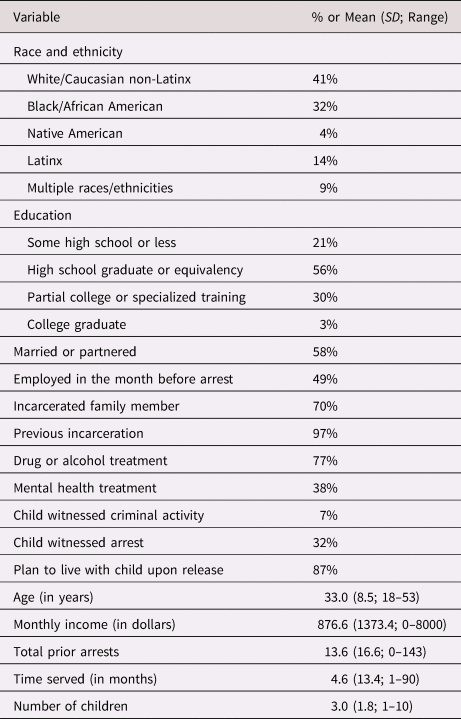
Of the 71 jailed fathers in the study, 41% were White, 32% were Black, 14% were Latinx, 9% were biracial, and 4% were Native American. Twenty-one percent had not completed high school and 51% were not employed prior to incarceration; 97% reported that they had been incarcerated previously. Fathers ranged in age from 18 to 53, with a mean of 33 years (SD = 8.5). Additional demographics are in Table 1.
Jailed father characteristics (N = 71)

At 2 weeks following enrollment into the study, we attempted to call and interview caregivers, with 64 (90%; n = 35 control, n = 29 educational outreach) participating. At 4 weeks, 62 caregivers participated in the follow-up phone interview (87%; n = 37 control, n = 25 educational outreach). The most common reason for attrition was phone disconnection.
Recruitment sources
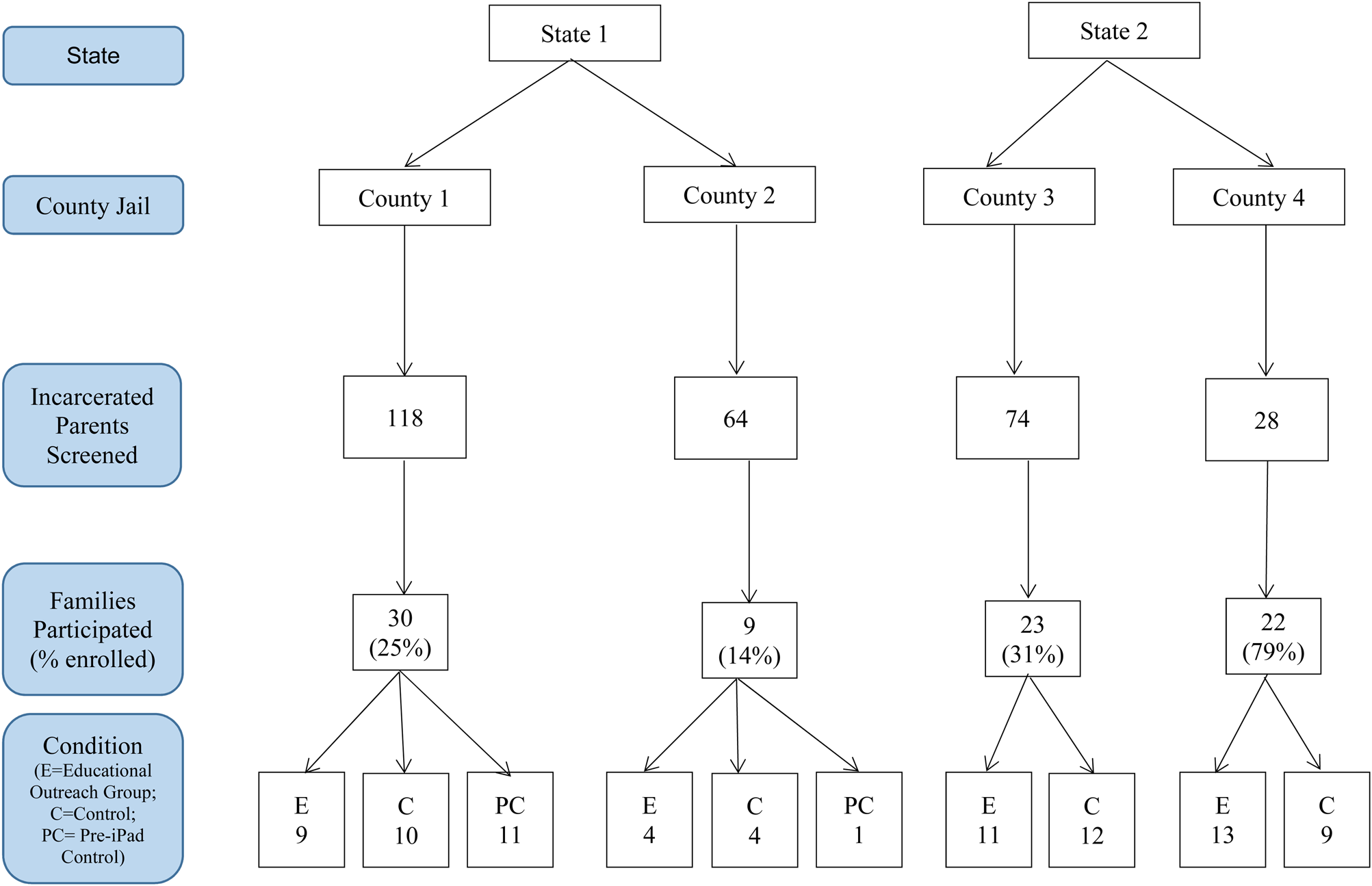
Children with jailed parents were enrolled in the study as part of a larger research project examining children's experiences visiting their parents in jail. Jailed parents were eligible for participation in the study if they met the following inclusion criteria: (a) jailed parents were at least 18 years old, (b) had a child 3–8 years of age who lives with kin near one of the four the study sites, (c) retained legal rights to the child, (d) had not committed a crime against the child, (e) cared for the child at least part of the time prior to incarceration, (f) did not anticipate being released into the community for at least 1 week, (g) anticipated receiving a visit from the child, and (h) could understand and read English. (Although the materials were also available in Spanish, we could only include English-speaking families in this study because of the assessments used.) A total of 284 jailed parents of 3- to 8-year-old children were recruited across four jails in two states, with 86 (30%) child–caregiver dyads enrolled in the larger study, including 15 children with jailed mothers and 71 children with jailed fathers. The 15 children whose mothers were incarcerated were excluded from the present analyses because of the small sample size (see Figure 1 for a consort chart). Only one child per family participated in the study.
Consort chart for evaluation of educational outreach initiative for young children with incarcerated parents.

All four jail systems that participated in this research were run by county sheriff's departments who were in charge of both law enforcement and jails in their counties, and all of the jails had significant racial disparities compared to their county population. The first is located in a large urban community (823-bed capacity, 8,000 annual admissions, 788 daily population, 79% men). In this jail, visits occur through a Plexiglas barrier in a secure section of the jail or through video visits in a nonsecure section of the jail. The second jail is located in an urban community and holds a mix of individuals from urban and rural locations (876-bed capacity, 12,000 annual admissions, 800 daily population, 84% men). Visits in this jail occurred through a Plexiglas barrier in a secure section of the jail during the study period. The third and fourth jails are located in suburban regions of a major metropolitan area. The third site is a 200-bed facility for adult men and women that holds pretrial, convicted, and sentenced inmates for up to 365 days or less. The average stay is 8 days, and the average daily population is 202 (75% men). Visits in this facility occur through a Plexiglas barrier in a secure section of the facility. The fourth site is a 263-bed facility that only detains men; incarcerated women are transferred to another local county. Visits in this jail occur on-site through video in a monitored section of the facility. Although families have the option of paying a fee to have a video visit from an off-site location (e.g., their homes or a public library), we only recruited families who participated on-site.
Measures
Demographic and family characteristics
Jailed fathers completed a Parent Questionnaire containing items about their demographic characteristics (e.g., age, race and ethnicity, education, marital status, and preincarceration employment and income), information regarding their children (e.g., number and ages of children, children's exposure to incarceration-related experiences, and plans to live with their child upon release), father's risk factors (e.g., family member incarcerated, and participation in treatment for drug, alcohol, or mental health problems) and the father's involvement in the criminal justice system (e.g., arrest history and length of current incarceration). On the Parent Questionnaire, fathers also were asked, “Does the child visit you in jail?” Fathers who answered “yes” were asked how often the child visits. We recoded this into a binary code: 1 = the child visited previously or 0 = the child did not visit previously.
Children's behaviors and emotions during jail visits
The Jail-Prison Observation Checklist (JPOC, Poehlmann, Reference Poehlmann2012) was used to rate children's reactions to visits with their parents in jail. The JPOC is an observational rating scale designed to be rated in vivo by trained researchers in jail or prison settings starting from when a child enters the corrections facility for a visit until the time the child leaves. Because researchers are generally not able to videotape in corrections setting, ratings are made live, as the behaviors occur, and interrater reliability is established in the corrections setting.
Although the JPOC contains items relating to security procedures, interactions with staff, and children's behaviors during wait time, for this study we focused on children's behaviors and affect toward caregivers and incarcerated parents. The JPOC contains 11 codes for children's affect and behavior toward the incarcerated parent during the visit, including verbal and nonverbal responding, avoiding, paying attention to other visitors, happy, excited, loving, sad, angry, whining, fearful, confused, and somber, and 13 codes for children's affect and behavior toward the caregiver accompanying them to the visit, including proximity seeking, holding hands, clinging, avoiding, hitting or pushing, happy, excited, sad, angry, whining, fearful, confused, and somber. Of these codes, 14 JPOC visit variables were consistently reliable across all four sites (happy toward incarcerated parent, verbal and nonverbal responsiveness to incarcerated parent, happy toward caregiver; angry, whining, and avoidant to the incarcerated parent, and angry, crying, whining, fearful, clinging, and avoidant toward the caregiver) while 10 codes had at least one site with no variability (3 codes) or low reliability (7 codes).
In addition to variables rated during the visit, the JPOC also includes variables relating to children's affect and behaviors toward caregivers rated during jail entry/security procedures and during wait time in the jail, when we administered the intervention (see Appendix A). For this study, we looked at children's positive affect (i.e., happy), negative affect (i.e., sad or angry), and clinging or hand-holding toward the caregiver rated across entry/security, wait time, and the visit to examine within-subjects change over time.
Interrater reliability for items on the JPOC was established between two or more independent observers across 15 observed jail visits in one state and 22 observed jail visits in the other state. Coding teams also visited sites in the other state to maintain reliability. Cohen's κ for the 21 codes fell within an acceptable to high range (.50 to 1.0, mean = .73 across sites). Of the 21 reliable codes, we dropped the nonverbal responding code because of lack of variability (virtually all children engaged in that behavior).
We consolidated the JPOC codes in two ways. First, using variables coded during the visit, we created a positive scale (α = .60) with 3 items (happy toward incarcerated parent, verbal responsiveness to incarcerated parent, and happy toward caregiver) and a negative scale (α = .71) with 8 items (angry, whining, and avoidant to the incarcerated parent; and angry, crying, whining, fearful, and avoidant toward the caregiver). The resulting two variables were skewed; therefore, we performed a square root transformation on the variables prior to analysis.
Second, we assessed three variables that were reliably coded at the child's entry into the jail, during the child's wait, and during the visit, and thus could be examined over time. The variables were positive affect (happy), negative affect (sad or angry), and clinging/hand-holding. The latter was not included in the positive or negative affect codes described above because hand-holding or clinging could be interpreted as positive or negative (i.e., desire for closeness or anxiety).
What children were told about the parent's incarceration
Caregivers were asked: “What has the child been told about his/her parent's jail stay?” prior to randomization on the day of the observed jail visit and again at 2 and 4 weeks after the visit. Responses were recorded and later rated on four binary codes (1 = yes, 0 = no): honest, developmentally appropriate, too much information, and nothing. Interrater reliability was calculated using Cohen's κ, with 20 cases randomly selected from both states at each time point and rated by three independent coders. Kappas ranged from .73 to 1.0, with a mean of .89. Based on previous research (Poehlmann, Reference Poehlmann2005), the four codes were combined to create two mutually exclusive groups for the quantitative analyses: children whose caregivers talked to them in an honest and developmentally appropriate way about the father's incarceration, and children whose caregivers did not talk to them in an honest and developmentally appropriate way about the father's incarceration (i.e., one or more of the following: not honest, not developmentally appropriate, nothing, or too much information). The four codes were also examined over time based on follow-up interviews with caregivers.
Witnessing the parent's arrest
Jailed parents were asked questions about the child's experience with incarceration-related experiences based on Dallaire and Wilson (Reference Dallaire and Wilson2010). We asked whether or not the child witnessed the parent's arrest and if so, how much distress the child experienced, rated on a scale ranging from 1 (no distress) to 5 (extreme distress).
Follow-up caregiver interviews
On the Caregiver Questionnaire, we asked, “Since we last talked, what have you told the child about his/her parent's jail stay?” In addition, caregivers of children in the educational outreach condition were asked about whether or not they had used the Sesame Street resources. For those who used the resources, caregivers were asked which resources they had used (i.e., videos, caregiver guide, or children's storybook), how they used them (e.g., alone, with my children, with a doctor or therapist, or with someone else), and how often they had used the resources. Caregivers who used the materials were also asked to rate 14 statements regarding how helpful they found the resources on a scale of 1 to 5 (1 = strongly disagree and 5 = strongly agree). Caregivers rated how appealing the resources were to them and their children, whether the resources were useful, whether the resources helped them identify children's feelings, whether the resources helped them communicate with children or the incarcerated parent, and if they learned skills and/or benefitted from the resources.
Jailed father perceptions of materials
After jailed fathers were given Sesame Street's 1-page resource for incarcerated parents, they were asked to rate the materials (on a scale of 1 to 5, where 1 = strongly disagree and 5 = strongly agree) regarding how appealing the resources were to them or their children, whether the resources were useful, and if they learned skills and/or benefitted from the resources.
Individual differences in children's behaviors
Caregiver report on the Strengths and Difficulties Questionnaire (SDQ; Goodman, Reference Goodman1997, Reference Goodman2001) prior to randomization was used to examine children's behaviors that had occurred in the past 6 months. The SDQ is a screening tool for use with children age 2 to 17 years consisting of 25 items focusing on behaviors and psychological attributes, some positive and others negative. For the present study we used the difficulties subscale as a control variable in analyses focusing on within-subject change.
Procedure
Jailed fathers and children's caregivers provided written informed consent for their own and their children's participation in the research. Research protocols were approved by the Institutional Review Board at the university where the research was conducted (University of Wisconsin–Madison, Sesame Street Materials: Using Developmentally Appropriate Educational Materials to Improve Child Behavioral Health and Family Relationships when Parents Are in Jail).
Jailed parents, their children, and their children's caregivers were recruited and enrolled into the study from one of four jails in two states as indicated above. Trained researchers with experience working with children and families affected by incarceration were responsible for recruitment and enrollment. To accommodate jail operations and policies, there were differences in the recruitment and enrollment procedures across jail sites. At each site, information about the study was shared with incarcerated individuals through flyers or program announcements. In three jails, an informational flyer was posted in each of the jail living units, and incarcerated parents were invited to attend a weekly information session. In two of these facilities, incarcerated parents attended an informational session in small groups, where more details about the study were provided and they were given an opportunity to ask questions. In one jail, the informational meetings were conducted one-on-one. Incarcerated parents who were interested in the study completed an informed consent process for their participation and their child's participation and provided contact information for their child's caregiver. Caregivers were then contacted by phone, mail, e-mail, or text, and they also completed an informed consent process for themselves and the target children in their care.
In one jail, flyers were also posted in the visiting area. At the jail's request, we focused on enrollment into the study with children's caregivers who had brought a child to visit an incarcerated parent. If the caregiver consented to participate, research staff then held a one-one meeting with the jailed parent later in the day to determine the jailed parent's interest in the study and proceed with the consenting process. Data collection with the child and caregiver was completed during a later jail visit. Because of this variation in enrollment procedures, we used whether or not the observed visit was the child's first visit as a control variable.
Jailed parents completed the Parent Questionnaire and reviewed a 1-page parent guide developed by Sesame Workshop for incarcerated parents (https://www.sesamestreet.org/sites/default/files/media_folders/Media%20Root/LCBC_IncarcerationTipSheet_FINAL_EnglishColor.pdf). Because of jail regulations, we were unable to randomize jailed parents or to compensate them for their participation in the study. Caregivers completed a Caregiver Questionnaire, in addition to several other forms during the waiting period prior to a visit with the jailed parent.
Following the consenting process and completion of adult questionnaires and warm-up child assessments (a developmental screening and family drawing), children and caregivers were randomized (via simple randomization) into one of two conditions: the educational outreach condition, in which children watched the educational incarceration video on an iPad with headphones or earbuds while waiting for the visit, and caregivers took the educational materials home after the visit, or the wait-list control condition, in which children either viewed a Sesame Street video about the weather on an iPad with headphones or earbuds while waiting for the visit (n = 28) or they played with materials brought by the researchers because the iPads were not yet available at that jail site (n = 12; see Figure 1). All control caregivers were mailed the educational materials after study completion.
During the jail data collection, children were accompanied to the jail visit by their caregivers. Data collection lasted between 20 and 90 min, depending on the wait time and length of visit, which the jail controlled. A researcher met the family at the entrance to the jail and observed the child during security procedures, wait time, and during the visit with the jailed parent. Visits occurred either through closed-circuit television (i.e., video visit) or through Plexiglas (i.e., barrier visit). In both types of visits, the caregiver and child (and observer) could see the jailed parent. However, only one family member at a time could speak with and hear the jailed parent through a headset similar to a telephone receiver. The observer, who was blind to educational outreach condition, was not able to hear or interact with the jailed parent, although the jailed parent knew that the observer was present (and previously had provided written consent for the observation). Observers were able to see and hear the child, and thus they focused on rating the child's emotional and behavioral reactions rather than adult behaviors. Caregivers were paid $50 following the observed jail visit and children were given stickers and a book.
Two weeks later and again at 4 weeks after the initial data collection, research staff called caregivers on the phone to conduct follow-up interviews. Caregivers were paid an additional $25 for completing each telephone interview.
Results
We evaluated a host of variables as controls and included them in our models if the variable related to either independent or outcome variables at the bivariate level. Paternal race, education, income, age, length of sentence served, previous incarcerations, and jail site were not significant, so they were not included in the final models. However, visit type (i.e., Plexiglas or video), whether or not the child had visited previously, child gender and age, and whether or not the child witnessed the parent's arrest were included as controls.
We examined potential differences across sites because visits and recruitment methods differed because of jail policies. There were no differences across sites in key outcome variables. We also compared children in the two wait-list control conditions to determine if there were any differences in demographic variables or outcomes based on whether or not children saw the weather video or played with the researcher's toys (i.e., pre-iPad). We did not find any differences in the groups, so we combined them into one control group.
Power analysis
A power analysis was conducted for the study using Cohen's (Reference Cohen2013) effect size standards. With a sample size of 71, power ranged from .82 to 1.0 to detect large effect sizes, power ranged from .65 to .82 to detect medium effect sizes, and power ranged from .26 to.30 to detect small effect sizes. Thus, we were only able to detect large and medium effects with adequate power in the current study.
Does young children's exposure to the videos in the parental incarceration outreach initiative affect children's behaviors and emotions during visits with their jailed fathers?
To address our question about immediate educational outreach effects on children's emotions and behaviors during a jail visit, we conducted two sets of analyses. In the first set of analyses, two 2 × 2 analyses of covariance (ANCOVAs; Educational Outreach vs. Control × Children Had Been Told Honest and Developmentally Appropriate Explanations vs. Not) were conducted. One analysis focused on children's positive affect and behaviors during the jail visit, and one analysis focused on children's negative affect and behaviors during the visit.
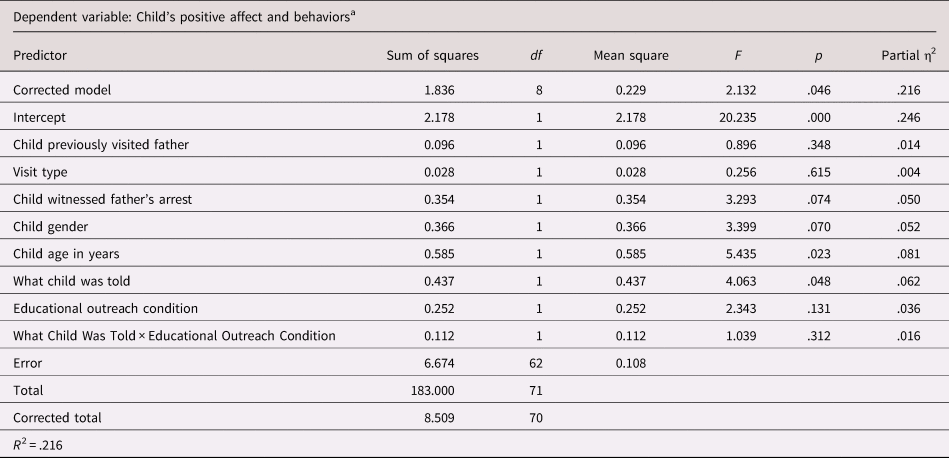
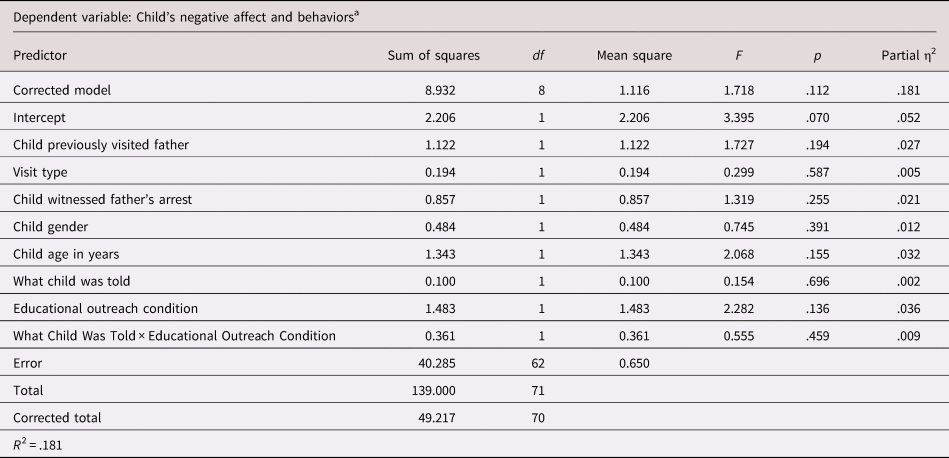
Results indicated that the educational materials main or interaction effects were not statistically significant on children's positive (Table 2) or negative (Table 3) behaviors during jail visits. However, there was a significant main effect for what children were told about the parent's incarceration on children's positive affect and behaviors, with a medium effect size. When children had been told honest, developmentally appropriate explanations about the father's incarceration prior to the observed jail visit, children were more likely to exhibit positive emotions and behaviors during the visit with their fathers. In addition, for the positive emotions and behaviors analysis, children's age was also significant, with a medium effect size. Older children were more likely to exhibit positive affect and behaviors during the visit than younger children. Visit type (i.e., Plexiglas or video), whether or not the child had visited previously, child gender, and witnessing the arrest were not statistically significant in either analysis.
ANCOVA results for children's positive affect and behaviors when visiting their fathers in jail (N = 71)

aChild's positive affect and behaviors represents the sum of the following codes from the Prison Jail Observation Checklist coded during the child's visit with the jailed father: happy toward incarcerated parent, verbal responsiveness to incarcerated parent, and happy toward caregiver.
ANCOVA results for children's negative affect and behaviors when visiting their fathers in jail (N = 71)

aChild's negative affect and behaviors represents the sum of the following codes from the Prison Jail Observation Checklist coded during the child's visit with the jailed father: angry, whining, and avoidant toward the incarcerated parent; and angry, crying, whining, fearful, and avoidant toward the caregiver.
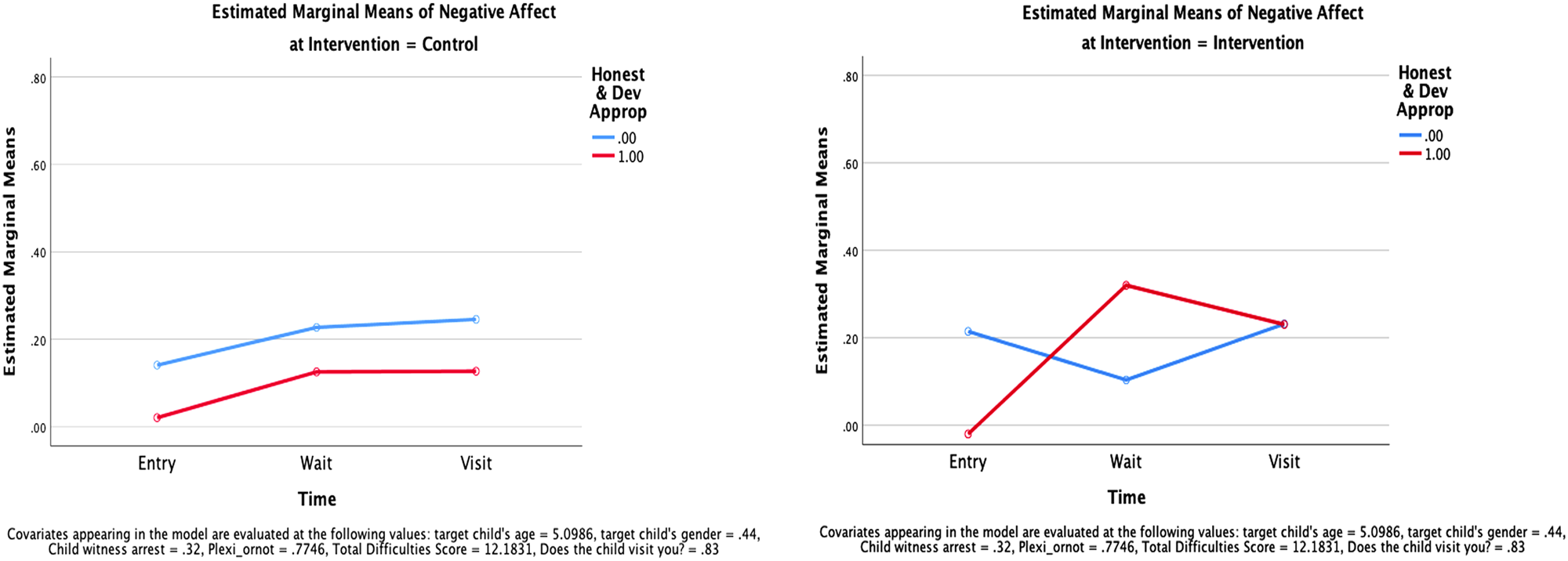
In the second set of analyses examining our research question, we conducted a 3 (Time) × 2 (Intervention) × 2 (What Child Was Told) repeated-measures multivariate analysis on child positive affect, negative affect, and clinging/hand-holding. The affect/behaviors were coded at three time points in the jail: during the child's entry into the jail (i.e., security procedures prior to randomization), during wait time (i.e., when the intervention was administered), and during the visit. The idea was to capture within-subject change over time during the child's time in the jail. We used the SDQ difficulties subscale as a control variable, in addition to the controls specified in the prior analysis, to adjust for individual differences in children's behaviors exhibited in the months prior to study participation. Results indicated that the 3-way multivariate interaction for Time × Intervention × What Child Was Told was statistically significant. Follow-up univariate tests indicated that there was a trend for the negative affect variable, although it was a quadratic rather than a linear effect. As depicted in Figure 2a, in the control group, children's negative affect increased somewhat from jail entry to wait time (when they watched the Sesame Street weather video or played with toys) and then plateaued during the visit, with those who were told honest, developmentally appropriate explanations for the father's absence exhibiting less negative affect at each time point. As depicted in Figure 2b, for the intervention group, children who were told honest, developmentally appropriate explanations showed less negative affect at entry, an increase in negative affect during wait time when the intervention was administered, and a decrease in negative affect during the visit. Intervention group children who were told distortions (i.e., not the truth), nothing, or explanations that were not developmentally appropriate showed more negative affect initially, and their negative affect remained relatively stable across their time in the jail.
Means of children's negative affect across time during a jail visit in the control and intervention conditions.

Other statistically significant effects of the repeated measures analysis involved child age, behavioral difficulties, and time. Compared to older children, younger children exhibited more negative affect and more clinging or hand-holding toward caregivers during their time in the jail, but their positive affect did not differ in this analysis. In addition, children who were rated as exhibiting more behavioral difficulties in the months prior exhibited less positive affect during their time in the jail compared to children rated as exhibiting fewer behavioral difficulties, but their negative affect and clinging/hand-holding toward caregivers did not differ. On average, children showed increasing positive affect and clinging or hand-holding toward caregivers from jail entry through the visit. Children who experienced Plexiglas visits also showed a decrease in positive affect over time during their time in jail compared to children experiencing video visits, who showed the average pattern of increasing positive affect.
In the weeks following receipt of the educational outreach materials, what components do caregivers engage with and how useful do caregivers find the materials?
2-week follow-up with caregivers
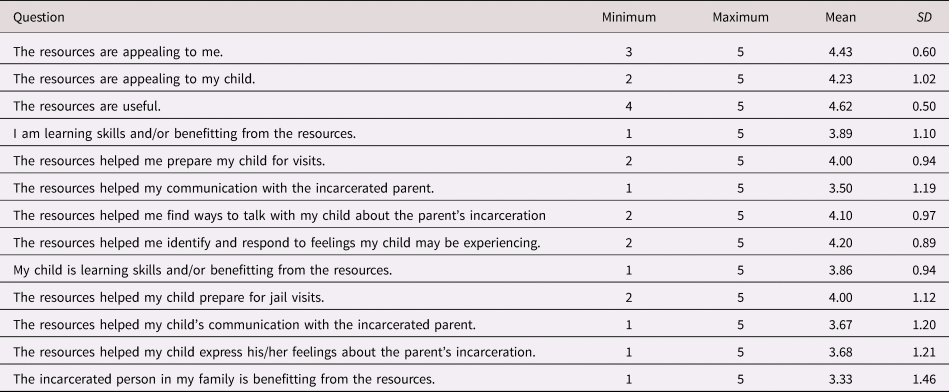
When caregivers in the educational outreach condition were asked about their engagement with the materials at the 2-week follow-up, 83% indicated that they used the Sesame Street resources during the past 2 weeks. Of the 24 respondents who used the materials, 75% reported that they used the videos, 50% used the children's story book, and 25% used the caregiver guide. When asked to rate the resources regarding their appeal, usefulness, and the ways in which the materials helped them or their children, caregivers’ responses ranged from 1 to 5, with an overall mean of 3.96 (Table 4). The most highly rated item was the usefulness of the resources, followed by the appeal to caregivers and children. Caregivers also gave high ratings for the items: the resources helped me identify and respond to feelings my child may be experiencing; the resources helped me find ways to talk with my child about the parent's incarceration; the resources helped my child prepare for jail visits; and the resources helped me prepare my child for visits.
Caregivers’ ratings of the educational outreach parental incarceration materials at the 2-week interview (n = 29)

4-week follow-up with caregivers
At the 4-week follow-up, 76% of caregivers in the educational outreach group indicated that they had used the materials in the past 2 weeks. Of the 19 respondents in the educational outreach group who used the materials, 90% reported that they used the videos, 79% the story book, and 68% the caregiver guide.
Do caregivers change how they talk to children about the parent's incarceration following exposure to the educational outreach materials?
Quantitative analysis
Prior to administration of the educational outreach, a total of 49 (69%) caregivers told children honest and developmentally appropriate explanations regarding the parent's incarceration, with identical proportions in the educational outreach (n = 22, 69%) and control (n = 27, 69%) groups. We also saw children who came to visit but who had not been told that the parent was in jail—a small number of children had been told nothing—and they first learned of the parent's incarceration by participating in the educational outreach, although that was not our intent. Five (7%) children arrived to visit their fathers in the jail previously having been told nothing about his incarceration (n = 3 educational outreach group, n = 2 control), while 12 (17%) children had been told a distortion (i.e., explanation that was not honest), such as the father was at work, in college, on vacation, or in the military, or that the father had been hired to clean the jail (n = 6 educational outreach group, n = 6 control).
By the 2-week follow-up, when we interviewed 64 caregivers, 27 of the 29 (93%) caregivers in the educational outreach group told children honest and developmentally appropriate explanations, whereas 29 of the 35 (83%) caregivers did so in the control group. In addition, only 1 child (3%) in the educational outreach group continued to be told nothing, while that number increased to 5 (14%) in the control group. However, only 1 (3%) child in the educational outreach group and 2 (6%) children in the control group were told distortions (i.e., explanation that was not honest).
We calculated the relative risk (RR) of educational outreach caregivers talking to children in an honest developmentally appropriate way about the father's incarceration at the 2-week follow-up compared to controls, RR = 2.055, p < .001, 95% confidence interval (CI) [1.542, 2.737]. The RR here represents the ratio of the probability of caregivers telling children honest and developmentally appropriate explanations in the educational outreach materials group to the probability of that occurring in the control group. The RR statistic indicated that educational outreach caregivers were about twice as likely to increase telling the child a developmentally appropriate honest explanation across 2 weeks, suggesting a positive effect of the outreach materials.
Supporting this result, we also found that 50% percent of caregivers in the educational outreach group reported that they talked to their children differently about the parent's incarceration following use of the resources at the 2-week assessment, and 24% said that they or the child had communicated differently with the incarcerated parent. At the 4-week follow-up, the vast majority of caregivers whom we were able to contact reported no further change from 2 weeks earlier in what they told the child. For the educational outreach group, 63% said that they talked to the child differently about the parent's incarceration because of the materials, and 32% said that they or their child communicated differently with the incarcerated parent as a result of the materials. Caregivers often gave specific examples, such as “Yes, I used the language on the video; it had advice as how to approach the kids. I didn't want to talk about it at first but [the resource] made it more comfortable. I told her that it wasn't her fault and that her dad broke a law and that her dad was responsible for his own actions.” Another caregiver said that she told her child, “You're not alone. I'll always be there. Always …” after watching the Sesame Street song “You're Not Alone,” similar to a caregiver who said, “When she asks, we watch the video or read the book, then we talk about how her issue is like the one in the movie. It has actually helped a lot because she knows she's not the only one.” Another caregiver said that she had changed how she talked to her children “by letting them know it's okay if they feel anxious or worried, and they can talk to me about it. And they do. I put my feelings aside so that the children's feelings are coming through. I talk more positively about Dad and that he loves them.”
Qualitative analysis
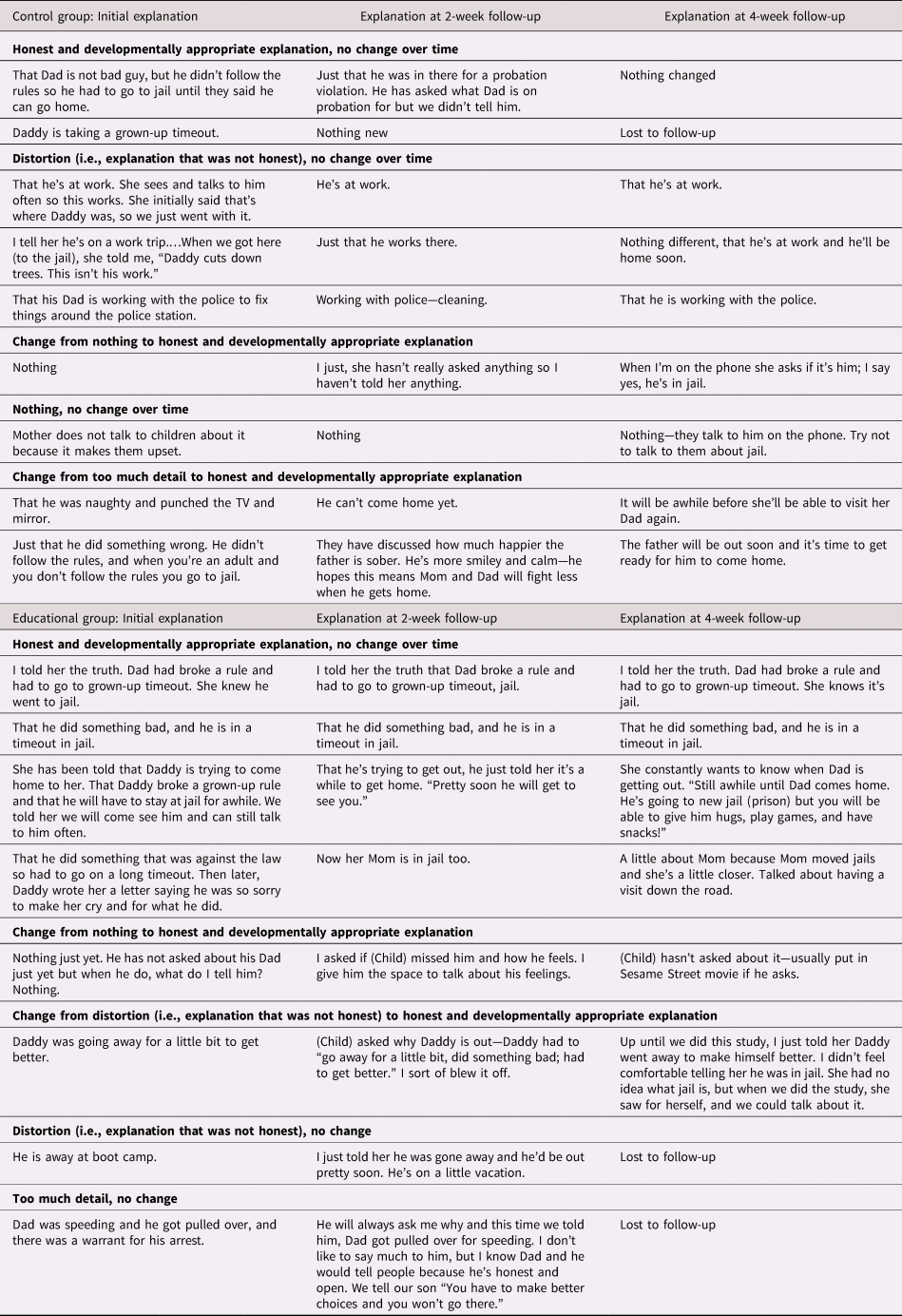
We also examined caregiver responses to open-ended interview questions about changes in what they told children (see Table 5). We reviewed individual cases across the three data collection time points (jail visit, 2 weeks, and 4 weeks) in the educational outreach and control groups and coded patterns as they emerged using thematic content coding.
Examples of what caregivers told children about their father's incarceration over time in the control and outreach groups

Note: The categories described above resulted from coding caregivers’ open-ended responses into four categories at each of the three time points and then examining change over time. This resulted in five subgroups for the intervention group and five subgroups for the control group.
In the educational outreach group, the most common patterns were continuing to tell the child the simple truth in a developmentally appropriate manner across the 4 weeks of the study. The next most common pattern was continuing to provide a truthful, developmental explanation and adding reassurance that the child's relationship with his or her father would continue. Additional common patterns across the 4-week study period were moving from saying nothing or a distortion (i.e., not honest) to telling the truth in a developmentally appropriate way, consistent with the recommendations in the educational outreach materials. Based on these patterns, it appeared that caregivers in the educational outreach group showed positive change in what they told children following exposure to the resources, consistent with the quantitative findings. Although it was not a common response, adding information about how the child's relationship with the incarcerated father would continue is consistent with the messages in the educational materials as well.
In the control group, the most common patterns that emerged were continuing to tell children a truthful, developmental explanation over the 4 weeks. The next most common pattern was continuing to tell the child a distortion (i.e., explanation that was not honest) over time. The third most common pattern in the control group was changing from telling the child nothing to a truthful developmentally appropriate explanation. Others in the control group, albeit a minority, continued to tell the child nothing, whereas another few families in the control group moved from telling the child explanations that provided too much detail about the nature of the parent's crime to an honest developmentally appropriate explanation combined with a focus on the parent–child relationship.
How do jailed fathers view the educational outreach materials?
Fathers also responded to questions about their perceptions of the materials; their ratings ranged from 1 to 5, with a mean of 4.28. They gave the educational resources high ratings on all questions asked, including those related to appeal, usefulness, and skill learning. We were unable to follow up with fathers to determine how they used the materials over time, however.
Discussion
Because of the large number of children affected by parental incarceration and the negative consequences of parental incarceration for children, it is critical to find ways to support this vulnerable group. Few interventions or outreach resources are available for children with incarcerated parents, and existing efforts with children with incarcerated parents have rarely been evaluated (Wildeman & Wang, Reference Wildeman and Wang2017), although rigorous evaluations of interventions designed for imprisoned parents have been conducted (Eddy, Martinez, & Burraston, Reference Eddy, Martinez and Burraston2013). In this study, we evaluated the 2013 Emmy-nominated Sesame Street materials titled “Little Children, Big Challenges: Incarceration” with children with jailed fathers and their families. We found that the immediate effect of the intervention on children's emotions and behaviors during noncontact visits with their fathers in jail depended on what children had been told about the father's incarceration. Children who were told honest, developmentally appropriate explanations showed less negative affect at entry, an increase in negative affect when the intervention was administered, and a decrease in negative affect during the visit. Intervention group children who were told distortions (i.e., explanations that were not honest), nothing, or explanations that were not developmentally appropriate showed more negative affect initially, and their negative affect remained relatively stable during their time in the jail. Children who were told honest, developmentally appropriate explanations also showed more positive affect during the visit, regardless of the intervention group. In addition, caregivers in the intervention group changed how they talked to children about the father's incarceration over time. After reading and watching the Sesame Street materials, caregivers were more likely to talk to children about the father's incarceration in a truthful, developmentally appropriate way, which may have implications for children's family relationships and children's future visits in corrections environments. Because the Sesame Street incarceration materials are free and easily accessible, it is possible for many families to use and benefit from the intervention.
In this study, the most consistent effect identified was change in how caregivers talked to children about the father's incarceration. Although much of the information in the educational outreach materials focuses on resilience and supporting children's emotional development in general, some information is specifically tailored to children who are experiencing a parent's incarceration. One of the key messages specific to this incarceration initiative focuses on the importance of telling children the simple truth about the parent's incarceration in order to assuage children's fears, reassure them that it is not their fault, and build trusting relationships with caregivers. At 2 weeks following distribution of the educational materials, 93% of caregivers in the intervention group had talked to children about the father's incarceration in an honest and developmentally appropriate way, twice the rate of increase as that found in the control group. In addition, by the 4-week assessment, 63% of the respondent caregivers in the educational outreach group said that they talked to their children differently because of the materials, which was supported by the qualitative findings. These results suggest that key messages in the educational initiative were efficacious with families of young children with jailed fathers. This low-cost, widely available set of educational materials, available in both English and Spanish, can make a positive impact on families. Because few interventions are available for children with incarcerated parents or their caregivers, having accessible educational materials that potentially have positive effects is particularly meaningful. Families can access the materials directly through the Internet, and professionals can also recommend the materials to families.
Our findings regarding effects of the Sesame Street educational videos on children's immediate behaviors and emotions in the jail highlight the importance of how caregivers talk to children about the parent's incarceration. For the intervention group, children who were told honest, developmentally appropriate explanations showed less negative affect at entry, an increase in negative affect time when the intervention was administered, and a decrease in negative affect during the visit. Intervention group children who were told distortions (i.e., explanations that were not honest), nothing, or explanations that were not developmentally appropriate showed more negative affect initially, and their negative affect remained relatively stable during their time in the jail. In the control group, children's negative affect increased somewhat from jail entry to wait time and then plateaued during the visit, with those who were told honest, developmentally appropriate explanations for the father's absence exhibiting less negative affect. Moreover, when children had been told honest, developmentally appropriate explanations about why the father was in jail, prior to the observed jail visit, children were more likely to exhibit positive emotions and behaviors during the visit.
These findings are in line with previous research (Poehlmann, Reference Poehlmann2005) and theory (Bowlby, Reference Bowlby1973) highlighting the importance of open and honest communication between parents and children, even about difficult topics, for building trusting relationships between children and their caregivers. Also consistent with this research, in a previous study with children 2 to 6 years of age, we found that children had more positive visit experiences with their jailed fathers when they had secure attachments to their caregivers (Poehlmann-Tynan, et al., Reference Poehlmann-Tynan, Burnson, Weymouth and Runion2017). In the present study, it appeared that honest, developmentally appropriate explanations may have helped prepare children for visits in a corrections facility. Children who were told nothing or distortions (i.e., explanations that are not honest) may have had a harder time adjusting to the visit or perhaps to parental incarceration in general. One caregiver reported about her daughter: “I tell her he's on a work trip.… When we got here (to the jail), she told me ‘Daddy cuts down trees. This isn't his work,’” indicating that the daughter recognized that her caregiver's explanation was dishonest (Table 5). The distortion may have caused the child to feel confused and not fully prepared for the experience of seeing her father in jail. Such distortions or dishonest explanations may also undermine children's feelings of trust in the caregiver and thus the security of the child–caregiver attachment relationship (Poehlmann, Reference Poehlmann2005). However, we do not recommend telling children about the parent's incarceration just as they walk into a corrections facility for a visit. Such a disclosure can bring up many emotions, especially those related to the ambiguous loss of the parent (Arditti, Reference Arditti2016) or even anger that the caregiver had not yet disclosed the information (Poehlmann, Reference Poehlmann2005). Children often need time to process the information, and they can benefit from opportunities to ask questions in a safe environment prior to arriving at a jail or prison.
Consistent with previous research (Poehlmann-Tynan & Arditti, Reference Poehlmann-Tynan, Arditti, Haskins and Poehlmann-Tynan2017), we also found that older children (within the 3- to 8-year-old range) exhibited more positive emotions and behaviors during the jail visit than younger children. In the repeated-measures analysis, we also found that compared to older children, younger children exhibited more negative affect and more clinging or hand-holding across time in the jail. Older children have more cognitive capacity to process what is happening during a jail visit, and they are likely to have more highly developed emotion regulation skills so that they are able to adapt their emotions and behaviors during a jail visit more effectively than younger children. In addition, older children have more developed language skills so they can ask questions about what is going on and understand more about the complexity of the situation when their questions are answered (Poehlmann et al., Reference Poehlmann, Dallaire, Loper and Shear2010).
The proportion of children who had already been told honest, developmentally appropriate explanations for the father's incarceration in both the educational outreach and control groups at the start of the study was 69%, which is higher than in previous research (Poehlmann, Reference Poehlmann2005). We speculate that because “deep dissemination” of the Sesame Street materials was occurring in both states during the study period (Shlafer et al., Reference Shlafer, Wanous and Schubert2017), in addition to the press coverage that occurred when the materials were first released, some families may have already been exposed to some of the messages in the materials. We did not systematically collect information about previous exposure to the educational outreach materials, as we only became aware of this issue after the study began.
Somewhat similar to previous research and theorizing (e.g., Poehlmann-Tynan et al., Reference Poehlmann-Tynan, Burnson, Weymouth and Runion2017; Poehlmann-Tynan & Arditti, Reference Poehlmann-Tynan, Arditti, Haskins and Poehlmann-Tynan2017), we only found one effect of the type of visit on children's positive or negative behaviors during the observed jail visit. Children who experienced Plexiglas visits showed a decrease in positive affect over time in the jail compared to children experiencing video visits, who exhibited the average pattern of increasing positive affect. In two prior studies, we found that children exhibited more distress and negative behaviors during Plexiglas visits compared to contact visits or video visits (e.g., Poehlmann-Tynan et al., Reference Poehlmann-Tynan, Runion, Burnson, Maleck, Weymouth, Pettit and Huser2015). In the present study, we only observed noncontact visits, and children's reactions to Plexiglas and video visits only differed in the pattern of positive affect over time, rather than negative affect. It is possible that, to some degree, all noncontact visits may elicit both positive and negative behavior and emotions in children, contributing to what others have called the “visit paradox” (e.g., Tasca, Reference Tasca2016; Poehlmann-Tynan & Pritzl, Reference Poehlmann-Tynan, Protzl, Eddy and Poehlmann-Tynan2019). Visits are a way for children to connect with incarcerated parents, but they may also be stressful and permeated with many varying emotions.
Previous research has found that children with incarcerated parents are more likely to show behavior problems, especially externalizing problems and aggression, compared to their peers, controlling for a host of selection factors (e.g., Turney & Haskins, Reference Turney, Haskins, Eddy and Poehlmann-Tynan2019). In this study we examined how children with incarcerated parents were rated by their caregivers in the months prior to the jail visit. Children exhibiting more behavioral difficulties in general exhibited less positive affect during their time in the jail compared to children rated as exhibiting fewer behavioral difficulties in general. However, their negative affect and clinging/hand-holding toward caregivers did not differ. This finding suggests that some child emotions observed in the jail related to their behavioral difficulties at home. These children and their caregivers could benefit from additional interventions, such as visit coaching to enhance positive experiences during the visit, or parenting education and support that helps prepare the dyad for visits.
Another important finding was that caregivers and jailed fathers rated the educational materials as useful and appealing to themselves and their children. When educational materials focusing on a difficult topic are presented in a positive and child-friendly way, it may result in high engagement with the content. At the 2-week follow-up, 83% of the caregivers in the educational outreach group had used the materials; of these, 75% of the caregivers reported that they had used the videos, 50% had used the children's storybook, and 25% had used the caregiver guide. By the 4-week follow-up, again most caregivers used the materials, with 90% reporting that they had used the videos, 79% the storybook, and 68% the caregiver guide. This is a high rate of uptake of the intervention, and a positive sign that the materials were engaging for families.
Limitations
The present study has numerous limitations that should be considered when interpreting the findings. The results are neither generalizable to children with jailed parents who do not visit their incarcerated fathers nor to children with jailed mothers or children with parents in prison. Our analysis of caregiver responses may not have adequately and holistically captured how caregivers and other family members communicate with children about the parent's incarceration. We interviewed the child's caregiver and incarcerated father; however, many of the families had complex structures, with multiple adults involved in children's care, and we did not interview other caregivers. In addition, family communication about parental incarceration likely changes as children grow older. The educational resources were developed for young children; therefore, our sample included children aged 3–8 years, and the results cannot be generalized to younger or older children. Another limitation is that we were unable to randomize incarcerated fathers, and we were not able to follow them over time. In addition, the families studied were all from the Midwest. It is possible that there are cultural differences in caregiver communication that vary across geographical regions and thus there may be regional variations in the effects of the materials on caregiver communication and children's experiences of visits in corrections facilities. Finally, we had power to detect medium and large effects only. Future evaluation studies with this population should attempt to detect small effect sizes as well.
Our use of observations of children is a strength of the study; however, it was challenging to establish high interrater reliability in vivo in the corrections facilities at four sites in two different states. Because of the challenges, we ended up dropping some codes because of inadequate interrater reliability. Finally, although attrition was generally low, there was more attrition by the 4-week follow-up (13%), especially because some caregivers had disconnected phones. Thus, the 4-week responses may have been slightly biased toward families in which there were more stable material resources. We also showed children the Sesame Street video just before a visit with the jailed father. It is possible that different effects might be found if children had more time to process the videos, or watch them multiple times, and discuss the materials with caregivers prior to the visit. The videos may have primed children to experience various emotions, although in our ratings there appeared to be few differences based on type of video.
Conclusion
In sum, our multisite randomized controlled efficacy trial revealed that the Sesame Street materials developed for young children with incarcerated parents were efficacious in helping caregivers communicate with children about the parent's incarceration. Moreover, the educational materials had different effects on children's visits with their jailed fathers depending on what they were told about the father's incarceration. Intervention group children who were told distortions (i.e., explanations that were not honest), nothing, or explanations that were not developmentally appropriate showed more negative affect initially, and their negative affect remained relatively stable during their time in the jail. When children were told previously about the father's incarceration in an honest and developmentally appropriate manner, children showed more positive emotions and behaviors during the jail visit. Most important, the materials helped caregivers regarding how to discuss parental incarceration with young children in a developmentally appropriate and honest way, and thus the materials appear useful in helping prepare families for visits and other types of contact with incarcerated fathers. Future directions for this work include evaluating how the Sesame Street educational outreach materials may help facilitate frequency of contact between children and their incarcerated parents, including letters, phone calls, and visits, in addition to fostering child and family social emotional resilience, especially during the postrelease and family reunification period. It would also be useful to examine the efficacy of the educational materials with children who have parents in prison as well as children with jailed mothers.
Acknowledgments
This research was supported by grants from the Institute for Clinical and Translational Research at the University of Wisconsin (PI: Poehlmann-Tynan) and the Clinical and Translational Science Institute at the University of Minnesota (PI: Shlafer) as well as a center grant from the National Institutes of Health that funds the Waisman Center at the University of Wisconsin–Madison (P30HD03352, PI: Mailick). The content is solely the responsibility of the authors and does not represent the official views of the National Institutes of Health. Special thanks to Racine, Dane, Washington, and Dakota County Sheriff's offices and jail staff for their support of the project; to Beverlee Baker and Mary Huser from the University of Wisconsin–Extension for their support of the project; to numerous undergraduate and graduate students for assistance with data collection and coding; and to the families who participated in this research.
Appendix A
Jail Prison Observation Checklist