


Two months after the United States invaded Iraq, Joseph Nye (2003, 60) declared that “Respected analysts on both the left and the right are beginning to refer to ‘American empire’ as the dominant narrative of the twenty-first century.” A few months later, Dimitri Simes (2003, 93), noted: “Whether or not the United States now views itself as an empire, for many foreigners it increasingly looks, walks, and talks like one, and they respond to Washington accordingly.” At the 2004 World Economic Forum, Vice President Richard Cheney claimed, in contrast, that “if we were an empire, we would currently preside over a much greater piece of the Earth's surface than we do. That's not the way we operate” (Schmitt and Landler 2004, 10).
Much of the current debate over American empire concerns normative issues. “Empire” remains a politically charged word, even though a number of advocates of assertive American foreign policy now embrace it (see Cox 2004). But the dispute goes beyond the politics of rhetorical claims. Many participants argue that the nature of America's global role has implications for its grand strategy: for what policies will maintain, enhance, or erode its security. They operate with an assumption, either implicit or implicit, that whether the United States is an empire, the preeminent power in a unipolar system, or the leader of a hegemonic order, shapes the basic dynamics of international politics. With a few notable exceptions, however, scholarly and popular assessments of the implications of American empire revolve around concerns associated with unipolar and hegemonic orders. Niall Ferguson (2003, 6) concludes that “the very concept of ‘hegemony’ is really just a way to avoid talking about empire, ‘empire’ being a word to which most Americans remain averse.”
We argue that ideal-typical empires, contra Ferguson, differ from hegemonic and unipolar orders because they combine two features: rule through intermediaries and heterogeneous contracting between imperial cores and constituent political communities. These characteristics constitute ideal-typical empires as a form of political organization with particular network properties. Ideal-typical empires comprise a “rimless” hub-and-spoke system of authority, in which cores are connected to peripheries but peripheries themselves are disconnected—or segmented—from one another (Galtung 1971; Motyl 2001; Tilly 1997). When a particular set of relations takes on an imperial cast, a number of important changes occur in the basic dynamics of international politics:
First, dynamics of divide-and-rule supplant traditional balance-of-power politics. Imperial control works, in part, by preventing resistance in one periphery from spreading to other peripheries. Some of the most important challenges to imperial rule arise, therefore, when imperial policies, exogenous shocks, transnational movements, or other developments trigger uncoordinated or coordinated simultaneous resistance in multiple peripheries.
Second, the key axis of political relations shift from interstate to intersocietal. Imperial cores exercise rule through local intermediaries over various actors within the domestic sphere of constituent political communities. This structure creates endemic tradeoffs between, on the one hand, the advantages of indirect rule and, on the other, the principal-agent problems that stem from intermediary autonomy. Imperial control of particular peripheries also involves local processes of divide-and-rule. Imperial authorities utilize various strategies that, through accident or design, succeed by preventing various local actors from forming widespread coalitions against the terms of imperial control. These strategies, which we call “pivoting” and “binding,” carry with them specific costs and benefits for imperial authorities.
Third, empires face specific problems of legitimating their control. Imperial rule involves heterogeneous contracts that specify varied rights and privileges to different peripheries; empires function most effectively when they maintain their authority over extremely diverse audiences who, in turn, place differing demands on imperial authorities. Empires often best navigate these cross pressures by engaging in “multivocal” or “polyvalent” signaling: by projecting different identities and commitments to discrete audiences.
The stakes of the American empire debate, therefore, are quite high. If relations between the United States and other polities reflect imperial logics, then American leaders face more distinctive opportunities and challenges than those specified in balance-of-power and hegemonic-stability theory. The debate, moreover, calls into question the still-prevalent “states-under-anarchy” approach to international politics (e.g., Schweller 2001; Waltz 1979). If international-relations theorists want to take the possibility of American empire seriously, we can no longer treat anarchy as a structure that stands above and outside of the relations among actors in world politics (e.g., Hobson and Sharman 2005; Lake 2003).
Once we treat imperial rule as a relational structure, we can directly compare its network properties to those of ideal-typical unipolar anarchies and hegemonic orders. This allows scholars to provide guidance for assessing how real-world patterns of interaction approach each of the ideal-typical forms, combine them in specific instances, or otherwise configure in ways that make the dynamics associated with each of them more or less salient to foreign policy. It shifts our focus from the categorical attributes of imperial, hegemonic, and unipolar orders to how their structures and associated logics may be embedded in different domains of world politics.
We begin with an overview of three major frameworks for analyzing systems with preeminent powers: unipolarity, hegemony, and empire. We next develop the key analytical assumptions of our relational approach to empires and imperial dynamics and reconceptualize unipolarity, hegemony, and empire as ideal-typical network structures. We then elaborate how the social-network properties of imperial orders produce a set of dynamics and processes that distinguish the logics of empire from the logics of unipolar or hegemonic systems. We conclude with some reflections about the extent to which an imperial logic is embedded in America's foreign relations and the implications that this may have for U.S. foreign policy and America's global role.
THREE APPROACHES TO SYSTEMS WITH PREEMINENT POWERS
Mainstream approaches to systems with single, preeminent powers fall into one of two frameworks—although scholars often draw upon both in their substantive analysis (Ikenberry 2002, 8–10). The first, unipolarity, assumes that states are unitary actors operating within an anarchical environment. Some see unipolar systems as inherently unstable: they argue that the concentration of power in the hands of a single political community eventually triggers counterbalancing behavior (e.g., Waltz 2000). Others believe that unipolar systems are stable: because no state or coalition of states will be able to challenge the preeminent power, few are likely to even attempt to engage in balancing behavior (e.g., Wohlforth 1999).
The second, hegemonic-order theory, covers a broader array of approaches, including hegemonic-stability theory, power-transition theory, and constitutional-order theory (a distinctive subtype of hegemonic order). The fate of hegemonic systems depends largely on the interaction of three factors: the ability of the hegemon to sustain its economic, military, and technological leadership; the degree to which potential challengers perceive themselves as benefiting from the existing hegemonic order; and the propensity for hegemonic overextension. Hegemonic-order theorists tend to treat states as unitary actors, although their vision of hegemonic systems involves elements of both anarchy and hierarchy (e.g., Gilpin 1981, 26–27, Ikenberry 2001).
Given the intensity of recent debates about “American Empire,” one might expect that “empire” would constitute a third framework for analyzing systems with preeminent powers. Since the publication of Michael Doyle's (1986) seminal Empires, however, mainstream international-relations analysts displayed minimal interest in developing a spare set of propositions concerning the dynamics of empires. Only a few scholars tackle aspects of imperial dynamics in the context of international-relations theory, and they seldom focus on the broader question of how those dynamics compare to unipolar and hegemonic orders (e.g., Cooley 2005; Spruyt 2005).
One reason for this lacuna stems from the continued prevalence of the states-under-anarchy framework in international-relations theory. We analyze unipolarity and hegemony as structural arrangements, but we often treat “empire” either as a question of the domestic organization of units operating under anarchy or as a particular outcome of state expansion. Predominant accounts of empires in mainstream international-relations theory, for example, often assess why states opt for imperial expansion (e.g., Lake 1996; Snyder 1991) or analyze the broader conditions that facilitate the rise of empires (e.g., Gilpin 1981; Hui 2005).
Many popular assessments of the question of American empire reflect this focus. The Bush administration, as we have seen, claims that the United States is not an empire because it eschews territorial conquest. Kagan (2002, 16) similarly argues that “American policy makers have a fundamentally different goal from Roman emperors” in that they seek peace and prosperity among sovereign states rather than the annexation and direct domination of independent polities. But the basic questions raised by the American empire debate concern the degree to which relations between the United States and other polities have imperial characteristics. In other words, it calls attention to imperial orders as multiply realizable structural arrangements. Imperial orders may be unplanned or planned; they may emerge through conquest or voluntary amalgamation. They may, in turn, involve a wide range of ideologies and norms (Lake 1996, 8; Motyl 1999, 133–36). Although the motives of political elites and the causes of imperial expansion surely matter a great deal for the rise and decline of imperial orders, they do not provide direct evidence for, on the one hand, the existence or nonexistence of imperial relations or, on the other, what kinds of dynamics follow from the existence of imperial orders (Barnett and Duvall 2005, 63).
Our general neglect of the structural dimension of empires accounts for the fact that much of what passes for analysis of imperial dynamics begins with propositions derived from hegemonic-order theory. Both Gilpin (1981) and Kennedy (1987) stress fundamental continuities between empires and great powers in their accounts of hegemonic cycles. Although Gilpin sees contemporary hegemony as a crucial break from the older pattern of imperial formation and decline, his decision to place both empires and hegemonies within a similar theory of international-political change continues to shape many contemporary treatments of empire. Even some of the more probing assessments of the “lessons of empire” for American foreign policy tend to elide the distinction between imperial and hegemonic systems (Cohen 2004, 56).
Some analysts, in fact, define empires as merely extremely powerful states or preeminent powers (e.g., Lefever 1999). Others treat “empire” as little more than a synonym for unilateralism, preventive war, the promotion of market economies, and high levels of military spending (e.g., Chace 2002; Kagan 1998). Their arguments usually focus on whether the United States is at risk of hegemonic over- or underexpansion, of provoking countervailing coalitions, and of alienating allies (e.g., Snyder 2003). The more general concern—about whether the United States should conserve the existing international order or reconstruct it in light of new challenges—is indistinguishable from classic questions in hegemonic-order theory (Motyl 2006).
Such analytical slippage between “hegemony” and “empire” raises particular problems because the debate concerns, by and large, the possible existence of an informal imperial order. The United States' putative empire contains juridically sovereign states. The relevant question, therefore, is the degree to which specific sectors of international politics reflect not principles of anarchy, but of the hierarchical domestic organization of empires (Lal 2004, 78; Rosen 2003; Wendt and Friedheim 1995). Informal empires, as forms of political structure, occupy a conceptual space somewhere between ideal-typical empires and hegemonic orders (e.g., Hurrell 2005; Lake 1996). In principle, they combine elements of both systems. In the absence of a well-defined “empire framework,” then, it should not be surprising that concepts and dynamics drawn from the analysis of hegemonic systems dominate substantive analysis of the possible implications of American Empire.
COMPARING UNIPOLARITY, HEGEMONY, AND EMPIRE: A RELATIONAL PERSPECTIVE
We can tackle these problems by treating unipolar anarchies, hegemonic orders, and empires as ideal-typical forms of political organization. Researchers construct ideal types to create an idealization of a phenomenon's characteristics which can then be compared against other, related ideal typifications. A particular ideal type will never accurately or exhaustively describe the concrete manifestations of a specific phenomenon (Ringer 1997, 5–6, 17; 110–16). But ideal-typical analysis, by itself, only represents a first step toward developing an “empire framework” that can be compared and contrasted with hegemony and unipolarity.
International-relations scholars have already developed well-known ideal-typifications of unipolarity and hegemony. Some even suggest ideal-typical definition of empire. These ideal-typifications usually catalog the categorical attributes of each type: some, for example, define “unipolarity” as the existence of a single great power in the absence of a common authority and “hegemony” as a condition in which a single great power establishes “rules of the game” for economic and political cooperation (e.g., Mastanduno 2005, 179). A focus on the categorical attributes of ideal types makes it difficult to assess the degree to which specific, often local, patterns of interaction match or combine those associated with unipolarity, hegemony, or empire. If we combine ideal-typical methodology with relational accounts of structure, however, we can recode unipolarity, hegemony, and empire as structural arrangements that vary in terms of their network properties. Doing so allows us to link specific variations in the organizational structures of ideal-typical unipolar, hegemonic, and imperial orders to distinctive dynamics.
Key Concepts
Social-network approaches treat structures as “regularities in the patterns of relations between concrete entities….” (White, Boorman et al. 1976, 733–34). Every social and political environment is characterized by a particular network structure, one generated by the pattern of symbolic and material transactions (“ties”) between actors (e.g., Wellman 1983, 156–62). This view is broadly consistent with the constructivist emphasis on agent-structure co-constitution (Jackson and Nexon 2001). It is also consonant with structural realism's insistence that structures be cast in transposable terms (Waltz 1979). Isomorphisms in the formal properties of networks generate similar causal logics and dynamics. This should be the case regardless of the particular historical period in which a network structure is found, what level of analysis it operates at, or the specific cultural content of the ties that make up a network (Simmel 1971, 25–26).
The most important differences between unipolar, hegemonic, and imperial orders concern variation in the strength—intensity—and density of ties (e.g., Gould 1993, 190). A network is maximally dense when every actor is directly linked to every other actor. In sparse networks, most actors are, at best, connected to one another indirectly. Sparse networks contain a great many “structural holes”—network gaps—among specific social sites (e.g., Burt 1992). Actors within various networks also exhibit various levels of centrality: the degree to which they are connected to other actors in the network (e.g., Wellman and Berkowitz 1998). Central actors often occupy positions of brokerage, in which they facilitate “transactions or resource flows” among other social sites separated by structural holes (Gould and Fernandez 1989, 91).
Such variations in the density of social ties have important implications for the dynamics of collective mobilization that operate under ideal-typical unipolar, hegemonic, and imperial orders. But to better grasp these processes we need to consider how social ties intersect with predominant modes of collective identification. Configurations of network density (“netness”) and collective identification (“catness”) alter the potential for, and dynamics of, different forms of collective mobilization (Tilly 1978; White 1972). High-cat, high-net structural contexts make, all things being equal, collective mobilization relatively easy. The logic here combines rationalist and constructivist “solutions” to the Prisoner's Dilemma. Rationalists stress repeated interaction and patterns of reciprocity while constructivists focus on mechanisms of collective identification in overcoming distrust and fears of defection (Axelrod and Keohane 1993; Wendt 1994). When collective identification is high, but network density is sparse, the lack of ties makes identity-based collective action difficult to coordinate and sustain. When the opposite holds, the lack of common identities and interests tends to interfere with collective mobilization. In either case, collective action is not so much a “problem” but takes different forms depending upon the relational context of social action (Bearman 1993).
Unipolar Orders
Scholars interested in the dynamics of unipolar systems derive most of their assumptions from structural-realist theory: states are unitary, thinly rational actors operating in an anarchical environment (Waltz 1979, 104–105). In ideal-typical unipolar orders routine interstate ties are extremely weak and sparse. They contain no significant vectors of authority (1979, 88). As Keohane and Nye (1989, 24–25) argue, such an ideal type presumes that multiple channels fail to “connect societies,” whether in the form of “interstate,” “transgovernmental,” or “transnational” ties. In other words, the relations among states is one of “billiard balls colliding” against one another (see Figure 1a).

(a) Unipolar Anarchy, (b) Hegemonic Order, (c) Constitutional Order, and (d) Imperial Order
Ties within states are another matter entirely. According to Waltz (1979, 105), “the division of labor across nations … is slight in comparison with the highly articulated division of labor within them. Integration draws the parts of a nation closer together.” In ideal-typical unipolar orders, furthermore, strong collective identification within states contrasts with weak (or nonexistent) collective identification between units. State identities, at least implicitly, are heterogeneous with respect to one another: each state claims to represent a different national or ethnic group (e.g., Lapid and Kratochwil 1996).
The central dynamics of ideal-typical unipolar orders need little elaboration: the key issues concern whether power asymmetries trigger counterbalancing by second-tier political communities, or whether power is so unbalanced that no such counterbalancing is possible (e.g., Layne 1997). Note that this is perfectly consistent with a social-network account of ideal-typical unipolarity. Collective mobilization among actors will be subject to strong Prisoner's Dilemma logics in the absence of dense ties and cross-unit collective identification. Heterogeneous identities work against trust, whereas sparse networks prevent effective monitoring of cooperation and defection. Given that collective action is (comparatively) easy within units, we should see a strong bias toward within-unit provision of collective goods, such as security. The ubiquity of standard collective-action problems among political communities, as many realists argue, is one of the key factors that determine whether unipolar systems will generate counterbalancing (e.g., Wohlforth 1999).
Hegemonic Orders
The network structures associated with hegemonic-order theory are different from those implicit in descriptions of unipolarity. Most power-transition theorists, and some hegemonic-order theorists, describe such international systems as hierarchical rather than as anarchical (Ikenberry 2001, 26; Lemke 2002, 22). Given a choice between “anarchy” and “hierarchy” as sui generis categories, that seems reasonable. Hegemonic orders cannot be described as simply “decentralized and anarchic” (Waltz 1979, 88). Recasting unipolar systems in network-structural terms shows that the ideal-typical hegemonic order is a particular configuration of anarchy and hierarchy, one distinctive from that associated with unipolar orders (see Figure 1b).
First, the network structure of hegemonic systems involves the existence of at least some weak and sparse ties of authority between the hegemon and the lesser powers. These represent the minimal level of authority, or asymmetric influence, created by the hegemonic bargain, which is often conceptualized as being relatively uniform (e.g., an open trade regime). Moreover, hegemonic-order theorists generally conceptualize these ties as operating among states themselves; in other words, their primary form is interstate rather than intersocietal (Gilpin 1981, 145; Lemke 2002, 22–23, 50–53).
For hegemonic-order theorists, one key question concerns whether rising powers are “revisionist” or “status-quo” states (Gilpin 1981; Lemke 2002, 22). This position makes sense if the structure of interstate relations is closer to that associated with unipolarity than ideal-typical empires (see next). States cannot decide whether to challenge the hegemonic power through interstate force unless they enjoy significant internal coherence and autonomy in world politics.
Second, ideal-typical hegemonic orders also differ from ideal-typical unipolarity in that they involve higher levels of interdependence. Hegemonic orders encourage the formation of cross-cutting political ties among states as they negotiate elements of the hegemonic order. The ability of states to reap gains from limited economic specialization, or from the creation of a network of security guarantees, is an important component in most accounts of the factors that stabilize hegemonic orders (Ikenberry 2001, 2002, 10).
These two factors suggest that, in ideal-typical hegemonic orders, the density of ties among every unit (e.g., between the hegemon and lesser powers and between any two lesser powers) is roughly equivalent. Although interpolity ties remain sparse when compared to intrapolity ties, patterns of interaction between “peripheries” do not create—in relative terms—a rimless-hub-and-spoke system of the kind associated with imperial systems.
“Constitutional orders” represent a distinctive form of hegemonic order (see Figure 1c). Although hegemonic-order theorists generally conceptualize the aggregate hegemonic bargain in relatively uniform terms, constitutional orders “are political orders organized around agreed-upon legal and political institutions that operate to allocate rights and limit the exercise of power” (Ikenberry 2001, 29). When hegemons establish constitutional orders, they create a system in which decision-making is highly institutionalized. Through institutional channels, lesser powers can, therefore, exert influence over the decisions of the hegemonic power. At the same time, these institutions diminish the political autonomy of the hegemon, thus allowing it to credibly commit to policies of strategic restraint (Ikenberry 2001, 29–49).
These factors lead to an ideal-typical network structure that deviates from standard hegemonic orders. First, institutions operate as social sites for reciprocal ties of authority between the hegemon and the lesser powers. Second, these ties connect all relevant actors within the hegemonic order. In other words, they are stronger than those seen in traditional hegemonic orders, and the networks they produce contain far fewer structural holes. Third, they are formal ties, representing organizational patterns of authority. Actual hegemonic orders, at least from 1815 onwards, combine elements of both ideal types (Reus-Smit 1997). Nevertheless, an institutionalized hegemonic order that looked closer to ideal-typical hegemonic orders than ideal-typical constitutional orders would involve authority operating from the hegemonic power over lesser powers through institutional sites.
Imperial Orders
Ideal-typifying unipolar and hegemonic orders in terms of their social-network structures was a relatively straightforward task. We merely recoded existing accounts. Not only do we lack, by and large, such accounts of imperial orders in international-relations theory, but also empires are, even in categorical terms, notoriously difficult to define; those political communities we commonly refer to as “empires” differ a great deal from one another (Howe 2002, 9–29). Despite a great deal of ambiguity surrounding the concept, however, scholars and commentators agree on many characteristics of empires. Most argue that empires are multiethnic polities, that they involve the dominance of one polity over other political communities, and that core–periphery relations are an important component of empire (e.g., Spruyt 2005, 3–4; Watson 1992, 16). By themselves, however, these characteristics fail to distinguish “empires” from “hegemonies.” They also do not, in of themselves, suggest a spare set of structural dynamics.
An ideal-typical approach to empires resolves some of these problems. From the perspective of ideal-typical analysis, we need not be overly troubled by the fact that some political communities we think of as empires will not fit our conceptualization, and that some we think of as nonimperial will. What matters is that we construct an inductively plausible ideal-typical account of empires that is also distinctive from ideal-typical hegemonic and unipolar orders. In fact, existing comparative-historical scholarship already supplies the building blocks for such an ideal type. A good starting place is Galtung's (1971, 89) insight that empires involve a distinctive core–periphery structure from those found in other institutional forms. Imperial cores are not merely differentiated from peripheries, but peripheries are differentiated—or segmented—from one another. As Motyl (2001, 16–20) argues, the “most striking aspect of such a structure is not the hub and spoke, but the absence of a rim… of political and economic relations between and among the peripheral units or between and among them and non-imperial polities…. [emphasis added].”
The rimless-hub-and-spoke structure of ideal-typical empires derives, in part, from specific aspects of imperial rule. As Tilly (1997, 3, 3) notes, imperial cores rule their peripheries through the “retention or establishment of particular, distinct compacts” and exercise power “through intermediaries who enjoy considerable autonomy within their own domains” in exchange for “compliance, tribute, and military collaboration with the center.” Empires combine heterogeneous contracting—the basic institutional bargain between the core and each periphery involves distinctive attributes—with some degree of indirect rule. The features, in combination, distinguish imperial structures from those associated with unipolar anarchies and hegemonic systems.
Indirect Rule
A great deal of imperial historiography defines systems of “indirect rule” as those in which empires recruit intermediaries from peripheral populations, such as local chieftains or princes. “Direct rule,” in this terminology, means administration by officials recruited from the imperial core (Mamdani 1996).1
In a very few cases, the British genuinely utilized direct rule; the core determined policies and few, if any, imperial agents operated on the ground. See. Lange 2003, 393.
The scope of indirect rule varies across empires. In some, local intermediaries are granted very little discretion over a wide range of policy formulation and implementation. In others, local intermediaries merely have to guarantee a regular flow of resources, access to markets, or minimal compliance with general imperial rules (Newbury 2003). During much of the eighteenth century, for example, the North American colonies of the British empire were essentially self-governing (Lenman 2001). Under the Golden Horde (a typical tribute-taking empire), the princes of the former Rus' could do pretty much what they pleased as long as they supplied regular tribute (however burdensome) to their imperial rulers, did not unduly interfere with the trade routes that provided a crucial source of revenue to the horde, and so forth (Halperin 1983, 242, 250). During the northeast expansion of Muscovy, central authorities would often issue orders of astounding specificity concerning the movements of populations, livestock, and resources. Muscovite agents often replaced local elites (Keenan 1986, 131). In Korea, Japanese “governors-genera…functioned as imperial pro-consuls, rather than as mere agents of civil government.” In Taiwan, they were “semiautonomous and highly authoritarian.” Elsewhere, they had far more limited autonomy (Peattie 1984a, 25–26).
Informal empires generally involve very high levels of intermediary autonomy. Just as they often are in many tribute-taking empires, intermediaries in informal empires are local elites who have their own independent power-base among members of the local population: Elected officials or other individuals who rule in their own right occupy the position of “local intermediary.” The degree of intermediary autonomy in informal empires, as in formal empires, may vary not only across cases but also among peripheries within a single empire.
Heterogeneous Contracting.
Empires, like all political systems, are based on bargains that specify rights and obligations. For instance, imperial bargains may involve an exchange of basing rights in the periphery for access to markets in the core, or they may specify the adoption of specific forms of government or legal orders in a periphery. The benefits derived from peripheries may be diffuse, or they may be oriented toward a specific elite (colonial or indigenous), ethnic group, or subregion. Such relations are always asymmetric, backed by the threat of imperial sanction and negotiated based on the superior resources of imperial cores, but they are contracts nonetheless. To reduce empires to coercive arrangements is to miss the degree to which the benefits of these contracts, and their ultimate legitimacy, underpins imperial orders (e.g., Daniels and Kennedy 2002; Lendon 1997).
Relational-contracting theories of international hierarchy provide the most developed account of the relationship between interstate bargains and forms of hierarchical control (e.g., Lake 2003; Weber 1997). As Lake notes, “all relationships, whether entered into voluntarily or as a result of coercion, can be considered as based upon some ‘contract’ between the two parties” that specifies “the residual rights of control retained by each.” He identifies a continuum of security contracts in which empires “lie at the hierarchic end of the continuum” and occur “when one partner cedes substantial rights of residual control directly to the other” (Lake 1996, 7–8). This conceptualization, however, inadequately distinguishes empires from some other hierarchical relationships. Federations and nation-states, for example, also involve the transfer of substantial residual control from one party to another—including, with a few notable exceptions, control over security (e.g., Spruyt 1994).
Relational-contracting theorists, in fact, tend to collapse indirect and direct rule into the question of residual rights. Empires, as we argued earlier, may involve the transfer of substantial residual rights of control from a periphery to the core but, in practce, delegate decision-making to local intermediaries. Such theories, at least as presently constituted, also neglect a crucial dimension of hierarchical contracting: the degree to which contracts vary between rulers and different subordinate polities (Galtung 1971, 89–90). As Tilly notes, what differentiates ideal-typical federations from ideal-typical empires is that the former involve relatively homogenous contracting. All peripheries agree to, or have imposed on them, a generalized set of contractual rights and obligations (e.g., the United States Constitution). Empires, in contrast, involve heterogeneous contracting: cores develop distinctive bargains with each periphery under their control (Tilly 1997, 3). The contractual relationships between Britain and, for example, its various American colonies, the British East India Company (as “rulers” of Britain's developing Indian empire), and Ireland differed significantly from one another (e.g., Lenman 2001).
The Network Structure of Imperial Orders.
The combination of indirect rule and heterogeneous contracting generates a particular kind of ideal-typical structure (see Figure 1d): one in which (1) central authorities are connected by ties of authority to local intermediaries who, in turn, exercise authority over a variety of other local actors and (2) routine political ties among peripheries are sparse and weak. In terms of social-network theory ideal-typical empires have a very familiar “star-shaped” or “spoke” network structure (Montgomery 2005, 169–70; Padgett and Ansell 1993, 1278) combined with specific patterns of indirect ties that position local intermediaries as brokers between central authorities and local populations (Gould and Fernandez 1989).
Figure 1 illustrates the differences and similarities between empires and the three ideal-typical structures discussed above. It should be rather evident that the network structure of ideal-typical empires is quite distinctive from unipolar and hegemonic orders. Peripheries are tied to the core but segmented from one another; although the preeminent power occupies a brokerage position (see next) in ideal-typical hegemonic orders, its relative centrality is far less than that of central authorities in imperial systems. In ideal-typical accounts of hegemonic orders, the brokerage position occupied by “local intermediaries” drops out entirely. With such differences in mind, we now turn to the distinctive dynamics that follow from imperial orders.
Our more detailed representation of empires in Figure 2 involves three types of actors: core imperial authorities (IA), local intermediaries (L1–L4), and local actors (A–H). To simplify matters, we have included only two local actors per periphery. One should also assume a greater number of peripheries than the four represented here. This network represents only routine authority relations. Imperial authorities may, for example, bypass local intermediaries and negotiate directly with local actors, but doing so involves a significant break from the normal processes of imperial rule. Other kinds of ties may also exist in the network (e.g., economic, social, and kinship), but we will exclude consideration of such noninstitutional ties for the present.

An Empire with Four Peripheries
One of the advantages of a relational approach to structure is that it calls attention to the ways political orders produce different, but nested, structural arrangements at higher and lower levels (e.g., our discussion of anarchy as a nested catnet structure). In this relatively spare account of ideal-typical empires, we confront two important “levels” at which we can view the network structure of empires: the aggregate structure of the entire network, and the local structure of core-periphery relations (e.g., IA, L1, A, and B).
Aggregate Structure.
At the aggregate level, IA is connected to L1, L2, L3, and L4, and indirectly connected to A-I. In contrast, no actors within a periphery are directly connected to any actors in a different periphery. For example, L1 is not connected to L2, L3, and L4; L2, C, and D are connected to one another, but are not connected to L2–L4, or to A, B, E, F… H. Thus, ties between peripheries are comparatively weak and sparse, ties within peripheries are comparatively strong and dense. This aggregate structure gives rise to a number of significant, though interdependent, network characteristics.
Centrality and Brokerage. Both in terms of the hierarchy of authority within empires and in terms of patterns of ties, core imperial authorities occupy a central position with respect to the overall network. In some respects this is just another way of saying that empires have a core–periphery structure, but it has important implications.
In network analysis, centrality is often a proxy for power and influence. The underlying mechanism involves informational asymmetries: actors with more connections have more information about the preferences and orientations of others than those with fewer connections (Freeman 1977, 35–36; Lange 2003, 375). In imperial structures, core authorities occupy a brokerage position between local intermediaries and aggregate peripheries: they negotiate relations among different peripheries, giving them a substantial advantage in terms of power and influence vis-à-vis actors in the rest of the network (Galtung 1971, 90). The fact that these networks involve authoritative relations of super- and subordination only reinforces those other structural sources of asymmetric power.
Peripheral Segmentation and Collective Mobilization. Figure 1 does not adequately capture one important consequence of heterogeneous contracting: the ties that run from IA through L1–L4 to local actors in each periphery all represent a different combination of rights, rules, and obligations. In other words, the categorical identity inhering in the relationship between IA and each periphery is different. This tends to prevent a concordance of interests among peripheries.
Moreover, the organization of empires involves structural holes among peripheries, that is, the comparatively sparse and weak interperiphery ties discussed earlier. Peripheries are disconnected or segmented from one another, at least with respect to authoritative or institutional ties. The Mongols, for example, divided their empire into khanates, and each khanate contained polities (such as Armenia) that were administered as distinctive entities (Allsen 1987). These structural holes work against cross-periphery coordination and collective mobilization (Lange 2003, 374). Because actors in each periphery are isolated from one another, peripheries will (all things being equal) tend toward greater institutional, attitudinal, and normative differentiation over time.2
Peripheries may themselves be segmented and categorically heterogeneous; they may even contain a variety of peripheries themselves. See, for example, Daniels and Kennedy 2002.
Local Structure
The local structure of imperial relations presents a different picture. In the relationship between core imperial authorities and any given periphery, local intermediaries display a higher degree of network centrality. L4, for example, is directly connected to IA, G, and H. G is directly connected to H and L4, H to G and L4, and IA only to L4. Local intermediaries occupy the key brokerage position in the relationship between imperial cores and their peripheries. In terms of local relationships, they are more powerful than central authorities (Stevenson and Greenberg 2000, 656), although that power will, in some respects, be undermined by their lack of authority over imperial central authorities.
THE CONSEQUENCES OF IMPERIAL STRUCTURES
The structure of transactions and the distribution of identities in empires help account for the four major dynamics discussed in the introduction: the workings of across-segment divide-and-rule, the dangers posed by cross-pressures and how they shape legitimating strategies, the tradeoffs of intermediary autonomy, the use of within-segment divide-and-rule to prevent the formation of local coalitions against imperial control, and how these factors may concatenate into imperial overextension. In this section, we elaborate on these dynamics and illustrate our claims—in appropriate ideal-typical fashion—with reference to a number of different historical cases.3
We do not deny that historical conditions—such as changes in communications technologies, military organization, and economic extraction—profoundly shape empires and imperial control. The emergence of modern nationalism, for instance, undermined the viability of empires—particularly formal ones—in ways that make the “modern” period distinctive from the millennia preceding it (e.g., Gilpin 1981, 116). But we can still assess the impact of nationalism on empires in comparative terms. As we discuss next, the spread of nationalism increases, among other things, the likelihood (1) that empires will face simultaneous resistance in multiple peripheries, (2) that local actors will come to see imperial bargains—especially ones involving formal imperial control—as illegitimate, and (3) that empires will be unable to signal common identities to heterogeneous audiences. The structural tendencies we identify may be activated by a variety of historically specific factors that, in turn, will configure differently to produce distinctive outcomes in time and space.
Aggregate Structure: Across-Segment Divide and Rule
A key difference between realist conceptions of international structure and those found in imperial relations is that the former stress the centrality of the balance-of-power mechanism, whereas the latter involve recurrent logics of divide and rule. In balance-of-power theory, actors seek to form countervailing coalitions against rising powers. The stability of unipolarity, in turn, depends largely on the ability and willingness of states—or lack thereof—to challenge the dominant power. Divide-and-rule strategies, in contrast, aim to prevent the formation of countervailing coalitions by exploiting divisions between potential challengers. Divide-and-rule, therefore, is a means of maintaining hierarchy, whereas the balance of power works to maintain anarchical relations. Similarly, divide-and-conquer strategies seek to establish hierarchy by disrupting the balance-of-power mechanism. Divide-and-conquer strategies follow broadly similar logics to those found in divide-and-rule (e.g., Baumgartner et al. 1975; Hui 2005, 27–28).
Why are processes of divide and rule central to the workings of empires? In empires, core imperial authorities control subordinated political communities; that control is institutionalized through asymmetric bargains. Thus, there is always a risk that actors within a periphery will find the imperial bargain unacceptable. At a minimum, they may seek to renegotiate the bargain on more favorable terms. At a maximum, they may seek to secede from the imperial arrangement. Even when the aim of peripheral actors is to renegotiate the terms of the bargain, they often seek to do so through display of forces. In any event, core imperial authorities need to be able to draw on superior resources to those available to potential challengers in the periphery.
One way that empires do so is by acquiring and maintaining technological, military, and social-organizational advantages over subordinated polities. Another source of asymmetric power, though, is that core imperial authorities enjoy access to resources from throughout the empire, in other words, from the various peripheries connected to the core. Thus, in principle, they can meet resistance in one periphery with capabilities drawn from the rest of the imperial network (Rosen 2003).
The network characteristics of empires play an important role in enhancing the position of imperial cores vis-à-vis peripheral segments. First, because heterogeneous contracting makes every imperial bargain unique, disputes between core imperial authorities and local actors over the terms of a bargain tend not to spill over into other peripheries.4
Informed actors may view bargains with other peripheries as signals about the core's broader imperial policies. This is almost never, however, an issue of disputes in one periphery spilling over into other peripheries. We have found that this process is most likely when imperial concessions to one periphery negatively impact another periphery in demonstrable ways.
We can observe these dynamics in numerous different cases. The Soviet Union put down the Hungarian uprising in 1956 without facing uprisings in other Warsaw Pact countries. In 1968 it intervened in Czechoslovakia to remove an intermediary whose liberalizing policies they perceived as destabilizing for the imperium, and did so with the help of other Warsaw Pact nations (Nation 1992, 220–23, 249–55). The existence of structural holes between peripheries helped contain rebellions in the Roman Empire, allowing the Romans to use concentrated force against uprisings (Luttwak 1976). Indeed, peripheral segmentation also discourages cooperation between separate rebellions. Between 1519 and 1522, Charles of Habsburg faced two rebellions in his Iberian domains. The revolt of the Comuneros in Castile (1520–1521) and of the Hermanias in Valencia (1519–1522), one of the constituent principalities of Aragon-Catalonia. Neither set of rebels made any attempt to communicate with one another or to coordinate their uprisings. They each saw their concerns as local matters, concerning customary rights, privileges, and factional disputes. Each, in turn, was defeated separately by forces loyal to Charles (Pérez 1970; te Brake 1998, 26–30).
Factors that Undermine Across-Periphery Divide-and-Rule.
What kinds of developments undermine imperial divide-and-rule? The first involve decreasing peripheral segmentation. Increasing interperiphery catness and netness expand the opportunities and potential motives for collective resistance to imperial rule. The second kinds of developments involve exogenous and endogenous triggers for simultaneous resistance, such as particular policies adopted by core imperial elites or exogenous shocks that lead to independent, but simultaneous, uprisings in multiple peripheries.
Decreasing Peripheral Segmentation. Empires often, either deliberately or inadvertently, encourage connections between peripheries. For example, imperial rule often facilitates the growth of interperiphery trade, which brings with it increasing ties between actors in the periphery (Ward-Perkins 2005, 87–104). The diffusion of imperial culture can also build cross-cutting ties. The Romans and various Chinese dynasties created large zones of cultural commonality and interaction within their domains (Howe 2002, 41–43; Pagden 2001, 24–30). The Japanese engaged in varying degrees of “assimilative practices” within their empire, often aiming (with mixed success) to build emotional ties between colonial subjects and the symbols of the Japanese empire Peattie 1984b, 189). Such developments may facilitate coordination and collaboration against the center. As Motyl (1999, 137; 2001) argues, “Because Britain's American colonies had developed extensive economic and political linkages long before 1776, they could mount organized opposition to His Majesty's imposition of various taxes and successfully rebel.”
Thus, processes that often enhance the loyalty of local elites and populations to empires—through acculturation and the benefits derived from greater economic exchange—also create conditions of possibility for expanded collective resistance against imperial control. Interperiphery “transnational” movements may spread through such cultural and economic connections; alternatively, their vanguards may generate increasing connections between peripheries. New technologies that enhance long-distance communication may have similar effects. If such developments create common categorical identities among actors in different peripheries, they may undermine the institutional basis of imperial divide-and-rule.
Prior to the Reformation, for example, coordinated cross-periphery resistance was a relatively rare event in early modern Europe. The pattern found in the Coumeros and Hermanias rebellions was a typical feature of resistance in France, the Low Countries, and elsewhere.5
The major exceptions usually involved secession struggles, which tended to activate existing cross-segment ties among aristocrats in high-stakes struggles over who would control the center. See Zagorin 1982. The agglomerative dynastic polities of early modern Europe had structures more akin to empires than modern nation-states. See Nexon 2006, 267–68.
Such patterns need not involve dense ties between actors. The existence of common religious categorical identities across empires is often a sufficient basis for simultaneous resistance. The British understood this potential problem for their empire; they often shaped their policies towards the Ottoman Empire with an eye to how those policies would be received by their Muslim subjects. The Ottomans themselves attempted, unsuccessfully, to encourage a jihad against the British in Egypt (Karsh and Karsh 1999, 96, 117, 180).
Triggers of Simultaneous Resistance. A variety of exogenous and relatively autonomous developments may undermine imperial divide and rule. Any shock, such as widespread famines or economic downturns, which provokes unrest in multiple segments might lead to across-segment resistance to imperial rule. Similarly, ideological forces and social movements can create simultaneous resistance to imperial rule in multiple segments even if they do not create cross-cutting ties or common identities. The impact of nationalism on the European colonial empires provides a good example of this kind of process. The diffusion of ideas of national self-determination to local elites and subjects led to multiple movements against colonial rule in the imperial territories of Britain, France, and the Netherlands. The rise of nationalist movements in so many different peripheries, in turn, undermined the ability of the European colonial empires to maintain control over their extensive territories (Brunt 1965; Philpott 2001).
Core imperial authorities sometimes promulgate policies that lead to resistance in multiple peripheries at the same time. A confluence of imperial attempts to extract more resources from different peripheries may trigger simultaneous rebellions. Core imperial authorities, for instance, may attempt to impose uniform bargains across a number of peripheries. In such situations, they do away with the divide-and-rule advantages of heterogeneous bargaining. For example, toward the end of the Thirty Years' War, the Count-Duke Olivares' proposed a “Union of Arms” which would have abrogated traditional privileges in the constituent realms of the Spanish Habsburg monarchy by subjecting them to the more “absolutist” form of rule found in Castile. The proposal prompted rebellions in both Portugal and Catalonia, and created the conditions for uprisings in Naples and Palermo; although the rebels did not actively collaborate, the Spanish Habsburgs could not effectively suppress all of the rebellions. Portugal achieved independence, and the uprisings tilted the balance against the Habsburgs in their war with France and its allies (Elliott 1984; te Brake 1998, 121–36).
In still other cases, a core may loosen controls over social mobilization and the diffusion of information, and thus lay the foundation for simultaneous resistance. As Mark Beissinger (2002, 37) argues glasnost helped create conditions in which “multiple waves of nationalist revolt and inter-ethnic violence” overwhelmed “the capacity of the Soviet state to defend itself forcefully against destruction. And as the tidal forces mounted, they became available for appropriation by established political elites.” In all three kinds of cases, in fact, imperial collapse will likely take on a modular form—preexisting segments secede from the empire rather than unite to form new political communities. The conditions that undermine across-segment divide and rule do not map onto across-segment categorical identities and thus are less likely to reconfigure the boundaries of existing peripheries.
Aggregate Structure: Cross-Pressures
Occupying a brokerage position at the center of a highly segmented network facilitates divide-and-rule strategies, but it also subjects actors to powerful cross-pressures. As we have argued, the combination of heterogeneous contracting and peripheral segmentation reinforces, and sometimes creates, distinctive identities and interests. Thus, central imperial authorities are forced to navigate between different “pushes and pulls” as actors in peripheries attempt to shape imperial policy in favorable ways.6
Padgett and Ansell (1993, 1279) associate cross-pressures with network density; that is, they argue that individuals in dense networks may be subjected to too many “simultaneous and contradictory” demands to effectively mobilize. The key issue here, however, is that brokers become the focal point for heterogeneous demands; as the number of peripheries increases, so too does the potential for cross-pressures on the core.
For instance, most politically significant actors in the Low Countries saw little reason to contribute resources to the Spanish war effort when that effort did not directly involve the security of the Netherlands (Israel 1995, 133). The British experienced the dangers associated with cross-pressures in the eighteenth century when they adopted policies designed to aid the East India Company. As H. V. Bowen notes, “Parliamentary action had been designed to enable the hard-pressed East India Company to dispose of its large accumulated stocks of tea in London, but in the ports of Boston, New York, and Philadelphia the measure was interpreted as a calculated attempt to force cheap but highly taxed tea onto colonial consumers.” Negative propaganda against the East India Company generated a widespread perception that “Powerful Eastern influences emanating from one periphery of Britain's overseas empire were thus seen to have weakened the imperial core and it appeared that, in turn, they were now being brought to bear upon another periphery” (Bowen 2002, 292–95).
Although heterogeneous contracting tends to isolate each imperial bargain, the last example demonstrates how poorly managed cross pressures can effectively link different peripheral bargains. When a core engages in strategies associated with “credible commitments” (e.g., Fearon 1998) toward one periphery, it may convince actors in other peripheries that their interests are being “sold out.” This is most likely under conditions of mounting cross pressures, since actors in a given periphery already tend to be concerned—as they were in British North America—about a core's favoritism toward another periphery.
Thus, the more segmented empires are, the easier across-segment divide and rule is, but the more intense cross pressures become. Central authorities may attempt to limit the impact of cross-pressures through the judicious use of side payments or other incentives to actors within different segments. The problem with this approach is that it often accumulates obligations while draining imperial resources. Every time core imperial authorities renegotiate a core–periphery bargain on terms favorable to the periphery they reduce their access to revenue and resources.
Moreover, such strategies may, over time, worsen relations between imperial authorities and peripheral segments. As in the case of British North America, actors in a periphery may come to believe they are getting a comparatively poor deal with respect to other segments of the empire. Empires can also ignore demands coming from the periphery and bank on their ability to localize and suppress resistance, but doing so also increases the risks of resistance in an ever expanding number of peripheries.
Multivocal Signaling.
One way of minimizing cross pressures is through legitimating strategies that are multivocal or polyvalent: that signal different identities and values to different audiences. The idea here is to get heterogeneous audiences to attribute shared identities and values to imperial authorities. Because agents invariably are more willing to accommodate, sacrifice for, and support those they see as members of an in-group, mutivocal legitimation strategies expand the “win-set” of imperial authorities in dealing with different peripheries and make resistance to their demands less likely (Goddard 2006, 41).7
On how collective identification impacts the willingness of actors to settle for less favorable resource distribution, see Mercer 1995.
Multivocal signaling enables central authorities to engage in divide-and-rule tactics without permanently alienating other political sites and thus eroding the continued viability of such strategies. To the “extent that local social relations and the demands of standardizing authorities contradict each other, polyvalent [or multivocal] performance becomes a valuable means of mediating between them” since actions can be “coded differently within the audiences” (Tilly 2002, 153–54).
These dynamics provide additional reasons why Reformation led to a breakdown in the European political order. We have discussed how the Reformation created transnational networks that bridged the segmented structure of early modern states. It also, however, made it difficult for dynasts to engage in multivocal signaling. One could not easily be both a Protestant and a Catholic, an advocate of reformation and counterreformation, at the same time (Nexon 2006, 257).
The legitimacy of imperial rule mattes a great deal for its persistence. As a form of hierarchical organization, empires need to convince significant actors that the benefits of continued imperial rule outweigh the costs of domination. In doing so, they make resistance less likely and thereby secure continued imperial control. It follows from our discussion of cross-pressures, however, that not all strategies of imperial legitimation are equal. Multivocal signaling offsets the dangers associated with cross-pressures and therefore minimizes the tradeoffs created by peripheral segmentation.
Local Structure: Intermediary Autonomy
Indirect rule minimizes the governance costs of rule (Lake 1996). Empire “has proved to be a recurrent, flexible form of large-scale rule for two closely related reasons: because it holds together disparate smaller scale units without requiring much centrally-controlled internal transformation, and because it pumps resources to rulers without costly monitoring and repression” (Tilly 2003, 4). As long as intermediaries are left to tailor rule-making and enforcement to local conditions, core imperial authorities can avoid the various costs that come with direct entanglement in peripheral governance.
The imposition of direct rule turns central authorities into intimate participants in local factional and political struggles, thereby eroding their ability to function, in pretense if not in fact, as “impartial” brokers in such conflicts. On the other hand, when intermediaries assume the costs of participating in local factional politics central authorities are able to maintain some degree of plausible deniability. If intermediaries make and enforce unpopular or politically disruptive policies—even when those policies are approved by central authorities—central authorities can triangulate between intermediaries and their subjects.
Niccòlo Machiavelli describes a rather extreme version of this kind of triangulation strategy. After conquering the Romagna, Cesare Borge put Remiro d'Orco in charge of restructuring the province and bringing order to it. But, since “he knew the harsh measures of the past had given rise to some enmity towards him,” the duke decided to make clear that d'Orco, not he, was responsible. Thus, “one morning, in the town square of Cesena,” Cesare Borge, “had Remiro d'Orco's corpse laid out in two pieces, with a chopping board and a bloody knife beside it (Machiavelli 1994, 24–25).
The manipulation of intermediary autonomy to create plausible deniability is often far less dramatic. The Spanish routinely let governors and viceroys take the blame for unpopular policies, but usually merely sacked their intermediaries when imperial demands triggered too much resistance (Koenigsberger and Mosse 1968).
There are two main downsides to indirect rule. First, it is rather inefficient. The more indirect imperial administration, the more room for licit and illicit diversion of resources into the hands of intermediaries. Indirect rule also decreases the efficiency of response to imperial directives; as in all principal–agent relations, the less imperial authorities monitor and enforce compliance with policies, the more room they create for subversion of those policies (Tilly 2003, 4).
Second, because intermediaries occupy a position of relative centrality vis-à-vis the core and a particular periphery, they may gain asymmetric leverage over the relations between core imperial authorities and imperial subjects. If they use this leverage to pursue their own interests in power and wealth, they may not merely subvert particular policies but decide to break away from imperial control. Such cases were endemic during periods of the Roman Empire (unified, western, and eastern); indeed, military leaders, governors, and local rulers did not only set themselves up as, in effect, autonomous local rulers, but often sought to claim the imperial title for themselves (Isaac 1992; Ostrogorski 1969). The archetypal case of such “patrimonial secessions” is, perhaps, Muhammad Ali Pasha's uprising against the Ottoman Empire. Appointed governor of Egypt in 1805, he immediately consolidated his personal power by massacring the extant Mamluk elite. From there he set about to substitute his own empire for that of the Ottomans. Only foreign intervention prevented his dismemberment of much of the Ottoman Empire (Karsh and Karsh 1999, 27–41).
Empires dealt with these tradeoffs in a variety of ways. Some rotated imperial administrators to prevent them from developing strong (and independent) ties with actors in a particular segment (Barkey 1994; Tilly 2003, 4). However, any attempt to manage them involves compromise. No “magic bullet” exists for navigating the costs and benefits of intermediary autonomy.
Local Structure: Within-Segment Divide and Rule
Unlike hegemonic or unipolar systems, imperial orders involve a blurring of the distinction between “domestic” and “international” politics. The relative autonomy of intermediaries—and its implications—is only one way in which the dynamics of empires depart from those found in the state-centric models prevalent in analysis of unipolarity and hegemony. Imperial control over peripheries depends, in no small part, on preventing the formation of extensive coalitions within peripheries that oppose imperial revenue, resource, and political demands. The different strategies imperial authorities pursue in this respect have direct implications for the tradeoffs created by intermediary autonomy; they also shape pathways of structural transformation within empires.
In keeping with our simplified model of imperial actors, within-segment divide-and-rule involves four classes of actors: central authorities, local intermediaries, and two groups of local actors. All things being equal, the fewer the number of significant sites (actors and groups of actors) that resist imperial rule at any given time, the easier it is for empires to maintain control over a periphery.
Within-segment divide and rule takes a number of different forms. In binding strategies, empires develop a class of local actors—often local elites who themselves may act as intermediaries—whose status, material position, or ideological orientations tie them closely to central authorities. The aim is to create relatively strong and dense ties with some subset of significant local actors. These actors, whether they act as local intermediaries or as adjutants to imperial rule, are thus (the imperial authorities hope) removed as a potential site of resistance (Allsen 1987, 72–74; Barrett 1995, 586–88).
In pivoting strategies, central authorities maintain the ability to triangulate among different local factions, and even their own intermediaries. This prevents imperial rule from itself becoming dependent on the goodwill of a single local group. The Jurchen used a pivoting strategy to prevent the emergence of a threat to their rule from the Mongolian steppe. This worked well until the Jurchen's miscalculations facilitated the rise of Chinggis Khan (Barfield 1989, 177–84). The British, for their part, made extensive use of such within-segment divide-and-rule strategies (Pollis 1973).
Because of the absence of institutional firewalls generated by an empire's rimless hub-and-spoke structure, within-segment divide and rule is inherently more difficult than across-segment divide-and-rule. Thus within-segment divide and rule depends upon exploiting categorical differences: class, status, identity, religion, ethnicity, and so forth (Baumgartner et al. 1975, 422). This is one major reason why binding strategies are easier to implement than pivoting strategies: it is less difficult to rely on a particular group to enforce imperial commands than to repeatedly shift commitments between categorically distinctive groups without, in turn, undermining the credibility of imperial bargains.
On the other hand, by turning one class of local actors into, in effect, local intermediaries, binding can increase their bargaining power vis-à-vis the empire. In other words, it can reciprocally enhance the dependency of core imperial authorities upon local elites. Imperial authorities lose some of the flexibility and autonomy associated with pivoting strategies. In general, this tends to increase aggregate-level cross-pressures, because imperial authorities cannot respond to the claims of one class of local elites by credibly threatening to switch their support to another set of local actors. The Habsburgs' dependency on Castilian notables after the Comuneros revolt, for example, led them to focus their extractive policies on the middle classes—a focus that ultimately destroyed Castile's economy (Lynch 1991). Binding strategies, if they involve acculturation into metropolitan culture, may also contribute to the creation of cross-periphery ties at the elite level. Although binding strategies tend to produce a loyal subgroup of subjects, they also risk creating a class of permanently disenchanted local have-nots. Empires, in fact, often combine aspects of both strategies: they attempt to make elites and non-elites socially, politically, and culturally tied to the center while manipulating fault lines between local populations. Although this represents an extremely effective means of maintaining control over a segment, it can be very difficult to implement because of the tradeoffs discussed above.
IMPLICATIONS FOR THE AMERICAN EMPIRE DEBATE
Real international systems involve different configurations of anarchy, hierarchy, interdependence, and other structural relations. Imperial structures, for their part, permeate many of the canonical “anarchical” cases of realist theory. The Habsburg bid for European hegemony, the nineteenth-century European balance-of-power system, and the bipolar Cold War, for example, took place in ages of formal and informal empire. Relational accounts of international politics highlight that these were not simply instances of empires relating to one another in an anarchical environment. If we add vectors of imperial control to ideal-typical anarchy, we alter the dynamics of the “international system” (e.g., Barkawi and Laffey 1999, Galtung 1971, 104–109).
Consider our historical illustrations from sixteenth- and seventeenth-century Europe. Balance-of-power dynamics shaped its dynastic rivalries, but so did the fact that dynasts controlled composite political communities with varying degrees of imperial organization. Spanish power depended on processes of resource extraction and imperial bargaining in its European and American empire. Dynasts supported resistance in one another's peripheries and transnational religious movements undermined the ability of various dynasts to divide-and-rule their peripheries (Nexon 2006). In the eighteenth century, as in the twentieth, attempts by great powers to fragment one another's empires reflected the mixed logics of international-relations (Hager and Lake, 2000). Past imperial orders, such as the Roman and ancient Chinese, display equally complicated patterns of anarchical, hegemonic, and imperial relations (see, e.g., Barfield 1989; Luttwak 1976). In all of these cases, not only by variations in anarchy and hierarchy but also by other factors—such as shifts in the nature of economic relations—impacted how various logics of political order translated into historically specific outcomes.
It follows that questions such as “is America an empire?” or “is the international system an imperial one?” obscure more than they reveal. The problem of contemporary empire (American or otherwise) hinges, rather, on the degree to which specific relations—among polities, between polities and nonstate actors, and in specific policy arenas—look more or less like those associated with ideal-typical empires (Cooley 2005). Whenever relations between or among two or more political organizations involve indirect rule and heterogeneous contracting, their interactions will develop at least some of the dynamics associated with imperial control. This is the case regardless of whether we are looking at “neo-trusteeship” overseen by international institutions (Fearon and Laitin 2004), the structure of political control in the sovereign-territorial states such as the Russian Federation (King 2003), or situations in which one state wields such influence over the security-specific policy arenas or functions of another that the latter is, in that respect, a “nominally sovereign but functionally dependent and therefore controllable agent” (Lake 1996, 9).
Thus, we take issue with those who argue that American foreign relations lack imperial qualities because “it would be news to Japan, South Korea, Germany, Kyrgyzstan, and others that Washington actually runs their domestic and foreign policies” (Motyl 2006, 244). Donnelly (2006, 164), for example, argues that not all influence translate into rule; he therefore claims that even contemporary Iraq should be categorized not as a member of an American informal empire but as a “semi-sovereign protectorate of the United States.” But influence, exercised routinely and consistently, becomes indistinguishable from indirect rule. In informal empires the lines between influence and rule necessarily blur. When actors believe that certain options are “off the table” because of an asymmetric (if tacit) contract, or consistently comply with the wishes of another because they recognize steep costs from noncompliance, then the relationship between the two becomes effectively one between ruler and ruled (Barnett and Duvall 2005, 63). Recall that one of the fundamental processes of imperial rule involves the ongoing negotiation of contractual bargains between a variety of actors. Intermediaries and local actors may, in theory, opt to reject or renegotiate any aspect of the imperial bargain. They may decide not to because they accept the legitimacy of the bargain, out of habit, or because they fear imperial sanction. The fact that such sanctions may involve the loss of crucial military, economic, or political support rather than the use of force does not render the relationship nonimperial (Barkawi and Laffey 1999).
These considerations shed important light on the salience of imperial structures and dynamics in American foreign relations. The American-led invasion of Iraq, for instance, currently positions the United States in an imperial relationship with that country. The United States negotiates and renegotiates asymmetric contracts with other states—such as its bargains with Pakistan concerning counterterrorism policy—that place foreign leaders in the structural location of local intermediaries between U.S. demands and their own domestic constituencies (e.g., Lieven 2002). Its basing agreements incorporate many of the hallmarks of imperial bargains (Johnson 2000). But “American empire” is not a phenomenon restricted to the post-Cold War or post-9/11 world. Most of the architecture of contemporary imperial relations in American foreign policy developed during the Cold War (e.g., Bacevich 2002). Decades-long geopolitical developments have, in fact, tended to render American relations less, rather than more, imperial in character.
The heyday of American formal imperial control extended from its period of westward expansion through the aftermath of the Spanish-American war (Motyl 2006, 137). The apogee of American informal imperial relations spanned from the post-World War II occupations of significant portions of Western Europe and East Asia through the early decades of the Cold War during which time the United States restructured the domestic and foreign-policy orientations of large portions of Europe and East Asia (James 2006; Louis 1978). In Western Europe, the United States opted for a multilateral alliance that, over time, took on more of the characteristics of a constitutional order than an imperial one because it encouraged collaboration between segments through institutions such as the North American Treaty Organization (NATO) and the European Economic Community. In East Asia, in contrast, it chose a bilateral hub-and-spoke system (Hemmer and Katzenstein 2002). It did so in order to facilitate divide-and-rule strategies, that is, to avoid collusion between “local intermediaries” such as Chiang Kai-shek of Formosa and Syngman Rhee of South Korea (Cha 2004). American involvement in Central and Latin America also had a strong imperial cast. Since 1945, the United States has consistently aimed for, when it could, hegemonic or informal rule over subordinate entities rather than formal empire. This may reflect a cultural antipathy to formal empire, but it also may stem from an adaptive response to contemporary realities. The diffusion of nationalist ideology makes it very difficult to legitimate—and therefore maintain—formal empire in the current international system (Philpott 2001; Rosen 2003).
Yet the salience of even informal imperial relations in American foreign policy, as we noted earlier, may be in decline. Despite enjoying tremendous military advantage over its nearest peer-competitors, the United States currently exercises less control over the security policy of its Western European and East Asian allies than it did during the early Cold War. Its use of indirect rule in the economic sphere has also declined. The United States' disproportionate influence in the Bretton Woods system, particularly with respect to the special role of the dollar, once led other states—such as France and Britain—to complain bitterly even as they generally acquiesced to American demands. But the United States' relative economic position no longer commands such control. Most foreign currencies are no longer fixed against the dollar, the European Union is a coherent unit in trade and, in a more limited way, in monetary policy, and foreign central banks, particularly in Asia, have accumulated U.S. debt leading to an “economic balance of terror.” Current trends, moreover, point toward a diminishment in the ability of the United States to use its economic position to control the behavior of other polities. As other states, most notably China, gain greater economic leverage, they will be able to provide alternative sources of economic, military, and political support to actual or potential American peripheries (James 2006). Such concerns, familiar in discussions of American hegemony, also suggest an erosion of American informal empire.
Further research should more precisely establish the degree to which, and in what transactional spheres, the United States exercises indirect rule over other political communities through heterogeneous bargains. But we believe that a relational approach to imperial structures still shines a great deal of light on contemporary world politics. The most obvious examples include Iraq, which remains, at least for now, a more or less “controllable agent” whose regime depends on American support. Although the debate over how much autonomy the heads of the Coalition Provisional Authority actually enjoyed continues, the United States indisputably relied on an additional substratum of intermediaries who operated with often little oversight: private contractors. This led to a great deal of corruption, collusion, and inefficiency in the process of reconstruction. These problems ultimately harmed the legitimacy of the American “imperial bargain” with Iraq—and fueled the insurgency—because they undermined the ability of the United States to provide public goods. The costs of their agents' opportunistic exploitation outweighed the measure of plausible deniability that U.S. officials gained from the arrangement (Cooley 2005, 144–56).
American attempts to pursue “unite and rule” policies in Iraq have, so far, met with limited success. Some argue, in fact, that the United States should have focused on binding local potentates and other strategies of within-segment divide and rule (Hulsman and Debat 2006). In any event, the United States faces classic problems of peripheral management: how to navigate the tradeoffs created by intermediary autonomy while preventing the formation of hostile coalitions capable of undermining its objectives and the problems created by transnational identities that interpenetrate a periphery (cf. Diamond 2005). In Afghanistan as well, the United States and NATO currently struggle to legitimate a measure of indirect rule in the context of pivoting and binding strategies, as well as ongoing indigenous and even externally sponsored resistance (e.g., McFaul 2002). The risks of American political, military, and economic overextension follow, in such cases, less from traditional counterbalancing by independent polities than, at least in part, some combination of failures of imperial management and the exploitation of these failures by strategic rivals.
Attention to the dynamics of empires, in fact, helps clarify the dangers faced by the United States of strategic overexpansion. International-relations scholars tend to treat imperial overextension as a consequence of balance-of-power dynamics or of a variety of “myths” generated by core domestic political calculations, either of which leave cores without the fiscal and military resources to secure their commitments (Kupchan 1996; Snyder 1991). This focus mirrors much of the literature on the risks of American overextension (Bellah 2002; Snyder 2003). But, as Paul MacDonald (2004, 9) argues, imperial expansion is often “more the result of pressures in the periphery that lead to unintended, unanticipated political developments that generate reactions that pull great powers more deeply into the politics of other polities.” In the eighteenth century, for example, the interests of their colonists pulled the British into strategically peripheral struggles on the North American continent (Lenman 2001).
Overextension frequently results from local failures of imperial management rather than simply “foreign policy” dynamics. The Spanish Habsburgs' conflicts with England—which scholars often cite as a key factor in Spanish overextension—were, in part, a byproduct of a peripheral uprising in the Netherlands. Both Philip II and Philip III hoped that, by either conquering England or forcing it to capitulate to Spanish hegemonic control, they could cut off England's strategic support for the Dutch (e.g., Allen 2000). Sustained rebellions represent, in fact, only an extreme case of these dynamics. As resistance to imperial bargains grows, empires will find it more difficult to garner and direct resources—manpower, money, trade, and so forth—from and toward peripheries. As their political capacity to manage peripheries diminishes they will, in turn, be more likely to suffer from overextension. Those who currently advocate American—or American-backed Israeli—military action against Syria and Iran embrace very similar reasoning to that of the Spanish: they argue that American problems in Iraq, and in the entire region, might be resolved if only the United States could neutralize those regimes that sponsor resistance to its objectives (e.g., Kristol 2006).
Conceptualizing the international system as involving various configurations of structural logics may elucidate other important concerns in American foreign policy. Scholars operating through the lens of unipolarity and hegemony have tremendous difficulties assessing the implications of, for example, the rise of transnational movements opposed to American interests, changes in contractual relationships between the United States and other polities, and rising anti-Americanism throughout the globe. Some introduce notions of “soft balancing,” whereas others struggle to make sense of potential hegemonic overextension in the absence of counterbalancing (e.g., Paul 2005). Yet many of these developments represent familiar logics in imperial orders. Indeed, some of the key anxieties of contemporary American foreign policy may reflect the intersection of various processes identified by international-relations scholars—including balance-of-power and hegemonic-stability theorists—with the changing character, scope, and degree of informal American imperial relations.
Consider processes of globalization—such as greater economic and communications interdependence—that increase the strength and density of ties among many political communities. In doing so, they enhance the benefits peripheral actors may realize from indirect rule, but they also create conditions of possibility for more effective resistance to informal imperial control by eroding firewalls against transnational and transregional mobilization. The fact that many now view transnational religious and populist movements— violent and otherwise—as realpolitik power-political concerns suggests a conjunction of well-rehearsed imperial dynamics (Barkawi 2004).
The United States, in general, exercises less and less control of the flow of information—and the interpretation of that information—about its bargains and activities around the world. As James (2006, 113–14) notes, empires often deploy extraordinary levels of violence… usually remembered as a series of spectacular brutalizations: the Athenian destruction of Melos, the Roman eradication of Carthage, Oliver Cromwell at Drogheda on September 11, 1649, the German genocide of the Hereros in Southwest Africa, or the Armritsar massacre of 1919.” Frequently, these acts served to frighten locals into submission. But, when “the images of violence are distributed very widely, as they are in a modern imperial age, they undermine rather than strengthen the imperial power.” Both unintentional and intentional acts of violence and abuses of human rights, such as those associated with the Abu Ghraib scandal, generate similar effects: information spreads quickly across multiple channels and erodes the legitimacy of American policies.
Some of the problems in American–Islamic relations may be tied to cross-pressures: consider the difficulties created by close American ties to Israel for its relations with Islamic publics in Egypt, Pakistan, and elsewhere, and the difficulty the United States has had in legitimating its authority vis-à-vis these different audiences (Katzenstein and Keohane 2006, 22). Because the stability of empires depends, in no small measure, on the continuing legitimacy of imperial bargains, growing hostility toward imperial cores comprises a demonstrable threat to imperial order. What some scholars understand as “soft balancing,” therefore, may reflect informal-imperial dissolution that, in the future, could result in structural conditions more favorable to the workings of the balance-of-power mechanism.
Such developments, however, might also create incentives for the United States to expand the breadth and depth of informal empire. As new challengers to the United States offer alternative bargains to weak states, as increasing connectivity undermines its ability to control local intermediaries with a “light footprint,” and as continued disorder in peripheral regions threatens its strategic interests, American policy makers may find themselves returning—whether self-consciously or not—to more robust forms of imperial control (MacDonald 2004, 44–46; Rosen 2003). This was, in many respects, the pattern of the Cold War; it has also been the pattern of many systems in the past, in which empire, anarchy, and other structural conditions combined to produce textures of international politics not comprehensible through any one ideal-typical account of international politics.
We would like to thank Reo Matsuzaki who provided us with crucial research assistance. We thank David Auerswald, Jane Burbank, Jeffrey Checkel, Frederick Cooper, Raymond Duvall, Maia Gemmill, Stacie E. Goddard, Peter Katzenstein, Charles King, Robert Keohane, Ronald Krebs, Carol Lancaster, David Leon, Paul MacDonald, Jennifer Mitzen, Richard Price, Jack Snyder, Charles Tilly, Alex Wendt, and the editors and anonymous reviewers for their comments and advice. Versions of this paper were presented at numerous conferences and seminar series; we thank participants at these events for their insights. The Mershon Center for International Studies at Ohio State University and the Belfer Center for Science and International Affairs at Harvard University provided financial and intellectual support during the preparation of this article.
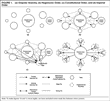




Comments
No Comments have been published for this article.