Introduction
Gender constructions and reconstructions are culturally framed and entrenched in societies. While biological attributes are bequeathed naturally, societies assign and construct gender structures, roles, and parameters based on their cultural prescriptions, stipulations, and choices. Pioneering feminist ethnomusicologist Marcia Herndon’s study (1990) of biology and culture distinguished sex as a biological construct, while gender is culturally defined and constructed. While many contemporary societies have identified and accepted multiple gender and sexuality (LGBT+Q) in different cultural locations, gender binaries seem rife and insisted upon in many other cultures, particularly in Africa. Such societal gender stereotype, choice, and acceptance of heteronormative men and women align with what Van der Toorn, Pliskin, and Morgenroth (Reference Van der Toorn, Pliskin and Morgenroth2020: 160) referred to as “heteronormative ideology.” In essence, cultures identify and accept gender binary or multiple gender and sexuality constructions. According to Budeon (Reference Budeon2014), morphological variations apparent in human bodies become meaningful through the imposition of a binary construct which sorts these variations into only two socially and legally recognised gender statuses—”man” and “woman.” Despite the diverse talents, sexual preferences, identities, personalities, varied interests, and ways of interacting exhibited by individuals, difference collapses into a binary relation of difference.
In the social construction of gender, it does not matter what men and women actually do; it does not even matter if they do exactly the same thing. The social institution of gender insists only that what they do is perceived as different (Lorber Reference Lorber1994: 26). The social production of difference is not neutral; for as long as women and men see themselves as different kinds of people, women will not expect to occupy a similar position within social structures, and “therein lies the power of gender” (Risman Reference Risman2004: 432). Despite the attraction of the arguments on gender, it is not in the place of this paper, however, to delve into the debate of what or what not to accept as a gender type in a cultural location, as it is outside the boundaries of this discourse.
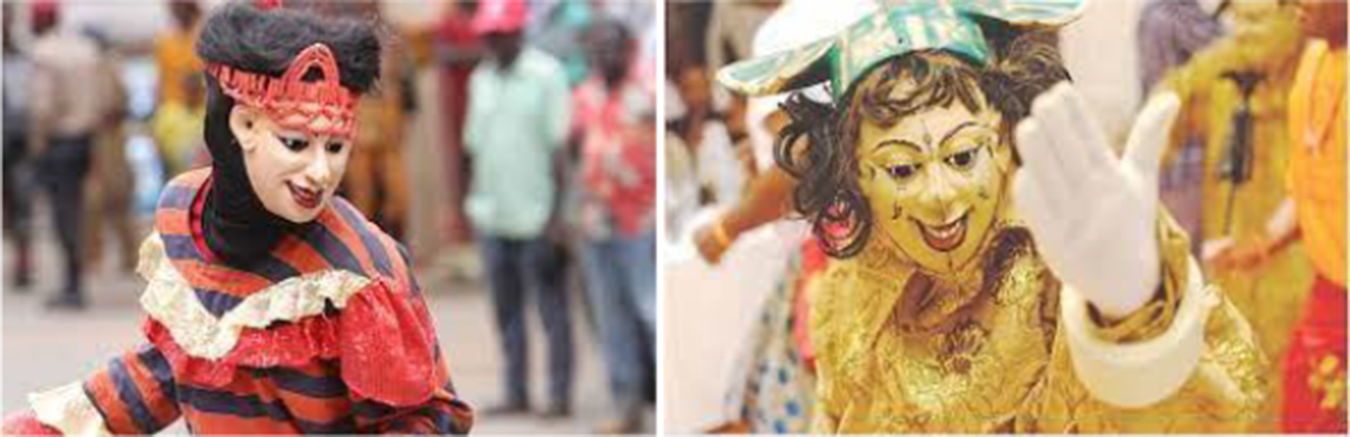
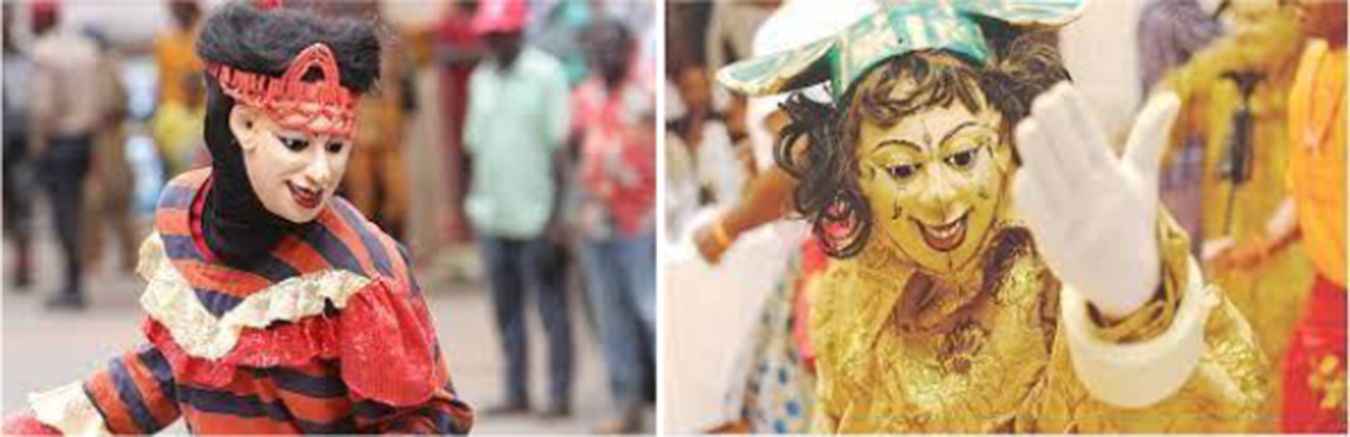
Our paper discusses the cultivation and promotion of gender and sexuality binaries by the Igbo people of Southeast Nigeria, which is now gradually eroded in contemporary times by elements of globalisation. It is anchored on the cultural practice of Adamma music and dance genre and its underlying stimulation of multiple sexuality orientations among the younger generation of the Igbo society in contemporary times. Our intention is to probe into the gender construction of the Igbo in the context of the well-known entertainment masquerade music and dance genre called Adamma in Igbo land. We shall attempt to unpack this genre, its features, Igbo gender construction, Igbo perception of societal oddities and indeed, interrogate the music and dance genre based on the accepted gender stereotypes that the Igbo propagate and promote. This would reveal veiled cultural subversions and a tendency to accept and or tolerate multiple gender constructions outside the heteronormative ideology the culture is known for. In essence, Adamma masquerade could be a metaphor for other non-gender binary constructions within the culture. Figure 1 below presents typical contemporary Igbo Adamma masked dancers in different costumes.
Sample photos of Adamma masked dancers in Enugu.
(www.google.com/search?sxsrf=AJOqlzV73emZ9MJ1iskgK3ssFq9gb_VxWw:1674374298218&q=adamma+masquerade&tbm=isch&source=univ&fir=b_BmJBaA6QD Accessed 22nd January, 2023).
Adamma Music and Dance Genre in Igbo Cultural Milieu
As in many parts of Nigeria, masquerade and masking are very strong traditions and have been practised for many years. While some operate in cult traditions and possess serious spiritual cum societal responsibilities (see Achebe Reference Achebe1958), some are purely for entertainment and known as masked dancers. Adamma masquerade is a genre of Igbo masked dancers popular in the northern Igbo areas of Enugu up to Nsukka in Nigeria. Other popular Igbo masked dancers are the Ekpo, Ulaga (Uraga- dialectical difference) and Ojionu found in the southern parts of Igbo land in Owerri, Mbaise, Anambra, and Aba axis. Adamma masquerade is not a universal Igbo practice but one that has its origins from the people of Enugu state, among the Udi/Ngwo indigenes, which has then been adopted by a few others (Eze Reference Eze2022). Being entertainment-specific masked dancers, they contrast with what Nzewi (Reference Nzewi2017) described as spirit manifest (Mmuo, Mma, or Mmonwu, all dialectical variants), which is an embodiment of spirit essence in masked form. The distinction being that such a spirit manifest possesses spiritual powers and is believed to be representatives of the gods among men and sometimes interfere or mediate in the affairs of men as Chinua Achebe captured in his book Things Fall Apart (1958). They often undergo ritual processes before they manifest in physical forms. According to Eze (Reference Eze2022: 1) “unlike the masquerade cult that is made up of adults in Igbo land and involves secret oaths, the Adamma masquerade takes no path known in spirituality as the Mmuo, rather flourishes in entertainment.” In general, masked dancers are designed and prepared specifically for entertainment in Igbo culture and permit the participation of the general public as audience, particularly, during community festivals during which people appreciate the music and dance in different ways, including giving gifts such as money. Spirits manifest on the other hand, are more violent, malevolent, restless, and sometimes engage in spiritual combats with each other. Contexts for Adamma masked dancing include funeral ceremonies, traditional marriage ceremonies, new-yam festivals, visits of high-profile government personalities, and Christmas and New Year celebrations, among other private and public events.
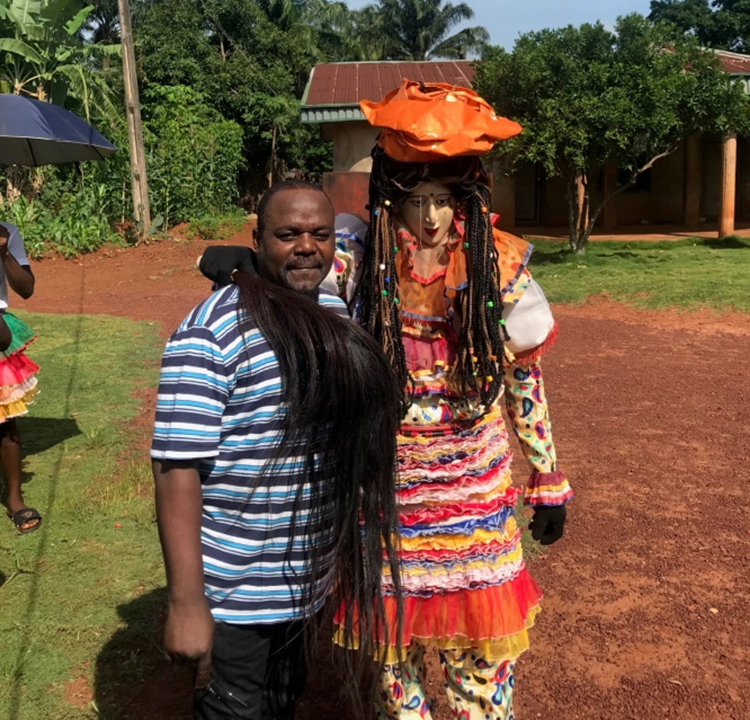
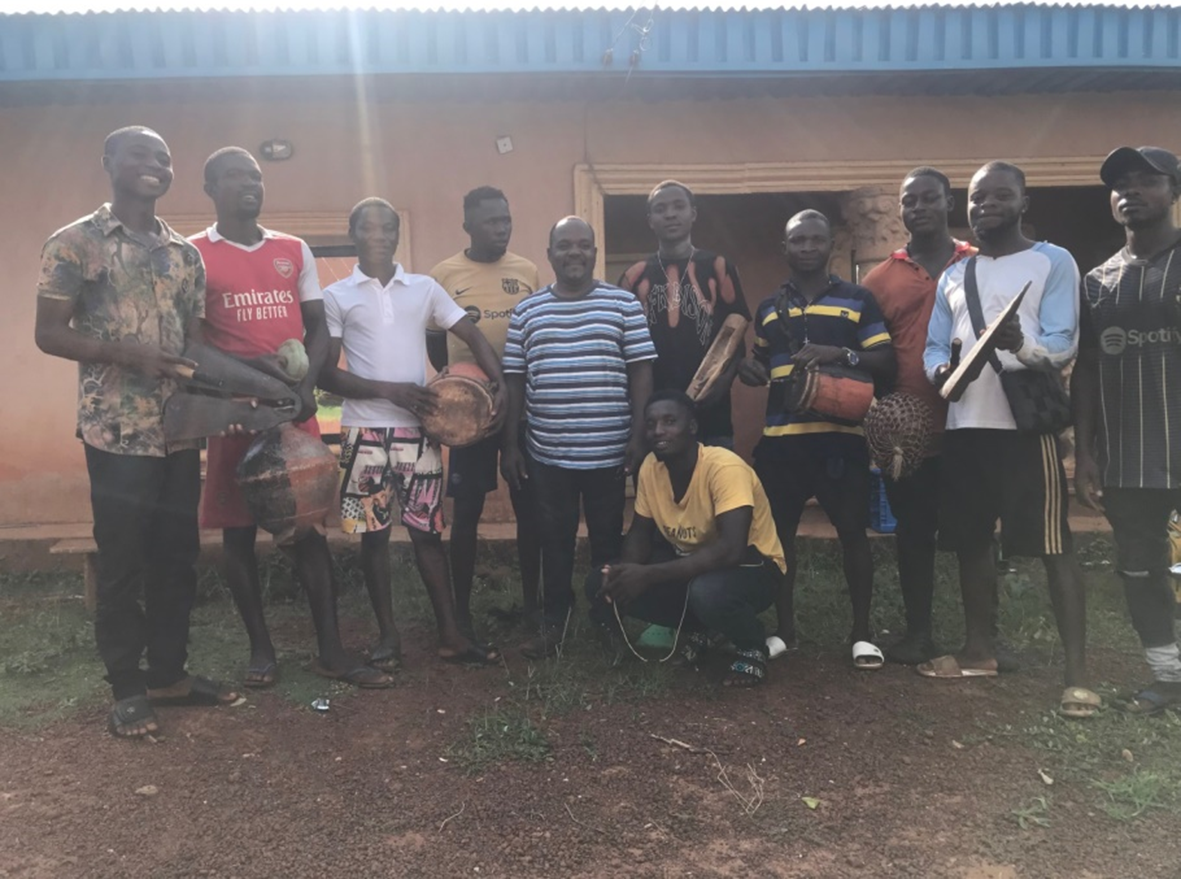
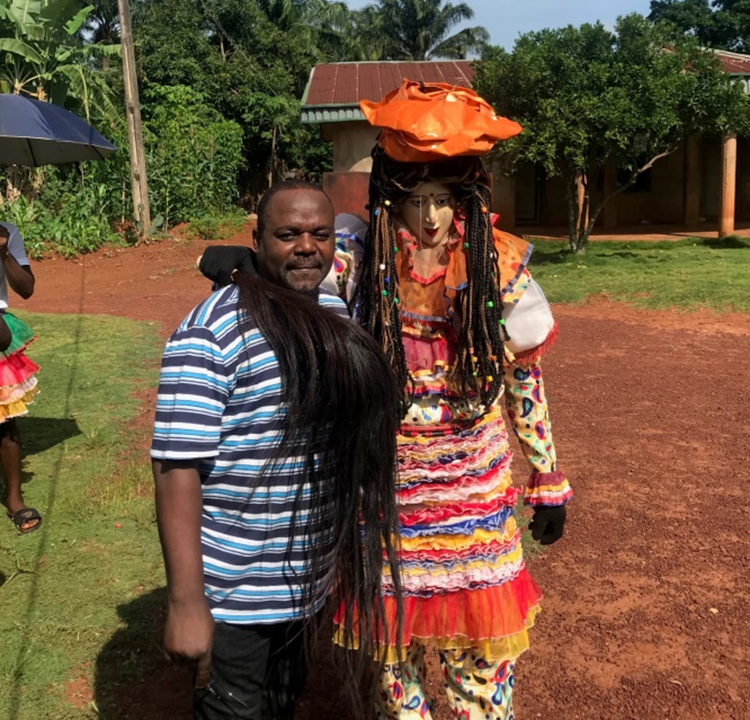
According to Felicia Ezugwu (private conversation on 15th June Reference Ezugwu2023), among the Ngwo people of Enugu State, where the masking tradition started in Enugu area, Adamma was a part of a larger masquerade ensemble made up of a typical nuclear family set of father, mother, son, and daughter, with Adamma representing the daughter. The entertainment family set of masked dancers was the original form of the performance in which the Adamma would not only exhibit features of a beautiful and attractive female member of the family but would also symbolize a well-behaved and properly trained girl from the family institution ready for male suitors. It was also argued that since females are not admitted to masquerade tradition/cult in Igbo land, a male dancer had to play the female role. This original structure was intended to play social and entertainment roles in the society in the distant past. Over time, the Adamma component of the family became more prominent, dramatic, and attractive to audiences and eventually took a life of its own in contemporary Igbo society with underlying implications in gender relations in the society. Adamma performs alone in different ensembles as a female masked dancer without any connection to the original family structure that gave rise to it. Figure 2 shows a typical dressing of Adamma masked dancer in contemporary times, while Figure 3 shows a typical of today’s Adamma ensemble. As could be recalled, Adamma masquerade ensemble is a male music and dance group with a leadership structure typical of many Igbo ensembles. There is the leader (administrative head) of the group, the artistic leader, the provost, lead singer, and the chorus members, while every member participates in the playing of the various instruments. The Adamma is the main dancer but is occasionally supported by other members and indeed members of the audience in expression of excitement.
With Adamma masked dancer from Ozzi-Edem Amukpa, Nsukka, 21st May, 2023.
Typical Adamma ensemble in Nsukka in recent times, 21st May, 2023.

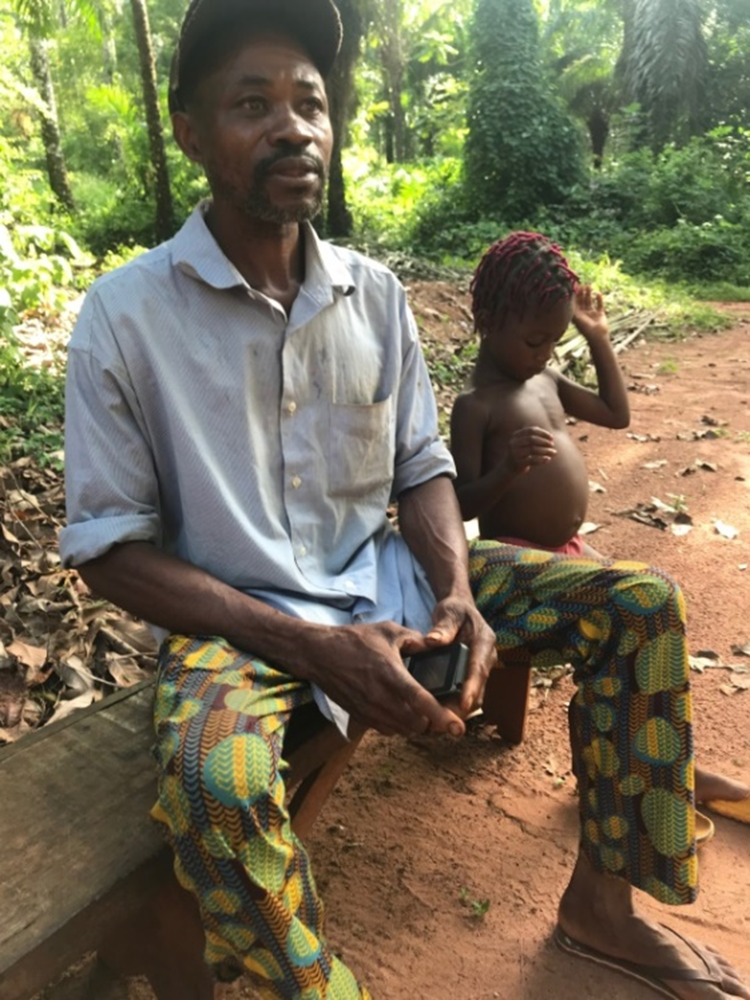
According to Adamma, a leader in Ugbene Alor Uno, Nsukka, Mr Ejike Amoke (see Figure 5. Oral interview on 4th June, Reference Ejike2023), his great grandfather, grandfather, and father were successive leaders of Adamma in Alor Uno, Nsukka, who handed down the tradition to him. He revealed during an interview that his father told him Adamma ensemble prepared their presentations in a secluded place at night, during which the spirit of female dance and acts is invoked on the specific dancer by the traditional priest. This invocation automatically imbues the dancer with the required female disposition for the acts. In such instances, the dancer technically becomes a female. This spirit, according to him, controls the dancer and often affects him even after he has removed the mask. This accounts for why some such dancers acquire female tendencies and some actually attempt to become females in their behaviour. In some ways, therefore, there is a deliberate cultural act of transformation of male dancers to female Adamma masked dancers, which entails patterns of creative outcomes that at the same time impact the dancers in ways they are not in control of. Such impact may have cumulatively resulted in recent cross-dressing and gender-switching that point to multiple gender and sexuality orientations in contemporary Igbo society.
Adamma masked dancer appears in very unique costumes and dance features that mark it out as a separate genre of masked dancers. The Adamma masked dancer is considered a female masquerade due to its unique female colourful costume (see Figure 1 above). Eze (Ibid) affirms the Igbo notion of Adamma as a female masquerade. She says, “Adamma means ‘fine girl’ with Ada being the first daughter and mma ‘beauty’. As such, Adamma is a beautiful masquerade who is usually ‘elegantly’ dressed with a pale face that speaks of her ghostly element.” The position of Ada and the special treatment/role given to her in Igbo land is of significant research interest that would not be covered in this study. Variants of Adamma costumes appear from different ensembles of the masquerade arising from their tastes, funds available to the ensembles and the aesthetic codes or interests of the ensemble members. Specifically, Adamma masquerades are often dressed in female blouse, long skirt, trousers or wrappers, and head tie on a wig or weave-on or even woven/braided hair that adorns a contemporary female dressing/outfit. Also unique to the masquerade are the evidently preferred bright, colourful materials used for the costumes. Quite characteristic of the masquerade is the very feminine and pretty mask that gives the mask an unmistakable female facial structure and outlook. Some of the masquerades come with hair beads, while some do not. They also wear hand gloves of colour of choice, jewelries/adornments of various assortments and light dancing canvas or stockings to aid their dances.
Adamma masked dancers feature in different traditional ensembles in contemporary times. In the Nsukka area of Enugu State of Nigeria, for instance, Chibueze Ezugwu (a member of Igba Eze ensemble in Nsukka, in a private discussion on 10th October Reference Ezugwu2022) stated that there are, at least, three known ensemble types that feature Adamma masked dancers. These are the Akwunechenyi/Igba Eze ensemble, the Ikorodo ensemble and the Papa loolo ensemble (local naming of the distinctive masked dancer). The Akwunechenyi/Igba Eze ensemble is a youth-based, highly mobile and itinerant ensemble that features during festivals and personal ceremonies to which they are invited. Sometimes also they take the liberty of attending an event uninvited for the sake of making some quick cash. Ikorodo ensemble, on the other hand, is a maidens’ music and dance performing group uniquely located in the northern Igbo area, Nsukka and environs. They also perform during festivals and when invited to personal ceremonies. Papa loolo ensemble is a unique entertainment ensemble made up of the instrument players, protruding belly and buttocks masked dancer known as Papa loolo and the Adamma masked dancer. The uniquely ugly Papa loolo masked male dancer is noted for his deliberate amorous advances/”attacks” on the pretty female Adamma masked dancer that constantly rebuffs him. These entertaining and engaging episodes present the once common scenario in which pot-belly ugly rich men make amorous advances on young pretty girls believing they would be attracted to them because of their money.
In the recent past, social profiles of men of affluence and power in Igbo land, and in many other cultural entities, were marked by pot-belly, fat, and sometimes ugly features. Such men were known to eat so much meat, afford and drink expensive alcohol/wines and displayed their affluence in expensive private vehicles, personal mansions, and unrestrained cash donations during social events. They did not care so much about their physical appearances arising from their belief that money can buy them anything and everything including love. Frankly, there were some examples of such cases where such men actually married pretty women in Igbo land because of their wealth. There was the general notion among the people that a man is never ugly so long as he is wealthy. This notion was fairly entrenched and accepted amongst the rich until lately, when the notion became gradually debunked by young ladies who preferred to marry or go out with more handsome and good looking gentlemen, who may not be so rich but are presentable. The power play of the rich and their conviction that they had the power and means to get whatever they wanted with their money began to change in the 21st century. Contemporary profiling of modern men, while not de-emphasising wealth acquisition completely, laid emphasis on the outward appearance and looks of men, with slimmer men preferred over fat and pot-bellied men. This social paradigm shift among the Igbo provides the background on which the Papa Loolo type of Adamma flourished. The masquerade type provided dramatic, visual, and sonic lampooning of the activities and disappointments of wealthy but ugly men of that generation as well as pointed to the socio-cultural shift that has taken place. Papa Loolo Adamma performances were some forms of exaggerations of the real-life scenarios nevertheless. The Papa Loolo itself is stuffed at the belly and buttocks, with an ugly mask, oversized shoes, an outrageously long tie and a very undersized suit hanging at the back above the buttocks. This type of performance is not just entertaining and exciting but also serves as an enactment of the social reality of the Igbo in the recent past. In these ensemble types, however, Adamma masked dancers remain the same both in character, costuming, dance features and feminine disposition.
Quite striking about Adamma masquerade is the notion of cross-dressing in which the female masquerade is indeed played or carried by a male dancer in all known cases of Adamma performance. In some unique ways, the dance patterns, gestures, and elements of the Adamma genre are specifically feminine. The gestures and dance steps are also uniquely and deliberately feminine, mandating the performer to bring to bear on the performance feminine poise and character. Indeed, Adamma is a “female” masquerade and performs in unique feminine ways despite being performed by a male. In some ways, the exposure to and regular performance of the music and dance transform the performer, stimulating him to exhibit near-female gaits and features which have become accepted in the Igbo society. The dancer assimilates the personality of the masquerade and this sometimes imbues them with feminine dispositions that characterize their gait and dispositions in real life without the mask. The dancer develops the gestures and carriage of girls, dances like a girl and moves like a girl. This is where the masquerade points to issues of gender construction and indeed, questions the notion of gender binaries among the Igbo. The performer not only cross-dresses but he also develops “cross-gender” personality to achieve the creative intentions of the genre. While an observer sees a female masquerade performing as a female, unknown to people outside the culture, the performer is actually a male dancer.
The uniqueness of this masked dancing places it outside the others as a separate genre (see https://youtube.com/shorts/2njyhZtJq6Q?si=1_bpaSRBT3IJ1UJ0 and https://youtube.com/shorts/ZWcrLpvS1yg?si=KF1VeJtD8hR3mkwk for short clips of the dance). It is critical therefore to probe the genre in the context of gender positions of the culture. This would entail a combined application of descriptive method and ethnographic discourses with identified members of Adamma ensembles in the Nsukka area of Enugu State, Nigeria.
The Igbo People of Nigeria and their Indigenous Music
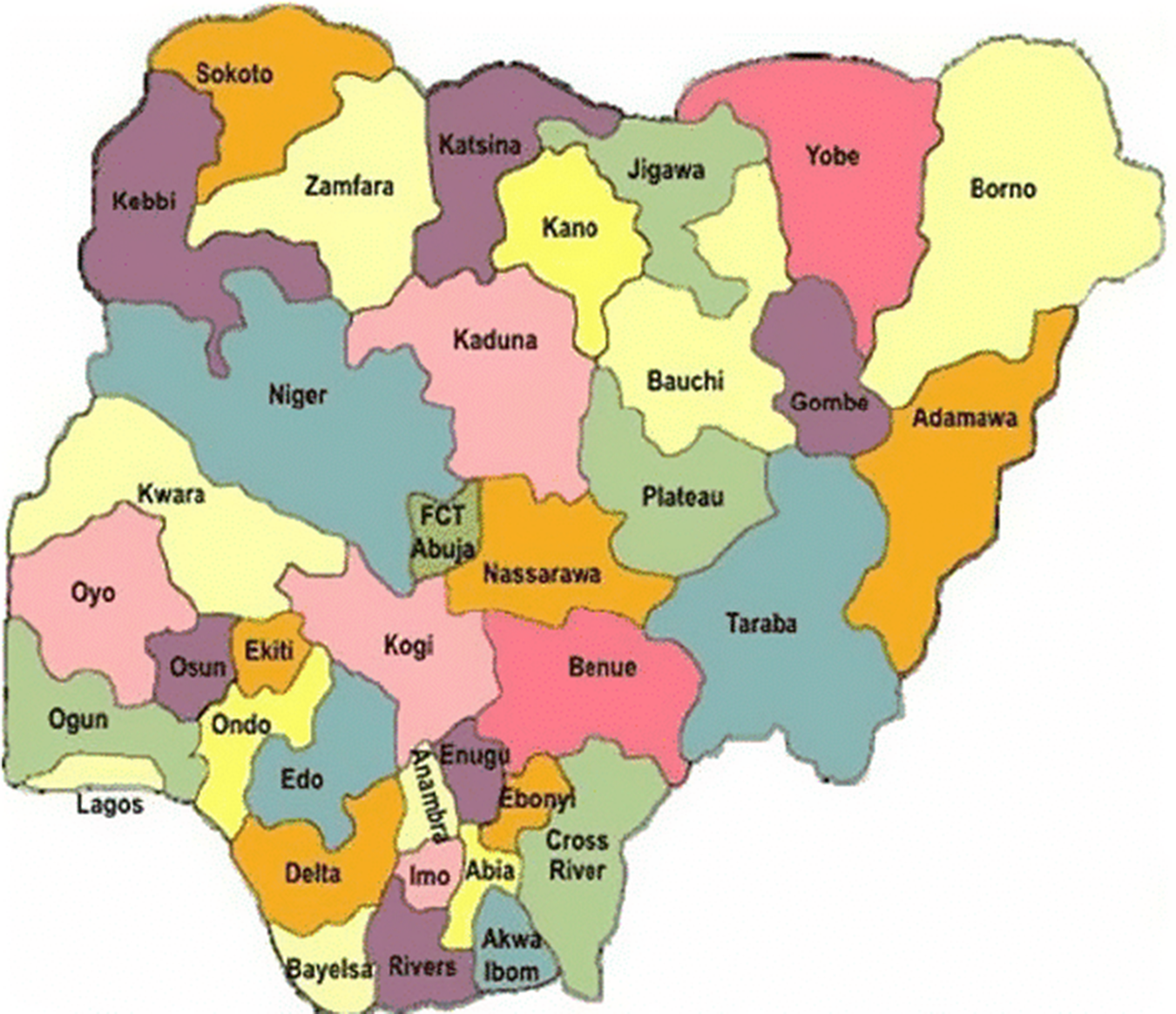
The Igbo people of Nigeria (sometimes written as Ibo) occupies the southeastern block of Nigeria where they also constitute one of the three major socio-cultural communities of the country with approximately 40 million people which is estimated to 23.5% (The World Factbook 2020). They occupy the five states of Imo, Abia, Enugu, Anambra, and Ebonyi (see the map of Nigeria in Figure 4 below).
Map of Nigeria showing the states.
(https://www.google.com/search?q=Map+of+Nigeria+showing+all+the+states accessed 20th June, 2025).

The name Igbo identifies the people, their language, culture, social and life styles. The Igbo are a strongly religious people, with many people following the Christian religion while some are engaged in traditional religion. Some in northern areas also converted to Islam (Nsukka in Enugu State and Abakaliki in Ebonyi State).
Reflecting on Turino’s (Reference Turino2008) view on the place of music and dance in the personal and social experiences of people, it is certain that music and dance occupy a special place at the core of the most profound personal and social experiences of Igbo people. Music is highly cherished and enjoyed by the Igbo, being the core of the life rites, rituals and social life of the people.
Igbo traditional musical performances are presented by individuals and groups that have leadership structures. For example, performing groups have general leaders, lead singers, lead dancers, nna egwu (father of the music), and nne egwu (mother of the music), among others, who negotiate for performance opportunities for the various groups. In general, music performances as well as negotiations are preceded by the ritual of Igbo kola nut presentation and breaking that prompt prayers to the supreme Deity (Chineke) as well as evoke reverence to music ancestors. Occasionally too, libations are poured. Members call these igo ofo (prayer for unity peace and justice). Abigbo musicians, Ese musicians, and Okonko musicians revealed the uniform practice of igo ofo.
“Nigerian traditional music setting, usually promotes freedom of use of space in the expression of feelings generated by the music in most cases, in dance or drama or both, or in general movement or gesture. Suitable venues for musical performances are usually open spaces, Village Square or any level land that can accommodate uninhibited movement “explosions” (Onyeji 1999:128). In exceptional cases, some groups give free performances as their social contribution/obligation to the communities, especially during festive occasions such as iri ji (new yam festival) ichu afo (ceremony to bid farewell to a passing year and usher in a new year).
Participation in music groups is open to all members of the community albeit in some controlled ways. Membership or participation in certain music types is based on age, status, or gender. “The age-sex organizational criteria have six distinctions as follows: male, female, adult, youth, children, mixed (sex and/or age)” (Nzewi Reference Nzewi1991: 29). Age-sex discrimination is a very important principle in Igbo music practice. It specifies “what human category performs a music type and for what human category it is performed” (Ibid: 30). This corroborates Nketia’s (Reference Nketia1974: 35) observation on participation in music making in African communities when he wrote that participation in music may be…based on a broader societal classification of age, sex, interest, or occupation.
Methodology
This study focused on the traditional music and dance of the Igbo people of the South East of Nigeria, the third largest tribe in Nigeria. Igbo land is home to different music and dance genres and traditions, such as traditional music, art music, and popular music. Different types, styles and subgenres of these broad genres are found in the region, such as Mkpokiti, Ikorodo, Abigbo, Hip hop, Highlife, Afro Beat, Choirs, Orchestras, and Bands. This article focused on a unique indigenous music and dance type to discuss the critical issue of gender and sexuality binaries in Igbo Land.
Data collection for this study employed the qualitative technique. The descriptive method was employed in the data presentation. Focused field research engagements on different Igbo Adamma music and dance groups located in towns and villages within the Enugu State area have been ongoing for over twenty years. Gathering of relevant data on the socio-cultural and musical practices of the people was carried out through targeted field research on different performing groups, interviews with group leaders and performers, participation/observation of the writers of musical performances, general observations as culture owners and through latent/subtle forms of cultural assimilation as adults in the culture. These encounters revealed the creative activities, membership of ensembles, aesthetic principles, nature and tendencies for Adamma masked dancers, Igbo position on gender binaries as well as the acceptance of oddities and seeming subversion of the gender binary position of the people that informed the arguments and conclusions reached in this study.
The research conducted towards this article prioritised field recordings, documentations, and study of indigenous music, dance and relevant material culture of Igbo people. The research explored various musical performances by different Adamma groups in selected towns and communities in Nsukka area primarily. Field recordings were conducted in different locations and communities of Igbo land covering the southern and northern areas, such as Mbaise, Enugu, Owerri, Amaraku, Ogwa, Ngwa, Aro Ndizuogu, Umuchu, Umunze, Akokwa, Awka, Atta, Mbano, Amaimo, Ugiri, Umudim, Amauzari, Oka, Nsukka, AmaIgbo, Nsugbe, Onitsha, Ukehe, Obollo Afor, Ishiagu, Arochukwu, Umundu, and Eha Amufu. These were places visited by the researchers over time to collect data not only on Adamma masked dancers but also on other masquerades, cultural practices, gender positions, and issues of oddities among the Igbo.
Furthermore, though existing studies have been conducted on hip hop culture, language, education, social institutions in Africa, female gender mutilation, gender, and feminism issues, no research attention has been paid to the study of a possible connection of the music and dance practices of the Adamma music and dance to issues of gender binaries and subversion of the Igbo position through the performance. Analysis of data from this investigation showed that the Igbo society takes a position on strict gender binary; understands nature’s imposition of social/human oddities but at the same time accepts subversion of the same gender binary position through their creative practices in Adamma music and dance genre. This study therefore investigates how gendered cultural practices are exhibited in this unique music and dance art, which appears to endorse and reinforce multiple sexuality and gender constructs against Igbo gender binary position.
Gender Binaries in the Igbo Socio-Cultural Construction
Most writings on Igbo gender construction centre on masculinities, feminine power struggles, domination, conflicts, and compromises, without much attention paid to the strong issues of underlying positions on gender binaries relating to male–female heterosexuality as against any other form of sexual orientation. Although many existing studies centre on Igbo socio-cultural life (see Achebe Reference Achebe, Cole and Aniakor1984), distinction of male–female gender constructs remains prominent and hegemonic. Uchechukwu Peter Umezurike’s (Reference Umezurike2021) study dissects aspects of male–female relations in the Igbo context. Uchendu’s (Reference Uchendu2009) women–woman marriage in pre-colonial and colonial Igbo society, reveals how binary gender stereotypes remain underlying, with clear distinctions in the roles played in procreation by the females. Umezurike (Reference Umezurike2021: 53) asserts that “the topic of homosexuality remains contentious for African writers and scholars, mainly because of the moral discourse, religious dogma, and cultural nationalism framing public conversations around African heterosexuality.” Stella Nyanzi (Reference Nyanzi and Zethu2014) also described homosexuality as “an othered research topic.” Umezurike (Reference Umezurike2021) reports also that Mumbi Machera claims that “[i]ssues of sexuality in Africa, especially when they touch on the pleasurable aspects, are rather touchy. Issues of procreation, family, and concerns about the nation and its purity are at stake in such conversations.” (54) He went on to say that “the ensuing discourse, inflected by religious injunctions and centuries-old colonialist narratives, reinforces the binary between heterosexuality and homosexuality” (Ibid). The former is thus regarded as normal and the latter as an abnormality. In the view of Murray and Will (Reference Murray and Will1998) African sexual discourses construe the homosexual as a contagion figure to be demonised (17). These views point to shush and unaccepted view of sexuality outside the approved gender binary and sexuality orientation of the Igbo.
As in most patriarchal societies, gender distinctions are cultivated, propagated, and maintained in Igbo land along male and female sex lines. Distinctions are also made along male and female biological structures as the acceptable basis of existence. At least, this is the generally observable notion and situation. To a great extent, the Igbo seem to have adopted the assertion in Genesis 5:2, “Male and female created he them,” in the Bible (n.d.). Marcia Herndon’s (Reference Herndon, Marcia and Ziegler1990), study of biology and culture already distinguished sex as a biological construct, while gender is culturally defined and constructed. Gender binaries along male–female constructs are thus insisted upon, at least, in the structural ramifications of the Igbo society. This is rationalised and transferred down over time to the generations of Igbo people even if it bears any negative consequences to the people. It seems generally accepted that to the Igbo, the society is constituted by males and females without the acceptance or tolerance of any other possible gender or sexuality distinctions. It may be termed a sacrilege to find any other. It may also be considered a form of spiritual and social anomaly to contemplate multiple gender/sexuality outside the accepted gender binary of male–female constructs. The Igbo is therefore seemingly an unapologetic patriarchal society engrossed with the culture of gender-sexuality binaries reflected in many socio-cultural activities and structures. It is the position of Gloria Chukwu (Reference Chukwu, Falola and Njoku2016) that “on the surface, Igbo society could be seen as highly stratified along gender lines. Gender differentiation was perceived as a vital feature of social organization. (46)” According to her, “institutions of Igbo cultural groups reveal a society in which gender complementarity was the norm; men and women, boys and girls played diverse but important roles for the sustenance of their families, lineages, and society.” (ibid) Onuekwe and Okam (Reference Onuekwe and Okam2017: 47). Condry & Condry (Reference Condry and Condry1976), insists that gender socialisation presents a direct and more focused form of socialisation. It reveals how children of different sexes are taught the true meaning of being male or female. Also, Gleitman, Fridlund & Reisberg (Reference Gleitman, Fridlund and Reisberg2000) reveal that Gender socialisation starts at birth with such question as whether a boy or a girl is born? In the view of Kaplan (Reference Kaplan1991) people most often behave like man or woman because parents, particularly mothers, gender-socialised them to conform to male or female gender norms from birth.
Being male–female socialised in Igbo land entails sexualising along the binaries of male–female. This also entails heterosexual orientation limited to male–female boundaries. The Igbo people place a high premium on procreation and could be said to be stuck on the notion of sexual activity as that involving man and woman with procreation as the primary purpose. It is unquestionable, at least, by the posture of the people that they do not accept, understand or appreciate any sexuality, gender role or orientation that leads out of this position. The question then is why some cultural practices accepted and promoted by the people subvert the same gender and sexuality position and seem to accept and normalize multiple sexuality and gender orientations? The Adamma music and dance genre in contemporary times presents a case study that contradicts the Igbo position. In the Igbo world view, oddities are known and do not present contrary indication, as it is with the gender and sexuality issues. Below is a summary of the views of the Igbo about oddities to clarify their position on it.
Human Oddities in the Igbo World View
Human oddities or what Robert Bodgan (Reference Bodgan1988) called “Freaks” are common phenomena in many social-cultural contexts. Of course, oddity is marked by eccentricity, strangeness or peculiarity. Many social, human and natural conditions or situations are regarded as odd in the conception and perception of the people based on the social constructs and world view of the particular people. However, what is regarded as odd may be normal in other contexts. Our focus is on such natural phenomena that constitute oddities within a given socio-cultural location. Manifestations and attitudes to such oddities differ from one cultural location to another.
Among the Igbo, oddities are noted and generally accommodated within the social contexts of human existence. There are different forms of oddities, and these are generally regarded as nature’s impositions, which are accepted by the people as being beyond their control. Although attempts are made to change them and reorient the affected persons in some cases, it is generally believed that some of them arise from acts of God and may not be reversed. In such circumstances, the people accept to accommodate and manage the unique personalities within the society.
Some of the human oddities noted among the Igbo are:
-
1. Onye iberibe/apari (an imbecile)
-
2. Onye nzuzu (a vagabond)
-
3. Onye aka ntutu (a kleptomaniac)
-
4. Onye jofere njo oke (a very ugly person)
-
5. Onye mara oke mma (an extremely beautiful or handsome person)
-
6. Onye buru oke ibu (a very fat/obese person)
-
7. Onye tara oke ahu (a very thin/lanky person)
-
8. Onye mpkumpku (a short/dwarf person)
-
9. Onye toro oke ogologo (a very tall person)
-
10. Onye afo ukwu (someone with protruding tummy)
-
11. Onye ike ukwu (someone with big/protruding buttocks)
-
12. Onye nkwaru/ahu ya ruru aru (a deformed person)
-
13. Onye oke nri (a glutton)
-
14. Onye agwu nakpa (a person possessed by malevolent spirit)
All these conditions listed here are regarded as oddities by the Igbo on the premise that these are not normal conditions. These exist within spectrums of their peculiar types and may be found in different shades within different societies. For instance, an imbecile is believed to be nature’s imposition at birth and cannot be question by anyone. Shades of imbecility are found in different cultural contexts and are handled differently by the people. Agwu is different from madness in Igbo conception. Odinka et al (Reference Odinka, Ndukuba, Muomah, Oche, Osika, Bakare, Agomoh and Uwakwe2014: 169) attributes it to “the cultural belief of the Igbos in agwu, which is characterised by oddities of behaviour of insidious onset and attributed to the malevolent activities of deities on an individual who has refused to serve the deities.” It must be emphasised that madness is not regarded as oddity by the Igbo as it exists on its own as a situation that most often does not come from birth. Although madness comes with a state of strangeness, most times, people become mad through their own acts or actions of others. To the Igbo, madness only befalls a normal person who, though is not accepted by the people, is in a class of its own from other cases of oddities.
It is also not normal for one to be a vagabond in the Igbo conception. It is sometimes believed to be spiritual or an anomaly imposed by nature. Similarly, to the Igbo, a very beautiful or handsome person may be seen as incarnation of the water spirit called mamiwater or mmuo. Among the Igbo, “all extremism is abhorrent to the Igbo sensibility” (Achebe Reference Achebe, Cole and Aniakor1984: 435). Some such persons are sometimes taken to medicine men to enquire about their personalities when they are still young. In some extreme cases, incisions are made on their foreheads or between their eyes and their ears to bring out blood. This is to ensure that the person is spiritually bound to earth through the blood that touches the earth. The fear is that such children may not live to adulthood or may be possessed by negative spiritual forces. In other words, all extremities of nature are forms of oddities among the Igbo. Being highly spiritual/religious people, the Igbo often takes these to be some spiritual anomaly or nature’s impositions that the people must live with or try to address where possible through spiritual means.
In all these, however, the Igbo does not present or openly accept cases of gender-switch in which a man attempts to assume the personality of a female or vice vasa. The Igbo is not noted to openly promote or appreciate homosexual acts or bias. In some instances, though, a female can engage in manly acts and be recognised as a strong and exceptional person but not as a person assuming the nature and gender of a male. It is a strong taboo among the Igbo for a male or female to show erotic or romantic feelings or advances to the same sex or gender. It is also strange in the conception of the Igbo for someone to act or attempt to behave and live like the opposite sex or gender. Such would be outright sacrilege and an extreme form of oddity not widely accepted among the Igbo. However, a case of gender-switch in Igbo land in the not too distant time was that of a television entertainer and itinerant musician in old Imo State, Uzoma Odimara, known as “Area Scatter,” (being his stage name), who performed on Nigerian Television Authority (NTA) Aba during a popular programme known as Ukonu’s Club in the 1970s through the 80s. He was the only known and prominent cross-dresser who plated his hair, dressed like a woman, used make-up and played his thumb-piano (Mbira) as accompaniment to his songs. “Area Scatter was one of the very few Nigerian men who publicly shattered gender boundaries and portrayed a somewhat accurate representation of its fluidity.”
(https://steemit.com/life/@chuxlouis/the-curious-case-of-area-scatter-was-area-scatter-nigeria-s-first-ever-known-transvestite-and-celebrity-cross-dresser Accessed 15th May 2023.)
As an entertainer, he was accommodated or, should we say, accepted and seen as someone who needed to be unique in his choice of costume. It was in the context of music performances that this fairly anomalous situation was accommodated but was also seen as a form of oddity, as his style of dressing was not adopted by other males in the society at that time. The existence of Adamma masked dancer among the northern Igbo seems to have derived its antecedent from the example of “Area Scatter.” In whichever way it is looked at, it is a form of oddity which the people seemed at home with in the social context of music and dance performances and general entertainment. One wonders what would have been the reaction of the people and the treatment that would have been given to the Area Scatter and Adamma masquerade in a context different from music and dance performance/entertainment, given the strong position of the Igbo against such practice. These are but moot points that can only be speculated upon now.
In general, therefore, the Igbo understand forms of oddity and the role of nature or spiritual forces in their manifestations. The unique forms of gender-switch and cross-dressing seem to be contemporary additions that point to issues and constructs deeper than they are perceived on the surface. Being quite different from the impositions of nature, they seem to be ways of expressing gender fluidity beyond notions of gender binaries and sexuality orientations of the Igbo in more recent times. The musical/entertainment platforms seem to have become subtle modes of integration and assimilation of such oddities and norms, making them acceptable to the people.
Paradox of Adamma Music and Dance Genre in the Igbo Cultural Context
It could be argued that gender impersonation and cross-dressing in Adamma stem from two major factors: (1) the dance is an all-male art form, but female roles are needed in some dramas/stories and (2) its main function is entertainment, albeit with attendant didactic social lessons. The Igbo people do so to generate laughter and to recreate themselves and although the Adamma dancer simulates female behaviours, their aim is not to subvert their lived social realities of gender binarism. It is also understandable that the simulation of the “Other” in dramatic performances is not inspired by simulators’ desire to become like the simulated in their lived social worlds. Yes, audiences’ imaginations may be taken to the worlds of the imitated, but just temporarily. Such views highlight the ideal in the socio-cultural lives of the Igbo before the sudden subtle but consistent open identification with gender-switch, cross-dressing, and LGBTQ+ in contemporary times. Our interest in this discourse is on the underlying stimulation of this new culture among Igbo youth.
Adamma masked dancer in contemporary Igbo society is a paradox of some sort, given the gender-binary position of the Igbo. The Igbo is noted for its non-tolerance of multiple gender/sexuality orientations as well as its general insistence or perception of any contrary orientation as sacrilege. In the social life of the Igbo, there is a general orientation to the acceptance of male–female sex as the natural genders. Right from birth, a child is declared male or female, and rites and ceremonies of new born are conducted based on the biological sex of a child and expected gender roles and positions he/she would occupy in the society. In many parts of Igbo land the women perform Or’Onu (Announciation call/song) (Onyeji Reference Onyeji1998) to announce the birth and gender of a new born. The society did not foresee any gender-switch from this natural binary. It was not expected that a man would act like a woman or a woman like a man. It was rather conceived for a man to marry a woman and procreate. It was not given for a man to dress like or dance like a woman. Overall, the Igbo expect clear gender binary and are seen to be cultivating that. This position was corroborated strongly by Adamma leader in Ugbene Alor Uno, Nsukka, Mr Ejike Amoke in a private conversation on 4th June, Reference Ejike2023 (See Figure 5). He reiterated that it is the expectation of the society that a male or female would grow into adulthood to carry out gender responsibilities as assigned by the society. According to him, men marry women and not the same sex.
Adamma leader in Ugbene Alor Uno, Nsukka, Mr Ejike Amoke.

The contemporary Igbo society, however, seems to have thrown up the paradox of gender-switch, cross-dressing, mannerisms, and seeming multiple gender/sexuality positions through the Adamma masked dancer phenomenon, which took its lead from the “Area Scatter” example. The Adamma phenomenon, having taken a life of its own in recent times, seems to be pointing to a new cultural practice that accommodates and promotes gender orientation and sexuality that were unacceptable to the Igbo before now. Constant engagement of males in the Adamma music and dance bears some gender implications, as attested to by Dr. Mrs. Felicia Ezugwu, a music lecturer at the University of Nigeria, Nsukka, who is from Nsukka (private conversation on 15th June 2023). Or is this a situation in which the people are now bold to accept multiple gender orientations, which they merely denied in the past? The Adamma phenomenon is indeed paradoxical. A culture that insists on gender binaries and is seen to be cultivating and promoting it should not at the same time accept cultural and creative practices that subvert and promote the opposite. Such paradox can only create conflicting conclusions and notions among the people. The question is what happens to the male dancers who, by continuous assimilation of feminine gestures, mannerisms and acts subtly orient themselves to female gender dispositions in the society, and who are at the same time expected to act as mature men with masculine dispositions? They would then require constant reorientation to become normal males in the society or probably stick to their new gender orientation.
Paradoxically also, this music and dance genre are accepted, appreciated, and promoted in the society without caution or regard to the socio-cultural “upheaval” it might be stimulating. It is not considered a contradiction by the people who simply enjoy the art without interrogating the social and cultural implications on the gender binary position of the people.
A Case of Deliberate Subversion of Cultural Gender Binaries or Pure Entertainment?
The novel nature of this study implicates scant existing literature on the subject but we can conjecture from the Adamma practice that music and dance provide the people subtle means of accommodating the seeming “unacceptable” practice of gender-switch or non-gender binaries. There seems to be a conflict of socio-cultural needs of the people for entertainment and the rejection of what ordinarily is a cultural subversion. Entertainment and cultural subversion seem to collide in the Adamma practice. The question now is whether this is deliberate, intended as rebellion or pure interest to reveal a possible hidden practice of the people in contemporary times? Interviews with certain older members of the Igbo society revealed critical notions.
Adamma dancer from Ozzi-Edem in Amukpa in Nsukka says (conversation on 21st May 2023) that while they note the possible contemporary implications of the masking tradition, the performances are generally for entertainment. He, however, added that though he does not have an inclination to being a female as a result of the dance culture, dancers that develop such inclinations are those that already wished to be females. Members of the Adamma group led by Obinna Harrison Nwafor (Reference Nwafor2023) revealed their understanding of multiple gender orientations in contemporary times and acknowledged its social implication in Igbo land.
In the view of Mr Ejike Amoke, leader of Adamma in Alor Uno, Nsukka (already cited above), there could be a possible connection to the contemporary craze of young men and women seeking to transform themselves to the opposite gender. Young men now wear earrings, weave hair, put makeup, and even get romantically attracted to their fellow males. He feels the Adamma could be sending a wrong signal as a cultural endorsement of multiple gender and sexuality orientation, which is quite odd to the Igbo. He suggested a reorientation of participants of Adamma group or to possibly stop the music and dance genre to avoid escalation of the current trend.
Among the Igbo, the practice of appropriating creative outlets in music and dance to address issues that would not ordinarily be attempted is well-known. Achebe’s (Reference Achebe1958) description of the role of Egwuwgu masquerade in conflict resolution in Umuofia is a clear case. People take liberty to express their views and even challenge existing situations without being molested in creative contexts. Through such entertainment presentations, hidden extraordinary situations and acts are revealed, sometimes in jest but sometimes also in very serious ways. The Igbo pays attention in such situations and takes note or corrections. Indeed, it is through and in such situations that people can reveal hidden practices and occurrences in the society without any consequences. It is therefore not uncommon that such cultural subversions may be presented or revealed through the platform of music and dance performances as a pointer to some hidden practices in the society. It is also possible that although the people insist on gender binaries, they may not be aware of the hidden practice of multiple gender and sexuality within the society, prompting the act of its presentation in music and dance performances without severe consequences today. The argument is that such presentation would have irritated the sensibility of the people and would have caused them to insist on its abolition. Rather, there seems to be subtle support and open accommodation of the presentation, pointing to non-compliance to gender binary position of the Igbo. Would it be acceptable for a man to behave, dance, act, and dress like a female in Igbo land without anyone raising eyebrow?
A culture is held responsible for complications arising from the manner in which its practice is presented to the public. If the Igbo insists on and practices gender binary, then Adamma is a cultural subversion more than mere music and dance entertainment. Its acceptance and creative promotion also point to an underlying critical socio-cultural practice, which questions the authenticity of the gender binary position of the Igbo. A question arising from this conflicting situation is whether the Igbo is strictly a gender binary culture or that acknowledges and promotes multiple gender and sexuality going by the practice of gender-switch noted in Adamma?
Gender Fluidity and the Symbolism of Adamma Music and Dance among the Igbo
Adamma masked dancer tradition underpins gender fluidity in Igbo land. There is a sense in which the activities of the music and dance tradition suggest acceptance and cultivation of multiple gender and sexuality as against the gender binary orientation of the Igbo. The cultural practice promotes symbolisms that underline interest in gender-switch, cross-dressing, attraction to same sex, and unintended notions against the culture, at least by young people in the society. The art seems to underline acceptance of current interest of young people to assume and even desire to take up new outlook from the opposite gender. The cultural practice represented by Adamma seems to symbolize a new culture drawn from the contemporary globalised notion of LGBT+Q. Adamma also seems to have become a metaphor for the desire of the people to construct a new social order underlined by multiple gender and sexuality. At the same time, the culture and practice of Adamma seem to have become a reference point and cultural endorsement for the fast eroding gender binary position insisted upon by the culture. It is quite common in recent times to see young men weave hair, wear makeup, pierce the ears, and even take up female dispositions. Females have also taken up male gait, appear masculine, develop hoarse voice, and, of course, wear male clothes. We can dare to say that some of them have already declared their inclinations to gay and lesbian sexuality albeit privately.
It is therefore clear that Adamma is an endorsement that the Igbo cannot deny its implication against its cultural orientation. It is a cultural practice that directly impacts the choices of potential LGBT+Q members of the society. It is also a cultural practice that does not attempt to condemn or suppress such choices. If a masking tradition of a society deliberately invokes spirits to imbue a male dancer with a female disposition for a performance, which may linger long after the music and dance have ended, it could be speculated upon that the community may cover up the acts of such young men. As reported by Mr Ejike Amoke, some such dancers take to feminine acts that may not be acceptable to the people. Dr Mrs Felicia Ezugwu is of the view that the music and dance have implications which affect the dancers in ways that cannot be said to be unknown to the people.
In some ways, therefore, Adamma music and dance genre is a complex of entertainment, gender and social challenges, cultural endorsement of multiple gender, and sexuality notions of young people in contemporary Igbo society as well as a metaphor for accepted practices that tend towards LGBT+Q as practised in other global societies. Converging views from respondents and secondary sources reveal that while the Igbo orient the people and attempt to maintain strict gender binaries, they at the same time accept music and dance practice that not only present gender-switch and cross-dressing to the general public but also promote its practice as a cultural norm. The platform of music and dance seems to have been leveraged as subtle means of presenting the issues in benign ways. The questions are: can the Igbo deliberately and paradoxically subvert its own culture for sheer entertainment? Is Adamma culture much more than meets the eye? Could the gender binary position of the Igbo be a mere cover-up while the Adamma is a metaphor for the true situation of the society? The Igbo is indeed a complex and deep society in which what one sees may not be what one gets. There is a perceived increase in multiple gender and sexuality orientations of young Igbo people in recent times, and Adamma music and dance genre presents a sample of societal acceptance of the new norm.
Conclusion
Adamma masked dance and music genre presents a unique masking tradition among the northern Igbo people of Enugu State in Nigeria. Its uniqueness in costuming, dance, and gestural features mark it out as a separate genre of masking tradition in Nigeria. Originally constructed as a performance of the social structure of the family institution presented in masking, the Adamma component has since taken a life of its own and is promoted in contemporary times as a special entertainment masked dancer with associated features and implications discussed in this article. The association and seeming benign promotion of multiple gender and sexuality orientations evident in contemporary Nigeria among the youths through the element and agency of cross-dressing, gender-crossing, and the associated features were interrogated in the discourse using the evidence of members of the music and dance groups in the cultural settings. The study brought to the fore the unmistakable position of the Igbo on gender and sexuality binaries but strongly noted the contemporary development among the youths that seems to adopt the features of Adamma masked dancer from the example of “Area Scatter” entertainer once seen in Igbo land in the 70s through the 80s. The study raised the issue of oddities among the Igbo, the seeming subversion of the gender and sexuality binaries positions of the Igbo and the fluidity noted in contemporary times in gender and sexuality choices of young people arising from globalised interactions. Overall, Adamma music and dance genre presents the complexity of an indigenous music practice bearing with it underlying social and cultural implications that affect the society in diverse ways than the society may observe.