Introduction
Ever since Alvin & Boulter (Reference Alvin and Boulter1974) perfected the technique of isolating leaf cuticles using so-called ‘chromic acid’ for examination by scanning electron microscopy (SEM), the technique has been routinely used to examine the cuticles of various plant taxa and often to infer taxonomic conclusions. These taxa include many gymnosperm genera (Xiang & Fu, Reference Xiang and Fu1998; Barone Lumaga et al., Reference Barone Lumaga, Moretti and De Luca1999; Kim et al., Reference Kim, Whang and Hill1999; Ickert-Bond, Reference Ickert-Bond2000; Whang et al., Reference Whang, Pak, Hill and Kim2001, Reference Whang, Kim and Hill2004; Ma et al., Reference Ma, Ferguson, Li and Li2009; Mickle et al., Reference Mickle, Barone Lumaga, Moretti and De Luca2011), as well as angiosperm groups (e.g. Proteaceae: Carpenter, Reference Carpenter1994; Carpenter et al., Reference Carpenter, Hill and Jordan2005; Cercis, Fabaceae: Zou et al., Reference Zou, Liao and Zhang2008; Cornus, Cornaceae: Hardin & Murrell, Reference Hardin and Murrell1997; Sapindaceae: Pole, Reference Pole2010).
Among the two principal southern hemisphere conifer families, Araucariaceae have been studied by Stockey & Ko (Reference Stockey and Ko1986: Araucaria Juss.) and Stockey & Atkinson (Reference Stockey and Atkinson1993: Agathis Salisb.), while genera of Podocarpaceae (the second-largest conifer family, with about 200 species) have been the subject of much research, beginning with a small-scale survey of some New Caledonian species (Stockey & Ko, Reference Stockey and Ko1988) and continuing with studies of individual genera or parts thereof [e.g. Stockey & Ko (Reference Stockey and Ko1990: New Caledonian species of Dacrydium Sol. ex Lamb.); Hill & Carpenter (Reference Hill and Carpenter1991: Acmopyle Pilg. and Dacrycarpus (Endl.) de Laub.); Stockey et al. (Reference Stockey, Ko and Woltz1992: Falcatifolium de Laub.); Stockey et al. (Reference Stockey, Ko and Woltz1995: Parasitaxus de Laub.); Stockey & Frevel (Reference Stockey and Frevel1997: Prumnopitys Phil.); Stockey et al. (Reference Stockey, Frevel and Woltz1998: Podocarpus L'Hér. ex Pers. sect. Scytopodium de Laub.); Mill & Stark Schilling (Reference Mill and Stark Schilling2009: Saxegothaea Lindl.); and Stark Schilling & Mill (Reference Stark Schilling and Mill2011: Caribbean and Central American species of Podocarpus)].
The use of leaf cuticle micromorphological techniques has revealed important taxonomic characters of the cuticle and stomata that have been used to recognise sections within various gymnosperm genera (Stockey & Ko, Reference Stockey and Ko1988; Hill & Carpenter, Reference Hill and Carpenter1991; Kim et al., Reference Kim, Whang and Hill1999; Ickert-Bond, Reference Ickert-Bond2000; Whang et al., Reference Whang, Pak, Hill and Kim2001, Reference Whang, Kim and Hill2004; Mill & Stark Schilling, Reference Mill and Stark Schilling2009; Whiting, Reference Whiting2009). Many studies have indicated that leaf cuticle micromorphology in combination with SEM has a systematic importance, capable of being used to differentiate species within genera (Stockey et al., Reference Stockey, Ko and Woltz1992; Stockey & Frevel, Reference Stockey and Frevel1997; Xiang & Farjon, Reference Xiang and Farjon2003; Stark Schilling & Mill, Reference Stark Schilling and Mill2011).
However, nearly all the studies that have employed cuticular micromorphology as a taxonomic tool have used very few samples per individual species, typically one to three. This has been particularly true of large-scale taxonomic surveys such as those by Pole (Reference Pole2010: c.160 species of Australasian Sapindaceae), Whiting (Reference Whiting2009: 69 species of Podocarpus), Hardin & Murrell (Reference Hardin and Murrell1997: 52 species of Cornus) and Carpenter (Reference Carpenter1994: 41 species of Proteaceae) but has also been the case in smaller-scale studies such as those by Stockey & Atkinson (Reference Stockey and Atkinson1993: 21 species), Stockey & Ko (Reference Stockey and Ko1986: 20 taxa), Stark Schilling & Mill (Reference Stark Schilling and Mill2011: 13 species), Stockey & Frevel (Reference Stockey and Frevel1997: 11 taxa), Stockey et al. (Reference Stockey, Frevel and Woltz1998: 10 taxa of seven species) and Stockey et al. (Reference Stockey, Ko and Woltz1992: five species), and even of research dealing with a single species (Stockey et al., Reference Stockey, Ko and Woltz1995: three samples; Mill & Stark Schilling, Reference Mill and Stark Schilling2009: one sample for SEM, although this was compared using light microscopy with 29 others). There are many possible reasons for the almost universal low sampling per species, including availability of material. Probably the most important factor, however, is the slowness of the technique; in gymnosperms, at least, the standard protocol involves a pretreatment in ‘chromic acid’ lasting 96 h under a fume hood. This, together with the cost of time on an SEM, automatically limits the number of samples that can be prepared in each batch and also the total that can be prepared within the budget allocated for the study.
From samples of typically one or two, less commonly three to five specimens, assumptions have frequently been made that the cuticle micromorphology is virtually invariable and is therefore a good taxonomic tool. Inferences have been made concerning taxonomic placement and rank, and there have been many studies that have used the cuticle of living species in comparison with fossil taxa to deduce nearest living relatives of the fossils. However, this small-scale sampling has meant that virtually nothing is known about the possible effects that abiotic factors such as altitude, latitude and climate might have on the cuticular micromorphology of a given species.
One study that did attempt to assess intraspecific variation in cuticular characters is that by Leng et al. (Reference Leng, Yang, Yang and Zhou2001), who studied 16 samples of the cuticle of Metasequoia glyptostroboides Hu & W.C.Cheng (Cupressaceae) from nine native populations as well as four cultivated specimens and two grafts; they found that, with one exception from an isolated locality, the samples were uniform at the micromorphological level. However, they provided no information about the climate or altitude of the various localities sampled.
A study that gave a very different result is that by McNeilly et al. (Reference McNeilly, Ashraf and Veltkamp1987), who studied the effects of exposure to salt spray on the cuticle morphology of three species of Poaceae. All of them showed more or less marked differences in cuticle characters when exposed to salt spray, with the differences in the external cuticle micromorphology being so pronounced in Agrostis stolonifera L. that the two samples could by the uninitiated be mistaken as belonging to two different species. Characters of the internal surfaces of the cuticle were not studied. Nevertheless, this study indicates that cuticular micromorphology is not always as constant as frequently assumed, and that the potential effects of abiotic factors need to be taken into consideration when using cuticular micromorphology as a taxonomic tool.
The aim of this case study, therefore, was to establish the degree, if any, to which cuticular micromorphological characters used in taxonomic research vary according to geographical or environmental parameters such as latitude, altitude or climate. The study focused on two species, Prumnopitys andina (Poepp. ex Endl.) de Laub. and Podocarpus salignus D.Don. These are both members of the gymnosperm family Podocarpaceae and both are native to Chile. These two taxa were chosen because: 1) the cuticle micromorphology of the family is well known; 2) both selected species had been examined previously (Prumnopitys andina: Stockey & Frevel, Reference Stockey and Frevel1997; Podocarpus salignus: Whiting, Reference Whiting2009); 3) sets of herbarium specimens of each species had been collected across a range of different climatic conditions in the wild specifically for the purpose of examining cuticular variation in them; 4) both species are also cultivated in certain gardens in the UK, allowing assessment of the effects, if any, of cultivation on cuticular micromorphology.
The principal objectives were to test: 1) the intraspecific variability of the leaf cuticle as a taxonomic character across a wider sample size than previously used in other studies; 2) the hypothesis that leaf cuticle characters are affected by environmental factors, for example does the size and structure of stomata vary in different environmental conditions; and 3) whether there are any differences in the leaf cuticle micromorphology between plants of the same species growing in the wild in Chile and in cultivation in Scotland.
Because the generic names of both genera studied begin with the letter ‘P’, they are, when appropriate, abbreviated as Po. (for Podocarpus) and Pr. (for Prumnopitys).
Materials and Methods
Sample collection
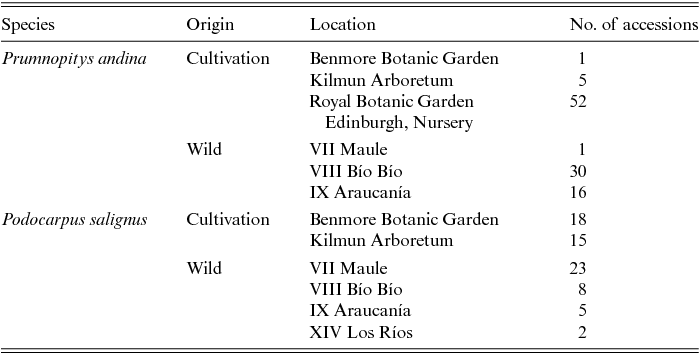
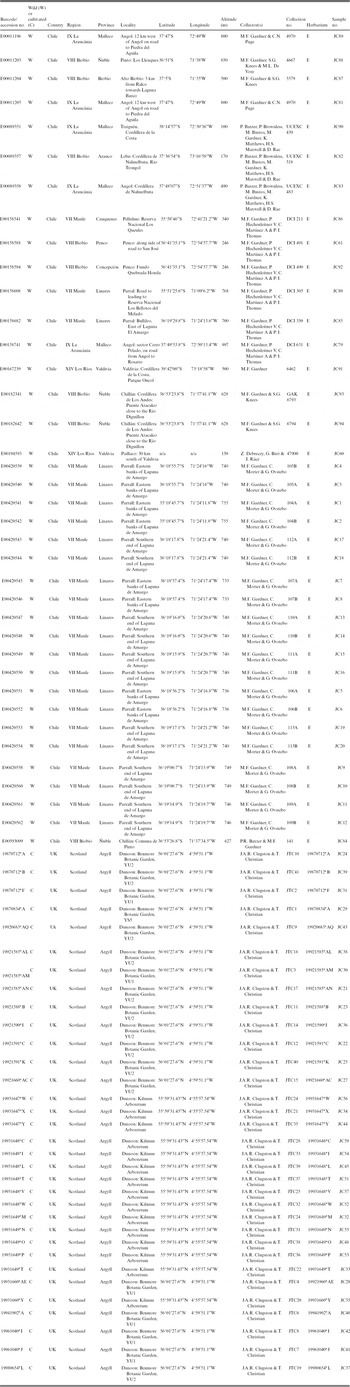
In total, 176 accessions were sampled (105 for Prumnopitys andina and 71 for Podocarpus salignus) (Table 1). Approximately half (58 for Prumnopitys andina and 33 for Podocarpus salignus) were collected from plants of known wild origin in cultivation from three sites: 1) the living collection of one of the Royal Botanic Garden Edinburgh (RBGE) regional gardens, Benmore Botanic Garden (Dunoon, Argyll, Scotland); 2) the International Conifer Conservation Programme safe site at Kilmun Arboretum, Argyll, Scotland; and 3) a known wild origin Prumnopitys andina ‘conservation hedge’ in the RBGE living collection (Gardner, Reference Gardner2013). Each single accession was sampled from both shaded and non-shaded branches. Further samples of both species were collected from herbarium material conserved at E (47 specimens of Prumnopitys andina, 38 of Podocarpus salignus). These specimens encompass almost the entire known geographical range of both species: for Prumnopitys andina from the Chilean region Maule in the north (35°54′S) to La Araucanía in the south (38°51′S); and for Podocarpus salignus from Maule in the north (35°19′S) to Los Ríos in the south (39°42′S). Some of the specimens (eight of Prumnopitys andina and 20 of Podocarpus salignus) had been collected by M. F. Gardner, C. Morter and G. Ovstebo in 2011 in Linares and Ñuble provinces specifically for cuticle analysis from full-sun and shaded branches. For a detailed list of accessions and collections, see Appendix table 1 (for Prumnopitys andina) and Appendix table 2 (for Podocarpus salignus). In addition, to further explore the environmental tolerances of Podocarpus salignus, all 245 occurrence records of the species in the Global Biodiversity Information Facility (GBIF) were downloaded. As detailed in the Acknowledgements and References, these comprised specimens from the following herbaria: B, CHR, E (also Living Collection), FR, K, L (Naturalis dataset), MA, MEL (Australia's Virtual Herbarium dataset), MO, NAM, NY, P, S, SANT, SI, U (Naturalis dataset) and US, as well as living material at RBGE and University of California Botanical Garden, Berkeley.
Number of accessions sampled for each species

Sample preparation
Following the methods proposed by Alvin & Boulter (Reference Alvin and Boulter1974) for gymnosperm leaf cuticle analysis, with modification to the techniques proposed by Stockey & Frevel (Reference Stockey and Frevel1997), Stockey et al. (Reference Stockey, Frevel and Woltz1998), Mill & Stark Schilling (Reference Mill and Stark Schilling2009) and Stark Schilling & Mill (Reference Stark Schilling and Mill2011) to better suit Podocarpaceae, a 20/120% (16.66%) solution of dihydroxidodioxidochromium (H2CrO4, ‘chromic acid’) was prepared. Leaves were removed from each specimen of Podocarpus salignus and Prumnopitys andina, and stainless steel punches were used to remove six to eight circular leaf cuticle discs of 4 mm diameter for Po. salignus, but 3 mm diameter for the smaller leaves of Pr. andina. Leaf discs were placed into chromic acid for 96 h at room temperature. After this pretreatment process, the isolated leaf cuticles were washed with deionised water, placed on filter paper and dried for a minimum of 4 h in Petri dishes.
Selected samples were mounted onto 0.5″ pin-type aluminium specimen stubs using carbon adhesive tabs and sputter-coated with 100% platinum for 1 min using an Emitech K575X sputter coater. Scanning electron microscopy was performed on a Zeiss Leo Supra 55 VP instrument. Four images for each specimen were made. Both the adaxial and abaxial leaf surfaces were examined for both species. For the adaxial surface of Podocarpus salignus, magnifications of × 300 and × 1200 were used. The abaxial surface was photographed at magnifications of × 550 and × 1500, owing to diagnostic characters being smaller. The adaxial surface epidermal cells of Prumnopitys andina were smaller than in Podocarpus salignus, yet the cells of the abaxial surface were slightly larger. Consequently, for the adaxial surface of Prumnopitys andina, magnifications of × 350 and × 1300 were used, whereas for the abaxial surface magnifications of × 450 and × 1400 were used. Lower magnifications of × 450 (Prumnopitys andina) and × 550 (Podocarpus salignus) and higher magnifications of × 1400 (Pr. andina) and × 1500 (Po. salignus) were used to count the total number of stomata on the abaxial surface for both species.
Assessment of taxonomic reliability
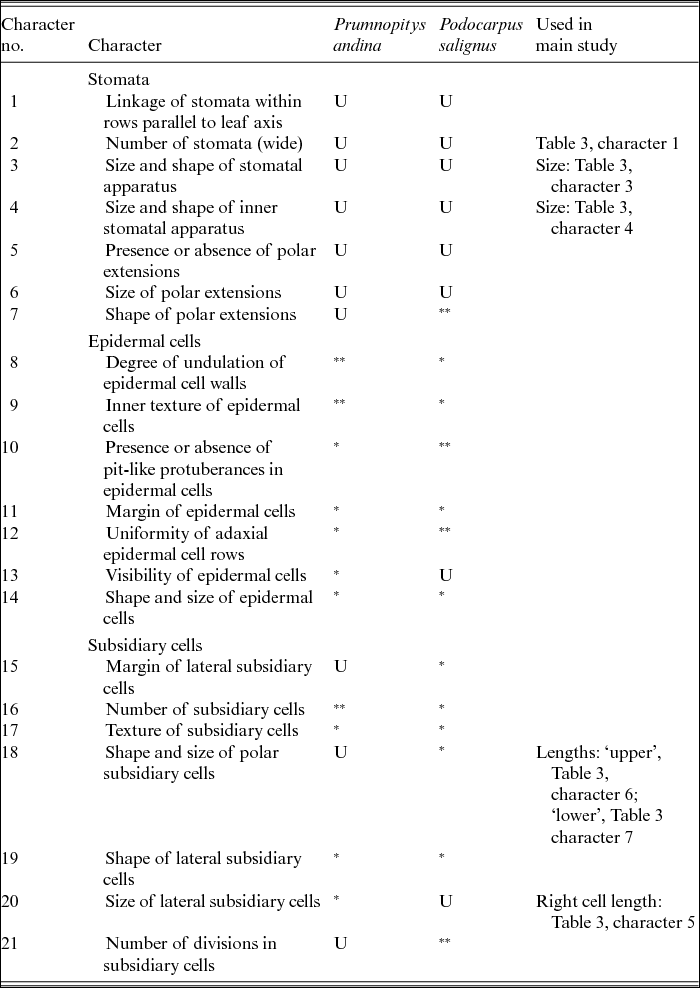
Twenty-one leaf cuticle characters were visually assessed for their taxonomic reliability: seven each of the stomata, epidermal cells and subsidiary cells, as enumerated in Table 2 (see Results). Some were found to be taxonomically informative, whereas others show high variability and are therefore less informative. A three-level ranking system was employed to assess taxonomic reliability.
-
**, Highly reliable. Character invariable or some slight variation, not directly or partially affected by abiotic factors. Subject to little interspecific variation. These characters are considered highly reliable in taxonomy, even when a small sample size is used.
-
*, Moderately reliable. Character somewhat variable; use with caution. Considered somewhat unreliable for use in taxonomic studies.
-
U, Unreliable. Highly variable, very unreliable and consequently of little use for taxonomic purposes.
Taxonomic reliability of leaf cuticle characters in Prumnopitys andina and Podocarpus salignus, based on visual assessment
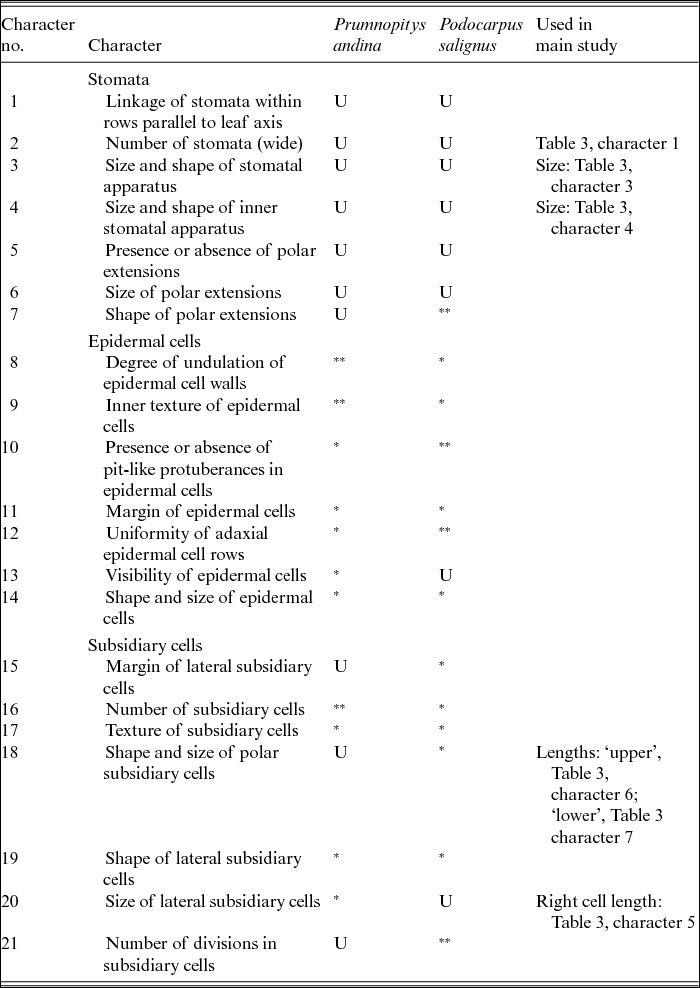
**, Highly reliable; *, moderately reliable; U, unreliable.
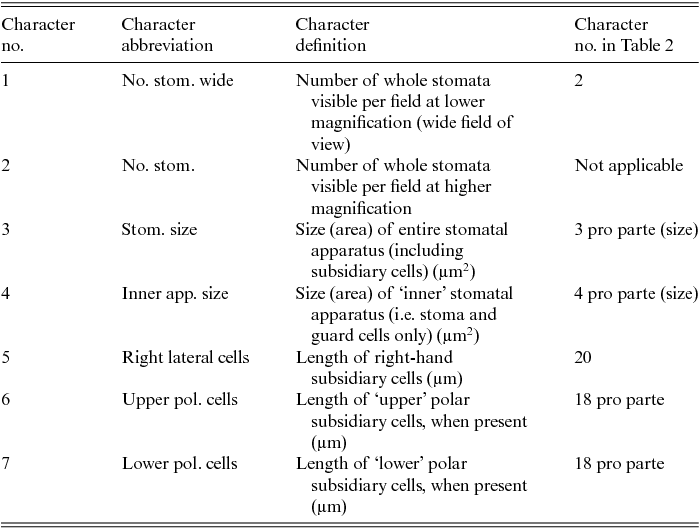
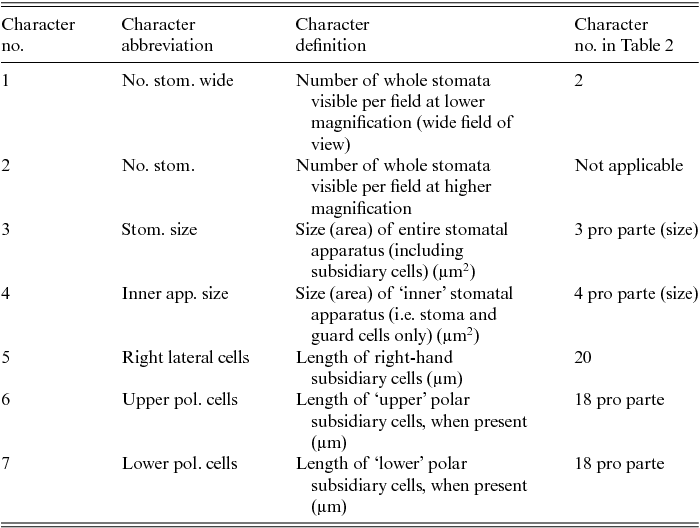
Seven of the characters that were assessed to be the least reliable for taxonomic purposes were subjected to further measurement and analysis to try to establish what abiotic factors, if any, might be responsible for their unreliability. These seven characters were as follows.
-
1. No. stom. wide. Number of whole stomata visible per field at lower magnification (wide field of view: see Figs 3B, 4B).
-
2. No. stom. Number of whole stomata visible per field at higher magnification (see Figs 3E,F, 4E,F).
-
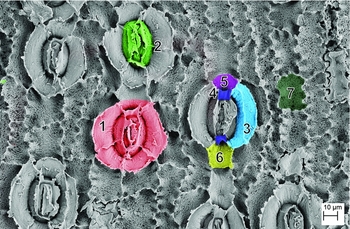
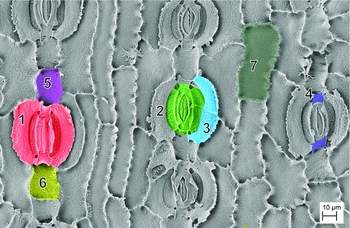
3. Stom. size. Size (area) of entire stomatal apparatus (including subsidiary cells) (μm2) – coloured red and numbered ‘1’ in Figs 1 and 2.
-
4. Inner app. size. Size (area) of ‘inner’ stomatal apparatus (i.e. stoma and guard cells only) (μm2) – coloured light green and numbered ‘2’ in Figs 1 and 2.
-
5. Right lateral cells. Length of right-hand subsidiary cells (µm) – coloured pale blue and numbered ‘3’ in Figs 1 and 2.
-
6. Upper pol. cells. Length (µm) of ‘upper’ polar subsidiary cells, when present – coloured purple and numbered ‘5’ in Figs 1 and 2.
-
7. Lower pol. cells. Length (µm) of ‘lower’ polar subsidiary cells, when present – coloured yellowish and numbered ‘6’ in Figs 1 and 2.
Distinguishing stomatal and epidermal characters from the abaxial inner cuticle surface of Prumnopitys andina. 1, Stomatal apparatus; 2, inner stomatal apparatus with guard cells; 3, right lateral subsidiary cell; 4, polar extensions; 5, upper polar subsidiary cell; 6, lower polar subsidiary cell; 7, abaxial epidermal cell. Note: the terms ‘right lateral subsidiary cell’, ‘upper polar subsidiary cell’ and ‘lower polar subsidiary cell’ refer to the image axis as viewed, not the axis of the leaf itself.

Distinguishing stomatal and epidermal characters from the abaxial inner cuticle surface of Podocarpus salignus. 1, Stomatal apparatus; 2, inner stomatal apparatus with guard cells; 3, right lateral subsidiary cell; 4, polar extensions; 5, upper polar subsidiary cell; 6, lower polar subsidiary cell; 7, abaxial epidermal cell. Note: the terms ‘right lateral subsidiary cell’, ‘upper polar subsidiary cell’ and ‘lower polar subsidiary cell’ refer to the image axis as viewed, not the axis of the leaf itself.

These characters are illustrated for Prumnopitys andina in Fig. 1 and for Podocarpus salignus in Fig. 2. Also shown in these figures are the polar extensions (purple, numbered ‘4’) and abaxial epidermal cells (dark green, numbered ‘7’).
Image analysis
Measurements and analysis of SEM images were carried out using ImageJ version 1.47u (Rasband, Reference Rasband1997–Reference Rasband2012). A maximum of three stomata were measured from the abaxial surface of each sample for both species at magnifications of × 1500 (Podocarpus salignus) or × 1400 (Prumnopitys andina). These characters are illustrated for Prumnopitys andina in Fig. 1 and for Podocarpus salignus in Fig. 2. The subsequent analyses focused on seven stomatal characters, summarised in Table 3.
Seven stomatal characters selected for measurement and analysis in Prumnopitys andina and Podocarpus salignus
Environmental data
Data gathering, statistical analysis and visualisations were all carried out within R 3.2.1 (R Core Team, 2013). Shape files of the Chile and UK country boundaries were obtained from the GADM database of Global Administrative Areas (Global Administrative Areas, 2012), using the R library ‘raster’ 2.1-37 (Hijmans & Etten, Reference Hijmans and Etten2013). Climate data were also gathered through the R library ‘raster’ from WorldClim (Hijmans et al., Reference Hijmans, Cameron, Parra, Jones and Jarvis2005). Two areas (‘tiles’) were downloaded for Chile (area 33 lon = –90, lat = 0 and area 43 lon = –90, lat = –30). A single tile was downloaded for Scotland (area 15 lon = –30, lat = 60). For each species’ occurrence records (recorded using a global positioning system device), climate and elevation data were extracted from the downloaded layers and then appended to the species dataset file. The climate variables encompassed temperature (mean annual, minimum, maximum and range) and precipitation (annual total, precipitation in the wettest month, and precipitation in the driest month).
Statistical analysis
The stomatal characters were analysed using both univariate and multivariate statistics. As a first step, descriptive statistics of central tendency and spread were produced for each of seven stomatal characters in both species. Subsequently, Welch two sample t-tests were used to test for statistically significant differences in these characters between the species. Finally, all characters were analysed simultaneously within the framework of an ordination using the ‘vegan’ community ecology package in R version 2.0-7 (Oksanen et al., Reference Oksanen, Blanchet, Kindt, Legendre, Minchin, O'Hara, Simpson, Solymos, Stevens and Wagner2013). The analysis involved three major steps.
-
1. To explore visually whether there are differences in the sets of stomatal characters (in two-dimensional ‘character space’) between the two species, a principal components analysis (PCA) was conducted of all characters of both species. The PCA was centred and scaled to unit variance.
-
2. To explore whether the characters vary with environmental factors, we first explored the effect of sun exposure (visually in box plots).
-
3. To test whether in addition to sunlight the characters vary with climate, we conducted two separate PCAs for each species for sunlit and shaded conditions, respectively, and used the function ‘envfit’ from the R ‘vegan’ package to assess the strength of the correlation between the climatic variables and the ordination axes.
Adaxial leaf surface
Forty samples (26 of Prumnopitys andina and 14 of Podocarpus salignus) were examined using light microscopy to check for the presence of adaxial stomata. Fourteen of the 26 samples of Prumnopitys andina and nine of the 14 samples of Podocarpus salignus were of wild origin, the remaining samples of each species being of cultivated material. All specimens of Podocarpus salignus were exclusively hypostomatic, i.e. stomata were never present on the adaxial leaf surface. However, in Prumnopitys andina the character was found to be variable, some specimens being hypostomatic and some differentially amphistomatic with a few stomata on the adaxial surface. Therefore, a general linear model with binomial error distribution was used to test whether the presence of adaxial stomata in Prumnopitys andina varied with environmental factors.
Results
Species leaf cuticle micromorphological descriptions
Prumnopitys andina ( Fig. 3 )
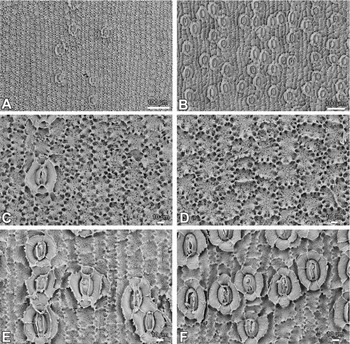
Leaves hypostomatic or differentially amphistomatic (Fig. 3A,B), with fewer or no stomata on the adaxial surface (Fig. 3A). Abaxial surface: stomata in distinct rows oriented parallel to the long axis of the leaf, sometimes irregularly clustered (Fig. 3B). Stomatal apparatus greatly varying in size and shape among observed samples, but often irregularly rounded to oval in shape (Fig. 3B). Distal and proximal polar cells present, often distinct (Fig. 3E,F). Lateral subsidiary cells two to three, sometimes four; flanges between subsidiary and guard cells broad, with irregular edges and either smooth or striated on their inner surface (Fig. 3E,F). Polar subsidiary cells present, sometimes greatly reduced, rectangular to trapezoid in shape. Adaxial surface (Fig. 3C,D): epidermal cells rectangular, arranged in parallel rows oriented along the long axis of the leaf. Margins of cells undulating to crenate with distinct protuberances that appear like ‘hollowed pits’ that surround the undulating surface of the epidermal cells. Stomata present fairly frequently.
Leaf cuticle (inner surface) anatomy of Prumnopitys andina. A, Adaxial normally non-stomatal surface yet with stomata present, × 350. B, Abaxial stomatal surface of the leaf cuticle, × 450. C, Adaxial normally non-stomatal surface, showing the presence of stomata, × 1300. D, Adaxial non-stomatal surface of the leaf cuticle, with distinctive darkened protuberances that appear like pits surrounding cuticle cells, × 1300. E and F, Abaxial stomatal surface of the leaf cuticle, showing the variation in stomatal density. × 1400.

Podocarpus salignus ( Fig. 4 )
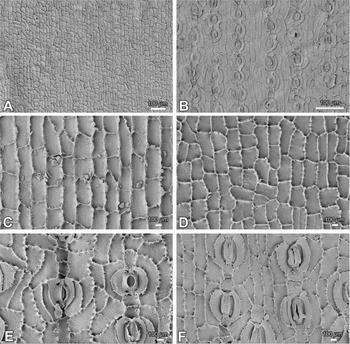
Leaves hypostomatic (Fig. 4A,B). Abaxial surface: stomata arranged in distinct rows parallel with the long axis of the leaf, often tending to be opposite to subopposite in adjacent rows and sometimes clustered in groups of three or four (Fig. 4B). Stomatal apparatus variable in size and shape (Fig. 4B), irregularly rounded to oval in shape (Fig. 4E,F). Lateral subsidiary cells very distinct and enlarged, variable in size and structure; flanges between subsidiary cell and guard cell often wing-like in appearance, with rounded to irregular edges (Fig. 4E,F). Polar subsidiary cells distinct but sometimes greatly reduced, rectangular and uneven in shape (Fig. 4E,F). Adaxial surface (Fig. 4C,D): epidermal cells closely packed, rectangular to irregularly rectangular, arranged in distinct lines or irregularly spaced rows parallel with the long axis of the leaf; outer margin of epidermal cells slightly undulating or nearly straight, irregular. Stomata not observed in any sample.
Leaf cuticle (inner surface) anatomy of Podocarpus salignus. A, Adaxial non-stomatal surface, × 300. B, Abaxial stomatal surface of the leaf cuticle, showing the prominent parallel rows of stomata, × 550. C and D, Adaxial non-stomatal surface of the leaf cuticle, also showing the variation in adaxial leaf cuticle patterning between the samples, × 1200. E and F, Abaxial cuticle surface, showing variation in leaf cuticle structure and differences between open and closed stomatal apertures, × 1500.

Variability and reliability of cuticular characters as a taxonomic tool
Of the 21 characters assessed for their taxonomic reliability in each species (Table 2), for Prumnopitys andina three characters were considered highly reliable, eight moderately reliable and 10 unreliable. In Podocarpus salignus, four characters were considered highly reliable, nine moderately reliable and eight unreliable. Characters of the epidermal cells were the most reliable for taxonomic purposes; in Prumnopitys andina, all seven epidermal cell characters (Table 2, nos. 8–14) were either highly reliable (two: nos. 8 and 9) or moderately reliable (the other five), whereas in Podocarpus salignus six out of the seven were highly reliable (nos. 10 and 12) or moderately reliable, with only one character (no. 13, visibility of epidermal cells) being unreliable. Characters of the subsidiary cells (Table 2, nos. 15–21) were almost as reliable as those of the epidermal cells, especially in Podocarpus salignus. In Prumnopitys andina, one subsidiary cell character was highly reliable (no. 16, number of subsidiary cells), three (nos. 16, 19 and 20: texture, shape and size) were moderately reliable and three (nos. 15, 18 and 21) were unreliable. For Podocarpus salignus, one character (no. 21, number of divisions) was considered highly reliable, five (nos. 15–19) moderately reliable and only one (no. 20) unreliable. The least reliable category of characters for taxonomic purposes, for these two species, was that relating to the stomata (Table 2, nos. 1–7). Of these, all were unreliable in Prumnopitys andina and six out of seven were unreliable in Podocarpus salignus. In that species, however, the shape of the polar extensions was assessed as highly reliable. The data indicated that a given character, in any of the three categories (stomata, epidermal cells and subsidiary cells), may be highly reliable in one species but unreliable in another. However, overall, in these two species, characters of the epidermal cells and to a lesser extent the subsidiary cells were more reliable than those of the stomata for taxonomic purposes, especially when dealing with small sample sizes.
Differences in stomatal characters between species
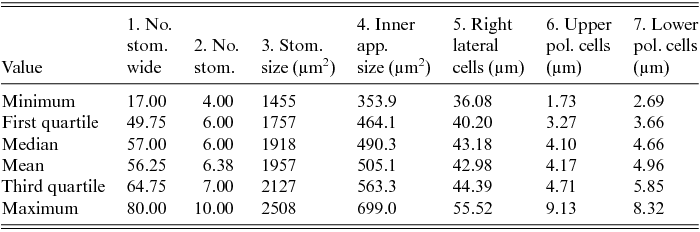
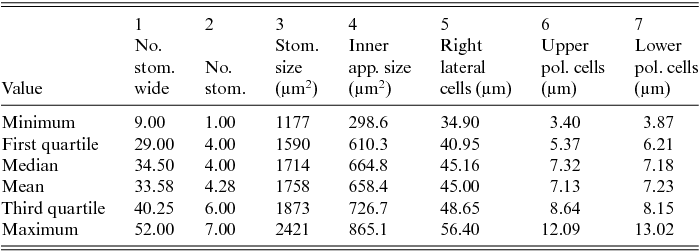
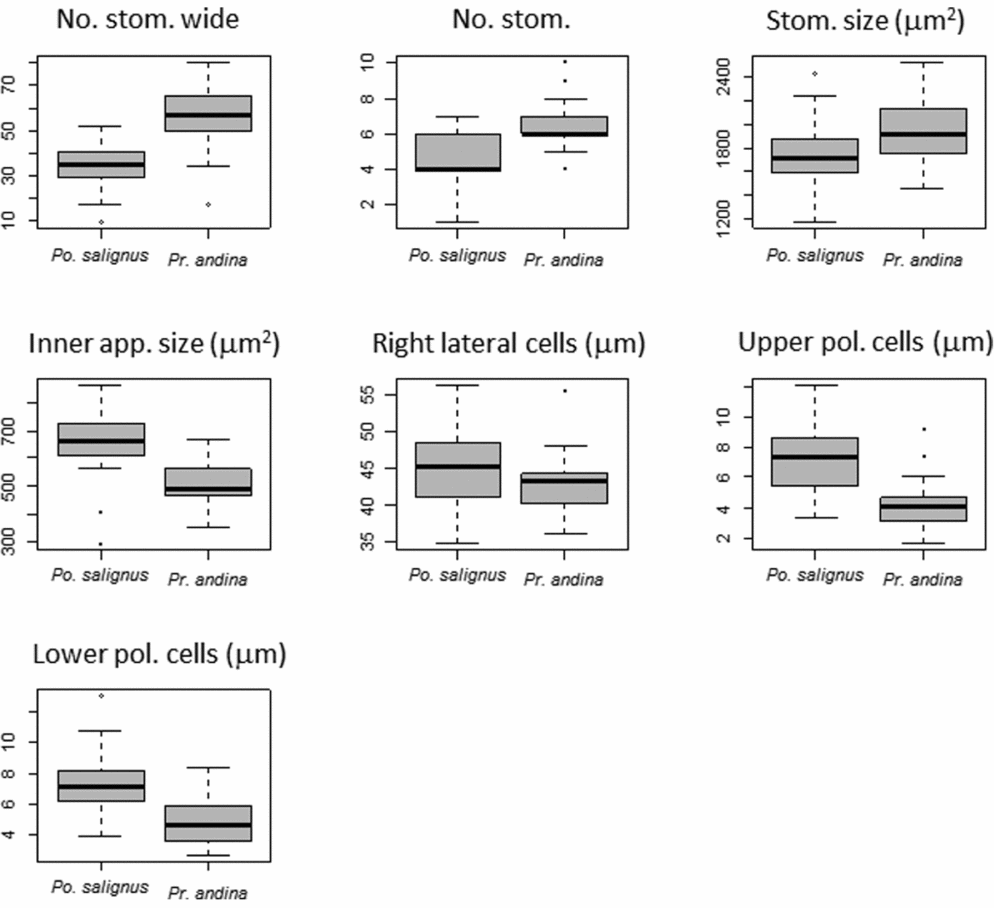
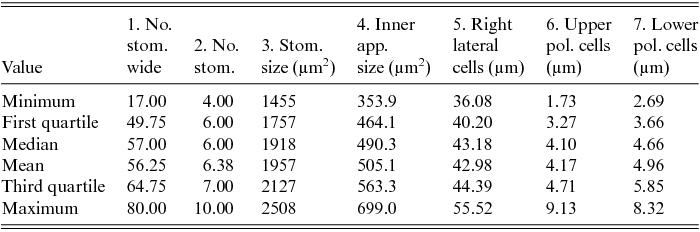
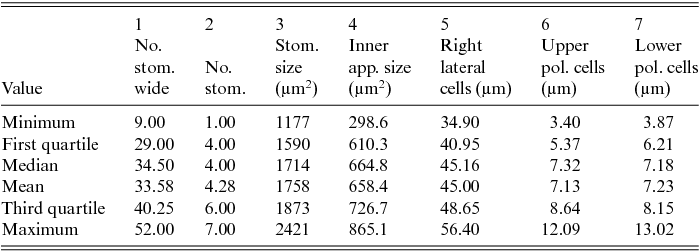
Descriptive statistics for the stomatal characteristics in each species are summarised in Tables 4 and 5 and Fig. 5. Prumnopitys andina had a greater density and number of stomata than Podocarpus salignus. Prumnopitys andina also had the larger stomatal apparatus of the two species. However, the inner stomatal apparatus was slightly larger in Podocarpus salignus and was subject to much greater variability than Prumnopitys andina. The right lateral subsidiary cells showed little variation in length between species. The upper and lower polar extensions were larger in Podocarpus salignus than in Prumnopitys andina.
Summary of measurements for seven leaf micromorphological characters in 29 samples of Prumnopitys andina, showing values for minimum, first quartile, median, mean, third quartile and maximum range of stomatal sizeFootnote a
a For explanation of character abbreviations, please see the main text.
Summary of measurements for seven leaf micromorphological characters in 25 samples of Podocarpus salignus, showing values for minimum, first quartile, median, mean, third quartile and maximum range of stomatal sizeFootnote a
a For explanation of character abbreviations, please see the main text.
Box plots of character differentiation between Prumnopitys andina and Podocarpus salignus. Each box plot visualises the characters shown in Tables 4 and 5; each shows the mean (black line), interquartile range (grey box), and minimum and maximum of each character (whiskers). The box plots allow an easy direct comparison between each of the characters for both species presented in Tables 4 and 5. For explanation of character abbreviations, please see the main text.

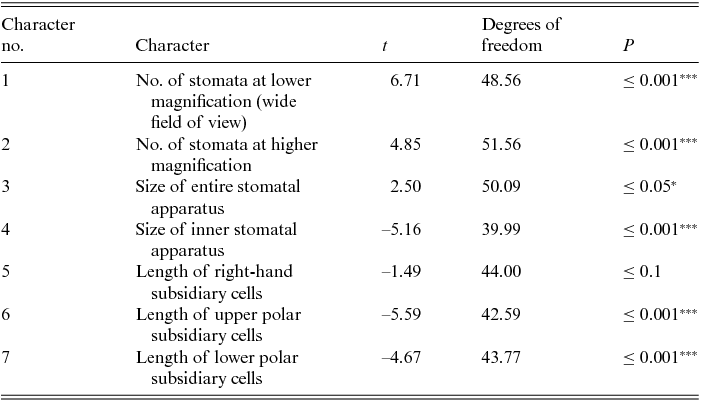
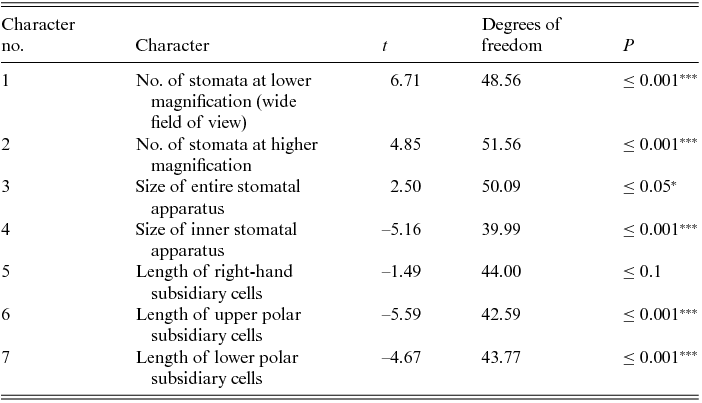
The t-tests showed that the character differences between Prumnopitys andina and Podocarpus salignus were all statistically significant, with the exception of the size of the right lateral subsidiary cells, which was, however, marginally significant (P ≤ 0.1) (Table 6).
Measurement of significance between seven characters for Prumnopitys andina and Podocarpus salignus using Welch two-sample t-test
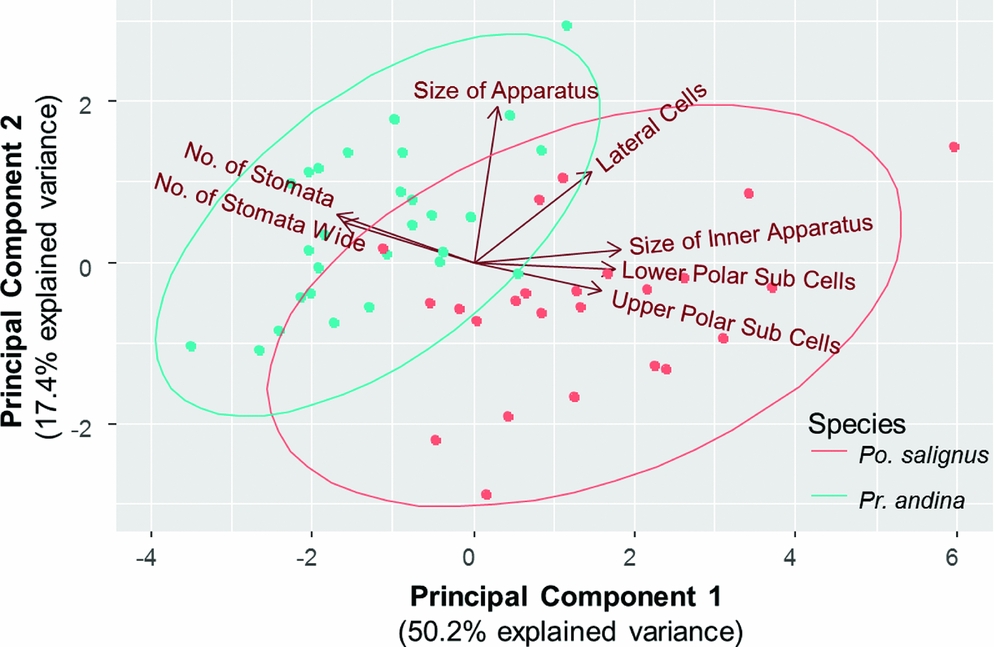
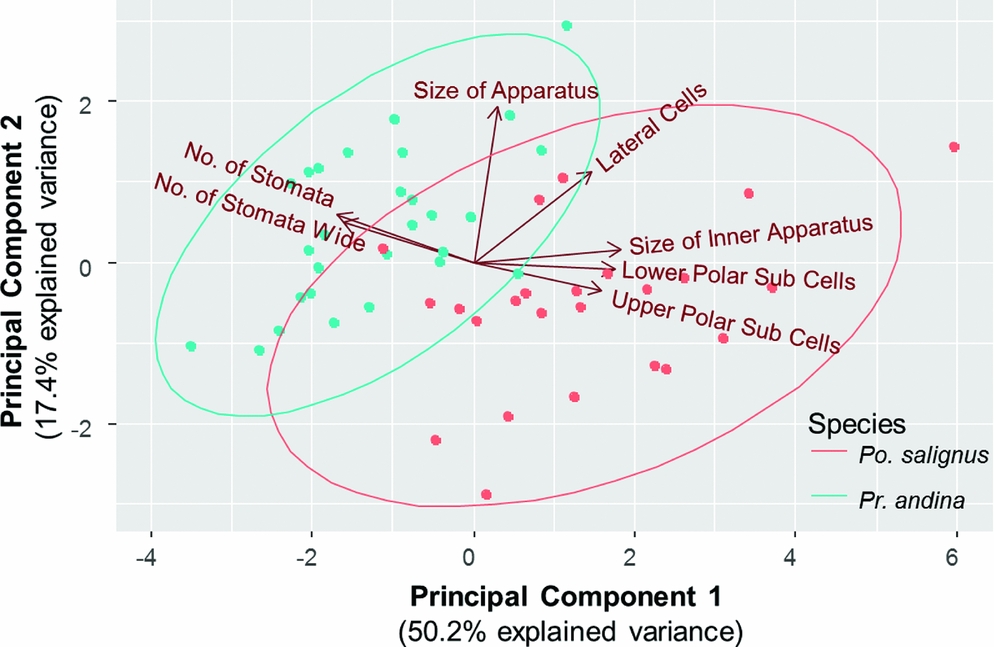
The multivariate analyses of all characters (Fig. 6) corroborated the previous findings (greater density of stomata and smaller inner stomatal apparatus in Prumnopitys andina than in Podocarpus salignus), but also showed that these characters are somewhat variable and can overlap between the two species.
Principal component analysis ordination diagram showing character differentiation between Prumnopitys andina and Podocarpus salignus. The species ellipses have a normal probability size of 0.95. The plot was drawn using the R library ‘ggbiplot’ (Vu, Reference Vu2011). For explanation of character abbreviations, please see the main text.
Effect of environmental factors on stomatal characters
Climate for Prumnopitys andina
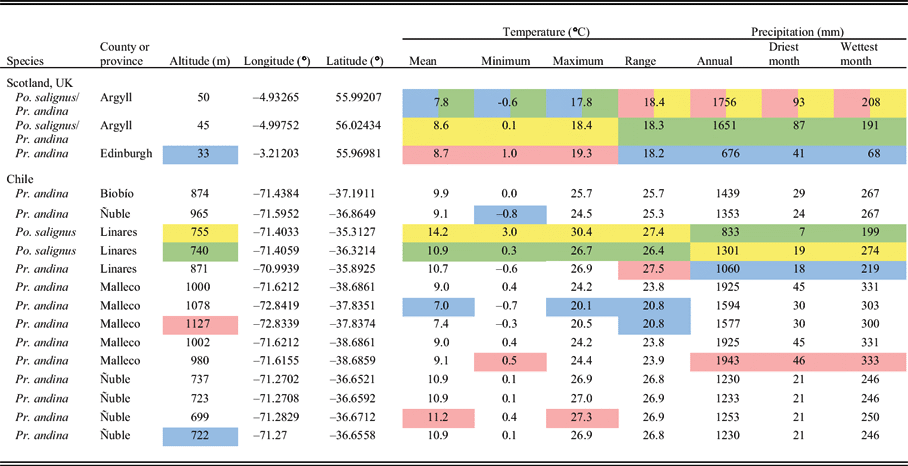
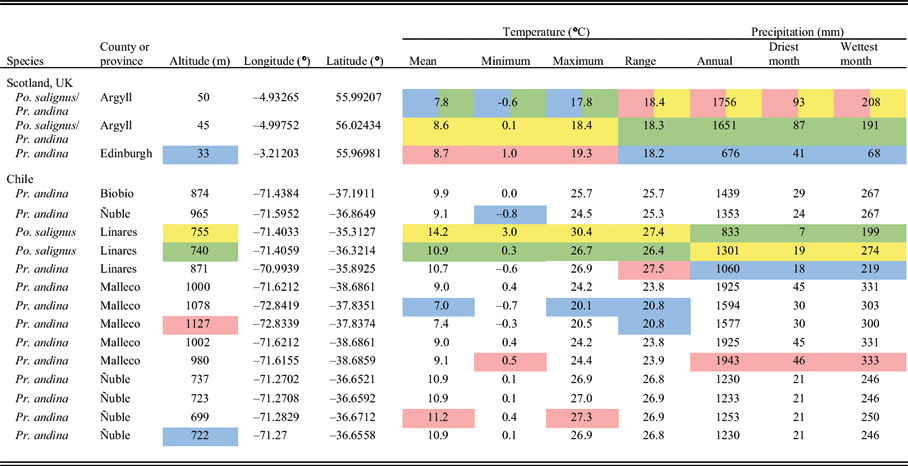
The wild occurrence records for this species encompassed the following environments (Appendix table 3): elevations from 722 m (Ñuble province) to 1127 m (Malleco province); minimum temperatures from –0.8°C to maximum temperatures of > 27°C (both Ñuble province), and mean temperatures from 7°C (Malleco) to 11.2°C (Ñuble). The total annual precipitation ranged from 1060 mm (Linares) to 1943 mm (Malleco), precipitation in the driest month from 18 mm to 46 mm, and precipitation in the wettest month from 219 mm to 333 mm (with these extremes being present in the same provinces as total annual rainfall).
In Scotland, the species is cultivated at lower elevations (33–50 m) than it occurs in its natural range. The temperature at the cultivation sites was within the temperature range experienced in the wild, as was the minimum rainfall in the driest month. However, overall the species encountered a substantially drier climate in Edinburgh, with only 676 mm total annual rainfall.
Climate for Podocarpus salignus
The records used for this species in the ordination analyses all came from the Chilean province of Linares and encompassed the following environments (Appendix table 3): elevations from 740 m to 755 m; minimum temperatures from 0.3°C to maximum temperatures of 26.8°C, and mean temperatures from 10.9°C to 14.2°C. The total annual precipitation ranged from 833 mm to 1301 mm, precipitation in the driest month from 7 mm to 19 mm, and precipitation in the wettest month from 199 mm to 274 mm. Therefore, even though these records all stemmed from the same province and a similar altitude, they encompassed a wide range of climates. The cultivated plants in Scotland encountered lower temperatures (annual mean temperature 8.6°C) and more rainfall (annual precipitation > 1700 mm) than the wild populations they originate from. However, a download from the GBIF (for datasets used, see Materials and Methods, Acknowledgements and References) of all available records for Podocarpus salignus, in combination with WorldClim data (Hijmans et al., Reference Hijmans, Cameron, Parra, Jones and Jarvis2005), showed that in other parts of its range the species encounters even more extreme conditions. The species tolerates temperatures ranging from a minimum of –3.8°C to a maximum of 29.7°C, and rainfall from 7 mm in the driest month to 434 mm in the wettest month, and a total annual rainfall of up to 2409 mm.
Analysis of the influence of environmental factors
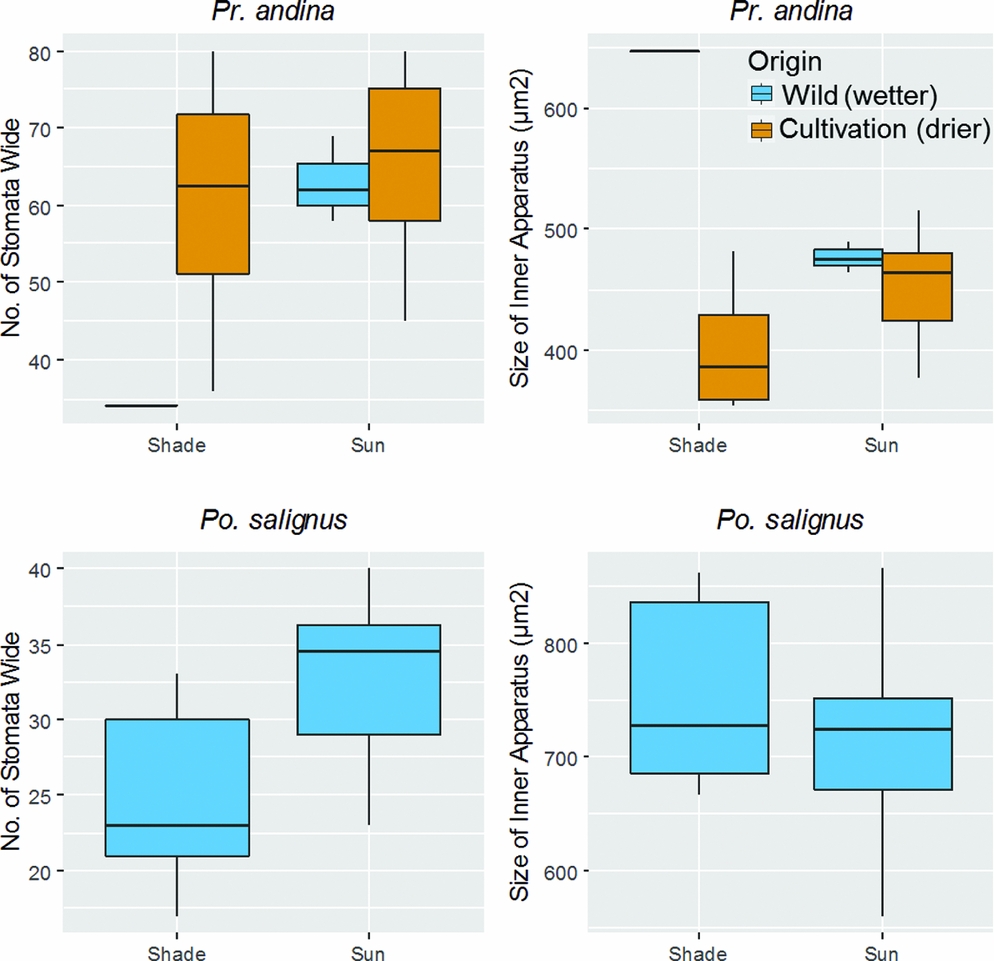
Figure 7 shows that in both species shaded leaves tended to have fewer and larger stomata (e.g. the size of the inner apparatus). In addition, greater moisture availability (total annual rainfall) appeared to have a positive effect on stomata size and a negative effect on stomata density: Prumnopitys andina encountered an overall drier climate in cultivation than in the wild, and the cultivated trees were characterised by a greater density of smaller stomata for a given level of sun exposure. This effect was particularly pronounced in shaded leaves (Fig. 7). Unfortunately, no data were available on sun exposure for Podocarpus salignus in cultivation, but in the wild shaded leaves had larger and fewer stomata.
Changes in the number of stomata and size of the inner apparatus in Prumnopitys andina and Podocarpus salignus with light conditions. In shady environments, there are fewer and larger stomata. In addition, greater moisture availability appears to influence these characters. Prumnopitys andina encounters a significantly drier climate in cultivation than in the wild, and developed more and smaller stomata. For explanation of character abbreviations, please see the main text.
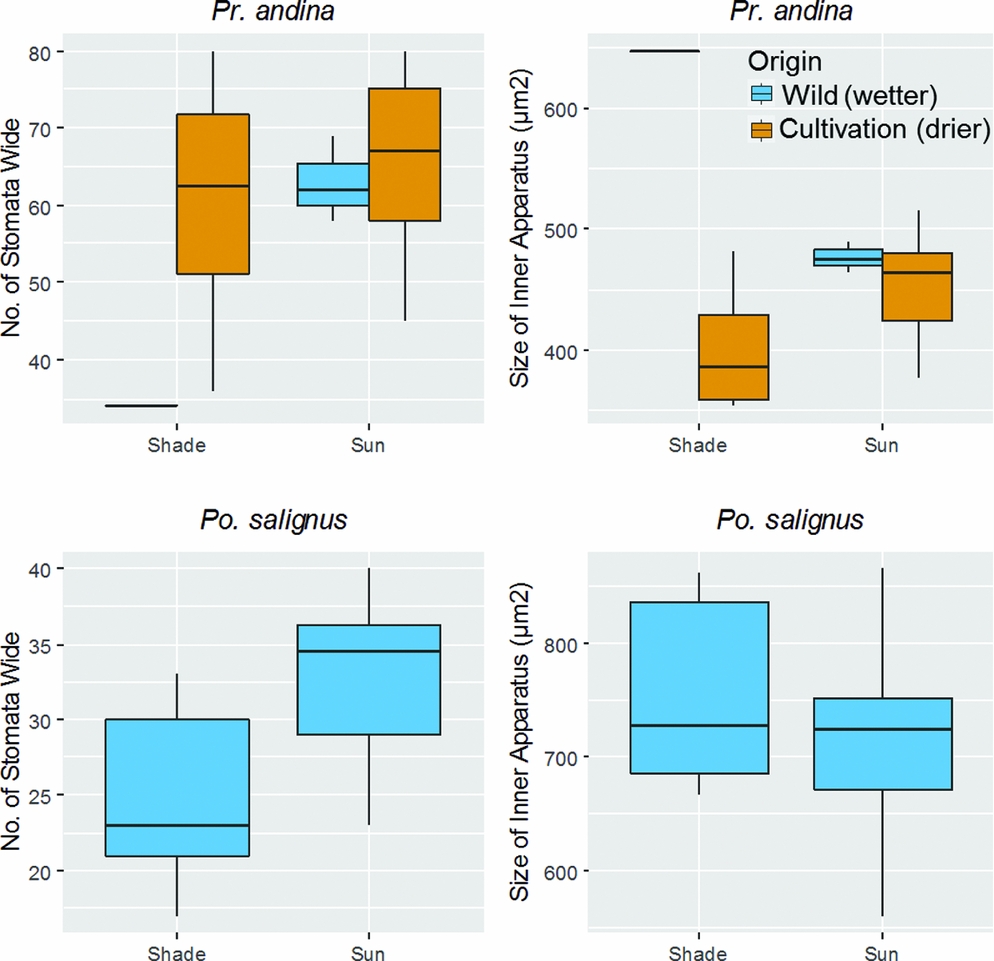
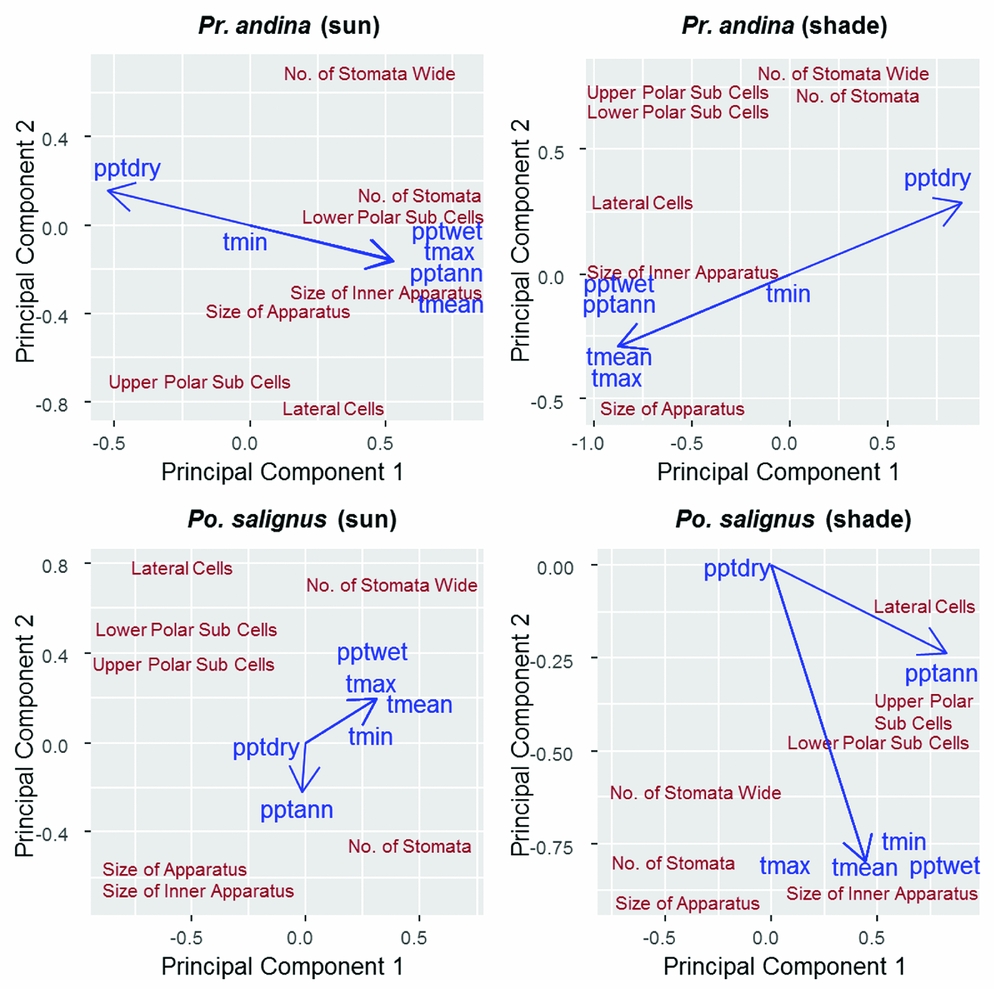
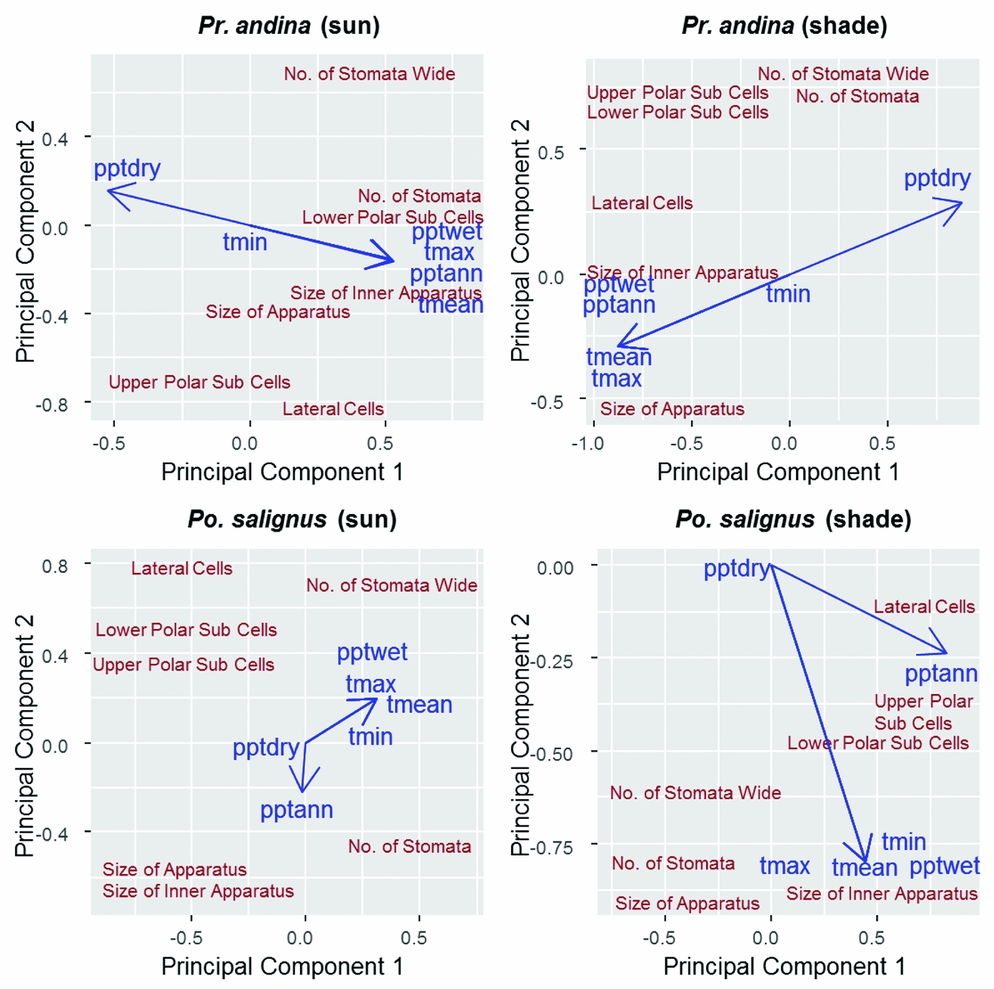
Figure 8 shows the output of the PCA for stomatal characters of each species separately, standardised by sun exposure and overlaid with climatic variables. The analysis corroborated that in both species greater annual moisture availability positively correlated with the size of the stomata (apparatus, inner apparatus and/or lateral and polar cells) and negatively correlated with the density of stomata. The effect of temperature was less clear, potentially because rainfall and temperature were positively associated for the samples of Prumnopitys andina but negatively associated in the samples for Podocarpus salignus. The same is true for precipitation in the driest month, which positively correlated with total annual rainfall for Podocarpus salignus and negatively for Prumnopitys andina.
Principal component analysis for stomatal characters of Prumnopitys andina and Podocarpus salignus (in sunny and shade environments), overlaid with climatic data. Moisture availability tends to increase the size of the inner apparatus and/or lateral cells and polar cells, and to decrease the number of stomata. pptann, annual precipitation; pptdry, precipitation in the driest month; pptwet, precipitation in the wettest month; tmax, temperature in the warmest month; tmean, annual mean temperature; tmin, temperature in the coldest month. For explanation of character abbreviations, please see the main text.
Presence of stomata on the adaxial leaf surface
Stomata were found on the adaxial leaf surface in 12 of the 26 samples (46.2%) in Prumnopitys andina (Fig. 3): six out of 14 samples from Chile (42.8%) and six out of 12 samples from Scotland (50%). Six environmental factors were tested for their possible effects on this character, namely minimum temperature, maximum temperature, temperature range, annual precipitation, precipitation in the wettest month and precipitation in the driest month. However, none of these factors was a statistically significant predictor for the presence of stomata on the adaxial surface, although there was a small positive association between the presence of adaxial stomata and total annual precipitation.
Discussion
This study analysed whether cuticle micromorphology produces reliable taxonomic characters in two example species of Podocarpaceae, as well as whether these characters are influenced by environmental factors. Overall, there were significant differences in the micromorphological cuticular characters between the two species. The stomatal apparatus of Prumnopitys andina was larger than in Podocarpus salignus, and Pr. andina also had the higher density of stomata of the two species. The inner apparatus, on the other hand, was larger in Podocarpus salignus (Tables 4 and 5).
However, these characters also varied with environmental factors. In both species, higher levels of precipitation and shade correlated with an increase in the size of stomata (apparatus, inner apparatus, guard cells and/or polar cells), and with a decrease in the density of stomata. Therefore, depending on the environment, there was some overlap between these characters in the two species. The effect of drought on both shaded and sun-exposed leaves was particularly visible in Prumnopitys andina, which experienced substantially drier conditions in cultivation than in the wild. With respect to Podocarpus salignus, although the cultivated samples in Scotland encounter a colder and wetter environment than the wild populations from which they originate, the species range in its entirety comprises even more extreme conditions, as noted in the Results.
Having said this, a number of leaf cuticle characters remain constant and show little or no variation regardless of climate. These more constant characters may be genetically controlled in the phenotype of the species (Zhang et al., Reference Zhang, Niu, Wang, Zhu, Luo, Li and Zhao2012) and may be regarded as taxonomically the most reliable. For these two species of Podocarpaceae, such constant characters include most epidermal cell and subsidiary cell characters, such as wall undulation; texture of the inner surface; presence of pit-like structures; uniformity of epidermal cell rows; and number, texture and shape of subsidiary cells (as indicated by * or ** in Table 2).
Adaxial stomata
Stockey & Frevel (Reference Stockey and Frevel1997) found that the leaves of three species of Prumnopitys [Pr. ferruginoides (Compton) de Laub. and Pr. ladei (F.M.Bailey) de Laub. from New Caledonia and Australia, and Pr. standleyi (J.Buchholz & N.E.Gray) de Laub. from Central America] were amphistomatic. However, all the other species studied by them, including Prumnopitys andina, were thus far thought to be strictly hypostomatic. As with other studies of the Podocarpaceae (Stockey & Ko, Reference Stockey and Ko1990; Stockey et al., Reference Stockey, Ko and Woltz1992, Reference Stockey, Frevel and Woltz1998; Mill & Stark Schilling, Reference Mill and Stark Schilling2009; Whiting, Reference Whiting2009), only a small sample size was used per species (only one specimen per species, except for Prumnopitys ladei, of which two were sampled). By contrast, we examined the cuticles of 26 samples of Prumnopitys andina of both cultivated and wild origin and found adaxial stomata in 12 of them. This is a newly recorded character for this species. Although the presence or absence of adaxial stomata showed no statistically significant relationship with environmental conditions, there was some indication that their presence was increased by higher precipitation and lower minimum temperature.
Despite the large sample size of Podocarpus salignus examined here, no stomata were observed on the adaxial leaf surface, supporting the description of the leaf cuticle of the species presented by Whiting (Reference Whiting2009). These results also support the findings of Stockey & Ko (Reference Stockey and Ko1988), Stockey et al. (Reference Stockey, Frevel and Woltz1998) and Stark Schilling & Mill (Reference Stark Schilling and Mill2011) that members of the genus Podocarpus lack stomata on the adaxial surface of the leaves, except in a few rare cases such as Podocarpus elongatus (Sol.) L'Hér. ex Pers. (Stockey et al., Reference Stockey, Frevel and Woltz1998).
Importance of a large sample size
Many studies of leaf cuticle micromorphological characters in gymnosperms generally, and Podocarpaceae in particular, have used small sample numbers, typically one to three per species. Although this may allow a more rapid description of stomatal characters and a larger range of species to be studied, it will not account for either phenotypic or genetic variability within taxa. Hill & Carpenter (Reference Hill and Carpenter1991) suggested that the single sample of the cuticle of Acmopyle pancheri (Brongn. & Gris) Pilg. (Podocarpaceae) that was used by Stockey & Ko (Reference Stockey and Ko1988) was an extreme morphological example for that species, and that the cuticle was not as distinctive as implied in the earlier description by Stockey & Ko (Reference Stockey and Ko1988).
When studying the genus Araucaria Juss., Stockey & Ko (Reference Stockey and Ko1986) sampled all accepted species in the genus and made strong assumptions about the leaf cuticle micromorphology in the genus. However, in most cases they used only a single sample accession for each species. Hence this would not account for any intraspecific variability, and possibly lead to inaccurate, or at least incomplete, descriptions of species.
The larger sample size used in this study uncovered greater intraspecific variability within both species than has been apparent in previous studies in the Podocarpaceae. One of the most interesting findings was the presence of stomata on the adaxial surface of the leaf cuticle in some samples of Prumnopitys andina. Nevertheless, the sample size we used still did not yield enough data to provide statistical significance for the presence of stomata on the adaxial surface in relation to climatic conditions. Therefore, our study shows that many leaf cuticle micromorphological characters are subject to a great deal of intraspecific variation, and emphasises the importance of using greater sample sizes than has been hitherto considered acceptable for the purpose of using leaf cuticle micromorphological characters in taxonomic research. Ideally, future studies of leaf cuticles should focus on utilising a larger sample size. Doing this for Prumnopitys would allow one to test whether all species within the genus potentially have adaxial stomata and if their presence is correlated with decreased temperatures, shade and/or higher levels of precipitation, as suggested by the results of this study.
Adaptive significance in differences in leaf cuticle micromorphology in relation to environmental factors
The results suggest that the variation in the size of the stomatal apparatus and inner stomatal apparatus in both species may not be heavily constrained by the genetic make-up of the species, but that they are controlled by environmental conditions. This is supported by several other studies, which found differences in stomatal morphology in relation to different environments, for example Sharma & Dunn (Reference Sharma and Dunn1968) in Kalanchoe fedtschenkoi Raym.-Hamet & H.Perrier; Schulze et al. (Reference Schulze, Hall, Lange, Evenari, Kappen and Buschbom1980) in desert species including Artemisia herba-alba Asso, Hammada scoparia (Pomel) Iljin, Prunus armeniaca L., Reaumuria negevensis Zohary & Danin and Zygophyllum dumosum Boiss.; Bakker (Reference Bakker1991) in glasshouse-grown vegetables including sweet pepper (Capsicum annuum L.), cucumber (Cucumis sativus L.), tomato (Lycopersicon esculentum Mill.) and eggplant (Solanum melongena L.); Poole et al. (Reference Poole, Meyers, Lawson and Raven1996) in the angiosperm tree Alnus glutinosa (L.) Gaertn. (Betulaceae); and Mitton et al. (Reference Mitton, Grant and Yoshino1998) in Pinus edulis Engelm.
A possible explanation for the effect of precipitation and sun exposure is provided by Aasamaa et al. (Reference Aasamaa, Sober and Rahi2001), who showed that there is a negative relationship between the size of stomata and their response time to drought (closure). Consequently, a small number of large stomata could lead to stress and hydraulic dysfunction in dry conditions. A higher density of smaller stomata in sunny and/or dry environments may also allow for greater temperature control through increased evaporation. In humid and shady conditions, the slower dynamic behaviour of large stomata is less disadvantageous (Hetherington & Woodward, Reference Hetherington and Woodward2003). Allen & Pearcy (Reference Allen and Pearcy2000) have shown that shade-tolerant species retain open stomata through parts of the day to minimise the impact of slow response times during the few sunlit hours.
The differentially amphistomatic leaves found in some samples of Prumnopitys andina may also have adaptive significance in allowing the species to increase its rate of transpiration in shady and wetter environments. Mott et al. (Reference Mott, Gibson and O'Leary1982) inferred that the presence of amphistomatic leaves was somewhat correlated with a shaded environment and a constantly available supply of soil water. The adaptive advantage of amphistomatic leaves means that such plants are able to maintain a higher maximum leaf conductance and a higher rate of transpiration than those with epistomatic or hypostomatic leaves (Mott et al., Reference Mott, Gibson and O'Leary1982). This indicates that species of Prumnopitys with the ability to produce stomata on the adaxial leaf surface, such as Prumnopitys andina, may be capable of a higher rate of transpiration when growing in areas of higher precipitation, by increasing their water uptake, thereby increasing their photosynthetic capacity.
Suggestions for future research
Our research showed that there is variation in leaf cuticle characters in different environmental conditions in the two example species. Further research should also focus on other members of the Podocarpaceae, and more widely gymnosperms, to test whether environmental factors play a role in leaf cuticle micromorphology in other groups too.
In addition, variation in leaf cuticle micromorphology has still not really been assessed at the population level. How does variation in leaf cuticle micromorphology relate across an entire population, and across multiple populations within the Podocarpaceae and within conifers as a whole?
More specifically, the presence of adaxial stomata, found in some samples of Prumnopitys andina, highlighted the importance of the use of a large sample size. However, in this study the sample size was still not great enough to determine the statistical significance of stomata on the adaxial surface of the leaf cuticle in relation to climatic factors.
Finally, it would be interesting to gain an understanding of the developmental responses to increased precipitation and other climatic factors. The genetic responses to climatic conditions in the Podocarpaceae could also provide useful insights into the development of stomata in the gymnosperms.
Conclusions
The results from this study support the hypothesis that external factors can have an effect on cuticular micromorphology of Podocarpaceae. Both species showed phenotypic plasticity, and in cultivation were able to adapt to environments that are quite different to their native habitat. This raises the general question of how variable species really are, and how the effects of climate change may be offset by phenotypic plasticity, which ultimately could be the key to their survival.
In Prumnopitys andina, stomata were found on the adaxial surface of the leaf cuticle, which was a newly recorded character for the species. Although no statistical significance was found with the presence of adaxial stomata and climatic factors, there was some indication that the presence of this character is linked to increased precipitation, lower temperature and leaves that were growing in the shade. Many other of the descriptive characters used in leaf cuticle micromorphology studies appeared to be subject to a great deal of intraspecific variation too. In both species, the size of the stomatal apparatus and inner stomatal apparatus and the density of stomata were highly variable and influenced by environmental factors.
However, a number of leaf cuticle characters can be considered reliable in both species: degree of undulation of epidermal cell walls, inner texture of epidermal cells, presence or absence of pit-like protuberances in epidermal cells, margin of epidermal cells, uniformity of adaxial epidermal cell rows, shape and size of epidermal cells, and number of subsidiary cells. Because of the degree of variation in leaf cuticle characters in both species, this study has indicated the importance in using a large sample size. Using a greater range of samples means that it becomes possible to assess the degree of variability in the leaf cuticle characters and to establish how useful they may be as a tool for taxonomic research. Because much of the work in the Podocarpaceae has focused on smaller samples, interspecific variation may not have been accounted for, leading to inaccurate descriptions.
Acknowledgements
We thank Frieda Christie (RBGE) for advice, particularly relating to SEM techniques; Tom Christian (RBGE) for his help in collecting voucher specimens and samples in Dunoon; and Martin Gardner (RBGE) for collecting specimens in Chile. Use of the following datasets of Chilean specimens of Podocarpus salignus accessed via the GBIF is hereby acknowledged in terms of the relevant licences: Allan Herbarium, Christchurch (Wilton, Reference Wilton2017); Australia's Virtual Herbarium (Council of Heads of Australasian Herbaria, 2017); Berkeley Natural History Museums (2017); Herbarium Berolinense (2017); Herbarium Senckenbergianum (2017); Herbarium of Namur (Martin & Heughebaert, Reference Martin and Heughebaert2017); Instituto de Botánica Darwinion, Buenos Aires (SI) (Instituto de Botánica Darwinion, 2017); Missouri Botanical Garden Tropicos Specimen Database (Magill et al., Reference Magill, Solomon and Stimmel2016); Muséum national d'Histoire naturelle, Paris (Chagnoux, Reference Chagnoux2017); National Museum of Natural History, Smithsonian Institution (Orrell & Hollowell, Reference Orrell and Hollowell2017); Naturalis Biodiversity Center (Creuwels, Reference Creuwels2017); New York Botanical Garden Herbarium (Ramirez & Tulig, Reference Ramirez and Tulig2015); Phanerogamic Botanical Collections, Stockholm (Telenius & Shah, Reference Telenius and Shah2016); Real Jardín Botánico de Madrid (2016); RBGE (2017a, Herbarium; 2017b, Living Collection); Royal Botanic Gardens, Kew (Reference Royal Botanic Gardens2016); Herbario SANT (García San León, Reference García San León2017); Universidad Nacional de La Plata (Williams, Reference Williams2011); and University of California, Davis Center for Plant Diversity (Dean & Starbuck, Reference Dean and Starbuck2016).The RBGE is supported by the the Scottish Government's Rural and Environment Science and Analytical Services Division. The helpful comments of two anonymous reviewers are gratefully acknowledged.
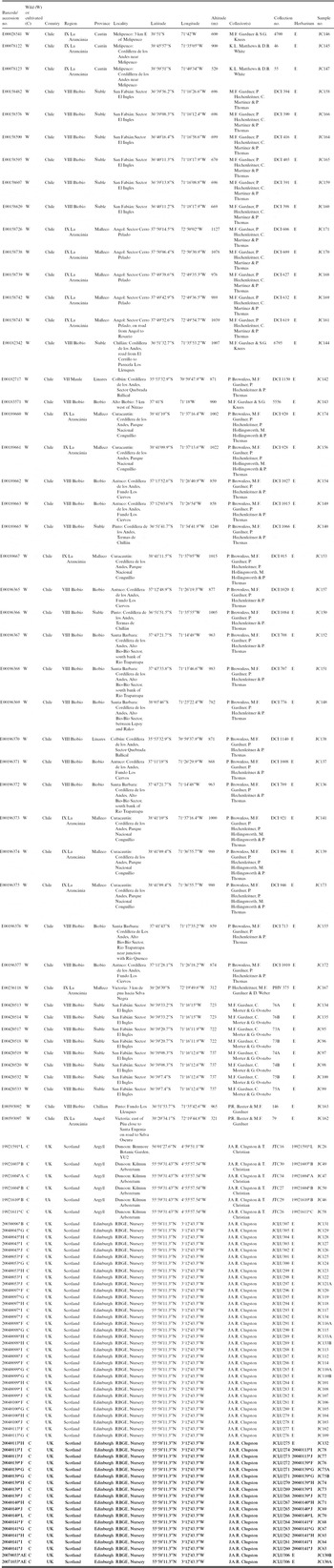
List of accessions and collections for Prumnopitys andina

List of accessions and collections: Podocarpus salignus

Effect of climate on leaf cuticle micromorphology. The table shows the localities of gathered material for specimens of Prumnopitys andina and Podocarpus salignus, with climatic data obtained from WorldClim (Hijmans et al., Reference Hijmans, Cameron, Parra, Jones and Jarvis2005); for Pr. andina, pink shading indicates the highest value, and blue the lowest value, and for Po. salignus, yellow shading indicates the highest value, and green the lowest value