Introduction
Migration is a significant life transition that can influence the sexual and reproductive health of adolescents (Mberu & White, Reference Mberu and White2011; Luke et al., Reference Luke, Xu, Mberu and Goldberg2012). As young people encounter new social environments, many are also beginning their first sexual experiences, accumulating protective knowledge and developing attitudes about sexual behaviour. Consequentially, there are concerns that youth who migrate to more-urban areas (from villages to towns or cities and from towns to cities) are at risk of deleterious outcomes as a result of separation from their family, unfamiliarity with their new environment, a desire to improve their social standing and limited knowledge of protective strategies (Zuma et al., Reference Zuma, Lurie, Williams, Mkaya-Mwamburi, Garnett and Sturm2005; Dhapola et al., Reference Dhapola, Sharan and Shah2007). Previous research has examined the timing of first sex as it is related to migration, and this study further examines the connection between migration and the development of behaviours, knowledge and attitudes among rural-to-urban youth migrants in Haiti.
Scholars and public health professionals have long scrutinized the sexual behaviours of migrants, and in particular how geographic mobility and a larger number of sexual partners may increase the prevalence and geographic breadth of HIV and other STIs (Brockerhoff & Biddlecom, Reference Brockerhoff and Biddlecom1999; Wolffers et al., Reference Wolffers, Fernandez, Verghis and Vink2002; Zuma et al., Reference Zuma, Lurie, Williams, Mkaya-Mwamburi, Garnett and Sturm2005; Dhapola et al., Reference Dhapola, Sharan and Shah2007). Conclusions from these studies primarily emphasize the experiences of married adults for whom return to a spouse following an extramarital sexual partner – thus increasing the likelihood of HIV and STI transmission – is the primary concern. In contrast, adolescents are beginning to form sexual partnerships, are mostly unmarried and are subject to different costs and benefits of migration. Thus, a comprehensive approach that incorporates behavioural, knowledge and attitudinal domains is necessary to understand the intersection of migration and sexual and reproductive health during adolescence.
Haiti, where internal migration among male and female youth is common (Lunde, Reference Lunde2009), age at first marriage is relatively late (26.3 years for males, 20.4 years for females) and young people typically initiate sex prior to marriage (Cayemittes et al., Reference Cayemittes, Placide, Mariko, Barrère, Sévère and Alexandre2007), is an ideal context in which to examine the intersection of these two experiences. The following review of the literature integrates perspectives from migration, gender and adolescent development. Data from the Demographic and Health Surveys (DHS) are used to examine competing hypotheses for how migration may influence the timing of first sex. Next, longitudinal panel data from the Haiti Youth Transitions Study (HYTS) are used to examine how sexual and reproductive health knowledge and attitudes develop differently among migrants and non-migrants, spanning the time from shortly before migration until five months later. This study extends previous work on migration and sexual initiation by considering the gendered components of sexual and reproductive health among migrants and accounting not just for a single event – first sex – but also how corresponding knowledge and attitudes change.
Theoretical framework
Previous literature examining the relationship between migration and the timing of sexual initiation invokes three primary explanations, based on hypotheses that were first used to describe the relationship between migration and fertility: (i) adaptation – that migrants’ behaviours change as they adapt to circumstances in the new location, (ii) disruption – that the migration experience itself may transform individuals, and (iii) selection – that migrants are a select population that tend towards unique behaviours (Goldstein & Goldstein, Reference Goldstein and Goldstein1981; Brockerhoff & Biddlecom, Reference Brockerhoff and Biddlecom1999; Mberu & White, Reference Mberu and White2011). These hypotheses, how they apply to youth migration in particular, how they may operate differently by gender and what the consequences are in behaviour, knowledge and attitude domains are further explained.
Gender has an important influence on whether and how adolescents migrate. Families may resist investing in girls’ migration opportunities if the labour market is less hospitable to women (Buchmann, Reference Buchmann2000), and girls’ more intensive household contributions may tie them to the home (Hsin, Reference Hsin2007). However, girls may view migration as an opportunity to break from gendered restrictions while maintaining family obligations (Castellanos, Reference Castellanos2007; Thorsen, Reference Thorsen2010). Meanwhile, the expansion of tourism and availability of service-sector jobs throughout the Caribbean have opened up employment opportunities for women (Palmer, Reference Palmer2009), and the same factors that tie girls to the home make them ideal candidates to reside with urban families and provide domestic service (Moya, Reference Moya2007). Gender also paints the backdrop for early sexual experiences. The development of romantic and sexual relationships may penalize girls’ reputations and limit their educational opportunities because of pregnancy, negative stigma and boyfriends who restrict their autonomy. In contrast, these relationships are far less damaging to male adolescents. In the Haitian cultural context male sexual prowess is often rewarded, and few expectations are made of young fathers (Barrow, Reference Barrow1999). Moreover, culturally specific sexual scripts teach girls to market their sexuality, which is often rewarded through gifts and favours (Schwartz, Reference Schwartz2009).
Central to the adaptation hypothesis are the stark differences in the social contexts and opportunity structures for young people in rural, town and urban areas. Rural Haitian life is organized around the lakou – a cluster of several small houses of extended kin (Smith, Reference Smith2001). Parenting responsibilities and resources are shared, and young people customarily receive parental support from multiple adults (Edmond et al., Reference Edmond, Randolph and Richard2007). In contrast, this system wanes in towns and even more so in cities, where youth more often encounter individuals outside their immediate social circles, and where violence can be common (Kolbe & Hutson, Reference Kolbe and Hutson2006). Towns and cities also provide alternatives to traditional attitudes about sexuality (Carpenter, Reference Carpenter2010), and adolescents may encounter these novel ideas through media sources and urban peer groups, at a life-course stage when the ideas are particularly appealing and their influences are salient (Arnett, Reference Arnett2000; Collins & Steinberg, Reference Collins and Steinberg2006). These characteristics paint an urban environment where – for adolescents in particular – sexual messages and sexual opportunities are more abundant, which may accelerate the timing of sexual initiation and potentially increase the number of partnerships.
Cities and towns also have distinct reward systems whereby the payoffs of education and labour are higher, and the opportunity costs are comparatively harsher (Easterlin, Reference Easterlin1975). Moreover, these reward systems may vary for male and female youth. Though young urbanites may be exposed to a more overt sexual environment, educational and employment opportunities are more plentiful, and loss of these opportunities as a consequence of pregnancy may prompt girls in particular to postpone sexual activity. Additionally, girls may postpone sexual and romantic relationships if they believe that broad knowledge of these relationships would inhibit their opportunities. In contrast, among male youth, there are fewer perceived negative consequences of sexual relationships. The interaction of gender and urban status is apparent in the timing of first sex. Whereas age at first sex occurs later among urban women (18.1 vs 17.8 years), it occurs earlier among urban men (15.9 vs 16.6 years; Cayemittes et al., Reference Cayemittes, Placide, Mariko, Barrère, Sévère and Alexandre2007).
An alternative explanation – the disruption hypothesis – suggests that the migration experience itself, not just the new environment, may foster divergent outcomes. Disruption is often described as migration-induced stress or severed social networks, as in previous literature explaining the link between migration and sexual initiation (Mberu & White, Reference Mberu and White2011). Disruption can also describe other transformative aspects of migration, in particular that it may reinforce youth’s high aspirations. With regard to the first application of the disruption hypothesis, one factor may be youth migrants’ living situations. Youth migrants often reside with extended kin or siblings only a few years their senior (Yaqub, Reference Yaqub2009). These home environments may lack supervision and emotional support. Recipient households may also deliberately leverage migrants’ well-being to bargain for additional resources (Gibbison & Paul, Reference Gibbison and Paul2006). These circumstances could potentially encourage early or high-risk sexual relationships (Bruce & Hallman, Reference Bruce and Hallman2008). The need for status attainment at the destination may also encourage sexual encounters, whether through bragging (more likely among male youth) or through the acquisition of gifts, rides or other favours that could potentially convey status (more likely the case among female youth). Additionally, migrant youth may appear more marketable as sexual partners during visits home and initiate sexual partnerships during these visits (Dhapola et al., Reference Dhapola, Sharan and Shah2007). Moreover, the migration experience itself may alter whether youth are prepared to protect themselves in their early sexual encounters; rural youth receive less sexual and reproductive health education and demonstrate less knowledge in this domain (Cayemittes et al., Reference Cayemittes, Placide, Mariko, Barrère, Sévère and Alexandre2007). Thus, upon migrating to urban areas, they may have fewer skills to safely negotiate potential sexual and romantic encounters.
Previous explanations of the disruption hypothesis imply that migration fosters risky environments for youth’s sexual and reproductive well-being. However, the disruption effect may also be protective if migration reinforces high aspirations for educational and vocational attainment. The opportunities afforded by migration, and the risk of losing these opportunities, may protect adolescents by delaying sexual initiation and/or motivating safer sex practices. Evidence for this hypothesis is supported by what is known about sexual debut and school enrolment. School enrolment protects against sexual initiation (Lloyd & Mensch, Reference Lloyd and Mensch2008), and many youth migrate with educational goals (De Brauw & Giles, Reference De Brauw and Giles2008; Crivello, Reference Crivello2011; Heckert, Reference Heckert2015). Likewise, among migrants with high aspirations, perceived opportunities for education or employment may serve to delay sexual initiation. This may especially be the case among girls for whom pregnancy would compromise opportunities.
Finally, selection may explain why migrant and non-migrant adolescents demonstrate differing sexual initiation patterns. If this is the predominant explanation, migration itself has no direct effect on sexual and reproductive health outcomes, and instead, external factors drive change in both domains. An often offered explanation for migrants’ larger number of sexual partners, particularly among male adults, is that they may be prone to riskier lifestyles (Dhapola et al., Reference Dhapola, Sharan and Shah2007). Also potentially owing to selection effects would be youth who initiate sex before migrating. Though higher rates of premarital and unsafe sex among rural-to-urban youth migrant factory workers in Nepal were widely thought to be a consequence of their living and working circumstances, semi-structured interviews established that most migrants, both male and female, initiated sex and developed their more-permissive sexual attitudes prior to migration (Puri & Busza, Reference Puri and Busza2004).
In light of previous literature examining migration and sexual initiation, the following specific questions are considered. Do patterns in sexual and reproductive health behaviours, knowledge and attitudes differ between migrant and non-migrant youth? Are these differences best explained by an adaptation, disruption or selection effect? Do these explanations differ between male and female youth?
Methods
Two complementary data sources are used: the Haiti Demographic and Health Survey (DHS) (women 2005–06, men 2000) and the Haitian Youth Transitions Study (HYTS) conducted in 2011–12. Using the DHS, a large cross-sectional survey, discrete-time event history analysis is employed to examine how the timing of first sexual experience and migration intersect. Changes in attitudes and knowledge are examined using the HYTS – a small in-depth panel study that follows of a cohort of rural youth who were first interviewed after recently completing primary school and interviewed again after 22% had migrated to an urban area. Changes in knowledge and attitudes between migrants and non-migrants are compared using multi-level models for examining change within individuals over time.
Haiti Demographic and Health Survey
Data
The Haiti DHS is a nationally representative household survey. Target households were identified using a multi-stage stratified random design, and the survey included detailed interviews with men and women of reproductive age. Data from 2005–06 were used for female respondents and those from 2000 for male respondents. The 2005–06 survey did not collect male migration data, and both are the most recent surveys to include migration questions. Because of the focus on youth and the limited range of migration history, the analysis only included respondents aged 15–20 at the time of the survey who were regular residents of the selected household.
Migration history was ascertained by responses to questions on the length of time individuals had lived in their current location, their previous type of place of residence (i.e. rural, town or city) and their current type of place of residence. From this information, age at migration and migration pattern (e.g. rural-to-city, town-to-city, rural-to-town) were determined. Two sets of migration-related time-varying covariates were coded. The first classified each person-year into one of five responses: city non-migrant, town non-migrant, rural non-migrant, city post-migration or town post-migration. The second included binary variables to indicate the year the individual migrated, one year post-migration, and two years post-migration.
Migration events, which re-occur and may be circular, are difficult to account for in cross-sectional surveys. The DHS only asked about the most recent migration episode, which means two individuals of the same age who both experienced a rural-to-urban migration event at the same time would appear identical in the data, even if one had experienced multiple migration events, and the other only one. However, evidence from the nationally representative 2009 Haiti Youth Survey, which collected complete migration histories (but not age at first sex), suggests that return migration and multiple migration episodes among adolescents are not common; among 15- to 19-year-olds, only 6% returned home after migrating, 14% migrated twice and 7% experienced three or more migration episodes (Lunde, Reference Lunde2009). Moreover, given migration motives and opportunity structures in Haiti, it is likely that most subsequent migration events after migrating to an urban area are lateral (e.g. one urban location to another) (Lunde, Reference Lunde2010). To create an analytic sample that corresponded to the study’s focus on migration to more-urban areas and to partially attenuate the consequences of incomplete migration histories that do not fully detail smaller residential changes and circular migration, inclusion was limited using several criteria. Lateral migrants were excluded. This eliminated 13.4% of the potential female sample and 6.7% of the male sample. Also excluded were those who migrated to less-urban areas (4.8% of the potential female sample and 2.3% of the male sample). The final sample included 1215 female youth (6185 person-years) and 829 male youth (3586 person-years). Excluded respondents were few at less than 20% and 10% of female and male respondents respectively, but if sexual initiation was earlier among those who were excluded it would bias results against finding significant associations between migration and the timing of first sex.
Respondents reported their age at first sex. Accurate reporting of sensitive information is challenging, and, most notably, female adolescents more often under-report their sexual experiences, whereas male adolescents exaggerate them (Zaba et al., Reference Zaba, Pisani, Slaymaker and Boerma2004). However, the same study found that the largest reporting discrepancies were in the number of sexual partners, whereas age at first sex was less subject to reporting bias. Moreover, particular survey formats may facilitate more accurate reporting. Survey formats such as that used in the DHS, in which age at first sex was asked without first asking if the respondent has ever had sex, are thought to provide more plausible responses (Curtis & Sutherland, Reference Curtis and Sutherland2004). Furthermore, it is unlikely that response bias differs by migration status. Therefore, the data’s usefulness in addressing this study’s primary research questions is not severely limited.
A number of characteristics could confound the association between the timing of first sex and migration. Affiliation with Protestant or Evangelical religious groups may be associated with later sexual initiation, and analyses controlled for Protestant/Evangelical versus other religion (primarily Catholic). Educational attainment is associated with the liberalization of sexual values, but it may also provide an incentive to postpone early sexual activity. Likewise, migration may facilitate educational attainment or be undertaken due to the lack of educational opportunities. Many respondents were still enrolled in school, and thus educational attainment was limited to whether they completed primary school. The economic and educational status of the family may also be associated with the timing of first sex and whether youth migrate, and controls for household wealth and parental education were included. The household wealth index was calculated using information about asset ownership reported by the household head (Rutstein & Johnson, Reference Rutstein and Johnson2004). Female respondents reported their parents’ educational attainment, which was classified by whether they completed primary school (not available for male respondents).
Analysis
Discrete-time event history analysis was used to analyse the relationship between age at first sex and migration. This approach models the probability that an event (first sex) will occur at any given age (Singer & Willett, Reference Singer and Willett2003). Respondents retrospectively reported age at first sex, which eliminates the problem of left-censoring. Within the sample, approximately half of respondents had experienced first sex at the time of the interview, and information about age at first sex for remaining respondents was unknown (i.e. right-censored). Event-history analysis offers advantages in such situations, because it incorporates all available information from right-censored observations and does not erroneously assume either that the event does not occur or that it occurs at the point of censorship (Singer & Willett, Reference Singer and Willett2003). First sex before age 12 was extremely rare (<1% of the sample); therefore the exposure period in all models began at age 12.
The basic form of the model predicts logit h(t ij ), which is an approximation of the hazard of experiencing first sex for individual i during period j. To test whether the relationship between first migration and timing of first sex can best be described by the adaptation, disruption or selection hypotheses, three separate models with differing specifications of migration were estimated for male and female adolescents. Model 1:
 $$\eqalignno{ {\rm logit} \ h(t_{{ij}} )=\ & \beta _{0} {\plus}\beta _{1} {\rm Town}_{{ij}} {\plus}\beta _{2} {\rm Cit}y_{{ij}} {\plus}\beta _{3} {\rm TownMig}_{{ij}} \cr & {\plus}\beta _{4} {\rm CityMig}_{{ij}} {\plus} \beta _{5} {\rm AgeGrps}_{{ij}}^{{}} {\plus}\beta _{6} {\rm Char}_{i}^{{}} $$
includes a series of time-varying dummy variables for which the coefficients indicate whether the individual is currently living as a non-migrant in a rural area (reference group), town (β 1) or city (β 2) as a non-migrant or is a migrant living in a town (β 3) or city (β 4). The coefficient β 5 corresponds to a vector of time-varying dummy variables for age groups (ages 12–14, 15–17, 18–20); β 6 corresponds to a vector of time-invariant characteristics that may potentially confound the association between migration and timing of first sex, i.e. religion, educational attainment, household wealth and parental education (female models only). As a robustness check to directly compare models for male and female adolescents, the female models were estimated excluding the variables for parental education. The effect sizes in the models without parental education did not differ significantly from the models that included parental education (results are not shown.)
In Model 1 the coefficients β 1–β 4 describe the likelihood of experiencing first sex in any particular year compared with rural non-migrants. The coefficient for non-migrant town residence (β 1) is then compared with the one for town residence post-migration (β 3), and the coefficient for non-migrant city residence (β 2) is compared with city residence post-migration (β 4). The difference in these values compares sexual initiation for life-time town residents and migrants to towns and also compares life-time city residents with migrants to cities. Significant differences between these coefficients would suggest that migrants behave differently from similar youth who already reside in these destinations, thus providing evidence for either the disruption or selection hypotheses. A lack of significant differences between life-time residents and migrants suggests that the two groups behave similarly, which provides evidence for the adaptation hypothesis or suggests that migration and the timing of first sex are unrelated.
In Model 2:
 $$\eqalignno{ {\rm logit} \ h(t_{{ij}} )= \ & \beta _{0} {\plus}\beta _{1} {\rm MigYr}_{{ij}} {\plus}\beta _{2} {\rm Post}1{\rm Yr}_{{ij}} {\plus}\beta _{3} {\rm Post}2{\rm Yr}_{{ij}} \cr & {\plus}\beta _{4} {\rm AgeGrps}_{{ij}}^{{}} {\plus}\beta _{5} {\rm Char}_{i}^{{}} $$
coefficients are estimated for three time-varying binary variables, including the year of migration (β 1), one year post-migration (β 2) and two years post-migration (β 3). As with Model 1, coefficients are also estimated for time-varying indicators for age groups (β 4) and time-invariant characteristics (β 5). If the effects of the migration timing variables (β 1–β 3) are significant, it suggests that young people are modifying their sexual behaviour according to the timing of migration, which provides support for the disruption hypothesis. More specifically, if the coefficients are significant and positive, indicating that they are more likely to begin sexual activity during this time, it suggests that migration may foster a risky environment for adolescents’ sexual well-being. If the coefficients are significant and negative, consistent with delayed sexual activity near the time of migration, it suggests that migration may guard against earlier sexual debut.
In Model 3:
 $${\rm logit} \ h(t_{{ij}} )= \beta _{0} {\plus}\beta _{1} {\rm RtoT}_{i} {\plus}\beta _{2} {\rm RtoC}_{i} {\plus}\beta _{3} {\rm TtoC}_{i} {\plus}\beta _{4} {\rm AgeGrps}_{{ij}}^{{}} {\plus}\beta _{5} {\rm Char}_{i}^{{}} $$
coefficients are estimated for binary indicators representing the three migration patterns, including rural-to-town (β 1), rural-to-city (β 2) and town-to-city migrants (β 3). The variables are time-invariant and represent whether the individual ever migrated; non-migrants are the reference group. Again, coefficients are estimated for time-varying age groups (β 4) and time-invariant characteristics (β 5). Significant effects for the migration coefficients (β 1–β 3) suggest that individuals who engage in the specified migration patterns experience unique patterns of sexual debut, which supports the selection hypothesis.
Haitian Youth Transitions Study
Data
After examining how migration is associated with the timing of sexual initiation, longitudinal data from the HYTS, a panel study that recruited a cohort of rural youth as they completed primary school (6th grade), was used to examine if sexual and reproductive health knowledge and endorsement of premarital sex change as young migrants are adapting to their new environments. The end of primary school is a point at which limited opportunities lead many youth to migrate, and at the second wave of the survey, migrant youth (21.5% of the sample) were re-interviewed at the destination. This design affords comparisons between migrants and non-migrants from the same point of origin and offers advantages over designs that simply compare rural-to-urban migrants with rural non-migrants.
Participants were recruited from school records of all students who completed their sixth grade exams in the summer of 2011, within a defined geographical area in rural south-east Haiti. Initial interviews occurred between August and September 2011, when a parent or guardian was also interviewed and background information was collected. The second interview occurred between February and March 2012. Youth who were eligible to be included during the first wave and were not located were invited to participate in the second wave (eleven respondents). A total of 223 youth participated; 213 were interviewed in the first wave and 215 in the second. In the case of eight respondents who could not be interviewed face-to-face during the second wave, interviews were conducted over the telephone. Overall, 91% of respondents were interviewed in both waves, and multiple imputations were used to account for the remaining respondents with incomplete data on the key indicators.
Each interview lasted approximately one hour, and participants were interviewed in Haitian Creole, their native language. To balance accurate data collection on sensitive topics with the protection of confidentiality and reassuring parents of their child’s welfare, interviews were conducted in the view of family members at a distance where responses would not be audible (e.g. far end of the yard).
Comparing the HYTS and the 2005–06 DHS, HYTS respondents were on average 15.9 years old, and in the DHS rural sixth graders were on average 16.5 years old. Both were well over their age-for-grade, but HYTS respondents were somewhat younger, possibly a consequence of educational expansion during the 5-year interim. The HYTS households were larger than households in the DHS (6.4 vs 4.7 members), probably due to difference in the sampling frames (i.e. all household versus those with a sixth grader present). To compare household wealth between the two surveys, HYTS households were matched to DHS households with identical asset profiles based on asset ownership, housing quality and sanitation quality. Rural DHS households were distributed among the five quintiles from wealthiest to poorest in the following proportions: 5%, 10%, 34%, 30%, 31%. The HYTS households were distributed as 6%, 10%, 6% 71%, 8%, respectively. The HYTS households were notably poorer than the national population and were heavily concentrated in the fourth poorest quintile.
Variables
To measure sexual and reproductive health knowledge and endorsement of premarital sex during the early migration period, two indices were constructed. Sexual and reproductive health knowledge – which focused on how to prevent HIV and pregnancy – was assessed by coding responses to open-ended questions. Youth were asked, (i) ‘Please tell me what you know about HIV and AIDS’; (ii) ‘What can a person do to prevent HIV and AIDS?’; (iii) ‘Sometimes a person may want to have sex without becoming pregnant. Can you tell me what someone can do to avoid becoming pregnant?’ (iv) ‘What do you think you might do in order to have the number of children you want?’ and (v) ‘When you hear “family planning” (planin in Haitian Creole), what is it?’
For each open-ended question, responses were recorded by the interviewer, and after each response, the interviewer probed the respondent for additional responses to the same question. Responses to the questions were coded by the author to reflect the knowledge domains that are typically taught in national sexual health curricula for youth.
Sexual and reproductive health knowledge scores could range from 0 to 12. A point was awarded for each of the following components of HIV knowledge: (i) identifying that HIV is an incurable illness, (ii) knowing that HIV could be transmitted by sex, (iii) knowing that HIV could be transmitted by blood/needles, (iv) knowing that HIV could be prevented by using condoms, (v) knowing that HIV could be prevented by maintaining a mutually monogamous sexual relationship, (vi) knowing that HIV could be prevented by avoiding sexual activity, and (vii) not providing any incorrect information (e.g. HIV is transmitted by mosquito bites). A point was also awarded for each of the following components of pregnancy prevention knowledge: (i) identifying condoms as a means of pregnancy prevention, (ii) recognizing that family planning or contraceptives are a means of preventing pregnancy, (iii) knowing that a doctor could provide you with means of preventing pregnancy, (iv) identifying any specific family planning method, and (v) not providing any incorrect information (e.g. that pregnancy could be prevented by not having sex during menstruation). Initially, HIV and pregnancy prevention knowledge were two different indices, but they behaved similarly in the analysis and were therefore combined.
To assess respondents’ endorsement of premarital sex, respondents were asked the extent to which they agreed with a series of seven statements on a four-point Likert scale: if it was acceptable for a female youth to have sex with a friend, someone she loved and with a boyfriend, the same questions from the perspective of a male youth, and if was acceptable for female youth to buy condoms. The items were generated based on beliefs articulated during preliminary fieldwork. Respondents could indicate their responses using a touch card that showed the responses in written format along with corresponding images of different quantities of beans and allowed respondents to indicate their response without stating it aloud. Each response was coded from 0 to 3 with higher numbers indicating more agreement, and the seven responses were summed for a total score ranging from 0 to 21. Internal reliability was calculated using Cronbach’s alpha and found to be good for both time points (T 0 α=0.72; T 1 α=0.78).
Interviewers used a life-history calendar to solicit information about the timing of respondents’ important life events, including all migration episodes, romantic partnerships, school enrolment and progression, work experiences and significant family events. At the first wave, the life-history calendar included information about all events during the respondent’s lifetime, and at the second wave it was updated to include events between the two waves. Migration between the two waves was limited to rural-to-urban migration by study design (recruitment only in rural areas), and did not include lateral migration episodes.
Having a boyfriend or girlfriend and exposure to media sources were additional factors that could influence the key dependent variables and vary over the 5-month interval. Whether he/she had a significant-other at each time point was coded from the life-history calendar. Whether the individual had watched television during the previous week had a ‘yes’ or ‘no’ response. In both rural and urban areas, television is often watched in public locations where a television owner uses a generator and charges admission to see a movie or show. In many urban areas, television service is more widely available, and adolescents may watch television at home or at a friend’s home.
Analysis
To examine whether there were differences in the overall level of knowledge and attitudes between migrants and non-migrants, whether knowledge and attitudes changed between the two time points and whether change in these domains occurred differently for male and female migrants and non-migrants, multilevel models for examining change in individuals over time were estimated (Raudenbush & Bryk, Reference Raudenbush and Bryk2002). First, a model that included main effects for time, migration and gender, along with time-varying controls for having a significant-other and television viewing, was estimated. Then interactions, including a three-way interaction among time, migration and gender and all lower-order interactions, were added to the model. The full model, including potential interactions, is written as:
 $$\eqalignno{ Y_{{ij}} =\ & \beta _{0} {\plus} \beta _{1} T_{{ij}} {\plus}\beta _{2} {\rm MIG}_{j} {\plus}\beta _{3} {\rm MALE}_{j} {\plus}\beta _{4} T_{{ij}} {\rm MIG}_{j} \cr & {\plus}\beta _{5} {\rm MALE}_{j} {\rm MIG}_{j} {\plus}\beta _{6} {\rm MALE}_{j} T_{{ij}} {\plus}\beta _{7} T_{{ij}} {\rm MALE}_{j} {\rm MIG}_{j} \cr & {\plus}\beta _{8} {\rm OTH}_{{ij}} {\plus}\beta _{9} {\rm TV}_{{ij}} {\plus} \rmu _{j} {\plus} {\rvarepsilon}_{{ij}} $$
where
 $$Y_{{ij}} $$
represents the dependent variable (either sexual and reproductive health knowledge or endorsement of premarital sex) at time i for person j. β
1 is the coefficient for a time-varying covariate for survey wave (T=0 or 1) and in the absence of interactions indicates the degree to which the dependent variable changed across the two waves. When all interactions are included in the model, β
1 indicates change over time for female non-migrants. The variable MIG indicates whether the individual ever migrated and is time-invariant. In the absence of interactions β
2 indicates whether migrants differ from non-migrants at the first wave; when all hypothesized interactions are included, it indicates whether there are differences between female migrants and non-migrants at the first wave. The value of β
3 indicates whether there are gender differences, and when all interactions are included in the model, it indicates gender differences among non-migrants at the first wave. β
4 is the coefficient for a migration by time interaction, and in the context of all other interactions it indicates whether the change between the two survey waves differs between female migrants and non-migrants. β
5 describes the combined effect of being both male and a migrant at the first wave, β
6 describes the change over time among male non-migrants and β
7, the coefficient for the three-way interaction among time, gender and migration status, describes change over time among male migrants. The coefficients β
8 and β
9 represent the effects of two time-varying control variables, i.e. whether the individual has ever had a boyfriend or girlfriend and whether the individual watched television during the previous week. The individual specific error term
 $${\rm \rmu }_{j} $$
accounts for unobserved characteristics of individuals that do not vary across the two time points (e.g. education, parental characteristics). Because of the short interval between surveys waves, there are a limited number of potential time-varying characteristics that can be included as control variables.
Results
Timing of sexual initiation
Descriptive results
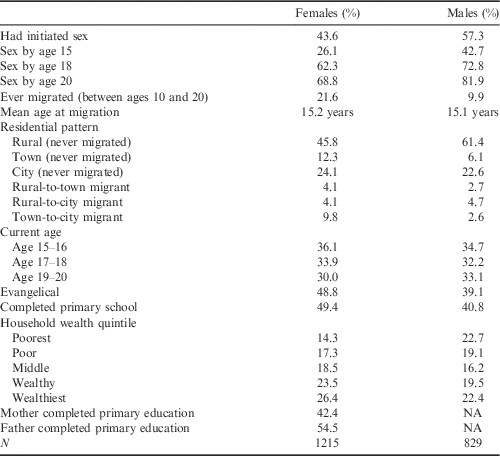
Table 1 shows the characteristics of the male and female DHS respondents, which account for weighting and complex survey design. Among respondents of all ages, fewer female than male adolescents in the sample had experienced first sex (43.6% vs 57.3%). This was consistent throughout adolescence, and among 20-year-olds, 68.8% of female adolescents and 81.9% of male adolescents had experienced sex.
Description of adolescent respondents from Haiti DHS: females, 2005–06; males, 2000
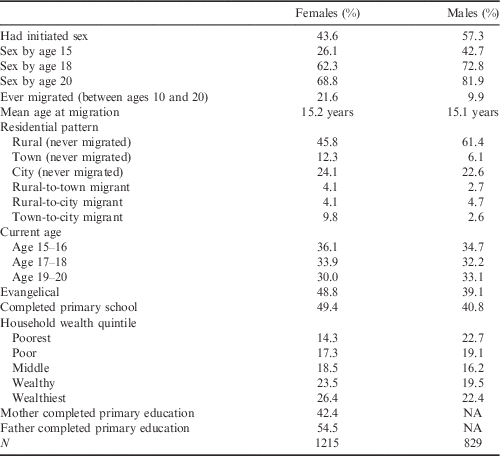
For migration, 21.6% of female and 9.9% of male adolescents in the analytic sample had migrated to a more-urban area between the ages of 10 and 20, and the mean ages of migration were 15.2 and 15.1 years, respectively. The majority of non-migrants had always lived in a rural area (45.8% for female and 61.4% for male respondents). Among female adolescents, the most common migration pattern was town-to-city (9.8%), with fewer rural-to-city (4.1%) and rural-to-town (4.1%) migrants. Among male adolescents, rural-to-city migration was most common (4.7%), with fewer rural-to-town (2.7%) and town-to-city (2.6%) migrants.
The current age of the respondents was similarly distributed among the three age groups. Evangelical affiliation was reported by 48.8% of female and 39.1% of male respondents, and primary school completion was reported by 49.4% of female and 40.8% of male respondents. Female respondents resided more often in households in the higher wealth quintiles, whereas males were more evenly distributed. The unequal distribution of female respondents may be a result of well-off households being more willing to receive girls who more-often provide domestic help. For females, 42.4% of their mothers and 54.5% of their fathers completed primary school.
Event-history results
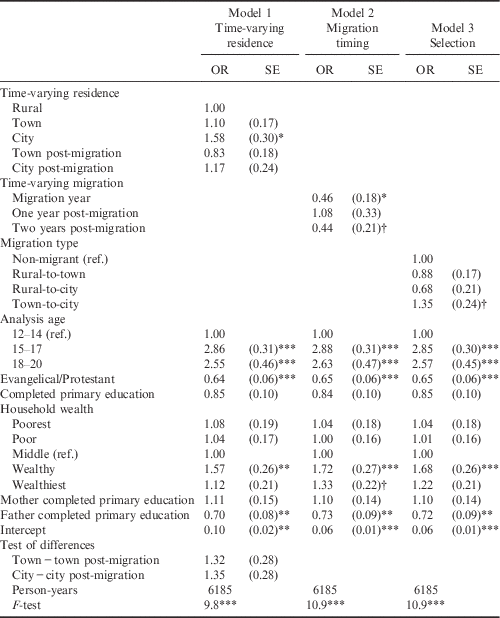
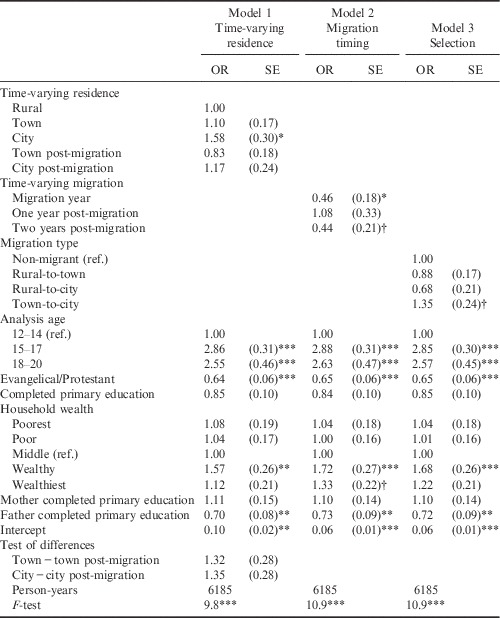
Table 2 describes the results of the discrete-time event history analysis for female respondents, beginning with the control variables. Across all the models, sexual initiation occurred more often in the age groups 15–17 and 18–20 than in the age group 12–14 years. Evangelical identification lowered the odds of sexual initiation, but primary school completion was not significant. Those living in households from the fourth wealth quintile were more likely to have experienced first sex. Father’s completion of primary school decreased the odds of sexual initiation, whereas maternal education was not significant.
Discrete-time event history analysis of migration and timing of first sex among female adolescents, 2005–06 Haiti DHS
†p≤0.10; *p≤0.05; **p≤0.01; ***p≤0.001.
Turning to the migration variables, the results from Model 1, which included time-varying covariates for residential location, show that time-varying residence in a city as a non-migrant was associated with higher odds of sexual initiation (OR=1.58, p<0.05). Other residential characteristics did not differ significantly from rural residence; however, the direction of the coefficients suggests that town residents and migrants to cities may be somewhat more likely to experience first sex in any given year, and migrants to towns were somewhat less likely. The difference between the effects for long-term town residence and migration to a town was not significant, and neither was the difference between long-term city residence and migration to a city. Both suggest a trend whereby long-term residents of cities and towns are more likely to experience first sex in any given year compared with migrants to these areas after controlling for a range of characteristics. Overall, this finding is somewhat suggestive of the adaptation hypothesis. However, given the moderate effect size for a difference between long-term residents and migrants (OR=1.32 and 1.35 for towns and cities respectively), the evidence for the adaptation hypothesis is weak.
Results from Model 2 reveal that female adolescents have lower odds of initiating sex in the year that they migrate (OR=0.46, p<0.05); there is no significant effect for one year post-migration, and the effect of two years post-migration demonstrates that they have marginally significant lower odds (OR=0.44, p<0.1) of initiating sex at that time. These findings garner support for the disruption hypothesis. Counter to the belief that migrant youth are at risk, they suggest that migrating to a more-urban area may in fact mean that they are less likely to experience first sex during this time. Results from Model 3 reveal that the timing of sexual initiation for rural-to-town and rural-to-urban migrant female adolescents does not differ significantly from that of non-migrants. However, the effect for town-to-city migrants is marginally significant and positive (OR=1.35, p<0.1), suggesting that this group may be somewhat more likely to initiate sex than non-migrants (who are primarily life-time rural residents). As a whole, Model 3 suggests that it is unlikely that the selection hypothesis accounts for the pattern of sexual initiation among female migrants.
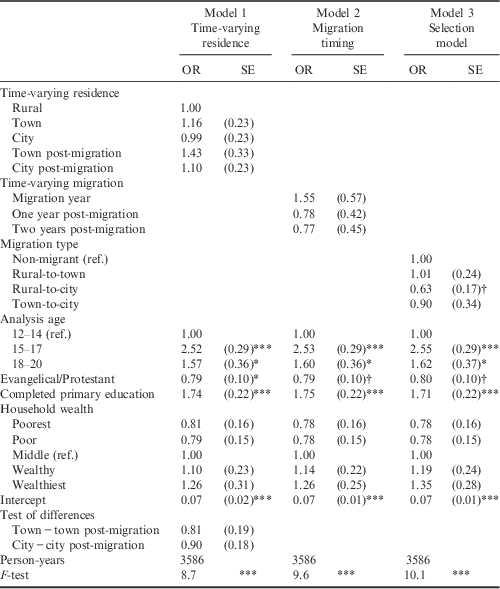
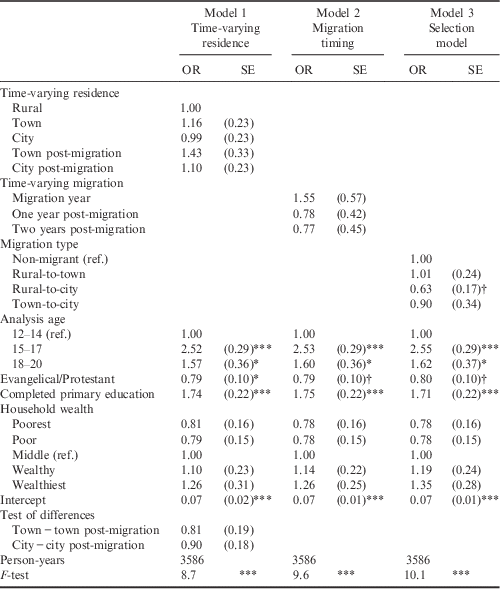
Turning to the results from the male sample (Table 3) and beginning with the control variables, across all the models sexual initiation was most common among 15- to 17-year-olds, but still higher between the ages of 18 and 20 than 12 to 14. Evangelical identification delayed the odds of sexual initiation, whereas having completed primary education hastened it. The effects of living in households of differing wealth were not significant.
Discrete-time event history analysis of migration and timing of first sex among male adolescents, 2000 Haiti DHS
†p≤0.10; *p≤0.05; **p≤0.01; ***p≤0.001.
Turning to the migration variables, with the exception of the marginally significant effect of being a rural-to-city migrant on delaying first sex in Model 3, none of the migration variables for male adolescents was significant after controlling for potentially confounding factors. In Model 1 the small differences (OR=0.81 and 0.90 (not significant, n.s.) for towns and cities respectively), and therefore similar behaviours between life-time residents and migrants to towns and cities, could suggest the adaptation hypothesis. However, none of the time-varying residence variables differed significantly from ‘rural’ after controlling for confounding factors, suggesting that migrants are no different from rural residents, countering support for the adaptation hypothesis.
In Model 2, though the effects were not significant, they suggest that at the year of migration, male adolescents may be somewhat more likely to begin sexual activity (OR=1.55, n.s.), but among those who had not yet experienced first sex, migrants may be somewhat less likely to do so in the following years (OR=0.78 and 0.77, n.s.). This suggests that male adolescents may engage in riskier behaviours when first moving to a new environment, but following the year of migration, those who have not yet experienced first sex may be less likely to do so.
In Model 3, the effect of being a rural-to-city migrant on delaying first sex (OR=0.63, p<0.10) is somewhat suggestive of the selection effect. The direction of the effect, however, suggests that migrants experience first sex at older ages, which is counter to expectations of riskier sexual behaviours among migrants. As a whole, these findings suggest that there is little association between migration and the timing of first sex among male adolescents.
Knowledge and attitudinal change
Descriptive results
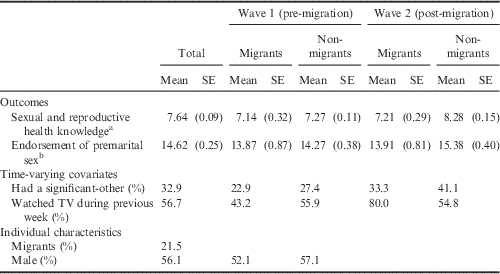
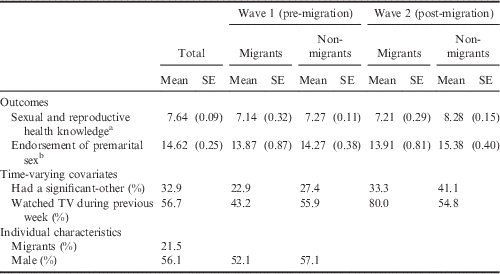
Of respondents in the HYTS (Table 4), 21.5% migrated between the two waves. The mean sexual and reproductive health knowledge score of all respondents in both waves of data was 7.6. This value was higher among non-migrants than migrants and increased between the two waves of data collection. The mean score of the endorsement of premarital sex was 14.6. These values were somewhat higher among non-migrants and increase slightly between the two waves. Across the two waves, 32.9% had a significant-other, which was more common among non-migrants and more common in the later wave. Watching television during the previous week was reported 56.7% of the time, and this value was higher at the second wave among those who migrated to towns and cities. Fifty-six per cent of the sample were male (52.1% migrants and 57.1% non-migrants).
Descriptive characteristics of respondents from the HYTS, 2011–12 (N=223)
a Scale range: 0–12;
b scale range: 0–21.
Multi-level model results
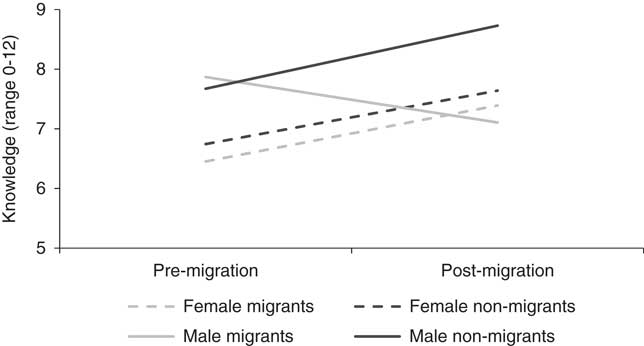
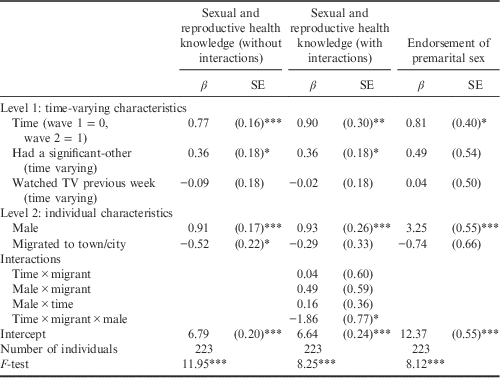
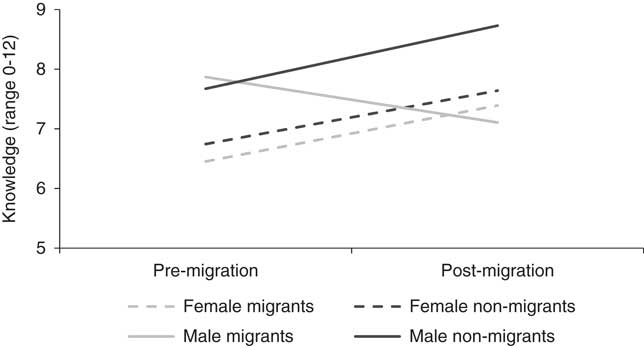
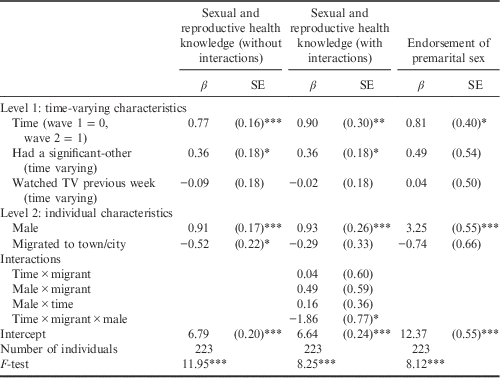
Examining the development of sexual and reproductive health knowledge during this period (Table 5), the results reveal that overall knowledge increased between the two waves of data collection (β=0.77; p<0.001) and that boys expressed higher levels of knowledge (β=0.91; p<0.001) (results from models without interactions). Moreover, those who migrated had less sexual and reproductive health knowledge (β=−0.52; p<0.05). These findings are consistent with the expectation that sexual and reproductive health knowledge increases over time among adolescents and that boys might be more willing to articulate their knowledge of the topic. Additionally, having a significant-other was associated with more sexual and reproductive health knowledge (β=0.25; p<0.05), whereas watching TV during the previous week was not. Including interactions among time, gender and migration status revealed more subtlety. Notably, the significant three-way interaction among time, gender and migration status (β=−1.86; p<0.05) suggests that knowledge among male migrants declined significantly between the two survey waves. Lower-order interactions were not significant. In contrast, sexual and reproductive health knowledge increased among non-migrants and female migrants (Fig. 1). These patterns are consistent with the disruption hypothesis among male youth, but suggest a weak relationship between migration and sexual and reproductive health knowledge among female youth.
Sexual and reproductive health knowledge of migrant and non-migrant youth: results of a multi-level model, HYTS 2011–12.
Multi-level models of sexual and reproductive health knowledge and endorsement of premarital sex in migrant and non-migrant youth, HYTS, 2011–12
†p≤0.10; *p≤0.05; **p≤0.01; ***p≤0.001.
Turning to adolescents’ endorsement of premarital sex (Table 5), the acceptability of premarital sex increased between the two waves of data collection (β=0.81; p<0.05) and overall levels were higher for boys than girls β=3.25; p<0.001). These findings are consistent with expectations that adolescents more often endorse these values as they mature and that boys more often endorse them than girls. Moreover, these attitudes did not differ between migrants and non-migrants, nor were any of the hypothesized interactions significant (not shown).
Discussion
It is commonly assumed that recently arrived rural-to-urban youth migrants are susceptible to early and unsafe sex as a result of joint exposure to new urban environments with more liberal sexual values and heightened psychosocial vulnerabilities (Bruce & Hallman, Reference Bruce and Hallman2008; Lane, Reference Lane2008). The findings of this study, which is the first to consider the sexual and reproductive health of youth migrants from the combined perspective of behaviours, knowledge and attitudes, provide new and subtle evidence on migrant youth’s sexual and reproductive health experiences.
The first part of the analysis examined the timing of migration and first sex and tested whether the observed patterns provided evidence for one of three hypotheses: adaptation, disruption or selection. The results, which included only those who migrated to more-urban areas or who had never migrated, provide convincing support for the disruption hypothesis and some support for the adaptation hypothesis among female adolescents. Moreover, the findings suggest that ‘disruption’ occurs by delaying sexual initiation during the year that they migrate, and possibly during subsequent years, which is contrary to prevailing assumptions.
The findings among male adolescents present a different and less-clear story. Evidence supporting the adaptation hypothesis is weak. The test of the disruption hypothesis finds non-significant trends suggesting that male adolescents may be somewhat more likely to experience first sex at the year of migration, but somewhat less likely to do so in the following years. The test of the selection hypothesis finds marginally significant evidence that rural-to-urban migrants may initiate sex at later ages. These weak associations between migration and timing of first sex among male adolescents are consistent with findings from other studies (Luke et al., Reference Luke, Xu, Mberu and Goldberg2012).
Secondly, the findings reveal that sexual and reproductive health knowledge trajectories diverge for male migrants during the initial period following migration. The observed patterns indicate that knowledge increased between the survey waves among non-migrants and female migrants, but declined among male migrants. Additionally, female adolescents have an overall lower level of knowledge. Endorsement of premarital sex also increased between the two waves of the data. Overall levels were higher among male adolescents, but they did not significantly differ between migrants and non-migrants, nor did they have differing patterns by migration status.
To interpret these findings, it is important to carefully consider the population to which the findings are generalizable. The Haiti DHS sample, which was used to analyse the timing of sexual debut, compared non-migrants with those who migrated to more-urban areas. It excluded lateral migrants (e.g. from one rural household to another), many of whom may move to nearby residences (commonly observed patterns for marriage and relocating to a new home) and those who migrated to less-urban areas (likely to be return-migrants). In the HYTS, which was used to examine change in knowledge and attitudes, the respondents were from a cohort of rural youth that had just completed sixth grade and who were on average 16 years old. Given the educational attainment necessary to meet the inclusion criteria, those from the most disadvantaged households were more likely to be excluded. However, the exclusion criteria were not drastic; among younger cohorts in the DHS, 70% of men and 60% of women had completed primary school (Cayemittes et al., Reference Cayemittes, Placide, Mariko, Barrère, Sévère and Alexandre2007). Thus, these findings are generalizable to a large portion of rural-to-urban adolescent migrants.
Given that a disruption effect best describes the observed patterns for female youth, what are the explanatory mechanisms? One explanation for female adolescents’ lower odds of initiating sex near the time of migration, and potentially into the following years, is that their aspirations for educational and labour opportunities may motivate them to avoid romantic and sexual relationships. These aspirations may shape how female adolescents imagine and plan for their futures (Frye, Reference Frye2012), and migration may further shape their aspirations and identity (Wolffers et al., Reference Wolffers, Fernandez, Verghis and Vink2002). Moreover, in a context where pregnancy often quickly follows first sex (Cayemittes et al., Reference Cayemittes, Placide, Mariko, Barrère, Sévère and Alexandre2007), boyfriends often assume the right to sexual access, and sexual violence is commonplace (Gómez et al., Reference Gómez, Speizer and Beauvais2009), adolescent girls may necessarily avoid relationships if they wish to complete school and maintain employment. It is important to note that these conclusions may be specific to contexts that are more sexually permissive and where first sex outside the context of marriage is common. For male adolescents, however, the negative consequences are fewer, and the possibility that pregnancy will jeopardize future opportunities is largely irrelevant in a cultural context that places few demands on unwed teenage fathers (Barrow, Reference Barrow1999).
An alternative explanation is that adjusting to the destination environment may hamper opportunities for sexual relationships. Migrant youth may have fewer friends and encounter fewer opportunities for sexual relationships. However, smaller social networks and fewer sexual opportunities are probably not the complete story. If this were the case, these processes would operate similarly among male and female youth. Instead, this study, along with previous work, found that migration factors were not significant among boys (Luke et al., Reference Luke, Xu, Mberu and Goldberg2012).
These initial findings suggest that adolescents may be less vulnerable to high-risk sex in the period following migration. The findings of the second part of this study, however, reveal subtleties. Knowledge trajectories diverge, and while non-migrant youth and female migrants continue accumulating sexual and reproductive health knowledge, male migrants do not. This is perplexing, especially because urbanites generally demonstrate higher levels of sexual and reproductive health knowledge (Cayemittes et al., Reference Cayemittes, Placide, Mariko, Barrère, Sévère and Alexandre2007). One explanation for the observed disruption in sexual and reproductive health knowledge may be their relationships with their peers. Though sexual education occurs formally in schools and through media campaigns, much of this information is shared and discussed in informal social groups (Bongaarts & Watkins, Reference Bongaarts and Watkins1996). As migrant adolescent boys adapt to their new environment, they may be absent from peer groups that reinforce this knowledge. Furthermore, migrant adolescents, who may be highly focused on reaching their educational and career aspirations, may intentionally avoid sexual and reproductive health topics with their peers.
Additionally, rural-to-urban migrant adolescents endorse premarital sex similarly to rural non-migrants, and the level of endorsement among member of these two groups increases similarly between the two survey waves. This pattern occurs even though migrant youth may experience more intense exposure to sexual topics in their new urban environments. The stagnant growth among male migrants in the knowledge domain, along with the growing acceptance of premarital sex, raises concern about the well-being of those who are sexually active. Given their lower knowledge, adolescent migrants who are sexually active may be more likely to engage in unsafe sex.
This study informs ideas about sexual and reproductive health among adolescent migrants, but it is not without its limitations. A primary limitation is that data from nationally representative surveys such as the DHS, which was used to examine the timing of sexual initiation, do not allow for the incorporation of thorough migration histories, and migration information is ascertained indirectly. Thus, the analyses rely on incomplete migration histories and cannot thoroughly describe adolescents who have experienced multiple moves. Excluding lateral migrants and those who migrated to less-urban areas begins to attenuate this concern. However, if risky behaviours are more concentrated among frequent migrants, this would bias results away from finding significant findings in favour of the selection hypothesis. The HYTS, which overlaps with the migration period, provides insight into how knowledge and attitudes change; however, the smaller sample size necessary for in-depth data is not appropriate for drawing conclusions about population-level trends such as sexual debut. To further examine the intersection of migration and sexual and reproductive health, additional data that include both migration and sexual and reproductive health information should be collected.
The study is also limited in its attention to the characteristics of early sexual partnerships, such as condom use and partner age. Previous findings demonstrate that rural-to-urban migrant youth are less likely to use condoms in recent sexual encounters than urban non-migrants (Sambisa & Stokes, Reference Sambisa and Stokes2006). However, it was not possible to conduct analyses related to migration and condom use at first sex using the Haiti DHS data, because reported condom use at first sex was extremely rare.
In conclusion, this study examines the intersection of migration and context of early sexual experiences among Haitian youth by using a life-course approach with a gendered perspective. Three competing explanations were tested by comparing models describing the adaptation, disruption and selection hypotheses. The findings suggest that the disruption hypothesis is the most plausible explanation for the timing of first sex among female adolescent migrants, but some support was found for the adaptation hypothesis. The evidence suggests that female migrants are delaying sexual debut; their aspirations may be a key explanatory factor. The relationship between timing of first sex and migration among male adolescents was less clear, but rural-to-urban migrants experienced first sex at later ages. Previously, discussions about the sexual and reproductive health of youth migrants have been dominated by concerns about their vulnerability and high-risk behaviour. Though this may be the case for specific sub-groups, such as refugees, the current findings do not suggest that this represents the typical rural-to-urban migrant. The findings also suggest a disruption in the accumulation of sexual and reproductive health knowledge among male migrants. Meanwhile, migrant adolescents endorse premarital sex similarly to non-migrant adolescents. The combination of these findings suggests that although migrant youth may be less likely to experience first sex, the context for doing so may be riskier. Sexual and reproductive health activities that target youth should address the unique needs of rural-to-urban migrant youth. Importantly, because migration from rural areas is common, sexual and reproductive health curricula that target rural adolescents should help develop skill-sets for negotiating the urban environment.
Acknowledgments
The author would like to acknowledge financial support from the National Science Foundation Graduate Research Fellowship Program (DGE-0750756), an institutional grant from the National Institute of Child Health and Human Development to the Population Research Institute at Pennsylvania State University (PSU) (R24 HD041025), a research grant from the Africana Research Center at PSU, an Early Career Award from the Center for Global Studies at PSU, the College of Health and Human Development at PSU and the Ruth Ayres-Givens Award. She is also indebted to Rukmalie Jayakody for her careful advising and constructive feedback during the development of this manuscript.