Review of Literature
In recent years there has been growing concern about the fragmented and siloed nature of child and family services in Australia (Grace, Cashmore, Scott, & Hayes, Reference Grace, Cashmore, Scott, Hayes, Grace, Hodge and McMahon2016). There is increased interest and investment in service reform, underpinned by a policy commitment to place-based approaches and integrated models of service delivery (e.g., Council of Australian Governments, 2009; NSW Department of Family and Community Services, 2013; Wood, Reference Wood2008), in the hope that joined-up strategies will better address the complex support needs of vulnerable children and families. Evidence for the effectiveness of integrated services is currently mixed (see, for example, Muir et al., Reference Muir, Katz, Edwards, Gray, Wise and Hayes2010), however, this is a growing field of study and there is significant work underway within Australia to trial and evaluate new integrated service models for families in disadvantaged communities (Branch, Homel, & Freiberg, Reference Branch, Homel and Freiberg2013; Homel, Freiberg, & Branch, Reference Homel, Freiberg and Branch2015). It is well documented that children and young people from disadvantaged communities experience poor health, development, education and wellbeing outcomes compared to their peers from more advantaged areas (Australian Institute of Health and Welfare [AIHW], 2012; Cummins, Scott, & Scales, Reference Cummins, Scott and Scales2012; Edwards, Baxter, Smart, Sanson, & Hayes, Reference Edwards, Baxter, Smart, Sanson and Hayes2009; Nicholson, Lucas, Berthelsen, & Wake, Reference Nicholson, Lucas, Berthelsen and Wake2012). Prominent scholars, such as Dorothy Scott, have argued that what is largely missing from discussions about service reform to improve outcomes for disadvantaged young people are the perspectives of the young people themselves (Scott, Reference Scott2014). Barnett and Brennan (Reference Barnett and Brennan2006) have argued that young people largely remain ‘a vast and often untapped resource for immediate and long-term community development efforts’ (p. 17). There is a need for more research that explores how young people perceive their communities and what they believe should be the service priorities, the elements in need of reform (Davies et al., Reference Davies, Hampden-Thompson, Calhoun, Bramley, Tsouroufli, Sundaram and Jeffes2013; Goodwin & Young, Reference Goodwin and Young2013; Speak, Reference Speak2000).
Existing research with disadvantaged young people is very often focused on crisis-related issues, built on concern about the difficulties prevalent within their communities. For example, there is research gathering disadvantaged young people's perspectives on unhealthy behaviours (e.g., tobacco, drug and alcohol consumption), neglected environments (e.g., damaged drainage systems, dirt and garbage surrounding the communities), sexual and reproductive health problems (e.g., sexually transmitted diseases and teen pregnancy) and issues affecting mental health (e.g., being bullied and safety fears) (Booth et al., Reference Booth, Bernard, Quine, Kang, Usherwood, Alperstein and Bennett2004; Mmari et al., Reference Mmari, Blum, Sonenstein, Marshall, Brahmbhatt, Venables and Sangowawa2014; Nelson, Macdonald, & Abbott, Reference Nelson, Macdonald and Abbott2012). Disadvantaged young people's experiences relating to poor social and economic opportunities have also been highlighted in research. This includes a perceived lack of recreational activities (Booth et al., Reference Booth, Bernard, Quine, Kang, Usherwood, Alperstein and Bennett2004; Brann-Barrett, Reference Brann-Barrett2011), and the limited extent to which they feel involved in the community (e.g., through sports) due to financial barriers and other family-related constraints (Mason, Cremin, Warwick, & Harrison, Reference Mason, Cremin, Warwick and Harrison2011). We know from research that in Australia young people from low socio-economic backgrounds are significantly under-represented in higher education settings (Bradley, Noonan, Nugent, & Scales, Reference Bradley, Noonan, Nugent and Scales2008; James et al., Reference James, Bexley, Anderson, Devlin, Garnett, Marginson and Maxwell2008) and are exposed to higher rates of school suspension (Hemphill et al., Reference Hemphill, Toumbourou, Smith, Kendall, Rowland, Freiberg and Williams2010).
Of course, the issues described above are very important and are likely to be of high importance to young people living in disadvantaged areas. However, the focus on crisis-related issues can disguise and hinder the identification of strengths and protective factors that exist within communities, potentially leaving the impression that there is little resilience and few protective elements on which to draw if communities are to take responsibility for addressing the poor outcomes that have been documented. There is very little research that allows young people in disadvantaged communities to identify the issues that are most important to them in the absence of a problem-solving research agenda. There is a limited body of research that does explore community strengths from the perspectives of young people who are growing up in disadvantaged communities, and from this literature we learn the following: strong attachment to peers, positive relationships with family members and (other) adults who provide positive role modelling, consistent caring and motivational support are highly valued by disadvantaged young people; community places, such as parks and sport facilities are important to young people feeling connected to their community (Smokowski, Reynolds, & Bezruczko, Reference Smokowski, Reynolds and Bezruczko2000; Turner, Hill, Stafford, & Walker, Reference Turner, Hill, Stafford and Walker2006). There is a need for further research that gives voice to young people from disadvantaged communities and their perspectives on community strengths.
The research described in this paper aimed to explore how young people living in a disadvantaged area in greater Sydney perceived the strengths and challenges of their community, employing a Photovoice research design.
Method
Participants
Young people were recruited through two local youth and child community service organisations in a disadvantaged urban community in Western Sydney. All young people who volunteered for the study participated in the research and were interviewed. A total of ten young people volunteered. The study needed to be completed within a tight time frame in line with the requirements of the Master's degree being completed by the first author. Therefore, it was not possible to extend the recruitment phase of the research in order to recruit more participants. Five young men and five young women took part in the research with an average age of 15.7 years (range: 12–19 years). Six participants attended high school, two participants attended university and two participants were not attending any school at the time of the research. Six out of the ten participants were employed. Six participants identified as Aboriginal and the remaining four identified their cultural background as Australian. The average number of years participants had lived in this community was 13 years (range: 10–19 years). Three participants lived with one parent, six participants lived with both parents and one participant lived with the family of her boyfriend. The average number of people living in their households was 4.9 (range: 1–8 people).
Photovoice
This research employed a participatory Photovoice method. Photovoice is designed to be an empowering methodology, used to capture individual perceptions of community (Wang & Burris, Reference Wang and Burris1994). Participants are given a camera and invited to take photographs representing community strengths and concerns from their perspective, and the photos serve as prompts to support conversations (Wang & Burris, Reference Wang and Burris1997). Through this method, participants are able to capture and reflect on their community's assets and needs, broach and discuss issues of importance to them, and ideally utilise the visual images and accompanying narratives to engage policy makers (Wang & Redwood-Jones, Reference Wang and Redwood-Jones2001). Photovoice has been shown to be a method well-suited to support the inclusion of young people in expressing their views and engaging as active agents in community development (Gant et al., Reference Gant, Shimshock, Allen-Meares, Smith, Miller, Hollingsworth and Shanks2009; Wang, Reference Wang2006; Wilson et al., Reference Wilson, Dasho, Martin, Wallerstein, Wang and Minkler2007). Previous research employing Photovoice described this method as effective and satisfying for participating young people (Kaplan, Lewis, & Mumba, Reference Kaplan, Lewis and Mumba2007; Morrow, Reference Morrow2001; Strack, Magill, & McDonagh, Reference Strack, Magill and McDonagh2004; Watson & Douglas, Reference Watson and Douglas2012).
Photographs taken for this study were used as stimuli for semi-structured conversations about participant perspectives on their community, guided by an interview protocol based on an adapted form of the SHOWeD method (Wang, Reference Wang2006; Wang & Redwood-Jones, Reference Wang and Redwood-Jones2001), which is considered a ‘springboard’ to dialogue (Hergenrather, Rhodes, Cowan, Bardhoshi, & Pula, Reference Hergenrather, Rhodes, Cowan, Bardhoshi and Pula2009; Strack et al., Reference Strack, Magill and McDonagh2004).
The final questions used to guide the semi-structured interviews were: (1) What do you see here;? (2) Why did you take this photo;? (3) Is this a challenge or a strength of your community;? (4) Why does this challenge or strength exist;? (5) Why is this meaningful to you;? (6) How does this photograph make you feel;? (7) What do you think about this;? (8) What does this tell us about your community;? (9) If a challenge: What do you think services could do better to address this concern? (10) If a strength: What do you think services could do better to encourage this strength?
Questions 1–5 and 8–10 were derived from the SHOWeD method. This method comprises five questions: (1) What do you See here;? (2) What is really Happening;? (3) How does this relate to Our lives;? (4) Why does this problem or strength exist? and (5) What can we Do about it? (Wang, Reference Wang2006; Wang & Redwood-Jones, Reference Wang and Redwood-Jones2001). These questions were adapted in order to elicit young people's community perspectives adequately for the purpose of this study. Original SHOWeD questions 1 (‘What do you See here’?) and 4, (‘Why does this problem or strength exist’) remained unchanged. Original SHOWeD question 2, (‘What is really Happening’?) was adapted to ‘Why did you take this photo’? because of concern that this question in its original form would prompt answers similar to those elicited by question 1. The question ‘Is this a challenge or a strength of your community? was added to the interview guide because we did not want to assume how it was being perceived by the young person (Watson & Douglas, Reference Watson and Douglas2012). Questions 5 (‘Why is this meaningful to you’?) and 8 (‘What does this tell us about your community’?) were derived from original SHOWeD question 3 (‘How does this relate to Our lives’?). These questions were created to gain understanding of the impact of the strengths or challenges on both the individual young person as well as the entire community. Questions 6 (‘How does this photograph make you feel’?) and 7 (‘What do you think about this’?) were used in a Photovoice research project conducted by Rhodes and Hergenrather (Reference Rhodes and Hergenrather2007) and were added to the current study's interview protocol in order to gain more in-depth knowledge of young people's thoughts and feelings about their disadvantaged community.
Procedure
At a first meeting, and after securing informed consent, participants were given a disposable camera capable of taking 27 photographs. The young people were given a broad brief, to take photos of anything that represented to them the strengths and challenges of their community. After one week the cameras were collected and the photographs developed and printed. The researcher did not view participants’ photographs in advance of an interview, in order to avoid forming preconceived ideas about what the photos were representing.
Between one and two weeks after the first meeting, one-on-one interviews were conducted at a time and place comfortable and convenient to the participants. Each interview took between 30 and 45 min. Participants were asked to choose from their photographs the five they felt best captured their experience of their community. Interview discussion centred on these photos.
At the end of the interview, participants were thanked and given a $20 gift voucher. Study findings, including many of the photos, were presented in booklet form, to disseminate findings back to the young people and also as a way of paying tribute to their creativity. With the permission of the young people, this booklet was also distributed to key service providers and community spaces (e.g., the local library) within the area.
Ethical Issues
This research was approved by the Macquarie University Human Research Ethics Committee (reference no: 5201500224).
Informed consent was secured from all participants. For those under 16 years old, permission was also required from parents/guardians. Every effort was made to address any perceived power imbalances between the researcher and the young people, such as asking the participants to nominate meeting places and times, and the interviewers wearing casual dress.
An important ethical issue for this project was ensuring the safety of participants. Young people were advised to avoid taking photographs of other people or placing themselves at risk by taking photos of illegal activities or in dangerous locations. They were also told that if they disclosed any information relating to illegal activities that would put them or anyone else is in danger (e.g., drug taking or dealing, prostitution or child abuse), this information would be reported to their parent(s)/guardian(s) and to the appropriate authority, including the police and the Department of Health and Human Services.
All data collected from photographs and interviews were treated with utmost confidentiality and stored securely in locked filing cabinets and password protected computers. Throughout this report, pseudonyms have been used to protect the identity of the participants and their families.
Data Analysis
All interviews conducted in this study were audio-recorded and transcribed verbatim. The analysis of the interview data was supported by the qualitative data analysis software program, NVivo 10. The interview data were analysed thematically using a grounded theory approach (Glaser, Strauss, & Strutzel, Reference Glaser, Strauss and Strutzel1968), including the constant comparative method (Boeije, Reference Boeije2002). In order to obtain findings on young people's community perspectives that were youth-driven, and not researcher-driven, a data-driven inductive strategy was carried out. Themes and sub-themes were created based on the collected interview data of this study (Schreier, Reference Schreier2012).
Grounded theory enables researchers to develop a theory from their data without using a proposed conceptual framework as a prior step in the analysis process in order to build theories based on concepts arising directly from empirical research (Wimpenny & Gass, Reference Wimpenny and Gass2000). The grounded theory approach recognises that researchers do not start their study free from assumptions, preconceptions or knowledge gained due to previous experiences or the literature they have read about the examined social phenomenon (Heath & Cowley, Reference Heath and Cowley2004). Therefore, researchers need to put aside what they know in order to be sensitive to the collected data (Glaser, Reference Glaser1978). The analysis process for the current study using the grounded theory approach was guided by three coding stages. The first stage involved open coding in which concepts in interview data were discovered, themes and sub-themes were defined and a hierarchical coding framework was developed. There was an overlap between defining and developing themes as during the step in which themes were defined, relationships between themes (including which would function as main themes or sub-themes) also became clear (Schreier, Reference Schreier2012). The second stage involved axial coding in which themes were developed based on their properties and dimensions, and the relations between main themes and sub-themes were examined (Strauss & Corbin, Reference Strauss and Corbin1990). As the analysis of the interviews progressed, the stages of open and axial coding alternated. The third stage involved selective coding, an abstract analysing strategy to integrate and refine the emerging theory (Strauss & Corbin, Reference Strauss and Corbin1990). The hierarchical coding framework that emerged during the interview analysis was used to analyse the remaining interviews. In every stage of analysis, new codes were created and added to the hierarchical coding framework for interview data that could not be assigned to pre-existing codes.
Results
Six broad themes emerged from the interviews: (1) Local People and Places; (2) Financial Struggles and Opportunities; (3) Personal Resilience and Skills; (4) Health and Wellbeing; (5) The Impact of Stereotyping Media Constructions and (6) Needs of the Community.
Local People and Places
This theme captures all the people and places that the young people saw as making up the local community and shaping their social relationships and networks, including family and friends, gathering places, youth services, role-models, the way individuals and groups cooperated and treated each other, and the cultural diversity of the area.
A sense of belonging
Young people described their community as being the place that gave them a sense of belonging. The people who cared about them were perceived as very important. For four participants, family played the key support role. For five participants, the key support role was (also) played by friends. Strongly associated with the importance of family and friends were gathering places within the area. Participants felt that their community was family orientated. They identified places within their community, such as parks, shopping malls, sports fields and the library, where they could meet with family and friends. Participants expressed an emotional connection to gathering places as they elicited positive memories and were instrumental in fostering a sense of belonging. Bob, for example, described an emotional connection to the local mall because he saw it as an important gathering place. When talking about the mall he said:
This is everything we are . . . it's kind of like the heart . . . when I came to my teens I was allowed to go to [town] more, like here and I was like, ‘yeah cool, I'm here after school’ . . . I could go to all the stuff where the community is based.
Youth spaces and activities
Youth services such as HeadspaceFootnote 1 and The Street UniversityFootnote 2 were mentioned as positive contributors to the local community by providing interactive, youth-centred spaces and offering activities that appealed to young people. These activities often created opportunities for young people to express themselves in creative or artistic ways, and encouraged the development of local talent. The library was also identified as a positive community resource because it gave young people access to free Wi-Fi, computers and homework programs.
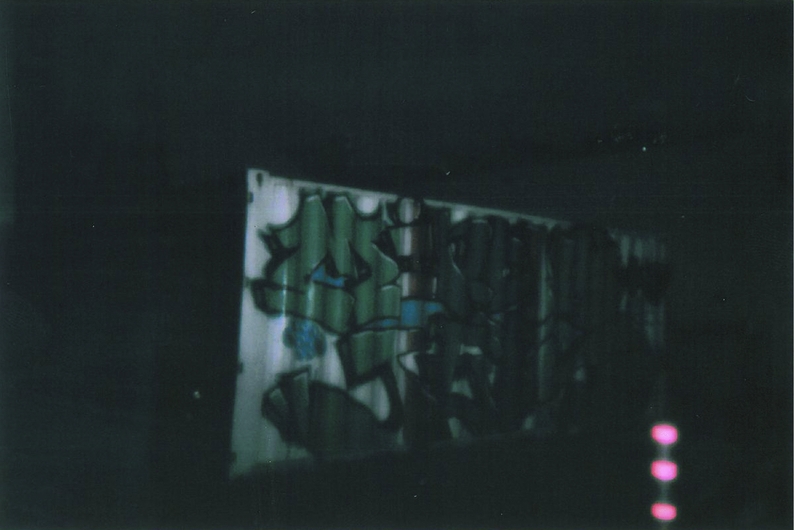
Five of the participants spoke about the need for more youth-appropriate community activities. They thought that some young people engaged in antisocial behaviour borne out of boredom, such as graffiti tagging as illustrated in Figure 1, a photograph taken by Rachel.
Graffiti tagging out of boredom – ‘It's [graffiti] a way for kids to express themselves, ‘cause again it's a small town and there's not much to do . . . if they can't do that, what can they do? . . . I guess it could be out of boredom . . .’.

Five participants argued for the importance of public investment in youth support services and community-wide activities. They felt that it was important to build on the success of initiatives like The Street University. They felt that these investments had already created some positive change for young people, and that further investment would make their town a better place and reduce antisocial behaviours.
Widespread social disconnection
Six participants expressed concern about what they perceived to be social disconnection among community members. This lack of social connectedness manifested itself in a number of different forms, including violence and crime, and a damaged and neglected physical environment, along with a fear of speaking up against these things because it might leave them vulnerable to violent behaviour. Participants felt that residents who were involved in these behaviours disrespected their community and its members.
Four participants expressed worry about the impact of exposure to violence, crime and a damaged and neglected physical environment on the generation coming behind them. Charlotte said:
It's [fights between people] disgusting because the younger kids look up to the older people and see what they're doing so they think, yeah, that if they can do it, I can do it.
In contrast, other participants had positive experiences with role-models. One young man talked about having a positive role-model in his life whom he saw as inspiring and personally supportive. Another young woman spoke about making positive life decisions precisely because she hoped to be a role-model to others.
Cultural diversity
Another important strength for three participants was the cultural diversity of the community. This is a community with large migrant populations and a large Indigenous population. They described embracing and appreciating the diversity, and forming friendships with people from different backgrounds. Living in a diverse community was seen as fostering increased tolerance and understanding of difference.
Financial Struggles and Opportunities
The young people were aware of the financial hardships experienced by families within their communities. They saw this as being especially hard on children and young people because it limited them. They provided examples of children and young people who displayed talent in sport but who were unable to pursue their talents because their parents could not afford to pay for registration, equipment and the associated travel. Moreover, participants indicated that many community members were unable to use local sporting facilities, where an entrance fee was required. One participant, Benjamin, was concerned that not having enough money might lead some young people to engage in illegal behaviour:
They steal it [cigarettes] from their parents and then sell one smoke for one dollar . . . just to make money to buy lunch with it, because they don't have the money or didn't bring any lunch with them. Some go to school hungry. Only thing they can do is sell a smoke.
Personal Resilience and Skills
This theme captures discussion within the interviews relating to the importance of self-determinism, talents and interests.
Self-Determinism
Five participants felt that an important challenge for their community was to support those who seemed to lack self-determinism. They were concerned that not everyone strived to make the best use of the opportunities available to them and were sometimes too influenced by external factors.
. . . it also relies on the individuals that live here . . . they have to strive for it, they can't just sit around and wait for things to come to them. (Bob)
. . . they're [young people using drugs] like not in school and stuff, so they're going to be nowhere in life when they're older and they'll be living on the streets. (Jessie)
One participant, Charlotte, told her own personal success story in relation to exercising self-determinism. She described how she felt about being rewarded for improving her school performance:
. . . looking at them [medals] makes me feel good about myself for achieving my goals . . . attending school more often and always participating in everything . . . I thought I never would be able to do or achieve anything like this . . . ‘cause I was always put down and stuff, like doing things wrong and stuff and then I proved them wrong about achieving goals . . . instead of giving up I always tried my best and kept going on until I achieved it . . . it also shows that you can actually achieve want you want to in life.
Talents and interests
Creative outlets were perceived as protective factors by the participants. To quote Charlotte:
. . . I know when I play music, like I get this feeling . . . I can write my own songs and put my feelings into what I've like thought about and stuff . . . I can put all my feelings into a song.
Playing sports in particular was seen as a way of coming together with friends and ‘escaping’ from any stress and troubles. Figure 2 captured what sport meant for Stephen.
Playing basketball to get social and release stress – ‘. . . sports . . . is meaningful to me because you get to meet people and you can have fun and you can just let everything out’.

Health and Wellbeing
Substance misuse
Four participants were concerned by their awareness of available toxic substances such as cigarettes, alcohol and illicit drugs. It was noted that many underage people smoked cigarettes and participants were worried about the general lack of knowledge about the health impact of substance misuse. They were also concerned that young people may use substances because of peer pressure. A quote from Benjamin further illustrates these concerns:
Most of them have, like, no knowledge . . . the damages of smoking and what it can do over time and, like, the permanent effects it can have and even, like, the temporary effects it can have . . . just like because of peer pressure or they just want to be cool or they just want to try.
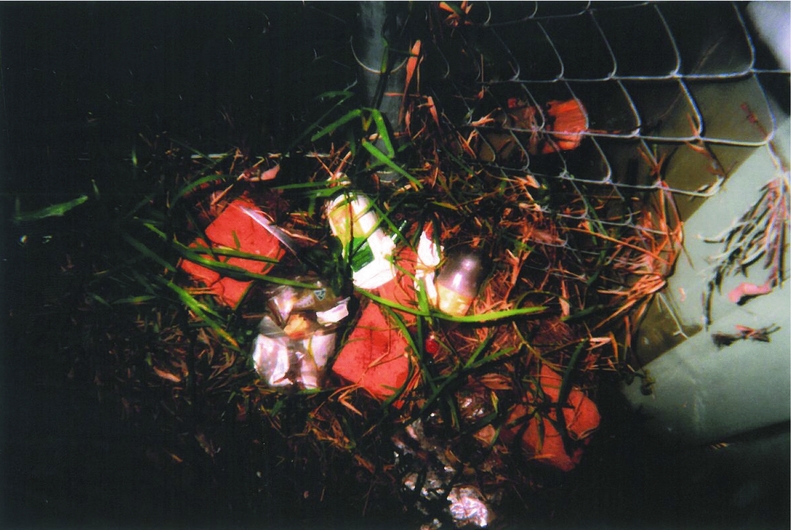
Participants also expressed concern regarding the use of drugs in places where young children play, as illustrated by a photo of used bongs and a knife taken by Jessie (see Figure 3).
Traces of drug use and a knife found at a park – ‘. . . if there's a little kid that walks past there and sees it, he could pick up the knife, pick up the bottle. It's affecting like other people too that live in the area, like little kids, like their parents don't want them to be around that kind of stuff. . .’.

The physical environment
Participants frequently spoke about the impact of the physical environment on health and wellbeing. Six participants perceived a widespread attitude of not caring for the environment by residents, the council and the police. A wide range of damage and neglect caused intentionally by residents was disclosed, including arson, littering and pollution, vandalism, and graffiti. Participants felt frustrated by rubbish and perceived the uncared for environment as potentially dangerous, as further illustrated by a quote from Jessie:
. . . it's affecting us ‘cause we go through [the alleyway] to walk to school and we have to go through the glass and sometimes we have glass in our shoe and like it could hurt us.
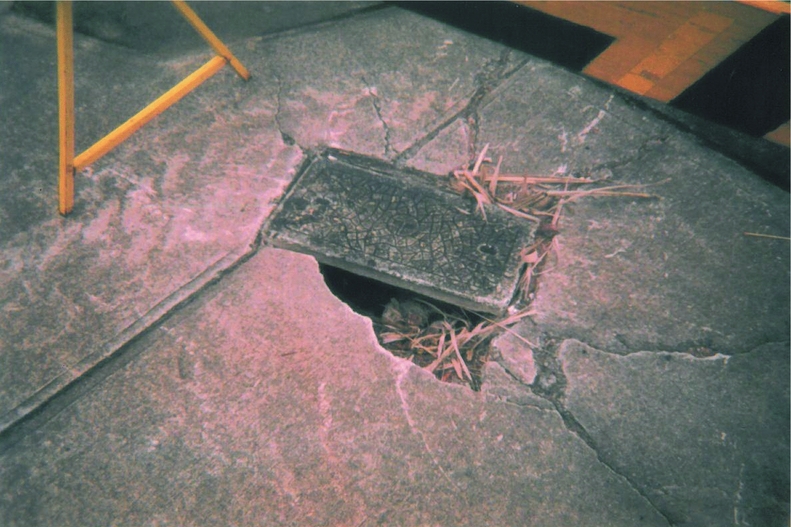
Participants did not believe the police took adequate action against those who damaged and neglected the environment. In addition, participants talked about roads and pathways that were cracked or uneven. They thought that the council neglected the environment and was slow to repair damages, which also potentially compromised public safety (see Figure 4). They felt that the inadequate responses from police and the council showed disrespect for the citizens. Uncared for environments caused unhappiness for the young people and significantly reduced their sense of personal and community pride, as described by Maya:
It [litter and damage] makes me feel like I don't want to walk around there anymore, being in the environment we're living in.
Damage and neglect of a footpath – ‘. . . it's just so unsafe . . . I've nearly fallen into that . . . people don't fix things and that it takes a while’.

Two participants indicated that they felt frightened to live in their community. One girl, Jessie, was concerned about the consequences of arson in particular:
. . . a little fire can turn into a bigger fire and it could travel to houses . . . you don't know when they are going to do it, it could happen any time . . . you could be in your bed and they could set it on fire and your house could get burned down . . . I'm frightened to live in my own house.
In contrast, the natural spaces of the area (such as parks) were appreciated and seen as community strength. The town was described as a ‘vast’ and ‘green’ place, and participants identified natural spaces as essential to their mental wellbeing in particular as they used natural spaces to remove themselves from any stress. This idea is further illustrated by a quote from Stephen:
Every time I walk it just helps me clear my mind from, like, when there's trouble with studies or just work or family.
Five participants spoke about the intentional measures taken by the council and some residents to keep the area safe and clean. The presence of security and the absence of broken glass were highlighted as particularly important to maintaining the safety of residents in public spaces, such as parks and playgrounds.
The Impact of Stereotyping Media Constructions
One of the main challenges identified by the participating young people was the impact of stereotyping media constructions. According to the participants, media constructions had stigmatised their area by focusing almost entirely on what was negative, exaggerating the difficulties and neglecting to show the positives.
Superficial judgment
Seven participants felt that the media focused only on the physically ugly parts of their community (e.g., damaged or neglecting buildings), homelessness and substance use. They were concerned that community outsiders had only been shown the negatives and formed a superficial judgment on this basis.
. . . people are looking bad upon [our town]. It's more just scratching the surface of what they are talking about of which I don't think they understand. (Stephen)
. . . it [vandalism] kind of makes me feel like, people that come from another place than, like Sydney, people will come here and be like, ‘oh, all [these] people are bad’, if they see this, they are going to think that . . . I think they're wrong, because they don't know [this town]. (Max)
. . . that's what I really didn't like about [negative publicity in the national media], because it just focused mostly on the bad things . . . and that's just a stereotype . . . it's not a bad place at all, it's just made to look like that. (Rachel)
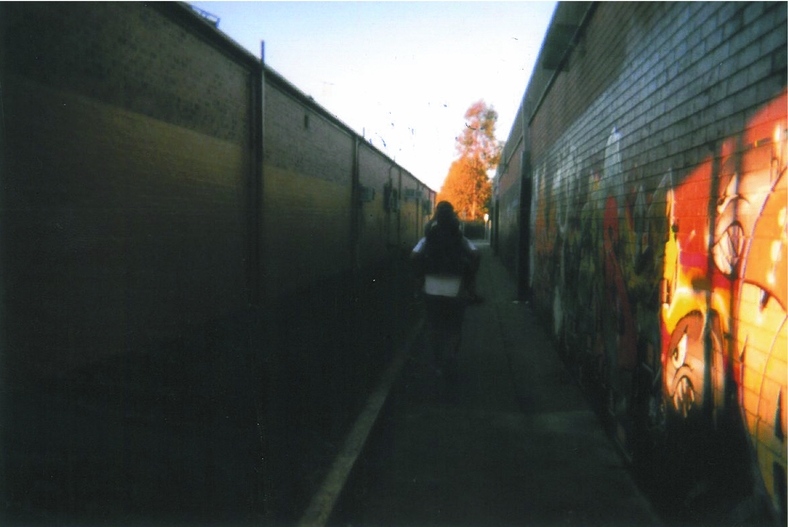
Most participants indicated that having lived in this area for most of their lives, they knew that its true character was not captured in the stereotypes portrayed by the media. The idea that what may appear negative on the outside might not be experienced as negative is further illustrated by Stephan in Figure 5.
An alley that is not as scary as it looks – ‘I guess people would avoid, it's not a common alley people would use, especially because of the graffiti art work. Yeah, it's really dark as well. But I guess for me, because I walk through it a lot, it's all right’.

Be treated differently
Participants reported feeling that not only was their area stigmatised, but they as individuals who lived there were too as they felt they were being treated differently. They felt discriminated against once others realised where they were from. Rachel was frustrated that there were other areas in Sydney with similar environmental neglect and social issues, yet these areas were not stigmatised because residents generally had higher socio-economic status:
People think [our town] is just a bad place with derelicts and it's not a nice place at all, but if you'd go to Newtown you'd see the exact same thing. People are like ‘oh, Newtown is such an amazing place’ but like, it's the same with [our town], you know! Just because you've got the odd few people that, uh, make the place look bad, I mean, like you've got that everywhere . . . you can even say that about Castle Hill, like you've got like the kids who are on drugs and like who do graffiti everywhere and stuff, but people think of Castle Hill it's this rich area, they don't really look at that side of it.
Participants also perceived that their town was treated differently in relation to community investment at a government level. They felt that the state government did not invest enough in making a difference to this area.
. . . they [the government] could be like focusing their resources on helping [our town] instead of like building like a railway or just another lane or road. They could have invested in [our town], to change it. (Benjamin)
Rachel was also concerned that their area was treated like a testing area for trialling new services and initiatives before they were rolled out elsewhere. She expressed mixed feelings about this:
I guess it's good and bad, because that means that [we] get to try a lot of things first, but also they're just seen as you know, guinea pigs in a government experiment.
It was also felt that the local council prioritised the ‘new’ part of town over the ‘old’ part of town, producing a divide within the community. One boy, Bob, explained that many young people wanted to leave the area because they did not want to be associated with it and carry the stigma attached.
. . . if you leave [this town] because you judge it is a bad place, that's really closed minded . . . you can get everything you need [here] . . . but like there are some jobs that are not here . . . there are no high rise buildings where you get paid hundreds and hundreds of thousands and if you want that sort of job, then honestly you have to move out.
Bob hoped that successful people would stay in the town so that their success could be used to challenge the stereotypes that exist about the people there.
. . . it makes us proud to say: ‘this guy came from [our town], so if he can do it, you can do it’ . . . it kind of motivates other young people, especially those that think that this is a bad place, they might think . . . ‘look at him, he came from [that town]’ . . . I'm going to do that one day.
Needs of the Community
The participants generated a list of activities that could be undertaken to support positive change and build community pride, which was going to require investment in the community at both the individual, local and state government levels.
-
1. Media campaigns: Participants felt that it was important to invest in media campaigns that would highlight the positives of the community and redress the stereotyping media constructions.
-
2. Gathering places: The young people felt that an increase in positive gathering places would increase social engagement, community pride and belonging. They hoped for more structured, supervised and free (or significantly subsidised) activities to engage in sports and other creative endeavours. This would provide opportunities for talent development and interactions with role-models in a safe environment. In line with this, scholarship programs for promising athletes and creative artists were suggested.
-
3. Youth-directed public health education campaigns: This suggestion was largely related to the need for more education on the effects of substance abuse.
-
4. Clean up our town: The young people felt that pivotal to increasing public pride and morale was investing in the physical environment. They spoke about the need for improved street lighting, repairing roads and footpaths, and better protection of public buildings and memorials against vandalism. An annual ‘Clean Up’ day was suggested as a way to involve community members in this.
Discussion
Overall, the study findings showed that young people in a disadvantaged area appreciated living in a community surrounded by people who care about them. They felt that the community provided opportunities for them, and they described a sense of community belonging. The young people wanted to be part of positive change, and argued for investment in their community, building on the strengths that were already there to address the challenges. The participants were thoughtful in their expression of the many elements that made up their community and recognised the complexity of issues that exist. Their proposed responses to the challenges pointed to the need for cross-sectorial collaboration and partnership. One of the initiatives participants suggested would help build community pride was to invest in structured, supervised and free/subsidised activities. To create a safe environment where all young people can develop their talents and positively engage with others requires co-operation at different levels, including the government, local council, youth services, sports clubs, volunteers, parents and other role-models, and the young people themselves.
The findings of the current study reaffirm existing knowledge relating to the inequitable health, wellbeing, social and economic outcomes for young people in disadvantage communities. In both the current study and previous studies (Booth et al., Reference Booth, Bernard, Quine, Kang, Usherwood, Alperstein and Bennett2004; Mmari et al., Reference Mmari, Blum, Sonenstein, Marshall, Brahmbhatt, Venables and Sangowawa2014; Nelson et al., Reference Nelson, Macdonald and Abbott2012), young people expressed concerns about the impact of substance abuse, violent and criminal occurrences, and a neglected and damaged environment on young people's health and wellbeing, concomitant with the exposure of children to these things and the lack of positive role-models. Also, the lack of recreational activities and not being able to engage in community activities as a consequence of financial barriers was perceived as a challenge by young people participating in both the current study and previous studies (Booth et al., Reference Booth, Bernard, Quine, Kang, Usherwood, Alperstein and Bennett2004; Brann-Barrett, Reference Brann-Barrett2011; Mason et al., Reference Mason, Cremin, Warwick and Harrison2011). In addition, similar community strengths as to the ones found in previous research were identified by the young people of the current study. Young people in both the current study and previous studies (Smokowski et al., Reference Smokowski, Reynolds and Bezruczko2000; Turner et al., Reference Turner, Hill, Stafford and Walker2006) identified supportive relationships with family members, strong attachment to friends, the possibility to engage in sport activities and gathering places that foster a sense of belonging as protective factors in their lives.
There was also a striking difference found between the community perspectives of young people who participated in this study and previous research findings. In contrast to many previous studies that focused on issues around sexual and reproductive health, and the health-care system (e.g., Booth et al., Reference Booth, Bernard, Quine, Kang, Usherwood, Alperstein and Bennett2004; Mmari et al., Reference Mmari, Blum, Sonenstein, Marshall, Brahmbhatt, Venables and Sangowawa2014; Nelson et al., Reference Nelson, Macdonald and Abbott2012), these issues were not at all mentioned by the participants in the current study.
Because the issues explored in previous research were especially crisis driven, a relation between findings of the current study and the existing literature was found mainly regarding the challenges faced by disadvantaged young people. In contrast to previous studies, this study sought to obtain an understanding of important community issues, entirely identified by the young people instead of determined by the researcher, and explicitly explored young people's perspectives on both the challenges and the strengths of their local community. This resulted in a number of different and new findings. First, the impact of stereotyping media constructions on community pride was a new challenge found, and identified as the most important challenge by the young people who participated in this study. They argued that media depictions were overwhelmingly unbalanced and relished showing the most negative elements of their community without capturing any of the positive. This practice was seen as at least, if not more, damaging to them, their sense of personal pride, and their aspirations, than anything that took place within the community itself. A second new challenge found was the perceived lack of self-determinism among some community members, who were not striving to make the best use of opportunities available to them and were too influenced by external factors. In addition, a new strength was found. The young people who participated in this study spoke about valuing the cultural diversity within their area, which is interesting to note as this is a view contrary to what is usually portrayed in relation to disadvantaged areas like this.
Limitations and Future Research
Although it was anticipated that one week would be enough for the young people to take photographs, some participants would have preferred more time. Perhaps in future studies photographs taken with mobile phones can be used by having participants upload their photographs, potentially with comments, on a secure social media page solely created for that particular research. In addition, perhaps future research could look at the most effective models for engaging children and young people in community and service decision making.
The theme that encompassed the impact of stereotyping media constructions was found to be interesting in relation to the context in which the current study took place. This study was conducted in a period in which the town where the participants lived had recently received negative publicity in the national media. The participating young people referred to this negative publicity in particular when they spoke of stereotyping media constructions. Due to this negative publicity it was hard to recruit young people for this study. Many youth services who were invited to support the study were extremely cautious in helping the researcher to connect with the young people who attended their programs. They felt that the young people were too affected by this negative publicity to participate and were afraid this research would further stereotype the town by highlighting the negatives instead of the positives.
Conclusion
The recruitment difficulties in the wake of community distress because of recent negative media attention provide an important lesson for researchers relating to the criticism that researchers focus on crisis issues in disadvantaged areas. By focusing on crisis topics, researchers too have highlighted the negatives of disadvantaged communities and neglected to explore the positives. Therefore, it can be argued that the existing literature reinforces the stereotyping of people living in disadvantaged areas. Although this is not to suggest that researchers deliberately contribute to stereotyping, it is important to be aware that studies entirely focused on crisis and deficit may erode community pride and deny community members the opportunity to share what they believe to be positive about their lives.
This study has shown that young people from disadvantaged communities are keen and competent participants in discussions about services, community support needs and community strengths. It is important that their voices are included in policy debate and service making decisions.
Acknowledgements
We would like to thank all the young people who participated in this study, and the youth services that supported the recruitment and research process.