Introduction
A high incidence of sports-related concussion is well documented (e.g., Centers for Disease Control and Prevention, 2007; Guskiewicz, Weaver, Padua, & Garrett, Reference Guskiewicz, Weaver, Padua and Garrett2000; Tate, McDonald, & Lulham, Reference Tate, McDonald and Lulham1998). Evidence-based evaluation of the impact of concussion on an athlete's functioning, and of the optimal timing for return to play, is recognized as necessary to safe-guard athletes’ well-being: unnecessarily delayed return and a loss of competitive advantage must be balanced against the risk of further injury if athletes are returned prematurely (i.e., before recovery). In this regard, the National Academy of Neurology (Moser et al., Reference Moser, Iverson, Echemendia, Lovell, Schatz and Webbe2007) and the third International Conference on Concussion in Sport (McCrory et al., Reference McCrory, Meeuwisse, Johnston, Dvorak, Aubry, Molloy and Cantu2009) recommend: (1) an individualized approach to the assessment and management of sports-related concussion, guided by the results of neuropsychological, self-report symptom, and postural stability assessments; and (2) that return-to-play decision-making should take into account possible modifiers of injury outcomes such as pre-existing athlete characteristics (e.g., age, sex, sport and position played, level of competition, and premorbid neurological functioning). However, research remains equivocal regarding specifically which of these factors contribute to the outcomes associated with sports-related concussion, and to what degree.
Variations in incidence, severity and duration to recovery between younger and older athletes, males and females, and those competing in different sports or at different levels of competition have been reported in studies of sports-related concussion (Baillargeon, Lassonde, Leclerc, & Ellemberg, Reference Baillargeon, Lassonde, Leclerc and Ellemberg2012; Daniel, Rowson, & Duma, Reference Daniel, Rowson and Duma2012; Dick, Reference Dick2009; Guskiewicz et al., Reference Guskiewicz, Weaver, Padua and Garrett2000; Putukian, Aubry, & McCrory, Reference Putukian, Aubry and McCrory2009). Evidence of disparity in outcome according to individual characteristics has also been reported in the mild, moderate and severe traumatic brain injury literatures (Bruce et al., Reference Bruce, Alavi, Bilaniuk, Dolinskas, Obrist and Uzzell1981; Farace & Alves, Reference Farace and Alves2000; Hoofien, Vakil, Gilboa, Donovick, & Barak, Reference Hoofien, Vakil, Gilboa, Donovick and Barak2002; Ratcliff et al., Reference Ratcliff, Greenspan, Goldstein, Stringer, Bushnik, Hammond and Wright2007). However, contradictory evidence also exists (e.g., Tsushima, Lum, & Geling, Reference Tsushima, Lum and Geling2009). While experts in the field (e.g., McCrory et al., Reference McCrory, Meeuwisse, Johnston, Dvorak, Aubry, Molloy and Cantu2009) have critically reviewed this literature, firm conclusions regarding the modifying role of pre-existing athlete characteristics on sports-related concussion outcomes have been constrained by (1) a paucity of well-controlled prospective studies, (2) infrequent recruitment of samples other than adult male athletes competing at the college or professional levels of competition, (3) inconsistent reporting of detailed sample demographic variables, and (4) infrequent stratification of results according to sample characteristics. Likewise, previous meta-analyses of sports-related concussion and of mixed-mechanism concussion in the general population (mild traumatic brain injury, mTBI) have consistently identified several factors that moderate recovery (e.g., time since injury), but have not investigated the contribution of premorbid athlete characteristics to variation in concussion outcomes.
Published meta-analyses typically report significant “small to moderate”Footnote 1 neuropsychological deficits (d = −0.54, Belanger, Curtiss, Demery, Lebowitz, & Vanderploeg, Reference Belanger, Curtiss, Demery, Lebowitz and Vanderploeg2005; −0.49, Belanger & Vanderploeg, Reference Belanger and Vanderploeg2005; −0.28, Rohling et al., Reference Rohling, Binder, Demakis, Larrabee, Ploetz and Langhinrichsen-Rohling2011; −0.24, Schretlen & Shapiro, Reference Schretlen and Shapiro2003), and minimally increased symptom reports (−0.05 to −0.15, Panayiotou, Jackson, & Crowe, Reference Panayiotou, Jackson and Crowe2010), when aggregated over all assessments following a concussive injury. However, aggregation of outcomes over broad follow-up epochs potentially obscures variation according to the different assessment and sample characteristics of the included studies (Iverson, Reference Iverson2010). For example, the time elapsed between injury and assessment is recognized as a key moderator of outcome associated with both mTBI and sports-related concussion, such that an inverse association between neuropsychological impairment and days post-injury is reliably observed when effects are aggregated over briefer follow-up intervals: “large” adverse effects observed within 24 hr of injury (e.g., −0.97, Belanger & Vanderploeg, Reference Belanger and Vanderploeg2005), typically reduce to “moderate” or “small” effects within days to weeks (e.g., −0.43 to −0.22, Belanger & Vanderploeg, Reference Belanger and Vanderploeg2005; −0.39 to −0.32, Rohling et al., Reference Rohling, Binder, Demakis, Larrabee, Ploetz and Langhinrichsen-Rohling2011; −0.41 to −0.29, Schretlen & Shapiro, Reference Schretlen and Shapiro2003). Importantly, resolution of post-concussion neuropsychological deficits (defined as a non-significant effect size) usually occurs within 7 to 10 days of sports-related concussion (Belanger & Vanderploeg, Reference Belanger and Vanderploeg2005), or within 1 to 3 months following mTBI (Rohling et al., Reference Rohling, Binder, Demakis, Larrabee, Ploetz and Langhinrichsen-Rohling2011; Schretlen & Shapiro, Reference Schretlen and Shapiro2003), although deficits may persist for a minority of individuals (Iverson, Reference Iverson2010). Previous meta-analyses also demonstrate that multiple follow-up assessments (vs. single) and pre-injury baseline comparisons (vs. control group comparisons) are associated with smaller aggregated effect sizes, attributed to the confounding effect of practice arising from repeat assessment (Belanger & Vanderploeg, Reference Belanger and Vanderploeg2005; Broglio & Puetz, Reference Broglio and Puetz2008). For example, at first assessments conducted within 14 days of injury, Broglio and Puetz (Reference Broglio and Puetz2008) identified “large” adverse effects on athletes’ neuropsychological function (−0.81; p < .001), symptom reports (−3.31; p < .05), and postural stability (−2.56, ns); yet these effect sizes were substantially reduced upon repeat assessment within the same 14 day period (−0.26; p = .001; −1.09; p < .05; and −1.16; ns, respectively).
In each published meta-analysis, substantial effect size heterogeneity remained unexplained by the moderator variables evaluated. Moreover, the moderating effect of pre-existing athlete characteristics on concussion outcomes, and the extent to which other variables such as the method and timing of post-injury assessment explain this effect, has not been explored. The aim of the current study was, therefore, to redress the shortcomings of previous research by applying meta-analytic techniques to a contemporary sample of the sports-related concussion literature. This was to quantify the effect of sports-related concussion on neuropsychological, symptomatic, and postural functioning, and to identify the key athlete characteristics that moderate the magnitude of this effect, after controlling for the influence of variables known to moderate concussion outcomes (i.e., time since injury, repeat assessment and comparison group).
Methods
Literature Search and Inclusion Criteria
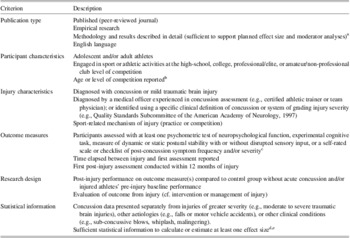
Online databases (PsychINFO, PUBMED, MEDLINE) were searched for relevant papers published between January 1970 and August 2011.Footnote 2 Studies were located that quantified post-injury outcome from sports-related concussion in adolescent or adult athletes on at least one neuropsychological or cognitive test, measure of postural stability, or self-report symptom checklist relative to a pre-injury baseline and/or an independent control group (see Table 1 for additional criteria). Data included in this study were obtained in compliance with regulations of the University of Queensland.
Criteria for inclusion of studies in the meta-analysis

Note. aCase studies or concussion samples of less than four participants were excluded, as samples of this size would prohibit the calculation of estimates of variability required to conduct a meta-analysis (see Rohling, Beverly, Faust, & Demakis, Reference Rohling, Beverly, Faust and Demakis2009).
bIf age was not reported by primary study authors, competition level was taken as a proxy for age such that high school athletes were presumed to be adolescents and professional, college, or amateur athletes were presumed to be adults for the purpose of moderator analyses.
cReported as scale total scores vs. individual symptom frequencies.
dIf effect size data were only reported for a subset of variables within a particular study, all effects were coded and only those that could not be estimated were excluded from the analysis.
eIf an effect was reported only as “not statistically significant” an effect size of zero was entered into the analysis.
Data Extraction and Effect Size Calculation
Statistical information required for effect size calculation (group means, standard deviations, and sample sizes) or effect size estimation (descriptive statistics extrapolated from graphs, or inferential statistics such as F-test, t-test, or p-values), as well as assessment and athlete variables required for moderator analyses, were coded in accordance with a detailed protocol. All effects were coded such that a post-injury decline in concussed athletes’ neuropsychological function or postural stability, or an increase in self-reported symptoms, would produce a negative effect size. Those measures for which results were described as “not statistically significant” by study authors, without accompanying descriptive or inferential statistics, were entered into the analysis conservatively as an effect size of zero (as per Frencham, Fox, & Maybery, Reference Frencham, Fox and Maybery2005).
Effect sizes were calculated/estimated in Microsoft Office Excel 2003 according to research design-specific formulae for continuous variables described by Lipsey and Wilson (Reference Lipsey and Wilson2001). Effect sizes were calculated by dividing the difference between the concussed group mean and the uninjured group (pre-injury baseline or independent control group) mean, by the pooled standard deviation of the concussed and uninjured group means (dpooled ).Footnote 3 Weighted mean effect sizes were then computed by (1) aggregating multiple effects within a given sample (i.e., from two or more outcome measures, cognitive domains or post-injury assessments) by arithmetic mean to create an independent set of effects for each analysis, (2) applying Hedge's small-sample bias correction, (3) weighting by the inverse of the sampling error variance, and (4) aggregating across samples.
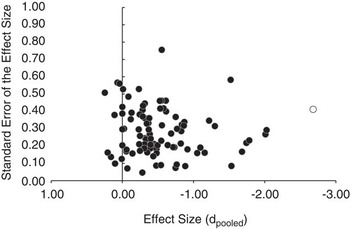
Before aggregation, dpooled effect size estimates were checked for extreme scores using standard techniques; none were identified. After aggregation, one sample-level effect size (from k = 91 dpooled effects) was identified as an outlier in the negative direction (see Figure 1); but was retained unaltered for analysis as it was considered a genuine reflection of the data and its inclusion did not substantively influence the weighted mean effect size. The results of the meta-analysis were also found to be robust to the potential effects of both publication bias and selective reporting bias.Footnote 4
Funnel plot of 91 independent aggregated effect sizes by the standard error of each effect size (weighted mean effect size, dpooled = −0.54). The single outlying effect size is indicated by an unfilled data point (see Table 2, note f for sample details). By convention, effect size magnitudes ≥.80 are considered large, .50 moderate and ≤ .20 small (Cohen, Reference Cohen1988).

Meta-analytic Model and Statistical Analyses
Analyses were conducted using Comprehensive Meta-Analysis Version 2 (Borenstein, Hedges, Higgins, & Rothstein, Reference Borenstein, Hedges, Higgins and Rothstein2005). A fixed effects model was used to estimate the overall effect of concussion, such that aggregated (sample-level) effect sizes were assumed to estimate a single population effect with variation arising only from random subject-level sampling error (Lipsey & Wilson, Reference Lipsey and Wilson2001). Weighted mean effect sizes were compared to the null hypothesis using a one-tailed z-test and the precision of the estimate was indicated by 95% confidence intervals. To evaluate the adequacy of these assumptions, homogeneity of effect size variance was tested using the Q statistic with k-1 degrees of freedom (Hedges & Olkin, Reference Hedges and Olkin1985). Where heterogeneity was indicated by a statistically significant Q, the excess variability beyond subject-level sampling error was hypothesized to be attributable to systematic variation in measurable sample characteristics, rather than random variation, best represented by a “fixed effects model with systematic between-study variance” (Lipsey & Wilson, Reference Lipsey and Wilson2001, p. 118)Footnote 5 ; moderator analyses were planned to examine this variation further.
First, moderator analyses were conducted to replicate the influence of variables previously shown to be important moderators of concussion: namely, outcome (neuropsychological function, self-report symptoms, postural stability), comparison group (pre-injury baseline, independent control, or bothFootnote 6 ), time elapsed between injury and assessment (<24 hr, 1–10 days, 10–30 days, >30 daysFootnote 7 ), and repeat assessment (first, second, third, or fourth post-injury assessment). Follow-up moderator analyses were also planned to investigate the hypothesized contribution of athlete characteristics to residual effect size variation, using either the analogue-to-ANOVA procedure for categorical variables (concussed athletes’ age group, sex, level of competition, and sport played by 50% or more of the sample; see Table 3), or fixed effect linear regression analyses for continuous variables (concussed athletes’ average age in years and average years of education). Samples that did not report a given moderator variable, or samples that could not be allocated to a single level of a moderator, were excluded from the relevant analysis.
Results
Characteristics of Included Samples
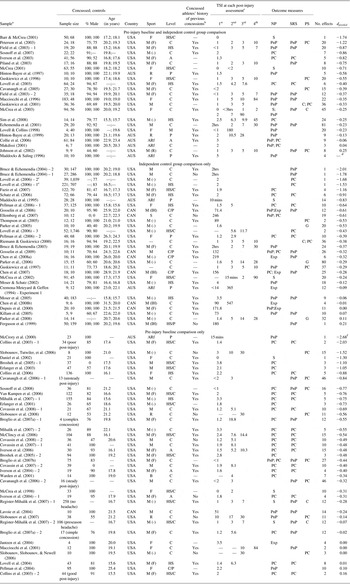
Seventy-eight papers, describing 92 independent samples of sports-related concussion (see Table 2), were identified as eligible for inclusion in the meta-analysis against a priori criteria, although only 91 samples comprised of 3,801 concussed athletes and 5,631 controls were available for dpooled analyses (see Table 2, note d). As shown in Table 2, the majority of included samples were recruited in the USA either exclusively from college competitions or from more than one level of competition, and were largely comprised of adult males playing American football or recruited from a variety of sports. The position played by concussed athletes and the mechanism of injury were rarely reported. Thirty-one samples (n = 1,516) reported concussed athletes’ average years of education. Other measures of premorbid functioning and neuropsychiatric history were reported too infrequently, too inconsistently or with insufficient variation for analysis.Footnote 8
Characteristics of the 92 sports-related concussion samples identified as eligible for inclusion in the meta-analysis, arranged by comparison group and aggregated effect size (dpooled )

Note. dpooled = weighted mean effect size calculated using the pooled standard deviations of the concussed group and the uninjured comparison group as the denominator – aggregated across all post-injury assessments and all outcome measures; TSI = time since injury. Country: AUS = Australia; CAN = Canada; USA = United States of America. Sport: ARf = Australian Rules football; B = Boxing; F = American football; IH = ice hockey; M = multiple sports at risk of concussive injury (specify if >50% sample from single sport); R = Rugby; S = soccer. Level of competition: A = amateur/non-professional club; HS = high school; C = college; P = professional/elite; M = mixed levels. Outcome Measures: C = Clinical assessment of postural stability; Exp = Experimental/cognitive tasks; G = computerised assessment of gait stability under single and dual-task conditions; NP = neuropsychological tests; PC = computerised assessment; PnP = traditional pen-and-paper assessment; PS = postural stability assessment; S = sideline assessment of mental status; SRS = self-report symptoms.
aFor full reference see asterisked (*) citations in References section.
bFor further detail see on-line supplementary materials.
cThe four columns (1st, 2nd, 3rd, 4th) represent the first four post-injury assessment occasions potentially conducted by a given study, while the number presented within each column represents the time elapsed between injury and that specific assessment occasion (TSI), reported as the average TSI, or mid-point of a reported TSI range; in days unless otherwise indicated.
d dpooled could not be calculated from the available data (post-injury standard deviations for concussed and control groups were not reported), leaving k = 91 for dpooled analyses (n = 3,801 concussed athletes and 5,631 controls); cf. k = 92 for dcontrol analyses (n = 3,811 concussed athletes and 5,641 controls) presented in the online supplementary materials.
eData also presented separately for 217 males (1,391 controls), dpooled = −1.85 and 43 females (355 controls), dpooled = −1.52.
fIdentified as an outlier relative to the overall mean effect size and the mean effect size for studies using a pre-injury baseline comparison only.
Overall Effect of Sports-Related Concussion
Aggregated across all outcome measures and post-injury assessments, the overall weighted mean effect size (dpooled ) represented a statistically significant “moderate”Footnote 9 decrement in general functioning following sports-related concussion (−0.54; 95% confidence interval [CI]: −0.57, −0.50); based on 91 independent effects (range: −2.68 to 0.25), 87% of which represented a decline in post-injury functioning and 46% of which were “moderate” or “large” in magnitude. The overall effect was significantly heterogeneous (Q(90) = 668; p < .001); investigation of moderator variables was, therefore, considered appropriate.
The overall effect was comprised of a “small to moderate” decrement in neuropsychological functioning (−0.40; 95% CI: −0.44, −0.36; Q(69) = 405; p < .001), a “moderate to large” increase in self-reported symptoms (−0.66; 95% CI: −0.70, −0.62; Q(49) = 603; p < .001), and a “small” but significant decrement in postural stability (−0.11; 95% CI: −0.18, −0.04; Q(21) = 55; p < .001), when collapsed across all follow-up assessments. Neuropsychological outcomes varied marginally by comparison group: a “small to moderate” effect was derived from samples using a pre-injury baseline (−0.38; 95% CI: −0.42, −0.34; Q(32) = 296; p < .001), while a “moderate” effect was derived from samples using an independent control group (−0.46; 95% CI: −0.58, −0.33; Q(18) = 45; p < .001), and from samples using both comparisons (−0.51; 95% CI: −0.62, −0.39; Q(17) = 60; p < .001). Postural stability outcomes also varied by comparison group: a non-significant effect was derived from samples using a pre-injury baseline (−0.05; 95% CI: −0.13, 0.02; Q(9) = 31; p < .001), while a “small to moderate” effect was derived from samples using an independent control group (−0.34; 95% CI: −0.66, −0.02; Q(5) = 2, ns), and from samples using both comparisons (−0.44; 95% CI: −0.66, −0.23; Q(5) = 8, ns). In contrast, a “moderate” effect was derived from samples using a pre-injury baseline (−0.56; 95% CI: −0.61, −0.51; Q(24) = 286; p < .001), and from samples using both comparisons to assess self-report symptoms (−0.49; 95% CI: −0.65, −0.34; Q(9) = 29; p < .001), while a “large” effect was derived from samples using an independent control group only (−1.16; 95% CI: −1.26, −1.07; Q(14) = 159; p < .001).
Effect size diminished rapidly with increasing time since injury: a “moderate to large” effect was derived from all assessments conducted within 24 hr of injury (−0.76; 95% CI: −0.82, −0.70; Q(29) = 119; p < .001; M = 12 hr post-injury), a “small to moderate” effect was observed between 1 and 10 days post-injury (−0.44; 95% CI: −0.47, −0.40; Q(66) = 671; p < .001; M = 3.7 days), while a “small” homogenous effect was observed between 10 and 30 days post-injury (−0.13; 95% CI: −0.23, −0.03; Q(11) = 7, ns; M = 23.3 days), which was not significantly different from zero beyond 30 days (−0.06; 95% CI: −0.18, 0.07; Q(18) = 18, ns; M = 143.5 days). Effect size also diminished with repeat assessment: from “moderate to large” effects at first post-injury assessment (−0.71; 95% CI: −0.75, −0.68; Q(85) = 539; p < .001; M = 18.2 days post-injury), to “small to moderate” effects at second assessment (−0.24; 95% CI: −0.29, −0.19; Q(42) = 145; p < .001; M = 35.3 days), non-significant effects at third assessment (−0.01; 95% CI: −0.06, 0.04; Q(28) = 85; p < .001; M = 13.2 days), and “small” homogenous effects at fourth assessment (−0.15; 95% CI: −0.28, −0.03; Q(16) = 40, ns; M = 29.1 days).
Consequently, to control for the confound of recovery over time with the effect of repeat assessment, time since injury was re-analyzed including only first post-injury assessments: revealing a “moderate to large” effect within 24 hr of injury (−0.79; 95% CI: −0.85, −0.72; Q(29) = 132; p < .001; M = 12 hr post-injury) which remained “moderate to large” 1 to 10 days post-injury (−0.71; 95% CI: −0.76, −0.66; Q(45) = 377; p < .001; M = 2.4 days), but was non-significant and homogenous beyond 30 days (−0.09; 95% CI: −0.30, 0.11; Q(10) = 9, ns; M = 126.5 days).Footnote 10 A regression analysis of first assessments conducted within 10 days post-injury confirmed a significant reduction in effect size magnitude with an increasing number of days since injury (β = 0.06; 95% CI: 0.03, 0.08; p < .001; α = −0.84; k = 75). Extrapolating from the model, concussed athletes first assessed 24 hr following injury produced a “moderate to large” effect (dpooled = −0.78), while athletes first assessed 10 days following injury produced a “small to moderate” effect (dpooled = −0.28). The relationship between time and concussion effect was stronger than would be expected by chance (QM (1) = 14; p < .001), yet significant between-study variability remained unexplained by this model (QR (73) = 479; p < .001).
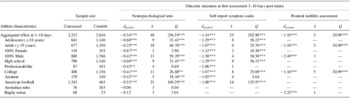
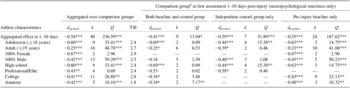
When first post-injury assessments were further analyzed by outcome, a “small to moderate” decrement in neuropsychological functioning (−0.38; 95% CI: −0.45, −0.31; Q(19) = 141; p < .001), a “large” increase in self-reported symptoms (−0.96; 95% CI: −1.02, −0.89; Q(14) = 144; p < .001), and a “moderate” decrement in postural stability (−0.45; 95% CI: −0.52, −0.37; Q(13) = 27; p < .05) were observed within 24 hr of injury, while a “moderate” decrement in neuropsychological functioning (−0.54; 95% CI: −0.59, −0.50; Q(39) = 237; p < .001), a “large” increase in self-reported symptoms (−1.14; 95% CI: −1.20, −1.08; Q(24) = 203; p < .001), and a “large” decrement in postural stability (−1.10; 95% CI: −1.45, −0.75; Q(4) = 31; p < .001) were observed 1 to 10 days post-injury (see Table 3). Furthermore, when only samples using both a baseline and control group comparison were included in the analysis (i.e., the most rigorous research design), a “large” decrement in neuropsychological functioning (−0.90; 95% CI: −1.05, −0.76; Q(9) = 30; p < .001), a “large” increase in self-reported symptoms (−1.49; 95% CI: −1.72, −1.26; Q(6) = 26; p < .001), and a “moderate to large” decrement in postural stability (−0.76; 95% CI: −0.98, −0.54; Q(5) = 5, ns) were observed within 24 hr of injury, while a “small to moderate” decrement in neuropsychological functioning (−0.41; 95% CI: −0.57, −0.24; Q(8) = 14; p < .05) and a “large” increase in self-reported symptoms (−0.91; 95% CI: −1.23, −0.59; Q(1) = 0.1, ns) remained at 1 to 10 days post-injury.Footnote 11
Effect size presented as a function of athlete characteristics and type of outcome measure: administered at first post-injury assessments conducted 1–10 days following a sports-related concussion

Note. dpooled = weighted mean effect size calculated using the pooled standard deviations of the concussed group and the uninjured comparison group as the denominator. By convention, effect size magnitudes ≥.80 are considered large, .50 moderate, and ≤.20 small (Cohen, Reference Cohen1988); k = number of independent sample effect sizes; Q = test of homogeneity of effect size variance.
*p < .05, **p < .01, ***p < .001.
With the exception of postural stability within 24 hr, self-report symptoms within 1–10 days, and outcomes assessed beyond 10 days from injury, significant heterogeneity remained unexplained by these moderator analyses; additional analyses were, therefore, required. Insufficient samples were available for further analysis of outcomes within 24 hr of injury (e.g., k = 1 adolescent or high school athletes, k = 0 female athletes). Consequently, subsequent moderator analyses include outcomes first assessed during the 1- to 10-day follow-up interval only.
Athlete Characteristics
Age group
At first assessments conducted 1–10 days following injury, adolescent athletes demonstrated larger post-concussion neuropsychological deficits, on average, than adult athletes (Table 3: dpooled = −0.60 and −0.25, respectively), and reported marginally more symptoms (Table 3: dpooled =−1.29 and −1.07, respectively), but were not assessed for postural stability. The significant difference in neuropsychological outcomes was not better accounted for by differences between adolescents and adults in average time since injury (Table 4: M = 2.4 and 2.7 days, respectively), type of comparison group (Table 4), or sample sex (Table 5). When only samples using both a baseline and control group comparison were included in analysis, adolescents demonstrated greater neuropsychological impairment than adults (dpooled = −0.69 and −0.25, respectively). Adolescent males also demonstrated substantially larger neuropsychological deficits than adult males (dpooled = −0.75 and −0.15, respectively). Adolescent females were not available for comparison to adult females in the current sample.
Effect size presented as a function of athlete characteristics and comparison group: neuropsychological outcome measures administered at first post-injury assessments conducted 1–10 days following sports-related concussion

Note. dpooled = weighted mean effect size calculated using the pooled standard deviations of the concussed group and the uninjured comparison group as the denominator. By convention, effect size magnitudes ≥.80 are considered large, .50 moderate and ≤.20 small (Cohen, Reference Cohen1988); k = number of independent sample effect sizes; Q = test of homogeneity of effect size variance; TSI = average time elapsed since injury (in days).
aFor a full break-down of results by athlete characteristics, time since injury, and comparison group see online supplementary materials, Appendix B, Table B2.
*p < .05, **p < .01, ***p < .001.
Effect size presented as a function of athlete age and sex: neuropsychological outcome measures administered at first post-injury assessments conducted 1–10 days following sports-related concussion

Note. dpooled = weighted mean effect size calculated using the pooled standard deviations of the concussed group and the uninjured comparison group as the denominator. By convention, effect size magnitudes ≥.80 are considered large, .50 moderate and ≤.20 small (Cohen, Reference Cohen1988); k = number of independent sample effect sizes; Q = test of homogeneity of effect size variance; TSI = average time elapsed since injury (in days).
aIf adult male samples are matched to adolescent male and adult female samples on TSI (≥3 days excluded): adult male dpooled = −0.15*, k = 7, Q = 15.37*, TSI M = 1.8 days.
*p < .05, **p < .01, ***p < .001.
Age in years
Regression analyses confirmed that each additional year of concussed athletes’ average age (range: 15.2 to 31.5 years) corresponded to a significant reduction in the magnitude of the overall effect of concussion (β = 0.04; 95% CI: 0.03, 0.06; p < .001; α = −1.28; k = 76), and the effect size magnitude when only neuropsychological outcomes, first post-injury assessments conducted 1–10 days from injury, and studies using both baseline and control group comparisons were included in analyses (β = 0.11; 95% CI: 0.03, 0.18; p < .01; α = −2.50; k = 8). Holding these variables constant, the relationship between age and concussion effect was stronger than would be expected by chance (QM (1) = 8; p < .01), while residual between-study variability was not significant (QR (6) = 5, ns). Extrapolating from the model, athletes at 15 years of age could be expected to demonstrate a “large” decrement in neuropsychological functioning upon first assessment within 1–10 days post-concussion (dpooled = −0.92), while adult athletes over the age of 24 years could be expected to demonstrate a minimal effect within the same interval (dpooled = 0.02).
Years of education
Regression analyses also indicated that each additional year of concussed athletes’ education (range: 9.6 to 16.6 years) corresponded to a significant reduction in the magnitude of the overall effect of concussion (β = 0.16; 95% CI: 0.12, 0.19; p < .001; α = −2.49; k = 31), and the effect size magnitude when only neuropsychological outcomes, first post-injury assessments conducted 1–10 days from injury, and studies using both baseline and control group comparisons were included in analyses (β = 0.20; 95% CI: 0.02, 0.37; p < .05; α = −3.28; k = 5). Holding these variables constant, the relationship between years of education and concussion effect was stronger than would be expected by chance (QM (1) = 5; p < .05), while residual between-study variability was not significant (QR (3) = 6, ns). Extrapolating from the model, athletes with 10 years of education could be expected to demonstrate a “large” decrement in neuropsychological functioning upon first assessment within 1–10 days post-concussion (dpooled = −1.32), while those with 16 years of education could be expected to demonstrate a “small” effect within the same interval (dpooled = −0.15). Insufficient samples were available for analysis of the interaction between age, sex, and years of education.
Sex
At first assessments conducted 1–10 days following injury, female athletes demonstrated larger post-concussion neuropsychological deficits, on average, than male athletes (Table 3: dpooled = −0.87 and −0.42, respectively), although males reported more symptoms than females (Table 3: dpooled = −1.58 and −1.12, respectively); females were not assessed for postural stability. The significant difference in neuropsychological outcomes was not better accounted for by differences between females and males in average time since injury (Table 4: M = 2.9 and 2.5 days, respectively), type of comparison group (Table 4), or age group (Table 5). When only samples using a baseline comparison were included in analysis, females demonstrated greater neuropsychological impairment than males (dpooled = −0.87 and −0.42, respectively); females were not assessed using both a baseline and control group comparison or control group only. Female adults also demonstrated substantially larger neuropsychological deficits than male adults (dpooled = −0.62 and −0.15, respectively). Female adolescents were not available for comparison to male adolescents in the current meta-analytic sample.
Level of competition
At first assessments conducted 1–10 days following injury, athletes injured during high school competition demonstrated larger post-concussion neuropsychological deficits, on average, than athletes concussed at other levels of competition (Table 3: dpooled = −0.60 and range: −0.43 to −0.41, respectively), and reported marginally more symptoms (Table 3: dpooled = −1.29 and range: −1.07 to −1.02, respectively), but were not assessed for postural stability. The significant difference in neuropsychological outcomes was not better accounted for by differences between levels of competition in average time since injury (Table 4: M = 2.4 and range: 1.8 to 2.8 days, respectively) or type of comparison group (Table 4). When only samples using both a baseline and control group comparison were included in analysis, high school athletes demonstrated greater neuropsychological impairment than other levels of competition (dpooled = −0.69 and range: −0.34 to ns, respectively). Insufficient samples were available for analysis of the moderating effect of level of competition by sample age, sex, or years of education.
Sport played
At first assessments conducted 1–10 days following injury, samples predominantly recruiting American footballer players demonstrated “moderate” neuropsychological deficits and a “large” increase in self-report symptoms (Table 3: dpooled =−0.53 and −1.08, respectively), comparable in magnitude to the overall meta-analytic sample. A single sample of Rugby union players demonstrated “large” postural stability deficits within 1–10 days following concussion (dpooled = −2.25). However, samples of Australian Rules and Rugby union football players did not demonstrate a statistically significant change in neuropsychological function within the same period of assessment. As the majority of samples included in this meta-analysis recruited athletes from a variety of sports, other sports such as ice hockey, soccer, and boxing were not sufficiently represented within the sample to support individual analysis.
Discussion
This review used meta-analytic techniques to quantify the impact of sports-related concussion on athletes’ neuropsychological, symptomatic, and postural functioning. It used a contemporary sample to replicate and extend findings from both quasi-experimental empirical studies and previous meta-analyses of the concussion literature, included almost double the number of studies previously reviewed, and is the first meta-analysis to investigate the role of pre-existing athlete characteristics in moderating outcomes associated with sports-related concussion.
Consistent with previous meta-analyses, the aggregated effect of concussion was heterogeneous and significantly moderated by outcome, time since injury, repeat assessment, and comparison groupFootnote 12 . Athletes consistently demonstrated a significant post-concussion increase in subjective symptom reports and significant impairment on objective measures of neuropsychological function and postural stability. This pattern of results was observed when outcomes were collapsed across all post-injury assessments, and also (although to a greater magnitude) when only first post-injury assessments conducted within 10 days of injury, and only those studies using both a baseline and independent control group comparison, were included in analyses to control for the attenuating effects of repeat assessment. The finding of significant post-concussion postural instability is consistent with previous reports of the sensitivity of postural assessment to concussion sequelae (see Davis, Iverson, Guskiewicz, Ptito, & Johnston, Reference Davis, Iverson, Guskiewicz, Ptito and Johnston2009), and suggests that this may be a promising, although presently under-used, measure of concussion-related impairment in athletes’ psychomotor function—a domain with particular relevance for athletes’ competitive performance and risk of re-injury if returned to play within the acute post-injury period. While this finding differs from the non-significant postural stability deficits previously reported by Broglio and Puetz (Reference Broglio and Puetz2008), the increased sample of the current meta-analysis and the unmasking of significant deficits by controlling for the confounding effect of repeat assessment across smaller recovery intervals (<24 hr and 1–10 days vs. <14 days) may explain this difference.
At first assessments conducted 1–10 days following sports-related concussion, more severe deficits in neuropsychological functioning were demonstrated by concussed samples comprised of younger athletes (particularly those in their adolescence competing at the high school level of competition), female athletes, and those with fewer years of education, than samples comprised of older athletes, male athletes, or those with more years of education, respectively. This finding was not better accounted for by differences between groups in the number or timing of post-injury assessments or the control comparison made. The moderating effect of age group also remained when sample sex was held constant, and vice versa. Hence, converging evidence from multiple measures (age group, age in years, level of competition, and years of education) indicates that young age may be a reliable indicator for the potential severity of post-concussion neuropsychological deficits within the first days or weeks following injury. Conversely, these results suggest that older age or higher education may represent important protective factors during this early post-injury period (associated with increased brain/cognitive reserve, see Kaplan et al., Reference Kaplan, Cohen, Moscufo, Guttmann, Chasman, Buttaro and Wolfson2009; Satz, Reference Satz1993; Stern, Reference Stern2009).
However, it must be emphasized that our finding of a significant moderating effect of athlete age, sex and education can be reliably applied to neuropsychological outcomes within the acute (1–10 days) recovery interval only. With insufficient studies reporting effects outside of this interval, conclusions regarding the immediate (<24 hr) or longer-term (>10 days) impact of athlete variables on sports-related concussion outcomes could not be reliably generated from the extant literature. The lack of follow-up of concussed athletes beyond 10 days and the limited assessment of symptom reports or postural stability also thwarted our investigation of differential rates of recovery, despite indications in the empirical literature that post-concussion recovery may be slower for high school athletes than college athletes (Baillargeon et al., Reference Baillargeon, Lassonde, Leclerc and Ellemberg2012; McClincy, Lovell, Pardini, Collins, & Spore, Reference McClincy, Lovell, Pardini, Collins and Spore2006), or professional athletes (Moser et al., Reference Moser, Iverson, Echemendia, Lovell, Schatz and Webbe2007), and that recovery may proceed at differential rates across neuropsychological functioning, subjective symptoms and postural control (Echemendia, Putukian, Mackin, Julian, & Shoss, Reference Echemendia, Putukian, Mackin, Julian and Shoss2001; Makdissi, Reference Makdissi2009; McCrea et al., Reference McCrea, Guskiewicz, Marshall, Barr, Randolph, Cantu and Kelly2003).
The finding of greater post-concussion neuropsychological deficits in female and young athletes within the first 10 days of injury is nonetheless concerning given increasing rates of participation in contact sports, and hence an increasing exposure to sports-related concussion, in these populations (Dick, Reference Dick2009; Guskiewicz et al., Reference Guskiewicz, Weaver, Padua and Garrett2000). Sex- and age-related differences in the severity of early sports-related concussion outcomes may be attributable to a range of physiological, metabolic, hormonal, neurodevelopmental, neuroanatomical, or muscular (especially neck) characteristics that differ between males and females and between adolescents and adults (Anderson & Moore, Reference Anderson and Moore1995; Dick, Reference Dick2009; Lovell & Fazio, Reference Lovell and Fazio2008; Reddy, Collins, & Gioia, Reference Reddy, Collins and Gioia2008; Viano, Casson, & Pellman, Reference Viano, Casson and Pellman2007). For example, female brains generally demonstrate greater metabolic requirements than male brains (see Broshek et al., Reference Broshek, Kaushik, Freeman, Erlanger, Webbe and Barth2005), which, in the presence of acute concussive stimuli, may produce an amplified cellular response to concussion-induced metabolic demands and changes in regional cerebral blood flow (Hovda et al., Reference Hovda, Prins, Becker, Lee, Bergsneider and Martin1999). Additionally, evidence of altered intracranial blood pressure, prolonged and diffuse cerebral swelling, and excitotoxic sensitivities to concussion-activated neurotransmitters (e.g., glutamate) has been recorded in developmental animal models and following moderate to severe traumatic brain injury in children and adolescents; suggesting a potential vulnerability of the developing adolescent brain to the early effects of concussion (Bruce et al., Reference Bruce, Alavi, Bilaniuk, Dolinskas, Obrist and Uzzell1981; McDonald & Johnston, Reference McDonald and Johnston1990; Prins, Lee, Cheng, Becker, & Hovda, Reference Prins, Lee, Cheng, Becker and Hovda1996). However, research regarding the underlying cause of sex- and age-related differences in initial severity and recovery from brain injury has generally been limited to animal models or non-athletic populations with more severe injuries, and includes reports of both protective and detrimental characteristics associated with developmental age or female gonadal hormones (Dick, Reference Dick2009; Reddy et al., Reference Reddy, Collins and Gioia2008). Further research is, therefore, needed to clarify the specific underlying contributors to the moderating effect of athlete characteristics on acute injury outcomes, and to determine whether these factors also contribute to a differential rate of recovery from concussion.
Alternatively, these findings may be explained by behavioral factors that vary systematically with pre-existing athlete characteristics to predict concussion outcome. For example, male and female athletes, athletes of different age groups, or athletes participating at different levels of competition, may adopt a style of play that is more or less aggressive, daring, or reckless—leading to differences in behavioral risk factors and the biomechanics of concussive injuries subsequently sustained. Indeed, a systematic review of studies reporting injury mechanisms within football, ice hockey and basketball, demonstrated that males are more likely to be concussed by player-to-player contact than females, while female athletes are more likely to make contact with a non-human object (Dick, Reference Dick2009). Differences in the heading behavior of male and female soccer players have also been documented (Kontos, Dolese, Elbin, Covassin, & Warren, Reference Kontos, Dolese, Elbin, Covassin and Warren2011). However, the current findings were unable to distinguish whether or not variations in the mechanism of injury were associated with acute concussion effects and/or a post-acute divergence in recovery.
The literature also suggests that demographic differences in measured concussion outcomes may be attributable to differences in athletes’ psychosocial response to injury and style of symptom reporting. For example, in the wider population, women are more likely to report an illness, seek medical assistance, or report subjective symptoms than males (see Farace & Alves, Reference Farace and Alves2000). Female gender is also a significant predictor of post-concussion symptom complaints 1 month following mTBI treated in hospital emergency departments (Bazarian et al., Reference Bazarian, Wong, Harris, Leahy, Mookerjee and Dombovy1999). In contrast, female athletes reported fewer symptoms than males in the current meta-analysis, yet were more impaired than males on objective neuropsychological outcome measures at 1–10 days post-injury (Broshek et al., Reference Broshek, Kaushik, Freeman, Erlanger, Webbe and Barth2005; Covassin, Schatz, & Swanik, Reference Covassin, Schatz and Swanik2007). Consistent with this result, a meta-analysis of outcomes from mixed-severity traumatic brain injury in hospital attendees found that females were worse off than males on 85% of outcome variables, including both objective and subjective measures (Farace & Alves, Reference Farace and Alves2000). Further epidemiological research is yet needed to confirm these potential differences in the mechanisms of sports-related concussion, rates of injury notification, and characteristics of subjective symptom reporting across different athletic sub-groups.
It must also be considered that observed differences in effect size magnitude across athletic sub-groups may (1) be an artifact of the specific meta-analytic methodology adopted, (2) be better explained by other potential moderators of concussion, or (3) be a spurious result arising from small sample sizes in certain cells of analysis. The findings of this meta-analysis will, therefore, require replication as the literature base expands and a cautious interpretation is recommended in the interim.
We argue, however, that the current findings are unlikely to be an artifact of variation in meta-analysis methodology, as we deliberately selected methods that were consistent with published meta-analyses in the field and/or could be expected to produce the most reliable results (Lipsey & Wilson, Reference Lipsey and Wilson2001). Moreover, our findings were not dependent upon the specific effect size formulae and/or statistical model used.Footnote 13 Additionally, our analyses yielded homogenous effects from assessments conducted beyond 10 days from injury, and from analyses of age group/in years, age by sex, years of education, and level of competition when only first neuropsychological assessments conducted 1–10 days post-injury using both baseline and control comparisons were included. However, some heterogeneity remained unexplained in the current study despite the addition of new moderator and confound analyses. Sex, age, years of education, and level of competition are likely to be inter-correlated, yet there were insufficient samples in the current study to analyze the independent effect of each of these variables. Homogenous effects may also have been revealed had there been a sufficient number of samples to further stratify results according to the cognitive domain assessed, computerized versus pen-and-paper assessment, or finer follow-up intervals. Other infrequently reported variables may also be required to account for this unexplained variance, for example, sample prevalence of neuropsychiatric factors including history of previous head injuries, learning disorders or attention-deficit/hyperactivity disorder (Solomon & Haase, Reference Solomon and Haase2008), indicators of injury severity including immediate post-concussion signs and symptoms (Alla, Sullivan, Hale, & McCrory, Reference Alla, Sullivan, Hale and McCrory2009), or objective biomarkers of injury such as measures of postural stability, or as-yet-experimental electrophysiological, genetic, or blood markers of injury (Barr, Prichep, Chabot, Powell, & McCrea, Reference Barr, Prichep, Chabot, Powell and McCrea2012; Davis et al., Reference Davis, Iverson, Guskiewicz, Ptito and Johnston2009).
Moreover, samples in this field of research were disproportionately comprised of American male athletes in their early adulthood, competing at mixed levels of competition and across mixed sports for which a breakdown of results by sample characteristics were infrequently reported. Female athletes, adolescent athletes competing in high school competitions, and those playing sports other than American football were underrepresented throughout the empirical literature, limiting the evidence-base available to inform injury management for these athletes. Similarly, preseason screening of athletes’ premorbid neuropsychological characteristics (e.g., years of education, academic achievement and relevant developmental, medical or neurological history), use of objective postural stability measures, comparison to both a baseline and independent control group, and follow-up assessment beyond 10 days were infrequently reported. Consequently, our conclusions regarding the moderating effect of athlete characteristics on concussion outcomes are based upon only a small subset of the literature and may represent a difference of only marginal clinical significance. We, therefore, echo repeated calls for future research to (1) target these underrepresented athletic sub-groups, (2) use objective outcome measures across the full period of follow-up (0–90 days), (3) compare post-concussion performance to both a pre-injury baseline and independent control group, and (4) stratify results according to athlete demographic variables (age, sex, years of education, level of competition, and sport played) as well as other pre-existing or injury-related factors to support future replication and extension of the current findings.
Conclusion
The findings of this meta-analytic review (1) verify the significant moderating effect of athlete characteristics on acute concussion outcomes identified in the empirical literature, (2) provide evidence for the importance of an individualized and conservative approach to the assessment and management of concussive injuries, particularly during the first 10 days of injury when important return-to-play decisions are often made, and (3) encourage the targeted development of empirically-derived assessment protocols and management guidelines tailored specifically for sub-groups of potentially vulnerable athletes.
Clinical decision-making should take into consideration key risk factors for greater deficits in neuropsychological function within the first 10 days following sports-related concussion, namely an athlete's young age, female sex, fewer years of education, or high school level of competition to mitigate the risk of premature return to play and repeat injury during this critical recovery interval. However, uncertainty remains with regard to the association between athlete characteristics and differential rates of symptom reporting, postural instability, or neuropsychological deficits beyond 10 days given insufficient empirical research targeting these outcomes. Future research should adopt rigorous research designs (large-scale prospective studies using both baseline and matched controls), use objective measures of post-concussion outcome (neuropsychological and postural stability assessments) in addition to subjective symptom reports, control for the impact of repeat assessment throughout the acute and post-acute phases of injury, and carefully document variations in response to injury according to pre-existing athlete characteristics to support further examination of the rate of recovery from sports-related concussion specific to each athletic sub-group.
Acknowledgments
This research forms part of the doctoral thesis of the first author, submitted to the University of Queensland, and was supported by an Australian Postgraduate Award. This research received no specific grant from any other funding agency, commercial or not-for-profit sectors. We confirm that the information in this manuscript and the manuscript itself has never been published either electronically or in print and that none of the authors has any financial or other conflict of interest affecting this manuscript. We acknowledge the help of John Guimelli in checking the data for accuracy.