Introduction
Memory complaints in older adults have been shown to be predictive of objective cognitive decline and dementia (e.g. Jonker et al., Reference Jonker, Geerlings and Schmand2000), although these subjective cognitive problems may also be related to mental state, personality, and physical health (e.g. Comijs et al., Reference Comijs, Deeg, Dik, Twisk and Jonker2002; Aarts et al., Reference Aarts2011). Identification of factors underlying or causing these memory complaints is of importance since treatment of modifiable risk factors in specific person-tailored interventions may diminish or even prevent memory complaints and subsequent negative consequences of daily functioning (Mol et al., Reference Mol, Van Boxtel, Willems, Verhey and Jolles2009; Fairchild and Scogin, Reference Fairchild and Scogin2010; Faucounau et al., Reference Faucounau, Wu, Boulay, De Rotrou and Rigaud2010; Metternich et al., Reference Metternich, Kosch, Kriston, Härter and Hull2010).
People at all ages report memory complaints, although prevalence increases with age (Ponds et al., Reference Ponds, Commissaris and Jolles1997). Prevention of memory complaints is of particular relevance in two age groups. First, in the face of cognitive aging and possibly more demanding workload and job responsibilities, older persons (roughly 55 to 65 years old) who are still employed may be at increased risk of experiencing memory complaints. Vestergren and Nilsson (Reference Vestergren and Nilsson2011) showed that stress and also multitasking were often reported as the causes of subjective memory problems in middle-aged and older persons (39 to 65) in addition to age and aging. Persons experiencing cognitive complaints due to high mental work demands and job class may be prone to mental exhaustion and increased risk of sickness. In contrast, Potter et al. (Reference Potter, Helms and Plassman2008) showed that intellectually demanding work was associated with better cognitive performance in later life, independent of education and intelligence. Thus, in later life, employment and accompanying job demands may have both positive and negative effects on self-rated and objective cognitive performance.
The second age group, in which studying determinants of memory complaints is relevant, is the so-called young-old (65 to 75 years of age). It is well known that incidence of cognitive decline and dementia increases substantially after the age of 65 years (Fratiglioni et al., Reference Fratiglioni2000), of which the presence of memory complaints may be an early indication (Jonker et al., Reference Jonker, Geerlings and Schmand2000). Identification of risk profiles of persons at risk of developing memory complaints in this particular age group is pertinent since it may aid in improving person-based interventions and offering timely support.
In the present study we aim to develop classification models for early identification of persons at risk for incident memory complaints by examining multiple known demographic, physical, social, and psychological risk factors and predictors of memory complaints (McDougall, Reference McDougall1994; Derouesné et al., Reference Derouesné, Lacomblez, Thibault and LePoncin1999; Jonker et al., Reference Jonker, Geerlings and Schmand2000; Clarnette et al., Reference Clarnette, Almeida, Forstl, Paton and Martins2001; Comijs et al., Reference Comijs, Deeg, Dik, Twisk and Jonker2002; Harwood et al., Reference Harwood, Barker, Ownby, Mullan and Duara2004; Mol et al., Reference Mol, Van Boxtel, Willems, Verhey and Jolles2009; Westoby et al., Reference Westoby, Mallen and Thomas2009; Benito-León et al., Reference Benito-León, Mitchell, Vega and Bermejo-Pareja2010; Aarts et al., Reference Aarts2011) in community-based samples of persons aged 55 to 65 years and 65 to 75 years. In addition, we aim to determine whether or not incident subjective memory problems were actually associated with underlying objective cognitive impairment. Therefore, we aim to differentiate between persons at risk with and without an objectively lower level of cognitive functioning or cognitive impairment by examining the additional predictive value of cognitive test performance. Finally, our underlying goal was to identify specific target groups for person-tailored interventions based on these different risk profiles.
Methods
Sample
Data were used from the Longitudinal Aging Study Amsterdam (LASA). LASA is an ongoing population-based study which focuses on predictors and trajectories of cognitive, social, emotional, and physical functioning in later life. Procedures on sampling, data collection, and non-response have been described in detail elsewhere (Huisman et al., Reference Huisman2011). In short, a random sample of older men and women, aged 55 to 85 years stratified by age and sex according to the expected five-year mortality, was drawn from the population registries of 11 municipalities in areas in the west (Amsterdam and vicinity), the northeast (Zwolle and vicinity), and the south (Oss and vicinity) of the Netherlands. Interviews were conducted in the homes of the respondents by specially trained and intensively supervised interviewers. The study was approved by the Ethical Review Board of the VU University Medical Center. Informed consent was obtained from all the respondents.
During the first data collection (1992–1993) 3,107 persons were enrolled, with follow-ups in 1995–1996 (N = 2,545), 1998–1999 (N = 2,076), 2001–2002 (N = 1,691), 2005–2006 (N = 1,257), and 2008–2009 (N = 985). In 2002–2003 (N = 1,002), a second study cohort, aged 55 to 65 years, was added to the study from the same sampling frame as the original cohort, with follow-ups in 2005–2006 (N = 908) and 2008–2009 (N = 833). The main reason for loss to follow-up was mortality (72.7% of attrition), while a smaller percentage of respondents refused or were not able to participate due to their physical or mental condition (Huisman et al., Reference Huisman2011).
In the current study, two age groups were studied, i.e. respondents aged 55 to 65 years and those aged 65 to 75 years. For the prediction of incident memory complaints in participants aged 55 to 65 years, data from the first data collection of the first cohort (1992–1993) and the first data collection of the second cohort (2002–2003) were pooled (N = 1,793). We selected persons aged 55 to 65 years without memory complaints at baseline (N = 1,416; 0.1% missing data) who were alive at follow-up, in 1995–1996 and 2005–2006 respectively (1,332 with data on incident memory complaints). After imputation of missing data in those alive at follow-up, the final sample comprised 1,416.8 persons (pooled model). Data collected during the fifth wave (2005–2006) were used to predict incident memory complaints in persons aged 65 to 75 years (N = 654). We selected persons without memory complaints in 2005–2006 (N = 443; 6.4% missing data) who were alive at follow-up (N = 411 with data on incident memory complaints), i.e. 2008–2009. After the imputation of missing data in persons who were alive at follow-up, the final study sample comprised 471 persons (pooled model).
Memory complaints
Memory complaints were assessed by self-report: “Do you have problems with your memory” (yes, no) (Schofield et al., Reference Schofield, Marder, Dooneief, Jacobs, Sano and Stern1997; Geerlings et al., Reference Geerlings, Jonker, Bouter, Ader and Schmand1999).
Predictors and risk factors of memory complaints
Potential predictors and risk factors were identified by means of a literature search and were selected if relatively easy to measure and available in LASA.
predictors studied in persons 55 to 65 years old
Cut-offs based on either the 80th or 20th percentile (the 20% lowest/poorest functioning) were calculated in the total study sample, i.e. all respondents in that particular age group with and without memory complaints. Cut-offs are stated in square brackets.
Demographic variables were age [at the 80th percentile; ≥63.01 years], sex, and education. Education was assessed by asking for the highest education level completed [≤elementary school, >elementary school].
Functional limitations (walking up and down stairs, using public transportation, and cutting own toenails; range, 0 to 3) were assessed using a questionnaire, which was previously validated in the Netherlands (Van Sonsbeek, Reference Van Sonsbeek1988; Smits et al., Reference Smits, Deeg and Jonker1997), measuring the degree of difficulty with activities in daily living [1 or more, none] (Kriegsman et al., Reference Kriegsman, Deeg, Van Eijk, Penninx and Boeke1997). Presence of cardiovascular diseases (cardiac disease, peripheral arterial disease, cerebrovascular accident) was measured by a combination of self-report, medication used, and general practitioner's information in an algorithm described previously [yes, no] (Bremmer et al., Reference Bremmer, Hoogendijk, Deeg, Schoevers, Schalk and Beekman2006). The number of chronic diseases (seven major) was measured by self-report by asking whether the respondents currently or previously had the following diseases: cancer, asthma, chronic bronchitis or pulmonary emphysema (COPD), arthritis (rheumatoid arthritis or osteoarthritis), cardiac disease, diabetes mellitus, cerebrovascular accident, peripheral atherosclerosis [1 or more, none]. The number of medications used was assessed by checking medicine containers [1 or more, none]. Hearing status was assessed by self-report using the summed score of three items (range, 3 (good) to 12): the degree in which difficulty was experienced in using a normal telephone and following a conversation in a group of three or four people, and with one person (if applicable) with and without hearing aid [poor-insufficient (≥5), sufficient] (Kramer et al., Reference Kramer, Kapteyn, Kuik and Deeg2002). Vision was assessed by means of self-report using the summed score of two items (range, 2 (good) to 8): the degree in which difficulty was experienced in reading small print in the newspaper, and recognizing someone's face at a distance of four meters (if applicable) with and without glasses/contact lenses [impaired (≥ 3), not impaired] (de Boer et al., Reference De Boer2004). Sleep problems were assessed by self-report using three items (range, 3 to 12). Respondents were asked if they ever had problems with falling asleep, waking through the night, and waking up too early in the morning with response categories ranging from (1) “almost never” to (4) “almost always” [>6 (at least one item answered frequently), ≤6]. Self-reported pain was derived from a subscale from the Nottingham Health Profile (Hunt et al., Reference Hunt, McEwen and McKenna1985) and consisted of five items (range, 5 (no pain) to 10): “I am in pain when I am standing,” “I find it painful to change position,” “I am in pain when I am sitting,” “I am in pain when I walk,” and “I am in constant pain” with response categories “yes” and “no” [≥6, <6 (no pain)] (Geerlings et al., Reference Geerlings, Twisk, Beekman, Deeg and Van Tilburg2002).
Self-rated health, i.e. perception of one's health in general, was measured using one question taken from the Netherlands Health Interview Survey, with response categories ranging from (1) “excellent” to (5) “poor” [≥category 3, <category 3] (Deeg and Kriegsman, Reference Deeg and Kriegsman2003).
Depressive symptoms were measured by means of the Dutch translation of the Center for Epidemiologic Studies Depression Scale, a 20-item self-report scale (range, 0 to 60) designed to measure depressive symptoms in the general population (Radloff, Reference Radloff1977; Beekman et al., Reference Beekman, Deeg, Van Limbeek, Braam, De Vries and Tilburg1997) [at the 80th percentile; ≥score 12].
Social and emotional loneliness (range, 0 to 11 (extremely lonely)) was measured by the de Jong Gierveld Loneliness Scale [≥ 3, <3] (de Jong Gierveld and Kamphuis, Reference De Jong Gierveld and Kamphuis1985).
The following personality traits were studied. Sense of mastery was assessed with a translated and abbreviated Dutch version of the Pearlin Mastery Scale (range, 5 (low) to 25) (Pearlin and Schooler, Reference Pearlin and Schooler1978) [at the 20th percentile; ≤score 14]. Self-esteem was measured with one item from the adapted version of the Rosenberg Self-Esteem Scale (Rosenberg, Reference Rosenberg1965) “on the whole, I am satisfied with myself” with response categories ranging from (1) “strongly disagree” to (5) “strongly agree” [≤category 3, ≥category 4]. Global beliefs of self-efficacy were assessed with a translated and shortened version (range, 12 (low) to 60) (Bosscher and Smit, Reference Bosscher and Smit1998) of the General Self-Efficacy Scale (Sherer et al., Reference Sherer, Maddux, Mercandante, Prentice-Dunn, Jacobs and Rogers1982) [at the 20th percentile; ≤score 38]. Neuroticism (range, 0 to 30) was measured with an abbreviated version of the Dutch Personality Questionnaire (Luteijn et al., Reference Luteijn, Starren and Van Dijk1975; Smits et al., Reference Smits, Deeg and Bosscher1995; Steunenberg et al., Reference Steunenberg, Beekman, Deeg and Kerkhof2003) [at the 80th percentile; ≥score 10].
Body mass index (BMI) was calculated as follows: measured weight (kg)/height (m)2 [BMI < 20 kg/m2 and BMI > 30 kg/m2, 20 ≥ BMI ≤ 30]. Alcohol use was assessed by asking the number of alcoholic units consumed per week over the past year, and the number of days of the week in which alcohol was consumed, and thereafter classified based on the index developed by Garretsen and Knibbe (Reference Garretsen and Knibbe1983) into three categories [no, light, moderate, or more]. Smoking status was assessed by self-report [never, current, former]. Physical activity was measured by the validated LASA Physical Activity Questionnaire (LAPAQ; Stel et al., Reference Stel, Smit, Pluijm, Visser, Deeg and Lips2004). In the LAPAQ, frequency and duration of walking outside, bicycling, light and heavy household activities, and a maximum of two sports during the past two weeks were estimated, which were converted into total time spent on physical activities in minutes per day [at the 20th percentile; ≤68.29 minutes per day].
Social participation was measured by the following items: frequency of visiting activities and meetings of associations and/or organizations [never/almost never, a few times a year or more], frequency of cultural activities per year [at the 20th percentile; <score 12], following a training/course [no, yes].
Job status was assessed by asking respondents if they had a paid job at present [yes, no].
Objective cognitive tasks were selected to measure actual cognitive performance, i.e. memory performance, information processing speed, and general cognitive functioning. Memory (immediate and delayed recall) was measured with an abbreviated version of the Auditory Verbal Learning Test (Rey, Reference Rey1964) with three instead of five trials. Immediate recall (range, 0 to 45) was defined as the total score out of three trials [at the 20th percentile; ≤score 16]. After approximately 20 minutes, the respondent is asked to recall as many words as possible, which defines delayed recall (range, 0 to 15) [at the 20th percentile; ≤score 3]. Information processing speed was measured by an adapted version (Piccinin and Rabbitt, Reference Piccinin and Rabbitt1999) of the Alphabet Coding Task-15 (Savage, Reference Savage1984), in which the respondent has to combine as many characters as possible according to a given example (mean score of three trials, range, 0 to 75) [at the 20th percentile; ≤score 23.33]. General cognitive functioning was measured with the Mini-Mental State Examination (MMSE; range, 0 to 30), a widely used instrument for monitoring change in global cognitive functioning (Folstein et al., Reference Folstein, Folstein and McHugh1975) [at the 20th percentile; ≤score 26].
predictors studied in persons 65 to 75 years old
Data on neuroticism were not available in this age group at the waves used for the present study. All other variables described in the previous section (age group 55 to 65 years) were used in the age group of 65 to 75 years [age: cut-off at the 80th percentile; ≥72.59 years]. Different cut-off points were used for functional limitations [2 or more, 1 or none], number of chronic diseases [2 or more, 1 or none], number of medications used [2 or more, 1 or none], and BMI [BMI < 22 kg/m2 and BMI > 30 kg/m2, 22 ≥ BMI ≤ 30]. Cut-offs for the MMSE and delayed recall were equal to the cut-offs used in the age group of 55 to 65 years, while for immediate recall and information processing speed the cut-off was different [cut-offs at the 20th percentile; respectively ≤15 and ≤21.67].
Data analysis
Multiple imputation (five imputed datasets) was applied to deal with missing data, except for missing data due to mortality. Imputations were generated using the Multivariate Imputation by Chained Equations (MICE) procedure as implemented in SPSS. This is a flexible imputation method that uses a series of regression imputation models based on the information of other variables to estimate and substitute the missing values. The pooled results of the imputed datasets are presented.
development of classification models
Stepwise logistic regression analysis was used for the development of the classification models. First, predictors were selected for multivariate analyses by means of univariate logistic regression analyses (criterion: association p < 0.20 with outcome in pooled model) separately for the two age groups. Second, backward stepwise multivariable logistic regression analyses were used to identify significant predictors separately for each age group, including the variables that were associated with the outcome in univariate analyses (p < 0.20). Third, the most important predictor of incident memory complaints was identified based on the lowest p-value in the pooled model. Fourth, the sample was split into two subsamples on the basis of that particular predictor, dichotomized according to the accompanying cut-off point. Subsequently, within each subsample the most important predictor of memory complaints was identified by means of the method described above (steps one to three), after which the subsample was divided again. This procedure was repeated until no more significant predictors could be found, or if the remaining subsample size (N < 50) and the number of cases with incident memory complaints (N < 10) were considered insufficient for further analysis. For each age group a classification tree was constructed in which cognitive test performance was added in the last step (after no other significant predictors could be identified and a sufficiently large subsample remained) to examine the additional predictive value of objective cognitive test performance. Adding cognitive test performance as a predictor in the last step may help to further differentiate the risk profile in persons at risk with and without an objectively lower level of cognitive functioning.
A final positive predictive value of more than two times the initial incidence rate of memory complaints was considered a meaningful increased risk, while a final positive predictive value of less than half the initial incidence rate was considered a meaningful decreased risk. Branches with a final predictive value of more than two times the initial incidence rate were characterized as “risk profiles,” while those with a final predictive value of less than half the initial incidence rate were defined as “healthy profiles.”
Since two different study cohorts were used for analyses in respondents aged 55 to 65 years, “cohort” was tested as a predictor of memory complaints. If significant, it was added as a covariate in the multivariate stepwise logistic regression analyses.
Multivariate analyses were performed using R version 2.15.3 to obtain pooled models. All other analyses, including multiple imputations, were performed using SPSS Statistics version 20.0 for Windows.
Results
Classification model for incident memory complaints in persons aged 55 to 65 years
Within the study sample of persons aged 55 to 65 years without memory complaints at baseline, 14.4% (N = 203.6/1416.8) reported memory complaints after three years of follow-up.
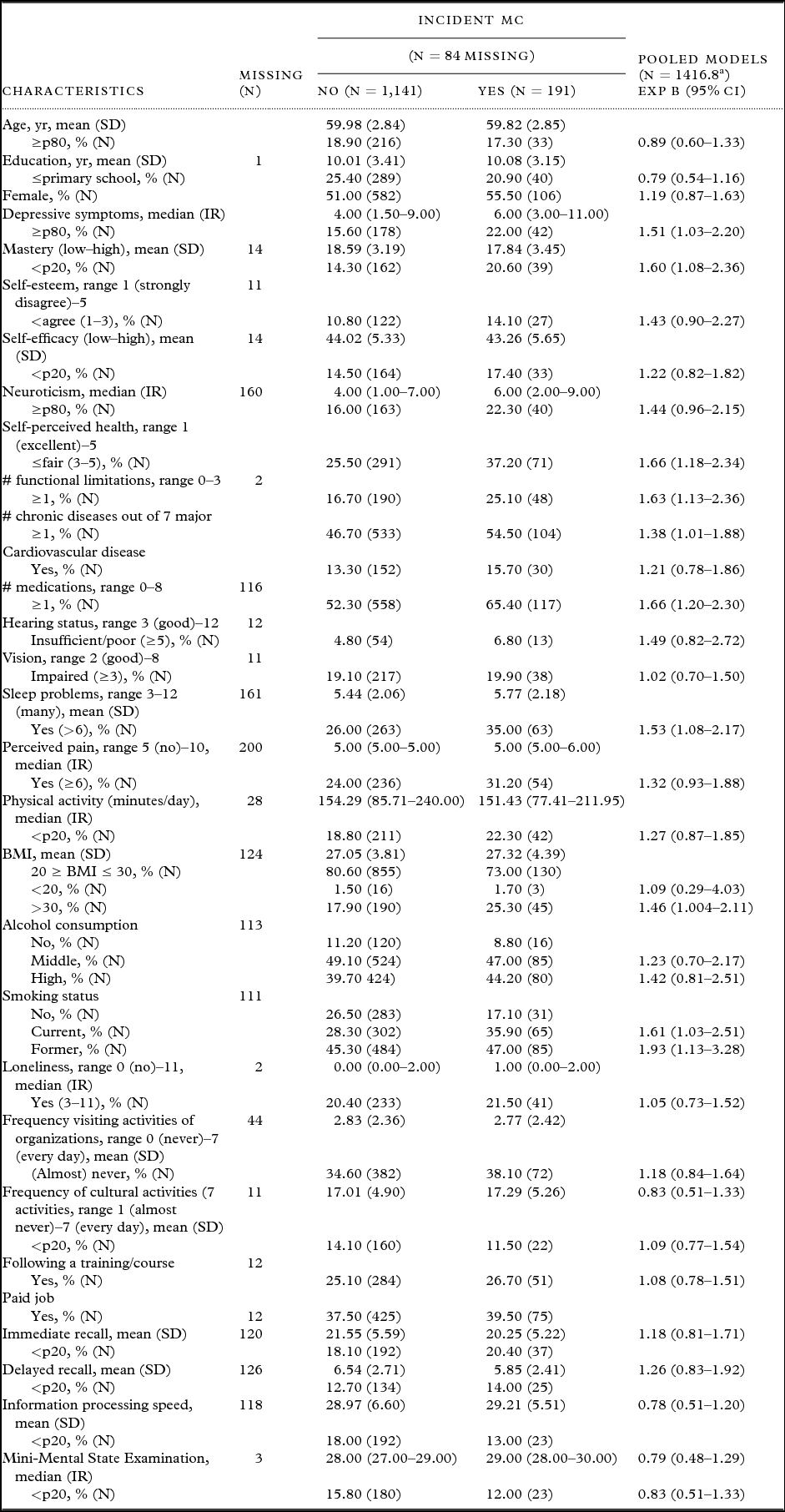
In Table 1 the characteristics of all predictors used for the development of the classification models for incident memory complaints in persons aged 55 to 65 years without memory complaints at baseline are shown, separately for persons with and without memory complaints after three years of follow-up. The results show that a higher level of depressive symptoms, lower level of mastery, and poor self-perceived health were significant predictors of incident memory complaints in persons aged 55 to 65 years. In addition, persons who report memory complaints at follow-up were more likely to have functional limitations, chronic disease, sleep problems, obesity, to use medication, and be a current or former smoker at baseline compared with persons without memory complaints at follow-up. Finally, persons who developed subjective memory problems performed at a lower mean level of memory functioning at baseline compared with persons who remained without memory complaints. However, memory performance was not a significant predictor of incident memory complaints at the determined cut-off (<20th percentile).
Descriptives and odds ratios of all predictors of incident memory complaints (MC) in persons aged 55–65 years

Notes: aN = 203.6 with incident memory complaints; BMI = Body-mass index; IR = Interquartile range; p = percentile.
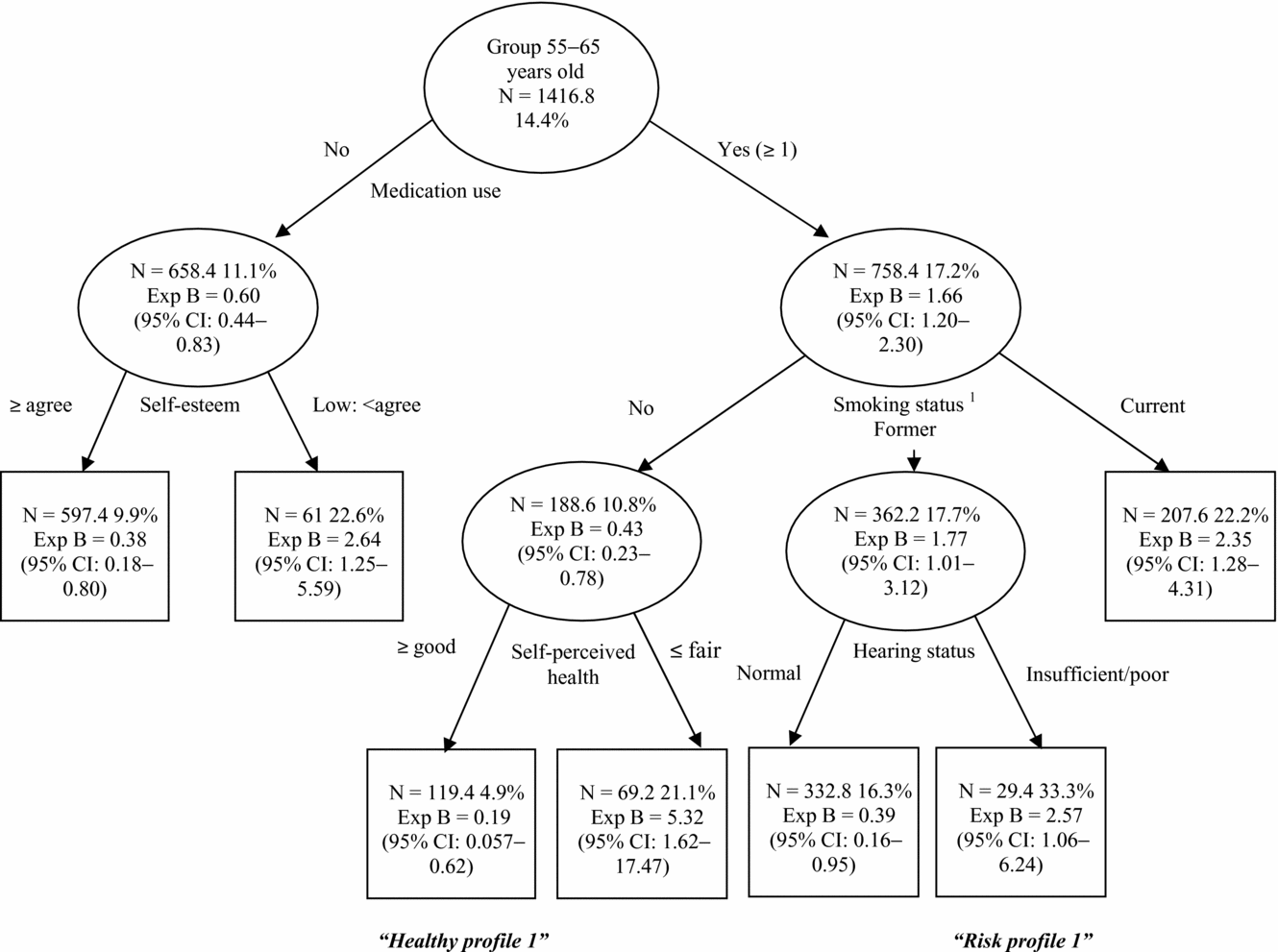
Figure 1 shows the classification model in which cognitive functioning was tested in the last step. Multivariate analyses showed that medication use was the most significant predictor of incident memory complaints. Persons using medication had an increased risk (Exp B: 1.66; 95% confidence interval (CI): 1.20–2.30) of having memory complaints after three years of follow-up. In this subsample, smoking status (current smoking: Exp B: 2.35; 95% CI: 1.28–4.31; former smoking: Exp B: 1.77; 95% CI: 1.01–3.12 (non-smoking = reference category)) was the most significant predictor of incident memory complaints. In the subsample of current smokers no other significant predictors were found, and the additional predictive value of cognitive test performance (cut-off at the 20th percentile) was not significant. In the subsample of former smokers having impaired hearing (Exp B: 2.57; 95% CI: 1.06–6.24) resulted in a final predictive value of 33.3% (“risk profile 1”). In the subsample of non-smokers, having a poor self-perceived health resulted in a final predictive value of 21.1%, while a better self-perceived health (Exp B: 0.19; 95% CI: 0.057–0.62) resulted in only 4.9% with memory complaints after three years of follow-up (“healthy profile 1”). Having low self-esteem proved to be the most significant predictor (Exp B: 2.64; 95% CI: 1.25–5.59) of incident memory complaints in persons using no medication, resulting in 22.6% with memory complaints after three years, not exceeding the cut-off (28.8%) for a meaningful increased risk. No other significant predictors were found in the remaining subsamples. Further analyses showed that cognitive test performance (cut-off at the 20th percentile) was not a significant predictor in these subsamples.
Classification tree based on logistic regression analyses predicting incident memory complaints. Testing cognitive functioning in last step, using age, education, sex, functional limitations, depressive symptoms, mastery, self-esteem, self-efficacy, neuroticism, self-perceived health, # chronic diseases, cardiovascular disease, # medications, hearing, vision, pain, sleep problems, loneliness, body mass index (BMI), alcohol use, smoking status, physical activity, frequency of visiting activities of organizations, frequency of cultural activities, following a training/course, and job status. Results are from pooled analyses. p = percentile. % = percentage of patients who reported memory complaints after three years of follow-up (positive predictive value). 1No smoking = reference category.
Classification model for incident memory complaints in persons aged 65 to 75 years
Within the study sample of persons aged 65 to 75 years without memory complaints at baseline, 22.5% (N = 106/471) reported memory complaints after three years of follow-up.
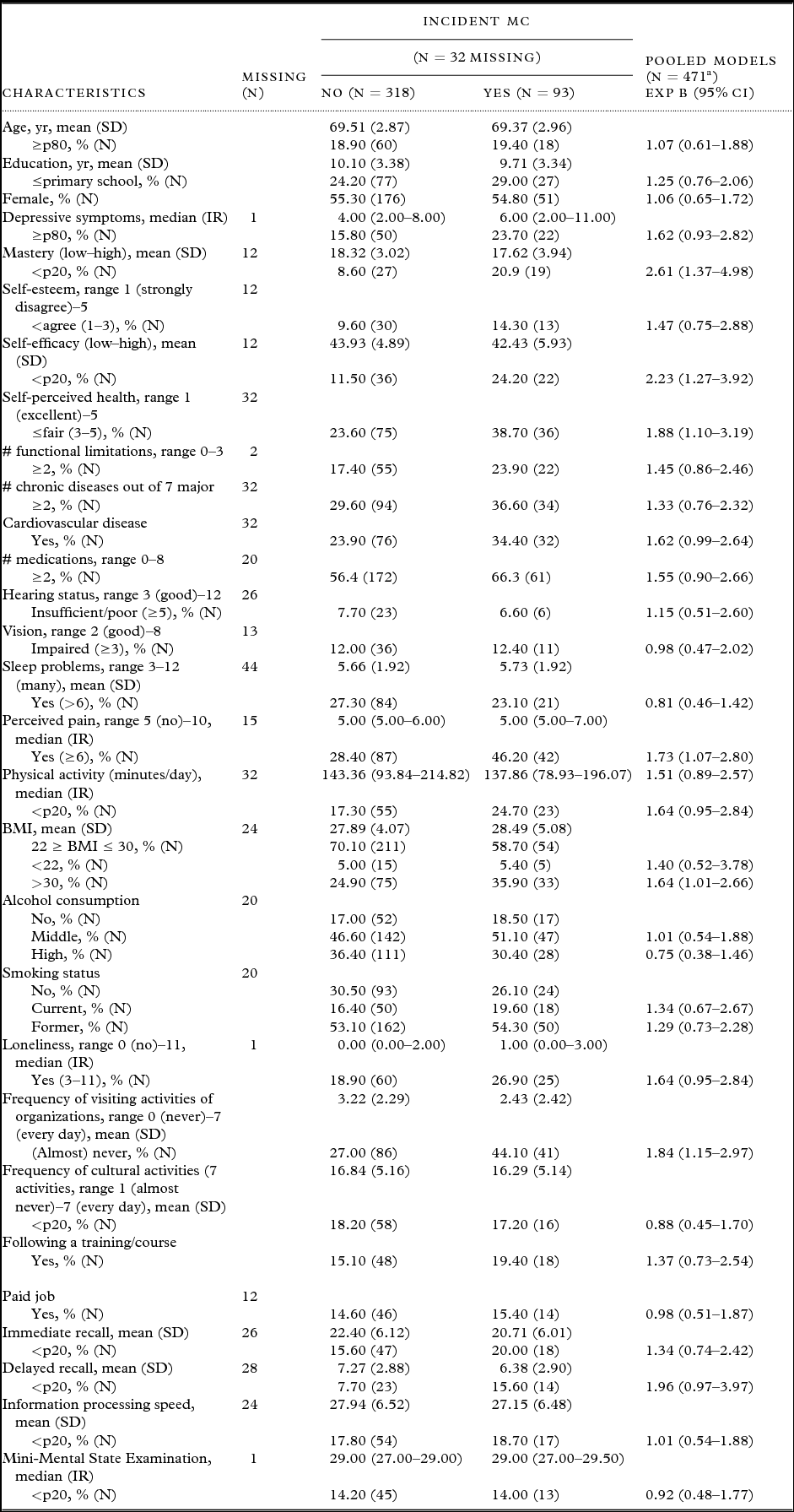
Table 2 shows the characteristics of all predictors used for the development of the classification trees for identification of incident memory complaints in persons aged 65 to 75 years without memory complaints at baseline, separately for persons with and without memory complaints at follow-up. The results show that in persons aged 65 to 75 years, a lower sense of mastery, lower level of self-efficacy, and poor self-perceived health at baseline were significant predictors of incident memory complaints. In addition, persons who reported memory complaints at follow-up were more likely to report pain, to have obesity, and (almost) never visit activities and meetings of organizations at baseline in comparison with persons without memory complaints at follow-up. Finally, it was shown that persons aged 65 to 75 years who reported memory complaints after three years of follow-up performed at a significantly lower mean level of memory functioning compared with those without memory complaints at follow-up. However, cognitive test performance below the 20th percentile was not a significant predictor of incident memory complaints.
Descriptives and odds ratios of all predictors of incident memory complaints (MC) in persons aged 65–75 years
Notes: aN = 106 with incident memory complaints; BMI = Body-mass index; IR = Interquartile range; p = percentile.
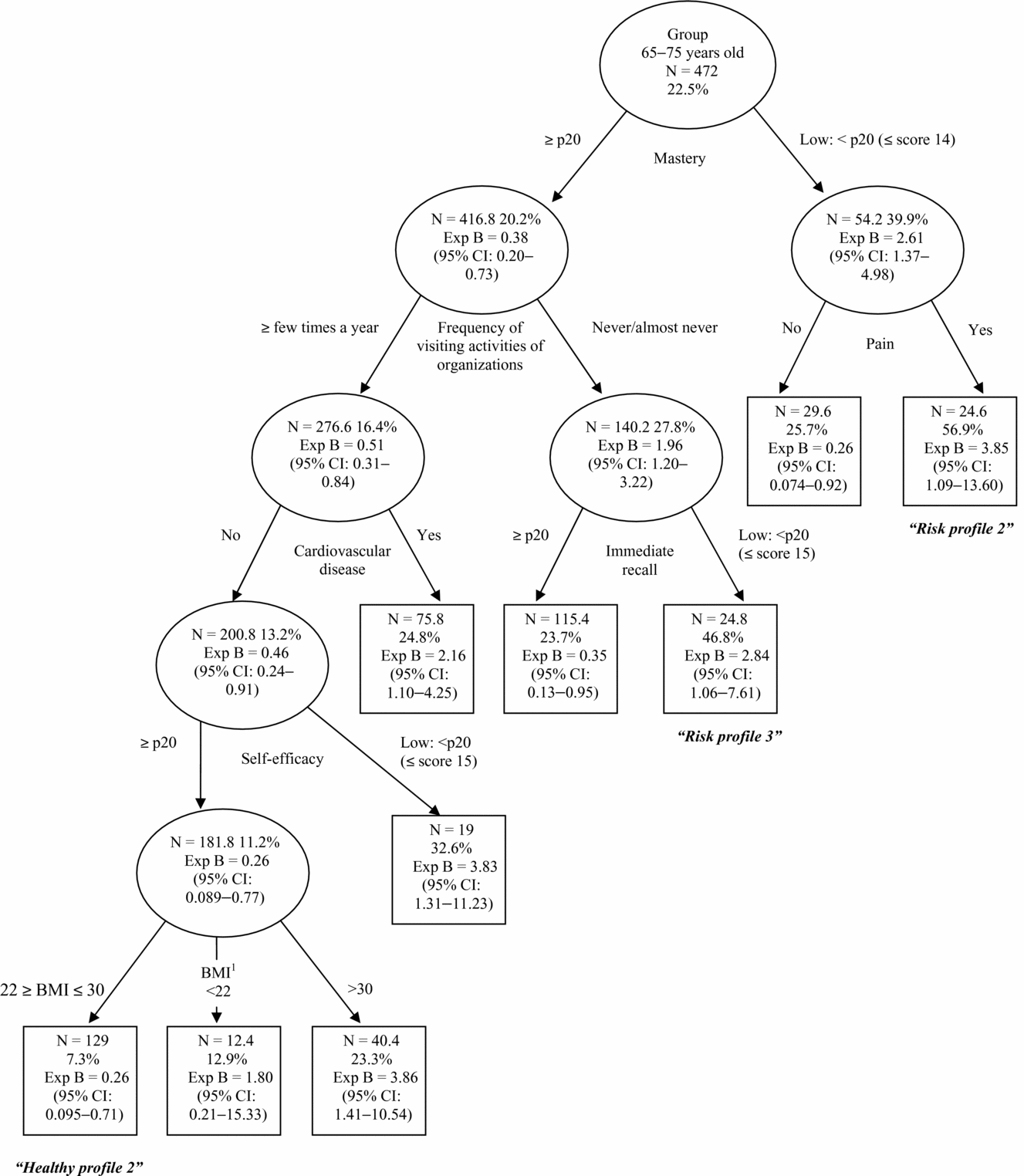
In Figure 2, the classification model is shown predicting incident memory complaints in the young-old (65 to 75 years of age), in which cognitive performance was tested in the final step. In this age group a low sense of mastery (Exp B: 2.61; 95% CI: 1.37–4.98) was the most significant predictor of incident memory complaints, increasing the predictive value from 22.5 to 39.9%. In persons with a low sense of mastery, reporting pain (Exp B: 3.85; 95% CI: 1.09–13.60) resulted in a final predictive value of 56.9% (“risk profile 2”). In persons without a low sense of mastery who (almost) never visited activities of organizations, a low level of memory performance (cut-off at the 20th percentile) resulted in a value of 46.8% with memory complaints at follow-up (“risk profile 3”). Finally, having a BMI between 22 and 30 resulted in only 7.3% with memory complaints after three years of follow-up in persons without a low sense of mastery, who visited activities and meetings of organizations for a few times or more in a year, without cardiovascular disease and without low self-efficacy (“healthy profile 2”). No other significant predictors were found in the remaining subsamples. Further analyses showed that cognitive test performance (cut-off at the 20th percentile) was not a significant predictor in these subsamples, and the predictive values in these endpoints did not reach the cut-off for a meaningful increased or decreased risk.
Classification tree based on logistic regression analyses predicting incident memory complaints. Testing cognitive functioning in last step, using age, education, sex, functional limitations, depressive symptoms, mastery, self-esteem, self-efficacy, self-perceived health, Number of chronic diseases, cardiovascular disease, Number of medications, hearing, vision, pain, sleep problems, loneliness, BMI (body-mass index), alcohol use, smoking status, physical activity, frequency visiting activities of organizations, frequency cultural activities, following training/course and job status. Results from pooled models are given. 1Reference category: 22 ≥ BMI ≤ 30. Note: p = percentile; % = the percentage of subjects who reported memory complaints after three years of follow-up.
Discussion
In the present study, classification models were developed to facilitate early identification of risk profiles of persons in two age groups (55–65 and 65–75 years) at risk for future memory complaints. It was studied whether inclusion of cognitive test performance in the model was of additional value as a last profiling step. It may be concluded that in the younger age group (55 to 65 years old) objectively low cognitive status was not a significant predictor of incident memory complaints. However, for the age group of 65 to 75 years, in persons without a low sense of mastery, who (almost) never visited meetings of organizations, the predictive value increased significantly after adding cognitive status, although the added value in all other “branches” was non-significant. Previous research has shown that subjective memory complaints may be an early predictor or early symptom of cognitive decline and dementia (e.g. Schofield et al., Reference Schofield, Marder, Dooneief, Jacobs, Sano and Stern1997; Geerlings et al., Reference Geerlings, Jonker, Bouter, Ader and Schmand1999). Based on the current study, it may be concluded that objective cognitive test performance in persons at risk for future memory complaints but without current complaints is lower on average compared with persons who remain without memory complaints. However, cognitive function is not (yet) significantly impaired in most cases, particularly in the younger age group of 55 to 65 years.
Finally, based on the classification models developed in the present population-based study, target groups may be selected for person-tailored interventions. The results showed that the number of persons identified in these specific target groups, i.e. risk profiles 1 to 3 comprising subsamples at substantially increased risk for memory complaints, was only 29 (pooled model; 2.1% of the total study sample aged 55 to 65 years) and 49 (pooled model; 10.5% of the total sample aged 65 to 75 years) respectively. Therefore, utilization of these models and thus targeting specific at-risk groups may lead to more efficient and cost-effective implementation of interventions.
Comparing the present results with the existing literature, our study has contributed several new insights. To our knowledge no previous study has focused on the association between medication use and memory complaints, although others have found an association between polypharmacy and cognitive decline (Jyrkkä et al., Reference Jyrkkä, Enlund, Lavikainen, Sulkava and Hartikainen2011) and dementia (Lai et al., Reference Lai, Lin, Liao, Su, Sung and Lin2012). Additional analysis showed that among the respondents using medication in the present study, the use of oncologic drugs, immunosuppressants, and peripheral vasodilators was significantly associated with incident memory complaints; however, the number of respondents using these types of medicines was very small, N = 12 (41.7% with incident memory complaints) and N = 8 (62.5% with incident memory complaints) respectively, with corresponding wide CI values. Consistent with the present findings in persons aged 55–65 years, previous studies have shown that self-rated health was associated with self-reported memory problems (e.g. McDougall, Reference McDougall1994). Notably, relatively better self-rated health was predictive of decreased risk of incident memory complaints in persons who did not smoke, but who used medication. Current smoking has been shown to be associated with having memory complaints in the middle-aged persons (Paradise et al., Reference Paradise, Glozier, Naismith, Davenport and Hickie2011). In the current study, it was shown that both current and former smokers run a higher risk of developing memory complaints. The latter group was shown to be especially at risk if they experience hearing problems. Hearing impairment has been shown to be associated with subjective memory problems in an older age group (with a mean age of 75 years; Benito-León et al., Reference Benito-León, Mitchell, Vega and Bermejo-Pareja2010). In persons aged 65 to 75 years, a low sense of mastery was the most important predictor of incident memory complaints. This finding is in line with the previous research from our group that showed a significant association between having memory complaints and low feelings of mastery (Comijs et al., Reference Comijs, Deeg, Dik, Twisk and Jonker2002). In line with the present study, prevalent cognitive complaints were OR showed to be related to the reporting of pain (Westoby et al., Reference Westoby, Mallen and Thomas2009). Particularly in the present study, it was shown that pain was predictive of an increased risk of developing memory complaints in persons with a low sense of mastery. To our knowledge, the predictive role of social participation with respect to incident memory complaints has not been examined previously, although one study showed that persons with a poor social network reported more severe memory complaints (Derouesné et al., Reference Derouesné1989). Also, social disengagement has been shown to be a risk factor for cognitive impairment and decline (e.g. Bassuk et al., Reference Bassuk, Glass and Berkman1999), which is in line with the current results. Cardiovascular disease has been shown to be associated with having memory complaints (e.g. Harwood et al., Reference Harwood, Barker, Ownby, Mullan and Duara2004). Also, low self-efficacy has been shown to be associated with risk for memory complaints (Comijs et al., Reference Comijs, Deeg, Dik, Twisk and Jonker2002), which is consistent with the present study. Both obesity and underweight have been shown to be associated with Alzheimer's disease (Razay et al., Reference Razay, Vreugdenhil and Wilcock2006). Given the initial incidence rate of memory complaints, especially a BMI in the normal range proved to be of significance in the present study corresponding to a meaningfully decreased risk in those with a higher level of self-efficacy, no cardiovascular disease, who participated socially, and had a higher sense of mastery.
Previous studies have shown the efficacy of web-based interventions for various clinical conditions such as depression (e.g. Andrews et al., Reference Andrews, Cuijpers, Craske, McEvoy and Titov2010), anxiety (Andrews et al., Reference Andrews, Cuijpers, Craske, McEvoy and Titov2010), several physical conditions (e.g. Gustafson et al., Reference Gustafson1999; Bond et al., Reference Bond, Burr, Wolf and Feldt2010), and life-style factors such as smoking (Shahab and McEwen, Reference Shahab and McEwen2009) and alcohol (Pemberton et al., Reference Pemberton2011), mostly in younger age groups (e.g. Gustafson et al., Reference Gustafson1999; Shahab and McEwen, Reference Shahab and McEwen2009; Pemberton et al., Reference Pemberton2011). There is evidence that web-based interventions may also be cost-effective (e.g. Warmerdam et al., Reference Warmerdam, Smit, van Straten, Riper and Cuijpers2010) and may increase compliance among persons who are hard to engage in standard healthcare (e.g. Cockayne et al., Reference Cockayne, Glozier, Naismith, Christensen, Neal and Hickie2011). The underlying aim of the present study was to provide suggestions for specific target groups for person-tailored interventions based on the different risk profiles found. Based on the present results, it may be suggested that persons aged 55 to 65 years with “risk profile 1” may benefit from a hearing aid and/or an intervention focusing on psycho-education, or learning of effective coping strategies. Also, evaluation of prescribed medication by a primary physician or an intervention focusing on an individuals’ physical condition may be recommended. Furthermore, persons aged 65 to 75 years with “risk profiles 2” may benefit from referral to a physical therapist (primary healthcare), a program focusing on their physical condition and/or from specific psychological interventions aimed at improving sense of mastery (self-management, psycho-education). In addition, persons identified with “risk profile 3” may be directed to an intervention aimed at increasing social participation or discovering new or unexplored interests (e.g. Bassuk et al., Reference Bassuk, Glass and Berkman1999), while they may also benefit from online brain training, training in cognitive compensation strategies, and/or psycho-education (Metternich et al., Reference Metternich, Kosch, Kriston, Härter and Hull2010). Furthermore, in both age groups “a healthy profile” was identified corresponding to a decreased risk of incident memory complaints, i.e. less than half of the initial incidence rate. Persons in these subsamples are a less likely target group for interventions.
A major strength of the present study is the fact that the predictive value of a wide range of predictors measuring demographics, social functioning, emotional well-being, personality characteristics, physical functioning, and cognitive functioning were studied in order to profile groups of individuals at risk for memory complaints. Furthermore, data were used from a large community-based longitudinal study, in which predictors of memory complaints were measured three years before persons reported having memory problems. Classification models for two important target groups, i.e. persons aged 55 to 65 and 65 to 75 years, were developed. Also, it was studied whether adding cognitive status as a predictor led to an improved risk profile for future memory complaints.
Some limitations of the current study should also be mentioned. Memory complaints were examined using a single question. It may be possible to construct more detailed risk profiles using information on specific types of complaints, e.g. “trouble finding one's way around familiar streets” and “difficulty in understanding spoken instructions” (Amariglio et al., Reference Amariglio, Townsend, Grodstein, Sperling and Rentz2011). Certain (memory) complaints such as complaints of “getting lost” may be more relevant and indicative of cognitive impairment than others (e.g. “trouble remembering things from one second to the next”) and may lead to a better differentiation between normal cognitive aging and (future) cognitive dysfunction (Amariglio et al., Reference Amariglio, Townsend, Grodstein, Sperling and Rentz2011). Still the single question is more feasible to use in future studies and prevention programs. In addition, we did not take into account whether reported memory complaints were transient or persistent, which may have a different impact on daily living. This may have led to a less precise risk assessment. Furthermore, the study sample of persons aged 65 to 75 years was significantly smaller than the sample of the younger age group. This may have led to less precise risk estimations, and resulted in smaller at-risk groups at different end points of the model. Before the implementation of the classification trees developed by means of an online screening instrument and links to specific e-health interventions or possible suggestions for further primary healthcare facilities, replication in another longitudinal study is necessary. As epidemiologic studies have shown the negative effect of risk factors on the trajectory of cognitive functioning in later life (e.g. Kalmijn et al., Reference Kalmijn, Van Boxtel, Verschuren, Jolles and Launer2002), it may be of interest to additionally focus on the predictive value of these factors in middle-aged persons (aged 45 to 55 years) in a future study.
In conclusion, classification models for an early identification of risk profiles in persons at risk for future memory complaints were developed which resulted in a substantially increased predictive value from 14.4% to 33.3% and a substantially decreased predictive value of 4.9% in persons aged 55–65 years, and 22.5% to a maximum of 56.9% and a minimum of 7.3% in persons aged 65–75 years. These risk profiles may be used to identify potential target groups for future research focusing on the effects of person-tailored interventions on subjective memory problems.
Conflict of interest
None
Description of authors’ roles
T. N. van den Kommer carried out the study, elaborating the research questions, carrying out the statistical analyses, and writing the paper. H. C. Comijs and D. J. H. Deeg designed the study, formulated the research questions, and assisted in writing the paper. K. J. Rijs assisted in writing the paper. M. W. Heymans assisted in performing multiple imputations. M. P. J. van Boxtel assisted in writing the paper and oversaw the study in light of the Consortium “Healthy Brain Aging.”
Acknowledgments
This research was supported by a grant from the Netherlands Organisation for Scientific Research (NWO) as part of the National Initiative Brain and Cognition (NIHC) and the Economic Structure Enhancing Fund (Fonds Economische Structuurversterking [FES]). The Longitudinal Aging Study Amsterdam is funded by the Dutch Ministry of Health, Welfare, and Sports and the Vrije Universiteit.