Disaster management (DM) aims to minimize the broad consequences of a disaster and demands full preparedness with regard to organizational readiness, communication, and coordination among all partners; resource availability; and professional engagement.Reference Khorram-Manesh, Ashkenazi and Djalali 1 , Reference Lennquist 2 An acceptable preparedness may be achieved by either being exposed to many disasters or to proper educational programs (EPs). Because there is no standard definition for what it means to be prepared, we acknowledge that the phrase “acceptable preparedness” is somewhat subjective and that what is acceptable may differ due to the geographical and educational background of the countries and their resources, expectations. and quality demands. Furthermore, since disasters occur infrequently, opportunities for frequent exposure to disasters are rare. This necessitates educational initiatives (EITs) for learning as part of a comprehensive and standardized management plan and a competency-based EP.Reference Djalali, Ingrassia and Della Corte 3 - Reference Ripoll Gallardo, Djalali and Foletti 6 The European Union (EU) is actively working to improve its preparedness by offering various EPs and taking part in global events. Nevertheless, published data indicate that the level of preparedness within the EU is barely acceptable, especially in areas such as hospital preparedness and EPs.Reference Ingrassia, Foletti and Djalali 7
A standardized management plan may be used as an educational opportunity and consequently can be taught and evaluated. Although standardization may lead to inflexibility due to organizational differences and national legislations, it may ensure quality and uniformity of a syllabus, facilitate international cooperation, and enable evaluation and continual improvement. A set of minimal standards and evaluation metrics can be achieved through consensus, through education/training, and by using procedures and protocols concerning such key issues as communication, information, and plans.Reference Alexander 4 , Reference Alexander 5
Although there is no consensus-based definition of competency in the literature,Reference Ripoll Gallardo, Djalali and Foletti 6 a competency-based EP should allow individuals or organizations to use their acquired knowledge and skill and transfer them to proper actions and management in reality. There are three distinct managerial levels, irrespective of organizational belonging, that work with DM. These are defined as strategic (gold), tactical (silver), and operational (bronze) in different publications.Reference Khorram-Manesh, Ashkenazi and Djalali 1 , Reference Lennquist 2 Each organization has its own requirements for educational background, length of time to earn the degree, and type of diploma (eg, MD, BA/BS, professional accreditation) for different positions; however, managerial positions are based on people’s professional experience and related education for the specific level they work with. Thus, for educational purposes, there are different target learning audiences, and each EIT targets somewhat different groups. There are 140 identified EITs within the EU, most of which are multidisciplinary and competency based and encompass various subject matter experts and professions. We use the abbreviation “EIT” as most of these educational approaches are short and do not represent a national or European program or known standard. These EITs are specifically for disaster managers in different levels. However, only 3% of the programs target 2 managerial levels simultaneously (tactical + operational), while 39%, 29%, and 22% aim at tactical, strategic, and operational levels, respectively.Reference Ingrassia, Foletti and Djalali 7 These initiatives offer a range of diplomas (eg, 52% offer a master’s degree and 19% a postgraduate diplomas) and varying lengths of programs and attract special groups within the DM system.Reference Ingrassia, Foletti and Djalali 7
The aim of this article is to use the best available evidence to date to suggest a comprehensive EP meant to impart the knowledge, skills, and abilities necessary for the role of crisis manager and to enhance the intercultural and interagency performance across the DM cycle. Here “Intercultural” does not refer to different nations and cultural background but rather to working cultures within diverse agencies. Since communication and information shortcomings are the most common reason for failed DM,Reference Lennquist 2 this EP will focus heavily on collaboration and interoperability between trained professionals involved in disaster response to ensure that they understand the need for collaboration and are aware of each other’s limitations and possibilities. The aim of such programs is not to reeducate people in respect to their profession/area of expertise (in other words, nurses will not be trained in nursing, logisticians in logistics, etc), but rather to train them in elements specific to DM and ways in which they can apply their existing knowledge and professional expertise in the disaster context.Reference Khorram-Manesh, Ashkenazi and Djalali 1 , Reference Lennquist 2 Such multidisciplinary programs cover all disaster phases, accommodate the needs of each organization, and offer a safe environment where participants are able to learn by doing in an interactive environment, vertically within their own organization and horizontally together with other organizations, by focusing on shared training, cooperation, and intercultural understanding.Reference Khorram-Manesh, Ashkenazi and Djalali 1 , Reference Lennquist 2 , Reference Issenberg, McGaghie, Petrusa, Lee Gordon and Scalese 8 Such programs bring some degree of standardization and offer a thorough evaluation of participants and the program by using evidence-based scientific methods.Reference Khorram-Manesh, Ashkenazi and Djalali 1
Materials and Methods
An expert group consisting of individuals from different countries (EU and non-EU), with various professional backgrounds (eg, medicine, security, firefighting, engineering, academics) and more than 10 years of experience in different managerial levels in their fields was used to address all issues concerning selection of literature, methods, choices of competencies, and contents of EPs. A reference group consisting of high-ranking professionals, also in different fields of DM, supervised the procedure and acted as advisers when needed.
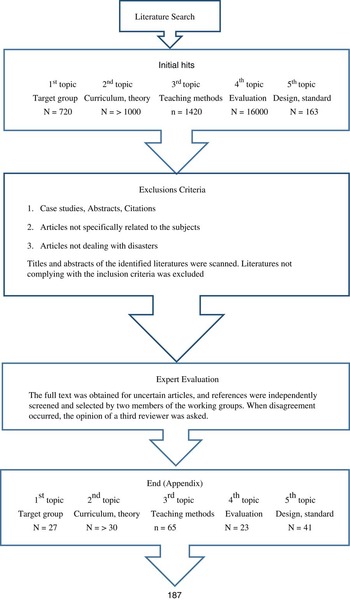
A comprehensive literature review of articles published in PubMed, Google Scholar, and electronic databases at public library and universities (Germany, Italy, Romania, Sweden, and Turkey) was conducted by all authors. Authors were divided into 5 different groups and each group was responsible for 1 topic. The aim of the literature review was to identify the existing data about each topic in the literature, EPs, and common frameworks of crisis management, and then to incorporate it into the existing basic concepts to serve as the foundation for formulating a new EP. The main author (A.K-M.) was responsible for compiling all data and references. The following key words (query limited to title’s key word) were used for each topic as inclusion criteria (Figure 1):
-
1. Target group; “disaster management,” “lessons learned,” “stakeholders,” “organizations,” and “multiagency”; more than 720 documents were collected (n=27).
-
2. Curriculum and didactic and educational theory; “Didactic models,” “didactic concepts,”, “adult education,” “vocational training,” “curriculum,” “curriculum design,” “competence,” “competence based training,” and “problem based training”; more than 1000 publications were identified, of which relevant papers were chosen (n=30).
-
3. Teaching methods; “Teaching methods” with and without “disaster management,” “adult,” and “multiagency.” The search for all teaching methods resulted in 1420 hits in Google scholar and 186 in PubMed. To reduce the bias toward health-related methodologies, 65 relevant nonmedical publications were selected.
-
4. Program evaluation; “Course evaluation,” “training evaluation,” and “disaster management”; of more than 16 000 final publications, 23 relevant publications were accumulated.
-
5. Standards in disaster management; “Standards,” “disaster management,” “crisis management,” “competency,” “multi-agency,” and “non-medical.” After stepwise filtering of the results, 41 relevant and interagency articles were selected from final 163 hits.
The Literature Selection Process

Case studies, abstracts, citations, articles not specifically related to the subjects, and articles not dealing with disasters were excluded. Titles and abstracts of the identified articles were scanned. Articles not complying with the inclusion criteria were excluded. The selected articles were studied by all authors group-wise, and related articles were chosen based on authors’ experience and knowledge. All reviewed papers (n=187) are listed in the Appendix.
RESULTS
Topic 1: Target Groups
To design a program in DM, it is important to know the target group. Globally, 3 different categories—social groups, economic groups, and political groups—are identified as stakeholders involved in DM. These groups are described and their activities are well discussed in an earlier publication.Reference Khorram-Manesh, Ashkenazi and Djalali 1 All of these groups have different managerial levels; strategic, tactical, and operationalReference Khorram-Manesh, Ashkenazi and Djalali 1 , Reference Lennquist 2 ;
-
1. Operational managers have some training in being a liaison with and having awareness of other agencies, mainly for individuals preparing for promotion to team leader level. They have a focused knowledge on their tasks but often lack interorganizational skills and knowledge of collaborative parties’ agendas and legislation. Operational managers will already be trained in discipline-specific technical and operational skills required within their fields. A new program will be complementary to their individual skills and facilitate their performance within and among units. This will potentially address basic aspects of ethical, cultural, and legal issues to enhance their capabilities within the international sphere.
-
2. Tactical managers are trained to a higher level by their parent organizations to lead specialist teams responding to a disaster. Although they are supposed to have some training that would enable them to be aware and liaise with other agencies to varying competency levels across organizations, they often appear to be predominantly focused on their own organization. These are, however, the very staff that will be required to understand and integrate their response/capabilities into the overall DM. To accomplish such a broad competence, they have to be trained in operational capability and capacity as well as have a full understanding of the disaster response system internationally and receiving assistance (host nation support). These are typically the people who will be responsible for overseeing frontline managers and must be able to liaise with national and/or international authorities.
-
3. Strategic managers are supposed to be trained to develop effective strategies that set out the purpose, rationale, and parameters in which others within the disaster command structure will operate. Personnel at the strategic or gold response level are seemingly involved with the legal, financial, and policy levels within the national authority/organization. They are not normally supposed to be tactical responders and subsequently do not have operational or tactical responsibilities. Although this strategic group requires further knowledge of disaster response, they are not the group with the greatest educational needs; instead, they are supposed to provide tactical managers with information and support in decision-making.
Topic 2: Curriculum, Didactic and Educational Theory; Content of the Competency-Based Program, the Topics
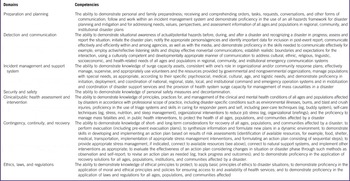
The review of major publications on core competencies needed for DM indicates that key overarching elements/themes common to all of them can be used as references to build competencies and ensures that such competencies are in line with and applicable in such concepts. A set of 7 domains and 34 related core competencies may be developed as shown in Table 1 and presented in earlier publications.Reference Khorram-Manesh, Ashkenazi and Djalali 1 , Reference Ripoll Gallardo, Djalali and Foletti 6 , Reference Ingrassia, Foletti and Djalali 7 , Reference Subbarao, Lyznicki and Hsu 9 - 13
Domains and Core Competencies in Disaster Management

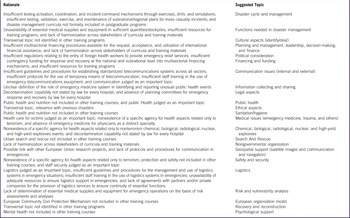
Core competencies in Table 1 were matched by the expert group with results obtained from a recent publication in which shortcomings in disaster preparedness in the health system of 27 EU member states were described as 88 items categorized in 8 groups (leadership and governance, logistics and operational support functions in emergencies, medical products and technology, health information, subnational/regional plans for crisis/mass casualty incidents, management of prehospital medical operation, hospital emergency preparedness program, and education and training).Reference Djalali, Della Corte and Foletti 14 This review, together with an earlier review/survey on the deficiencies in the response chain,Reference Djalali, Ingrassia and Della Corte 3 resulted in the inclusion of the following major area of interests/topics in the curriculum (Table 2): (1) definition and general principles about disasters; (2) disaster cycle and management; (3) functions needed in disaster management (including financing and funding); (4) European organization model; (5) planning, management, leadership, and decision-making (command and control); (6) risk and vulnerability analysis; (7) communication issues (internal and external); (8) cultural aspects of disasters; (9) political considerations; (10) information collecting and sharing; (11) legal aspects of disasters; (12) ethical aspects of disasters; (13) public health issues, including sanitation and hygiene; (14) medical issues (emergencies, trauma); (15) chemical, biological, radiological, nuclear, and high-yield explosives; (16) search and rescue; (17) nongovernmental organizations and voluntary organizations; (18) geospatial support; (19) safety and security; (20) logistics, including evacuation of disaster victims; (21) recovery and reconstruction; (22) mental health care and psychosocial support; and (23) special consideration.
Rationale for Each Topic’s Inclusion Based on the Earlier Data

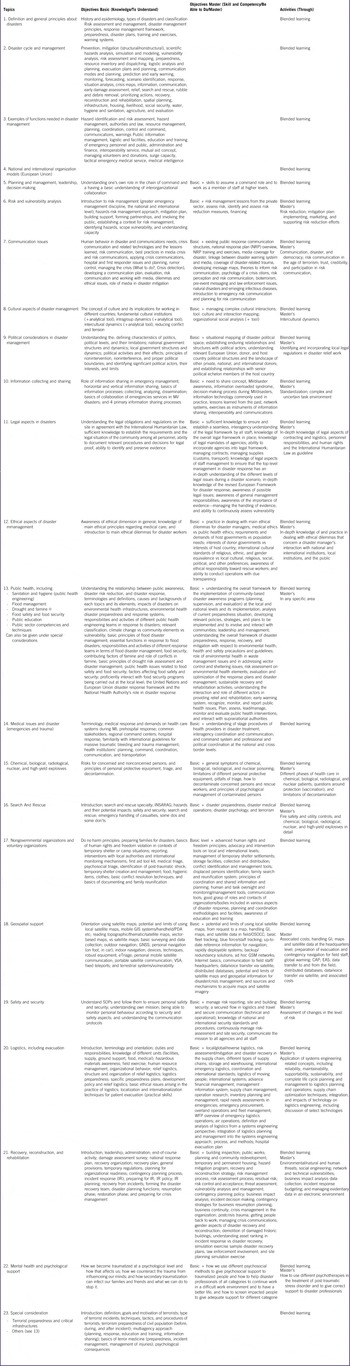
Competencies can be mapped to learning objectives, and each learning objective can be mapped to activities (Table 3), by which both teacher and learner can evaluate the process of learning and acquiring a competency.Reference Bloom 15 , Reference Fink 16 Topics will be presented in a handbook, which can be divided into conceptual and practical parts and taught accordingly. Scenarios give flexibility to the program/training as a scenario, and its outcome can be adapted to the participants’ background and desired objectives. Additionally, the direction of training can also be changed if necessitated by the participants’ background; for example, medical professionals and firefighters may need a scenario such as a disco fire with multiple injuries and burns, whereas firefighters, police, and military may use an explosion scenario without human injuries but with an imminent threat to life. Scenarios are very important in involving 2 organizations and can highlight the benefit of the interagency integrated response best able to handle a given event. The EP will provide the platform and basis to train all levels of staff with a common core set of requisite skills and knowledge to enable team building, coordination, integration, and cooperation.
Topics, Learning Objectives and Related Activities Based on the Expert Groups Opinion Based on the Extracted and Suggested Topics in Table 2 a

aAbbreviations: CAP, computer-assisted publishing; EAS, Exchange ActiveSync; GI, geographic information; GIS, Geographic Information System; GNSS, Global Navigation Satellite System; GSM, Global System for Mobile Communication; INSARAG, International Search And Rescue Advisory Group; IR, incident response; MI, major incidents; OSOCC, On-Site Operation Coordination Center; PDA, personal digital assistant; SOP, standard operating procedures; VSA, very small array; WFP, World Food Program.
Topic 3: Teaching Methods
The pros and cons of different teaching methods is widely discussed in the literature.Reference Khorram-Manesh 17
In short the most common type of teaching is face to face teaching, which offers an interaction between teacher and learner. Using this method it is easier to make social contact, establish trust between learner and teacher, and generate new ideas and discoveries during the interaction. However, limited space, low numbers of participants, and insufficient time for feedback are some of its disadvantages.
Skill station is another way of teaching, in which learners pass through a sequence of face-to-face interactions with defined achievement requirements. It represents a slightly more active form of learning in which the focus is on the individual achievements of the learner, and it provides an environment to learn at the learner’s own pace. However, the number of participants is limited while there is a need for large number of teachers and a huge time investment.
Practical exercises with little or no technical input allow learners to simulate the experience of reality, to make controlled errors, and to develop an understanding of the doable and the undoable. They offer learners an opportunity to develop know-how and not only know-what; they develop skills and not just knowledge. This approach enhances team spirit and communication skills. However, it requires careful and lengthy development and testing as well as a great deal of preparation. Other cons with the method are its high costs and limited numbers of learners.
Video lectures have a major advantage in terms of student time management. Video lectures allow teachers to present the major message before a face-to-face meeting that will focus on discussion. This approach, however, lacks interaction between students and teachers or students and their colleagues unless supplemented by discussion.
A computer-mediated environment may offer no interaction between teacher and learner, but it can be improved if each student or small groups of students have their own instructor. Course trajectory (including ancillary material), simulation exercises, and programmed learning are presented to the student without the presence of a human teacher or trainer and can easily be updated. Every student has the opportunity to learn at her or his own pace and time and can be evaluated and guided. There is no limit to the number of participants, and it gives enough time for individual feedback. On the other hand, it requires huge resources and lengthy time to develop an initial course, it isolates students without human contact, and the lack of interaction may result in lower learner satisfaction.
Simulation represents another form of learning in which the student engages deeply in skills training by attempting to solve problems in an environment that is similar to the ones to be encountered in real life. The planning of simulations is a complex topic and depends on the designer’s understanding and knowledge. The students can be more passive or highly hands-on and interactive. They can make mistakes without endangering anyone, and training effectiveness can be measured. Disadvantages of this method are the need for careful selection and matching of trainees to roles necessary as well as the need for highly skilled trainers. This approach can also be expensive and time consuming to set up.
Tabletop simulation offers an intellectual and communicative environment and allows a mix of face-to-face teaching with the addition of some practical exercises that provide the learners with the possibility of putting their gained knowledge into practice. These simulations are largely scenario based, and the degree of reality can be varied to elucidate real-time issues such as lack of communication. Studies on the effects of tabletop simulations on student perception of disaster preparedness and management has shown that compared with field operation exercises, this method provides better possibilities to link the results of disaster exercises to appropriate changes in terms of training, equipment, supplies, and plans as well as to the ability of others to fill in during the absence of key officials. Participants can take a position from their professional function and be active. A large number of functions can be trained simultaneously, and this is flexible enough to provide training for all levels of managerial need as well as multidisciplinary training. It is easier to time and control the workflow and give feedback. It is independent of external environment, and the setup costs are low. However, evaluation of the work on an operative level is hard, and the physical environment cannot be replicated (in contrast to the intellectual and communicative environment, which can be replicated). It also requires strong facilitation and back-office personnel.
Real-time simulations allow the utilization of the whole chain of actions from the pre-hospital setting to command-and-control groups at all levels; consequently, it involves a large number of participants. These play out in certain sequences in real time. Thus, real-time simulations can be an essential component in any form of simulation for disaster relief. It provides possibilities for real-time actions (variation in time and accurate input data in terms of resources, type of injuries, outcome data in terms of mortality and morbidity). It can be adjusted with regard to course length, number of participants, and instructors. The result is reproducible and evaluable, and the cost is acceptable. The importance of information flow and collaboration/cooperation are emphasized, and the time for individual and group feedback is available.Reference Khorram-Manesh, Ashkenazi and Djalali 1 , Reference Lennquist 2 , Reference Khorram-Manesh 17 , Reference Lennquist Montán, Khorram-Manesh, Örtenwall and Lennquist 18
Blended learning, in which various means of teaching methods are be used, is probably the most cost-effective and suitable type of teaching for disaster and emergency management.Reference Khorram-Manesh, Ashkenazi and Djalali 1 A blended teaching method offers the flexibility and adaptability needed for managing a continuously changing disaster environment with various severities. By using simulation training in this program, we may not only train individuals but also establish their role in and contribution to the teamwork. It also reveals the possibilities and limitations in each organization/nation and creates conceptual and functional solutions needed for a successful outcome. Both participants and the program can also easily be evaluated using scientific and evaluated methods.Reference Khorram-Manesh, Ashkenazi and Djalali 1 , Reference Lennquist 2 , Reference Lennquist Montán, Khorram-Manesh, Örtenwall and Lennquist 18 Although there will be a proposal in this article about teaching methods used in some parts of this program, teaching methods should be selected based on the capacity and availability of resources at the training center, keeping in mind that different teaching modalities may be associated with different learning outcomes. Teaching centers will be strongly encouraged to integrate different methods of teaching ranging from didactic lecture to computer-based learning to simulation and practical training.
Topic 4: Program Evaluation
Many methods, such as questioning, simulation, skill demonstration, direct observation, and evidence of prior learning/pretest, can be used to evaluate a learner’s gained competency by looking at the learning outcomes.Reference Ahearn and Nalley 19 However, a good assessment method should also be simple and flexible. It is also important to ensure that the assessment instruments collect evidence that is representative, authentic, and sufficient to allow competence to be inferred. In a blended learning environment with different units and teaching methods, various measures may be used to not only ensure a thorough evaluation of participants but also the program itself. Many of aforementioned methods can be used in the theoretical or semitheoretical parts of a program; however there are other approaches to evaluate training.
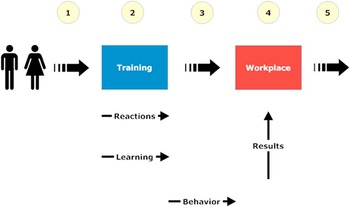
Training evaluation is a complex process and none of the existing models alone cover all aspects of the training evaluation. Thus, there is a need for a combined approach. Goal-based and system-based approaches are predominantly used in the evaluation of training. The former evaluation method, proposed by Kirkpatrick,Reference Eseryel 20 - Reference Kirkpatrick 24 has been identified as the most used model in the literature. However, it may not be able to fully define the necessary process and steps needed to improve training by using the outcomes. The latter, on the other hand, can better cover the overall context and situation but may not present the dynamic interaction between the design and the evaluation of training. Thus, an evaluation framework (EF) should be used to properly assess the whole program, and consequently, by using the results, further improvements are guaranteed. Our main goal in designing EF is to establish a complete set of criteria involving 2 main approaches; thus, a twofold evaluation approach should be chosen—the NickolsReference Nickols 25 approach (different points, different moments) as a horizontal axis and the KirkpatrickReference Eseryel 20 - Reference Kirkpatrick 24 levels as a vertical axis—in order to include all the coordinates that need to be evaluated before, during, and after training or before entry, in the workplace and upon exiting the workplace (Figure 2).
The Nickols Approach to Training Evaluation

The Kirkpatrick Model Reference Kirkpatrick 21 - Reference Kirkpatrick 24 consists of 4 levels and describes the way any training initiative is evaluated with regard to the impact on the trainee. Level 1 evaluates the thoughts and feelings of a/the trainee by using feedback forms, training surveys, or questionnaires (reaction of student). Level 2 describes the resulting increase in knowledge or capability (compared with before the training) by using pre- and postcourse professional tests, as well as interview or observation (learning). Level 3 reflects and quantifies the changes in behavior and capability as a result of improvement and implementation/application of the outcomes of the training program (behavior). This requires long-term follow-up, interviews, and cooperation with the trainees, which may be problematic. Finally, level 4 (results) describes how training affects a trainee’s performance, translated into business or environmental changes. These may be difficult to assess as changes in the business and work environment imply managerial measures and a group activity and needs long-term evaluation.
The Nickols approach Reference Nickols 25 defines a very important characteristic of training evaluation—the necessity of a multifactorial approach when measuring the consequences of training—because many different factors, such as the purpose of the evaluation, the target audiences—affect the evaluation process. The evaluation is a tool, which cannot exist independently of the object of evaluation. It is part of the management process as the result of evaluation will be used for designing future training initiatives and efficient use of the resources. It is a continuous process as it takes place parallel to the evaluated process itself, in multiple points of the training, which allows a flexibility that helps remodel the training while it is still ongoing. Besides these, Nickols used the term “strategic view" of training to describe the importance of a thorough and realistic evaluation for the future development of the process/organization by evaluating participants based on 5 horizontal coordinates for training (Figure 2).
These 2 approaches results in a pre- and postcourse assessments and 4 vertical levels of evaluation to describe the importance of the program for the knowledge and skills of the trainees, to find out how to improve future programs, and to determine whether a program should be continued or dropped.
Topic 5: Standard in Disaster Management; Program Design and Standardization
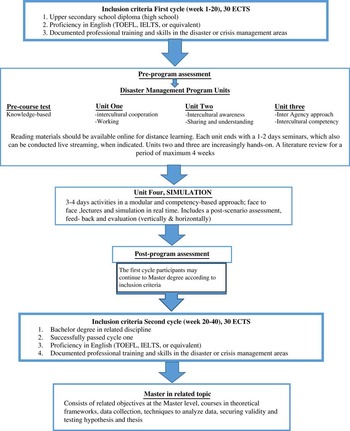
In topic 5 (Figure 3), the participants are professionals working in various phases of DM and at different levels (strategic, tactical, and operational). They also have different educational backgrounds and diverse amounts of experience. However, they all enter an intercultural, interdisciplinary, and competency-based education with the goal of enhancing their overall performance in vertical and horizontal activities. Earlier publications, including this review, have indicated a lack in realistic training and mutual education along with shortcomings in the four Cs (command, control, communication, and collaboration) and standardization. A common set of competencies can be used to standardize the DM program across different training centers.Reference Khorram-Manesh, Ashkenazi and Djalali 1 , Reference Alexander 4 . Reference Alexander 5 Such a program for disaster managers supports the education/training and preparation of attendees to better understand relevant issues for DM. Individual topics are incorporated into knowledge to be further converted into skills and competencies by using different teaching methods. To achieve the overall learning objective and its specific components for such an EP, an appropriate didactic concept should serve as a framework for teaching and learning processes.Reference Khorram-Manesh, Ashkenazi and Djalali 1 The program may be further standardized by a set of prerequisite conditions (admission criteria), a standardized exam at the end of program, or both.
Final Schematic Program Design

The academic level is first cycle (undergraduate) and second cycle (advanced/master’s level). The first- and second-cycle students participate in parallel lectures and seminars during the first semester. Second-cycle students continue their studies for another semester and receive additional education, such as the ability to read, understand, and integrate research studies and write an academic study on a master’s level. One important part of the examination during the last 3 weeks of the first semester is to write a literature review about an important topic to present the current knowledge and shortcomings within that field. This review is later used in the second cycle as a deeper study to write a master’s thesis based on the existing empirical data. A total sum of 60 European Credit Transfer and Accumulation System (ECTS) credits is given for the whole program.
First Cycle
The inclusion criteria of the first-cycle students is based on European standards, that is, having successfully completed upper secondary school (high school) and being able to demonstrate proficiency in English through documented international recognized test, for example, TOEFL (Test of English as Foreign Language), IELTS (International English Language Testing System). Documented professional training and skills in the disaster/crisis management area/equivalent is compulsory, for example, professional training from police department, rescue services, fire department, prehospital and hospital health care, military, media, security centers, rescue centers, aviation security, industrial security, off-shore security, shipping security, preparedness or officers on duty.
The first cycle of this program (weeks 1-20) consists of 4 units plus a literature overview, as mentioned earlier, and is given 30 ECTS credits. The core of the program is unit 4, a scenario-based, modular training in which the obtained knowledge and skills are used in real time and through interactive exercise. Units 1-3 consist of common learning objectives for all managerial levels, and these are presented in 1-2 days seminars within the 20-week duration of the program (Figure 3). At the end of unit 3, a tabletop exercise engages all managerial levels and prepares them for the final scenario simulation at unit 4. The Three Level Collaboration Exercise (3LC) is a validated exercise that is constructed in such a way that participants from different organizations overlap each other’s tasks. This is accomplished by having asymmetries included in the scenarios, repeating exercise procedures, and testing different strategies, which is discussed during joint seminars. The following topics are discussed during the seminars: (1) what has been done, (2) mistakes, (3) alternative strategies, (4) comparisons between different strategies, and (5) suggestions for improvement.Reference Berlin and Carlström 26 - Reference Berlin and Carlström 28 The content of each unit presented in this article was decided based on the literature review and expert opinion (see the Methods section).
-
1. Prelearning phase depending on existing experience and level: The reading materials, recommended literature, and program information are available online at least 2 months before the program starts and are updated continuously by the main faculty at the main teaching center. In this phase the participants are responsible for preparing themselves for the program and the desired level (see Table 3). Quizzes are designed at the end of each section to test the acquired knowledge in each topic.
-
2. Preprogram assessment for participants: Evaluation sheets are designed to rate the candidates’ knowledge and skills before entry and/or to identify the level of course needed. Identifying the right level for participants enhances their motivation and increase their willingness to work in a team. To facilitate candidate selection 3 levels of questions are used:
-
a. Questions regarding the previous practical experience of the trainee in the field of DM.
-
b. Questions regarding the previous training of the candidate in DM.
-
c. Questions regarding what the trainee expects from the program that address the gained experience in comparison to the postcourse assessment.
-
-
3. Unit 1: Theory of intercultural cooperation: This unit opens the perspective on how to work and behave in an international team. As a first attempt to fit our topics into the program and to introduce the basic knowledge, the following 6 topics are taught via lectures or distance learning; the definition of and general principles about disasters, disaster cycles and management, functions needed in DM, cultural aspects, political considerations, and European organization models.
-
4. Unit 2: Intercultural awareness: This unit is designed for trainees to share and understand professional skills in the intercultural context specific to their professional environment. For the proficiency of a disaster response it is not necessary that all professionals act in the same manner but that they understand that different approaches are all variations in the attempt to reach the common goal. This unit includes following 7 topics and can be taught via lectures, group discussions, and skill stations; public health, including sanitation/hygiene; medical issues; CBRN (chemical, biological, radiological, nuclear); SAR (search and rescue); safety and security; logistics; and mental health care and psychological support.
-
5. Unit 3: Interprofessional competencies: This unit focuses on the interprofessional approach, offering a practical training specifically geared to optimize the proficiency of a heterogeneous workforce. The main competencies here are communication and flexibility. National standards in DM should be addressed and compared on this level. It includes the following 10 topics and can be taught via tabletop simulations or group discussions: planning and management, leadership and decision-making, communication issues, information collecting and sharing, legal aspects, ethical aspects, nongovernmental organizations and voluntary organizations, geospatial support, risk and vulnerability analysis, recovery, reconstruction, and special considerations.
-
6. Unit 4: Scenario-based exercise (holistic training): In units 1-3 participants gradually move from knowledge to skills and competency and interagency work. Unit 4 is the practical part of the program combining all aspects of the other units within a scenario-based simulation. In order to standardize the interagency communication and collaboration, a simulation training with a common scenario is used during this cycle in which common protocols, reports are used and the outcome can be measured (eg, mortality and morbidity, economic loss, societal disruption, etc).Reference Khorram-Manesh, Ashkenazi and Djalali 1 , Reference Alexander 4 , Reference Alexander 5 , Reference Fink 16 A modular approach during the scenario play lets each organization work within its group (vertical command) based on its traditional or national organizational form, but it also enables standardization of some common issues, such as communication and coordination and logistics, which must be harmonized to link each organization to the others. In this way all levels of organization—operational, tactical, and strategic—can be trained simultaneously. The scenario has to be holistic to engage all trainees across all levels from all agencies. The demands on trainees to perform specific tasks to prove their knowledge and competencies should be clearly defined in the setup of the scenario. Proper evaluation tools monitor the process as a whole and for each individual. This simulation exercise unit represents separate elements of the training within the EP and allows maximum flexibility and practicability. It may consist of 1 day of introduction followed by 2 days of simulation.
Although, at least initially, all parts of this program should be given by a qualified center, units 1 and 2 could be offered locally in the trainee’s country. To be accepted as a standard, the program concept needs to be flexible to meet a variety of demands, while maintaining the same structure and the same replicable parameters. This design is not one particular program that involves a given number of hours of teaching, but it is a highly adaptable concept. Since unit 4 is based on scenarios, the training can address any type of emergency or disaster. Exchanging or adapting the scenario can thus modify the training to meet the specific needs of a group of trainees, or likewise, the learning objective predefined by a national or international authority (Table 3). For a particular participant, the EP defines the assessment criteria and the learning objectives as a procedural achievement. If trainees come with a clear set of experience and competence, certain elements in the curriculum can be omitted for an individual or a group of trainees.
-
7. Post-program evaluation for trainees: This stage is more complex than the preassessment. The evaluation sheet can be structured on the criteria of: who, what, and at what level is to be evaluated. Thus, the evaluation sheets are designed for the following situations;
-
a) The trainees evaluate the program and the faculty based on the Kirkpatrick’s level Reference Kirkpatrick 21 - Reference Kirkpatrick 24 :
-
- Level 1: Ease and comfort of experience, level of effort required to make the most of the learning, perceived practicability, and potential for applying the learning by using questions that express the attitude of the trainee to the course: Do you consider the training relevant? Did you like the venue, the style, timing, accommodation, etc.?
-
- Level 2: Measuring the increase in knowledge or intellectual capability from before to after the training and using questions such as the following: Did you learn what was intended to be taught? Did you experience what was intended for you to experience?
-
- Level 3: The way the learning changed their behavior, including the following questions: Did you put your learning into effect when you were back on the job? Was there a noticeable and measurable change in the activity/performance of the trainees when they were back in their regular roles?
-
- Level 4: The effect on the business or environment resulting from the improved performance of the trainee; measures would typically be business or organizational key performance indicators as result of training. This measure requires further contact with the trainee, asking such questions as, what changed in your daily activity due to this training?
-
b) The observer evaluates the performance of the trainees after each module and at the end of the training.
-
c) The trainers evaluate the trainees at the end of the course or at the end of each module through direct questions referring to the curriculum (objective assessment) or the trainees self-evaluate (subjective assessment), usually by comparing knowledge against the precourse assessment. This compared evaluation assesses the progress of the trainees. Both the objective and subjective components are important; the former demonstrates the efficacy of the training and the latter is key for the future improvement of self-assessment system (in some situations the trainees may become aware of the real pre-course level) and the enlargement of the DM approach, provided that the level chosen for the trainee was correct. One important issue not to be neglected is the raised motivation of the trainees to recommend the course to other people involved in DM, which will have a positive impact upon dissemination.
NickolsReference Nickols 25 states that evaluation can be performed simultaneously/successively at different points of the training chain, internally and externally. Practically, the latter can be done by observers based on a designed template, including comments on the performance of trainees and trainers and on the efficient use of training resources. The internal evaluation might be conducted in each of the training points, looking to the right (ie, forward, or expressing future needs, desires) or to the left (ie, backward, or expressing the retrospective evaluation). The needs assessment part of designing the training assesses both the subjective needs (established by the trainee based on his or previous experience) and the objective needs, which are those established by the trainers, by assessing the knowledge and skills of the trainee when entering the training program. Both types of assessments are recommended in this program.
Second Cycle
A total sum of 30 ECTS credits is given to the second cycle. Inclusion criteria of second-cycle students is having a bachelor’s degree to qualify for a master’s program and, similar to the first cycle, having students demonstrate proficiency in English through an internationally recognized test. Documented professional training and skills in the disaster or crisis management area are compulsory.
In contrast to the first-cycle students, master’s students will take courses in theoretical frameworks, data collection, techniques to analyze data, securing validity, and testing hypothesis. These lectures or seminars give the foundation for sound research, enhance the student’s ability to conduct further research, and increase the knowledge needed for researching. A master’s thesis is written in the second cycle (weeks 21-40) as a deeper study, based on the review conducted in the first cycle and based on the existing empirical data. Students work independently. Each student has an academic tutor who will guide him or her through drafting a thesis by devoting specific weeks for each part of research process. The individual review conducted in the first cycle gives each student the inspiration needed for further research and an easier start.
DISCUSSION AND CONCLUSION
In this article we defined a program designed for the multidisciplinary education and training of people who participate in all phases of DM at the national/international arena. We also proposed the content, teaching methods, workshops, and practical exercises needed to ensure a sufficient level of knowledge, skills, expertise, and competence to act as a crisis manager to enable vertical and horizontal leaderships and ease collaboration between various partners.Reference Khorram-Manesh, Ashkenazi and Djalali 1 , Reference Ripoll Gallardo, Djalali and Foletti 6 , Reference Subbarao, Lyznicki and Hsu 9 - 13 , Reference Khorram-Manesh 17 , Reference Lennquist Montán, Khorram-Manesh, Örtenwall and Lennquist 18 , Reference Berlin and Carlström 26 - Reference Berlin and Carlström 28
The program presented in this article is adjustable to the reality of available resources, both in regard to planning the program itself and the national and international abilities and capabilities. As an example, e-learning might be appropriate in a country with well-developed technological resources, but it might be easier and more appropriate to use video/ordinary lectures in a less-developed country. Simulation exercises should also be available in all countries. Simulation training is an effective training method for teaching emergency preparedness, an important tool in developing critical competencies related to emergency preparedness and response, and a cost-effective planning tool. 29 - 31 One validated system that has recently been used worldwide is MACSIM (MAss Casulty SIMulation). 29 , Reference Lennquist Montán, Hreckovski and Dobson 32 The whole system is adaptable to the local resources and meets all demands needed for good simulation training proposed in the literature.Reference Issenberg, McGaghie, Petrusa, Lee Gordon and Scalese 8 , Reference Khorram-Manesh 17 To meet the dynamic characteristic of a disaster and the regional interests, different scenarios should be used. The impact of the scenarios on the participants can be changed by injecting various difficulties correlated to local or national levels into the scenarios (problem based). Scenario play also offers the possibility to teach, evaluate, and give feedback to each individual and group for their performances.
To ensure standardization of the program,Reference Alexander 4 , Reference Alexander 5 irrespective of the center, the standardization points will be at the entry and at the end of the program in the first cycle. At the entry the proposed inclusions criteria, together with preprogram tests, will hopefully guarantee a more uniform level of knowledge among participants. For an international perspective, and given the fact that all participants are nationally nominated, an internationally recognized course such as MIMMS (Major Incident Medical Management and Support)Reference Lennquist Montán, Hreckovski and Dobson 32 or national equivalents can be recommended. A tabletop exercise, such as 3LCReference Berlin and Carlström 26 - Reference Berlin and Carlström 28 at the end of unit 3 and MacSim as a main part of unit 4, will further increase the strength of the program and may also guarantee a standardized program globally. This article is not the final construct for a complete program, but hopefully it adds a very important and clear path toward the final program.
The most important factor for the success of this program is gathering all target groups in the same EP to overcome the difficulties in communication and collaboration, which are often named as the reasons for failure.Reference Khorram-Manesh, Ashkenazi and Djalali 1 , Reference Lennquist 2 Considering the four Cs (command, control, communication, and collaboration), it is not enough to only train 1 group at the time. It is very important to plan and let all agencies work together to not only identify their own strengths and weaknesses but also other groups’ capabilities and limitations. After all “failure to plan is to plan to fail.”
One important issue to discuss is where and by whom this program should be organized. There are many alternatives as it can be part of a university program or can be given by related associations. The first cycle of the program can be organized by related associations as it will be accredited by a diploma. However, to achieve a master’s degree, this EP has to be part of a university program. Probably a combination of both approaches is a good solution and will enhance collaboration between associations and universities. Another issue to discuss is the short length of the program for a master’s degree. However, it should not be forgotten that one of the criteria for being included in the second cycle is having an earlier bachelor degree in the field of crisis and DM or related fields.
LIMITATION OF THIS STUDY
This study in all parts is based on Internet research and specific search key words and does not cover all existing languages (although many languages are included). Thus, any other possibilities, word, language, or way of searching may have resulted in other findings. In addition, some of the results, for example, learning objectives are the result of the work conducted by the expert group in this study. Thus, any other expert group or individuals may have had other recommendations.
Acknowledgment
This paper was funded by European Community's Seventh Framework Program (FP7/2007-2013).
Supplementary Material
To view supplementary material for this article, please visit http://dx.doi.org/10.1017/dmp.2016.88