


William Rattigan overcame humble origins to achieve great success. Born in British India in 1842 to an Irish father, Rattigan began his career in the lower ranks of the Indian civil service. He then studied law and practiced as a lawyer in Lahore, later moving to London, where he studied at King’s College and was admitted to the English Bar. Returning to India, he served as a government advocate and judge of the Chief Court of the Punjab and a member of the Supreme Legislative Council of India. In 1885, Rattigan obtained a doctorate in law from the University of Göttingen in Germany. In 1887, he became the Vice-Chancellor of the University of the Punjab, serving until 1895. Rattigan was a polyglot conversant in five European languages, several vernacular Indian languages, and Persian. He published many books, including works on Hindu and Roman law, a textbook on private international law, and the leading digest of the customary law of the Punjab. In 1900, Rattigan returned to the United Kingdom and was elected as a Member of Parliament before his life was tragically cut short in a car accident.Footnote 1
In 1888, Rattigan published a textbook on jurisprudence written for his Indian law students.Footnote 2 Even though the book was, in many senses, more learned, sophisticated, and cosmopolitan than comparable works available in England at the time, it was far less influential.Footnote 3 This was primarily due to the fact that the book was written for Indian law students and was, therefore, seen as inferior to similar works published in the West. Such a view is evident, for example, in a review of Rattigan’s book published in an American law journal in 1889. After noting Rattigan’s “marked familiarity with the Roman and German jurists” and stating that “the whole work … shows great research and diligence,” the reviewer ended by condescendingly observing that “it is a learned and able work … [that] shows a profundity of learning hardly to be looked for in India.”Footnote 4 These dismissive words echo a broadly shared view that non-Western works on jurisprudence merely repeated Western ideas, a view held by Westerners and non-Westerners alike. For example, in 1958, when the Polish–Indian legal scholar C. H. Alexandrowicz published a bibliography of works on Indian law, he wrote (in the section of the bibliography devoted to jurisprudence) that, apart from some works on Hindu law, “Indian academic lawyers have made no original contribution in this field.”Footnote 5 Similarly, disparaging remarks about the unoriginality of Indian works can be found in later writings by Indian authors.Footnote 6
In this chapter, I argue that this conventional view is wrong. Some theoretical works on law published in India in the late nineteenth and early twentieth centuries did not merely repeat ideas transplanted from England. During the colonial period, British legal scholars working in India, as well as Indian legal scholars, sometimes produced works on legal theory that were both interesting and original. The works produced were less insular and more cosmopolitan than English writings; they were critical of English legal theories claiming that these did not fit local reality; and, sometimes, the influence of nationalist ideology motivated local scholars to develop new theoretical insights derived from the study of local religious legal systems.Footnote 7 In order to understand that context out of which these works emerged, I will now briefly describe the history of legal education in England and British India in the nineteenth and early twentieth centuries.
Legal Education in Nineteenth-Century England and British India
At the beginning of the nineteenth century, the education of English lawyers was a haphazard affair based on an unreliable apprenticeship system. In previous centuries, the Inns of Court had provided formal education for aspiring barristers, but after the English Civil War in the seventeenth century, studies at the Inns of Court atrophied. Academic courses on English law were first given in the late eighteenth and early nineteenth centuries. William Blackstone lectured on common law in the mid eighteenth century at the University of Oxford. During the 1820s and 1830s, John Austin taught jurisprudence at University College in London, and Andrew Amos taught English law there. Courses on English law were also taught during this period at Cambridge University and King’s College in London. However, compared to Continental and American legal education at the time, English legal education lagged far behind. Indeed, England’s most advanced and comprehensive system of formal legal education in the first half of the nineteenth century was not connected to English law but to India. It was provided at Haileybury College, north of London, where the East India Company trained its administrators. The College, which existed between 1806 and 1858, offered a two-year course of studies, during which various legal topics were extensively covered.Footnote 8
A Select Committee on Legal Education was established by the House of Commons in 1846, and, following the publication of its findings and a report by an 1852 Royal Commission, Oxford and Cambridge Universities expanded the teaching of English law, creating degree programs and various chairs on legal topics. In addition, a law faculty was created at King’s College, and the Inns of Court appointed five Readers to deliver lectures on law. However, intending barristers or solicitors were not required to obtain a university law degree to practice; therefore, the number of practitioners holding such a degree was still relatively small. In the second half of the nineteenth century, there were attempts to create a “University of Law,” or “General Law School,” based on the Inns model, to provide broad legal education resembling German universities and other Continental institutions, but these attempts failed.Footnote 9
Simultaneously with the changing nature of legal education, the nature of English law books also changed. Modern attempts to systematize English law using treatises began in the eighteenth century with Blackstone’s Commentaries on the Laws of England. Law-treatise writing accelerated in the second half of the nineteenth century with the reforms in English legal education.Footnote 10 One specific subgenre of legal literature that evolved in the nineteenth century was that of books on jurisprudence. Unlike other kinds of legal treatises, the audience for these books mainly comprised law students.Footnote 11 Side-by-side with leading authors such as Jeremy Bentham, John Austin, and Henry Maine, writers such as Markby (1871), Holland (1880), and Salmond (1902) began to gain visibility. However, the underdeveloped state of legal education in England – limited in scope, relatively non-academic, and with little emphasis on research – was not conducive to creating a large and sophisticated body of works on jurisprudence.Footnote 12
The history of Indian legal education in the nineteenth and early twentieth centuries mirrors that of England. The development of Indian legal education was connected to the gradual development of the modern Indian legal profession. Until the late eighteenth century, there was no regulation of the lawyers who appeared before the British courts operating in the Presidency towns of the East India Company (Calcutta, Bombay, and Madras), and the number of legal practitioners was exceedingly small. Over time, a nascent legal profession appeared, divided into several subcategories of lawyers; these were primarily British, to begin with, but a few local Indian lawyers later joined their ranks. However, even in the mid nineteenth century, the number of lawyers was still small.Footnote 13 The British also established courts in territories outside the three aforementioned Presidency towns, and here the lawyers (vakils) were Indian. These lawyers had to be familiar with Persian (the language of the courts until 1826) and to have been trained in Hindu or Islamic law.Footnote 14
After the end of Company rule in 1858, the dual court system that had operated up to that point was replaced by a unified system of courts, at the apex of which stood the three High Courts of Calcutta, Bombay, and Madras. Additional High Courts later followed in cities such as Allahabad, Patna, and Lahore. Indian lawyers could plead before the High Courts, thus greatly expanding the scope and prestige of their work. In parallel, the requirements to practice as a vakil were expanded: these lawyers now had to acquire knowledge of English, study at a law college or university, and pass the High Court examination.Footnote 15 By the beginning of the twentieth century, a law degree had become an essential prerequisite for practicing law, at least in Bengal.Footnote 16
Before the colonial period, Hindu law was taught by individual teachers (gurus) in Hindu temples and schools or, in the case of Islamic law, Islamic seminaries (madrasas). British colonial authorities created new institutions teaching traditional law, such as the Calcutta Madrasa (established in 1780) and the Benares Sanskrit College (established in 1791).Footnote 17 Gradually, institutions providing Western-style legal education also began to be established in India.Footnote 18 In Madras, the College of Fort St. George, established by the British in 1812, provided formal training for law officers and pleaders as early as 1816. While law classes in Madras were discontinued in the late 1830s, they were revived by George Norton, the Advocate General, in 1840, until Norton returned to England in 1853.Footnote 19 In 1855, law classes were established at Elphinstone College in Bombay, the Hindu College in Calcutta, and the Presidency College of Madras. In 1857, universities were established in the three Presidencies, and training in law was declared part of their functions.Footnote 20 Other universities followed (such as the University of the Punjab, established in 1882, and the University of Allahabad, in 1887).
The actual role of these universities in the provision of legal education differed from place to place. In certain cities, such as Madras, legal education was concentrated in a single, dedicated law college operating under the affiliation of the local university. In others (such as Calcutta, which produced approximately half of all Indian law graduates in the late nineteenth century), there was no central law college until the beginning of the twentieth century. Instead, various colleges affiliated with the university taught law as just one subject area among others in the curriculum.Footnote 21 By the 1886 academic year, there were eighteen law schools in India and 1,716 law students. By 1896–1897, there were thirty-four such schools, teaching 3,020 students; and by 1939–1940, the number of law students had risen to 6,749. This compares to just 1,515 law students in the United Kingdom at that time.Footnote 22
The gradual growth in the number of law students in nineteenth-century India did not change the nature of its legal education, and, generally speaking, “the study of law was not taken as a very serious exercise.”Footnote 23 There was no standard legal education program, and the duration of studies varied from school to school. Part-time teachers taught law to part-time students. Courses were often delivered in the evening, attendance was non-mandatory, and law libraries were limited or non-existent. While jurisprudence was taught in Indian law schools (as well as other theoretical subjects, such as legal history and Roman law), the teaching was primarily technical and non-academic. Because legal education institutions in British India were geared to training lawyers rather than conducting legal scholarship, there was also little academic research or writing on law.Footnote 24
However, the nature of legal education had evolved by the first decade of the twentieth century, at least at the University of Calcutta – the most important higher education institution in British India (see Figure 1.1). Established in 1857, it began, like other Indian universities of the period, as an examination-oriented entity modeled on the University of London, while the actual teaching was delivered by the numerous colleges affiliated with it.Footnote 25 There were sixty such colleges at the beginning of the twentieth century, although less than a third of them taught law.Footnote 26
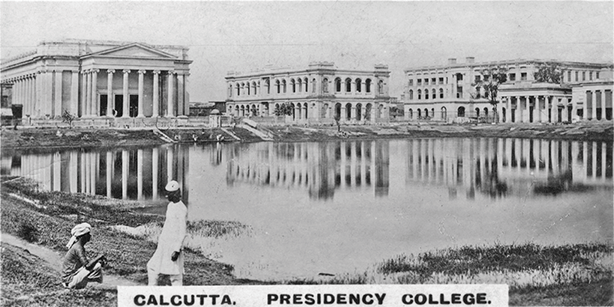
In the first decade of the twentieth century, the University of Calcutta underwent significant reform. In 1904, the British enacted the Indian Universities Act. This sought to strengthen government control of Indian universities and thus undermine their independence. Indian nationalists vehemently opposed the Act. When the British decided to partition Bengal in 1905, Indian nationalists initiated a campaign involving various forms of protest – demonstrations, boycotts, labor unrest, acts of civil disobedience, and, ultimately, acts of terror – known as the Swadeshi Movement. The Movement reached its zenith between 1905 and 1908. As part of the Movement, Bengali nationalists sought to promote self-sufficiency in the educational realm. One expression of this impulse was the creation of a National Council of Education in Bengal. The Council envisioned a system of education rooted in Indian culture and languages, in opposition to the Anglicized education promoted by the universities established by the British. This vision was manifested in the establishment of the Bengal National College in 1906. The College did not achieve the anticipated success. This was partly due to practical reasons involving the employment prospects of its graduates. It was also partly the result of the fact that the demand to de-Anglicize higher education in Bengal had spurred British officials to undertake significant reform in the nature of the education delivered at the University of Calcutta.Footnote 27
In response to nationalist agitation, the British appointed Asutosh Mookerjee, a mathematician and jurist, as the Vice-Chancellor of the University of Calcutta in 1906 (see Figure 1.2). Mookerjee served in this post between 1906 and 1914 and again between 1921 and 1923. He was an academic entrepreneur who sought to emulate the German university model and steer his institution toward academic research. He initiated a series of significant reforms that turned the university into the leading academic institution in India. He instigated the creation of a postgraduate teaching department, hired a host of talented Indian scholars, expanded the university library, and created a university press.Footnote 28
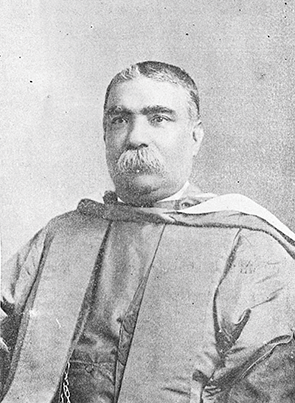
Mookerjee was also a nationalist intellectual associated with the Swadeshi Movement, and his appointment as the university’s Vice-Chancellor was a way for the British to calm nationalist agitation. However, in practice, Mookerjee used his position to further the nationalist goal of Indian cultural independence from Britain.Footnote 29 Like many Indian intellectuals, he opposed the view that “a single shelf of a good European library was worth the whole native literature of India and Arabia.”Footnote 30 He appointed lecturers who were associated with radical nationalist politics, expanded the use of the vernacular Indian language at the university, and was keen to turn it into a center for studying and propagating Indian culture.Footnote 31
Specifically in the legal realm, Mookerjee, who had previously studied law and served as a judge in the Calcutta High Court, sought to reform legal education at the university, moving it in a more academic direction. Until his time, there was no college affiliated with the university that was entirely devoted to legal studies. A two-year postgraduate course of law lectures, with no mandatory attendance requirement, was all that was required to obtain a law degree.Footnote 32 In 1909, Mookerjee established the University of Calcutta College of Law, which was based on the idea that law was “neither a trade, nor a solemn jugglery, but a true and living science.”Footnote 33 Law now became a three-year postgraduate degree. In addition to this Bachelor of Law program, the College offered students an advanced Master’s degree and a doctorate in law. A dedicated library containing approximately 20,000 law books was also established.Footnote 34 Jurisprudence, Roman law, and Hindu law were taught at the College during its first academic year.Footnote 35 Hindu law, which Mookerjee once called a “monument of Asiatic genius,” was studied not only at the College of Law but also at the Sanskrit College in Calcutta, established in 1824 and later affiliated with the University. It was also incorporated into the MA degree in Ancient Indian History and Culture, a program associated with the Carmichael Chair that Mookerjee established in 1912.Footnote 36
Moving from legal education to legal research, throughout the nineteenth century, legal education in India was viewed as a technical matter involving the study of rules, not a science based on principles, and certainly not a discipline related in any way to the historical or social sciences. This was at least partly due to the acceptance of an understanding (associated with the works of the English legal philosopher John Austin) that defined law as a command imposed from above by the sovereign and as consisting mainly of statutes (in the Indian case, codes enacted by the British). As a result, the type of legal scholarship produced in India was narrow. In the early colonial period (until 1858), the primary genre of works created by English jurists in India comprised collections of regulations, rules, and case law and translations of Hindu and Islamic law books. In addition, digests and descriptive works attempting to summarize the rules on a given legal topic were also published.Footnote 37 Once the British embarked on the project of Indian codification, commentaries interpreting these codes also began to be published.Footnote 38
One exception to the generally practical nature of Indian legal literature was that of the publications associated with the Tagore Law Lectures, an annual lecture series established in 1870. It was created by Prasanna Kumar Tagore, one of the members of the Tagore family, a family of Bengali intellectuals and nationalist activists. The annual lectures were given by leading non-Indian jurists (including, eventually, figures such as Holdsworth, Pollock, and Pound) and many Indian ones (most of them practicing judges and lawyers rather than law professors). The lectures were then published.Footnote 39 Most of the lectures published in the nineteenth century were descriptive surveys of the law of British India (such as the laws concerning mortgages, minors, marriage, inheritance, gifts, and agency). They were comprehensive and learned but formalist, non-contextual, and non-theoretical. They did not make use of history or the social sciences.Footnote 40 However, this changed in the early decades of the twentieth century when some of the lectures became more theoretical.
British Jurisprudence Textbooks Written in India
English jurisprudence dominated Indian legal education during the colonial period. Why was it so dominant? Different scholars offered different reasons. Charles Lewis Tupper, the Vice-Chancellor of the University of the Punjab, argued in 1901 that, just as Greek art and philosophy had “fructified” Rome, and Greek and Roman literature had led to the transition from the Middle Ages to the Renaissance, so too was English culture playing the same role in “the Indian Renaissance now in progress.” Specifically, in law studies, this role was to be played by English jurisprudence, which, claimed Tupper, “reigns alone” in this field (mentioning three thinkers, Bentham, Austin, and Maine).Footnote 41
A different argument about the dominance of English jurisprudence in India – specifically, English analytical jurisprudence – was made after Indian Independence by S. N. Dhyani, a law professor at the University of Rajasthan in Jaipur. He wrote in 1985:
… during the heydays of British imperialism and absolute power no theory of law could fit in so eminently as Austin’s analytical positivism which meant despotism, status quo, police state, anti-people government and alien laws and judicial system – all rolled into one … Austin was [the] god-father of [the Indian legal community before 1947] and his philosophy of law was their Bible which they capriciously worshiped by sacrificing the good of the people.Footnote 42
Whether one agrees with Tupper or Dhyani, English jurisprudence was not entirely dominant. A relatively large number of books on jurisprudence were produced in India during the British period. At first, these works were written by British lawyers. Later, they were joined by Indian jurists. Most of the books produced in India were derivative, simply summarizing English ideas. Some, however, were unique in several senses.Footnote 43 First, some were more cosmopolitan than English works, relying more heavily on contemporary Continental and American legal theories compared to English works produced at the same time. Second, in some of the Indian works, the gap between English theories and Indian reality led the authors to critique prevailing English jurisprudential notions, which were supposed to be universal but were actually only applicable to modern Western law. Finally, in the first decades of the twentieth century, a new genre of jurisprudential works emerged in India: texts that employed Western jurisprudential notions to describe the principles and history of Hindu law (and, to a lesser extent, Islamic law), offering a different vision of the nature of law (and sometimes also of society) to the one provided by the British.Footnote 44 Such works also illustrate the impact of nationalist ideology on jurisprudential thought in India.
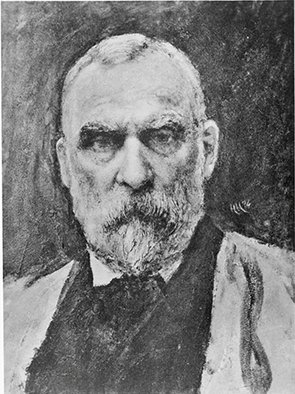
The first comprehensive treatise on jurisprudence written in India was William Markby’s Elements of Law.Footnote 45 This book was published in 1871, less than a decade after the publication of Austin’s Lectures on Jurisprudence. Thus, it pioneered a long line of treatises that attempted to simplify Austin’s lectures and render them more accessible to law students. Markby’s book was based on a series of lectures he had given to a class of Indian students at the University of Calcutta in 1870.Footnote 46 Markby (see Figure 1.3) was related to John Austin’s wife, Sarah, and he helped her prepare Austin’s Lectures on Jurisprudence for publication in 1863. In 1866, he was appointed a judge at the Calcutta High Court, and he later served as the Vice-Chancellor of the University of Calcutta (1877–1878) before returning to England in 1878 and becoming the first Reader in Indian law at the University of Oxford.Footnote 47
Portrait of William Markby by Hubert von Herkomer.
Markby’s book seems to have been relatively influential (at least in the first decades after its publication), with six editions published between 1871 and 1905. It was published in the United Kingdom and was based on a structure that later became a convention in late nineteenth- and early twentieth-century English jurisprudence textbooks.Footnote 48 Markby believed that the scientific study of law was universal, noting, for example, that his definition of law (based on Austin’s definition) was not only relevant to English law. “No theory of religion, or of morals, or of politics, is involved in these views of law,” he declared. “They are alike true for Hindoos, Mahommedans, and Christians.”Footnote 49 Markby referred to India and its laws in many places in his book, which is unsurprising given its origins in a series of lectures at the University of Calcutta. Markby’s Indian references were mostly used to illustrate his general arguments.Footnote 50 However, when he discussed the role of customary law in deciding cases, he argued – contrary to Austin – that custom was “not merely a branch of judge-made law” but an “independent source of law” and, indeed, “a notion older than law itself.” In support of this argument, Markby mentioned ancient German village courts and “the village courts (punchayets) [sic] which exist to this day in Madras.”Footnote 51 Indian examples provided to illustrate general jurisprudential points were also used in other works by Markby.Footnote 52
In the final two decades of the nineteenth century, several works resembling Markby’s were published in India.Footnote 53 The most ambitious of which was William Rattigan’s The Science of Jurisprudence.Footnote 54 Rattigan modestly disclaimed “any intention” of presenting himself as “an original writer.”Footnote 55 His book, he explained in the preface to the first edition, was written to “supply a want” for an accessible jurisprudence textbook for Indian students because Austin’s book could not be understood even by English students, while Markby’s and Holland’s books were “not simple enough” for Indian ones.Footnote 56 However, the book was unique in some important senses. First, it was more “Indian” in focus than Markby’s book, containing more mentions of topics related to India.Footnote 57 This Indian aspect becomes evident if we consider a quantitative analysis comparing the words used by Markby and Rattigan in their respective books. Table 1.1 lists the number of occurrences of specific keywords in both texts in descending order (the terms related to Indian law in both texts are italicized).Footnote 58
| Terms used in Markby’s book | Number of instances | Terms used in Rattigan’s book | Number of instances |
|---|---|---|---|
| English/England/British | 272 | India/Indian | 382 |
| Roman/Rome | 103 | English/England/British | 287 |
| India/Indian | 97 | Roman/Romans/Rome | 184 |
| Austin/Austin’s | 75 | Hindu | 54 |
| France/French | 47 | France/French | 33 |
| Savigny/Savigny’s | 38 | Allah | 32 |
| Hindoo/Hindoos | 29 | Austin | 23 |
| America/American | 21 | America | 23 |
| Bentham | 16 | German/Germany | 20 |
| Maine | 15 | Justinian | 19 |
| Mahommedans | 14 | Bengal | 16 |
| German/Germany | 8 | Madras | 14 |
| Bengal | 7 | Muhammadan | 13 |
| Italian | 6 | Maine | 11 |
As Table 1.2 shows, there is a marked difference in the prevalence of English-law-related terms versus Indian-law-related terms in the two works. Indian-law-related keywords (the “Indian cluster”) comprised just 20 percent of the keywords in Markby’s book, compared to 45 percent in the case of Rattigan’s book.
| Markby | Rattigan | |
|---|---|---|
| English cluster | 399 (53%) | 350 (31%) |
| Continental cluster | 202 (27%) | 274 (24%) |
| Indian cluster | 142 (20%) | 511 (45%) |
A second feature of Rattigan’s book that can be considered unique was that, while Continental-law-related keywords appeared with similar frequency in both texts (27 percent of the words counted in Markby, compared to 24 percent in Rattigan), Rattigan’s book contained more in-depth discussion of Continental legal theorists than Markby’s book.Footnote 59 For example, Rattigan’s exploration of the distinction between law and morality did not simply follow the conventional Austinian discussion. Instead, he devoted several pages to a survey of different Continental approaches to this distinction, mentioning both German legal thinkers (Krause, Jhering, Ahrens) and also Italian ones (Vico, Lioy), only then moving on to Austin’s “narrower view” on the topic.Footnote 60 This Continental orientation was noted in a review of the second edition of the book published in the Revue générale du droit (July–August 1892).Footnote 61 Rattigan’s educational trajectory, which included a doctorate from the University of Göttingen, may explain the more extensive references to Continental thinkers in his book.Footnote 62
Finally, another significant aspect of Rattigan’s book that set it apart was that it relied on Indian examples to refine or critique English theories of law. This is evident, for instance, in his discussion of the Austinian definition of law. The second chapter of the book began with a summary of the theory of “Austin and his followers” on the nature of law as the command of a sovereign. Rattigan then provided some conventional counter-examples to the Austinian theory (such as international law, which is conceived as “law” even though it is not created by a “sovereign”). He also criticized Austin’s theory as relevant only to modern states where legislation was the main source of the law. As an example of law in other societies, he mentioned India, noting that Austin probably did not know that, in India, before the British conquest, life was governed by rules that were “as absolute as any” modern law but did not emanate from a political superior.Footnote 63 In this context, Rattigan mentioned examples such as the customary rules that governed the life of village communities in the Punjab (customary law, it will be recalled, was a topic on which Rattigan wrote a digest). He also cited the example of Hindu laws, which were prescribed and reformed by Hindu sages (rishis), who had no temporal power. These sages, Rattigan continued, were able to introduce radical changes in the law using indirect methods. For example, “when they wished to abolish some prevailing practice or custom, they did not do so by an express injunction, but, by pretending to regulate the practice, they subjected it to so many conditions and ceremonial requirements as in reality to render its observance impossible,” thus giving the Hindu codes “elasticity which has not rendered them obsolete despite the lapse of centuries.”Footnote 64
What is remarkable about this passage is that, using Indian examples, Rattigan managed in just a few pages not only to demonstrate the problematic nature of Austin’s theory of law (as the command of a political sovereign) when applied to a non-modern legal system – a point made earlier in Maine’s Ancient Law and other works by Maine – but also to attack the second dominant legal theory produced by nineteenth-century English jurisprudence, that of Maine himself (without naming him). In Ancient Law (first published in 1861), Maine described Hindu law as being based on outmoded codes that, because of the sanctity of religion, could not be reformed.Footnote 65 Rattigan argued that the conditions and requirements created by the rishis were not a mark of an outdated and problematic legal system but just the opposite: an indication of its elasticity and vitality.
The emphasis on the importance of custom was also evident in other parts of Rattigan’s book. For example, in the chapter on the sources of law, Rattigan observed that one cannot “overstress … [the] importance of giving due effect to custom,” especially in the Punjab, where peasants were “extremely simple in their habits” and where, therefore, Hindu and Islamic laws were foreign. Indian law, Rattigan noted, was a “mosaic” in which “English, Muhammadan, and Hindu” law existed side-by-side with the customs of towns and villages. Austin’s view that customary law was not “law” until the courts declared its existence was, therefore, “clearly erroneous,” Rattigan contended.Footnote 66
Customary law also played a significant part in another English jurisprudence book related to India: Carleton Kemp Allen’s Law in the Making. Allen, who taught jurisprudence at Oxford, delivered the 1926 Tagore Law Lectures at the University of Calcutta, and his book was based on them.Footnote 67 The work focused on sources of law and discussed precedent, equity, and legislation, but the book’s first and most sizeable part was devoted to custom. Allen explained this emphasis on custom by saying that, while French jurists could ignore custom because codes were their primary source of law, English lawyers – be they in India or the Privy Council – “cannot be unconscious of the part which custom has played and still plays in the legal development of civilizations even more complex than [their] own.” Therefore, Allen argued, Indian customary law proved “the huge vitality of custom as a source of law and as a rule of conduct quite unrelated to any sovereign authority in the Austinian sense.”Footnote 68
Allen’s book was reviewed in the Calcutta Law Journal. As we shall see in the next part of this chapter, by the 1920s, Indian scholars, too, were readily critiquing English jurisprudential approaches. The anonymous reviewer commended Allen for abandoning the Austinian model of law, but he also criticized him. One critique was that Allen’s description of the attitude of ancient Hindu law to custom was based on outdated sources and did not take into account the latest theoretical works on the topic written by Indian scholars. A second critique was that Allen viewed equity as a separate source of law – a view that was the result, said the reviewer, of English parochialism and formalism. In other legal systems, equity was not considered an independent source of law.Footnote 69
The books I have discussed here illustrate one outcome of the transplantation of English jurisprudential ideas to India, namely their modification due to the gap between English theory and Indian reality. I will now discuss South Asian writers, whose works reflected the impact of Indian nationalist ideology. Nationalism led some Indian authors to be more receptive to non-English (Continental and American) jurisprudential theories. It led others to produce works that sought to tease out the jurisprudential notions underlying local (Hindu and Islamic) law and to portray these notions positively, in contrast with the negative image of non-Western law prevalent in English works at the time.
Works on Jurisprudence Produced by Indian Authors
Works on Western Jurisprudence
From the late nineteenth century onward, South Asian authors began publishing works on jurisprudence.Footnote 70 As these works were primarily meant to assist students in passing their exams, they adopted an uncritical approach to English jurisprudence. Thus, even when they mentioned Indian examples, these were not used to question the ideas of English thinkers.Footnote 71 However, there were also more original works. One such work was written by Karunamay Basu, the Chairman of the Board of Lecturers in Jurisprudence and Roman Law at the University Law College of Calcutta in the 1920s and 1930s.Footnote 72 Basu had a keen interest in contemporary American and Continental legal theories, which were more advanced and sophisticated than English ones, and these dominated his 1921 Tagore Lectures, which were published in two volumes in 1925 and 1929.Footnote 73
One reason that Basu’s lectures made copious use of Continental theories was practical: the fact that these theories were now easily accessible in English. Between 1909 and 1925, the Boston Book Company and its successor, the Macmillan Company, published a series of translations of major Continental jurisprudence books.Footnote 74 These books were heavily referenced by Basu in his book.Footnote 75 Basu’s discussion of these works was rather unique. Other books and articles published in India during the same period also sometimes referred to Continental thinkers, but they did so in a far less comprehensive way.Footnote 76
In addition to practical considerations, however, it seems that Basu’s shift from a wholly English jurisprudential orientation to a more international one may have reflected a broader cultural trend associated with Indian nationalism. In the nineteenth century, Indian thinkers mostly turned to England for intellectual inspiration. This was certainly true for the mid nineteenth-century “Bengali Renaissance,” which was associated with liberal thinkers such as Rammohun Roy and, later, with the Young Bengal movement, both influenced by English utilitarian thought.Footnote 77 It was even true when liberalism was replaced by neo-romantic Hindu revivalism in the late nineteenth century, best expressed in the works of writers such as Bankimchandra Chatterjee. Bankim’s neo-Hinduism of the late nineteenth century may superficially be seen as a local reaction to English culture, but, in fact, it echoed contemporary English ideas about the nature of culture, nation, and religion. The late nineteenth-century Indian rejection of liberalism thus resonated with similar trends prevalent in England.Footnote 78
However, as historian Kris Manjapra has shown, during the first two decades of the twentieth century (partly due to the Swadeshi Movement), and especially in the 1920s, Bengali intellectuals shifted their cultural outlook, replacing the Anglophilic tendencies of the previous generations of intellectuals with an international, multipolar, anti-colonial vision of the world, turning Calcutta into “the epicenter of anti-British intellectual politics.”Footnote 79 For example, the shift from an English to an international orientation was evident in literature. While Bankim’s late nineteenth-century literary magazine, Bangadarshan, still imagined the world through “the lenses of the British Empire” and the India–Britain axis, the equivalent literary magazine of the 1920s generation in Bengal, Kallol, offered its readers a multipolar internationalist perspective.Footnote 80 This move from an imperial to an international orientation was manifested in a rejection of the conventional English literary canon taught at the time at Indian universities, leading to the publication of literary works by non-English writers from places as diverse as the United States, Germany, Northern and Eastern Europe, Russia, and Japan. It also echoed other trends in Indian culture of the 1920s, such as a marked increase in the translation, publication, and trade of books in European languages other than English, the growing connections between the University of Calcutta and German and Japanese scholars, and the international literary tours of India’s leading author, Rabindranath Tagore, during the interwar period.Footnote 81 Basu’s lectures can be viewed as the jurisprudential manifestation of this broader movement away from English intellectual fashions, as discussed in detail by Manjapra.
In his first lecture of the series, Basu declared his independence from English jurisprudence and the analytical method, stating that his Tagore Law Lectures reflected “the new tendency” to study not only law but also “the science and philosophy of law.” He also noted that this tendency had been adopted by the University of Calcutta, following the lead of the United States, where works by Continental jurists were being translated and studied. In recent years, he continued, the “limited” focus on the analytical school had changed. Americans were studying French and German legal theory, thus leading to the “rise of a new unified school of Sociological Jurisprudence,” which was needed “for the better and more effective solution of the serious social and legal problems which can no longer be disposed of … [by] … superficial and pragmatic treatment.” He observed:
India cannot help sharing in these problems of the civilised world, and it is but meet and proper that the study of jurisprudence from the points of view of all the schools, should receive the same impetus and encouragement from the premier University of India as it is receiving in the continent of Europe and in the United States.Footnote 82
Later in the book, Basu also noted the resistance of English jurisprudence to “sociological thought,” adding that, unlike England, in the United States, “the sociological spirit ha[d] been awakened.”Footnote 83 Basu’s observation on the relative absence of Continental (and American) legal theories from contemporary English works was accurate.Footnote 84 For example, in the 580 pages of the seventh edition of Salmond’s Jurisprudence, published in 1924, sociological jurisprudence was not mentioned at all, and Roscoe Pound was mentioned only twice – once in a footnote mentioning an article of his that contained a general survey of schools of jurisprudence, and once in the bibliography.Footnote 85 In a similar vein, the newest edition of T. E. Holland’s Elements of Jurisprudence, at the time of Basu’s Tagore Lectures in 1921, was the twelfth edition of the textbook, published in 1917, from which the notion of “sociological jurisprudence” was absent.Footnote 86
Another interesting point about Basu was his attitude to Hindu law. In the preface to the book, he mentioned a complaint he had received about the lack of attention to Hindu law in his lectures.Footnote 87 His somewhat puzzling answer to this criticism was that all the stages of the development of jurisprudence were already found in Hindu law: “My first impulse [in response to that criticism] naturally was to find some excuse in the fact that Hindu Jurisprudence is not ‘modern.’” However, Basu continued, he had then realized that: “Hindu juristic theories had in fact passed through almost all the phases which characterised the various stage of the juristic history of Europe and Anglo-America since the dawn of civilisation; and moreover had reached in its most developed form a synthesis which has not yet been attained in the modern world.”Footnote 88
Basu said in his book that the next step in the development of jurisprudence would be a synthesis of existing theories. In the preface, however, he argued that such a synthesis would not be novel. It would actually be “an adaptation of the synthetic philosophy and jurisprudence of the Hindus to modern conditions.”Footnote 89 Basu repeated this point in his preface to the second volume, which was subtitled “A Plea for a Synthetic Philosophy of Law.” He explained that the book was “only an expository study of the modern theories” and that “the proposed reconstruction of the Synthetic Philosophy of Law in the light and spirit of our ancient Oriental Philosophy should be, if at all … taken up separately as an independent piece of work.”Footnote 90
Basu’s lectures contained almost no references to Hindu or Islamic law. For example, the first lecture, which was a survey of legal theories between antiquity and the early modern period, was based on a view of jurisprudence as a Western creation. It began with the Greeks and Romans, moving directly on to the Middle Ages in Europe. There were no allusions to non-Western systems of law.Footnote 91
While Basu argued in the preface to his book that Hindu jurisprudence was superior to its Western counterpart, in the book itself, Basu often repeated disparaging Western descriptions of non-Western law. For example, when discussing the critique of Austin’s theory by what he called the “English Historical School” (specifically, Maine, Pollock, and Bryce), he noted that one of their objections to this theory was that:
Austin’s definition of law may be true with regard to the laws of advanced civilized states like the Roman Empire or the modern European states … but can scarcely apply to the more backward states, past and present, e.g., the Oriental States, where the central power concerns itself only with the gathering of armies and levying of taxes and leaves the administration of law entirely to local courts and [village councils, i.e.,] panchayaets [sic].Footnote 92
Basu then mentioned the response given by Austin’s defenders (Holland, Markby, and Salmond), namely, that:
… the customary laws and rules of Oriental states … are not positive laws at all in the Austinian sense. They may be yet regarded as mere rules or laws of morality – defective and deformed predecessors of the more perfected type that constitutes the positive laws of modern civilised states. You may historically trace the new modern type to the older as its source, as you can biologically trace the descent of man from the anthropoid ape; but the two logically belong to essentially separate species.Footnote 93
Rather than question this equation of Oriental laws with apes, Basu repeated it, and this repetition seems to undermine his contention in the preface to the book that Hindu law and jurisprudence were actually more advanced than Western ones.Footnote 94
The tendency to uncritically summarize Western works was also evident in other places in the book. For example, when discussing racial theories of law (based on thinkers such as Houston Stewart Chamberlain), Basu commented that “contact with superior foreign civilisations and legal systems develops the resources of a virile race and improves and reforms its indigenous social and legal fabric, as was the case with the Roman Republic; but similar influences would smother a weaker race and denationalise it.”Footnote 95
The unquestioning acceptance of Western theories sometimes led Basu to adopt contradictory positions. For example, in one place in the book, Basu criticized the classical economists of the early nineteenth century as if he were a Marxist. Thus, when describing the rise of the science of economics in the late eighteenth and early nineteenth centuries, he noted that economic theory (as well as jurisprudence) during that period were based on an individualistic ideology and the ideal of freedom of contract and, therefore, ignored class distinctions and the “debasement” of the proletariat. The abstract idea of “freedom of contract,” he said, led only to the “freedom to perish.”Footnote 96 Later in his book, he devoted several pages to a survey of socialist, communist, and anarchist social theories, including a summary of their critique of liberal law – a law that was designed, he said, to assist in the “economic enslavement of the masses.”Footnote 97
In another place in his book, however, Basu praised the Historical School for undermining the revolutionary spirit of the French Revolution, as if he were a conservative thinker, arguing that this school’s portrayal of law as the “historic product of popular life slowly … evolving … and incapable of being suddenly and spasmodically changed” represented a “safe, healthy and orthodox line of thought,” resisting the “tide of revolutionary ideas” of the eighteenth century “and their accompanying evil.”Footnote 98 Basu may only have been attempting to accurately convey the main ideas of the schools of thought that he was describing, but the terms he used (such as “healthy”) pointed to a contradictory espousal of both socialist and conservative ideas about the nature of law and society.
Basu was aware of the need to include non-Western law in his work (as is evident from the preface to his book). However, he did not actually do so. Other works written at the time were more critical of Western legal theories and more interested in non-Western law, specifically in Hindu law. I will now discuss such works, some of which were also based on Tagore Law Lectures, like Basu’s book.
Theoretical Works on Hindu Law
Interest in digesting and codifying “Hindu law” can be traced back to eighteenth-century British officials in India, such as William Jones. The English brought with them specific jurisprudential notions about the nature of law (and of “religion”), and these notions shaped how they constructed and represented local “law,” whether Hindu or Islamic (and, later, also Buddhist law in colonial Burma).Footnote 99 In the following paragraphs, I will not discuss works dealing with the practical aspects of Anglo–Hindu law (that is, the personal law of most non-Muslims in India), whose primary audience comprised legal practitioners, nor will I discuss the way Hindu law was reflected in colonial case law.Footnote 100 Nor will I discuss works by Western and Indian Indologists such as Julius Jolly, Ganganatha Jha, or P. V. Kane.Footnote 101 Rather, I am interested here in texts on Hindu jurisprudence – that is, works (produced by Indian legal scholars) whose main concern was to discuss the more general aspects of Hindu law, whether its sources, the classification scheme used by Hindu jurists, significant concepts (such as ownership, contract, crime, and so on), or the history of Hindu law. This type of literature evolved at the beginning of the twentieth century and was associated with scholars linked to the University of Calcutta.Footnote 102
The intellectual roots of this literature go back to pre-twentieth-century British missionary critiques of Hinduism, which portrayed it as idolatrous, superstitious, and morally degenerate.Footnote 103 These critiques provoked introspection and reform among Hindu intellectuals influenced by the West who sought to reassert the philosophical richness and ethical foundations of Hinduism. Nineteenth-century religious and social reform movements like the Brahmo Samaj and Arya Samaj, also influenced by Western monotheism and rationalism, played pivotal roles in redefining Hindu identity.Footnote 104 The twentieth-century works dealing with legal theory that I will now discuss can be seen as another expression of the same mixture of Western ideas and Hindu traditions in colonial India.
I will discuss several books and articles on Hindu jurisprudence published in the first decades of the twentieth century. These were all based on Western jurisprudential theories, accepting some of its basic premises (for example, that there was, indeed, an entity that could be called “Hindu law” or that this entity could be described by using concepts taken from “universal” or “general” jurisprudence). However, these works were also critical of Western descriptions of Hindu law, especially those found in the writings of Henry Maine. I have selected these particular works even though they seem to have had little lasting influence in their own right, either in India or elsewhere.Footnote 105 However, they illustrate how Indian nationalist discourse shaped Indian jurisprudential works in the early twentieth century. Criticizing English jurisprudential theories was a way for these authors to indirectly criticize British colonial rule. Specifically, their writings sought to challenge two significant themes found in English jurisprudential works that tended to legitimize British colonial rule in India. First, the Austinian association of the term “law” exclusively with norms created by a sovereign in a top-down manner. Second, Maine’s portrayal of Hindu law as “perverted” (and, therefore, in need of replacement by English law), an idea that was also associated with a broader theme – the view that Oriental societies were inherently despotic.Footnote 106
Some aspects of the relationship between Indian nationalism and law have been explored in past literature – specifically, the fact that many of the leaders of the nationalist movement were lawyers by training. This feature was typical of many non-Western nationalist movements.Footnote 107 Another link between Indian nationalism and law can be found in the attempt, before and after Indian Independence, to replace the alien British legal system of the colonial period with a system based on adjudication by village councils (panchayats).Footnote 108 Here, I discuss one aspect of the links between law and Indian nationalism that, until now, has been overlooked – the attempt, during the colonial period, to use Hindu law to criticize Western jurisprudential notions.
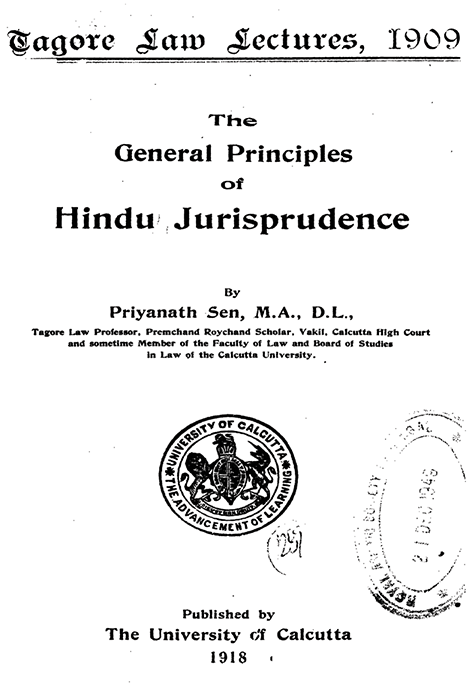
The first scholar whose work I will discuss is Priyanath Sen. Sen was appointed Tagore Law Professor at the University of Calcutta in 1908 at the age of 35. He was due to deliver the 1909 Tagore Law Lectures but died that year. His lectures were published posthumously in 1918 in a book entitled The General Principles of Hindu Jurisprudence (see Figure 1.4).Footnote 109
Title Page, Priyanath Sen, The General Principles of Hindu Jurisprudence (Calcutta: University of Calcutta Press, 1918).
The book discussed Hindu law using modern jurisprudential categories, thus combining Western and Indian ideas. The book was Western because Sen accepted the English definition of what jurisprudence was (“to analyse and systematise these essential elements underlying the infinite variety of legal rules without special reference to the institutions of any particular country”) and the Austinian division between general and particular jurisprudence.Footnote 110 Sen also accepted the notion that there are certain stages through which all legal systems must pass in their evolution.Footnote 111 He argued that his discussion of the general principles of Hindu law could serve to promote a more general understanding of the nature of law (in the same way that the study of Sanskrit contributed to the “science of philology”).Footnote 112 He was convinced that Hindu law’s “secular” parts could be disentangled (albeit with some difficulty) from the religious and moral parts. Thus, he focused on the parts that Western jurists saw as essential to law (property, family, contract, tort, criminal, procedural, and evidentiary law). Furthermore, in his book, he rejected the traditional classifications of Hindu law in favor of a new “scientific” classification scheme derived from the Roman tripartite division of law into things, persons, and actions, augmented by a special chapter on contractual obligations and another chapter on tort and crime.Footnote 113
On the other hand, Sen showed how the Western, positivist, concept of law did not accord with Hindu law. Law, he said, was not the command of a sovereign accompanied by the threat of an earthly sanction (as John Austin argued). In Hindu jurisprudence, the king was subject to the law like all other human beings. The king did not legislate except in minor and temporary matters, and his role was merely that of enforcer of the law. Sanctions were not earthly punishments. Instead, disobedience led to misery, either in this life or in the life to come. Thus, unlike the “modern or Austinian view” of law, which argued that legal norms were “commands issuing from the King,” the Hindu view was that law “issues from a source superior to the King, and the duty of enforcing [the law] is cast upon [the King] from above.”Footnote 114 Sen also criticized the Western view that “Oriental Empires” lacked an interest in the rule of law, being merely concerned with raising taxes and armies. He argued that – at least as far as India was concerned – the primary duty of kings was to protect their subjects by enforcing the law.Footnote 115
Sen also rejected the disparaging English approach to Hindu law found in Henry Maine’s 1861 book, Ancient Law, where Maine described Hindu law as containing an “immense apparatus of cruel absurdities” and referred to a “feeble and perverted” Hindu civilization.Footnote 116 Sen’s answer to this scathing depiction was to say that “the hostile aspersion” cast on Hindu law by “able but ill-informed critics” was the result of “ignorance and prejudice.” Those critics, Sen asserted, “go into raptures at the bare mention of the [early Roman law code, the] Twelve Tables, but shake their heads at the mention of the name of Manu, and talk about ‘feeble civilization’ and ‘cruel absurdities’ without feeling the absurdity of criticising upon a subject which they had no opportunity to study.”Footnote 117
Hindu law was not perfect, Sen acknowledged, but it compared favorably with Roman law – and this comparison was objective, not a result of Sen’s own “undue partiality towards [his] national system.”Footnote 118 Sen directed these comments at Maine, although he did not mention him by name here. However, in another part of his book, when discussing the specific topic of the acquisition of property by conquest, Sen noted that the Hindu laws of war limited the rights of conquering kings more than Roman law did and that “we may be justly proud that Hindu law was less indulgent of the ferocity and cupidity of combatants [than Roman law,] and Sir Henry Maine, when he talked glibly of the ‘feeble civilization’ of the Hindus might well have taken notice of this.”Footnote 119
There are several other places in the lectures where Sen sought, somewhat apologetically, to defend Hindu law relative to Western legal systems. For example, in his discussion of marital relationships, he defended the rules that prohibited widows from remarrying while allowing polygamy, noting that these rules “were due to social causes which I cannot here stop to discuss” and adding that, anyway, nowadays “monogamy is almost the rule and polygamy an exception.”Footnote 120 His discussion of the Hindu law of slavery was opened by a remark on the existence of slavery in Roman law and a statement to the effect that, in ancient times, all legal systems recognized slavery.Footnote 121 When discussing the Hindu law of contractual obligations, Sen noted that, under Hindu law, there was no “distinct treatment of contracts in general,” but he added that, while this might seem to be a shortcoming, the history of English law revealed this to be the case in England, too. Therefore, he reasoned, Hindu contract law was “as developed as most other systems of ancient law.”Footnote 122
Sen ended his lectures by stating again that Hindu law “would not compare unfavourably with even the most developed system of Ancient jurisprudence, the Roman,” noting four “points of excellence” that characterized Hindu law: comprehensiveness, loftiness of ideal, logical consistency, and reasonableness.Footnote 123 Hindus should feel proud of their forefathers, he said, for their contribution to fields such as medicine, but also their contribution to jurisprudence. Like other Indian intellectuals who sought to show the glorious and progressive nature of Indian civilization, Sen, too, argued that India had a brilliant past.Footnote 124 This past, he said, included a system of jurisprudence that was as wise and old as that of the Romans. “The Sun,” he concluded, “arose in the east and traveled towards the west, and it is the same light which illumines the whole world.” He considered Kipling’s words – “East is East and West is West and never the twain shall meet” – to be “supercilious,” since “the same universal reason … permeates the universe, and its touch makes the whole world kin.”Footnote 125 Here, it seems, Sen was echoing a central theme in Indian liberal and nationalist discourse: the idea that ancient Hindu civilization was on a par with, or even surpassed, that of Greece and Rome and that India had special, spiritual, universal lessons to teach the world.Footnote 126
Turning to another Indian legal scholar whose work on Hindu jurisprudence is worthy of attention, Nares Chandra Sen Gupta was a Bengali legal scholar, writer, and political activist. He obtained his doctorate in law from the University of Calcutta in 1914 and was later a professor of law and Dean of the Faculty of Law of the University of Dacca, established in 1921. The curriculum at the University of Dacca emphasized both Islamic and Sanskrit studies and thus resonated with an interest in Hindu law.Footnote 127
In 1914, Sen Gupta published a book based on his doctoral dissertation, Sources of Law and Society in Ancient India. The book relied not only on the existing English jurisprudential literature but also on leading works of Continental jurisprudence, such as Luigi Miraglia’s Comparative Legal Philosophy and Nikolai M. Korkunov’s General Theory of Law. It also showed an interest in “the sociological school of modern philosophical jurists.”Footnote 128
In the introduction to his book, Sen Gupta claimed that his work contained “some advance on the existing knowledge” on ancient Indian law and society – an advance that, he said, “may possibly have a bearing” not only on the study of Hindu legal history but also “on general questions of jurisprudence.”Footnote 129 One of the original arguments (according to Sen Gupta) made in the book was the argument that village communities were not, in fact, the most basic units of ancient Indian society but that each village was an aggregate of several small trans-village “ante-political” societies. A second significant point was the idea that, in Aryan societies, the law was based on agreement, and that this was one of the traits that distinguished these societies from those of the Semites, “with their autocratic judges, prophets and kings.”Footnote 130 Another argument was that kingship was not the most primitive form of political organization. Instead, it only emerged gradually. According to Sen Gupta, Maine argued that kings were present at the dawn of society and were responsible for the administration of justice and the creation of law (and this view was supported by examples from the Bible and Homer). Sen Gupta, however, contended that Maine had ignored the fact that this was not necessarily the case in other civilizations. In some Aryan societies, unlike Semitic or Mongolian ones, kings were not the primary source of law and order. Instead of kings deciding disputes between members of society, arbitration was used “before judicial authority was centralized in the King.”Footnote 131 This idea was also manifested in Rome and among the Germanic tribes, and it survives in the more modern concept of trial by one’s peers.Footnote 132 Thus, instead of the typical “Oriental despotism” image of India and its laws, Sen Gupta’s book suggested that there was a “constitution of ancient Indian society.”Footnote 133
This was not the only place in his book where Sen Gupta attempted to revise Maine’s narrative. Later, when discussing the idea of kings as sources of law, he repeated the argument, stating that “the King as legislator is not an idea congenial to the Aryan mind.” Quoting Miraglia, he argued that Aryans, unlike “Egypt[ians], Babylon[ians] … Mussalmans [sic] and the Tartar tribes,” never embraced “that all controlling despotism which blots out man,” and that, in ancient India, the idea that the king had legislative powers did not take root.Footnote 134 Maine was not the only English jurist whose work was attacked. Sen Gupta also criticized James Henry Nelson’s argument in his book A Prospectus of the Scientific Study of the Hindu Law that Hindu law, per se, never existed, rejecting it using arguments made by earlier scholars.Footnote 135
In 1925, by the time Sen Gupta was Dean of the Faculty of Law of Dacca University, he had published a second book, The Evolution of Law.Footnote 136 This book summarized the arguments of the English Historical Jurisprudence School and was mainly based on works by Maine and the British legal historian Paul Vinogradoff. However, as in his first book, here too Sen Gupta was not content with merely repeating English works, sometimes opting to criticize them. In the preface, he stated that “a long study of the history of ancient Indian law has revealed to me hitherto unrecognized truths” and that, therefore, “I have found myself unable to agree to many of the accepted notions on the history and character of [the] ancient legal institutions of India.” The book, he continued, was meant to serve students, introducing them to “[h]istorico-comparative jurisprudence,” but it was impossible to write it without “a certain measure of theorising … and thinking on my own account, and diverging from favorite theories of the day.”Footnote 137
Sen Gupta’s critique of Maine was sometimes based on earlier European theorists. One can see this, for example, in his remarks on the difference between Western and Oriental codes. Maine argued that Oriental codes (unlike Western ones) were problematic because of their association with religion. Sen Gupta contended that Maine was mistaken because all ancient laws were religious: “before the lawyer’s law there always existed the law of the priest.”Footnote 138 However, in arguing for the religious nature of ancient law, Sen Gupta based his argument on the work of the nineteenth-century French historian Fustel de Coulanges, not on Indian law.Footnote 139 Another example of this type of critique can be found in Sen Gupta’s discussion of Maine’s argument that adjudication preceded law. Sen Gupta rejected this argument based on the work of the German jurist B. W. Leist.Footnote 140
However, in Sen Gupta’s discussion of another stage in Maine’s model of the evolution of law – the transition from the individual judgment of a king (themis) to rules found in customs administered by an aristocracy – he relied on Indian law to critique Maine. He asserted:
Maine’s theories about [the] transition … to custom must also be corrected by the same qualification that it is not a universal law of evolution. Whatever may be said about the course of evolution in Greece or Rome it is perfectly clear that in India and, possibly, amongst the original Indo-Germanic race, there never was that absolute autocratic stage which would make the stage of Themis … possible.Footnote 141
Instead of kings, Sen Gupta claimed, ancient societies were governed by “a group of men … devoted … to the knowledge of superhuman things,” such as the Magi of Persia, the Brahmins of India, or the Druids of Celtic lands.Footnote 142
Another instance of the use of Indian examples to critique Western theories can be found in the chapter on “Family and Kindred.” Here, Sen Gupta discussed debates about the nature of “the primitive family” (that is, whether ancient families were patriarchal or matriarchal). He mentioned both those thinkers who argued that the matriarchal family was the earlier type (McLennan, Morgan, Fustel de Coulanges, Kohler) and those (Maine) who argued that the earlier type was patriarchal. He declared the debate to be misconceived because “the form of social organisation everywhere is to some extent moulded by social and economic environments. The relative number of the two sexes, the physical and social surroundings of the community, the pressure of external enemies and such other circumstances make a particular form of social organisation the most suitable for the community.”Footnote 143
Thus, he explained, a paucity of females led to the adoption of polyandry. As an example to prove this point, he mentioned the Nambudiri Brahmins of Malabar and their matrilineal Sambandham system of marriage.Footnote 144 Similarly, when discussing forms of marriage, Sen Gupta argued that it was impossible to place various models of matrimony along a single linear line of evolution because there were “societies which have lapsed from a more advanced form of marriage to a more primitive one” due to changed environmental conditions.Footnote 145 As an example, he mentioned both Hindu marriage rules and those of the Romans. In India, he said, the most ancient form of marriage was based on consent between the bridegroom and the father of the bride, leading to a marriage based on “spiritual union” between husband and wife. Only in a later epoch did additional types of marriage start to form, based on the force of arms, purchase, theft or fraud, or the bride’s consent. A similar process, he argued, occurred in Rome, the earliest form being confarreatio (a Roman form of marriage ceremony limited to patricians), which was later replaced by purchase and also by marriage upon consent of the bride alone. In both cases, the Indian and the Roman, the shift was due to environmental changes.Footnote 146 Sen Gupta also warned against assuming a “single universal course of evolution” when discussing the history of legal remedies and the administration of justice.Footnote 147
Turning to other types of publications, Indian legal periodicals also published theoretical articles on Hindu law.Footnote 148 Here, I will briefly discuss two examples from the 1940s. The first was written by A. S. Panchapakesa Ayyar, an Indian jurist who studied law at Oxford and later served as a Justice of the Madras High Court.Footnote 149 Ayyar was a prolific writer, and his collected works include religious texts, plays, and novels. Many of these works deal with nationalist themes, including a 1941 article he wrote for the Madras Law Journal entitled “The Contribution of Hindu Law to World Jurisprudence.”Footnote 150
Ayyar began his article with the argument that the Hindu contribution to jurisprudence had been obscured by the fact that “Hindu legal theories” have been “attack[ed]” and changed over time by “foreign ideas.” Modern Hindu law, he continued, was not really Hindu law but an Anglo–Muslim creation because “centuries of Muslim and British rule” had “radically” altered Hindu law. Specifically, said Ayyar, these radical changes in Hindu law resulted from the fact that it had been applied by non-Hindu judges, “unacquainted with the basic Hindu ideals.”Footnote 151
The main argument of his article was that, just as the Hindus had made significant contributions to global science and culture (for example, the notion of “zero” in mathematics), they had also contributed to jurisprudence.Footnote 152 He then went on to list some of these contributions. Ayyar argued that they were to be found both in the realm of unique answers to questions such as “What is law?” and also in specific norms and institutions of public law (constitutional law, criminal law, or evidence law, as well as international law) and private law (property, tort, contract, and family law). For example, according to Ayyar, unlike Western legal systems, whose purpose was merely to ensure order, peace, and prosperity, the Hindus believed that the ultimate aim of the law was to realize righteousness and ensure the welfare of the universe and “every living thing.” This meant, for example, that the Hindu kings were subject to the law just like their subjects and were seen as servants of the people, not above the law like English kings.Footnote 153
A particular characteristic of Hindu law, according to Ayyar, was that law changed according to the times but also according to status: “[E]ach caste, asrama [stage in life], family, guild, and tract” had its own customs. This recognition of customary law, he argued, “saved India from stark oppression and drab uniformity, and enabled the roses, jasmines, champaks, lotuses and sunflowers to grow and develop in their own ways, with their peculiar colourings and perfumes.”Footnote 154 Ayyar also claimed that Hindu law was one of the earliest legal systems to create both public and private international law.Footnote 155
Some seemingly “primitive” characteristics of Hindu law, such as the idea of collective rather than individual responsibility for crimes, were described by Ayyar as desirable. He contended that they were “social and humane” in the sense of leading to a diminution in crime, unlike modern legal systems in which individual responsibility led to apathy regarding crimes committed by others. Another related argument was that Hindu law did not merely use sanctions to prevent crime but also used rewards for good conduct.Footnote 156 The article ended with the argument that “the unique beauty” of Hindu law was that it was developed by “sages, kings and caste heads, each group with unique gifts and capacities,” rather than by a parliament, which Ayyar characterized as “an assembly elected on a haphazard system, and giving no sure guarantee of either wisdom or deliberation or even of public” well-being.Footnote 157
A similar nationalist spirit inspired an article by Thakur Prasad Dubey, a provincial civil service judge in the United Provinces. In 1944, Dubey published a piece on “the beauties and comparative greatness” of Hindu law. In it, he argued that just as Roman law had influenced the laws of the West, Hindu law had influenced the laws of the East – those of China and Japan, for instance. In fact, he contended, Hindu law had also influenced the West (the Greeks, he claimed, borrowed their law of hypothecation from the Hindus).Footnote 158 The definitions provided by Hindu jurists for the basic abstract terms of jurisprudence (ownership, right, possession), said Dubey, were markedly superior to those offered by modern jurists such as Austin or Holland. The superiority of Hindu law, he continued, was also evident from the fact that the beneficiaries of its rules were “not only the human race” since Hindu law “aims at the protection and perpetuation of the whole sentient universe,” including birds and beasts. The discussions of some specific topics in the article (gift, adverse possession, and the duties of judges) were all meant to prove the superiority of Hindu law.Footnote 159
The article concluded by noting the “thrill of pleasure to find that our forefathers had a brilliant record in the domain of law” before the “pioneer nations of the West,” such as Rome and Egypt, were even formed. While these Western civilizations were now dead, noted Dubey, “ours that started long before their birth yet exists.” The West, he claimed, once argued that Indian culture was “absurd … puerile … uninspired … grotesque … [and] barbarous,” only to ultimately discover that its own judgment had been erroneous. It was, therefore, a great irony, concluded Dubey, that some Indians, because of their general and legal education, still accepted this obsolete view of Hindu law, which, as a result, they had come to despise.Footnote 160
Some Indian jurists, one can conclude, did not view Hindu law only as a source of examples to critique some of the specific details of English jurisprudential theories. Hindu law was also studied in order to create a sense of pride in Indian culture and to justify the claim that it was, in fact, superior to Western culture. Indeed, while some of the earlier writers of the 1910s and 1920s seem to have accepted the shrinkage of the scope of “living” Hindu law to the realm of personal law, arguing that the study of traditional Hindu law was justified only for the comparative jurisprudential insights it could yield, the 1940s authors I examined were implicitly critical of the fact that most of Hindu law was no longer applicable to contemporary India.Footnote 161 More explicitly, they extolled the “excellence” of Hindu law in areas such as criminal, evidence, and constitutional law.
Theoretical Works on Islamic Law
Like other non-Western societies, Muslim societies in North Africa, the Middle East, and South Asia faced a flood of Western technologies, scientific knowledge, and political ideologies in the nineteenth and twentieth centuries. Islamic law scholars, intellectuals, and politicians sought to reform Islamic law in order to deal with this influx.Footnote 162 Westernized lawyers interested in Islamic law also sought to use Western jurisprudential ideas to study and describe Islamic law. In Chapter 7, I will describe this phenomenon in Egypt. Here, I will analyze works on Islamic law written by lawyers in India.Footnote 163
Islamic law was a significant component of the legal system of British India. This legal system – or, more accurately, Islamic personal law – as applied by the British (Anglo–Muhammadan law) governed the family life of the Muslims of India.Footnote 164 However, if we focus on the University of Calcutta, the intellectual epicenter of colonial India, it appears that there was less interest in the theoretical study of Islamic law than in the study of Hindu law there. Perhaps this was partly because there were relatively few Muslim law teachers and law students at the University. For example, in 1917, there was no Muslim among the staff members teaching law at the University: out of the seventy-eight lecturers teaching law at the College of Law and other colleges, seventy-six were Hindus, two were European, and none was Muslim. In addition, while the Sanskrit College at Calcutta was affiliated with the University, the Calcutta Madrasah was not (although Arabic, Persian, and Islamic histories were taught, on a small scale, at the University, and it seems that there was some desire to turn it into a leading center of Islamic studies). Another indication of the same phenomenon is the fact that, in 1931, fewer than 11 percent (56 out of the 509) of graduates from the University of Calcutta College of Law were Muslims, while Muslims accounted for more than half of the population of undivided Bengal.Footnote 165
Several comprehensive books on Anglo–Muhammadan law were published in India in the late nineteenth and early twentieth centuries.Footnote 166 These works relied on earlier translations and compilations on the topic, such as the Hedaya, a medieval commentary on Islamic law (first translated into English by Charles Hamilton in 1791), or William Macnaghten’s 1825 compilation Principles and Precedents of Moohummudan Law.Footnote 167 Even when their titles proclaimed that they dealt with the more general aspects of Islamic law, these works were, in fact, surveys of contemporary law (and case law) on topics of personal law. Thus, they were primarily relevant to practicing lawyers rather than to legal scholars interested in the jurisprudential notions, or the legal history, of Islamic law.Footnote 168
For example, Ameer Ali’s Student’s Handbook of Mahommedan Law (first published in 1891) contained only brief discussions of specific topics related to personal law, such as succession, marriage, dower, divorce, and gifts.Footnote 169 Personal law was also the topic of two other, more comprehensive and influential, books that Ameer Ali published in the 1880s.Footnote 170 His approach to Islamic law was more sophisticated than that of the English writers. He was more familiar with the sources of Islamic law and with the nineteenth-century European philological and ethnographic literature on this legal system. In addition, he often sought to place the rules that he was describing within their historical context (in order to show their relatively progressive nature).Footnote 171 However, unlike the works on Hindu law discussed in the previous subsection, the main goal of Ameer Ali’s books was to provide a more accurate picture of the specific fields of Islamic law that he dealt with, not to offer a general and theoretical overview of Islamic law as a way to contribute to the literature on general jurisprudence.
Other works published in the early twentieth century showed similar tendencies. In 1905, the Parsi lawyer, judge, and law professor Dinshah Fardunji Mulla published a book entitled Principles of Mahomedan Law. This book was “mainly designed for the use of students, as a guide to their study of Mahomedan law” and contained simple propositions on Islamic personal law.Footnote 172 It began with a few introductory pages describing Islamic legal history and the sources of Islamic law but then swiftly moved to an overview of the main topics of Anglo–Muhammadan personal law (such as succession, marriage, and divorce).Footnote 173
Similarly, Faiz Badruddin Tyabji’s Principles of Muhammadan Law sought to “state, in the form of a code, the principles of Muhammadan law, relating to subjects on which it is enforced in India.”Footnote 174 Accordingly, the book included a thirty-four-page descriptive historical outline of the sources and schools of Islamic law, followed by approximately 1,000 pages devoted to a black-letter survey of Anglo–Muhammadan law dealing, again, with topics such as the scope of application of Islamic law in India, marriage, dower, divorce, and inheritance.Footnote 175
However, there was one book comparable to the Hindu jurisprudence works discussed in the previous subsection. This was The Principles of Muhammadan Jurisprudence, published in 1911 by Abdur Rahim, a Madras judge, based on his 1907 Tagore Lectures.Footnote 176 Books on Islamic law published before Abdur Rahim’s book were focused on Muslim personal laws, and he regarded their treatment of jurisprudential topics as “introductory or insufficient.”Footnote 177 This was also true of later works published in India.Footnote 178 The audience for Abdur Rahim’s theoretical book on Islamic law comprised students and scholars rather than legal practitioners. His goal was to discuss “the general legal ideas and relations which form the proper province of jurisprudence” and to present Islamic law “as a scientific system instead of treating it, as is the habit … of many lawyers in India, as an arbitrary collection of rules and dicta based on no intelligible data.”Footnote 179 Indeed, Abdur Rahim declared in his preface that such a study of Islamic law may be relevant to “those who are interested in the science of jurisprudence” generally because Islamic law was an example of a system where law and religion met – and, therefore, Muslim jurists were attempting to create a legal system in which law was “an integral part of religion.”Footnote 180
The desire to describe Islamic law in a way that would benefit students of jurisprudence was manifested in the structure of the book. Unlike previous works, Abdur Rahim’s book was not structured around the conventional divisions of Anglo–Muhammadan personal law. Instead, it partly echoed the structure of Salmond’s book on jurisprudence.Footnote 181 It began with a chapter on the history of Islamic law, followed by chapters on the “sciences of law and classifications of law”; the sources of law; acts, rights, and obligations; legal capacity; ownership and possession; the acquisition of ownership; family law; torts; crimes; procedure and evidence; constitutional and administrative law; and international law. Family law, the major area that had practical importance for lawyers in colonial India, was relegated to a single chapter in the middle of the book.
In addition to structuring the book in a way that resonated with the structure of English jurisprudence textbooks of the period, Abdur Rahim also mentioned the resemblance between Islamic and Roman law, noting that such a resemblance might interest “students of comparative jurisprudence.”Footnote 182 There were also many places in the book where he compared specific characteristics or rules of Islamic law to those of English law.Footnote 183
Unlike the books on Hindu jurisprudence analyzed in the previous subsection, however, Abdur Rahim’s book neither explicitly engaged with, nor criticized, Western jurisprudential theories, even when it could easily have done so. For example, when discussing the definition of law and the role of sanctions in Islamic law, Abdur Rahim noted that the term “law” was “not limited in the Muhammadan system to mandatory commands, far less to commands enforceable by the courts.” Instead, it encompassed “all expressions of the lawgiver’s will and wisdom, whether laying down what a man must do or must not do, what he may do, and what he ought to do or ought not to do, or merely making a declaration.”Footnote 184 He then gave an example: the commandment “do not tell a lie, but tell the truth” was viewed in Islam as a law, he observed, even though there was no penalty for lying. In addition, sanctions in Islamic law were defined more broadly than in English law. Thus, obedience to the law was secured not just by the threat of penalty but also by the prospect of reward; and that penalty (and also the reward) could be delivered in the afterlife rather than this world.Footnote 185 This definition contradicted, of course, the Austinian view of what “law” and “sanction” were, but Abdur Rahim did not explicitly mention (or criticize) Austin’s definition of the term “law” in his discussion.Footnote 186
Conclusion
Legal scholars in India produced works that were more than mere copies of English ones. First, the texts written in India were cosmopolitan; in addition to English legal theories, they were also receptive to state-of-the-art Continental ones. Second, Indian works were sometimes more critical of the ideas of major nineteenth-century English thinkers than English jurisprudential works. Finally, some of the texts produced in India were also unique because they were hybrid works that employed Western theories to describe non-Western legal systems: Hindu law and, to a lesser extent, Islamic law. The uniqueness of the Indian works derived from the need to teach non-English law students in an environment where religious law and customary law were important sources of legal norms. Some Indian works were also unique because of the influence of Indian nationalist ideology. Nationalism led some writers to espouse a broad range of jurisprudential theories, including non-English ones, to criticize Western jurisprudential notions (especially ones that seemed to place non-Western law on a lower evolutionary rung), and to create works that celebrated non-Western legal systems. Sometimes, Indian writers even offered alternative visions of the nature of law and its purpose, such as the argument made in both Ayyar’s and Dubey’s articles, according to which Hindu law sought to protect “every living thing” or “the whole sentient universe” and not just human beings, as was the case with Western law.
The works examined in this chapter were not influential in the sense of leaving a discernible long-term impact on scholars in either India or the West. Nevertheless, they are interesting partly because the characteristics of the jurisprudential literature that was explored in this chapter were also present in other places in the British Empire. The next chapter explores such works created in British-ruled Palestine.
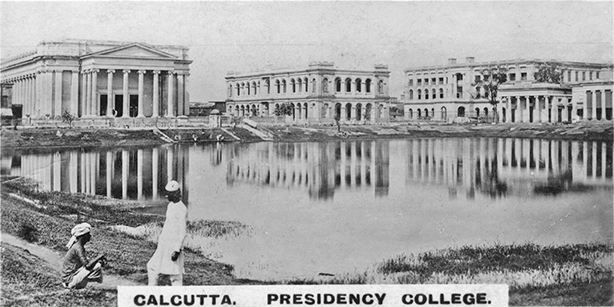
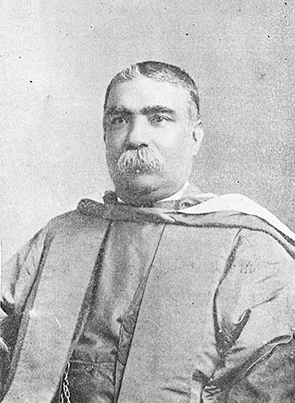
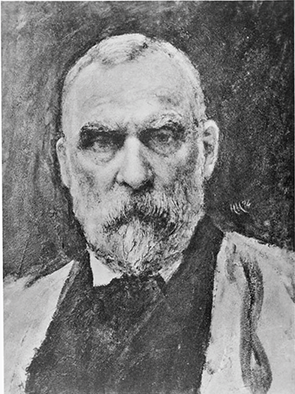
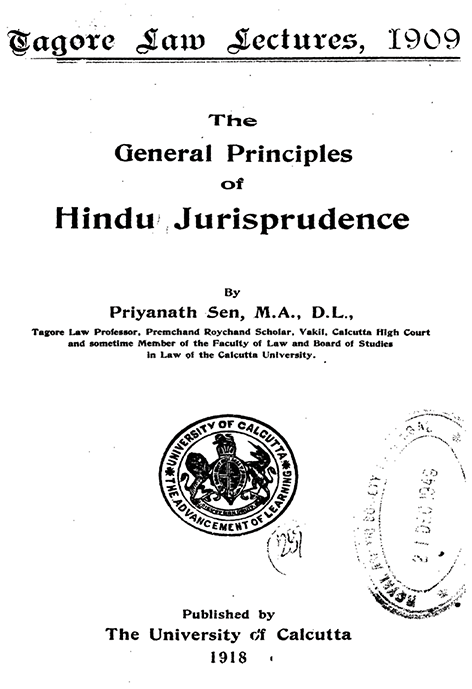

 Open access