Introduction
Tonsillectomy is a common, worldwide ENT surgical procedure.Reference Kendrick and Gibbin1–Reference Laureyns, Lemkens and Jorissen3 Post-operative pain is the most common complication. It can delay a return to normal oral intake, leading to dehydration and an increased risk of post-operative haemorrhage, which can be life-threatening.Reference Husband and Davis4 Haemorrhage can be classified as either primary (occurring intra-operatively or within 24 hours post-operatively) or secondary (occurring between 24 hours and 28 days post-operatively). Post-operative haemorrhage rates vary between 0.3 per cent and 10 per cent, probably due to diverse definitions as well as differences in populations.Reference Windfuhr5
Numerous techniques can be used for tonsillectomy, including cold steel dissection and Coblation™. Although there is no ‘gold standard’ technique, cold steel tonsillectomy has remained the standard for decades. Coblation, a relatively new technique that surfaced in the early 2000s, uses radiofrequency ablation to both remove the tonsils and perform haemostasis.6, Reference Timms and Temple7
Within the UK, there are two indications which culminate in elective tonsillectomy. These are: (1) recurrent acute tonsillitis or its complications in adults or children aged less than 16 years; and (2) obstructive sleep-disordered breathing in children aged less than 16 years.8
There have been several articles comparing the use of cold steel with Coblation tonsillectomy;Reference Khan, Abelardo, Scott, Shakeel, Menakaya and Jaramillo9–Reference Saengpanich, Kerekhanjanarong, Aramwatanapong and Supiyaphun18 the majority of these have compared haemorrhage rates and returns to the operating theatre. Coblation can minimise post-operative pain in the immediate post-surgical period.Reference Wilson, Merer and Moscatello19–Reference Izny Hafiz, Rosdan and Mohd Khairi22
Coblation has been used in the UK for more than a decade. However, its usage was questioned when the 2003–2004 National Prospective Tonsillectomy Audit reported that Coblation resulted in double the post-operative haemorrhage rate compared with cold steel tonsillectomies.6 A more recent audit of post-tonsillectomy complications showed that post-operative haemorrhage was almost three times higher after Coblation tonsillectomy than after a cold steel procedure.Reference Khan, Abelardo, Scott, Shakeel, Menakaya and Jaramillo9
Against this background, this study estimated the costs and consequences of using either Coblation or cold steel dissection with bipolar diathermy in adult and paediatric patients undergoing tonsillectomy, from the perspective of the National Health Service (NHS) in the UK.
Materials and methods
Decision modelling
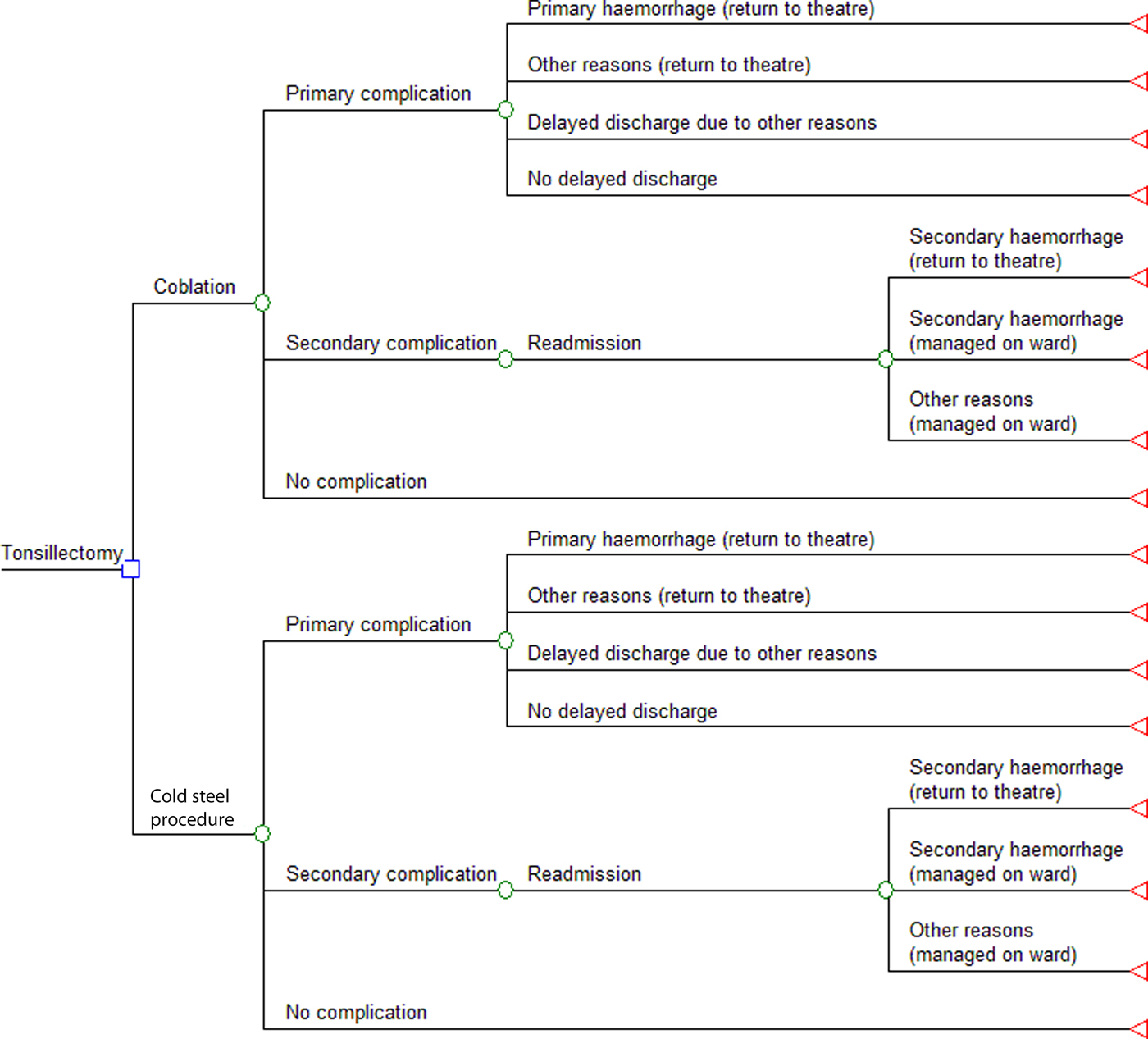
A decision model depicting the management of patients following a tonsillectomy performed with either a Coblation or cold steel technique was constructed using Microsoft® Excel software (Figure 1). Separate models were developed for adult and paediatric patients. The model was populated with data obtained from the National Prospective Tonsillectomy Audit,6 and estimates of resource use were obtained from interviews with a sample of ENT surgeons.
Decision model showing patients’ pathways following a cold steel or Coblation tonsillectomy.

Data sources
National Prospective Tonsillectomy Audit
The National Prospective Tonsillectomy Audit was performed in England and Northern Ireland between July 2003 and September 2004.6 One of the objectives was to investigate the occurrence of haemorrhage and other complications in the first 28 days after tonsillectomy.6 The audit received data on a total of 40 514 patients; however, consent to participate in the audit was only given by 33 921 patients. Only 1565 of these patients (5 per cent) underwent a Coblation procedure.6
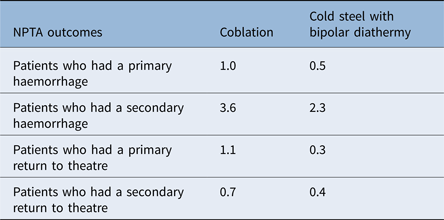
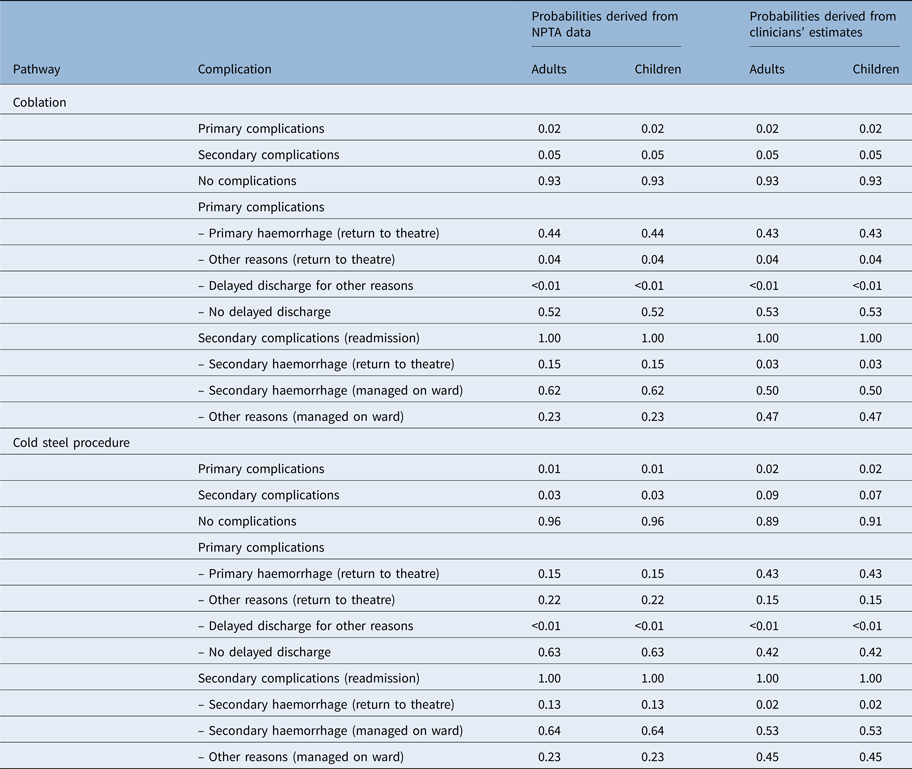
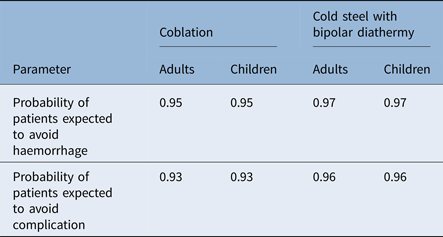
A primary haemorrhage was defined as any bleed that led to delayed hospital discharge, a blood transfusion or a return to the operating theatre during the initial hospital admission. A secondary haemorrhage was defined as any bleed that led to hospital readmission within 28 days of surgery. The data extracted from the National Prospective Tonsillectomy Audit and used to populate the decision model are shown in Table 1. The resulting probabilities from the Audit data assigned to each branch in the decision models are shown in Table 3.
NPTA data used to populate the decision models

Data reflect percentages of patients. NPTA = National Prospective Tonsillectomy Audit
Clinician interviews
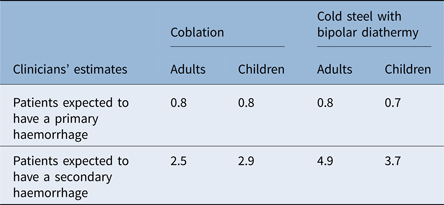
Eight UK-based ENT surgeons were interviewed with the aim of identifying patient pathways associated with Coblation and cold steel tonsillectomies, and the corresponding use of healthcare resources. Interviews were conducted over the telephone using a structured questionnaire. The interviewees’ replies were based on their local experience. The interviewees’ estimates of post-operative haemorrhage rates, which were used to populate the decision models, are shown in Table 2. The resulting probabilities assigned to each branch in the decision models are shown in Table 3.
Clinicians’ estimates used to populate the decision models

Data reflect percentages of patients
Pathway probabilities in the decision models

NPTA = National Prospective Tonsillectomy Audit
According to the interviewees, patient management comprises an initial ENT surgeon visit, the tonsillectomy procedure and management of any complications. Patients who experience a primary haemorrhage are either returned to the operating theatre or managed on the ward, and they may require a blood transfusion. Tonsillectomies can be performed as a day-case procedure or among those admitted as hospital in-patients. Therefore, resource use could include a non-elective or elective hospital admission. After a secondary haemorrhage, patients would be readmitted and may be returned to the operating theatre.
Model outputs
The measures of effectiveness in the models were: (1) probability of avoiding a haemorrhage; and (2) probability of avoiding any complication (such as pain, vomiting and fever, in addition to haemorrhage, as outlined in Figure 1).
Unit costs, obtained from NHS tariffs at 2015–2016 prices,23–25 were assigned to the aforementioned estimates of resource utilisation within the models. This enabled an estimation of the total healthcare cost of managing a patient following either a Coblation or cold steel tonsillectomy.
Cost-effectiveness analysis
The relative cost-effectiveness of the two procedures was calculated as the difference between the expected costs of the two procedures divided by the difference in effectiveness. Depending on the measure of effectiveness used, the resulting analysis generated either the incremental cost for each additional haemorrhage avoided or the incremental cost for each additional complication avoided. If one of the procedures generated a better outcome for less cost it was considered to be the cost-effective (dominant) intervention.
Sensitivity analyses
A sensitivity analysis was performed in which the incremental cost-effectiveness of the two procedures was re-estimated by replacing the National Prospective Tonsillectomy Audit based outcomes in the models with the clinicians’ estimates. This involved replacing the haemorrhage rates with those reported by the clinicians during their interviews, based on the experience in their respective hospitals (Table 3).
Another sensitivity analysis was performed using data from a meta-analysis by Mösges et al. Reference Mösges, Hellmich, Allekotte, Albrecht and Böhm26 Twenty-four prospective, randomised controlled studies were included in this meta-analysis, which systematically analysed data from 796 patients. This analysis reported that 0.8 per cent of adult patients and 1.0 per cent of paediatric patients who underwent a Coblation tonsillectomy developed a primary haemorrhage. The analysis also reported that 6.2 per cent and 2.3 per cent of adult and paediatric patients, respectively, developed a secondary haemorrhage following a Coblation tonsillectomy.Reference Mösges, Hellmich, Allekotte, Albrecht and Böhm26 These estimates were used to replace the National Prospective Tonsillectomy Audit related Coblation data in the decision models. This enabled the incremental cost-effectiveness of the two procedures to be re-estimated by comparing cold steel procedure outcomes obtained from the National Prospective Tonsillectomy Audit6 with Coblation procedure outcomes obtained from the meta-analysis.Reference Mösges, Hellmich, Allekotte, Albrecht and Böhm26
In order to evaluate uncertainty within the models, probabilistic sensitivity analyses were performed. This involved 10 000 iterations of the models by simultaneously varying the different inputs. In order to estimate the random values of the inputs, the standard deviation was assumed to be 10 per cent around the mean values, and relevant distributions were assigned to the deterministic values (beta distributions for probabilities, and gamma distributions for resource use and costs), allowing the distribution of costs and effectiveness measures to be estimated. Outputs from these analyses enabled an estimation of the probability of either procedure being cost-effective at different willingness-to-pay thresholds.
Three further sensitivity analyses were performed to assess the impact of changing: (1) the ratio of day cases to hospital admissions in patients undergoing a Coblation or cold steel tonsillectomy; (2) the probability of patients undergoing a Coblation tonsillectomy being managed as a day case; and (3) the procedural costs of tonsillectomy.
Results
Clinical outcomes and healthcare costs
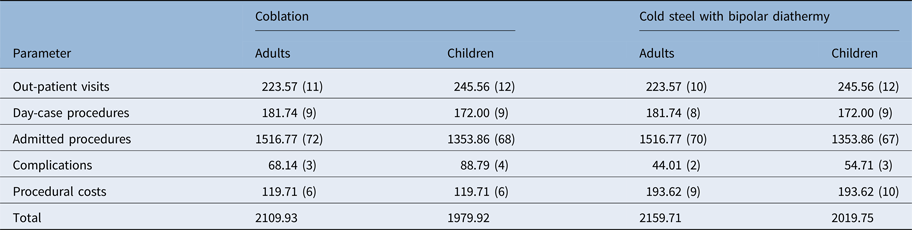
The expected outcomes and costs following a Coblation or cold steel tonsillectomy derived from the National Prospective Tonsillectomy Audit based models are summarised in Tables 4 and 5, respectively. The primary cost driver in both groups was the cost of a hospital admission, which accounted for approximately two-thirds of the total cost. The cost difference between the two groups was driven by the differences in procedural costs and the incidence of complications (Table 5).
Expected clinical outcomes from the NPTA-based models

NPTA = National Prospective Tonsillectomy Audit
Expected costs of patient management from the NPTA-based models*

Data represent costs, in British pounds (£) (and percentages of total costs). NPTA = National Prospective Tonsillectomy Audit
The procedural costs, which were an average obtained from different ENT centres, accounted for up to 10 per cent of the total management costs. The procedural cost for Coblation included an annual cost for the wand, generator box, infection control and sterilised instruments divided by the average annual number of Coblation procedures at a centre. The procedural cost for cold steel tonsillectomy included an annual cost for the diathermy generator box, infection control and sterilised instruments divided by the average annual number of cold steel procedures at a centre. The difference in procedural costs was £74 (Table 5). If all the elements of the procedural costs are removed except those for the wand and diathermy generator box, the difference in procedural costs becomes £70.
Cost-effectiveness analysis findings
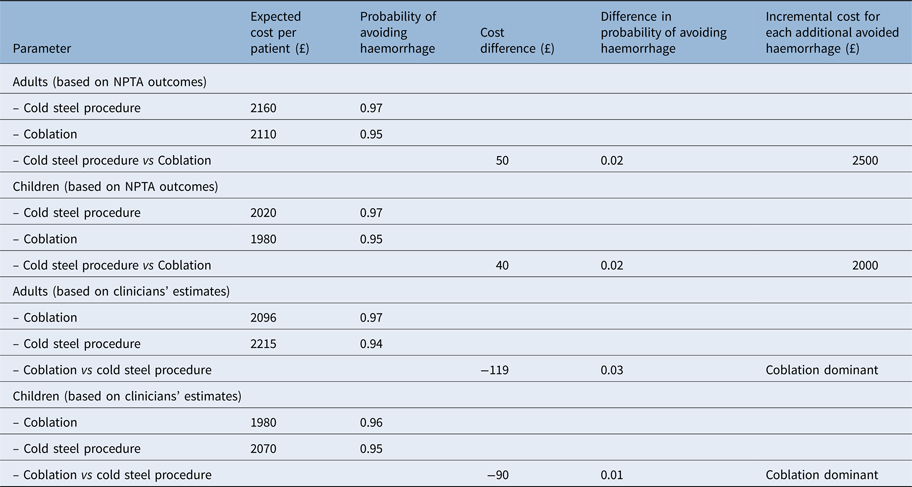
Outputs from the National Prospective Tonsillectomy Audit based models showed that use of a cold steel procedure instead of a Coblation procedure in adults is expected to lead to a cost increase of £50, and an increase in the probability of avoiding a haemorrhage and avoiding a complication of 0.02 and 0.03, respectively. Hence, the incremental cost for each additional haemorrhage avoided with a cold steel procedure was estimated to be £2500 per adult patient (Table 6). Similar results were obtained for paediatric patients with an incremental cost for each additional haemorrhage avoided with cold steel of £2000 per paediatric patient (Table 6). The incremental cost for each additional complication avoided with a cold steel procedure was £1667 per adult patient and £1333 per paediatric patient.
Cost-effectiveness analysis for avoiding haemorrhage

NPTA = National Prospective Tonsillectomy Audit
Sensitivity analysis findings
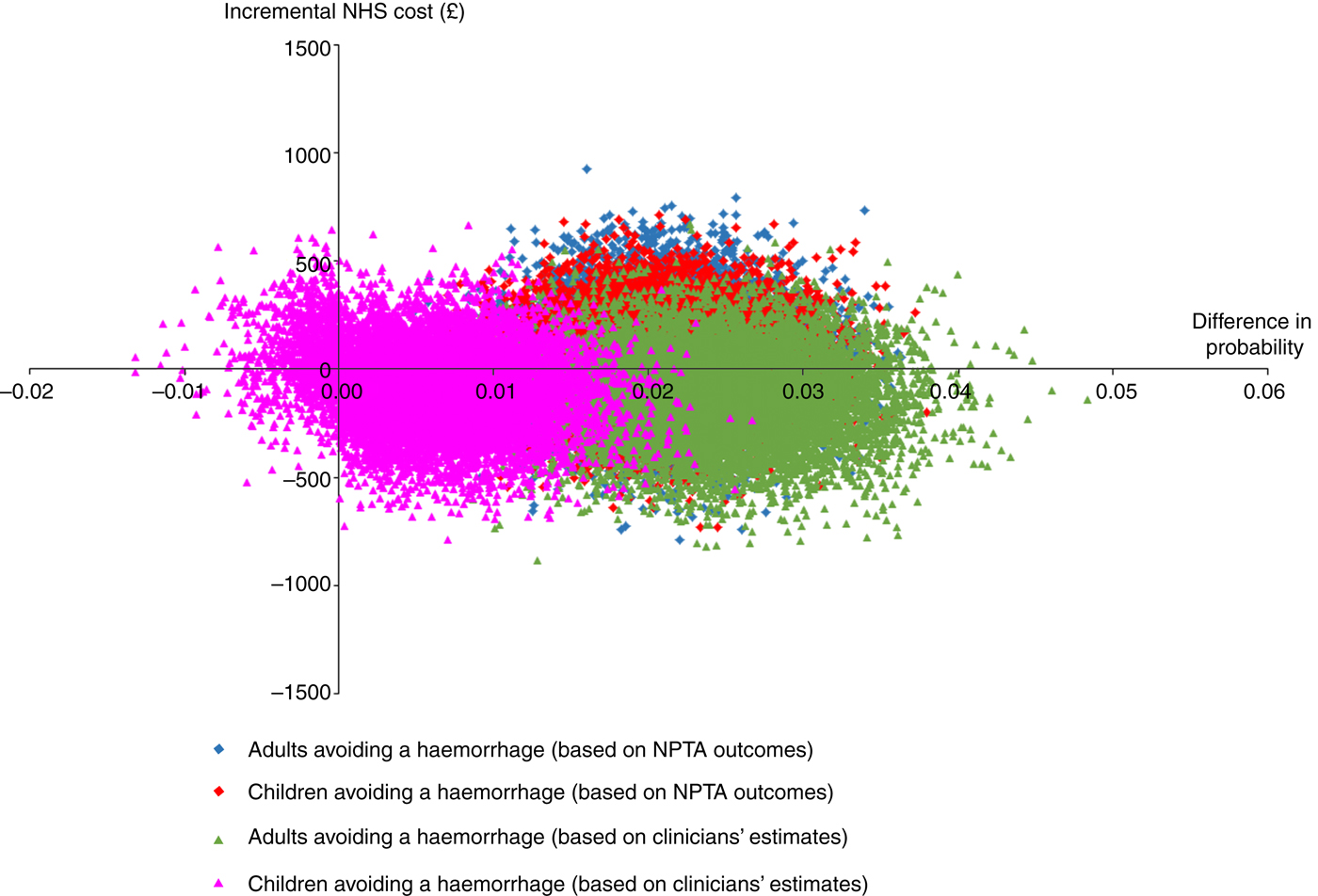
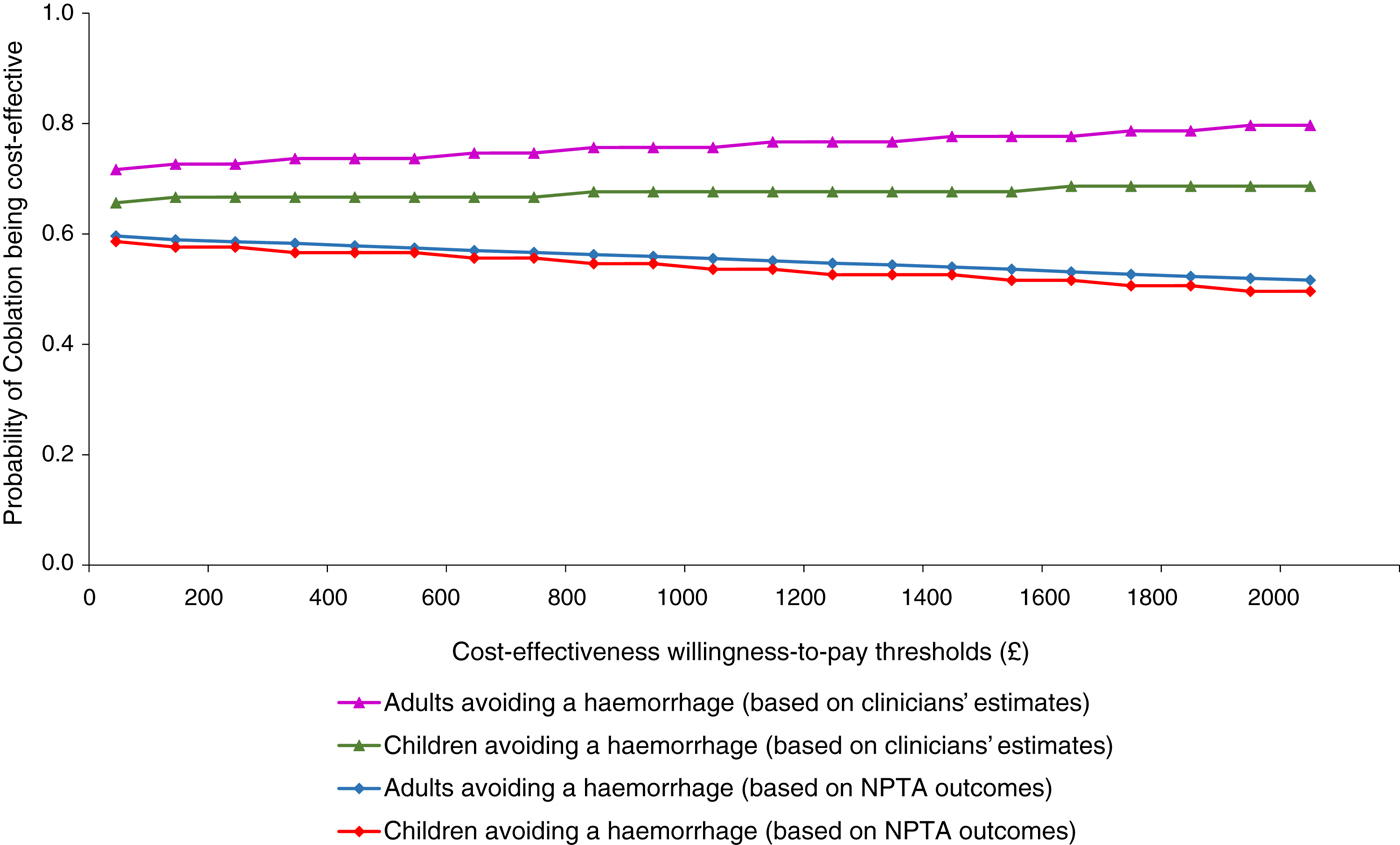
Probabilistic sensitivity analyses highlighted the distribution in the incremental costs and probabilities of avoiding a haemorrhage in both adult and paediatric patients (Figure 2). In this figure, approximately half of the samples are in the upper right quadrant. Cost-effectiveness acceptability curves generated from the probabilistic sensitivity analyses showed that up to a threshold of £2000, approximately 50 per cent of a cohort would be cost-effectively treated with a cold steel procedure for both adult and paediatric patients (Figure 3). In other words, the probability of cold steel procedures being cost-effective is comparable to that of Coblation procedures.
Scatterplot of the incremental cost-effectiveness of Coblation compared with cold steel procedures after 10 000 iterations of each model. NHS = National Health Service; NPTA = National Prospective Tonsillectomy Audit

Probability of Coblation being cost-effective compared with cold steel procedures after 10 000 iterations of each model. NPTA = National Prospective Tonsillectomy Audit

When the National Prospective Tonsillectomy Audit related outcomes in the models were replaced with haemorrhage rates reported by the clinicians during their interviews, the analysis showed that the probability of avoiding a haemorrhage is expected to increase following a Coblation and decrease following a cold steel procedure, in both adult and paediatric patients (Table 6). Additionally, the cost of managing adult patients with a Coblation procedure is expected to decrease but remain unchanged for paediatric patients. Conversely, the cost of managing patients with a cold steel procedure is expected to increase for both adult and paediatric patients. Consequently, based on the clinician-derived probabilities of avoiding a haemorrhage, Coblation was found to be a dominant procedure when compared with cold steel tonsillectomy because it improved outcomes for less cost (Table 6).
Probabilistic sensitivity analyses using the clinician-based models (Figure 2) found the majority of the samples to be located in the bottom right quadrant, indicating the dominance of Coblation. Cost-effectiveness acceptability curves generated from these probabilistic sensitivity analyses showed that up to a threshold of £2000, approximately 80 per cent of an adult cohort and approximately 70 per cent of a paediatric cohort would be cost-effectively treated with Coblation (Figure 3).
When outcomes from the meta-analysisReference Mösges, Hellmich, Allekotte, Albrecht and Böhm26 replaced the National Prospective Tonsillectomy Audit related Coblation data in the decision model for adults, a cold steel procedure was found to be the cost-effective intervention. The incremental cost for each additional avoided haemorrhage was £275. When this was repeated for the paediatric model, the probability of avoiding a haemorrhage was the same for both groups. Additionally, the total cost of managing a patient with Coblation was found to be £11 cheaper for adults and £65 cheaper for paediatric patients. Consequently, the mixed National Prospective Tonsillectomy Audit and meta-analysis models implied that the probability of Coblation being cost-effective was approximately 0.20 in adults and approximately 0.60 in paediatric patients.
Thirteen per cent of patients documented in the National Prospective Tonsillectomy Audit were managed as a day case and the other 87 per cent were admitted as an in-patient. According to the most recent Hospital Episode Statistics data,27 53 per cent of patients undergoing a tonsillectomy in England were managed as a day case and the other 47 per cent were admitted as an in-patient in 2015–2016. If the ratio of day cases to admissions is the same for both Coblation and cold steel procedures, our results remain unchanged.
If the probability of patients being managed as a day case in the Coblation arm in our models was changed to 0.80, but the probability remained at 0.53 in the cold steel procedure arm, the expected cost per patient undergoing a Coblation tonsillectomy would be 10 per cent less than that of a patient undergoing a cold steel tonsillectomy. This estimate is in accordance with a recent study of 500 consecutive paediatric cases undergoing Coblation intracapsular tonsillectomy.Reference Hoey, Foden, Hadjisymeou Andreou, Noonan, Chowdhury and Greig28
Different ENT centres incur different procedural costs for tonsillectomy. Sensitivity (break-even) analysis showed that if the procedural costs for cold steel tonsillectomy are £35 or more than that for Coblation, the cost of performing a Coblation tonsillectomy would be expected to be equal to, or less than, the cost of performing the procedure with cold steel.
Discussion
It was not surprising that our National Prospective Tonsillectomy Audit based models showed that a cold steel with bipolar diathermy procedure delivered a marginally better outcome than Coblation. However, the analysis also showed that the cost of patient management was less with Coblation and that the probability of cold steel procedures being cost-effective was no greater than 0.5. In other words, half a cohort would be expected to be cost-effectively treated with Coblation. This was the case for both adult and paediatric patients.
The results of the National Prospective Tonsillectomy Audit are now more than 15 years out of date and reflect surgeons’ early experiences shortly after the technology was introduced. Moreover, the National Prospective Tonsillectomy Audit was undertaken prior to mandatory training, at a time when many surgeons were likely to be on a learning curve with the technique. The ENT surgeons interviewed for this study estimated that current haemorrhage rates in their centres were lower than those reported in the National Prospective Tonsillectomy Audit. When their estimates were incorporated into our models, the ensuing analyses showed that Coblation substantially improved outcome for marginally less cost. Furthermore, the probability of Coblation being cost-effective was of the order of 0.7–0.8.
Several randomised controlled studies have indicated that Coblation tonsillectomy leads to less post-operative pain, faster recovery, shorter hospital stay and overall cheaper patient management.Reference Timms and Temple7, Reference Wilson, Merer and Moscatello19–Reference Chang21, Reference Parsons, Cordes and Comer29–Reference Shapiro and Bhattacharyya32 However, as a consequence of the National Prospective Tonsillectomy Audit's findings, some ENT units abandoned their use of this tonsillectomy technique.Reference Javed, Sadri, Uddin, Mortimore and Parker33 There has been no national audit or randomised controlled trial to evaluate the efficacy or safety of Coblation since the National Prospective Tonsillectomy Audit. However, analysis of 15 734 patients in the National Tonsil Surgery Register in Sweden showed that all ‘hot’ techniques (including Coblation) resulted in a higher risk for late post-tonsillectomy haemorrhage compared with cold steel dissection plus cold haemostasis.Reference Soderman, Odhagen, Ericsson, Hemlin, Hultcrantz and Sunnergren14 However, the risk of a return to the operating theatre was higher for all ‘hot’ techniques except Coblation.Reference Soderman, Odhagen, Ericsson, Hemlin, Hultcrantz and Sunnergren14 Many authors describe any technique where energy is applied to perform tonsillectomy as ‘hot’, regardless of operating temperatures, when compared to dissection with conventional instruments (i.e. cold steel). In reality, the operating temperature during Coblation is 40–60 °C, whereas the temperature with other ‘hot’ techniques may reach more than 200 °C.
Following completion of this present analysis, a new systematic review of Coblation tonsillectomy was published.Reference Metcalfe, Muzaffar, Daultrey and Coulson34 This review lacked a meta-analysis because of the heterogeneity of reported data. However, the authors concluded that Coblation was comparable with other commonly employed techniques for tonsillectomy, and that recent studies seemed to suggest favourable outcomes for Coblation in terms of post-operative pain and operation time.Reference Metcalfe, Muzaffar, Daultrey and Coulson34
One of the sensitivity analyses involved replacing the National Prospective Tonsillectomy Audit related Coblation data in the models with the data generated from a meta-analysis. However, this approach has limitations because the resulting analysis compared real-world evidence from a UK audit of cold steel tonsillectomies6 with protocol-derived outcomes from international randomised controlled studies on Coblation tonsillectomies.Reference Mösges, Hellmich, Allekotte, Albrecht and Böhm26 It is noteworthy that the studies included within the meta-analysisReference Mösges, Hellmich, Allekotte, Albrecht and Böhm26 were moderately heterogenic, which potentially impacted on the validity of the findings. Furthermore, the National Prospective Tonsillectomy Audit was performed in 2003–2004, whereas the meta-analysis was based on studies published up to 2009. Notwithstanding this, the outcomes reported in these two studies are at least eight years out of date and potentially of minimal relevance to current practice.
Since that time, ENT surgeons have gained a lot more experience of using Coblation and that is reflected in the haemorrhage estimates obtained from the clinicians’ interviews. So, although the cost-effectiveness analysis using the National Prospective Tonsillectomy Audit data and meta-analysis were based on peer-reviewed publications,6, Reference Mösges, Hellmich, Allekotte, Albrecht and Böhm26 it is likely that the results from the clinicians’ interviews more closely reflect current practice. Clearly, a new prospective comparative study is required to validate this assumption. However, it is important to note the findings of a recent long-term prospective study on 500 paediatric patients who underwent Coblation intracapsular tonsillectomy, for both obstructive and infective indications.Reference Hoey, Foden, Hadjisymeou Andreou, Noonan, Chowdhury and Greig28 The authors reported that 0.4 per cent of patients required readmission following a secondary haemorrhage; otherwise, there were no complications, delayed discharges or readmissions.Reference Hoey, Foden, Hadjisymeou Andreou, Noonan, Chowdhury and Greig28 This is a substantially lower rate than the readmission rate of 3.9 per cent and overall haemorrhage rate of 3.5 per cent reported in the National Prospective Tonsillectomy Audit.6
The analysis is subject to several other limitations. The base case decision models were based on data from a cohort of audited patients that are more than a decade old.6 Additionally, only 5 per cent of the patients in the audit underwent a Coblation tonsillectomy, which would have resulted in some uncertainty surrounding the authors’ conclusions.6 Therefore, the models themselves may not necessarily reflect clinical outcomes and resource use associated with following a cohort of patients in current clinical practice in the UK. The models were populated with estimates for an average patient undergoing a tonsillectomy regardless of their indication and their medical history. Hence, the analysis did not consider the impact of other factors that may affect the results, such as patients’ co-morbidities. The models were based on data which were censored at 28 days post-tonsillectomy. Consequently, any resource use incurred thereafter was not included within this analysis. The analysis excluded patients’ costs and the indirect costs incurred by society as a result of employed patients or parents taking time off work. Additionally, we are unable to comment on the different methods for which Coblation may be applied (e.g. intracapsular vs extracapsular dissection). A separate study would be required to investigate this.
• Cost-effectiveness of Coblation compared with cold steel tonsillectomy was estimated for adult and paediatric patients in the UK
• Decision analysis was undertaken by combining published clinical outcomes with resource utilisation estimates derived from clinicians
• Cost-effectiveness of Coblation compared with cold steel tonsillectomy was comparable
• Replacing published clinical outcomes with clinicians’ estimates of current practice found Coblation to improve outcome for less cost, thereby improving the probability of it being cost-effective
• A best-case scenario suggests Coblation provides a cost-effective intervention for tonsillectomy in adult and paediatric patients compared with a cold steel procedure
• A worst-case scenario suggests Coblation provides an equivalent cost-effective intervention for adult and paediatric patients compared with a cold steel procedure
As a result of all these limitations, generalising these findings to other care settings and other healthcare systems would be challenging. Notwithstanding this, in 2015–2016, cold steel procedures accounted for 73 per cent of all 49 300 tonsillectomies in England, and Coblation accounted for 10 per cent.27 Furthermore, 67 per cent of the cold steel tonsillectomies and 82 per cent of the Coblation procedures were performed in patients aged 18 years or younger, and approximately 53 per cent were undertaken as day cases.27 For the approximately 47 per cent of patients who were managed as an in-patient, the mean length of hospital stay was 1 day, irrespective of procedure.27 If 80 per cent of the Coblation tonsillectomies could be undertaken as day-case procedures,Reference Hoey, Foden, Hadjisymeou Andreou, Noonan, Chowdhury and Greig28 this would have the potential of releasing at least 1300 in-patient bed-days in England in an average year. Moreover, this could potentially be replicated in other healthcare systems. The authors are unaware of any other publications describing the cost-effectiveness of Coblation tonsillectomy in adult or paediatric patients.
Conclusion
Within the study's limitations, this analysis suggests that in a best-case scenario, Coblation affords the NHS a cost-effective (dominant) intervention for tonsillectomy in adult and paediatric patients when compared with cold steel procedures. In a worst-case scenario, Coblation affords the NHS an equivalent cost-effective intervention for both adult and paediatric patients.
Acknowledgements
The authors thank the following (UK-based) surgeons for their contributions to this study: Kim W Ah-See, consultant ENT surgeon, Aberdeen Royal Infirmary; Musheer Hussain, consultant otolaryngologist, Ninewells Hospital, Dundee; Paul Jervis, consultant ENT surgeon, Northampton General Hospital; Haytham Kubba, consultant paediatric otolaryngologist, Yorkhill Hospital, Glasgow; John Phillips, consultant ENT surgeon, Norfolk and Norwich University Hospital, Norwich; Rohit Pratap, consultant ENT surgeon, Watford General Hospital; and Mark Simmons, consultant ENT specialist, Sutton Coldfield and Walsall Manor Hospital, Walsall.
Funding
This study was funded by Smith & Nephew Orthopaedics AG, Baar, Switzerland.
Competing interests
The authors have no other conflicts of interest that are directly relevant to the content of this manuscript.