Some of the earliest pioneers in Paleolithic archaeology were women, even though few women in the early twentieth century had formal roles in the academy. In the 1920s and 1930s, archaeologists such as Dorothy Garrod, Gertrude Caton-Thompson, and Jacquetta Hawkes made remarkable archaeological discoveries and developed excavation methods that are still used today (Bar-Yosef and Callander Reference Bar-Yosef, Callander, Cohen and Joukowsky2004; Drower Reference Drower, Cohen and Joukowsky2004; Muir Reference Muir2003). Working with teams dominated by women, Garrod and Caton-Thompson helped pave the way for future generations of female Paleolithic archaeologists. However, despite this history, many of the most prominent voices in Paleolithic archaeology and paleoanthropology have tended to be men (Zihlman Reference Zihlman and Lori1997). Male archaeologists often lead field projects, whereas female archaeologists frequently work on laboratory-based projects—a pattern first identified by Gero (Reference Gero1985). This pattern is changing, but there remain substantial impediments to women leading field projects (Camp Reference Camp, Bahiyyah and Neuilly2019; Chen and Marwick Reference Chen and Marwick2023; Heath-Stout and Jalbert Reference Heath-Stout and Jalbert2023). Directing a field project often translates into more publications because of the many different specialists and students working on the material. In addition, discoveries made on these projects are frequently published in high-profile journals and gain more public attention. Furthermore, field directors are usually lead author on synthesis publications that speak to the “big picture.” Women often face significant challenges when undertaking a field-director position, especially when trying to balance fieldwork and motherhood (Hodgkins and Thompson Reference Hodgkins and Thompson2022). Most grants will not cover the cost associated with bringing one’s children to the field, and the “double duty” women experience can be particularly exhausting in those settings. Navigating the logistics of breastfeeding as well as accommodating the K–12 school calendar are additional hurdles. It is therefore not surprising that many women might not choose to be a field director. Without these prestigious and visible positions, we might expect higher rates of publication for male practitioners and male Paleolithic archaeologists to be more visible in public media. If these perceptions are true, men are disproportionately able to contribute to the “grand narrative” of human evolution.
The voices of female and other minority scholars are imperative to gain a fuller understanding of our Paleolithic past. The experiences of Paleolithic people were highly varied and vastly different from the lives we live today. By including the perspectives of only a subset of our population, we further limit our ability to gain an understanding of the past. Furthermore, our interpretation of the archaeological record is heavily biased by our own experiences and our ways of viewing the world. Although we may never gain an unbiased view of the past, the more voices we include with a diversity of perspectives, the more able we will be to identify those biases and overcome them (e.g., Sterling Reference Sterling2015).
In order to assess whether Paleolithic research has an inherent gender bias, as we suspect, we analyzed gender demographics of Paleolithic researchers in North America, assessing the gender of researchers in relation to their academic position, their publication rates, and their presentation in public media. In so doing, we hope to determine whether male Paleolithic archaeologists do indeed have a greater influence on the field. The gender identity of researchers not only influences the perception of students, the public, and the greater community of who creates and holds knowledge but also shapes the very knowledge that is created (Conkey and Spector Reference Conkey, Spector and Schiffer1984; Heath-Stout et al. Reference Heath-Stout, Erny and Nakassis2023). It is therefore essential to diversify the identity of researchers in order to gain a fuller—and more objective—perspective on human evolution. In this study, we have followed the lead of other researchers focusing on gender bias within the field of archaeology (e.g., Bardolph Reference Bardolph2014, Reference Bardolph2018; Bardolph and Vanderwarker Reference Bardolph and Vanderwarker2016; Fulkerson and Tushingham Reference Fulkerson and Tushingham2019; Hanscam and Witcher Reference Hanscam and Witcher2022; Kelly et al. Reference Kelly, Thonemann, Borg, Hillner, Lavan, Morley and Mullen2019). Like many of these studies, we examine the gender identities of the researchers themselves and, also, gender bias in rates of publications. In addition, we focus on the identity of specialists featured in human evolution documentaries to gain a perspective on how our field is represented to the general public.
Although the data we present suggest that gender is binary, we recognize that gender is not a binary, and we are not intentionally excluding individuals with other gender identities. This binary nature of our data is due to the fact that we did not find instances of publicly disclosed nongender binary identities for Paleolithic researchers in tenure-track/tenured positions in North America. This may be the result of our data collection methods, with which gender was determined by publicly available information such as first names, photos, and biographies on faculty websites. Unfortunately, this did not allow for a level of nuance needed to fully identify multiple different gender identities. When possible, we attempted to identify pronoun use, but it was not always feasible with larger sample sizes. Regardless, it is clear that the low visibility of nonbinary individuals already reflects a significant bias in Paleolithic archaeology.
Methods
We assessed the gender demographics of Paleolithic archaeology in several domains: among tenure-track/tenured faculty in Canadian and US institutions, first authors of publications focusing on Paleolithic archaeology, and “experts” featured in public-facing documentaries. These three lines of evidence help to build a picture of the representation of women versus men in the field, illuminating the influence that gender bias has on our wider interpretations of the Paleolithic archaeological record.
To initiate the research, we created a database of all Paleolithic archaeologists employed in a tenure-track or tenured position in the United States and Canada. These positions are often highly coveted in academia, and individuals employed in these roles tend to be more visible both within the academic community and to the broader public. These faculty members are also evaluated for promotion based on their research profile, which ultimately means that their production of new knowledge through publications will be higher than non-tenure-track faculty or professional archaeologists. To collect faculty data, we began the database by listing individuals whom we knew—or whose work we were familiar with—and then started systematically reviewing department websites to add additional faculty members. We chose to focus on faculty employed in the United States and Canada because we are both employed in the United States, and we completed our graduate degrees in the United States (Clark) and Canada (Macdonald). This familiarity allowed us to better identify which faculty are working on Paleolithic research within the region. In addition, most higher education institutions in the United States and Canada have websites that include faculty biographies, photos, and other information that we used to identify additional Paleolithic archaeologists. Institutions in other parts of the world do not always have websites with faculty profiles, and therefore our sample for non–North American institutions would be unduly biased toward individuals we know personally. We focused solely on archaeologists—rather than on biological anthropologists, who often work closely with Paleolithic archaeologists—in order to keep the boundaries of our sample as clear as possible. Therefore, we only included faculty who describe themselves as Paleolithic archaeologists. In addition, the faculty biographies are usually written by the faculty themselves, and they often include pronouns in the narratives, which we used to assign gender identity.
We also recorded the primary Paleolithic time period of focus for each practitioner. Because the earliest part of the archaeology record, such as the Early Stone Age and Lower Paleolithic, is perceived as the most competitive, we wanted to assess whether there was gender bias by temporal focus. To do so, we used Google Scholar profiles and tallied up the number of publications by three temporal categories (“Early Stone Age / Lower Paleolithic,” “Middle Stone Age / Middle Paleolithic,” and “Later Stone Age / Upper Paleolithic”) based on whether the periods were explicitly referred to in the publication title. We also counted archaeological industries clearly associated with a time period (e.g., “Aurignacian,” “Oldowan”), but we did not use site names or geologic periods to attribute the research to a chronological period. We only counted publications with at least one citation. When more than one time period was referenced in the title, we added a point to the tally of each time period mentioned. Scholars who either did not have a Google Scholar profile or who had fewer than five publications referencing a Paleolithic time period were excluded. When the number of publications for two time periods was equal, we used the main temporal focus of the academic’s dissertation to break the tie.
For our analysis of the publications, we used the online citation research tool called Dimensions AI (dimensions.ai). This artificial-intelligence tool allows the user to build networks of research articles across multiple databases based on particular years, journals, and search terms. The resulting data can then be exported as an Excel table. This study was focused on the years 1994–2023. We chose this temporal range not only because it spans 30 years and therefore could be subdivided easily but because 1994 was the date of the first issue of the Journal of Archaeological Method and Theory, which we wanted to include in the analysis. We decided to focus our search on the following journals: Journal of Human Evolution (JHE), Journal of Archaeological Method and Theory (JAMT), Journal of Anthropological Archaeology (JAA), Journal of Archaeological Science (JAS), and Science. We selected these journals because they are well regarded in the field, and Paleolithic archaeologists frequently publish in them. These journals were also in operation for the entire period of interest (1994–2023). To find articles focused on Paleolithic archaeology, we used the search terms “Paleolithic,” “Palaeolithic,” or “Stone Age.” We restricted the search for these terms to the title and abstract to limit our sample to articles whose central focus was the Paleolithic period. This helped exclude articles in which these terms were mentioned in passing. This sampling strategy therefore missed articles that, for example, only mentioned “hunter-gatherer” archaeology or related topics in the title or abstract, but this ensured a standardized sample. We included the term “Stone Age” to incorporate publications focusing on the African record, but in some cases, “Stone Age” is used to refer to the Mesolithic or Neolithic. Those cases were removed. Because both archaeologists and biological anthropologists publish in Journal of Human Evolution, we also went through and labeled each article as “biological” or “archaeological” based on our assessment of the main focus of the article. This allowed us to assess whether gender trends in biological anthropology were influencing the results. Through this assessment, we found that the trends for archaeology-focused articles and articles with a biological-anthropology focus yielded the same results. Consequently, we included all articles from JHE in our analysis. Gender was assigned for the first author of each publication by using the first name or searching for their profile online. After the Dimensions AI search was complete, the list of articles was manually reviewed, and any articles that were not focused on the Paleolithic period were removed. In our analysis, we chose to quantify only the gender of the first author, and we did not include information on the last author, which is often a position of seniority in scientific articles. Although this practice does occur occasionally in archaeology, in many of the articles—especially those published in JAMT and JAA—the author list is short, and the last position is not associated with seniority. Therefore, we determined that first author was the most objective way to assess the major contributing researcher. Furthermore, first-author publications are expected and required for hiring and career advancement within anthropology departments in the United States and Canada.
For the final portion of our study, we assessed the gender demographics of “experts” in documentaries that focus on human evolution and Paleolithic archaeology. We decided to include only documentaries that aired on PBS (the US-based Public Broadcasting Service) because as a publicly funded not-for-profit institution, PBS is viewed as authoritative and is widely accessible to the public. PBS documentaries are also seen as presenting state-of-the-art research on human evolution and are often shown in classrooms. We collected information from PBS documentaries focusing on human evolution since 1994 by searching on PBS’s website, and we compiled lists of program episodes (such as NOVA) found elsewhere online. Within this period, we were able to access transcripts or watch the footage of nine documentaries. “Experts” were identified as those whose names and institution were displayed on screen, mentioned by the narrator, or written in the transcript. We determined gender by their presentation on screen and by pronouns used in materials online. We also used the transcripts to quantify the “word count” for each expert and calculate the percentage of words spoken by each gender.
Results
Gender Distribution of Faculty
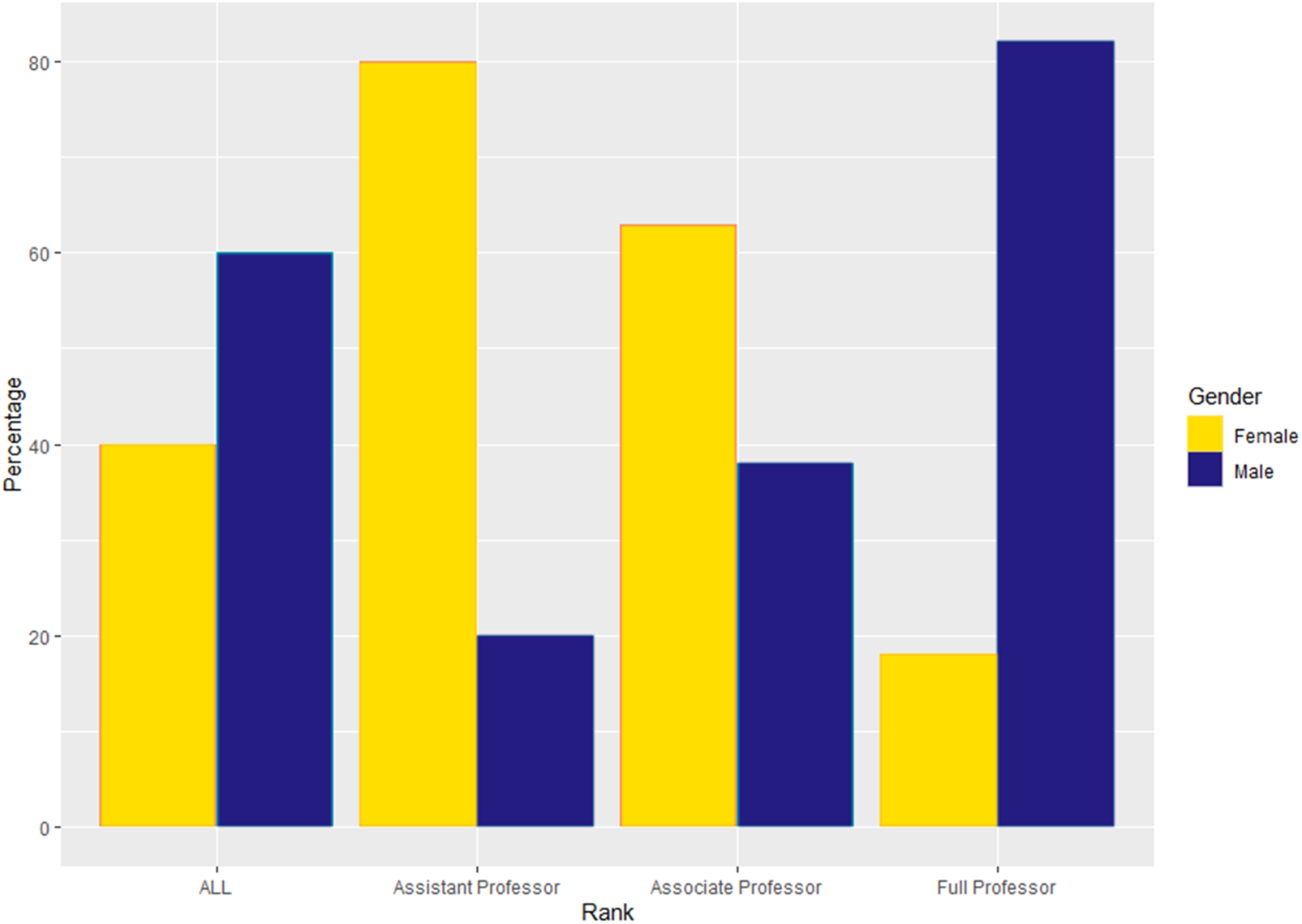
We identified 43 Paleolithic archaeologists who are tenured or on the tenure track in the United States and Canada. Twenty-five of these faculty members are men, and 18 of them are women (Figure 1). When broken down by rank, it is clear that the gender imbalance is related to career stage. Of the full professors, 82% (n = 18) are men, whereas only 18% are women (n = 4). In contrast, women outnumber men at the associate rank, with 63% (n = 10) female and 38% (n = 6) male. Only five faculty members are at the assistant professor rank, and four of them are women.
Paleolithic archaeologists employed in US and Canadian institutions by rank and gender identity.

To better understand the gender imbalance at the rank of full professor, we recorded the year each faculty member earned their PhD to determine whether men were being promoted more frequently than women from the same cohort. For this analysis, we focused on the cohort who obtained their PhDs between 2000 and 2007. This cohort consists of both full and associate professors and represents the main overlap between the two ranks because the most recent PhD awarded to an individual who was appointed to full professor dates from 2007, and most of the senior associates received their doctorates in or after 2000. Within this group, there are nine men and eight women. Of these, seven (78%) of the men and only two (25%) women have been promoted to full professor.
Table 1 displays the breakdown by rank in three cohort groups. These data suggest that women are not being promoted to full professor at the same rate as their male colleagues. However, this does not completely explain the gender imbalance. If 78% of the women in the 2000–2007 cohort were full professors, as their male colleagues are, 69% of full professors would still be male. This trend is largely driven by the cohort with the least recently awarded PhDs, which is 85% men. The 2000–2007 cohort is 53% men, and the cohort with the most recently awarded PhDs is 33% men.
Paleolithic Faculty Employed in US and Canadian Institutions Grouped into Three Cohorts According to the Year They Were Awarded Their PhD.

The gender imbalance at the rank of full professor is not unique to Paleolithic archaeology. Bardolph (Reference Bardolph2018) examined archaeologists focusing on Californian archaeology and Southeast archaeology employed at a R1 university in those regions. The breakdown by rank and gender in Bardolph’s study was very similar to our analysis of Paleolithic archaeology faculty; 63% of assistant professors were women, 53% of associate professors were women, and only 17% of full professors were women. In fact, in comparison to Californian and Southeast archaeology, women are employed at slightly higher rates in Paleolithic archaeology.
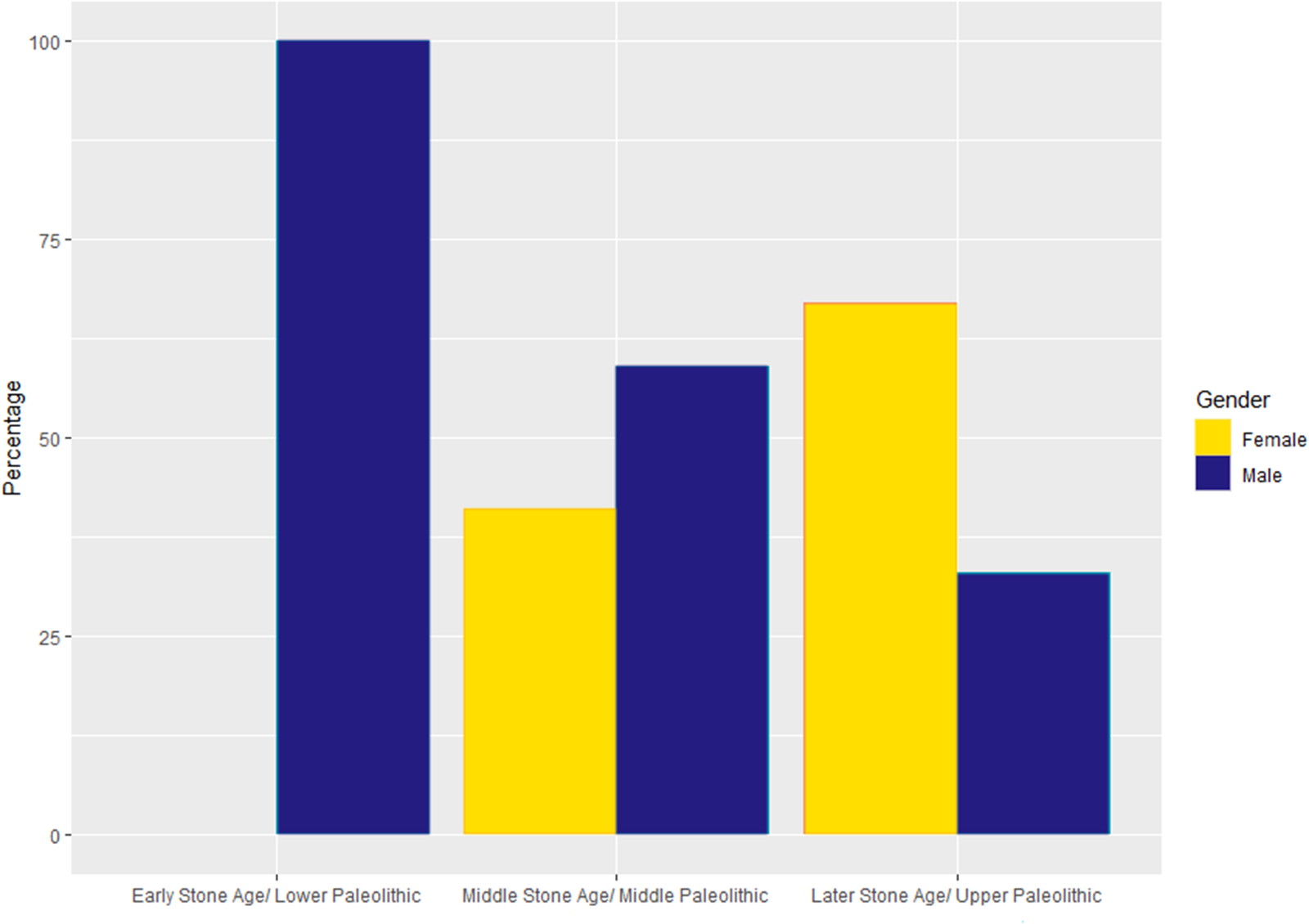
When we examined research topics by chronological period, there was clear gender bias across the three major Paleolithic periods (Figure 2). The earliest period (Early Stone Age / Lower Paleolithic) is only represented by male faculty members, and the latest time period (Later Stone Age / Upper Paleolithic) is two-thirds women. These results support the perception that the earliest periods are more competitive and dominated by male scholars.
The primary chronological research focus of faculty members determined by the number of publications listed in their Google Scholar profile that mentioned a temporal period or archaeological industry in the publication title (faculty count by period: Early Stone Age / Lower Paleolithic = 5, Middle Stone Age / Middle Paleolithic = 17, Later Stone Age / Upper Paleolithic = 9).

Publication Rates
The publication rates of Paleolithic articles for the five journals under study are displayed in Table 2. The number of publications by men and women are listed as percentages and raw numbers, as well as a ratio of women to men, following Bardolph (Reference Bardolph2014). Overall, 1,218 articles were included in the study. Perfect gender parity would mean that the ratio equals 1.0, values less than 1.0 means that women are underrepresented, and values of more than 1.0 means that women are overrepresented. In order to understand change over time, we displayed our results in three temporal intervals, as well as the entire 1994–2023 period in the final column. According to these results, men publish at higher rates than women for all temporal intervals at all five journals. In Table 2, the journals are organized according to their proximity to gender parity for all years. JAMT is the closest to gender parity, with a ratio of 0.74, and Science is the worst, with a ratio of 0.41. Most journals do steadily improve their gender parity over time, with JHE making the greatest improvement from 0.33 in the years 1995–2004 to 0.80 in the period 2014–2023. The number of publications on the Paleolithic increases over time, so sample sizes become more robust as well.
The Number of Publications by Men and Women First Authors in Five Major Journals for the Period between 1995 and 2023.

a JAMT = Journal of Archaeological Method and Theory; JAA = Journal of Anthropological Archaeology; JHE = Journal of Human Evolution; JAS = Journal of Archaeological Science.
b The “W:M Ratio” is a ratio of the number of publications that have women as first authors to the number of publications that have men as first authors. A value of 1.0 represents perfect gender parity.
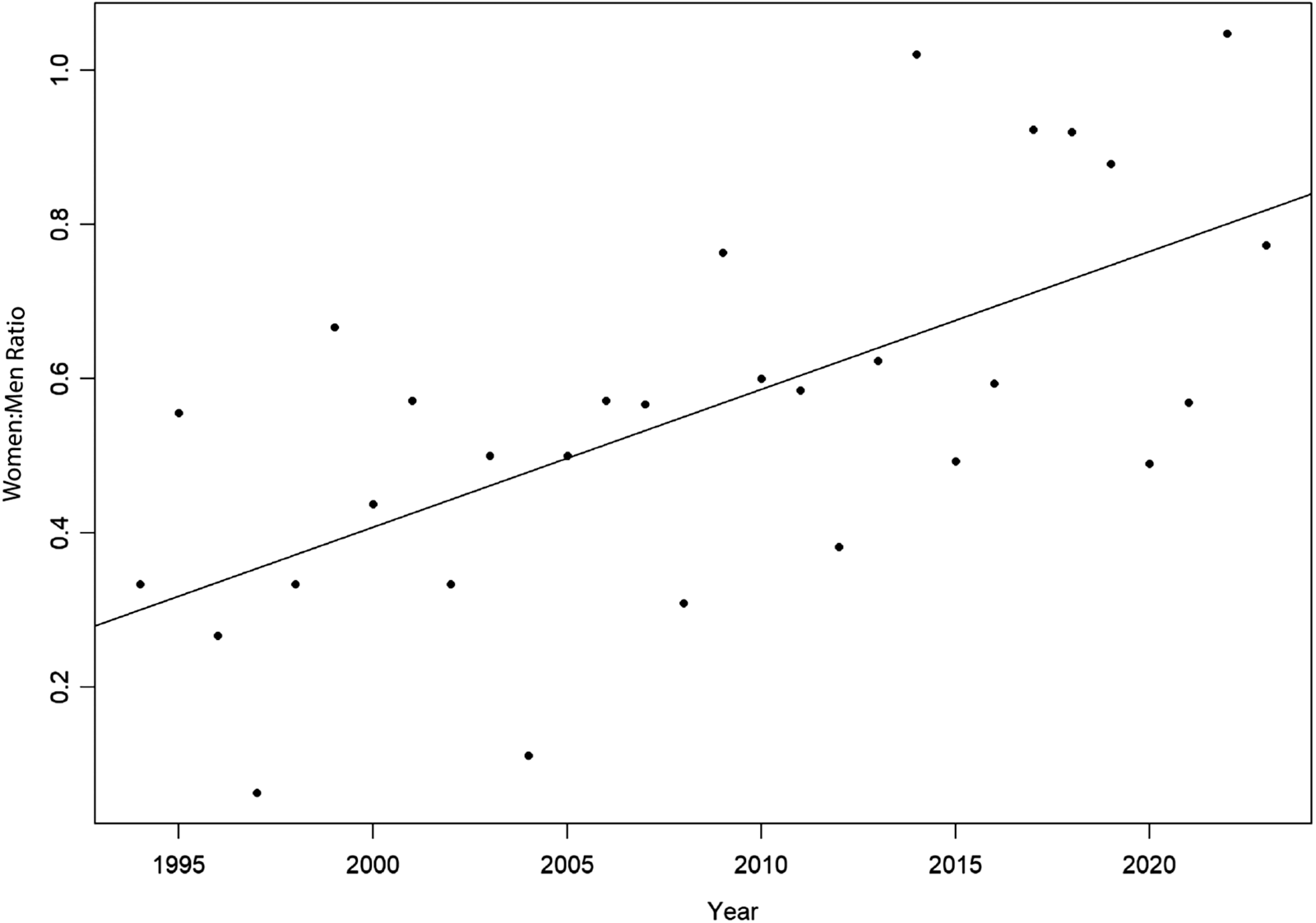
If we look at all articles on the Paleolithic from these five journals combined, we gain an overall understanding of the chronological trends. Figure 3 displays a scatter plot with the woman-to-man ratio on the y-axis and year on the x-axis. The scatter plot shows a positive trend over time (r2 = 0.4152). A linear equation fit to these points gives a slope of 0.0184, which predicts 2035 as the year when gender parity would be achieved. It is evident from examining this figure that there is quite a bit of yearly variability. In some years (for example, 2014 and 2022) women publish more articles on Paleolithic archaeology than men. However, when we smooth this variability and look at aggregates (as shown in Table 2), these strong years for publications with female lead authors are often preceded and/or followed by years with a very weak publication record by women. The trend line takes into account this variability and gives a more representative perspective on the women-to-men ratio over time.
The W:M ratio (ratio of women to men first authors) displayed over time for all five journals combined (r2 = 0.4152).

Most of the trend displayed in Figure 3 is driven by publication rates in JHE, which shows a positive trend over time with a steeper slope and makes up 42% of the sample. In order to assess whether this trend was influenced by the field of biological anthropology, we analyzed articles with a central focus on archaeology and biological anthropology separately but found that the trends were closely aligned (the mean W:M ratio for all JHE articles was 0.59 and for archaeology articles only was 0.58). Therefore, we did not remove the biological anthropology articles from the analysis, which helped to maintain robust sample sizes.
We were also curious to see how female first-authored publications fared in terms of citation rates. Several studies have shown that women tend to be undercited compared to men (Beaudry and White Reference Beaudry, White and Claassen1994; Hutson Reference Hutson2002). To gain a perspective on citation trends, we examined the top 30 most-cited articles on the Paleolithic for each journal in this study, for a total sample of 150 articles. When we compared the percentage of these highly cited publications to the overall percentage of Paleolithic articles first authored by women, the rates were generally higher (Figure 4). JAS had the largest differences with respect to highly cited articles, with female-first authors a full 15 percentage points higher than the overall female publication rates. Science and JAA show differences of eight and five percentage point differences, respectively. In JAMT, highly cited articles are first authored by women at the same rate (43%) as the general pool of articles focusing on the Paleolithic. JHE, on the other hand, has fewer highly cited articles first authored by women (33%) than total articles (37%). In fact, although JHE showed considerable improvement in publication rates by female first authors over time, the percentage of articles authored by women in the top 30 cited publications decreased. In the period from 1994 to 2008, 37% of the top 30 publications—as opposed to 27% of total publications—were authored by women. In the more recent period, from 2009 to 2023, 27% of the most cited articles—as opposed to 42% of total publications—were authored by women.
A comparison of Paleolithic articles first authored by a woman for the top 30 most-cited articles in each journal compared to all articles first authored by a woman.

This analysis shows that there is a gender bias when it comes to publication rates for articles focusing on the Paleolithic. But how does this compare to the field of archaeology at large? Is the difference in publication rates for men and women worse for Paleolithic archaeology or better? To assess this, we compared our data with publication rates from other similar studies. First, we compared our sample to those published by Bardolph (Reference Bardolph2014), which included all articles published between 1990 and 2013 in American Antiquity, Latin American Antiquity, Journal of Archaeological Research, Journal of Field Archaeology, and Journal of Archaeological Method and Theory. Our datasets are not completely analogous with Bardolph’s because we did not collect data for the period 1990–1993. Despite this, we compared Bardolph’s entire 1990–2013 sample with our data from 1994–2013 (Figure 5; Supplementary Material 1). Bardolph reported no change during the earlier period, so we believe that these samples are comparable. When comparing our samples, the gender bias was slightly better for articles focused on Paleolithic archaeology. JAMT was the least biased publication in Bardolph’s sample, and our data for Paleolithic articles show similar results. When aggregating all Paleolithic articles published between 1994 and 2013, 32% were first authored by women, the same rate as Latin American Antiquity, which was one of the least biased in Bardolph’s sample. American Antiquity and Journal of Archaeological Research were the most biased in Bardolph’s sample, with only 24% of publications first authored by women. Bardolph also examined gender bias in publication rates for regional journals on Californian and Southeast archaeology. These publications only fared slightly better, with 29% of articles first authored by women.
Our data compared with data published by Bardolph (Reference Bardolph2014). AA = American Antiquity; LAA = Latin American Antiquity; JAR = Journal of Archaeological Research; JFA = Journal of Field Archaeology; JAMT = Journal of Archaeological Method and Theory; JHE = Journal of Human Evolution.

In another analysis, Heath-Stout (Reference Heath-Stout2020) focused on the Journal of Field Archaeology and reported that in the period from 1974 to 2018, 27% of articles were first authored by women. In the period 2000–2018, that rate increased to 34% of articles first authored by women. In the same period, 36% of articles focused on the Paleolithic had female first authors for the journals in our study. These results indicate that the gender bias in Paleolithic archaeology is, if anything, slightly better than in the field of archaeology as a whole. We can zoom out even farther and compare Paleolithic archaeology publication rates to science publications from 2008 to 2020. Sugimoto and Larivière (Reference Sugimoto and Larivière2023) report that 31% of global authorship was represented by female first authors for that period. In the same period, women first authored 38% of articles within our sample. The gender bias is therefore comparatively better, perhaps because archaeology sits at the intersection of science and the humanities.
Representation in Public Media
Although understanding faculty gender distributions and publishing rates can provide an important understanding of gender bias in the academy, it does not provide insight into whether this gender bias is conveyed to the general public. To understand how Paleolithic archaeologists are presented to the public, we evaluated public documentaries focused on human evolution and Paleolithic archaeology. We decided to focus on the “experts” in human evolution PBS documentaries given that these documentaries are aired publicly and are often used in classroom settings (such as in our own classrooms). In our analysis of nine documentaries that aired on PBS from 1997 to 2022, the number of female experts never rose above 23% of the total experts (Table 3).
The Gender of “Experts” Featured on Human Evolution Documentaries Airing on PBS.

a Excavators and fossil hunters omitted from count.
We counted experts as individuals who (1) were presented as experts by the narrator or (2) had their name and affiliation written on the screen or in the transcript. In most cases, this determination was straightforward. In some cases, individuals were identified by their name or affiliation, but their contribution was not as an expert in human evolution. For example, in the documentary “Dawn of Humanity” (Townsley Reference Townsley2015), which focuses on the discovery and excavation of Homo naledi, fossil hunters and excavators (many of whom were women) were interviewed. However, given that they did not participate in the interpretation or contextualization of the scientific findings in the documentary and were not presented as experts on film (despite the fact that many are experts in real life), we did not include them in the tally of “experts.” We were also able to assess the contribution of each expert by importing the transcripts into Microsoft Word and using the word-count feature to tally up the words spoken by each gender.
The percentage of women interviewed as experts in these documentaries ranges from 8% to 23%. The mean for women experts in these eight documentaries is 17% (standard deviation of 6%) and for men is 83% (standard deviation of 5%). There seems to be a ceiling for the percentage of women experts at just over 20%, with little increase over time. The percentage of words spoken can give us a better sense of the contribution of these experts. In the earlier documentaries, from 1997 and 2002, as well as the 2012 documentary Decoding Neanderthals, women constituted about 10% of the experts, but they said less than 1% of the words spoken on film (Table 3). The percentage of words spoken by women increased over time so that by the later documentaries, the percentage of women experts and their percentage of spoken words were equivalent.
The number of female experts in these documentaries is not reflective of the demographics of Paleolithic archaeologists in tenure-track/tenured positions, which we determined to be 40% female. Consequently, men are being disproportionally represented in public-facing documentaries, which highlight them—rather than their female colleagues—as experts. In addition, although many of the men included in these documentaries were archaeologists or paleoanthropologists, the women were more likely to be outside experts in related fields, further removing the voices of female Paleolithic archaeologists from the public eye.
Discussion
Our results indicate that there is indeed gender bias in Paleolithic archaeology in North America. Women are underrepresented among Paleolithic archaeologists employed in tenure-track or tenured positions within the United States and Canada, making up only 40% of the faculty. This disparity is much starker at the rank of full professor, which is composed of 18% women. There is reason to be optimistic, however, given that women outnumber men at the assistant professor rank four to one. As long as these women, and their associate rank colleagues, advance at the same rate as their male colleagues, the field should approach gender parity in the next 10 years (if hiring trends continue). However, this analysis indicates that women are not always promoted at the same rate as men. There are several potential explanations for this trend. Women are more affected by the increased neoliberalization of higher education, which focuses on individual productivity, and they often have nonwork obligations, have caregiving responsibilities, and may take time off for maternity leave—all of which can slow the trajectory for promotion (Araneda-Guirriman et al. Reference Araneda-Guirriman, Sepúlveda-Páez, Pedraja-Rejas and Martin2023). In addition, women in tenure-track positions may have had a longer period between when they obtained their PhD and when they began their tenure clock. Given that we focused on years since PhD completion, we were not able to compare time to tenure once in a faculty position. Therefore, it is possible that some women had a larger gap between their PhD and faculty appointment, but our data would not reveal this information. It is also an open question whether the stark bias at the rank of full professor is solely the result of hiring practices. Perhaps some women were not awarded tenure or chose to leave the field. Nevertheless, the pattern for Paleolithic archaeologists seems to match the pattern for other specialties within the field of archaeology, at least for Southeast and California archaeology as reported by Bardolph (Reference Bardolph2018).
Almost all of the faculty members in our sample, who specialize in Paleolithic archaeology, were employed at graduate degree–granting institutions. Only one faculty member is employed at a primarily undergraduate institution (PUI), and that person is male. Therefore, our sample did not follow the trends reported by Goldstein et alia (Reference Goldstein, Mills, Herr, Burkholder, Aiello and Thornton2018) regarding the overrepresentation of women in PUIs compared to graduate degree–granting institutions. This could reflect some bias in our sample: faculty at R1 and R2 institutions tend to be more visible, and these institutions are more likely to have anthropology departments. There is a chance we missed some Paleolithic archaeologists hidden within nonanthropology departments at PUIs. However, based on our data, it appears that the service and teaching demands incurred by faculty at these institutions did not have a significant impact on the trends reported here.
Likewise, the trend in publication rates for Paleolithic archaeology match trends for the entire field. In general, the rate of publications first authored by women are inversely related to the perceived prestige of the journal, as found by Beck et alia (Reference Beck, Gjesfjeld and Chrisomalis2021). In their survey of archaeologists, respondents ranked JAS as the most valuable on an academic CV, with Science ranking second. In our study, we found Science to have the lowest woman-to-male ratio (0.41) for articles on the Paleolithic, and JAS had the second lowest (0.54). JAMT was closest to gender parity (0.74), and although survey respondents thought this journal publishes important archaeological research, it was not ranked highly in terms of prestige. When comparing Paleolithic archaeology to other specialties, the field fares slightly better than the rest of archaeology. However, the most comprehensive study we used for comparison was published in 2014 (Bardolph Reference Bardolph2014), suggesting that there might be additional changes in the past decade. Interestingly, female first-authored articles made up a higher proportion of the top 30 most-cited publications compared to the overall articles authored by women on Paleolithic archaeology. This could suggest that although women publish at lower rates, they are spending time on articles that go on to have a greater impact. This trend was not seen for the Journal of Human Evolution, however, which saw a decrease in female first-authored articles in the top 30 citations over time. Paradoxically, JHE had the steepest improvement in overall articles in Paleolithic archaeology published by women in our sample period.
Interestingly, the majority of the female Paleolithic researchers focus on later Paleolithic periods. Although many of these scholars research the Upper Paleolithic and Later Stone Age, and some the Middle Paleolithic / Middle Stone Age, there were no female researchers in our sample that published on the Lower Paleolithic / Early Stone Age. This suggests that gender bias and disparities are not evenly distributed across Paleolithic research in North America. This trend may be the result of differing research cultures, with earlier periods often perceived as more competitive than later periods because there are fewer sites and less evidence to study.
The most pronounced bias found in this study was in the representation of “experts” in human evolution documentaries. In fact, it was showing these documentaries in a class with a majority of female students that sparked one of us (Clark) to conduct this study. The archaeologists portrayed in these documentaries, providing the definitive statement regarding the origins of our species, are nearly all men. It was particularly alarming to see very little improvement over the 14 years represented in the study. This appears to follow trends for the film industry at large, where women are consistently underrepresented. A 2014 study found that women made up only 31% of speaking roles in a global sample of the film industry (Smith et al. Reference Smith, Choueiti and Pieper2014). Filmmakers seeking experts for PBS documentaries might therefore simply follow the status quo. Furthermore, the most visible and well-established experts are usually full professors, who are overwhelmingly male. In addition, filmmakers often target directors of field projects so that video footage can be filmed on site during active excavations. It should be noted that there is some hope for the future. A recent documentary, “Little Sapiens” (Bacle Reference Bacle2024), aired on the Canadian Broadcasting Corporation (CBC) show The Nature of Things, highlights the research of April Nowell, a female Paleolithic archaeologist employed in Canada. We hope that as the demographics in the field change, this will start to be reflected in the “experts” who tell our stories to the public.
The disproportionate number of women in highly visible and vocal roles in Paleolithic archaeology is consequential. The Paleolithic period occurred in the remote past and was populated by communities of people whose hunting-gathering lifeways are foreign to the vast majority of researchers who study this period. Furthermore, many of the people we study were members of other species, such as Homo erectus or Homo neanderthalensis. Therefore, our Paleolithic past is in many ways unknowable. However, as archaeologists, we limit ourselves and our interpretive possibilities when we lack the perspectives from representative groups of our population. Women existed in the past in the same rates as they do today. The perspective of women, therefore, opens avenues of knowing that are otherwise blocked. We can see this in some of the new perspectives forwarded by female Paleolithic archaeologists and other underrepresented communities in the field. These include examinations of Paleolithic children and adolescents, homes and domestic spaces, and the role of plant foods in human evolution; new perspectives on stone tools; and reassessments of how we view interactions between Neanderthals and anatomically modern humans (e.g., Andrews and Macdonald Reference Andrews and Macdonald2022; Arthur Reference Arthur2018; Clark et al. Reference Clark, Ranlett and Stiner2022; French Reference French2021; Henry et al. Reference Henry, Brooks and Piperno2014; Maher and Conkey Reference Maher and Conkey2019; Nowell Reference Nowell2021; Sterling Reference Sterling2015). The interpretation of the Paleolithic record is an iterative process that benefits from the perspectives of as many disparate communities as possible—and certainly from a group that represents half the human experience.
Conclusion
The voices of the past are represented by archaeologists, and it is these experts who construct the narratives of our human ancestors. The gender demographics of Paleolithic researchers in North America show that the stories of the past are being disproportionately constructed through male perspectives. Understanding this bias, especially in past generations of archaeologists, will help us explore new perspectives in the present. Current trends in hiring indicate that more women are entering the field of Paleolithic archaeology, which opens avenues for new voices to tell the stories of the past. Despite this optimistic future, the field still has a lot of work to do in representing and uplifting diverse voices. In our study, we were unable to identify publicly declared nonbinary Paleolithic researchers in tenure and tenure-track positions, suggesting that nonbinary gender perspectives are not well represented in the field. In addition, the “experts” presented in PBS documentaries are overwhelmingly male, with little improvement over time. These documentaries are shown in school classrooms across North America, from elementary schools to universities, and broadcast on televisions in homes. Consequently, the public views men as the experts of the past, because they do not see a diverse range of researchers and perspectives. Our hope for the future is that these demographics begin to change, bringing forth new voices to help lead public narratives about the past.
Acknowledgments
This article builds on a paper presented at the 89th Annual Meeting of the Society of American Archaeology in New Orleans (April 2024) for a session on gender in archaeology over the last 30-plus years sponsored by the Women in Archaeology Interest Group and the Committee for the Status of Women in Archaeology. We would like to thank the session organizers, Marieka Brouwer Burg and Elizabeth Hoag; the sponsors; and the other participants for providing this opportunity and serving as an inspiration for this project. We are grateful to the reviewers who provided valuable feedback that substantially improved this manuscript. In addition, we would like to thank the past generations of female Paleolithic archaeologists who helped pave the way for the future.
Funding Statement
This research received no specific grant funding from any funding agency or from commercial or not-for-profit sectors.
Data Availability Statement
Our data can be accessed on Zenodo at the following link: https://doi.org/10.5281/zenodo.16937943.
Competing Interests
The authors declare no conflict of interest.
Supplementary Material
The supplementary material for this article can be found at https://doi.org/10.1017/aaq.2025.10110.
Supplementary Material 1. Our data compared with data published by Bardolph (Reference Bardolph2014) (displayed in Figure 3), including summary statistics.