Introduction
Chronic rhinosinusitis is one of the most common diseases worldwide in ENT practice.Reference Fokkens, Lund, Mullol, Bachert, Alobid and Baroody1,Reference Rosenfeld, Andes, Bhattacharyya, Cheung, Eisenberg and Ganiats2 Patients with chronic rhinosinusitis are estimated to comprise up to 14 per cent of adults in Western populations.Reference Fokkens, Lund, Mullol, Bachert, Alobid and Baroody1 Chronic rhinosinusitis causes respiratory and olfactory dysfunction, nasal obstruction, rhinorrhoea, post-nasal drip, cough, sputum, facial pain, headache, and qualitative and quantitative loss of smell.Reference Fokkens, Lund, Mullol, Bachert, Alobid and Baroody1–Reference Hummel, Whitcroft, Andrews, Altundag, Cinghi and Costanzo3 Consequently, chronic rhinosinusitis can cause poor quality of life.
Eosinophilic chronic rhinosinusitis was initially reported as a type of intractable chronic rhinosinusitis in Japan.Reference Haruna, Otori, Yanagi and Moriyama4 Eosinophilic chronic rhinosinusitis is currently considered a major endotype of chronic rhinosinusitis with nasal polyps in the US and Europe, and the number of patients with severe eosinophilic chronic rhinosinusitis has also been increasingly observed in Asia.Reference Shin, Ye, Kim and Cho5
Regarding the pathophysiology of eosinophilic chronic rhinosinusitis, several stimuli, including allergens, bacteria, fungi and microbe-derived superantigens, may induce eosinophilic-dominant infiltrations in swollen sinonasal tissues.Reference Borish, Rosenwasser and Steinke6 Elevated levels of circulatory eosinophils and tissue eosinophils are prominent features of eosinophilic chronic rhinosinusitis. Multiple cytokines are reportedly involved in the pathogenesis of eosinophilic chronic rhinosinusitis.Reference Shah, Ishinaga and Takeuchi7 Interleukin-3 and -5 and granulocyte or macrophage colony-stimulating factor are cytokines that are particularly critical in regulating eosinophil development,Reference Lopez, Begley, Williamson, Warren, Vadas and Sanderson8 whereas cytokines that exert antagonistic effects, particularly on T helper type 2 inflammation, such as interferon gamma and transforming growth factor beta, are down-regulated in eosinophilic chronic rhinosinusitis.Reference Otto and Wenzel9
The clinical characteristics of eosinophilic chronic rhinosinusitis include: bilateral nasal polyposis, early stage olfactory disorders, blood eosinophilia, severe eosinophilic infiltration of the sinonasal mucosal lesions, ethmoid sinus-dominant rhinosinusitis on computed tomography (CT), lack of response to antibiotics, favourable response to corticosteroids and higher recurrence of eosinophilic inflammatory nasal polyps.Reference Ishitoya, Sakuma and Tsukuda10
Diagnostic criteria for eosinophilic chronic rhinosinusitis have been proposed based on the results of a multicentre study by the Japanese Epidemiological Survey of Refractory Eosinophilic Chronic Rhinosinusitis.Reference Tokunaga, Sakashita, Haruna, Asaka, Takeno and Ikeda11 However, non-eosinophilic chronic rhinosinusitis is thought to show maxillary sinus dominance, favourable response to macrolides, lower recurrence and favourable clinical course.Reference Ikeda, Shiozawa, Ono, Kusunoki, Hirotsu and Homma12 Because the clinical courses of eosinophilic and non-eosinophilic chronic rhinosinusitis may differ considerably, differentiating eosinophilic from non-eosinophilic chronic rhinosinusitis is therefore critical for analysing the pathogenesis of each course.Reference Ishitoya, Sakuma and Tsukuda10,Reference Tokunaga, Sakashita, Haruna, Asaka, Takeno and Ikeda11,Reference Sakuma, Ishitoya, Komatsu, Shiono, Hirama and Yamashita13
Pharmacotherapy and sinonasal topical treatments are the first choice for relief of chronic rhinosinusitis symptoms.Reference Fokkens, Lund, Mullol, Bachert, Alobid and Baroody1–Reference Hummel, Whitcroft, Andrews, Altundag, Cinghi and Costanzo3 Functional endoscopic sinus surgery (FESS) is currently the ‘gold standard’ of surgical management for patients with chronic rhinosinusitis who cannot be managed conservatively.Reference Fokkens, Lund, Mullol, Bachert, Alobid and Baroody1,Reference Rosenfeld, Andes, Bhattacharyya, Cheung, Eisenberg and Ganiats2 Appropriate assessment and treatment in the peri-operative period are important for maintaining the therapeutic benefit of FESS and are closely related to the patient's quality of life.Reference Senior, Kennedy, Tanabodee, Kroger, Hassab and Lanza14,Reference Rudmik and Smith15 Thus, we previously proposed two kinds of scoring system for intra-Reference Tsuzuki, Hashimoto, Okazaki and Sakagami16 and post-operative endoscopic appearanceReference Tsuzuki, Hinohira, Takebayashi, Kojima, Yukitatsu and Daimon17 and verified their usefulness for evaluating chronic rhinosinusitis patients in clinics.
Identifying adverse predictors prior to surgery is of great clinical importance in order to improve therapeutic outcomes in chronic rhinosinusitis. However, to the best of our knowledge, few studies have reported exacerbation factors based on the findings from FESS for chronic rhinosinusitis. The purpose of this study was to analyse the post-operative course and determine post-operative exacerbation factors in chronic rhinosinusitis patients who underwent FESS, based on pre-, intra- and post-operative findings. Predictors derived from the results of this study were fully discussed to determine successful surgical management of chronic rhinosinusitis.
Materials and methods
Patients
This study retrospectively analysed 281 adult chronic rhinosinusitis patients (171 men and 110 women; mean age at the time of surgery: 52.1 years; range, 21–83 years) who underwent bilateral primary FESS between January 2007 and March 2017 and who had at least 12 months of follow up.
Functional endoscopic sinus surgery was performed under general anaesthesia in all patients. Patients with tumour-associated disease, trauma or history of any previous sinonasal surgery were excluded from the study. This study used a case series design and conformed to the regulations of the Ethics Committee of Hyogo College of Medicine, Nishinomiya, Japan (approval number: 1512). This study was performed in accordance with the principles of the Declaration of Helsinki.
Diagnosis
Chronic rhinosinusitis was diagnosed when nasal respiratory symptoms (including nasal obstruction, rhinorrhoea, postnasal drip and cough) were observed for more than 3 months based on the guidance provided by the Japan Rhinologic Society and previous reports from EuropeReference Fokkens, Lund, Mullol, Bachert, Alobid and Baroody1 and the USA.Reference Rosenfeld, Andes, Bhattacharyya, Cheung, Eisenberg and Ganiats2 Surgical management for patients with chronic rhinosinusitis was indicated in the form of FESS when nasal symptoms and physical findings did not improve despite intensive medical therapy for at least 3 months. Functional endoscopic sinus surgery was performed on all patients after informed consent was obtained in accordance with the guidelines of the Ethics Committee of Hyogo College of Medicine.
Eosinophilic chronic rhinosinusitis was diagnosed when the total score of the following four items was 11 points or more: (1) bilateral lesions = 3 points; (2) nasal polyps = 2 points; (3) dominant ethmoid sinus involvement or pansinusitis on CT = 2 points; and (4) percentage of blood eosinophils more than 2 per cent up to and including 5 per cent (4 points), more than 5 per cent up to and including 10 per cent (8 points), and more than 10 per cent (10 points), according to the criteria reported in the Japanese Epidemiological Survey of Refractory Eosinophilic Chronic Rhinosinusitis study.Reference Tokunaga, Sakashita, Haruna, Asaka, Takeno and Ikeda11 In this study, patients were divided into eosinophilic (n = 205) and non-eosinophilic (n = 76) chronic rhinosinusitis groups.
Operating score
To facilitate evaluation of the severity of operative findings and to estimate post-operative prognosis during FESS, we previously proposed a scoring system for intra-operative endoscopic findings.Reference Tsuzuki, Hashimoto, Okazaki and Sakagami16 During FESS, operative findings were determined by three expert rhinologists, using a 4-mm diameter rigid endoscope (degrees of 0 and 70; Karl Storz Endoscopy, Tokyo, Japan).
The operating score was derived from the operative findings by assigning a sinus score and olfactory cleft score on both sides.
The sinus score was assessed as mucosal score (normal = 0 points; oedema = 1 point; and polyps = 2 points; range: 0–20 points) and retained secretion score (content score: none = 0 points; mucous = 1 point; and viscous = 2 points; range: 0–20 points) in the maxillary, anterior and posterior ethmoid, frontal and sphenoid sinuses.
The olfactory cleft score assessed mucosal scores (normal = 0; oedema = 1; and polyps = 2; range: 0–20 points) at canopy of the olfactory cleft including the nasal septum, middle turbinate, superior turbinate, superior nasal meatus and ostium of the sphenoid sinus (sphenoethmoidal recess).
The operating score was a summation of sinus and olfactory cleft scores (possible range: 0–60 points).
Post-operative endoscopic appearance score
In order to simply and simultaneously evaluate the post-operative condition of the operated sinonasal area during topical treatments (such as removal and suction of crusts or discharge using an endoscope), we used a post-operative endoscopic appearance score that we had previously proposed.Reference Tsuzuki, Hinohira, Takebayashi, Kojima, Yukitatsu and Daimon17
The post-operative endoscopic appearance of the operated sinuses and olfactory clefts was scored as follows: normal condition = 0 points; sinus only partially visible because of the presence of polyps, oedematous mucosa or discharge = 1 point; and sinus invisible as a result of being completely filled with thickened mucosa, polyps or discharge = 2 points. When the polyps occupied and inhibited observation of the posterior part of the sinuses, the deeper posterior part of sinuses that had been operated on was assigned a score of 2 points.
The percentage of the total score relative to the maximum possible score for operated sinuses was rated as the post-operative endoscopic appearance score (as a percentage). Sinuses that had not been operated on were excluded from our scoring. In order to investigate post-operative changes in the post-operative endoscopic appearance score throughout the follow-up period, we divided post-operative follow up into two time periods: (1) follow up of less than 12 months after FESS was defined as short-term (mean: 3.6 ± 1.3 months; range: 2–10 months); and (2) follow-up of 12 months or more after FESS was defined as long-term (mean: 16.4 ± 5.1 months; range: 12–24 months). Short-term and long-term post-operative endoscopic appearance scores after FESS were analysed separately. For the time series analysis, both short-term and long-term post-operative endoscopic appearance scores were evaluated for 245 patients (eosinophilic chronic rhinosinusitis: n = 182 and non-eosinophilic chronic rhinosinusitis: n = 63).
Computed tomography (CT) score
To evaluate the severity of chronic rhinosinusitis, sinonasal CT findings were scored according to the scoring system outlined by Lund and Mackay.Reference Lund and Mackay18 The maxillary, frontal, anterior and posterior ethmoid and sphenoid sinuses were scored as: no opacification = 0 points; partial opacification = 1 point; or complete opacification = 2 points. The ostiomeatal complex was scored as: not opaque = 0 points; or with opacification = 2 points. The CT score was the summation of the score at each site. The maximum possible total CT score was 12 points per side (bilateral range: 0–24 points).
Olfactory evaluation
To evaluate olfactory acuity, the Toyota and Takagi (T&T) olfactometer recognition threshold test, which is a standard olfaction test covered by health insurance in Japan, was used.Reference Takebayashi, Tsuzuki, Oka, Fukazawa, Daimon and Sakagami19 The Toyota and Takagi olfactometer test uses five odorants: (1) β-phenyl ethyl alcohol, which smells like roses; (2) methyl cyclopentenolone, which smells like burnt caramel; (3) isovaleric acid, which smells like sweat; (4) γ-undecalactone, which smells like peaches; and (5) skatole, which smells like garbage (Daiichi Yakuhin Sangyo, Tokyo, Japan). Recognition thresholds for each odorant were obtained and averaged as the mean recognition threshold.
Statistical analysis
Regarding continuous parameters, the Mann–Whitney U test was employed to assess between-group differences (eosinophilic vs non-eosinophilic chronic rhinosinusitis groups). Regarding categorical parameters, Fisher's exact test was employed to assess between-group differences (eosinophilic vs non-eosinophilic chronic rhinosinusitis groups). Comparisons of changes in scores over time were analysed using the Wilcoxon signed rank sum test.
In order to statistically determine adverse predictors of an exacerbated long-term post-operative endoscopic appearance score, univariate and multivariate analyses were performed using multiple regression analysis. The multiple regression analysis was performed with the clinically pivotal factors of: patient background including age, sex and accompanying bronchial asthma; pre-operative laboratory findings including CT score, mean olfactory recognition threshold, peripheral blood concentrations of eosinophils (as a percentage) and non-specific immunoglobulin E value (in international units per millilitre); and intra-operative findings including the presence or absence of polyps and gluey secretions (viscous content) in each paranasal sinus.Reference Tsuzuki, Hashimoto, Okazaki and Sakagami16
Data are presented as the mean ± standard deviation, unless otherwise indicated. All p-values are two-sided and values of p < 0.05 were considered to indicate statistical significance. All statistical analyses were performed using Stat Flex (version 6.0) statistical software (Arctec, Osaka, Japan).
Results
Profiles of patients
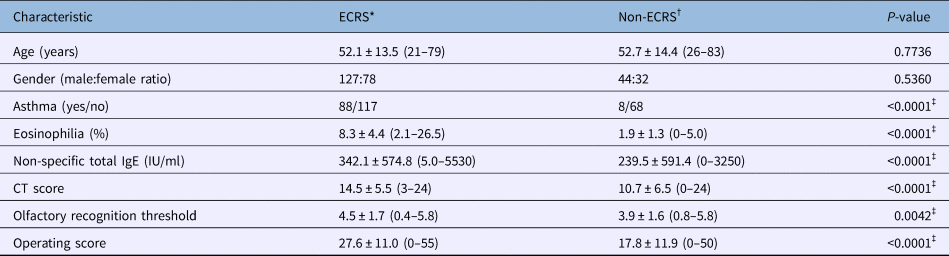
The profiles of the eosinophilic (n = 205) and non-eosinophilic (n = 76) chronic rhinosinusitis groups were statistically compared (Table 1). No significant differences in age or sex were observed between the two groups. The ratio of accompanying asthma was higher in the eosinophilic group (42.9 per cent) than in the non-eosinophilic chronic rhinosinusitis group (10.5 per cent). Pre-treatment blood eosinophilia, atopic predisposition (non-specific total immunoglobulin E values), severity of rhinosinusitis according to radiological findings (CT score) and olfactory disorder (recognition threshold) were significantly worse in the eosinophilic chronic rhinosinusitis group than in the non-eosinophilic chronic rhinosinusitis group. Furthermore, operating score, indicating the severity of operative findings, was higher in the eosinophilic chronic rhinosinusitis group than in the non-eosinophilic chronic rhinosinusitis group.
Patient profiles

*n = 205; †n = 76; ‡Significant difference. Data presented as mean ± standard deviation (range). P-values indicate comparisons between the eosinophilic chronic rhinosinusitis (ECRS) and non-ECRS groups. IgE = immunoglobulin E; CT = computed tomography
Post-operative endoscopic appearance scores
We investigated the post-operative sinonasal changes chronologically using the post-operative endoscopic appearance score (Figure 1). The post-operative endoscopic appearance score in the eosinophilic chronic rhinosinusitis group in the short-term analysis (18.6 ± 23.0 per cent) was significantly exacerbated in the long-term analysis (29.1 ± 28.9 per cent; p < 0.001), whereas the post-operative endoscopic appearance score in the non-eosinophilic chronic rhinosinusitis group in the short-term analysis (14.4 ± 20.8 per cent) was well maintained in the long-term analysis (12.4 ± 22.0 per cent) without any significant differences. The short-term post-operative endoscopic appearance scores did not show any significant differences between the eosinophilic and non-eosinophilic chronic rhinosinusitis groups. However, the long-term post-operative endoscopic appearance scores in the eosinophilic chronic rhinosinusitis group were significantly worse than those in the non-eosinophilic chronic rhinosinusitis group (p < 0.001).
Changes in the short- and long-term post-operative endoscopic appearance scores in the eosinophilic chronic rhinosinusitis (ECRS) and non-ECRS groups. The short-term post-operative endoscopic appearance scores in both groups indicated equivalent courses. The appearance scores in the eosinophilic group were significantly higher in the long-term, whereas the appearance scores of the non-eosinophilic group were well maintained after 12 months. *p < 0.001. ns = non-significant

Post-operative changes in sinus scores
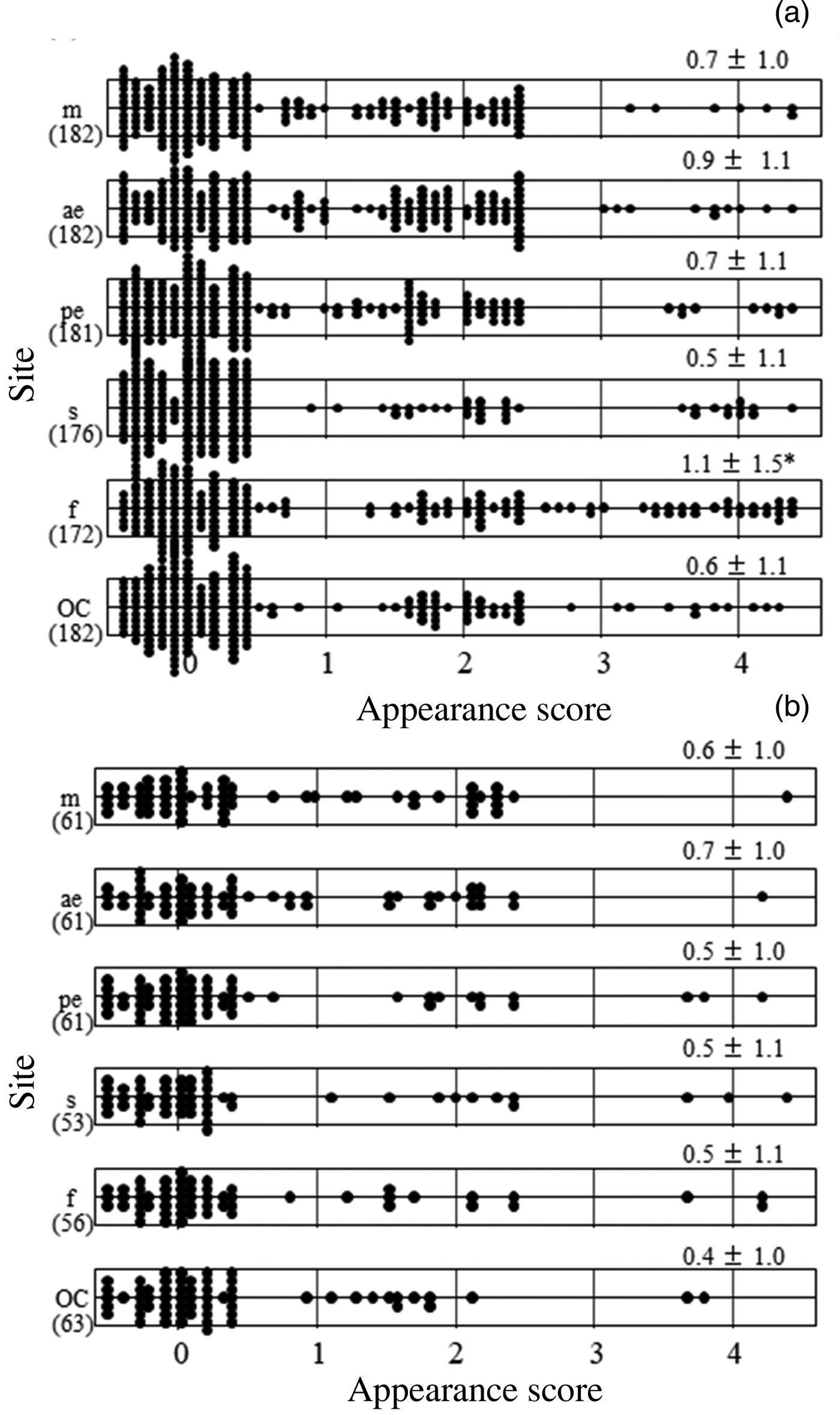
Scores used to calculate the post-operative endoscopic appearance scores were compared between the two groups for each paranasal sinus and olfactory cleft. In the short-term analysis, only the post-operative score of the frontal sinus in the eosinophilic chronic rhinosinusitis group (1.1 ± 1.5) was significantly higher than that in the non-eosinophilic chronic rhinosinusitis group (0.5 ± 1.1; p < 0.05), indicating that the condition of the frontal sinus in the eosinophilic chronic rhinosinusitis group worsened within 12 months of FESS (Figure 2).
Comparison of the short-term post-operative endoscopic appearance scores between the (a) eosinophilic chronic rhinosinusitis (ECRS) and (b) non-ECRS groups. Each sinus score (range, 0–4 points on bilateral sides) is presented as the mean ± standard deviation. Numbers in parentheses on the vertical axis indicate the number of patients. Because sinuses that had not been operated on were excluded from scoring, the numbers differed for each sinus. Notably, the post-operative score of the frontal sinus in the eosinophilic group showed exacerbation from the short-term. The asterisk indicates that the score of the frontal sinus in the eosinophilic group was significantly higher than that in the non-eosinophilic group. *p < 0.05. m = maxillary sinus; ae = anterior sinus; pe = posterior ethmoid sinus; s = sphenoid sinus; f = frontal sinus; OC = olfactory cleft

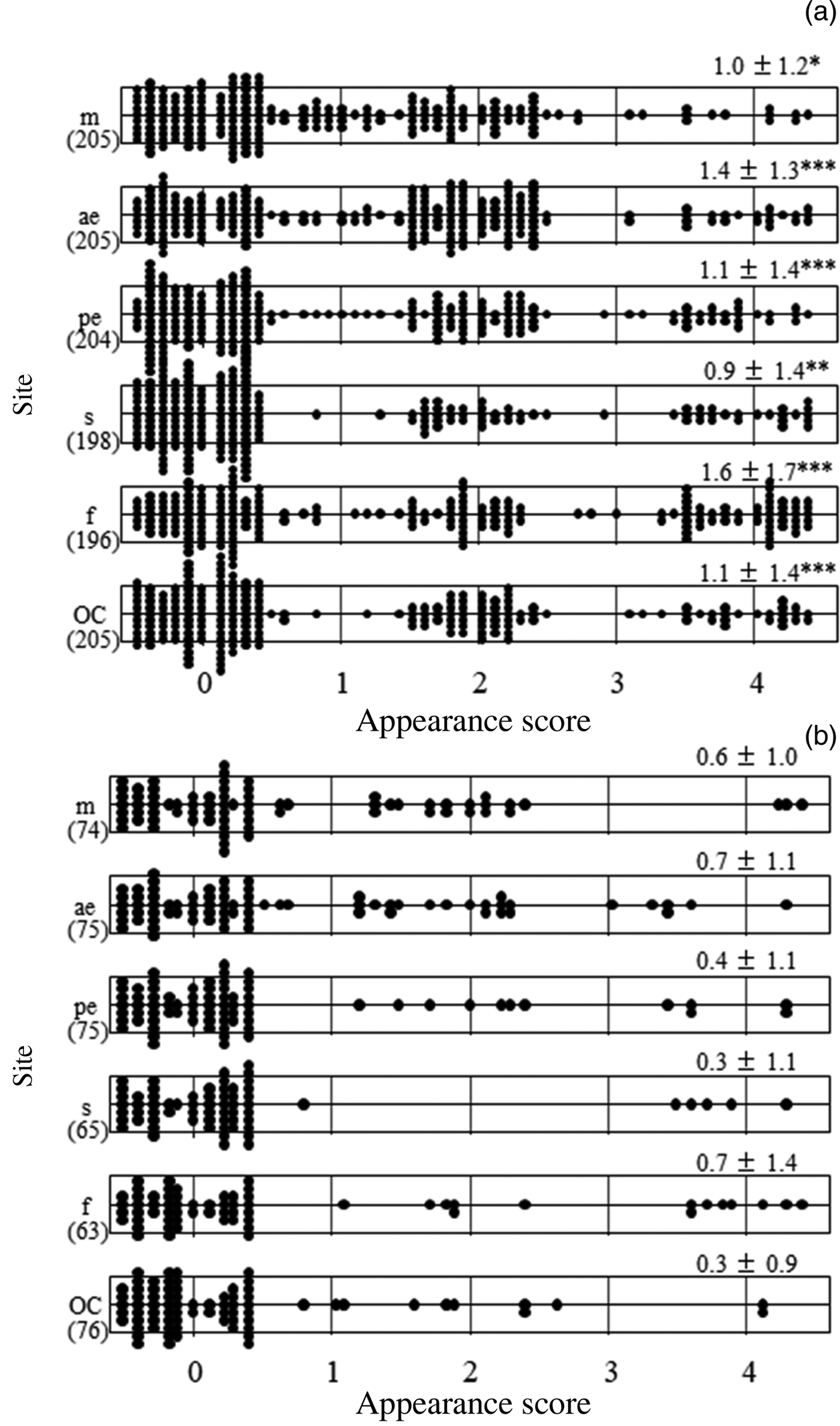
In the long-term analysis, all scores in the eosinophilic chronic rhinosinusitis group were significantly higher than those in the non-eosinophilic chronic rhinosinusitis group (Figure 3). In particular, the frontal sinuses, anterior and posterior ethmoid sinuses, and olfactory clefts worsened remarkably (p < 0.001). These data indicate the recurrence of post-operative polyp lesions in eosinophilic chronic rhinosinusitis patients.
Comparison of the long-term post-operative endoscopic appearance scores between the (a) eosinophilic chronic rhinosinusitis (ECRS) and (b) non-ECRS groups. Scores at all sites in the eosinophilic group were significantly higher than those in the non-eosinophilic group. Each sinus score (range, 0–4 points on bilateral sides) is presented as the mean ± standard deviation. Numbers in parentheses on the vertical axis indicate the number of patients. Because sinuses that had not been operated on were excluded from scoring, the numbers differed for each sinus. Asterisks indicate that the scores in the eosinophilic group were significantly worse than those in the non-eosinophilic group. *p < 0.05, **p < 0.01, ***p < 0.001. m = maxillary sinus; ae = anterior sinus; pe = posterior ethmoid sinus; s = sphenoid sinus; f = frontal sinus; OC = olfactory cleft

Analyses of adverse predictors
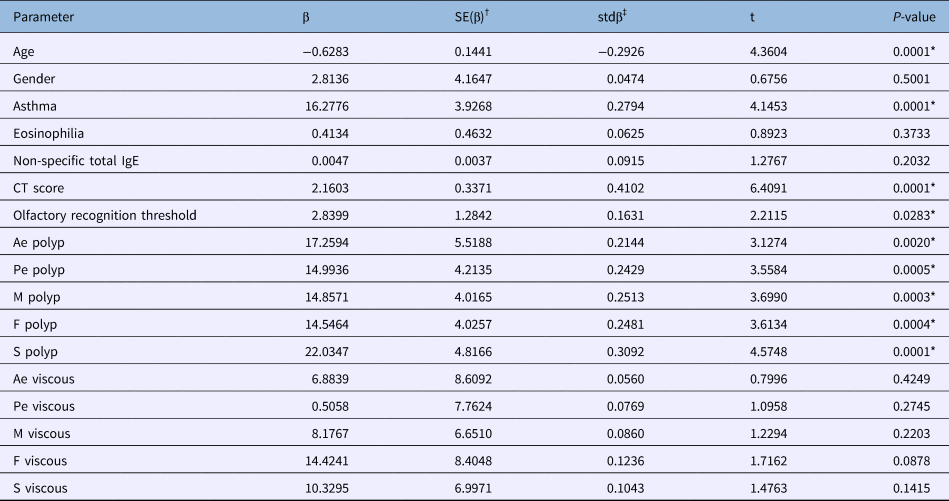
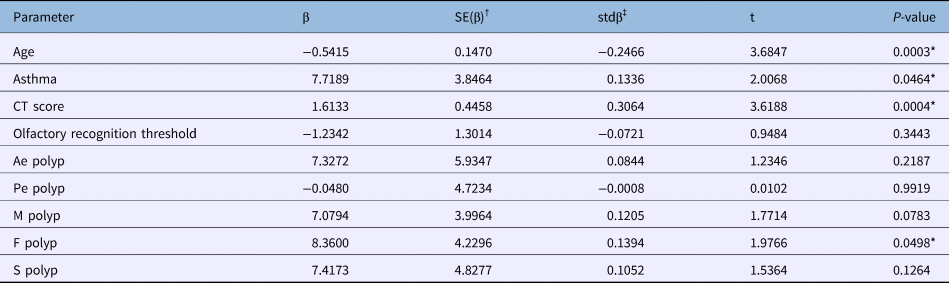
To statistically determine adverse predictors contributing to the worsening of long-term post-operative endoscopic appearance scores, multiple regression analysis was performed with clinically pivotal factors such as patient background, pre-operative laboratory findings and operative findings. The results of the univariate and multivariate analyses in the eosinophilic chronic rhinosinusitis group (n = 205) in terms of adverse predictors are shown in Tables 2 and 3, respectively. In the eosinophilic chronic rhinosinusitis group, the univariate analyses showed younger age, accompanying bronchial asthma, higher pre-operative CT score and olfactory recognition threshold, and the presence of polyps in all paranasal sinuses as significant exacerbating factors.
Univariate analysis for adverse factors of long-term post-operative endoscopic appearance scores

*Significant difference; †SE(β) indicates standard error (β); ‡stdβ indicates standardised β. IgE = immunoglobulin E; CT = computed tomography; ae = anterior ethmoid sinus; pe = posterior ethmoid sinus; m = maxillary sinus; f = frontal sinus; s = sphenoid sinus
Multivariate analysis for adverse predictors of long-term post-operative endoscopic appearance scores

*Significant difference; †SE(β) indicates standard error (β); ‡stdβ indicates standardised β. CT = computed tomography; ae = anterior ethmoid sinus; pe = posterior ethmoid sinus; m = maxillary sinus; f = frontal sinus; s = sphenoid sinus
Subsequently, the multivariate analyses showed that young adulthood, accompanying bronchial asthma, high CT score in the pre-operative stage and the presence of polyps in the frontal sinus during FESS were significant exacerbating factors. In the non-eosinophilic chronic rhinosinusitis group (n = 76), pre-operative CT score and intra-operative sphenoid sinus polyps were identified as significant factors in the univariate analyses, although none were identified as significant factors in the multivariate analyses.
Discussion
This study demonstrated that the post-operative course of patients with eosinophilic chronic rhinosinusitis worsened over time. The significant adverse factors were determined in the eosinophilic chronic rhinosinusitis patients, but not in the non-eosinophilic chronic rhinosinusitis patients. These data confirm that the post-operative course in non-eosinophilic chronic rhinosinusitis patients is more favourable than that in eosinophilic chronic rhinosinusitis patients.Reference Ikeda, Shiozawa, Ono, Kusunoki, Hirotsu and Homma12,Reference Tsuzuki, Hashimoto, Okazaki and Sakagami16
Early, appropriate evaluation of sinonasal conditions is of great clinical importance in the successful management of chronic rhinosinusitis. Although CT imaging is the gold standard examination for accurate assessment of the sinonasal area, endoscopy is also commonly used as a simple, useful and low-cost diagnostic tool without radiation exposure.Reference Senior, Kennedy, Tanabodee, Kroger, Hassab and Lanza14,Reference Rudmik and Smith15 Thus, to simultaneously and reliably evaluate sinonasal conditions, we proposed using the operating score for FESS findingsReference Tsuzuki, Hashimoto, Okazaki and Sakagami16 and the post-operative endoscopic appearance score for post-operative treatment.Reference Tsuzuki, Hinohira, Takebayashi, Kojima, Yukitatsu and Daimon17 These scores are calculated via a three-step evaluation using 0 to 2 points based on previous scoring systems.Reference Lund and Mackay18,Reference Lund and Kennedy20 Despite intensive investigation, we could not find any previous reports on exacerbating factors based on endoscopic sinonasal findings in patients with chronic rhinosinusitis and undergoing FESS. This study was the next step in determining exacerbating factors in patients with chronic rhinosinusitis after FESS using these endoscopic scoring systems. We identified statistically significant correlations by linking pre-, intra- and post-operative findings in patients with chronic rhinosinusitis undergoing FESS.
With regard to patient background in the pre-operative stage, eosinophilic chronic rhinosinusitis is known to be closely related to lower airway diseases.Reference Kobayashi, Asako, Ooka, Kanda, Tomoda and Yasuba21,Reference Yoshida, Takabayashi, Imoto, Sakashita, Narita and Fujieda22 This study indicated that asthma could be a risk factor for the recurrence of sinonasal polyposis after FESS. This study also showed that young adulthood could be a risk factor for disease progression. Nasal polyps have been suggested as less likely to appear at older ages.Reference Larsen and Tos23 The severity of the CT score is significantly correlated with the degree of eosinophil infiltration of the ethmoidal mucosae.Reference Szucs, Ravandi, Goossens, Beel and Clement24 Significant correlation has been reported between the severity of CT scores and olfactory disorders.Reference Saito, Tsuzuki, Yukitatsu and Sakagami25 Furthermore, the operating score is significantly correlated with both the severity of the pre-operative CT score and olfactory disorders.Reference Tsuzuki, Hashimoto, Okazaki and Sakagami16 Accordingly, patients with younger age, accompanying asthma, more severe eosinophilia, rhinosinusitis and olfactory disorders in the pre-operative stage were likely to have more severe operative findings.
During FESS, the operating score in eosinophilic chronic rhinosinusitis patients was significantly worse than that in non-eosinophilic chronic rhinosinusitis patients. The operating score also showed that the anterior ethmoid sinus and superior meatus were the primary inflamed sites in chronic rhinosinusitis.Reference Tsuzuki, Hashimoto, Okazaki and Sakagami16 Complete removal of the inflammatory lesions and wide enlargement of the sinus drainage pathway appeared to be critical. In eosinophilic chronic rhinosinusitis patients, the ethmoid sinuses must be pneumatised, including the functional unit of the ostiomeatal complex and olfactory clefts that are predominantly inflamed.Reference Ishitoya, Sakuma and Tsukuda10,Reference Tokunaga, Sakashita, Haruna, Asaka, Takeno and Ikeda11,Reference Sakuma, Ishitoya, Komatsu, Shiono, Hirama and Yamashita13 Furthermore, this study suggests that not only lesions themselves in the anterior ethmoid sinus and superior meatus, but also lesions in the frontal sinus drainage route must be completely removed to avoid post-operative recurrence. Particularly when frontal recess cells appear opacified on pre-operative CT, the frontal sinus drainage pathway must be completely and widely drained and pneumatised,Reference Hashimoto, Tsuzuki, Okazaki and Sakagami26 based on the concept of building blocksReference Kuhn27 without any residual cells,Reference Okushi, Mori, Nakayama, Asaka, Matsuwaki and Ota28 thus avoiding secondary damage to the anterior ethmoid artery and skull base.Reference Simmen, Raghavan, Briner, Manestar, Schuknecht and Groscurth29–Reference Kim, Kim, Chung, Lee, Park and Yoon31
In the post-operative stage, the operating score could predict the post-operative clinical course because chronic rhinosinusitis patients with higher operating scores showed higher post-operative endoscopic appearance scores.Reference Tsuzuki, Hashimoto, Okazaki and Sakagami16 This study showed that endoscopic findings in eosinophilic chronic rhinosinusitis worsened in long-term analysis, even with favourable maintenance after surgery. Polyp lesions in the frontal sinus are suggested to be one of the initial recurrent sites. Time series analysis of the post-operative endoscopic appearance scores in this study suggested the need for prolonged follow-up with treatment after FESS, particularly in eosinophilic chronic rhinosinusitis patients with severe operative findings.
• Early, appropriate evaluation of sinonasal conditions is very important in the successful management of chronic rhinosinusitis
• Post-operative endoscopic appearance of eosinophilic and non-eosinophilic chronic rhinosinusitis showed similar clinical courses in the early period after surgery
• Sinonasal conditions in eosinophilic chronic rhinosinusitis showed that frontal sinus lesions tend to recur from the early post-operative period and worsen over time
• In eosinophilic chronic rhinosinusitis, young adulthood, asthma, pre-operative severe rhinosinusitis and polyps in the frontal sinus are adverse predictors
• Complete enlargement of the frontal sinus drainage pathway, ethmoid sinus and upper nasal meatus without any residual cells or complications can be a pivotal treatment strategy in surgical management
Some limitations in this study warrant mention. First, we could not follow up all of the analysed chronic rhinosinusitis patients, particularly in the long-term, although we recommended that every patient attend regular post-operative observation and tried to conduct follow up of the post-operative endoscopic appearance score for as long as possible. The number of follow-up visits by individual patients decreased throughout the follow-up period after FESS. Some patients might have avoided visits when they felt comfortable or might have visited us only when their symptoms made them very uncomfortable. Hence, the accuracy of the statistical evaluation of the long-term therapeutic effects may have been affected. This limitation cannot be overcome and is inherent in retrospective designs. Second, the post-operative endoscopic appearance score has limited reliability when recurrent nasal polyps interfere with endoscopic observation of the posterior part of the operated sinuses. In this situation, secondary CT imaging is necessary for accurate evaluation, and revision surgery is necessary for improvement of therapeutic outcomes. Finally, because this study was retrospective and conducted at one tertiary hospital, additional multicentre prospective studies will be required in the future.
Conclusion
Early, appropriate estimation of sinonasal conditions appears crucial for the successful surgical management of chronic rhinosinusitis. The post-operative course in eosinophilic chronic rhinosinusitis, which is similar to that in non-eosinophilic chronic rhinosinusitis in the early period, worsened over time. Young adulthood, accompanying asthma, severe rhinosinusitis in the pre-operative stage and the presence of polyps in the frontal sinus during FESS were identified as adverse predictors in eosinophilic chronic rhinosinusitis. Complete removal of the lesions in the frontal recess of the drainage route is suggested to prevent early recurrence after surgery.
Acknowledgements
We gratefully acknowledge the help of our technical assistants, Ms Yumi Kida and Mrs Midori Tanide. This work was supported by Grants-in-Aid for Scientific Research (grant numbers: JP25462671 and JP16K11220) from the Japan Society for the Promotion of Science, Grant-in-Aid for Researchers, Hyogo College of Medicine, 2018 (K Hashimoto), and the Practical Research Project for Rare/Intractable Diseases from the Japan Agency for Medical Research and Development (grant number: JP 16ek0109062).
Competing interests
None declared