Free speech advocates have long wrestled with the “paradox of tolerance,” whereby subversives avail themselves of democracy’s liberal protections, including free speech, to threaten constitutional democracy, its territorial claims, or its core values (Popper Reference Popper1994, 581n4). Sinn Féin’s Martin McGuinness illustrated this phenomenon when the Parliament of the United Kingdom (UK) refused to seat him despite winning elections in 1997. Parliamentary rules required that all MPs take the Oath of Allegiance, swearing that they will “be faithful and bear true allegiance to Her Majesty Queen Elizabeth II.” The oath, however, contradicted McGuinness’s republican commitments and stood in the way of his party’s commitment to self-determination. When the United Kingdom made his office conditional on the oath, McGuinness sued, arguing that the oath violated Article 10 of the European Convention on Human Rights, guaranteeing the freedom of expression. The United Kingdom responded by urging the European Court of Human Rights (ECtHR) to interpret Article 10 narrowly so as to avoid the paradox of tolerance, thereby depriving Irish republicans of a foothold in electoral politics that might allow them to separate Northern Ireland from the rest of Great Britain. The ECtHR agreed, dismissing McGuinness’s appeal and upholding the oath as a reasonable restriction on speech even though it required MPs to affirm their “loyalty to the constitutional principles which support the UK constitutional system” (Martin McGuinness v. United Kingdom, 39511/98).
Judicial behavior in McGuinness v. United Kingdom reveals something important about the role that courts play in protecting democracy. Drawing on evidence from the newly constructed Global Free Speech Repository, I demonstrate how high-court judges in India, South Africa, Canada, and Australia, as well as those on the ECtHR, provide less free speech protection for subversive extremism. I further demonstrate how these judges frequently abandon other doctrinal positions in free speech cases when they encounter extremism and instead argue that speech restrictions are justified in such instances to protect constitutional democracy, territorial claims, or core values. This evidence suggests that judges are indeed sensitive to the types of claimants that appear before them and that they may indeed be using the content of speech to gauge the threat that certain claimants pose to democracy.
The observed judicial behavior here is consistent with the concept of “militant democracy” that Karl Loewenstein (Reference Loewenstein1937a, Reference Loewenstein1937b) documented during the interwar period, whereby liberal democracies adopted illiberal policies to counter the rise of fascism. The evidence presented here, however, suggests that judges have used similar arguments to meet other threats to constitutional democracy beyond right-wing extremism, including leftist, antiegalitarian, and self-determination causes, including those—like McGuinness’s—that are themselves committed to liberal democracy. While more research is necessary, our regime- and institution-based theories of judicial behavior offer plausible explanations about why judges might disfavor extremism in the ways observed here. Finally, the evidence considered here suggests that courts may act as an important bulwark against the rise of antidemocratic populism around the globe in recent years, releasing legislatures from the difficult task of drafting laws that potentially run afoul of liberal constitutional principles. In doing so, however, judges may also introduce outer limits on the kinds of political contests tolerated in many self-governing democracies.
The Paradox of Tolerance
Scholars and advocates have long recognized the intimate relationship between free speech and democracy (Feldman Reference Feldman2008; Martin Reference Martin2001, Reference Martin2013). Tom Ginsburg and Aziz Huq (Reference Ginsburg and Huq2018, 11), for example, have asserted that “one cannot have meaningful political competition without the relatively free ability to organize and offer policy proposals, criticize leaders, and demonstrate in public without official intimidation.” Others have made similar claims, placing free speech at the center of our conceptual and operational understanding of democracy (see, e.g., Dahl Reference Dahl1971, 3; Reference Dahl1989, 170; O’Donnell Reference O’Donnell2001, 12; Tilly Reference Tilly2007, 2). Many more have noted free expression’s significance in the breach. Echoing Ginsburg and Huq, free speech is notably diminished in hybrid regimes or absent in nondemocracies, especially in communist regimes (Howard Reference Howard2003; Levitsky and Way Reference Levitsky and Way2010, 8, 87). Without free speech, most agree, it is difficult to imagine meaningful democratic political participation.
To be sure, the precise relationship between democracy and free speech varies somewhat depending on the type of democracy under consideration. For example, liberal or libertarian accounts often stress the importance of free speech for government oversight and ensuring that the public remain informed about government actions (Smith Reference Smith1990, 94–95). Pluralist accounts, like Dahl’s (Reference Dahl1989), view speech rights as essential for participation and aggregation of preferences. Free speech is similarly essential for deliberative democracy, in which communities strive for consensus over matters of political morality. In these idealized systems, free speech rights are essential for ensuring fair and unencumbered information sharing among autonomous and free persons (Gutmann and Thompson Reference Gutmann and Thompson1998, 24, 137, 174). Irrespective of the theory of democracy under consideration, however, free speech rights are significant because they guarantee important forms of participation, even if such participation takes slightly different forms.
Despite its central importance, staunch defenders of free speech often recognize its limits for dangerous ideas that do not simply communicate rage but rather threaten core commitments to the democratic and constitutional systems. In his famous concurrence in Whitney v. California (274 U.S. 357, 373 [1927]), for example, Justice Louis Brandeis acknowledged that speech could be constrained when the communication of information threatened to incite imminent, serious danger to the constitutional state.Footnote 1 Subsequently, theorists of democracy and open societies have signaled concern about how extremists might take advantage of free speech. Karl Loewenstein (Reference Loewenstein1937a, 423–24), writing in the American Political Science Review, observed how
democracy and democratic tolerance have been used for their own destruction. Under cover of fundamental rights and the rule of law, the anti-democratic machine could be built up and set in motion legally. Calculating adroitly that democracy could not, without self-abnegation, deny to any body of public opinion the full use of the free institutions of speech, press, assembly, and parliamentary participation, fascist exponents systematically discredit the democratic order and make it unworkable by paralyzing its functions until chaos reigns… . Until very recently, democratic fundamentalism and legalistic blindness were unwilling to realize that the mechanism of democracy is the Trojan horse by which the enemy enters the city. To fascism in the guise of a legally recognized political party were accorded all the opportunities of democratic institutions.
Karl Popper (Reference Popper1994) subsequently labeled Loewenstein’s insights as the “paradox of tolerance,” stressing how under certain circumstances “unlimited tolerance must lead to the disappearance of tolerance” if granted “to those who are intolerant” (581n4). Loewenstein and Popper’s concerns persist. Quoc Loc Hong (Reference Hong2010, 37), for example, has asserted that it “is well-known that democracy’s enemies [can] rely on the democratic right to free speech to destroy democracy itself.” Samuel Issacharoff (Reference Issacharoff2015, 100) expressed similar concerns about “antidemocratic groups trying to worm their way into governmental positions so as to undermine tolerant, pluralistic, democratic societies.”
To resolve the paradox of tolerance, Loewenstein recommended that democratic regimes respond to the threat of fascism in—what he termed—“militant” ways, restricting free speech for claimants who sought to undermine democracy in the name of self-preservation.
Perhaps the thorniest problem of democratic states still upholding fundamental rights is that of curbing the freedom of public opinion, speech, and press in order to check the unlawful use thereof by revolutionary and subversive propaganda, when attack presents itself in the guise of lawful political criticism of existing institutions… . Democracies which have gone fascist have gravely sinned by their leniency, or by too legalistic concepts of the freedom of public opinion. Slowly, the remaining democracies are remedying the defect… . All such restrictions on the use of free speech and free press were greeted by fascists with the outcry that the democratic state was violating the very essence of its principles of freedom. But the measures proved effective in curbing the public propaganda of subversive movements and in maintaining the prestige of democratic institutions.
(Loewenstein Reference Loewenstein1937b, 652–53)Loewenstein’s initial thoughts have influenced comparative constitutional law and politics. The concept of militant democracy has come to refer “to the idea of a democratic regime which is willing to adopt pre-emptive, prima facia illiberal measures to prevent those aiming at subverting democracy with democratic means from destroying the democratic regime” (Müller Reference Müller, Rosenfeld and Sajó2012, 1254). The concept has notably influenced some courts and their interpretations of rights guarantees, starting with the German Federal Constitutional Court’s decision to adopt the idea of militant democracy in the Socialist Reich Party Case (2 BVerfGE 1, 1952) and the Communist Party Case (5 BVerfGE 85, 1956) to justify Germany’s decision to ban certain extremist left- and right-wing parties (Kommers and Miller Reference Kommers and Miller2012).
The concept of militant democracy has also inspired scholarly inquiry into the ways that democracies engage in self-preservation in the face of antidemocratic threats (see, e.g., Capoccia Reference Capoccia2005, Reference Capoccia2013; Kirshner Reference Kirshner2014). I follow this scholarly trend in this article, using the term “militant democracy” to refer to the ways that judges interpret free speech rights in ways to preserve or protect democracy from the threat of extremism.
While a fairly robust political science literature exists that explores how constitutional democracies have addressed extremism, these accounts have tended to focus disproportionately on antidemocratic political parties (Brinkmann Reference Brinkmann1983; Cohen-Almagor Reference Cohen-Almagor1997; Wise Reference Wise1998; Fennema Reference Fennema, Koopmans and Statham2001; Turano Reference Turano2003; Ayres Reference Ayres2004; Ferreres Comella Reference Ferreres Comella and Sajó2004; Bogaards, Baseda, and Hartmann Reference Bogaards, Baseda and Hartmann2010) and legislative responses that restrict the rights of democracy’s proponents (Capoccia Reference Capoccia2001, Reference Capoccia2002, Reference Capoccia2005; Sajó Reference Sajó2006). While courts have been important players upholding legislative bans on parties (Koğacıoğlu Reference Koğacıoğlu2003; Krotoszynski Reference Krotoszynski2009, 124–26), opportunities remain to investigate more systematically and in cross-national ways the role of courts in defining the scope of free speech in the face of extremism.
Militant democracy arguments are far from uncontroversial. Perhaps most famously, the philosopher Alexander Meiklejohn (Reference Meiklejohn1948, 27) argued in favor of protecting dangerous—even extreme—ideas when he asserted that to “be afraid of ideas is to be unfit for self-government.” It was not dangerous information so much as the absence of information that concerned Meiklejohn. He therefore insisted that in the course of public discussion “all facts and interests relevant to the problem shall be fully and fairly presented to the meeting. Both facts and interests must be given in such a way that all the alternative lines of action can be wisely measured in relation to one another” (25). Moderators, Meiklejohn argued, were entitled to restrict speech in ways that facilitated the orderly communication of information. They were not entitled, however, to exercise their authority to engage in what has subsequently been referred to as content and viewpoint discrimination. “No suggestion of policy shall be denied a hearing because it is on one side of the issue rather than another. And this means that though citizens may, on other grounds, be barred from speaking, they may not be barred because their views are thought to be false or dangerous. No plan of action shall be outlawed because someone in control thinks it unwise, unfair, un-American. No speaker may be declared ‘out of order’ because we disagree with what he intends to say” (26). Meiklejohn not only seemed to have great faith in the citizens of self-governing societies to work through ideas; he also thought that the prohibitions on content and viewpoint discrimination were intimately connected to the principles of self-government.
The contrasting positions elaborated by Loewenstein and Meiklejohn raise questions about how, in practice, judges respond to extremism. Judges could, as Meiklejohn suggested, treat extremism as they would more conventional types of speech and resort to doctrinal devices like content and viewpoint discrimination to ensure that all ideas are considered by self-governing societies. By contrast, as the paradox of tolerance indicates, judges may scrutinize cases in ways that allow them to assess the threats that extremism poses for democracy and restrict free speech accordingly. Such clues may come in different forms, including the identity of the claimant or the content of the communication itself (consider Baum [Reference Baum2017, 40–84]). When extremist ideas or extremist claimants are absent, then judges may understand free speech rights as important safeguards for democratic participation. Alternatively, when judges consider cases that contain elements of extremism, either as content or by virtue of the claimants they encounter, they may alter their positions and interpret constitutions as providing less speech protection.
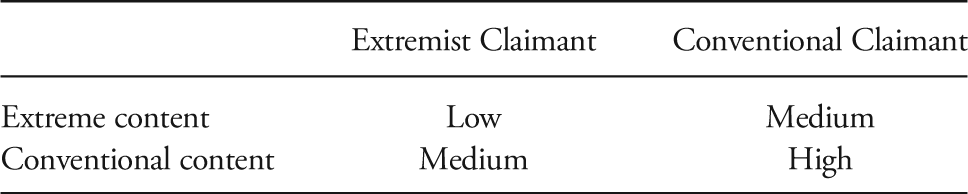
These contrasting understandings of how to treat extremism in free speech cases have divergent observable implications. If judges behave consistently with Meiklejohn’s view, then we would not expect to see significant changes in judicial support for free speech, regardless of whether a case involves extremism. This position is treated as the null hypothesis in the subsequent analysis. By contrast, if judges behave consistently with militant democracy when they encounter the paradox of tolerance, then we would expect judges to reduce their support for free speech. Admittedly, the precise predictions of judicial behavior in mixed cases—involving conventional content by extremist claimants or vice versa—are less clear. But, to the extent that judges are cross-pressured in these cases, we might reasonably expect that the win rate of these cases falls somewhere in between. The observable implications of the latter view, corresponding with a militant democracy position, are listed in table 1.
Predicted Level of Judicial Protection, by Claimant and Content

Methodology
Ideally, to determine whether extremism causes judges to behave differently, we would like to compare judicial behavior in nearly identical cases, save variation related to the identity of the claimant or the content of the expression. In practice, however, we are left to compare judicial responses across a range of cases involving political participation and observing whether judges behave differently in cases involving extremism.
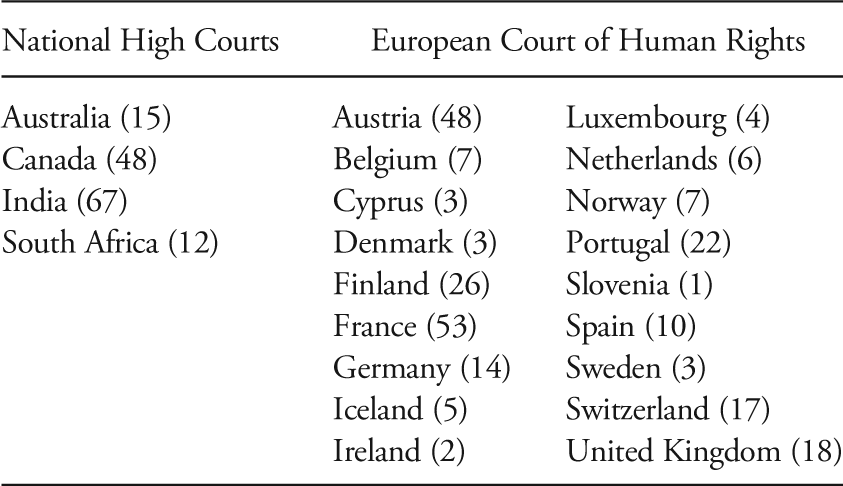
The sample used here is constructed to facilitate this comparison. I examine free speech cases from high courts in a range of democracies, including India, South Africa, Canada, and Australia, as well as from the ECtHR. ECtHR cases were further restricted to decisions from countries that have consistently scored high marks across a range of governance indicators since 1990, including Polity V, Freedom House, and the World Bank’s Worldwide Governance Indicators, to ensure as much as possible that political participation in each country is afforded comparable degrees of latitude. These countries include Austria, Belgium, Cyprus, Denmark, Finland, France, Germany, Iceland, Ireland, Luxembourg, the Netherlands, Norway, Portugal, Slovenia, Spain, Sweden, Switzerland, and the United Kingdom. Together, decisions from these high courts provide a diverse set of cases from a range of common law and civil law systems. The frequency of cases from each country is listed in table 2.
Countries Represented in the Sample (Cases, N = 391)

The high courts under examination here vary insofar as they exercise discretion over their dockets. Variation on this dimension is particularly relevant here because of the question under examination, namely, whether courts provide succor to extremism. Notably, the Indian Supreme Court does not exercise discretion over its docket (Robinson Reference Robinson, Choudhry and Khosla2016). Instead, appeals are made by right, and litigants in constitutional rights cases can petition the Supreme Court directly. Accordingly, extremists, like other free speech claimants, may more readily access the higher lawmaking echelons of the judiciary. By contrast, the Australian High Court (Federal Courts Branch of Australia 2021), the Supreme Court of Canada (Office of the Registrar of the Supreme Court of Canada 2021), and the Constitutional Court of South Africa (Klug Reference Klug2010, 237–38) exercise a measure of discretion over appeals from lower courts. The South African Court, however, is required to hear a case when a lower court declares a statute unconstitutional. The ECtHR has enjoyed varied discretion over its docket during the period examined here. Before November 1998, the European Commission of Human Rights assembled the ECtHR’s docket. Thereafter, the ECtHR was required to consider all matters that met certain admissibility criteria.Footnote 2 However, the ECtHR has interpreted those requirements—and the exhaustion of domestic remedies requirement—broadly so as to provide it with a substantial measure of control over the cases it considers.
The focus on these high courts has advantages and disadvantages. These decisions are useful insofar as they are “final,” allowing observations of extremists who not only exhausted judicial remedies but were also able to do so. Moreover, these decisions are consequential insofar as they establish rules affecting potential future litigation. Both of these factors can help us to determine with a high degree of certainty whether courts provide succor to extremism. But in other respects, the cases examined here are unusual. First, they often involve difficult questions of law. Second, appeals are costly. Therefore, a focus on high-court decisions may underrepresent the claims of relatively impoverished litigants and may include a disproportionate number of cases involving extremists. Given the narrow question examined here, I argue that these trade-offs are worthwhile but should condition the scope of conclusions asserted.
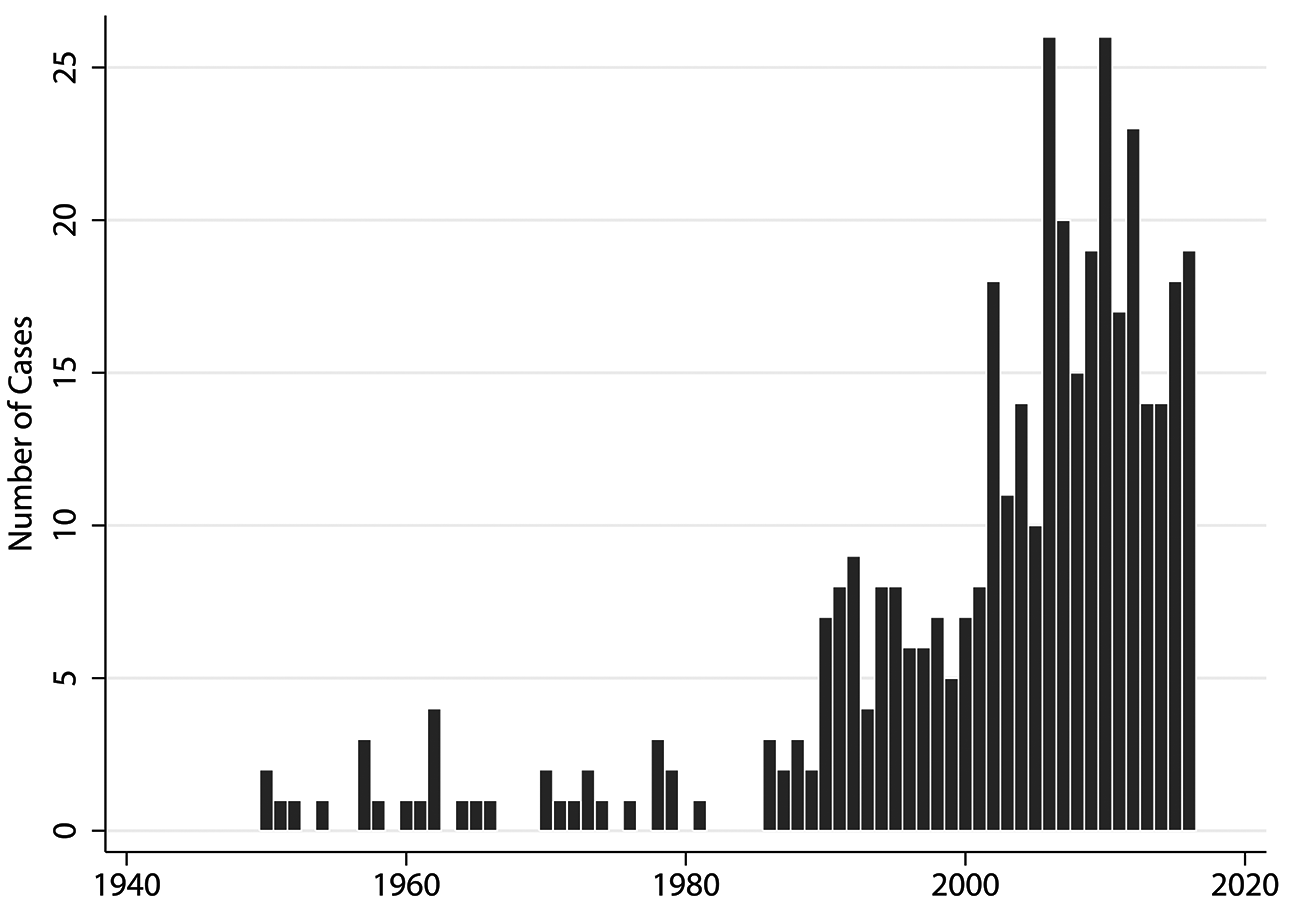
The sample was constructed to focus on political participation. Accordingly, only those cases containing a clearly political dimension were analyzed. Consistent with the argument developed above, the political dimension could manifest either in terms of the claimant asserting free speech protections or the content that gave rise to the free speech claim. The sample was constructed first by retaining cases that involved “political” claimants (see the methodological appendix). I have excluded from the sample cases that involve art, sporting events, and commercial activities, cases involving the antiregulatory efforts of media companies, and defamation lawsuits involving private figures and private matters. In theory, these categories of speech could contain “political” dimensions if that term is understood capaciously. In practice, however, none of the cases from these categories contained elements of extremism. Accordingly, insofar as the goal of the sample frame is to generate roughly equivalent cases that vary only according to the identity of the claimant and the content of the speech acts, excluding these peripheral cases affords a measure of control in our observations of judicial behavior. The sample also contains cases involving “political” content (see the methodological appendix). Figure 1 describes the frequency of cases over time.
Number of free speech cases in the sample, by year (1950–2016)

Cases in the sample were then coded for extremism. This concept was developed by relying on Maleiha Malik’s (Reference Malik, Hare and Weinstein2009, 97–98) approach to extremism as a relative term that must be understood within the context of a constitutional democracy. Constitutional democracies are those forms of political organization that “hold respect for equal human dignity, defined to include a wide degree of individual liberty” (Murphy Reference Murphy2007, 7). And although the values of liberty, equality, and dignity are thoroughly contested in constitutional democracies, opponents on either side largely agree that those values should inform important political decisions, even if interpreted differently. Ideas that challenge a constitutional democracy’s core territorial commitments were also coded as extreme, as were ideas that advocated the overthrow of the democratic or constitutional regime. I again follow Malik in her definition of extreme insofar as those ideas challenge basic commitments to egalitarian reciprocity, voluntary self-ascription, and the freedom to exit and associate (Malik Reference Malik, Hare and Weinstein2009, 98–99). Finally, I also define as extreme ideas that advocate violence or lawbreaking because such speech either arguably deviates from commitments to rules established through democratic processes or seemingly denies the authority of such procedures.
Each case was coded for extremism along two dimensions: (1) the identity of the claimant and (2) the content of the speech act. I use a coding scheme for determining whether certain ideas are extreme so as to avoid subjective perceptions about whether certain ideas can pose a threat to democracy.Footnote 3 To determine whether a claimant was extreme, I evaluate the associations that give meaning and purpose to the claimant’s behavior. In McGuinness v. United Kingdom, for example, it was Martin McGuinness’s membership in Sinn Féin and the goals of that organization that made him so threatening to Downing Street. By contrast, in Piermont v. France (15773/89, 1995), even though Dorothee Piermont delivered an antinuclear speech at a protest organized by the French Polynesian Liberation Front, she was a member of the European Parliament and Alliance 90/The Greens that advocated antinuclear, proenvironment policies from the center left. She was not coded as an extreme claimant because environmental policy generally and antinuclear advocacy in particular are well within the traditional public policy debates that constitutional democracies must wrestle with.
Some default coding rules were adopted to facilitate the analysis. If a case contained different types of claimants or if differing cases were joined as a procedural matter, the claimants were coded as extreme on the theory that such information would be relevant to a judge if the asserted hypothesis tested here is correct (Segerstedt-Wiberg v. Sweden, 62332/00). Leftist parties were treated as extreme if they were communist, not extreme if they were socialist. This rule was adopted because most communist parties tended to advocate revolutionary positions. They were treated as such unless they notably abandoned such positions. Far-right parties that advocated racist or xenophobic positions were also coded as extreme because, again following Malik, their ideas challenged basic commitments to egalitarian reciprocity, voluntary self-ascription, and the freedom to exit and associate (Benhabib Reference Benhabib2002). The decision to code India’s Bharatiya Janata Party (BJP) as extreme is noteworthy. Consistent with the comments of Malik and others, this party has invoked ideas of Hindu nationalism in campaigns that repeatedly incited communal riots targeting Muslims, most notably its Ayodhya temple campaign (Varshney Reference Varshney2002). Moreover, the rise of the BJP has coincided with a downgrading of India from an electoral democracy to an electoral autocracy (Varieties of Democracy Institute 2021), although the data collected here precede this development. Finally, cases treated as inadmissible by the ECtHR were counted as votes against free speech because justices reached the merits but did not uphold claimants’ free speech arguments.
Cases were also coded for extremism as it related to the content of the expression at issue. Like the identity of the claimant, the speech act itself can be characterized as extreme if it contradicts core tenets of constitutional democracies as outlined above (see the methodological appendix). For example, by failing to take the oath, McGuinness asserted his principled commitments to Irish republicanism and an independent Northern Ireland—even if technically by not speaking—and thereby challenged the core territorial and constitutional commitments of the United Kingdom. By contrast, although Hervé Eon verbally attacked the president of France when he carried a placard that read, “Get lost, you sad prick,” his comments did not strike at France’s most basic constitutional commitments (Eon v. France, 26118/10). Eon’s expressive content therefore was not coded as extreme.
Cases were also coded for the context in which speech acts occurred (see the methodological appendix). When scrutinizing cases, judges may be more or less sensitive to extremism depending on the context in which it manifests. If judges are sensitive to the paradox of tolerance, then they may be particularly reluctant, for example, to support the speech rights of extremists running for political office. To the extent that real authority in a democracy flows from winning elections, judges might be least inclined to support rights claims when asserted in this context because such rights would seem to enable extremists to gain power through normal democratic procedures. Extremists can also exercise public power, although arguably with less authority, in the bureaucracy. Accordingly, judges may be similarly disinclined—although perhaps marginally less so—to rule in favor of extremists seeking access to or occupying positions in the public sector. To the extent that extremists are not directly seeking access to or exercising authority from elected or unelected office, judges behaving as substantive guardians may feel less obligated to protect democracy and more inclined to rule in favor of extremists, at least relative to claimants in the other contexts.
Finally, judicial behavior was assessed in different ways. For the quantitative portion of the analysis, judicial behavior was assessed in terms of whether judges supported claimants’ free speech rights in a case. This variable is reported as a percentage of the total number of justices participating in a decision (0%–100%). The present article also analyzes judicial behavior in the qualitative section, comparing the types of arguments judges used to support conclusions in different kinds of cases.
Judicial Behavior and Militant Democracy
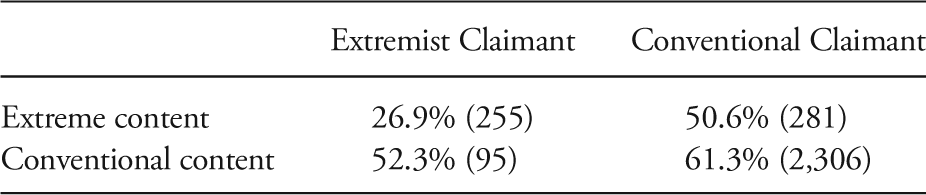
In this section, I analyze judicial behavior toward extremism. As table 3 demonstrates, judicial behavior toward extremism conforms to the theoretical expectations elaborated previously (see table 1). As a baseline, judges in the sample were broadly supportive of free speech, voting in favor of rights protection in cases in which extremism was absent more than 61% of the time. By contrast, judicial support for free speech decreased dramatically in cases involving extremist claimants espousing extremist views, voting to uphold free speech only 27% of the time. In mixed cases, featuring either extremist claimants or extremist content but not both, judicial support was more mixed. Judges voted to uphold free speech claims for extremist claimants espousing conventional views 52% of the time, while voting in favor of free speech for conventional claimants espousing extremist views just over 50% of the time. The observed behavior, therefore, matches the predicted behavior laid out initially in table 1. Moreover, the observed results are sufficiently different from expected judicial behavior that follows from Meiklejohn’s position treated here as the null hypothesis, namely, that judges treat conventional and extreme speech or claimants identically (
 ,
 ).
Observed Judicial Support for Free Speech Protection, by Category (Total Votes Observed in Category)

Note.—χ2 = 239.5; p < 0.001.
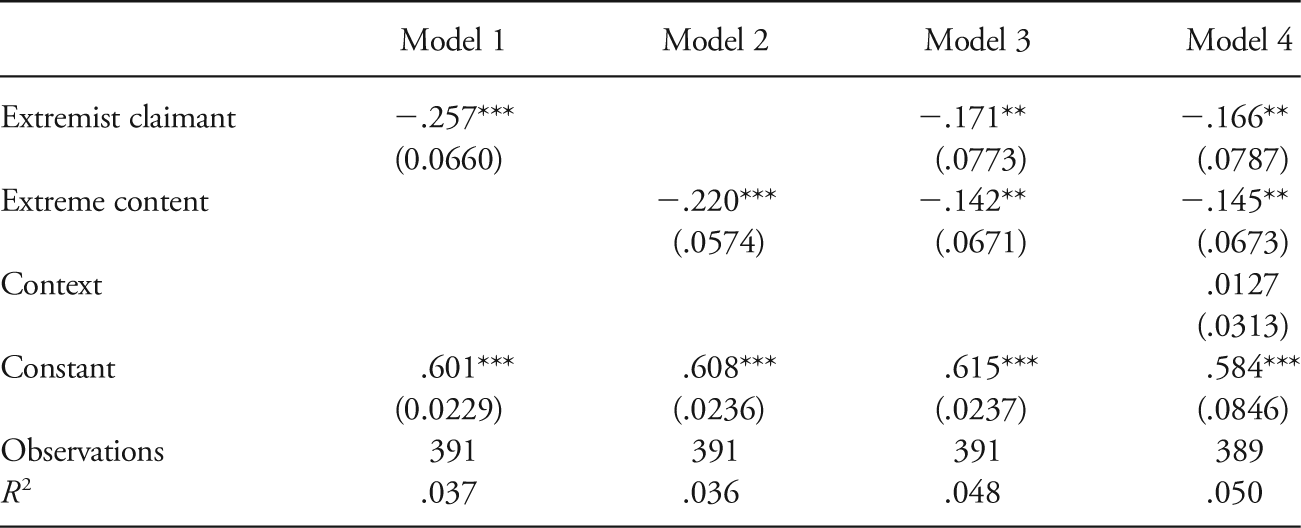
Table 4 further describes the statistical relationships between extremism and judicial support for free speech. Using an OLS regression, models 1 and 2 demonstrate the difference in mean judicial support for free speech in cases involving conventional and extremist claimants, and conventional and extreme content, respectively. Model 1 demonstrates that extremist claimants on average can expect to lose the support from almost 26% of the justices participating in a case when compared to more conventional free speech claimants. Model 2 demonstrates that on average litigants lose support from 22% of the justices when they seek protection for extremist content, at least when compared against conventional content. Model 3 demonstrates that those conclusions remain independently statistically significant, although admittedly slightly less so, when considered alongside one another. Finally, model 4 demonstrates that these results remain robust even when contextual factors are taken into account.
Judicial Support for Extremism

Note.—Standard errors in parentheses.
* p < .10.
** p < .05.
*** p < .01.
Judicial Behavior in Conventional Free Speech Cases
The statistical evidence presented above demonstrates a robust, inverse relationship between extremism and judicial support for free speech. To complement this statistical evidence, I also examine the cases in this sample qualitatively, comparing the arguments that judges used in cases involving extremism with those from conventional “political” free speech cases. This analysis reveals how judges deploy a different set of arguments in cases featuring extremism. Specifically, in conventional cases, judges often argue that free speech must be interpreted broadly to inform political decision-making, ensure robust debate over policies or candidates, and promote scrutiny of public officials in ways that resonate with Meiklejohn’s position. By contrast, in extreme cases, judges tend to argue that free speech rights need to be interpreted narrowly to defend democracy or its core values in ways that resonate with the arguments laid out by Loewenstein and Popper. Judges sometimes remain committed to these arguments even in those few cases in which extreme claimants prevail, suggesting not just that these arguments are used to justify their decisions but also that judges are indeed scrutinizing these cases to assess extremist threats.
Below, I identify these divergent patterns by comparing cases involving extremism to cases involving defamation. Defamation is useful for two reasons. First, defamation cases make up a majority—over 52%—of cases in the sample. Therefore, these cases illustrate the modal type of analysis. Second, and more importantly, protection against defamation laws is sometimes referred to as “the central meaning” of constitutional free speech rights (Levy Reference Levy1960; Kalven Reference Kalven1964, 208). These cases require judges to balance concerns about individuals’ reputations, which can be unfairly undermined with false information, alongside commitments to open and robust democratic debate, which inevitably will contain false information resulting from our own fallibility. Reputations may be especially valuable to those in public service.Footnote 4 But, if judges are too solicitous of reputational harms of public servants, courts may encourage citizens to “self-censor,” withholding otherwise relevant facts and opinions because of the costs that may result from inaccuracies. Monetary damages can be substantial, even if they vary across jurisdictions. And the legal costs alone may serve as a weapon in the hands of public officials who seek to punish harsh critics, even if those critics ultimately prevail in court.
The high courts examined here have not reached the same conclusions about how best to balance concerns about reputational harms and free speech in defamation cases. But, in many cases, these courts have argued that free speech rights need to be interpreted broadly so as to secure democratic debate and encourage robust oversight of public servants and their actions. Of the courts examined here, the ECtHR stands out as the most protective of free speech claimants in defamation cases although the protections afforded have varied over time somewhat. In its earlier decisions, like Lingens v. Austria (1982), the ECtHR often did not acknowledge a countervailing right to reputation. Over time, however, in cases like Radio France v. France (2004), it has recognized the interests at play as competing rights claims. And yet, despite the increasing recognition of reputational rights, the ECtHR has repeatedly returned to the language first articulated in Handyside v. United Kingdom (1976), namely, that “freedom of expression constitutes one of the essential foundations of such a society, one of the basic conditions for its progress and for the development of every man… . It is applicable not only to ‘information’ or ‘ideas’ that are favourably received or regarded as inoffensive or as a matter of indifference, but also to those that offend, shock or disturb the State or any sector of the population. Such are the demands of that pluralism, tolerance and broadmindedness without which there is no ‘democratic society.’” While readily acknowledging the importance of free speech to democracy, such concerns have been particularly acute in defamation cases. For example, in Renaud v. France (13290/07, 2010)—a standard defamation case involving upset neighbors who opposed a real estate project—the ECtHR admonished the national court to place greater weight in favor of the defamer’s part in “a process of political opposition” and relatively less weight on proper decorum so as to define when individuals “exceeded the limits of free political criticism.” Furthermore, the ECtHR instructed elected officials to “show particular tolerance for the criticisms” they encounter so as to secure “the more general interest in ensuring the free play of political debate, which lies at the very heart of the notion of democratic society” (Id. at para. 41). The ECtHR has been even more strident in its protection for free speech in cases involving members of minority or opposition parties and other advocates of ideas that were not well represented in the majority. For example, in Jerusalem v. Austria (2001), the ECtHR asserted that “interferences with the freedom of expression of an opposition member of parliament, like the applicant, call[ed] for the closest scrutiny on the part of the Court” (Id. at para. 36). The need for searching scrutiny, the Court has argued, is necessary when politicians attempt to silence criticism from the opposition, and it is especially important for the analysis here because it would seem to afford extremists from opposition parties considerable latitude to press their causes. And yet, as we shall see, the ECtHR has not been willing to extend this line of argument in cases involving extremism.
The Supreme Court of India, by contrast, is perhaps the least protective of alleged defamers’ free speech rights. In Subramanian Swamy v. Union of India, Ministry of Law (AIR 2016 SC 2728, 2016), the Indian Supreme Court upheld Sections 499 and 500 of the Indian Penal Code, criminalizing defamation. That Court seemingly backed itself into a corner by recognizing a right to reputation in Article 21 of the Indian Constitution guaranteeing a right to life and liberty. Accordingly, the Court was forced to balance seemingly competing constitutional provisions, and it ultimately concluded in favor of upholding the criminal defamation statute while seemingly leaving open the opportunity for lower courts to find a different outcome in individual cases. Moreover, the Indian Court has repeatedly considered and often upheld contempt orders issued by judges who punish critics of judicial behavior (Keck, Metroka, and Price Reference Keck, Metroka and Price2018). In these cases, the Supreme Court has argued that such contempt orders are often, but not always, appropriate because of the distinctly isolated and therefore vulnerable position of the judiciary, which—the Supreme Court has claimed—must rely on the trust of the public to do its work effectively (see, e.g., C.K. Daphtary v. O.P. Gupta, AIR 1971 SC 1132 at para. 58). The Court has seemingly inverted the more standard argument that the judiciary should be able to withstand adverse public opinion and political pressure because of its institutional isolation.
But, despite these speech-restrictive decisions, the Indian Supreme Court has often favored alleged defamers in civil cases. As Gautam Bhatia (Reference Bhatia2016) has noted, the Court’s treatment of criminal defamation in cases like Subramanian Swamy contrast sharply with the Supreme Court’s earlier decision in R. Rajagopal v. Tamil Nadu (AIR 1995 SC 264, 1995). In Rajagopal the Court seemed to indicate—although admittedly it is somewhat unclear—that government officials could not recover civil damages for defamation related to their public office without satisfying the “actual malice” standard that the US Supreme Court set out in New York Times v. Sullivan (376 U.S. 254, 279–80 [1964]). The Indian Supreme Court argued that contemporary life in India called for “a proper balancing of the freedom of press and said laws consistent with the democratic way of life ordained by the Constitution.” And while India need not copy the American approach wholesale, these justices thought that the Indian “system of government demand[ed] … constant vigilance over exercise of governmental power by the press and the media among others. It [was] essential for a good government” (AIR 1995 SC 264 at para. 23). In light of these considerations, the Court took note of the “chilling effect” and how the threat of litigation—much less criminal prosecution—might interfere with the type of “constant vigilance” that promoted “good government” (Id. at para. 21). Needless to say, additional work is required to reconcile the tension between Rajagopal and Subramanian Swamy.Footnote 5
The other courts examined here fall somewhere in between the ECtHR and the Indian Supreme Court’s treatment of defamation. Strikingly, the High Court of Australia has inferred a right to political communication from the Australian Constitution, despite the decision of its drafters to avoid including a right to free speech (Lee Reference Lee, Lee and Winterton2003, 383–84).Footnote 6 The High Court justified its controversial conclusion as following from the necessary requirements of a representative democracy. And the High Court has used this right to limit defamation in cases such as Theophanous v. Herald & Weekly Times (1994; see Kenyon Reference Kenyon2006; Saunders Reference Saunders2017, 212). Like the ECtHR, the Australian High Court has recognized how “criticism of the views, performance and capacity of a member of Parliament and of the member’s fitness for public office, particularly when an election is in the offing, is at the very centre of the freedom of political discussion” ([1994] HCA 46). In cases like this, the High Court made clear here, it understood the important role that free speech played to encourage robust oversight of public servants and how this right to political communication would need to be interpreted expansively so as to allow the media and citizens more generally to live up to their obligations.
The Canadian Supreme Court has landed in a similar place even if it initially adopted a strikingly different tone when it first considered the appropriate balance between common law protections for individual reputations and free expression under its new charter. In Hill v. Church of Scientology ([1995] 2 S.C.R. 1130), the Court held a dim view of falsehoods, arguing that they did not contribute to any of the underlying rationales for protecting free expression (Stone Reference Stone, Albert and Cameron2017). Indeed, lies may be “detrimental to the advancement of these values and harmful to the interests of a free and democratic society” (at para. 106 [Cory, J., majority]). But, more recently, the Canadian Supreme Court seems to have backed away from its earlier zealous protection of individual reputation, precisely because of concerns about robust debate within a democracy. In Grant v. Torstar ([2009] 2009 SCC 61), for example, Chief Justice McLachlin reminded litigants that, among other reasons, “free expression is essential to the proper functioning of democratic governance” (at para. 48). The Canadian Court came to the defense of a newspaper because, to hold otherwise, Chief Justice McLachlin worried, would allow the law to “have a chilling effect” that discouraged the sharing of information crucial to the proper functioning of democracy if the law afforded too much protection for their own reputations (Id. at para. 53). In that sense, the Canadian Court has seemingly retreated from Hill and seems willing to afford significant protection for falsehoods by recognizing how the threat of litigation may cause individuals to self-censor, knowing that mistakes are inevitable in open debate.
Like Canada, South Africa’s Constitutional Court has been somewhat mixed in its tolerance of defamation. Outside of the political sphere, the Court provided support for individuals seeking protection for defamation, upholding a judgment against three students who created and posted online a doctored image of their deputy principal engaging in suggested sexual acts with another man (Le Roux v. Dey, 2011 (3) SA 274 (CC)). In cases involving public servants, the Court has also recognized the important role that reputation plays for politicians. In Khumalo v. Holomisa (2002 (5) SA 401 (CC)), for example, Justice Kate O’Regan asserted that little was to be gained if defendants were allowed to falsely defame someone and thereby deprive him of his reputation. That said, she held that the defendant labored under a rather low—reasonableness—standard, such that if a newspaper could not establish truth as a defense, it could still prevail if the discovery of truth was “disproportionately expensive” or “in all the circumstances the publication was reasonable” (Id. at para 43). The Court further upheld truth as a defense, even in cases in which plaintiffs enjoyed immunities for previous crimes (Citizen 1978 v. McBride, 2011 (4) SA 191 (CC)). Members of the Constitutional Court have also attempted to elaborated a doctrine of “fair comment” on public officials and their behavior (Democratic Alliance v. African National Congress, 2015 (2) SA 232 (CC)).
Before considering how these high courts amend their behavior when extremists seek to use free speech rights to press their agendas, it is worth noting one other relevant aspect, namely, how extremists sometimes attempt to use defamation and defamation-like laws to punish their critics—and how these courts have responded to such behavior. Nowhere is this behavior more evident than in the ECtHR’s treatment of far-right politicians in Austria, who have regularly resorted to defamation (and defamation-like) lawsuits in an effort to silence critics.Footnote 7 Notice here that while these cases involve elements of extremism, these extremists are not free speech claimants. On the contrary, these litigants, like the members of the right-wing Freedom Party of Austria (Freiheitliche Partei Österreichs, FPÖ) and especially its one-time leader Jörg Haider, seemingly have sought to discourage negative reporting by using defamation and other laws to increase the costs of negative journalism.Footnote 8 One case illustrates this point. Mr. Gerhard Oberschlick, who had already survived a previous tangle with the FPÖ (Oberschlick v. Austria, 11662/85), had to return to the ECtHR after calling Jörg Haider an “idiot” and further suggesting that he would not call Haider a Nazi only because that would embolden his standing with his base. In these kinds of cases, the ECtHR has drawn on the kinds of arguments first developed by the US Supreme Court in cases like New York Times v. Sullivan (376 U.S. 254 [1964]), justifying broad free speech protections to support close scrutiny of public officials. The ECtHR has then used these ideas about expanded free speech protections to ensure that far-right parties like the FPÖ could not use defamation and related laws to silence criticism. But, as we shall see in the next section, these courts have been reluctant to interpret free speech rights broadly when the tables are turned and extremists make appeals on free speech grounds.
Judicial Behavior toward Extremists
As demonstrated in the previous section, generally speaking, the courts examined here were sensitive to the relationship between free speech and democracy, regularly interpreting free speech rights broadly to justify greater debate over public matters and scrutiny of public officials. In this section, I document how judges from various courts changed their tune in cases involving extremism, arguing that free speech rights ought to be interpreted narrowly to protect democracy and its core values.
Extremism in the ECtHR
The ECtHR considered several times whether extremists could be excluded from civil service positions in Germany. But in an earlier version of these cases, the Court oddly refused to engage in any real analysis about how to reconcile commitments to the constitutional order alongside the free speech rights of extremists. In Glasenapp v. Germany (1986) and Kosiek v. Germany (1986), the ECtHR considered whether a secondary-school teacher and a university-level physicist, respectively, could be denied employment because of their involvement in and support for extremist political parties. Germany had required both candidates to pledge to “uphold the free democratic constitutional system within the meaning of the Basic Law” as a condition of employment (Glasenapp v. Germany, 9228/80 at para. 52; Kosiek v. Germany, 9704/82 at para. 38). Because contracting states had not created an explicit right to public service under the European Convention on Human Rights, the ECtHR simply viewed this loyalty oath as a necessary personal qualification for the position. Accordingly, in “refusing Mrs. Glasenapp such access, the Land authority took account of her opinions and attitude merely in order to satisfy itself as to whether she possessed one of the necessary personal qualifications for the post in question” (Glasenapp at para. 53). The ECtHR reached a similar conclusion in Kosiek (at para. 38). The ECtHR simply ignored the fact the Germany had committed itself to Article 10 and therefore did not wrestle with the more difficult question of how to reconcile Germany’s democratic loyalty requirement alongside its free speech commitments. Perhaps the ECtHR felt comfortable ignoring these free speech issues because of common understandings about the limited scope of free speech afforded by Article 30 of the Universal Declaration of Human Rights of 1948 and, more importantly, Article 17 of the European Convention, which held that “nothing in this Convention may be interpreted as implying for any State, group, or person any right to engage in any activity or perform any act aimed at the destruction of any of the rights and freedoms set forth herein or at their limitation to a greater extent than is provided for in the Convention” (Schauer Reference Schauer and Leiser1981).
But these legal instruments alone do not then explain why, after the fall of the Berlin Wall, the ECtHR began to take free speech concerns more seriously. In Vogt v. Germany (17851/91, 1995), a member of the German Communist Party and secondary-school teacher again challenged her ineligibility as a violation of Article 10. Unlike the previous cases, here the ECtHR was serious about recognizing the claimant’s free speech rights. But the bare majority that ultimately ruled in Ms. Vogt’s favor avoided entirely the types of arguments that dominated in defamation cases involving members of minor parties and the special role that free speech rights played in preserving robust democratic debate. Instead, the majority that supported Ms. Vogt had to concede that “a democratic State is entitled to require civil servants to be loyal to the constitutional principles on which it is founded” (Id. at para. 59). There was simply no way around “Germany’s experience under the Weimar Republic and during the bitter period that followed the collapse of that regime up to the adoption of the Basic Law in 1949. Germany wished to avoid a repetition of those experiences by founding its new State on the idea that it should be a ‘democracy capable of defending itself’” (Id.). Germany was therefore entitled to impose certain obligations on the civil service for self-preservation. In light of those concerns, the bare majority was left arguing that in this particular instance Ms. Vogt’s appointment as a secondary-school language teacher “did not intrinsically involve any security risks” (Id. at para. 60).Footnote 9 Indeed, in subsequent cases the ECtHR proved less forgiving of extremism when it manifested in the military (Erdel v. Germany, 30067/04). The dissenters in these cases did not disagree with the major premise, namely, that Germany’s particular history justified restricting free speech rights to preserve democracy (Id. at para. 3 [Bernhardt, Gölcüklü, Matscher, Loizou, Mifsud Bonnici, Gotchev, Jungwiert, and Kuris, JJ., dissenting]).
Separatist movements also triggered concerns about the paradox of tolerance. The ECtHR had previously considered the free speech ramifications that arose out of banned parties (Aydin v. Germany, 16637/07), but unlike the case in which the speech restrictions had been justified to protect public order and safety, in these newer cases, the ECtHR was more willing to argue that speech restrictions were necessary to preserve constitutional democracy. Of these newer cases, perhaps Herri Batasuna et Batasuna v. Spain (25803/04 and 25817/04, 2009) is perhaps the most illuminating. The Spanish government had banned separatist parties from electoral competition because of links to and support for Euskadi Ta Askatasuna (ETA), a leftist separatist organization that sought autonomy or independence for Basques from Spain and France. These political parties sued, alleging, among other things, violations of Articles 10 and 11. Although the ECtHR recognized the importance of free speech in the democratic process generally and the burdens that that disqualification imposed on these parties specifically (at para. 76), it nonetheless sided with the Spanish government:
The Court must also recall that a political party may campaign for a change in the legislation or in the legal or constitutional structures of the State on two conditions: 1) the means used for this purpose must be in all points legal and democratic; 2) the proposed change must itself be compatible with fundamental democratic principles. It necessarily follows that a political party whose leaders incite to resort to violence or propose a political project which does not respect one or more rules of democracy or which aims at the destruction of this one as well as the ignorance of the rights and freedoms which it recognizes, cannot avail itself of the protection of the Convention against sanctions imposed on these grounds.
(Id. at para. 79)Faced with a paradox of tolerance, the ECtHR thought the free speech and associational restrictions imposed on these members were appropriate and proportional in light of the threats they posed. In the other cases, the ECtHR again resolved the paradox of tolerance by restricting speech to realize “the principle of the rule of law and the general objectives of the Convention, namely … the protection of the democratic order.”Footnote 10
Similar arguments were also used in cases involving hate speech. In Norwood v. United Kingdom (23131/03, 2004), the ECtHR demonstrated another common approach to extremism: presenting arguments that suggested that extremism threatened other core ideas central to the democratic project. In that case, a supporter of the “extreme right wing” British National Party (BNP) was convicted of an aggravated offense for displaying “in the window of his first-floor flat a large poster … , supplied by the BNP, with a photograph of the Twin Towers in flame, the words ‘Islam out of Britain—Protect the British People’ and a symbol of a crescent and star in a prohibition sign.” The ECtHR ultimately deemed Norwood’s case inadmissible but not before concluding that “the words and images on the poster amounted to a public expression of attack on all Muslims in the United Kingdom. Such a general, vehement attack against a religious group, linking the group as a whole with a grave act of terrorism, is incompatible with the values proclaimed and guaranteed by the Convention, notably tolerance, social peace and non-discrimination” (Id.).Footnote 11
In Féret v. Belgium (15615/07, 2009) the ECtHR made more explicit the relationship between core ideas and the democratic project more generally. In that case, a Front National candidate, who oversaw the party’s publications, ran afoul of Belgium’s hate speech statute after he distributed anti-immigrant leaflets and posters allegedly to incite hatred. Féret challenged the statute as a violation of his rights under Article 10. The European Court of Human Rights upheld Belgium’s conviction, using the opinion to address the paradox of tolerance directly: “Tolerance and respect for the equal dignity of all human beings constitute the foundation of a democratic and pluralist society. It follows that in principle it may be deemed necessary, in democratic societies, to sanction or even prevent all forms of expression which propagate, encourage, promote or justify hatred based on intolerance” (at para. 73). In short, it was appropriate to restrict free speech in such circumstances because to hold otherwise would risk “danger for social peace and political stability in democratic states” (at para. 73).
Also telling was the ECtHR’s support for a national court argument upholding punishment for antihomosexual hate speech. In Vejdeland v. Sweden (1813/07, 2012), the ECtHR endorsed the Swedish Supreme Court’s argument that alongside citizens’ right to free expression, they also incurred some obligations, “one such obligation being, as far as possible, to avoid statements that are unwarrantably offensive to others, constituting an assault on their rights” (at para. 57). It was precisely this argument that so often did not hold sway in more conventional defamation cases considered by the ECtHR.
Extremism in the Supreme Court of Canada
The Supreme Court of Canada largely followed the ECtHR’s strategy of limiting free speech rights for racist speech because such speech conflicted with core democratic values. In cases like R. v. Keegstra ([1990] 3 S.C.R. 697), a majority of the Canadian Court upheld charges against an Alberta high school teacher who communicated anti-Semitic statements to his students. While the majority acknowledged the burden that the impugned law imposed on speech, it nonetheless argued that free speech rights, like the one at issue in Keegstra, could be limited so as to render them consistent with “principles fundamental in a free and democratic society.”Footnote 12 And even though the impugned law burdened expression, such burdens were tolerable insofar as they fostered “harmonious social relations in a community dedicated to equality and multiculturalism.” Specifically, the Canadian Court noted that hate speech, like that at issue in Keegstra, tended to undermine equality and the “sense of human dignity and belonging to the community at large,” while encouraging discrimination and violence (Stone Reference Stone, Albert and Cameron2017, 249).
But a group of three justices dissented precisely because they did not see the paradox of tolerance appropriately at issue here. They could not understand how Keegstra’s statements threatened to “subvert[ ] democracy or our basic freedoms in the way in which violence or threats of violence may” ([1990] 3 S.C.R. 697). Short of explicit threats, these dissenters challenged the majority in terms that could easily be mistaken for Meiklejohn’s own: “If the guarantee of free expression is to be meaningful, it must protect expression which challenges even the very basic conceptions about our society. A true commitment to freedom of expression demands nothing less” ([1990] 3 S.C.R. 697 [La Forest, Sopinka, McLachlin, JJ., dissenting]). But the dissenters in Keegstra would carry the day only once, namely, in R. v. Zundel ([1992] 2 S.C.R. 731), a case involving the publication of leaflets that denied the Holocaust. The contrasting arguments that these dissenters used here, like their European counterparts in Vogt, are significant because they demonstrate that legal instruments alone do not preclude judicial support for extremism. Rather, these dissenters illustrate the few exceptions that prove the rule.
Canada’s high court has remained committed to militant democracy or core values arguments the majority first developed in Keegstra.Footnote 13 Shortly after that decision, the Court refused to provide protection to leaders of Canada’s white-supremacist West Guard Party, when they sought free speech protection to communicate their supremacist ideas via telephone (Canada (Human Rights Commission) v. Taylor, [1990] 3 S.C.R. 892). Similarly, in R. v. Andrews, the Canadian Court refused to set aside criminal charges against two leaders of the Nationalist Party of Canada who were in charge of publishing the party’s bimonthly magazine that regularly included hate pieces targeting Jewish and Black people. The Court has used these decisions to remind “Canadians of our fundamental commitment to equality of opportunity and the eradication of racial and religious intolerance.”
Extremism in the High Court of Australia
The High Court of Australia has not encountered any free expression cases that contain elements of extremism, at least not in the way coded here. That said, the paucity of such cases may be attributed to the doctrinal test created in Lange and subsequently modified in Coleman v. Power ([2004] HCA 39). This test requires judges to determine, among other things, whether a law has as its object “the maintenance of the constitutionally prescribed system of representative and responsible government.” Accordingly, it would seem that extremists who seek to undermine Australia’s constitutional system in the ways considered in this article face a significant hurdle. That claim is perhaps bolstered by the High Court’s treatment of an antiwar protester, Man Haron Monis, who sent letters to the families of deceased soldiers expressing his sympathies but also asserting that those soldiers had killed innocent civilians and compared some of them to Hitler (Monis v. The Queen, [2013] HCA 4).Footnote 14 Monis was arrested for violating a provision of the criminal code that established an offense for the use of the mail “in a way … that reasonable persons would regard as being, in all the circumstances … offensive.” While neither Monis nor his speech was considered extreme as defined here, this case perhaps comes closest to the type of extremism that the High Court has considered. The High Court divided evenly on the question of whether the offense in question could be construed as maintaining “the constitutionally prescribed system of representative and responsible government.” The three justices, whose opinion ultimately prevailed, were troubled with the “intrusive” nature of the communications insofar as these letters were delivered to relatively private areas, namely, homes and places of work. By contrast, the three dissenters viewed the offense as too far removed from the purpose of maintaining “the constitutionally prescribed system of representative and responsible government.” That said, it would not be difficult to imagine how extremism would run afoul of precisely this provision, suggesting that extremists would fare poorly in Australia’s courts.
Extremism in the Constitutional Court of South Africa
South Africa’s Constitutional Court has had relatively few opportunities to consider extremism. But, in those few instances in which it has, the Court has sided with extremists. Perhaps the most unambiguous example arose in Islamic Unity Convention v. Independent Broadcasting Authority (2002), wherein the Court was asked to consider whether Section 2(a) of the Code of Conduct of the Independent Broadcasting Authority, which prohibited broadcasting of material “likely to prejudice relations between sections of the population,” violated the free expression guarantees of Section 16 of the Constitution. The case arose when the South African Jewish Board of Deputies complained about a radio broadcast aired on a community radio station owned by the Islamic Unity Convention (IUC). The IUC hosted the historian and author Dr. Yaqub Zaki on a program titled “Zionism and Israel: An In-Depth Analysis.” Dr. Zaki denied aspects of the Holocaust and questioned the legitimacy of Israel. Deputy Chief Justice Pius Langa believed this case pitted two constitutional values against one another. While free expression was important, it was not absolute. Speech had the potential to interfere with the right to dignity and undermine state interests in national unity and reconciliation (Id. at para. 30 [Langa, DCJ, majority]). But the balance between the two—and whether the burdens on individual expression were too great—had to be resolved under the limitations clause. On that analysis, however, Langa was troubled by the vagueness of Section 2(a) and ultimately declared the act unconstitutional on those grounds (Id. at para. 51 [Langa, DCJ, majority]). That said, other members of the Court have been willing to limit free speech when such speech interfered with the dignity of other citizens. As the Court noted, “With us the right to freedom of expression cannot be said automatically to trump the right to human dignity. The right to dignity is at least as worthy of protection as the right to freedom of expression. How these two rights are to be balanced, in principle and in any particular set of circumstances, is not a question that can or should be addressed here. What is clear though and must be stated, is that freedom of expression does not enjoy superior status in our law” (Mamabolo at para. 41). In other words, the Court has declared a willingness to reconfigure the balance for speech that runs contrary to core values in South Africa’s democracy.
Extremism in the Supreme Court of India
Of the courts examine here, only the Indian Supreme Court ruled in favor of an extremist claimant asserting an extreme message in the context of electoral politics.Footnote 15 In Kedar Nath Singh v. Bihar (1962), a member of the communist party was charged with sedition and exciting disaffection in the military under Sections 124A and 505 of the Indian Penal Code, respectively, after he allegedly encouraged rebellion against the Indian state. While Chief Justice B. P. Sinha upheld the constitutionality of Section 124A, he nonetheless required that it be interpreted consistently with Article 19(1)(a) of the Indian Constitution, guaranteeing the freedom of expression. In practice, such a reading would protect “criticism of public measures or comment on Government action, however strongly worded, [as] within reasonable limits and would be consistent with the fundamental right of freedom of speech and expression. It is only when the words, written or spoken, … have the pernicious tendency or intention of creating public disorder or disturbance of law and order that the law steps in to prevent such activities in the interest of public order” (Id. at para. 38). On this interpretation, the Court dismissed the case against Singh presumably because his statements stopped short of clearly advocating illegal action. But it also remanded a number of other cases involving Mohd. Ishaq Ilmi for an allegedly seditious speech he delivered at the All India Muslim Convention, a respondent Rama for a speech he delivered to the Bolshevik Party in Uttar Pradesh, and Parasnath Tripathi for urging an audience to organize a “volunteer army” to violently resist the government.
But Kedar Nath Singh is an outlier. More often, the Indian Supreme Court has supported government efforts to restrain extremists. In that sense, Ram Singh v. Delhi (1951) provides a better example. In that case, Professors Ram Singh, Bal Raj Khanna, and Ram Nath Kalia were arrested and detained under the Preventive Detention Act, 1950. The three defendants were, respectively, the president, vice president, and secretary of the Delhi State Hindu Mahasabha, a right-wing Hindu nationalist organization. They had previously given speeches that “excited disaffection between Hindus and Muslims,” and as a precaution, the Delhi government prevented them from engaging in further religious agitation. Having recently upheld the constitutionality of preventative detentions in A.K. Gopalan v. Madras (1950), the Indian Supreme Court remained doggedly committed to its position in spite of the obvious burdens that such detentions imposed on speech by construing Article 19(1)(a) “as distinct [from the Constitution’s] fundamental rights” and subject to certain “limitations and conditions” for which “alone they could be taken away or abridged.” The opinion is noteworthy because the Supreme Court simply refused to wrestle with the implications of its decision, instead concluding that any anomalies related to Article 19(1)(a) that result from preventive detention “must now be taken to be settled law, and courts in this country will be serving no useful purpose by discovering supposed conflicts and illogicalities and recommending parties to re-agitate the points thus settled” (Id. at para. 6).
The Indian Supreme Court similarly ruled against Hindu nationalist candidates whose campaign rhetoric threatened Muslims. In Dr. Das Rao Deshmukh v. Kamal Kishore Nanasaheb Kadam (AIR 1996 SC 391), a BJP candidate appealed to voters, requesting their support “to teach a lesson to Muslims”—a statement that was interpreted as threatening and ultimately caused the courts to set aside the candidate’s election victory. Sections 123(3) and 123(3A) of the Representation of People Act, 1951, prohibited “corrupt practices,” including religious appeals in political campaigns that tended to incite communal divisions. The Court upheld the constitutionality of this provision by retreating to an argument that avoided the quandary of the paradox of tolerance and allowed governments to restrict inflammatory communal language to prevent irrational passions from overtaking the electoral process (AIR 1996 SC 391 at para. 14). The Court expressed a similar level of impatience with verbal attacks on Muslims by a pair of Shiv Sena leaders in Dr. Ramesh Yeshwant Prabhoo v. Prabhakar Kashinath Kunte (AIR 1996 SC 1113). In both of these cases, the Court may have felt particularly inclined to come to the defense of Muslims because of the increasing level of violence they experienced during the 1990s, a period when the BJP for the first time defeated the previously dominant Indian National Congress for control of the Lok Sabha (Varshney Reference Varshney2002).
As already indicated by us, our democracy can only survive if those who aspire to become people’s representatives and leaders understand the spirit of secular democracy… . For such a spirit to prevail, candidates at elections have to try to persuade electors by showing them the light of reason and not by inflaming their blind and disruptive passions. Heresy hunting propaganda or professedly religious grounds directed against a candidate at an election may be permitted in a theocratic state but not in a secular republic like ours. It is evident that, if such propaganda was permitted here, it would injure the interests of members of religious minority groups more than those of others. It is forbidden in this country in order to preserve the spirit of equality, fraternity, and amity between rivals even during elections.
(Dr. Ramesh Yeshwant Prabhoo v. Prabhakar Kashinath Kunte, AIR 1996 SC 1113, quoting from Ziyauddin Burhanuddin Bukhari v. Brijmohan Ramdass Mehra, AIR 1975 SC 1788)The tone that the Indian Supreme Court has adopted in these kinds of free speech cases is consistent with its counterparts elsewhere. As the preceding evidence makes clear, the courts examined here have used starkly different arguments in cases involving extremism, at least when compared to their treatment of more conventional defamation cases. In more conventional cases, the courts asserted arguments that justified expansive readings of free speech to protect and promote democratic competition. But, in the face of extremism, judges seemingly reversed these arguments, justifying restrictions on free speech to protect and promote democracy and core values.
Militant Democracy as a Manifestation of Judicial Behavior
When extremists avail themselves of free speech rights, courts seem to have two broad alternatives available: (1) either broaden free speech to protect all political ideas, as Meiklejohn argued, or (2) restrict free speech to those ideas and individuals that share in the regime’s basic democratic, national, and constitutional commitments, as Loewenstein and Popper argued. The previous discussion indicates that, at least among the courts considered here, judges have largely followed Loewenstein and Popper and restricted speech in the face of extremism.
Judges’ militant behavior toward extremism raises some interesting challenges for our dominant theories of judicial behavior, illuminating some important differences while also identifying various shortcomings. Take, for example, our class of theories, like the attitudinal (Segal and Spaeth Reference Segal and Spaeth1993) and strategic models (Epstein and Knight Reference Epstein and Knight1998), that emphasize judges’ ideological preferences as determinants of judicial voting patterns, even if they differ in their understandings of the relationship between revealed and true preferences. In many instances, these theories have more than proved their mettle when considering how judges respond to their dockets and even how those dockets are shaped strategically. But, as one observer has noted, judges’ ideological preferences are largely exogenous to the analysis of judicial behavior (Smith Reference Smith1988). Therefore, any theoretical question, like the one here—namely, Why might judges be ideologically predisposed to rule against extremists?—largely has to defer to some other theoretical framework to account for the systematic presence of judicial ideology on a high-court bench.Footnote 16 To their credit, these models are often readily merged with other theoretical frameworks, like regime theory (Dahl Reference Dahl1957), which I will discuss below, but the point remains: ideologically based theories of judicial behavior often do not provide an independent answer about why judges might possess certain ideological proclivities and, therefore, do not offer a clear answer as to why judges seem reluctant to support extremism except insofar as their ideological preferences differ.
As already indicated, regime- or party-based models of judicial behavior are often readily joined with ideological accounts because they provide a clear answer about the origins of judges’ ideological preferences. In constitutional systems, in which the political branches play a significant role in determining judicial appointments and promotions, these theories hold that partisans will often supplement concerns about judicial qualifications with ideological considerations, hoping to transform the judiciary into a suitable partner in the task of governance (Dahl Reference Dahl1957; Gillman Reference Gillman2006). Scholarship in this vein has often tried to demonstrate how the distinct institutional features of the judiciary, under certain circumstances, can provide benefits to governing parties. Judges, for example, can attempt to settle controversial political issues in ways that parties might hope to avoid out of fear of electoral reprisals or intraparty splits (Graber Reference Graber1993; Whittington Reference Whittington2005), provide partisans with a form of insurance in the event of an electoral defeat (Ginsburg Reference Ginsburg2003; Finkel Reference Finkel2008), preserve ideological interests to outlast a regime itself (Hirschl Reference Hirschl2004), or even render a regime’s commitments more credible (Landes and Posner Reference Landes and Posner1975).
The regime- or party-based models seem to provide some plausible answers about why judges might behave militantly toward extremism in free speech cases. Such answers would seem to take the following form: to the extent that political parties are able to influence judicial appointments, they are predominantly appointing judges who have an interest in advancing partisan or coalition goals to the detriment of extremist causes because those extremists are not members of mainstream coalitions. This kind of argument could take multiple, more specific forms. Perhaps dominant parties appoint judges of sufficiently similar ideological stripes so as to produce a liberal democratic consensus (Hartz Reference Hartz1955), generally, and a corresponding understanding of free speech such that extremists find little quarter in the courts. This type of consensus may endure even if judges grow more sympathetic to free speech arguments over time because judges fail to recognize extremist claimants as part of the political coalition with which they identify (Baum Reference Baum2017, 40–84). I should note that there may be important differences here in how various subfields and conceptual orientations, like historical institutionalist (and American political development) or comparative constitutional law scholarship, understand regimes and the role ideology plays in those regimes. Those differences would need to be worked out, but there does seem to be a plausible way forward here for understanding judicial behavior as an extension of party or regime politics.
While the data collected here are insufficiently precise to test such arguments, the behavior of justices on the Indian Supreme Court may provide a useful test in the near future. The rise of the Hindu nationalist BJP, coded here as extreme for its religious-nationalist commitments, not only has had an impact on Indian democracy (Varieties of Democracy Institute 2021) but has also begun to exercise its influence on the Indian judiciary. But the data collected here—ending in 2016—capture only the very beginnings of India’s transition to right-wing “autocratization.” Nonetheless, if something like a regime- or party-based account is correct, we would expect to see Indian Supreme Court justices who are sympathetic to the BJP begin ruling in favor of some of the far-right free speech claimants, like those observed in Dr. Das Rao Deshmukh or Dr. Ramesh Yeshwant Prabhoo. The same would not necessarily be true for far-left claimants. This shift in judicial protection could potentially have important implications for the types of Hindu nationalist (and especially anti-Muslim) appeals tolerated in elections, for example.
Institution-based accounts may provide another, overlapping account of judicial behavior in the face of extremism. Institutional accounts acknowledge the regime-based factors that shape judges’ views by way of the selection process. They supplement such accounts, however, by also considering how judges’ views might be shaped further by the institutions in which judges participate (Smith Reference Smith1988). Judges may, therefore, act to protect or promote the authority of courts (Keck Reference Keck2007) or otherwise adopt roles and pursue missions consistent with their institutions’ purposes and expectations (Gillman Reference Gillman1993; Novkov Reference Novkov2001; Brandwein Reference Brandwein2011). Explanations of judicial behavior as supporting a militant democracy can potentially be grounded on this theoretical terrain, although in various forms.
One version of the institution-based account would seem to reinforce the regime-based account already considered. As indicated, judges may act to protect or promote the authority of courts. To the extent that subversive extremists threaten the constitutional order, they may also threaten the prominent role of courts in that order. Judges might, therefore, be reasonably expected to restrict extremists’ free speech rights to thwart their political goals. On this view, therefore, the institution- and regime-based accounts would seem to reinforce one another, without necessarily producing distinct observable implications. And yet, together they reinforce a more subtle point. Judges, on these accounts, are not necessarily the champions of constitutional democracy per se. Rather, by supporting militant democracy, these judges support the preservation of a particular instantiation of constitutional democracy. It is useful to return to McGuinness’s case against the United Kingdom to illustrate this point. The United Kingdom viewed McGuinness as an extremist; but he was also a republican seeking distinct, more responsive democratic institutions for Northern Ireland. And yet the ECtHR used the same self-preservation argument more commonly used in cases involving left- and right-wing extremists who opposed democracy. In that case, at least, the ECtHR proved less the guardian of democracy than the guardian of the constitutional status quo.
Alternatively, a second version of the institution-based account might stress the ways that judges conceptualize their roles and duties when confronted with extremism. As discussed previously, however, judges may adopt at least two different understandings of their roles vis-à-vis the free speech rights of extremists and democratic participation, corresponding roughly to the positions laid out by Loewenstein and Meiklejohn, respectively. Why judges come to understand their duties in terms of these competing visions of free speech is less clear and suggests avenues for fruitful comparative research. Such inquiries would do well to note the relative prominence of militant democracy arguments in the European context, especially by the ECtHR. By contrast, the US Supreme Court has all but abandoned militant democracy since the 1970s in favor of the kinds of doctrinal positions that stress content and viewpoint neutrality, as emphasized by Meiklejohn.Footnote 17 Accounts explaining such variation might look to international legal instruments—notably Article 30 of the Universal Declaration of Human Rights of 1948 and Article 17 of the European Convention on Human Rights—as a useful starting point, finding potentially that they shaped European understandings of the judicial role in preserving democracy without a similar, lasting influence on American judges (Schauer Reference Schauer and Leiser1981, 229). Or perhaps such variation is better accounted for in terms of the waxing and waning threats of fascism, communism, or terrorism on judges’ conceptualized roles as guardians of democracy in different places. Such inquiries would also do well to point out where institution-based accounts diverge, if at all, from regime-based expectations of judicial behavior.
Conclusion
The evidence presented here demonstrates that courts do not provide succor to extremism. Judges have regularly reduced their support for free speech in cases featuring extremism in four national high courts and the ECtHR. This behavior extends beyond voting patterns and includes changes in the types of arguments judges put forward in their opinions. These judges often abandon free speech arguments, which stress the relationship of these rights and full democratic participation, in favor of militant democracy arguments when confronted with extremism. This type of illiberal behavior is consistent with regime- and institution-based theories of judicial behavior, which expect judges to preserve the existing regime or the authority of existing institutions, respectively, when extremists take advantage of free speech to challenge democracy, constitutionalism, or core values.
Judicial support for militant democracy suggests that there might be an outer limit on the kinds of political contests that judges will protect in many self-governing democracies. Such limits can seem desirable, depending on one’s commitment to the status quo. During the current era when democracy around the globe seems vulnerable, the introduction of judicial impediments to thwart populist, authoritarian movements in theory can reduce the probability of their success. But, such limits may also risk ostracizing otherwise committed democrats, who seek greater autonomy or national independence through the orderly processes of democratic deliberation and political competition. The state may characterize their ideas as dangerous or extreme, and judges may invoke militant democracy to withdraw free speech protections. But Alexander Meiklejohn’s warning remains: to “be afraid of ideas is to be unfit for self-government.” By restricting the free speech of otherwise committed democrats, judges may simply reveal their lack of confidence in prevailing ideas, the people, or both.