Both dental and cardiac diseases, the latter of which can either be congenital or acquired, can have adverse effects on an individual's quality of life. Although the aetiology of most non-syndromic congenital heart diseases is unknown, it is estimated that approximately eight live-born infants per 1000 live births have a congenital heart disease.Reference Baspinar, Karaaslan, Oran, Baysal, Elmaci and Yorulmaz 1 Congenital heart diseases in children are often associated with either chromosomal abnormalities or adverse maternal conditions during pregnancy owing to diseases, such as diabetes mellitus; prescription drugs, such as anticonvulsants or anticoagulants; substance abuse, such as alcohol; or infection.Reference Welbury 2 , Reference Angus and Cameron 3 The aetiology of acquired heart diseases in children is wide ranging, and includes rheumatic heart disease, infective endocarditis, Eisenmenger's syndrome, viral myocarditis, and pericarditis.Reference Welbury 2 With improved methods for diagnosing heart diseases in infants, as well as the advances in surgery and anaesthesiology for such infants, the number of surviving children with a congenital heart disease is increasing.Reference Rosenkranz 4 Therefore, the oral care of children with a cardiac disease is of great importance for maintaining their quality of life.
Ameloblasts are cells that are sensitive to changes in the intracellular environment.Reference Soames 5 – Reference Karadas, Cantekin and Celikoglu 8 Cardiac disease can adversely influence the activity of ameloblasts, and the presence of a cardiac disease in a child at the time of tooth development can result in the formation of defective and soft teeth because of reduced enamel deposition.Reference Balmer and Bu'Lock 9 The oral health of a child with a cardiac disease can also be jeopardised because of other problems, such as difficulties with nutrition in the first few years of his/her life. For example, vomiting is a common problem, and night meals are often necessary in order to maintain energy intake at an acceptable level.Reference Stecksen-Blicks, Rydberg, Nyman, Asplund and Svanberg 10 Regular dental care is important in children with cardiac disease, and the start of a caries prevention intervention programme in such children is usually delayed. The main reason for this importance and late onset is the long periods of hospitalisation during the first few years of their life. In addition, dentists are reluctant to treat such children.Reference Balmer and Bu'Lock 9
The simplified oral hygiene index score is a measure of the amount of debris or calculus that is found on pre-selected tooth surfaces. A high simplified oral hygiene index score does not always indicate poor oral hygiene, but can indicate seriously neglected oral health.Reference Greene 11 Tamaki et alReference Tamaki, Nomura, Inoue, Inosita, Tsurumoto and Hanada 12 investigated the association between periodontal diseases and cardiac diseases in adults and reported that no correlation existed between the simplified oral hygiene index score and the prevalence of cardiac diseases. In their study, Balmer and Bu'LockReference Balmer and Bu'Lock 9 reported that 71% of children with congenital heart disease are not educated in oral hygiene.
Delayed eruption of the primary and permanent dentitions has been reported to occur in children with cardiac disease.Reference Cawson 13 To date, we were unable to find any published study that informed on the effect of a cardiac disease on dental maturation after a bibliographic search in Medline using PubMed and keywords such as ‘congenital heart diseases’, ‘acquired heart diseases’, ‘delayed eruption’, ‘primary teeth’, and ‘permanent teeth’. Most studies on children with a cardiac disease focused on caries prevalence and determination of the decayed/missing/filled teeth and decayed/missing/filled surface indices.Reference Balmer and Bu'Lock 9 , Reference Stecksen-Blicks, Rydberg, Nyman, Asplund and Svanberg 10 , Reference Tasioula, Balmer and Parsons 14 , Reference Franco, Saunders, Roberts and Suwanprasit 15 To the best of our knowledge, no studies on the dental health of children with either a congenital heart disease or an acquired heart disease have yet been reported.
In the light of this background, we undertook a case–control study whose aims were to compare the caries experience, oral hygiene, and dental maturation in a group of children with a cardiac disease and a group of healthy children.
Materials and methods
Study design
This retrospective study was conducted by evaluating the dental records of 268 3- to 16-year-old children and adolescents with either a congenital heart disease or an acquired heart disease, who were referred to the Department of Pediatric Dentistry, Faculty of Dentistry, Ataturk and Erciyes University, Turkey, between June, 2004 and February, 2012. Specifically, this study group comprised 165 children and adolescents with a congenital heart disease (8.0 (mean) ± 3.2 years (standard deviation)) and 103 children and adolescents with an acquired heart disease (11.4 (mean) ± 2.7 years (standard deviation)), and did not have any other systemic disease.
The comparison group consisted of 268 healthy children and adolescents, aged 3–16 years (9.4 (mean) ± 3.4 years (standard deviation)), who were recruited from children who presented to the Paediatric Dental Clinic, Faculty of Dentistry, Ataturk and Erciyes University, Turkey, for routine dental check-ups. The healthy children were divided into two groups in such a manner that each group was age and sex matched with the 165 children with a congenital heart disease and 103 children with an acquired heart disease. Children in the control group were excluded from the study if they were receiving active orthodontic therapy or had any systemic disease.
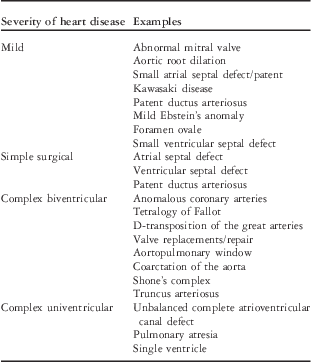
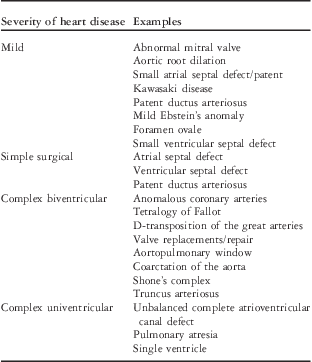
The heart disease patients were further subdivided according to the nature of their heart defect and surgical status. Those with heart disease were categorised into four diagnostic classifications based on the severity of heart disease: (1) mild, (2) simple surgical, (3) complex biventricular, and (4) complex univentricular heart disease. The ‘‘mild’’ category included haemodynamically insignificant forms of congenital and acquired heart lesions, including those that did not require surgical intervention. The ‘‘simple surgical’’ category included conditions requiring a single surgical or interventional procedure. The ‘‘complex’’ groups required repeat surgical operations or repairs (Table 1).
Heart disease categories and representative lesions.
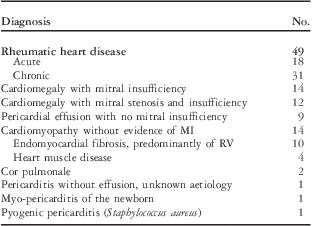
The clinical diagnoses of children with acquired cardiac disease are presented in Table 2.
Clinically diagnosed acquired heart disease.
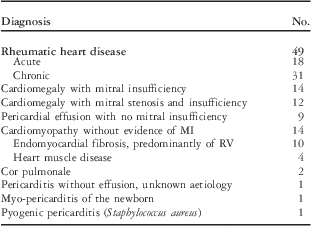
MI = myocardial infarction; RV = right ventricle
Data collection
The oral health of each participating child was assessed from the clinical and radiographical records, and images that had been taken by an intraoral camera. All assessments were made by the same investigator (Kenan Cantekin).
Clinical oral health assessment
All dental examinations were performed using a plane dental mirror and blunt dental explorer with the aid of compressed air and proper lighting. The decayed, missing, and filled indices for primary and permanent teeth were calculated according to criteria of the World Health Organization. 16 All caries lesions that involved the enamel – initial caries lesions – and the dentine – manifest caries lesions – were included in the calculation of the decayed, missing, and filled indices. The oral hygiene of each child was measured by the simplified oral hygiene index. A score of 0.0–0.6 was graded as good oral hygiene, 0.7–1.8 was graded as reasonable oral hygiene, and 1.9–3.0 was graded as poor oral hygiene.Reference Greene 11 At the end of the dental examination, bitewing radiographs were taken in each participating child in order to establish the caries status from the mesial surface of the first premolar or first primary molar to the distal surface of the first or second permanent molar.
Assessment of dental maturation
The dental age of each child was calculated from an orthopantomogram using a radiographic illuminator in a darkened room. The estimation of dental age of all permanent teeth, except that of the third molar, was estimated by the method of Demirjian et al.Reference Demirjian, Goldstein and Tanner 17 When a tooth was missing on one side, but present on the contralateral side, the missing tooth was substituted with that on the contralateral side in order to estimate the dental age.Reference Cantekin, Yilmaz, Demirci and Celikoglu 18 – Reference Miloglu, Celikoglu, Dane, Cantekin and Yilmaz 20
Statistical analysis
A one-sample Kolmogorov–Smirnov test was used to test the normality of distribution of the study parameters. An independent-measures t-test was used to compare the decayed, missing, and filled indices scores and dental age of the children with a congenital heart disease, children with an acquired heart disease, and the healthy control groups. One-way analysis of variance was used to compare the all phenomenon for each subdivision group of cardiac patients. The Chi-square test was used to compare the simplified oral hygiene index scores and the various dental treatments of the children with a congenital heart disease and the children with an acquired heart disease with those of the healthy control group. All statistical analyses were performed using a computerised statistical software programme (SPSS version 15.0, SPSS Inc., Chicago, Illinois, United States of America). Statistical significance was set at 5%.
Dental maturation was assessed by the same person (Kenan Cantekin) who was blind to the children's chronological ages. Intra-observer agreement of this measure was determined using the Wilcoxon matched-pairs signed-ranks test by scoring 15 randomly selected radiographs (10%), 30 days after determining the initial score.
Results
Table 3 summarises the oral health of the children with cardiac disease and the healthy children. Although the oral health of the children with either a congenital heart disease or an acquired heart disease was the same as that of the healthy children, as measured by the non-significant differences in the simplified oral hygiene index (p = 0.71 and p = 0.18, respectively), there were significant differences in the decayed, missing, and filled indices for primary and permanent teeth indices (p = 0.03 and p = 0.04, respectively).
The oral health and ages of the children with a cardiac disease and healthy children.

AHD = acquired heart disease; CA = chronological age; CHD = congenital heart disease; DA = dental age; dmft = decayed-missing-filled teeth index for primary teeth; DMFT = decayed-missing-filled teeth index for permanent teeth; ns = non significant; OHI-S = Simplified Oral Hygiene Index
Data are presented as mean ± standard deviation
Dental ages of the children with a congenital heart disease (p = 0.02) were significantly lower than those of healthy children. However, dental ages of the children with an acquired heart disease (p = 0.98) were the same as those of the healthy children (Table 3).
Cardiac diagnosis
The findings showed that complex univentricular heart diseases had the highest negative impact on dental development (−1.1), followed by Complex biventricular (−0.9), simple surgical (−0.5), and mild (−0.4) heart disease patients (Table 4). We did not find statistically significant differences between children with simple surgical and mild heart diseases or among children with complex ventricular heart diseases in terms of dental age (p > 0.05). However, we found statistically significant differences between children with mild or simple surgical and complex ventricular heart diseases in terms of dental age (p < 0.05).
Dental age and oral hygiene assessment based on cardiac diagnosis.

ANOVA = analysis of variance; DA–CA = difference between dental age and chronological age; dmft = decayed-missing-filled teeth index for primary teeth; DMFT = decayed-missing-filled teeth index for permanent teeth; OHI-S = Simplified Oral Hygiene Index
*Significant difference; ns = non-significant difference
With respect to oral health, we did not find statistically significant differences among children with simple mild, surgical, and complex ventricular heart diseases (p > 0.05).
The Wilcoxon matched-pairs signed score of the intra-examiner agreement of dental age was 0.96.
Discussion
The oral health of children with cardiac disease is often neglected because of long periods of hospitalisation when they are young,Reference Balmer and Bu'Lock 9 , Reference Stecksen-Blicks, Rydberg, Nyman, Asplund and Svanberg 10 , Reference Hallett, Radford and Seow 21 – Reference Saunders and Roberts 23 and this neglect may affect their general health over time. Therefore, the oral health care of children with cardiac disease should not be neglected because of the long-term consequences. There are several published studies on the oral health of children with cardiac disease, and most focused on children with a congenital heart disease. These studies relied on information that was obtained from (a) questionnaires that enquired on the effects of oral health on their quality of lifeReference Balmer and Bu'Lock 9 , Reference Grahn, Wikstrom, Nyman, Rydberg and Stecksen-Blicks 24 – Reference Hayes and Fasules 27 and/or (b) an oral examination in a cardiology outpatient clinic in which a dental care index,Reference Tasioula, Balmer and Parsons 14 the level of oral hygiene,Reference Balmer and Bu'Lock 9 , Reference Pollard and Curzon 22 , Reference da Silva, Souza and Cunha 26 , Reference Berger 28 the decayed, missing, and filled indices for primary and permanent teeth indices,Reference Stecksen-Blicks, Rydberg, Nyman, Asplund and Svanberg 10 , Reference Tasioula, Balmer and Parsons 14 , Reference Hallett, Radford and Seow 21 , Reference Pollard and Curzon 22 , Reference da Silva, Souza and Cunha 26 , Reference Berger 28 , Reference Urquhart and Blinkhorn 29 and their needs for dental interventionReference da Silva, Souza and Cunha 26 , Reference Hayes and Fasules 27 , Reference Roberts, Holzel, Sury, Simmons, Gardner and Longhurst 30 were determined. Our study differed from these previous studies in that it assessed the oral health of children with a congenital or an acquired heart disease, but also with regard to study design. Our study was carried out in pediatric dental clinic. Thus, in the present study, the most reliable caries diagnoses and oral hygiene evaluation were concluded. Caries evaluations were performed with clinical examination and intraoral radiographs.
In this study, we found a statistically significant difference in the simplified oral hygiene index of the children with cardiac disease compared with that of the healthy children. This result in accordance with those of BergerReference Berger 28 who found that the simplified oral hygiene index in children with a congenital heart disease, who were recruited from a cardiology clinic, was higher than those of children who were hospitalised for <4 days. Da Silva et alReference da Silva, Souza and Cunha 26 assessed the oral health of 104 children in a paediatric cardiology clinic. They found that the oral health of such children was poor, and that they were at risk for developing infective endocarditis. Owing to the fact that their poor oral health could be a source of recurrent bacteraemias, da Silva et alReference da Silva, Souza and Cunha 26 suggested that paediatric cardiologists should provide information about dental care to their patients, as well as their parents or legal guardians.
Our findings on the caries experience are different from those of Tasioula et alReference Tasioula, Balmer and Parsons 14 and Franco et al,Reference Franco, Saunders, Roberts and Suwanprasit 15 both of whom reported that caries experience in children with a congenital heart disease and healthy children was similar. However, our results are in agreement with those of Hallet et alReference Hallett, Radford and Seow 21 who found that the caries experience for the primary dentition was significantly higher for children with a congenital heart disease than that of healthy children. The high caries index in children with cardiac disease may be the result of several predisposing factors, such as developmental enamel defects, chronic consumption of sugar-sweetened drugs, high sugar content diets, and parental indulgence.Reference Franco, Saunders, Roberts and Suwanprasit 15 , Reference Hallett, Radford and Seow 21 , Reference Berger 28 Urquhart and BlinkhornReference Urquhart and Blinkhorn 29 also reported that the caries experience was significantly higher in children with a congenital heart disease than that of healthy children for their primary dentition. They proposed that this difference may be due to social background of the children and the frequency and duration of their hospitalisations: the majority of the children with cardiac disease were children of lower social class backgrounds and had spent more time in the hospital's outpatient department than the healthy children. Stecksen-Blicks et alReference Stecksen-Blicks, Rydberg, Nyman, Asplund and Svanberg 10 also found that the caries experience for the permanent dentition was significantly higher for children with cardiac disease than that of a group of age- and sex-matched healthy children. They attributed this difference to the repeated intake of digoxin in sucrose-containing syrup. BergerReference Berger 28 also found that the caries experience was higher in children with a cyanotic heart disease than that of children with an acyanotic heart disease, whose caries experience was higher than that of healthy children. Berger suggested that this higher caries experience in the children with cardiac disease was due to a lower level of dental treatment and care, fewer reminders to brush their teeth, and the consumption of more cariogenic foods at home than the healthy children. Balmer and Bu'LockReference Balmer and Bu'Lock 9 suggested that dentists themselves are at fault for the high caries experience in children with a congenital heart disease because they do not devote sufficient time to these patients, the high cost of treating these patients, and their lack of confidence in treating such patients. In their study, Pollard and CurzonReference Pollard and Curzon 22 found that the caries experience in 5- to 9-year-old children with a congenital heart disease was higher than that of a healthy control group, and suggested that the young age of the children could account for this difference. Collectively, the results of these studies have highlighted that the level of dental care in children with cardiac disease is less than that of healthy children. At least four reasons could account for this difference. First, the socio-economic background of the children with a cardiac disease is often low, and the parents are focused on their child's cardiac disease, and less time is devoted to educating them on oral hygiene and dental care. Second, the parents of children with cardiac disease have not been adequately informed about the importance of oral hygiene and the detrimental effects of dental disease on the quality of life. Third, general dental practitioners are reluctant to treat children with a cardiac disease. Fourth, information on oral care and its importance is not given to children with a cardiac disease and their parents by paediatric cardiologists. This last reason is of considerable importance because children with a cardiac disease have an increased risk of developing infective endocarditis. Therefore, both paediatric dentists and paediatric cardiologists have a huge responsibility for the overall health of their patients, and should be in close communication when evaluating the health of a child with a cardiac disease.
We found that congenital heart disease has a negative impact on dental development, and this finding in accordance with that of White et al,Reference White, Jordan and Fischer 31 who evaluated the influence of congenital heart disease on bone development. However, children with acquired heart disease do not show such a negative situation. In addition, it is found that complex univentricular heart diseases had the highest negative impact on dental development (−1.1), followed by complex biventricular (−0.9), simple surgical (−0.5), and mild (−0.4) heart disease patients. Owing to the fact that there are no published studies on the relationship between cardiac disease and dental age, the findings of this study require independent confirmation by other investigators using larger study groups.
Study limitation
Although the study population was large and diverse, complex heart disease and surgical patients were underrepresented in the heart disease population, limiting our ability to detect risks among specific subgroups. The history of surgical intervention appears to be a possible predicator of dental age and oral hygiene. Therefore, further research will be included this phenomenon may be particularly benefit to detect effects among specific subgroups.
Conclusions
The risk of caries in children with a heart disease is potentially high. We found significant differences between the caries experience, the oral health status, and dental age of children with cardiac disease compared with those of healthy children. Once thorough knowledge of the child's cardiac status is gained and any special care requirements are identified, a definitive dental treatment plan for the child with a cardiac disease can then be established. Preventive dentistry in the form of advice on diet and oral hygiene, and home and office fluoride therapy should be provided for all patients. Moreover, these children should receive every appropriate measure in the preventive armamentarium in order to minimise their risk of developing dental caries. Although our data indicate that acquired heart disease in a child does not adversely affect dental development, further studies are needed to investigate the relationships between cardiac disease and dental development in children.
Acknowledgement
The authors thank Dr Mustafa Ayd
 $$$\i$$$
nbelge for excellent assistance in collecting data.