Introduction
After World War I, the Turkish revolutionaries suppressed Kurdish attempts to gain independence. The Treaty of Lausanne determined the borders of the Turkish Republic. A nation-state was founded, secularization was promulgated, and the Roman alphabet replaced the Arabic-based alphabet, which was previously used to write Turkish. The Turkish language reform took place as a new language policy of the state. With the advent of the change in the alphabet, the language of religion (Islam), whose original language is Arabic, was also exposed to change through a government mandate after the declaration of the republic. Numerous changes with regard to identity, which is closely related with language – and in the case of Turkey with Islam – have taken place. The government between 1932 and 1950 utilized ‘Turkish’ Islam to create a ‘national’ identity.
Modern political Islam in Turkey is thought to have commenced due to the intervention of the state in the religious lives of the people. Language is a key player in nationalism, and even Islamic groups or movements have a say in the linguistic identity of the people. The people in these movements involve their ethnic, national, and linguistic characteristics in their activities. Such movements are in conflict when they encounter ethnic and national origins. This study makes a comparison between the Gülen movement and the Med-Zehra movement in terms of their views on linguistic identity. We first focus on the origin of the Nur movement. We will then explain the Turkish nationalist view of the Gülen movement and the promotion of the Turkish language all around the world.
Since language and nationalism are inseparable, we will briefly analyze the relationship between nationalism and language; moreover, we will disclose information on political Islam and nationalism, particularly in Turkey. We will also mention the linguistic perspective of the Kurdish nationalist group, the Med-Zehra group, and how religious movements influence language identity today.
In Turkey, the hizmet, or the Gülen movement, is a non-governmental community that is a key player in the language policy of Turkey. The Gülen movement ‘sought an accommodation with Turkey's secularist military and bureaucratic elite and adopted a clear Turkish nationalist position’Footnote 1 until the Justice and Development Party came into power. The community has schools worldwide, which claim that they are autonomous and do not belong to an organization. These schools are active in teaching Turkish as well as the official language(s) of the country(ies) where they are situated. These schools function to propagate Turkish identity and Turkish Islam. As for the local languages in Turkey, the leader of this movement, Fethullah Gülen, and pro-Gülen columnists writing in the Zaman newspaper, stated that learning Kurdish did not pose any threat to the nation-state, while recognizing Kurds as a nation in Turkey, a nation-state, or their desire for creating a nation-state within another nation-stateFootnote 2 would definitely lead to a separation in Turkey. This moderate Islamic group has always supported the policies of the Justice and Development Party (AKP).
This study aims to reveal the effect of religious movements on Turkish language and identity, specifically the Gülen movement and the Med-Zehra group. This study explains the origin of the movements and talks about the situation related to Kurdish language and identity.
Literature review
Islam has never been so closely related to politics than during the regime of the AKP in Turkey. In other Muslim countries, it is customary to see sharia-based regimes; however, in Turkey, the regime is politically republican, democratic, and parliamentarian. ‘It is often considered a distinctive case by scholars of political Islam because of its long history of secular nationalist ideology and the Turkish campaign against Islamic institutions early in the 20th century’ (Mecham, Reference Mecham2004: 341). Paradoxically, Turkey has always been under the influence of Islamic communities, which have a say at almost every stage of policy-making in Turkey, including social and political identity. The Islamic movements have been very influential in policy making in Turkey, particularly since the AKP came into power in 2002. Some researchers categorize Islamic movements as either political or militant (Karawan, Reference Karawan1997); pragmatic or ideological (El-Said, Reference Said1995); radical or moderate (Ghadbian, Reference Ghadbian1997: 71, 103); conservative, radical, and political (Zubaida, Reference Zubaida2001); reformist and traditional (Eickelman, Reference Eickelman2000: 119); or social and political (Halliday, Reference Halliday1995: 47–8). Baskan (Reference Baskan2005: 850) states that ‘Islamic religious communities have an influential role in Turkish social and political life’. Moreover, Eickelman (Reference Eickelman2000: 121) emphasizes the strong connection between politics and religion, talking about the ‘religious public sphere in which politics and religion are subtly intertwined’. For instance, Razi (Reference Razi1990) discusses the relationship between religion and nationalism and defines them as ‘the major sources of legitimacy in the Middle East’. According to Razi (Reference Razi1990: 75), religion and nationalism are ‘the sources of macroloyalty because they generate the widest bonds of commonly held values in the region. By contrast, the family, clan, section, group, association, and occupation constitute sources of microloyalty, which in the absence of shared religious or nationalist values may generate destructive discord and conflict.’ Smith (Reference Smith2003a: 114) mentions close relations between religion and nationalism, stating that ‘nationalism itself takes on the role of a religion whose beliefs and rites address the central ontological problems and supply meaning and purpose to individuals and nations’. Özdalga (Reference Özdalga2009: 407) mentions the replacement of Islam with nationalism as well as the close relationship between Islam and nationalism in the Middle East.
Political Islam in Turkey, in the form of religiously inspired political parties, has an impact on national identity. Such ‘Islamic’ parties – for instance, the National Salvation Party, which has had different names in different periods (the Welfare Party between 1983 and 1998 and the Virtue Party between 1998 and 2002), and the AKP since 2002 – have played a key role in social engineering as defenders of the Turkish nation. However, such nationalist claims contradict one of the most important principles of Islam, the community of believers, the umma. There is a close link between these political parties and the Islamic movements that are the sources of power in Turkey. The Islamo-nationalists base their nationalism on verse 13 in the Surat al Hujurat in the Koran: ‘We have created you all out of male and female and have made you into nations and tribes so that you might come to know one another.’
Linguistic nationalism
Nationalism supports the idea that mankind is naturally divided into nations. Smith (Reference Smith2003b: 90) emphasizes four types of nationalism: religious, linguistic, racial, and cultural. Linguistic nationalism gained importance in the late eighteenth century and early nineteenth century due to the ‘German Romantics’, Herder, Fichte, and Humboldt. They viewed language to be central to the essence of the nation. It is the ‘most dinstinguishing characteristic of nationhood – its very soul’ (May, Reference May2012: 60). The nation is unperceivable without its language. Language in the constitution of a nation plays a key role. It is the factor that determines the superiority of one nation over another. Since language is determinant in identity and politics, linguistic nationalism is ineluctable. In the current study, religious movements insist on such linguistic nationalism. Language is often the only symbol to put forward when claiming independence or separatism from a state.
Turkish nationalism and the role of language
Turkish nationalism was created by Mustafa Kemal Atatürk to establish a nation-state in the formation of the Turkish identity. Atatürk was strongly inspired by the discourse of Ernest Renan's ‘What is nation?’ Atatürk states that a nation shares a common history, destiny, background, and has people who are willing to live together no matter what their ethnicity (Atatürk, Reference Atatürk2012). Language is a means of creating common emotions and sharing a common history. Therefore, the Turkish language should be taught and learned within the nation. Minority languages can be spoken, but not in state schools. The Turkish language is the language of the state as indicated in the 1924 constitutionFootnote 3 and in other constitutions as a requirement of being a nation-state. Therefore, Atatürk followed a policy of integration instead of assimilation. After the death of Atatürk, a kind of assimilationist policy was adopted. As a result, languages other than Turkish were forbidden except those of religious minorities, such as Armenians, Greeks, and Jews as mentioned in the Treaty of Lausanne. Assimilationist policies were administered regarding the minorities who were not mentioned in the treaty. Those who rebelled were severely punished and even tortured. With the AKP coming into power, the democratization process gained speed and human rights started to be protected. The AKP has not followed the assimilationist policy toward the Kurds; however, it has integrated them into the Turkish society. Öcalan, the leader of the PKK, even declared unity in Turkey and a cease-fire between the Turks and Kurds. Supporting the idea of Ernest Renan, he said that Turks and Kurds have a common history and destiny. Therefore, it is important to be united in one nation as long as people work toward democracy.Footnote 4
Nur movement
The Community of Light, Nur in Turkish, is a movement pioneered by Bediüzzaman Said-i Kürdi İbni Mirza, one of the founders of the Society of Islamic Unity founded on 5 April 1909. He was born in a village called Nurs in the district of Isparit within the vicinity of Hizan in the province of Bitlis in 1876 (Mardin, Reference Mardin2010). Bitlis covered a wide area, and Armenians, Keldanis, Kurds, Nasturians (Binder, Reference Binder1887), and Turks lived there, all of whom differed in terms of religion and language. As he was from the village of Nurs, he was later called Nursi, derived from Nurs instead of Kurdi, meaning Kurdish. His ethnicity is an important issue among Turkish and Kurdish people for their identity. ‘It could even be suggested that the new impetus in Kurdish and Turkish nationalism, which have mutually reinforced nationalist interpretations of Islam, was accelerated by these disagreements over Nursi's ethnic identity’ (Atacan, Reference Atacan2001). Except for the Med-Zehra group, the Nurcu movements did not pay any attention to the ethnic origin of Nursi.
Turkish was the language of the administration and urban craftsmen, while Kurdish and Armenian, or a mixture of both, were dominant among the subjects in this area (Mardin, Reference Mardin2010). The language of the government was already declared in the constitution of 1876. Gencer (Reference Gencer1978) stipulated that the 18th article of the constitution makes Turkish the official language of the government while not necessarily forbidding the other languages from being spoken and learned.
Nursi stated that religion and science were not contradictory (Aras and Caha, Reference Aras and Caha2000) but rather enlightened each other, and he dreamed of establishing a prestigious Islamic university such as the Al Azhar University (Balcı, Reference Balcı2003). Tunaya (Reference Tunaya2010) explains that Nursi considered Arabic as incumbent, Kurdish as legitimate, and Turkish obligatory as the language of instruction in this university. To Nursi, an advanced Nur department should be established at the Istanbul University. People who speak Kurdish in the eastern region should receive education in western-style schools as in madrasahs, and, as a result, they would be more conscious of the Ottoman identity (Mardin, Reference Mardin2010).
After World War I, Said-i Nursi, having fought against the Russians, started to interpret the Koran and wrote Risale-i Nur (Epistles of Light). In 1922, in Ankara, Nursi delivered a series of lectures asking the new Grand National Assembly to obey Islamic precepts. He was, however, disappointed with his exchanges with Mustafa Kemal and other officials in Ankara. He took a train from Ankara to Van and later referred to this as a ‘transitional journey’ from the old Said to the new Said (Yavuz, Reference Yavuz1999). He taught his thoughts to his followers, sakirts, from the early years of the Republic.
Nursi utilized a rich mixture of Persian, Arabic, and Ottoman Turkish expressions to articulate his ideas and create a common idiom among Muslims (Yavuz, Reference Yavuz1999). Nursi's Koranic commentaries are different from other traditional commentaries in terms of their language and methodology. Up until the 1960s, and Nursi's death, the Nur movement through the influence of the Epistles of Light spread rapidly (Farhi, Reference Farhi1971). The movement envisaged that Islam is not against modernism and science. It stresses that although western culture is not a superior culture, western technology and science should be adopted, and in this way European culture and civilization would be beaten by Asian civilization. To establish a republican regime, Nursi thought that ‘to implore Europe is nothing but killing Islam’ (Tunaya, Reference Tunaya2010). His synthesis of the positive sciences and technology of the west with the Islamic sciences of the east was fundamental to his way of thinking. The Epistles of Light is for that reason a good guide in this respect.
The reforms and nationalist ideas after 1925 brought together people of different backgrounds around a secular ‘Turkish Nation’. The language and idea of Turkish nationality were mentioned. The pro-shariat militants claimed shariat as the regime and stated that a new formation based on ethnicity would cause unrest among the people. The new Turkish identity included secular and nationalist characters. The purification of language in addition to the constitution of awareness of a common history was important in the recognition of nationalism and the creation of a nation-state. Therefore, the Association of Turkish Language and History was founded (Yavuz, Reference Yavuz2003). Yavuz (Reference Yavuz2003) explained that Turkish would be meaningful in having an Islamic identity. Indeed, a Turkish identity has always been defined and used interchangeably with Islam. Turkification meant Islamization, or being Muslim (Quataert, Reference Quataert2005). During the secular reforms, opposition by Islamists existed, one of whom was Nursi, who dreamed of teaching the Islamic and positive sciences at the same time until he died in 1960.
After Nursi's death in 1960, the Nur movement fragmented along ethnic, class, educational, generational, regional, and even linguistic lines. Yavuz (Reference Yavuz2003) stated that there exists today ‘ten (10) big groups of the Nur movement. The most powerful of these is the ethnically defined neo-Nurcu Fethullah Gülen community’. Gülen's community drew upon Nursi's flexible ideas to support a nationalist, statist, and free-market orientation. Another important group, which is socio-linguistically of great interest, is the group of ‘scribes’ whose leader was Husrev Altınbasak, a close friend of Nursi, who insisted that the Arabic alphabet be used instead of the Roman alphabet and that the books be reproduced by hand instead of by printing (Yavuz, Reference Yavuz2006; Atacan, Reference Atacan2001).
The Gülen movement
Today, one of the largest Nursi-influenced movements, the Gülen group, does not comprise any opposition to the State Laws to avoid any conflict with the Army. However, Gülen advocates for an Islam that is not against nationalism, which can be called Turkish Islam. The Gülen Movement is the biggest circle of other Nur groups with their own media, foundations, schools, hospitals, books, and journals (Zubaida, Reference Zubaida1996). Mardin (Reference Mardin2010) stated that this group follows the movement of Said Nursi, which opposed the secularism of Kemal Atatürk. The Gülen Movement aims to indoctrinate youth with patriotic and moral feelings. Özdalga (Reference Özdalga2006: 559–60) placed the movement right at the center of the Turkish nationalist discourse by stating that Turkish Islam, strongly supported by the Movement, grew out of certain historical conditions that were unique to the Turks.
The Gülen movement aims to spread the idea of Turkish Islam, a kind of Ottomanism. The group left the Yeni Asya group, another branch of Nurcus in 1974, and the Gülen Movement became powerful after the 1980 coup d’état. Gülen's ‘ideology evolved toward that of Turkish–Islamic synthesis, the official ideology of the military government’ after the 1980s (Atacan, Reference Atacan2001). This movement spread its activities from Anatolia into Central Asia after the collapse of the Soviet Union in 1991. In these regions, ‘the movement found fertile ground for its business enterprises as well as its educational missions and nationalistic (Turkish) ambitions’ (Özdalga, Reference Özdalga, Öktem, Kerslake and Robins2010: 85). The members of the movement started to move towards these regions, teaching Turkish and imposing patriotic feelings for Turkey.
Turkish and Islamic identity are together meaningful, though this is not a matter of ethnicity but rather of nation-wide identity. Gökalp (Reference Gökalp2005) explained that a Turk is a Muslim whose mother tongue is Turkish. Other studies define Turkification as converting to Islam (Quataert, Reference Quataert2005). Currently, the Turks are not defined ethnically but more religiously (Islam by religion) in the Balkans. In the Gülen movement, a Turkish–Islamic identity is the heritage of the Ottoman Empire. Gülen personally wants to bring back tolerance to the world (Lacey, Reference Lacey2009). The Gülen movement, as believed by the followers of Said Nursi (though in some respects contradictory to Nursi's philosophy), is in favor of modernism and positive sciences but, at the same time, is the synthesis of Turkish identity with Islam. This patriotic identity, together with Islam, is best explained through language and culture.
The term, ‘Turkish Islam’ emerged only in the 1990s. However, the philosophy of the group dates back to almost a century. As the religion is against ethnic nationalism, the idea of Turkish Islam seems contradictory; however, the fact that the religion is instrumentally nationalized is an antidote to the contradiction (Lorasdağı, Reference Lorasdağı2010). To illustrate this, Hobsbawm (Reference Hobsbawm1990) defined religion as the instrument of proto-nationalism by taking Russians as an example and stating that Russians describe themselves as the people who are Russian (Russky), Christian peasants, and strong believers or the Orthodox.Footnote 5 Hobsbawm (Reference Hobsbawm1990) continued to stipulate that language is a unifying factor in nationalism. At this stage, Gülen pointed out that the Turkish language plays a role in unity as well as in religion that was not recognized in public spaces due to Kemalist secularism, which he thought did not have any contradiction with nationalism. That is, a Turkish–Islamic synthesis would be provided as in the Ottoman Empire. Çetinsaya (Reference Çetinsaya1999) pointed out that Islam and Turkish identity cannot be thought as being separate in the formation of a national Turkish identity; this was confirmed by Gökalp (Gökalp, Reference Gökalp2006). Lorasdağı (Reference Lorasdağı2010) indicated that language, traditions, customs, worldview, religion, art, and history are important factors in the constitution of national identity. Brubaker (Reference Brubaker2012) has always ‘distinguished nationalism as a distinctive ideology and movement from national consciousness or national identity’.
Fethullah GülenFootnote 6 was born in the village of Korucuk in the district of Pasinler in Erzurum on 27 April 1941, in Turkey. He learned Arabic and Persian from his father. He attended lessons in the madrasahs, a section of a mosque, which is today run by the respected erudite of Erzurum. After meeting Mehmet Kırkıncı, one of the religious pioneers in Erzurum in 1957, Gülen started participating in the sermons of Muzaffer Arslan, a student (Sakirt) of Bediüzzaman Said Nursi, and he became aware of the Epistles of Light. Gülen was educated as an Imam and gave sermons in different cities. With a diplomatic note from the army to the government in 1971, he was arrested on 12 March 1971 and spent seven months in prison. He went on preaching in different districts and villages until 1980 when there was a coup d'etat. He ceased teaching from 1982 until 1990 when he had meetings with pro-Islamic politicians such as Turgut Ozal. He pioneered the foundation of Turkish schools in Central Asia, where they taught Turkish, English and the local language as well as other subjects such social and natural sciences after the communist regime with the encouragement of Ozal who ‘supported the ideology of Turkish–Islamic Synthesis’ (TIS) (Kafesoğlu, Reference Kafesoğlu1999), ‘which combines Islamic values with Turkish nationalism. TIS embraced Islam as a source of morality but rejected political Islam’ (Ebaugh, Reference Ebaugh2010). ‘This philosophy also presented Islam as compatible with nationalism, democracy, Kemalism, and capitalism’ (Ebaugh, Reference Ebaugh2010). Since 1999, he has been living in PennsylvaniaFootnote 7 in the USA.
Gülen adopted many of Nursi's thoughts; however, unlike Nursi, he tried to synthesize Turkish identity with Islam. Gülen declared that a modern Islam was always possible and it did not conflict with nationalism. He always held an understanding of a national modern Islam, which was not against the state and laicity in the Turkish sense (Balcı, Reference Balcı2003). He has been the initiator of Turkish–Islam, which is moderate Islam that is compatible with the Turkish national identity. Gülen has advocated the learning and teaching of the Turkish language as if supporting the motto of Ismail Gaspiransky, unity in language, thought, and work (Bingöl, Reference Bingöl2009). Gülen is regarded as a moderate Turkish nationalist, a peacelover, and the Billy Graham of Islam. He has sought to emphasize the role of Islam in the Turkish community (Toppo, Reference Toppo2010). Schools and media play an important role in the Gülen movement. Key players in this movement are businessmen, journalists, teachers, and students (Yavuz, Reference Yavuz2003).
The Gülen schools and Turkish language olympics
In the Gülen movement, education is of great importance. Therefore, they founded hundreds of schools all over the world as well as private circles and study centers in Turkey and across the Turkic world. These schools teach the Turkish language and culture alongside English as a second language and the local language(s). Turkish is an obligatory course in the curriculum of the schools. They also aim to present the real Turkish image. Currently, according to some sources, there are more than 500 schools in more than 90 countries (International, 2008). According to others (Turgut, Reference Turgut2010), ‘there are an estimated 1,000 Gülen-affiliated schools in 100 countries’. Former Prime Minister Ecevit (Reference Ecevit2005), for instance, said that teaching Turkish in Gülen schools, and adopting the Turkish language as an important language, supports state policy and is a kind of tool for strong diplomacy. Anybody who speaks very good Turkish and English can be thought to have attended a Gülen school in central Asia (International, 2008). The Gülen movement does not contain any Islamic courses in the schools, except those that pertain to the Turkish language and culture (Toppo, Reference Toppo2010). The movement, thanks to the schools, aims to teach Turkish national culture integrated with Islam and language. There are nationalist symbols in these schools such as the Atatürk corner. Teaching Turkish history and the memorization of poems and songs are some of the activities that can be considered as nationalist symbols equivalent to the kind of teaching in Western Europe (Karpat, Reference Karpat2005).
Despite their pro-intercultural and inter-religious dialogues, Gülen declares not to have any bond with these schools (Steller, Reference Steller2010). However, considering the structure of these schools and the type of education and the profiles of volunteer teachers who read the newspaper Zaman, watch the Samanyolu TV channel, and read Gülen's books, it is clear that these schools are Gülen inspired (Balcı, Reference Balcı2005). The number of the schools increases every year, and they work toward introducing Turkish culture.
Therefore, the role of Gülen schools outside Turkey in the organization of the International Turkish Language Olympics, whose name was changed after the conflict broke out between the government and the movement, could not be ignored. The current president of Turkey, when he was prime minister, forbade the Olympics from taking place in Turkey. Diplomatic relations commenced to prevent their educational activities by the current government as revenge for the revelation of the AKP's corruption charges.Footnote 8 The name of the Olympics was hence changed to the ‘International Festival of Language and Culture’.
The first Olympics were held in 2003, which drew a lot of attention. Although the real objective of the Olympics is explained on its official website, the Olympics unofficially served as the state language policy. This is why politicans in Turkey supported and financed the organization until it was forbidden. Bulaç (Reference Bulaç2010) explains the following in one of his essays in Zaman newspaper regarding the Turkish Language Olympics:
Turkish is a language. Like all languages, it is a means of communication used to understand the real will and goal of Allah, who talks to us through the prophets and the Books. Turkish is the fruit of relation and communication that the Turks, honored Muslim community, sought to hold with the Koran and the meritorious fed by Arabic and Persian throughout the [sic] history. If Turkish taught in the schools would not make us trapped in a new ‘linguistic nationalism’ or ‘linguistic emperialism’, it could be a reason to help us voice the song that is composed of our will to obey Allah, a just, honored and free life with morale (author's translation).
The AKP also supported the International Turkish Language Olympics, which was awarded the European Language Prize in 2005. Finally, one of the most interesting points is that Gülen started his mission in the former communist countries in Central Asia. First, 11 volunteer teachers went to Georgia and then to today's Turkic countries to serve (hizmet), and introduce Turkish–Islam to their brothers and sisters after the foundation of the schools (Bulaç, Reference Bulaç2005). As a political strategy in that area, the schools were supported by the Turkish state.
Med-Zehra group and linguistic nationalism
As far as language is concerned, another group is the Med-Zehra, which emphasized the Kurdish identity of Nursi and still claims through the voices of politicians supportive of the movement like Mehmet Metiner (a member of the parliament of AKP) that Kurdish is supposed to be the language of the state and is supportive of Kurdish nationalism. This group is actually very well organized in the southeast of Turkey, where the Kurds are the majority and wish to spread Kurdish language and identity. The Med-Zehra group, comprising Islamist Kurds, criticizes Turkish nationalists; however, in one way or another, they are much more nationalist and ‘according to Med-Zehra, what Said Nursi favored was an Islamic unity in which each nation or ethnicity could use their own language and live peacefully with their own cultural constituents’ (Çevik, Reference Çevik2012).
The Med-Zehra movement blaimed other Nurcus for the removal of the words ‘Kurd’ and ‘Kurdistan’ from the original epistles. They also stated that the texts related to the political situation of the Kemalist regime during the 1920s and 1930s were extracted from the original work. This movement is strongly in favor of an Islamic federation and opposes the secular republic. The Med-Zehra movement has issued ‘Dava’ magazines, which include texts from the epistles of Nursi, which put forward his approach to nationalism. In one issue of the magazine,Footnote 9 it was clearly stated that the Kurdish question can only be solved by means of the Federation of United Islamic Republics. By establishing the Kurdish Islamic Republic, Turkey would be divided into regions and the Kemalist heritage will be exterminated. According to the movement, ‘Said Nursi was in favour of an Islamic unity in which each nation or ethnic group would be able to maintain its own language, customs, and culture. Islam would provide a framework in which every group of people would be able to preserve their own identity’ (Atacan, Reference Atacan2001).
According to the texts published in Dava, Nursi points out that the West imposed nationalist feelings on Muslims to create separation. In one issue of Dava, negative and positive forms of nationalism are mentioned and while the negative forms are strictly opposed, the positive forms of nationalism are encouraged since this form of nationalism ‘improves solidarity and strength of the Muslim brotherhood’. ‘Positive nationalism could work to serve and defend Islam.’Footnote 10 It is obvious that Nursi contributes to the study of nationalism by stating these two forms. According to Atacan (Reference Atacan2001), ‘Nursi believed that forcing the Turkish language on the Kurds was either arbitrary or a kind of brutality and that one should not obey such unjust measures.’
The movement has insisted on Kurdish identity and a separate state from Turkey, which is ruled by Shariat. The Med-Zehra group is nationalist enough to claim an autonomous region in which the Kurds live. In this respect, the proto-nationalist Med-Zehra group recognizes two solutions for the Kurdish problem in Southeastern Anatolia: independence and a federal state. Med-Zehra encourages and supports education in the area's mother tongue, which would be possible only if the Kurds have their own state (Reference AtacanAtacan, 2001).
Conclusion
Turkey faced many difficulties before it emerged as a nation-state. During the transition from an empire, ruled by the Shariat and established traditions, to a state government with a parliamentarian regime, especially when it came to a change in the regime that was inspired by the West, the Ulema reacted against the government and stated that religion was being forbidden. The Ulema, comprising the Society of Islamic Unity, boycotted the Committee of Union and Progress, especially regarding their idea of religion. While the major media source of the society, the Volkan newspaper, strongly rejected the idea of ethnic language and ethnicity, which they thought caused conflict and fights between different communities, it supported the idea of creating a nation called the Ottomans (Düzdağ, Reference Düzdağ1992). Moreover, the Committee of Union and Progress had also emphasized the official language in their minutes and constitution.
In the Republican era, one of the founders of the Society of Islamic Unity, Bediüzzaman Said Nursi wrote the Epistles of Light, which comprised the movement of light (Nur) and clearly stated that the positive sciences did not contradict Islam. Nursi aimed to introduce his ideas all around Anatolia by teaching and educating students (Shakirts). One of the disciples affected by the movement, Fethullah Gülen, adopted a Turkish–Islamic synthesis on account of the political strategy of the state as well as of the conservative environment where he grew up. Gülen believes that a Turkish–Islamic synthesis is compatible with Kemalist Turkish identity, except for Turkish laicity; moreover, it is not against modernism and the nation-state. He continues to state that Turkish identity and culture must be revivified (Lorasdağı, Reference Lorasdağı2010).
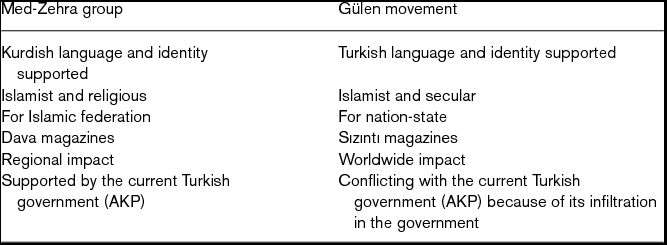
Table 1 gives us a general overview of these Islamic movements. The Gülen movement has always conducted the mission to spread the idea of Turkish Islam through the schools teaching the Turkish language and culture almost everywhere in the world. Moreover, the religion of Islam is not contradictory with nationalism and can even be regarded as proto-nationalism. Brubaker (Reference Brubaker2012), for example, states that religion is imbricated or intertwined with nationalism. Therefore, it can be thought that Islam does not pose any obstacle to the use of national symbols, one of which is language. Zubaida emphasizes the close relationship and states that during the reign of the 8th president of Turkey, Turgut Özal, it was alleged that Islam was an ‘essential component of Turkish national identity’ (Zubaida, Reference Zubaida1996: 10). Hence, to present the Turkish language and make it known everywhere, people studying in these schools were encouraged to learn Turkish by giving them an opportunity to participate in the International Turkish Language Olympics that was held every year. These schools are places of learning science as well as Turkish culture. The Gülen movement plays a crucial role in the state's cultural and linguistic policy inside and outside of the country. Today, Turkish identity has gained a new perspective with the help of the Gülen movement, which has contributed to the language policy of Turkey.
Comparison of two nationalist Islamist movements

Government leaders like former Vice-Prime Minister Bulent Arinc and Prime Minister Ahmet Davutoglu stated their gratitude for Gülen's distinguishing efforts and his inspiration and hard work to build such schools, and his contribution to the spread of the Turkish language and cultural aspects of Turkey in the last Turkish Language Olympics in 2012 by directly referring his name.Footnote 11 Although there was a conflict between the army and the Gülen community before the Justice and Development Party came into power, due to the fact that Gülen was thought to be a threat to the secular state, the leader of the party has since announced that they would be happy to see Gülen back in Turkey, and to return to being allies as they were until the MIT (National Intelligence Service) crisis and claims of corruption broke out. The conflict between the government and the Gülen movement is beyond the scope of this paper. Therefore, we will not deal with the real reasons for this conflict.
On the one hand, Gülen is a supporter of interfaith dialogue to help people comprehend the differences and similarities between the people of Book, those of three big religions, Judaism, Christianity and Islam. It is therefore essential that people of the Book should cooperate and unify against atheism, which is ‘the biggest threat’ according to Gülen. As far as the law is concerned, the Turkish language should be learned and spoken everywhere; however, other languages should also be allowed to be learned to better communicate Islam to other people.
Communities are challenged all around the world if they do not speak the official language(s) in their countries. The members of such communities are generally socio-economically underprivileged like the first generation of Turkish expats were in Germany or the Hispanics were in the USA. If Kurdish children were to learn English and Arabic as well as Turkish, they would definitely benefit.Footnote 12
On the other hand, the Med-Zehra group stated that Kurdish, one of the regional minority languages, should be taught in schools. The group also stated that ‘education in one's mother tongue is a right that any state must acknowledge in principle because a state has to be fair to all of its citizens’. This is possible only through an Islamic Federal state. In this sense, the group seems separatist because it opposes the secularism of Kemal Atatürk. For the Med-Zehra group, since Said Nursi was a Kurd, Kurdish identity and Kurdishness must be recognized and the regime should change.
In conclusion, Islamic movements seek to spread the Islamic message and subliminally provide the message of God to people who are ignorant of, or interested in, Islam, whereby they are to use an influential language. Islamism and Nationalism are sister ideologies (Özdalga, Reference Özdalga2009), and, in Turkey, it is stated that religious movements are not exempt from their nationalist feelings. Their nationalism is revived in language. Gülenists and the Med-Zehra group are only two of these nationalist movements. Even in cultural nationalism, religion and language are two key role players and, therefore, we can conclude that these movements are also culturally nationalist. We can infer that Islam does not necessarily prohibit nationalism. They are present at almost every stage of democratization and policy-making in the Turkish state and actively play a role through its supporters in Turkey. A language policy without the speakers of a language is not effective and thousands of Turkish speakers are also followers of Islamic nationalist groups in Turkey. Islamic nationalists believe that it is the duty of the followers of Islam to protect their country, language, and call to prayer.
About the author
Recep Gülmez was born in 1983 in Erzurum, Turkey. He completed his Master of Arts at the Sorbonne-Nouvelle Paris 3 University and he is currently a Ph.D .candidate and his dissertation is on language policy of Turkey in the department of Political Science at Paris Ouest University Nanterre La Défense and works as Instructor at Erzincan University, Turkey. He specializes in nationalism, EU–Turkey relations, language and identity problems, as well as minority rights. He was a short-term scholar in the department of sociology and gerontology at Miami University, Ohio, USA and in the department of political science at University of McGill, Canada. He is fluent in French and English. He has basic knowledge of German and Spanish.