A sizable number of preschool-age children have shown persistent externalizing problems that cascade into pervasive impairments in social, emotional, and academic functioning across childhood and adolescence (e.g., Campbell et al., Reference Campbell, Spieker, Vandergrift, Belsky and Burchinal2010; Shaw, Hyde, & Brennan, Reference Shaw, Hyde and Brennan2012). Thus, from a prevention standpoint, it is important to identify individual and family characteristics that differentiate children who show persistent problems from those who follow typical or changeable pathways. Guided by a developmental psychopathology framework, we assessed individual and family characteristics that represent critical adaptive challenges for young children: establishment of adequate self-regulation and social cognition, and the presence of supportive parent–child relationships. Deficits in all three domains have been implicated as key risk factors in the development of persistent early onset externalizing problems. However, measures of these constructs are not independent and have rarely been included in the same predictive study (Olson, Lopez-Duran, Chang, & Lunkenheimer, Reference Olson, Lopez-Duran, Chang and Lunkenheimer2011). By simultaneously assessing effortful control, theory of mind, and parenting experiences in children who were just beginning to meet these developmental challenges, we aimed to identify early risk markers that uniquely predicted children's diverse pathways of externalizing problems.
Development of Early Onset Externalizing Behavior
Learning to establish cooperative social relationships is a critical developmental task for preschool-age children. Getting along with others requires a complex array of skills, particularly sharing attention and play materials, inhibiting aggressive and destructive impulses, following directions, responding appropriately to requests, and delaying gratification of immediate desires. Young children who fail to master these challenges, especially those who show chronically high levels of defiance and aggression, are at risk for later academic failure; poor-quality relationships with parents, siblings, peers, and teachers; delinquency; and substance abuse (e.g., Broidy et al., Reference Broidy, Nagin, Tremblay, Bates, Brame, Dodge and Vitaro2003; Campbell et al., Reference Campbell, Spieker, Vandergrift, Belsky and Burchinal2010; Keenan et al., Reference Keenan, Boeldt, Chen, Coyne, Donald, Duax and Hill2011). In contrast, defiant and aggressive behaviors are common in early childhood, reflecting typical variations in the development of self-regulatory competence, communication skills, and social cognition (Olson, Sameroff, Kerr, & Lunkenheimer, Reference Olson, Sameroff, Kerr, Lunkenheimer, Olson and Sameroff2009). For example, most children show acts of aggression by the second year of life, which peak in the third year; by the time children enter kindergarten, aggressive behaviors are largely inhibited (e.g., Alink et al., Reference Alink, Mesman, van Zeijl, Stolk, Juffer, Koot and van IJzendoorn2006; Tremblay, Reference Tremblay2010). However, a sizable minority of children will continue to show problem behavior across the preschool to school-age transition (Campbell, Spieker, Burchinal, Poe, & NICHD Early Child Care Research Network, Reference Campbell, Spieker, Burchinal and Poe2006; Shaw, Gilliom, Ingoldsby, & Nagin, Reference Shaw, Gilliom, Ingoldsby and Nagin2003). High levels of disruptive and aggressive behavior in kindergarten are warning signs of long-term problems that “cascade” into multiple domains of impairment (Broidy et al., Reference Broidy, Nagin, Tremblay, Bates, Brame, Dodge and Vitaro2003; Vitaro, Brendgen, Larose, & Tremblay, Reference Vitaro, Brendgen, Larose and Tremblay2005). To understand the origins of chronic externalizing problems, we must identify developmental factors and mechanisms in early childhood that are associated with persistent versus self-limiting patterns of problem behavior. Effective prevention of these problems hinges upon knowledge of early risk factors and etiological processes. Thus, the main goals of our study were to trace trajectories of child externalizing behavior between ages 3 and 10 years, and to identify patterns of early risk factors that differentiate individual pathways of problem behavior.
Group-based trajectory modeling, also known as latent class growth analysis (LCGA), has been used to identify developmental trajectories of children who manifest discrete patterns of growth in externalizing behavior across childhood and adolescence (e.g., Broidy et al., Reference Broidy, Nagin, Tremblay, Bates, Brame, Dodge and Vitaro2003; Campbell et al., Reference Campbell, Spieker, Vandergrift, Belsky and Burchinal2010; Nagin & Tremblay, Reference Nagin and Tremblay1999; Odgers et al., Reference Odgers, Moffitt, Broadbent, Dickson, Hancox, Harrington and Caspi2008; Schaeffer et al., Reference Schaeffer, Petras, Ialongo, Masyn, Hubbard, Poduska and Kellam2006). Typically, children's externalizing behaviors have been tracked beginning in the school-age years. All studies have revealed trajectory classes of children who manifest persistently high, persistently low, and mixed patterns of problem behavior across development (e.g., high but declining; increasing). However, relatively few studies have focused on trajectories of child externalizing problems that begin before school entry. Noteworthy exceptions have shown that children at risk for persistent problem behavior across the school-age years can be identified as early as 2 to 3 years of age (Campbell et al., Reference Campbell, Spieker, Burchinal and Poe2006; Shaw et al., Reference Shaw, Gilliom, Ingoldsby and Nagin2003). For example, Shaw et al. (Reference Shaw, Gilliom, Ingoldsby and Nagin2003) identified developmental trajectories of overt aggressive behaviors between ages 2 and 8 years. Most toddlers showed a decline in overt aggression across development. Using LCGA, the authors identified boys who followed persistently high and low trajectories of problem behavior, as well as high- and moderate-level desisting pathways. Boys who followed the persistently high trajectory comprised 5.6% of the sample, whereas 14% of boys were in the persistently low group. Those in the moderate and high desisting groups (42% and 38%, respectively) showed elevated levels of aggressive behavior at age 2 that declined steadily across time. All participants were boys who were growing up in low-income family settings. Similarly, using a large national sample, Campbell et al. (Reference Campbell, Spieker, Burchinal and Poe2006) classified boys and girls who followed diverse trajectories of aggressive behavior between ages 2 and 9 years. The authors identified trajectory classes of children who showed high stable (3%), moderate and stable (15%), moderate declining (12%), stable low (25%), and very low (45%) levels of overt aggressive behavior. As expected, children in the high stable trajectory class showed the most severe and pervasive adjustment problems. However, children who showed moderate and low levels of stable aggression were at risk for some developmental problems during the late school-age years. Conversely, children who showed early moderate levels of aggression that declined to very low levels had good developmental outcomes at age 12 years.
In sum, trajectory classes of children at risk for persistent aggressive and disruptive problem behavior can be identified during the toddler period. However, available studies have been few in number and have varied with regard to families' socioeconomic backgrounds, statistical methods used to identify trajectories, inclusion of girls, and whether persistent patterns of moderate- or low-level symptom patterns emerge. As shown below, studies also have varied in relation to the nature and assessment of risk factors that differentiate trajectories of children who manifest persistently high, low, or changing patterns of problem behavior across development.
Early Childhood Risk Factors
What characteristics place young children at elevated risk for aggressive and disruptive behaviors across the school-age years? Our choice of risk factors was drawn from developmental psychopathology theory, specifically the concept of age-salient adaptive tasks (Cicchetti, Reference Cicchetti, Cicchetti and Cohen2006; Sroufe & Rutter, Reference Sroufe and Rutterl984). According to this theory, each age period is characterized by a series of adaptive challenges that, if adequately met, provide a foundation for the child's adjustment to the next set of age-salient developmental issues. Establishing adequate levels of self-regulation, theory of mind, and parent–child adjustment are fundamental developmental challenges for preschool-age children. For example, because the preschool period is a time of rapid development in children's self-regulation and social–cognitive skills, it also is a period of heightened vulnerability for children at risk (Olson et al., Reference Olson, Sameroff, Kerr, Lunkenheimer, Olson and Sameroff2009). Moreover, many young children struggle with these complex adaptive challenges, and thus it is essential to differentiate those who show transient difficulties from those at risk for persistent and cascading problems. In largely separate literatures, deficits in children's self-regulation, delays in children's social cognition, and exposure to adverse or suboptimal parent–child interactions have been linked to the development of persistent early onset externalizing problems. In what follows, we briefly review prior work relating these individual risk domains to the development of persistently high levels of aggressive and disruptive behavior.
Disturbances in self-regulation
A growing body of research indicates that early childhood onset externalizing problems reflect inadequate regulation of attention and impulses (e.g., Moffitt, Reference Moffitt, Lahey, Moffitt and Caspi2003). The construct of effortful control is thought to be central here. Effortful control (EC; Rothbart, l989) refers to a general executive component of temperament that governs the child's capacity to inhibit a dominant response (e.g., grabbing a toy from a peer) and initiate a subdominant response (e.g., asking for a turn to play with the toy). Individual differences in executive attention and inhibitory control develop rapidly during the toddler and preschool years and are thought to underlie the establishment of children's behavioral adjustment (Posner & Rothbart, Reference Posner and Rothbart2000; Zelazo, Muller, Fye, & Markovitch, Reference Zelazo, Muller, Frye and Markovitch2003). Supporting this theory, preschool-age children with high levels of externalizing problems have been found to manifest lower levels of inhibitory and attentional control abilities than their peers with few externalizing symptoms (e.g., Hughes & Ensor, Reference Hughes and Ensor2006; Olson, Sameroff, Kerr, Lopez, & Wellman, Reference Olson, Sameroff, Kerr, Lopez and Wellman2005; Raaijmakers et al., Reference Raaijmakers, Smidts, Sergeant, Maasen, Posthumus, van Engeland and Matthys2008). Moreover, children's poor EC skills have been found to predict growth of externalizing problem behavior in preschool-age children (e.g., Chang, Olson, Sameroff, & Sexton, Reference Chang, Olson, Sameroff and Sexton2011) and across the school-age period (Eisenberg et al., Reference Eisenberg, Valiente, Spinrad, Cumberland, Liwe, Reiser and Losoya2009; Lengua, Bush, Long, Kovacs, & Trancik, Reference Lengua, Bush, Long, Kovacs and Trancik2008), and associations between low EC and elevated externalizing behavior have been replicated across diverse cultures (Olson, Tardif, et al., Reference Olson, Tardif, Miller, Felt, Grabell, Kessler and Hirabayashi2011; Zhou et al., 2009). Thus, deficits in EC play a key role in the development of early onset conduct problems.
Delayed social cognition
Delays in social cognitive skills also have been posited to play a major role in the development of early onset and later childhood aggression (Lemerise & Arsenio, Reference Lemerise and Arsenio2000). Furthermore, early self-regulatory competence and social cognition are closely intertwined (Carlson, Mandell, & Williams, Reference Carlson, Mandell and Williams2004). As with the development of self-regulation, children's understanding of themselves and others changes rapidly across early childhood, and individual differences become quite salient during this time (Wellman, Harris, Banerjee, & Sinclair, Reference Wellman, Harris, Banerjee and Sinclairl995). One important set of competencies has been labeled “theory of mind.” Between the ages of 3 and 6, children develop an increased awareness that mental states are internal, subjective experiences distinct from the behaviors and contexts associated with them (Wellman, Cross, & Watson, Reference Wellman, Cross and Watson2001). Examining these developments in children at risk for psychopathology is a natural and important extension of this work, providing a possible link between early mental representations and later impairments in moral understanding and conduct. For example, even after controlling for differences in verbal IQ, aggressive/disruptive toddlers and preschoolers have been found to show delays in theory of mind (Hughes & Ensor, Reference Hughes and Ensor2006; Olson, Lopez-Duran, et al., Reference Olson, Lopez-Duran, Chang and Lunkenheimer2011). Moreover, preschoolers with poor theory of mind coupled with disturbances in self-regulation have been found to be at risk for showing hostile attributional biases following school entry (Choe, Lane, Grabell, & Olson, Reference Choe, Lane, Grabell and Olson2013).
Adverse or suboptimal parenting behaviors
Most toddlers and preschoolers who manifest high levels of aggressive/disruptive behavior do not follow a chronic course. The quality of the child's early family relationships is critical to our understanding of why some young children with challenging temperaments show persistent disruptive behavior whereas others do not (Olson et al., Reference Olson, Sameroff, Kerr, Lunkenheimer, Olson and Sameroff2009; Trentacosta et al., Reference Trentacosta, Criss, Shaw, LaCourse, Hyde and Dishion2011). As shown below, the genesis of child behavior problems reflects transactional processes linking parent–child interactions to the development of self-regulation. Through infancy and early childhood, there is a general progression from reliance on caregivers for external regulation of arousal to self-initiated modulation of affective reactions and behavioral impulses (Sameroff, Reference Sameroff2009). Thus, warm and responsive caregiving, a major component of secure parent–infant attachment relationships, is thought to help the child modulate states of negative arousal, permitting positive social exchanges and children's internalization of self-regulatory skills (Sroufe, Reference Sroufel996). In prospective longitudinal studies, unresponsive mother–infant interaction has been linked to self-regulatory problems across middle childhood and adolescence (Lahey et al., Reference Lahey, Van Hulle, Keenan, Rathouz, D'Onofrio, Rodgers and Waldman2008; Olson, Bates, Sandy, & Lanthier, Reference Olson, Bates, Sandy and Lanthier2000). Moreover, toddlers and preschoolers who manifest high levels of early disruptive behavior have been found to experience lower levels of warm, responsive parenting than others (Gardner, Reference Gardnerl994; Olson et al., Reference Olson, Sameroff, Kerr, Lopez and Wellman2005; Shaw et al., Reference Shaw, Winslow, Owens, Vondra, Cohn and Belll998). Conversely, sensitive, responsive caregiving has been associated with the optimal development of self-regulation (Bernier, Carlson, & Whipple, Reference Bernier, Carlson and Whipple2010; Choe, Olson, & Sameroff, Reference Choe, Olson and Sameroff2013a; Feldman, Greenbaum, & Yrimiya, Reference Feldman, Greenbaum and Yirmiya1999).
The quality of early parent–child disciplinary interactions also has important implications for children's future behavioral adjustment. During toddlerhood, a period of rapid cognitive, social, and motor growth, it is normal for children to test parental limits and resist control (Shaw & Bell, Reference Shaw and Bell1993). The manner in which parents and toddlers resolve these developmental challenges may forecast continuing adjustment problems. In many previous reports, highly directive, negatively toned parent–toddler interactions have been associated with noncompliance, aggression, and other early manifestations of self-control problems (e.g., Chang et al., Reference Chang, Olson, Sameroff and Sexton2011; Combs-Ronto, Olson, Lunkenheimer, & Sameroff, Reference Combs-Ronto, Olson, Lunkenheimer and Sameroff2009; Shaw et al., Reference Shaw, Gilliom, Ingoldsby and Nagin2003). Early conflicts around noncompliance may place children at risk for escalating cycles of coercive interactions with parents, siblings, and peers, fostering persistent and pervasive patterns of impairment (Smith et al., Reference Smith, Dishion, Shaw, Wilson, Winter and Patterson2014). For example, parents' frequent use of corporal punishment with their preschool-age children has been related to impaired child self-regulation and high levels of aggressive problem behavior that persist or increase across development (e.g., Campbell et al., Reference Campbell, Spieker, Vandergrift, Belsky and Burchinal2010; Choe, Olson, & Sameroff, Reference Choe, Olson and Sameroff2013b; Olson, Lopez-Duran, et al., Reference Olson, Tardif, Miller, Felt, Grabell, Kessler and Hirabayashi2011).
Goals of the Current Study
Deficits in children's EC, delayed social cognition, and adverse parenting experiences have been implicated as key risk factors in the development of persistent early onset externalizing problems. All three domains encapsulate critical developmental challenges for young children that provide a foundation for future behavioral competence. Typically, these factors have been related to child behavior problems in separate studies. Thus, we have a limited understanding of how these risk factors work together in the genesis and development of persistent externalizing problems.
Our prospective longitudinal study addressed several gaps in the research literature. First, there have been few group-based trajectory studies of child externalizing behavior that have begun during the preschool years, and even fewer that have included both boys and girls. Second, to our knowledge, no studies have focused on models of early risk factors that include simultaneous assessments of child EC, theory of mind, and parenting experiences. By examining children who were just beginning to meet these challenges, our central aims were (a) to identify boys and girls who showed diverse patterns of externalizing symptoms between ages 3 and 10 years and determine whether they fit clear trajectory classes; and (b) to identify risk markers and processes that differentiated children who showed diverse patterns of externalizing problems across time. Children's problem behavior, self-regulation, theory of mind, and parenting experiences were assessed using multiple informants and methods of data collection. We estimated growth in children's externalizing behavior over time using latent growth curve (LGC) modeling and then approximated discrete but homogenous trajectories of externalizing behavior across ages 3, 6, and 10 with LCGA. Third, while accounting for children's gender, IQ, and family socioeconomic status (SES), we used multinomial logistic regression to determine whether preschool-age levels of children's social–cognitive and self-regulatory abilities and parental caregiving, as well as interactions between child abilities and parental caregiving, differentially predicted affiliation in the externalizing trajectory classes.
Method
Participants
The core study included 238 children (48% girls), mothers, and a subsample of fathers (63%) involved in an ongoing longitudinal study investigating the development of school-age conduct problems (Olson et al., Reference Olson, Sameroff, Kerr, Lopez and Wellman2005). Most families (95%) were recruited from newspaper announcements and advertisements sent to daycare centers and preschools; others were individually referred by pediatricians and teachers. In order to recruit children with a range of behavioral adjustment levels, two different ads were periodically placed in local and regional newspapers and childcare centers: one focusing on hard-to-manage toddlers, and the other on normally developing toddlers. Once a parent indicated interest, a screening questionnaire and brief follow-up telephone interview were used to determine the family's appropriateness for participation and willingness to engage in a longitudinal study. Children with serious chronic health problems, mental retardation, and/or pervasive developmental disorders were excluded (< 0.03 of screening sample). At recruitment, children represented the full range of externalizing symptom severity on the Child Behavior Checklist (CBCL/2–3; Achenbach, Reference Achenbach1992), with oversampling of toddlers in the medium to high range on externalizing problems (T > 60 = 44%). The remaining sample was split relatively evenly between children whose externalizing problems T scores exceeded 50 but were below 60, and those whose T scores were below 50.
Among target children, 86% were non-Hispanic White and 14% were of other racial–ethnic backgrounds (e.g., African American or biracial). The majority of mothers reported being married (89%), 5% of mothers reported being single, 3% reported living with a partner, and 3% reported being separated or divorced. Approximately 6% of mothers reported their family as being blended or a stepfamily. Overall, 92% of households were identified as having at least two adults living with the target child, whereas 8% of households had a single, separated, or divorced parent living with the child. During recruitment from 1999 to 2001, 43% of mothers and 32% of fathers reported a bachelor's degree as their highest level of education, and another 39% of mothers and 46% of fathers reported some graduate or professional training. Approximately 14% of mothers and 10% of fathers reported partial college experience or specialized training, and about 4% of mothers and 11% of fathers reported a high school diploma as their highest level of education (one mother and three fathers reported partial high school completion up to 10th or 11th grade). The Hollingshead (Reference Hollingshead1979) Four Factor Index of Family Social Status was created by combining levels of occupational status and educational attainment of parents living in the household during recruitment. Family SES scores ranged from 22 to 66 (M = 54.44, SD = 10.83) representing the top four of five social strata in the Hollingshead system. Most families (87%) resided in the two highest social strata. Average annual family income at recruitment was between $60,000 and $70,000, although incomes ranged from $10,000 to more than $100,000.
Procedure
At the first assessment, a female social worker interviewed mothers, and fathers when available, in their homes to collect demographic information and to administer a packet of questionnaires assessing children's behavioral adjustment, parents' caregiving behavior, and other parent and child characteristics. Data collection for the third assessment was carried out entirely online with electronic questionnaires. Mothers and fathers completed interviews and questionnaires at Time 1 (T1) when children were about 3 years old (M = 3.14 years, SD = 0.23). Mothers completed questionnaires at Time 2 (T2) when children were between 5 and 6 years old (M = 5.28 years, SD = 0.23), and at Time 3 (T3) when children were about 10 years old (M = 10.42 years, SD = 0.63). Families were paid for participating. Approximately 91% of the sample continued to participate in the study at T3, whereas 21 families stopped participating mainly due to family relocation.
At T1, graduate student examiners assessed children's self-regulation, general cognitive functioning (i.e., IQ), and theory of mind in 3- to 4-hr behavioral assessments at a local preschool on Saturday mornings. Appointments were scheduled during home visits, so children were slightly older than at T1 when mothers were initially assessed (M = 3.45 years, SD = 0.17). Children received small gifts for participating. Parents were compensated modestly for their time and participation.
Sociodemographic measures: Family background
During the initial assessment, mothers reported their marital status, household composition, and other sociodemographic information regarding their family members. Mothers reported their racial–ethnic background and that of their partner and child (if adopted). The Hollingshead (Reference Hollingshead1979) Four Factor Index of Social Status was calculated for each family.
Parenting measures
Maternal warmth
Mothers completed the Parenting Dimensions Inventory (PDI; Power, Reference Power1993), a 47-item multidimensional measure of parental support, control, and structure. The PDI has been shown to have high levels of reliability, and numerous studies have supported its validity by showing significant concurrent and predictive correlations between PDI scales and behavioral and parent-report measures of similar parenting constructs (see Power, l993). In the current study, we averaged standardized scale scores for two intercorrelated (r = .47, p < .001) dimensions of support most theoretically related to maternal warmth (Eisenberg et al., Reference Eisenberg, Zhou, Spinrad, Valiente, Fabes and Liew2005), nurturance (α = 0.74, N items = 6) and responsiveness (α = 0.36, N items = 4), into the composite variable T1 maternal warmth.
Parental harsh discipline
Dodge, Pettit, and Bates's (Reference Dodge, Pettit and Bates1994) Harshness of Discipline scale was administered during home interviews at T1 and T2. This measure was found to have strong reliability (α = 0.97; Dodge et al., l994) and has shown consistent evidence of concurrent and predictive validity (e.g., Olson et al., Reference Olson, Sameroff, Kerr, Lopez and Wellman2005). Mothers reported the frequency with which each parent had physically disciplined their child (e.g., spank with a hand or object, grab, or shake) during the last 3 months using a 5-point scale: 0 = never, 1 = once per month, 2 = once per week, 3 = daily, and 4 = several times daily. Half point responses were accepted (e.g., once every 2 weeks = 1.5; every other day = 2.5; no responses of 3.5 or 4.5 were provided). Rank order scores from 0 to 35 were created based on the sum of mothers' reported frequencies of each parent's use of physical discipline. The lowest ranking, 0, was assigned to children who did not receive physical discipline from either parent (i.e., responses of 0, 0). Children assigned the next lowest ranking, 1, did not receive physical discipline from one parent, but were physically disciplined once every 2 months by the other (0, 0.5). Children who experienced physical discipline several times daily from both parents received the highest ranking of 35 (4, 4). There were no responses of 3.5, so the next highest ranking, 34, indicated children who were physically disciplined daily by one parent and several times daily by the other (3, 4). Parents' use of physical discipline was relatively low in frequency (M = 1.06, SD = 0.87, range = 0–4 for mother's report of her own use of physical discipline; M = 0.69, SD = 0.81, range = 0–3 for mother's report of the father's use of physical discipline). According to mothers, 58 children had never received physical discipline from either parent in the past 3 months; 16 children were physically punished every day or several times a day by at least one parent.
Child measures
Externalizing behavior
Mothers rated children's externalizing behavior using the CBCL/2–3 at T1 (Achenbach, Reference Achenbach1992) and the CBCL/6–18 at T2 and T3 (Achenbach & Rescorla, Reference Achenbach and Rescorla2001). The Achenbach scales have shown high reliability and consistent evidence of construct validity (Achenbach & Rescorla, Reference Achenbach and Rescorla2001). Because different versions of the CBCL were administered across the three assessment times, we selected 16 CBCL items that were relatively consistent across versions to average into separate externalizing behavior scales.Footnote 1 These items included the following: physically attacks people; gets in many fights; destroys his/her own things; destroys things belonging to his/her family or others (“other children” is mentioned in lieu of “others” in the CBCL/6–18); can't concentrate, can't pay attention for long; stares into space or seems preoccupied (“stares blankly” is the description used in the CBCL/6–18); can't sit still or restless (“hyperactive” is also mentioned in the CBCL/6–18); gets hurt a lot, accident prone; temper tantrums or hot temper; easily jealous; stubborn, sullen, or irritable; sudden changes in mood or feelings; sulks a lot; unusually loud; screams a lot; and whining. In sum, these items described problems of physical aggression, destructive behavior, inattention, hyperactivity, and emotion dysregulation. Mothers responded to each item using a 3-point response scale (0 = not true, 1 = somewhat or sometimes true, 2 = very true or often true). Mothers' responses were averaged into externalizing behavior scales at each assessment with acceptable internal consistency (T1: N = 238, M = 0.36, SD = 0.28, α = 0.83; T2: N = 228, M = 0.27, SD = 0.25, α = 0.82; T3: N = 197, M = 0.24, SD = 0.26, α = 0.84).
EC
Child EC was assessed using a behavioral battery and parent-report index. Child temperament was assessed by mother and father ratings at T1 using an abbreviated version of the Children's Behavior Questionnaire, a widely used parent report measure that has high reliability and consistent evidence for convergent and predictive validity (Rothbart, Ahadi, Hersey, & Fisher, Reference Rothbart, Ahadi, Hersey and Fisher2001). Children's Behavior Questionnaire scales for inhibitory control and attentional focusing represented constituents of temperament most closely related to EC (Rothbart & Bates, Reference Rothbart, Bates, Damon and Eisenberg2006). Children also completed a toddler-age behavioral battery consisting of six tasks that assessed individual differences in EC (Kochanska, Murray, Jacques, Koenig, & Vandegeest, Reference Kochanska, Murray, Jacques, Koenig and Vandegeest1996). The tasks included Turtle/Rabbit, Tower, Snack Delay, Whisper, Tongue, and Lab Gift, administered in that order (see Olson et al., Reference Olson, Sameroff, Kerr, Lopez and Wellman2005). Each task was designed to tap Rothbart's (Reference Rothbart, Kohnstamm, Bates and Rothbart1989) general construct of EC (i.e., suppressing a dominant response and initiating a subdominant response according to varying task demands). All tasks were introduced as “games,” and children were reminded of the rules midway through each. This widely used behavioral battery has shown high reliability and moderate levels of stability across development; bivariate correlations between different subtests averaged 0.45 (α = 0.75; Kochanska et al., l996). To check the accuracy of recordings, 15 test administrations were videotaped and independently scored. Reliability was excellent (κ = 0.95). As recommended by Kochanska et al. (Reference Kochanska, Murray, Jacques, Koenig and Vandegeest1996), a total behavioral score was computed by summing standardized subtest scores. Inhibitory control and attentional focusing (r = .44, p < .001), inhibitory control and EC behavioral score (r = .33, p < .001), and attentional focusing and EC behavioral score (r = .27, p < .001) were all positively correlated. The Z scores of each scale (parent ratings and behavioral scores) were averaged into a composite score of preschool-age EC, following recommendations to combine multiple assessment methods of temperament to help compensate for specific weaknesses inherent in parent ratings and observational data and to provide a more valid and comprehensive measure of children's self-regulation (Rothbart & Bates, Reference Rothbart, Bates, Damon and Eisenberg2006).
General cognitive functioning
Children's general cognitive functioning was operationalized as their IQ scores, which were created by aggregating scaled scores on the block design and vocabulary subtests of Wechsler's Preschool and Primary Scale of Intelligence—Revised (Wechsler, Reference Wechsler1989). The vocabulary and block design subtests are reported by Wechsler (Reference Wechsler1989) to have good reliability (αs = 0.84 and 0.85, respectively), as well as sufficient construct and concurrent validity. Children's raw vocabulary and block design scores averaged 12.49 (SD = 5.54) and 7.84 (SD = 5.53), respectively. Scaled scores were used in further analyses to control for age-salient levels of variability.
Theory of mind
Children's theory of mind was measured using standard false-belief explanation and prediction tasks (Bartsch & Wellman, Reference Bartsch and Wellman1989), which index children's abilities to predict and explain the actions of hypothetical children who have erroneous information about the location of everyday objects. This measure has shown high levels of interrater reliability (0.88 to 0.90; Bartsch & Wellman, l989) as well as consistent evidence of construct validity (e.g., Choe et al., Reference Choe, Lane, Grabell and Olson2013; Dunn, Brown, Slomkowski, Tesla, & Youngblade, Reference Dunn, Brown, Slomkowski, Tesla and Youngbladel991). In four prediction tasks, children predicted where a doll character would look for a desired object based on what that character believes about that object's location. For example, in one false-belief prediction task, the experimenter showed the child a crayon box and a plain box. The experimenter then suggested that they play a “trick” on the story character and proceeded to take the crayons out of the crayon box and put them in the plain box, emphasizing to the child that the story character cannot see them play this trick. The child was then asked to predict where the story character will look for the crayons. A false-belief prediction score was calculated as the total number of stories (range = 0–4) where children correctly predicted the protagonist's behavior. Four explanation tasks followed the same format, where the desired objects were moved in order to “trick” the story character. For example, raisins were moved from a raisin box to a plain box. The explanation tasks differ in that the experimenter then proceeded to have the story character look for the desired object in the original location (raisin box). The child was then asked to explain why the story character looked for the raisins in that location. In order to respond correctly, the child must refer to the story character's mental state, such as “He thinks the raisins are in the raisin box.” If the child did not spontaneously provide this sort of explanation, he/she is explicitly asked, “What does (the character) think?” A false-belief explanation score was calculated as the total number of stories (0–4) where the child correctly explained the protagonist's behavior as stemming from a false belief. A false-belief composite was computed as the total number of stories for which the child correctly predicted or explained the protagonist's false belief, for a maximum score of 8 (α = 0.80). Children's false-belief explanation and prediction scores averaged 0.96 and 0.62 (SDs = 1.45 and 1.15), respectively.
Data analysis plan
We first examined descriptive statistics, missing data, and attrition with SPSS 21 and then used Mplus 7 (Muthén & Muthén, Reference Muthén and Muthén2012) for structural equation modeling (SEM) of an unconditional LGC model of children's externalizing behavior. After evaluating whether a single LGC sufficiently represented the sample's externalizing behavior, we used LCGA to approximate trajectories of externalizing from early to middle childhood. To yield all fit statistics for LCGA, we used maximum likelihood with robust standard errors, a conservative form of full information maximum likelihood (FIML) estimation of missing data that is robust to nonnormality (Yuan & Bentler, Reference Yuan and Bentler2000). Class assignment data were analyzed in SPSS in a series of analyses of variance comparing externalizing trajectory classes on T1 early childhood variables. Finally, class assignment data were analyzed with Mplus in three multinomial logistic regression models predicting affiliation in externalizing trajectory class with T1 measures of maternal warmth, parental harsh discipline, child EC, theory of mind, and interactions between parenting and child variables, while accounting for child gender, IQ, and family SES at T1.
Results
Preliminary analyses
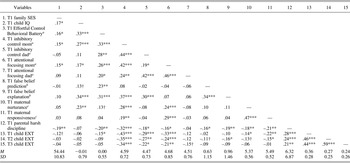
Table 1 presents means, standard deviations, and correlations among study variables. Distributional values did not indicate problems with skewness (<1.90) or kurtosis (<3.6). All models tested in Mplus, except LCGA solutions,Footnote 2 estimated missing data with FIML.
Descriptive statistics and correlations of study variables (N = 238)

Note: SES, Socioeconomic status; T1, Time 1 age 3; EXT, externalizing behavior; T2, Time 2 age 5; T3, Time 3 age 10.
a The Effortful Control Behavioral Battery, inhibitory control, and attentional focusing were averaged into child effortful control.
b False belief prediction and explanation were summed into child theory of mind.
c Maternal nurturance and responsiveness were averaged into maternal warmth.
†p < .10. *p < .05. **p < .01. ***p < .001.
Attrition and missing data
We examined missing data and attrition to determine whether they occurred at random, an assumption that underlies use of FIML in SEM. Little's (Reference Little1988) missing completely at random test with expectation maximization was not significant, χ2 (39) = 32.49, p = .760, which suggests data were missing completely at random and that conditions were sufficient to use FIML to approximate missing data. T1 child IQ significantly differed between participants in final multinomial logistic regression models (M = 0.02, SD = 0.78, n = 218) and participants missing these data (M = –0.57, SD = 0.81, n = 8), t (224) = 2.09, p = .037, 95% confidence interval (CI) [0.03, 1.14]. There were no missing data or attrition-related differences in any study variable.
Although most mothers rated children's externalizing behavior at each assessment, some mothers did not provide these data at T2 (n = 10) or T3 (n = 41). Children's IQ scores at T1 differed between mothers who provided data at T2 (M = 0.01, SD = 0.78) and mothers who did not (M = –0.64, SD = 0.90), t (224) = 2.19, p = .030, 95% CI [0.07, 1.24]. Mothers who provided data at T2 reported significantly greater maternal warmth at T1 (M = 0.07, SD = 1.69) than mothers who did not (M = –1.64, SD = 1.67), t (231) = 2.64, p = .009, 95% CI [0.44, 2.99]. Mothers who provided data at T2 reported lower levels of child externalizing behavior at T1 (M = 0.36, SD = 0.27) than mothers who did not (M = –0.56, SD = 0.43), t (236) = –2.31, p = .022, 95% CI [–0.38, –0.03]. Mothers who provided data at T3 (M = 1.70, SD = 2.24) significantly differed from mothers who did not (M = 1.00, SD = 1.43) in children's theory of mind, t (68.79) = 2.40, p = .019, 95% CI [0.12, 1.28]. There were no other missing data or attrition differences.
Latent class growth model of children's externalizing behavior
We estimated an unconditional LGC model of children's externalizing behavior from ages 3 to 10 to evaluate whether a single latent growth curve adequately represented all children's data. Following guidelines for reporting SEM results from Kline (Reference Kline2005) and Bentler (Reference Bentler2007), LGC results include model chi-square (χ2), comparative fit index (CFI), root mean square error of approximation (RMSEA) and its 90% confidence interval (CI), and standardized root mean square residual (SRMR). SRMR values of <0.10 are favorable, RMSEA values of ≤0.05 indicate close approximate fit, CFI values of >0.95 reflect good fit, and nonsignificant and low model χ2 values suggest good fit.
We found an unconditional LGC model of children's externalizing behavior fit the data well when estimating an intercept and slope (loadings of 0, *, 1)Footnote 3 and fixing all residual variances of externalizing to be equal in value over time: χ2 (2, N = 238) = 0.54, p = .764, CFI = 1.00, RMSEA = 0.00, 90% CI [0.00, 0.09], SRMR = 0.01. The LGC model's significant intercept (αi = 0.37, SE = 0.02, p < .001) and negative slope (αs = –0.12, SE = 0.02, p < .001) were negatively related to each other (r = –.02, SE = 0.01, p = .002). Significant variances of the intercept (σ2 i = 0.05, SE = 0.01, p < .001) and slope (σ2 s = 0.03, SE = 0.01, p = .001) indicated sample heterogeneity in initial levels and growth of children's externalizing behavior over time. These estimates were significant after adjusting for child gender, IQ, and family SES at T1 in a conditional LGC model (covariates were nonsignificant in all models). Children showed modest levels of externalizing behavior that linearly decreased from ages 3 to 10, and greater initial levels of externalizing behavior were associated with greater rates of desistance over time; however, variation in both initial levels and rates of change in externalizing justified extending analyses to LCGA to approximate trajectory classes.
Identification of latent trajectory classes of children's externalizing behavior
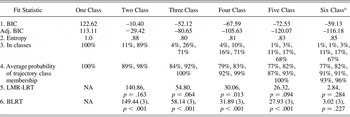
We conducted LCGA, semiparametric group-based trajectory modeling, to identify an optimal number of distinct developmental trajectory classes of externalizing behavior in childhood (Nagin & Odgers, Reference Nagin and Odgers2010; Nagin & Tremblay, Reference Nagin and Tremblay1999). Within each class, variance and covariance estimates for growth factors were fixed to zero values and residual variances were fixed to be equal in value with one another. Slope loading values were consistent with linear modeling (i.e., 0, 1, 2). Following Jung and Wickrama (Reference Jung and Wickrama2008), we evaluated the optimal number of classes with the following criteria: lowest Bayesian information criterion value, entropy value close to 1, no less than 1% of total participants in each class, high posterior probabilities close to 1 for class membership, a significant Lo–Mendell–Rubin (Reference Lo, Mendell and Rubin2001) adjusted likelihood ratio test (LMR-LRT), and a significant bootstrap likelihood ratio test (BLRT). After testing one through six trajectory classes (see Table 2 for model fit comparison), the four-class solution appeared to have the best balance of parsimony and fit with the longitudinal data (Figure 1).
A latent class growth analysis approximated four discrete developmental trajectories of children's externalizing (EXT) behavior from early to middle childhood. The chronic group (n = 9) had the highest EXT behavior among all groups over time. The rising group's (n = 23) EXT behavior increased from a low to moderate level through childhood. The decreasing group's (n = 38) EXT behavior decreased from a moderate to low level through childhood. The low group's (n = 168) EXT behavior was lowest among all groups and decreased over time. Markers represent sample means. Solid lines connect estimated means.

Comparison of fit among latent class growth analysis solutions for externalizing behavior

Note: BIC, Bayesian information criterion; Adj. BIC, sample-size adjusted BIC; LMR-LRT, Lo–Mendell–Rubin adjusted likelihood ratio test; BLRT, bootstrap likelihood ratio test (difference in number of parameters).
a The best log likelihood was not replicated, so the six-class solution may not be trustworthy.
Estimating four trajectory classes resulted in the second lowest Bayesian information criterion value, adequate entropy, 4% to 71% of participants assigned to each class, latent class probabilities of most likely membership ranging from 79% to 99%, a significant LMR-LRT value of 30.06 (p = .013), and a significant BLRT (p < .001). The latter two tests indicated a four-class solution fit the data significantly better than a three-class solution. Only the four-class solution produced a significant LMR-LRT score. BLRT scores remained significant through the five-class model, but the best log likelihood was not replicated in most bootstrap draws, indicating that the five-class solution's BLRT was unreliable. The four-class solution was a more trustworthy approximation of discrete trajectory classes of externalizing behavior than other LCGA solutions.
The chronic group, the highest line in Figure 1, included 9 children (3.8%, 7 boys) with persistently high levels of externalizing behavior over time. The chronic group's externalizing trajectory had a significant intercept (αi = 0.99, SE = 0.12, p < .001) but a nonsignificant slope (αs = –0.03, SE = 0.09, p = .755). The average latent class probability for most likely latent class membership was 99%. The chronic group included the fewest number of children who were consistently rated by mothers as having the highest levels of externalizing behavior throughout childhood.
The rising group in Figure 1 included 23 children (9.7%, 14 boys) with increasing levels of externalizing behavior over time. The rising group's externalizing trajectory had a significant intercept (αi = 0.39, SE = 0.04, p < .001) and positive slope (αs = 0.11, SE = 0.03, p = .001). The average latent class probability for most likely latent class membership was 79%. The rising group represented a modest number of children who were rated by their mothers as initially showing low levels of externalizing behavior that linearly increased through childhood to moderate levels around age 10.
The decreasing group in Figure 1 included 38 children (16.0%, 18 boys) with decreasing levels of externalizing behavior over time. The decreasing group's externalizing trajectory had a significant intercept (αi = 0.65, SE = 0.06, p < .001) and negative slope (αs = –0.21, SE = 0.03, p < .001). The average latent class probability for most likely latent class membership was 83%. The decreasing group represented a medium-sized number of children who were rated by their mothers as initially showing moderate levels of externalizing behavior that linearly decreased to low levels by middle childhood.
The low group, the lowest line in Figure 1, included 168 children (70.6%, 86 boys) with the lowest externalizing behavior over time. The low group's externalizing trajectory had a significant intercept (αi = 0.23, SE = 0.02, p < .001) and negative slope (αs = –0.06, SE = 0.01, p < .001). The average latent class probability for most likely group membership was 92%. The low group included the most children who were rated by mothers as showing the lowest levels of externalizing behavior that linearly decreased throughout childhood.
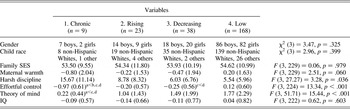
After estimating the four-class solution, we extracted membership data from Mplus for analysis in SPSS. We then compared the four trajectory classes on preschool-age sociodemographic measures with χ2 tests and analyses of variance. We applied Bonferroni correction for multiple comparisons to paired contrasts, except when data violated the homogeneity of variances assumption, in which case we applied Tamhane's T2 correction. As shown in Table 3, externalizing trajectory class membership was not related to children's gender, ethnicity, or family SES. Although they did not differ consistently across externalizing trajectory classes, we included child gender and family SES as covariates in final analyses to account for their putative links to child externalizing behavior.
Chi-square test and analysis of variance results with preschool-age variables and children's trajectory classes of externalizing behavior

Note: The values in the variables columns are means (standard deviations). Superscript letters indicate significant differences in pairwise comparisons of externalizing trajectories (ps < .05). Bonferroni adjustments were corrected for multiple comparisons in pairwise comparisons, except for analyses of variance that violated tests of homogeneity of variances, in which case we used Tamhane Time 2 correction. SES, socioeconomic status.
Multinomial logistic regression models predicting children's externalizing trajectories
We used Mplus Monte Carlo integration to estimate a series of multinomial logistic regression models examining preschool-age predictors of children's externalizing trajectory classes, while accounting for child gender, IQ, and family SES at T1. The predictors were mean-centered child EC, theory of mind, maternal warmth, and parental harsh discipline at T1, as well as four two-way interactions between child and parenting variables (e.g., Effortful Control × Maternal Warmth and Theory of Mind × Parental Harsh Discipline). The criterion variable was the externalizing behavior trajectory classes with four groups. Three models with a different reference group were tested to yield all possible contrasts among externalizing trajectory classes. Overall model fit was evaluated with a likelihood ratio test comparing our model to a baseline intercept-only model. Only unstandardized estimates are reported for multinomial logistic regression models with effect sizes represented by odds ratios and their 95% CI (see tables).
Model 1
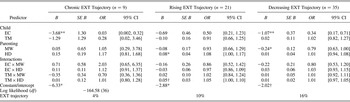
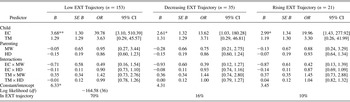
Table 4 summarizes results of a multinomial logistic regression model with the low externalizing trajectory class as the baseline group. A likelihood ratio test indicated our final model (log likelihood = –164.58, df = 36) fit the data significantly better than a null, intercept-only model (log likelihood = –196.02, df = 3), χ2 (33) = 62.88, p = .001, and a Monte Carlo (5,000) simulation model that estimated all variances and covariances between predictors and covariates (log likelihood = –5,816.78, df = 113), χ2 (77) = 11,304.41, p < .001. The most parsimonious and best fitting model only estimated effects of predictors and covariates on externalizing trajectory class membership: Cox and Snell R 2 = .25, Negelkerke R 2 = .30, McFadden R 2 = .16.
Multinomial logistic regression model 1 for preschool-age predictors of EXT trajectories in childhood (n = 218)

Note: EXT, externalizing; EC, effortful control; TM, theory of mind; MW, maternal warmth; HD harsh discipline. The low EXT trajectory is the reference category (n = 153, 70%). Covariates are child gender, IQ, and family socioeconomic status at age 3 (omitted from table). All values are unstandardized estimates. All child and parenting variables are mean centered. Significant estimates are in bold.
†p < .10. *p < .05. **p < .01.
Lower EC in the preschool years predicted children's chronically high externalizing trajectory.Footnote 4 Shown in bold text in Table 4, a 1-unit increase in children's EC at T1 resulted in a –3.68 (p = .005, odds ratio [OR] = 0.03) change in log odds of being in the chronic versus low externalizing trajectory class. In other words, a 1-unit increase in child EC during the preschool years was associated with approximately 40:1 odds of being classified in a low versus chronic externalizing trajectory class (see comparison with chronic trajectory as baseline group in Table 5, β = 3.68, p < .01, OR = 39.78).
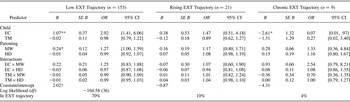
Multinomial logistic regression model 2 for preschool-age predictors of EXT trajectories in childhood (n = 218)

Note: EXT, externalizing; EC, effortful control; TM, theory of mind; MW, maternal warmth; HD harsh discipline. The chronic EXT trajectory is the reference category (n = 9, 4%). Covariates are child gender, IQ, and family socioeconomic status at age 3 (omitted from table). All values are unstandardized estimates. All child and parenting variables are mean centered. Significant estimates are in bold.
*p < .05. **p < .01.
Greater parental harsh discipline in the preschool years predicted children's rising externalizing trajectory. A 1-unit increase in the frequency of parental harsh discipline at T1 resulted in a 0.08 (p = .043, OR = 1.08) change in log odds of being in the rising versus low externalizing trajectory class.
Lower EC or maternal warmth in the preschool years predicted children's initially elevated but decreasing externalizing trajectory. A 1-unit increase in children's EC at T1 resulted in a –1.07 (p = .004, OR = 0.34) change in log odds of being in the decreasing versus low externalizing trajectory class, while a 1-unit increase in maternal warmth resulted in a –0.24 (p = .046, OR = 0.79) change in log odds. When compared to a low externalizing trajectory, the expected risk of following a decreasing externalizing trajectory was higher for preschool-age children with low EC or low maternal warmth. There were no other significant coefficients, interactions, or covariates. In alternative models without interaction terms, significant coefficients of parenting variables only approached significance (harsh discipline marginally predicted membership to the rising vs. low externalizing trajectory class, p = .061, and maternal warmth marginally predicted membership to the decreasing vs. low externalizing trajectory class, p = .091).
Model 2
Table 5 summarizes results of a multinomial logistic regression model with the chronic externalizing trajectory as the baseline group. Higher EC in the preschool years predicted children's decreasing and rising externalizing trajectories. A 1-unit increase in children's EC at T1 resulted in a 2.61 (p = .048, OR = 13.62) increase in log odds of being in the decreasing versus chronic externalizing trajectory class. A 1-unit increase in children's EC at T1 resulted in a 2.99 (p = .026, OR = 19.96) change in log odds of being in the rising versus chronic externalizing trajectory. Preschool-age children high in EC were more likely to show a decreasing or rising externalizing trajectory than a chronic pattern of externalizing behavior. There were no other significant coefficients, interactions, or covariates.
Model 3
Table 6 summarizes results of a multinomial logistic regression model with the decreasing externalizing trajectory as the baseline group, yielding a contrast between the rising and decreasing externalizing trajectory classes not provided in Models 1 and 2. There were no significant coefficients, interactions, or covariates. Child and parenting variables at T1 did not distinguish children's membership in the rising versus decreasing externalizing trajectory class.
Multinomial logistic regression model 3 for preschool-age predictors of EXT trajectories in childhood (n = 218)

Note: EXT, externalizing; EC, effortful control; TM, theory of mind; MW, maternal warmth; HD harsh discipline. The decreasing EXT trajectory is the reference category (n = 35, 16%). Covariates are child gender, IQ, and family socioeconomic status at age 3 (omitted from table). All values are unstandardized estimates. All child and parenting variables are mean centered. Significant estimates are in bold.
†p < .10. *p < .05. **p < .01.
Discussion
Our main goals were to identify discrete classes of children who showed diverse externalizing problem trajectories between ages 3 and 10 years and to show how early child and parenting risk factors mapped onto these different pathways of problem behavior. The early preschool period is a compelling time to examine these issues because normative levels of aggressive and disruptive behavior are relatively high, posing child management challenges for parents (Shaw & Bell, Reference Shaw and Bell1993). Our findings are discussed below in the context of each major research question.
Early onset trajectories of child externalizing problems
We estimated change in children's externalizing behavior using LGC modeling and approximated discrete but homogenous trajectories of externalizing behavior across ages 3, 6, and 10 using LCGA. Although we oversampled young children with moderate to high levels of externalizing behavior, children generally showed low levels of problem behavior that decreased over time. Our findings are consistent with previous studies that have shown elevated, normative levels of aggressive and disruptive behavior in early childhood that decline across development (e.g., Alink et al., Reference Alink, Mesman, van Zeijl, Stolk, Juffer, Koot and van IJzendoorn2006; Miner & Clarke-Stewart, Reference Miner and Clarke-Stewart2008; NICHD Early Child Care Research Network, 2004). For example, in a large longitudinal study of typically developing children in daycare (Study of Early Child Care and Youth Development; NICHD Early Child care Research Network, 2004), mothers rated the frequency of children's physical aggression at ages 24, 36, and 56 months and throughout the early school-age years. The most frequent form of early aggression, hitting others, occurred in 70% of the sample at ages 2 and 3 but declined to 20% at ages 4 and 5 and to 12% in third grade. Other forms of disruptive behavior (e.g., “destroys others' things”) also showed marked declines across the preschool and early school-age years (NICHD Early Child care Research Network, 2004).
Thus, aggressive and disruptive behaviors are relatively common in toddlerhood, declining rapidly across the preschool period. However, these normative trends summarize average behavioral tendencies across large groups of children. A few studies have shown that within the context of declining externalizing behavior for most children, we can identify discrete trajectory classes of preschoolers who manifest persistent or changeable patterns of problem behavior across the school-age years (Campbell et al., Reference Campbell, Spieker, Burchinal and Poe2006; Shaw et al., Reference Shaw, Gilliom, Ingoldsby and Nagin2003). Consistent with these findings, we identified four developmental trajectories of externalizing behavior beginning at age 3 years. The chronic group included 9 children (3.8%, 7 boys) with persistently high levels of externalizing behavior over time, which is consistent with the 3% of children who demonstrated a high stable pattern of externalizing behavior in Campbell et al.’s (Reference Campbell, Spieker, Burchinal and Poe2006) national sample. In all previous studies, investigators have identified a small group of preschoolers whose problems exceed normative standards and remain high across development (e.g., Moffitt, Reference Moffitt, Lahey, Moffitt and Caspi2003; Shaw et al., Reference Shaw, Gilliom, Ingoldsby and Nagin2003). Thus, our findings affirm both the existence and the rarity of this high-risk trajectory that young children may follow.
The rising group represented a modest number of children (9.7%; 14 boys, 9 girls) who were rated by their mothers as initially showing low levels of externalizing behavior that linearly increased to moderate levels around age 10. To the best of our knowledge, this interesting trajectory was unique to our study. The decreasing group represented a medium-sized number of children (16.0%, 20 girls, 18 boys) who were rated by their mothers as initially showing moderate levels of externalizing behavior that linearly decreased to low levels around age 10. Trajectory classes of preschoolers showing declining levels of externalizing problems have been identified in previous studies (e.g., Campbell et al., Reference Campbell, Spieker, Burchinal and Poe2006; Shaw et al., Reference Shaw, Gilliom, Ingoldsby and Nagin2003) but with some noteworthy variation among studies. For example, Shaw et al. (Reference Shaw, Gilliom, Ingoldsby and Nagin2003) identified two decreasing trajectory classes of children: those who showed high versus moderate levels of aggressive behavior at age 2 that declined steadily across time. Thus, our findings provide strong support for the generalizability of a discrete trajectory of children whose problem behaviors are higher than normal in early childhood but decline to normative levels of concern over time. Diverging findings reflect the number and severity level of declining trajectories based on levels of initial concern.
Finally, the low group included most preschoolers in our sample (70.6%, 86 boys, 82 girls). These children were rated by mothers as showing low levels of externalizing behavior that linearly decreased throughout childhood. All previous investigators have identified children who show persistently low levels of externalizing behavior across the preschool and school-age years. However, Shaw et al. (Reference Shaw, Gilliom, Ingoldsby and Nagin2003) found that 14% of the boys in his sample showed persistently low levels of aggression between ages 2 and 8 years, whereas Campbell et al. (Reference Campbell, Spieker, Burchinal and Poe2006) found that 45% of the boys and girls in the NICHD sample showed very low levels of aggression between ages 2 and 9 years and an additional 25% showed stable, low levels of aggression that were slightly higher than those in the former trajectory class. Our findings were most consistent with those of Campbell et al. in that the majority of children were classified into a low problem behavior trajectory. Discrepancies among studies most likely reflect differing levels of ecological risk among samples, as well as differing operational definitions of child externalizing behavior. For example, the Shaw et al. study focused on boys (about 40% African American) growing up in low-income family and urban neighborhood environments, whereas the NICHD study contained both boys and girls from predominantly middle-class, European American families. In both studies, children were classified using a narrowband index of overt aggressive behavior. By contrast, in our study trajectory classes of children were identified using a consistent set of heterogeneous externalizing behaviors.
Early childhood predictors of diverse externalizing problem pathways
Our second research aim was to identify early child and parenting risk factors that differentiated the four externalizing behavior trajectories. Drawing upon a developmental psychopathology framework that highlighted key adaptive tasks for preschool-age children, we determined whether individual differences in child EC, theory of mind, and quality of parenting would predict children's diverse pathways of externalizing problems. Simultaneous assessments of these constructs allowed us to examine possible interaction effects between child and parenting variables.
Child EC
Individual differences in child EC, assessed using parental reports and a multidimensional battery of behavioral tasks, strongly differentiated preschoolers on the chronic versus low pathways. For example, a 1-unit increase in EC during the preschool years was associated with 40:1 odds of following a low versus chronic externalizing trajectory. Moreover, those who followed changeable pathways (decreasing or rising) had better EC skills than those who followed the chronic pathway but worse skills than those on the low pathway. Children's EC did not interact with parenting variables to predict differences between trajectory groups.
Our findings are consistent with a growing body of research showing that children's early self-regulation difficulties predict relatively high levels of externalizing behavior and associated adjustment problems across development. Externalizing problems in the toddler and preschool years have been associated with low levels of EC (e.g., Murray & Kochanska, Reference Murray and Kochanska2002; Olson et al., Reference Olson, Sameroff, Kerr, Lopez and Wellman2005) and related constructs, such as impulsivity (Calkins & Dedmon, Reference Calkins and Dedmon2000; Hughes, Dunn, & White, Reference Hughes, Dunn and Whitel998) and attentional disorganization (Olson, Bates, Sandy, & Schilling, Reference Olson, Bates, Sandy and Schilling2002; Raaijmakers et al., Reference Raaijmakers, Smidts, Sergeant, Maasen, Posthumus, van Engeland and Matthys2008). Moreover, children's poor EC skills have been found to predict elevated levels of externalizing behavior problems across the preschool to school-age transition (e.g., Chang et al., Reference Chang, Olson, Sameroff and Sexton2011) and growth of externalizing behavior across the school-age years (Eisenberg et al., Reference Eisenberg, Valiente, Spinrad, Cumberland, Liwe, Reiser and Losoya2009; Zhou et al., Reference Zhou, Hofer, Eisenberg, Reiser, Spinrad and Fabes2007). Two recent reports have shown that ratings of children's self-control problems in early and middle childhood predicted a host of negative outcomes at age 32 years, including criminal behavior, poor health, and low educational and occupational attainment (Fergusson, Boden, & Horwood, Reference Fergusson, Boden and Horwood2013; Moffitt et al., Reference Moffitt, Arseneault, Belsky, Dickson, Hancox, Harrington and Caspi2011). For example, in their 30-year longitudinal study of a New Zealand cohort, Fergusson et al. (Reference Fergusson, Boden and Horwood2013) found that parent and teacher reports of children's self-regulation problems were associated with violent offending, welfare dependence, and poor educational and employment outcomes in adulthood, even after controlling for variations in family SES and child IQ. Our studies collectively suggest that individual differences in children's EC capabilities provide a foundation for psychosocial adjustment across the life span.
One challenge to the validity of our findings concerns the potential circularity of association between measures of temperament risk and child behavior problems. For example, one could argue that measures of temperament and early problem behavior are confounded, in that they are defined by similar items and constructs. However, EC was assessed using both behavioral indices and parent ratings, and correlations between EC and child externalizing were in the .40 to .50 range, a robust but hardly overlapping level of association. Finally, at least two prior studies have shown that measurement confounds did not account for associations between maternal ratings of temperament and mother, father, and caregiver reports of behavior problem symptoms in early childhood (Lemery, Essex, & Smider, Reference Lemery, Essex and Smider2002; Lengua, West, & Sandler, Reference Lengua, West and Sandler1998). Although these considerations do not eliminate this thorny issue, they do increase our confidence that the current findings are not simply artifacts of confounded measures. Pending further research, we posit that EC and child externalizing problems are interrelated but theoretically distinct constructs.
Child theory of mind
To a modest degree, our findings also supported the hypothesis that delays in children's emerging understanding of others' mental states contribute to persistent early onset externalizing problems. Consistent with other findings (e.g., Hughes & Ensor, Reference Hughes and Ensor2006), preschool-age children with relatively poor theory of mind were at elevated risk for chronic early onset externalizing problems. Descriptive analyses revealed that the chronic group scored lower in theory of mind than the low and decreasing groups, but did not differ from the rising group. Because measures of EC and theory of mind were positively intercorrelated (see Carlson & Moses, Reference Carlson and Moses2001), integrative models were needed to clarify how these vulnerabilities worked in concert to elevate children's risk status. Controlling for the effects of EC and other study measures (e.g., IQ), theory of mind did not differentiate trajectory classes, nor did interactions between theory of mind and parenting variables. Thus, these data affirmed a hierarchical model of early adaptive deficits wherein children's poor self-regulation skills were primary contributors to early externalizing behavior, subsuming contributions of other co-occurring developmental skills (Hughes et al., 2000; Olson, Lopez-Duran, et al., Reference Olson, Lopez-Duran, Chang and Lunkenheimer2011). In other words, children with adequate levels of theory of mind could have their skills compromised during moments of behavioral or emotion dysregulation, especially in the context of contentious social interactions (e.g., Choe et al., Reference Choe, Olson and Sameroff2013a, Reference Choe, Olson and Sameroff2013b).
Maternal warmth and parental harsh discipline
As expected, children in the chronic trajectory received the highest frequencies of parental corporal punishment, followed by children in the rising, declining, and low trajectories. Moreover, we found that compared with children in the low group, the expected risk of a rising trajectory was higher for preschool-age children who experienced high levels of harsh discipline. This was a compelling finding, given that children in this trajectory were in the normal range of behavioral adjustment at age 3 years but developed later problems. Toddler and preschool-age children with significant and persistent externalizing problems have been found to experience higher levels of parental corporal punishment than others (Campbell et al., Reference Campbell, Spieker, Vandergrift, Belsky and Burchinal2010; Miner & Clarke-Stewart, Reference Miner and Clarke-Stewart2008; Olson, Lopez-Duran, et al., Reference Olson, Lopez-Duran, Chang and Lunkenheimer2011). Moreover, Olson, Lopez-Duran, et al. (Reference Olson, Lopez-Duran, Chang and Lunkenheimer2011) found that frequent corporal punishment at age 3 years predicted increased levels of child peer aggression across the transition from preschool to kindergarten. Similarly, Smith et al. (Reference Smith, Dishion, Shaw, Wilson, Winter and Patterson2014) found that coercive exchanges between toddlers and their parents were associated with an amplification of child externalizing behavior across later development. Our findings add to this sobering literature by showing that frequent harsh discipline during the early preschool years predicted the escalation of externalizing problems in preschool-age children who had been showing only modest levels of these behaviors. Clearly, parental harsh discipline is a critical risk marker for the amplification of early problem behavior.
We found partial support for our expectation that children in the riskiest trajectory classes would experience lower levels of maternal warmth and responsiveness than others. Preschool-age levels of maternal warmth predicted odds of being in the decreasing versus low externalizing trajectory class. In other words, the expected risk of following a decreasing externalizing trajectory (compared to the lowest risk low trajectory) was higher for preschool-age children who experienced relatively low levels of maternal warmth. In previous studies, low parental warmth (or related constructs such as sensitivity) has predicted trajectories of early onset externalizing behaviors, but with mixed findings regarding the strength of these associations between boys and girls. For example, using an observational index of maternal warmth summed across multiple time points, Campbell et al. (Reference Campbell, Spieker, Vandergrift, Belsky and Burchinal2010) found that maternal sensitivity in early childhood predicted low levels of physical aggression across the school-age years, but only for girls. Miner and Clarke-Stewart (Reference Miner and Clarke-Stewart2008) found that low maternal sensitivity modestly predicted higher levels of externalizing behavior for both sexes, but results were strongest for boys. In the current study, strengthening our maternal report measure of warm responsiveness with observational measures of parent–toddler interaction may have yielded a stronger pattern of findings. However, unlike the Early Child Care Research Network sample described in Campbell et al. (Reference Campbell, Spieker, Vandergrift, Belsky and Burchinal2010), our sample size did not allow us to construct gender-specific trajectories. Given these inconsistent findings, the extent to which child gender moderates pathways between early parental warmth and long-term patterns of externalizing remains an issue for further study.
Finally, we want to highlight the importance of further research that articulates transactional processes underlying the development of preschoolers whose problem behaviors changed significantly across time. Children who showed a desisting course had lower levels of EC and maternal warmth than those in the low group, yet showed steady decrements in externalizing behavior across time. Our findings converged with those of others in revealing the existence of this important trajectory class, but explaining how and why these children developed fewer symptoms was beyond the scope of the current study. This is an important direction for further research. For example, how did these children's relationships with both parents change across the transition to formal schooling, and to what extent did these changes reflect the child's ability to appropriately regulate his or her emotion expressions and behavior? What types of broader ecological resources or parental characteristics were associated with positive behavior change? Given that we tracked heterogeneous externalizing behavior across time, did the child's positive behavior gains also encompass broader patterns of social and emotional adjustment? Similarly, to the best of our knowledge, the increasing group was unique to our study. Here we had a group of children who did not show externalizing problems during a period of heightened risk but developed them during the school-age years. Our findings revealed parental harsh discipline as a key contributor to this pattern of behavior, but here again we must conduct further research to understand broader patterns of risk underlying developmental and social processes that account for this association.
Strengths and limitations
Our study had noteworthy strengths, including prospective longitudinal assessments of children's early externalizing problems across a 7-year period of development; assessments of early developmental risk that spanned multiple constructs, informants, and methods; use of both observational and parent rating measures of child EC; the participation of relatively equal numbers of boys and girls; and consideration of interrelationships and interactions among risk factors.
We also highlight features of this study that may limit the generalizability of our findings. Most children were from intact, primarily middle-class, two-parent families. Therefore, our findings may not generalize to children growing up in other family constellations or to those whose families experience severe economic hardship. Similarly, reflecting the local population, children and parents were primarily from European American backgrounds, limiting generalizability to racially and ethnically diverse groups. Children in our constrained community sample represented the full-range externalizing spectrum with a disproportionate number in the medium-high to high range. However, although 75% of the children in our chronic trajectory class were in the clinical range on the CBCL Externalizing Problems scale at age 10 (median T score = 70, range = 56–76), relatively few had externalizing scores in the extreme range, limiting generalizability to clinical populations of young children.
Another potential limitation concerned our measure of parental harsh discipline. Our interview-based assessment focused on the frequency of parents' use of physical punishment. We did not directly assess the broader spectrum of punitive discipline that also includes harsh emotional behaviors, such as screaming at or denigrating the child. Given the importance of frequent corporal punishment as a correlate and predictor of child externalizing problems, in future studies it would be worthwhile to include broader constructs of punitive discipline that encompass a full range of harsh practices.
Our externalizing trajectory classes represent unobserved heterogeneity in growth of children's externalizing symptoms from early to middle childhood. Nagin and Odgers (Reference Nagin and Odgers2010) state that LCGA only approximates trajectory classes and requires variances and covariances of growth factors to be fixed to values of zero. Individuals within each class are presumed to show the same pattern or functional form of change over time and to vary in their initial starting point or degree of change without these within-group differences being estimated. Growth mixture modeling (GMM) is an alternative method used to estimate developmental trajectories that offers advantages over LCGA by actually allowing within-class variances in growth factors (e.g., intercept and slope) and their covariances across trajectory classes using a combination of random effects and finite mixtures (Muthén & Asparouhov, Reference Muthén, Asparouhov, Fitzmaurice, Davidian, Verbeke and Molenberghs2008). The key distinction between LCGA and GMM is that GMM assumes that the population distribution of trajectories is composed of multiple subpopulations, whereas LCGA makes no assumption regarding population distribution of trajectories but uses trajectory classes as a statistical means of approximating the unknown distribution of trajectories among members of a population (Nagin & Odgers, Reference Nagin and Odgers2010). GMM is typically conducted one step after LCGA when increasing the complexity of trajectory modeling (Jung & Wickrama, Reference Jung and Wickrama2008), and GMM's greater computational burden is a disadvantage in that it often yields unreliable solutions and multiple local maxima. Muthén and Asparouhov (Reference Muthén, Asparouhov, Fitzmaurice, Davidian, Verbeke and Molenberghs2008) recommend mixture models be run with different sets of starting values to compensate for their general proneness to producing multiple local maxima. We ran several sets of starting values to attain reliable LCGA solutions, but we could not resolve problems with local maxima when we conducted GMM. Thus, we present evidence of developmental trajectories of externalizing from LCGA, which produced more trustworthy and reliable data than GMM. Future studies will help determine whether our externalizing trajectory classes replicate with other analytic techniques and samples, and whether these trajectories represent qualitatively distinct subgroups of children (e.g., see Walters & Ruscio, Reference Walters and Ruscio2013).
Our sample size was relatively small for a group-based trajectory analysis. This may account for the lack of statistical interactions, which require more power than we likely had in the current study. Similarly, having only three assessment points available was acceptable for estimating latent growth models, but prohibited us from analyzing quadratic and curvilinear trajectories.
Finally, over 50 different risk factors have been related to the development of child externalizing problems (Dodge & Pettit, Reference Dodge and Pettit2003). In singling out child EC, theory of mind, maternal warmth, and harsh discipline, we do not mean to imply that other sources of child vulnerability and environmental risk are insignificant in the development of early onset externalizing problems. Salient risk factors have included child fearlessness (Shaw et al., Reference Shaw, Gilliom, Ingoldsby and Nagin2003), callous/unemotional behavior (Hyde et al., Reference Hyde, Waller, Trentacosta, Shaw, Neiderhiser, Ganiban and Leve2016), maternal depression (Choe et al., Reference Choe, Olson and Sameroff2013a; Shaw et al., Reference Shaw, Hyde and Brennan2012), and other risk factors associated with poverty, especially neighborhood deprivation and violence (Shaw & Shelleby, Reference Shaw and Shelleby2014).
Implications
A critical challenge for researchers is to understand processes that underlie the translation of early child vulnerabilities into stable adjustment problems. Early self-regulatory skills reflect reciprocal influences between the child and his or her social partners as well as the larger social and cultural environment (Sameroff, Reference Sameroff2009). The fact that stable disruptive behavior problems emerge during the toddler and preschool years strongly indicates the need for early intervention. High-risk, early onset pathways can be altered (Mesman et al., Reference Mesman, Stoel, Bakermans-Kranenburg, van IJzendoorn, Juffer, Koot and Alink2009). Interventions focused on helping parents respond positively and effectively to provocative child behavior produces better outcomes in early childhood than interventions implemented in later childhood or adolescence (McCart, Priester, Davies, & Azen, Reference McCart, Priester, Davies and Azen2006). For example, Shelleby et al. (Reference Shelleby, Shaw, Cheong, Chang, Gardner, Dishion and Wilson2012) found that a family-centered intervention, the Family Check-Up, improved parental positive discipline and reduced behavior problems in high-risk toddlers and preschoolers. Intervention effects were not only mediated by improvements in positive parenting but also double mediated by improvements in the child's behavioral regulation. On the latter note, in addition to parent-centered interventions, we may be able to develop prevention programs that directly target children's emerging EC and emotion regulation skills. For example, studies have shown that we can significantly improve preschool children's executive functioning skills through repeated practice or by teaching them meta-cognitive skills (e.g., Diamond, Barnett, Thomas, & Munro, Reference Diamond, Barnett, Thomas and Munro2007). Given strong evidence supporting both the early childhood onset of serious behavior problems and the role of adequate effortful regulation as a foundation for children's behavioral and academic adjustment, developing affordable and accessible screening and prevention services remains a critical unmet need.
In summary, four developmental trajectories of externalizing behavior provided the best balance of parsimony and fit with our longitudinal data spanning ages 3 to 10 years. Most young children followed a pathway marked by relatively low levels of concern that continued to decrease across the school-age years. Atypical trajectories marked chronic, increasing, and decreasing levels of externalizing problems across early and middle childhood. Three-year-old children with low levels of effortful control were far more likely to show the chronic pattern of elevated externalizing problems than changeable or normative patterns. Early parental harsh discipline and maternal warmth, respectively, differentiated preschoolers who showed increasing and decreasing patterns of problem behavior over time from those in the normative group. The fact that children's poor effortful regulation skills predicted chronic, early onset problems strongly reinforces the need for widespread early childhood screening and intervention services.