Introduction
In his opening statement to the first ever 2016 World Humanitarian Summit held in Istanbul, then UN Secretary General Ban Ki Moon noted the unprecedented scale and frequency of humanitarian crises such that ‘more people have been forced from their homes than at any time since the end of the Second World War’.Footnote 1 Indeed, according to the global report of the Internal Displacement Monitoring Centre, in 2015 alone there were 27.8 million new displacements in 127 countries; 8.6 million of the total was associated with conflict and violence in 28 countries, and 19.2 million with disasters in 113 countries.Footnote 2 He stressed the need for shared responsibility and stronger political commitment from the international community not only in stabilising crisis situations but more importantly, in creating lasting peace and prosperity. Yet, ‘that effort is not where our political leadership or resources are presently focused’.Footnote 3 The reality for millions of women and girls in crisis situations is that shortfalls in global humanitarian aid mean that they bear multiple and compounded responsibilities for ensuring the daily survival of households and communities as primary caregivers typically at the cost of their own health and well-being.
Studies show that globally, the ten countries with the highest maternal mortality ratios in the world are affected by, or emerging from, war.Footnote 4 Over half of the world’s maternal deaths occur in conflict-affected and fragile states, and the majority of these are preventable.Footnote 5 In addition, women and girls are most vulnerable to severe restrictions and direct abrogation of their bodily autonomy during times of insecurity. For instance as UNFPA notes, 25 per cent of the more than 100 million people in need of humanitarian assistance are women and girls of reproductive or childbearing age. They constitute the group most at risk of various forms of sexual- and gender-based violence (SGBV), including heightened exposure risks to sexually transmitted diseases, HIV/AIDS, and unwanted or forced pregnancies.Footnote 6 While there is a robust and growing body of evidence demonstrating the linkages between heightened vulnerability to SGBV and the multiple health needs distinctly faced by women and girls in crisis,Footnote 7 the economic and political neglect of sexual and reproductive health and rights (SRHR) in crisis situations remains pervasive. Between 2002 and 2013, funding gaps for reproductive health assistance in emergencies were estimated at US $2.689 billion dollars.Footnote 8 SRHR remains marginalised in official development assistance to conflict-affected countries with one study indicating that reproductive health-related activities and services comprised as low as 2.4 per cent of the total.Footnote 9
Understanding what fuels the bodily costs of crisis for women and girls is even more crucial in the face of intensifying global precarity characterised by multiple, overlapping forms of crisis from economic recessions, health pandemics, environmental disasters, and armed conflicts. Why then are women and girls routinely denied the full range of sexual and reproductive health services precisely in situations when they need them the most? How does the neglect of SRHR undermine the sustainability of care provisioning – a basic necessity for maintaining daily survival before, during, and after crisis? And lastly, what are the implications for sustainable peace and development if care provisioning is progressively depleted in situations of crisis as embodied through deteriorating SRHR outcomes? To answer these questions, this article employs a feminist political economy approach that reveals how the deepening vulnerability of women and girls during times of crisis and in fragile contexts such as the Philippines is driven by pre-existing gendered inequalities, particularly the economic devaluing of women’s social reproductive labour, and ideological contestations over sexual and reproductive decision-making. Specifically, I build on the Depletion through Social Reproduction (DSR) model developed by Shirin Rai, Catherine Hoskyns, and Dania Thomas to show that an invisible cost of sustaining social reproduction in crisis situations is the heightened abrogation of SRHR.Footnote 10
This article is divided into three main parts. First, I outline how DSR can be applied to theorise women’s bodies and specifically SRHR during times of crisis. I show that the cost of mitigating rising care demands is the immediate and gradual depletion of women’s bodies. This occurs when a heightened feminisation of survival is matched by an absence of contributions to replenish and sustain the health and well-being of women and girls during and after crisis. Second, to unpack this argument further, I turn to the case of the Philippines, a crisis-prone country where millions of people are routinely affected by conflict and disaster-induced displacements. Yet, it is also where the care work of women and girls directly and indirectly sustain national and household economies, as well as globally through labour migration. Deeply embedded material and cultural barriers to SRHR in the country suggest that the bedrock of its productive economy, and what ensures the survival of many communities during and after crisis is left unreplenished and depleted. Third, I conclude by exploring the implications of DSR for global security and development at a time of multiple and escalating crises. The achievement of security and development to be truly sustainable and without the invisible cost of depleting women’s bodies must consider bridging global SRHR gaps as priority.
Theorising women’s bodies, depletion, and crises
In my earlier work, I had begun to theorise and empirically show how forms of bodily depletion manifesting in deteriorating SRHR outcomes are among the invisible costs of sustaining a neoliberal global economy.Footnote 11 I weave together existing research on the global political economy, gender-based violence, and social reproduction to identify the growing complementarity between neoliberal economic policies and cultural and religious fundamentalist ideologies in curtailing women’s bodily autonomy. In this article, I develop my analysis further by examining the conditions of depletion in crisis situations, particularly those related to conflict- and disaster-induced internal displacements. Extending the analysis of depletion to crisis situations makes a distinct contribution by encompassing the full extent to the marginalisation of SRHR in global security agendas. Moreover, it is vital in capturing the broader workings of neoliberal economic and cultural/religious ideologies in the prioritisation of short-term survival at the expense of long-term and inclusive recovery.
Feminist political economy research has drawn attention to how social reproduction is intensely relied upon by states, especially in times of crisis as an elastic ‘safety net’ or ‘shock absorber’ for the coping of families and communities.Footnote 12 Contrary to prevailing assumptions and policies, the ‘private’ and intimate sphere of the family or household is not separate from but rather had always been integral for enabling the ‘public’ sphere of political and economic agendas. First, feminist scholars have noted the more visible forms of reliance on women’s unpaid labour are premised on an instrumentalist recognition of promoting gender equality as ‘smart economics’.Footnote 13 Consequently, women and girls are fashioned in global security and development agendas, including in the aftermath of crises as key agents in postcrisis recovery and economic growth. Second, the reliance on women’s social reproductive contributions makes them expected or assumed and therefore rendered invisible.Footnote 14 Responsibilities and practices around social reproduction, particularly in terms of receiving and giving care, constitute the most basic necessity for daily survival especially in times of crisis, yet they are taken for granted in light of its very ubiquity.Footnote 15 This is evident in the context of global austerity measures that target cutbacks on social welfare services. Studies have shown that women and girls bear the brunt of austerity because they are more likely employed in care or service occupations. At the same time, they are more reliant on welfare assistance as primary caregivers in households and communities.Footnote 16
A growing body of research aims to extend this critical scholarship not only by mapping the various ways social reproductive labour is strategically harnessed to enable economic processes, but also by identifying the specific bodily harms engendered in performing this type of labour given a lack of material contribution at household, state, and global levels.Footnote 17 A clear evidence of how women’s labour is kept economically devalued is in how severe inequalities in women’s health and well-being are seemingly glossed over within the rhetoric of economic growth and increasing women’s economic participation.Footnote 18 This depletion of women’s bodies and of social reproduction more broadly occurs in everyday life. However, as Juanita Elias and Shirin Rai emphasise, ‘in times of crises, economic downturn, war, and social conflict, there can be an intensification of this harm’.Footnote 19 Gaps in crisis responses and interventions, particularly when they neglect SRHR, suggest that survival and recovery are contingent on women’s willingness to make the necessary sacrifices – subordinating their personal needs to that of the family, community, and the state. Without replenishing or sustaining the bodily autonomy of women and girls, then lasting postcrisis recovery of households and communities are undermined too. The very bodies that meet intensified care demands end up depleted.
Importantly, as Rai, Hoskyns, and Thomas point out, social reproduction is not simply about biological reproduction and the provisioning of unpaid care and domestic labour at home and in the community. In addition, it also constitutes the reproduction of cultures and ideologies.Footnote 20 Applying a feminist lens enables us to critically examine how dominant ideologies that operate in crisis situations serve to reproduce binary logics that sever the interconnectedness between moments of ‘crisis’ and the ‘everyday’, between productive and reproductive economies, as well as across various forms of political, economic, and sociocultural insecurities from the individual to the community, the state, and global society.Footnote 21 Laura Sjoberg, Heidi Hudson, and Cynthia Weber remind us that ‘it is important to pay as much attention to what is not swept up in the rhetoric of crisis as to what is included’.Footnote 22 Specifically, this means challenging how crisis responses tend to embody the ‘tyranny of the urgent’ or the privileging of ‘technical’ fixes and stopgap solutions at the expense of long-term reforms. To understand the invisibility of social reproduction especially SRHR during times of crisis, DSR allows us to see beyond ‘crisis’ to reveal the everyday political economy of maintaining social reproduction and its implications for the bodily autonomy of women and girls.
The violence and crisis of global health gaps
Recent studies indicate that the feminised burden of care especially during times of conflict and emergencies contributes to the heightened mortality and long-term health deterioration for women and girls.Footnote 23 The linkages between women’s health and crisis manifest in different modalities through direct or immediate health consequences such as the lack of self-care (eating less or going without food or water during times of income and resource scarcity); maternal death and pregnancy-related complications; heightened exposure to infectious diseases; and psychological trauma to name a few. The modes of depletion in crisis settings also include indirect health consequences, which are nevertheless part of the broader gendered insecurities that occur in fragile settings. This is exemplified in the prevalence of SGBV that also intensify across internal displacement sites due to limited reporting and protection mechanisms.
In shelters and evacuation camps, for instance, where there may be higher rates of SGBV that go unreported, there is an even greater unmet need for comprehensive health services and supplies such as post-exposure prophylaxis (PEP), emergency contraceptive (EC) pill, and abortion which are crucial for treating the often brutal consequences of rape and sexual violence.Footnote 24 Moreover, community health workers in conflict-affected areas, who are typically frontline responders, are usually ill-equipped, underpaid (or working on voluntary basis), and under-staffed. They themselves may be misinformed about sexual and reproductive health. Predominantly women, they too face heightened risks for conflict-related SGBV and require sexual and reproductive health support. As Sophie Harman argues, global health governance and local health systems reproduce and exacerbate the invisibility of the feminisation of care burdens and survival during times of crisis.Footnote 25 Care provisioning rendered by women and girls directly and indirectly ‘fills in the gaps’ of poor health infrastructures caused by state retrenchment and privatisation of health service delivery.Footnote 26 She further points out that,
Weak health systems are often underpinned by an informal care economy made up of voluntary carers working with community-based groups, non-governmental organisations, or independently in response to the needs of the community and carers working in extended families. These roles tend to be occupied by women.Footnote 27
Given the gendered division of labour in many societies and cultures, the maintenance of households and communities depends upon the quality of health and well-being of caregivers. In times of crisis, the continued provision of care is increasingly divested unto women and girls to mitigate on their own or as individuals. One reason is that health problems still continue to be intelligible as political concerns primarily when they directly threaten or endanger national and international stability such as through the spread of infectious diseases and bio-terrorism.Footnote 28 Yet egregious health inequalities such as in the area of SRHR that fundamentally impede individual self-determination remain politically and economically neglected.Footnote 29 Indeed, foreign aid allocations and public health expenditures have not increased to match rising health needs among vulnerable populations such as internally displaced peoples (IDPs).
The World Health Organisation (WHO) notes that while for many countries there is a need to mobilise and effectively use domestic resources, ‘only an increased and predictable flow of donor funding will allow them to meet basic health needs in the short to medium term’.Footnote 30 Despite unprecedented levels of humanitarian crises, studies show that global expenditures for military and internal state security continue to outweigh global resources allocated for building lasting peace and sustainable development globally.Footnote 31 Effective financing to build peace is still lacking such that ‘aid to fragile contexts is often for “firefighting” rather than for long-term structural change’.Footnote 32 According to the military expenditure database by the Stockholm International Peace Research Institute (SIPRI), global military expenditure in 2015 was an estimated US $1,676 billion. In the crisis-prone region of Asia Pacific where protracted conflicts and severe environmental disasters routinely intersect, military spending ‘rose by 5.4 percent in 2015 and by 64 percent between 2006 and 2015, reaching $436 billion in 2015 at current prices and exchange rate’.Footnote 33 The allocation of resources to militaries when compared to the pervasively low public health expenditures illustrates the global dimension to the depletion of social reproduction that exacerbates the consequences of crisis.
While the quality of health care service delivery generally suffers in conflict situations often as a result of deliberate attacks by armed groups to strategically weaken communities,Footnote 34 crisis may also allow for vital health services and assistance to be made available through the influx of foreign humanitarian aid.Footnote 35 Still, such critical junctures must be leveraged to progressively bridge emergency health assistance with long-term development of comprehensive health services, especially sexual and reproductive health for women and girls. For example, according to UN Women, a global humanitarian standard on the delivery of Minimum Initial Service Package (MISP) for both reproductive health and clinical management of rape has been in place since 1999, and was recently revised in 2010.Footnote 36 And yet, in many crisis settings this standard has not been attained or implemented. This is because the effective delivery of MISP ‘assumes some level of pre-existing, functioning health infrastructure, disrupted due to conflict, that humanitarians can help patch up and reactivate’.Footnote 37 In conflict- and disaster-prone regions such as in the Philippines, public health systems are already weak or deeply eroded to begin with and this is causally linked to ongoing global economic crisis.Footnote 38 The importance of stemming the egregious material neglect of SRHR for ensuring sustainable social reproduction is even more pertinent given recent global manoeuvres to further narrow the policy spaces for SRHR through the reinstatement of the so-called Global Gag Rule,Footnote 39 and the withdrawal of US funding for UNFPA in 2017. Many were quick to point out how these restrictions will exacerbate the suffering of women and girls in developing and crisis-affected countries who are most dependent on humanitarian assistance.Footnote 40
From a human rights perspective, states have the responsibility under international human rights and humanitarian laws to progressively promote the health and well-being of all individuals, regardless of crisis.Footnote 41 Although there has been remarkable progress in targeting humanitarian services to women and girls over the past decade, large gaps remain in transformative actions beyond the crisis or emergency phase to address gender inequalities and in the gender-equitable distribution of resources during and after crises.Footnote 42 An example is the growing awareness and recognition globally of the various burdens and vulnerabilities that women and girls distinctly suffer in times of crisis and emergencies. In the case of armed conflicts, UN Security Council Resolution 1325 and several subsequent resolutions constitute the Women, Peace, and Security (WPS) agenda. This agenda identifies three priority areas namely: the meaningful participation of women in peace and security governance; the protection of women’s rights and bodies in conflict and postconflict situations; and lastly, prevention of systematic and widespread SGBV.Footnote 43
Maternal mortality, as proxy for women’s access to reproductive health services during and after conflict, is among the key indicators for monitoring the implementation of WPS provisions. Resolution 2122 specifically recognises the importance of humanitarian aid and funding to provide the full range of medical, legal, psychosocial, and livelihood services to women affected by armed conflict and in postconflict situations.Footnote 44 Towards this end, the resolution also stipulates the need for the full accessibility of various sexual and reproductive health services without discrimination. However, this recognition of SRHR within the WPS agenda remains marginal given what feminists have critiqued as the agenda’s narrow implementation. As Jacqui True and (author of the present article) Maria Tanyag point out, ‘gender mainstreaming in security and peace frameworks such as the WPS has often either detracted from, or served to depoliticise, comprehensive gender equality goals and outcomes’.Footnote 45
The promotion of women’s participation and protection in times of crisis is contradicted by the prevailing neglect of social reproduction and especially SRHR in the global economy. This then undermines the overall thrust in preventing SGBV and reinforces the root causes of insecurity especially for women and girls in crisis and emergencies. Addressing the full continuum of insecurities during times of conflict means that achieving WPS goes hand in hand with the promotion of sustainable development goals and the Convention on the Elimination of All Forms of Discrimination against Women (CEDAW).Footnote 46 Integrating these different security, gender equality, and development agendas is vital in order to narrow the gaps between crisis interventions that mobilise greater political attention and financial resources; and long-term structural reforms that are typically sidelined, particularly material redistribution for individual and community health.
Finally, cultural and religious discourses form part of the political economy underpinning restrictions to sexual and reproductive freedoms before, during, and after crisis. The growing influence of fundamentalist religious beliefs aimed at controlling women’s sexual and reproductive decision-making manifests among others in the reinstitution of or regression towards unequal family laws, legal restrictions to abortion, as well as in the gendered reproduction of maternal symbols and identities in national and global responses to crisis. For example, in the face of sexually transmitted global health pandemics such as HIV/AIDs, Ebola and Zika, stopgap solutions have tended to reflect biases rooted in conservative religious beliefs. Responding to the Zika crisis, Latin American governments in effect have placed upon women the primary burden of containing the pandemic by advising them to prevent or delay their pregnancies largely through the assumption of sexual abstinence.Footnote 47 Such an expedient approach ignores the tremendous material and cultural barriers women and girls already face in the region in terms of accessing modern contraception and safe abortion due to existing conservative Catholic lobby. Moreover, it compounds the injustices experienced by victims of SGBV, especially women from low socioeconomic and ethnic minority groups, by obscuring the role of the state in providing comprehensive SRHR assistance.Footnote 48
Cultural and religious norms promoted by crisis responders themselves, may serve as a barrier to accessing comprehensive health services. This is facilitated by a limited or weak state role and through the broadening presence of faith-based NGOs and religious actors in crisis settings. Indeed, in a special session on religious engagement during the 2016 World Humanitarian Summit, Caritas Internationalis President Cardinal Antonio Tagle, who is also a prominent Archbishop from the Philippines, stated that ‘faith leaders and faith-based organisations in humanitarian contexts are not only able to deliver critical services during a crisis but to do so with a unique wisdom of compassion and reconciliation’.Footnote 49 Still, based on a preliminary study by AWID ‘there is some evidence that at least some religious organizations have used services and relief to introduce narrower interpretations of religion and adoption of rigid gender roles, heteronormativity, conservative dress codes and behaviour’.Footnote 50 For example, in one post-disaster case in the Philippines, it was reported that lesbian, gay, bisexual, and transgender individuals, and especially same-sex households suffered different types of exclusion and marginalisation in accessing resources from official relief programmes.Footnote 51
Sexual experiences in crisis settings that are neither entirely nor necessarily violent in nature are even more neglected when emergency and crisis assistance stems from conservative religious beliefs. Amy Lind stresses that development frameworks need broader engagement not only with reproductive rights but also with sexual rights and in recognising pleasure as part of human dignity.Footnote 52 When positive experiences of sex in everyday life and during times of crisis are obscured, then a narrow picture of human sexuality is portrayed. Moreover, ‘[d]angerous convergences take place between certain feminist positions aiming to protect women from sexual violence and conservative forces concerned with [heterosexual] women’s chastity’.Footnote 53
Hence, a ‘crisis of social reproduction’ manifesting across different dimensions of health inequalities serves as a permanent background to ongoing humanitarian crises and insecurities brought on by economic recessions, health pandemics, environmental disasters, and armed conflicts.Footnote 54 This particular form of gendered crisis is enabled by cultural transformations that align with a global political economy.Footnote 55 During times of crisis, there may be a widening of pre-existing gaps between the intensified provision of care and the contributions to sustain the very bodies that meet heightened care demands precisely because this is when gendered expectations of altruism and self-sacrifice operate the most. I now turn to the case of the Philippines to illustrate the severe and sustained depletion of women’s bodies in crisis-affected areas and how this process is embedded in the global production of care workers.
Who cares? Feminisation of survival in ‘crisis-prone’ Philippines
The strategic positioning of the Philippines as a care work exporting country starkly reveals the paradox of the global economy increasingly dependent on immediate or short-term survival through greater demands on social reproductive labour but at the cost of the long-term depletion of women’s bodies. It is illustrative too of how under a neoliberal global economy, a feminisation of survival, is increasingly normalised during times of crisis without critical inflows to sustain health and well-being.Footnote 56 On one hand, it is a country clearly in need of and dependent on care. Like many other countries in the volatile Asia Pacific, it is crisis-prone where protracted armed conflicts and severe environmental disasters routinely intersect. For instance, according to Internal Displacement Monitoring Centre’s Disaster Displacement Risk Index, the Philippines is ranked second in terms of the highest risk to disaster-induced displacement relative to population size. Estimates suggest that approximately 21,000 per million Filipinos are at risk of disaster-induced displacement each year.Footnote 57 On the other, Filipinos have come to represent ideal care workers in the global economy both ‘professional’ skilled labourers as in nurses and doctors, and ‘unskilled’ labourers such as domestic workers and caregivers. The country’s highly feminised labour export is also likely to remit more and save less from their incomes thus underscoring one dimension to the neglect of investments in long-term security in exchange for immediate survival.Footnote 58
Conflict and ongoing crisis affect the relationship between remittances, labour export, and the sustainability of social reproduction. This is evident, for example, in a national survey that showed 63.5 per cent of overseas Filipino workers (OFWs) from the conflict-affected region of Mindanao claimed that they did not have any savings from their remittances compared to the 36.5 per cent of OFWs from the same region who were able to save money.Footnote 59 In comparison with OFWs from other regions in the country, Mindanao OFWs represented the second group most unable to make long-term investments from their incomes nationally. The presence of conflict demands more from Mindanao OFW’s earnings in order to maintain daily survival amidst precarious conditions. Even globally, according to the Organisation for Economic Co-operation and Development (OECD) States of Fragility 2016 report, remittances constitute the largest type of financial flow to fragile contexts followed by official development assistance and then foreign direct investments.Footnote 60 Migrant remittances, unlike long-term development assistance, typically augment daily care provisioning and are not geared to mitigate structural inequalities, including in the area of sexual and reproductive health.
The Philippines has consistently been in the top ten rankings globally and the regional leader for gender equality in the Asia Pacific based on the World Economic Forum’s Global Gender Gap Index.Footnote 61 In 2016, the Philippines, along with eight other countries, have fully closed the gap on both the ‘Health and Survival’ and ‘Educational Attainment’ subindexes. No country has yet closed either the ‘Economic Participation and Opportunity’ or ‘Political Empowerment’ subindex gaps. The Health and Survival Subindex of the Global Gender Gap Index is measured in terms of the health differences between women and men according to two indicators: sex ratios at birth and life expectancies. These indicators, however, tend to mask the distinct health barriers that women and girls face in attaining bodily autonomy and well-being. The inclusion of the Philippines as among the countries that have bridged health gaps between men and women obscures subnational health patterns defined not just by gender but also by overlapping inequalities based on race/ethnicity, class, religion, sexuality, and so forth. For example, crucial SRHR gaps among Filipino women demonstrate the impact of protracted conflicts and frequent environmental disasters in undermining health outcomes regionally.
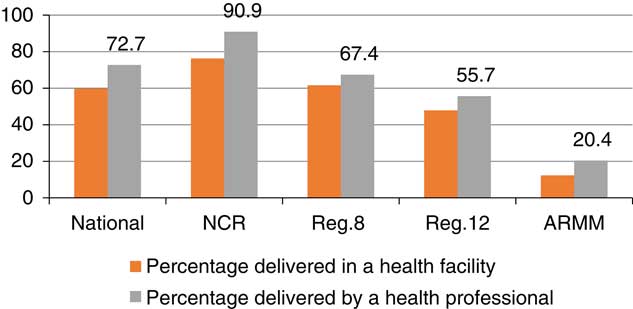
Births attended by skilled health personnel are a crucial determinant for preventing maternal deaths.Footnote 62 This is due to the greater accessibility of emergency assistance in case pregnancy or birth-related complications arise. Compared to the highly urban National Capital Region (NCR) and the national level of skilled birth attendance, the most conflict-affected region of Autonomous Region in Muslim Mindanao (ARMM) had the least number of medically assisted births based on 2013 data (Figure 1). Region 8 (Eastern Visayas), which is a typhoon-prone region and among the hardest hit regions by supertyphoon Haiyan in 2013, registered higher numbers compared to ARMM and Region 12, another conflict-affected area. But it also exhibited significant gaps compared to NCR. Lastly, women from ARMM also reported the highest percentage of encountering barriers to accessing health care at 94.3 per cent, compared to 53.8 per cent of women from NCR.Footnote 63
Regional skilled birth attendance. Source: Philippine Statistics Authority, 2013 National Demographic and Health Survey (NDHS) (2014), available at: {https://psa.gov.ph/content/six-ten-births-are-delivered-health-facility-preliminary-results-2013-national-demographic} accessed 4 November 2017.

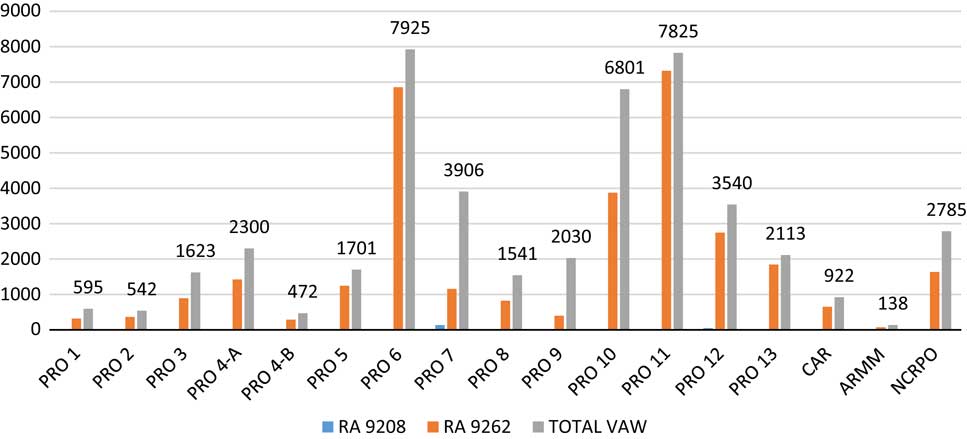
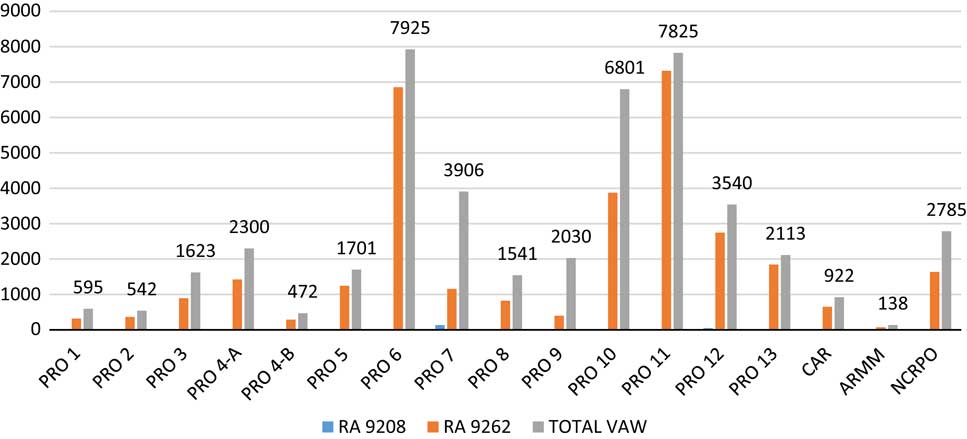
The same barriers that restrict the capacity of women and girls to exercise sexual and reproductive decision-making also underpin their inability to live lives free from violence. Figure 2 shows the irony presented by ARMM, which has the highest concentration of armed conflicts nationally and yet had the lowest recorded cases of SGBV. The complex root causes to this contradiction are revealed partly through the OECD Social Institutions and Gender Index (SIGI). Unlike the Global Gender Gap Index, SIGI is different in that it measures gender equality based on existing discrminatory social institutions.Footnote 64 The Philippines obtained a SIGI score of ‘medium’, which means that its social institutions are ‘characterised by inconsistent or conflicting legal frameworks covering the family code, women’s access to resources and assets, and civil liberties. The strong influence of customary practices perpetuates discrimination in these areas’.Footnote 65 According to the 2012 SIGI results, the country’s laws relating to the family are highly discriminatory.
Reported Violence against Women (VAW) cases by region (2014). Note: Philippine laws categorise different forms of sexual- and gender-based violence under the legal definition of Violence against Women. Data collection of reported cases fall under different categories such as shown in Figure 2. Republic Act (RA) 9208 refers to the ‘Anti-Trafficking in Persons Act of 2003’, which criminalises trafficking of women and children. Republic Act (RA) 9262 refers to the ‘Anti-Violence Against Women and Their Children Act of 2004’. This law defines violence against women and children under Section 3 as ‘any act or a series of acts committed by any person against a woman who is his wife, former wife, or against a woman with whom the person has or had a sexual or dating relationship, or with whom he has a common child, or against her child whether legitimate or illegitimate, within or without the family abode, which result in or is likely to result in physical, sexual, psychological harm or suffering, or economic abuse including threats of such acts, battery, assault, coercion, harassment or arbitrary deprivation of liberty.’ Source: Philippine Commission on Women.
The SIGI score for the Philippines reflects the presence of legal provisions that do not adequately protect against early marriage, polygamy, and unequal inheritance, as well as the absence of divorce in the country. The index specifically identified acute concerns represented by the Code of Muslim Personal Laws along with routine customary practices in ARMM such as bride abduction and forced marriage.Footnote 66 This means that the ability to attain the best possible level of health is not simply about ensuring services are available. Internalised barriers embedded in cultural or religious beliefs and practices that might prevent women and girls from accessing services in the first place require equal attention in terms of reforms. State negligence to address such forms of preventable depletion demonstrates the impact of protracted conflicts and rapid onset of disasters in undermining health service delivery, and in the sustainability of social reproduction more broadly. Unequal access to heatlh services also speaks to the importance of eliminating structural inequalities based on religion, class, race/ethnicity, and gender that define whose bodies matter.
Linking labour migration, care drain, and depletion in crisis
Deteriorating SRHR outcomes within crisis settings raise concerns for what lasting detrimental impacts on the sustainability of social reproduction in the Global South are enabled by a gendered and racialised global division of labour. Building on the literature around ‘care drain’ and labour migration in the Philippines, I argue that the global political economy enables not just the mobilisation of female care workers from the Global South to the Global North, which is how the concept of ‘care drain’ has been commonly applied.Footnote 67 But at the same time, we are actually seeing the depletion of the very sources of care in profound ways, especially during periods of crisis. In the Philippine case, one distinct consequence is the permanent shortage of health professionals and caregivers for meeting intensified care needs but this shortage nevertheless sustains national and household economies. For example, while producing a highly feminised labour export to meet global care demands, the Philippines experiences a ‘permanent’ health crisis, especially in rural and crisis-prone areas.Footnote 68 National data indicate the severe and perennial shortage of medical personnel in the Philippines particularly in the regions with already low levels of human development. WHO has a minimum threshold of 23 doctors, nurses, and midwives per 10,000 population.Footnote 69 The Philippines fails to meet this threshold especially in ARMM and other similarly conflict-affected regions in Mindanao.
This regional pattern replicates the global inequality in health noted by WHO such that those faced with the greatest need for addressing diseases and health emergencies are also with the least access to health personnel and resources.Footnote 70 Given a low density of medical personnel in ARMM and the inaccessibility of frontline health service, many families and communities in rural areas simply contend with limited life chances, especially when faced with life threatening health concerns such as pregnancy-related complications. The loss of dignity becomes accepted in protracted internal displacement too. For instance, one woman displaced by conflict in Mindanao recounted her experience, ‘[I]t was difficult to give birth inside the tent. It was very cold. Many people were looking at me and I felt helpless and ashamed but could not do anything but suffer in silence’.Footnote 71
There have been attempts by previous governments beginning in the 1990s to address these shortages, especially within rural areas and at the barangay or barrio levels. Initiatives such as the ‘doctors to the barrios’ (DTB) programme, however, are stopgap measures that are inadequate and reliant on mobilising values of altruism and sacrifice among urban doctors.Footnote 72 DTB essentially relies on volunteers to relocate in these provinces in exchange for lower salaries and standard of living. Unsurprisingly, the DTB has not been a sustained initiative.
This ‘care drain’ exacerbates conditions in crisis situations by further driving households and communities to mitigate chronic state neglect through ‘self-help’.Footnote 73 This occurs because the very same regions with least access to health also fare poorly in terms of other indicators for human development that requires strong state-led social welfare. For example, based on the Philippine Human Development Reports, Mindanao provinces have consistently had among the lowest levels of human development nationally, particularly in the areas of income poverty, life expectancies, and education.Footnote 74 Migration provides access to economic resources unavailable to families in crisis-prone areas thereby allowing them the mobility to relocate to safer or urban areas. For internally displaced families and communities, remittances by migrant family members serve as the basic lifeline whether in the short-term in the case of rapid onset disasters, or long-term dependence due to chronic displacements caused by routine armed conflicts.
Conflicts and disasters intensify the pressure for women and girls to seek employment overseas. According to the 2015 National Survey on OFWs, the highest percentage of labour export nationally is comprised of women employed as labourers and unskilled workers. Regionally, thousands of these women migrants originate from and support families in Visayas and Mindanao. In Mindanao, the pattern is strongly demonstrated such that 65.7 per cent of labourers and unskilled workers from the region are female. Similarly, in Visayas, 53.3 per cent were female compared to 9.3 per cent male labourers and unskilled workers.Footnote 75 These figures put into perspective the crisis-driven feminisation of survival at regional levels in the Philippines and the distinct vulnerability of women and girls in internalising conflicts or disasters. For instance, in 2014 approximately a year after super typhoon Haiyan devastated the Visayas region, national statistics on VAW recorded the highest prevalence of human trafficking cases in Region 7-Central Visayas (see Figure 2).Footnote 76 One hundred and thirty-two documented cases or 55.5 per cent of the national total came from one region alone in that year. This surge in reported cases can be attributed to the sudden inflow of humanitarian contingents leading to an improvement in reporting and monitoring mechanisms in the short term. However, the ‘push factor’ for migration and self-help strategies, especially for the most vulnerable populations, extend beyond crisis periods and are in fact enabled by the country’s economic policies within a broader neoliberal global economy.Footnote 77
According to UN OCHA, 24.3 per cent of financial assistance for the Haiyan relief and rehabilitation came from private individuals and organisations by August 2015.Footnote 78 Remittances play a crucial role in mitigating immediate security needs given pre-existing weak state infrastructures to support Filipino households and communities. The frequent occurrence of conflicts and disasters mean that the Philippine state can invest very little in addressing these crises and yet reap economic profits. The global economy is thus deeply implicated in perpetuating various forms of crises that create significant human insecurities for communities such as in the Philippines because it is through the gendered reproduction of crisis that the neoliberal economy is sustained. Consequently, women and girls bear the brunt of these crises in compounded ways. Often, given the precarious conditions of labourers and unskilled workers in the global economy, the immediate security of Filipino families and communities come at the cost of long-term depletion for both overseas women migrants as well as for their families and communities in crisis-prone areas.
The cyclical nature of violence is embodied in how many Filipino women and girls seek employment overseas through licit and illicit routes in order for themselves and their families to escape conflicts or disasters, only to be subjected to inhumane treatment, exploitation, and even death in their workplaces. The failure of the Philippine state and the international community to promote better work rights for domestic workers overseas contributes to the normalisation of OFW deaths. As other feminist scholars have shown, the employment conditions of migrant domestic workers clearly demonstrate the global economic devaluing of social reproductive labour as a root cause of gender inequality.Footnote 79 The Philippines’ President Duterte in one speech casually stated that female OFWs ought to have access to pills so that they do not get pregnant even after being raped.Footnote 80 Such high-level pronouncements reflect the pervasive reach of the ideal of self-sacrificing women migrants in the Philippines.Footnote 81 This national ideal acquires further significance in relation to the invisible depletion of women’s bodies in crisis situations. What the remark symbolically implies is that the responsibility for mitigating crisis and violence falls again on women as individuals thereby divesting states of the responsibility to remedy and ultimately prevent these immediate and long-term harms. Mitigating the gendered impacts of crisis ought to begin even before a crisis occurs, and replenishing women’s bodies is an ongoing endeavour that stretches beyond the spectacle of crisis. As Maria Libertad Dometita, then an Oxfam Haiyan Response Gender Coordinator, argued, ‘gender cannot wait until a subsequent phase of the [crisis] response. We could not delay it. If we fail to identify gender specific needs then women will find themselves with less time, less money, less resources. Power, insecurity and gender inequalities will be further perpetuated’.Footnote 82
There are important opportunities for mitigating depletion in crisis settings in the Philippines through recent progressive national policies. For example, with specific reference to armed conflicts, a historic peace agreement was signed between the state and one of the major armed Moro rebel groups in 2014. This represents a first step in promoting healing and recovery among affected populations in Mindanao. The country is also the first in the Asia Pacific region to have drafted a national action plan on WPS that promises to address the distinct needs and agency of women in conflict.Footnote 83 Gender mainstreaming efforts in disasters and climate change are also codified under the Climate Change Act of 2009Footnote 84 and the National Disaster Risk Reduction and Management Act of 2010.Footnote 85 Yet, mitigation and replenishment do not stop there. Armed conflicts in the country may cease but this will not automatically guarantee the sustainability of health service delivery in the ARMM given prevailing neoliberal policies that promote fiscal austerity while at the same time fuelling a global demand and relatively higher remuneration for Filipino care workers overseas. Likewise, the availability of health services alone is not sufficient in addressing the globally pervasive economic neglect of women’s labour and deeply embedded cultural and religious barriers to promoting the bodily autonomy of women and girls. Promoting SRHR in crisis situations must be part of wider reform efforts where health and well-being is recognised as central to simultaneously advancing gender equality and sustainable peace.Footnote 86
Conclusion
Women and girls are routinely denied the full range of sexual and reproductive health services precisely in situations when they need them the most, and this is linked to how the distribution of power and resources are being (re)configured in an increasingly fragile world. In this article, I developed a feminist political economy analysis of the neglect of SRHR in crisis situations and examined how this very neglect undermines the sustainable provisioning of care that is fundamental to defining the quality of survival in the aftermath of crises. First, the specific insecurities that deteriorate women’s health and well-being in times of crisis are compounded by the ways in which their bodies and labour are economically devalued at different levels. Crisis-driven depletion processes occur at interconnected layers from women’s invisible labour in internal displacement sites, to the state’s reliance on migrant remittances as crisis ‘shock absorbers’, and globally through shortfalls and outright restrictions on the aid allocated for SRHR. Yet, bodily autonomy, especially for women and girls in crisis situations, is both an outcome of addressing pre-existing gendered inequalities and a precondition for meaningful political and economic participation postcrisis. While gender equality is being mainstreamed across important security and development agendas such as the WPS, fully addressing the root causes for SGBV during times of crisis requires transformations in how social reproduction is economically valued. This endeavour is deeply intertwined with broader social justice projects that promote health and economic rights at the global level, and encompasses the rights of all women in and out of crisis settings.
Second, women in crisis situations are most disadvantaged because of barriers to health that span a continuum of political, economic, and sociocultural processes. The occurrence of local conflicts or disasters alone does not explain why health systems and infrastructures fail to meet crisis-specific sexual and reproductive health needs. Unequal health outcomes and vulnerability to violence in general are ultimately (re)constituted through the everyday consequences of global and national policies. The Philippine case highlighted in this article helps to reveal the impacts of a depletive neoliberal economy that simultaneously harnesses social reproduction while legitimising states to abdicate their responsibilities both in emergency response, and in promoting sustainable human flourishing, especially for women and girls. Further research is needed to examine the relationship of the state vis-à-vis the broadening impact of private actors such as through migrant remittances, and of organisations particularly faith-based groups in sustaining household and national economies in times of crisis. A feminist political economy lens can signal our attention to the gendered implications of such transformations within the changing nature of humanitarian and crisis responses.
Lastly, a foundation for implementing postcrisis recovery and rehabilitation is to ask how can we build caring societies, including health systems that are not depletive, exploitative, or self-sacrificing, especially for marginalised and internally displaced women and girls? Without critical and substantive material contributions that put health and well-being at the centre of national security and development agendas, women and girls as primary caregivers will continue to distinctly bear the human costs of crises. Redistribution of resources toward replenishing social reproduction and of the bodies that support daily survival requires changes in culture too. At the global level this means creating more spaces where issues of SRHR beyond narratives of violence and victimisation are made visible within security frameworks. At the national level, legal and cultural reforms in family laws and SRHR, including access to abortion, must be in place for women and girls to safely exercise their right to bodily autonomy. At a time of multiple and escalating forms of crisis, we cannot afford to ignore how the gendered division of labour endures and is even further embedded as a result of crisis. Promoting women’s bodily autonomy in crisis settings is integral to broader cultural transformations that relegate care labour – not a burden that women and girls solely fulfil – but as a responsibility shared by all and across all levels of governance.
Acknowledgements
An initial draft of this article was presented at the 2017 International Studies Association Conference in Baltimore, US. It has benefited from all the helpful comments at the conference panel, and from the RIS anonymous reviewers and editors. The author also thanks Jacqui True, Sara Davies, and Sophie Harman for their feedback and encouragement throughout the development of this piece.