Introduction
Since pre-historic times, food plants have been domesticated, selected, exchanged and improved by farmers in traditional ways within traditional production systems. This process has also been utilized for scientific crop improvement, which led to the Green Revolution and a significant rise in crop yields. Globally, approximately half of the increase in food production can be attributed to genetic improvement. Millions of lives depend upon the extent to which crop genetic improvement can keep pace with the growing global population, changing the climate and shrinking environmental resources (Ronald, Reference Ronald2011). Plant geneticists, as well as plant breeders, consider molecular marker-assisted selection (MAS) a useful additional tool in crop improvement/breeding programmes to optimize selection efficiency (Dwivedi et al., Reference Dwivedi, Crouch, Mackill, Xu, Blair, Ragot, Upadhyaya and Ortiz2007; Xu and Crouch, Reference Xu and Crouch2008). Recently, the amount of molecular genetic markers for relevant plant breeding traits has increased (Lammerts van Bueren et al., Reference Lammerts van Bueren, Backes, de Vriend and Østergärd2010). Without the knowledge of linkage to genes for specific traits of interest (for the plant breeder), molecular markers can still be used to determine the genetic relatedness between two different individual plants or the genetic diversity within a gene pool (Lammerts van Bueren et al., Reference Lammerts van Bueren, Backes, de Vriend and Østergärd2010). Although increasing, use of molecular markers is still modest in plant breeding. A major reason for this is the lack of appropriate markers with high selective value for many traits of interest to breeders (Tuvesson et al., Reference Tuvesson, Svensson, Happstadius, Henriksson, Kazman, Østergård, Lammerts van Bueren and Bouwman-Smits2009). Particularly, those quantitative traits which depend largely on environmental factors, GEI (genotype–environment interactions), are integrated into QTL (quantitative trait loci) analysis, resulting in markers reflecting the amount and direction of the reaction of the plant to an environmental input. Such markers are valuable over a larger range of environments (Backes and Østergard, Reference Backes and Østergard2008). Several genes contributing to one trait can be pyramided in one genotype using linked markers. Hence, molecular profiling would be useful particularly in the utilization of untapped genetic diversity. Crop diversity is gradually shrinking in most parts of the world, with most of mankind living off a few plant species and the human diet composed mainly of a few major crops such as wheat, rice, maize and potatoes. However, crop diversity with known traits can provide the basis for offering higher yielding and more reliable plants, which can support low-income farmers and consumers. It can also deliver security to the poor by making harvests more resilient to environmental changes.
Millet, which is one of the oldest foods known to man and possibly the first cereal grain used for domestic purposes, is grown in the Central Himalayan Region (CHR). Foxtail millet (Setaria italica (L.) P. Beauv) is an important annual crop of the genus Setaria, family Gramineae. It is a self-pollinated crop (Leonard and Martin, Reference Leonard and Martin1963) where cross-pollination averages about 0.04 (Li et al., Reference Li, Meng and Liu1935). Foxtail millet is not just a cereal of the Old World, it is also used widely in Africa, the Americas, Australia and Eurasia (Lin et al., Reference Lin, Chiang, Chang, Liao and Kuoh2012). It is a good source of dietary fibre and certain amino acids such as lysine and thiamine, which are otherwise low/deficient in cereal food. Dietary fibres found in carbohydrates aid digestion by moving food quickly through the intestines. A fibre-rich diet helps to decrease constipation and other digestive problems, lower blood cholesterol and reduce the risk of heart disease (Jones, Reference Jones2001; Jones et al., Reference Jones, Lineback and Levine2006). In human nutrition, lysine is an essential amino acid involved in the creation of collagen and absorption of calcium. It prevents cold sores (caused by the virus called herpes simplex labialis). A deficiency of lysine can lead to anaemia, bloodshot eyes and fatigue (Sahley and Birkner, Reference Sahley and Birkner2000). Another amino acid analysed in seeds, thiamine, is an essential nutrient for normal body function (Lonsdale, Reference Lonsdale1990). Its deficiency may result in damage to the nervous system as well as to the heart and other muscles, which are the symptoms of beriberi disease (Lee, Reference Lee1994). Thiamine is important due to its role as a coenzyme for reactions catalysed by enzymes; thiamine is required for mitochondrial oxidative decarboxylation (Sica, Reference Sica2007), the pentose phosphate pathway and the citric acid cycle (Wooley, Reference Wooley2008). Due to a lack of stable and improved varieties, foxtail millet production is unstable and the market is chaotic. Therefore, there is an urgent need to develop varieties with stable and higher yield to stabilize the fluctuation of the production (Li et al., Reference Li, An, Liu, Cheng and Wang2014). In this context, evaluation of untapped genetic diversity of foxtail millet for nutritional traits is very important because this will enable the development of nutritionally rich varieties, particularly for resource-poor and malnourished regions, using the existing genetic diversity of crops.
With a relatively small genome (515 Mb), foxtail millet is a suitable plant for molecular and genetic research (Wang et al., Reference Wang, Devos, Liu, Wang and Gale1998). Foxtail millet (S. italica) exhibits numerous properties (for instance, C4 photosynthesis) that make it an ideal model for functional genomic studies in the Panicoid grasses (Diao et al., Reference Diao, Schnable, Bennetzen and Li2014). With a high-quality reference genome sequence (Bennetzen et al., Reference Bennetzen, Schmutz, Wang, Percifield, Hawkins, Pontaroli, Estep, Feng, Vaughn, Grimwood, Jenkins, Barry, Lindquist, Hellsten, Deshpande, Wang, Mitros, Triplett, Yang, Ye, Mauro-Herrera, Wang, Li, Sharma, Sharma, Ronald, Panaud, Kellogg, Brutnell, Doust, Tuskan, Rokhsar and Devos2012) and a high-density haplotype map of genome variation (Jia et al., Reference Jia, Zhang, Liu, Zhang, Shi, Song, Wang and Li2013) and other genomic data (Kumari et al., Reference Kumari, Muthamilarasan, Misra, Gupta, Subramanian, Parida, Chattopadhayay and Prasad2013; Pandey et al., Reference Pandey, Misra, Kumari, Gupta, Parida, Chattopadhyay and Prasad2013; Suresh et al., Reference Suresh, Muthamilarasan, Misra and Prasad2013; Muthamilarasan et al., Reference Muthamilarasan, Venkata Suresh, Pandey, Kumari, Parida and Prasad2014; Zhang et al., Reference Zhang, Tang, Zhao, Li, Yang, Qie, Fan, Li, Zhang, Zhao, Liu, Chai, Zhang, Wang, Li, Li, Zhi, Jia and Diao2014; Yadav et al., Reference Yadav, Bonthala, Muthamilarasan, Pandey, Khan and Prasad2015), this species can now truly be considered as a novel model system for genetic and genomic studies in other cereal and millet crops (Doust et al., Reference Doust, Kellogg, Devos and Bennetzen2009; Li and Brutnell, Reference Li and Brutnell2011; Lata et al., Reference Lata, Gupta and Prasad2013; Muthamilarasan and Prasad, Reference Muthamilarasan and Prasad2015) to develop new varieties suitable for different regions.
Without irrigation and application of fertilizers, foxtail millet can survive and produce economic yield comparable with other crops of similar lifespan cultivated with optimal inputs. Thus, collection and nutritional evaluation of untapped genetic diversity might open some new avenues of research and breeding. Therefore, in the present study, an effort has been made to assess the extent of variability in 30 accessions of foxtail millet collected from the CHR using molecular markers and nutritional quality traits in order to identify specific germplasm for crop improvement.
Materials and methods
Plant materials and seed quality analysis
Plant exploration and germplasm collection expeditions were conducted in the CHR of India, i.e. Uttarakhand State, which is a large geographical area known for vagaries of weather. A total of 30 accessions (including four controls used for comparison) having unique traits of agronomic importance were collected from areas with different climatic conditions as well as different altitudes in this region and were evaluated for nutritional quality and genetic variability for three consecutive years (2011–2013) at one site located at 29°24′N, 79°30′E, 1480 m a.s.l. Four accessions, IC337300, IC355776, IC418394 and IC469880, which are preferred by the farming community across the region and occupy the largest area, were used as controls for comparison. Total dietary fibre content was determined using the AOAC method 2001.03 (AOAC Reference Horwitz2005). Total carbohydrate content was estimated by the anthrone reagent method (Morris, Reference Morris1948), while protein content was determined by the folin ciocalteau reagent method (Lowry et al., Reference Lowry, Rosenbrough, Farr and Randall1951) and fat content by AOAC method 996.01 (AOAC Reference Horwitz1998). Estimation of lysine and thiamine amino acid content was achieved following the methods of Hurrell and Carpenter (Reference Hurrell and Carpenter1981) and Chen et al. (Reference Chen, Li, Yang, Zhu, Zheng and Xu1999), respectively. All data are given on a dry weight basis.
Simple sequence repeat markers for molecular evaluation
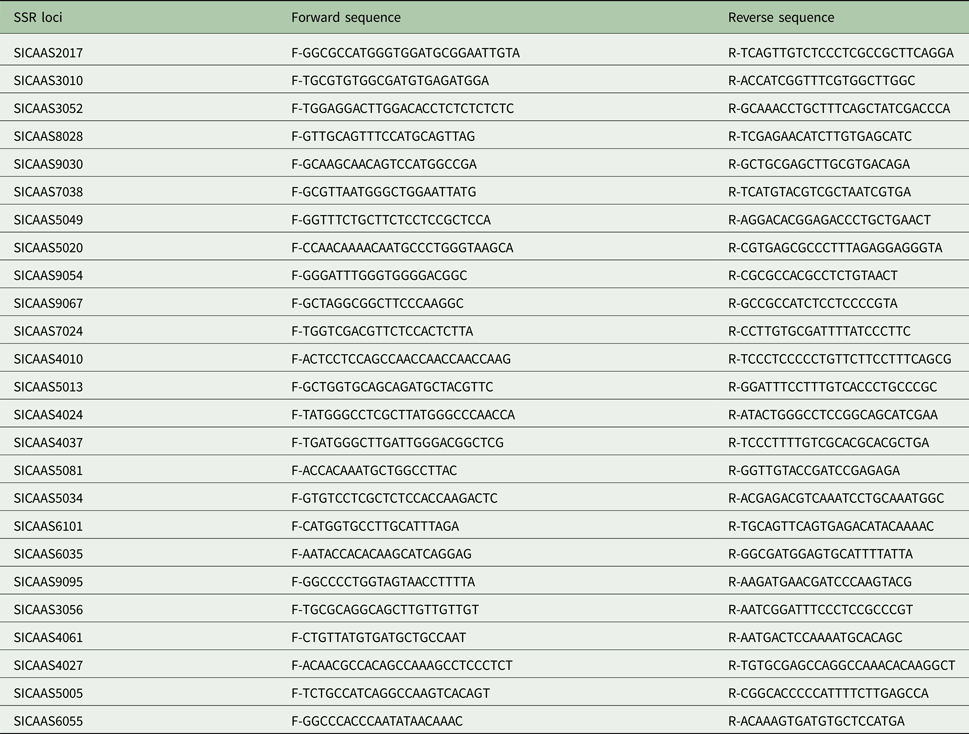
The DNA was extracted and purified from seeds using mini CTAB (cetyl trimethylammonium bromide) method (Saghai-Maroof et al., Reference Saghai-Maroof, Soliman, Jorgensen and Allard1984) and a working solution of 20 ng/μl was prepared for simple sequence repeat (SSR) amplification. These accessions were profiled with genome-wide SSR markers (Zhang et al., Reference Zhang, Tang, Zhao, Li, Yang, Qie, Fan, Li, Zhang, Zhao, Liu, Chai, Zhang, Wang, Li, Li, Zhi, Jia and Diao2014). Genomic SSR markers were selected based on their high polymorphism information content (PIC) value (0.7 or more) and represented different chromosomes. All of the 25 SSR loci (Table 1) were run at one touchdown cycle, whereas earlier different annealing temperatures were used for polymerase chain reaction (PCR) amplification (Zhang et al., Reference Zhang, Tang, Zhao, Li, Yang, Qie, Fan, Li, Zhang, Zhao, Liu, Chai, Zhang, Wang, Li, Li, Zhi, Jia and Diao2014). The PCR was carried out using 15 µl reaction mixture that included 5.68 µl H2O, 1.5 µl of 10× buffer, 1.2 µl of 25 mm MgCl2, 0.3 µl of 10 mm dNTPs mix, 0.6 µl of 10 mm forward and reverse primer each and 5 µl of 20 ng/μl DNA. All reagents were from MBI fermentas (St. Leon-Rot, Germany). The PCR was performed using touchdown cycle: initial denaturation at 94 °C for 3 min, then ten cycles of denaturation at 94 °C for 30 s, touchdown annealing starting at 62 °C for 30 s and decreasing 0.7 °C per cycle and extension at 72 °C for 1 min followed by 35 cycles of denaturation at 94 °C for 30 s, primer annealing at temperature 55 °C for 30 s and primer extension at 72 °C for 1 min with a final extension step at 72 °C for 4 min, 3% metaphor agarose gel was used for separating the SSR amplification products and photographed using a SYNGENEG-Box Gel Documentation unit (Syngenta, Cambridge, UK).
Sequence of the simple sequence repeat (SSR) primer pairs used for molecular profiling of foxtail millet (Setaria italica (L.) P. Beauv) from Central Himalayan Region

Statistical analysis
Experiments were conducted for three consecutive years (2011–2013) in a randomized block design (RBD) with three replications. Data for each parameter were analysed for statistical significance using two-way analysis of variance (ANOVA) to compare the means considering accession and trait as independent variables.
Alleles were scored and the presence or absence of alleles was converted to ‘1’ and ‘0’, respectively, for data analysis. The software program NTSYS-PC ver 2.1 (Rohlf, Reference Rohlf2000) was used to calculate Jaccard's similarity coefficient and Unweighted Pair Group Method with Arithmetic Mean (UPGMA) cluster analysis. Nei's gene diversity statistics were calculated using POPGENE version 1.32 (Yeh et al., Reference Yeh, Yang and Boyle1999). The PIC was calculated using the formula 1−∑p ij2 (Anderson et al., Reference Anderson, Churchill, Autrique, Tanksley and Sorrells1993), where p ij is the frequency of jth allele for ith SSR locus. Software STRUCTURE 2.3.4 (Pritchard et al., Reference Pritchard, Stephens and Donnelly2000) was run using a burn-in of 1 00 000, a run length of 1 00 000 (admixture model) and number of populations was inferred using Structure Harvester (Earl and von Holdt, Reference Earl and von Holdt2012) keeping K values (1–10) with five iterations at each K value.
Results
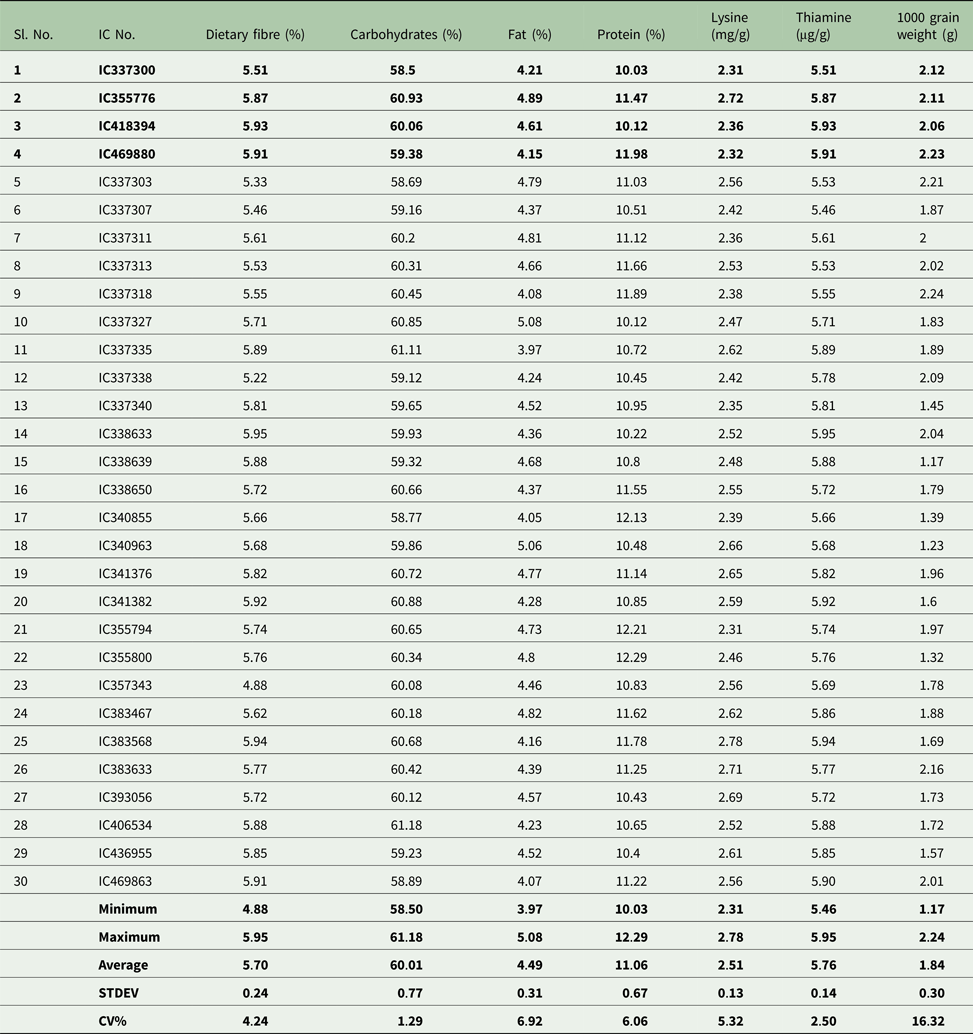
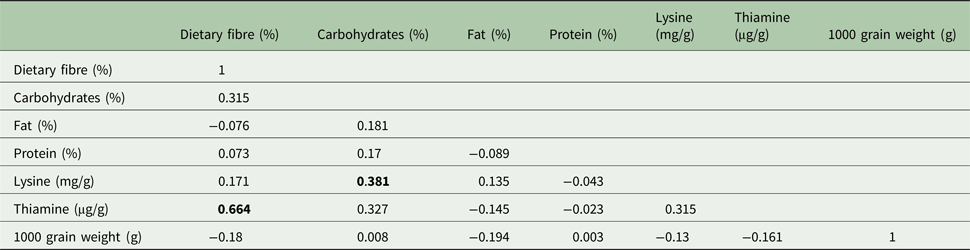
Seed quality traits are the main criteria for selection of a food crop to be grown at large scale and commercialized in any region. From the present study, it is evident that substantial variability is available in the dietary fibre, carbohydrate and fat content of the seeds. The fibre content of seeds varied from 4.88% (in IC357343) to 5.95% (in IC338633) whereas carbohydrate content varied from 58.50% in IC337300 to 61.18% in IC406534 (Table 2). In addition, fat content ranged from 3.97% in IC337335 to 5.08% in IC337327. Protein content in seeds was found to vary from 10.03% in IC337300 to 12.29% in IC355800. Amino acid lysine in seeds ranged from 2.31 mg/g (in IC337300 and IC355794) to 2.78 mg/g (in IC383568), while thiamine content was found to vary from 5.46 µg/g (in IC337307) to 5.95 µg/g (in IC338633). Thousand grain weight were found to vary from 1.17 g (in IC338639) to 2.24 g (in IC337318) (Table 2). There is a statistically significant (P ⩽ 0.05) correlation between dietary fibre and thiamine content, indicating that accessions rich in dietary fibre will also be rich in thiamine content (Table 3), as well as carbohydrate and lysine content, indicating that accessions rich in carbohydrate will also be rich in lysine content.
Variability in the nutritional traits and seed weight of the foxtail millet (Setaria italica (L.) P. Beauv) from Central Himalayan Region

Correlation matrix of foxtail millet (Setaria italica (L.) P. Beauv) from Central Himalayan Region based on nutritional traits

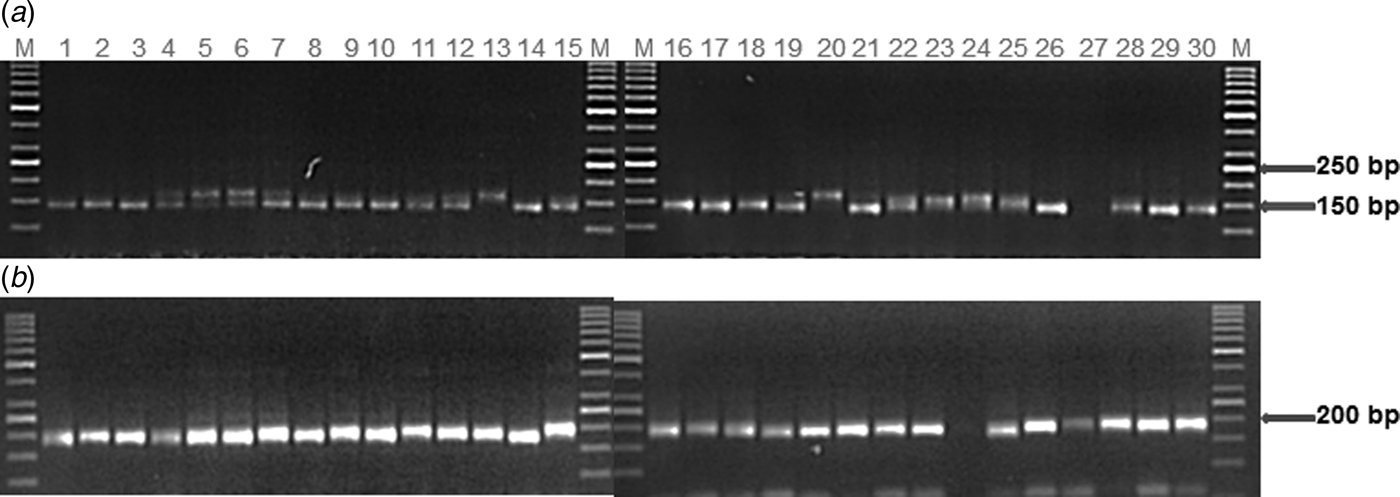
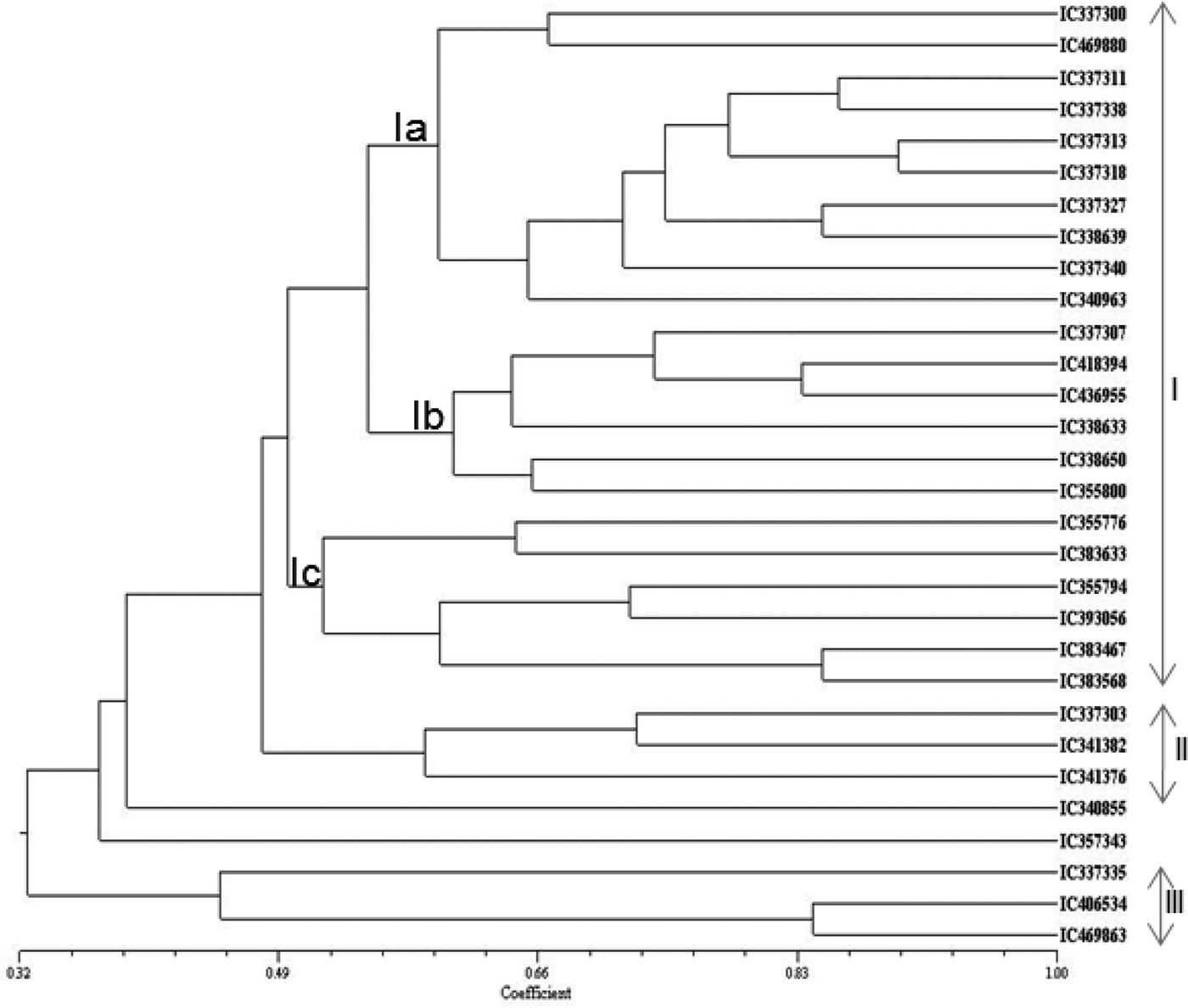
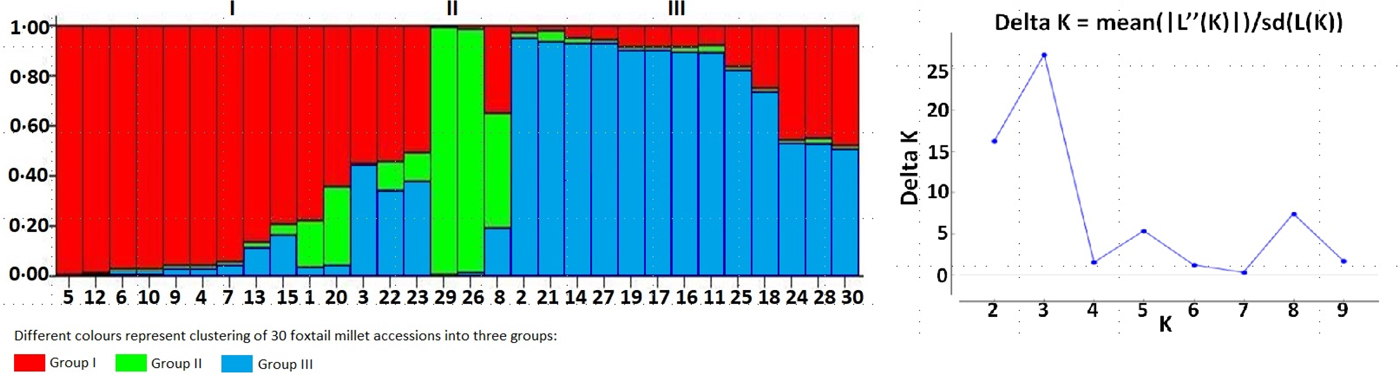
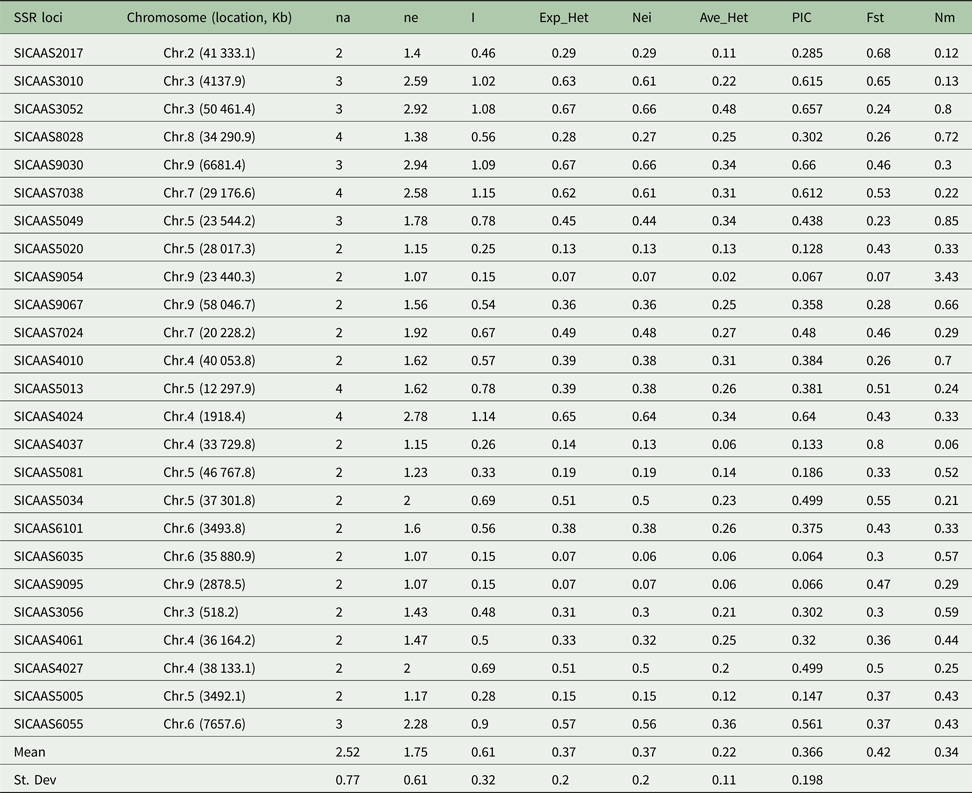
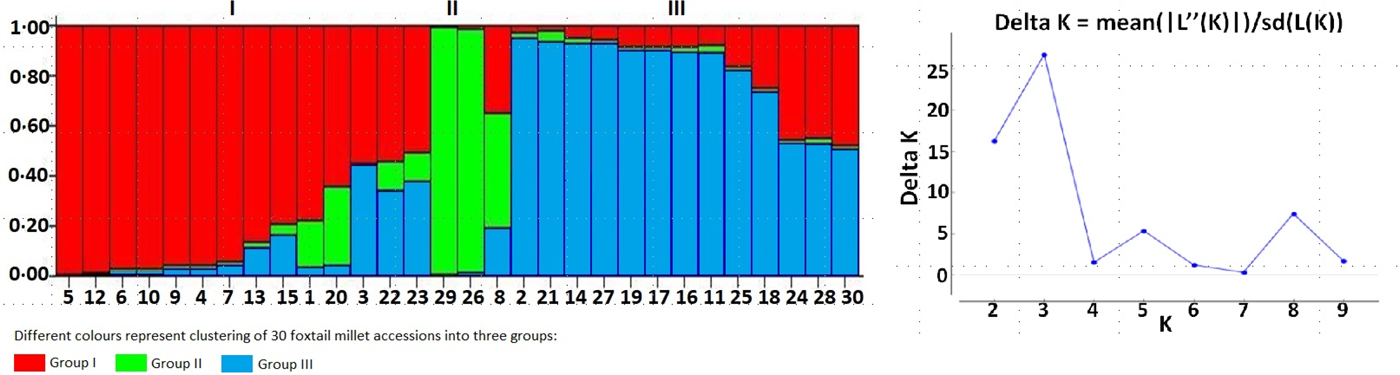
A total of 25 genome-wide SSR loci were used for genotyping to investigate genetic variation (Fig. 1). The number of alleles ranged from two to four, with an average of 2.5 ± 0.77 alleles/SSR locus. Furthermore, statistical analysis using POPGENE version 1.32 software revealed an average effective number of alleles, Shannon's Information Index, expected heterozygosity, Nei's expected heterozygosity, average heterozygosity of 1.8 ± 0.61, 0.6 ± 0.32, 0.4 ± 0.23, 0.4 ± 0.22 and 0.2 ± 0.11, respectively (Table 4). The observed heterozygosity of the germplasm ranged from 0.000 to 0.414 with an average of 0.06 ± 0.104, while PIC values varied from 0.064 to 0.66 with an average of 0.366. Genetic differentiation (Fst) among germplasm populations was 0.42 and the gene flow (Nm) was 0.34 (Table 4). Allelic data were converted into a 0/1 binary matrix based on the absence or presence of alleles, respectively, and was subjected to UPGMA cluster analysis (based on Jaccard's similarity coefficient matrix (Supplementary Table 1)) to further elucidate the genetic relatedness among different accessions (Fig. 2). The most distant accessions were IC469880 and IC469863 and most similar were IC337313 and IC337318. The Bayesian approach was followed to infer population structure using STRUCTURE 2.3.4 software and delta K value was calculated using Structure Harvester. The highest delta K value was reported at K = 3, indicating that all 30 accessions could be grouped into three well-defined sub-groups (Fig. 3).
Gel of foxtail millet accessions with SICAAS5049 (a) and SICAAS5020 (b) SSR loci,1: IC337300, 2: IC337303, 3: IC337307, 4: IC337311, 5: IC337313, 6: IC337318, 7: IC337327, 8: IC337335, 9: IC337338, 10: IC337340, 11: IC338633, 12: IC338639, 13: IC338650, 14: IC340855, 15: IC340963, 16: IC341376, 17: IC341382, 18: IC355776, 19: IC355794, 20: IC355800, 21: IC357343, 22: IC383467, 23: IC383568, 24: IC383633, 25: IC393056, 26: IC406534, 27: IC418394, 28: IC436955, 29: IC469863, 30: IC469880.

UPGMA cluster of 30 foxtail millet accessions based on simple sequence repeat (SSR) markers.

Structure and ΔK statistics-based graphical representation of estimated number of clusters for K values 1 to 10. 1: IC337300, 2: IC337303, 3: IC337307, 4: IC337311, 5: IC337313, 6: IC337318, 7: IC337327, 8: IC337335, 9: IC337338, 10: IC337340, 11: IC338633, 12: IC338639, 13: IC338650, 14: IC340855, 15: IC340963, 16: IC341376, 17: IC341382, 18: IC355776, 19: IC355794, 20: IC355800, 21: IC357343, 22: IC383467, 23: IC383568, 24: IC383633, 25: IC393056, 26: IC406534, 27: IC418394, 28: IC436955, 29: IC469863, 30: IC469880. Colour online.
Characteristics of simple sequence repeat (SSR) loci used for diversity analysis in foxtail millet (Setaria italica (L.) P. Beauv) from Central Himalayan Region

na, observed number of alleles; ne, effective number of allele; I, Shannon's information index; Exp_Het, expected heterozygosity; Nei, Nei's gene diversity, Ave_Het, average heterozygosity; PIC, polymorphism information content; Fst, genetic differentiation; Nm, gene flow.
Discussion
Foxtail millet germplasm from the CHR was found to have ample variability in nutritional traits. After achieving food security in different parts of the world, nutritional security is the next focus of global agricultural research. The rich variability in fibre content of millet germplasm found in the present study could be due to the difference in their genetic makeup. Accumulating evidence favours the view that increased intake of dietary fibre has beneficial effects including prevention or alleviation of maladies such as cardiovascular disease, diabetes, diverticulosis and colon cancer (Abdul-Hamid and Luan, Reference Abdul-Hamid and Luan2000). Some of the collected accessions have higher fibre content than all four controls, i.e. widely cultivated accessions, used in the current study. Information on fibre is now the third most sought-after health information in supermarkets in countries such as India, Australia, Western Europe and North America (Mehta, Reference Mehta2005). Hence, accessions high in fibre content might be preferable for breeders and important for a foxtail improvement programme.
Millets are considered as carbohydrates and dietary carbohydrate is essential for gastrointestinal integrity and functioning (Flight, Reference Flight2006). They supply the body with the energy required for its various activities (Eastwood, Reference Eastwood2003) and help in transporting crucial micronutrients. In seeds of any species, carbohydrate content usually remains stable; however, considerable variability in this nutritional constituent makes the germplasm useful for breeding programmes.
Millets, particularly foxtail millet, are low in saturated fat; however, they are a good source of polyunsaturated fats (Akoh and Min, Reference Akoh and Min2007), which help to lower low-density lipoprotein (LDL) cholesterol. In turn, low-LDL cholesterol reduces the risk of heart disease (Chow, Reference Chow2008), so low-LDL foods such as foxtail millet become an important component of nutritional security (Diniz et al., Reference Diniz, Cicogna, Padovani, Santana, Faine and Novelli2004).
In addition, considerable variability was found in the protein content of seeds. Although cereal grains contain relatively little protein compared with legume seeds, cereals are the most important food crops. They provide over 200 million tonnes of protein for the nutrition of humans and livestock, which is about three times the amount derived from the more protein-rich legume seeds (Shewry and Halford, Reference Shewry and Halford2002). In addition to their nutritional importance, cereal seed proteins also influence the utilization of the seed in food processing. The storage proteins of cereals are of immense importance in determining the quality and end-use properties of the grain (Shewry and Halford, Reference Shewry and Halford2002). Essential amino acids are crucial for nutritional security; hence, two amino acids (lysine and thiamine) were analysed in the germplasm and showed remarkable variability in their content. The food supply of developed countries is rich in lysine; however, in poor countries where cereals dominate the food supply, lysine is the most limiting amino acid in the food supply (Baker, Reference Baker2007). It is a strictly indispensable amino acid in humans and animals (Tome and Bos, Reference Tome and Bos2007); hence, untapped genetic diversity of foxtail millet having considerable variability in lysine content might be important for human nutrition as well as for feed.
Thiamine, also known as vitamin B1, is essential for energy metabolism (Bettendorff et al., Reference Bettendorff, Lakaye, Kohn and Wins2014). Thiamine deficiency is uncommon in economically developed regions due to diversified diets and thiamine fortification of grains (Nathoo et al., Reference Nathoo, Holmes and Ostry2005; Dwyer et al., Reference Dwyer, Wiemer, Dary, Keen, King, Miller, Philbert, Tarasuk, Taylor, Gaine, Jarvis and Bailey2015); however, severe thiamine deficiency leading to beriberi does occur in areas where dietary sources of thiamine are limited, such as Southeast Asia (Khounnorath et al., Reference Khounnorath, Chamberlain, Taylor, Soukaloun, Mayxay, Lee, Phengdy, Luangxay, Sisouk, Soumphonphakdy, Latsavong, Akkhavong, White and Newton2011; Coats et al., Reference Coats, Shelton-Dodge, Ou, Khun, Seab, Sok, Prou, Tortorelli, Moyer, Cooper, Begley, Enders, Fischer and Topazian2012). Ample variability in the thiamine content of foxtail millet germplasm signifies its potential relevance for breeding.
Foxtail millet is considered as a food suitable for diabetics, so its popularization and cultivation may help to minimize this global problem (Kam et al., Reference Kam, Puranik, Yadav, Manwaring, Pierre, Srivastava and Yadav2016). Unlike other common cereal foods such as rice and wheat, foxtail millet releases glucose steadily without affecting the body's metabolism (Jali et al., Reference Jali, Kamatar, Jali, Hiremath and Naik2012).
The available foxtail millet diversity has vast scope for supporting commercially grown crops by reducing pressure on their availability; it is also a cheap source of nutrients and can be raised at low management cost (Sankhala et al., Reference Sankhala, Chopra and Sankhala2004).
Diversity based on phenotypic and morphological characters usually varies with environment. Molecular markers have been proven to be powerful tools in the assessment of genetic variation and in the elucidation of genetic relationships within and among species (Chakravarthi and Naravaneni, Reference Chakravarthi and Naravaneni2006). Unlike morphological traits, molecular markers are not affected by environment (Staub et al., Reference Staub, Serquen and Mccreight1997). Collecting DNA marker data to determine whether phenotypically similar cultivars are genetically similar would, therefore, be of great interest in breeding for economically important traits (Duzyaman, Reference Duzyaman2005). In the present study, the number of alleles ranged from two to four, with an average of 2.5 ± 0.77 alleles/SSR locus, which is comparable with an earlier study by Jia et al. (Reference Jia, Huang, Zhi, Zhao, Zhao, Li, Chai, Yang, Liu, Lu, Zhu, Lu, Zhou, Fan, Weng, Guo, Huang, Zhang, Lu, Feng, Hao, Liu, Lu, Zhang, Li, Guo, Wang, Wang, Liu, Zhang, Chen, Zhang, Li, Wang, Li, Zhao, Li, Diao and Han2009), i.e. 2.5 alleles/SSR locus, and higher than other previous reports: 2.15 alleles/SSR locus (Pandey et al., Reference Pandey, Misra, Kumari, Gupta, Parida, Chattopadhyay and Prasad2013), 2.2 alleles/SSR locus (Gupta et al., Reference Gupta, Kumari, Sahu, Vidapu and Prasad2012; Kumari et al., Reference Kumari, Muthamilarasan, Misra, Gupta, Subramanian, Parida, Chattopadhayay and Prasad2013) and 2.4 alleles/SSR locus (Lin et al., Reference Lin, Chiang, Chang, Liao and Kuoh2012). The observed heterozygosity of the germplasm is comparable with that obtained earlier by Gupta et al. (Reference Gupta, Kumari, Sahu, Vidapu and Prasad2012). The PIC values are also comparable with the earlier report by Gupta et al. (Reference Gupta, Kumari, Sahu, Vidapu and Prasad2012), i.e. 0.45, and lower than values of 0.69 and 0.45 reported by Jia et al. (Reference Jia, Huang, Zhi, Zhao, Zhao, Li, Chai, Yang, Liu, Lu, Zhu, Lu, Zhou, Fan, Weng, Guo, Huang, Zhang, Lu, Feng, Hao, Liu, Lu, Zhang, Li, Guo, Wang, Wang, Liu, Zhang, Chen, Zhang, Li, Wang, Li, Zhao, Li, Diao and Han2009) and Liu et al. (Reference Liu, Bai, Zhang, Zhu, Xia, Cheng and Shi2011), respectively. Jia et al. (Reference Jia, Huang, Zhi, Zhao, Zhao, Li, Chai, Yang, Liu, Lu, Zhu, Lu, Zhou, Fan, Weng, Guo, Huang, Zhang, Lu, Feng, Hao, Liu, Lu, Zhang, Li, Guo, Wang, Wang, Liu, Zhang, Chen, Zhang, Li, Wang, Li, Zhao, Li, Diao and Han2009) and Liu et al. (Reference Liu, Bai, Zhang, Zhu, Xia, Cheng and Shi2011) found higher diversity in Chinese germplasm as compared with the Indian germplasm used in the present study. This may be because different SSR markers were used in these studies; secondly, China is the centre of origin of foxtail millet whereas region-specific (i.e. CHR of India) germplasm was used in the present study for evaluation of nutritional quality. The Shannon's Information Index, Nei's expected heterozygosity and PIC values obtained in the present study also suggest considerable variability in the S. italica germplasm analysed. Based on the present analysis, the most informative SSR markers identified for S. italica are SICAAS3052, SICAAS9030, SICAAS4024, SICAAS3010 and SICAAS7038. According to Wright's (Reference Wright1931) rule, if the value of Nm is <1, populations will diverge. A low Nm value is generally believed to occur in self-pollinating systems such as foxtail millet. In the present study, the obtained Nm value was 0.34, indicating significant genetic differentiation. It has been observed that the accessions IC338633, IC406534, IC337327, IC355800, IC383568, IC338633 and IC337318 showed the highest values of dietary fibre, carbohydrate, fat, protein, lysine, thiamine and 1000 seed weight, respectively, which are higher than all four controls included in the present study, hence may be utilized in foxtail millet improvement for the traits studied. Furthermore, pairs of accessions showing the minimum and maximum values for these traits were examined for their Jaccard's similarity coefficient values (Supplementary Table 1) based on SSR markers used in the present study. The following pairs of accessions showed 27–73% variation between them based on Jaccard's similarity coefficient values (IC338633 and IC357343, 0.53); (IC406534 and IC337300, 0.27); (IC337327 and IC337335, 0.432); (IC355800 and IC337300, 0.567); (IC383568 and IC355794, 0.567); (IC338633 and IC337300, 0.40) and (IC337318 and IC338639, 0.73) and may be useful in breeding programmes for improving dietary fibre, carbohydrate, fat, protein, lysine, thiamine and thousand grain weight, respectively. Hence, molecular profiling may be useful to select genotypes for nutritional breeding. Selection and utilization of available genetic variability for nutritional quality based on morpho-physiological traits and molecular markers may be an easy and useful approach for food and nutritional security in resource-poor regions as well as crop improvement (Trivedi et al., Reference Trivedi, Arya, Verma, Verma, Tyagi and Hemantaranjan2015).
Conclusion
A wide gene pool with known nutritional traits having diversity at the molecular level might be decisive for continued improvement of a crop through breeding. Results reveal considerable diversity and correspondence of molecular clustering and nutritional traits that can be utilized for designing further strategies, tailoring nutritionally rich varieties.
Supplementary material
The supplementary material for this article can be found at https://doi.org/10.1017/S0021859618000382
Acknowledgements
Authors are grateful to the Director, ICAR-NBPGR, Pusa Campus, New Delhi for providing necessary facility and a keen interest in the study.
Financial support
This research received no specific grant from any funding agency, commercial or not-for-profit sectors.
Conflicts of interest
None.
Ethical standards
Not applicable.