Introduction
Avian influenza (AI) H9N2 virus is considered a low pathogenic avian influenza virus (LPAIV) with widespread circulation in poultry in Asia (Pawar et al., Reference PAWAR, TANDALE, RAUT, PARKHI and BARDE2012; Ahad et al., Reference AHAD, RABBANI, YAQUB, YOUNUS, MAHMOOD, SHABBIR and RASHEED2013). LPAI H9N2 virus can pose a significant zoonotic threat similar to H5N1 in the future (Ahad et al., Reference AHAD, RABBANI, YAQUB, YOUNUS, MAHMOOD, SHABBIR and RASHEED2013) as they have been isolated from domestic as well as wild avian species (Khawaja et al., Reference KHAWAJA, NAEEM, AHMED and AHMAD2005). It has been found circulating in multiple avian species in Eurasia resulting in great economic losses in the poultry industry (Guo et al., Reference GUO, KRAUSS and SENNE2000; Al-Garib et al., Reference AL-GARIB, AGHA and AL-MESILATY2016). In recent years, H9N2 virus has gained significant importance because of its continuous rapid spread among domestic birds (Tosh et al., Reference TOSH, NAGARAJAN and BEHERA2008). This virus persists in chicks and spreads to non-affected flocks through the faecal oral route without showing severe clinical signs (Alexander, Reference ALEXANDER2000). Sporadic outbreaks of this subtype of virus have been reported in Pakistan, India and Iran (Alexander, Reference ALEXANDER2000; Bano et al., Reference BANO, NAEEM and MALIK2003; Capua and Alexander, Reference CAPUA and ALEXANDER2004). In immunosuppressed chickens, the H9N2 virus causes severe respiratory tract infections with high mortality in young chicks and a severe decline in egg production in laying chickens, resulting in economic loss (Umar et al., Reference UMAR, YOUNUS, REHMAN, ASLAM, SHAH, MUNIR, HUSSAIN, IQBAL, FIAZ and ULLAH2015a). Similarly, co-infection of this virus with other pathogens can lead to increasing severity of clinical signs and mortality rates as well as viral shedding (Guan et al., Reference GUAN, SHORTRIDGE, KRAUSS and WEBSTER1999; Muhammad et al., Reference MUHAMMAD, HUSSAN, RIAZ, MANZOOR and SAJID2001; Alexander, Reference ALEXANDER2007).
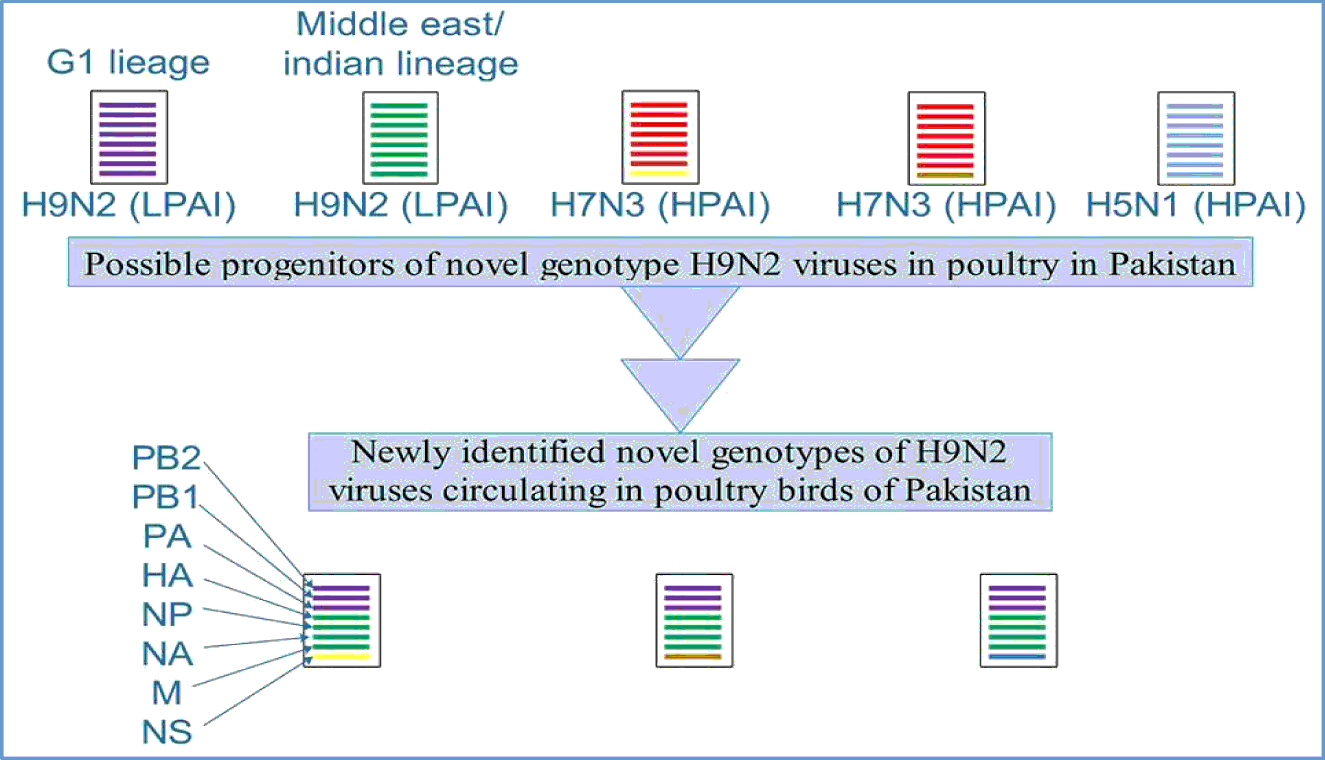
H9N2 viruses circulating in Asia have been classified into three genotypes on the basis of their genetic and antigenic properties: A/Quail/Hong Kong/G1/97-like (G1-like); the Y280 lineage, represented by A/Chicken/Hong Kong/ Y280/97-like (Y280-like); and the Korean lineage, represented by A/ Chicken/Korea/38349-p96323/96 (Korean-like).The G1 prototype virus (A/Quail/Hong Kong/G1/97) is considered the donor of internal genes for HP H5N1 that caused infection in the Hong Kong human population in 1997 and is extensively found in quail in southern parts of China. Since 1997, H9N2 viruses descended from G1 lineages have been isolated from field outbreaks of influenza in chickens from the Middle East and Indian subcontinent. Through the acquisition of gene segments from other viruses, H9N2 has under gone evolution to form a more diverse genotype in terrestrial poultry birds since the early 1990s. Genome studies of recently isolated H9N2 viruses have shown extensive genetic re-assortment in highly pathogenic avian influenza (HPAI) viruses (Xu et al., Reference XU, SMITH and BAHL2007; Iqbal et al., Reference IQBAL, YAQUB, REDDY and MCCAULEY2009; Fusaro et al., Reference FUSARO, MONNE and SALVIATO2011; Chaudhry et al., Reference CHAUDHRY, ANGOT, RASHID, CATTOLI, HUSSAIN and TROVÒ2015). A novel H9N2 genotype, represented by A/Chicken/Pakistan/UDL-01/06,A/chicken/Pakistan/10RS3039-286-65/2010,A/chicken/Pakistan/10RS3039-199/2010andA/chicken/Pakistan/10RS3039-284-48/2010 (H9N2) was isolated from poultry birds of Pakistan between 2005 and 2010 and these replaced the G1 lineage (Iqbal et al., Reference IQBAL, YAQUB, REDDY and MCCAULEY2009; Chaudhry et al., Reference CHAUDHRY, ANGOT, RASHID, CATTOLI, HUSSAIN and TROVÒ2015) and have shown genetic reassortment, with H7N3 viruses circulating in Pakistan (Chaudhry et al., Reference CHAUDHRY, ANGOT, RASHID, CATTOLI, HUSSAIN and TROVÒ2015). These new reassortant viruses resulted from inter-and intrasubtypic genotype genetic reassortment among H9N2 (G1-like), HPAI H5N1 (clade 2.2) and HPAI H7N3 (non-structural protein, NS) viruses (Figure 1).
Representation of the newly identified genotypes of H9N2 viruses in poultry in Pakistan.

Furthermore, the H9N2 LPAI virus is a public health concern due as it possesses human-like receptor specificity (Matrosovich et al., Reference MATROSOVICH, KRAUSS and WEBSTER2001; Riedel, Reference RIEDEL2006; Ahad et al., Reference AHAD, RABBANI, YAQUB, YOUNUS, MAHMOOD, SHABBIR and RASHEED2013; Rasheed et al., Reference RASHEED, REHMANI, IQBAL, AHMAD, AKHTAR, AKHTAR, BIBI, ASLAM, AFRIDI and MUKHTAR2013) and therefore could cross the species barrier (Lin et al., Reference LIN, SHAW and GREGORY2000; Butt et al., Reference BUTT, SMITH and CHEN2005). The AI H9N2 virus was isolated from a human patient in Hong Kong in 1999 (Guo et al., Reference GUO, LI and CHENG1999; Guan et al., Reference GUAN, SHORTRIDGE and KRAUSS2000), which suggested the possible pandemic potential of H9N2 along with the H5N1 virus (Peiris et al., Reference PEIRIS, YUEN, LEUNG, CHAN and IP1999; Cameron et al., Reference CAMERON, GREGORY, BANKS, BROWN and ALEXANDER2000). Recently, AI H9N2 has been isolated from a patient in Bangladesh (Parvin et al., Reference PARVIN, HEENEMANN, HALAMI, CHOWDHURY, ISLAM and VAHLENKAMP2014) and Pakistan (unpublished). Although it has been confirmed that H9N2 can infect humans, the importance of H9N2 has been over shadowed by H5N1 viruses (Lee et al., Reference LEE, CHRIS, ANNA, MALIK and ALLAN2010). However, isolation of two avian influenza subtypes (H7N9 and H10N8) having internal genes similar to H9N2, has highlighted the importance of H9N2 (Ge et al., Reference GE, ZHOU and LIU2009).
Due to the widespread nature of H9N2 viruses and its zoonotic potential, oil based inactivated H9N2 LPAI vaccine was employed in the chicken industry for preventing H9N2 infection in several countries (Alexander, Reference ALEXANDER2007; Naeem et al., Reference NAEEM, SIDDIQUE, AYAZ and JALALEE2007; Swayne, Reference SWAYNE2012; Ullah et al., Reference ULLAH, RIAZ, SHAH and UMAR2013). However, the constantly changing nature of the HA antigenic epitopes makes it important to update influenza vaccines every year to ensure strain-specific protection which presents a daunting challenge to vaccine manufacturing companies. Hence, there is a need to develop a universal influenza vaccine having broad spectrum protection against conserved regions of influenza proteins.
This review covers crucial issues regarding AI viral evolution and its vaccine strategy in the poultry industry of Pakistan. In addition, recent advances and challenges of vaccination against LPAI H9N2 are discussed.
Emergence and evolution of LPAI H9N2
Pakistan has been affected by outbreaks of HPAI (H7N3, H5N1) and LPAI (H9N2) in various regions during the last decade. The outbreaks remained confined to distinct poultry operations, affecting broiler breeders, broilers and layers (Iqbal et al., Reference IQBAL, YAQUB, REDDY and MCCAULEY2009; Ullah et al., Reference ULLAH, RIAZ, SHAH and UMAR2013; Umar et al., Reference UMAR, YOUNUS, REHMAN, ASLAM, SHAH, MUNIR, HUSSAIN, IQBAL, FIAZ and ULLAH2015a). The first H9N2 outbreak was reported in Pakistan in 1998 (Naeem et al., Reference NAEEM, ULLAH, MANVELL and ALEXANDER1999) and revealed a close connection with H9N2 viruses circulating in Hong Kong in 1997. Phylogenetic analysis showed a close relationship with H9N2 viruses (Qa/HK/G1/97, HK/1073/99) within the G1-lineage (Cameron et al., Reference CAMERON, GREGORY, BANKS, BROWN and ALEXANDER2000). Since then, H9N2 LPAI viruses have been circulating in wild and domestic poultry in Pakistan causing large economic losses in the form of mortality (5-30%) and reductions in meat and egg production (Bano et al., Reference BANO, NAEEM and MALIK2003; Iqbal et al., Reference IQBAL, YAQUB, REDDY and MCCAULEY2009).
Sporadic outbreaks of H7N3 and H5N1 highly pathogenic avian influenza (HPAI) viruses have occurred in Pakistan since 1999 (Naeem et al., Reference NAEEM, SIDDIQUE, AYAZ and JALALEE2007), including human cases due to the cross-species transmission of H5N1 viruses to humans. To reduce the impact of H5, H7 and H9 subtype viruses circulating in Pakistan, an extensive vaccination programme has been put in place (Naeem and Siddique, Reference NAEEM and SIDDIQUE2006). The extensive vaccination and co-circulation of H9N2 viruses with other avian influenza viruses is likely to lead for the genesis of novel genotypes having increased epizootic and zoonotic potential due to genetic assortment.
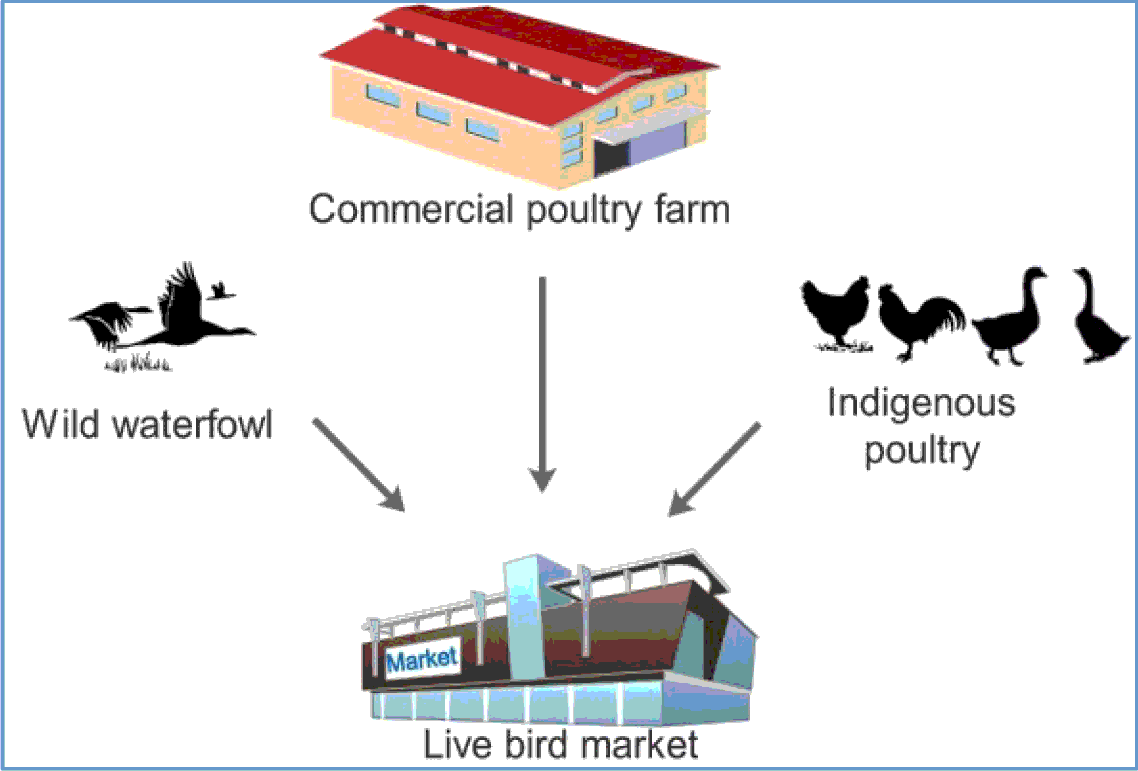
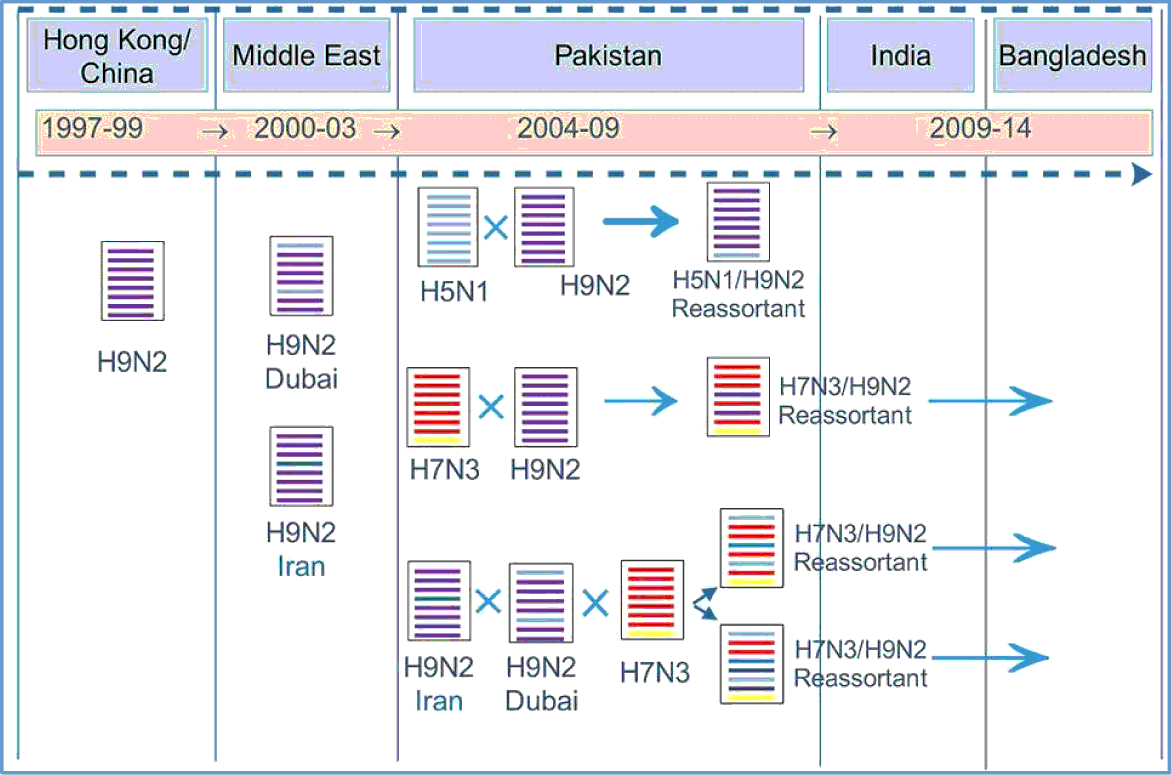
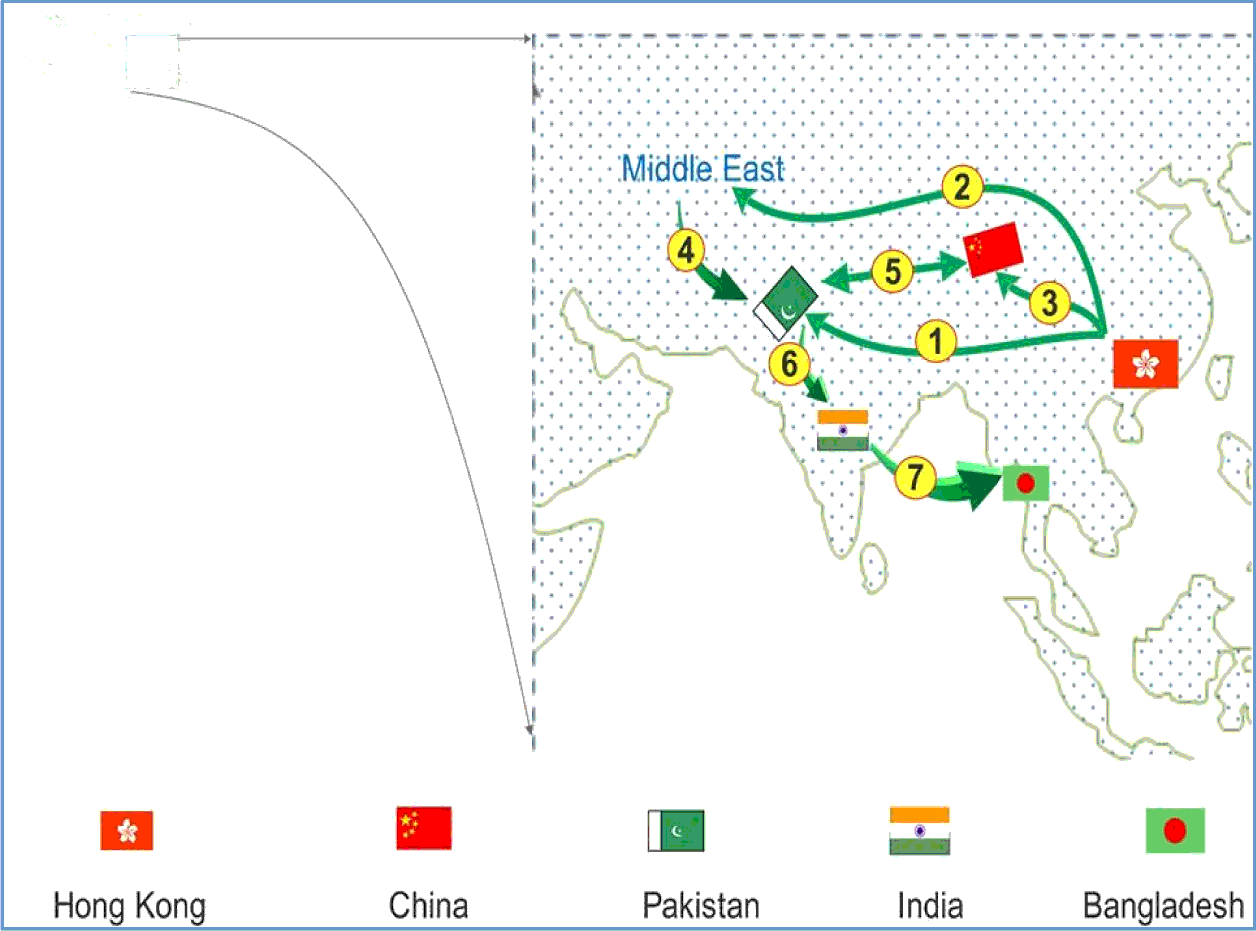
Live bird markets (LBM) play a key role in the ecology of H9N2 AI viruses (Figure 2). Different AI isolates have been reported in the Pakistani LBMs (Iqbal et al., Reference IQBAL, YAQUB, REDDY and MCCAULEY2009). LBMs provide an ideal environment for interspecies transmission and viral evolution by bringing together a number of bird species in a crowded environment (Bano et al., Reference BANO, NAEEM and MALIK2003; Kim et al., Reference KIM, CHO, KIM and SEO2006; Iqbal et al., Reference IQBAL, YAQUB, REDDY and MCCAULEY2009). In Pakistan, minor poultry species such quails, native and commercial chicken are raised through traditional ways on small open farms under poor management conditions and are mainly retailed via LBMs. LBMs bring together a variety of avian species, including sparrows, ducks, pigeon, quails, commercial and native chicken (Choi et al., Reference CHOI, OZAKI and WEBBY2004; Naeem et al., Reference NAEEM, SIDDIQUE, AYAZ and JALALEE2007; Hossain et al., Reference HOSSAIN, HICKMAN and PEREZ2008). The evolution of H9N2 viruses in Pakistan potential transmission routes taken by avian influenza H9N2 virus from Hong Kong to Pakistan are shown in Figure 3 and 4.
Role of LBM in facilitating the evolution of low pathogenic avian influenza H9N2 virus in Pakistan.
Evolution of H9N2 viruses in Pakistan through inter- and intra-subtypic reassortment between different H9N2 lineages and HPAI H7N3 and HP H5N1. H9N2 and H7N3 viruses are represented by rectangular shapes with each containing horizontal bars that represent the eight viral gene segments.
Map showing the hypothesized and proposed routes taken by avian influenza H9N2 virus from Hong Kong to Pakistan.
Ongoing avian influenza surveillance was concerned with H9N2 with H7N3 internal genes and HP H5N1 were the only subtypes isolated from domesticated poultry traded in LBMs. These subtypes were not found in wild birds, which suggest that LBMs were the source for infection (Abbas et al., Reference ABBAS, SPACKMAN, SWAYNE, AHMED, SARMENTO, SIDDIQUE, NAEEM, HAMEED and REHMANI2010). This was consistent with previous findings showing that the trade of chickens and quails in LBMs has played a pivotal role in the emergence of a novel influenza virus (Lee and Song, Reference LEE and SONG2013). Recent studies showed that H9N2 viruses might be ‘incubators’ or ‘enablers’ for influenza viruses with a wild-bird origin (H7N9, H10N8) that can infect humans (Liu et al., Reference LIU, SHI and GAO2014) and that any reassortment between poultry H9N2 viruses and HP viruses could trigger an increased ability to infect humans. These factors, combined with the tropical climate in the region, facilitate long-term survival, proliferation, recombination and transmission among different poultry species and to humans. Gene segments from H9N2, HP H7N3 and HP H5N1 continue to circulate in LBMs in Pakistan, serving as an optimal mixing pot for the generation of novel influenza subtypes and thereby making Pakistan a hotspot for avian influenza outbreaks. Therefore, the preventive measures that were effective in the 1997 Hong Kong H5N1 outbreaks should be used in LBMs in Pakistan to reduce the possibility of an outbreak.
Future prospects in AI vaccination
Because there is no compensation policy from the government of Pakistan, it is not practical to demand that the affected farmers destroy their flocks. Before stocking the premises, basic biosecurity measures are being introduced at most of the farms by Pakistan Poultry association (PPA). In addition, vaccination is an important tool for prevention and control of AI.
In Pakistan, a vaccine strain virus isolated in 1998 (A/chicken/ Pakistan/AG519/98) was selected based on its pathogenic, antigenic, and genetic properties. In chickens, oil-based inactivated vaccine using the vaccine virus strain (A/chicken/ Pakistan/AG519/98) showed efficient protection against a homologous virus and the H9N2 variant isolated in 2003 (Naeem and Siddique, Reference NAEEM and SIDDIQUE2006). A vaccine policy against avian influenza has been developed in co-ordination with the local poultry industry, vaccine manufactures and officials of Food, Agriculture and Livestock (MINFAL). Under this plan, all commercial layer flocks in affected regions are vaccinated with an aqueous based AI virus H7+H9 combined killed vaccine, aided by aluminium hydroxide (Naeem and Siddique, Reference NAEEM and SIDDIQUE2006). These flocks are subsequently injected with oil based killed vaccine three weeks later. Seroconversion studies against H7 and H9 have revealed protective antibody levels and significant decrease in the intensity of the disease.
The killed vaccines that are being used in Pakistan result in measurable antibody titres for all structural proteins including the matrix and nucleoprotein. One or both of these proteins are used as antigens for antibody tests. Therefore, vaccinated birds cannot be distinguished from naturally infected birds using this approach. This lack of ability to do surveillance has been a major inhibitor for use of vaccination in AI control. Little effort has been made to match the vaccine to the field strain. In part, this is because vaccination with any H9 virus seems to provide protection from clinical disease against LPAI challenge of same subtype, regardless of the genetic difference. This broad protection may reflect that killed vaccine produces a high level of serum antibody that effectively blocks viral infection.
The comparison of genetic sequences in the haemagglutinin gene can provide a good estimate of the variability between vaccine and field strain. However when using vaccine as a control tool, both clinical protection and virus shedding are of concern. Experimental evidence has demonstrated that the closer the vaccine is to field strain, the lower the amount of virus will be shed in challenged birds.
Antigenic drift is a major problem for avian influenza vaccines because it results in decreased protection from vaccination. Antigenic drift is thought to be the result of the field virus changing based on the antibody pressure in the host. This may be due to vaccination or natural infection, but in either case the virus is under selection pressure to evade the immune response which allows replication in higher titres in the host. The better the virus replication, the more likely it is that strain of virus will spread to other susceptible hosts.
After mass vaccination against LPAI H9N2 in Pakistan, virus isolation has been reduced, indicating that LPAI H9N2 is under control. However, previous studies demonstrated that the Pakistani LPAI H9N2 virus has undergone antigenic drift and substantial evolution into distinct antigenic groups after mass vaccination against LPAI H9N2. This is due to selection as a result of vaccinal and natural immunity, coupled with reassortment (Iqbal et al., Reference IQBAL, YAQUB, REDDY and MCCAULEY2009; Ayaz et al., Reference AYAZ, SAJID, KHAN, QURESHI, REHMAN, KHAWAJA, RAFIQ and MAQBOOL2010; Cheema et al., Reference CHEEMA, SIDDIQUE, SHARIF, MANSOOR and IQBAL2011; Umar et al., Reference UMAR, REHMAN, YOUNUS, NISA, ALI, SHAHZAD, SHAH, MUNIR, ASLAM and YAQOOB2015b). Active surveillance of poultry farms and LBMs is needed to reveal new variant LPAI H9N2 viruses in Pakistan and analysing appropriate vaccine seed viruses should be considered to prevent new outbreaks.
Differentiating infection in vaccinated animals (DIVA) vaccine strategy may be worthwhile to provide enhanced surveillance for virus infection and assure trading partner of the safety of poultry and poultry products (Swayne, Reference SWAYNE2012). However, vaccines and their use must be evaluated for protection and antigenic drift must be considered for any vaccine to be successful.
By virtue of advanced molecular virology and the availability of genomic information on AI, new opportunities exist to create novel concept vaccines. Virus-like particles (VLP) has been suggested as a new generation of non-egg based vaccines against various viral infections with solid safety profiles (Roldao et al., Reference ROLDAO, MELLADO, CASTILHO, CARRONDO and ALVES2010). VLP resembles infectious virus particles in structure and morphology with multiple antigenic epitopes which have been shown to be highly immunogenic, probably due to its ability to stimulate a diverse set of host immune responses (Kang et al., Reference KANG, SONG, QUAN and COMPANS2009). VLP vaccines containing influenza HA and/ or NA antigens are produced easily in insect or mammalian cells via the simultaneous expression of HA and NA protein along with a viral core protein, such as influenza M1. Most influenza VLPs have been produced in baculovirus expression systems, and safety and immunogenicity have been evaluated in various animal models (Swayne and Kapczynski, Reference SWAYNE and KAPCZYNSKI2008; Kang et al., Reference KANG, SONG, QUAN and COMPANS2009). Particularly, the H5N3 AI VLP vaccine has been applied to duck species and provided the possibility of reliable use of the VLP vaccine in poultry species (Prel et al., Reference PREL, LE GALL-RECULE and JESTIN2008). VLP vaccine containing the HA and M1 protein against H9N2 LPAI was developed and evaluated in a specific pathogen-free (SPF) chicken model (Lee et al., Reference LEE, CHRIS, ANNA, MALIK and ALLAN2010; Swayne, Reference SWAYNE2012). VLP vaccine can be prepared by emulsifying the purified VLP antigen solution with Montanide ISA70 (Seppic, Paris, France) oil adjuvant. A single dose of vaccination with H9 VLP vaccine induced high antibody titres and lessened the number of chickens with viral shedding from respiratory and gastrointestinal tracts. In addition, it allowed differentiation of AI infected chickens from vaccinated chickens by ELISA using a nucleocapsid antigen, which offers a promising strategy to DIVA. However, vaccine cost has been thought to be an important issue that influences the feasibility of recombinant subunit vaccines including VLP for poultry.
The influenza viral haemagglutinin (HA) is comprised of two subunits. Current influenza vaccine predominantly induces neutralizing antibodies (Abs) against the HA1 subunit, which is constantly evolving in unpredictable fashion. The other subunit, HA2, however, is highly conserved but largely shielded by the HA head domain. Thus, enhancing immune responses against HA2 could potentially elicit broadly inhibitory Abs (Khanna et al., Reference KHANNA, SAXENA, GUPTA, KUMAR and RAJPUT2013; Fan et al., Reference FAN, HASHEM, CHEN, LI, DOYLE, ZHANG, YI, FARNSWORTH, XU, LI, HE, LI and WANG2015).
DNA vaccines have potential as an alternative conventional vaccine capable of inducing protective immune responses against a variety of infectious diseases (Dhama et al., Reference DHAMA, MAHENDRAN, GUPTA and RAI2008; Khanna et al., Reference KHANNA, SAXENA, GUPTA, KUMAR and RAJPUT2013). These can encode recombinant DNA molecules of multiple antigen genes which reduces manufacturing cost and time compared to conventional vaccines, without carrying infections that are associated with live attenuated vaccines. Such plasmid-based DNA vaccines can express high levels of proteins of interest in cells and induce both humoral and cellular immune responses. They can also override maternal antibodies (Laddy et al., Reference LADDY, YAN, CORBITT, KOBASA, KOBINGER and WEINER2007, Ullah et al., Reference ULLAH, RIAZ, SHAH and UMAR2013). More effective vaccine and vaccination strategies can be designed for poultry by enhancing the knowledge of adjuvant properties of cytokines along with DNA vaccines (Umar et al., Reference UMAR, ARIF, SHAH, MUNIR, AHMED and KHAN2015c).
Conclusions
Previous studies indicated that the H9N2 viruses have undergone extensive genetic reassortment during recent years which has led to the generation of H9N2 viruses with novel genotypes in Pakistan. The novel genotypes of H9N2 viruses may play a role in the increased problems observed for H9N2 in poultry. Thus, continual surveillance of Pakistani H9N2 viruses is warranted to identify further evolution and potential adaptation to humans. Wide use of AI vaccines in animal populations could enhance immune selection pressure and increase the rate of mutation, resulting in rapid antigenic drift at the antigenic sites. Therefore, improved vaccination strategies and periodic updates of vaccine seed strains are required to increase immunogenicity and cross-protective efficacy on chicken farms. These strategies could include: the selection of highly immunogenic vaccine seed strains, the use of effective adjuvants for chickens and the use of new technology. The Pakistani LPAI H9N2 virus has already undergone antigenic drift and could escape from vaccine protection. Continued active surveillance of poultry farms and LBMs to reveal new variant LPAI H9N2 viruses in Pakistan and analysing appropriate vaccine seed viruses should be considered to prevent further outbreaks. In Pakistan, although only oil-based inactivated vaccines using the multiple passage of the vaccine virus strain (A/chicken/ Pakistan/AG519/98) is used, several new technology vaccines have been recently suggested for development of cost effective and highly immunogenic vaccines. In particular, genetically engineered vaccines have shown promise as the next generation of control strategies in Pakistan. These new vaccines, as well as use of effective adjuvants, will certainly contribute to better protection against LPAI H9N2. In order to achieve efficient control and eradication of LPAI H9N2 in Pakistan, vaccination should be part of an overall integrated strategy to control the disease, including continued nation-wide surveillance, farm biosecurity, and DIVA strategy. Eradication of LPAI H9N2 in Pakistan can only be achieved if all aspects of the control strategy are effectively operational.