Demand for milk protein concentrates (MPC) has grown significantly in recent years mainly due to diversification of products that include MPC as an ingredient in an attempt to meet nutritional requirements. Production of MPC is achieved by application of membrane processing, mainly ultrafiltration (UF), to concentrate milk proteins (caseins, whey proteins) in the ratio naturally present in milk, followed by spray drying to obtain a free flowing powder. The major problem faced by the manufacturers of MPC powders is related to the functionality of MPC, such as low solubility and emulsifying capacity, which limits the food applications. As these two properties are related, most of the studies conducted in this area focused on improving solubility of MPC powders using various approaches, mainly to understand physical and chemical changes that take place during storage of the powders (Havea, Reference Havea2006; Ye, Reference Ye2011). Apart from solubility, very little work has been carried out to understand the effects of processing conditions related to other functional properties such as emulsification capacity.
Solubility, heat stability and emulsifying property (emulsion capacity and stability) appear related to the particle size of casein micelles (Ye, Reference Ye2011). Casein micelles are colloidal, poly-dispersed and spherical structures, which properties depend on the physicochemical conditions of the environment (Panouille et al. Reference Panouille, Nicolai and Durand2004). In addition to inter- and intramolecular protein interactions, casein micelles are stabilised by colloidal calcium phosphate (CCP) (Gaucheron, Reference Gaucheron2005). Considering overall properties of the casein micelle, factors that could possibly affect the micelle size during MPC manufacturing include changes in pH, temperature, calcium and phosphate equilibrium, milk concentration or possible whey protein denaturation during conventional spray drying process, but the exact reasons still remain unclear. A more thorough understanding of the role of all process parameters on the properties of the casein micelle and their relation to the functionality of MPC powders is thus lacking.
Our previous reports assessed the impact of temperature and pH adjustment prior to UF of skim milk on the functionality of MPC powders (Luo et al. Reference Luo, Ramchandran and Vasiljevic2015, Reference Luo, Vasiljevic and Ramchandran2016). Another important approach to manipulating properties of the casein micelle is use of calcium chelators such as citrate, phosphate, hexametaphosphate (HMP), or ethylenediaminetetraacetic acid (EDTA), which have been commonly used to improve the heat stability or to retard age gelation in dairy products (Harwalkar, Reference Harwalkar and Fox1982; Holt, Reference Holt and Fox1985; Augustin & Clarke, Reference Augustin and Clarke1990; Singh, et al. Reference Singh, Creamer, Newstead and Fox1995). The main impact of chelator addition is observed as a shift in a protein-mineral equilibrium, leading to a decrease in the concentration of free calcium ions, depletion of CCP from the micelles and release of specific caseins from the micelle (Holt, Reference Holt and Fox1992; Panouille et al. Reference Panouille, Nicolai and Durand2004; Gaucheron, Reference Gaucheron2005), which finally induces various physical changes in the casein micelle leading to modifications in their physical properties (Sweetsur & Muir, Reference Sweetsur and Muir1980; Kaliappan & Lucey, Reference Kaliappan and Lucey2011). It would thus be beneficial to establish effects of calcium chelation on the properties of MPC. Our earlier studies have shown that operating UF at 15 °C improved the membrane performance resulting in MPC with enhanced emulsifying capacity without substantial change in solubility or heat stability (Luo et al. Reference Luo, Ramchandran and Vasiljevic2015). Adjusting pH to 5·9 prior to UF produced MPC with optimum emulsifying properties without detrimental effect on membrane performance. Solubility and heat stability of MPC powders obtained at this pH were substantially lower than those of the control, but were improved by readjusting pH prior to drying (Luo et al. Reference Luo, Vasiljevic and Ramchandran2016).
Understanding the interplay between processing conditions and physical and chemical changes involving milk proteins and its impact on the functional properties of produced powders is essential for improving MPC functionality. Gained know-how would enable the industry to tailor functionality of MPC by manipulating processing parameters (e.g. operation parameters, pH and chelators). Therefore, this study was carried out in order to gain understanding how the physicochemical properties and functionalities of the MPC produced by UF of skim milk (SM) would be impacted upon addition of varying levels of calcium chelators – EDTA and citrate.
Materials and method
Milk feed preparation
Commercial pasteurised skim milk (SM) was provided by a local supplier (Woolworths, Melbourne, Australia). A chelator, EDTA (200 mm EDTA solution) or citrate (200 mm Tri-sodium citrate solution), was slowly added to the SM with constant stirring at 15 °C. The final pH of the milk was then adjusted to 5·9 using 0·1 or 1 m HCl accounting for the change in the volume resulting in the final concentration of selected chelators of 10, 20 or 30 mm. The processing volume for all samples was fixed at 1 l skim milk, adjusted to pH 5·9 and the processing volume, without any added chelator served as the control. The UF processing conditions were based on the results of our previous studies (Luo et al. Reference Luo, Ramchandran and Vasiljevic2015, Reference Luo, Vasiljevic and Ramchandran2016).
Preparation of MPC
The membrane unit and operating parameters of the UF set up have been reported previously (Luo et al. Reference Luo, Vasiljevic and Ramchandran2016). The feed (SM) was maintained at 15 °C during the UF process using a temperature regulated water tank. A new membrane sheet (polyethersulfone membrane, 190 × 140 mm, 20 kDa cut-off, Sterlitech Corporation, Kent, WA, USA) was used for each UF processing run. The operation was terminated when the volume concentration factor (VCF) of 5 was achieved without dia-filtration, giving on average 16% (±0·1) protein and 24·6% (±0·3) total solid contents in the retentates. The final retentate samples (MPC) obtained from SM added with 10, 20 or 30 mm of EDTA or citrate were designated as E10, E20 and E30 or C10, C20 and C30, respectively. The collected samples were assessed for particle size and zeta potential immediately and the remaining portion was freeze dried to obtain the MPC powders.
Particle size and zeta potential
Particle size and zeta potential of the retentates were measured immediately after the collection of samples, using a Malvern Zetasizer (Model ZEN3600, Nano-ZS, Malvern Instruments Ltd, UK) as described previously (Luo et al. Reference Luo, Ramchandran and Vasiljevic2015). The samples were diluted 1 : 100 for milk or 1 : 1000 for MPC samples with Milli-Q water. All measurements were performed at room temperature (22 °C). The refractive index and viscosity of water used in calculations were 1·330 and 1·1442 mPa.s at 20 °C, respectively.
Calcium content
The total and soluble calcium content of the control and chelator treated samples, both before and after UF, were analysed using the methods outlined by Luo et al. (Reference Luo, Vasiljevic and Ramchandran2016). The calcium content measured in all samples by atomic absorption spectrophotometry was calculated and expressed as mm. Ionic calcium activity (aca 2+) was measured directly in milk samples or in a 5% dispersion prepared in MilliQ water from the retentates to allow for most suitable reading using a calcium ion selective electrode connected to a pH-713 lab meter (Omega Engineering Stanford , CT-06907-0047) fitted with a reference Ag/AgCl electrode. The probe was calibrated using CaCl2 solution from 0·0003 to 0·025 m with an ionic strength of 0·08 m. Addition of KCl as background electrolyte was essential to maintain a constant aca 2+ in the calibration solutions (de Kort et al. Reference de Kort, Minor, Snoeren, Hooijdonk and van der Linden2009). A standard curve of potential vs. In aca 2+ was used to calculate the Ca2+ activity of the samples.
Functionality of MPC
All retentates obtained after UF (control and chelator added samples) were freeze dried as reported by Luo et al. (Reference Luo, Ramchandran and Vasiljevic2015). The functionality of MPCs was examined within 10 d of the powder preparation. The dispersions of MPC (5 g/100 g water) were prepared for assessment of solubility and heat stability and stored at 4 °C overnight to ensure complete hydration of the powders. The emulsifying properties were assessed by measuring the emulsion capacity (EC) and emulsion stability index (ESI) of the prepared samples. The method for determination of solubility, heat stability and emulsion properties of the MPC has been described in our earlier publication (Luo et al. Reference Luo, Vasiljevic and Ramchandran2016).
Statistical analysis
The experimental set-up was arranged as a randomised split-plot design with a type of chelator and their concentration as the main plot and a sub-plot, respectively. The whole design was replicated at least once with three analytical sub-samplings (n ≥ 6). The data were analysed using a general linear model protocol of SAS at pre-set level of significance at 5%.
Results and discussion
Particle size distribution upon addition of chelators
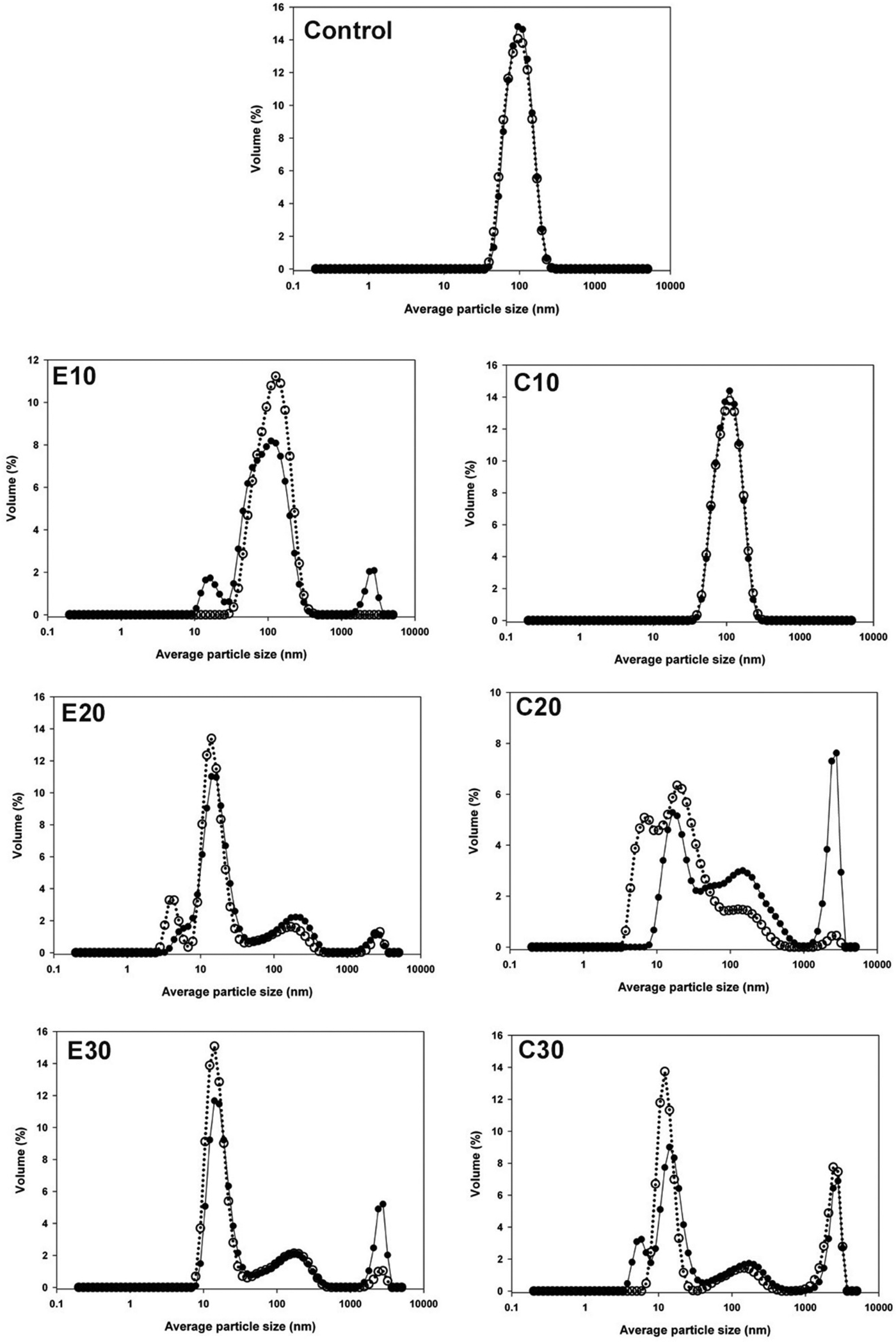
The particle size distribution (Fig. 1) of the control before (feed) and after UF (retentate) appeared unaffected by the treatment as the particles ranged between 20 and 200 nm. Addition of 10 mm EDTA resulted in appearance of two additional small peaks corresponding to a size range of 10–20 nm and 2000–4000 nm. Indicatively, this addition caused a limited dissociation as well as induced a partial aggregation of likely released casein particles with intact casein micelles. Griffin et al. (Reference Griffin, Lyster and Price1988) have found that at low concentrations of EDTA (<6·4 mm) a fraction of Ca and phosphate may be removed which would not disrupt the micellar structure. Increasing concentrations of the chelator beyond this level resulted in micellar disintegration (Griffin et al. Reference Griffin, Lyster and Price1988). More recently it was confirmed that low concentrations of EDTA (<15 mm) dissociate only a small fraction of the micelles (Sikand et al. Reference Sikand, Tong, Vink and Roy2016). Dissociation of casein micelle in our case is not only influenced by addition of chelators but also acidification and processing temperature. Dissociation of the casein micelle upon lowering pH to 5·5 yielded a constant proportion of individual caseins indicative of their dissociation as a complex (Dalgleish & Law, Reference Dalgleish and Law1988). While low temperatures (<20 °C) would enhance dissociation due to diminished hydrophobic interactions, it was also noticed that these dissociated proteins were also present as loosely entangled aggregates (McMahon et al. Reference McMahon, Du, McManus and Larsen2009), clearly shown in Fig. 1 prior to UF. More importantly these larger aggregates diminished in most of the retentates. During UF, casein, intact and dissociated, particles are subjected to flow and start to rotate being exposed to compression and extension (Walstra, Reference Walstra2003). By inclusion of shear, aggregation becomes governed by orthokinetic growth, during which particles collide within flow streamlines. Size of aggregates depends on frequency of collisions, which may be enhanced by flow; however the flow also may cause fracture of the aggregates (Kim & Kramer, Reference Kim and Kramer2006), which was likely the reason for disappearance of some of the larger aggregates after UF treatment. Further addition of EDTA (20 mm) enhanced the micelle dissociation depicted by particle size distribution shifting towards smaller particles, which included appearance of another small peak in the range of 3–10 nm and further enlargement of the peak in the 10–20 nm range. This dissociation of casein micelles could be attributed to the binding of calcium (Ca) with chelators that disturbed the equilibrium between the Ca and casein in the micelles. Most retentates were characterised by the peaks at 9–20 nm indicating that some of the proteins may have appeared as primary casein particles. Based on several models, the casein micelle presents a supramolecular structure in which primary casein particles are linked through calcium phosphate nanoclusters. These primary particles may contain a minimum of 2 to 5 (McMahon & Oommen, Reference McMahon and Oommen2008) or 6–9 caseins (Huppertz et al. Reference Huppertz, Gazi, Luyten, Nieuwenhuijse, Alting and Schokker2017) with a hydrodynamic diameter falling between 12 and 24 nm (Farrell et al. Reference Farrell, Brown, Malin, McSweeney and Fox2013; Huppertz et al. Reference Huppertz, Gazi, Luyten, Nieuwenhuijse, Alting and Schokker2017).
The particle size distribution of skim milk ( ) and retentates (
 ) obtained with samples treated with 10, 20 and 30 mm of EDTA or citrate.

In comparison to EDTA, addition of citrate resulted in a more gradual change in particle size. The particle size distribution of the C10 sample was almost identical to that of the control and remained basically unchanged after UF. However, a substantial change was noted in C20 with a broader size distribution and appearance of a major peak in a range of 10–20 nm and another peak at 1000–3000 nm. After UF, the distribution shifted to the left with a new peak appearing at 3–10 nm that overlapped with the original with a stronger peak at 10–20 nm. Correspondingly, the original peak at 70–900 nm became weaker and the peak at 1000–3000 nm almost disappeared, which could be attributed to shear induced fragmentation during UF. With the further addition of citrate (C30), the two major peaks at 10–20 nm and 1000–3000 nm remained distinctive, and the peak at 20–200 nm became smaller with the appearance of another small peak at 3–10 nm indicating further dissociation of casein micelles. It is not clear whether the primary casein particles were dissociated further into individual caseins upon citrate addition although the particle size appears below the proposed minimum hydrodynamic diameter (~12 nm). These observations suggested that addition of 20–30 mm citrate caused dissociation of casein to some extent during UF, which was different to the observations with EDTA treated samples. It is likely that addition of citrate formed soluble weakly bound complexes (Mizuno & Lucey, Reference Mizuno and Lucey2005) which were disrupted under shear during UF.
It is generally accepted that addition of Ca chelators to the milk system shifts the casein-mineral equilibrium leading to dissolution of colloidal calcium phosphate (CCP) and release of specific casein particles from the micelle (Holt, Reference Holt and Fox1992; Panouille, et al. Reference Panouille, Nicolai and Durand2004; Gaucheron, Reference Gaucheron2005). However, the amount of EDTA and citrate required to induce particle size reduction appears different. A significant particle size reduction occurred when ≥20 mm of EDTA was added to SM, whereas at least 30 mm of citrate was required (Fig. 1) for a similar change. This indicated that up to 20 mm concentrations, citrate caused a lower extent of micellar dissociation than EDTA (Pitkowski et al. Reference Pitkowski, Nicolai and Durand2008; Sikand et al. Reference Sikand, Tong, Vink and Roy2016). This could be attributed to a greater Ca binding capacity of EDTA (Keowmaneechai & McClements, Reference Keowmaneechai and McClements2002; Udabage et al. Reference Udabage, McKinnon and Augustin2003) suggesting that for a given reduction in particle size EDTA could be used at lower concentrations than citrate. UF appeared to govern fragmentation of particles created by initial addition of chelators, although shear was not effective in minimising a particle size of aggregates created by addition of 30 mm of citrate, which may indicate a complex formation between citrate, Ca and dissociated and intact casein particles.
Zeta potential
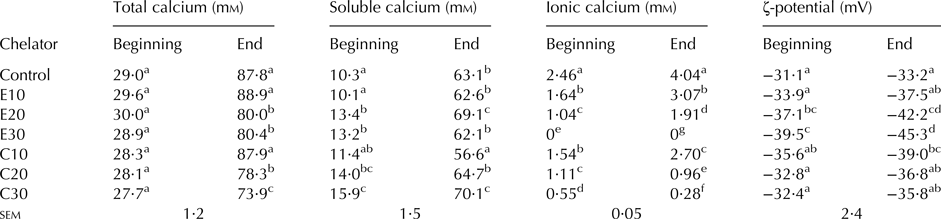
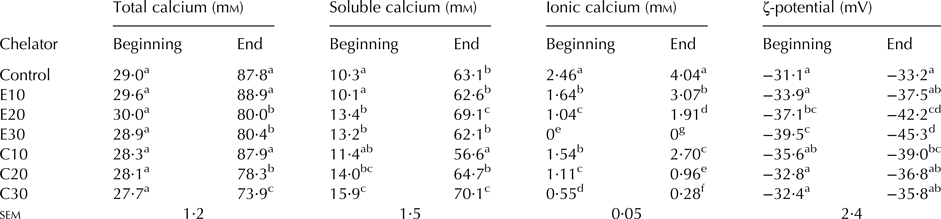
The zeta potential of the feed appeared to be affected only upon addition of EDTA in excess of 20 mm. Only in these cases, the zeta potential of retentates was significantly more negative than that of corresponding feed samples. In general, the zeta potential of the control SM increased only slightly in absolute terms from −31·1 to −33·2 mV after UF. Addition of EDTA to the milk (E20, E30) resulted in a further significant increase in the zeta potential (−37·1 or −39·5 mV, respectively), and consequently to −42·22 or −42·2 mV, respectively, in the retentates (Table 1). Addition of citrate however had a very minor effect, increasing the zeta potential of both, the skim milk and the corresponding retentates, slightly. These changes are likely related to Ca removal during UF and influenced by a greater affinity of EDTA for Ca ions than that of citrate and likely different interactions of chelators with the amino acid residues of caseins (Udabage et al. Reference Udabage, Mckinnon and Augustin2000, Reference Udabage, Mckinnon and Augustin2001), which could have resulted in differences in exposure of charged residues and thus measured surface potential.
Concentration of the total, soluble and ionic calcium and related ζ-potential of the samples obtained at the beginning and the end of UF (VCF 5) at adjusted pH 5·9 and constant UF temperature of 15 °C of skim milk pre-treated with 10, 20 and 30 mm of EDTA and citrate.
Superscripts indicate a significant (P < 0·05) difference among the means within a column
Calcium distribution
The total, soluble and ionic Ca contents in the retentate (End) and the feed (Beginning) treated with chelators and the control are shown in Table 1. The total Ca was 29 mm in the control sample which increased (P < 0·05) to 87·8 mm after UF due to the concentration effect. As expected, addition of chelators did not affect the total Ca content in the samples. On the other hand, significant reductions (P < 0·05) in the total Ca content in the retentates were achieved after addition of both chelators at elevated concentrations (>20 mm), with a decline being more pronounced upon addition of citrate. This observation slightly contradicts those obtained by particle size analysis, in which it appeared that citrate created complexes with protein particles and possible Ca. However lower levels of Ca in the retentate accompanied with remaining levels of ionic Ca suggest that citrate possibly interacted more with the proteins allowing for a greater speciation and removal of Ca. On the other hand, EDTA appeared to preferentially interact with Ca.
Soluble Ca in the control sample was 10·3 mm and increased (P < 0·05) to 63·1 mm in the retentate due to the concentration effect of UF. The addition of 10 mm EDTA or citrate had no apparent impact on the soluble Ca content compared to the control. Addition of 20 mm of EDTA resulted in a significant increase (P < 0·05) in soluble Ca to 13·4 mm (SM) and 69·1 mm (retentate). With addition of 30 mm EDTA, the soluble Ca content remained the same as that upon addition of 20 mm, but declined significantly in the retentate (62·1 mm) in comparison to that in E20. Similarly, addition of 20 or 30 mm of citrate resulted in a significant increases in soluble Ca to 14·0 and 15·9 mm, respectively, in the feed. It is well known that the Ca distribution between soluble and insoluble (casein-bound) phases is greatly influenced by the addition of Ca-chelating agents (Odagiri & Nickerson, Reference Odagiri and Nickerson1964; Udabage et al. Reference Udabage, Mckinnon and Augustin2000). Citrates have a lower Ca binding ability than EDTA which likely influenced a type of complexes created (McIntyre et al. Reference McIntyre, O'Sullivan and O'Riordan2016). It also appears that citrate-Ca complexes were more soluble than EDTA-Ca chelates, since at corresponding concentrations levels of soluble Ca were greater in the citrate treated feed. However it is not clear whether this was due to chelating action of citrate as the levels of ionic calcium remained comparatively high in comparison to these in the EDTA retentates. Overall, the type of calcium chelators used can affect the integrity of the micellar structure to different extents (de Kort et al. Reference de Kort, Minor, Snoeren, Hooijdonk and van der Linden2009) due to differences in their affinity for calcium ions. This gives them varying ability to release CCP from the casein micelles (Upreti et al. Reference Upreti, Buhlmann and Metzger2006; de Kort et al. Reference de Kort, Minor, Snoeren, Hooijdonk and van der Linden2009, Reference de Kort, Minor, Snoeren, Hooijdonk and van der Linden2011, Reference de Kort, Minor, Snoeren, Hooijdonk and van der Linden2012; Mekmene et al. Reference Mekmene, Le Graet and Gaucheron2009) that is likely to govern differently the functionalities of the resulting MPC.
Functional properties of modified MPC powders
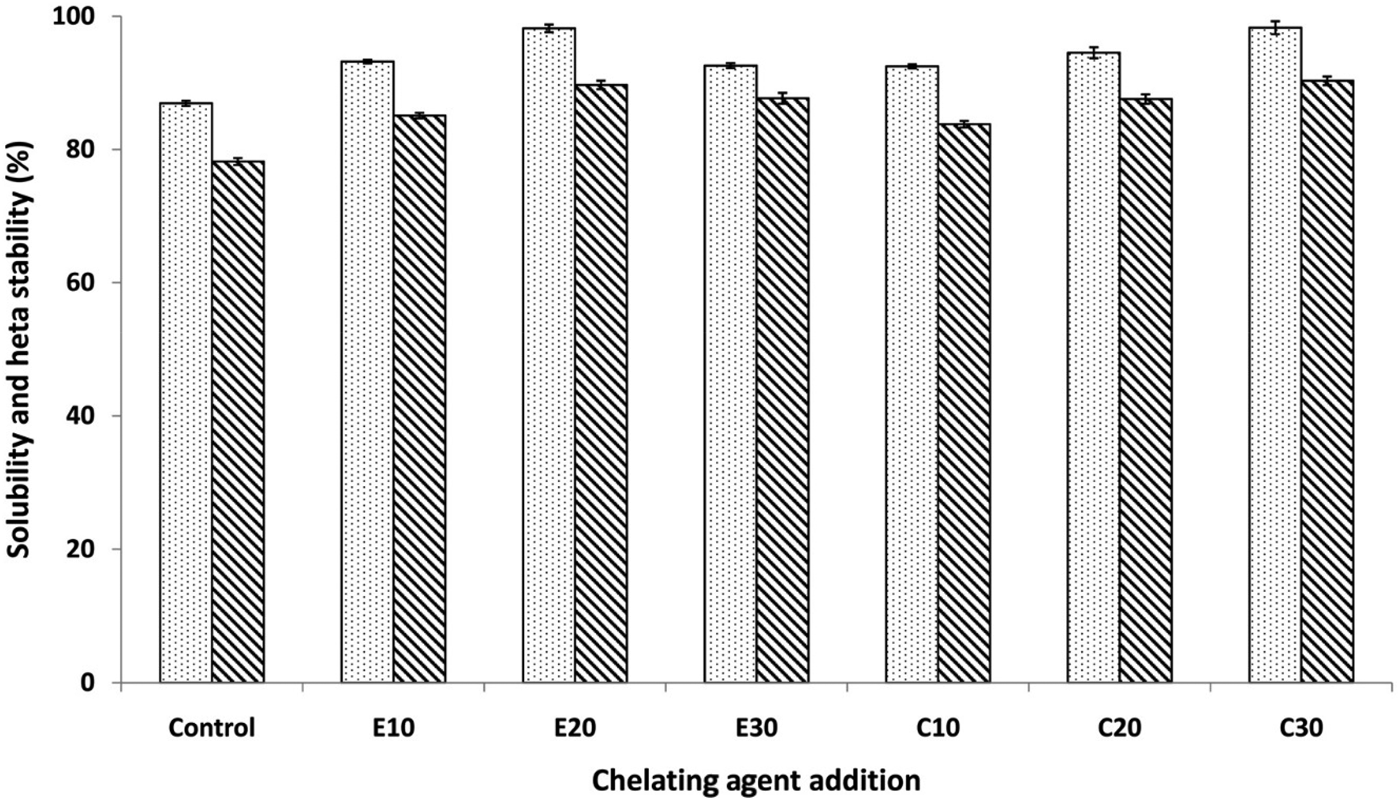
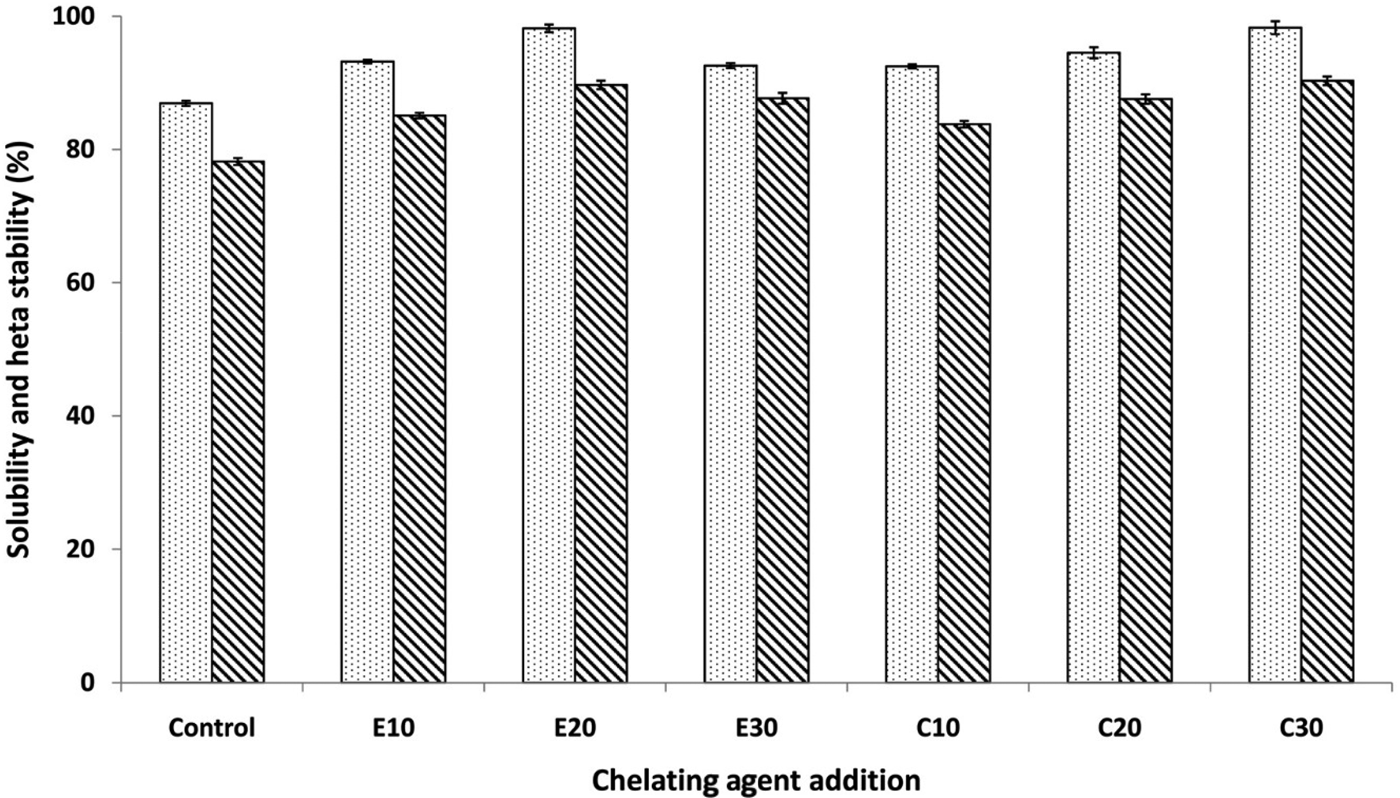
All examined functional properties of MPC powders appeared to follow a similar pattern reaching a maximum upon 20 mm EDTA or 30 mm citrate addition (Figs. 2 and 3). For example, the highest solubility was observed for the MPC sample prepared from UF milk obtained with 20 mm EDTA or 30 mm citrate. However, further addition of EDTA resulted in significant lowering of the solubility, which means that there would be an optimum of chelator addition giving the greatest solubility of MPC. Dissolution of CCP and release of casein particles from micelles evidenced by reduction in particle size of the particles (Fig. 1) could at least encounter for some of the increase in observed solubility (Anema et al. Reference Anema, Pinder, Hunter and Hemar2006; Havea, Reference Havea2006; Mimouni et al. Reference Mimouni, Deeth, Whittaker, Gidley and Bhandari2010). It is clear from Fig. 1 that most small particles were observed in the samples obtained after E20 or C30 addition, which correlated to the maximum solubility observed in the corresponding MPCs. However the reasons for such a significant decline in solubility upon addition of 30 mm EDTA remain to be elucidated. Furthermore, Ca chelating salts are understood to improve protein solubility by increasing the casein hydration (Mizuno & Lucey, Reference Mizuno and Lucey2005; Dimitreli & Thomareis, Reference Dimitreli and Thomareis2009). Maximum of soluble Ca observed for retentates of E20 and C30 (Table 1) also corresponded to the maximum solubility of the corresponding MPC powders. Increased concentration of soluble Ca due to solubilisation of CCP also resulted in significant rise of the negative charge on the particle surface, which could modify protein-protein interactions by a greater electrostatic repulsion (Sikand et al. Reference Sikand, Tong, Vink and Roy2016) resulting in improved solubility. Overall, at 20 mm concentration of the selected chelator, EDTA could dissociate casein micelles to a greater extent than citrate resulting in greater solubility of MPC compared to that treated with citrate. Thus, the changes in casein micelle induced by addition of Ca chelators affect the solubility of MPC by affecting its conformation in a manner that would govern protein-solvent interactions, indicating that selection of a type of chelator and its concentration may be critical for achieving a desired functionality. Similarly, heat stability of MPC (Fig. 2) increased (P < 0·05) with the addition of EDTA or citrate and was at maximum for E20 and C30 that corresponded with the maximum solubility of these MPCs. Since Ca plays a crucial role in heat induced milk protein aggregation, by reducing levels of ionic Ca in the E20 and C30 retentates it was possible to enhance the heat stability. Furthermore, chelation of critical levels of CCP at high concentration of the chelators may negatively impact the integrity of the casein micelles (Griffin et al. Reference Griffin, Lyster and Price1988) resulting in compromised heat stability, which was likely observed in the E30 MPC. On the other hand, citrate addition appeared to impact solubility and heat stability in a concentration dependent manner.
Solubility ( ) and heat stability (
 ) of MPCs obtained by ultrafiltration of skim milk pre-treated with 10, 20 and 30 mm of EDTA or citrate.
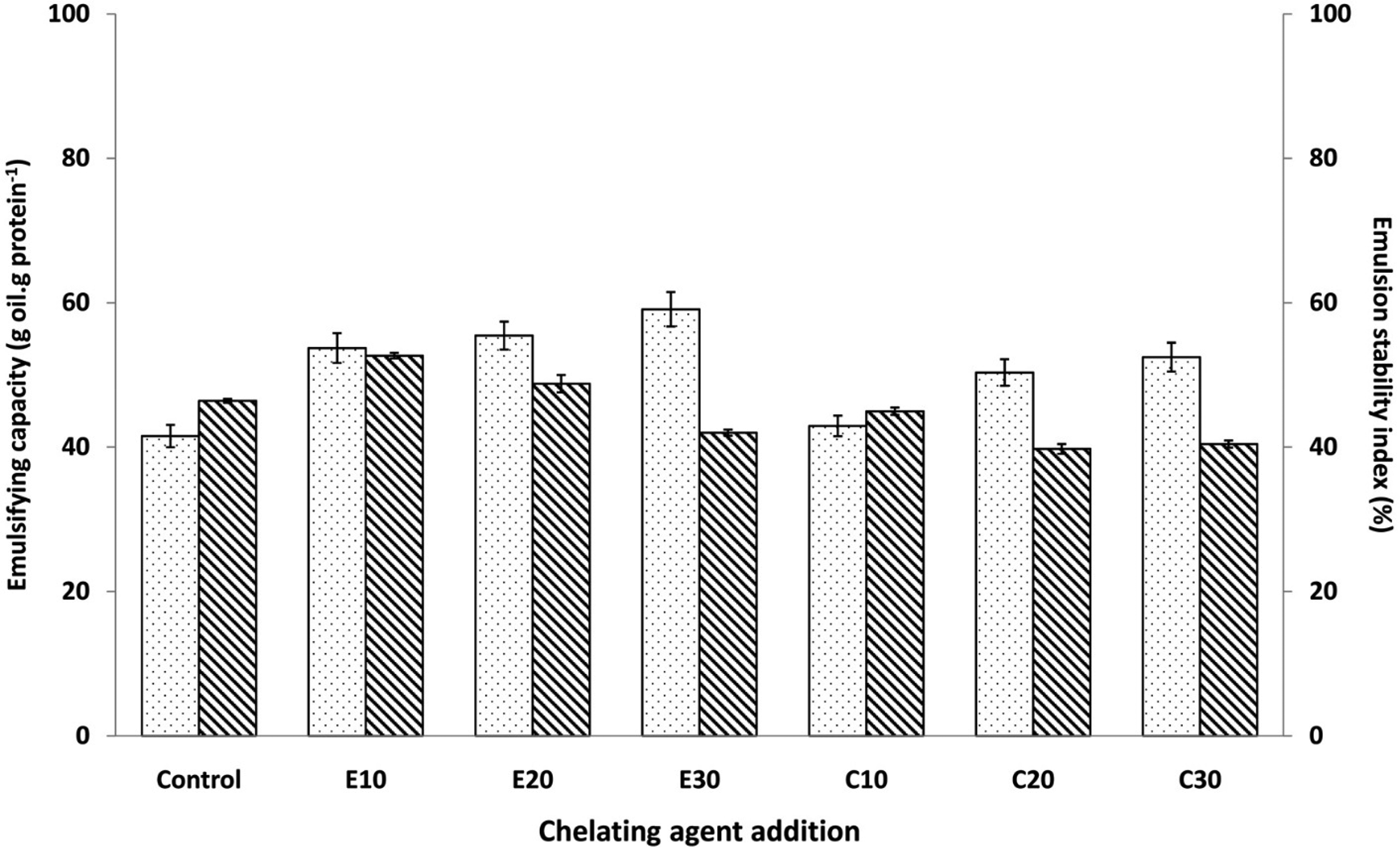
Emulsifying capacity ( ) and emulsion stability index (
 ) of MPCs obtained by ultrafiltration of skim milk pre-treated with 10, 20 and 30 mm of EDTA and citrate.
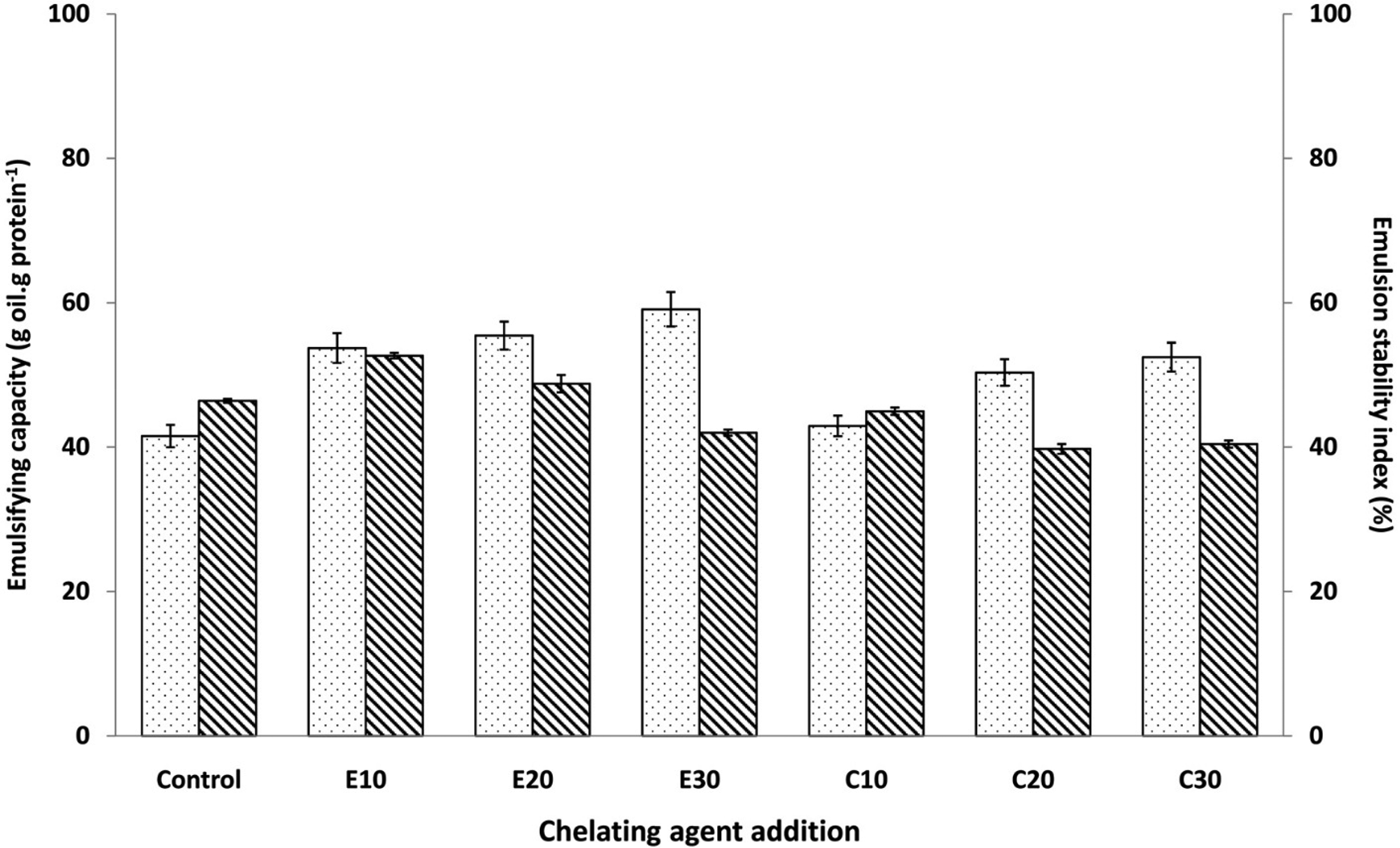
Emulsification capacity of MPCs was improved depending on the concentration of the chelators (Fig. 3). It initially increased (P < 0·05) upon addition of either 10 mm EDTA or up to 20 mm citrate. However, any further chelator addition was not followed with improvements in EC. Indicatively it required greater concentration of citrate to reach same properties of modified MPCs as those obtained by EDTA (Fig. 3). Enhanced emulsification has been directly related to greater solubility of casein suspensions (El-Bakry et al. Reference El-Bakry, Duggan, O'Riordan and O'Sullivan2011), since very low levels of soluble proteins would be required to emulsify fat (McIntyre et al. Reference McIntyre, O'Sullivan and O'Riordan2016). However, apparent protein aggregation upon addition of high concentrations of chelators (Fig. 1) likely reduced EC as the number of protein molecules available for adsorption onto lipid droplets decreased (Ye, Reference Ye2011). The stability of emulsions formed using the E10 MPC was greatest, which consequently declined upon further chelator addition. Stability of emulsions formed with citrate treated MPCs was lower than that of the control irrespective of its concentration. It appears that stability of emulsions diminishes with a decrease in the Ca content of MPCs (Ye, Reference Ye2011). This was true for retentates obtained with increasing concentrations of both EDTA and citrate (Table 1). As the soluble and ionic Ca concentrations decreased, there was no improvement in the ESI which could be due to depletion flocculation that could be induced by protein particles in aqueous phase (Dickinson & Golding, Reference Dickinson and Golding1997).
Conclusions
Addition of Ca chelators to SM prior to manufacturing of MPC by UF at 15 °C and pH 5·9 resulted in products with depleted calcium content and consequently modified functionalities. Significant reduction in particle size accompanied with a partial aggregation and rise in negative zeta potential was attained with the addition of 20 mm EDTA or 30 mm citrate. These changes along with an adequate decline in total, soluble and ionic Ca resulted in improved solubility and heat stability of the manufactured MPCs. However, these improvements were not followed with similar improvements in the emulsifying properties as these appeared to be related to extent of Ca removal and availability of individual smaller protein aggregates. Overall, EDTA had greater Ca binding capacity than citrate and could therefore give better solubility and heat stability at a lower concentration (20 mm) than citrate (30 mm), or even emulsification (10 mm). Thus, appropriate selection of a chelator and its concentration may lead to manufacturing of MPCs with tailored functionalities. However, considering that these powders were produced by lyophilisation, it would be a commercial imperative to establish effects of a chelator addition under commercial conditions that should also include diafiltration and spray drying as units of operations commonly employed in manufacturing of MPC.