Cloaked in a mantle of black feathers and standing before a tapestry of a wolf howling at the moon, Natasha Khan, better known as her pseudonym Bat for Lashes, launched into her set at the 2009 Glastonbury Festival. The previous day saw a crowd eagerly embrace a set by Florence + the Machine, in which vocalist Florence Welch presented herself as a Pre-Raphaelite vision draped in black chiffon and roses reminiscent of the rock goddess Stevie Nicks. Released not long after the festival, Florence + the Machine's debut album Lungs (2009) glided to the top of the UK charts and was shortlisted for 2009's Mercury Prize alongside Bat for Lashes's album Two Suns (2009).
Pagan imagery permeates both groups’ cover artwork, song lyrics, music videos and stage production. Their foregrounding of the harp and tom-tom drums and esoteric instruments further accentuate these Pagan overtones. Welch even describes her music as ‘Heavenly, hellish, pagan, and reverential’ (Grigoriadis Reference Grigoriadis2011) and Khan frames her music as ‘about conjuring some magic’ (Anonymous 2006). Leaning on the symbols and sounds of modern Paganism, both artists have gained a loyal Pagan following and an equally loyal mainstream fanbase. Deconstructing the two women's songs, performances and videos casts a light on the role of Pagan and fantasy themes in their music, whose magic resonates so strongly with both audiences. In confronting and exploring these images and musical signifiers, we gain a better understanding of the ways commercial branding and religious influences work together to sell Paganism to an enthusiastic audience eager for a magical experience.
Pagan associations abound in relation to Florence + the Machine and Bat for Lashes. The word ‘pagan’ arises repeatedly in critical reviews of Florence + the Machine, including articles from Vulture, Entertainment Weekly, The Chicago Tribune and The Huffington Post. Rolling Stone went so far as to title an article ‘Florence Welch, the good witch’ (Grigoriadis Reference Grigoriadis2011). Several blogs delve into the Pagan vibe of Welch's music and performance persona or muse over whether Welch herself is Pagan. Welch and Natasha Khan no doubt remain aware of this branding, as both singers lean on the word ‘ritual’ when describing their artistic endeavours, although neither explicitly identifies as Pagan. Khan confided in a 2009 Telegraph feature, ‘The roar of the crowd is intense; it is ceremonial, ritualistic’ (Burrows Reference Burrows2009). Another 2009 Telegraph article featured Welch, where she recounted, ‘It's all part of a ritual. You're trying to help the audience lose themselves, and you're trying to lose yourself’ (Ryan Reference Ryan2009). Even more directly, Khan's interview with Metro News titled ‘Bat For Lashes casts her spell’ led with the quote ‘I feel annoyed with myself if I haven't given people some magic dust during the evening’ (metrowebukmetro 2009). These advertisements position Khan and Welch as rockstar embodiments of the young and beautiful ‘good witch’. I later explore this gendered and potentially ambivalent counterpart to the traditional ‘hag witch’ who overturns patriarchal order. However, what do Pagan magic-users think of these bands and their branding as Pagan chic?
Perusing Reddit subforums devoted to Paganism illustrates the investment Pagan fans have in Welch's music. Emphasising the utility of a Florence + the Machine track, user Portblack noted that ‘Rabbit Heart (Raise it Up)’ from Lungs provided a good selection for Pagan purposes (Portblack 2015). User nogoldenapples seconded this statement by asserting the track was on their Ostara (a Pagan holy day) playlist (nogoldenapples 2015). One user, whose account was deleted but whose comment remained, confessed ‘Florence + the Machine's music is intensely spiritual for me. I play it a lot before my personal rituals’ (Anonymous 2016). Meanwhile, popular music scholar Donna Weston lists Bat for Lashes in her dataset of artists praised by Pagan bloggers and specifically cites Natasha Khan's implicit pagan themes (Weston Reference Weston, Partridge and Moberg2017, p. 196). Although Florence + the Machine and Bat for Lashes essentially appropriate the Pagan subculture's symbols for artistic inspiration and commercial gain, they received only positive associations in the blog posts and social media comments I discovered.
‘I travel with the wizard’: modern paganism and magic(k)al practice
A strong connection exists between Paganism and magic (or magick as some refer to the practice to distinguish ritual magic from stage magic). The lower-case spelling of ‘pagan’ bears connotations of one who does not follow the major religions or tends towards hedonistic activities. The capitalised version of Pagan differentiates the word as having its current religious connotation, sometimes appearing as ‘Neo-Pagan’. Both words carry pre-Christian and pre-modern associations. As T.M. Luhrmann puts it: ‘Paganism is the loose title for people who practice a nature-oriented religion which usually involves magic’ (Luhrmann Reference Luhrmann1989, p. 5 footnote 4). Other authors and practitioners define Paganism in similar terms (Cunningham Reference Cunningham1989; Adler Reference Adler1979; Starhawk Reference Starhawk.1979). Although Luhrmann studied English magical practitioners of the 1980s, his definition of magic remains useful in a larger sense. He writes:
Modern magic is a mixture of many different activities and ideas: paganism, astrology, mysticism, the range of alternative therapies, even kabbalism … Practitioners think of themselves as, or as inspired by, the witches, wizards, druids, kabbalists, shamans, of mostly European lore, and they perform rituals and create ritual groups in which they invoke ancient deities. (Luhrmann Reference Luhrmann1989, p. 6)
As Neo-Paganism scholar Sabina Magliocco describes it, such a transnational mixture ‘collapses the distinctions between widely different cultures and historical periods … [creating a] Neoplatonic-like emphasis on the ultimate oneness of all sacred manifestations’ (Magliocco Reference Magliocco2004, p. 194). Such a collapse of cultures into a homogenised ‘oneness’ opens the door to colonialism (or even a kind of post-postcolonialism) and expressions of whiteness. Further, appropriation or incorporation of a range of non-Western traditions into modern-day Pagan practices would seem to counterbalance fear of the Other. Still, Pagans tend to demographically be white and of European descent (Sage Reference Sage2009, p. 36). Natasha Khan defies the Anglo-centricity of most Pagans, being half-Pakistani (although, again, she does not herself identify as Pagan). She was quick to point out this racial status when critics levelled suggestions of appropriation at her 2015 album Sexwitch, a project in collaboration with English indie rock band Toy and producer Dan Carey (Monroe Reference Monroe2015). The Sexwitch album featured six cover songs of 1970s psychedelic and folk rock, with material drawn from Iran, Morocco, Thailand and the USA. Khan's transnational material again echoes the tropes of ‘universality’ found in modern Paganism, wherein Pagans draw on or appropriate images and sounds from a range of cultures to create an eclectic bricolage of material resonating with practitioners as being magical in nature. Perhaps this underlying tradition of appropriation eases the way for commercial and artistic appropriation by Florence + the Machine and Bat for Lashes.
Turning to the importance of the two women's use of the word ‘ritual’, ritual and magic go hand in hand in regards to Paganism. Several texts emphasise these elements as common, if not essential, to Pagan practice. However, the difference or connection between ritual and magic is murky at best. Margot Adler writes in her seminal text Drawing Down the Moon that ‘it is generally and rightly stressed that rituals in the Craft and other Neo-Pagan religions are quite different from those of ceremonial magic, [yet] some of the same ideas apply’ (Adler Reference Adler1979, p. 162). Adler quotes Pagan writer Isaac Bonewits's taped letter to Berkeley from 1978 where he elaborates on how Pagan ritual encompasses ‘any ordered sequence of events or actions … that is designed to produce a predictable altered state of consciousness within which certain magical or religious results may be obtained’ (Adler Reference Adler1979, p. 164). Scott Cunningham writes early in his own text that, ‘During ritual [Wiccans] may direct personal power to the deities, asking that a specific need be met. This is truly religious magic’ (Cunningham Reference Cunningham1989, p. 22). The fluidity of Paganism, however, allows for those who perform rituals and those who do not; those who practice ceremonial magic and those who do not. Paganism houses so many permutations below its mantle, including Pantheists, Wiccans and Druids, among others, that defining an overarching liturgy or series of practices as uniform is nearly impossible. To that end, my focus turns to the most popular branch of Paganism: Wicca or Witchcraft.
Since its introduction in the mid-1950s, Wicca or Witchcraft has flourished. Paganism first surged in the 1970s as part of the rise of environmentalism and second-wave feminism, and it shows no signs of slowing down. Starhawk's The Spiral Dance and Adler's Drawing Down the Moon remain key texts of this form of Paganism, having gone through multiple printings following their publication in 1979. As of 2014, the ubiquitous Wicca: A Guide for the Solitary Practitioner by Scott Cunningham was on its 46th printing. The book's publisher boasts on an Amazon.com page that 800,000 copies have been sold as of 2018. Starhawk's own introductory guide to Wicca, The Spiral Dance, continues in the tradition of many Pagan texts in tying the religion to a pre-Christian heritage with similarities to Native American traditions and shamanistic practices (Starhawk Reference Starhawk.1979, pp. 16–18). Adler discusses how some Pagans cast the net more broadly to include folk traditions, season-based rituals and historical mystery rites from Egypt, Crete and Eleusis (Adler Reference Adler1979, p. 10). This appropriation from a multiplicity of traditions establishes the perceived universality to practitioners’ religious experience encouraged by Pagans and writers of Pagan-oriented books.
James R. Lewis notes: ‘Contemporary Neo-Paganism is diverse and decentralized. Beliefs differ widely, yet it is nevertheless possible to delineate certain common themes’ (Lewis Reference Lewis1996, p. 3). Whether as solitary practitioners or in a group or coven, Pagans find meaning in a variety of symbols primarily drawn from nature or antiquity. Sun, moon, stars, spirit guides in human and animal form, circles, spirals and a plethora of other symbols resonate differently depending on the practitioner. An internet search for ‘Pagan’ turns up countless images – most fixated on representations of the moon, pentacles, antlers and totem animals such as wolves and ravens. As Starhawk writes early on in her text: ‘Symbols and ritual acts are used to trigger altered states of awareness, in which insights that go beyond words are revealed’ (Starhawk, Reference Starhawk1989, p. 22). Introductory guides to Wicca and Paganism following in the footsteps of writers such as Starhawk tend to stress the importance of ritual and magic as ‘central to Neo-Pagan spiritual practices and worldview’ (Berger et al. Reference Berger, Leach and Shaffer2003, p. 35). Chant, dance, meditation and music – particularly drumming – can all play a part in magical ritual.
Cunningham encourages the use of recordings from a variety of genres played before, during and after ritual magic (Cunningham Reference Cunningham1989, p. 43). As Pagan writer Selena Fox forthrightly puts it: ‘I am a Pagan. I journey to the Otherworld in my dreams, my meditations, my rituals. I use magical tools to aid me in my journeys and my magics – incense, cauldron, candles, chalices of water, pentacles of salt, crystals, feathers, bells, rattle and drum, wand and staff, athame, mirror’ (Fox Reference Fox and Reid2006, p. 27). Although every Pagan is different in their practices, it is significant that Fox's manifesto of her beliefs and tools emphasises an assortment of percussion instruments. Music Magic(k) – A Guide by Entar Tellimarrën remains one of the few books on using music in Pagan ritual and ceremonial magic. Tellimarrën claims that, ‘The magic of song rests within its ability to carry both energy and meaning combined with the effects of music itself and the creation of shared imagery and visualization in the minds of the hearers’ (Tellmarrën Reference Tellmarrën2014, p. 52). Regarding musical instruments, Graham Harvey notes in an essay on Druidry that:
Some pagans share with New Agers an affection for the clarsach [Gaelic harp] sometimes accompanied by the human voice. Other popular instruments are drums … Part of the appeal of such instruments might be the feeling of other times and other places (Otherworldliness?) they evoke … it is also true that such instruments affect an alteration of consciousness. The complex harmonies of the harp and the powerful rhythms of the drum demand a refocusing of attention on things other than the noise of traffic, the bustle and hassle of everyday life. (Harvey Reference Harvey and Reid2006, p. 115)
Percussion, harp and voice all find a home in ritual and magical practice. Significantly, harp and drums are the exact instrumentation associated with Florence + the Machine's musical aesthetic while percussion and esoteric instruments including the Theremin and autoharp remain key to Bat for Lashes's persona.
Popular music and its relation to Pagan rites is a recent area of study. As Donna Weston and Andy Bennett note in Pop Pagans: Paganism and Popular Music, ‘A diverse range of genres, from folk through punk and Goth to heavy metal, frequently embodies images and discourses drawn from Paganism’ (Weston and Bennett Reference Weston, Bennett, Weston and Bennett2013, p. 1). Weston's later study of internet communities found evidence that practitioners often choose to identify music as Pagan (Weston, Reference Weston, Partridge and Moberg2017). Pagans attach religious significance to a musical group whether or not the artists describe themselves in such a way. According to Weston, a Pagan-friendly band includes implicit or paramusical elements related to Paganism such as clothing and ritualistic gestures found in visual imagery or lyrics, particularly through an emphasis on ‘strong nature references, ancient and/or primal imagery, and highly ritualized gestures’ (Weston Reference Weston, Partridge and Moberg2017, pp. 187, 190). Florence + the Machine and Bat for Lashes incorporate such implicit or paramusical elements to an astonishing degree.
‘With a sound like white magic’: Pagan aesthetics and Bat for Lashes
What is it about ‘Rabbit Heart (Raise it Up)’ and other songs and videos by Florence + the Machine and Bat for Lashes that they appeal to Pagans or implicitly sound or look Pagan? Why do the bands inspire comments by critics that describe the drumming as a ‘pagan thump’ or the vocals as ‘witchy’ while the tracks have a ‘spellcasting vibe’ assigned to them? (Singh Reference Singh.2009). Borrowing from sociologist and music scholar Deena Weinstein's essay ‘Pagan Metal’ and Donna Weston's essay ‘Paganism and Popular Music’ as models, one may investigate the sounds as well as the visual and verbal signifiers that contribute to the associations with magic and Paganism. Weston's analysis relies on a musicological methodology, although much of her reading of implicit and explicit Pagan music refers to style and lyrics with little discussion of instrumentation (Weston Reference Weston, Partridge and Moberg2017, pp. 193–5). Weinstein, on the other hand, devotes a section of her essay on Pagan Metal to sonic elements: describing the extremely loud guitars, huge drum kits and the keyboards that add to Pagan metal's dense textures, joined with frequent addition of folk instruments or melodies (Weinstein Reference Weinstein, Weston and Bennett2013, p. 65). Both drums and folk instruments play a primary role as Pagan signifiers in both Florence + the Machine's and Bat for Lashes's output.
Returning to Bat for Lashes's 2009 Glastonbury Festival performance as a starting point, a backdrop curtain featuring a wolf howling at the moon dominates the stage design. A second, smaller tapestry of a wolf and moon hangs foregrounded on the stage as well, draped over the front of a keyboard. Other decorations include an antelope's head on a pole and a realistic-looking raven perched on another keyboard. These items evoke the natural world, and a mystical world at that, with ravens, wolves and moon designs regularly appearing in image searches for ‘Magick’ as well as for ‘Pagan’, as previously mentioned. Describing her live show's stage design, Khan enthused in a 2009 Pitchfork interview that she planned to surround herself with ‘loads of candles and deer heads and like weird Texas kind of voodoo-ey stage props and things like that. Which I think looks beautiful, and that's what we're doing this time’ (Hogan Reference Hogan2009). The purposefulness of decorating with ‘voodoo-ey’ props again plays into the emphasis on magical or Pagan symbols associated with Bat for Lashes in reviews and interviews. Further, it reveals a consciousness and purposefulness in appropriating religious symbols, whether from Paganism or a spirit-oriented religion such as Vodou for commercial gain and artistic emphasis.
Bat for Lashes opened their 2009 Glastonbury set with ‘Glass’, the first track on Two Suns. Khan begins the song in a quiet voice, bedecked in a long mantle of black feathers and wearing fingerless black lace gloves. Ben Christophers (harp, Marxophone, autoharp, harmonium, instrument banks and samples) plays a single note on an electric string instrument accompanied by the sound of a synthesiser on an open fifth. This hushed introduction tantalises the audience and draws them into the ritualised space of the concert before the drummer, Sarah Jones, launches the song forward. Her focus on tom-toms and the kick drum charge the atmosphere even further with these particular drums’ rich and mighty thump. Jones's snare drum finally enters on the chorus – a full two minutes into the song. The snare drum establishes a typical rock drumming sound and creates an even greater contrast for the verses, which return to kick drum and tom-toms. The strange sound of the vintage Marxophone, a metal-hammered zither produced in the early 20th century, adds a jangling texture to ‘Glass’, joined by Charlotte Hatherley's distorted guitar and wailing backing vocals. Khan abandons her cloak of feathers during the song, and once the cheering has died down, the band launches into the pulsing synth riff of ‘Sleep Alone’. This selection again follows the track listing on Two Suns. Khan sings of ‘a lonely spell to conjure you, but conjure hell is all I do’, directly invoking magic in the lyrics. For this song and the others in the set (‘What's A Girl to Do?’, ‘Pearl's Dream’, ‘Prescilla’, ‘Two Planets’ and ‘Daniel’), percussion dominates the texture, including clapping, tambourine, tom-tom drums, kettle drum and shakers joined to synthesisers. Khan strips down ‘Prescilla’, the slow song in the set, to autoharp and zither (or lap harp). This switch-up of tempo and instrumentation lends a folk aesthetic to the set before the band returns to the primary sounds of synthesiser and percussion.
Returning to the quote by Graham Harvey, harp and drums work to evoke ‘the feeling of other times and other places (Otherworldliness?)’ in Pagan consciousness (Harvey Reference Harvey and Reid2006, p. 115). Bat for Lashes's focus on the tom-tom drums (hereafter referred to as simply the toms) can only be described as unusual. As drum scholar Mandy Smith has pointed out, ‘Recordists, scholars, and drummers alike consider the snare drum to be the center of the rock drum kit, as evidenced by its front-and-center placement in studio mixes, the centrality of the backbeat, and the positioning of the drum in the center of the performer's body – between the player's legs’ (Smith Reference Smith2015, p. 5). Instead of using the snare drum to create a standard rock backbeat, Sarah Jones’ performance at the Glastonbury Festival and the drum sounds on Bat for Lashes's recording of Two Suns and the band's first album, Fur and Gold (2007) rely on the toms and their ‘pagan thump’ (Singh Reference Singh.2009). The use of the toms ‘evoke[s] notions of the primitive’ sparking the imagination through what Smith calls ‘the greatest primitive signifying power of all the kit instruments’ with their ‘generic “tribal” feel’ (Smith Reference Smith2015, pp. 6, 8). By choosing the toms and their associated ‘primitive’ vibrations, Bat for Lashes spurs a phenomenon Adrian Curtin addresses in an essay on percussion and primitivism. The toms act to ‘strike the bodies of those present, moving participants to heightened states of feeling’ (Curtin Reference Curtin, Enns and Trower2014, p. 228). Curtin describes the ‘hearing/feeling’ experience of the drums, recalling the words of the Pagan practitioners who use drums to achieve a heightened spiritual state (Curtin Reference Curtin, Enns and Trower2014, p. 229). It is no coincidence that Florence + the Machine also rely on the toms for a number of their songs, including their hits ‘Dog Days are Over’, ‘Cosmic Love’, ‘Shake it Out’ and ‘No Light No Light’.
Highlights from Bat for Lashes's lyrics in the 20-minute Glastonbury Festival set include references to a ‘knight in crystal armour’ and a ‘cape of red and gold’ (‘Glass’), battles, (‘Pearl's Dream’) conjuring (‘Sleep Alone’), and a reference to the sun and stars as her mother and sister (‘Two Planets’). Further references to fantasy or magical words in Two Suns include outright mention of magicians and magic (‘Good Love’), and sirens (‘Siren Song’). Fur and Gold (2007) invoked queens and court jesters (‘Trophy’), wizards (‘The Wizard’) and centaurs (‘Bat's Mouth’). The opening track to Fur and Gold, ‘Horse and I’, features an oscillating harpsichord ostinato, strings and eerie Theremin. These instruments set the scene for an album filled with nature- and fantasy-oriented lyrics.
The references to nature, mythology, mysticism and fantasy themes in both Bat for Lashes's albums probably led to the band's inclusion on the Pagan playlists Weston recorded in her study. The references certainly play into the implicit and explicit markers of Pagan or magical practice, as does the album cover and acknowledgements. Fur and Gold’s cover art features Khan in profile, wearing a golden headdress (referenced in the second verse of ‘Horse and I’), with a golden line painted across her cheek. She stands next to a black horse in the darkness (again referencing ‘Horse and I’). The image reads as an embrace of the pre-modern, although a dimly lit house looms in the background. Explicit mention of magic appears in the acknowledgements on the back of the album booklet. Khan's printed words include the phrase: ‘This album was made with the magic, love and help of the following artists’. Reprising similar words for the acknowledgements in Two Suns, Khan includes: ‘I was lucky enough to bask in the light of many gracious muses and magicians’. Even if her references to magic were meant to be flippant, the dedications in association with the other fantasy and magical signifiers add up to a Pagan-friendly attitude. Moreover, the mixture of religion and commercialism inherent in Khan's artistic production introduces a mainstream audience to Pagan symbols or at the very least appeals to such listeners through the music's relation to fantasy and magic.
‘My own secret ceremonials’: pagan ritual in Florence + the Machine's videos
Turning to Florence + the Machine, ‘Rabbit Heart (Raise it Up)’, ‘Dog Days Are Over’ and ‘No Light, No Light’ all contain implicit or explicit Pagan and magical elements through verbal and visual signifiers. The imagery in the three songs’ music videos and lyrics resonate with Pagan themes and the instrumentation furthers the Pagan associations lauded by critics. Beginning with ‘Rabbit Heart (Raise it Up)’, which Pagans themselves mentioned on Reddit and elsewhere, the lyrics to the song speak of offerings made and include the repeated ritualistic injunction to ‘Raise it up’ throughout the verses and bridge. The chorus includes ritual language and refers to the mythological character of King Midas and his magical ability springing from a gift/curse from Dionysus:
Musical elements include piano and harp in their higher registers placed in contrast to the muddy bass and the sound of the standard drum kit with the snare playing on the backbeat. Although the drummer plays a traditional drum combination, the recording mix emphasises the thumps of the toms and kick drum, further separating the treble and bass sounds with Welch's voice in the middle of the mix. In live performance, the drummer appears to strike the tom drum at the same time as the snare, deploying a more resonant thump than would normally be heard. The sound of a muted kick drum joined to quiet synthesiser chords sets the bridge apart from the verse and chorus as Welch sings ‘we raise it up, this offering, we raise it up’. By placing these lyrics in a distinctly separate musical space focusing on the lone drum and an organ-like sound, the band emphasises the ritualistic qualities of the lyrics. Pagan listeners’ adoption and interpretation of ‘Rabbit Heart (Raise it Up)’ as a Pagan anthem probably derives from these lyrics and the recording's mix. The harp remains one of the most distinctive elements of Florence + the Machine's sound and stage show, and the mix features prominent use of this instrument. The harp has the potential to carry resonance amongst even non-Pagan listeners as an instrument evoking the ancient past.
The 2010 video for ‘Dog Days are Over’ bears investigation owing to the track and video being many fans’ introduction to Florence Welch's music and visual aesthetic. By far the most-watched video in the band's oeuvre by approximately 40 million views, the video had racked up over 100 million views on YouTube as of 2018. Welch plays three different characters throughout ‘Dog Days Are Over (2010 Version)’. Shots throughout the beginning of the video alternate between a high-fashion, white-painted Welch in a quasi-Elizabethan style and a bare-legged, Pagan-esque Welch clothed in fur and ribbons with black paint around her eyes and a body often shrouded in smoke. Other characters include an ensemble of ‘Eastern’ drummers and two caped and hooded harpists. The harpists frame a jubilant scene, placed on opposite sides of the musical group. Welch sings in the centre of the tableau, wearing face paint around her eyes and a kimono-style dress. As a catchy indie-rock anthem with no explicit or even implicit Pagan or magical phrases in the lyrics, it is striking that the costuming mirrors Weinstein's observations of Pagan metal bands, who often use face paint, hooded capes or embellishments of fur in their visual appearance (Weinstein Reference Weinstein, Weston and Bennett2013, p. 68). The Pagan Welch persona dominates the first minute of the video alongside the high-fashion Welch persona. Pagan Welch carries a blue flag and is nearly omnipresent for the closing minute of the video. She dances and twirls as the other cast members explode into smoke and colourful sparks. The caped and hooded harpists likewise appear regularly throughout the final minute of the video until they too explode into red-coloured smoke at an upraised hand gesture from Welch. Pagan Welch takes up the final shot, and in essence conquers the video through her dancing, running and flag-waving.
No definite time and place define the video. Directors Georgie Greville and Geremy Jasper set the participants against a completely white backdrop so that costuming becomes the only point of reference. In this sense, the caped and hooded harpists seem to conjure the past alongside the use of the harp itself. The use of the drums again signifies the tribal, with heavy reliance on the toms in the recording and live performances, while the video's ‘Eastern’ drum ensemble uses conga players and others including two flanking bass drum players holding their instruments marching-band style (2:05). Borrowing from Mikhail Bakhtin's work on folklore and the fantastic, the video takes place in an unknown, ‘alien world’ as Bakhtin puts it, where ‘everything in it is indefinite, unknown, foreign … filled with isolated curiosities and rarities that bear no connection to each other … [but with] its own peculiar consistency and unity’ (Bakhtin Reference Bakhtin, Holquist, Emerson and Holquist1981, pp. 101–2). This unity springs from a coherence built through alternating shots between the Welch personas, who remain consistent in their costuming and constantly centred in the middle of shots. Bakhtin locates exoticism, on the other hand, as a different storytelling mode. He writes: ‘Exoticism presupposes a deliberate opposition of what is alien to what is one's own, the otherness of what is foreign is emphasised, savoured, as it were, and elaborately depicted against an implied background of one's own ordinary and familiar world’ [emphasis included in Bakhtin's text; Bakhtin Reference Bakhtin, Holquist, Emerson and Holquist1981, p. 101]. Nothing shrieks of such a juxtaposition of the familiar and the exotic as Florence + the Machine's video for ‘No Light, No Light’. The video features a Christian high-church setting complete with boys’ choir alternating with shots of a shirtless, hooded black man performing a menacing parody of Vodou magic.
‘No Light, No Light’ appears on Florence + the Machine's second album, bearing the magic-oriented title of Ceremonials (2011). Having accepted and encouraged media responses such as ‘Florence the good witch’ with Lungs, Welch's Ceremonials speaks of ghosts, demons, devils and dancing in a graveyard to perform her ‘secret ceremonials’ from which the album bears its name. ‘No Light, No Light’ revolves around the now-standard Florence + the Machine sound of organ, harp and toms. Although the lyrics have no relation to mystical or magical imagery, the music video's use of a Vodou parody overwhelmingly makes up for this lack and bears intensely problematic overtones. Where ‘Dog Days Are Over (2010 Version)’ featured three versions of femininity as if Welch was a youthful triple goddess, ‘No Light, No Light’ reinforces gendered binaries by creating a dichotomy between the male boys and the masculine ‘Voodoo’ priest with Welch as the only female present. The video for ‘No Light, No Light’, directed by Icelandic duo Arni & Kinski, defines both the Christian and magical ‘Voodoo’ spaces through darkness and shadow. Incense and stained glass characterise the former, while a circle of candles on a chequered marble floor with a golden throne placed at the back of the setting comprise the latter. Viewers see Welch in one primary incarnation, clothed in black and appearing to stand atop a skyscraper with a view of a cityscape spreading before her. Here, Welch's paleness and graceful gestures directly contrast with the dark skin of the ‘Voodoo priest’ and his manic contortions. This skyscraper-Welch, who lip-syncs to the track, likewise contrasts scattered shots of a fleeing Welch, who runs as if terrified through a stairwell and the streets, chased by a black man in purple. Throughout the second verse, skyscraper-Welch responds to stabs into a ‘Voodoo’ doll as if it pains her. The red yarn adorning the doll's head leads the viewer to further connect the doll to Welch. There is no reason given for the attack or chase sequence. A third incarnation of Welch appears at the beginning and end of the video. This mystical-Welch, who wears a bejewelled white dress, has black lace covering the upper half of her face and lies down beside a crystal skull that is foregrounded in the shot and frames the video through a gothic aesthetic.
To music video aficionados, the video's use of church and choir reads as a callback to Madonna's controversial ‘Like a Prayer’ video directed by Mary Lambert (1989). Here, however, the relationship between the white woman and black man bears menacing overtones. Where Madonna's video explored themes related to the American Jim Crow South, Florence + the Machine's video instead works through multiple rigid dichotomies. Choirboys represent patriarchal Christian order using the white magic of the Church of England vs. the chaotic contortions of the ‘Voodoo’ practitioner and his black magic. Welch, as the singer/protagonist, becomes the white insider conforming to British norms by embracing the Church of England. Her insider status contrasts with a black outsider. These relationships appear in the stark guise of race and religion where Christianity and whiteness contrast with Pagan magic and blackness. Arni & Kinski's video complicates the Pagan relationship that Florence + the Machine typically cultivates. In this video, magic simultaneously seeks to fascinate and to repel the viewer through a safe haven of the white choirboys’ white magic against the terror of a black magician/black man. Here, the appropriative nature of using ‘voodoo-ey’ material appears as a problematic phenomenon.
‘Slipping out of time’: a return to a fantastical past
Pagans may rejoice to see two successful female rockers giving nods to Pagan culture, but the vast majority of the two bands’ audiences know little to nothing of modern Paganism. Why do the visual and aural tropes resonate with non-Pagans in so successful a way that the artists continue to embrace Pagan aesthetics for commercial production? Perhaps the music draws these listeners in as being dramatic through a use of different beats in the heavy use of the toms or the magic-inducing promise of the harp. Perhaps they are drawn to the theatricality and a sense of feminism inherent in two confident women engaged in a female-centric rock experience. Investigation into why critics and mainstream audiences react so strongly to Pagan themes in Bat for Lashes and Florence + the Machine reveals parallels to the 1960s and early 1970s counterculture and its own adoption of fantasy and magic in music.
In an online article for The Guardian, Nell Frizzell pointed out the Pagan themes in Florence + the Machine and Bat for Lashes's cover artwork alongside a handful of other groups, noting, ‘Candles? Check. Stars? Check. Orbs? Check. Flowers? Check. Flowing Locks? Check. Forests? Check … The last time there were album covers like that, Steeleye Span were still in the top 40’ (Frizzell, Reference Frizzell2009). In his research into popular music and Paganism, Andy Bennett describes the late 1960s and early 1970s as a heyday of youth culture where music with implicit Pagan themes ‘challeng[ed] the dominant technocratic discourse of the time … [and] sought to establish alternative aesthetic sensibilities often characterized by reinvestment in pre-modern values, notably spiritualism and a focus on the natural world’ (Bennett Reference Bennett, Weston and Bennett2013, p. 14). By selling their updated brand of Paganism, Florence + the Machine and Bat for Lashes draw on this same idea of pre-modern values. There are plenty of reasons audiences would be drawn to a challenge to the ‘technocratic discourse’ as Bennett puts it, as this current moment echoes many of the same fears and goals of the counterculture.
Deena Weinstein turns to Vanessa Sage's writing on Romanticism and Paganism in Weinstein's study of Paganism and heavy metal. Sage studies the ‘counter-Enlightenment and countercultural’ elements of Romanticism and Paganism. She explains that ‘What they counter – for example, the Industrial Revolution, and what is imagined to be the barrenness and loneliness of modern social life – are critical themes at this moment in history’ (Sage Reference Sage2009, p. 28). Prudence Jones and Caitlin Matthews connect a renewed dedication to Paganism to the fear of ‘a head-long hurtle towards planetary destruction’ (Jones and Matthews Reference Jones, Matthews, Jones and Matthews1990, p. 13). Political and social concerns in the years surrounding the 2009 release of Lungs and Two Suns triggered fears similar to those of participants in the 1960s and 1970s counterculture who feared for the environment and the fate of humanity. Scientific studies and books such as Thomas L. Friedman's bestselling Hot, Flat, and Crowded (2008) or documentaries including Al Gore's An Inconvenient Truth (2006) amplified fears related to the global warming crisis. Worldwide, North Korea began to launch rockets and perform nuclear tests in 2009, reigniting fears of nuclear war. Further, the year before the two bands released their acclaimed albums, stock markets around the world plunged owing to the subprime mortgage lending crisis. In the UK, the collapse of the commercial property finance boom dominated news cycles throughout 2007–2008. In 2009, the BBC reported in their article ‘UK jobless total climbs to 2.4 million’ that ‘The quarterly rises in the jobless rate and number were the biggest since 1981’ (BBC 2009). Small wonder that many listeners were drawn towards escapist Pagan imagery and magic or fantasy-related music in the face of environmental, political and economic crisis.
Related to such escapism, interest in magic inspired a strong turnout at the box office and in bookstores throughout the 2000s and into the 2010s. Harry Potter mania ran throughout much of that time, and publishers and producers have released a host of films and books revolving around magic over the past decade. These media conglomerates include the Game of Thrones juggernaut through George R.R. Martin's books and the HBO television spinoff series, Peter Jackson's return to Tolkien with The Hobbit trilogy of films, King Arthur, Sleeping Beauty and Snow White retellings, and many others. Clearly, magic, fantasy and Paganism sell. Questioning why Western society has returned to magic in its entertainment, fantasy scholar Katherine Fowkes discovered that ‘[Fantasy] answers science fiction by providing an alternative response to our anxiety in the face of technology, rationalism, and alienation’ (Fowkes Reference Fowkes2010, p. 12). Peter Bramwell, in his study of Pagan themes in modern children's books, found that such literature tended to look to a utopian past as does contemporary Paganism in a general sense. Bramwell adapted Bakhtin's folkloric chronotope: invoking his own ‘Pagan chronotope’ where a ‘ritualized’ form emphasised being ‘close to nature’ (Bramwell Reference Bramwell2009, p. 20). Turning to other theories, specifically gender theory, opens a dialogue into what the witch represents as a figure closer to nature than the average human, particularly since Welch and Khan seem to embody the ‘good witch’ type.
‘Strangeness and charm’: applying gender theory to Florence + the Machine and Bat for Lashes
The witch, whether old or young, good or bad, remains a fascinating archetype for study by gender theorists as well as Pagan scholars. Florence + the Machine's and Bat for Lashes's Pagan image-making make them ideal subjects for the application of gender theory wherein gender is defined as a performative and socially constructed act. Drawing on Julia Kristeva and other gender theorists including Judith Butler and Rosi Braidotti, Justyna Sempruch classifies the archetypal old and malevolent witch as ‘suspended at the point of crossing into the unspoken and the forbidden’ (Sempruch Reference Sempruch2008, p. 2). The crone invests herself in ‘contesting the authority of the masculine position’ (Sempruch Reference Sempruch2008, p. 3). At the risk of solidifying binaries, this characterisation raises the question of whether the good witch serves to reinforce or reinstil patriarchal norms. The good witch seems to have overtaken the crone as the standard witch type in fiction thanks to Paganism and the rise of second-wave feminism arriving in conjunction with each other. In her essay on modern witchcraft and commodification, Tanice G. Foltz points out that, since Wicca and Paganism came of age during the same years as the women's movement, ‘witches frequently appear in books, films, and television programs, and they are often characterised as attractive, youthful, strong, and independent females who openly use their magical powers to fight against evil for the greater good’ (Foltz Reference Foltz and Berger2005, p. 2). Several examples spring to mind from Hermione Granger in the Harry Potter franchise, Willow Rosenberg in Buffy the Vampire Slayer and Bonnie Bennett in The Vampire Diaries, to the women of True Blood, Hex, Charmed, Beautiful Creatures, Once Upon a Time and The Secret Circle.
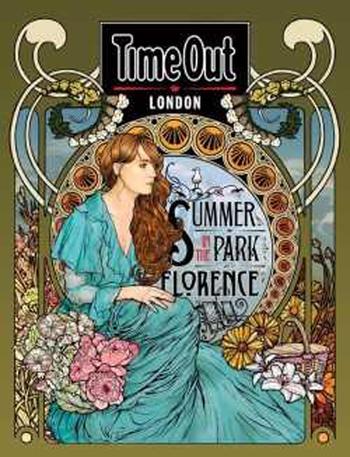
Within modern Paganism, the Goddess appears as maiden, mother and crone, although perhaps most often as the Earth Mother. Some traditions emphasise a female/male dichotomy between the Green Man and the Goddess – a phenomenon Hugh B. Urban sees as subverting the feminist impulses of modern Paganism. Ritual and representation instead reinforce gendered binaries through depictions of the moon as female and the sun as male, the earth as female and the sky as male (Urban Reference Urban2006, p. 188). In the context of Welch's and Khan's branding as witch-women or conjurers of magic, the two do not represent the mother figure of Paganism, but instead embody the beautiful and powerful formulation of the witch as youthful ‘superwoman’ attributable to rock star status. Dress, makeup and instrumentation all strengthen a performative version of femaleness relying on traditional markers of femininity. Khan's petite frame, shoulder-length or longer hair, and elfin features present as traditionally feminine. For Welch, her distinctive long red hair, jewellery and flowing dresses offset her strong bone structure and non-classical, striking features. From a musical standpoint, Welch's big, belting voice contrasts Khan's often-breathy soprano-range delivery. Advertising and photoshoots go a long way towards solidifying the two women as feminine vixens. Photographers often capture Khan wearing bold, glittering makeup and crown-like headpieces. Welch, on the other hand, is often made ultra-feminine through art nouveau-style imagery in drawings such as that used for a 2016 Time Out London cover (Figure 1). The piece, drawn by artist Greg Coulton, softens Welch's features and references Alphonse Mucha and the art nouveau movement, which also looked to nature and a romanticised past.
Greg Coulton's cover art for June 7th, 2016 issue of Time Out London.

Just as the art nouveau movement and much of fantasy represent a backwards-looking aesthetic, at times there appears to be an ambivalence to feminist or postcolonial representation in Welch's and Khan's version of independent, witchy rockers. Welch constantly foregrounds her whiteness through the contrast of her red hair and pale skin, her skin made even paler for videos such as ‘Dog Days are Over (2010 Version)’. As for Khan, she may emphasise her ethnicity and transnational interests in her Sexwitch project, but Bat for Lashes remains firmly Anglocentric through Khan's brand of tale-telling, instrumentation, genre and song structure.
Florence + the Machine and Bat for Lashes present a fascinating case of appropriation of Pagan tropes. Both Welch and Khan's recent overtures towards Paganism become even more explicit through Khan's 2015 Sexwitch project and Welch's announcement in a 2016 Time Out London article that she took part in a coven in her youth (Lloyd Reference Lloyd2016, p. 23). Even more recently, Welch published a volume of poetry and lyrics titled Useless Magic (Welch Reference Welch2018) and spoke of the ‘magic energy’ driving her in a 2018 article for The Guardian (Wiseman Reference Wiseman2018). As seen in these case studies, Florence + the Machine and Bat for Lashes refer to or make gestures towards Pagan themes in their music and imagery, emphasising notions of primitivity through the use of esoteric or unconventional instruments. Moreover, this combination of commercialism and Pagan signifiers responds to political and environmental fears as did the counterculture of the 1960s and 1970s. Theirs is a Paganism and embrace of magic or ‘voodoo-ey’ tropes for an audience of the 2000s and beyond. This appropriation for commercial gains displays a canniness in embracing the two bands’ constant labelling as exotic, pagan or witchy. Such labelling sets Welch and Khan apart from other acts by combining esoteric religion with commercialism. Florence + the Machine's and Bat for Lashes's ‘secret ceremonials’ speak to Pagans and mainstream audiences alike, who are attracted to the allure of magic and fantasy. A broad audience embraces this Pagan chic, which tantalises critics and the average listener who feel drawn into a ritualised space. Signs and symbols in the two bands’ musical and visual aesthetic stir and call to an audience steeped in fantasy and the genre's attendant gravitation towards magic. This magic counters the harsh realities of the present moment and continues to invite those seeking the ‘magic dust’ and ‘pagan thump’ of these powerful good-witch musicians.