


INTRODUCTION
Laser-driven short wavelength sources have become an important research area ever since laser technology has matured enough to deliver very short pulses with extremely high intensity (Perry et al., Reference Perry, Pennington, Stuart, Tietbohl, Britten, Brown, Herman, Golick, Kartz, Miller, Powell, Vergino and Yanovsky1999; Yanovsky et al., Reference Yanovsky, Chvykov, Kalinchenko, Rousseau, Planchon, Matsuoka, Maksimchuk, Nees, Cheriaux, Mourou and Krushelnick2008). High-order harmonics of the pump laser wavelength have been used in atomic (Larsson et al., Reference Larsson, Mevel, Zerne, L'Huillier, Wahlstrom and Svanberg1995) and molecular (Sorensen et al., Reference Sorensen, Bjorneholm, Hjelte, Kihlgren, Ohrwall, Sundin, Svensson, Buil, Descamps, L'Huillier, Norin and Wahlstrom2000) spectroscopy, time-resolved X-ray diffraction (Rischel et al., Reference Rischel, Rousse, Uschmann, Albouy, Geindre, Audebert, Gauthier, Forster, Martin and Antonetti1997), to characterize plasmas (Theobald et al., Reference Theobald, Häßner, Wülker and Sauerbrey1996), and to generate attosecond pulses (Agostini & DiMauro, Reference Agostini and DiMauro2004; Corkum & Krausz, Reference Corkum and Krausz2007). However, many applications remain unexplored largely because of the low harmonic intensity. The most investigated method for generating high harmonics to date consists in irradiating a gas by means of a moderate intensity laser beam (1014–1015 W/cm2). The high frequency radiation results from the well-known mechanism in which photoionized electrons gain energy from the laser field and then recombine with their parent ion (Corkum, Reference Corkum1993). One important limitation of this technique is that the laser intensity must remain moderate to avoid strong ionization, which creates a phase mismatch between the harmonics and the pump laser (Brabec & Krausz, Reference Brabec and Krausz2000). An alternative method to generate high frequency, short wavelength radiation is from the interaction of an intense laser pulse with a fully ionized underdense plasma, but this is a rather inefficient process (Gibbon, Reference Gibbon1997). Both experiments and simulations suggest that it is best to irradiate a solid target and rely on the nonlinear interaction with the surface of an overdense plasma, which is produced by the pulse itself through fast ionization of the solid target (Bulanov et al., Reference Bulanov, Naumova and Pegoraro1994; Gibbon, Reference Gibbon1996; von der Linde & Rzàzewski, Reference von der Linde and Rzazewski1996; Gibbon, Reference Gibbon1997). High-order harmonics of the incident pulse are then emitted in the specular direction. The conversion efficiency of this technique is expected to increase rapidly as a function of the laser intensity (Gibbon, Reference Gibbon1996). The mechanisms used to explain harmonic generation with dense targets include nonlinear oscillations of the plasma surface (Bulanov et al., Reference Bulanov, Naumova and Pegoraro1994; von der Linde & Rzàzewski, Reference von der Linde and Rzazewski1996), the interaction of the laser field with electron bunches emitted from the surface (Gibbon, Reference Gibbon1996), and the interaction between the incident laser wave and plasma waves generated by the fast electrons (Quéré et al., Reference Quéré, Thaury, Monot, Dobosz, Martin, Geindre and Audebert2006; Thaury et al., Reference Thaury, Quéré, Geindre, Levy, Ceccotti, Monot, Bougeard, Ŕeau, D'Oliveira, Audebert, Marjoribanks and Martin2007; Thaury & Quéré, Reference Thaury and Quéré2010). When harmonic generation from overdense plasmas takes place at high laser intensity (1017 W/cm2 and above), one can generally assume that the solid target is instantly ionized by the laser beam. Therefore, the harmonic generation process can be modeled by considering only the free electron dynamics and the resulting ion motion.
Currently, the standard technique used to generate intense femtosecond pulses from solid-state lasers is chirped pulse amplification (CPA). In the CPA technique (Strickland & Mourou, Reference Strickland and Mourou1985), a short laser pulse is expanded to nanosecond to nanosecond pulse width (using a stretcher), then amplified at intensities that are below the amplifier damage threshold, and finally compressed to its original pulse width (using a compressor). The pulses are expanded and subsequently compressed by introducing a frequency dependent delay in the pulse spectrum. Typically, the stretcher uses a pair of gratings to introduce positive chirp, thus providing long chirped pulses that are suitable for amplification. After amplification, a negative chirp provided by a compressor compensates for the positive chirp introduced by a stretcher, and a short pulse is restored. At the re-compression stage, one can also partially cancel the chirp of the pulse by adjusting appropriately the grating parameters (such as the distance between the gratings and the angle of incidence of the pulse (Backus et al., Reference Backus, Durfee, Murnane and Kapteyn1998)), producing a chirp with the desired features at the output. The chirp can also be adjusted with great flexibility by means of acousto-optic modulators (Dugan et al., Reference Dugan, Tull and Warren1997; Verluise et al., Reference Verluise, Laude and Spielmann2000).
Many works have been done to study the effects of chirp and temporal shape of laser pulses on their interactions with matter. In gases, the spectrum of the high-order harmonics can be tuned by pulse shaping and/or adjusting the chirp of the incident pulse (Zhou et al., Reference Zhou, Peatross, Murnane, Kapteyn and Christov1996; Pfeifer et al., Reference Pfeifer, Walter, Winterfeldt, Spielmann and Gerber2005; Froud et al., Reference Froud, Rogers, Hanna, Brocklesby, Praeger, de Paula, Baumberg and Frey2006). In underdense plasmas, it has been demonstrated that chirped pulses alter the growth rate of the Raman instabilities (Schroeder et al., Reference Schroeder, Esarey, Shadwick and Leemans2003a; Dodd & Umstadter, Reference Dodd and Umstadter2001), and can be used to investigate the temporal dynamics of these instabilities (Faure et al., Reference Faure, Marques, Malka, Amiranoff, Najmudin, Walton, Rousseau, Ranc, Solodov and Mora2001). In addition, free electrons can acquire energy when interacting with chirped pulses (Khachatryan et al., Reference Khachatryan, van Goor, Verschuur and Boller2005), in contrast to constant frequency ones, and hot electrons production is enhanced in the context of the laser wakefield accelerator (Schroeder et al., Reference Schroeder, Esarey, Geddes, Toth, Shadwick, van Tilborg, Faure and Leemans2003b). Further, using chirped laser pulses in laser-induced breakdown spectroscopy can enhance the spectral lines intensities of the material under investigation (Rohwetter et al., Reference Rohwetter, Yu, Mejean, Stelmaszczyk, Salmon, Kasparian, Wolf and Woste2004). However, there exists to our knowledge no study on the effects of chirp and pulse shape on harmonic generation from overdense plasmas, nor on energy absorption, and numerical simulation is an effective tool for this investigation.
Vacuum or Brunel effect heating (Brunel, Reference Brunel1987) is known to be a very important energy absorption mechanism, and the energetic electrons thus produced excite plasma waves when they penetrate into the overdense plasma (Quéré et al., Reference Quéré, Thaury, Monot, Dobosz, Martin, Geindre and Audebert2006; Thaury et al., Reference Thaury, Quéré, Geindre, Levy, Ceccotti, Monot, Bougeard, Ŕeau, D'Oliveira, Audebert, Marjoribanks and Martin2007; Thaury & Quéré, Reference Thaury and Quéré2010), which in turn affects the harmonic content of the reflected laser pulse (Boyd & Ondarza-Rovira, Reference Boyd and Ondarza-Rovira2007). Therefore, we have analyzed the energy absorption by this and other mechanisms, and how absorption is affected by chirping. It will be seen that the conditions that optimize harmonic generation minimize energy absorption and vice versa. But, optimizing energy absorption could be useful for other applications, such as incoherent X-ray sources based on line emission from high atomic number targets.
In this paper, we present a numerical study on the effects of second-order dispersion and third-order dispersion terms, and of the related pulse shape modifications, on high-order harmonic generation and energy absorption from overdense plasmas. This investigation was motivated by our ongoing experiments on this topic, which will be reported in a subsequent paper. We used the relativistic one-dimensional particle-in-cell (PIC) code BOPS (Gibbon & Bell, Reference Gibbon and Bell1992), which includes the Bourdier scheme to deal with oblique incidence (Bourdier, Reference Bourdier1983), and assumed a pre-ionized medium with a constant degree of ionization. Such investigations on the effects of the chirp are important, since chirp could be a unique indicator to investigate the dynamics of the high-intensity laser-solid interaction. For example, the time-dependent frequency acts as an intrinsic clock enabling femtosecond time resolution of the interaction (Chien et al., Reference Chien, Fontaine, Desparois, Jiang, Johnston, Kieffer, Pepin, Vidal and Mercure2000; Faure et al., Reference Faure, Marques, Malka, Amiranoff, Najmudin, Walton, Rousseau, Ranc, Solodov and Mora2001). In this respect, understanding the effects of chirp and the related pulse shape on the interaction of high intensity laser pulses with overdense plasmas is most relevant to this field and as such constitutes the goal of the present work.
CHIRPED PULSES
The effect of chirp on the electric field in the time domain E(t) is given by:

where ϕ(ω) is the spectral phase and G TL(ω − ω0) is the Fourier spectrum of the transform-limited (without chirp, i.e., constant frequency) field. For a broad bandwidth pulse centered at ω0, the spectral phase ϕ(ω) can be expanded around ω0, which we do up to order three:

On the right-hand side of Eq. (2), ϕ(ω0) is the absolute phase, ϕ′(ω0) is the group delay, ϕ″(ω0) is the group velocity dispersion (GVD), and ϕ′″(ω0) is the third order dispersion (TOD). In the following, we set ϕ(ω0) = 0 and ϕ′(ω0) = 0, since these two terms have no effect on the pulse frequency nor on the pulse shape. (The effect of ϕ′(ω0) is simply to induce a time delay in the pulse.) From Eqs. (1) and (2), one can show that:


where * designates the complex conjugate. From Eq. (3), one can see that the intensity I = (1/2)ɛ0c|E|2 (where c is the speed of light and ɛ0 is the permittivity of vacuum) follows the symmetry relations:


Eq. (4a) implies that I(t) has the same temporal shape when reversing the sign of ϕ″. Reversing the sign of ϕ′″ produces, however, a mirror image of the intensity profile with respect to the axis t = 0. From Eq. (3), one also sees that the effective frequency ω(t), defined as the time derivative of the phase of E, follows the relations:


In other words, reversing the sign of ϕ″ produces the mirror image of ω(t) with respect to the axis ω(t) = ω0, and reversing the sign of ϕ′″produces a 180° rotation of ω(t) about the point (t = 0, ω = ω0).
NUMERICAL PARAMETERS
To investigate the effects of GVD and TOD on high-order harmonic generation, we started from the transform-limited Gaussian field:

where E 0 is the maximum amplitude and τ0 is the pulse duration. The Fourier transform of E TL(t) reads:

We used the parameters τ0 = 35 fs, I 0 = 1020 W/cm−2, and a central wavelength of 800 nm (ω0 = 2.35 × 10¹⁵s−1), which are accessible in today's laboratories. Regarding the chirp of the pulses, we selected the values |ϕ″| = 1.98 × 10³ fs2 = (44.5 fs)2 and |ϕ″′| = 2.3 × 10⁴ fs3 = (28.4 fs)3 for GVD and TOD, respectively. It is worth noting that these values for |ϕ″| and |ϕ′″| are several orders of magnitude smaller than the values for the stretched pulses in the amplification stage of standard laser systems, and can thus be easily achieved by fine tuning the grating parameters near the values for optimal pulse compression. This value of |ϕ″| was selected to produce a significant GVD while keeping the pulse intensity high enough to generate several harmonics. For the given value of |ϕ″|, the value selected for |ϕ′″| was found to be the largest for which no oscillation appeared in the temporal profile. These oscillations would have brought unnecessary complications in interpreting the effects of the TOD on harmonic generation without adding any new information. It will be seen that these values are sufficient to considerably modify the interaction and the hamonics generation.
The intensity profiles of the chirped pulses produced with the chosen parameters are illustrated in Fig. 1a. In the purely GVD case (ϕ″′ = 0), the pulse remains Gaussian but is stretched in time according to the expression:

For the chosen parameters, we obtain τ ≃ 160 fs, while the maximum intensity becomes I 0 ≃ 2.2 × 10¹⁹ W/cm−2. On the other hand, the two profiles with TOD are mirror images with respect to t = 0, as discussed above. The profiles are asymmetric, with rise times of the leading edge that are about 2.5 (negative TOD) and 0.75 (positive TOD) times those of the purely GVD case.
(a) Laser pulse intensity as a function of time for pure GVD and for GVD and TOD combined. (b) Effective frequency as a function of time.

The areas under the curves are equal due to the conservation of energy, which follows from Eq. (1) for any real function ϕ(ω). Figure 1b shows the effective frequency ω(t) for the cases with pure GVD and for GVD and TOD combined. The ω(t) functions for the two other sign combinations (ϕ″ < 0, ϕ″′ < 0 and ϕ″ > 0, ϕ″′ > 0) can be inferred from Eq. (5). One sees that the chirp induces only a few percent deviation of the central frequency ω0 = 2.35 × 10¹⁵s−1, within the pulse duration, and that the sign of the slope of ω(t) is the same as the sign of ϕ″.
In our PIC simulations, chirped pulses, with λ0 = 800 nm, were launched onto an overdense plasma surface at an angle θ = 45° with p polarization. We assumed a step-like electron density profile of 30n c ≃ 5.21 × 1022 cm−3, where n c = mɛ0ω02/e 2 is the plasma critical density, m and e being the mass and charge of the electron, respectively. As usual in PIC simulations, the electron density is taken lower than that of near completely ionized solids so as to keep the computer time and memory within reasonable limits. Complementary calculations using 60n c have revealed only minor differences with respect to the results presented in this paper. It should be stressed that real pulses may actually involve preheating of the target by unwanted prepulse or pedestals, which induces plasma expansion, and thus a decrease of the density, before the arrival of the main peak.
The ion acceleration by the space charge field is determined by the ratio Z/A, where A is the ion atomic mass, and Z is the ion charge. In the simulations, we used Z/A = 1/27 and set Z = 1 to have sufficient statistics for the ions. We used 105 particles for both electrons and ions. For the peak laser intensity considered in this paper (~2.2 × 10¹⁹ W/cm−2), the value selected for Z/A may be underestimated at the plasma surface where the laser field is highest, even for the heaviest chemical elements. However, since (as checked from the simulations) the ions expand nearly at the velocity of sound, νs ≈ (Zk BT e/M)1/2, where T e is the electron temperature, and M is the ion mass, one sees that the ion velocity actually depends on (Z/A)1/2, which means that the uncertainty on the average value of Z/A has quite limited consequences on the plasma expansion. The effects of the parameter Z/A will be discussed in the following sections. The laser propagates in the x direction from the left boundary of the simulation box, which is 80c/ω0 long. The plasma is 10c/ω0 long and the left plasma vacuum interface is located at 50c/ω0. The ion motion was taken into account in the simulations. The initial electron and ion temperatures were set to T e = 625 eV and T i = 60 eV, respectively.
EFFECTS OF THE CHIRP
GVD only
We first studied the effect of GVD only, with ϕ″ = ±1.98 × 10⁻²⁷s 2. Figure 2 shows the harmonic spectra for a negative GVD and for a pulse without chirp (constant frequency ω0) with the same envelope as the negative GVD pulse i.e., as Eq. (6), but with τ0 = 160 fs (which we call “envelope-like negative GVD”). One can see that in the case of the chirped pulse, the harmonic intensity is lower, and the spectral lines are broader in a proportion that increases with the harmonic order. This intensity reduction is likely associated with the broadening of the harmonics. With a positive GVD, the harmonic spectrum coincides almost exactly with that of the negative GVD case, and thus is not plotted in Figure 2.
Harmonic spectra for a negative GVD (dashed) and constant frequency ω0 (no GVD, solid line) with the same pulse envelope. Lines have been drawn to connect the peaks of the spectra.

Broadening of the harmonics can be understood in the same way as the broadening of chirped pulses in the time domain. The spectrum of the reflected field E R(t) is:

Then n th harmonic at the frequency ωn can be expressed as:

where ω′n is the chirp introduced in the reflected field by the incident pulse and Γn(t) is the envelope of the reflected field. Assuming that Γn(t) is Gaussian, the broadening Ωn of the n th harmonic yields an expression similar to Eq. (8), i.e.,

In this equation Ωn0 is the spectral broadening of the “envelope-like GVD” pulse, for which ω′n = 0.
Although little effect is observed on the harmonic spectra when inverting GVD, significant differences between the positive and negative GVD appear in the average electron kinetic energy K e as a function of time, as shown in Figure 3. We have also plotted the case of the pulse without chirp with the same envelope. Note that the decrease of K e for longer times is essentially due to cooling associated with expansion.
Effect of GVD (TOD = 0) on the average electron kinetic energy K e. The pulse intensity profile is also shown.

One observes in Figure 3 that the differences between the three cases appear essentially after the pulse intensity peak. The time-integrated absorption coefficient f T is 18% for the positive GVD, 24% for the negative GVD, and 21% for the envelope-like chirped pulse, which means a difference Δf T = 6% between the two chirped pulses. However, complementary simulations have shown that the trend observed here is not typical and depends critically on the intensity. For example, when the intensity of the transform-limited pulse is reduced to I 0 = 5 × 10¹⁹ W/cm−2, we obtained only Δf T = 1% difference in absorption between negative (f T = 17%) and positive (f T = 16%) GVD. When the intensity of the transform-limited pulse is increased to I 0 = 4 × 10²⁰ W/cm−2, Δf T = 1.4% between negative (f T = 28.3%) and positive (f T = 26.9%) and GVD. Since the main absorption mechanisms (resonant absorption (Wilks & Kruer, Reference Wilks and Kruer1997) and vacuum heating (Brunel, Reference Brunel1987)) depend on the wavelength of the laser field, differences in absorption were expected. However, simulations indicate that the value of Δf T, for a given pulse duration, depends strongly on the laser intensity and is hardly predictable. The effects of GVD on absorption and plasma temperature that are seen in Figure 3 are almost not apparent on the harmonic efficiency because the harmonics are emitted near the peak of the laser pulse (t ≃ 250 fs), when the plasma is driven more strongly. At the peak of the pulse, the plasma state is almost the same for both positive and negative GVD as well as for the envelope-like chirped pulse, as can be seen in Figure 3. Since the laser frequency is equal to the central frequency ω0 at the peak of the pulse, no clear difference is observed between the positive and the negative GVD.
GVD and TOD
We now consider cases where TOD is added to GVD. We consider specifically the two cases ϕ″ = ξ1.98 × 10³ fs2 and ϕ″′ = −ξ2.3 × 10⁴ fs3 with ξ = ±1, whose pulse shape and frequency are shown in Figure 1. In Figure 1a, we see that the pulse envelope is asymmetric in time, and the angular frequency at the peak of the pulse is no longer centered at ω0, but is blue shifted by about 1%.
Reversing the sign of TOD has a significant impact on the harmonic spectra. Figure 4a shows the harmonic spectra for the two cases as well as for pulses without chirp with the same envelope. When the leading edge is more gradual (Fig. 4a), no harmonics beyond the eighth are clearly seen. This is close to the case of the Gaussian pulses shown in Figure 2, but the harmonic efficiency is somewhat higher there. One can see in Figure 4 that the harmonics are broadened in the chirped case and that the highest visible harmonics are slightly blue-shifted.
(a) Harmonic spectra for positive GVD, negative TOD and (b) for negative GVD, positive TOD (dashed). The harmonic spectra for the cases with no chirp but the same envelopes are also shown as solid lines. Lines have been drawn to connect the peaks of the spectra.

The situation changes drastically when the front edge is steep (Fig. 4b). In this case, there is an increase in the harmonic order, beyond the 25th, and a blue shift of the harmonics along with a broadening clearly appears (inset of Fig. 4b). Note that such blue shifts in the harmonic spectra from chirped incident pulses have already been reported in experiments (Quéré et al., Reference Quéré, Thaury, Monot, Dobosz, Martin, Geindre and Audebert2006). However, the characteristics of the chirp (GVD and TOD) were not specified in that paper. A most important observation is that the spectra of Figure 4 contain modulations with an average frequency ~5ω0, which is close to the plasma frequency  , consistent with Thaury et al. (Reference Thaury, Quéré, Geindre, Levy, Ceccotti, Monot, Bougeard, Ŕeau, D'Oliveira, Audebert, Marjoribanks and Martin2007) and Boyd and Ondarza-Rovira (Reference Boyd and Ondarza-Rovira2007, Reference Boyd and Ondarza-Rovira2008). Compared to the case of Fig. 4a, these modulations increase significantly the efficiency of the harmonics, especially beyond the eighth harmonic. One also observes in Figure 4b that the frequency chirp has almost no effect on those modulations, and the curves connecting the peaks are almost parallel. Clearly, the main differences between the harmonic spectra produced from positive TOD and negative TOD come from the pulse shape. Similar spectrum modulations have been reported in the literature (both experiments (Watts et al., Reference Watts, Zepf, Clark, Tatarakis, Krushelnick, Dangor, Allott, Clarke, Neely and Norreys2002) and simulations (Boyd & Ondarza-Rovira, Reference Boyd and Ondarza-Rovira2007)) and have been attributed either to the excitation of plasma waves (Boyd & Ondarza-Rovira, Reference Boyd and Ondarza-Rovira2007) or to the presence of higher modes of oscillations of the critical surface in the framework of the oscillating mirror model (Watts et al., Reference Watts, Zepf, Clark, Tatarakis, Krushelnick, Dangor, Allott, Clarke, Neely and Norreys2002).
In order to compare plasma heating in both cases, we show in Figure 5 the average electron kinetic energy K e as a function of time. Significant differences in plasma heating are observed, depending mainly on the sign of TOD. When the front edge is steep (positive TOD), plasma heating is much smaller than when the front edge is gradual (negative TOD). Consistent with Figure 5, we have checked that the time-integrated absorption coefficient f T is 19.1% for a positive TOD, and 24.6% for a negative TOD. One sees that the frequency chirp has negligible influence on plasma heating and that the pulse shape plays the major role. The same observation holds for transform-limited pulses with intensities of 5 × 10¹⁹ and 4 × 10²⁰ W/cm−2.
Electron kinetic energy as a function of time for negative GVD, positive TOD and positive GVD, negative TOD and same pulse shapes but with constant frequency. The pulse intensity profiles are also represented as thin solid lines, for negative GVD, positive TOD (*) and positive GVD, negative TOD (**).

For positive GVD and positive TOD (steep leading edge profile) the harmonic spectrum was practically the same as in Figure 4b, except that a red shift of the harmonics appeared instead of a blue shift. For negative GVD and negative TOD (smooth leading edge), the differences with respect to the positive GVD and negative TOD case of Figure 4a are even less pronounced due to the low harmonic yield. The frequency shift observed for the case with positive TOD indicates that the harmonics are generated mostly near the peak of the pulse since the frequency shift is approximately m × Δω, where m is the harmonic order and Δω is the frequency shift at peak intensity of the pulse, which is about 1% in the negative GVD and positive TOD case, and −1% in the positive GVD and positive TOD case (see Fig. 1b).
When increasing the ratio Z/M from 1/27 to 2/5, the harmonic spectra were similar to those shown in Figures 2 and 4. In particular, the spectra for positive TOD showed more harmonics than for negative TOD and pure GVD. However, all the spectra were significantly more noisy and contained less distinct harmonics than in the case Z/M = 1/27. For example, in the positive TOD case, no more than 20 harmonics could be distinguished (against about 30 in Fig. 4b) and the large scale modulations could hardly be seen. These differences are likely associated with a decrease in the efficiency of harmonic generation in the softer density gradients resulting from the faster plasma expansion.
ENERGY ABSORPTION MECHANISMS
In order to provide more insight into the effect of chirped pulses on harmonic generation, we investigate in this section the plasma density profiles induced by chirped pulses. In addition, we estimate the contributions of the main absorption mechanisms, particularly Brunel heating, which is thought to play an important role in the spectrum modulations (Boyd & Ondarza-Rovira, Reference Boyd and Ondarza-Rovira2007).
The laser-cycle-averaged position of the critical surface x c (where the electron density is equal to the plasma critical density) as a function of time is shown in Figure 6 for different laser envelopes of chirped pulses where, however, the frequency is set to ω0 (i.e., what we called envelope-like chirped pulses). The inset shows the electron density profiles at the peak of the pulse. One observes that, when the laser pulse has a steep front edge (positive TOD), the plasma has no time to expand before the peak of the pulse. On the contrary, when the smooth edge arrives first (negative TOD), the peak of the pulse interacts with an already expanded plasma. The purely GVD case is intermediate. This results in different plasma conditions for harmonic generation and energy absorption. Indeed, it is known that the process of harmonic generation from solid density plasmas generally decreases as the density gradient length increases (Zepf et al., Reference Zepf, Tsakiris, Pretzler, Watts, Chambers, Norreys, Andiel, Dangor, Eidmann, Gahan, Machasek, Wark and Witte1998). In this context, one of the major issues when dealing with high peak power laser pulses is the contrast ratio of the pulse, i.e., the ratio of the pulse pedestal to the main pulse. Prepulses, which could arise in the course of laser amplification, may create a preplasma that has time to expand before the arrival of the main pulse, therefore decreasing the harmonic efficiency. This effect is seen in Figure 4a (gradual gradient), where the number of harmonics is smaller than in Figure 4b (steep gradient) and also in the case Z/M = 2/5 discussed above. We note that for long pulses (several hundreds of fs) the prepulse effect may not be as significant as for shorter pulses since the ponderomotive force is then expected to have enough time to compress the plasma and restore a steep density gradient.
Cycle-averaged critical surface position for different types of laser envelopes with ω = ω0. The arrows indicate the time of arrival of the peak of the pulse. The inset illustrates the electron density profiles at the peak of the pulses. Note the steepness of the density profiles between 0 and n c.

As pointed out earlier, a pulse profile with a steep front edge is directly related to the appearance of modulations in the harmonic spectra, which contribute to enhance the harmonic conversion efficiency. It was suggested that the Brunel electrons (Brunel, Reference Brunel1987) produced in the process of vacuum heating play a role in the modulations of the harmonic spectrum (Thaury et al., Reference Thaury, Quéré, Geindre, Levy, Ceccotti, Monot, Bougeard, Ŕeau, D'Oliveira, Audebert, Marjoribanks and Martin2007; Boyd & Ondarza-Rovira, Reference Boyd and Ondarza-Rovira2008). Brunel electrons are pulled out in vacuum, gain energy from the laser and are pushed back into the plasma. Doing so, they excite plasma waves, which modulate the spectrum (Boyd & Ondarza-Rovira, Reference Boyd and Ondarza-Rovira2007), as in the case of the steep laser profile shown in Figure 4b. The absence of modulations in the spectra for the purely GVD cases (Fig. 2) and negative TOD case (Fig. 4a) are likely due to the fact that Brunel electrons are less effective to excite plasma waves in plasmas with more gradual gradients. Therefore, for similar pulse intensity, the effects of the pulse shape on the harmonic spectrum is expected to be less significant as the pulse duration decreases since the plasma expansion time would not differ significantly for the various pulse shapes.
This can be seen in Figure 7, which shows spectra for a 55 fs pulse length having a peak intensity of 2 × 10¹⁹ W/cm−2. For these simulations, the duration of the envelope-like chirped pulse was 10 fs and we used ϕ″ = −200 fs2 and ϕ″′ = 700 fs3 to produce an asymmetric pulse similar to the one shown in Figure 1a for positive TOD, but on a shorter timescale. The differences between a Gaussian envelope and a positive-TOD-like envelope (steeper leading edge) are not as drastic as in the case of the ~160 fs pulses discussed above. For the shorter pulses, spectrum modulations appear in both cases, and the harmonic efficiency is nearly the same. Because of the short interaction time, the plasma does not expand much, resulting in similar plasma conditions for harmonic generation. In addition, more harmonics are seen than in Figure 4b.
Harmonic spectra for laser pulses with 55 fs pulse length. Gaussian envelope vs. envelope-like negative GVD, positive TOD. Lines have been drawn to connect the peaks of the spectra.

In order to assess the importance of Brunel electrons in our simulations, we estimated the absorption due to vacuum heating and compared it with the total energy absorption. Unfortunately, an estimate of vacuum heating absorption in arbitrary density profiles requires assumptions on the electrons' trajectories in the laser field (Cai et al., Reference Cai, Yu, Zhu, Cao, Li, Chen and Bogerts2006). For our purpose, we simply used the classical Brunel expression in a steep density gradient (Brunel, Reference Brunel1987) that is evaluated at the peak of the pulses. The fraction of laser energy absorbed by vacuum heating reads (Brunel, Reference Brunel1987):

where η = 1.75/(1 − n c/n) is a numerical parameter (Kato et al., Reference Kato, Bhattacharyya, Nishiguchi and Mima1993), a 0 = eE 0/mcω0 ≃ 3.2 is the normalized quiver momentum, 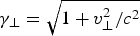 is the associated Lorentz factor, v ⊥ is the velocity along the normal of the plasma surface, a 0⊥ = v ⊥/c and θ = 45° is the angle of incidence. Here, we have to evaluate the field amplitude at the plasma surface, and from the Fresnel equations, it is
 times lower than its value in vacuum, hence,
 . Taking into account relativistic effects, which result in an increase of the critical density by a factor γ, i.e., γn c, where
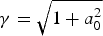 , we obtain f vh ≃ 10.7% for n/n c = 30/γ at the peak of the pulses, where a 0 ≃ 3.2. This estimate indicates that vacuum heating would contribute to about half the total absorption obtained in all cases considered (18% and 24% for GVD only, 19.1% for positive TOD, and 24.6% for negative TOD). Therefore, vacuum-heating absorption seems to be significant in our simulations. This provides an indication that Brunel electrons may contribute to the spectrum modulations seen in Figure 4b, as assumed by (Thaury et al., Reference Thaury, Quéré, Geindre, Levy, Ceccotti, Monot, Bougeard, Ŕeau, D'Oliveira, Audebert, Marjoribanks and Martin2007; Boyd & Ondarza-Rovira, Reference Boyd and Ondarza-Rovira2008).
To check the consistency of this estimate, we have calculated the contribution of resonant absorption, which is expected to be the next absorption mechanism of importance at oblique incidence. An estimate of the fraction of the laser energy absorbed by resonant absorption is provided in (Wilks & Kruer, Reference Wilks and Kruer1997). The main concern is evaluating the density scale length L at the critical density. As can be seen in the inset of Figure 6, showing the electron density profiles at the peak of the pulses, the profiles are very steep between 0 and n c and then increase more gradually up to the initial plasma surface at xω/c = 50. The steep leading edge of the density profiles results from the ponderomotive force, which is very effective at high laser intensity (Estabrook et al., Reference Estabrook, Valeo and Kruer1975). However, because of the decrease in the plasma frequency due to relativistic effects and the fact that the skin depth at the critical density is much longer than the gradient length, the laser wave is actually reflected at the solid density surface, where we evaluated the gradient length L. From this, we inferred kL = 3.3 × 10⁻² and an absorption coefficient for resonant absorption f ra ≃ 13.4% for GVD only, kL = 2.67 × 10⁻² and f ra ≃ 11.7% for negative GVD, positive TOD, kL = 3.73 × 10⁻² and f ra ≃ 14.5% for positive GVD, negative TOD.
Other absorption mechanisms may come into play when dealing with very steep density gradient and short laser pulses. One of them is the anomalous skin effect, which is estimated in (Wilks & Kruer, Reference Wilks and Kruer1997):

with νth being the electron thermal velocity. In the most favorable case, that is when TOD is negative, we have f ase ≃ 5%. Here, we have taken νth corresponding to K e = 100 keV, which is approximately the electron thermal velocity at the peak of the pulse in the pure GVD and negative TOD cases. This value decreases to about 2.5% in the positive TOD case. We expect that after the plasma starts to expand, the anomalous skin effect becomes negligible. In addition, J × B heating may come into play as well, and it has been demonstrated that it may account for more than 10% for normally incident light, when IλL2 > 1018W/μm2/cm2 (Kruer & Estabrook, Reference Kruer and Estabrook1985). But, we expect the effect of this mechanism to be of the same order as for the anomalous skin effect due to oblique incidence, since J × B heating is mostly effective at normal incidence (Gibbon, Reference Gibbon2005). These estimates of the various absorption mechanisms indicate that vacuum heating and resonant absorption each contribute to about half of the total absorption, which is about 20% in all the cases considered.
CONCLUSION
In this paper, we have investigated numerically the effect of the chirp and the related laser envelope on harmonic generation and electron heating in overdense plasmas. For a Gaussian transform-limited pulse of 35 fs, the pulse duration was stretched to 160 fs after chirping. When only second order dispersion (GVD) was taken into account, we observed that the harmonic spectrum is insensitive to the sign of the chirp. In that case, we observed that absorption can depend on the sign of the chirp but different trends were obtained for different intensities. Significant differences were observed in the harmonic spectra when the third order dispersion (TOD) term was added to GVD. In these cases, the pulse shape becomes asymmetric in time, with a steep and a gradual intensity front, the asymmetry changing to its mirror image when the TOD term changes sign. We made the following observations:
1. When the front edge of the pump laser pulse is relatively gradual, the harmonic spectrum is similar to those observed in the purely GVD case.
2. When the front edge is steep, the harmonics are broadened and shifted in frequency and the harmonic conversion efficiency is significantly higher than when the front edge is gradual.
3. The increased harmonic efficiency is essentially associated with the pulse shape since practically the same results were observed when using the same pulse shape as the chirped pulses, but without the chirp (constant frequency).
4. The increased harmonic efficiency is also associated with strong modulations in the harmonic spectrum, which are attributed to plasma wave excitation in the steep density gradient.
5. The chirp broadens and shifts the harmonics, and decreases their amplitude somewhat compared to the same pulse shape at constant frequency. The shifted frequency corresponds approximately to the frequency at the peak of the pulse.
6. Vacuum heating and resonant absorption are each responsible for about 1/2 of the ~20% absorption of the incident pulse in our simulations. The importance of vacuum heating indicates that Brunel electrons can play a role in the spectrum modulations.
7. Chirped pulses, even with TOD, result in smaller conversion efficiency than shorter pulses, such as, for example, the transform-limited pulse. This indicates that chirping is not suitable to increase harmonic conversion efficiency. Nevertheless, chirping is a useful tool to investigate the dynamics of laser-matter interaction in general.
ACKNOWLEDGMENTS
The authors are grateful to Dr. Paul Gibbon for the public release of the PIC code BOPS and to the Fonds Québécois de la Recherche sur la Nature et les Technologies (FQRNT) for financial support.



