Introduction
The poultry industry is one of the largest and fastest growing agro-based industries in the world. There is an increasing demand for poultry meat mainly due to its acceptance by most societies and its relatively low cholesterol content. The poultry industry is currently facing a number of environmental problems. One of the major problems is the accumulation of large amount of wastes, especially manure and litter, generated by intensive production. is voided by a layer as po Large-scale accumulation of these wastes may pose disposal and pollution problems unless environmentally and economically sustainable management technologies are evolved (Power and Dick, Reference POWER and DICK2000; Kelleher et al., Reference KELLEHER, LEAHY, HENIHAN, O'DWYER, SUTTON and LEAHY2002; Sharpley et al., 2007).
Most of the manure and litter produced by the poultry industry is currently applied to agricultural land. When managed correctly, land application is a viable way to recycle the nutrients such as nitrogen (N), phosphorus (P) and potassium (K) in manure. However, pollution and nuisance problems can occur when manure is applied under environmental conditions that do not favour agronomic utilisation of the manure-borne nutrients (Sharpley et al., Reference SHARPLEY, MEISINGER, BREEUWSMA, SIMS, DANIEL and SCHEPERS1998; Casey et al., Reference CASEY, BICUDO, SCHMIDT, SINGH, GAY, GATES, JACOBSEN and HOFF2006; Kaiser et al., Reference KAISER, MALLARINO and HAQ2009). The continued productivity, profitability, and sustainability of the poultry industry will likely be dependent on the formulation of best management practices to mitigate environmental consequences associated with air and water quality parameters that are impacted by land application, and the development of cost-effective innovative technologies that provide alternative to land application of poultry wastes (Kelleher et al., Reference KELLEHER, LEAHY, HENIHAN, O'DWYER, SUTTON and LEAHY2002; Moore Jr., et al., 2006; Szogi and Vanotti, Reference SZOGI and VANOTTI2009).
Confined animal production (i.e. beef and dairy cattle, poultry and swine) is the major source of manure by-products in many countries, including the United States of America (U.S.), Australia, and New Zealand. For example, total 2008 broiler production in the U.S. accounted for approximately 8,882 million birds (USDA, Reference USDA2008). It is estimated that about 44.4 million tons of poultry manure was produced in that year, containing 2.2 million tons of N, 0.7 million tons of P and 1.4 million tons of K (McDonald et al., Reference MCDONALD, RIBAUDO, LIVINGSTON, BECKMAN and WANG2009). Similarly, on the basis of 2008 broiler production (approximately 81 million birds), it is estimated that approximately 591, 300 tons of broiler manure waste is generated annually in New Zealand, which can supply around 15, 000, 6, 000 and 9, 000 tons of N, P and K nutrients, respectively (PIANZ, Reference PIANZ2006).
Manure by-products have the potential for being recycled on agricultural land. Beneficial use through land application is based on their ability to favourably alter soil properties, such as plant nutrient availability, soil reaction (pH), organic matter content, cation exchange capacity, water holding capacity, and soil tilth. Poultry waste contains all essential nutrients including micronutrients and it has been well documented that it provides a valuable source of plant nutrients (Kelley et al., Reference KELLEY, PANCORBO, MERKA, THOMPSON, CABRERA and BRNHAT1996; Williams et al., Reference WILLIAMS, BARKER and SIMS1999; Chan et al., Reference CHAN, VAN ZWIETEN, MESZAROS, DOWNIE and JOSEPH2008; Harmel et al., Reference HARMEL, SMITH, HANEY and DOZIER2009), especially for organic growers (Preusch et al., Reference PREUSCH, ADLER, SIKORA and TWORKOSKI2002). Addition of poultry manure to soils not only helps to overcome the disposal problems but also enhances the physical, chemical and biological fertility of soils (Friend et al., Reference FRIEND, ROBERTS, SCHOENHOLTZ, MOBLEY and GERARD2006; McGrath et al., Reference MCGRATH, MAGUIRE, TACY and KIKE2009). For example, continuous cultivation of arable soils often results in the deterioration of soil structure leading to reduced crop yield. Addition of poultry manure has been shown to improve the fertility of the cultivated soil by increasing the organic matter content, water holding capacity, oxygen diffusion rate and the aggregate stability of the soils (Mahimairaja et al., Reference MAHIMAIRAJA, BOLAN and HEDLEY1995a; Adeli et al., Reference ADELI, TEWOLDE, SISTANI and ROWE2009).
Optimum use of manure by-products requires knowledge of their composition not only in relation to beneficial uses but also to environmental implications. Environmental concerns associated with the land application of manure by-products from intensive animal operations include leaching losses of N in sub-surface drainage and to groundwater, contamination of surface water with soluble and particulate P, reduced air quality by emission of greenhouse gases and volatile organic compounds, and increased metals input (Williams et al., Reference WILLIAMS, BARKER and SIMS1999; Ribaudo et al., Reference RIBAUDO, GOLLEHON and AGAPOFF2003; Harmel et al., Reference HARMEL, TORBERT, HAGGARD, HANEY and DOZIER2004; Casey et al., Reference CASEY, BICUDO, SCHMIDT, SINGH, GAY, GATES, JACOBSEN and HOFF2006). Maintaining the quality of the environment is a major consideration when developing management practices to effectively use manure by-products as a nutrient resource and soil conditioner in agricultural and horticultural production systems (Sims and Wolf Reference SIMS and WOLF1994; Moore et al., Reference MOORE, DANIEL, SHARPLEY and WOOD1995; Moore Jr. et al., 2006). Most of the environmental problems associated with improper practices of land application of manure by-products have centred on the contamination of ground and/or surface water with two major nutrients, N and P (Sims et al., Reference SIMS, BERGSTRÖM, BOWMAN and OENEMA2005). However, manure by-products may also contain other potentially toxic trace elements, such as arsenic (As), copper (Cu) and zinc (Zn), which, to date, have received less attention (Bolan et al., Reference BOLAN, MAHIMAIRAJA and HEDLEY1992; Jackson et al., Reference JACKSON, BERTSCH, CABRERA, CAMBERATO, SEAMAN and WOOD2003; Epstein and Moss, Reference EPSTEIN and MOSS2006; Toor and Hunger, Reference TOOR and HUNGER2009). For example, poultry manure addition is considered to be one of the major sources of As input to soils. In the Delaware-Maryland-Virginia (Delmarva) peninsula along the Eastern shore of the US, 20–50 tons of Arsenic (As) is introduced annually to the environment through the use of As compounds (e.g. Roxarsone) to control coccidiosis in poultry birds in the U.S. (Christen, Reference CHRISTEN2001). However, it is noteworthy that As compounds are not commonly used to control coccidiosis in most countries including Australia and New Zealand. To offset the environmental risks of manure land application, Edwards and Someshwar (Reference EDWARDS and SOMESHWAR2000) pointed out that ‘to reduce the risk of offsite contamination, land application guidelines should be developed that consider the total composition of the manure by-products rather than only one component, i.e., N and/or P concentration’. On the other hand, the concentration of trace elements in poultry litter and its by-products could be minimized by controlling the quality of raw feed materials and reducing mineral additives in poultry diet (Van Ryssen, Reference VAN RYSSEN2008).
Air quality has become a major environmental concern of the poultry industry. Dust, odours and bio-aerosols (e.g. microbes, endotoxins and mycotoxins suspended in air) generated at production, manure storage facilities and during land spreading of poultry litter constitute the most frequent source of complaints against animal-based industries (Millner, Reference MILLNER2009). Uncontrolled decomposition of manure produces odorous gases, including amines, amides, mercaptans, sulphides, and disulphides. These noxious gases can cause respiratory diseases in animals and humans (Schiffman and Williams, Reference SCHIFFMAN and WILLIAMS2005). Ammonia volatilisation from manure creates odour problems, and it may also contribute to atmospheric deposition and acid rain (Walker et al., Reference WALKER, ANEJA and DICKEY2000a; Reference WALKER, NELSON and ANEJA2000b). Furthermore, greenhouse gases, such as carbon dioxide, methane and nitrous oxides are also released from manure handling and storage facilities, which are implicated in ozone depletion and global warming. Improved manure handling and storage methods are needed to reduce the emission of these gases (Aneja et al., Reference ANEJA, SCHLESSINGER, NIYOGI, JENNINGS, GILLIAM, NIGHTON, DUKE, BLUNDEN and KRISHNAN2006).
This review examines the composition of poultry litter in relation to nutrient content and environmental contaminants, its value as a nutrient source and soil amendment to improve soil fertility, alternative uses of poultry litter including animal feed and fuel source, and cost-effective innovative technologies for improving the beneficial value of poultry litter. Poultry litter provides a major source of N, P and trace elements for crop production and is very effective in improving the physical, chemical and biological fertility, indicating that land application remains as the main option for the utilisation of this valuable resource. The review proposes best management practices to mitigate environmental consequences associated with air and water quality parameters that are impacted by land application in order to maintain the continued productivity, profitability, and sustainability of the poultry industry.
Poultry litter production
The quantity of poultry litter produced in a broiler unit depends on the litter (i.e. bedding material) management, and feed intake and its digestibility. A range of materials including wood shavings, cereal straw, husk and paper clippings are used as bedding materials (Swain and Sundaram, Reference SWAIN and SUNDARAM2000). Three common practices are adopted for litter management in broiler units (Bernhart et al., Reference BERNHART, FASINA, FULTON and WOOD2010). These include single use litter, partial re-use and multi-use litter. The single-use litter involves the total clean-out of the house after each flock and replacement of the bedding material. Partial re-use involves the removal of litter from the brooding section for spreading on the grower section of the house. New bedding material is then spread on the brooding section. The partially spent litter is often composted for a few days to elevate its temperature to kill pathogens. Some of the spent litter may be removed after each batch, and after 2 to 5 batches the house is totally cleaned out. With the multi-use of litter, only caked material is removed (Sistani et al., Reference SISTANI, BRINK, MCGOWEN, ROWE and OLDHAM2003) and the house is disinfected. The litter in the brooding section is either left untouched or covered with 25 to 50 mm of fresh bedding material. The multi-flock litter may increase the incidence of pathogenic microbes and parasites, and produces a spent litter with a much higher concentration of nutrients (Kelley et al., Reference KELLEY, PANCORBO, MERKA, THOMPSON, CABRERA and BRNHAT1996).
The amount of total solids (dry matter) excreted by the birds can be estimated from the dry matter digestibility of the diet. Broiler chickens generally digest about 85 to 90% of the dry matter of the feed (NRC, Reference NRC1994). Broiler chickens consume approximately 2.5 to 3.0 kg of dry matter up to 35 days of age (typical first thin out) and 5 to 6 kg of dry matter up to 49 days of age (typical final clean-out). On the basis of the dry matter digestibility of the diet (87.5%), it is estimated that 0.34 and 0.63 kg of solid is excreted by a 35 and 49 day old bird, respectively (FSA, Reference FSA2007). At a moisture content of 90%, total manure production will be around 4 and 6 kg for 35 and 49 days old birds, respectively. The amount of any nutrient excreted can be calculated from the difference between the amount in the feed and the amount assimilated by the bird. It has been estimated that broiler chickens excrete approximately 55% of the total N, 70% of the P and 80% of the K. The amount of feed spilt during feeding can significantly affect the total amount of solid and nutrients remaining in the litter (Leytem et al., Reference LEYTEM, PLUMSTEAD, MAGUIRE, KWANYUEN and BRAKE2007).
The average daily fresh manure production for broilers is about 43 kg/1000 kg live weight (ASABE, Reference ASABE2005). Converting this to the quantity of dry manure removed from a typical broiler house, the amount is 6.9 kg/1000 kg live weight/day for broilers. Furthermore, handling and storage factors also affect the actual quantity and quality of manure/litter generated from various types of poultry units (Malone, Reference MALONE1992; Maguire et al., Reference MAGUIRE, PLUMSTEAD and BRAKE2006). Among these are feed composition and efficiency of feed utilisation, the type of bedding material, the frequency of crust removal and total clean out operations, the number of flocks in a house between replacement of the bedding material, the final live weight of poultry and management practices. On a dry weight basis, poultry litter production ranges from 0.7 to 2.0 tons/1000 broilers/flock.
Composition of poultry litter
The major components of poultry litter include the bedding material, feather, manure and the spilt feed (Kelley et al., Reference KELLEY, PANCORBO, MERKA, THOMPSON, CABRERA and BRNHAT1996; Tasistro et al., Reference TASISTRO, KISSEL and BUSH2004). The litter contains plant nutrients, such as N, P and K, trace elements, such as Cu, Zn and As, pesticide residues, pharmaceuticals such as coccidiostats, endocrine disruptors and microorganisms. As with other organic wastes, the moisture content, pH, soluble salt level, and elemental composition of poultry manure and litter have been shown to vary widely as a function of types of poultry, diet and dietary supplements, litter type, and handling and storage operations.
plant nutrients
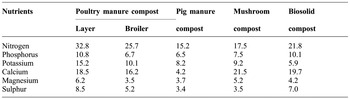
The major plant nutrients in poultry manure include N, P, K, calcium (Ca), magnesium (Mg) and sulphur (S) (Table 1). Some general observations on chemical composition of poultry manure and litter include (Edwards and Daniel, Reference EDWARDS and DANIEL1992; Sims and Wolf, Reference SIMS and WOLF1994; Toor et al., Reference TOOR, HUNGER, PEAK, SIMS J.T. and SPARKS2006; Guo and Song, Reference GUO and SONG2009): (i) the huge variability in nutrient concentration can be attributed to a number of factors including feed use efficiency, bedding material used, litter management practices etc; (ii) the total N and P contents of poultry manures and litters are among the highest of organic amendments including manures and compost; (iii) the total N and P contents are usually lower for poultry litter than for fresh manure, which is attributed to both the losses that occur following manure excretion and the dilution effect from combining manures with bedding materials that are low in nutrients; (iv) uric acid and ammonium are the significant N components of poultry manures and litters; (v) the use of poultry manure as a soil amendment for agricultural crops will provide appreciable quantities of essential major plant nutrients (N, P and K), secondary nutrients (Ca, Mg and S) and some of the trace elements (Cu, Zn and Mo); and (vi) application of poultry manure based on crop N requirements is likely to provide more of other nutrients (especially P) than is required by the crops.
Nutrient contents of manures and composts (g/kg dry weight basis).
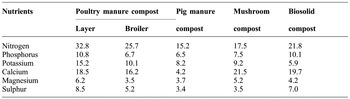
Among these nutrients, N and P cause some environmental concerns. Four forms of N are identified in poultry litter that include complex organic N, labile organic N, ammonium and nitrate (Sims and Wolf, Reference SIMS and WOLF1994; Sharpley and Smith, Reference SHARPLEY and SMITH1995; Diaz et al., Reference DIAZ, SAWYER and MALLARINO2008). Complex forms of organic N in poultry litter include constituents of feathers, spilt and undigested feed, and bedding materials. Labile organic N is largely uric acid and urea. Uric acid in the fresh manure is rapidly hydrolyzed to urea by the uricase enzyme, and the urea is subsequently hydrolyzed to ammonium by urease enzyme. Nitrate is formed when the ammonium ions are oxidised during aerobic composting.
Phosphorus in poultry litter is about two thirds present as solid-phase organic P and one third as inorganic P (Edwards and Daniel, Reference EDWARDS and DANIEL1992; Sharpley and Smith, Reference SHARPLEY and SMITH1995; Sharpley et al., Reference SHARPLEY, MCDOWELL and KLEINMAN2004). The amount of total P in poultry litter varies with the diet and bedding material, and ranges from 0.3 to 2.4% of dry matter. Fractionation studies have shown that a large proportion of P in poultry litter is in acid soluble fraction, indicating low bioavailability (Mahimairaja et al., Reference MAHIMAIRAJA, BOLAN and HEDLEY1995b). According to Turner and Leytem (Reference TURNER and LEYTEM2004), acid extractable P in raw broiler litter is dominated by inorganic (35 to 41%) and organic P forms (58 to 65%). Inorganic phosphate species in poultry manure include dibasic calcium phosphate, amorphous calcium phosphate and weakly bound water-soluble phosphates (Sato et al., Reference SATO, SOLOMON, HYLAND, KETTERINGS and LEHMANN2005), while organic P in poultry litter is largely in form of phytic acid salts (Turner and Leytem, Reference TURNER and LEYTEM2004).
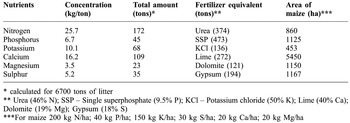
The amounts of major nutrients in the litter produced for a broiler unit with 100 000 birds and 6.5 flocks per annum are calculated based on the nutrient concentration values given in literature (Table 2). The fertilizer equivalents (in the form of common fertilizers) of the major nutrients in the poultry litter and the total maximum area of maize crop than can be grown using these individual nutrients are also given in the table. It is important to point out that both the total amount of nutrients in the poultry litter and the maximum area of maize crop than can be grown using these nutrients depend on the nutrient concentration of the litter. For example, if we use a N content of 35 kg/ton in the litter, the total amount of N in the poultry litter generated in this broiler unit will be around 234 500 kg (6700 x 35), which will be sufficient enough to grow a maximum of 1172 hectares of maize at the N application rate of 200 kg N/ha.
Nutrient concentration and the estimated total amount of nutrients in the poultry litter for poultry unit with 100, 000 birds.

* calculated for 6700 tons of litter
** Urea (46% N); SSP – Single superphosphate (9.5% P); KCl – Potassium chloride (50% K); Lime (40% Ca); Dolomite (19% Mg); Gypsum (18% S)
***For maize 200 kg N/ha; 40 kg P/ha; 150 kg K/ha; 30 kg S/ha; 20 kg Ca/ha; 20 kg Mg/ha
trace elements
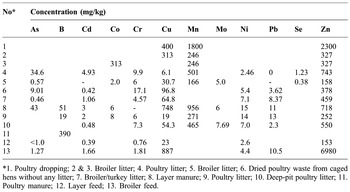
Trace elements in poultry litter are mostly derived directly from the birds’ diet and indirectly during manure collection. A number of trace elements are added to poultry feed not only as essential nutrients but also as supplement to improve health and feed efficiency (Table 3). Essential nutrient elements participate in a wide range of enzymatic processes involving many aspects of physiological functions and the intermediary metabolism of the organism. They act as catalyst or cofactor in enzyme systems with their role ranging from relatively weak, nonspecific ion effects (metal ion activated enzymes) to highly specific association (metallo-enzymes) in which the metal is firmly attached to the protein in a fixed number of atoms per molecule. These trace elements cannot be removed without the loss of activity and basically cannot be substituted by another element (NRC, Reference NRC1994).
Trace element concentrations in poultry manure by-products and poultry feed (Bolan et al., Reference BOLAN, ADRIANO and MAHIMAIRAJA2004).

*1. Poultry dropping; 2 & 3. Broiler litter; 4. Poultry litter; 5. Broiler litter; 6. Dried poultry waste from caged hens without any litter; 7. Broiler/turkey litter; 8. Layer manure; 9. Poultry litter; 10. Deep-pit poultry litter; 11. Poultry manure; 12. Layer feed; 13. Broiler feed.
Because of the intensity of production, a number of feed ingredients, including trace elements such as As, Co, Cu, Fe, I, Mn, Se, and Zn, are used in poultry industry to prevent deficiencies and diseases, improve weight gains and feed conversion, and increase egg production in the case of poultry (Miller et al., Reference MILLER, LEI and ULLREY1991; Tufft and Nockels, Reference TUFFT and NOCKELS1991; Sims and Wolf, Reference SIMS and WOLF1994; Moore et al., Reference MOORE, DANIEL, SHARPLEY and WOOD1995; Powers and Angel, Reference POWERS and ANGEL2008; Burel and Valat, Reference BUREL and VALAT2009). Efficient feed nutrient utilisation using growth promoters is a major means of reducing potential contaminants, such as N and P in poultry and swine manure (Jongbloed and Lenis, Reference JONGBLOED and LENIS1998). However, since some of the growth promoters contain metals, this practice is likely to result in elevated concentration of these elements in manure by-products (Nahm, Reference NAHM2002). For example, Cu compounds, such as copper sulphate (CuSO4) and copper hydroxide [(Cu(OH)2] have been (and remain so in some regions) commonly used growth promoters in swine and poultry production units (Poulsen, Reference POULSEN1998).
Since a major portion of the trace elements ingested is excreted in faeces and urine, the concentrations of trace elements in manure by-products depend primarily on their concentrations in the diet (Krishnamachari, Reference KRISHNAMACHARI1987; Miller et al., Reference MILLER, LEI and ULLREY1991; Van Ryssen, Reference VAN RYSSEN2008). Kunkle et al. (Reference KUNKLE, CARR, CARTER and BOSSARD1981) noticed that Cu concentrations in poultry manure by-products were linearly related to Cu added in the diet and were typically concentrated 3.25 times. Similarly, Mohanna and Nys (Reference MOHANNA and NYS1999) noticed that by reducing dietary Zn from 190 to 65 mg/kg in broiler poultry feed, the body retention of Zn was increased by 8 to 20% with a consequent decrease of Zn concentration in manure by 75%. Introducing highly viscous raw materials such as triticale, rye and barley at high levels in poultry diets has been shown to reduce Zn retention, thereby contributing to increased level of Zn in manure (Mohanna et al., Reference MOHANNA, CARRE and NYS1999).
Trace elements used in animal health remedies also eventually reach the manure. Addition of As to feed as an additive to control coccidiosis in poultry has resulted in a seven-fold increase in As level in the litter (Morrison, Reference MORRISON1969). Jackson and Bertsch (Reference JACKSON and BERTSCH2001) observed that more than 90% of As in poultry manure was in water-soluble form. They have identified six As species in poultry litter and litter amended soils: the original As chemicals, Roxarsone and p-arsanilic acid, used as the feed additive, and their four metabolites - arsenate, arsenite, dimethyl arsenic acid and monomethyl arsenic acid. The original As chemicals were identified as the major species indicating that they were mostly excreted chemically unaltered. Christen (Reference CHRISTEN2001) obtained a direct correlation between water-extractable As in soils and the amount of poultry litter applied, implicating this material as a major source of As input in soils. As indicated earlier it is important to point out that while As is used widely in the US but it is not a common coccidiostat in most other countries.
While the type of bedding material in broiler units may influence the litter dry matter and other chemical properties, it has little effect on the metal concentration of the resulting litter. Typically, for broilers approximately 30% of the litter is bedding materials, which has trace element concentration at background levels for plant material (Nicholson et al., Reference NICHOLSON, CHAMBERS, WILLIAMS and UNWIN1999). However, recycled paper treated with boric acid has received substantial attention as a bedding material in broiler houses (Worley et al,. 1999; Grimes et al., Reference GRIMES, SMITHI and WILLIAMS2002). With this bedding material, accumulation of boron (B) can occur since Wilkinson (Reference WILKINSON1997) observed that the B content in the manure by-products collected from these houses could reach as high as 290-390 mg/kg, compared to 8-15 mg/kg in conventional broiler units which use wood chips as bedding material.
The concentration of trace elements in manure can vary considerably depending on the age of animal, type of ration, housing type and waste management practice. Although such variation is normal, it makes quality assurance difficult, rendering it cumbersome to use manures as an alternative to chemical fertilizers (Eck and Stewart, Reference ECK and STEWART1995). The variation in chemical composition also causes uncertainties in predicting the reactions and bioavailability of manure-borne nutrients and metals in soils.
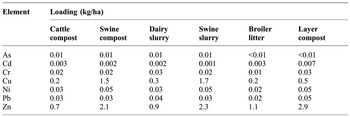
Manure addition is increasingly being recognised as a major source of both essential and non-essential element input to soils, with repeated applications having resulted in elevated concentrations of metals in soil (He et al., Reference HE, ENDALE, SCHOMBERG and JENKINS2009). Based on the dry matter content and elemental concentration, Nicholson et al. (Reference NICHOLSON, CHAMBERS, WILLIAMS and UNWIN1999) estimated the typical metal loadings from various manure sources at an application level of 250 kg/ha (Table 4). Significant quantities of Cu and Zn were added through swine (2.2 and 1.6 kg/ha, respectively), poultry (1.1 and 0.5 kg/ha) and cattle (1.0 and 0.3 kg/ha) manures. Since Cu and Zn are essential for plant growth, optimum level of poultry litter application is likely to meet the crop requirements of these nutrients. Application of cattle and poultry manures represented also an important source of Cd metal to arable soils (ca. 3-7 g/ha), although most of the Cd is typically added via atmospheric deposition and phosphate fertilizer use.
Estimated trace element loading (kg/ha) from ‘typical’ manure application at the 250 kg N/ha rate (Nicholson et al., Reference NICHOLSON, CHAMBERS, WILLIAMS and UNWIN1999).

Land application of manure by-products is traditionally based on N and/or P loading. Hence the level of trace element loading through manure application depends on the concentrations of both the trace element and the two major nutrients, N and P. Metals, such as Cu and Zn are strongly bound to organic matter and the land application of organic matter-rich poultry manure is likely to result in the accumulation of such metals in soils (Schomberg et al., Reference SCHOMBERG, ENDALE, JENKINS, SHARPE, FISHER, CABRERA and MCCRACKEN2009). Over-supplementation of Cu and Zn do not seem to have direct environmental effects but are potentially phytotoxic (Alva et al., Reference ALVA, HUANG and PARAMASIVAM2000; Novak et al., Reference NOVAK, SZOGI and WATTS2008). The environmental risk of heavy metals such as Cu and Zn is largely dependent upon the ability of the soil to adsorb these elements and the potential for leaching or loss by soil erosion (Gupta and Charles, Reference GUPTA and CHARLES1999).
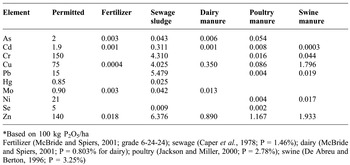
The United States Environmental Protection Agency (US-EPA) regulations set ceiling concentrations of each element that may not be exceeded if the sewage sludge is to be land applied (Table 5). The US-EPA standards do not recognize differences in soil type and plant species, and their ability to retain and precipitate these elements and bioaccumulation potential (Ritter, Reference RITTER2000). The typical loadings of trace elements in the USA through various sources are also given in Table 5. As expected, except for As, sewage sludge would add more metals than commercial fertilizer and manure products. Poultry manure would add the highest amount to As, manure products on the average, would add about 1.6-13, 50-107, and 212-4490 times more As, Zn and Cu, respectively than the commercial fertilizers, for a particular application rate of P. However, the poultry litters generated in most other countries are unlikely to add such high levels of As and Cu because these metals are not added in high concentration in the feed.
US-EPA Part 503 land application guidelines for trace elements loading (kg/ha) from commercial fertilizer, sewage sludge and from various manure sources.

*Based on 100 kg P2O5/ha
Fertilizer (McBride and Spiers, Reference MCBRIDE and SPIERS2001; grade 6-24-24); sewage (Caper et al., Reference CAPER, TANNER, FRIEDMAN and BOYER1978; P = 1.46%); dairy (McBride and Spiers, Reference MCBRIDE and SPIERS2001; P = 0.803% for dairy); poultry (Jackson and Miller, Reference JACKSON and MILLER2000; P = 2.78%); swine (De Abreu and Berton, Reference DE ABREU and BERTON1996; P = 3.25%)
It is important to recognise that trace element loadings through manure application may overestimate their actual net accumulation in soil, since a substantial portion of the trace elements in manure originates in crop uptake or soil contaminating the manure, and are therefore being recycled within a production system. Conversely metals in fertilizers, imported feedstuff or sewage sludge represent de novo additions to the soil (McBride and Spiers, Reference MCBRIDE and SPIERS2001). In general, the behaviour and effects of metals added to soil in the form of animal manure are essentially similar to that applied in the form of sewage sludge. It is therefore prudent to consider adopting similar guidelines for manure application as have been described for sewage sludge.
antibiotics, coccidiostats and pesticides
Antibiotics used in poultry production system include bacitracin, bambermycin, chlortetracycline, dihydrostreptomycin, erythromycin, lincomycin, neomycin, oxytetracycline, penicillin, spectinomycin, streptomycin, tetracycline and tylosin (Bhattacharya and Taylor, Reference BHATTACHARYA and TAYLOR1975). Similarly several chemicals are used to control internal protozoan parasites that cause coccidiosis (Sims and Wolf, Reference SIMS and WOLF1994). The excretion of the coccidiostats sulphaquinoxaline and decoquinate has been studied in caged broilers fed diets containing these two drugs (Hobson-Frohock and Johnson, Reference HOBSON-FROHOCK and JOHNSON2006). Storage of broiler excreta at 23°C for 9 days showed contrasting effects; the sulphaquinoxaline content decreased about 40% with respect to initial content in the manure whereas the decoquinate concentration remained unchanged. Both coccidiostats appeared relatively stable when samples of excreta were dried in 1.0 cm thick layers in an oven at 200°C.
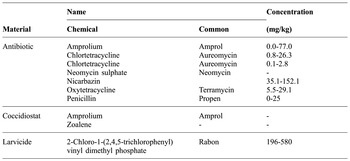
In layer operations, chemicals are often included in diets to control insects in the litter. Examples of some larvicides include rabon, zoalene, unistat, nicarbazin, furazolidone, and nitrofurazone and cyromazine (Bhattacharya and Taylor, Reference BHATTACHARYA and TAYLOR1975; Axtell, Reference AXTELL1986; Sims and Wolf, Reference SIMS and WOLF1994; OSU, Reference OSU2010). Some of these chemical residues have been measured in poultry manure wastes (Table 6). The concentration of chemical residue found in poultry litter is related to the amount, frequency, retention and stability of the chemical, and the composting of the litter (Nahm, Reference NAHM2005; Karci and Balcioglu, Reference KARCI and BALCIOGLU2009).
Commonly used antibiotics, coccidiostats and larvicides in poultry production (Sims and Wolf, Reference SIMS and WOLF1994).

The consequences of land application of poultry manure containing these chemical residues have not been adequately evaluated. Decreases in the rate of decomposition of the poultry litter and the crop responses to manure-borne nutrients resulting from the land application of antibiotics- and coccidiostats-containing manures have been reported (Sims, Reference SIMS1997; Nahm, Reference NAHM2005). It is important to point out that composting of organic wastes including poultry litter is likely to reduce the concentration of most organic pesticides in the manure product (Fogarty and Tuovinen, Reference FOGARTY and TUOVINEN1991; Kawata et al., Reference KAWATA, NISSATO, SHIOTA, HORI, ASADA and OIKAWA2006).
Although the use of antibiotics as growth promoters in poultry feed has been reduced in the U.S. (Singer and Hofacre, Reference SINGER and HOFACRE2006), the potential environmental risks of proliferation and transport of antibiotic-resistant bacteria via land application of poultry is less documented (Kelley et al., Reference KELLEY, PANCORBO, MERKA and BARNHART1998; Brooks et al., Reference BROOKS, ADELI, READ and MCLAUGHLIN2009) than human health impacts to antibiotic exposures (Powers and Angel, Reference POWERS and ANGEL2008).
endocrine-disrupting compounds
Endocrine-disrupting compounds (EDCs) are a group of compounds either synthesised or naturally present in the environment suspected to have adverse effects in animals and humans. These EDC include several natural hormones excreted by the animal, and include pesticides, herbicides, plant oestrogens, and other compounds that disrupt endocrine systems (Powers and Angel, Reference POWERS and ANGEL2008). The EDC affect organisms by interfering with the binding of hormones to their receptors or disrupting the endocrine system by mimicking natural hormones (Colborn et al., Reference COLBORN, VOM SAAL and SOTO1993).
Broilers can produce and excrete EDCs in the form of steroid hormones. Research has shown that broiler litter contains 17β-oestradiol, oestrone, oestriol, and testosterone that can persist in poultry litter in measurable concentrations (Hanselman et al., Reference HANSELMAN, GRAETZ and WILKIE2003; Jenkins et al., Reference JENKINS, ENDALE, SCHOMBERG and SHARPE2006). The impact of the discharge of these compounds on the environment is poorly understood. In the U.S., a series of studies on land application of poultry litter to meet the crop nitrogen requirements of Georgia Piedmont soils under conventional till and no-till management (Jenkins et al., Reference JENKINS, ENDALE, SCHOMBERG and SHARPE2006, Reference JENKINS, ENDALE, SCHOMBERG, HARTEL and CABRERA2009a,b), showed that the hormones 17β-estradiol and testosterone did not appear to impact their background levels in soil, surface runoff, and subsurface drainage. These results and other studies indicate that both oestradiol and testosterone might be mineralized once they are in contact with soil. However, other studies indicated that fractions of oestradiol and testosterone appeared to resist mineralisation (Filay-Moore et al., Reference FILAY-MOORE, HARTEL and CABRERA2000; Jenkins et al., Reference JENKINS, ENDALE, SCHOMBERG and SHARPE2006).
microbial load
Poultry manure contains a large and diverse population of viruses, bacteria, fungi and protozoa. Microbial concentrations in poultry litter can exceed 1010 cells/g (Acosta-Martinez and Harmel, Reference ACOSTA-MARTINEZ and HARMEL2006; Cook et al., Reference COOK, ROTHROCK, WARREN, SISTANI and MOORE2008; Rothrock et al., Reference ROTHROCK, JR., COOK, LOVANH, WARREN and SISTANI2008a), and gram positive bacteria (i.e. Actinomycetes, Clostridia/Eubacteria, Bacilli/Lactobacilli) account for nearly 90% of the microbial diversity (Lu et al., Reference LU, SANCHEZ, HOFRACE, MAURER, HARMON and LEE2003; Enticknap et al., Reference ENTICKNAP, NONOGAKI, PLACE and HILL2006; Lovanh et al., Reference LOVANH, COOK, ROTHROCK, MILES and SISTANI2007). While microbes perform a variety of different enzymatic and metabolic processes within the litter environment, two microbial groups of special interest to the poultry industry are nitrogen mineralizing microbes and pathogens.
Ammonia volatilisation results from the mineralisation of organic nitrogen in the poultry litter, namely uric acid and urea, and more than half of the nitrogen in poultry litter is lost as ammonia due to microbial activity (Brinson et al., Reference BRINSON, JR., CABRERA and TYSON1994; Moore et al., Reference MOORE, DANIEL, EDWARDS and MILLER1996). Culture-based work identified Bacillus spp. (Ritz et al., Reference RITZ, FAIRCHILD and LACY2004) and Arthrobacter spp. (Schefferle, Reference SCHEFFERLE1965; Kim and Patterson, Reference KIM and PATTERSON2003) as the dominant uric acid mineralising microbes in poultry litter. Based on DNA sequencing work, a single, previously unidentified, bacterial group dominated the urea mineralising bacterial clone libraries based on the urease enzyme (Rothrock et al., Reference ROTHROCK, JR., COOK, WARREN and SISTANI2008b). These specific microbial groups are present in sufficiently high concentrations (~1% of total microbial concentration; Cook et al., Reference COOK, ROTHROCK, WARREN, SISTANI and MOORE2008) to account for the high organic nitrogen mineralisation rates in untreated poultry (Gale and Gilmour, Reference GALE and GILMOUR1986; Moore et al., Reference MOORE, DANIEL, SHARPLEY and WOOD1995). Fungi, specifically Aspergillus spp., were recently shown to mineralise these predominant forms of organic nitrogen in poultry litter (Cook et al., Reference COOK, ROTHROCK, WARREN, SISTANI and MOORE2008), and this fungal activity must be taken into account.
Pathogens represent the second group of bacteria of importance to the poultry industry. Culture- and molecular-based work has shown that poultry litter is a reservoir for several zoonotic pathogens, including Escherichia coli, Salmonella spp., Campylobacter jejuni, Listeria monocytogenes, and Clostridium perfringens (Williams et al., Reference WILLIAMS, BARKER and SIMS1999; Terzich et al., Reference TERZICH, POPE, CHERRY and HOLLINGER2000; Line, Reference LINE2002; Bull et al., Reference BULL, ALLEN, DOMINGUE, JORGENSEN, FROST, URE, WHYTE, TINKER, CORRY, GILLARD-KING and HUMPHREY2006; Line and Bailey, Reference LINE and BAILEY2006; Rothrock et al., Reference ROTHROCK, JR., COOK, LOVANH, WARREN and SISTANI2008a). Contact between the birds and the litter represents a major route of contamination, with carcass contamination representing a dominant source of pathogen introduction into the meat processing plant (Rigby et al., Reference RIGBY, PETTIT, BAKER, BENTLY, SALOMONS and LIAR1980a; Rigby et al., Reference RIGBY, PETTIT, BAKER, BENTLY, SALOMONS and LIAR1980b; Izat et al., Reference IZAT, GARDNER and GOLAN1988; De Boer and Hahne, Reference DE BOER and HAHNE1990). Pathogen destruction may be required in some situations prior to land spreading, a potential major source of pathogen introduction into the environment (Millner, Reference MILLNER2009).
Uses of poultry litter
as a nutrient source
Poultry litter is often used as an organic nutrient source in forage, cereal and fibre crop production. The addition of poultry litter to tall fescue, orchard grass, bermuda grass has been shown to increase dry matter production (Sims and Wolf, Reference SIMS and WOLF1994; McGrath et al., Reference MCGRATH, MAGUIRE, TACY and KIKE2009). In some cases the amount of N applied was in excess of the amount recommended for forage production, resulting in groundwater and surface water contamination through leaching and surface runoff (Sharpley et al., 2007). Excessive application can cause undesirable effects on forage crops and animals consuming the forage (Mcginley et al., Reference MCGINLEY, COFFEY, HUMPHRY, SAUER and GOODWIN2003). During a seven year study in which over 18 tons/ha of broiler manure was applied annually to tall fescue used in a grazing study, Stuedemann et al. (Reference STUEDEMANN, WILKINSON, WILLLIAMS, CIORDIA, ERNST, JACKSON and JONES1975) noticed problems with grass tetany and fat necrosis in beef cattle.
Increases in corn response to poultry manure addition have been noticed in a number of studies. In most studies, highest corn yields were obtained with the highest rate of manure addition, but the efficiency of manure N recovery by the crop decreased markedly as N rate increased, resulting in N leaching. For example, Sims (Reference SIMS1987) obtained three year average efficiencies for N recovery of 50, 37, and 36%, respectively, for poultry manure application rates of 84, 168, and 252 kg potentially available N. The potentially available N from manure was calculated as 80% of (NH4-N + NO3-N) plus 60% of organic N (Bitzer and Sims, Reference BITZER and SIMS1988). Similar decreases in N recovery with increasing N rate were observed in the case of fertilizer N application. In some studies, excessive application of fertilizer N or poultry manure has been shown to decrease corn yield, which has been attributed to adverse growing conditions (‘salt injury’) resulting from high salt concentration in the soil (Sims and Wolf, Reference SIMS and WOLF1994).
Fertilizer studies with cotton in the U.S. showed that poultry litter is a valuable source of plant nutrients supplying N and metals Fe, Cu, Zn and Mn (Tewolde et al., Reference TEWOLDE, SISTANI and ROWE2005). When poultry litter was applied in bands, N nutrition was more effective than regular broadcast; it increased lint yield and improved cotton fibre quality (Tewolde et al., Reference TEWOLDE, ARMSTRONG, WAY, ROWE and SISTANI2009).
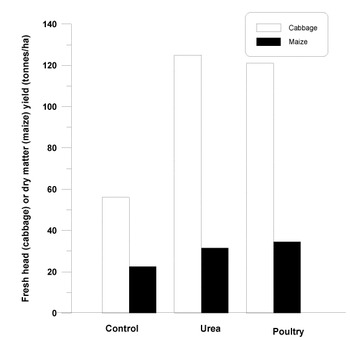
Field experiments were conducted at Massey University, New Zealand to examine the fertilizer value of freshly applied and residual poultry manure (Mahimairaja et al., Reference MAHIMAIRAJA, BOLAN and HEDLEY1995a). Fresh poultry manure, obtained from a layer unit, was mixed with elemental sulphur and phosphate rock and composted for five weeks under aerobic conditions. The value of poultry compost as an N source for cabbage was compared with urea. Both the compost and the urea were added at the start of the cabbage trial at a rate of 300 kg N/ha. After the harvest of the cabbage, maize was grown in the same plot to examine the residual value of the poultry manure. The harvestable fresh head yields of cabbage and the dry matter yield of fodder maize are presented in Figure 1. Although the highest yield of cabbage was obtained with the application of urea in combination with elemental sulphur and phosphate rock, the yield was not significantly different from the yield obtained by the poultry compost. The N use efficiency (kg fresh head yield per kg N applied) was slightly higher for the urea treatment than for the poultry compost (195 vs. 139). The apparent recovery of applied N was higher with the urea treatment (58.6%) than with the poultry compost (41.7%). There was no difference in maize yield between the urea and the poultry manure compost treatments. This suggests that poultry manure composts have a greater residual value than urea.
Effect of urea and poultry manure on harvestable yield of cabbage and dry matter yield of maize (Mahimairaja et al., Reference MAHIMAIRAJA, BOLAN and HEDLEY1995a).

as a soil amendment
Continuous cultivation of arable soils results in the deterioration of soil structure leading to reduced crop yield. For example, in the Manawatu region of New Zealand, continuous cultivation of maize has resulted in the deterioration of the physical conditions of the soils. A plant growth experiment was conducted in which the effects of poultry manure on the physical fertility of the cultivated soil and the growth of maize crop were examined. A soil that has undergone continuous cultivation of maize for 34 years and a pasture soil were used in the study. Poultry manure was compared with urea at an application level of 300 kg N/ha (Bolan et al., Reference BOLAN, MAHIMAIRAJA and HEDLEY1992).
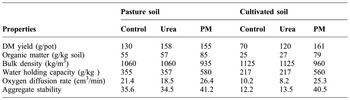
The addition of urea and poultry manure increased the dry matter yields of the maize crop in both cultivated and the pasture soils (Table 7). In the pasture soil, there was no significant difference in dry matter yields between the poultry manure and the urea treatments. However, in the case of the cultivated soil, poultry manure achieved greater yields than the urea treatment. Addition of poultry manure achieved similar dry matter yields in the pasture and the cultivated soils. The results indicated that improving the chemical fertility status of the cultivated soil alone through chemical fertilizer input is not enough to achieve the potential maximum yield of maize crop in these soils.
Effect of urea and poultry manure (PM) addition on dry matter yield of maize and soil properties.

The soil data (Table 7) indicated that the addition of poultry manure decreased the bulk density, increased the organic matter content, water holding capacity, oxygen diffusion rate and the aggregate stability of the soils. The effect of poultry manure on these physical properties was more pronounced in the cultivated soil than the pasture soil. These results indicate that the addition of poultry manure improved the physical fertility of the cultivated soil leading to increased maize growth. Compost products, including poultry litter, are used commonly as a mulching material for agricultural and horticultural crops to conserve soil moisture and to protect the surface feeding roots from drying during the summer periods (Eneji et al., Reference ENEJI, INANAGA, LI, AN, LI, DUAN and LI2008; Agbede and Ojeniyi, Reference AGBEDE and OJENIYI2009). Similarly the application of poultry litter has been shown to improve the biological fertility of mine tailings. Organic manures, such as poultry litter, are increasing being used in the rehabilitation of disturbed land resulting from mining and other industrial activities (Franzluebbers and Doraiswamy, Reference FRANZLUEBBERS and DORAISWAMY2007).
as an animal feed
Poultry manure, either on its own or when mixed with feed grains, has been found to be a valuable feed for cattle and fish. Ruminants are able to utilise the urea nitrogen (uric acid) in poultry manure (Smith and Fries, Reference SMITH and FRIES1973). However, the presence of foreign materials, such as plastic and glass, and feathers affects the digestibility of poultry waste and hence it is important to remove these from the litter before using it as a feed. It is also important to maintain low ash content. When large quantities of soil are removed with the litter, the ash content increased dramatically. It is recommended that poultry litter with ash contents exceeding 28% should not be fed to cattle (Williams et al., Reference WILLIAMS, BARKER and SIMS1999).
From a hygiene perspective, unprocessed poultry waste contains potential pathogenic microorganisms such as Clostridium, Salmonella and Enterobacter spp. Hence proper processing to reduce the number of these microorganisms or render the waste free of pathogens is required (McCaskey and Anthony, Reference MCCASKEY and ANTHONY1979; Kawata et al., Reference KAWATA, NISSATO, SHIOTA, HORI, ASADA and OIKAWA2006). In addition, as noted above, feed additives such as antibiotics, arsenicals, and coccidiostats are added in poultry diet, which can be excreted as waste by-products. Furthermore, some of the fungal species that are indigenous to the manure or litter can result in the production of mycotoxins. Pathogenic microorganisms can be destroyed by chemical, fermentation, ensilation or heat processing (McCaskey and Martin, 1988; Cook et al., Reference COOK, ROTHROCK, WARREN, SISTANI and MOORE2008).
Although disease problems have not been reported from feeding poultry manures to farm animals under acceptable conditions but Cu toxicity has been found to be a problem, especially in sheep. When an excess of Cu is added as a growth promoter to poultry diets, it is excreted in high concentration in the manure since Cu is poorly absorbed in the bird's digestive system. Sheep are less tolerant than other livestock species to high dietary levels of Cu when fed broiler litter (Fontenot and Webb, 1975; Sharma et al., Reference SHARMA, JOSHI and SAXEN2005).
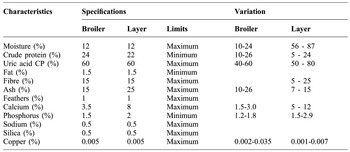
Processed chicken manure and litter have been used as a feed ingredient for almost 40 years in the U.S. These contain large amounts of protein, fibre, and minerals, and have been deliberately mixed into ruminant feed for these nutrients. Normally, this animal waste is used by small farmers and owners of beef and dairy herds as a winter supplement for cows and weaned calves. While the practice of feeding poultry manure to animals seems unpleasant, the use of this product is safe as long as it meets certain specifications listed in Table 8. For, example, the Association of American Feed Control Officials (AAFCO) has established ‘Standard Names and Definitions’ for three processed poultry waste products used as an animal feed as follows (FDA, Reference FDA2009):
• Dried Poultry Waste: a processed animal waste product composed primarily of faeces from commercial poultry, which has been thermally dehydrated to moisture content not in excess of 15%. It must contain not less than 18.0% crude protein, and not more than 15% crude fibre, 30% ash, and 1% feathers.
• Dried Poultry Waste-non protein nitrogen (NPN) Extracted: a processed animal waste product composed primarily of faeces from commercial poultry which has been processed to remove part or all of the equivalent crude protein and non protein nitrogen (NPN) as urea and/or uric acid, and which has been thermally dehydrated to a moisture content not in excess of 15%. It must contain not less than 11% crude protein, and not more than 15% crude fibre, 30% ash, and 1% feathers.
• Dried Poultry Litter: a processed animal waste product composed of a processed combination of faeces from commercial poultry together with litter that was present in the floor production of poultry, which has been artificially dehydrated to a moisture content not in excess of 15%. It must contain not less than 18% crude protein, and not more than 25% crude fibre, 20% ash, and 4% feathers.
Specifications for using poultry manure as an animal feed and the variation in some of the characteristics.

The AAFCO specifications require that processed animal waste products do not contain extraneous materials such as metal, glass, nails or other harmful matter. They must be free of pathogenic organisms, pesticide residues, parasites, or drug residues, which could be harmful to animals or could result in residues in human food products or by-products of animals at levels in excess of those allowed by State or Federal statute or regulation.
If a product contains drug residues, then the label must contain the following statement in bold face type: ‘Warning: this product contains drug residues. Do not use within 15 days of slaughter and do not use 15 days prior to or during the food production period of dairy animals and laying hens.’ If the product contains 25 mg/kg or greater of Cu, the following statement in bold face type is required: ‘Warning: contains high levels of copper: do not feed to sheep.’ According to AAFCO using adequately processed poultry waste in animal feed may not be aesthetically pleasing but it is safe, nutritionally valid, and environmentally sound.
Although poultry litter has been found to be more valuable as a feedstuff than as a fertiliser, the use of poultry waste as a feed ingredient is becoming a less common practice within the livestock industry. The public perception of the concept of coprophagy (animal consumption of faecal material) contributes to the limited use of this practice as a major means of recycling poultry wastes. It is also likely that concerns about infection by enterohemorrhagic strains of E. coli, and the perception of transmission of neurodegenerative disease such as scrapie, Creutzfedt-Jacob disease (CJD), and bovine spongiform encephalopathy (BSE) will naturally discourage the practice of feeding farm animals with any waste derived from animal-based industries (Williams et al., Reference WILLIAMS, BARKER and SIMS1999).
as a fuel source
Poultry litter can be burnt directly as a fuel source to produce heat energy. One of the problems with using poultry litter as a fuel source is its relatively high moisture content. The moisture content should be less than 15% in order to achieve the maximum heat energy during burning. Alternatively, the anaerobic digestion of poultry waste yields biogas, a combustible gas composed of approximately 60% methane, 38% carbon dioxide, and mixture of water vapour, ammonia and hydrogen sulphide. Biogas (also known as ‘producer’ gas) may be used as an energy source for burning as heat or as fuel for internal combustion engines to generate electricity. Both the burnt ash material and the post-anerobic digested solids may be used as fertiliser and animal feed supplement (Liedl et al., Reference LIEDL, BOMBARDIERE and CHATFIELD2006; Blake et al., Reference BLAKE, HESS and BOCK2007). Few producers, however, utilise anaerobic digestion as a method of poultry waste treatment because of unfavourable economics, low biogas yield for litter-based systems and technical operational difficulties (Williams et al., Reference WILLIAMS, BARKER and SIMS1999).
Poultry litter combustion has received major attention as a method to produce heat and electricity at large centralised facilities (Kelleher et al., Reference KELLEHER, LEAHY, HENIHAN, O'DWYER, SUTTON and LEAHY2002; Turnell et al., Reference TURNELL, FAULKNER and HINCH2007; Fibrowatt, Reference FIBROWATT2008). In the search to make electric power from renewable ‘green’ sources, a number of states in the US have turned to thermal conversion of biomass. For example, Minnesota produces over two million tons of turkey and broiler waste — the fuel for ‘poultry power.’ Now some Minnesota turkey farmers are working with a British company (Fibrowatt) that built a manure-fired power plant in central Minnesota in 2007 (Fibrowatt, Reference FIBROWATT2008). The plant burns nearly half a million tons of poultry litter every year, generating 50 Megawatts of electricity that will be sufficient enough to supply 40000 households.
Similarly, there is a proposal to build a poultry litter-based power plant in Western Australia. On the basis of the Fibrowatt experience, it is possible to produce approximately 0.700 Megawatts of electricity by burning around 7000 tons of poultry litter produced in the proposed broiler plant. This will be sufficient enough to supply around 900 households. However, a limitation to the adoption of this technology is the high capital investment and public concern for potential emission of particulate matter, nitrogen oxides, carbon monoxide, and sulphur dioxide from large centralised combustion facilities burning poultry litter (Turnell et al., Reference TURNELL, FAULKNER and HINCH2007). Nevertheless, it is possible to utilise the litter as a fuel source to produce hot water, which will be useful for a poultry processing unit.
Improving the value of poultry litter
Fresh poultry waste is difficult to handle due to its high moisture content and odour. With the introduction of barn system (confined production), it is now possible to produce relatively dry manure. Another important problem of poultry waste is the loss of N during the storage, drying, handling, and subsequent land application (Mahimairaja et al., Reference MAHIMAIRAJA, BOLAN, HEDLEY and MACGREGOR1994; Adeli et al., Reference ADELI, TEWOLDE, SISTANI and ROWE2009). The loss of N occurs mainly through ammonia volatilisation and denitrification during handling and through nitrate leaching after application to land. Gaseous losses of N are of particular concern because they not only reduce the fertiliser value of poultry waste, but also form atmospheric pollutants, and deteriorate the environmental health. Excessive application of fresh poultry manure also results in the accumulation of ammonia in soils causing injury to seedlings and roots. Thus, poor management of this valuable resource could be damaging to crops and also leads to pollution of surface and groundwaters.
Appropriate technologies, which are environmentally viable and economically feasible, are needed for efficient management of poultry waste. This can be achieved through proper composting of the manure and the appropriate feed management practices.
composting
Manure by-products undergo a number of treatment processes that include in-situ biological pond treatment, composting, and specific chemical treatment. Aerobic composting is most commonly practiced to overcome some of the problems associated with the handling and disposal of poultry manure. It reduces the bulkiness of the waste and yields a stabilized product suitable for handling and land application. Composting eliminates animal and human pathogens and could reduce the risks of polluting groundwater. Development of appropriate methods of composting poultry waste with suitable amendments could greatly reduce the nutrient losses and at the same time helps to minimise environmental pollution.
Use of amendments, such as straw, peat, woodchip, paperwaste, elemental sulphur and zeolite helps to reduce the N losses during composting of poultry waste. Aerobic composting with cereal straw, which contains readily decomposable carbon, is most effective in reducing the N loss (Preusch et al., Reference PREUSCH, ADLER, SIKORA and TWORKOSKI2002). Nutrient-rich ecofriendly compost can be prepared by composting poultry waste with phosphate rock and elemental sulphur. This can be used as a valuable nutrient source especially for organic farming practises. Addition of small amount of elemental sulphur reduces the pH of the compost, thereby reducing the volatilisation losses of ammonia (Mahimairaja et al., Reference MAHIMAIRAJA, BOLAN and HEDLEY1993). It also enhances the dissolution of rock phosphate and enriches the compost with P and S nutrients (Mahimairaja et al., Reference MAHIMAIRAJA, BOLAN and HEDLEY1995b). Use of alum and zeolite to reduce ammonia volatilisation as well as P solubility of poultry litter has provided encouraging results (Kithome et al., Reference KITHOME, PAUL and BOMKE1999; Delaune et al., Reference DELAUNE, MOORE, DANIEL and LEMUNYON2004; Guo and Song, Reference GUO and SONG2009). The potential to use such amendments not only addresses environmental concerns but also improves the housing environments for the birds and workers by reducing ammonia concentrations, as well as improving the N:P ratio of the manure for crop utilisation. Hence it forms an economically viable option for poultry growers (Moore et al., Reference MOORE, DANIEL, EDWARDS and MILLER1996; Sharpley et al.. 2007).
Although composting is basically aimed at achieving a stable manure product, it may also affect both the total content and the speciation of metals in manure by-products. For example, Sistani et al. (Reference SISTANI, ROWE, MILES and MAY2001) observed that composting decreased Zn content in poultry manure. Moore et al. (Reference MOORE, DANIEL, GILMOUR, SHREVE, EDWARDS and WOOD1998) observed that treatment of poultry manure with alum [Al2(SO4)3] resulted in the immobilization of Cd, Cu and Zn, thereby decreasing their concentration in soil solution.
feed management
Improving feed efficiency and health of animals that minimises the incidence of disease outbreaks is an important consideration in intensive, confined animal production systems (Nahm, Reference NAHM2002). Efficient nutrient utilisation using growth promoters not only reduces the cost of production but also provides a major means of reducing potential contaminants, such as N and P in poultry manure. However, since some of the growth promoters contain metals, this practice is likely to result in elevated concentration of these elements in manure by-products. Precision formulation and feeding of diets to meet but not to exceed the nutritional requirements will likely be a viable component of waste management strategies.
Nutrient excretion in poultry manure results mainly from inefficiencies associated with digestion and metabolism. Addition of feed supplements and modifying feeding programme to improve nutrient efficiency can result in significant decreases in the N, P and odour of poultry manures (Nahm, Reference NAHM2002). Examples of these methods include (Selle and Ravindran, Reference SELLE and RAVINDRAN2007; Silversides and Hruby, Reference SILVERSIDES and HRUBY2009): (i) addition of synthetic amino acids and reducing protein contents in the feed have resulted in a decrease in manure N contents by 10 to 27% in the broiler units; (ii) enzyme supplementation has resulted in a 12 to 15% reduction in the dry weight of broiler manure; (iii) phytase supplementation has resulted in the reduction of P in poultry manure by 25 to 60%; (vi) formulation of diet matching the requirements has reduced the N content in manure by 10 to 15%; (vi) phase feeding reduced N and P in the manure by 10-33%; (v) use of highly digestible raw materials in feed has reduced the N and P excretion by 5%; (vi) certain feed manufacturing techniques (reducing particle size and pelletising) can significantly increase dry matter digestibility, leading to reduced manure production; (vii) use of alternative coccidiostats, such as ‘ionophores’ (instead of arsenical compounds) can achieve drastic reduction in As level in poultry litter; and (viii) similarly the use of non-metal containing growth promoters helps to reduce the concentration of metals, metals such as Cu and Zn in poultry litter.
Best management practices for the beneficial use of poultry litter
There is an urgent need to formulate strict regulations governing the safe disposal and handling of poultry waste in order to minimise the environmental impact. Management of poultry waste must be integrated into a broader nutrient management programme in agriculture. Guidelines on specific land application, optimal loading rates, and permissible limits of nutrients, heavy metals, antibiotics, and coccidiostats in poultry waste, are needed. Research-based information on the transformation and plant availability of nutrients and heavy metals in poultry wastes is needed for efficient management of this resource as a nutrient resource and soil amendment. Recycling of poultry waste in fish and cattle feed and in power (electricity) generation should also be given consideration for efficient and profitable management of poultry waste.
The components of an effective management programme for the agricultural use of poultry litter include (RIRDC, Reference RIRDC2009): (i) site selection; (ii) production and collection; (iii) storage, handling and treatment; and (iv) transport and land application. Site specific optimisation of each of these components is essential to maximise the beneficial use of litter resources, thereby avoiding the pollution of the nearby environment (Sims and Wolf, Reference SIMS and WOLF1994).
Management programmes for poultry litter must reflect both the potential value of the litter as a resource and a realistic appraisal of the negative effects litter constituents may have on the environment. High transportation costs and lack of distribution infrastructure are some of the reasons why a comprehensive approach to poultry litter management be developed to take advantage of all beneficial end uses for the diverse waste products of this industry.
site selection
• Site location for a poultry unit should be based on the facilities for production, storage and treatment of wastes and the suitability of the soils on the site for land application of litter.
• Proximity to streams, ponds, and drainage pathways and an understanding of groundwater hydrology are taken into consideration.
collection and storage
• A waste management plan that aims to reduce the volume of waste production will facilitate the ease and efficiency of the operations of the plan.
• Litter collection should be closely linked to storage capacity so that these resources are protected from unfavourable weather conditions and maintained in good physical conditions enabling easy application.
• The unfavourable economics of litter transportation often result in limited distribution of nutrients throughout the farm, causing a build up of some nutrients (e.g., P) to excessive levels in the field at short distances from the site of waste generation.
treatment
Composting is the most common treatment aimed at achieving a stable organic manure product. It also achieves partial or complete elimination of microbial pathogens.
• Compost areas need to have an impermeable base to avoid leaching and possible groundwater contamination.
• The composting site should be in an elevated area or a bunding may be required in order to prevent extraneous runoff entering the pile and becoming contaminated.
• The compost pile should be protected from rain in order to overcome leaching of nutrients and contaminants, and from wind to overcome the problems associated with odorous gases.
• Nutrient rich runoff from the compost piles should be collected in a sump or dam and may be reused.
• Compost pile need to be carefully managed to avoid dust and odour emission. If the compost is too dry the process will be slowed and excessive dust may be generated. If the compost becomes too wet, it may become anaerobic and result in excessive odour emissions. Optimum moisture content is around 50 - 55% (wet basis).
land application
• Timing of land application of poultry litter should be aimed at maximising crop recovery of nutrients and closely related to production patterns and storage capacities.
• Poultry compost should be added during the active growth of the crop or immediately before planting. For example, application of poultry manure during fall and winter, when crops have not been able to utilise nutrients is normally not encouraged.
• Application should be based on balanced nutrient requirements of the crop.
• Litter should be incorporated into soil; this will reduce the gaseous losses of N and the runoff losses of nutrients and contaminants in litter.
environmental monitoring
Environmental monitoring is an important component of best management practices to achieve both sustainable production and environmental protection when poultry litter is applied to land. Environmental monitoring includes regular analysis of manure samples, maintaining accurate records of all activities in the farm, and regular soil and drainage water sampling and their analysis for nutrients and other contaminants.
Conclusions
Poultry litter is a good organic source of nutrients for raising crops, such as maize. However, the loss of N through ammonia volatilisation is a major issue during handling and land application of poultry litter. These losses can be minimized through proper composting process in the presence of organic amendments, such as cereal straw.
The success of utilisation of poultry litter as a valuable nutrient source and soil conditioner depends on developing technologies to produce uniform value-added products, and design of equipment for uniform waste product field application. Response of pasture, arable and horticultural crops, and silviculture species to poultry waste applications and their beneficial effects on soil physical and chemical properties should be examined in order to maximise the utilisation of poultry litter. The bioavailability of nutrient and heavy metals and their movement into surface water and groundwater as influenced by the loading rate of poultry litters need to be studied further, and site specific best management practices for safe and beneficial utilisation of poultry manure for sustainable production with minimum impact on environment should be developed. This will allow technologies that provide alternative to land application of poultry wastes to be developed.
Acknowledgements
The senior author thanks CRC CARE for providing funding (No 2-3-09-07/08) to undertake research on landfill site remediation as part of the review was derived from this project.