Introduction
There has been a recent global paradigm shift from interest in just efficiency and cost of poultry to food safety and public security. Concerns have been raised regarding the excessive use of in-feed antimicrobials and the resulting limitations and bans have seen an increase in prevalence of enteric and systemic diseases and wet litter problems (Timbermont et al., Reference TIMBERMONT, HAESEBROUCK, DUCATELLE and VAN IMMERSEEL2011; M'Sadeq et al., Reference M'SADEQ, WU, SWICK and CHOCT2015). The form and digestibility of the feed dictates gastrointestinal microbial status, while the ability of bacteria to cause disease is partially dictated by dietary predisposing factors that create a favourable environment for bacterial proliferation. The use of dietary structural components in poultry diets can alleviate enteric disease, by both directly modulating gut microflora and influencing gastrointestinal tract development. An example of this is enhanced gizzard development due to increased dietary physical structure (Choct, Reference CHOCT2009); a large and well-developed gizzard is able to grind feed particles more thoroughly, promoting enzyme secretions (Svihus, Reference SVIHUS2011), thus increasing nutrient digestibility and proliferation of beneficial gut microbiota (Amerah et al., Reference AMERAH, RAVINDRAN, LENTLE and THOMAS2008; Svihus, Reference SVIHUS2011; Mateos et al., Reference MATEOS, JIMENEZ-MORENO, SERRANO and LAZARO2012; Xu et al., Reference XU, STARK, FERKET, WILLIAMS, AUTTAWONG and BRAKE2015a; Kheravii et al., Reference KHERAVII, SWICK, CHOCT and WU2018a). Previous reviews have elucidated how the dietary structural components improve gizzard development and function as well as the enzymatic activities in digestive system (Svihus, Reference SVIHUS2011; Mateos et al., Reference MATEOS, JIMENEZ-MORENO, SERRANO and LAZARO2012). The current review will focus on the impact of dietary structural components on gut microflora and health, nutrient utilisation and litter quality and performance in broilers, albeit a brief revisit of the improved gizzard development and function and digestive enzymatic activities will be conducted.
Effect of dietary ingredient particle size and fibre on gizzard development, digestive enzymes and nutrient digestibility
It has been well-documented that the gastrointestinal tract (GIT), particularly the gizzard, adapts rapidly in response to changes in diet composition. Numerous studies have shown a rapid enlargement in size of the gizzard when structural components such as oat hulls, wood shavings, sugarcane bagasse (fibrous by-product) and whole grain or large grain particles are included in the diet (Svihus, Reference SVIHUS2011; Jiménez-Moreno et al., Reference JIMÉNEZ-MORENO, FRIKHA, DE COCA-SINOVA, LÁZARO and MATEOS2013b; Kheravii et al., Reference KHERAVII, SWICK, CHOCT and WU2017c; Biggs and Parsons, Reference BIGGS and PARSONS2009). The addition of structural components to the diet may double the original size of the gizzard (Sacranie, Reference SACRANIE2010). For the effect of dietary structural components on gizzard development and activity, readers are referred to Svihus (Reference SVIHUS2011).
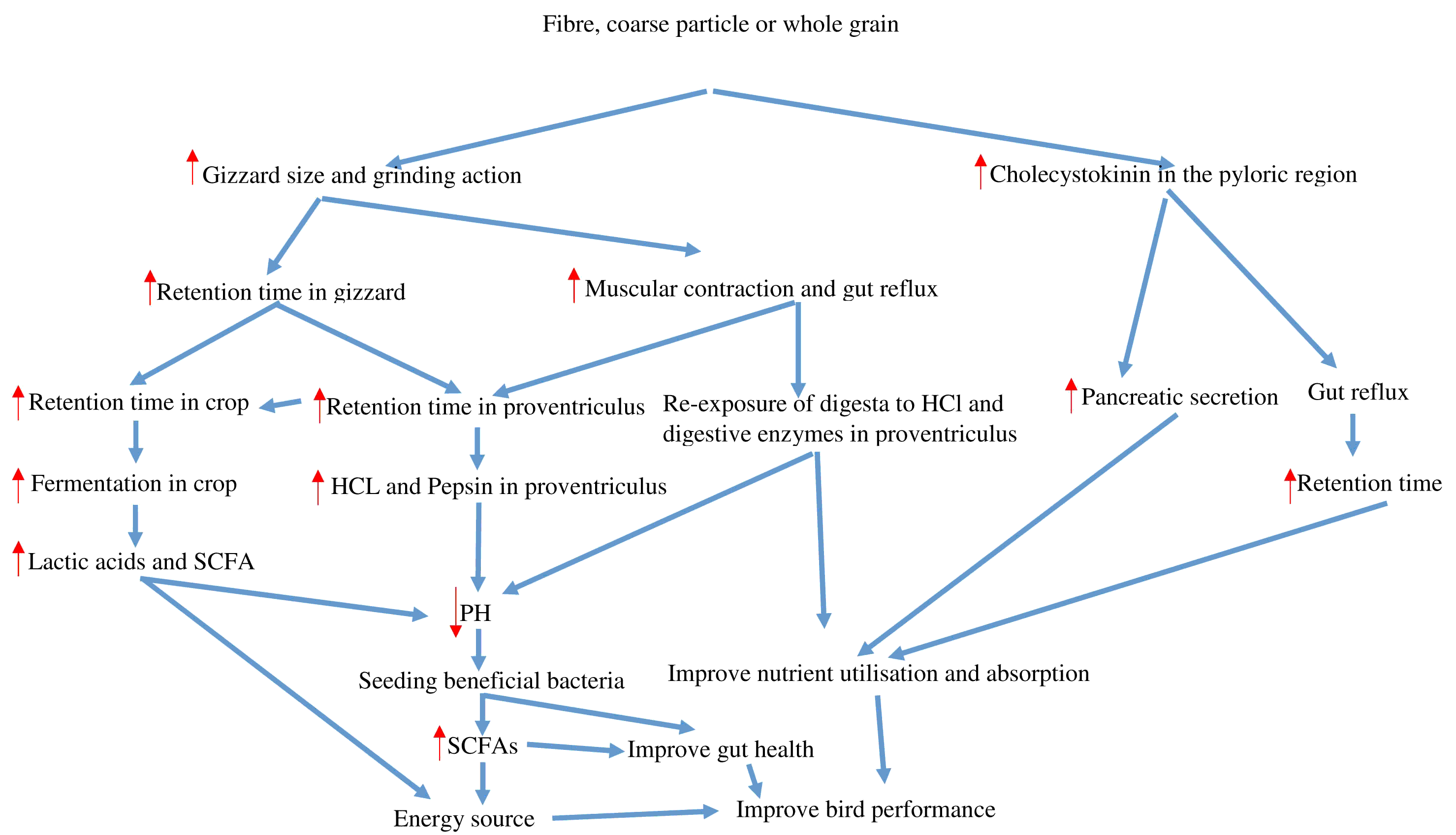
Several reports have shown enhanced nutrient digestibility in chicken fed diets with structural components such as fibre, whole or coarsely ground grains (Hetland and Svihus, Reference HETLAND and SVIHUS2007; Amerah et al., Reference AMERAH, RAVINDRAN, LENTLE and THOMAS2007b; Jiménez-Moreno et al., Reference JIMÉNEZ-MORENO, FRIKHA, DE COCA-SINOVA, GARCÍA and MATEOS2013a; Xu et al., Reference XU, LIN, STARK, FERKET, WILLIAMS and BRAKE2017; Kheravii et al., Reference KHERAVII, SWICK, CHOCT and WU2017b; Reference KHERAVII, SWICK, CHOCT and WU2018a; Kimiaeitalab et al., Reference KIMIAEITALAB, CÁMARA, GOUDARZI, JIMÉNEZ-MORENO and MATEOS2017). The positive effects of large particle size or fibre on nutrient utilisation have been elucidated by mechanisms illustrated in Figure 1. Svihus (Reference SVIHUS2011) stated that coarse particle size and fibre may enhance secretion and efficacy of digestive enzymes. The presence of structural components, coarse particles and fibre, in chicken diets increases gizzard activity and retention time in upper part of GIT. This increases bacterial fermentation in crop (Classen et al., Reference CLASSEN, APAJALAHTI, SVIHUS and CHOCT2016) and reduces gut pH (Naderinejad et al., Reference NADERINEJAD, ZAEFARIAN, ABDOLLAHI, HASSANABADI, KERMANSHAHI and RAVINDRAN2016) which improves pepsin activity to increase protein digestibility (Afsharmanesh and Pourreza, Reference AFSHARMANESH and POURREZA2005). Low pH and increased secretion of HCl in the proventriculus as a result of high fibre and large particles in diets may lead to an antimicrobial effect on some pathogenic bacteria entering the distal part of digestive tract (Engberg et al., Reference ENGBERG, HEDEMANN and JENSEN2002) and to increased colonisation of certain beneficial bacteria (Langhout, Reference LANGHOUT2000; Mroz et al., Reference MROZ, KOOPMANS, BANNINK, PARTANEN, KRASUCKI, ØVERLAND and RADCLIFFE2006). The activity of the digestive enzymes may be affected by the intestinal microbiota. When the activity of the alkaline phosphatase enzyme in germ-free chickens and conventionally reared chickens is compared, the latter display greater enzymatic activity. Fibre can stimulate the growth of some species of bacteria such as Bifidobacterium and Lactobacillus spp., which can increase the enzymatic activity of proteases, trypsin, and lipases (Palmer and Rolls, Reference PALMER and ROLLS1983). Furthermore, it has been reported that lower pH, as a result of higher SCFAs produced by beneficial bacteria in the fore gut, may enhance pepsin activity (Gabriel et al., Reference GABRIEL, MALLET and LECONTE2003), which leads to increased denaturation and hydrolysis of dietary proteins.
A well-developed and stronger gizzard potentially results in more frequent reverse peristalsis contractions (Svihus, Reference SVIHUS2011; Reference SVIHUS2014) that makes repeated reflux of digesta back into the proventriculus to re-expose digesta to HCl and pepsin. Kheravii et al. (Reference KHERAVII, SWICK, CHOCT and WU2018b) found that a combination of coarsely ground corn and 2% sugarcane bagasse upregulated mRNA expression of both pepsinogen A and C in broilers. This could be the reason for the improvement of nutrient digestibility by dietary structural components. Feed structural components increase the digesta retention time (Svihus, Reference SVIHUS2011) which may improve nutrient digestion and absorption by increasing the time of contact with enzymes and absorptive cells in the small intestine (Washburn, Reference WASHBURN1991).
It has been suggested that coarse particles and fibre may enhance cholecystokinin (CCK) (Svihus et al., Reference SVIHUS, JUVIK, HETLAND and KROGDAHL2004a; Perry, Reference PERRY2006; Svihus, Reference SVIHUS2011) which acts via the vagus nerve to stimulate pancreatic enzyme secretions (Li and Owyang, Reference LI and OWYANG1993). However, Murai et al. (Reference MURAI, SATOH, OKUMURA and FURUSE2000) reported that CCK at physiological concentrations had no influence on pancreatic secretion from isolated pancreatic acini in chickens and plays a more important role as a pancreas-stimulating hormone in mammals than in birds. Kheravii et al. (Reference KHERAVII, SWICK, CHOCT and WU2017e) reported that the sugarcane bagasse, but not coarsely ground corn, upregulated mRNA expression of pancreatic amylase and chymotrypsin in broilers, while CCK and its receptor were not influenced by dietary structural components. Chandra and Liddle (Reference CHANDRA and LIDDLE2009) reported that the regulation of pancreatic secretion is controlled by numerous hormones such as melatonin, glucagon and regulatory peptides including C-natriuretic peptide, and neurotransmitters such as serotonin, vasoactive intestinal peptide (VIP) and gastrin releasing peptide (GIP). Hence, the mechanism underlying the higher secretion of pancreatic enzymes by inclusion of fibre in chicken diets is not well understood, and requires further investigation.
Effect of dietary ingredient particle size and fibre on microflora
The maintenance of gut health and stability of the intestinal tract ecosystem is a complex phenomenon, relying on a delicate balance between the dietary components, the commensal microflora and the tract mucosa (Montagne et al., Reference MONTAGNE, PLUSKE and HAMPSON2003). The gastrointestinal tract contains a dense and diverse microbial community. Reduced reliance on in-feed antibiotics has resulted in heightened focus on maintaining a balance between beneficial bacteria, such as Lactobacillus, Enterococcus, Bifidobacterium spp., and potentially pathogenic species, such as Clostridium perfringens, Escherichia coli and Salmonella spp. (Matin et al., Reference MATIN, SAKI, ALIARABI, SHADMANI and ABYANE2012) in the gut. Diet is a key mediator of the composition and metabolic function of gastrointestinal microbiota (Sonnenburg and Bäckhed, Reference SONNENBURG and BÄCKHED2016). Fibre is particularly influential on fermentation, and provides an energy source for intestinal microbes. It may reduce gastrointestinal pH, through increasing fermentation in the fore gut and/or enhancing secretion of HCl in proventriculs due to higher grinding activity of gizzard, making environmental conditions unfavourable to pathogenic bacteria but favourable to the colonisation of beneficial bacteria (Figure 1) (Svihus, Reference SVIHUS2011), For example, Bogusławska-Tryk et al. (Reference BOGUSŁAWSKA-TRYK, SZYMECZKO, PIOTROWSKA, BURLIKOWSKA and ŚLIŻEWSKA2015) reported that supplementing broiler diets with dietary lignocellulose resulted in increased presence of Lactobacillus spp. in the ileum and Bifidobacterium spp. in the ileum and caeca, and decreased presence of ileal and caecal Escherichia coli and Clostridium spp. in birds fed diets supplemented with dietary lignocellulose.
Possible mechanisms underlying improved nutrient digestibility, performance and gut health through manipulation of diet by structural components.

The impact of dietary fibre on the gastrointestinal microbiota is related to source, chemical and physical composition. For example, a clostridia-reducing effect of insoluble NSP was demonstrated by Branton et al. (Reference BRANTON, LOTT, DEATON, MASLIN, AUSTIN, POTE, KEIRS, LATOUR and DAY1997), who recorded a significant reduction in necrotic enteritis lesions in broilers following a substitution of wheat with 4% wood shavings in feed. Additionally, Jiménez Moreno et al. (Reference JIMÉNEZ MORENO, ROMERO, BERROCOSO, FRIKHA and GONZALEZ MATEOS2011b) found C. perfringens and Enterobacteriaceae spp. counts in the caeca decreased with oat hull (OH) inclusion. Kheravii et al. (Reference KHERAVII, SWICK, CHOCT and WU2017c) showed that supplementing broiler diets with 2% sugarcane bagasse increased counts of Bacillus spp. in the ileum. However, a diet rich in water soluble NSP has potential influence on the gut microbiota as these are not digested and absorbed, and so serve as substrates for intestinal bacteria, particularly pathogens. For instance, wheat, barley, or rye-based diets that contain high levels of indigestible, water-soluble NSP, favour the proliferation of C. perfringens and predispose young chicks to necrotic enteritis. Conversely, diets low in NSP, such as corn-based diets, do not instigate such diseases (Annett et al., Reference ANNETT, VISTE, CHIRINO-TREJO, CLASSEN, MIDDLETON and SIMKO2002; Jia et al., Reference JIA, SLOMINSKI, BRUCE, BLANK, CROW and JONES2009). It has been suggested that high levels of water soluble NSP, such as arabinoxylan and glucan, cause increased digesta viscosity, which in turn may reduce digestive and absorptive capacity of the gut (Classen, Reference CLASSEN1996; Choct et al., Reference CHOCT, HUGHES, WANG, BEDFORD, MORGAN and ANNISON1996). This is partly because heightened viscosity means the thickness of the unstirred water layer covering the mucosa cells is increased (Johnson and Gee, Reference JOHNSON and GEE1981), meaning the interaction between nutrients and pancreatic enzymes and bile acids is decreased (Johnson and Gee, Reference JOHNSON and GEE1981; Edwards et al., Reference EDWARDS, JOHNSON and READ1988). As a result, more undigested starch and protein reach the hindgut and act as a substrates for undesirable bacteria, such as Clostridium perfringens (Bedford and Cowieson, Reference BEDFORD and COWIESON2012). Examples of this were reported by Shakouri et al. (Reference SHAKOURI, KERMANSHAHI and MOHSENZADEH2006) whereby Enterobacteriaceae spp. counts increased in the caeca in response to an increase in intestinal viscosity caused by inclusion of 3% methylated citrus pectin, as a source of soluble NSP, in the diet.
Cao et al. (Reference CAO, ZHANG, GUO, KARASAWA and KUMAO2003) observed that inclusion of 10% cellulose in feed increased caecal Bifidobacteria, Eubacteria, Lactobacilli spp. and total flora counts in broilers, but no effect was observed with 3.5% cellulose. Baurhoo et al. (Reference BAURHOO, LETELLIER, ZHAO and RUIZ-FERIA2007) found that supplementation of 2.5% of purified lignin inhibited the growth of beneficial caecal Lactobacilli and Bifidobacteria spp. to a greater extent compared to 1.25% of purified lignin. Kheravii et al. (Reference KHERAVII, SWICK, CHOCT and WU2017b) reported that 2% lignocellulose reduced Clostridium spp. counts in the caeca compared to 1% lignocellulose. These data indicated that different sources of fibre can be used in poultry diets to modulate indigenous bacteria and thus health, immune status and performance of birds.
Insoluble fibre, through physically stimulating the gizzard and enhancing gastrointestinal tract development, can modulate the composition of mucin. Hussein et al. (Reference HUSSEIN, YOKHANA and FRANKEL2017) reported that the inclusion of 1% insoluble fibre (Arbocell) upregulated mRNA expression of mucin 2 (MUC2) in the jejunal tissue of chickens. Goblet cells in the gut produce mucin, the main glycoprotein of the mucus layer that covers and protects the gut from physical, chemical and enzymatic injuries and bacterial infections (Montagne et al., Reference MONTAGNE, PLUSKE and HAMPSON2003). Dietary fibre increases the acidity of mucin, which appears to increase the potential of mucus to resist attack by pathogenic bacterial enzymes (Rhodes, Reference RHODES1989). Hence, high activities of mucin related genes are important for maintaining a health gut in chickens.
Feed particle size has an impact on gut microflora based on outcomes from various studies. In birds fed fine particles, the digesta moves more rapidly into the duodenum and spends less time exposed to low pH and enzymes in the gizzard (Hill, Reference HILL1971). Thus, a comparatively greater presence of undigested material is shown in the upper small intestine, which may result in increased presence of pathogenic bacterial populations, such as Clostridium perfringens and E. coli (Cumming, Reference CUMMING1994). Feeding birds with whole or coarsely ground grains increases grinding activity which increases digesta retention time in the fore gut, including the crop, (Svihus, Reference SVIHUS2011), thereby enhancing the fermentation process, due to the presence of bacteria of the Lactobacilli, Streptococci and Coliform spp. in the crop (Fuller, Reference FULLER2001). This can be expected to increase the seeding of these bacteria along the intestine and hind gut of chickens. A number of studies have investigated the impact of coarsely ground grain with geometric mean diameter >1000 μm in feed on chicken microbiota composition and reported that there was an increase in caecal beneficial bacteria, such as Lactobacillus and Bifidobacteria spp., and a decrease in the counts of pathogenic bacteria such as Clostridium, Campylobacter Escherichia and Salmonella spp (Engberg et al., Reference ENGBERG, HEDEMANN and JENSEN2002; Jacobs et al., Reference JACOBS, UTTERBACK and PARSONS2010; Singh et al., Reference SINGH, RAVINDRAN, WESTER, MOLAN and RAVINDRAN2014; Xu, Reference XU2014). Abundance of beneficial bacteria can contribute to release of health-promoting substances, such as flavonoids (Sulek et al., Reference SULEK, VIGSNAES, SCHMIDT, HOLCK, FRANDSEN, SMEDSGAARD, SKOV, MEYER and LICHT2014), which are thought to improve chicken health (Ting et al., Reference TING, YEH and LIEN2011), provide gut protection, and enhancing both innate and acquired immune responses (Calixto et al., Reference CALIXTO, CAMPOS, OTUKI and SANTOS2004; Kawaguchi et al., Reference KAWAGUCHI, KIKUCHI, HASUNUMA, MARUYAMA, YOSHIKAWA and KUMAZAWA2004). Therefore, the inclusion of large particles or whole grains in chicken diets may lead to potential improvement of intestinal health, which is particularly useful when in-feed antibiotics are not included in the diet.
Prebiotics
Although not all dietary fibre is considered prebiotic, all prebiotics can be produced from dietary fibre. A variety of oligosaccharides, such as galactooligosaccharides (GOS), fructooligosaccharides (FOS) and mannanoligosaccharides (MOS), act as prebiotics, benefitting the host by serving as a substrate for beneficial bacteria, ensuring they flourish at a faster rate than pathogenic bacteria in the gastrointestinal tract (Van Immerseel et al., Reference VAN IMMERSEEL, BUCK, PASMANS, HUYGHEBAERT, HAESEBROUCK and DUCATELLE2004; Tellez et al., Reference TELLEZ, HIGGINS, DONOGHUE and HARGIS2006; Dahiya et al., Reference DAHIYA, WILKIE, VAN KESSEL and DREW2006). It has been shown that dietary inclusion of GOS stimulates intestinal growth of Bifidobacteria spp. (Jung et al., Reference JUNG, HOUDE, BAURHOO, ZHAO and LEE2008), and dietary inclusion of FOS suppresses C. perfringens and E. coli and increases Lactobacillus spp. diversity in broilers (Kim et al., Reference KIM, SEO, KIM and PAIK2011). In addition to enhancing beneficial bacteria, some oligosaccharides have the ability to block pathogen binding to mannan receptors on the mucosal surface, thus hindering the colonisation of pathogenic bacteria on the gut epithelia, particularly Salmonella typhimurium (Spring et al., Reference SPRING, WENK, DAWSON and NEWMAN2000). Reports have shown that hindering or decreasing the colonisation of pathogenic bacteria, such as Campylobacter spp. and E. coli, in the broiler intestine by dietary MOS produced a favourable environment for the growth of Lactobacillus and Bifidobacteria spp. (Baurhoo et al., Reference BAURHOO, FERKET and ZHAO2009a; Reference BAURHOO, GOLDFLUS and ZHAO2009b). These beneficial bacteria compete against pathogens for space and nutrients and decrease their load by the mechanism of competitive exclusion (Rolfe, Reference ROLFE2000). Further, the beneficial bacteria such as, Lactobacilli spp. and Bifidobacteria spp., produce organic acids and bacteriocins, which decrease the populations of pathogenic bacteria (Audisio et al., Reference AUDISIO, OLIVER and APELLA2000; Joerger, Reference JOERGER2003). In addition, oligosaccharides, such as MOS, enhances the synthesis of intestinal goblet cells. These cells produce glycoproteins, which are mucins that act as the first line of defence against pathogenic bacteria (Belley et al., Reference BELLEY, KELLER, GÖTTKE, CHADEE and GÖETTKE1999). Mucins contain mannosyl receptors which competitively bind to the type-1fimbriae of Gram-negative bacteria which help in the clearance of pathogenic bacteria from the gut.
Effect of dietary ingredient particle size and fibre on short chain fatty acids (SCFAs)
Gut microflora can ferment undigested carbohydrates in most sections of the gastrointestinal tract, but it primarily takes place in the caecum where bacteria are densely populated. As a result, anaerobic microbiota produces short chain fatty acids (SCFAs), such as lactic, acetic, butyric, valeric and propionic acids. SCFAs provide multiple beneficial effects on health and immunity (Montagne et al., Reference MONTAGNE, PLUSKE and HAMPSON2003; Raninen et al., Reference RANINEN, LAPPI, MYKKÄNEN and POUTANEN2011) and act as a source of energy and carbon (Jamroz et al., Reference JAMROZ, JAKOBSEN, KNUDSEN, WILICZKIEWICZ and ORDA2002) in the host animal and may play an important role in enhancing endogenous enzymes and regulating microflora populations (Van der Wielen et al., Reference VAN DER WIELEN, BIESTERVELD, NOTERMANS, HOFSTRA, URLINGS and VAN KNAPEN2000; Ricke, Reference RICKE2003). SCFAs, such as propionate and acetate, have toxic effects on some pathogenic bacteria (Cherrington et al., Reference CHERRINGTON, HINTON, MEAD and CHOPRA1991; Van der Wielen et al., Reference VAN DER WIELEN, BIESTERVELD, NOTERMANS, HOFSTRA, URLINGS and VAN KNAPEN2000) and create unfavourable environments for pathogenic bacteria proliferation, and enable beneficial bacteria to flourish.
Using fibre and larger particle size as a tool to encourage extended digesta passage rate in the fore gut can help to promote beneficial microbiota. Prolonged retention time in the crop has been associated with enhanced fermentation activity and SCFA production (Bogusławska-Tryk et al., Reference BOGUSŁAWSKA-TRYK, SZYMECZKO, PIOTROWSKA, BURLIKOWSKA and ŚLIŻEWSKA2015; Den Besten et al., Reference DEN BESTEN, VAN EUNEN, GROEN, VENEMA, REIJNGOUD and BAKKER2013). An example of this is the promotion of Lactobacilli spp. colonisation in the crop (Classen et al., Reference CLASSEN, APAJALAHTI, SVIHUS and CHOCT2016), increasing the production of lactic acid, among other SCFAs, which directly reduces gut pH, and inhibits colonisation of pathogenic bacteria and acid sensitive microorganisms (Langhout, Reference LANGHOUT2000; Mroz et al., Reference MROZ, KOOPMANS, BANNINK, PARTANEN, KRASUCKI, ØVERLAND and RADCLIFFE2006). This suggests that the crop represents the first main defence against pathogenic bacteria in poultry (Classen et al., Reference CLASSEN, APAJALAHTI, SVIHUS and CHOCT2016).
The production of SCFAs occurs in different gastrointestinal segments (Jensen et al., Reference JENSEN, COX and JENSEN1995), and a high concentration of lactic acid can be observed in crop and ileum, due to the presence of high number of Lactobacilli spp., unlike the caeca where the concentrations of acetic, propionic and butyric acids are high (Jozefiak et al., Reference JOZEFIAK, RUTKOWSKI, JENSEN and ENGBERG2007). Jozefiak et al. (Reference JOZEFIAK, RUTKOWSKI, JENSEN and ENGBERG2007) found that cereal type (triticale, rye and wheat) dictated the amount of acetic acid in the caecum but not in crop and gizzard. Adding supplemental fibre sources on top of the diet is a potential tool to manipulate SCFA concentration. For example, Leung et al. (Reference LEUNG, ARRAZOLA, TORREY and KIARIE2018) found that feeding flax meal increased butyric acid and oat hulls increased acetic acid and total SCFA concentrations. Further, the level of dietary fibre may influence the SCFA profile. Bogusławska-Tryk et al. (Reference BOGUSŁAWSKA-TRYK, SZYMECZKO, PIOTROWSKA, BURLIKOWSKA and ŚLIŻEWSKA2015) reported that the dietary inclusion of 0.5% lignocellulose (but not 0.25 or 1%) resulted in higher total caecal and ileal SCFA compared to the control diet. There is no linear correlation between fibre intake and SCFA concentration in the caecum (Levrat et al., Reference LEVRAT, RÉMÉSY and DEMIGNÉ1991). Therefore, it can be postulated that different sources and levels of dietary fibre can promote different aspects of gut health through different SCFA production.
Enhancing the production of SCFA by diets in chickens can offer several benefits through manipulating the gut environment. It is important to highlight the potential roles of different SCFAs in gut health. It has been reported that SCFAs, such as propionate and acetate, display toxic effects on some pathogenic bacteria (Cherrington et al., Reference CHERRINGTON, HINTON, MEAD and CHOPRA1991; Van der Wielen et al., Reference VAN DER WIELEN, BIESTERVELD, NOTERMANS, HOFSTRA, URLINGS and VAN KNAPEN2000). SCFA creates unfavourable environments for the pathogenic bacteria proliferation, while such environments favour the growth of commensal bacteria as being afore-mentioned.
A possible antimicrobial pathway of SCFA is its ability to penetrate the lipid membrane of pathogenic bacteria. Inside the bacterial cell, where the pH of cytoplasm is neutral, SCFA dissociates into anions and protons, thereby reducing the internal pH which will destroy bacterial cells due to the lack of the ability to maintain the desired pH. Several in vitro studies have confirmed a suppression of Salmonella typhimurium with the bacteriostatic effect of SCFAs (Van der Wielen et al., Reference VAN DER WIELEN, BIESTERVELD, NOTERMANS, HOFSTRA, URLINGS and VAN KNAPEN2000; Józefiak et al., Reference JÓZEFIAK, RUTKOWSKI and MARTIN2004; McHan and Shotts, Reference MCHAN and SHOTTS1993). In addition, Guyard-Nicodème et al. (Reference GUYARD-NICODÈME, KEITA, QUESNE, AMELOT, POEZEVARA, LE BERRE, SÁNCHEZ, VESSEUR, MARTÍN and MEDEL2015) found that SCFAs decreased counts of Campylobacter jejuni, a bacterium considered pathogenic in broilers. Moreover, Hinton et al. (Reference HINTON, CORRIER, SPATES, NORMAN, ZIPRIN, BEIER and DELOACH1990) stated that lower pH, as a result of high concentration of caecal SCFAs, reduced the growth of pathogenic bacteria such as Salmonella spp.. In addition to the bacteriostatic effect, SCFAs can provide other benefits in chickens. Most part of the avian gut (from crop to caecum) can produce SCFA but considerable amounts of SCFAs are produced by microbial fermentation in the hindgut (Lan et al., Reference LAN, VERSTEGEN, TAMMINGA and WILLIAMS2005). In the caecum, SCFAs, mainly acetate, propionate and butyrate, are absorbed across the epithelium by passive diffusion and enter a variety of metabolic pathways (Hooper et al., Reference HOOPER, MIDTVEDT and GORDON2002). Many studies have indicated that SCFAs, especially butyrate, act as the main energy source for gut epithelial cells (Hooper et al., Reference HOOPER, MIDTVEDT and GORDON2002; Pryde et al., Reference PRYDE, DUNCAN, HOLD, STEWART and FLINT2002; Tellez et al., Reference TELLEZ, HIGGINS, DONOGHUE and HARGIS2006; Rehman et al., Reference REHMAN, VAHJEN, AWAD and ZENTEK2007) In addition, SCFAs can regulate intestinal blood flow, enhance intestinal enterocyte proliferation, thereby increasing intestinal tissue weight, regulate mucin production, and impact the immune system of the host (Hooper et al., Reference HOOPER, MIDTVEDT and GORDON2002; Sanderson, Reference SANDERSON2004; Tellez et al., Reference TELLEZ, HIGGINS, DONOGHUE and HARGIS2006). It is therefore important to consider nutritional strategies to enhance SCFAs when formulating feed for poultry in the future such as by increasing the levels of structural components.
Effect of dietary ingredient particle size and fibre source on litter condition
In poultry sheds, wet litter has been recognised as an important problem for nearly a century, and is associated with a number of problems, especially footpad dermatitis, hock burns and odour emissions (Dunlop et al., Reference DUNLOP, MOSS, GROVES, WILKINSON, STUETZ and SELLE2016a; Reference DUNLOP, MCAULEY, BLACKALL and STUETZ2016b), resulting in compromised FCR and carcass yield and quality (De Jong et al., Reference DE JONG, GUNNINK and VAN HARN2014). Hence, the control of litter moisture content is a priority in the contemporary poultry industry to reduce productivity loss and avoid environmental and bird welfare problems. Different nutritional and management strategies, including sources of bedding, addition of fibre and inclusion of the ingredient coarse particles in chicken diets, have been used to control the moisture content of litter during a grow-out of chickens (Kheravii et al., Reference KHERAVII, SWICK, CHOCT and WU2017a; Reference KHERAVII, SWICK, CHOCT and WU2017b).
There is a scarcity of research on the influence of particle size on litter quality. Xu et al. (Reference XU, STARK, FERKET, WILLIAMS, NUSAIRAT and BRAKE2015c) and Xu et al. (Reference XU, LIN, STARK, FERKET, WILLIAMS and BRAKE2017) observed that the replacement of finely ground corn in a pelleted broiler diet with coarsely ground corn significantly decreased litter moisture and litter nitrogen content at d 49 or d 35 and 42, respectively. They found that supplementation with 50% of coarsely ground corn reduced litter moisture and ammonia concentration at d 49. The mechanism for this is not well understood. However, a negative correlation between water excretion and coarse wheat particles was reported by Carré et al. (Reference CARRÉ, IDI, MAISONNIER, MELCION, OURY, GOMEZ and PLUCHARD2002), suggesting that increased digesta retention time may allow for greater water reabsorption in gut. More studies on the effect of different particle sizes of different types of grain on litter quality are required to elucidate mechanism underlying the improvement of litter quality.
A variety of litter or bedding materials, such as wood shavings, oat hulls, rice hulls, wheat straw, recycled papers, and sugarcane bagasse, has been used in poultry production to reduce incidences of wet litter and enhance bird health and welfare. The efficiency of a specific bedding material relies on numerous characteristics, such as the capacity to absorb water, reduce moisture content, alleviate caking, and have an appropriate particle size (Brake et al., Reference BRAKE, BOYLE, CHAMBLEE, SCHULTZ and PEEBLES1992). It is well known that birds consume litter during the early stages of growth (Malone et al., Reference MALONE, CHALOUPKA and SAYLOR1983) especially when they are fed low fibre diets (Hetland et al., Reference HETLAND, SVIHUS and CHOCT2005). The consumption of this bedding fibre may offer health benefits by increasing gizzard activity and gizzard size (Choct, Reference CHOCT2009).
Dietary fibre intake can directly influence wet litter, depending on the type, source, level and chemical composition of the fibre, and the diet composition. It is well understood that increased dietary soluble NSPs causes watery and sticky droppings, due to their ability to increase gut viscosity and high water holding capacity (Choct and Annison, Reference CHOCT and ANNISON1992; Choct, Reference CHOCT1997). Jiménez-Moreno et al. (Reference JIMÉNEZ-MORENO, FRIKHA, DE COCA-SINOVA, GARCÍA and MATEOS2013a) observed that excreta moisture content increased with increased inclusion of sugar beet pulp (SBP) as a source of soluble NSP at levels of 2.5%, 5% or 7.5% in broiler diets, but no such effect was observed when the same levels of OH as a source of insoluble fibre was supplemented. Additionally, Van der Klis and de Lange (Reference VAN DER KLIS and DE LANGE2013) reported that the inclusion of 5.0% OH in iso-energetic diets reduced water-to-feed intake ratio in broilers, but when the control diet was diluted with 5.0% OH water intake increased by 2%. Van der Hoeven-Hangoor et al. (Reference VAN DER HOEVEN-HANGOOR, RADEMAKER, PATON, VERSTEGEN and HENDRIKS2014) reported that inclusion of 2.5% coarse OH in a wheat and soybean meal-based diet with 2.4% crude fibre reduced excreta and litter moisture content in broilers. Rezaei et al. (Reference REZAEI, KARIMI TORSHIZI and ROUZBEHAN2011) observed a dose dependent decrease in litter moisture with inclusion of micronised insoluble fibre. A number of studies have reported that supplementing poultry diets with lignocellulose-based products exhibits a positive effect on faecal consistency and litter quality (Farran et al., Reference FARRAN, PIETSCH and CHABRILLAT2013; Bogusławska-Tryk et al., Reference BOGUSŁAWSKA-TRYK, SZYMECZKO, PIOTROWSKA, BURLIKOWSKA and ŚLIŻEWSKA2015; Milosevic et al., Reference MILOSEVIC, DUKIC STROJCIC, PERIC and VUKIC-VRANJES2015; Kheravii et al., Reference KHERAVII, SWICK, CHOCT and WU2017b). This may be partially because of the presence of fibre increases digesta retention time and water holding capacity, leading to increased water absorption in the GIT and therefore reduced moisture in the excreta. Further, SCFAs, the end products of fermentation of dietary fibre by the intestinal microbiota, have been shown to enhance the absorption of water (Musch et al., Reference MUSCH, BOOKSTEIN, XIE, SELLIN and CHANG2001; Gupta et al., Reference GUPTA, MARTIN, PRASAD and GANAPATHY2006). SCFAs enhance intestinal enterocyte proliferation, thereby increasing intestinal tissue weight (Hooper et al., Reference HOOPER, MIDTVEDT and GORDON2002; Sanderson, Reference SANDERSON2004; Tellez et al., Reference TELLEZ, HIGGINS, DONOGHUE and HARGIS2006) which may potentially increase intestinal surface area thus enhance water absorption. The presence of fibre stimulates the gizzard which plays a role in regulating water absorption, by better digestion and water intake. Some sources of insoluble NSP, however, show no effect on excreta and litter moisture; for example, addition of 3% SFH in broiler diets had no effect on excreta moisture (Kimiaeitalab et al., Reference KIMIAEITALAB, CÁMARA, GOUDARZI, JIMÉNEZ-MORENO and MATEOS2017), nor did inclusion of 2% SB (Kheravii et al., Reference KHERAVII, SWICK, CHOCT and WU2017c).
Effect of dietary ingredient particle size and fibre source on broiler performance
Numerous reports have shown the beneficial effects of medium (600-1000 μm) or coarse (>1000 μm) particle size, compared to fine (<600 μm) particle size, on broiler performance in mash diets (Hamilton and Proudfoot, Reference HAMILTON and PROUDFOOT1995; Proudfoot and Hulan, Reference PROUDFOOT and HULAN1989; Nir et al., Reference NIR, HILLEL, SHEFET and NITSAN1994; Reference NIR, HILLEL, PTICHI and SHEFET1995; Amerah, Reference AMERAH2008; Reece et al., Reference REECE, LOTT and DEATON1985). However, there are some conflicting findings; for example, Chewning et al. (Reference CHEWNING, STARK and BRAKE2012) and Naderinejad et al. (Reference NADERINEJAD, ZAEFARIAN, ABDOLLAHI, HASSANABADI, KERMANSHAHI and RAVINDRAN2016) observed that FCR was improved in birds fed fine (<600) particle corn compared to medium particle size corn in birds fed mash diets. This highlights the lack of consistency regarding optimum particle size and the extent of impact that particle size has on bird performance. Age of the bird, and development of the GIT, has an impact on response to particle size in mash diet. Nir et al. (Reference NIR, HILLEL, SHEFET and NITSAN1994) found that particle size had no impact on bird performance from d 0-7, but performance was greater in birds fed diets with coarse particles of corn compared to fine or medium particles during d 7-21. This is likely because younger birds have poorly developed gizzards and thus limited ability to grind coarse particles. This was highlighted by Jacobs et al. (Reference JACOBS, UTTERBACK and PARSONS2010) who observed a linear decrease in weight gain with increasing corn particle size in birds from d 0-7, with significant differences observed between the two largest (1210 and 1387 μm) and two smallest particle sizes (557 and 858 μm).
It has been reported that behaviour may effect performance in birds fed mash diets (Amerah et al., Reference AMERAH, RAVINDRAN, LENTLE and THOMAS2007a). Clark et al. (Reference CLARK, BEHNKE and FAHRENHOLZ2009) and Xu et al. (Reference XU, STARK, FERKET, WILLIAMS and BRAKE2015) concluded that the preference of birds for coarser feed particles caused a linear decrease in growth response, suggesting that birds consumed less balanced nutrients. To minimise such behaviour, it is suggested that birds should not be fed ad libitum mash diets, pellets should be provided to ensure that all feed ingredients are consumed.
In pelleted diets, there is inconsistency when comparing pelleted diets formulated with different grain particle sizes. This is largely due to different geometric mean diameter of particle size in the studies, reduction of particles following pelleting, inclusion level of particles, breed line and age of bird. A number of studies have observed no effects on performance when feeding broilers pelleted diets containing different sizes of particles, suggesting that pelleting reduces or evens out any differences in particle size distribution (Engberg et al., Reference ENGBERG, HEDEMANN and JENSEN2002; Svihus et al., Reference SVIHUS, KLØVSTAD, PEREZ, ZIMONJA, SAHLSTRÖM, SCHÜLLER, JEKSRUD and PRESTLØKKEN2004b; Naderinejad et al., Reference NADERINEJAD, ZAEFARIAN, ABDOLLAHI, HASSANABADI, KERMANSHAHI and RAVINDRAN2016; Amerah et al., Reference AMERAH, RAVINDRAN, LENTLE and THOMAS2007b; Abdollahi et al., Reference ABDOLLAHI, RAVINDRAN, WESTER, RAVINDRAN and THOMAS2011). Practically, the pellet diameter and the gap between the rollers and pellet die may potentially affect the final particle size in the diet. A large pellet diameter and an increased gap between the rollers and the die will reduce the grinding of particles in the pellet press. Pellets dissolve in the crop after ingestion, so the influential effects of particle size may be prevalent even after pelleting. Pacheco et al. (Reference PACHECO, STARK, FERKET and BRAKE2013) observed that feeding coarsely ground corn resulted in lower weight gain in broilers from 0-7 days of age compared with feeding finely ground corn, suggesting that young broilers are not able to efficiently utilise coarse particles even in pelleted diet due to undeveloped gizzard. Similarly, Kheravii et al. (Reference KHERAVII, SWICK, CHOCT and WU2017b) found that an increase of particle size from 941 µm to 2982 µm led to decreased weight gain and feed intake at d 10 but FCR was improved at d 24 and 35, suggesting that improvements in performance could be resulted from the feeding of coarse particles once adequate gizzard development is attained. Similarly, when particle size differences persisted in wheat-based diets after pelleting, those with coarser particles were found to improve feed efficiency of broilers (Lentle et al., Reference LENTLE, RAVINDRAN, RAVINDRAN and THOMAS2006). In addition to the effect of particle size, Rougière et al. (Reference ROUGIÈRE, GOMEZ, MIGNON-GRASTEAU and CARRÉ2009) observed a significant interaction between breed line and dietary particle size, in that feed efficiency (weigh gain: feed intake) was lower in birds fed coarse particles compared to fine particles (228 vs. 453 μm) in D+ line birds but not in D-line birds. The quantity of coarse or fine particles in the diet dictates how much of a positive or negative effect particle size has on performance. Xu et al. (Reference XU, LIN, STARK, FERKET, WILLIAMS and BRAKE2017) found the replacement of 20% of finely ground corn (271 μm) with coarsely ground corn (1167μm) had no effect on broiler performance from d 0-14, but when 50% was replaced, FCR and weight gain were consistently improved after 14 d of age. Xu et al. (Reference XU, STARK, FERKET, WILLIAMS, AUTTAWONG and BRAKE2015a) reported that replacing 50% finely ground corn (294 μm) with coarsely ground corn (1359 μm) in a pelleted broiler diet reduced FCR from d 0-35 and d 0-49 and increased weight gain from d 0-35.
A number of studies have reported positive effects of supplementing fibre into low fibre broiler diets. Jimenez-Moreno et al. (Reference JIMENEZ-MORENO, GONZALEZ-ALVARADO, GONZALEZ-SANCHEZ, LAZARO and MATEOS2010) observed that supplementation of low fibre diets with insoluble NSP, such as OH, improved weight gain and FCR from d1-41 while soluble NSP, such as SBP, supplementation did not do so. The authors suggested that feeding a soluble fibre source, rich in pectin, may increase intestinal viscosity and decrease feed passage rate, and reduce feed intake and growth performance. Traditionally, insoluble fibre has been considered as a nutrient diluent and an antinutritional factor in poultry feeds because of its negative effects on feed intake and nutrient digestibility and thus growth performance. However, recent studies have shown that the source of the insoluble NSP determines performance changes. For example, Kheravii et al. (Reference KHERAVII, SWICK, CHOCT and WU2017c) observed that the addition of 2% sugarcane bagasse improved body weight gain from d 0- 24 and 0-35. Jiménez-Moreno et al. (Reference JIMÉNEZ-MORENO, DE COCA-SINOVA, GONZÁLEZ-ALVARADO and MATEOS2016) found that inclusion of OH or sunflower hulls (SFH) in a low fibre diet had a beneficial impact on performance in broilers. In contrast, Kheravii et al. (Reference KHERAVII, SWICK, CHOCT and WU2017b) did not detect any effect on performance with inclusion of 1 or 2% lignocellulose in feed for broilers aged from d 0-24 and 0-35. Similarly, Kimiaeitalab et al. (Reference KIMIAEITALAB, CÁMARA, GOUDARZI, JIMÉNEZ-MORENO and MATEOS2017) reported that diluting the diet with SFH (3%) had no impact on bird performance.
The level of fibre has an impact on the effect of dietary supplementation, whereby too much fibre can be detrimental and too little may not exert any beneficial effects. Jiménez-Moreno et al. (Reference JIMÉNEZ-MORENO, CHAMORRO, FRIKHA, SAFAA, LÁZARO and MATEOS2011a) showed that inclusion of dietary pea hulls (PH) at a level of 5% improved weight gain by 15% and FCR by 3% in broilers from d 1-18, but increasing levels to 7.5% hindered performance. The authors concluded that optimal inclusion level, based on regression analysis, was 4.53% for weight gain and 3.66% for feed/gain ratio, corresponding to a total of 9.09 and 8.68% in diet, respectively. Similarly, Pettersson and Razdan (Reference PETTERSSON and RAZDAN1993) found that broilers fed a diet containing 2.3% SBP had higher body weight, feed intake and better FCR from d 1-21 compared with those fed the control diet, but when the level of SBP was increased to 4.6 and 9.2%, growth as impaired. Khempaka et al. (Reference KHEMPAKA, MOLEE and GUILLAUME2009) reported that a high inclusion of dried cassava pulp (up to 12-16%) containing 27% insoluble fibre could reduce the body weight due to depressed feed intake following increased diet bulkiness and limited digestive tract capacity in chickens. More studies are required in order to define optimal inclusion level of each source of fibre in broiler diet.
Conclusions
The effects of the dietary fibre on gut microflora, digestive physiology, bird performance and/or litter quality are inconsistent. These depend upon fibre source, type and inclusion level, composition of diet, age of bird and feed particle size. However, it is apparent that there are potential beneficial effects of dietary fibre and large grain particle on gut microflora, GIT development, endogenous enzymes and bird performance and litter condition. This is due to its role in gizzard pH reduction, digesta retention time, increased gut reflux, higher SCFAs production, greater secretion of enzymes and physically improved accessibility to nutrients in the feed. Further research is warranted to identify optimal inclusion level of different sources of fibre on gut health and broiler performance. Additionally, the effect of a combination of dietary fibre and different particle sizes of grain on gut development and health, nutrient digestibility, litter quality and growth performance in broilers needs to be determined. From this review it can be concluded that there is potential to manipulate gut health and function through supplementation of fibre and/or use of coarse particle ingredients which would achieve better performance in poultry, especially where antibiotics are limited or banned.