Introduction
Estimates suggest that the HIV pandemic affected 36.9 million people in 2017 (WHO, 2018). Although a decreasing trend of persons newly diagnosed with HIV has been observed at a global level, the trend in the Eastern European region has been on the rise (Gokengin et al., Reference Gokengin, Oprea, Begovac, Horban, Zeka and Sedlacek2018). The reported incidence of 50.2 infections per 100,000 persons in Eastern Europe has been the highest of all European regions (Gokengin et al., Reference Gokengin, Oprea, Begovac, Horban, Zeka and Sedlacek2018). In fact, 80% of all confirmed HIV diagnoses in Europe in 2016 were reported in Eastern Europe (Gokengin et al., Reference Gokengin, Oprea, Begovac, Horban, Zeka and Sedlacek2018).
Adolescence and young adulthood are particularly delicate periods of life because of the higher likelihood of risk-taking and the practise of unfavourable health-related behaviours (American College Health Association, 2009; Smith et al., Reference Smith, Chein and Steinberg2013). These, in turn, might put young people at risk of acquiring HIV (American College Health Association, 2009; Kann et al., Reference Kann, McManus, Harris, Shanklin, Flint and Queen2018). For this reason, persons aged 15–24 years represent the target population for peer education on HIV awareness and prevention (Center for Disease Control and Prevention, 2018; WHO, 2018). Despite efforts to make HIV testing available for all, delayed identification of HIV-positive persons, particularly young persons, has been a long-standing issue (American College Health Association, 2009; Center for Disease Control and Prevention, 2018).
Adequate HIV-related knowledge is a key element in the prevention of HIV infection (Gupta et al., Reference Gupta, Parkhurst, Ogden, Aggleton and Mahal2008; Kingori et al., Reference Kingori, Nkansah, Haile, Darlington and Basta2017; James & Ryan, Reference James and Ryan2018). However, having certain knowledge about HIV is neither the only nor a sufficient component contributing to the increase in HIV testing or decreases in HIV incidence (Gupta et al., Reference Gupta, Parkhurst, Ogden, Aggleton and Mahal2008). In 2002, the United Nations reported that more than half of persons aged 15–24 years globally have misconceptions about HIV transmission (WHO, 2002). Improvements in knowledge about HIV/AIDS transmission have been observed over the past two decades; however, a number of studies suggest that HIV-related knowledge in this population group has not yet reached a satisfactory level (Inungu et al., Reference Inungu, Mumford, Younis and Langford2009; Korhonen et al., Reference Korhonen, Kylmä, Houtsonen, Välimäki and Suominen2012; Chen et al., Reference Chen, Liao, Liu, Fang, Hong and Ye2016).
In terms of HIV incidence, Serbia has been ranked second in south-eastern Europe (Cousins, Reference Cousins2018). A major issue surrounding HIV infection in Serbia is the low rate of testing, which renders the estimation of HIV incidence difficult (UNAIDS, 2015a). In the period 2002–2015, one-third of all newly diagnosed persons with HIV in Serbia were aged 20–29 years (UNAIDS, 2015a). A previous study reported that less than 30% of people aged 15–24 years have comprehensive knowledge about HIV infection (Institute of Public Health of Serbia, 2014). Nevertheless, surveys conducted in university student populations have shown that Serbian students, for the most part, have a good level of HIV-related knowledge (Blagojevic et al., Reference Blagojevic, Petrovic, Kocic, Rancic and Deljanin2013; Vowa et al., Reference Vowa, Jankovic and Savu2015). However, these authors observed consistent misconceptions in terms of HIV transmission, and their data suggest that university students need to improve their HIV-related knowledge.
While previous studies have explored HIV-related knowledge in the general population and in at-risk groups for contracting HIV infection in central Serbia, as well as the student population from universities in central Serbia, none of the studies has included the Serbian university population in the Kosovo province. The region of Kosovo is presently experiencing distinctive socio-political circumstances compared with the remainder of the Republic of Serbia. Kosovska Mitrovica is located in the northern part of Kosovo and Metohija (Kosovo province), which is predominantly settled by a Serbian population. The town of Kosovska Mitrovica is divided into two parts: a smaller northern part with a Serbian majority, and a larger southern part where an almost exclusively Albanian population resides. These two parts are not only physically but also socially, politically, economically and culturally separate entities within the territory of what used to be one town before the armed conflict. Because of the previous armed conflict and current foreign military presence, this region has been regarded as a high-risk area for the spread and control of sexually transmitted infections (STIs), including HIV (Country Mission Report, 2006).
The economic, social, education and health infrastructure is being rebuilt after years of conflict. The factors contributing to the potential spread of HIV include a younger population, high unemployment rate, increased drug use, increased activity of sex workers due to a foreign military presence, high mobility of the population, tensions between different nationalities and the presence of international non-governmental organization (NGO) staff (Country Mission Report, 2006). Moreover, Kosovska Mitrovica is not as metropolitan as other cities in the Republic of Serbia. The northern part of Kosovska Mitrovica is settled by approximately 30,000 Serbs (Institute of Public Health of Serbia, 2016). As a result, traditional social ties enable closer contact between people. Therefore, HIV testing might present a tremendous challenge due to stigmatization. While the HIV Counselling Centre has been operating in recent years within the Institute of Public Health, visit rates are overall low. However, there are no counselling services for HIV within the premises of the Student Public Health Centre, unlike in other university cities in Serbia, such as the capital Belgrade (Department for Healthcare Promotion and Prevention, 2018). Because of all the above-mentioned issues, the assessment of HIV-related knowledge in the Kosovo university student population could provide evidence and highlight potential gaps that could be used to tailor education programmes on HIV.
The aim of this study was to assess the level of HIV-related knowledge as well as to estimate factors contributing to a higher knowledge level about HIV among Serbian university students in the Kosovo province.
Methods
Participants
The cross-sectional study was conducted at the University of Pristina, temporarily seated in Kosovska Mitrovica, during the summer semester of the academic year 2013–2014. After the armed conflict, the university was moved from Pristina, the capital of the Kosovo province, to northern Kosovska Mitrovica, because almost all the students were of Serbian nationality. The University consists of ten schools with more than 5000 registered undergraduate students. All the courses are taught in the Serbian language. This study included students in the first and fourth study years to account for both younger and older students at the beginning and end of their university courses. Students were recruited in classrooms during compulsory lessons. Two working days were chosen randomly by choosing slips of paper, on which were written days of the week, from a bag (Monday and Thursday). On the day of the survey, all class sessions scheduled for that day, within each school, were included. The list of schools was made alphabetically. Students at each school were recruited during one week. All ten schools were included: health care (medicine, dentistry and nursing), art, economics, law, natural sciences (biology, geography, mathematics, physics and chemistry), technical sciences (technology, construction and engineering), social sciences (philosophy, sociology, psychology and philological sciences), agriculture, sports and pedagogy.
After a brief explanation of the study purpose and providing consent for study participation, students were asked to complete an anonymous questionnaire. At any moment, at least one researcher was present in the classroom to answer potential queries. Of all the invited students (1225), 1017 agreed to participate (a response rate of 82.02%). Thus, the study sample represented approximately 18.3% of all the students and 28.9% of all 3524 first- and fourth-year students at the university.
Study design
Data were collected by a questionnaire. The questionnaire was developed within the eighth round (R8 GF) of the Global Fund for the Fight against AIDS, Tuberculosis and Malaria of the European Union (GFATM) project (UNAIDS, 2015a) and adapted for the Serbian population for the project Strengthening HIV Prevention and Care for the Groups Most Vulnerable to HIV/AID (Grant No. SER-809-G04-H and SER-809-G05-H; project funder the Global Fund for the Fight against AIDS, Tuberculosis and Malaria (Ministry of Health of Serbia & Institute of Public Health of Serbia, 2013; UNAIDS, 2015a; The Global Fund, 2018). For the purpose of the study, this questionnaire was partially modified and adjusted to better suit a university student population. Of the original 58 items, for the purpose of the present study 31 questions regarding general data, HIV knowledge and testing were used. Additionally, students were asked about their place of residence while at university, and instead of their profession, they were asked to provide the type of school (course) that they were attending.
The first six items examined students’ demographic characteristics: age, sex, type of university school (course), place of residence while at university (student dormitory, rented private accommodation, own house or flat, with parents), relationship status (single, in a relationship, living with a partner, married) and whether doing paid work while at university, categorized as yes or no. Relationship status was also categorized and analysed as single vs in a relationship. Furthermore, university school types were grouped based on the field of study: health-related (medicine, dentistry, nursing and sports) vs other.
The next six items addressed students’ sources of information about HIV infection. Participants were asked to answer whether they used media, internet, medical and health-related sources (health professionals/institutions and specialized journals), had participated in specially tailored HIV-related education programmes, or were informed by peers or university lecturers through the university curriculum.
The next segment, consisting of fourteen items, assessed students’ knowledge about HIV transmission, prevention and therapy. Possible answers to all knowledge-related items were ‘yes’, ‘no’ and ‘I do not know’. In this way, it was possible to create three potential knowledge categories: (a) adequate knowledge – answering correctly; (b) wrong knowledge – answering incorrectly, while feeling certain that an incorrect answer is, in fact, correct; and (c) low knowledge – being unsure what the correct answer is and acknowledging this by answering ‘I do not know’. To distinguish these three knowledge categories, responses were scored according to the following pattern: 1 point for circling an incorrect answer, 2 points for not knowing or not being sure about the correct answer, and 3 points for circling the correct answer. The Knowledge Score (KNS) was obtained by simply calculating the achieved points for each student. The raw, continuous KNS varied from a minimum of 14 to a maximum of 42, with higher scores indicating a better HIV-related knowledge level. The knowledge level was also classified according to three KNS groups: 1) wrong knowledge – KNS ≤ 14 (all incorrect answers); 2) low knowledge – KNS ranging from 14 to 28 (most unsure answers); and 3) adequate knowledge – KNS ≥ 28 (most correct answers).
The last five items were aimed at examining students’ attitude towards HIV testing. Study participants were asked whether they had ever been tested for HIV (yes vs no) as well as the potential reason for not having had an HIV test (possible answer options: no, due to fear; no, due to finances; no need to get tested; did not know where to get tested). General awareness and attitude towards testing were evaluated by asking the students whether they knew that HIV testing was available in Kosovo, where to take the test or at least where and whom to ask about testing options, as well as whether they were interested in being tested for HIV. Answers to this item were subsequently classified as a positive or negative approach to testing (comprising the answers of not knowing about the possibilities for testing and/or not being interested in HIV testing). Students were also asked whether they had ever had any contact with an HIV-positive person as well as to assess their personal risk for acquiring HIV (categorized as very high, high, do not know, low or very low). Finally, students were asked to explain their stance in terms of contact after learning that a person they know is HIV-positive (categorized as the following: not sure how to react and communicate, stop the contact, reduce the contact or keep the same level of contact).
Statistical analysis
Data were analysed using SPSS for Windows, Version 21. Statistical significance level was set at p < 0.05. The distribution of the sample data was assessed using the Kolmogorov–Smirnov normality test. Measures of central tendency (mean), measures of variability (standard deviation) and relative numbers were used to describe the study population. To test differences in KNS and KNS groups for the examined parameters, the ANOVA (F) and Kruskal–Wallis test (KW χ2) were used. Correlation between the variables and KNS was tested using Spearman’s correlation coefficient.
Binary and multiple linear regression modelling was applied to identify factors associated with a higher KNS (categorized as categorical, i.e. low vs adequate level, because in the descriptive analysis there were no participants classified in the third category of ‘wrong knowledge’). The independent variables were classified into three groups: general socio-demographic, sources of information and testing attitude. Subsequently, their association with the KNS was tested. First, sex, age, school group, study year, residence while attending university, relationship status and being employed while at university were entered into the General Model. The independent variables related to sources of HIV-related information (media, internet, medical sources, university school curriculum, friends and specialized HIV-related education programmes) were subsequently added to the Sources of Information Model. Finally, variables related to attitude, testing approach, self-risk, contact with HIV-positive persons and interactions with HIV-positive persons were included in the Testing Attitude Model. Multicollinearity was examined within the overall regression model using a Variance Inflation Factor (VIF) of more than 2.0 as a cut-off for exclusion of collinear variables. Finally, Receiver Operating Characteristic (ROC) analysis indicated to what extent some of the investigated variables could correctly explain and interpret students’ KNS.
Results
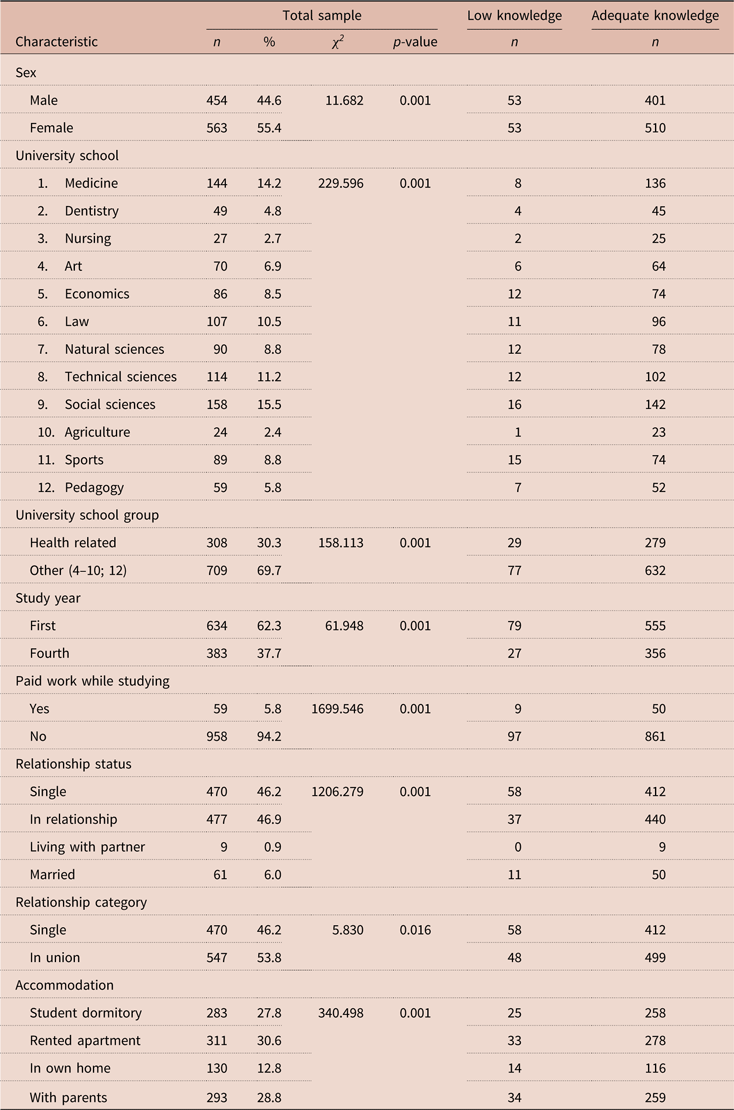
The socio-demographic characteristics of the investigated students are shown in Table 1. Of the 1017 participating students, 44.6% were male and 55.4% female. The average age of the participants was 21.3 ± 3.5 years (mean ± SD). Almost one-third (30.3%) of the participants studied health-related disciplines, and 62.3% were in their first year of study.
Socio-demographic characteristics of sample of university students, Kosovo Province, 2013–14

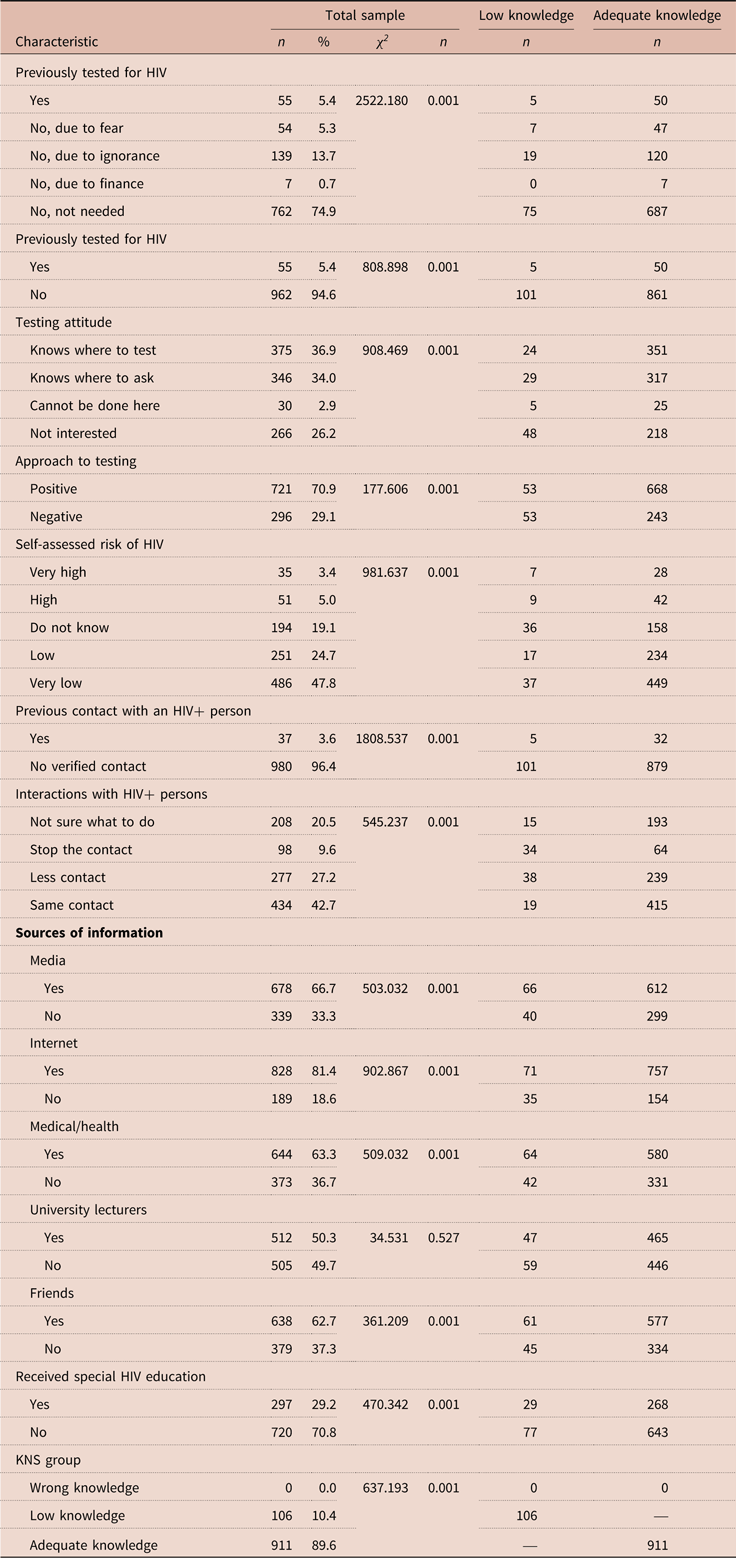
Table 2 shows the students’ attitudes towards HIV testing and their sources of HIV information. The majority of the students learnt about HIV through the internet, and only a few had participated in specially tailored HIV-related education programmes. Even though 70.9% of the students had a positive attitude towards HIV testing, only 5.4% had actually had an HIV test.
Students’ attitudes towards HIV testing and their sources of information about HIV

KNS: knowledge score.
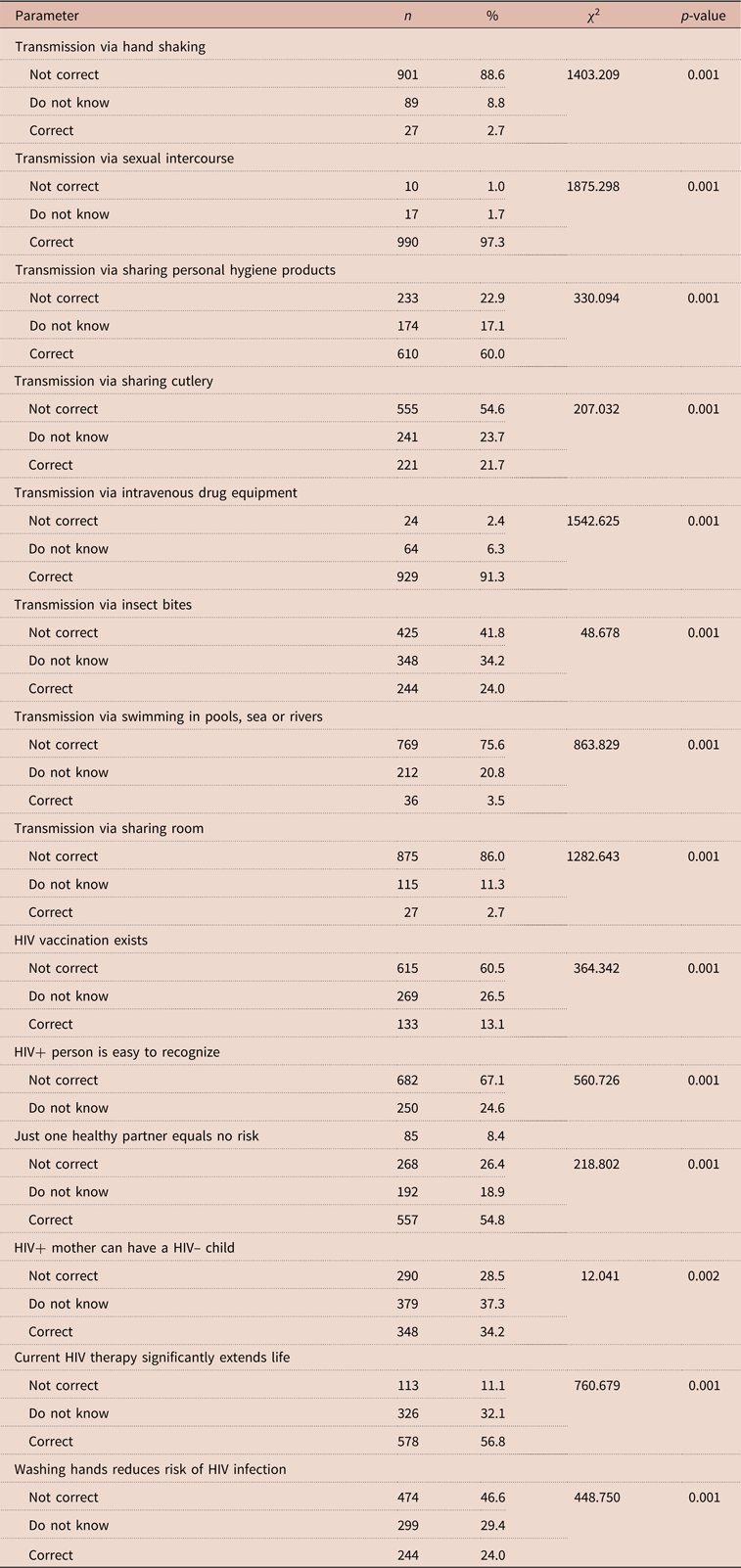
Table 3 shows the distribution of the students by their answers to questions on HIV-related knowledge. The average KNS of the students was 32.8 ± 3.3 (mean ± SD). The majority of the participants had adequate knowledge, with only 10.4% demonstrating low HIV-related knowledge. No students had wrong (incorrect) HIV-related knowledge. Almost all participants (97%) were aware of the fact that HIV can be transmitted by unprotected sexual intercourse with an HIV-positive person. It should be noted that 37% of the students did not know whether an HIV-positive mother could deliver an HIV-negative new-born. Moreover, numerous students mistakenly believed that transmission of HIV can occur by using the same hygiene products or cutlery, as well as that washing the hands reduces the risk of HIV transmission. Some incorrectly believed that a vaccine against HIV existed, while others were not aware of actual and current antiretroviral therapy.
Distribution of students by answers to questions about HIV-related knowledge

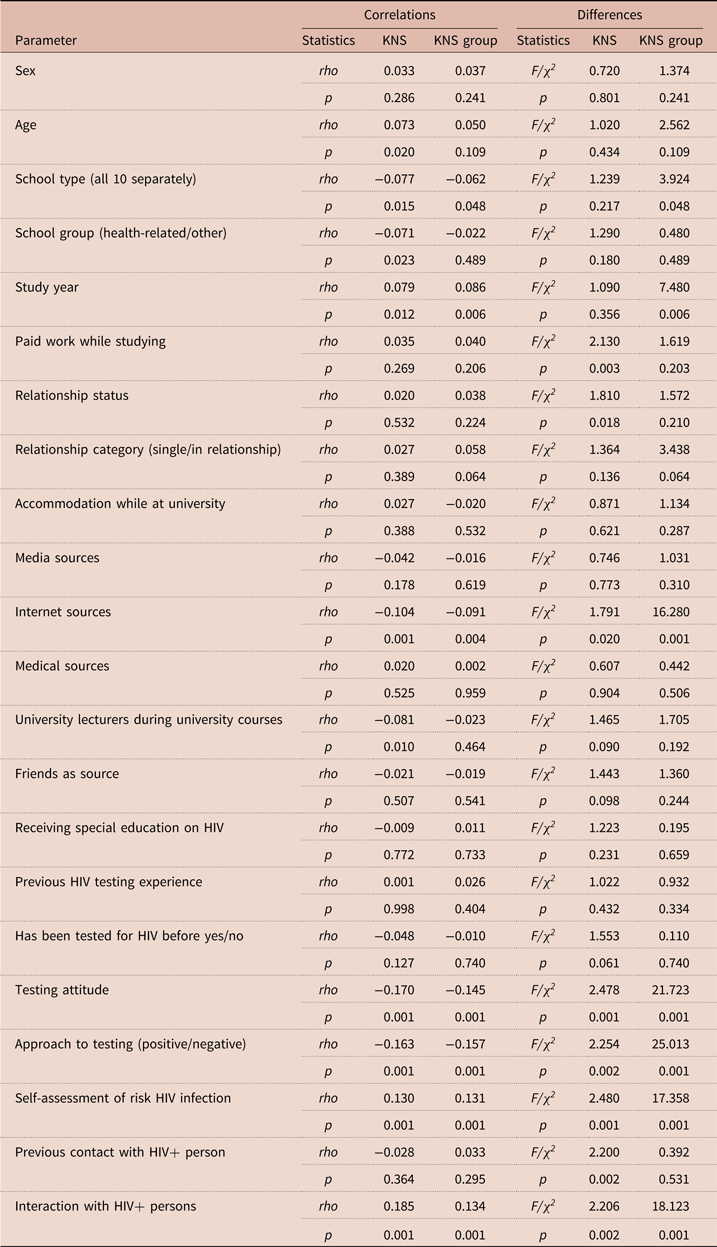
Table 4 shows the students’ knowledge scores (KNS) and KNS group scores by the examined parameters. Higher levels of knowledge correlated with older age of students, being in fourth study year, studying health-related disciplines, low self-perceived risk of acquiring HIV, receiving information about HIV from the internet and university lecturers and having a positive approach to HIV testing (being well informed and interested in this subject). Male and female students had almost the same mean KNS (male 32.63 ± 3.26; female 32.78 ± 3.25; p = 0.801). Students who were in a relationship had a somewhat higher KNS (32.79 ± 3.19) compared with those who were single (32.62 ± 3.33), but no statistically significant difference was observed (p = 0.136). The average KNS for students of health-related disciplines was 33.07 ± 3.16, while for other disciplines it was 32.56 ± 3.28 (p = 0.180).
Correlations and differences in knowledge scores and knowledge groups according to the examined parameters

KNS: knowledge score; rho: Spearman’s correlation coefficient; F: ANOVA for difference in tested parameters with raw KNS; χ 2: for difference in tested parameters in regards with the groups of KNS (low/adequate knowledge); p: probability level
The average KNS for students who had previously had an HIV test (33.36 ± 3.48) was not significantly different from that for students who have never been tested for HIV (32.67 ±3.24) (p = 0.061). In addition, the average KNS for students with a positive attitude towards testing was significantly higher (33.05 ± 3.11) than that for students with a negative attitude (31.89 ± 3.46) (p = 0.001) (Table 4).
Higher KNS was correlated with being older, being in the fourth year of study, studying health-related disciplines, having a low perception of personal risk for acquiring HIV, being informed on HIV through the internet and university lecturers and having a positive attitude towards HIV testing (i.e. being well-informed and interested in the topic) (Table 4). Moreover, persons who would keep the same level of contact with an HIV-positive person scored significantly higher (KNS 33.54 ± 2.91) compared with those who would stop contact (KNS 30.12 ± 3.73) (p = 0.002). Nevertheless, although older age and being informed about HIV from university lecturers increased students’ overall KNS, these factors did not contribute enough to increase the KNS from the low-knowledge group to the adequate-knowledge group (Table 4).
The average KNS was the highest for students who assessed their risk for HIV infection as low (33.23 ± 2.93), while students who assessed their risk as high or who did not know which risk group they belonged to scored, on average, 31 points (p = 0.001).
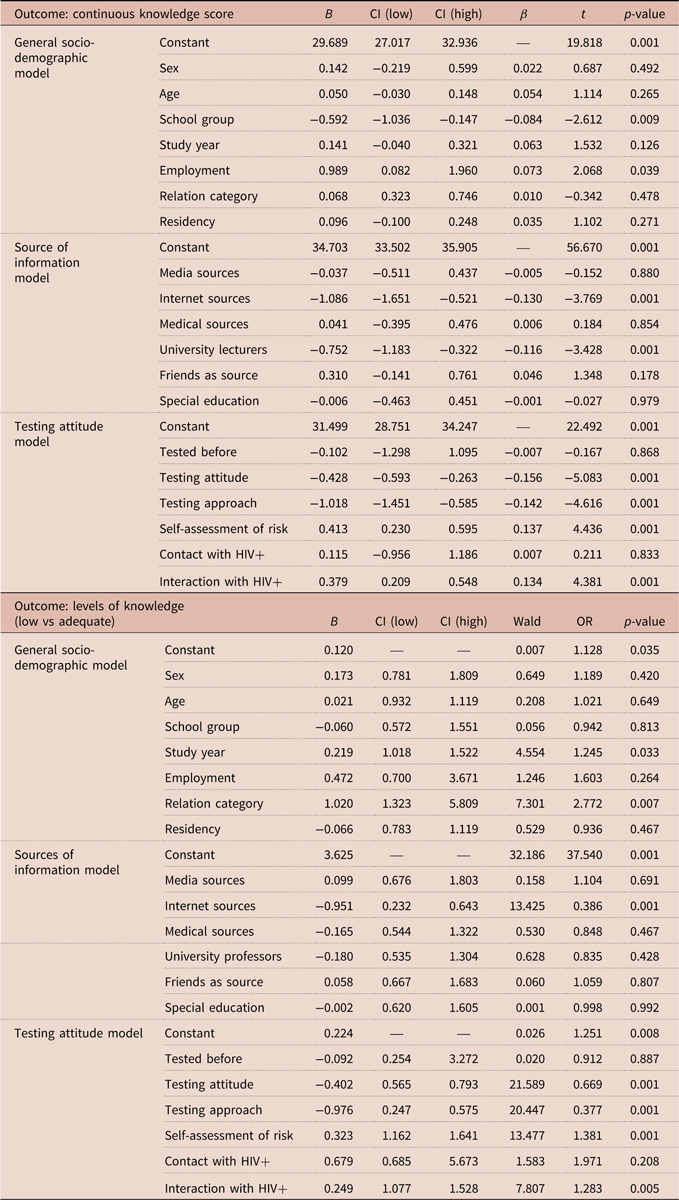
When the ‘Enter’ method of the multiple linear regression was applied to investigate the association of various parameters with a higher KNS, significant equations were achieved for all three variable groups (general: R = 0.146; adjR 2 = 0.015; F = 3.136; p = 0.003; sources of information: R = 0.171; adjR 2 = 0.024; F = 5.052; p = 0.001; and testing attitude: R = 0.265; adjR 2 = 0.066; F = 15.250; p = 0.001) (Table 5).
Linear and binary logistic regression models of factors associated with higher knowledge score (continuous outcome) and knowledge score groups (categorical outcome)

B: unstandardized coefficient; CI: confidence interval; OR: odds ratio.
When the ‘Enter’ method of the binary logistic regression was applied to assess the association of various parameters with an adequate knowledge group, three significant models were obtained as well (general: χ 2 = 17.289; p = 0.016; B = 2.151; Wald = 439.366; Exp(B) = 8.594; Nagelkerke’s R 2 = 0.035; classification % = 89.6; sources of information: χ 2 = 16.129; p = 0.013; B = 2.151; Wald = 439.366; Exp(B) = 8.594; Nagelkerke’s R 2 = 0.032; classification % = 89.6; and testing attitude: χ 2 = 48.304; p = 0.001; B = 2.151; Wald = 439.366; Exp(B) = 8.594; Nagelkerke’s R 2 = 0.095; classification % = 89.6) (Table 5).
In both linear and binary regression models, it was observed that studying a health-related field, using the internet as a source of information, having a positive attitude towards HIV testing, having a low self-perceived risk for acquiring HIV, and holding a position of keeping the same level of contact with an HIV-positive person after learning their HIV status were associated with a higher KNS, i.e. adequate HIV-related knowledge.
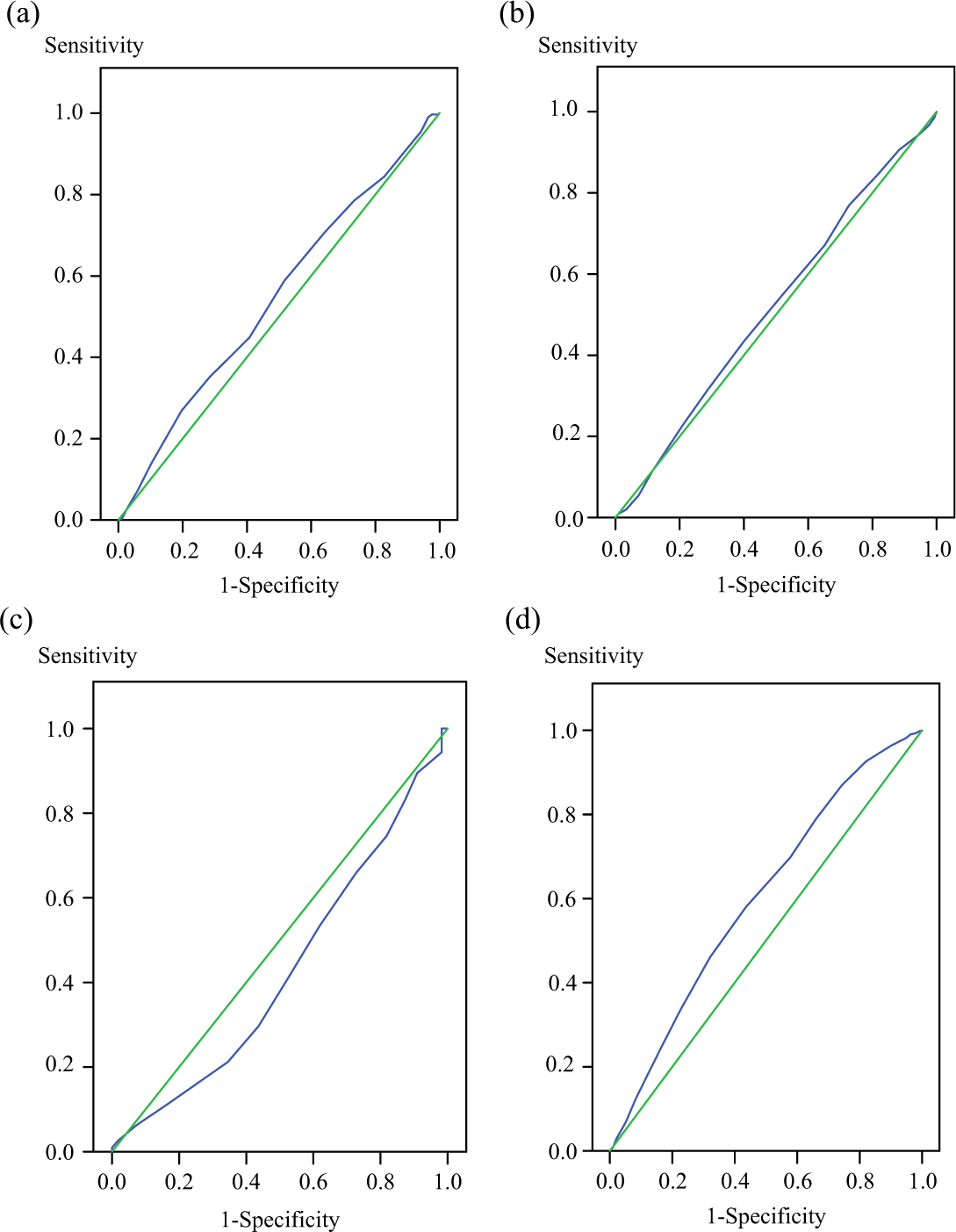
According to the ROC analysis, having been tested for HIV could adequately identify a higher KNS among 42.7% of students (p = 0.067). A positive attitude/approach to HIV testing and knowing where to be tested or at least whom to ask about HIV testing adequately detected 59.9% of students’ KNS (p = 0.001). Similarly, being a student in a health-related field adequately identified up to 54.5% of students’ KNS (p = 0.023). Being female explained KNS slightly better than being male (AUC 51.9%), but sex generally was not observed as a significant identifier of a higher knowledge level about HIV (p = 0.288) (Fig. 1).
Receiver Operating Characteristic (ROC) curve analysis of knowledge score (KNS) for: a) studying health-related disciplines; (b) being female; c) previously tested for HIV; and d) having a positive approach to HIV testing. The diagonal segments are produced by ties: the green line is the reference line and the blue line is the KNS.

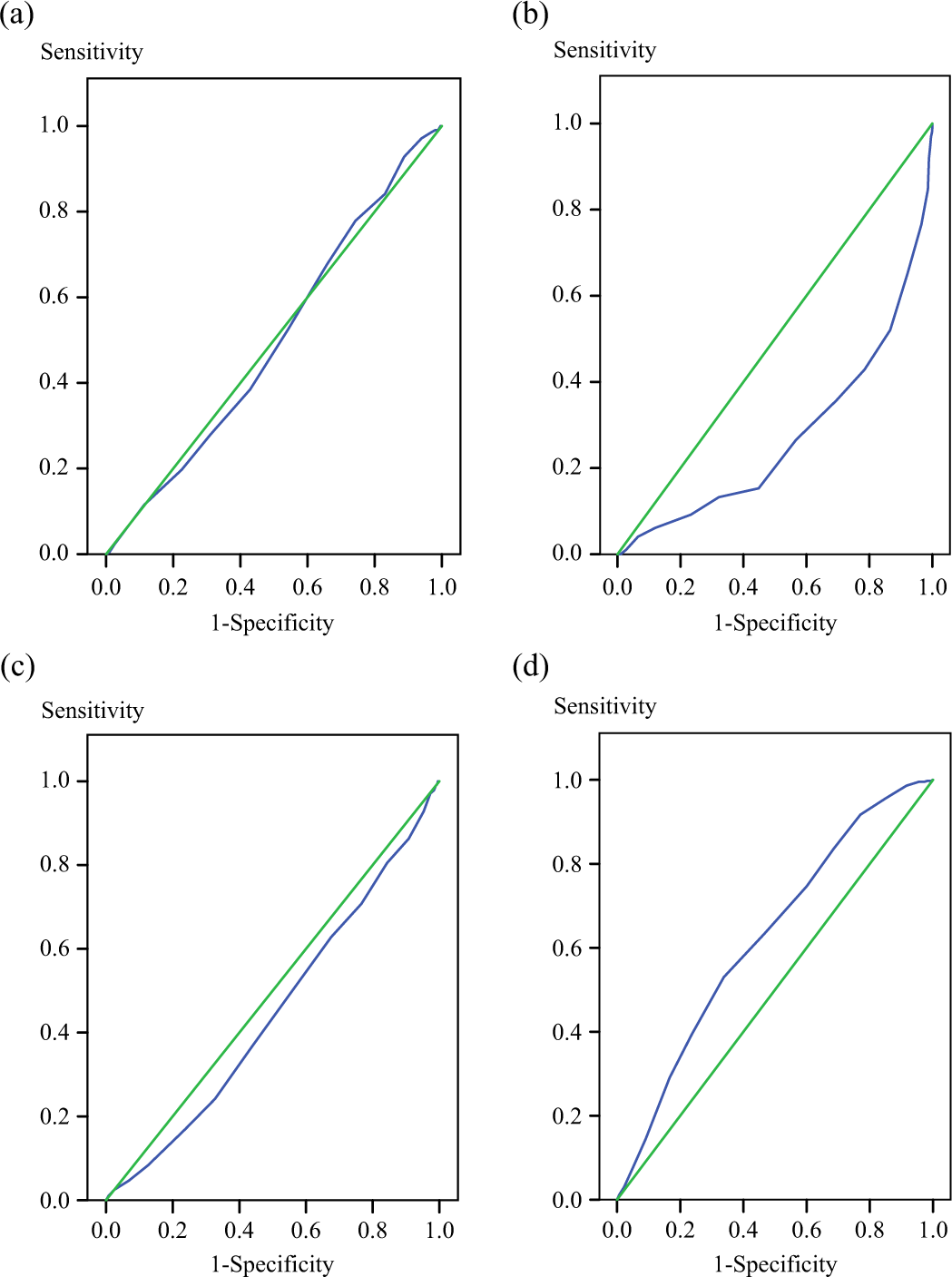
In addition, stopping contact with an HIV-positive person after knowing their HIV status explained up to 27.2% of students’ KNS (p = 0.001); less contact contributed to 44.9% of students’ KNS (p = 0.012), while keeping the same level of contact contributed to 62.5% of students’ KNS (p = 0.001). Moreover, the fact that students were not sure how to continue to interact with an HIV-positive person after knowing their HIV status explained 49.7% of their KNS (p = 0.882) (Fig. 2).
Receiver Operating Characteristic (ROC) curve analysis of knowledge score (KNS) for actions after learning about a person’s HIV-positive status: a) not sure what would do; b) stop the contact; c) reduce level of contact; and d) keep the same level of contact. The diagonal segments are produced by ties: the green line is the reference line and the blue line is the KNS.

Discussion
In the present study conducted among Serbian university students in the Kosovo province, a high level of overall knowledge of HIV was observed. In line with these results, HIV-related knowledge among students in other European countries (Korhonen et al., Reference Korhonen, Kylmä, Houtsonen, Välimäki and Suominen2012; Choudhary et al., Reference Choudhary, Ali and Altaf2015), as well as in the United States, has also been reported to be high (Inungu et al., Reference Inungu, Mumford, Younis and Langford2009). In fact, knowledge levels in these regions seem to be markedly higher than that of students in Asian and African countries (Thanavanh et al., Reference Thanavanh, Harun-Or-Rashid, Kasuya and Sakamoto2013; Chen et al., Reference Chen, Liao, Liu, Fang, Hong and Ye2016; Nubed & Akoachere, Reference Nubed and Akoachere2016).
However, some misconceptions about HIV transmission were found to be present among the students in the present study, as has been found in previous studies among students in other countries (Inungu et al., Reference Inungu, Mumford, Younis and Langford2009; Korhonen et al., Reference Korhonen, Kylmä, Houtsonen, Välimäki and Suominen2012; Thanavanh et al., Reference Thanavanh, Harun-Or-Rashid, Kasuya and Sakamoto2013; Baytner-Zamir et al., Reference Baytner-Zamir, Lorber and Hermoni2014; Haroun et al., Reference Haroun, El Saleh, Wood, Mechli, Al Marzouqi and Anouti2016). The students showed a low level of knowledge on the transmission of HIV using the same cutlery and personal hygiene products as an HIV-positive individual, as well as mother-to-child and vector-borne transmission. Only about half of the participants correctly identified that HIV infection is not prevented by hand-washing. Previous studies have shown that a lack of knowledge about HIV transmission may facilitate stigmatization and discrimination against people living with HIV (Mahajan et al., Reference Mahajan, Sayles, Patel, Remien, Sawires and Ortiz2008; Kingori et al., Reference Kingori, Nkansah, Haile, Darlington and Basta2017; James & Ryan, Reference James and Ryan2018). Similar patterns of misconception have been observed in other university student samples in Serbia (Blagojevic et al., Reference Blagojevic, Petrovic, Kocic, Rancic and Deljanin2013; Vowa et al., Reference Vowa, Jankovic and Savu2015). These data indicate that specialized HIV-related education programmes are still needed to increase the ‘proper-information pool’ among students on HIV infection. Previous data have shown that even short-term educational interventions can significantly increase HIV-related knowledge, reduce stigma and promote HIV prevention (Yiu et al., Reference Yiu, Mak, Ho and Chui2010; Gao et al., Reference Gao, Wu, Zhang, Zhang, Tang and Qiu2012). Moreover, adequate knowledge of HIV transmission is a prerequisite for the prevention of infection and acceptance of HIV-positive persons in the communities (James & Ryan, Reference James and Ryan2018).
The regression model results found that studying health-related disciplines was associated with adequate/higher HIV-related knowledge. A similar finding has been reported in the literature (Chew & Cheong, Reference Chew and Cheong2013; Haroun et al., Reference Haroun, El Saleh, Wood, Mechli, Al Marzouqi and Anouti2016). The results of the present study indicate that education in primary and secondary schools does not provide sufficient information on HIV per se, and that additional education is very much needed to improve HIV-related knowledge among youth. Some authors have suggested that, even in developed countries such as the United States, sexual health education programmes are considered inadequate in many respects, and the frequency of exposure to this mode of education declines with advancing age (Brener et al., Reference Brener, Demissie, McManus, Shanklin, Queen and Kann2017). It is suggested that education on sexual health should begin as early as pre-adolescence (Brener et al., Reference Brener, Demissie, McManus, Shanklin, Queen and Kann2017).
The use of the internet and contact with university lecturers during university courses as a source of information on HIV was associated with higher HIV-related knowledge in this sample of university students. It seems that the internet and university lecturers represent a reliable and effective source of information for students. The influence of internet and media on young people has increased dramatically over the past decade (Park & Kwon, Reference Park and Kwon2018). In fact, internet intervention programmes on HIV/AIDS knowledge, sexual attitudes and condom efficacy have become one of the leading and most popular tools in the prevention of HIV among youth (Noar, Reference Noar2011; Ybarra et al., Reference Ybarra, Bull, Prescott, Korchmaros, Bangsberg and Kiwanuka2013). Young people most often browse the internet in search of information on health issues that remain taboo or are associated with stigmatization and discrimination, such as sexuality or mental health (Park & Kwon, Reference Park and Kwon2018). However, occasionally the issue of the reliability and accuracy of health-related information on the internet may arise (Tonsaker et al., Reference Tonsaker, Bartlett and Trpkov2014). In resource-limited settings, the shortage of reliable digital information places a focus on university lecturers and sexual-health educators (or young people) during compulsory (or primary and secondary) and university education. The literature also highlights the importance of peers in raising awareness of HIV infection and its prevention (Cai et al., Reference Cai, Hong, Shi, Ye, Xu, Li and Shen2008). It has been emphasized that activism and leadership among young people can play a crucial role in the efforts to control the HIV epidemic (UNAIDS, 2015b).
Low self-perceived risk of acquiring HIV and positive attitudes towards HIV testing were associated with better HIV-related knowledge in this sample of students. The positive attitude towards HIV testing is probably based on adequate knowledge about HIV infection among the students in this study. It is possible that certain social and cultural factors also influence the shaping of a positive attitude towards HIV testing.
The fact that the self-assessment of personal risk among well-informed students was low in this study might be explained by the fact that the students correctly recognized key preventive measures for HIV infection (use of condoms and avoiding intravenous drug use). Their perception of personal risk was very low despite residing in an unstable socio-political setting. In populations affected by armed conflicts, traditional social support networks are often insufficient, and young people may be exposed to HIV through high-risk behaviours (UNAIDS, 2016).
The results should be evaluated in view of the fact that only 5% of students had actually been tested for HIV. Almost 75% of the students believed that they did not need to be tested. It is uncertain whether they were indeed at low risk of exposure (i.e. always used condoms and never had contact with infected blood). This could also be explained by an underestimation of the possibility that their potential partners might be infected. A large percentage of students who were not interested in testing, or were unaware of the fact that HIV testing was available free of charge in Kosovo, was observed. Lin et al. (Reference Lin, Roy, Dam and Coman2017) reported that perceived invulnerability among students and students’ low emotional self-efficacy represent important barriers to HIV testing. The HIV testing rate in this study was markedly low compared with that reported in other countries, such as the United States (9.3%–47.5%), Cameroon (40%), Greece (28.3%), Ireland (17.5%) and Iran (13.1%) (Gullette & Lyons, Reference Gullette and Lyons2006; Inungu et al., Reference Inungu, Mumford, Younis and Langford2009; Shokoohi et al., Reference Shokoohi, Karamouzian, Mirzazadeh, Haghdoost, Rafierad, Sedaghat and Sharifi2013; Choudhary et al., Reference Choudhary, Ali and Altaf2015; Nubed & Akoachere, Reference Nubed and Akoachere2016; Kann et al., Reference Kann, McManus, Harris, Shanklin, Flint and Queen2018). Given the large percentage of students engaging in health-risk behaviours (Institute of Public Health of Serbia, 2014), the promotion of, and opportunities for, HIV testing should be increased in the northern Kosovo province.
A very positive finding in this study was the fact that students well-informed about HIV expressed a favourable opinion in terms of contact with HIV-positive persons. Other studies have also supported the notion that a higher level of knowledge about HIV transmission results in a reduction in fear of HIV infection and allows for maintaining the same level of contact with people who disclose their HIV-positive status (Mahajan et al., Reference Mahajan, Sayles, Patel, Remien, Sawires and Ortiz2008; Korhonen et al., Reference Korhonen, Kylmä, Houtsonen, Välimäki and Suominen2012; Baytner-Zamir et al., Reference Baytner-Zamir, Lorber and Hermoni2014). Better knowledge on HIV has important implications for reducing stigma against people living with HIV. In particular, the stigmatization of HIV-positive persons may result in a low level of HIV counselling and testing, isolation and loneliness, psychological problems, low self-esteem and a lack of interest in receiving adequate treatment (Parker & Aggleton, Reference Parker and Aggleton2003; Turan et al., Reference Turan, Hatcher, Weiser, Johnson, Rice and Turan2017). A study by Yang et al. (Reference Yang, Li, Stanton, Fang, Lin and Naar-King2006) found that willingness to disclose HIV status was associated with fewer misconceptions about HIV transmission and less stigma against HIV-positive persons. Appropriate HIV-related knowledge has been repeatedly identified as a core factor in the reduction of the stigma against HIV-positive persons (Gupta et al., Reference Gupta, Parkhurst, Ogden, Aggleton and Mahal2008; Stephenson, Reference Stephenson2009). In this way, local communities can promote the de-stigmatization of persons with HIV and foster a safer and more supportive environment for HIV-positive persons.
These results have implications for potential interventions aimed at increasing HIV-related knowledge in local communities that could be organized by educational institutions and NGOs, and could also inform local health policy. A recommendation from the study is the introduction of education on sexual and reproductive health in primary and secondary schools. According to a survey of 24 countries in Europe, sex education in schools has been observed to be an effective measure to reduce the incidence of STIs, including HIV. These programmes have been particularly effective in the prevention of unplanned adolescent pregnancies (Ketting & Ivanova, Reference Ketting and Ivanova2018). According to this survey, Serbia was one of a few countries in Europe that did not have a law on sex education in schools (Ketting & Ivanova, Reference Ketting and Ivanova2018). A further recommendation is that voluntary and confidential counselling and testing for HIV and other STIs is made available at all times at the Kosovska Mitrovica University Student Public Health Centre. Setting up specialized and supplementary classes on this topic at faculties and high schools could help to increase the awareness of STIs, including HIV. Similarly, the creation of websites with HIV-related information, where users can easily and anonymously obtain information about sensitive topics relevant to health, run by experts in preventive medicine, would be beneficial. Finally, the study findings can inform other academic settings in developing structure guidelines for the implementation of preventive strategies and tailoring policies to promote or require HIV-prevention education, programmes and training.
The study included a fairly large participant sample that was representative of the Serbian university student population in Kosovska Mitrovica. This included students from all schools in the university in North Kosovo. Thus, the study results are probably generalizable to the entire university student population in the north of Kosovo inhabited by Serbs. This allowed a comparison of students’ knowledge by field of study and study year to assess potential differences. The study findings could be used as a starting point for the assessment of other factors that might influence the level of KNS and low HIV-testing rates. Nevertheless, the study has certain limitations. Personal data were self-reported, which is open to information bias. The cross-sectional study design did not allow for conclusions about causality and the direction of the association. Therefore, the results need to be interpreted with caution.
In conclusion, this study is the first to explore knowledge of HIV transmission and prevention among Serbian university students after the ethnic conflict in the Kosovo province. Overall knowledge about HIV transmission was found to be good. Several factors comprising demographic, information-related and testing-attitude characteristics were associated with having a higher knowledge level about HIV. These findings provide evidence that investment in education on HIV prevention as a part of local health policy could have a long-term favourable impact for local communities.
Acknowledgments
This research was conducted in the framework of Marija Milic’s PhD thesis at the School of Medicine, University of Pristina temporarily seated in Kosovska Mitrovica, Kosovska Mitrovica, Kosovo, Serbia, under the guidance of Prof. Jasmina Stevanovic MD, PhD. The authors are grateful to all the students who participated in this study.
Funding
The research received no specific grant from any funding agency, commercial entity or not-for-profit organization.
Conflicts of Interest
The authors have no conflicts of interest to declare.
Ethical Approval
The authors confirm that the free and informed consent of the participants was obtained and the Ethics Committee of the School of Medicine, University of Pristina, temporarily seated in Kosovska Mitrovica (Approval No. 09-1608-1, issued on 29th October 2013).